
I Helped My Disabled Brother Fight His Land Lady But What We Uncovered Changed Everything
I Helped My Disabled Brother Fight His Land Lady But What We Uncovered Changed Everything
The Call That Changed Everything
The phone rang at eleven on a Tuesday morning, and I almost didn't answer because I was in the middle of folding laundry. But something made me pick up. It was Danny, and his voice was shaking in that way it does when he's really upset. 'Carol, they're kicking me out,' he said. 'I have seven days.' I actually laughed at first, not because it was funny, but because it seemed so ridiculous. Danny had lived in that apartment for five years without a single problem. He paid his rent on time, kept the place clean, never bothered anyone. 'What are you talking about?' I asked, setting down the towel in my hands. He explained that his disability payment had been delayed because of some paperwork error at the agency—nothing he could control—and now his landlord had served him an eviction notice. Seven days to get out. I felt my chest tighten as he kept talking, his words tumbling over each other. This was my little brother, the one who'd worked so hard to live independently, and someone was threatening to take that away from him. When I hung up, I told myself it had to be a misunderstanding—people didn't just throw someone out like that, did they?
 Image by RM AI
A Brother's Struggle
I drove straight to Danny's place, and the moment he opened the door, I could see how scared he was. His hands were shaking as he gestured me inside, and there on his kitchen table sat the eviction notice, printed on official-looking paper with cold, impersonal language. I picked it up and read it twice, hoping I'd missed something that would make it less terrible. Danny showed me everything—the letter from the disability office explaining the delay, his bank statements proving he'd never missed a payment before, receipts going back years. He'd been meticulous, the way he always was with important things. 'I've lived here five years, Carol,' he said quietly, staring at his hands. 'Five years without any problems.' I could hear the fear underneath his words, the terror of losing the independence he'd fought so hard to build. This wasn't just about an apartment. This was about his entire life, the routine and stability that helped him manage. I sat down across from him and tried to sound confident, even though my heart was pounding. 'We'll figure this out,' I told him. He told me he'd explained everything to Mrs. Grant, shown her the proof—but she didn't care at all.
 Image by RM AI
The Cold Voice on the Phone
I called Mrs. Grant that afternoon, expecting a reasonable conversation. Maybe she hadn't seen all the documentation. Maybe once I explained the situation properly, she'd understand and give Danny the extension he needed. She answered on the third ring, her voice clipped and formal. I introduced myself as Danny's sister and started explaining about the paperwork delay, how it wasn't his fault, how he'd never been late before. She cut me off mid-sentence. 'Ms. Jensen, your brother signed a lease agreement. That agreement requires timely payment. I can't be expected to chase down excuses every time someone fails to meet their obligations.' The coldness in her tone caught me off guard. I tried again, keeping my voice calm and respectful. 'I understand, but this was a government error, not negligence on his part. He has all the documentation.' There was a long pause, and then she said something that made my skin prickle. 'I refuse to run a charity, Ms. Jensen. If your brother can't manage his finances, perhaps he needs a different living arrangement.' I sat there after she hung up, staring at my phone. The conversation had lasted maybe three minutes, and she hadn't shown even a flicker of compassion. The way she said 'I refuse to run a charity' stuck in my mind—something about it felt off, but I couldn't say why.
 Image by RM AI
Gathering the Proof
That evening, Danny and I sat at his kitchen table and went through every piece of paper he had. I wanted everything organized perfectly before we made our next move. He pulled out folder after folder—five years of rent receipts, every single one marked 'paid in full.' His bank statements showed the automatic transfers going through month after month, never late, never short. There were letters from his caseworker, documentation from the disability office, even a reference letter from his previous landlord. Danny had always been careful with paperwork, more careful than most people I knew. 'I kept everything,' he said, arranging the documents in chronological order. 'I thought if I did everything right, nothing bad could happen.' That broke my heart a little. We made copies of everything, put the originals in a folder, and created a simple timeline showing exactly what had happened and when. The facts were crystal clear: the payment delay was a government processing error, Danny had notified Mrs. Grant immediately, and the missing payment would arrive within days. Any reasonable person would see that this wasn't grounds for eviction. I looked at the neat stacks of evidence in front of us and felt a surge of hope. We had everything we needed—receipts, bank statements, official letters—but would any of it matter to her?
 Image by RM AI
One More Week
I called Mrs. Grant again the next morning, with Danny sitting beside me. This time I had our documentation organized and ready to reference. I was polite but firm, walking her through the timeline, explaining that the delayed payment would clear in just a few days. 'We're asking for one additional week,' I said. 'That's all Danny needs to get everything sorted.' I could hear papers rustling on her end of the line. 'Ms. Jensen, I've already explained my position. The eviction notice stands.' Danny's face fell, and I felt anger starting to replace my earlier hopefulness. 'Mrs. Grant, he's lived there five years without incident. Surely one week—' 'I've already secured another tenant,' she interrupted. 'The unit has been promised. Your brother's situation, unfortunate as it may be, doesn't change my obligations to my incoming tenant.' I sat up straighter. That made no sense at all. I'd driven past Danny's building dozens of times, and there were always vacancies posted in the windows. Those apartments sat empty for months sometimes, especially in winter. Why would she need Danny out so urgently if she had other vacant units? 'When did you find this tenant?' I asked. 'That's not your concern,' she said, and hung up. She claimed she already had another tenant lined up, which made no sense—apartments in that building sat empty for months.
 Image by RM AI
Danny's Fear
That night I stayed late at Danny's apartment, and we sat together on his couch in the quiet. He'd barely said anything since the phone call with Mrs. Grant, just stared at the walls he'd painted himself, the shelves he'd put up, the life he'd built here. 'I don't understand why she hates me,' he finally said. 'I didn't do anything wrong.' I put my arm around his shoulders. 'She doesn't hate you. She's just...I don't know what she is.' But I could see how much this was crushing him. This apartment wasn't just a place to live. It was proof that he could manage on his own, that his disability didn't define his entire existence. He'd learned the bus routes, found a job he loved, built a routine that worked. 'What if I can't find another place I can afford?' he asked, and I heard his voice crack. 'Carol, most landlords won't even call me back when they hear about my disability. This place...the rent is so much lower than everything else around here.' I'd known that, but hearing him say it made the situation feel even more desperate. He looked at me with tears in his eyes and asked, 'What if I can't find another place I can afford?'
 Image by RM AI
The Building That Time Forgot
The next afternoon, I went back to Danny's building alone. I needed to see something with my own eyes, to understand what we were really dealing with. I walked slowly through the hallways, paying attention to details I'd never noticed before. The carpet was worn, the paint was chipping in corners, and the whole place had that tired feeling of a building that had seen better days. But what really caught my attention were the doors. Danny lived on the third floor, and as I walked down his hallway, I counted the apartments. His unit at the end, and then four others on the same floor. Two had eviction notices taped to them, faded and weathered. The other two were clearly vacant—no sounds, no light under the doors, and when I pressed my ear close, nothing but silence. I went down to the second floor and found the same thing. Empty units everywhere. Some had been vacant so long that mail was piling up in the slots. The building had to be at least half empty, maybe more. So why was Mrs. Grant in such a desperate rush to get Danny out? If she already had so many vacant apartments, why couldn't she put her 'new tenant' in one of those? I counted at least four empty apartments on his floor alone—so why was Mrs. Grant in such a rush?
 Image by RM AI
A Visit to the Hardware Store
I decided to visit Danny at the hardware store where he worked, partly to see how he was holding up and partly because I needed to remind myself of who he really was. I found him in the paint department, helping a customer choose the right primer for a bathroom renovation. He was patient and knowledgeable, explaining the differences between products, asking questions about ventilation and moisture. The customer thanked him warmly before walking away. Danny's manager, Tom, waved me over. 'You're Danny's sister, right?' he asked. I nodded. 'How's he doing with all this apartment stuff? He told me what's happening.' Tom looked genuinely concerned, which made me feel a little better. 'We're fighting it,' I said. Tom shook his head. 'That landlord doesn't know what she's losing. Danny's never called in sick, never caused problems, and customers ask for him by name. He knows this store better than people who've been here twice as long.' I watched Danny across the store, reorganizing a display that had gotten messy. He was good at this job, good at his life. The eviction wasn't about his capability or his character. It was about something else entirely, something I still didn't fully understand. His boss pulled me aside and said, 'Danny's one of the best workers I've ever had—please don't let them push him out.'
 Image by RM AI
The Eviction Hearing Notice
The eviction hearing notice arrived on a Tuesday morning, certified mail with that familiar return address. I called Danny immediately and drove over to read it with him. The court date was set for three weeks out—March 14th at 10:00 AM. We sat at his kitchen table and went through everything we had: the rent receipts, the clean inspection reports, Tom's written statement about Danny's reliability as an employee, even the letters from his neighbors saying he was quiet and respectful. It felt like building a fortress out of paper, but it was a good fortress. Everything was documented, organized, dated. Danny seemed nervous but determined, and I felt this surge of confidence that surprised me. 'They can't argue with facts,' I told him. 'We've got proof of everything.' He nodded, running his fingers over the stack of receipts like they were protective talismans. I honestly believed that once we walked into that courtroom and showed the judge what we had, this whole nightmare would end. The legal system existed for exactly this reason—to protect people like Danny from unfair treatment. I thought the judge would see reason immediately—we had all the proof anyone could need.
 Image by RM AI
Melissa's Offer
Melissa came over that weekend with her laptop and a yellow legal pad. She works as a paralegal at a family law firm downtown, and even though this wasn't her specialty, she wanted to help. 'Let me just look everything over with fresh eyes,' she said, settling onto my couch with the eviction notice and all our documentation spread out on the coffee table. I made us tea while she read through the paperwork, making little notes in the margins. It felt good to have someone with legal training on our side, someone who understood the language and the process. She asked me questions about the timeline, about when Danny had received various notices, about whether Mrs. Grant had ever given warnings in writing. I answered everything I could remember. Then she went quiet for a long moment, her pen hovering over the page. She flipped back to the first page of the eviction notice, then forward again, comparing something. Her frown deepened. She looked up at me with this expression I couldn't quite read—not alarm, exactly, but something close to it. Melissa looked through the eviction notice and frowned—'Mom, something about this doesn't look standard.'
 Image by RM AI
The Night Before Court
The night before the hearing, I stayed at Danny's apartment. I told him it was easier than driving in the morning, but really I just didn't want him to be alone. We ordered pizza and tried to watch a movie, but neither of us could focus. He kept checking the folder with all our documents, making sure everything was in order. 'What if they don't believe us?' he asked during a commercial break. 'They'll believe us,' I said firmly. 'We have proof. We have evidence. That's what courts are for.' He nodded, but I could see the worry in his eyes. Around eleven, I made up the couch and told him to get some rest. He hugged me goodnight, holding on a little longer than usual. 'Thank you for doing this,' he whispered. 'You don't have to thank me,' I said. 'We're family.' After he went to bed, I sat in the dark living room, looking at the neat stack of documents on his table. Everything was there. Everything was true. I held his hand and promised him we'd fight this—but deep down, a tiny voice wondered what we were really up against.
 Image by RM AI
Walking into the Courtroom
The courthouse was one of those old municipal buildings with marble floors and high ceilings that made every sound echo. Danny and I arrived twenty minutes early, both of us dressed like we were going to job interviews. We found the courtroom number and sat on a bench outside, going through our folder one more time. I felt surprisingly calm. Nervous, yes, but also ready. We had the truth on our side. Other people filed past us—lawyers in suits, people who looked tired and worried, court staff with badges and clipboards. Then I saw her coming down the hallway. Mrs. Grant, wearing a tailored navy suit I'd never seen before, walking alongside a man in an expensive-looking charcoal suit carrying a leather briefcase. A lawyer. She had brought a lawyer. My mouth went dry. Why would she need a lawyer for something this straightforward? The man was already pulling documents from his briefcase, showing them to her as they approached. Thick stacks of paper, organized with colored tabs. Then Mrs. Grant walked in with a lawyer and a briefcase full of documents, and my stomach dropped.
 Image by RM AI
The Paperwork That Didn't Match
Mrs. Grant's lawyer was smooth and prepared in a way that made me feel suddenly small. When the judge asked him to present his case, he stood and calmly outlined a pattern of late payments dating back eight months. He had printed spreadsheets. He had dates and amounts. He handed copies to the judge and to us, and I stared at the paper in my hands like it was written in a foreign language. According to these records, Danny had been late with rent six times, sometimes by as much as two weeks. I looked at Danny, and his face had gone pale. 'That's not true,' he whispered to me. 'I've never been late. Not once.' I believed him—I'd seen his receipts, his careful record-keeping, his bank statements showing automatic transfers on the first of every month. But here was this official-looking document saying the opposite. The lawyer kept talking, kept pointing to line items and dates. The judge was taking notes. I wanted to shout that these records were wrong, that we had proof, but the lawyer's confident voice filled the courtroom like it was the only truth that mattered. Danny whispered to me, 'I've never been late before—those records are wrong,' but how could we prove it in that moment?
 Image by RM AI
The Judge's Postponement
Judge Morrison was a woman in her sixties with sharp eyes and silver hair pulled back in a bun. She listened to both sides, looking between the lawyer's spreadsheets and our stack of receipts. When it was our turn to speak, I explained that Danny had records of every payment, that his bank statements showed consistent on-time transfers, that something didn't match up. The judge asked to see Danny's bank statements. We handed them over, and she spent several long minutes comparing them to Mrs. Grant's payment records. The courtroom was silent except for the rustling of paper. Finally, she set everything down and looked at both parties. 'There are significant discrepancies here that need to be resolved,' she said. 'I'm postponing this hearing for two weeks to allow both sides to gather additional documentation and reconcile these payment records.' She set a new date and dismissed us. Relief flooded through me—we had more time. But as we gathered our papers and stood to leave, I caught the expression on Mrs. Grant's face. She didn't look worried. She looked annoyed, like this was an inconvenience, not a problem. As we left the courtroom, I realized we weren't just fighting an eviction anymore—we were fighting something I didn't fully understand yet.
 Image by RM AI
Melissa's Suspicion
Melissa came over the next evening with her laptop and a magnifying glass—literally. She spread Mrs. Grant's payment log across my dining room table and started examining it page by page. I sat beside her, watching as she zoomed in on individual entries with her phone camera, comparing dates and handwriting. 'Look at this,' she said after about an hour, pointing to three different entries marked as 'late payment received.' 'See how the handwriting is almost identical? Not just similar—identical. Same pen pressure, same slant, same loop on the number seven.' I leaned closer. She was right. The entries looked copied. 'And here,' she continued, pointing to another section. 'These dates don't make sense chronologically. Like someone went back and added them later.' She pulled out Danny's actual receipts and held them up to the light. 'These are genuine—you can see the impression from the pen, the natural variation in the writing. But these...' She tapped Mrs. Grant's log. Her voice dropped to almost a whisper, like she was afraid to say it out loud. 'Mom,' Melissa said quietly, 'I think someone might have doctored these records.'
 Image by RM AI
Comparing the Records
We worked through the night—me, Melissa, and Danny, who I'd called over as soon as Melissa shared her suspicions. We spread everything across my dining room table: Danny's bank statements, his receipts, Mrs. Grant's payment log, credit card records, even the deposit slips from when he'd paid in cash during those first few months. We created a timeline, month by month, payment by payment. Danny's bank records showed automatic transfers on the first of every month like clockwork—January through December, not a single late payment. We had receipts with dates that matched. We had his meticulous notes. Then we looked at Mrs. Grant's version. Six payments marked late. Two marked as missing entirely and 'paid after final notice.' Except Danny had never received any final notices. We photographed everything, made copies, highlighted the discrepancies in yellow. The evidence was overwhelming. Danny had paid on time, every time, exactly as he'd said. The documentation was perfect, irrefutable. Melissa sat back and rubbed her eyes. 'So if his records are all accurate...' she started. Every single payment Danny made was documented in his bank records—so where did Mrs. Grant's version come from?
 Image by RM AI
A Quiet Question
The next morning, I decided to knock on doors. I know how that sounds—like some amateur detective from a TV show—but I needed to know if Danny's situation was an isolated case or part of something bigger. I started on the second floor, introducing myself as Danny's sister, asking if anyone had experienced issues with rent payments or management. The reactions were immediate and uncomfortable. People shifted their weight, glanced down hallways, gave short answers. 'Everything's fine,' one man said quickly, already closing his door. A younger woman shook her head before I even finished my question. 'I can't talk about that,' she said, her voice tight. I knocked on maybe eight doors that morning. Most people wouldn't engage at all. A few were polite but clearly wanted me gone. The building felt tense in a way I hadn't noticed before, like everyone was holding their breath. Then, on the third floor, an elderly woman opened her door partway and studied my face. 'You're Danny's sister?' she asked. I nodded. She hesitated, then sighed. 'Come back tomorrow. There's a coffee shop on Maple Street. I'll meet you there at ten.' Most tenants seemed nervous to talk, but one older woman finally agreed to meet me the next day.
 Image by RM AI
The Coffee Shop Meeting
The coffee shop was one of those neighborhood places with mismatched furniture and local art on the walls. I got there early, ordered a tea I didn't really want, and watched the door. Mrs. Chen arrived exactly at ten—a small woman with silver hair pulled back, carrying a worn purse. She sat down carefully, ordered nothing, and folded her hands on the table. 'I'm glad you're helping your brother,' she said quietly. 'Not many people would.' I thanked her and asked why she'd agreed to meet. She looked around the coffee shop, making sure no one was listening too closely. 'Because I've seen this before,' she said. 'My nephew lived in that building for six years. Good tenant, always paid on time, never caused problems. Then last year, suddenly there were issues with his rent. Management claimed he'd missed payments, sent him notices he swears he never got. He tried to fight it, but...' She trailed off, shaking her head. 'He moved out rather than deal with court. Never really understood what happened.' She leaned in close and said, 'The same thing happened to my nephew last year—he never understood why.'
 Image by RM AI
The Nephew's Story
I asked Mrs. Chen to tell me more about her nephew's situation, and she settled back in her chair, remembering. 'It started with a letter saying he owed back rent. Michael—that's my nephew—he couldn't understand it. He had his bank records showing every payment cleared. But management kept insisting their records showed something different.' The story felt uncomfortably familiar. 'Did he try to prove he'd paid?' I asked. She nodded. 'He brought in his statements, just like your brother did. But they said their system showed what it showed. He got scared. He's not confrontational, you know? And he worried that fighting it would make things worse. So he just... left.' She looked down at her hands. 'He found a new place across town. Costs him two hundred dollars more a month, but at least he has peace.' I sat there processing this, my tea going cold. Then something occurred to me. 'Mrs. Chen,' I said carefully, 'was your nephew paying below-market rent? Like, had he been there long enough that his rent was significantly lower than newer tenants?' I asked if he had been paying lower rent than newer tenants, and she nodded slowly—'How did you know?'
 Image by RM AI
A Pattern Begins to Form
I drove home with Mrs. Chen's question echoing in my head. How did I know? Because Danny was in the exact same situation. His rent was locked in from years ago, probably hundreds below what the apartment could command now. And Michael, Mrs. Chen's nephew, same thing—long-term tenant, below-market rent, suddenly facing dubious payment disputes that forced him out. I gripped the steering wheel tighter. Two cases. Two long-term tenants with low rent. Two eviction attempts based on payment records that didn't match the tenants' documentation. I wanted to call it a pattern, to say I'd figured something out, but I kept second-guessing myself. Was I seeing connections that weren't really there? Making something sinister out of coincidence? Property management makes mistakes. Records get confused. Maybe Mrs. Grant was just incompetent rather than malicious. Maybe Michael's situation had nothing to do with Danny's. Except it felt wrong. My gut—that instinct you develop after decades of life—was screaming that these weren't accidents. But gut feelings aren't evidence. I couldn't walk into a lawyer's office or a courtroom with 'it feels deliberate.' Maybe it was coincidence, or maybe there was something darker happening—but I couldn't prove anything yet.
 Image by RM AI
The Name Harrington
Melissa called me that evening while I was making dinner I had no appetite for. 'I've been going through those building documents again,' she said, 'and there's something weird.' I put her on speaker and kept chopping vegetables mechanically. 'What kind of weird?' 'There's a name that keeps showing up—Mr. Harrington. Not on everything, but on some of the newer paperwork. Management memos, a couple of maintenance authorizations from the past few months. But I can't figure out who he is.' I stopped chopping. 'Is he with the management company?' 'I don't think so,' Melissa said. 'The documents don't explain. He's just... there. Mentioned in passing, like everyone should know who he is. But Danny's never heard the name, and it's not on any of the older documents from when he first moved in.' I wiped my hands on a towel, thinking. 'Can you scan and send me the pages where his name appears?' 'Already did,' she said. 'Check your email.' We sat in silence for a moment, both processing. I asked who Mr. Harrington was, and Melissa said she had no idea—the name just kept appearing in odd places.
 Image by RM AI
The Property Investor
I opened my laptop right there in the kitchen and typed 'Harrington' into Google along with our city name. The results came up immediately—too many of them. James Harrington. Harrington Property Group. Multiple business listings, a professional website, local news mentions. I clicked on the main website. It was sleek and corporate, full of stock photos of renovated buildings and smiling diverse people. 'Harrington Property Group specializes in acquiring and revitalizing older residential properties,' the homepage declared. I scrolled through the portfolio section—building after building, all older apartment complexes that had been 'modernized.' Before and after photos showed worn facades transformed into trendy exteriors, outdated lobbies redone with modern finishes. The About page featured a professional headshot of James Harrington himself, a man in his fifties with expensive teeth and a navy suit. 'Our mission is to improve housing quality while maintaining community character,' the copy read. But what caught my attention was the Services page, which promised 'complete property management transition' and 'tenant relations optimization.' His website promised 'modernization and improved management'—but what did that really mean for people like Danny?
 Image by RM AI
The Removal Strategy
I couldn't sleep that night, so I did what any anxious person does at two in the morning—I went down a research rabbit hole. I started searching for articles about property investors like Harrington, about what happens to older apartment buildings when they get acquired by renovation companies. What I found made my stomach turn. There were dozens of articles, investigative pieces from cities across the country, all describing the same basic pattern. Investors buy older buildings with long-term tenants paying below-market rent. Those tenants have legal protections—you can't just kick them out because you want higher-paying renters. So instead, some landlords make life difficult. They nitpick lease violations, claim maintenance issues are tenant-caused, and—this part made me sit up straighter—they dispute rent payment records to create grounds for eviction. One article from Chicago detailed a case where a property management company had systematically falsified payment histories for multiple tenants, all of whom had below-market leases. Once those tenants were gone, rents doubled. The articles described tactics that sounded disturbingly familiar, but I still couldn't connect all the dots.
 Image by RM AI
Danny's Cheap Rent
The next morning, I drove to Danny's apartment with my laptop and all my notes. He made coffee while I spread everything out on his small kitchen table—the research about property investors, the information on Harrington, Mrs. Chen's nephew's story. 'Danny,' I said carefully, 'how much is your rent?' He told me. I pulled up rental listings for comparable apartments in his neighborhood on my phone and showed him. His eyes widened. The current market rate was almost double what he was paying. 'You've been there for seven years,' I said. 'Your lease has probably had minimal increases because of rent stabilization rules in your building. But if someone bought this property wanting to maximize profit...' I didn't finish the sentence. I didn't need to. Danny stared at the rental listings, then at me. 'You think someone wants me out so they can charge more?' His voice was quiet, hurt. I looked at Mrs. Chen's nephew's story, at the pattern of long-term tenants facing dubious evictions, at Harrington's sleek website promising 'optimization.' If someone wanted to raise the rent on Danny's apartment, first they'd need to get him out—and suddenly everything felt deliberate.
 Image by RM AI
The Building's Other Tenants
I decided to knock on a few other doors in Danny's building. I didn't have a plan exactly—I just wanted to see if anyone else had noticed anything strange. The woman in 3B answered cautiously through a chain lock. When I explained I was helping my brother with a housing issue, she relaxed a little. 'Are you having any problems with your lease?' I asked. She shook her head. 'No, but I only moved in last year. My rent's high, but that's just how it is now.' The man in 2C, though, was a different story. He was probably in his seventies, and when I asked the same question, his expression darkened. 'They've been after me for months,' he said quietly. 'New management sent me papers saying my old lease wasn't valid anymore. Told me I had to sign a new one at almost triple what I'm paying, or I had sixty days to get out.' His hands shook slightly as he spoke. I felt my stomach drop. 'Did you sign?' I asked. He nodded, looking defeated. 'What choice did I have? I can barely afford it now, but I had nowhere else to go.' I thanked him and walked back down the hallway, my mind racing. One man said he'd been pressured to sign a new lease at triple his old rate—or move out within sixty days.
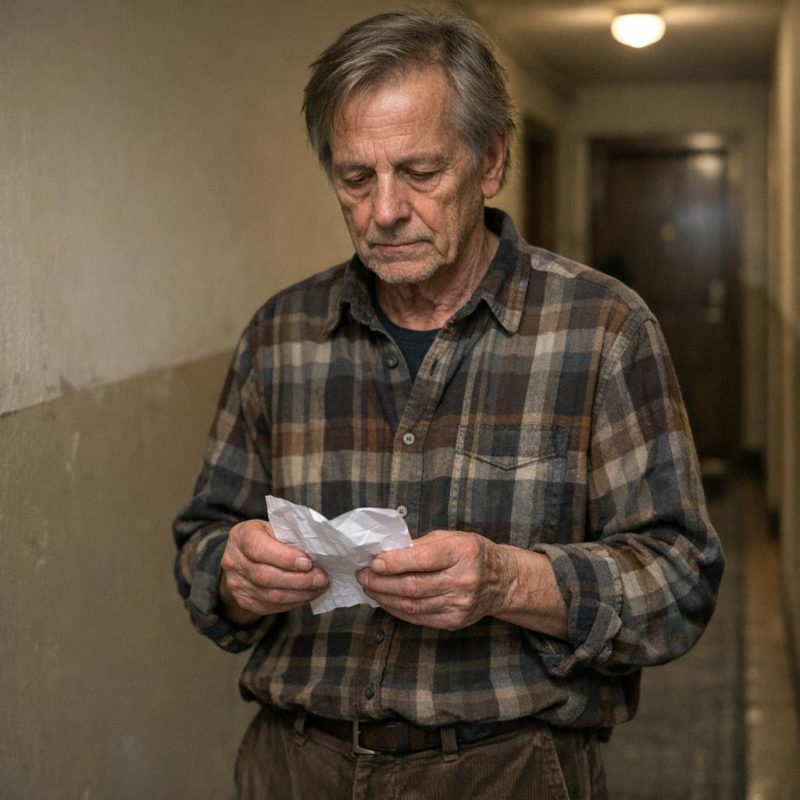 Image by RM AI
The Vulnerable Targets
Back in my car, I sat with my notebook and wrote down what I'd learned. The woman in 3B: new tenant, high rent, no problems. The man in 2C: elderly, long-term, pressured into a massive rent increase. Mrs. Chen: elderly, evicted on dubious grounds. Danny: disabled, facing eviction over fabricated complaints. I stared at the pattern emerging on the page. All the people being targeted seemed to have something in common—they were vulnerable. Elderly. Disabled. People on fixed incomes. People who might not have the resources or energy to fight back in court. The new tenants, the ones paying market rate, were younger, probably professionals who could afford the inflated rents. I thought about what I'd read on Harrington's website, that cold corporate language about 'optimization' and 'repositioning assets.' I didn't want to believe it, but the evidence was right there in front of me. Someone had looked at this building and seen an opportunity. They'd identified the tenants who'd been there the longest, paying the lowest rents, and decided to push them out. It felt like someone had identified the people least able to fight back—and gone after them first.
 Image by RM AI
Reaching Out for Help
That night, I started searching online for tenant rights attorneys. Danny couldn't afford to fight this alone, and honestly, neither could I. We needed someone who understood housing law, someone who'd dealt with cases like this before. I made a list of five lawyers and started calling the next morning. The first one I reached said she was fully booked for the next three months. The second didn't return my call. The third listened to my explanation for about thirty seconds before cutting me off. 'Ma'am, these cases are very time-intensive, and unless there's significant damages involved, I'm afraid I can't help you.' His tone made it clear the conversation was over. I sat at my kitchen table feeling defeated, staring at the last two names on my list. Was this how it worked? The people with money could force out the people without, and nobody would help because it wasn't profitable enough? I picked up the phone again, dialed the fourth number, and got voicemail. One name left. I waited until after lunch, took a breath, and called. A woman answered, put me on hold, and then a man's voice came on the line. 'This is James Walsh,' he said. 'Tell me what's happening.' The first three lawyers I called said they were too busy—then one finally agreed to meet us.
 Image by RM AI
Attorney Walsh Takes the Case
Danny and I met Attorney Walsh at his office two days later. He was younger than I expected, maybe late forties, with sharp eyes and a cluttered desk covered in case files. I'd brought everything—the eviction notice, the falsified noise complaints, the research on Harrington, the notes from other tenants. Walsh listened without interrupting, occasionally jotting something down. When I finished, he asked Danny a few questions directly, his tone respectful and patient. 'And you never received notice that the building had changed ownership?' Danny shook his head. Walsh made another note. He flipped through the documents I'd brought, pausing on the complaint forms. 'These signatures,' he said slowly. 'Do you recognize any of these names?' Danny leaned closer and studied them. 'No. I've never seen most of these people.' Walsh nodded like he'd expected that answer. He looked at me, then at Danny. 'I'll take your case,' he said. 'I can't promise how it'll turn out, but there are enough irregularities here that we have grounds to fight.' Relief washed over me. Danny exhaled like he'd been holding his breath for weeks. Walsh tapped the falsified records with his pen. 'If this is what I think it is, your brother's case might be bigger than you realize.'
 Image by RM AI
Digging into County Records
Walsh said the first step was to find out exactly who owned the building and when the ownership had changed hands. 'Property records are public,' he explained. 'If there was a sale, it'll be documented with the county.' He asked if I had anyone who could help with research—he was buried in court appearances that week. I immediately thought of Melissa. She'd helped me dig into Harrington's background before, and she was good at finding information online. I called her that afternoon and explained what Walsh needed. 'I'm on it,' she said without hesitation. 'County property records should be searchable online. If they're not, I'll go down to the office in person.' Walsh gave her the building's address and parcel number, and she promised to start immediately. I felt grateful and a little guilty—she had her own job, her own life, and here she was spending her free time helping her uncle fight an eviction. But she seemed energized by it, like she wanted to solve the puzzle as much as I did. Two days passed. I tried not to hover, but it was hard. Then, late on a Thursday evening, my phone rang. It was Melissa. Her voice was tight with excitement. 'Mom, you're not going to believe what I found.'
 Image by RM AI
The Hidden Transfer
I told her to come over immediately. She arrived twenty minutes later with her laptop and a folder of printed documents. 'Okay,' she said, spreading the papers on my kitchen table. 'I searched the county property records. The building where Uncle Danny lives was sold seven months ago.' My heart started pounding. 'Sold to who?' I asked, even though I already knew. 'To an LLC managed by Harrington Properties,' Melissa said. 'The sale went through in March. But here's the thing, Mom—there's no record that tenants were ever notified.' She showed me the deed transfer, the sale price, the official stamps and signatures. It was all there, legal and documented. Seven months. Danny had been living there for seven months under new ownership, and nobody had told him. Nobody had sent a letter, posted a notice, nothing. I thought about Mrs. Grant, about how she'd continued collecting rent, handling maintenance requests, acting like she was still in charge. 'Are you sure the tenants weren't notified?' I asked. Melissa nodded. 'I checked with Uncle Danny. He never got anything. I can ask the other tenants, but I'm betting they didn't either.' I stared at the documents. If the building had been sold, why was Mrs. Grant still acting like she owned it?
 Image by RM AI
The Legal Requirement
I brought the property records to Walsh's office the next morning. He studied them carefully, cross-referencing the dates with Danny's lease and the eviction notice. 'This is very significant,' he said. I sat forward. 'Why? What does it mean?' Walsh explained that in our state, when a rental property changes ownership, the new owner is legally required to notify all tenants within a specific timeframe. The notice has to include the new owner's name, contact information, and where rent should be sent. 'If they don't provide proper notice,' Walsh continued, 'the existing leases remain in effect under the original terms. Tenants can't be held to new rules or rent increases they were never properly informed about.' I felt a surge of hope. 'So Danny's lease is still valid?' Walsh held up a hand. 'Possibly. We'll need to verify the notification requirements and whether Harrington followed them. But if they didn't...' He trailed off, making more notes. 'What about the other tenants?' I asked. 'If nobody was notified, does that mean all the leases are still protected?' Walsh looked up at me. 'It could, yes. And if Harrington has been trying to evict people or raise rents without proper legal standing...' He leaned back in his chair. 'If they didn't notify tenants properly, several leases might still be protected under the old terms.'
 Image by RM AI
The Question of Complicity
I kept thinking about Mrs. Grant. She'd been the property manager for years, long before Harrington bought the building. She knew the tenants. She knew Danny, knew about his disability, knew he'd been a good tenant who paid his rent on time and never caused trouble. So why had she signed off on those falsified complaints? Why had she continued acting like the landlord if she'd sold the property months ago? There were two possibilities, and I turned them over in my mind. Maybe Harrington had deceived her somehow, kept her on as manager but fed her false information about the tenants. Maybe she genuinely believed the complaints were real. Or maybe—and this was the thought I didn't want to face—maybe she was working with him. Maybe she'd agreed to stay on specifically to help push out the long-term tenants, people she'd known for years, so the building could be 'optimized' for profit. I remembered the cold, dismissive way she'd looked at Danny when we'd tried to talk to her. No sympathy. No willingness to listen. Just bureaucratic indifference. I wanted to believe she was just following orders, but her coldness toward Danny suggested otherwise.
 Image by RM AI
Preparing the Counterargument
Melissa and Attorney Walsh spread papers across the conference table—property records, transfer documents, tenant files, everything we'd compiled. Walsh kept tapping his pen against his legal pad, the way people do when they're processing something big. 'The failure to notify tenants of the ownership transfer,' he said, 'creates serious legal questions about whether these eviction proceedings are even valid.' Melissa had already drafted a response citing state landlord-tenant law. She walked us through each section, showing how the property manager was legally obligated to inform tenants when ownership changed hands. 'They can't just keep pretending nothing happened,' she said. 'Danny signed a lease with one entity, but he's being evicted by another.' Walsh nodded, making notes. 'We'll file this tomorrow. But I want you both to understand something.' He looked up at us directly. 'When we challenge them on this, they're not going to fold easily. They'll come back with their own explanations, their own justifications. We need to be ready for whatever they throw at us.' I felt my stomach tighten. Walsh said, 'This changes the entire case—but we need to be ready for them to fight back hard.'
 Image by RM AI
The Second Hearing Approaches
The second hearing was scheduled for Friday morning. Danny and I sat in his apartment Thursday night, going over everything Walsh had told us to expect. Danny kept folding and unfolding the papers in his hands, the way he does when he's nervous. 'You think the judge will actually listen this time?' he asked. I wanted to say yes with absolute certainty, but I'd learned not to promise outcomes I couldn't control. 'Walsh knows what he's doing,' I said instead. 'And we have real evidence now. The property transfer, the timing, everything.' Danny nodded, but his hands didn't stop moving. I understood his anxiety. We'd been through one hearing already, watched Mrs. Grant's lawyer present their case like it was airtight, felt the weight of official accusations against my brother. Now we were going back with ammunition of our own, but that didn't guarantee anything. Courts move in mysterious ways, and judges are human. Walsh had prepared us well, walked us through what he'd present and how he expected the other side to respond. I tried to feel confident, but something told me Mrs. Grant and her lawyer wouldn't go down without a fight.
 Image by RM AI
The Courtroom Confrontation
Walsh stood before Judge Morrison with the property transfer documents in his hand. He laid out the timeline methodically—when Harrington purchased the building, when Danny received his eviction notice, when the complaints were supposedly filed. 'Your Honor,' Walsh said, 'my client was never notified that ownership of his building had changed. The property manager continued acting as agent for the previous owner, despite the sale being finalized months earlier. This raises serious questions about the validity of these proceedings.' Mrs. Grant's lawyer jumped up immediately. 'Your Honor, this is a distraction from the core issue, which is the tenant's alleged violations—' But Judge Morrison held up her hand. 'I'd like to hear more about this property transfer.' Walsh presented the documents one by one. The judge studied them carefully, her expression shifting from neutral to something more skeptical. When she turned to Mrs. Grant's lawyer, her tone had changed. 'Counselor, can you explain why the tenants were not properly notified of this ownership change?' Mrs. Grant's lawyer stammered through an explanation that made no sense—and the judge's expression shifted.
 Image by RM AI
Judge Morrison's Questions
Judge Morrison leaned forward in her chair. 'Let me understand this correctly,' she said. 'Your client purchased this property in March. The eviction notice was issued in April. But the tenant was never formally notified of the change in ownership?' Mrs. Grant's lawyer tried to recover. 'Your Honor, the property manager remained in place. There was continuity of management, so formal notification wasn't deemed—' 'Wasn't deemed necessary?' The judge's voice had an edge now. 'Or wasn't done because you didn't want tenants knowing the building had been sold?' I felt Danny's hand grip my arm. This was the first time anyone in authority had suggested Mrs. Grant's side might have deliberately concealed information. The lawyer cleared his throat. 'It was an administrative oversight, Your Honor. Nothing more. The property manager was authorized to act on behalf of both the previous owner and the new owner during the transition period.' Judge Morrison looked down at the documents in front of her. 'An oversight.' She didn't say it like she believed it. Mrs. Grant's lawyer claimed it was an 'administrative oversight,' but the judge didn't look convinced.
 Image by RM AI
The Falsified Records Revisited
Walsh wasn't finished. He pulled out another set of documents—copies of the payment records Mrs. Grant had submitted showing Danny's alleged missed rent payments. 'Your Honor, we've had these records examined by a document analyst,' Walsh said. 'There are inconsistencies in the formatting and metadata that suggest these records may have been altered after the fact.' Mrs. Grant's lawyer shot to his feet. 'That's a serious accusation without foundation!' But Walsh remained calm. He walked the judge through the analysis—how certain entries used different fonts, how the digital timestamps didn't match the dates shown, how the paper quality varied within what was supposed to be a single continuous ledger. Judge Morrison studied the documents for a long moment. The courtroom was completely silent. I could hear Danny breathing beside me, could feel my own heartbeat in my ears. Finally, the judge looked up. 'Mr. Reynolds,' she said to Mrs. Grant's lawyer, 'I'm ordering your client to produce the original payment records within one week. Not copies. Originals.' The judge ordered Mrs. Grant to produce the original documents within one week—or face serious questions.
 Image by RM AI
Mrs. Grant's Cold Stare
We filed out of the courtroom into the hallway. Danny was already talking to Walsh about what came next, but I hung back for a moment, trying to process what had just happened. That's when I saw her. Mrs. Grant stood near the elevators, her lawyer beside her talking on his phone. She turned and looked directly at me. I expected anger, maybe frustration. Some people yell when they're cornered, others try to intimidate. But Mrs. Grant just looked at me with this utterly blank expression, like she was observing something mildly interesting in a laboratory. The look lasted maybe five seconds, but it felt much longer. No attempt to speak, no gesture, nothing. Just that steady, assessing stare. Then she turned and stepped into the elevator. I realized I'd been holding my breath. Danny called my name from down the hall, and I walked toward him, but I couldn't shake the feeling of that moment. The look she gave me was pure ice—not anger, not fear, just cold calculation.
 Image by RM AI
A Week of Waiting
The waiting was worse than the hearing itself. Judge Morrison had given Mrs. Grant's side one week to produce the original payment records. Seven days. Walsh said it was a good sign that the judge had demanded originals rather than accepting copies, but I couldn't stop thinking about all the ways this could still go wrong. What if they actually produced documents that looked legitimate? What if they'd been careful enough with their forgeries that we couldn't prove anything? Danny called me every day, sometimes twice. 'You think they'll show up with the records?' he asked on Wednesday. I didn't know what to tell him. Thursday passed with no word. Friday. By Monday, I was checking my phone constantly, waiting for Walsh to call with news. The document analyst had given us reason to believe the records were falsified, but belief isn't the same as proof. Not in a courtroom. Not when someone's home is at stake. Each day that passed felt heavier—what would they do if she actually produced documents that looked legitimate?
 Image by RM AI
More Tenants Come Forward
Walsh called on Tuesday morning. 'Carol, something's happened,' he said. 'I've heard from three more tenants in Danny's building. They all received eviction notices in the past two months.' My stomach dropped. 'Three more?' 'They're claiming the same things—missed payments, lease violations, complaints from neighbors. But the tenants say it's all false, just like Danny's case.' He paused. 'I'm looking at their paperwork now. Same property manager signature. Same types of violations alleged. Same vague timeline.' I sat down heavily on my couch. This wasn't just about Danny being unlucky or making an enemy. This wasn't even about one vengeful property manager. This was something bigger. 'What does this mean?' I asked. Walsh was quiet for a moment, and I could hear papers rustling on his end. 'I'm not sure yet,' he said carefully. 'But I think we need to look at the broader picture here. The pattern is too consistent to be coincidence.' Walsh called to say, 'This isn't just about your brother anymore—we might be looking at something systematic.'
 Image by RM AI
The Common Thread
I met with the other tenants at a coffee shop two blocks from Danny's building. There were three of them—an elderly woman named Rosa who'd lived there for twelve years, a quiet man in his forties named Michael, and a young single mother named Kira. We sat around a corner table, and I listened as they told their stories. The details were eerily similar to Danny's—allegations that didn't make sense, violations they swore never happened, payment records that didn't match what they'd actually paid. But as we talked, something else became clear. Rosa paid $875 a month for a one-bedroom. Michael paid $920 for a similar unit. Kira's studio was $750. I pulled up rental listings on my phone right there at the table. Comparable apartments in that neighborhood were going for $1,600, sometimes $1,800. Every single person sitting with me was paying significantly below market rate. I looked around the table and saw the fear in their eyes. Every single one of them had signed leases years ago—and every single one was now being told to leave.
 Image by RM AI
The Missing Originals
Walsh called me three days later, and I could hear the frustration in his voice before he even said anything. 'They filed a motion,' he said. 'Mrs. Grant's lawyer is claiming the original payment records were destroyed.' I sat up straighter. 'Destroyed how?' 'A flood,' he said flatly. 'They're saying there was a building flood years ago that damaged the property management office. All the original lease documents and payment ledgers from before 2019 were supposedly destroyed.' I tried to process this. 'Can they just claim that?' 'They can claim it,' Walsh said. 'Whether the judge believes it is another matter. But if there really was a flood, it gives them cover for why they can't produce the originals.' I thought about my conversations with Danny, about the other tenants I'd met. 'Danny never mentioned a flood,' I said slowly. 'And neither did Rosa or Michael or Kira.' Walsh was quiet for a moment. 'I noticed that too.' It sounded plausible, except Danny had never mentioned any flood—and neither had anyone else in the building.
 Image by RM AI
Searching for the Flood
Melissa showed up at my apartment the next evening with her laptop and a determined look on her face. 'I've been searching,' she said, setting up at my kitchen table. 'If there was a flood significant enough to destroy records, there should be some trace of it.' We spent three hours going through everything we could find. Melissa pulled up building maintenance records she'd gotten through a public records request. She searched local news archives for any mention of flooding at Danny's address. She even found the building's insurance filings from the past ten years. Nothing. No flood damage claims. No repair invoices for water damage. No mention in any tenant communication that we could find. 'This doesn't make sense,' Melissa said, scrolling through yet another empty search result. 'Even a minor flood would show up somewhere.' I leaned back in my chair, feeling that familiar anger building. They'd lied under oath, filed false documentation with the court. But knowing it and proving it were two different things. There was no flood, no insurance claim, no repair records—the story was a lie, but could we prove it in court?
 Image by RM AI
The Judge's Investigation Order
The hearing was scheduled for a Thursday morning, and I sat in the gallery with Danny while Walsh presented Melissa's findings. He was methodical, walking Judge Morrison through each dead end, each missing record, each inconsistency. Mrs. Grant's lawyer argued that not everything gets documented, that insurance wasn't filed because the damage was handled privately. Walsh countered with the maintenance records, the lack of any repair invoices, the complete absence of any evidence. Judge Morrison listened without expression. When both sides finished, she was quiet for what felt like forever. Then she looked directly at Mrs. Grant's lawyer. 'I'm ordering a formal investigation into the building's management practices and lease enforcement,' she said. 'This court needs to understand exactly what's happening here before we proceed further.' The lawyer started to object, but the judge cut him off. 'This isn't optional, counselor. We're adjourned pending the investigation.' Walsh packed up his briefcase slowly, and I followed him into the hallway. Walsh told me this was rare—judges don't order investigations unless they smell something seriously wrong.
 Image by RM AI
The Investor's Role
Melissa called me on a Sunday afternoon, and I could hear the excitement in her voice. 'I found something,' she said. 'Can I come over?' Twenty minutes later, she was spreading documents across my coffee table. 'I was digging through corporate filings,' she explained, 'trying to understand the building sale timeline. Look at this.' She handed me a contract dated eight months ago. It was a management agreement between Harrington Properties LLC and Mrs. Grant. But it wasn't a standard property management contract. There were provisions I didn't fully understand, clauses about 'occupancy optimization' and 'lease portfolio restructuring.' One section caught my eye: 'Manager shall oversee tenant transition management during the optimization period.' 'What does that mean?' I asked. Melissa shook her head. 'That's the thing—it's deliberately vague. But look at the timing. This was signed right after Harrington bought the building.' I read through it again, feeling uneasy. Mrs. Grant wasn't just kept on as a manager after the sale. She was hired for something specific. The contract mentioned 'tenant transition management'—but what exactly did that mean?
 Image by RM AI
Double the Rent
I started researching rental prices in Danny's building myself, using every apartment listing site I could find. What I discovered made my blood run cold. Two units that had been occupied by long-term tenants six months ago were now listed at dramatically higher rents. The apartment directly above Danny's, previously rented to an elderly man for $850 a month, was now advertised at $1,650. Another unit down the hall, formerly occupied by a woman who'd lived there nine years paying $900, was listed at $1,725. I pulled up a spreadsheet and started doing the math. If the building had forty units, and half of them were occupied by long-term tenants paying below-market rates, the difference was staggering. Replacing those twenty tenants could mean an additional $15,000 to $18,000 per month in revenue. Over a year, that was more than $200,000. Over five years, it was over a million dollars. I sat back and stared at the numbers. This wasn't about one difficult tenant or even a handful of problem cases. This was about money, pure and simple. The math was brutal—if someone could clear out all the old tenants, the building's value would skyrocket.
 Image by RM AI
The Night Before the Truth
It was nearly midnight when Melissa, Walsh, and I finally gathered at my apartment to go through everything one last time. The coffee table was covered with documents—the management contract, the rental comparisons, Melissa's research on the fake flood, statements from the other evicted tenants. Walsh had organized it all into a presentation for the court. 'We can show the pattern,' he said, pointing to a timeline he'd created. 'We can show the financial motive. We can show the lies about the flood and the missing records.' Melissa added, 'And we can show that Mrs. Grant was specifically contracted to handle this transition.' I looked at everything spread out before us. Individually, each piece was suspicious. Together, they painted a devastating picture. 'Will it be enough?' I asked. Walsh met my eyes. 'It's going to have to be. We've done everything we can to connect the dots.' He started gathering the papers, organizing them into folders. The room felt heavy with anticipation. Walsh looked at me and said, 'Tomorrow we present everything—and tomorrow they're going to have to answer for all of it.'
 Image by RM AI
The Scheme Revealed
The courtroom was packed the next morning. I sat with Danny, watching Walsh stand and address Judge Morrison. He didn't waste time. He laid out the entire scheme, step by step, document by document. Harrington Properties had purchased the building eight months ago. Tenants were never properly notified of the ownership change. Mrs. Grant was retained specifically to execute what they called 'tenant transition management'—but what that really meant was systematically forcing out long-term, low-rent tenants. She'd used falsified payment records, invented lease violations, and outright lies to justify evictions. The most vulnerable tenants were targeted first—people like Danny, elderly residents, single parents, anyone who might struggle to fight back. Walsh presented the rental comparisons, showing how new tenants were paying nearly double. He presented Melissa's research proving the flood story was fabricated. He presented the management contract with its deliberately vague language. When he finished, the courtroom was silent. Judge Morrison reviewed the documents in front of her, her expression unreadable. Finally, she looked up, her gaze moving from Mrs. Grant to her attorney to the empty chair where Harrington's representative should have been. The judge listened to every word, and when Walsh finished, she said, 'This court will not tolerate housing fraud.'
 Image by RM AI
Mrs. Grant's Defense Crumbles
Mrs. Grant's attorney stood and tried to mount a defense. He was a thin man with nervous hands, and honestly, I almost felt sorry for him—almost. He argued that Mrs. Grant had simply been following instructions from Harrington Properties, that she was an employee carrying out company policy, nothing more. But Walsh was ready. He presented the falsified payment records with Mrs. Grant's signature on every single one. He showed emails where she'd personally crafted the language about 'lease violations' that didn't exist. He displayed the letter she'd sent Danny about the flood, complete with her handwritten notes in the margins planning the timing. The evidence didn't just show she'd followed orders—it proved she'd been actively creative in designing ways to push tenants out. I watched her attorney's face as Walsh laid it all out, and I could see him realizing he had nothing to work with. The courtroom felt smaller suddenly, the air thicker. The judge cut him off mid-sentence and said, 'Your client created false documents—that's not following orders, that's fraud.'
 Image by RM AI
Harrington's Silence
During a brief recess, I pulled Walsh aside in the hallway. Something had been bothering me through all of this, and I finally put it into words. 'Mr. Harrington has never shown up, has he?' I asked. Walsh shook his head slowly. 'Not once. Not to a single hearing, not even when the judge specifically requested his presence.' I thought about that. Here was this man who owned the building, who'd hired Mrs. Grant, who was profiting from everything that had happened to Danny and the others—and he'd never once had to look any of us in the eye. He'd sent lawyers, representatives, people who could speak for him while he stayed safely somewhere else. It felt cowardly, but it also felt calculated. 'Why?' I asked. Walsh's expression darkened slightly. 'Because he thinks distance equals deniability. He's done this before, I'd bet money on it.' He paused, glancing back toward the courtroom. Walsh said, 'He's trying to keep his distance—but that won't protect him from what's coming.'
 Image by RM AI
The Invalid Eviction
When court resumed, Judge Morrison didn't waste time. She'd reviewed everything during the recess, and now she addressed the room with absolute clarity. 'This court finds that the eviction notice served to Mr. Danny was based entirely on fraudulent documentation and improper procedures,' she said. Her voice was steady, formal, but I could hear the edge of anger underneath. 'The ownership transfer was never properly communicated to tenants, as required by state law. The payment records were falsified. The alleged lease violations were fabricated.' I felt Danny go very still beside me. 'Therefore, the eviction is ruled invalid in its entirety.' The words seemed to echo. Danny's lease protections, the ones we'd thought were gone, were suddenly back. His home was his home again. The judge continued, outlining the specifics, but I barely heard the details. Danny's hand squeezed mine as the judge said, 'Mr. Danny's lease remains in full effect at his original terms.'
 Image by RM AI
The Broader Investigation
But Judge Morrison wasn't finished. She straightened the papers in front of her and looked directly at Walsh, then at Mrs. Grant's attorney, then at the empty chair where Harrington's people should have been. 'The scope and systematic nature of this fraud suggests criminal intent beyond the scope of this civil proceeding,' she said. My breath caught. 'Therefore, I am referring this entire matter to the district attorney's office for investigation into possible criminal charges, including fraud, forgery, and conspiracy.' The courtroom erupted in whispers. Criminal charges. This wasn't just about Danny's apartment anymore—this was about people potentially going to jail. I glanced over at Mrs. Grant. Throughout the hearing, she'd maintained this cold, composed expression, like she was above it all. But now? Now her face had gone completely white. Her hands were gripping the table in front of her so hard I could see her knuckles. The words 'criminal investigation' hung in the air, and for the first time, Mrs. Grant looked genuinely afraid.
 Image by RM AI
The Other Tenants' Relief
After the ruling, Walsh worked quickly. He filed a motion for a temporary protective order covering all the other tenants who'd been targeted by the same scheme. The judge granted it immediately. It meant that anyone facing eviction from that building would be protected until the full investigation was complete. No one else could be pushed out while the authorities sorted through what Harrington and Mrs. Grant had done. I thought about all those people—the single mother on the fourth floor, the elderly couple Danny had mentioned, everyone who'd been living in fear. They could breathe now. That evening, my phone rang. It was Mrs. Chen, the woman from Danny's building who'd testified early on about her nephew. She was crying so hard I could barely understand her at first. 'They can't evict anyone else,' she kept saying. 'They can't do it to anyone else.' Her nephew was already gone, already forced out before we'd figured out what was happening. Mrs. Chen called me crying with relief—her nephew had already been pushed out, but at least others would be spared.
 Image by RM AI
Mrs. Grant's Resignation
Three days later, Mrs. Grant resigned. There was no announcement, no formal statement—just a quiet notice posted in the building's lobby. The court appointed a temporary supervisor to manage the property until everything was sorted out. I happened to be visiting Danny when it happened. We were in his apartment, finally starting to relax for the first time in weeks, when we heard footsteps in the hallway. I looked out Danny's door and saw her. Mrs. Grant was walking toward the exit carrying a single cardboard box. Her coat was buttoned up tight, her face expressionless. A few tenants were in the hallway too, watching her go. No one said anything. There was no confrontation, no final words. She just walked past all of us like we didn't exist, like none of this had happened. I thought maybe she'd look back, maybe show some reaction—regret, anger, anything. But she didn't. I saw her leaving the building for the last time, carrying a single box—she didn't look back once.
 Image by RM AI
Harrington's Legal Trouble
A week after Mrs. Grant left, Walsh called me with news. 'Have you seen today's paper?' he asked. I hadn't. He told me to pick one up, so I drove to the corner store and grabbed a copy. There it was, front page of the local section: 'Property Owner Under Investigation for Widespread Tenant Fraud.' The article detailed how the district attorney's investigation into Harrington Properties had uncovered evidence of similar schemes at five other buildings across the county. Different properties, different managers, but the same pattern—target vulnerable tenants, falsify records, force them out, jack up the rent. Dozens of families had been affected. The DA was reviewing cases going back three years. I read the whole thing twice, standing right there in the parking lot. Danny's case hadn't just been about Danny. It had opened something much bigger, exposed a system that had been running for years. Walsh showed me the newspaper headline—Danny's case had opened a door that revealed something much bigger.
 Image by RM AI
Housing Protections Strengthened
The coverage of the case sparked something. Local news picked it up, then regional outlets. People started paying attention to tenant rights in a way they hadn't before. Within two weeks, a city councilwoman announced she was drafting new tenant protection legislation. The proposed law would require verified, written notification of ownership changes, mandate independent audits of payment records in eviction cases, and establish penalties for landlords who falsified documents. It was everything that could have prevented what happened to Danny. I was reading about it online when my phone rang from a number I didn't recognize. It was the councilwoman herself. She'd gotten my name from Walsh. She explained the legislation, told me how Danny's story had influenced it, and then she asked me something I hadn't expected. She wanted to know if I'd be willing to speak at a public hearing, to tell people what we'd been through. A councilwoman contacted me and asked if I would testify about what happened to Danny—his story could help change things.
 Image by RM AI
The Final Court Appearance
The final hearing felt different from the start. Danny sat beside me, calm in a way I hadn't seen him in months. Judge Morrison reviewed the case one last time, her reading glasses perched on her nose as she flipped through the documentation. She looked up and addressed the nearly empty courtroom—just us, Walsh, and a court reporter. 'This case,' she said, 'represents a troubling pattern that has now been fully exposed.' She detailed the findings: the forged documents, the fraudulent eviction attempts, the systemic exploitation. Then she formally dismissed all charges against Danny and entered findings of fact that would become part of the public record. Her voice softened when she turned to look directly at my brother. 'Mr. Henderson, you could have walked away. You could have accepted the initial settlement and moved on. Instead, you stood your ground.' I felt Danny tense slightly beside me, not from fear this time, but from the weight of being seen. Judge Morrison paused, letting the moment settle. 'Your courage to fight back has protected people you'll never even meet.'
 Image by RM AI
Coming Home
I helped Danny carry a few groceries up to his apartment two days later. It was the first time I'd been there since everything ended, and I noticed small things I hadn't before—the way afternoon light came through his kitchen window, the neighbor's cat that wandered past his door. Danny moved around his space differently now, without that hunted look he'd carried for so long. He put away the groceries slowly, carefully, like he was rediscovering his own kitchen. I watched him organize the cupboard, lining up cans with the labels facing out, the small ritual of someone who knows they'll be there tomorrow. We didn't talk much. There wasn't much that needed saying. He made us coffee, the cheap instant kind he'd always preferred, and we sat at his little table by the window. The stack of legal papers that had dominated that table for months was gone. In its place was just a placemat and a library book about woodworking. He stood in his living room and said quietly, 'I never thought I'd feel safe here again—but I do now.'
 Image by RM AI
What I Learned
I've been thinking a lot about how this whole thing changed me. Before Danny's case, I believed that if you were honest and paid your bills and treated people fairly, the system would protect you. I believed that decency was its own shield. But watching what happened to my brother—watching how easily someone could forge documents, manipulate records, and nearly succeed in destroying his life—that shattered something fundamental in how I saw the world. I learned that vulnerability isn't just about money or disability. It's about visibility. Danny was invisible until we made him visible. The system didn't protect him because the system wasn't designed to see people like him in the first place. What saved him wasn't decency. It was the willingness to dig deeper, to question what we were told, to refuse to accept the official story. It was Walsh's investigative instinct and Danny's stubborn courage and my own growing anger that maybe, just maybe, things weren't as they seemed. I used to believe that decency was enough—now I know that sometimes decency needs people willing to fight for it.
 Image by RM AI
The Unexpected Power of One
When Danny first called me about that eviction notice, I thought I was helping one person—my brother—solve one problem. I had no idea that his case would unravel an entire operation, expose systematic fraud, lead to arrests, and change local housing law. I didn't know that one tenant's refusal to disappear quietly would protect hundreds of others. The proposed legislation has Danny's fingerprints all over it, even if his name isn't in the title. The accountability measures, the documentation requirements, the penalties for falsification—all of it came from what we uncovered. And Harrison Management's other properties are being audited now. Other tenants are coming forward. The whole thing is still unfolding. What started as my disabled brother facing an impossible fight became the thread that, when pulled, unraveled something much bigger. It made me realize that people like Meridian and Harrison count on us not fighting back. They count on vulnerability keeping people silent. They choose their targets carefully, thinking they've found someone too weak or too isolated to resist. Sometimes the moment someone tries to push the weakest person out the door is the exact moment they accidentally open the door to their own downfall.
 Image by RM AI