
Twenty-Five Years of Institutional Memory
I sat at my desk on a quiet Monday morning, coffee still steaming in my favorite mug, and let myself feel something I didn't often indulge in—pride. Twenty-five years. A quarter century at Anderson & Klein, starting when I was thirty-five and rebuilding my life after a divorce that had left me with more determination than savings. I'd walked through these doors as a temp and worked my way into becoming something the partners actually valued: institutional memory. I knew where every physical file lived in the basement archives, could navigate our cloud structure blindfolded, and remembered which clients preferred phone calls over emails before anyone thought to document it. My performance reviews read like love letters, my attendance record was legendary, and at sixty, I'd been looking forward to a graceful final act before retirement. Maybe mentoring some younger staff, organizing the knowledge transfer everyone kept saying we needed. The office was unusually calm this morning, that rare pocket of quiet before phones started ringing and meetings filled the conference rooms. I was reviewing a client file when the email notification chimed, announcing an all-staff meeting about organizational changes that would take effect next month.
 Image by RM AI
Whispers of Change
The break room buzzed with speculation the next day, everyone clustering around the coffee maker like it dispensed answers instead of mediocre French roast. I'd worked with Margaret for twenty years—she was the kind of friend who remembered your birthday and covered your desk when you had the flu—so when she caught my eye and tilted her head toward the corner, I followed. "Have you heard anything concrete?" I asked, keeping my voice low. She glanced around before answering. "New executive hire. Coming in with a modernization mandate, apparently. The partners want to attract younger investors, update our image." I nodded, mentally preparing for the usual corporate shuffle. New leadership always wanted to make their mark, implement some fresh system or rebrand something that worked fine. After twenty-five years, I'd seen it all. "Makes sense," I said. "We could probably use some updating." Margaret's expression shifted, something uncertain crossing her face. She leaned in closer, her voice dropping to barely above a whisper. "The new hire is only thirty years old and has a reputation for aggressive restructuring."
 Image by RM AI
The Whirlwind Arrives
Chloe swept into the executive suite the following week with an entourage of consultants, her presence immediately commanding the room in a way that made everyone sit up straighter. I watched from my seat in the all-staff meeting as she presented her vision—sleek, contemporary, all sharp edges and buzzwords about digital transformation and market positioning. Her blowout was perfect, the kind that required either exceptional genes or a standing salon appointment, and her accessories were unmistakably designer. The watch alone probably cost more than my monthly mortgage. She spoke in rapid-fire sentences about innovation and attracting younger investors, about rebranding and modernize-or-die mandates that made some of the older partners shift uncomfortably. I found myself assessing her the way I'd learned to assess new leadership over the decades—looking for substance beneath the polish, trying to gauge whether she'd value experience or dismiss it. Margaret sat beside me, taking notes with the same careful attention she brought to everything. As the meeting concluded and people began gathering their things, Chloe's gaze swept across the assembled staff, pausing for just a moment too long on my sensible blazer and comfortable loafers.
 Image by RM AI
The First Meeting
I entered Chloe's glass-walled office for our scheduled one-on-one the next afternoon, carrying a folder thick with notes I'd prepared over the weekend. Client histories, archival systems, the informal processes that kept things running smoothly—everything a new executive would need to understand how the firm actually worked beneath the organizational charts. "Come in, sit down," she said, gesturing to the chair across from her minimalist desk. I settled in and opened my folder, ready to walk her through the key relationships and systems I'd been managing. "I thought we could start with the Hendersen account, since they're our longest-running client and there's some institutional context that isn't in the files—" "Actually," she interrupted, her eyes moving from my face to my blazer to my shoes and back again, "before we get into all that, I wanted to have a more foundational conversation." I paused, folder still open. Foundational seemed promising. Maybe she wanted to understand the firm's culture first, the unwritten rules that made everything work. She leaned forward slightly, her expression professionally pleasant. "Have you given any thought to updating your professional wardrobe for the modern workplace?"
 Image by RM AI
What She Didn't Ask
I sat at my desk after the meeting, staring at my carefully prepared briefing documents, every page still crisp and untouched. Thirty minutes we'd spent in that glass office, and she hadn't asked a single question about the work itself. Not about client relationships I'd cultivated over decades, not about the filing systems I'd helped design, not about the institutional knowledge she'd supposedly needed to understand. Just wardrobe. Professional presentation. The importance of image in client-facing roles. I'd left feeling like I'd walked into the wrong meeting, or maybe like I'd missed some crucial context that would make it all make sense. My coffee had gone cold while I tried to process what had just happened, why my new supervisor seemed more interested in my clothing than my competence. I was still sitting there, turning it over in my mind, when Margaret appeared in my doorway. Her expression was troubled, the kind of look that meant something was genuinely wrong, not just annoying. She glanced down the hallway before stepping inside and closing the door halfway. "Can I ask you something?" she said quietly. "Was your meeting with Chloe as strange as mine?"
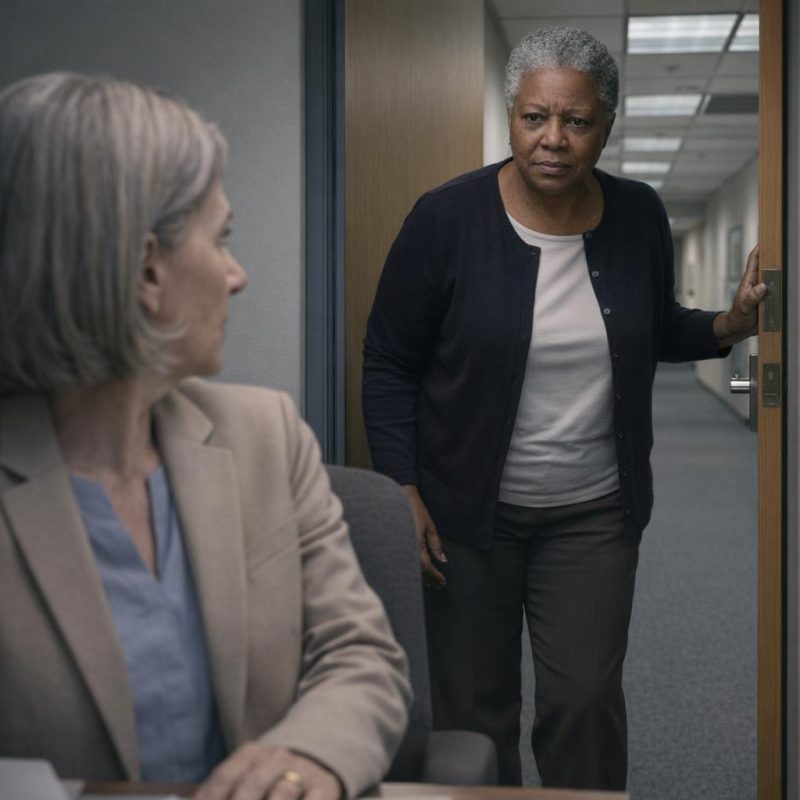 Image by RM AI
The Style Guide
A glossy printed booklet appeared on my desk the next morning, positioned precisely in the center of my workspace like someone had measured the placement. The cover read 'Anderson & Klein Professional Image Standards: Executive Edition' in elegant serif font, the paper stock expensive enough that I could feel the quality before I even opened it. I flipped through pages of suggested clothing brands and grooming guidelines, each section more detailed than the last. Recommended suit labels, acceptable shoe styles, appropriate accessories for various client meetings. The language was professionally written, carefully neutral, the kind of corporate-speak that made it hard to object to without sounding unreasonable. But the price tags made my stomach drop. A single blouse from the suggested brands cost what I usually spent on a week's groceries. The watches and bags carried four-figure price points. I did the math in my head—outfitting myself according to these standards would cost more than my car payment for months. Maybe a year. There was no note, no explanation, no context for why this had appeared or whether compliance was expected or merely suggested. I flipped through pages of suggested clothing brands and grooming guidelines, each item carrying a price tag that exceeded my monthly car payment.
 Image by RM AI
Fresh and Polished
During the Thursday staff meeting, Chloe unveiled her vision for what she called a 'fresher, more polished image' to attract the younger investor demographic the firm needed to court. She'd prepared a whole presentation, complete with slides showing contemporary professional aesthetics and market research about client perceptions. The language was all about the firm's brand, the company's positioning, nothing that explicitly mentioned individuals. But as she spoke about updating our look and modernizing our presence, her eyes kept drifting to certain people in the room. The longer-tenured employees. Those of us who'd been here since before the digital transformation, before the rebrand, before the glass offices replaced the old wooden ones. Margaret sat two seats down from me, and I saw her unconsciously smooth her cardigan when Chloe's gaze passed over her. I found myself suddenly aware of my own blazer, the one I'd worn to dozens of successful client meetings, wondering when it had become inadequate. The presentation continued with talk of contemporary professional standards and competitive positioning, but I had the uncomfortable feeling we were the 'before' picture in her imagined makeover.
 Image by RM AI
The CEO's Distance
I passed Robert in the hallway the next afternoon, hoping to catch up with my old colleague who'd risen to CEO over the years we'd both spent climbing through the firm. We'd started as junior associates together, back when the office was half this size and everyone knew everyone's name. "Robert, hey—" I started, but he offered only a distracted nod, his attention already on his phone as he hurried past toward another meeting. No pause, no recognition of the shared history, no acknowledgment that we'd once spent late nights in the archives together, learning the business from the ground up. I stood there in the empty hallway, watching him disappear around the corner, and felt something shift in my chest. When had he become too busy to remember the people who'd built this firm alongside him? When had I become just another employee to manage rather than a colleague who'd been there through the growth, the struggles, the victories that had made Anderson & Klein what it was today? I remembered when we were both junior associates together, and wondered when he'd become too busy to remember the people who'd built this firm alongside him.
 Image by RM AI
A Pattern Emerges
Two more style guides appeared over the following week—one focused on 'age-appropriate grooming' and another on 'contemporary professional footwear'—each landing on my desk without a word. No email announcement, no staff meeting, no explanation. Just glossy printed materials that appeared like passive-aggressive notes, complete with brand recommendations and photos of models who all looked like they'd graduated college last year. I flipped through the footwear guide during my lunch break, noting the specific designer labels highlighted in the margins, the subtle emphasis on 'current trends' versus 'dated styles.' The grooming guide was worse—suggestions about hair color maintenance and makeup techniques that felt less like professional development and more like a makeover intervention. I mentioned it to Margaret when she stopped by my desk that afternoon, and she pulled an identical set from her bag with a tired smile. 'Got mine yesterday,' she said quietly. As I looked around the office over the next few days, I started noticing something that made my stomach tighten. The guides seemed to be appearing on desks in a very specific pattern—those of us who'd been here longest, who remembered when this firm was half its current size, who'd built our careers before Chloe was even born. Meanwhile, the newer hires walked past our desks without a single glossy pamphlet cluttering their workspace, their contemporary footwear apparently requiring no correction at all.
 Image by RM AI
Removed from the Room
Jennifer from HR forwarded Chloe's email to me on a Thursday afternoon, the subject line reading 'Brennan Industries Presentation - Team Adjustment.' I opened it expecting a scheduling change or maybe a request for background materials. Instead, I found three crisp paragraphs explaining that the presentation would be handled by newer team members better suited to the client's 'contemporary expectations' and 'evolving brand alignment.' The language was corporate-smooth, professionally vague, the kind of phrasing that sounded reasonable until you actually thought about what it meant. I read it twice, then a third time, my coffee going cold beside my keyboard. There was no mention of performance issues, no client complaints, no concrete reason beyond those carefully chosen words about contemporary expectations. Jennifer's follow-up message was brief: 'Please let me know if you have questions. I'm available to discuss.' I could practically hear the discomfort in her typed words, the awkwardness of a messenger who knew exactly how this would land. I didn't respond immediately. I just sat there, staring at my screen, thinking about the fact that I had personally managed the Brennan account for fifteen years. I'd been there for their expansion into the Midwest, their restructuring in 2015, their leadership transition two years ago. I'd closed their largest contract just six months ago, a deal that had taken eight months of negotiations and had earned me a personal thank-you from their CEO. And now, apparently, I wasn't contemporary enough to present to them anymore.
 Image by RM AI
Back-Office Exile
My new assignment arrived via calendar invite the following Monday: 'Archive Reorganization Project - Full-Time Assignment.' No meeting to discuss it, no conversation about my other responsibilities, just a blocked calendar and a brief description about modernizing the basement physical archives. The task would keep me away from clients and visible projects for the foreseeable future, buried in decades of paper files that genuinely did need organizing but had never been anyone's full-time job before. I took the stairs down to the basement that afternoon, flipping on the fluorescent lights that buzzed and flickered before settling into their harsh glow. Rows of filing cabinets stretched along the walls, boxes stacked on metal shelving, the accumulated paper trail of a firm that had grown from a small practice into a regional powerhouse. This had been my domain for decades—I knew these files better than anyone, had built the original system, had trained others on how to navigate it. But I'd never been asked to work here exclusively, to spend my days in this windowless space instead of in conference rooms and client meetings. I ran my hand along one of the cabinet handles, feeling the cool metal under my fingers. The archives were important, the work was legitimate, and I couldn't exactly refuse a direct assignment from the COO. But standing there in the fluorescent silence, surrounded by decades of institutional memory, I couldn't shake the feeling that I was being filed away myself, tucked into storage where I wouldn't be visible, wouldn't be contemporary, wouldn't remind anyone that this firm had a history before Chloe arrived to rebrand it.
 Image by RM AI
Digital Layers
Derek from IT found me in the basement archives three days into my new assignment, laptop bag slung over his shoulder and that friendly grin that made him seem younger than he probably was. 'Hey, Chloe mentioned you might need help with the new digital filing system interface,' he said, setting up his laptop on one of the clear spaces I'd created. 'Figured I'd walk you through it before you get too deep into the physical stuff.' I appreciated the gesture—Derek had always been helpful, never condescending about technology the way some of the younger staff could be. He pulled up the system and started showing me how the scanning integration worked, how the old physical receipt system had been migrated into cloud storage, how everything now lived in multiple places at once. 'It's pretty sophisticated,' he explained, clicking through the expense tracking module. 'See how it cross-references the physical files with the digital entries? You can track everything from purchase orders to reimbursements, all linked together.' I leaned in, watching as he demonstrated the search functions, the way you could pull up a single transaction and see both the scanned receipt and the digital record. It was impressive, actually—seamless integration between decades of paper trails and modern cloud systems. But as I watched him navigate through the layers, something occurred to me. The system was so smooth, so perfectly integrated, that discrepancies between the two would be nearly impossible to spot unless you knew both systems intimately, unless you understood how the old physical files were supposed to match the new digital entries. 'You're picking this up faster than most people,' Derek said, closing his laptop. 'Guess that's what happens when you actually know the original system.' He had no idea how right he was.
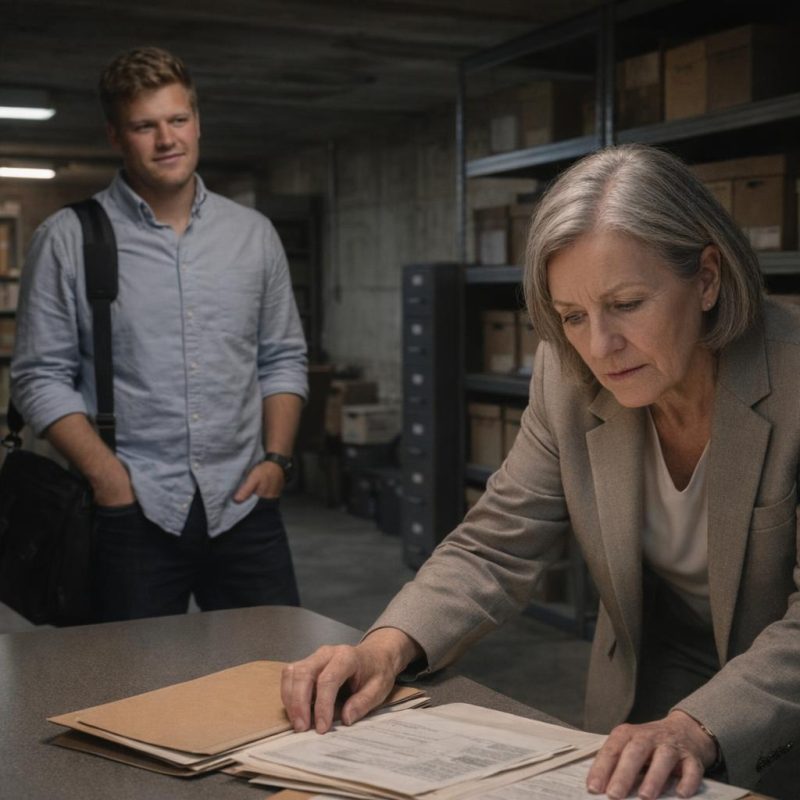 Image by RM AI
Off-Brand
In the break room the following Tuesday, I was refilling my coffee when I heard Chloe's voice from around the corner, that polished tone she used when talking to the junior associates she was cultivating. I wasn't trying to eavesdrop—I was just standing there, waiting for the coffee to finish brewing, when her words carried clearly through the space. 'The traditional look just doesn't work anymore,' she was saying. 'I mean, it's fine for some firms, but it's off-brand for the new Anderson & Klein we're building. We need people who look like they belong in this decade, you know?' There was a murmur of agreement from whoever she was talking to, and she continued. 'Some of the longer-term staff just don't get that image matters now. It's not personal, it's just business reality.' I stood there, frozen with my empty mug, feeling heat rise up my neck that had nothing to do with the coffee maker. She didn't know I was standing just around the corner, didn't know I could hear every word of her casual dismissal. The cruelty wasn't in her tone—she sounded perfectly reasonable, like she was discussing office supplies or meeting schedules. That somehow made it worse, the way she could reduce twenty-five years of my career to an image problem, a branding issue, something off-trend that needed to be updated or removed. I set my mug down carefully, my hands steadier than I expected, and walked back to the basement stairs without getting my coffee. Her words carried the casual cruelty of someone who'd never considered I might hear them, who'd never thought I warranted that much consideration at all.
 Image by RM AI
Lunch Confessions
Margaret found me staring at my untouched salad in the corner booth of our usual lunch spot, and without asking, she knew something had shifted. She slid into the seat across from me, set down her own lunch, and just waited. I told her about the overheard conversation, about the 'off-brand' comment that had been rattling around in my head for two days. About how all the small things—the style guides, the Brennan removal, the basement assignment—suddenly felt connected in a way I couldn't quite articulate but couldn't ignore either. Margaret listened, her warm eyes steady on mine, and when I finished, she was quiet for a moment. Then she said, 'Three people have taken early retirement packages since Chloe arrived. Did you know that?' I hadn't. 'Tom from accounting, Susan from client services, and Paul from legal. All of them had been here over twenty years.' She pulled out her phone, scrolling through something. 'Susan told me she'd been getting the same style guides you mentioned. Tom said his assignments had shifted to back-office work. Paul just said he was tired of feeling like he didn't fit anymore.' She looked up at me. 'They all left within six months of Chloe's arrival, and they all got those same glossy pamphlets about contemporary professional standards.' We sat there in the lunch rush noise, two women who'd built careers at a firm that suddenly seemed to be suggesting we'd outlived our usefulness. She told me three other long-term employees had already taken early retirement packages since Chloe arrived, and all of them had received the same style guides I'd been getting.
 Image by RM AI
The Summons
Jennifer's calendar invitation arrived on Wednesday morning with clinical formality: 'Performance Review Meeting - Required Attendance' scheduled for the following Tuesday in the HR conference room. I stared at the notification on my screen, my coffee going cold in my hand. The meeting details were sparse—just the time, location, and a note that Jennifer and Chloe would both be present. No agenda, no preparation materials, no indication of what would be discussed. I pulled up my personnel file, scrolling through twenty-five years of performance reviews, every single one glowing. Exceeds expectations. Exceptional client relationships. Invaluable institutional knowledge. The words blurred together as I scrolled, a quarter-century of documented excellence that should have made this meeting unnecessary. My last review had been in January, just before Chloe arrived—Robert himself had written it, praising my handling of the Brennan contract and my mentorship of junior associates. That was nine months ago. Standard review cycles were annual, sometimes every eighteen months for senior staff. This meeting, scheduled just three months after Chloe's arrival, felt like a deviation from every pattern I'd learned in my decades here. I accepted the invitation because I had to, because refusing would be insubordination, because I still didn't have anything concrete to point to beyond a feeling in my gut. But I had received glowing performance reviews for twenty-five consecutive years, and the timing of this one—just three months after Chloe's arrival—filled me with dread I couldn't entirely explain.
 Image by RM AI
The Performance Improvement Plan
Jennifer slid the manila folder across the conference table, her expression carefully neutral as I opened it to find a formal Performance Improvement Plan with my name at the top. The document was professionally formatted, corporate letterhead at the top, signature lines at the bottom, the whole apparatus of HR procedure deployed with bureaucratic precision. Chloe sat to Jennifer's left, her posture perfect, her expression attentive but distant, like she was observing a routine process rather than dismantling someone's career. I scanned the first page, my hands steady despite the shock radiating through my chest. There were no client complaints listed. No missed deadlines. No errors in my work. No concrete failures of any kind. Instead, the document cited 'failure to meet professional image standards of the executive suite' and 'misalignment with contemporary firm branding expectations.' The language was maddeningly vague, subjective enough to be impossible to dispute but specific enough to be documented. Jennifer walked me through the improvement timeline—ninety days to demonstrate 'meaningful progress' in areas that were never quite defined. There would be weekly check-ins, progress assessments, documentation of efforts made. I listened, nodding at appropriate moments, asking clarifying questions in a voice that sounded remarkably calm. Inside, I was calculating how many years I'd given this firm, how many late nights and weekend calls and client emergencies I'd handled without complaint. As I scanned the document, my hands steady despite the shock, I saw that the listed deficiency was a failure to meet 'professional image standards of the executive suite.'
 Image by RM AI
Reading Between the Lines
I sat in my car in the parking garage for twenty minutes after the meeting, the manila folder open on my steering wheel, reading through the Performance Improvement Plan with the kind of focus I usually reserved for complex client contracts. The fluorescent lights overhead flickered occasionally, casting shadows across the pages as I went through each section line by line. Every phrase was carefully constructed—'professional image standards' without defining what those standards were, 'contemporary branding expectations' without metrics to measure them, 'meaningful progress' without benchmarks to demonstrate it. The timeline was precise: ninety days, weekly check-ins, documented assessments. But the actual requirements? Maddeningly vague. I could update my entire wardrobe, change my hair, follow every suggestion in those style guides, and still be told I hadn't made 'meaningful progress' because there was no objective way to measure success. The document provided perfect legal cover—it looked official, followed proper HR procedures, created a paper trail. But it was designed to be unwinnable, a maze with no exit. Someone had constructed this with real expertise, understanding exactly how to create documentation that would protect the firm while making my position completely untenable. The document was expertly crafted to provide legal cover while making my position untenable—whoever created it understood employment law well.
 Image by RM AI
The Truth Becomes Clear
I drove home through rush hour traffic, the Performance Improvement Plan sitting on the passenger seat like an unwanted companion, and let myself think the thoughts I'd been pushing away for weeks. The highway was packed, brake lights stretching ahead in an endless red ribbon, giving me plenty of time to stop pretending this was about professional development or constructive feedback. Chloe wasn't trying to manage me. She wasn't trying to help me adapt to new firm standards or grow into a different role. She was trying to erase me. The style guides, the role reduction, the public comments about my appearance, and now this impossible-to-satisfy improvement plan—it was all designed to push me toward one outcome: resignation. She wanted me gone, and she wanted me to leave voluntarily so there'd be no awkward questions, no severance negotiations, no uncomfortable explanations to clients who'd worked with me for years. I merged onto the exit ramp, my hands steady on the wheel even as my chest felt tight with the weight of finally acknowledging what I'd been avoiding. The pattern was undeniable once I stopped making excuses for it. The question was whether she wanted me gone simply because I didn't fit her aesthetic, or if there was something else she was afraid I might see.
 Image by RM AI
The Retirement Timeline
I spread my financial documents across the kitchen table that evening—retirement account statements, savings balances, mortgage information, monthly expense projections. The numbers didn't lie, even when I wanted them to. I'd been planning to work until sixty-five, maybe sixty-six if I was still enjoying it, building my retirement accounts to a level that would let me travel, help my niece with college, live comfortably without worry. Leaving now, at sixty, would mean cashing out five years too early, taking the tax hit, watching my carefully built nest egg shrink by a third. I ran the calculations three different ways, adjusting variables, trying to find a scenario that worked. Every version came back the same: early retirement meant financial uncertainty for at least five years, maybe longer depending on market conditions and healthcare costs. I'd lived through enough economic cycles to know that 'probably fine' wasn't the same as 'actually secure.' I'd worked too hard, saved too carefully, planned too methodically to let someone half my age force me into a position where I'd spend my retirement years worried about money instead of enjoying the freedom I'd earned. The numbers were clear: leaving now would mean financial uncertainty for at least five years, and I had worked too hard to let someone half my age force me into premature retirement.
 Image by RM AI
Drawing a Line
I closed the financial spreadsheets and sat in the quiet of my kitchen, the evening light fading through the windows, and made a decision that settled into my bones with absolute certainty. I wouldn't resign. I wouldn't apologize for my appearance or scramble to meet vague standards that shifted whenever I got close to them. I wouldn't make Chloe's job of erasing me any easier by quietly disappearing like she clearly wanted. She'd constructed this whole apparatus—the style guides, the role changes, the Performance Improvement Plan—to pressure me into leaving voluntarily, to make staying so uncomfortable that resignation seemed like the easier path. But I'd spent twenty-five years at this firm, built relationships with clients who trusted me, earned performance reviews that documented my value year after year. I had leverage she probably hadn't counted on: a spotless record and institutional credibility that would make my sudden departure raise questions. If she wanted me gone badly enough to go through all this effort, she could fire me outright and deal with the consequences. She could explain to Robert and the board why she was dismissing a senior consultant with impeccable performance reviews and a quarter-century of client relationships. If she wanted me gone, she would have to fire me outright and face the questions that would come with dismissing a twenty-five-year employee with impeccable performance reviews.
 Image by RM AI
Building the Record
I opened a new file on my personal laptop that evening, creating a folder structure that would keep everything organized and backed up to my private cloud storage where the firm's IT department couldn't access it. The act of documentation brought a strange sense of calm, turning the chaos of the past weeks into something concrete and manageable. I started with the style guides, copying the text and saving the PDFs with dates and timestamps. Then I went through my email, forwarding relevant messages to my personal account—Chloe's comments about client meetings, the role reduction announcement, the Performance Improvement Plan itself. I created a timeline document, listing every interaction I could remember: the first comment about my blazer, the meeting where she suggested I might be 'more comfortable' in a reduced role, the coffee area conversation Margaret had witnessed. For each entry, I noted the date, time, location, what was said, and who else was present. The process took hours, but by the time I finished, I had a comprehensive record of everything that had happened since Chloe's arrival. It wasn't evidence of anything illegal, but it was a pattern, documented and preserved. If this was going to escalate, I needed a paper trail of my own, one she couldn't access or delete.
 Image by RM AI
Designer Details
I noticed Chloe's handbag the next morning in the executive suite coffee area, sitting on the counter while she fixed her usual almond milk latte. It was one of those limited-edition pieces I recognized from a magazine article I'd flipped through at the dentist's office—a luxury brand collaboration that had sold out within hours of release. The article had mentioned the price: more than my monthly mortgage payment. I poured my coffee, trying not to stare, but I couldn't help cataloging the other items I'd seen her carry over the past weeks: the designer sunglasses that lived on top of her head like a headband, the watch that caught the light whenever she gestured during meetings, the rotation of handbags that seemed to change with her outfits. Each piece was distinctive, the kind of thing you noticed because it was meant to be noticed. She had several such items rotating through her wardrobe, and I found myself wondering how a thirty-year-old middle manager afforded a closet that belonged in a fashion editorial. Maybe she came from family money, or maybe her generation just prioritized different things—spending on image and experience rather than retirement accounts and sensible savings. It wasn't my business either way, but standing there with my practical tote bag and off-brand coffee mug, I couldn't help the brief flash of curiosity about how the other half lived.
 Image by RM AI
The Exodus
Margaret mentioned it during our coffee break on Thursday, her voice low even though we were alone in the small conference room we'd claimed for our fifteen-minute escape. Tom from accounting had accepted an early retirement package, effective end of month. That made him the fourth long-tenured employee to leave in three months—first Susan from client services, then David who'd run operations for fifteen years, then Patricia from the legal team, and now Tom. We sat with our coffee going cold, both of us doing the math. 'They're all over fifty-five,' Margaret said quietly, stirring her cup without drinking. 'Every single one.' I nodded, thinking about the conversations I'd had with each of them before they left, the careful way they'd described their decisions as 'personal choice' and 'good timing' without quite meeting my eyes. Some had mentioned new initiatives they didn't feel equipped for, others had talked about feeling out of step with the firm's direction. None had said they were being pushed, but none had seemed genuinely ready to go either. 'How many of us are left?' I asked. Margaret counted on her fingers, naming the employees who'd been here longer than a decade. The list was getting shorter. We were being quietly culled, and I wondered how many of us would remain by year's end if this continued.
 Image by RM AI
The Rebranding Budget
Chloe unveiled the rebranding initiative at the quarterly meeting with the kind of polished presentation that made everything look inevitable and necessary. The conference room screen filled with sleek mockups: redesigned office spaces with modern furniture and better lighting, updated marketing materials with contemporary fonts and imagery, a series of client outreach events at upscale venues around the city. She walked through each component with confident precision, explaining how the investment would position us to attract younger investors and compete with firms that had already modernized their public image. The budget was substantial—six figures for the office redesign alone, plus marketing costs and event expenses. Robert asked a few questions about timeline and vendor selection, but his tone was supportive rather than skeptical. The other board members nodded along, clearly impressed by her vision and the professional quality of her presentation. When the vote came, the approval was unanimous. I sat in my usual seat near the back, watching the whole thing unfold with a mixture of resignation and mild disbelief at how easily a budget that size had sailed through. Margaret caught my eye from across the table, raising her eyebrows slightly. The board approved the expenditure without much discussion, trusting in her vision for modernizing our public image.
 Image by RM AI
After Hours
I stayed late in the office three nights that week, working through the basement archives and updating the digital filing system as assigned. The fluorescent lights down there hummed constantly, and the air smelled like old paper and toner cartridge dust. I'd pull boxes from the metal shelving units, cross-reference the physical files against Derek's new database entries, and make notes about which documents still needed scanning. It was tedious work, the kind that made my eyes tired after a few hours, but nobody bothered me down there. No polite emails reassigning my responsibilities. No carefully worded suggestions about my wardrobe. Just rows of filing cabinets and the steady rhythm of matching paper to pixels. By the third night, I'd developed a system—pull five boxes, verify contents, update records, reshelve, repeat. The building was quiet after six, just the hum of the climate control and the glow of my desk lamp, and I found an odd comfort in the solitary work.
 Image by RM AI
Countdown to Evaluation
Jennifer's follow-up email arrived with clinical precision, scheduling my second evaluation meeting for the following Thursday at two o'clock. The subject line read "Performance Review Follow-Up" and the message itself was three sentences long, each one perfectly neutral in tone. She'd attached a copy of the original Performance Improvement Plan for my reference, as if I might have forgotten the vague standards I was supposedly failing to meet. I read it twice, then filed it in the folder I'd created specifically for this situation. Margaret stopped by my desk that afternoon and asked if I was okay, her voice low enough that nobody else would hear. I told her I was fine, which wasn't exactly true but wasn't exactly false either. The Performance Improvement Plan had given me thirty days to address the vague image standards, and I had no intention of pretending to comply.
 Image by RM AI
The Subtle Squeeze
Chloe began reassigning my remaining client contact tasks to junior associates, each transfer accompanied by an email thanking me for my years of service on that account. The Hendricks portfolio went to a woman who'd been with the firm for eighteen months. The Morrison trust got handed to someone who still asked me questions about basic estate procedures. Every message followed the same template—appreciation for my past contributions, confidence in the transition, excitement about fresh perspectives on long-standing relationships. I couldn't argue with any of it without sounding petty or territorial. What was I supposed to say, that I didn't trust the new people? That clients specifically requested me? Chloe had made sure each reassignment came with reasonable justification, usually something about workload balance or professional development opportunities for younger staff. Robert cc'd on every email, nodding along to the logic. The language was polite and the rationale always sounded reasonable, but my role was shrinking to nothing one courteous message at a time.
 Image by RM AI
The Line Holds
When Margaret asked gently if I'd considered the retirement package that Tom and the others had accepted, I told her I wasn't going anywhere. We were in the break room, both of us refilling our coffee mugs during the mid-afternoon lull. She'd brought it up carefully, mentioning that the package was actually quite generous, that some people would be grateful for the opportunity to leave on good terms with full benefits. Her tone made it clear she was exploring options as a friend, not pushing an agenda. I appreciated that, I really did. But I'd spent twenty-five years building my career at this firm, and I wasn't about to let a series of polite emails and wardrobe critiques push me out the door. I told Margaret I understood why Tom had taken the deal, why it made sense for people who were ready to move on. Then I said I wasn't ready, and I wasn't leaving. I had drawn my line, and whatever came next, I would face it here, in the job I'd held for twenty-five years.
 Image by RM AI
Into the Archives
I descended into the basement archives with renewed purpose, pulling client files from the past decade and reviewing the meticulous records I'd maintained for so many years. The files told a story of steady, reliable work—quarterly reports filed on time, client communications documented properly, investment recommendations backed by thorough research. I'd always been careful about documentation, maybe because I'd seen what happened when people weren't. Every phone call logged, every meeting summarized, every decision justified in writing. Looking through those files now, I could see the value I'd brought to the firm, the relationships I'd built, the trust I'd earned from clients who'd stayed with us for decades. But I also found myself paying attention to things I'd never really focused on before—how the filing systems worked, where different types of records were stored, how the old paper trail connected to the new digital databases. As I worked through the files, I found myself looking not just at what was there, but at what patterns might emerge from the intersection of old paper records and new digital systems.
 Image by RM AI
Cross-Reference
I spent Tuesday evening cross-referencing physical receipt copies with their digital entries in the new expense system, initially just to understand how Derek's integration actually worked. He'd explained it to me weeks ago, but I'd never really dug into the mechanics of it. The basement archives still held boxes of physical receipts—restaurants, office supplies, client entertainment, travel expenses—all the paper backup that used to be our primary record-keeping method. Now those same transactions lived in Derek's database, searchable and sortable with a few clicks. I pulled receipts at random and looked them up in the system, curious about how accurately the data had transferred. Most of it was perfect, honestly. A dinner receipt from March matched its digital entry exactly, down to the tip amount. A hotel bill from last summer showed up with all the right dates and cost breakdowns. The systems aligned perfectly for most entries, but I noticed a handful of transactions where the digital record was oddly vague compared to the specific physical receipt.
 Image by RM AI
System Study
I asked Derek to walk me through the expense reporting system in more detail, explaining that I wanted to understand the new workflow thoroughly. He seemed pleased that I was taking an interest, probably because most of the senior staff had treated his integration project like an inconvenience rather than an improvement. We sat at my desk while he pulled up the interface on my computer, clicking through screens and explaining each feature with genuine enthusiasm. Managers could categorize expenses under different project codes, he showed me, which made it easier to track spending by initiative rather than just by date or person. There were override options too, so if the system auto-categorized something incorrectly, you could change it manually. The batch-processing feature was particularly clever—you could upload multiple receipts at once and assign them all to a single project code with just a few clicks, saving time on repetitive data entry. He showed me how managers could categorize expenses, override default categories, and even batch-process multiple purchases under single project codes, all features designed for efficiency.
 Image by RM AI
Numbers That Don't Add
While reviewing expense reports filed under the rebranding initiative, I noticed that several high-value transactions lacked the supporting documentation typically required for purchases over five thousand dollars. Company policy was clear about this—anything above that threshold needed itemized receipts, vendor contracts, or detailed invoices attached to the expense report. I'd processed enough of these over the years to know the standard. But here were entries for eight thousand, twelve thousand, even fifteen thousand dollars, all categorized under vague project descriptions like "venue consultation" or "design services" with nothing but a total amount and a date. Maybe the receipts were filed somewhere else, or maybe someone had forgotten to attach them when uploading to the new system. Technical glitches happened, and people made mistakes with unfamiliar software. I couldn't jump to conclusions based on missing paperwork. The absence might have been an oversight, or it might have been something else, but I couldn't ignore the uneasy feeling that settled in my stomach.
 Image by RM AI
The Shredder Bins
I started checking the communal shredder bins before the cleaning crew made their rounds each night. It felt ridiculous at first, like something out of a corporate thriller, but the missing documentation bothered me enough that I couldn't let it go. The bins were located in the copy room on each floor, large rolling containers that collected everything scheduled for secure destruction. Most of what I found was exactly what you'd expect—outdated client files, duplicate reports, draft presentations covered in red pen. But on Tuesday evening, tucked between stacks of routine paperwork, I pulled out physical receipt copies that made me pause. They were crisp, recent, printed on thermal paper that hadn't started to fade yet. Someone had tossed them deliberately, marking them for destruction rather than filing them with the corresponding expense reports. I smoothed them out on the edge of the shredder bin, scanning the vendor names and amounts. Luxury retail stores. Designer boutiques. Purchase totals that ran into the thousands. I couldn't immediately connect them to any legitimate business expense I knew about, but that didn't mean they weren't legitimate. Maybe they were client gifts, or office furnishings, or something for the rebrand I hadn't been briefed on. Among the scheduled shredding were physical receipts for luxury retail purchases that I couldn't immediately connect to any legitimate business expense.
 Image by RM AI
First Night
I stayed until nearly midnight on Wednesday, spreading the retrieved receipts across my desk in the dim glow of my monitor. The office was silent except for the hum of the HVAC system and the occasional creak of the building settling. I organized everything methodically—one pile sorted by date, another by vendor, a third arranged according to the expense categories I'd seen in the digital system. The physical receipts told their own story, and it wasn't the story I'd been reading in the database. Designer handbags from a boutique in SoHo. Jewelry from a shop I recognized from magazine ads. High-end accessories, luxury goods, items that cost more than my monthly mortgage payment. I pulled up the corresponding digital entries on my screen, cross-referencing transaction dates and amounts. Office supplies. Client outreach materials. Promotional items for stakeholder events. The descriptions were professional, appropriately vague, exactly the kind of language you'd use for legitimate business purchases. But they didn't match what I was holding in my hands. Not even close. I sat back in my chair, staring at the two versions of the same transactions laid out in front of me. The physical receipts told a story of designer purchases and high-end retail, while the digital entries described them as office supplies and client outreach materials.
 Image by RM AI
Second Night
Thursday evening, I matched each physical receipt to its digital counterpart in the expense system, documenting every discrepancy in a private spreadsheet on my laptop. I didn't use the company network for this—something told me to keep my findings offline until I understood what I was looking at. Each row in my spreadsheet captured the date, the actual vendor name from the physical receipt, the amount, and the description that had been entered into the system. The contrast was stark. A fifteen-hundred-dollar handbag became 'client appreciation gift basket.' A two-thousand-dollar necklace transformed into 'promotional materials for Q3 outreach.' Designer shoes were listed as 'office comfort equipment.' The language was careful, plausible enough that each individual entry wouldn't raise flags during a routine review. But seeing them all together, the mismatch was impossible to ignore. I worked through the stack methodically, my coffee going cold beside me as the list grew longer. Twenty entries. Thirty. Forty-two by the time I finished. The pattern was undeniable: expensive personal purchases were being disguised as business expenses with clinical precision.
 Image by RM AI
The Expense Categories
I reviewed the submitted expense categories more carefully, pulling up the full project code structure and approval chains in the system. What I found made my stomach tighten. The items weren't all lumped together under one budget line where they'd create an obvious spike. Instead, they were distributed across different project codes—some under the rebranding initiative, others under client development, a few categorized as operational improvements. Each purchase was routed through a different approval chain, spreading them across multiple managers and departments in ways that would make pattern detection nearly impossible during standard reviews. It was sophisticated. Whoever had structured this understood not just how to submit expenses, but how the firm's oversight systems worked, where the gaps were, how to exploit the complexity of our multi-layered approval process. I sat at my desk, the spreadsheet glowing on my screen, and felt a chill that had nothing to do with the office temperature. The distribution wasn't random. It was careful, methodical, designed to avoid triggering the automated flags that would prompt a deeper audit. Whoever had done this understood the system well enough to exploit its complexity, and I began to suspect the trail would lead somewhere I wasn't ready to follow.
 Image by RM AI
Third Night
Friday night, I verified my findings one final time, checking and rechecking every anomaly to make absolutely certain I wasn't seeing patterns where none existed. I'd been wrong before—jumped to conclusions that turned out to be clerical errors or misunderstandings. I couldn't afford to be wrong about this. I went through each receipt again, matching it to the digital entry, confirming the vendor, verifying the amount, checking the date stamps. I looked for alternative explanations. Maybe the descriptions were shorthand. Maybe there was a separate filing system I didn't know about. Maybe the luxury purchases were legitimate and I was missing context that would make everything make sense. But the numbers didn't lie, and neither did the paper trail I'd reconstructed. Every cross-reference confirmed what I'd documented. Every verification strengthened the pattern. I'd found forty-two separate instances where physical receipts showed personal luxury purchases while the digital system described them as routine business expenses. The amounts added up to tens of thousands of dollars, all drawn from budgets that had been approved for the rebranding initiative and related projects. The numbers didn't lie: someone with access to the rebranding budget had diverted company funds for personal luxury purchases.
 Image by RM AI
The Digital Mask
Buried in the expense system metadata, accessible only through the administrative backend I rarely needed to use, I found references to an AI-assisted categorization tool that had been activated three months ago. The timestamp caught my attention immediately—three months ago was right around when the rebranding initiative launched. I clicked through the settings, reading the tool's description and capabilities. It was designed to help managers batch-process expense submissions, using machine learning to suggest appropriate categories and descriptions based on vendor names and purchase amounts. Legitimate use case: a manager submitting twenty receipts from a conference could have them all categorized automatically instead of entering each one manually. The tool would analyze the vendors, recognize patterns, and populate the description fields with appropriate business language. Efficient. Time-saving. Exactly the kind of automation that made sense for a busy executive. But I stared at the activation record, noting which account had enabled it. Chloe's manager credentials. The tool had been turned on within her first two weeks at the firm. And as I read through the technical specifications, I felt something cold settle in my chest. The tool was designed to help batch-process and auto-categorize expenses for efficiency, but in the wrong hands, it would make financial fraud nearly invisible to standard audits.
 Image by RM AI
The Timeline
I mapped out the suspicious expenses on a timeline, creating a visual representation that showed not just what had been purchased, but when. The pattern that emerged was textbook escalation. The first entry appeared in early June, shortly after the rebranding budget was approved—a relatively modest purchase, just under a thousand dollars, categorized as client materials. Then nothing for two weeks. Then another small purchase. The amounts stayed conservative through the first month, as if someone was testing the system, seeing if anyone would notice or question the entries. By July, the purchases increased in both frequency and value. Two thousand here, three thousand there, the intervals between them shortening. August saw the pattern accelerate further—larger amounts, more frequent submissions, the confidence of someone who'd learned the system wouldn't catch them. I traced the progression with my finger on the screen, watching the escalation unfold in real time. September brought the biggest purchases yet, five-figure transactions that would have triggered immediate review if they hadn't been so carefully distributed across different project codes and approval chains. The total was climbing toward tens of thousands of dollars, and I sat back in my chair, processing the magnitude of what I was uncovering.
 Image by RM AI
Designer Proof
I linked the physical receipts to specific luxury retailers, cross-referencing the vendor names with their locations and specialties. Boutiques selling designer handbags in SoHo. A jewelry store in the Diamond District known for estate pieces and custom work. High-end accessory shops that catered to clients with serious money to spend. I knew these places by reputation, had walked past their windows on my way to client meetings, had seen their distinctive shopping bags carried by women who didn't worry about price tags. And then I made the connection that had been hovering at the edge of my awareness for days. The handbag I'd seen Chloe carrying last week—distinctive hardware, unmistakable design. The necklace she'd worn to the stakeholder presentation. The shoes, the scarves, the accessories that had seemed just slightly too expensive for someone three months into a new position. I pulled up photos on my phone from recent meetings, zooming in on details I'd barely registered at the time. The items matched. Not similar—matched. The same designers, the same styles, purchased on dates that aligned with when I'd first noticed them. The evidence was building into something undeniable, and I faced a choice about what to do with information that could destroy a career or vindicate my own.
 Image by RM AI
The Private Account
I started searching online that evening, trying to find any digital footprint that might connect the luxury purchases to their owner. LinkedIn showed me Chloe's professional profile—polished, strategic, carefully curated. Facebook yielded nothing; she didn't appear to have an account under her name. But Instagram was different. I found her main account first, the one linked from her LinkedIn—corporate-appropriate photos, industry events, motivational quotes about leadership. Then I noticed a second account in the suggested profiles, same face but different username. Private, of course. Friends-only access, the kind of account people use when they want to share their real life with a select audience. I couldn't see the posts, couldn't scroll through the feed, couldn't access anything beyond the basic profile information. But the profile picture was public, and I recognized it immediately. She was posing with a handbag—distinctive hardware, unmistakable quilted leather pattern. I'd seen that exact bag in one of the receipts I'd retrieved from the shredder bin three days ago. Same designer, same style, purchased on a date that aligned perfectly with when I'd first noticed her carrying it to a client meeting. The connection was right there in that tiny circular image, visible to anyone who knew what they were looking at.
 Image by RM AI
Digital Evidence
I couldn't access the private account's full content, but I discovered something almost as useful—tagged photos from public fashion events and industry gatherings. Other people's accounts, set to public, showing Chloe posing at networking receptions and charity galas. And in every photo, she was wearing something expensive. Designer shoes in one image from September. A statement necklace in another from October. The handbag from November. A silk scarf I recognized from a stakeholder presentation in early December. I started taking screenshots, methodically documenting each image with its date and visible accessories. Then I cross-referenced them with my spreadsheet of questionable expenses. The jewelry store receipt from October matched the necklace in a photo tagged two days later. The boutique purchase from September aligned with the shoes she wore to a marketing conference. The pattern was undeniable—each photographed item corresponded to a receipt from the rebranding expense records, and the timeline matched perfectly. I was looking at company money converted into personal luxury, worn proudly in public posts for her curated audience to admire. The evidence was building into something I couldn't ignore, and I began to suspect that what I'd uncovered went far beyond careless accounting or innocent mistakes.
 Image by RM AI
The Running Total
I opened a new tab in my spreadsheet and started compiling the final summary, watching the numbers climb as each questionable entry added to the running total. Fifteen hundred here, three thousand there, eight hundred for something categorized as 'client materials' that matched a designer accessory receipt. The expenses had started small in August, just after Chloe's arrival—a few hundred dollars that could have been legitimate business purchases. But they'd escalated steadily through the fall, growing bolder as the months passed. By December, individual entries were reaching five and six thousand dollars, disguised under vague AI-generated descriptions that sounded plausible enough to slip past casual review. I added the final figure and stared at the number on my screen: forty-seven thousand, eight hundred and sixty-three dollars. Nearly fifty thousand in less than six months. The magnitude of it sat heavy in my chest, a weight that had nothing to do with my own situation and everything to do with what this meant for the firm. It began to look like this wasn't carelessness or accounting errors—someone had been siphoning company funds over months, and the evidence pointed in one troubling direction. I saved the file and closed my laptop, knowing I'd reached a point where I couldn't pretend I hadn't seen what was right in front of me.
 Image by RM AI
The Full Picture
I sat back from my laptop at two in the morning and finally allowed myself to see what the evidence had been telling me all along: Chloe was embezzling company funds to support a lifestyle her salary could never afford. The AI-masking tool she'd championed so enthusiastically wasn't just about efficiency or modernization—it was the perfect mechanism for disguising personal luxury purchases as legitimate business expenses. She'd used it to generate plausible-sounding descriptions that would sail through automated approval systems, counting on the fact that most people wouldn't dig into the physical receipts or cross-reference vendor names with actual business needs. And it had worked, month after month, because she'd been smart about it. Small amounts at first, testing the system. Then larger purchases as her confidence grew. But there was more to it than just the theft itself. I understood now why she'd been so determined to push me toward early retirement, why she'd attacked my appearance and competence so relentlessly, why she'd worked to isolate me from colleagues and decision-makers. She wasn't just trying to push me out because of my appearance—she was afraid that my knowledge of the firm's filing systems, both physical and digital, made me the one person who could catch her. I was the institutional memory, the person who still checked physical receipts, who knew what legitimate expenses looked like, who might notice patterns that didn't add up.
 Image by RM AI
The Decision
I paced my living room as the sun rose, weighing how to present evidence of corporate fraud without appearing vengeful or self-serving. The timing was terrible—my final evaluation was scheduled for tomorrow, the meeting where Chloe would almost certainly recommend my termination. If I waited until after that meeting to report what I'd found, I'd be a disgruntled former employee making accusations against the person who'd fired me. My credibility would be shot before anyone even looked at the evidence. But if I acted now, before the evaluation, I could present the information as a concerned employee fulfilling her duty to report financial irregularities. The distinction mattered. I wasn't doing this for revenge, wasn't trying to save my job by throwing someone else under the bus. I was reporting fraud because it was the right thing to do, because the firm deserved to know that someone had been stealing from them for months. But the optics were complicated, and I knew how easily my motivations could be misinterpreted. I stopped at the window, watching the early morning light spread across the buildings. The board meeting wasn't scheduled for another two weeks, but my final evaluation was tomorrow—I would have to act before Chloe could fire me and discredit my findings. The decision crystallized in that moment, clear and unavoidable.
 Image by RM AI
The Report
I spent Saturday afternoon organizing my evidence into a comprehensive spreadsheet, matching each fraudulent expense entry to its corresponding receipt and Instagram photograph. The document had multiple tabs—one for the chronological expense timeline, another for the physical receipt images, a third for the screenshots from social media. I created a summary page that laid out the pattern clearly: date of expense submission, AI-generated description, actual vendor name from receipt, item visible in public photographs, date of photograph. Each row told a small story, and together they formed an undeniable narrative. I included the original expense reports I'd downloaded from the system, highlighting the vague descriptions that had allowed these purchases to slip through. I added notes about the AI-masking tool's implementation timeline, showing how the fraud had escalated after its introduction. The spreadsheet was color-coded for clarity—red for confirmed fraudulent expenses, yellow for suspicious entries that lacked photographic proof, green for the few legitimate business purchases mixed in. The document told a clear story of embezzlement: dates, amounts, vendors, digital categorizations, and photographic proof of the purchased items adorning Chloe in public posts. I saved it with a neutral filename—'Expense Discrepancy Report'—and backed it up to three different locations. This wasn't about emotion or accusation. It was about facts, presented professionally and irrefutably.
 Image by RM AI
The Waiting Game
I received Jennifer's reminder email about Monday's evaluation meeting and replied with professional courtesy, giving no indication of what I planned to send that night. 'Thank you for the reminder. I'll be there at nine o'clock as scheduled.' Simple, neutral, exactly the kind of response she'd expect from someone who'd spent decades navigating corporate communications. I hit send and returned to my evidence file, reviewing it one more time for any gaps or weaknesses. The spreadsheet was solid. The photographs were clear. The receipts were documented. Everything was ready. Jennifer had no idea what was coming—she was just doing her job, coordinating the administrative details of what Chloe had framed as a routine performance evaluation. I didn't blame her for that. She'd been put in an impossible position, asked to facilitate something that had nothing to do with my actual performance and everything to do with removing a threat to someone's criminal enterprise. I closed the email and looked at the clock. Six hours until I sent the report. Fourteen hours until I walked into that conference room. I would walk into that office tomorrow knowing something Chloe didn't—that her own crimes would arrive in the CEO's inbox hours before she could deliver my termination. The thought steadied me, gave me something to hold onto as the evening stretched ahead.
 Image by RM AI
The Blind Copy
At eleven o'clock Sunday night, I composed an email to the Board of Directors with Robert on blind copy, attaching my spreadsheet and photographs without editorial comment. The message was brief and factual: 'I am writing to report financial irregularities I discovered during routine filing work. The attached documentation shows a pattern of personal luxury purchases disguised as business expenses over the past six months. The evidence includes expense reports, physical receipts, and photographic documentation of the purchased items. I believe this matter requires immediate investigation. Please let me know if you need any additional information.' I read it three times, checking for any hint of emotion or accusation. It was clean, professional, exactly what someone with institutional wisdom would send when faced with evidence of fraud. I added Robert as a blind copy recipient—he'd been CEO for twelve years, had worked with me on dozens of projects, knew my character and my commitment to the firm. If anyone would take this seriously, it would be him. I hovered over the send button for just a moment, feeling the weight of what this would set in motion. Then I pressed send and watched the confirmation appear, knowing that by morning, the evidence would be in the hands of people who had known me for decades and could judge both my credibility and Chloe's character. There was no going back now.
 Image by RM AI
Morning Armor
I woke at five-thirty Monday morning, two hours before my alarm, and lay in the dark listening to my heartbeat. By six I was standing in front of my closet, staring at the row of blazers and cardigans I'd accumulated over twenty-five years. My hand went straight to the tweed jacket—the one with the leather elbow patches that Chloe had once glanced at with barely concealed disdain during a staff meeting. It was dated, she'd probably say. Off-brand for the modern Anderson & Klein. I pulled it on anyway, buttoning it slowly, feeling the familiar weight of the fabric settle across my shoulders. In the mirror, I looked exactly like myself—no apologies, no compromises. The woman staring back had sent an email to the Board of Directors twelve hours ago, had attached evidence of fraud, had set something in motion that couldn't be undone. I smoothed the lapels and thought about how this jacket had seen me through presentations, client meetings, office celebrations, and quiet Fridays when I'd stayed late to finish someone else's filing. It had been good enough for all of that. The jacket felt like armor as I drove to the office, and I wondered whether Robert had seen my email yet, and what he would do if he had.
 Image by RM AI
Radio Silence
I arrived at seven-fifteen to an empty parking lot and a building that looked exactly as it had every Monday for the past two decades. My inbox showed no reply from the board. No message from Robert. No summons to HR, no emergency meeting notification, nothing. I sat at my desk and opened my email three times in the first hour, refreshing compulsively, checking my spam folder like somehow a response from the CEO might have been filtered out by mistake. By nine o'clock, the office had filled with the usual Monday morning energy—people complaining about traffic, comparing weekend stories, carrying coffee to their desks. Nobody looked at me differently. Nobody whispered. The evaluation meeting was scheduled for two o'clock, and as the hours crept by with no response from the board, I began to wonder if my email had been dismissed as the desperate claim of a disgruntled employee. Maybe they'd seen my name and Chloe's and decided it was just office politics. Maybe the evidence I'd thought was irrefutable looked different to people who wanted to believe in their shiny new director. I ate lunch at my desk without tasting it, watching the clock.
 Image by RM AI
Into the Glass Office
At one fifty-eight, I stood up from my desk and walked toward Chloe's office, my legs steady despite everything. Through the glass walls I could see her sitting at her desk, perfectly composed, her blowout fresh and her blazer crisp. She glanced up as I approached, and her expression was professionally neutral—no warmth, but no obvious hostility either. Just the look of someone about to conduct routine business. I knocked once and entered when she nodded. At two o'clock precisely, I walked into Chloe's glass-walled office and took a seat across from her, my heart steady despite the uncertainty of what would happen next. She had a folder on her desk, closed, with my name typed on a label affixed to the tab. Her hands rested on top of it, manicured nails perfectly aligned. For a moment we just looked at each other across the desk, and I thought about all the hours I'd spent gathering evidence, all the receipts I'd photographed, all the spreadsheet cells I'd filled. Chloe opened a folder on her desk and began to speak, her tone professional and final, and I realized with cold clarity that she was about to terminate my twenty-five-year career.
 Image by RM AI
The Speech
"I want to thank you for your years of service," Chloe began, her voice smooth and practiced. "Anderson & Klein has benefited from your dedication, and we recognize the contributions you've made over the past two and a half decades." She paused, glancing down at the folder as if consulting notes, though I suspected she'd memorized this speech. "However, as we discussed during your performance review, the firm is moving in a new direction. We need team members who can adapt to evolving standards and represent the modern face of our organization." There it was again—the same vague language from the PIP, the same careful avoidance of anything concrete. She talked about fit and alignment, about strategic vision and brand positioning, about how sometimes even valued employees reach a natural endpoint. Chloe delivered her prepared remarks about how I wasn't a fit for the future direction of the firm, her words polished and her justifications deliberately vague. "We've prepared a severance package that I think you'll find quite generous under the circumstances," she continued, sliding a paper from the folder. She was halfway through explaining why my severance package was generous under the circumstances when the door behind me opened.
 Image by RM AI
The Interruption
I didn't turn around immediately. I watched Chloe's face instead, watched her eyes flick past me to whoever had entered, watched her expression shift from professional composure to something like confusion. Her mouth was still half-open on whatever she'd been about to say about benefits continuation. "Robert," she said, and now I did turn. Robert walked through the door with Thomas from security behind him, and Chloe's prepared speech died on her lips as she saw their expressions. Robert looked exactly as I remembered from our last project together—graying temples, expensive suit slightly rumpled from what had probably been a very long morning, the weary authority of someone who'd been CEO for twelve years and had seen everything. Thomas stood just inside the doorway, his security uniform crisp, his posture military-straight, his eyes tracking the room with professional attention. Neither of them looked at me. Robert didn't look at me; his eyes were fixed on Chloe, and in that moment I knew my email had reached exactly the right people.
 Image by RM AI
The Tables Turn
Robert held a printed copy of my spreadsheet in his hand—I could see the colored highlighting I'd added, the neat columns of dates and amounts. "Chloe," he said, his voice calm but absolutely firm, "I need you to explain something for me." He set the spreadsheet on her desk, right on top of her termination folder. "These are your expense reports from the past six months. And these"—he tapped a column—"are the actual receipts that were filed in the storage room. There are significant discrepancies." Chloe stared at the paper, and I watched the color drain from her face. "I can explain," she started, but Robert held up his hand. Robert held a printed copy of my spreadsheet and asked Chloe, in a voice that left no room for deflection, to explain the discrepancies between her expense reports and the physical receipts. "The board received a very detailed report last night," he continued. "Complete with photographs and documentation. So I'm going to need more than a general explanation." Chloe's face went white, and I watched as the woman who had spent months trying to erase me realized that her own records had betrayed her.
 Image by RM AI
The Exit
Chloe opened her mouth, closed it, looked down at the spreadsheet like she might find some escape route in the numbers. Her hands were shaking. "I—there must be some mistake," she managed, but her voice had lost all its polish. Robert just waited, his expression unchanged. Thomas stepped forward from his position by the door, and suddenly this wasn't a performance review anymore. "Ms. Patterson," Thomas said, his tone respectful but absolutely professional, "I'm going to need you to gather your personal belongings. You'll be escorted from the building." It happened quickly after that. Chloe stood on unsteady legs, pulled her purse from a desk drawer, grabbed her phone with trembling fingers. Thomas stepped forward and asked Chloe to gather her personal belongings, and she left the office in tears, escorted past the staff she had so recently commanded. Through the glass walls, I could see heads turning, people standing up from their desks to watch. Chloe walked past them with Thomas at her elbow, her face crumpling, her carefully constructed image dissolving with every step. I remained seated in my chair, hands folded, as the glass walls displayed what everyone in the office could now see: the person who called me obsolete was the one being shown the door.
 Image by RM AI
The Apology
After Chloe's departure, Robert turned to me and offered a genuine apology, admitting that leadership had allowed new energy to overshadow the people who had actually built Anderson & Klein. He sat down in the chair Chloe had vacated, suddenly looking every one of his sixty-some years. "I owe you an apology," he said quietly. "Several of us do. We got caught up in the idea of modernization, of bringing in fresh perspectives, and we stopped paying attention to what was actually happening." He rubbed his face with both hands. "Chloe interviewed well. She had impressive credentials, said all the right things about innovation and growth. We were so focused on moving forward that we didn't verify whether the person leading that charge could be trusted." I nodded, not trusting myself to speak yet. "You've been here since before I was CEO," Robert continued. "You've trained half the staff we have now. And we let someone with six months at this firm try to push you out." He shook his head. "That's on us. That's on me." He said they had been so focused on modernization that they had forgotten to verify whether the modernizers themselves could be trusted.
 Image by RM AI
Recognition
The board convened that same afternoon, and I found myself sitting at the head of the conference table with my laptop and three folders of documentation spread in front of me. Robert had asked me to walk them through everything I'd found, and I did—methodically, without drama, the way I'd been presenting information for twenty-five years. I showed them the expense reports with Chloe's signature, the digital records that didn't match, the pattern of alterations that had been happening since her second month at the firm. I explained how the physical filing system had preserved what the digital system had been designed to hide. The directors asked questions, and I answered each one with the same calm precision I'd used when training new hires or explaining budget variances. When I finished, the chairman—a man I'd seen at exactly four company events in a decade—looked at me and said, "We owe you more than an apology, Ms. Chen. We owe you our gratitude and our trust." Robert nodded. "Your institutional knowledge didn't just catch this fraud. It prevented significantly more damage." As I left the conference room, I realized that the company I had served for twenty-five years was finally seeing me clearly.
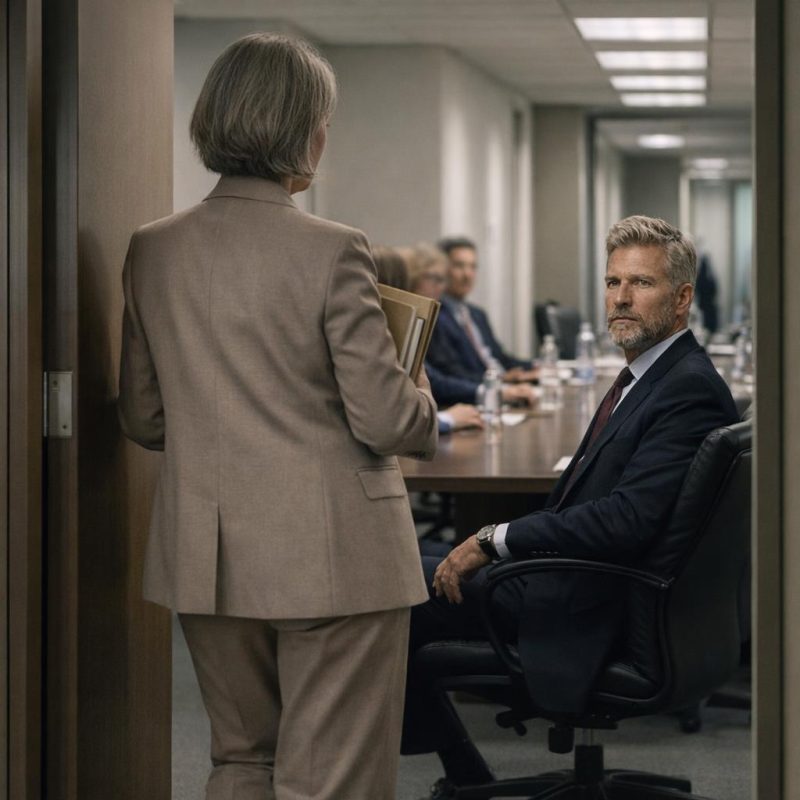 Image by RM AI
New Responsibilities
Robert called me into his office the following Tuesday, and I assumed it was about transition logistics or final documentation for the investigation. Instead, he gestured to the chair across from his desk and said, "I'd like to offer you the position of Head of Operations." I must have looked surprised, because he smiled slightly. "The role would involve establishing oversight protocols, implementing transparent management practices, and ensuring that what happened with Chloe can't happen again." He explained that they needed someone who understood both the systems and the people, someone who could build accountability without bureaucracy. I sat there for a moment, thinking about what accepting would mean—more responsibility, more visibility, more meetings with people who had overlooked me for months. But I also thought about the next person who might sit at my old desk, quietly doing excellent work while someone flashier took credit. I thought about Margaret and the others who had kept their heads down and done their jobs while leadership chased trends. I accepted not because I needed the title, but because I wanted to ensure that what had happened to me would never happen to another loyal employee.
 Image by RM AI
Building Transparency
In my first weeks as Head of Operations, I implemented the expense review protocols that Chloe's scheme had revealed were missing. Every department would now submit both physical documentation and digital records, and they would be cross-checked monthly by someone outside the submitting department. It wasn't complicated—it was just the kind of basic oversight that gets abandoned when everyone assumes the systems are working. I created templates, wrote procedures, and trained the staff who would be responsible for the new processes. My twenty-five years of knowing how information actually moved through Anderson & Klein made me uniquely qualified to design systems that people would actually use instead of work around. I was in my new office—still modest, but with a window—when Margaret stopped by with coffee and that familiar pragmatic smile. She looked around at the filing cabinets I'd already organized and the whiteboard where I was mapping out the new protocols. "Never thought I'd see the day," she said, setting the coffee on my desk, "when the filing systems would get their own advocate in the executive suite."
 Image by RM AI
The Comfortable Loafers
I walked through the office on a quiet Monday morning, wearing my sensible blazer and comfortable loafers, and I realized something that would have seemed impossible six months ago. The future of Anderson & Klein looked exactly like the person who had never left. Not the person in designer heels and carefully curated outfits, not the person who talked about disruption and innovation while dismantling the systems that actually worked. The future looked like someone who understood that institutional knowledge wasn't a liability to be managed but an asset to be valued. I passed the filing room where Margaret was training a new hire on the cross-reference system, passed the break room where the coffee was still mediocre, passed my old desk where someone else now sat doing the quiet, essential work I'd done for so long. My hair was still silver-streaked in its practical bob. My blazer was still off-the-rack and sensible. My loafers were still the comfortable pair I'd worn for three years. Nothing about my appearance had changed, but everything about how the company saw me had shifted. I sat down at my new desk, opened my laptop, and began another day of the work I had been doing for twenty-five years—only now, they finally understood its value.
 Image by RM AI