
When Mom Fell
I got the call on a Tuesday morning, the kind of call you always know is coming but never feel ready for. Mom had slipped in her kitchen reaching for something on the counter, and by the time the neighbor found her, she'd been on the floor for nearly two hours. Broken hip. Surgery scheduled for the next morning. I was in my car within twenty minutes, but the drive felt endless — nearly an hour of white-knuckling the steering wheel and telling myself she'd be okay. When I got to the hospital, Valerie was already there, sitting close to Mom's bed, holding her hand. Mom looked so small under those thin blankets, her silver hair loose around her face, her eyes watery and a little lost. The surgery went well, the doctors said, but recovery would take months. That's when Valerie said it — quietly, like it was the most natural thing in the world. She said she wanted to move in with Mom, at least through the recovery, maybe longer. She lived only fifteen minutes away. It made sense. Everyone said so. Tom called that evening and said Valerie was a saint. I agreed with him. I drove home that night with my hands finally steady on the wheel, and the relief of knowing Mom wouldn't be alone settled over me like something warm.
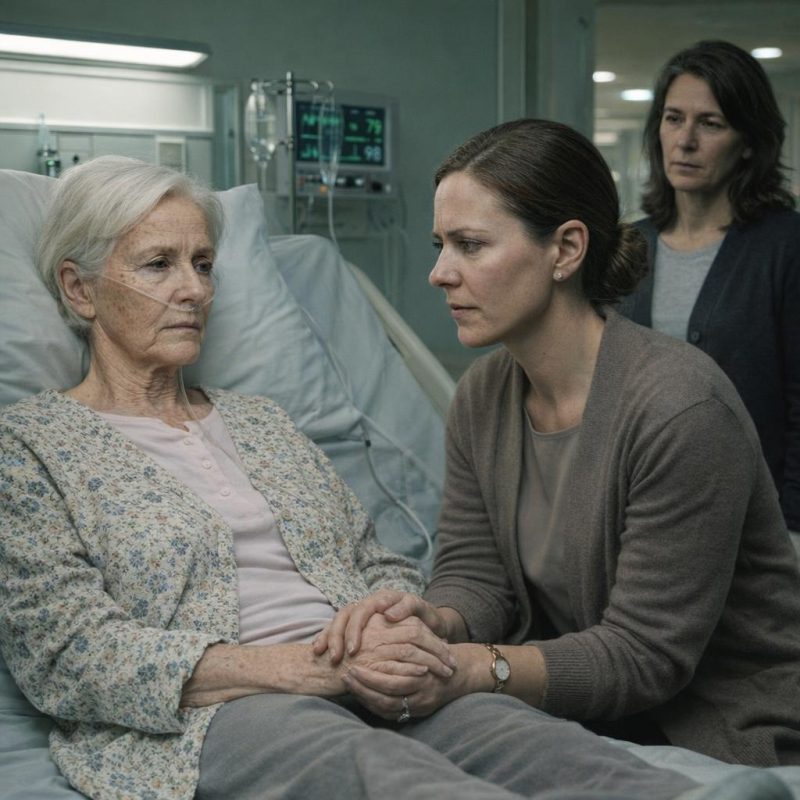 Image by RM AI
The Unanswered Calls
I'd called Mom every morning for years — it was just what we did. Seven-thirty, before her shows came on, before the day got away from either of us. After Valerie moved in, I kept the routine going without thinking twice. At first the missed calls felt easy to explain. Mom was tired from physical therapy. She was napping. She was in the bathroom. I left cheerful voicemails and told myself I'd catch her tomorrow. But the misses started stacking up, three in a row, then four, and when she did answer, the calls felt clipped. Short. Like she was reading from a list of things she was supposed to say and running out of items. I told myself it was the recovery. Healing takes it out of you at eighty-one. I told myself Valerie was probably keeping her on a schedule, which was probably good for her. I wanted to believe that. One morning Mom picked up on the second ring and I felt a little rush of relief, and we were talking about nothing in particular — the weather, her knee swelling — when I heard it. A voice in the background, close and clear. Valerie's voice, low and even, saying Mom didn't need to answer right now.
 Image by RM AI
Distant Voices
A few days after that, Mom answered on the first ring and I felt genuinely hopeful. Her voice was there — I could hear her in it — but something about it sat flat, like a familiar song played in the wrong key. She asked how I was doing and I told her, and then there was a pause that stretched a beat too long before she said that was nice. I asked about her physical therapy and she said it was fine, she thought, or maybe they'd changed the schedule, she wasn't sure. I asked about the aide who came on Thursdays and she couldn't remember the woman's name, which I understood — names slip. But then she lost the thread of what we were talking about entirely, mid-sentence, and just trailed off into a soft sound that wasn't quite a word. I filled the silence for her, kept my voice light, asked about the roses she'd planted along the back fence last spring. She said she didn't know about any roses. I let it go. I told myself eighty-one is eighty-one, and a broken hip takes more out of a person than just the bone. I told myself the surgery, the pain medication, the disruption to her routine — all of it could do this to a person. I held onto that. But the flatness in her voice when she said goodbye stayed with me long after I set the phone down.
 Image by RM AI
The Birthday I Attended
Mom called me on a Wednesday afternoon, which was unusual enough that I answered on the first ring. Her voice had that careful, deliberate quality it sometimes got when she was working up to something. She said she'd been feeling hurt. She said it had been hard, not having me there for her birthday. I went very still. I had been there for her birthday. I remembered the cake Valerie had ordered — lemon, with the pale yellow frosting — and the way Mom had laughed when Tom's youngest knocked a fork off the table. I had photos on my phone from that afternoon, Mom in her chair by the window with the paper crown Emily had made her. I told Mom that gently. I said I was there, I was right there, I sat beside her for most of the afternoon. There was a long pause. She said she didn't remember that. I pulled up the photos while we were still on the phone and described them to her — the crown, the cake, the sunlight coming through the curtains. She went quiet in a way that didn't feel like disbelief exactly. It felt more like she was searching for something she couldn't find. I told myself this was memory loss, the ordinary kind that comes with age and pain and disruption. But the confusion settling into her expression when I mentioned the cake — I could hear it even through the phone, that soft, lost pause — stayed with me.
 Image by RM AI
Proof That Doesn't Matter
It happened again about a week later, but this time it wasn't about a birthday. Mom called and said, in that same careful voice, that she'd had to handle all the insurance paperwork from the surgery herself because I'd refused to help. I felt the floor shift under me a little. I had offered to help. I had offered more than once. I remembered typing out the texts, sitting at my kitchen table with the policy documents she'd mailed me, asking her to let me know when she was ready to go through them together. I told her that. She said no, I had told her I was too busy. I said I didn't think that was right, and I pulled up my messages while she was still on the line. The thread was right there. I scrolled back through it slowly, reading her my own words. She went quiet. Then she said maybe she'd gotten confused. Maybe Valerie had mentioned something. Her voice trailed off the way it had been doing lately, soft and uncertain. I didn't push. I told her it was okay, that we'd figure it out together. But after we hung up I sat there with my phone in my hand, staring at the screen. The timestamp on my text offering to help read three weeks ago, clear as anything.
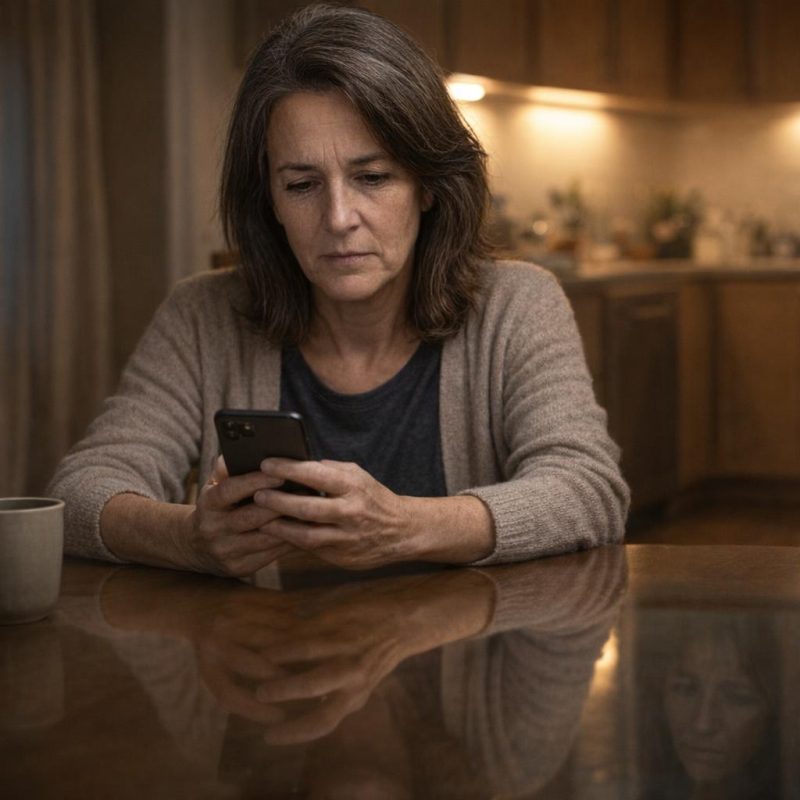 Image by RM AI
Emily's Cold Shoulder
Emily stopped by on a Saturday morning, which used to be one of my favorite things — the two of us at the kitchen table with coffee, talking about nothing important for an hour. She came in and hugged me, but it was the kind of hug that ends quickly, and she sat down across from me instead of beside me the way she usually did. I made the coffee and tried to find our usual rhythm. I asked about the kids, about her week, about whether she'd seen the new place that opened near her office. She answered everything, but in short, careful sentences, her eyes moving around the kitchen instead of settling on me. I noticed she mentioned she'd been spending time helping Grandma and Aunt Valerie get organized. I said that was good, that I was glad Mom had people around her. Emily nodded and looked at her cup. I asked, as lightly as I could manage, if something was wrong. She said no, everything was fine, she was just tired. She didn't look tired. She looked like someone who had decided something and wasn't ready to say it out loud. She left after forty minutes, which was shorter than usual, and hugged me again at the door — that same brief, careful hug. The weight of her silence after I'd asked what was wrong sat in the kitchen long after her car had pulled away.
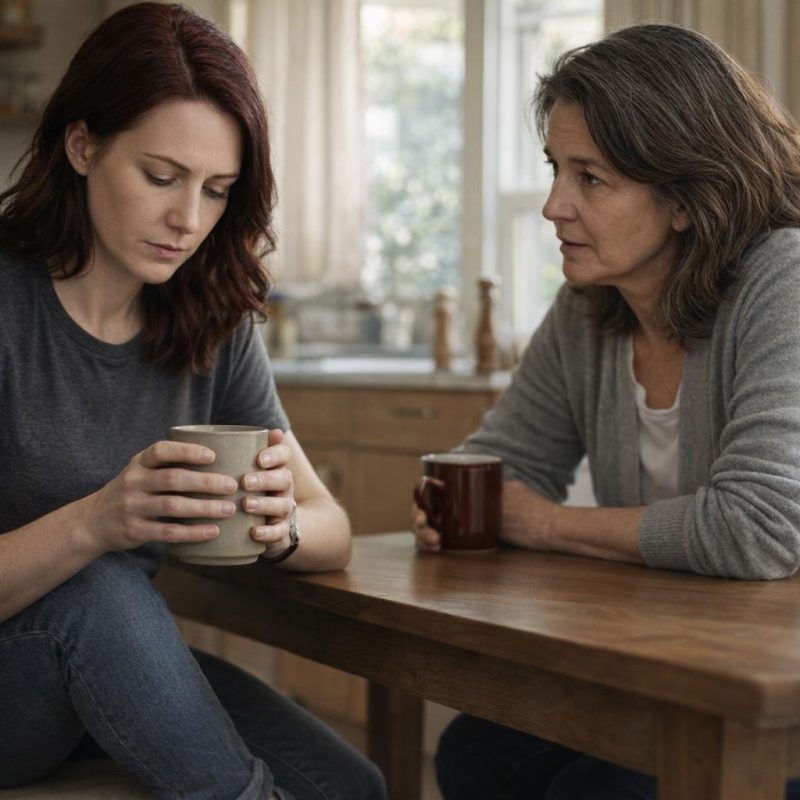 Image by RM AI
Uninvited
I wasn't even looking for anything when I opened the family group chat that Sunday evening. I was just checking to see if Tom had responded to something I'd sent earlier in the week. Instead I found a thread full of photos — warm lighting, a long dinner table, wine glasses, people laughing. My cousin Janet's house, from the look of the kitchen. I scrolled through slowly, trying to place when this had happened. The timestamps said Saturday night. Last night. I'd been home alone last night, eating leftovers and watching something I couldn't even remember now. There were comments from Tom, from Janet's kids, from a couple of aunts I only saw at holidays. Everyone sounded happy. Everyone sounded like they'd had a wonderful time. I kept scrolling, looking for some explanation — maybe it had been a last-minute thing, maybe the invitation had gone to the wrong number, maybe I was missing something obvious. I read every comment twice. I couldn't find my name anywhere in the thread. Not an apology, not a mention, not a we missed you. And then I reached the top of the thread, where Janet had posted the first photo, and Valerie was tagged in every single one of them, smiling beside Mom.
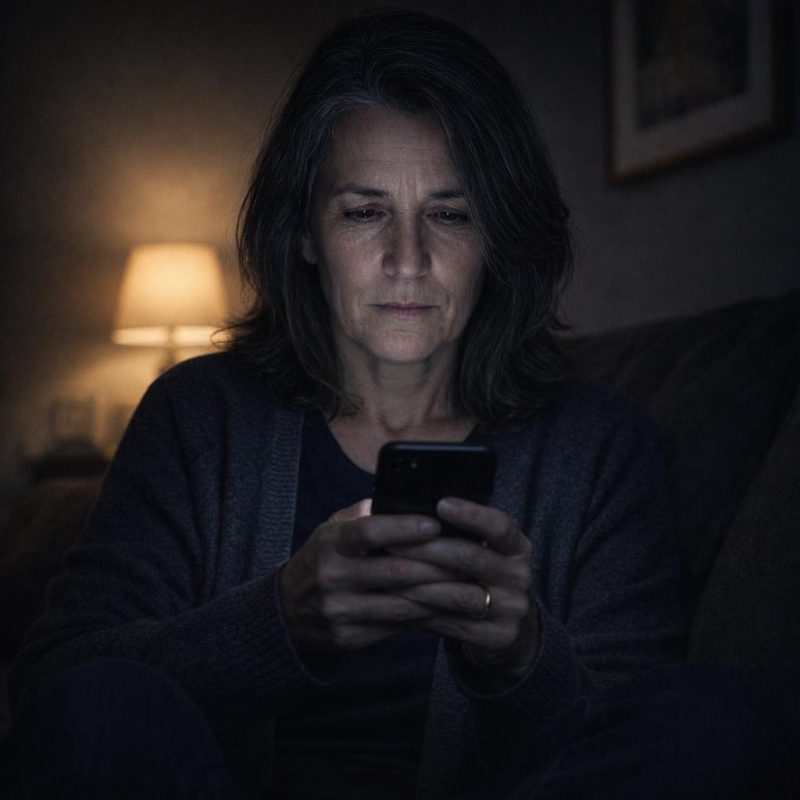 Image by RM AI
Tom's Question
Tom called on a Monday evening, and I could tell from the first few seconds that he'd been thinking about what he wanted to say before he dialed. He has a particular way of starting sentences when he's being careful — a small pause, a slightly formal word choice, like he's reading from notes he wrote in his head. He asked how I was doing, and I said fine, and then he said he wanted to ask me something and he hoped I wouldn't take it the wrong way. He said he'd been hearing that things had been hard for Mom lately, and he wanted to know if maybe I'd been stretched too thin with my own life to get over there as much as I'd like. I told him I'd been calling every morning. I told him I'd driven out twice in the past month and been turned away both times because Mom was resting. I told him about the texts, the voicemails, the offers to help with the paperwork. Tom listened. He said he understood, he did, and that he believed me. But there was something in the way he said it — the slight pull in his voice, the pause before the word believed — that told me he wasn't entirely sure.
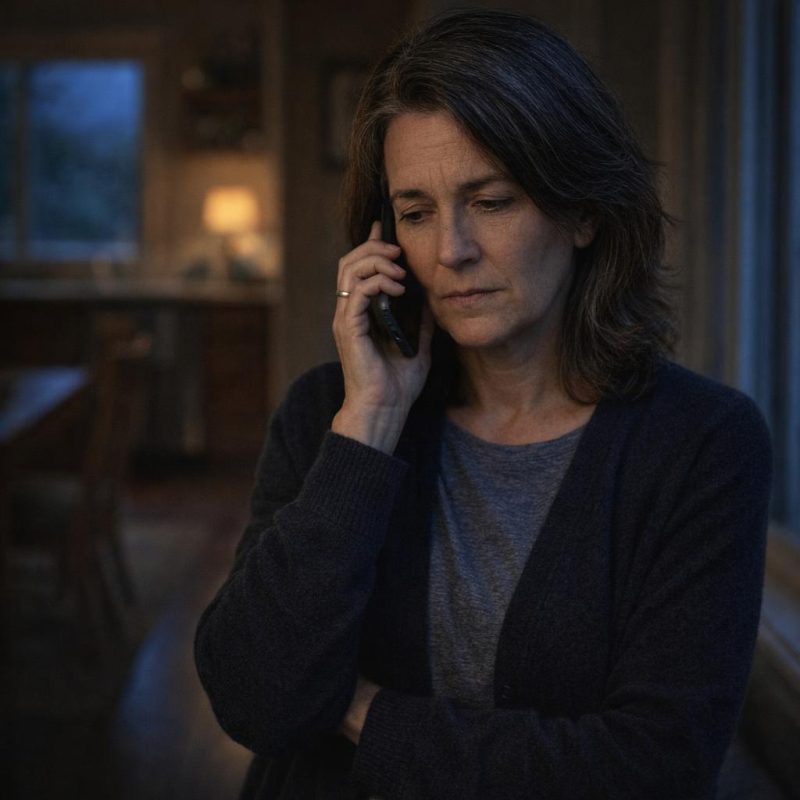 Image by RM AI
The Same Story, Different Voices
It started with my cousin Diane calling on a Thursday afternoon. We hadn't talked in a few months, so I was glad to hear from her — until about two minutes in, when she said she'd heard I'd been making comments about Mom's housekeeping. I told her I hadn't. She said she understood, that she wasn't trying to start anything, but that she'd heard I'd said Mom's house had gotten embarrassing. I sat there holding the phone, genuinely baffled. I don't talk that way. I wouldn't say that. I asked her where she'd heard it, and she got vague — just that it had come up in conversation. I let it go, but it sat with me all week. Then my Aunt Linda called two days later. She was gentler about it, more apologetic, but she brought up the same thing — that I'd apparently been critical of Mom's housekeeping, that I'd made her feel ashamed of her own home. I started to say something, and then I stopped. Because the phrase Aunt Linda used was the exact same phrase Diane had used — not similar, not close, but word for word identical, as if both of them had read it off the same page.
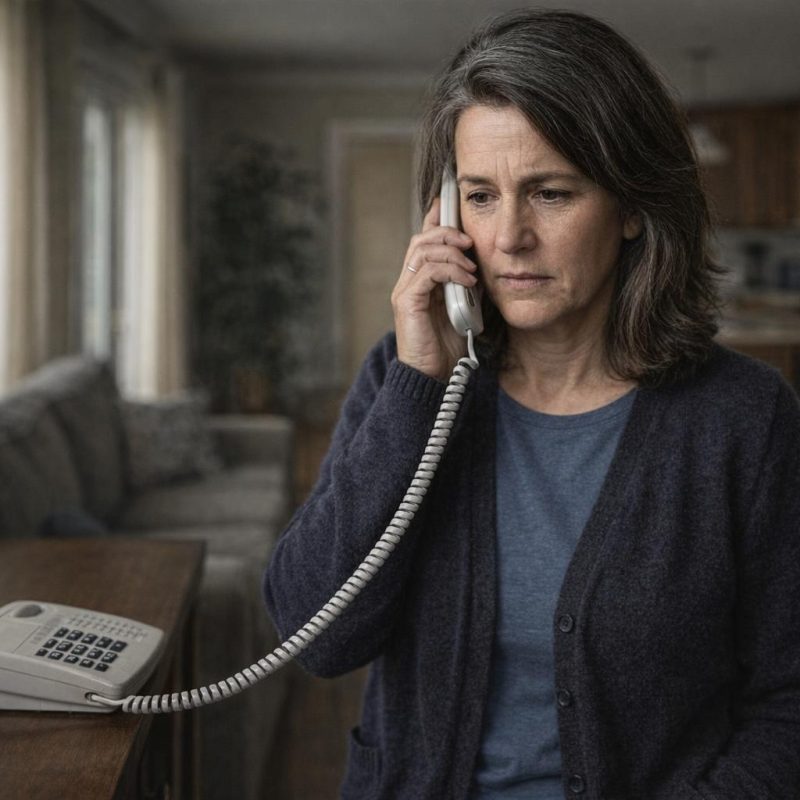 Image by RM AI
Questioning My Own Memory
I pulled out my paper calendar — the one I've kept for years, the kind with the small squares where I write everything in pencil — and I spread it open on the kitchen table. I went back three months. I found the dates I'd driven to Mom's house. I found the mornings I'd written 'called Mom' in the margin. I cross-referenced them against my phone's call log, against the texts I'd sent, against the emails I'd forwarded to Valerie about Mom's prescriptions. Everything matched. My records said I had been there. My records said I had been trying. But here's the thing about sitting alone at a kitchen table with your own evidence: it starts to feel circular after a while. I'd written these things down myself. I'd sent those texts myself. What if I was misremembering the tone of a conversation? What if I'd said something offhand that landed wrong and I'd genuinely forgotten? I'm fifty-eight years old. I know my memory isn't perfect. The more I stared at those little penciled notes, the more I started to hear everyone else's certainty against my own quiet uncertainty. My records said one thing. My family said another. And somewhere in the gap between those two things, I felt something I hadn't expected — the sick, creeping possibility that maybe they were right and I was the one who had it wrong.
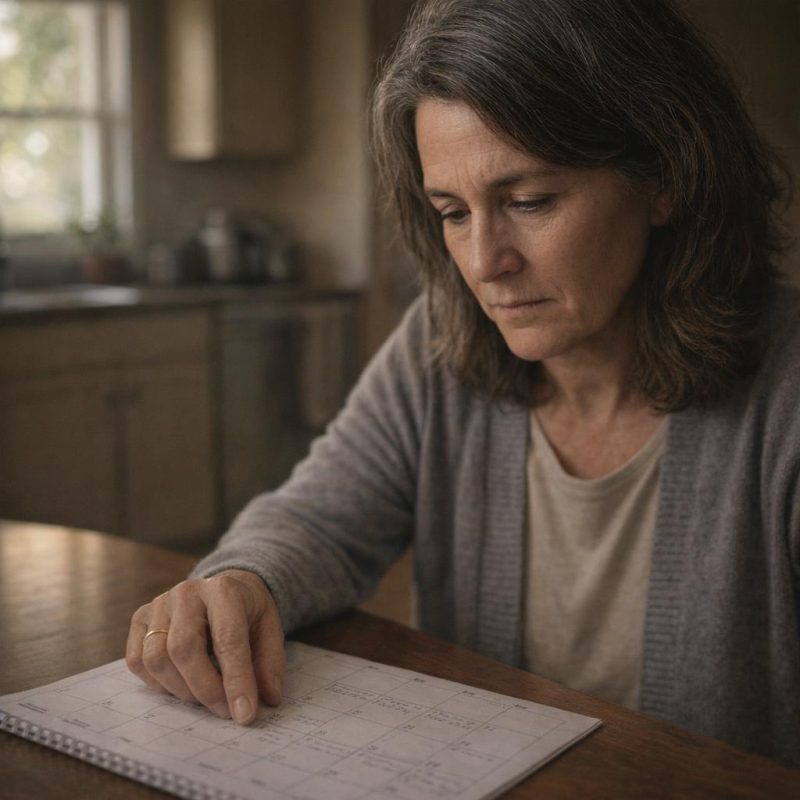 Image by RM AI
Valerie's Performance
There was a small Sunday gathering at Mom's house — nothing formal, just Tom and his wife, Valerie, and me. Mom had been having a good day, which meant she was talkative and a little scattered, circling back to the same stories she'd told at Christmas. The third time she mentioned the neighbor's dog that had gotten into her garden two summers ago, I watched Valerie lean in and listen like it was the first time she'd heard it. She touched Mom's hand. She laughed at the right moment. She said, 'Oh, Mom, that dog,' in this warm, patient voice, and Mom lit up like a lamp. Tom caught my eye across the table and gave a small nod in Valerie's direction, the kind of nod that means: see how good she is at this. I smiled back because I didn't know what else to do. I had driven forty minutes to be there. I had brought the lemon cake Mom likes. I had sat at that table for two hours and asked questions and refilled water glasses and done all the quiet, invisible things that don't read as caregiving because they don't come with a performance attached. But I wasn't the one they were watching. Every soft word Valerie spoke seemed to pull the room a little closer to her, and I sat at the edge of it, watching the admiration settle into everyone's faces as they looked at my younger sister.
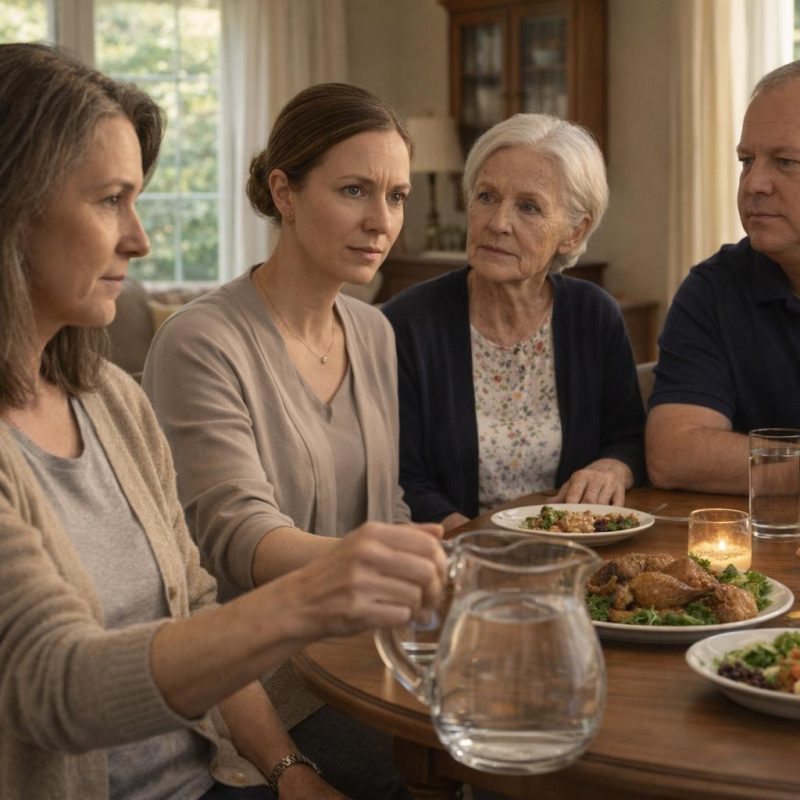 Image by RM AI
The Difficult Daughter
I arrived early to Aunt Carol's birthday lunch because I'd misread the start time, and the house was still being set up. I offered to help and was pointed toward the back porch to bring in the folding chairs. On my way through the kitchen I heard voices — two of my cousins, Janet and Pam, women I'd known my whole life, women I'd sat next to at every holiday table since childhood. They didn't hear me come in. Janet was saying something about how hard Valerie worked, how she never complained, how she just quietly handled everything while other people made it harder. Pam said something I didn't catch, and then Janet said that some people just couldn't see past their own feelings long enough to be grateful. I stood very still near the doorway. I told myself they might not be talking about me. I told myself there were other family dynamics, other tensions, other people who could fit that description. I picked up two folding chairs and walked back out to the porch and set them down carefully and stood there in the afternoon sun for a moment, breathing. Then I went back inside to get the rest. I was almost to the kitchen door when I heard Pam say my name, and then, clearly, without any softening, the word selfish.
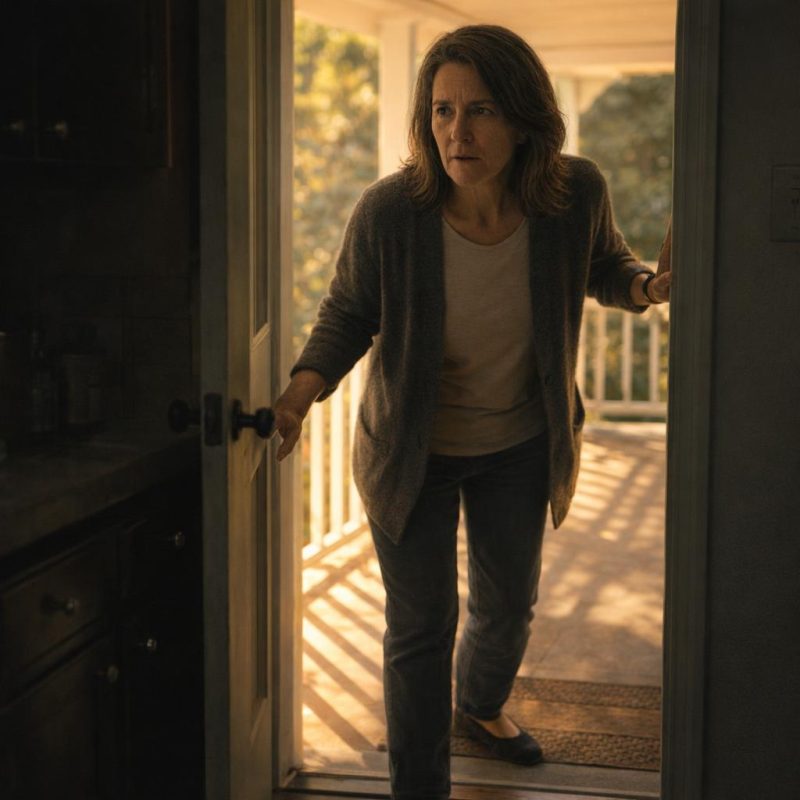 Image by RM AI
The Trap of Defending Myself
My cousin Janet found me by the dessert table later that afternoon, and I made the mistake of trying to explain myself. I told her I'd been calling Mom every single morning. I told her about the twice I'd driven out and been told Mom was resting. I told her I'd offered to help with the insurance paperwork, the pharmacy runs, the grocery orders. I watched Janet's expression as I talked, and I could see it happening in real time — the slight tightening around her eyes, the careful neutrality that meant she was being patient with me. The more I said, the worse it sounded. I could hear it myself. I sounded like someone building a legal defense. I sounded like someone who needed to prove they were a good daughter because they weren't sure they were. Janet said, gently, that she wasn't accusing me of anything, that she just thought it might help if I tried to see things from Valerie's perspective. I nodded. I said I understood. I walked away from that conversation with a hollow feeling I couldn't shake, because I'd gone in trying to clear my name and come out looking guiltier than before. Something about the whole thing felt off to me — the way my words kept landing wrong no matter how carefully I chose them. But I couldn't prove anything. I couldn't point to a single moment and say: there, that's where it went sideways. I just sat with the weight of it, too tired to try again.
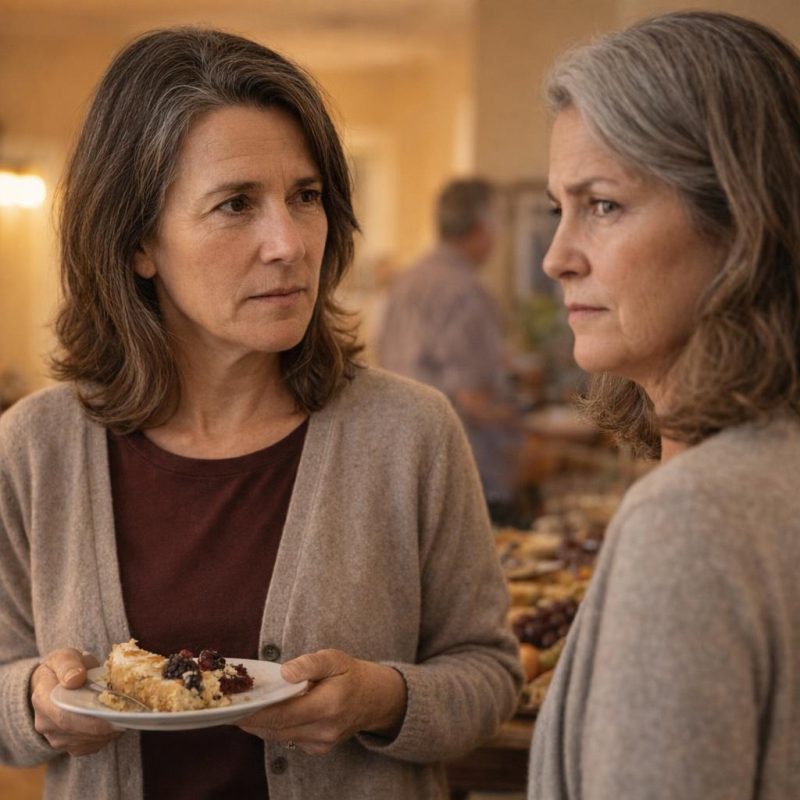 Image by RM AI
Words I Never Said
Tom called on a Wednesday evening, and I knew from his first sentence that this wasn't a check-in call. He said Mom had told him something that was bothering him, and he needed to ask me about it directly. He said Mom had told him that I'd called her a burden — that I'd said she was becoming too much for the family to manage and that everyone's lives would be simpler if she just stopped asking for so much. I felt the air go out of me. I told Tom I had never said that. Not those words, not anything close to those words. He said he believed me, but his voice had that careful quality again, that slight distance. He repeated the phrase Mom had used. I made him say it twice because I needed to hear it again. It was specific. It was cold. It had a particular rhythm to it — clipped and dismissive — that was nothing like the way I talk, nothing like the way I've ever talked to my mother in fifty-eight years of being her daughter. I sat on the edge of my bed after we hung up, turning that phrase over in my mind. I kept trying to imagine myself saying it and I couldn't. It didn't fit in my mouth. It didn't sound like me. It sounded like something someone else had put into the air around my mother, something that had settled into her memory wearing my name — and the specific cruelty of those words, so precise and so foreign, stayed with me long after I turned out the light.
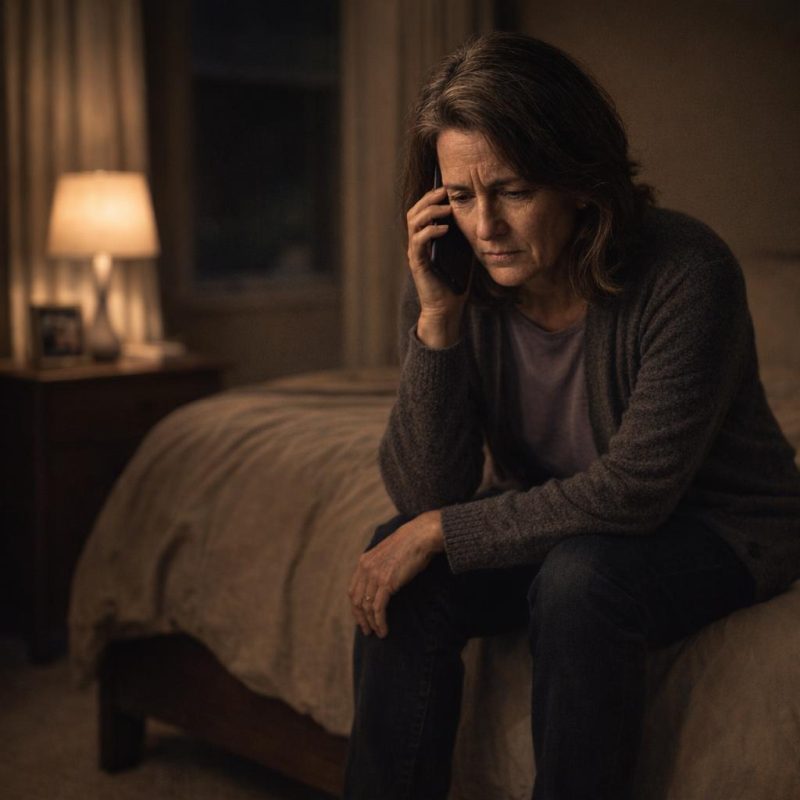 Image by RM AI
The First Record
I bought a plain black notebook at the drugstore on a Thursday morning, the kind with the sewn binding that doesn't fall apart. I sat down at my desk that evening and I started writing. Date, time, what was said, who said it, how I found out. I went back as far as I could remember and filled in what I knew. The two turned-away visits, with the dates. The morning calls, with approximate times. The texts to Valerie about the pharmacy. The email about the insurance forms that had gone unanswered for eleven days. The cousins and their identical phrasing. The phrase Tom had repeated to me that I still couldn't fit into my own voice. I wrote it all down in my careful, small handwriting, the same way I've kept every calendar and every household record for thirty years. It felt equal parts necessary and absurd. Part of me kept thinking: this is what people do when they're losing their minds, they start keeping lists to prove they exist. Another part of me thought: no, this is what you do when you need to be able to look at something real when everything around you starts to feel like it's shifting. I didn't know yet if any of it would matter. I didn't know if I was protecting myself or just making myself feel less helpless. I closed the notebook, slid it under the folders in the back of my desk drawer, and pushed the drawer shut.
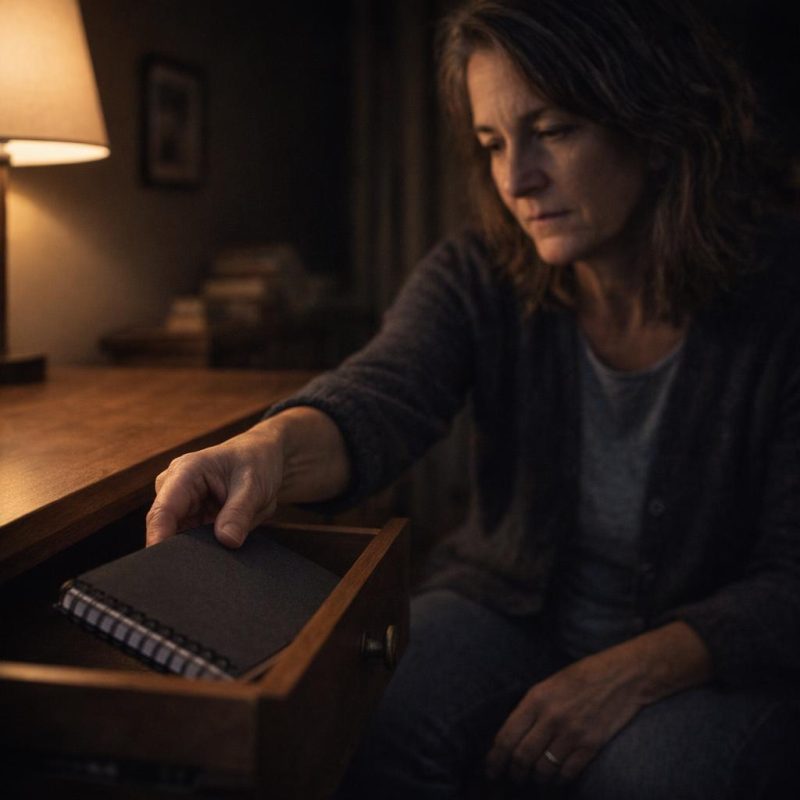 Image by RM AI
Saved Messages
The next morning I sat down with my phone and went through everything systematically. I backed up the text threads — mine with Mom, mine with Valerie, the group thread Tom had started when Mom's health first started declining. I saved the voicemails I still had. I went through my sent emails and forwarded the relevant ones to myself with timestamps. And then I started counting. I made a simple list: every text where I'd offered to help with something specific, every voicemail where I'd asked to be included in a care decision, every email where I'd proposed a visit or asked about Mom's appointments. I counted the ones that had gotten no response. I counted the ones that had gotten a brief deflection — 'we've got it covered,' 'Mom's tired this week,' 'I'll let you know.' I went through the list twice to make sure I hadn't padded it, hadn't counted anything twice, hadn't let frustration make the number bigger than it was. I hadn't. I sat back in my chair and looked at the final tally on the page in front of me: forty-three messages, stretching back eight months, each one offering something, each one met with silence or a closed door.
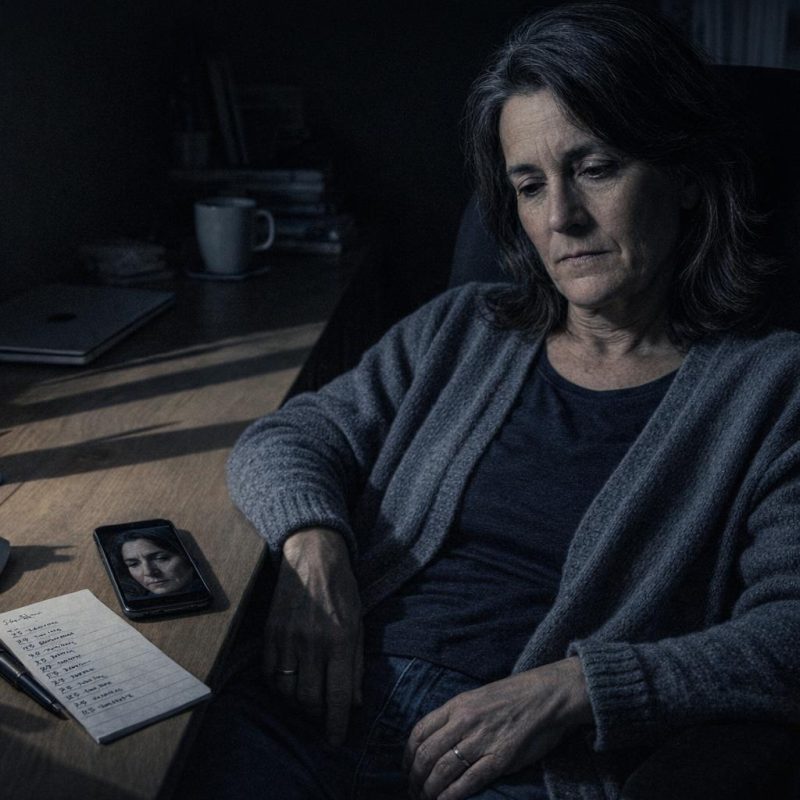 Image by RM AI
The Gentle Explanation
Valerie called on a Tuesday afternoon, and her voice was so warm I almost let myself relax. She asked how I was doing, really doing, and I told her fine, and then she eased into it the way she always does — gently, like she was doing me a favor. She said she'd been noticing that Mom seemed more confused after visits, that the doctor had mentioned overstimulation could accelerate memory decline, that she was just worried, that she only wanted what was best. I sat at my kitchen table and listened and tried to find the flaw in it, because something nagged at me that I couldn't quite name. Everything she said sounded reasonable. Everything she said sounded caring enough that I didn't know what to do with the unease. She talked about how hard it was to watch Mom struggle to place faces some mornings, how disorienting it must be for her, how the routine Valerie had built was the one thing keeping Mom anchored. I said I understood. I said of course I wanted what was best for Mom too. And then, still in that same soft, concerned voice, Valerie said maybe it would help everyone — especially Mom — if I spaced my visits out a little more, maybe came by less often for a while.
 Image by RM AI
The Trust
The letter came on a Thursday, in a plain white envelope with a law firm's return address I didn't recognize. I almost set it aside with the bills. I'm glad I didn't, though I'm not sure glad is the right word for what I felt after I opened it. It was formal, precise, the kind of language that leaves no room for misunderstanding. The family trust Mom had established in 1987 — the one she'd shown me once, years ago, pointing to both our names and saying she'd always believed in fairness — had been amended. My name had been removed as a beneficiary. The letter was dated six weeks earlier. Six weeks, and no one had called me. No one had thought to mention it. I read it twice, then a third time, looking for something I'd misunderstood, some clause that softened what it plainly said. There wasn't one. Mom had always been so deliberate about treating her children equally. She used to say it like a point of pride, like it was one of the things she'd gotten right. I sat down on the couch and the letter stayed in my hands, heavier than paper has any right to be.
 Image by RM AI
Sole Decision-Maker
I called the law firm the next morning and asked if I could obtain a copy of the full amended trust document. They said they'd need authorization, but after some back and forth they confirmed I could receive a copy of the portions that directly affected my status. What arrived told me more than I'd expected. Valerie had been named sole trustee and sole decision-maker for all matters related to Mom's care, her finances, and her estate. Not co-trustee. Not primary with a secondary. Sole. The amendment had been executed eight months ago, right around the time Valerie had moved into the caregiver role. I sat at my desk and read through the language carefully, the way I'd been reading everything carefully lately, looking for the thing I was missing. I wasn't missing anything. Every decision about Mom's medical care, her living situation, her assets — all of it now ran through Valerie and Valerie alone. I had no standing to question a single choice. I had no legal right to be consulted, informed, or included. I kept thinking about the timing, about those eight months, about the forty-three messages I'd counted. I couldn't prove anything. But the weight of what I was holding settled over me and didn't lift.
 Image by RM AI
The Confrontation
I drove to Mom's house on a Saturday morning without calling first, which I knew Valerie would consider a violation of some unspoken rule. I didn't care. Valerie answered the door before I'd even knocked twice, like she'd been watching for a car she didn't recognize. Mom was in the living room in her chair, and she looked up at me with a smile that took a half-second too long to arrive. I sat down across from Valerie at the kitchen table and I put the letter between us and I asked her to explain it to me. She looked at it, then looked at me, and her expression shifted into something that resembled hurt. She said Mom had made the decision herself, after a lot of thought, after seeing who was really present. She said she'd wanted to spare me from feeling excluded, but that Mom had been clear about what she wanted. I told her I wasn't accusing anyone, I just wanted to understand. Valerie's voice stayed even and quiet the whole time, which somehow made it worse. Mom drifted in from the living room at some point and stood in the doorway looking uncertain, and I felt the conversation slipping away from me entirely. Then Valerie's eyes filled with tears and she asked me, very softly, why I couldn't just be happy that Mom was being cared for.
 Image by RM AI
The Divided Family
After that Saturday, things shifted in a way I hadn't anticipated and couldn't seem to stop. Tom called me three days later, not to ask what had happened but to tell me I owed Valerie an apology. He said she'd been crying, that she was exhausted, that she was doing everything for Mom while I showed up to make accusations. I tried to explain about the letter, about the timing, about the messages I'd documented. He said he understood I was upset but that this wasn't the way. Emily didn't call at all. I texted her twice and got back short replies that felt like doors closing. A few weeks later there was a birthday dinner for one of the cousins, and I went because I thought maybe in person I could make someone understand. I sat at that table and tried, carefully, to explain what I'd found and what I was worried about. The table went quiet in a way that had nothing to do with the noise in the restaurant. Someone changed the subject. Someone else asked about dessert. I looked around at faces I'd known my whole life and felt the particular loneliness of being surrounded by family and completely alone. The silence that followed my words settled over the table like something that had been waiting there all along.
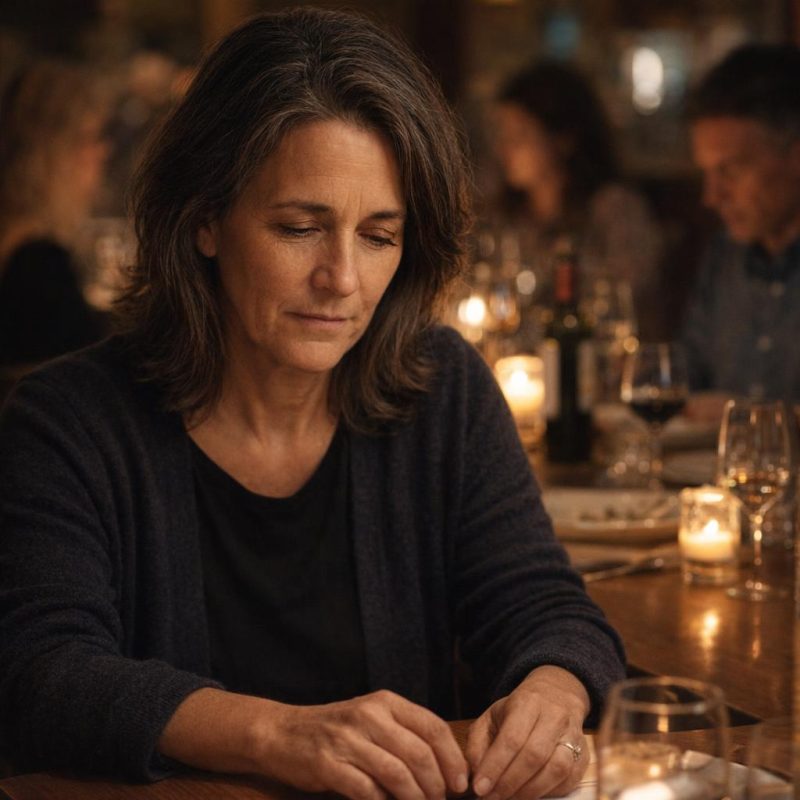 Image by RM AI
The Missing Heirlooms
Valerie had started scheduling my visits, which I hated but accepted because the alternative was not seeing Mom at all. I got an hour on a Wednesday afternoon, three weeks after the birthday dinner. Mom seemed glad to see me, in her way — she held my hand and called me by name and asked twice whether I'd eaten. Valerie stayed in the kitchen, close enough that I was aware of her the whole time. I was trying to just be present, to not turn every visit into an investigation, but somewhere in the second half of that hour I looked toward the mantel and stopped. The antique clock was gone. It had sat in the same spot since before I could remember, a dark mahogany piece with a brass face that had belonged to my grandfather. I looked to the left of where it had been and noticed the silver tea set was gone too — my grandmother's, the one that came out every Christmas, the one Mom had promised would stay in the family. I started to ask Mom about it, keeping my voice light, and Valerie appeared in the doorway before I'd finished the sentence. Mom looked at me with a small, uncertain frown, like she was trying to remember what I was referring to. I looked back at the mantel. The empty spaces where those things had always been felt like gaps in a sentence that no longer made sense.
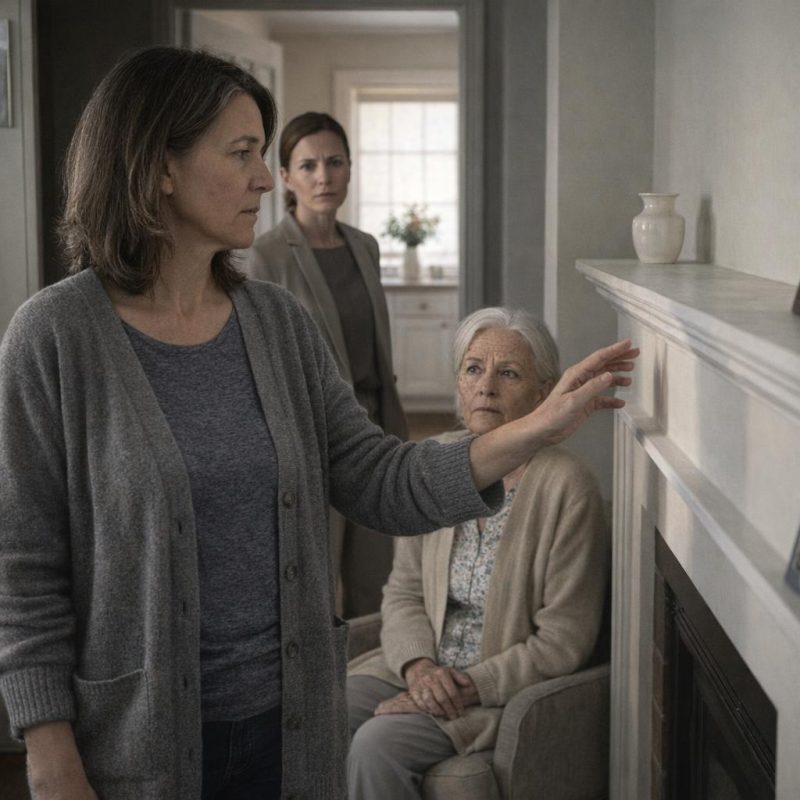 Image by RM AI
Given Away
I waited two days before I called Valerie about it, because I wanted to be calm and I wanted to ask a simple question without it turning into another confrontation. I asked about the clock and the tea set. There was a brief pause, and then she said Mom had decided, while she still had the clarity to do it, to give some of her things to people who would use them and appreciate them. She said it had been Mom's idea entirely, that it had actually been a meaningful process for her, going through what she wanted to pass along. I asked who had received them. Valerie said she didn't have the full list in front of her, that Mom had handled a lot of it herself, that she hadn't wanted to hover over every decision. I asked if there was a record somewhere, a list of what went where. She said she'd look into it. Her voice stayed warm and unhurried the whole time, though I couldn't tell what that meant. I sat with the phone in my hand after we hung up, turning the conversation over, trying to find the part that should have reassured me. Then I thought about what she'd said about who the items had gone to — people who visited more often, she'd said, people who were actually present in Mom's life.
 Image by RM AI
Different Stories
I ran into Ruth at the grocery store on a Friday, which wasn't unusual — she and Mom had been friends for nearly thirty years, and she lived two streets over from me. We stopped in the cereal aisle and talked for a few minutes, the way you do, and I almost let it stay surface-level. But something made me mention the clock and the tea set, just casually, just to see. Ruth's expression shifted in a way I noticed. She said she'd actually asked Mom about the mantel herself, a few weeks back, because she'd noticed the same thing. I asked what Mom had told her. Ruth hesitated, and I could see her weighing something. She said Mom had told her the items were being stored — that Valerie was keeping them safe somewhere until things settled down, until Mom knew what she wanted to do with them. I stood there in the cereal aisle and held that for a moment. Valerie had told me Mom gave them away to people who visited more often. Mom had told Ruth they were being stored for safekeeping. I didn't know which version was true, or whether either one was.
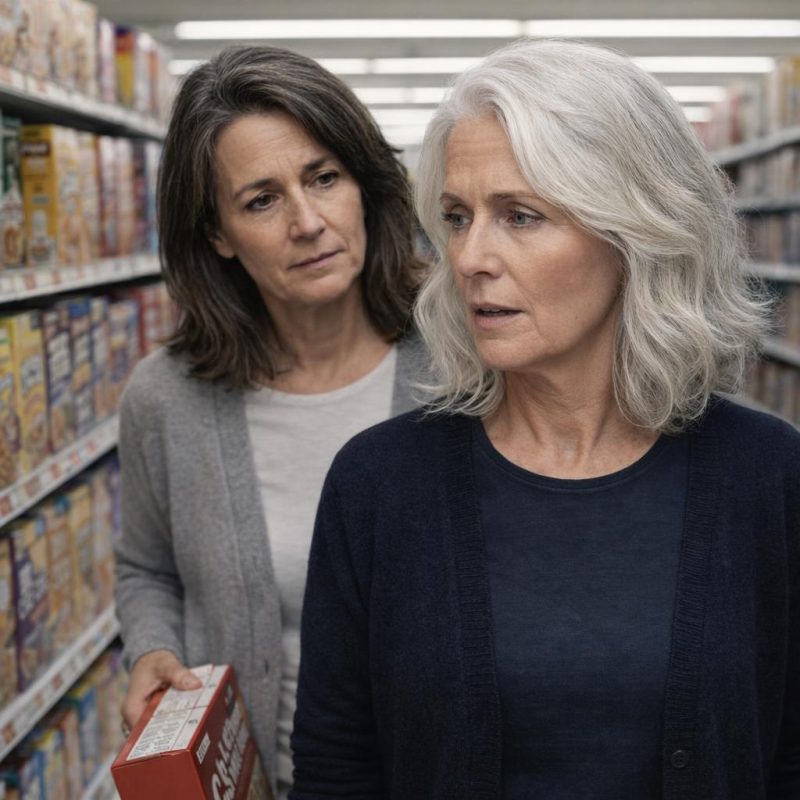 Image by RM AI
Reluctant Witnesses
After the conversation with Ruth in the cereal aisle, I decided I needed to talk to more people — neighbors, Mom's friends from church, anyone who visited her regularly. I wasn't sure what I was looking for exactly, just something solid, something I could point to. I started with the Hendersons next door to Mom, who had known her for over twenty years. They were polite, genuinely warm, but the moment I steered the conversation toward anything specific — had they noticed changes, had Valerie ever said anything about visits — they got quiet. They said they didn't really feel it was their place to comment. I tried the woman from Mom's old book club, a retired teacher named Margaret. She said Mom seemed well cared for and changed the subject to her grandchildren. I tried two more people that week. Same pattern every time. Polite smiles, careful redirects, a sudden interest in the weather. I understood it, in a way. Nobody wants to be the person who said the wrong thing and ended up in the middle of someone else's family drama. But understanding it didn't make it less lonely. I was standing on the sidewalk after my last attempt when the neighbor across from Mom's house leaned over her fence and said, quietly but clearly, that she didn't want to get involved in family business.
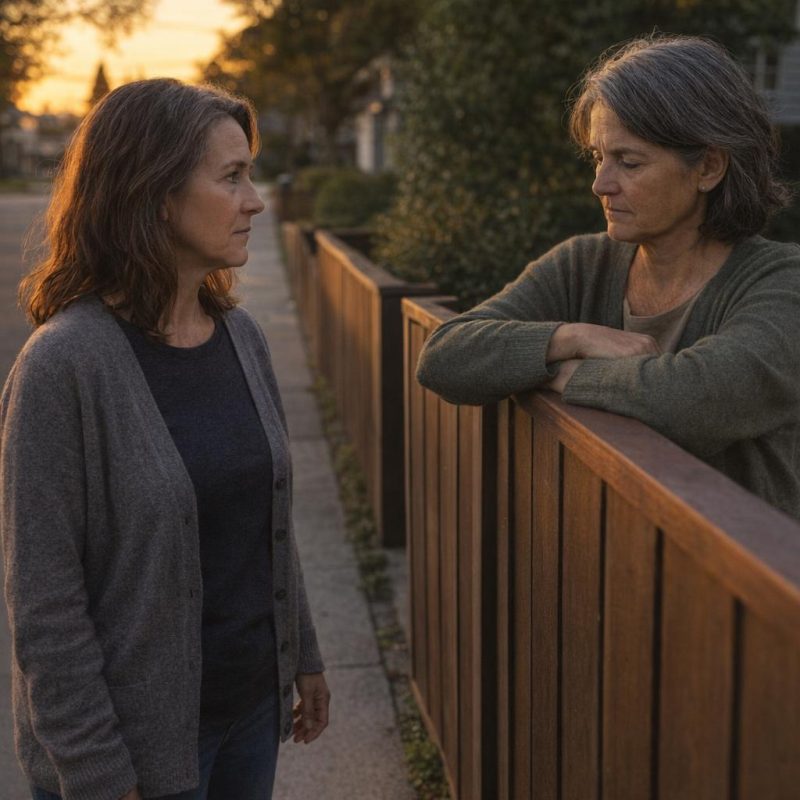 Image by RM AI
Controlled Communication
I'd been trying to find some way to stay connected to what was actually happening with Mom's health, so I called her physical therapist's office one afternoon. I'd met the therapist briefly a few months back and thought maybe she could just give me a general update, nothing detailed, just enough to know Mom was progressing. The receptionist put me on hold, and when the therapist came on she was perfectly pleasant. She asked how she could help. I explained I was Dorothy's daughter and wanted to check in on her progress. There was a brief pause, and then she said, carefully, that all updates and communications regarding Dorothy's care were being routed through the primary caregiver. She said it the way people say things when they're following a protocol they didn't write. I asked if that was standard procedure. She said it was, when a primary caregiver had been designated. I asked who had designated that. Another pause. She said she wasn't able to share that information, but that I was welcome to contact the primary caregiver directly for any updates. I thanked her and hung up. I sat at my kitchen table for a while after that, the phone still in my hand. Every door I tried to open led back to the same place. Valerie was the only way in, and she was also the only way out.
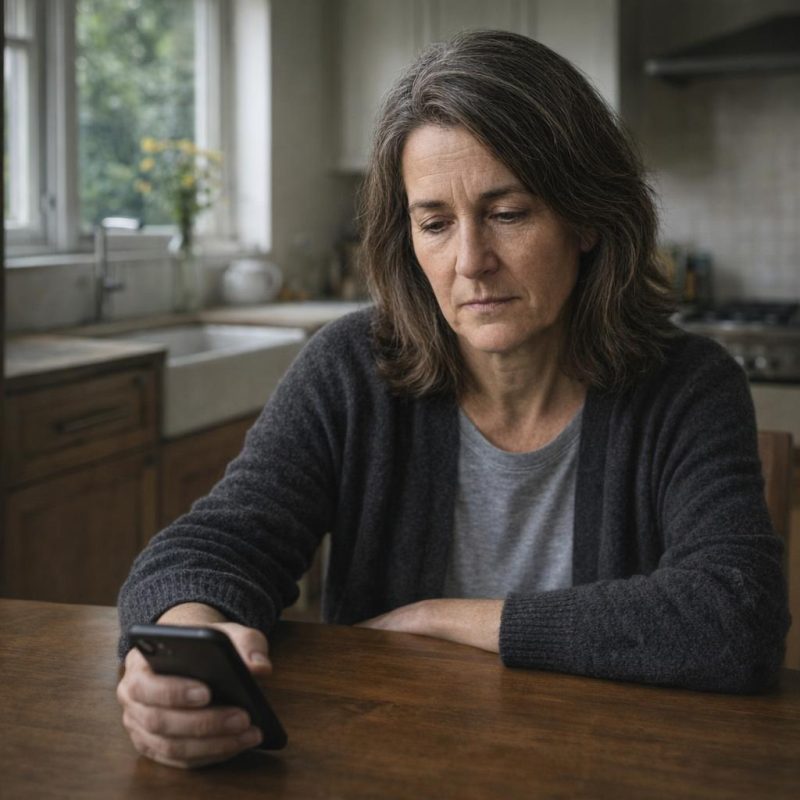 Image by RM AI
Speaking for Her
Tom had suggested a family call to check in on Mom's care plan, and I joined from my kitchen with a cup of coffee I never actually drank. Mom was on the line, and so was Valerie, and for the first few minutes it felt almost normal. Tom asked Mom how she was sleeping. Before Mom could get more than two words out, Valerie said she'd been sleeping much better since they adjusted her evening routine. Tom asked Mom if she was enjoying the new chair in the living room. Valerie said Mom loved it, that she sat in it every afternoon. I waited. Tom asked Mom what she'd been watching on television lately. Mom started to say something about a nature program, and Valerie finished the sentence for her — said it was the one about birds, that Mom had mentioned it twice that week. I kept waiting for Tom to notice. He didn't seem to, or if he did, he didn't say anything. I tried asking Mom directly whether she'd been getting outside at all. There was a half-second of silence, and then Valerie's voice came in smooth and even, saying the weather had been too cold but that they were hoping to get out next week. Mom said, softly, yes, next week. I sat there listening to the rest of the call, and what stayed with me afterward wasn't any single answer — it was the space where Mom's voice should have been, filled in before she could reach it.
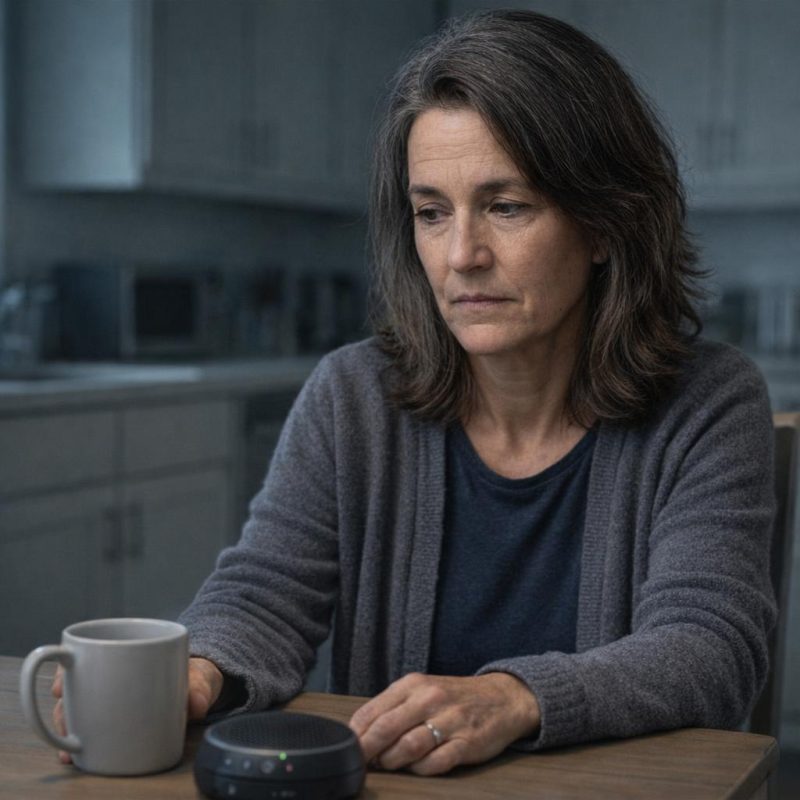 Image by RM AI
Limited Visits
I ran into Carol from two houses down from Mom while I was walking one evening. We'd spoken a handful of times over the years, mostly in passing. She asked how Mom was doing, and I said I thought she was okay, and something in my answer must have sounded uncertain because Carol tilted her head and said she'd been meaning to stop by more often. I asked if she'd visited recently. She had, she said, about three weeks ago. She'd called ahead, like she always did, and Valerie had answered Mom's phone. Carol said Valerie had been very kind about it, very thoughtful — she'd explained that Mom tired easily these days and that visits worked best when they were short, maybe thirty minutes, and ideally just one person at a time so Mom didn't get overwhelmed. Carol said it made complete sense, that she'd appreciated being told so she could plan accordingly. She didn't seem troubled by it at all. I nodded and said that was good to know. We talked for another minute and then went our separate ways. I walked the rest of the block turning it over. On its own, it sounded reasonable — Mom was elderly, she did tire easily, shorter visits were probably kinder. But standing there in the cooling air, I kept thinking about all the people who had been gently redirected, all the visits quietly shortened, all the access quietly narrowed, and I couldn't shake the feeling that every door to Mom was now opening and closing on Valerie's schedule.
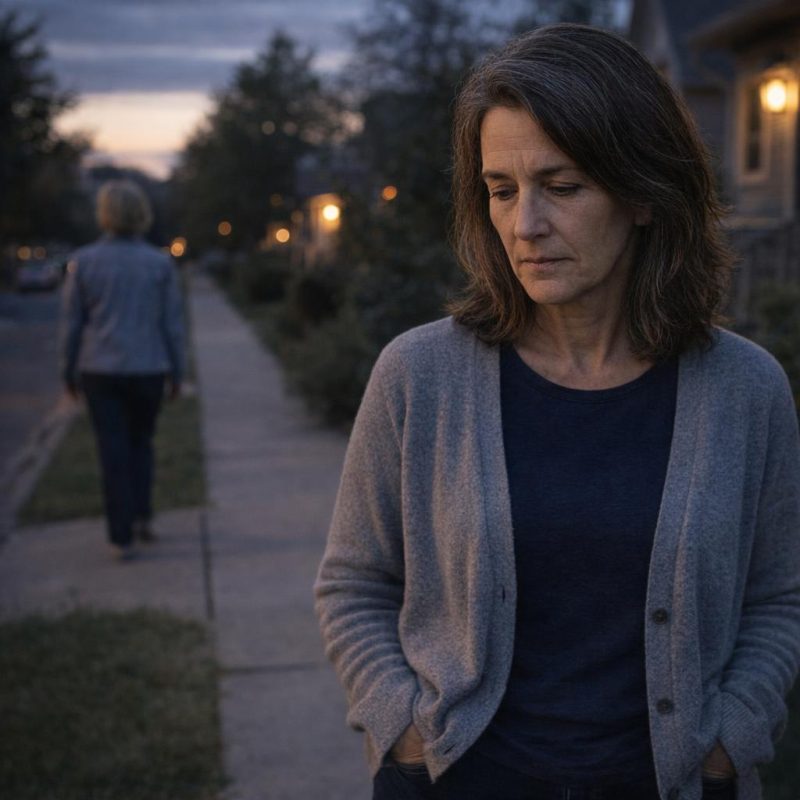 Image by RM AI
Ruth's Observation
Ruth called on a Tuesday morning and asked if I wanted to meet for coffee. Her voice was careful in a way I recognized — not cold, just measured, like she was choosing her words before she even started. We met at the small café on Birchwood, the one with the corner table that's always a little too close to the window. Ruth had her reading glasses on their chain and both hands wrapped around her mug, and she got to the point without much preamble. She said she'd been visiting Mom regularly, every week or so, and that she'd noticed some things she wasn't sure what to do with. I asked her what kind of things. She said Mom sometimes seemed uncertain about conversations they'd had before — not in the way of forgetting, exactly, but more like she'd been told a different version of events and wasn't sure which one to trust. Ruth said she'd also noticed that Mom seemed more hesitant to speak freely when Valerie was in the house, though she was careful to say she could be reading that wrong. I didn't say much. I just listened. Ruth wasn't accusing anyone of anything. She was doing what she always did — observing carefully and reporting honestly. But sitting across from her, hearing her describe the same quiet wrongness I'd been carrying around for months, I felt something loosen in my chest that I hadn't realized had been pulled so tight.
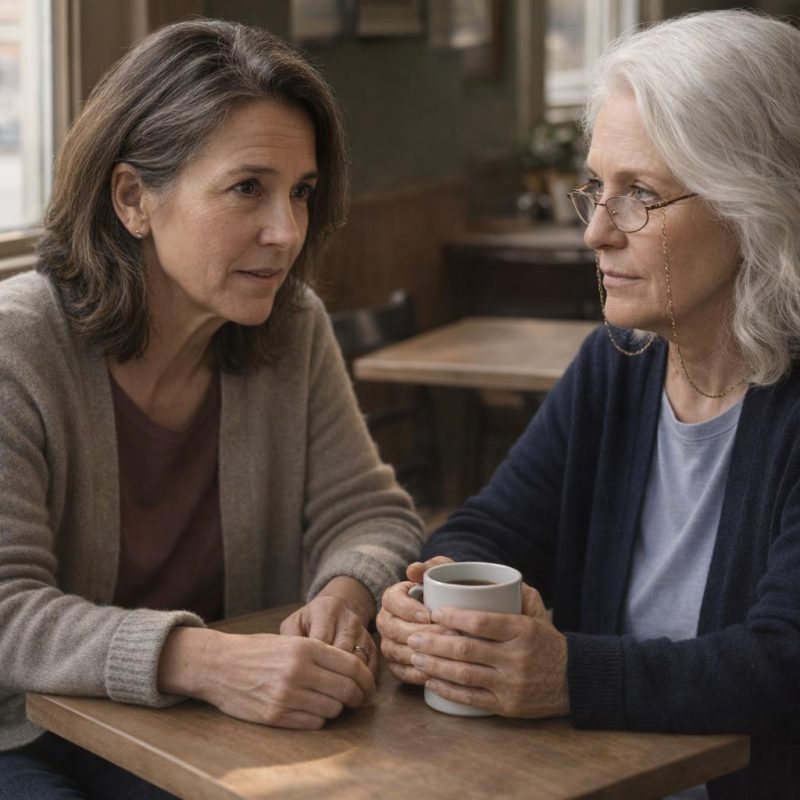 Image by RM AI
Missing Letters
We stayed at that corner table for almost two hours. Ruth refilled her coffee once and I barely touched mine. She told me that a few months back, during one of her visits, Mom had mentioned some letters she kept in the small drawer of her writing desk — letters from old friends, a few from my father, things she'd held onto for years. Mom had said she'd gone to find one of them and the drawer was nearly empty. Ruth said Mom had seemed genuinely puzzled, not panicked, just confused in the way you get when something you were certain of turns out not to be where you left it. Ruth had asked if maybe the letters had been moved somewhere for safekeeping. Mom had said maybe, and then she'd gone quiet. Ruth said what struck her wasn't that Mom forgot about it — it was that Mom never brought it up again. Not once in any visit after that. Ruth said she'd thought about mentioning it herself a few times but hadn't wanted to upset Mom by circling back to something that seemed to cause her distress. I turned my coffee cup in my hands and thought about the clock, the tea set, the items that had moved or vanished with explanations that didn't quite line up. Ruth looked at me across the table and said that Mom had asked her, that one afternoon, whether Ruth had seen the letters — and then never mentioned them again.
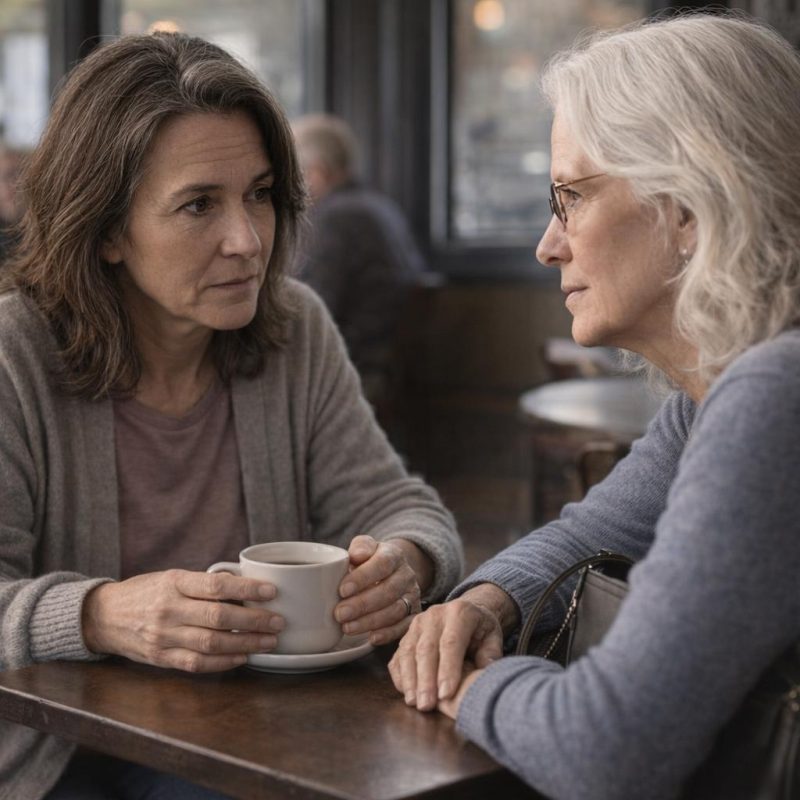 Image by RM AI
Editing Her Life
Ruth took a slow sip of her coffee before she said the next part, like she was deciding how to frame it. She told me that a few weeks after the conversation about the letters, she'd been sitting with Mom in the living room on a quiet afternoon. Mom had been looking at the bookshelf, not reading, just looking, and she'd said something that Ruth hadn't been able to stop thinking about since. Mom had said it felt like someone was editing her life. Ruth repeated the phrase carefully, the way you repeat something you've been carrying around. Editing her life. Mom had said some things felt very present and clear, and other things felt like they were fading, and she couldn't always tell if they were fading because of her memory or because they kept not being mentioned. Ruth said Mom had seemed completely lucid when she said it — not confused, not rambling, but deliberate in her phrasing, like she'd been trying to find the right words for something she'd been sitting with for a while. I didn't say anything for a moment. Outside the café window, a woman walked past with a stroller, and the ordinary world kept moving. I thought about Mom in that living room, watching her own history shift around her, trying to name what was happening with the vocabulary she had left. The image of it settled over me and didn't lift.
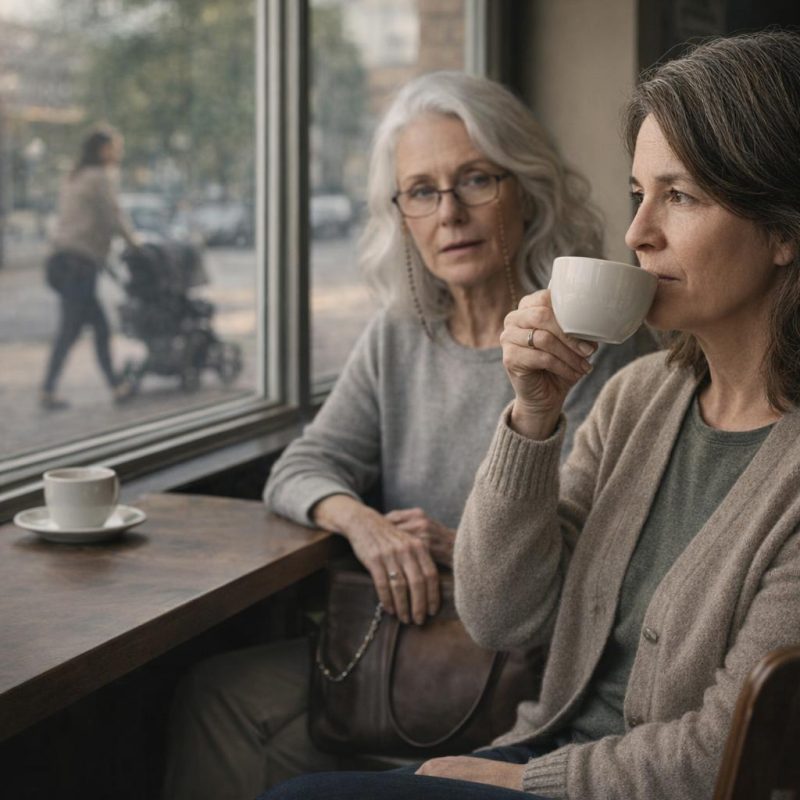 Image by RM AI
Rearranged Photographs
Ruth and I visited Mom together the following Saturday during the approved window. Valerie was there, pleasant as always, offering tea before we'd even taken our coats off. Mom seemed glad to see us, a little tired but present. At some point while Valerie was in the kitchen, I found myself standing in front of the photo wall in the hallway — the one Mom had been adding to for thirty years. Something felt different about it, and it took me a moment to understand what I was seeing. The arrangement had changed. The large framed photo from my college graduation, which had hung at eye level near the center for as long as I could remember, was gone from that spot. A few of the pictures I associated with holidays and birthdays — ones where I was front and center — had been moved to the far edges of the grouping, partially overlapped by frames in front of them. The photos that now held the center positions were ones I didn't remember being there before, or ones that had been off to the side: Valerie with Mom at what looked like a garden party, Valerie and Mom at Christmas, Valerie holding Mom's arm on a front porch. Ruth came to stand beside me quietly. I glanced at her. She gave a small nod, almost imperceptible, and I understood she was confirming what I was already seeing — my face had moved to the margins of my own mother's wall.
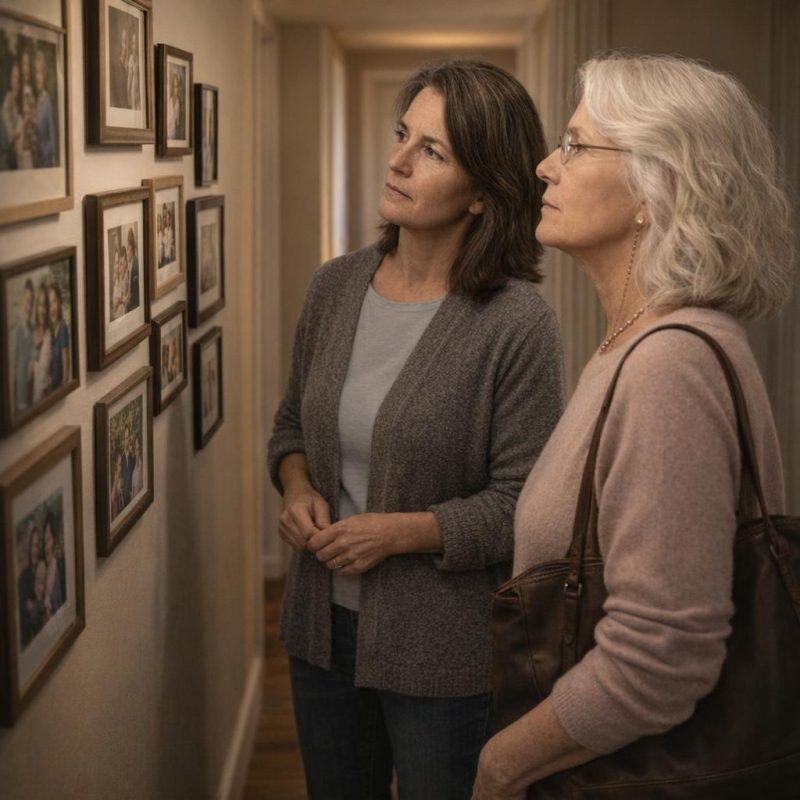 Image by RM AI
Disappeared Cards
After Ruth and I finished looking at the photo wall, we settled in the living room with Mom for a while. Valerie had gone to run errands, which gave us a quieter hour than usual. Mom was in a good mood — chatty, asking about my garden, remembering the name of a neighbor I'd mentioned months ago. It gave me a small window of courage. I asked her, as casually as I could manage, whether she'd gotten the birthday card I sent in March. The one with the pressed wildflowers on the front. I'd written two full pages inside it. Mom tilted her head and looked at me with that gentle, uncertain expression she gets now. She said she didn't think so, but maybe she'd misplaced it. I mentioned the one from the year before — the oversized card with the photo of the two of us at the lake tucked inside. She shook her head slowly, apologetic, like she was failing a test she hadn't known she was taking. I described three more. A Christmas card with a long letter. A card I'd sent after her fall two winters ago. One I'd mailed on her seventy-eighth birthday with a poem I'd copied out by hand. She couldn't recall any of them. Ruth sat very still across from me. Mom reached over and patted my hand, and I let her, and I didn't say anything else. The room held thirty years of my presence in it, and almost none of it was visible anymore.
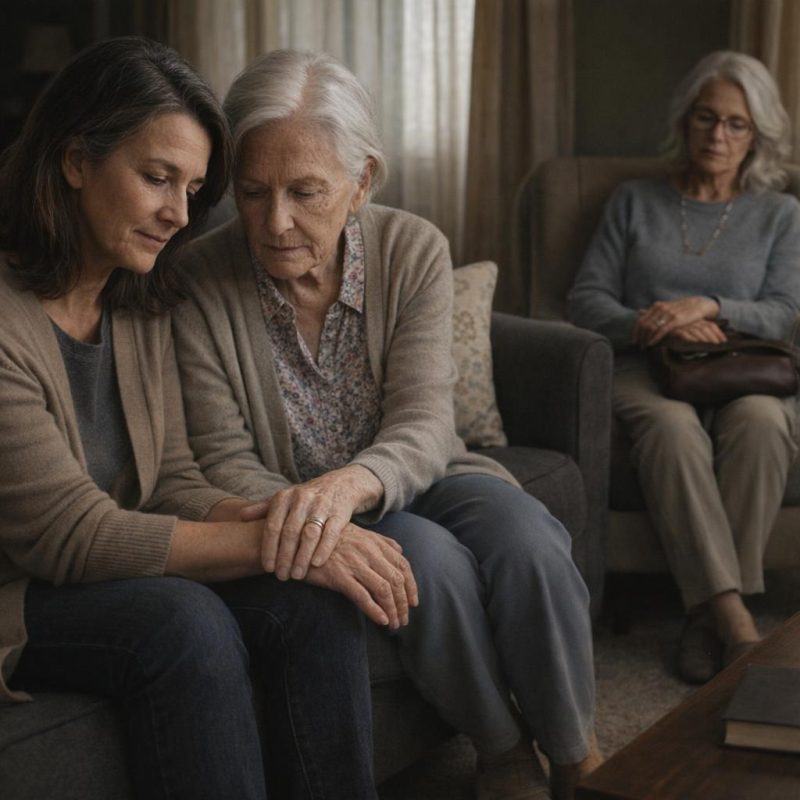 Image by RM AI
Circumstantial Evidence
Ruth came over to my house the following Tuesday evening. I made tea neither of us really drank, and we sat at my kitchen table with a legal pad between us. I'd written everything down — the photo wall, the missing cards, the way visits had been quietly restructured, the small comments Mom had made that didn't quite line up with things I knew to be true. Ruth had her own list, things she'd noticed over months of her own visits. We went through it all methodically, the way you do when you're trying to convince yourself you're not imagining things. And the problem was, every single item had a reasonable explanation sitting right next to it. Photos get rearranged. Cards get lost in the mail or misplaced by an elderly woman with memory issues. Visit schedules get adjusted for caregiving logistics. Ruth said it quietly but honestly — she said the pattern felt real to her, but she also knew that if we brought any of this to Tom or Emily, they'd dismantle it piece by piece without breaking a sweat. She was right. I looked at the legal pad. Twelve observations, each one defensible from the other side. I'd been watching something happen for months, and I still couldn't point to a single thing and say: here, this is the proof. The tea had gone cold, and neither of us moved to warm it up.
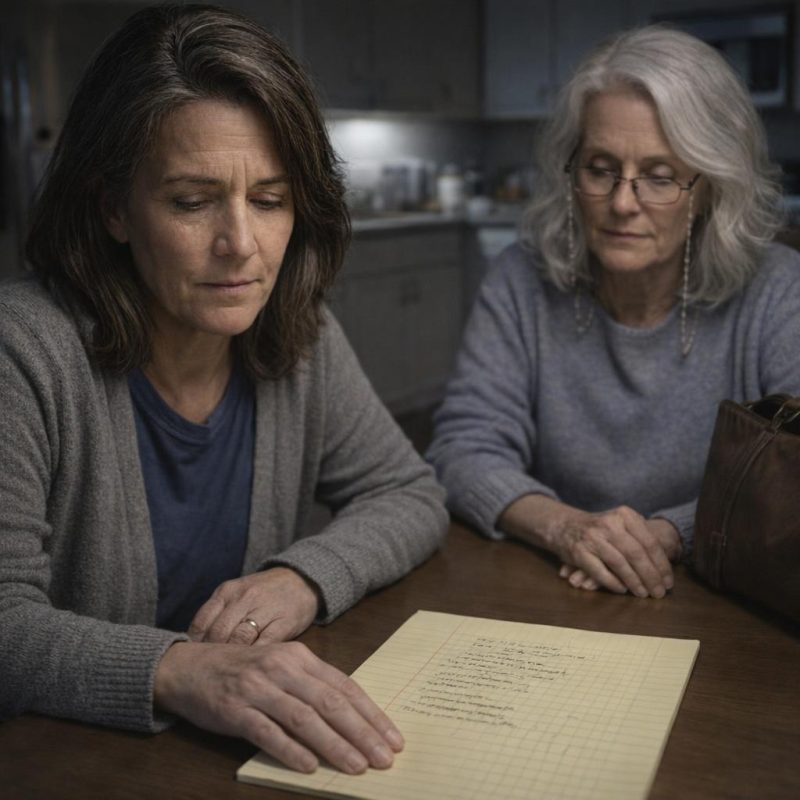 Image by RM AI
Losing Hope
I called Tom on a Thursday night, after I'd talked myself into it for most of the week. I kept the conversation calm. I told him about the cards Mom couldn't remember, about the photo wall, about the way visits had been narrowed down and monitored. I didn't use words like 'erasing' or 'manipulating.' I just described what I'd seen and asked him if any of it concerned him. He listened. I'll give him that — he actually let me finish. Then he said, gently but without any real hesitation, that he thought I was under a lot of stress. He said Valerie was doing an incredible job under difficult circumstances, and that caregiving was exhausting work that deserved more gratitude than suspicion. He said Mom's memory issues explained the cards, and that photo walls change over time, and that maybe I was looking for problems because it was easier than accepting that I hadn't been as present as Valerie had been. That one landed hard. I didn't argue. I didn't have the energy left to argue. I just said I understood, and I think he believed me. We said our goodbyes, politely, the way we always do. Then, just before we hung up, Tom said that maybe I needed to take a break from the family for a while.
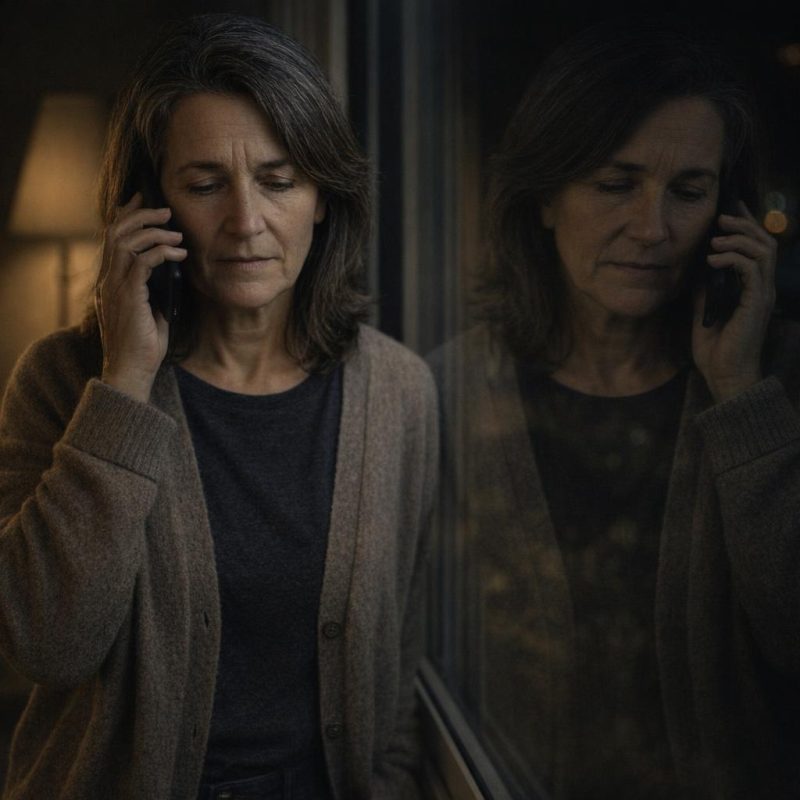 Image by RM AI
The Sealed Envelope
I almost didn't check the mail that Friday. It had been a hard week and I was moving through the house on autopilot, doing small tasks just to feel like I was functioning. But I went out to the box at the end of the driveway the way I always do, and I pulled out the usual stack — a utility bill, a catalog, a card from my dentist. And then I saw it. An envelope near the bottom of the stack, smaller than the others, the kind you'd find in a box of personal stationery. My name and address were written on the front in handwriting I would know anywhere. Shaky now, the letters uneven in a way they hadn't been five years ago, but unmistakably hers. There was no return address. The postmark was three days old. I stood at the end of the driveway for a long moment, just holding it. Mom didn't send letters. She hadn't sent me anything in the mail in years — Valerie handled all of that now, the birthday cards that came printed and signed in a hand that wasn't quite Mom's. I turned the envelope over. It was sealed, the flap pressed down carefully, like she'd taken her time with it. Whatever was inside, it felt like something that had found its way to me by accident — a small, fragile thing that had slipped through a gap it wasn't supposed to fit through.
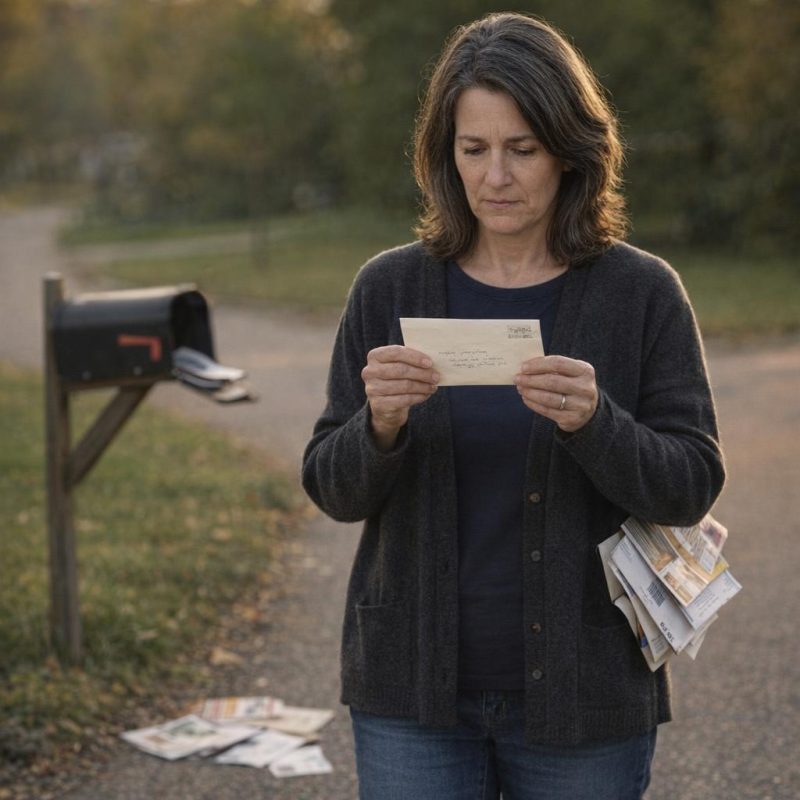 Image by RM AI
Mom's Secret Notes
I sat down at the kitchen table before I opened it. I don't know why — some instinct that I should be still for whatever was inside. The envelope held several folded sheets of notepaper, the kind with faint blue lines, covered in Mom's handwriting. Not a letter, exactly. More like fragments. Dates at the top of some entries, none on others. Short paragraphs, sometimes just a sentence or two, sometimes trailing off mid-thought. She'd been writing things down. Things that had seemed strange to her, things she wanted to remember, questions she was asking herself. One entry said Valerie had told her I'd called and been rude, and Mom had written underneath it: I don't remember this call. Did it happen? Another said she'd been told I missed a visit on purpose, and she'd written: Sara wouldn't do that. Would she? I sat there reading slowly, turning each page carefully like the paper itself might fall apart. Mom had been frightened, I could feel it in the handwriting — the way some words were pressed harder than others, the way certain sentences circled back on themselves. She'd been trying to hold onto something, trying to keep track of what was real. Near the end of the last page, in handwriting smaller and more careful than the rest, I found the line that stopped me completely: Did I really say that to Sara? — and beneath it, the date of the afternoon Valerie had told me Mom asked me not to visit anymore.
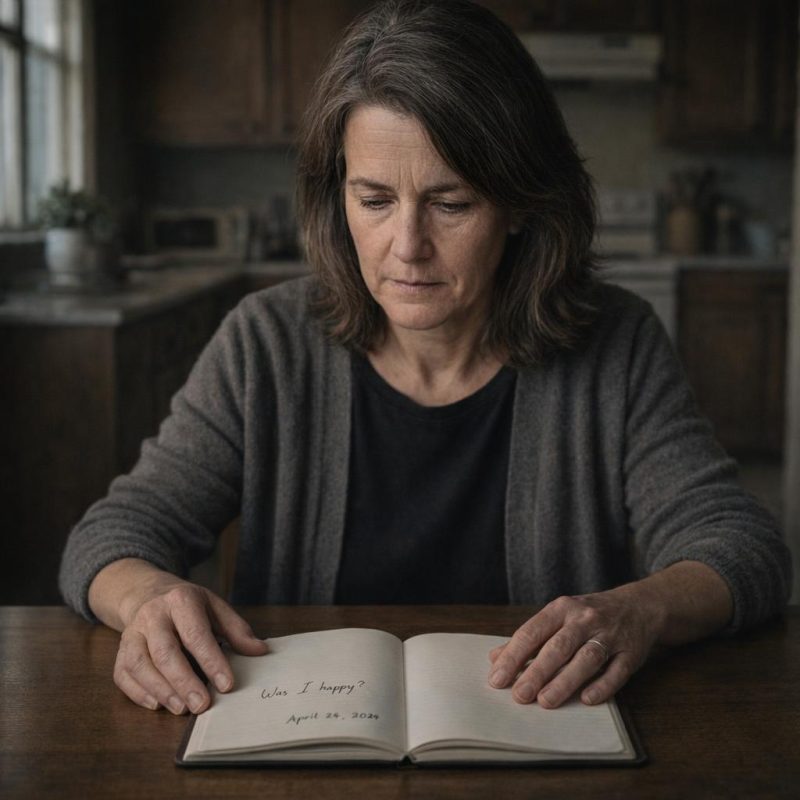 Image by RM AI
False Conversations
I read through the notes three times. Each pass through them felt different — the first time I was just trying to understand what I was holding, the second time I was looking for patterns, and the third time I was just sitting with what they meant. There were at least six separate entries where Mom had written about conversations she couldn't place. Valerie had described a phone call where I'd apparently said I was too busy to help with her care — Mom had written: I don't remember hearing this from Sara directly. There was an entry about a family dinner Mom had been told I'd refused to attend out of spite — she'd written: This doesn't sound like her. Why would she? One entry, undated, just said: Valerie says Sara is angry with me. I don't feel that when she visits. I don't understand. The entries weren't accusations. They weren't a record of certainty. They were a record of confusion — an elderly woman trying to reconcile two different versions of her daughter, written in the margins of her own failing memory. That was the part that broke something open in me. Not the anger, not the sense of seeing my suspicions reflected back in her handwriting. It was the fear underneath the words, the quiet bewilderment of a woman who loved both her daughters and couldn't understand why the picture she was being given didn't match the one she felt in her chest. I sat with those pages spread across the table, and the weight of her confusion settled over the room like something that had been there a long time, waiting to be named.
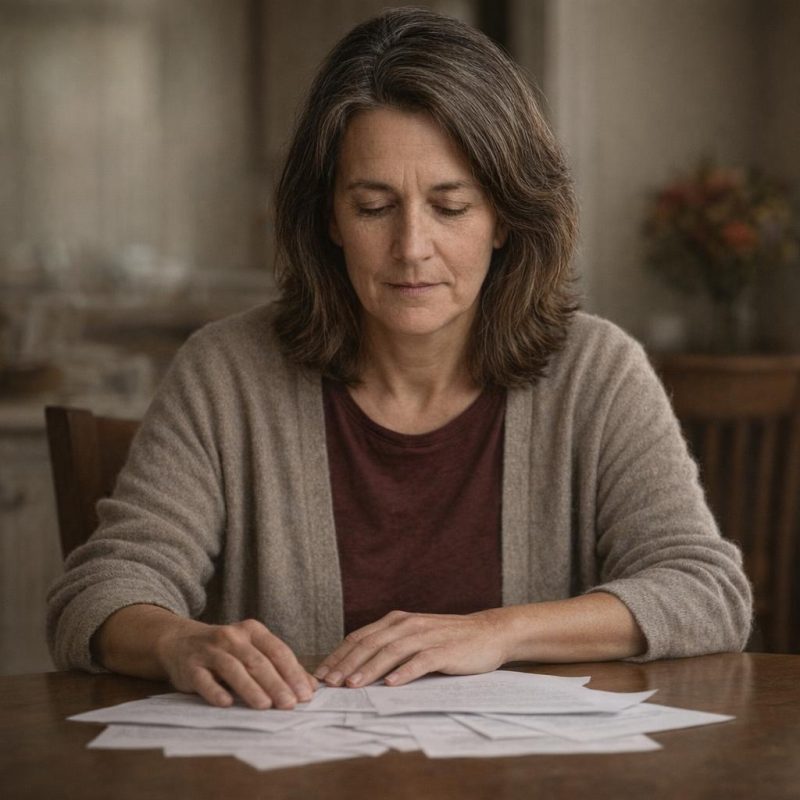 Image by RM AI
Father's Letter
I spent the next evening going through the boxes of old family papers I keep in the closet off the hallway — tax documents, old correspondence, things I'd taken when we cleared out the family home years ago. I wasn't sure what I was looking for, exactly. Context, maybe. Something that would help me understand the shape of what I was dealing with. Most of it was ordinary: utility records, old insurance policies, a folder of Christmas card lists going back to the eighties. I was nearly through the second box when I found it tucked between two manila folders, easy to miss. A plain white envelope, slightly yellowed at the edges. My father's handwriting on the front — his careful, deliberate print, the kind he used for anything he considered important. It was addressed to Mom, her full name, Dorothy, written out formally the way he only did for serious things. Beneath her name, in the same careful hand, he'd written: Private. To be opened only by Dorothy. The envelope was sealed. The flap hadn't been touched. I turned it over twice, checking the back, as if there might be some explanation written there. Dad had been gone for eleven years. This letter had been sitting in my closet the whole time, and Mom had never seen it. I set it down on top of the box and looked at it for a long while, and the sealed flap held its silence the way old things do when they've been waiting longer than anyone expected.
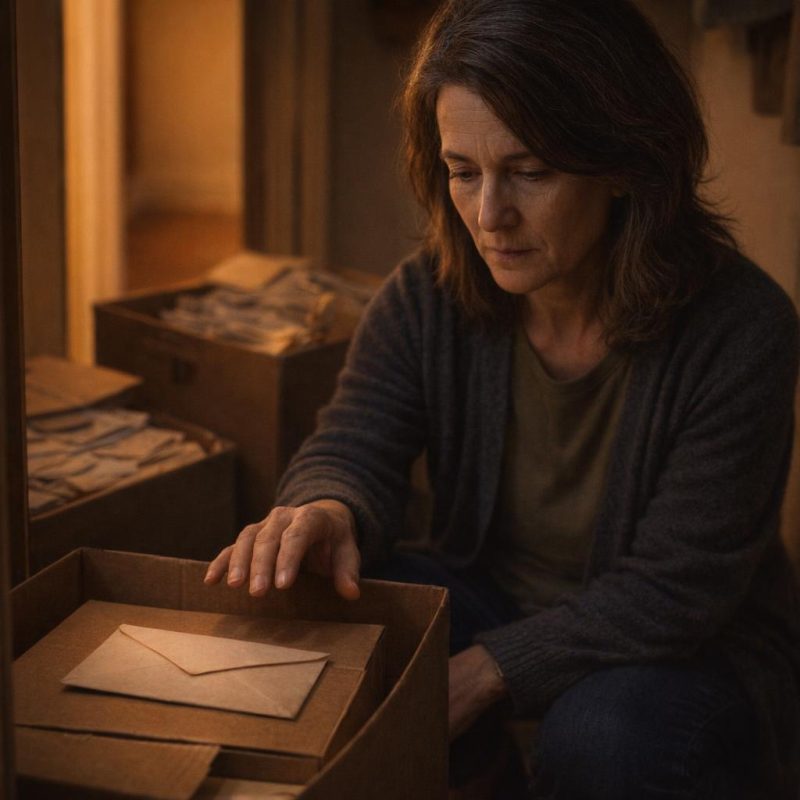 Image by RM AI
The Financial Arrangement
I didn't open it that night. I put it on the kitchen table and walked past it several times, made dinner, washed the dishes, and walked past it again. By the next morning I'd made up my mind. Mom hadn't received it. Whatever Dad had meant for her to know, she'd never known it, and whatever was inside had been sitting unread for over a decade. I opened it carefully, running a butter knife under the flap so I wouldn't tear anything. The letter was two pages, written in Dad's neat hand, dated about four months before he died. He wrote about the house, about the property — not the house they'd lived in together, but the older parcel, the land his own parents had left him, the piece I'd always vaguely known existed but never thought much about. He explained that years earlier, before either Valerie or I were old enough to understand such things, he and Mom had placed that property into a trust. He wrote that Mom had agreed to certain conditions at the time, conditions that would govern what happened to the land and the structures on it depending on how things unfolded with the family. I had to read that paragraph twice. I hadn't known any of this — not the trust, not the conditions, not the agreement Mom had apparently made and then, as far as I could tell, never mentioned to either of us. I kept reading, and the next paragraph explained that the property was held in trust with specific conditions Mom had agreed to, conditions that could only be altered under circumstances Dad had written out in careful, deliberate detail.
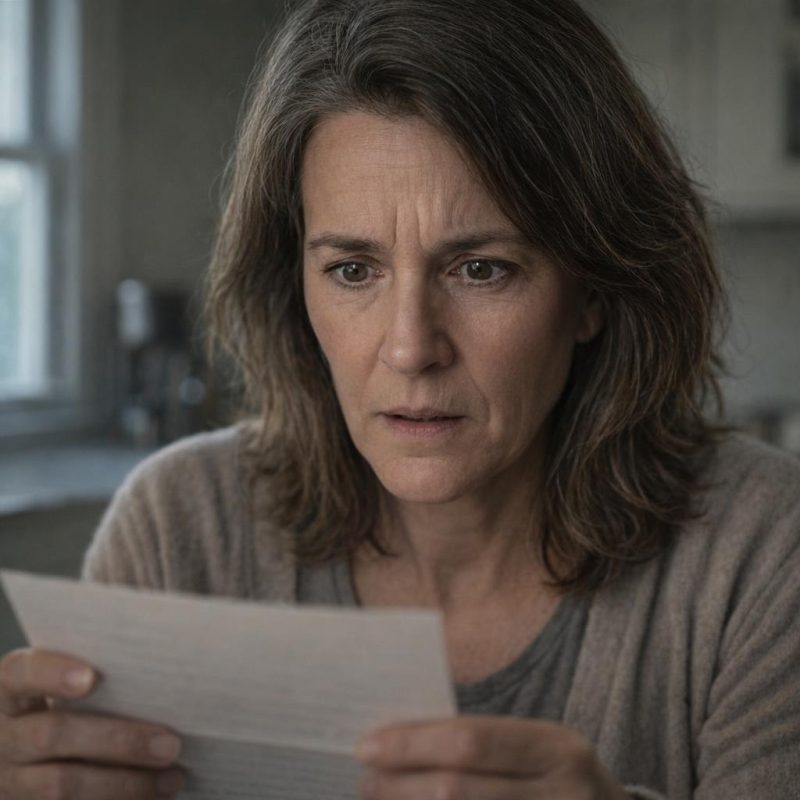 Image by RM AI
The Property Connection
I read Dad's letter three more times that morning, each pass slower than the last. The property he described — the older parcel, his parents' land — I'd always thought of it as a vague background detail, the kind of thing families mention once and never return to. But sitting there with the pages spread flat on the kitchen table, I started matching what he'd written against the trust documents I'd pulled weeks earlier. The language was almost identical in places. The conditions Dad had outlined — the ones governing what happened to the land depending on how things unfolded with the family — those same conditions appeared, reworded but recognizable, in the amended trust. I got up and found my folder, the one I'd been keeping since this all started, and laid the documents side by side. The heirlooms that had gone missing — the small things I'd noticed disappearing over the past year — some of them had been in that house, the older property, the one I'd barely thought about. I didn't know yet what it all meant, or what Valerie might or might not have known about any of it. But for the first time, the scattered pieces I'd been collecting felt like they belonged to the same picture, even if I still couldn't see the whole of it from where I was standing.
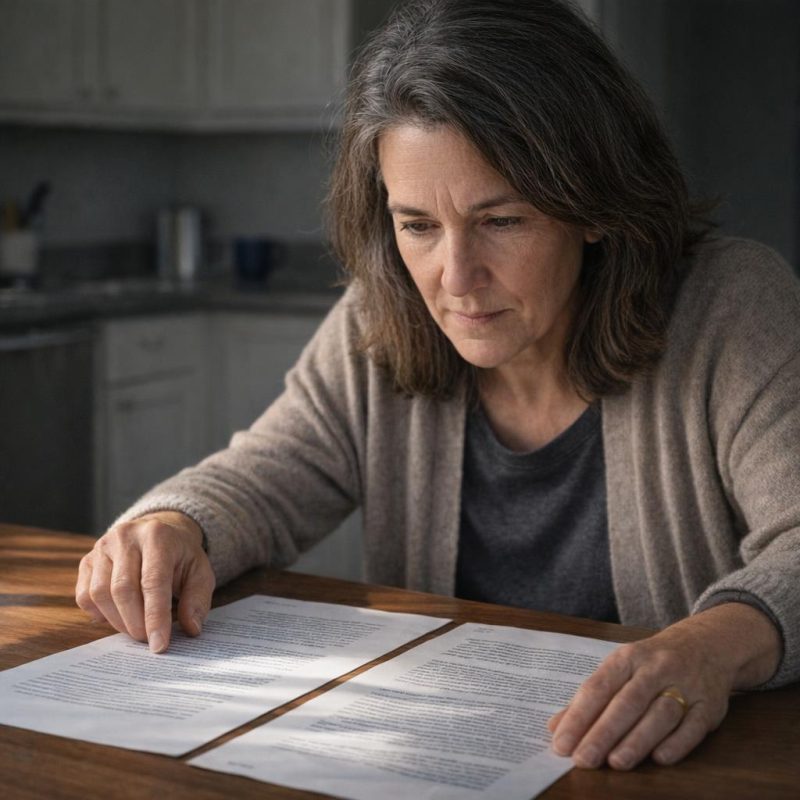 Image by RM AI
Higher Stakes
I looked up the property records the next afternoon, sitting at my kitchen table with my laptop and a cup of coffee that went cold before I remembered it was there. The parcel wasn't hard to find once I had the legal description from Dad's letter. What I wasn't prepared for was the assessed value. It wasn't a modest piece of family land. The acreage alone put it well above anything I'd imagined, and that was before I factored in what the county records showed about recent comparable sales in that area. I sat back and just stared at the screen for a moment. Then I started reading the ownership conditions more carefully. There were restrictions tied to the trust — provisions about who could make decisions regarding the property, under what circumstances control could transfer, and what would happen if certain family conditions changed. The language was dense, but the shape of it was becoming clearer. Whoever held decision-making authority over Mom's care arrangements would have significant influence over how those conditions played out. I hadn't understood that before. I'd been thinking about this whole situation in terms of family dynamics, hurt feelings, being pushed out. But sitting there with the property records open in front of me, I understood for the first time that there were financial stakes here I had never once considered.
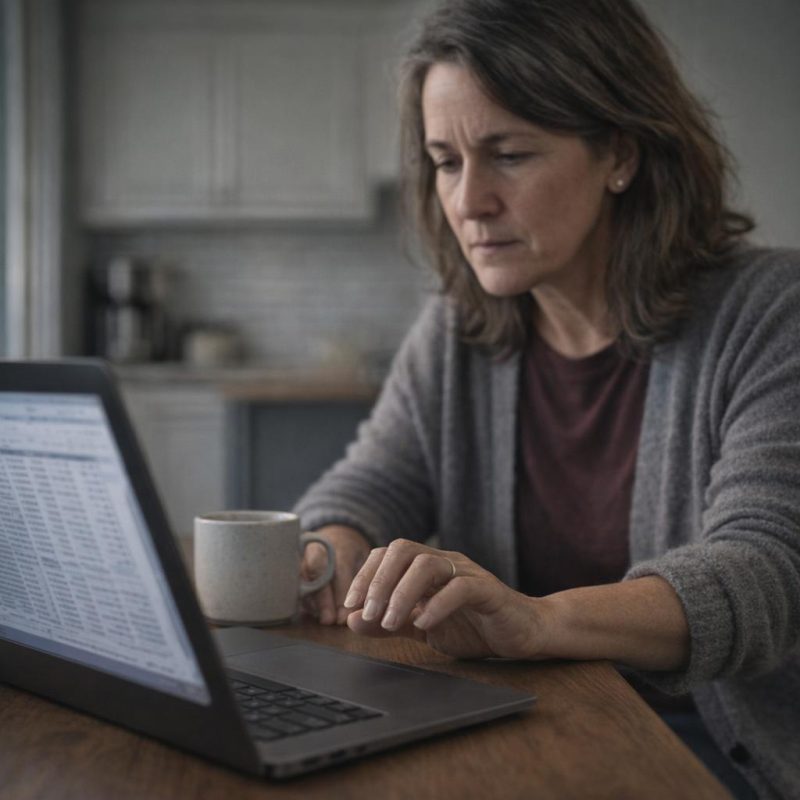 Image by RM AI
The Birthday Reunion
The invitation arrived in a cream envelope with Mom's name printed on the return address label in Valerie's handwriting. It was for Mom's eighty-fifth birthday — a gathering at Valerie's house, two weeks away, family only. The card inside was tasteful, the kind you'd find at a stationery shop, with a small handwritten note from Valerie tucked behind it. I read the note twice standing at the mailbox. It said she hoped I'd come, that it would mean a lot to Mom, and that the gathering would also be a good opportunity for the family to finalize some important decisions about Mom's care going forward. I went inside and set both pieces of paper on the table next to Dad's letter and the property records. Two weeks. Whatever I was going to do with what I'd found, whatever I was going to say or show or ask, I had two weeks to figure it out. I thought about calling Tom, then decided against it. I thought about calling Emily, then put the phone down. I needed to be sure of what I had before I brought anyone else into it. I went back to the note and read it one more time. The last line said that several family members had already agreed it was time to make Mom's care arrangements permanent.
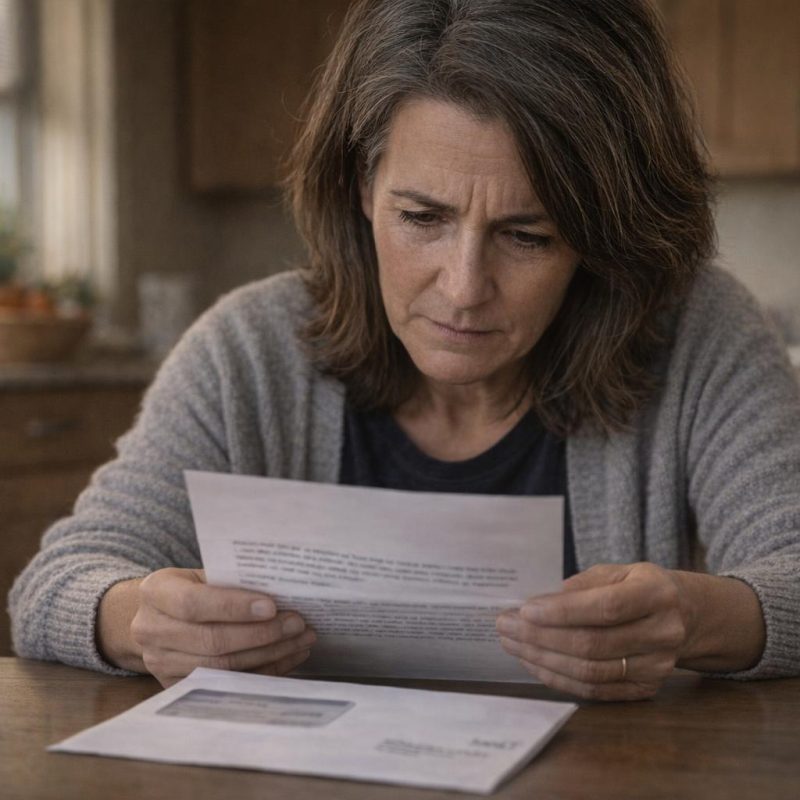 Image by RM AI
The Hidden Source
Ruth called on a Tuesday evening, and I almost didn't pick up because I'd been staring at my notes for so long that everything had started to blur together. Her voice was careful in a way I recognized — the way she got when she was choosing her words. She said she'd been doing some asking around, quietly, the way she used to track down obscure sources back in her library days. She'd spoken to someone who had known our family for a long time, someone who had been close to Mom in a way I hadn't known about. I asked her what she'd found out. There was a pause, and then Ruth said the person had told her something that reframed everything — not just the trust, not just the property, but all of it, going back years. I gripped the phone tighter. I asked her what she meant. She said that Valerie's behavior, all the controlling and the secrecy and the way she'd been managing everything so tightly — it hadn't been about what I thought it was about. I asked her what it had been about, then. Ruth took a breath, and when she spoke again her voice was steady and quiet. She said Valerie had been protecting a secret — something Mom had begged her to keep hidden decades ago.
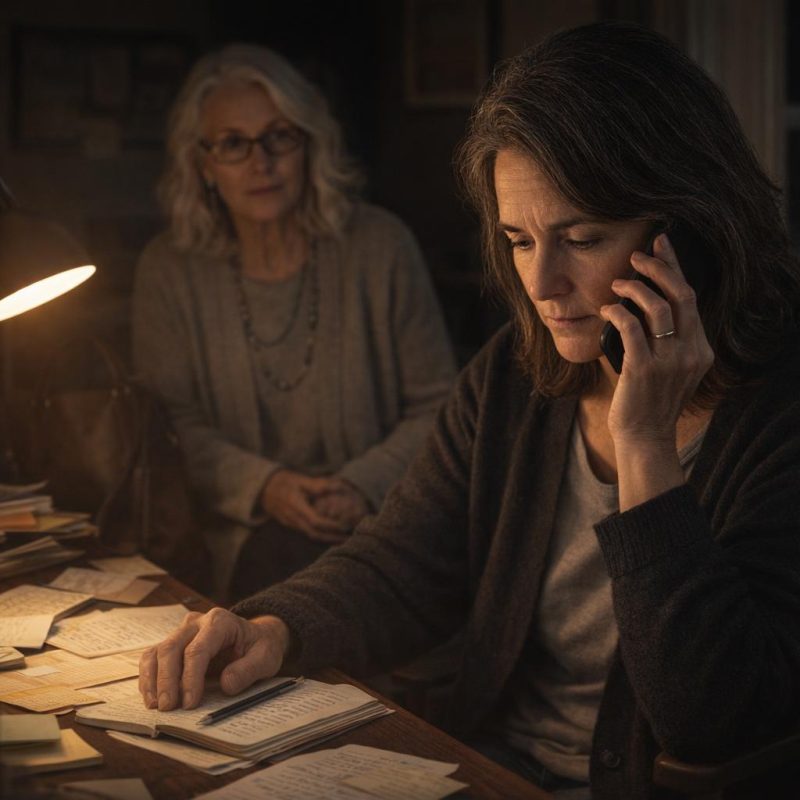 Image by RM AI
The Burden Valerie Carried
Ruth and I met the next morning at a coffee shop halfway between our houses. She brought the woman she'd spoken to — a retired neighbor named Helen who had lived two streets over from my parents for nearly forty years. Helen was in her late seventies, small and deliberate in the way she spoke, and she looked at me with something that felt like relief, like she'd been waiting a long time to say what she was about to say. She told me that Mom had confided in Valerie sometime in the early nineties, when Valerie was in her late twenties. Mom had told her something from before she and Dad were married — something she'd carried alone for decades and had never told anyone else in the family. Helen said Mom was deeply ashamed of it, that she believed if the family ever found out, they would think of her as someone entirely different from the woman she'd spent her whole life trying to be. She'd asked Valerie to promise that it would never come out, especially not after she was gone. Helen folded her hands around her coffee cup and looked at me steadily. She said Mom had made Valerie promise to erase all evidence of the secret before she died.
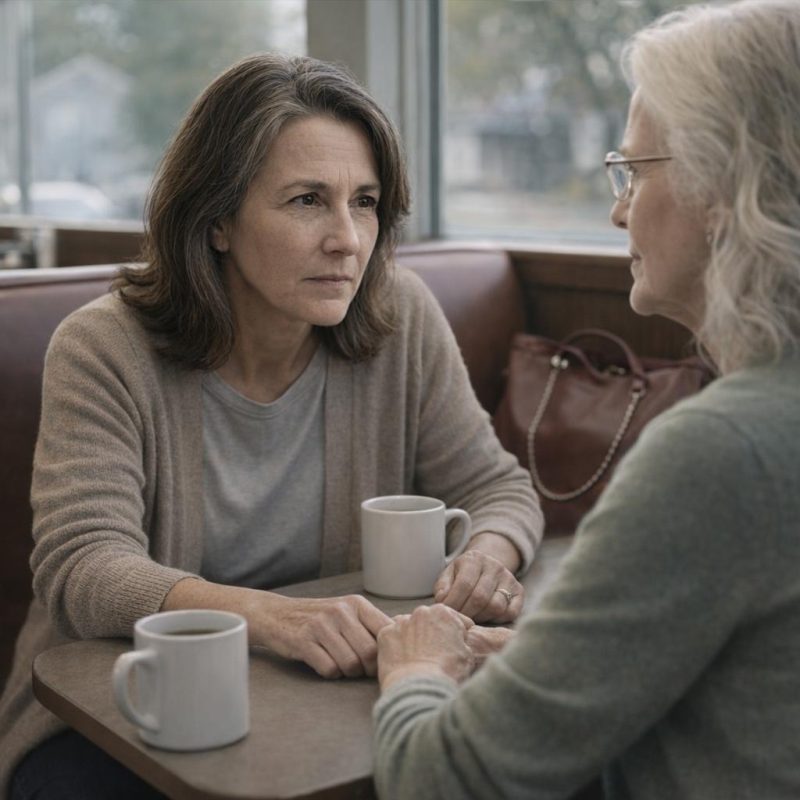 Image by RM AI
Reframing the Evidence
I drove home from that coffee shop and went straight to my folder. I spread everything out on the dining room table — the notes I'd kept, the photographs I'd taken of the empty shelves, the dates I'd written down when I noticed things missing, the records of the visits I'd been turned away from. I'd built this whole picture in my head over months, and I'd been so certain about what it meant. I went through it piece by piece. The restricted visits — I'd read those as Valerie keeping me away from Mom. But if Mom had asked her to manage who came and went, to keep certain conversations from happening, that looked different. The controlled phone calls, the way Valerie had positioned herself between Mom and the rest of us — I'd read that as power. But if she was trying to prevent someone from asking the wrong question at the wrong moment, it read differently too. I got to the photographs of the missing items. The small framed picture that had been on the hallway table for as long as I could remember. The box of letters from the shelf in Mom's bedroom. The old jewelry I'd assumed had been taken. I sat very still looking at those photographs. Those weren't random things. Those were the kinds of things that told a story — and I understood now that they were the items connected to whatever Mom had needed to disappear.
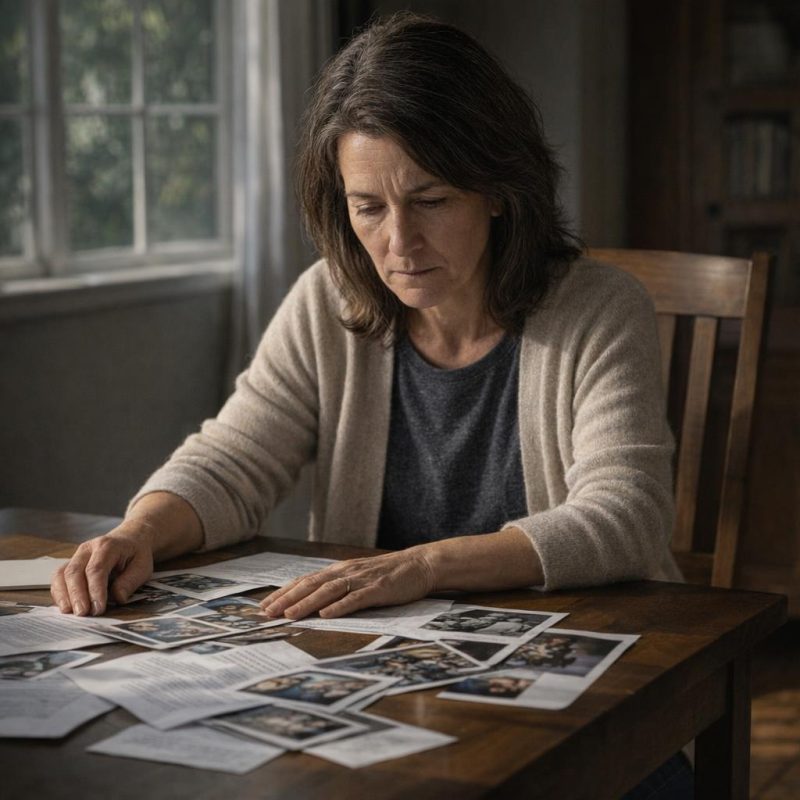 Image by RM AI
The Weight of Secrets
I sat at the table for a long time after I put the folder away. I kept thinking about Valerie in her late twenties, sitting across from Mom and hearing something that changed everything, and then agreeing to carry it. That was thirty years ago. Thirty years of holding something she couldn't explain to anyone, couldn't defend herself with, couldn't put down. Every time I'd felt shut out, every time I'd read her silence as coldness or her control as cruelty, she'd been standing behind a wall she'd built out of a promise she couldn't break. I thought about the phone calls she hadn't returned, the explanations she'd never given me, the way she'd let me think the worst of her rather than say a word. I didn't know if I would have done the same. I honestly didn't know. I thought about Mom, too — carrying the original weight of it for decades before she finally handed part of it to Valerie, and what it must have cost her to do even that much. Two women in the same family, both of them shaped by the same secret, neither of them able to speak it. The anger I'd been holding for months felt different now — not gone, but quieter, sitting alongside something heavier and more complicated than I had words for yet.
 Image by RM AI
The Nature of the Secret
Ruth and I sat in her living room that evening, and she told me what she knew. Mom had been involved with someone before she met Dad — a relationship that had ended badly, and that had left consequences Mom had spent the rest of her life trying to outrun. There had been a pregnancy, Ruth said quietly, before either Tom or Valerie or I existed. Mom had made a choice she never forgave herself for, in a time when that kind of choice carried a weight that didn't lift easily. She'd built her whole identity afterward around being a good mother, a devoted wife, a woman of faith. The gap between who she'd been in that moment and who she'd spent sixty years trying to be was something she couldn't let anyone see. Ruth said Mom had told her a version of it once, years ago, and had never spoken of it again. I sat with that for a while without saying anything. I thought about the woman I'd known my whole life — the one who kept the house immaculate, who remembered every birthday, who cried at baptisms — and I tried to hold that woman alongside the younger one Ruth was describing. They were the same person. That was the part that settled over me slowly and didn't move: the shame Mom had carried all those years had quietly shaped everything that came after it.
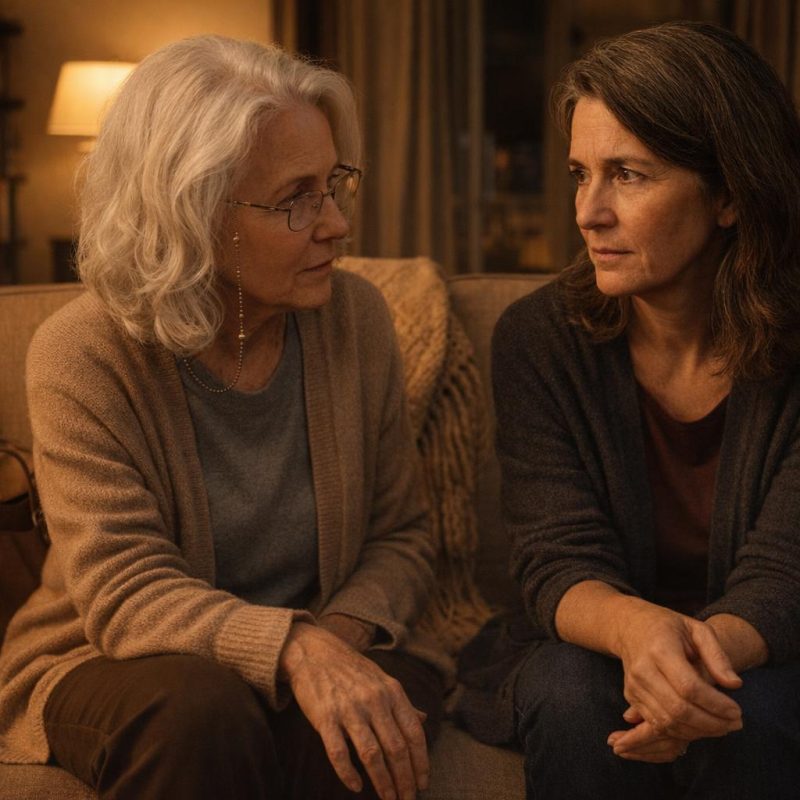 Image by RM AI
Valerie's Impossible Position
I waited two days after talking with Ruth before I picked up the phone and called Valerie. I'd rehearsed what I wanted to say a dozen times, and every version sounded either too accusatory or too small for what had actually happened between us. In the end I just dialed and waited. She picked up on the third ring, and I could hear the wariness in her silence before either of us said a word. I told her I wasn't calling to fight. I told her I knew — about Mom, about the secret she'd been carrying, about why she'd done what she'd done. There was a long pause on her end, and then she started talking. Slowly at first, then faster, like something had been held under pressure for a very long time. She said she'd found out years ago, that Mom had made her promise never to tell anyone, and that keeping that promise had meant building a wall around Mom that she hadn't fully understood herself until it was already built. She said she'd told herself she was protecting Mom. She said she'd told herself it was the only way. And then her voice broke — quiet and sudden — and she said she never wanted to hurt me, but she hadn't known how to keep both promises at once.
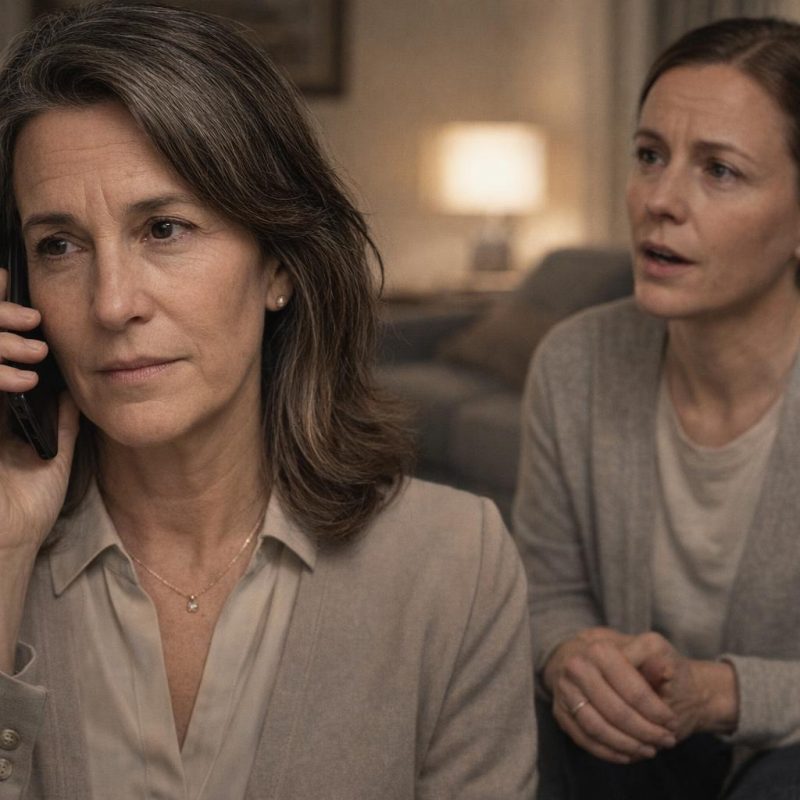 Image by RM AI
The Plan Forward
We talked for almost three hours that night. I sat on the edge of my bed with my back against the headboard and my knees pulled up, and I didn't move for most of it. Valerie told me things she'd never said out loud to anyone — how isolated she'd felt carrying Mom's secret alone, how she'd convinced herself that keeping me at a distance was a kindness, how she'd watched the family fracture and told herself it was necessary. I told her what those months had felt like from my side. The unreturned calls. The meetings I wasn't invited to. The way Emily had started looking at me like I was someone to be managed. She listened without interrupting, which was something she'd never done before, not once in fifty years of being sisters. By the time we got to the birthday party, we both knew it was coming whether we were ready or not. We agreed we couldn't undo what had already happened with Tom and Emily, but we could walk in together and let that speak for itself. We agreed to protect Mom — no one at that table needed to know what Ruth had told me. And then Valerie said, quietly, that she wanted to face the family together, as sisters, and I said yes.
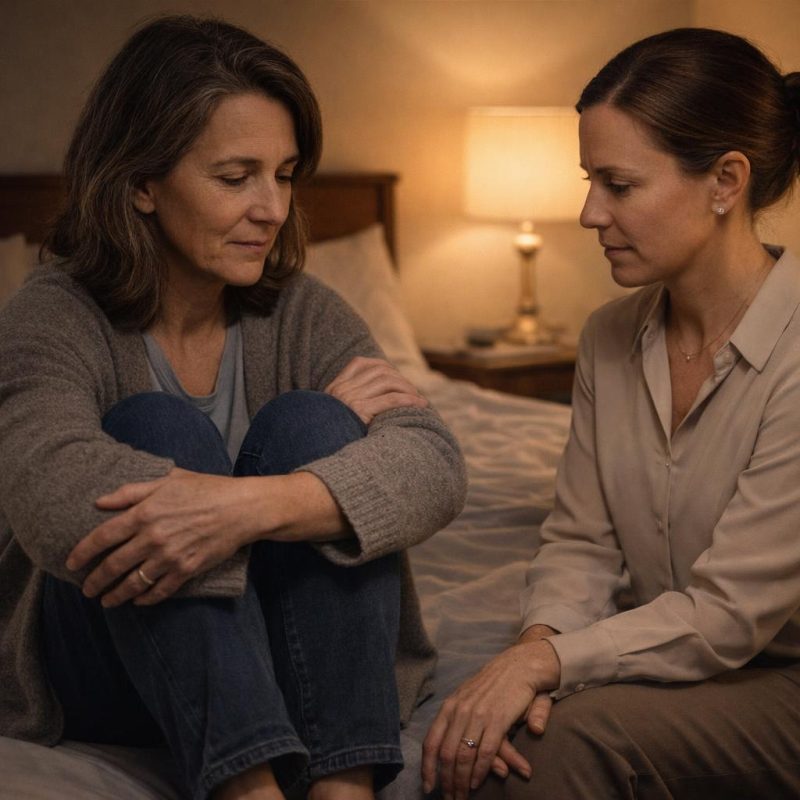 Image by RM AI
The Gathering
Mom's birthday fell on a Saturday, and Valerie picked me up so we could arrive together. I'd spent the morning trying to decide what to wear, which felt absurd given everything, but I needed something to do with my hands. When we pulled into Tom's driveway I could see people moving behind the kitchen window, and my stomach dropped the way it used to before school presentations when I was twelve. We walked in side by side. The room went quiet in that particular way rooms do when something unexpected happens — not silent, just recalibrated. Tom looked at Valerie, then at me, then back at Valerie. Emily was standing near the counter and she crossed her arms without seeming to notice she'd done it. Ruth was there too, near the window, and she gave me a small nod that I held onto. Mom was in the armchair by the fireplace, smaller than I remembered, her cane propped beside her, a paper crown someone had already put on her head. She looked up when we came in and smiled — the open, uncomplicated smile of someone who was just glad her children were in the same room. I stood there in the doorway with Valerie's shoulder an inch from mine, and the weight of every month that had passed between us and this moment settled over the room like weather.
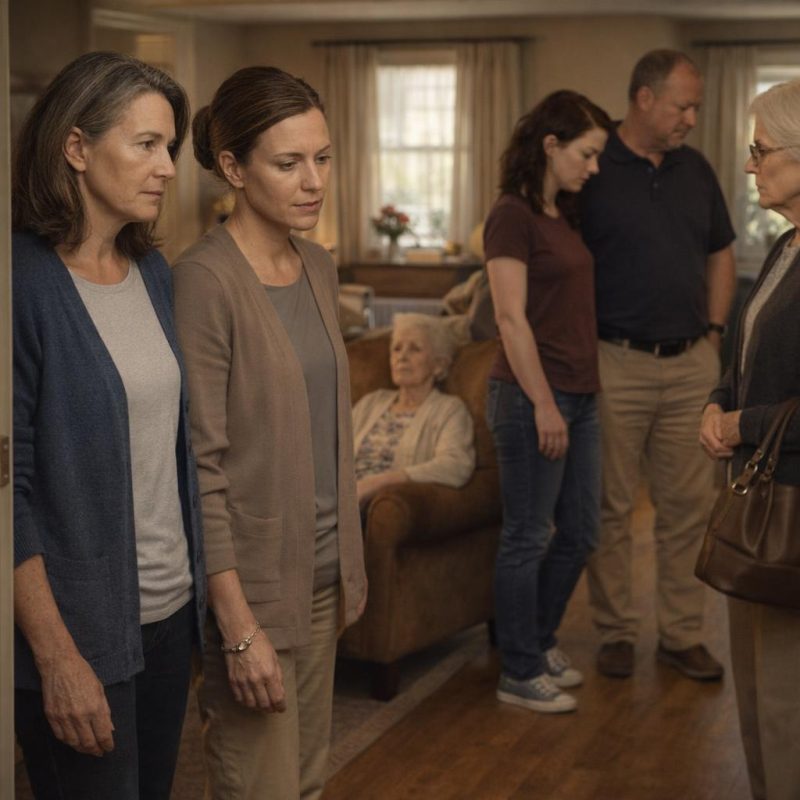 Image by RM AI
Formal Decisions
After the cake and the singing and the careful small talk that nobody fully meant, Valerie asked everyone to stay seated for a few minutes. She stood at the end of the table with her hands folded in front of her, composed in the way she always was when she'd prepared for something. She began walking through the care arrangements — the schedule, the medical decisions, the financial structure she'd put in place. Tom nodded along. Emily had her phone face-down on the table and kept her eyes on Valerie. I watched from my seat across the table and didn't say anything, because that was what Valerie and I had agreed. She was going to lay out the full picture first, and then we were going to address the rest together. But as she talked, I could see her pace slow slightly, the way someone's does when they're approaching something they haven't fully decided yet. She mentioned the estate documents. She mentioned the power of attorney. She mentioned the decisions that had been made in the last six months. And then she paused — just a beat too long — and I could see her eyes move to Mom, who was watching her from the armchair with an expression I couldn't read, and the silence in that pause held everything Valerie hadn't said yet.
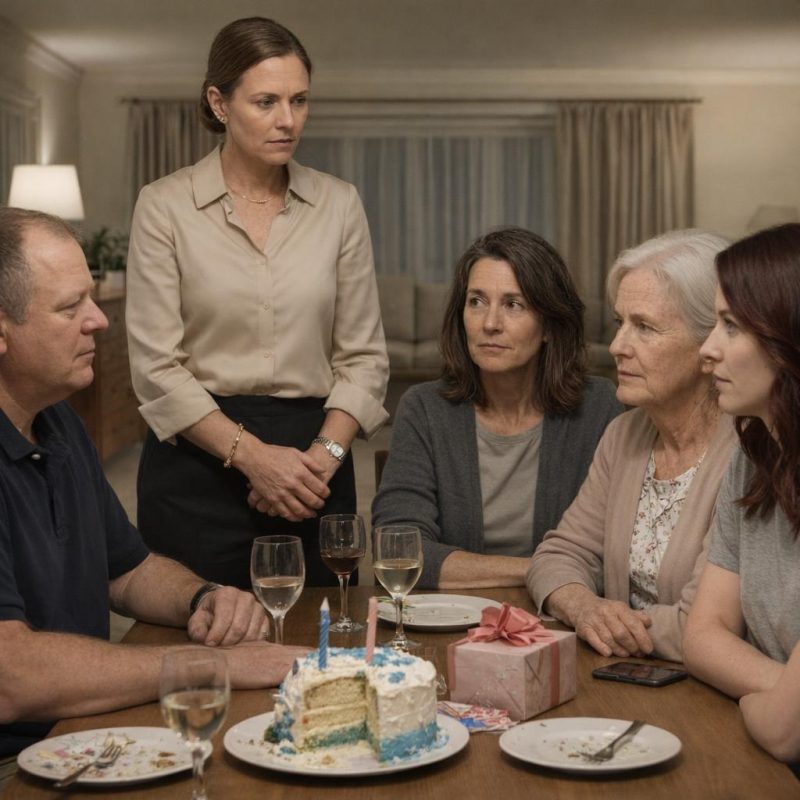 Image by RM AI
Sara's Truth
I stood up before I'd fully decided to. My chair scraped back and everyone looked at me, and I felt the familiar pull to sit back down and let it go. I didn't. I said I wasn't there to cause problems, and I meant it. I said I knew the last several months had been hard on everyone, and that I understood why people had drawn the conclusions they had. I said I wasn't angry at Valerie — and I watched Tom's eyebrows move at that — and I wasn't there to relitigate every decision that had been made without me. What I wanted, I said, was for the people in that room to understand that what they'd seen hadn't been the whole picture. I'd brought a folder. I set it on the table and didn't open it, just let it sit there. I said there were phone records in it, and notes, and dates — not as accusations, but as a record of what had actually happened. Emily looked at the folder and then at Valerie. Tom looked at his hands. Nobody spoke for a moment, and I stayed standing, because sitting down felt like disappearing again. And then the silence after I finished — the particular quality of it, the way it held without breaking — settled around me like something I'd been waiting a long time to earn.
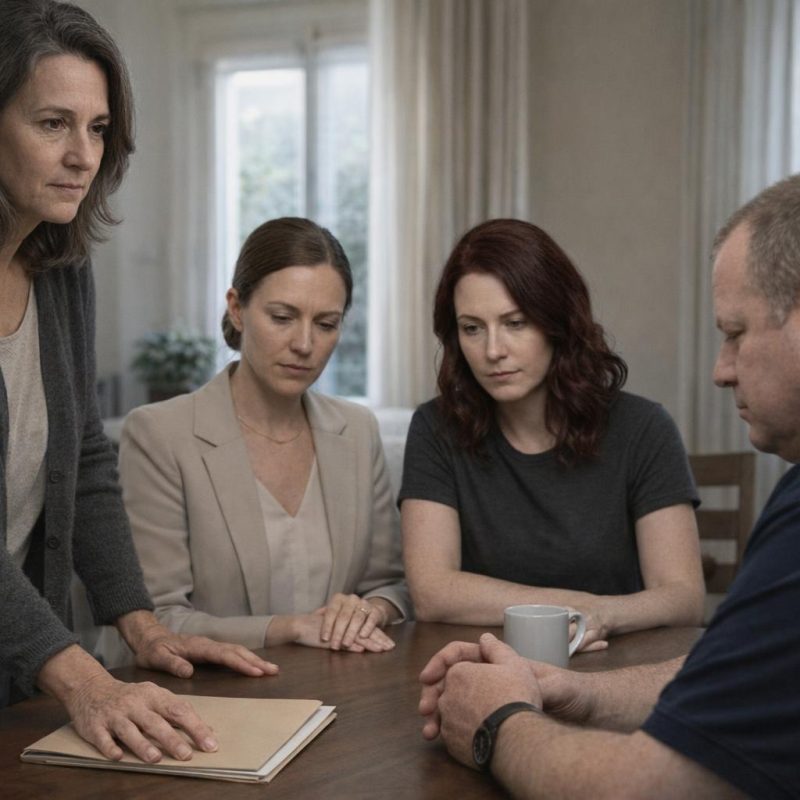 Image by RM AI
The Counterclaim
I thought I could feel the room shifting. Tom had uncrossed his arms. Emily had stopped looking at Valerie for confirmation of every expression. I let myself believe, for about ninety seconds, that something was actually changing. Then Emily reached into the bag beside her chair and pulled out an envelope. She said she'd been holding onto it because she hadn't known when the right moment was, but that she thought the family deserved to hear it. She said it was a letter from Mom. Tom straightened in his chair. Valerie went very still across the table. Emily unfolded the pages and began reading aloud — Mom's name at the top, Mom's familiar phrasing, sentences that described feeling hurt by my recent behavior, feeling supported by Valerie's sacrifices, feeling worried that conflict was being introduced into a family that needed peace. Each sentence landed like something being stacked on a scale. I looked at my folder sitting open on the table and it suddenly seemed very small. I looked at Tom, who was nodding slowly. I looked at Emily, who was reading with the careful gravity of someone delivering a verdict. And then I looked around the rest of the table and watched the faces that had just begun to open toward me close again, one by one.
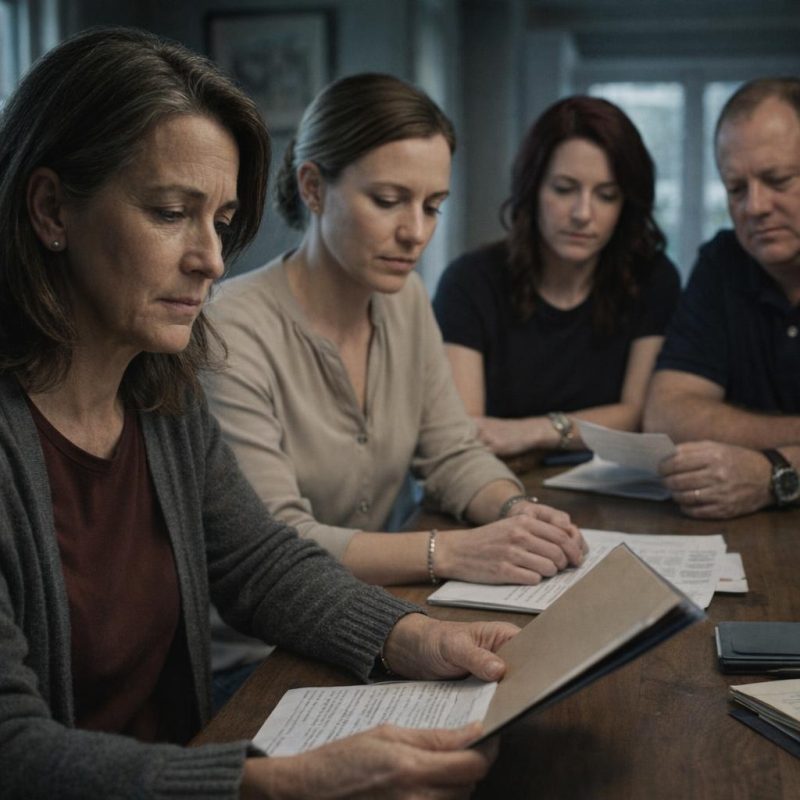 Image by RM AI
Valerie's Intervention
Emily was still holding the pages when Valerie said, quietly but clearly, to stop. Emily looked up. Valerie was already standing. She didn't look at me. She looked at Tom first, then at Emily, then at the letter in Emily's hands. She said the letter wasn't from Mom. She said she had written it herself, six weeks ago, when she was still trying to keep everything from unraveling. The room went so still I could hear the refrigerator running from the kitchen. Tom said, 'What?' — just that one word, flat and slow. Emily set the pages down on the table like they'd become something she didn't want to be holding. Valerie kept her voice even. She said she'd told herself she was protecting Mom, that she'd been so deep inside the logic of it that she hadn't seen clearly what she was doing to the rest of the family. She said she'd been wrong. She said she was sorry. She looked at me once when she said it, and I didn't know what my face was doing. I was watching Tom, who was staring at the letter on the table, and Emily, who had gone pale, and I felt something loosen in my chest that had been wound tight for months — but the room around me was fracturing in real time, and I wasn't sure yet what it was fracturing into.
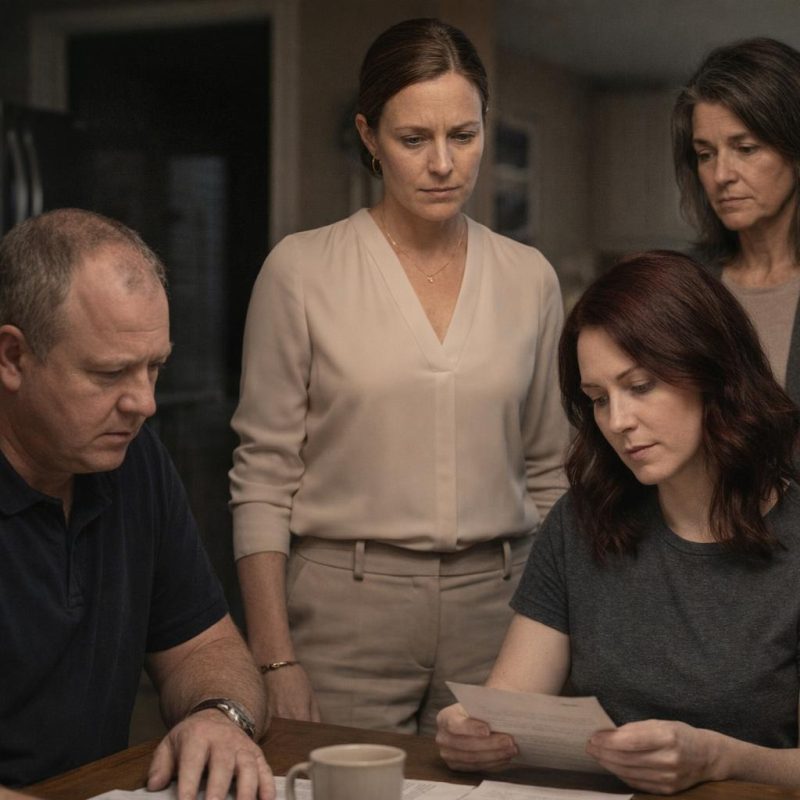 Image by RM AI
Ruth's Doubt
For a moment nobody spoke, and then everyone did. Tom pushed back from the table. Emily said Valerie's name twice, like she was testing whether it still meant what it had meant an hour ago. Valerie was trying to explain — the secret, the pressure, the impossible position she'd been in — but the words were landing in pieces because nobody had the context to hold them together. I tried to help. I said Valerie had come to me, that we'd talked, that what she'd done had been wrong but that I understood why. That made it worse. Tom looked at me like I'd just confirmed something he'd been afraid of. Emily said if I already knew, why hadn't I said something before the letter was read. I said I hadn't known about the letter. I said Valerie and I had only talked two days ago. I could hear how it sounded — the two of us, coordinated, arriving together, and now defending each other — and I couldn't find the sentence that would make it sound like anything other than what they were already deciding it was. Ruth had been quiet through all of it, standing near the window where she'd been since we arrived. She looked at me for a long moment, and then she asked, in a voice that was careful and tired and nothing like the Ruth who had sat across from me in her living room, whether I had known about Valerie's actions before tonight.
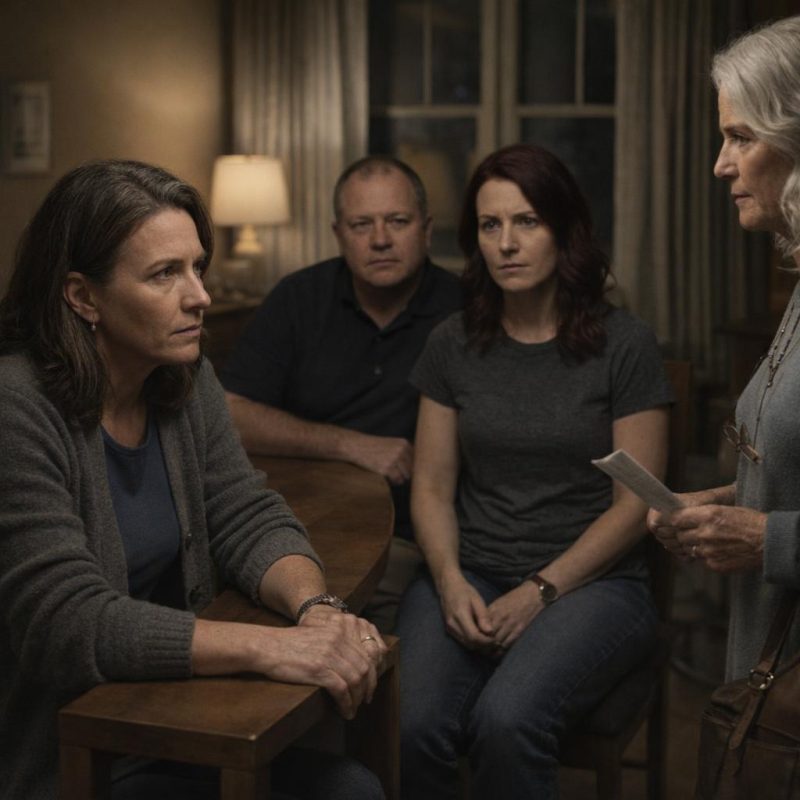 Image by RM AI
Mom's Voice
Before I could answer Ruth's question, my mother stood up. Not the careful, tentative rising I'd watched her do for months, bracing against the table edge, testing each joint before trusting it. She stood the way she used to stand — deliberate, unhurried, like she had somewhere to be and knew exactly how to get there. The room went quiet in stages. Tom stopped mid-sentence. Emily turned. Even Valerie, who had been trying to find words for the last ten minutes, went still. Mom set her cane against the chair and looked at each of us in turn, and her eyes were clear in a way I hadn't seen in a long time. She said she needed everyone to stop. She said there were things being said about her family, about her choices, about her children, and that she was the only one in the room who knew the whole of it. Her voice didn't waver. She said she had been carrying something for a very long time, longer than any of us had been alive, and that she had been afraid to say it out loud because she hadn't known what it would cost her. Then she said she was done being afraid. She looked at Valerie first, then at me, and then she said: "I need to tell you all something. And I need you to let me finish."
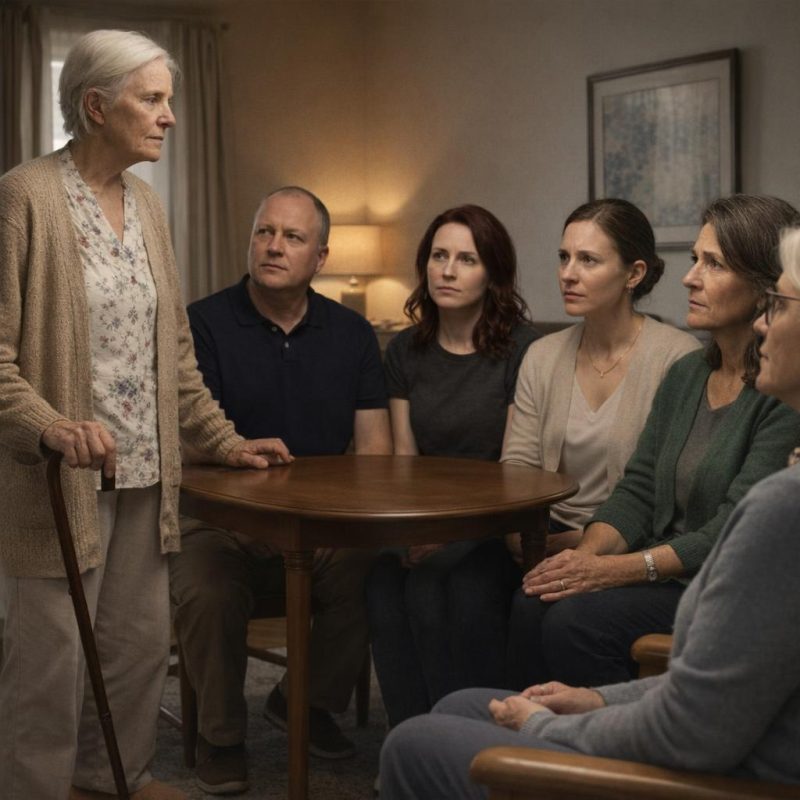 Image by RM AI
The Truth Untangled
She told us about a man she had loved before our father. Not a passing thing — a real love, the kind she said she hadn't known how to name when she was twenty-three. He had died before they could marry, in an accident that the family had never spoken of because his family and ours had a history that made grief complicated. She had been pregnant. She had lost the baby early, alone, in a way that women of her generation lost things alone, and she had buried it so completely that she had almost convinced herself it hadn't happened. But it had shaped everything after — the way she held herself back from our father at first, the way she had clung to the house because it was the last place she had felt whole before the loss, the way certain heirlooms had felt unbearable to display because they had been gifts from that time. She had told Valerie two years ago, when her memory started slipping and she was afraid the truth would come out wrong, in fragments, without context. She had asked Valerie to protect her. Not to deceive us — to protect her. When she finished, the room held it. Nobody moved to fix it or explain it or argue with it. I sat with the weight of all those decades pressing quietly against my chest, and it felt less like a wound and more like something finally set down.
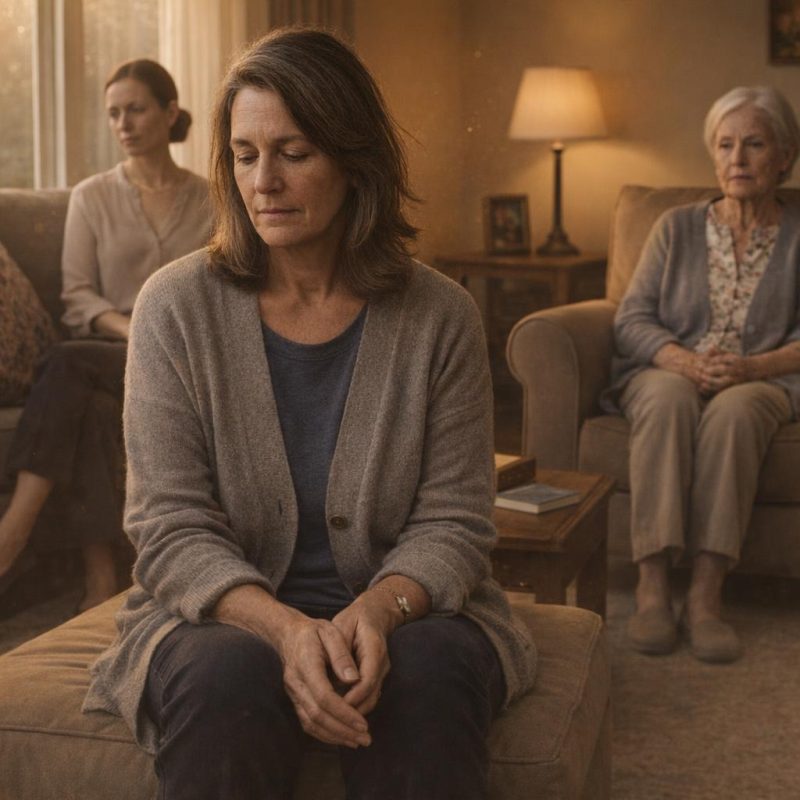 Image by RM AI
Pieces Reconnected
After Ruth said her goodbyes and Emily took the kids to the car, the four of us — me, Valerie, Tom, and Mom — sat at the kitchen table the way we used to sit when we were young and something had happened that needed talking through. Mom was tired but still present, her hands wrapped around a mug she wasn't drinking from. Tom was the one who finally asked how the trust changes connected to the house, and Mom explained it quietly: the property had been in her name alone because of a provision from the man she'd loved, a small inheritance she'd never disclosed to our father, and when she'd updated the trust she'd needed to account for it without explaining why. Valerie had helped her navigate that. I asked about the heirlooms — the ones that had disappeared from the shelves — and Valerie said Mom had asked her to put them away because looking at them had become too hard. Not to erase anything. Just to stop the daily ache of it. Tom nodded slowly, like pieces were settling into place he hadn't known were missing. I thought about the months of suspicion, the spreadsheets, the conversations with Ruth, the way I had catalogued every absence like evidence of something sinister. So much of it had been real pain, just not the pain I thought it was. The silence between us wasn't empty — it was full of everything we might have spared each other if any of us had known how to ask the right question sooner.
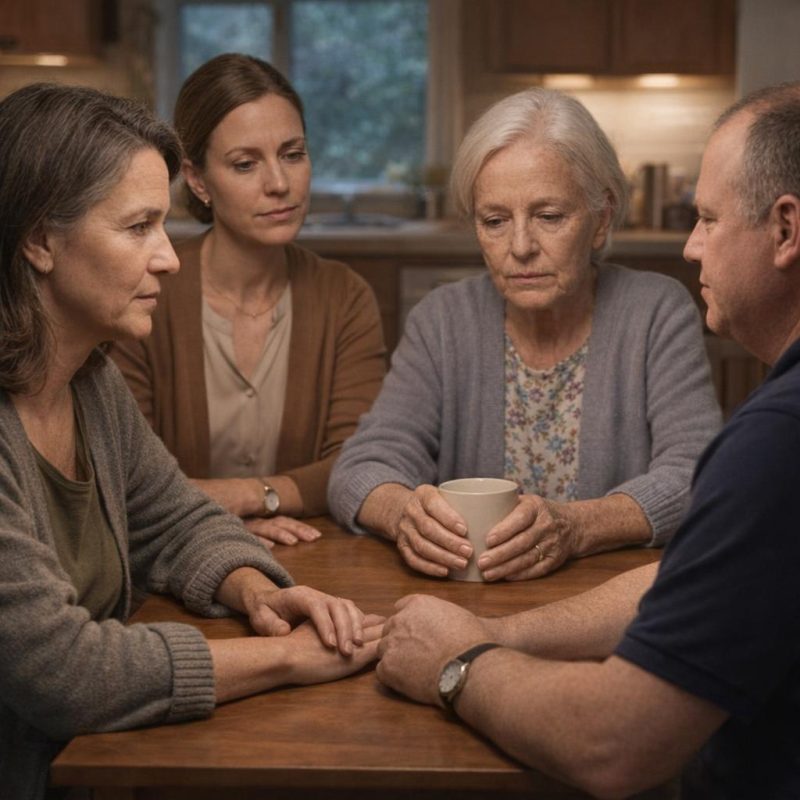 Image by RM AI
What Remains
A week after the birthday party, I drove to Mom's house alone. Valerie wasn't there. It was just the two of us, the way it used to be on Sunday afternoons when I was the one who lived closest and would stop by with groceries and stay longer than I'd planned. We sat in the sunroom and talked about small things first — the weather, a bird that had been coming to her feeder, whether the hydrangeas would come back after the hard winter. Then she reached under the side table and brought out a shoebox, the old kind with a department store name on the lid that nobody printed anymore. She set it in my lap without ceremony. Inside were letters tied with kitchen twine, a handful of photographs, and a small card with handwriting I didn't recognize. She said she had kept them because she couldn't throw them away, but that she didn't want Valerie to have to manage them after she was gone. She said she trusted me to decide what they deserved. I looked at her for a moment — her silver hair, her careful hands, her eyes that were tired but steady — and I felt something in my chest that had been clenched for months slowly release. I didn't know yet what I would do with what was in that box. But she had put it in my hands, and that was everything.
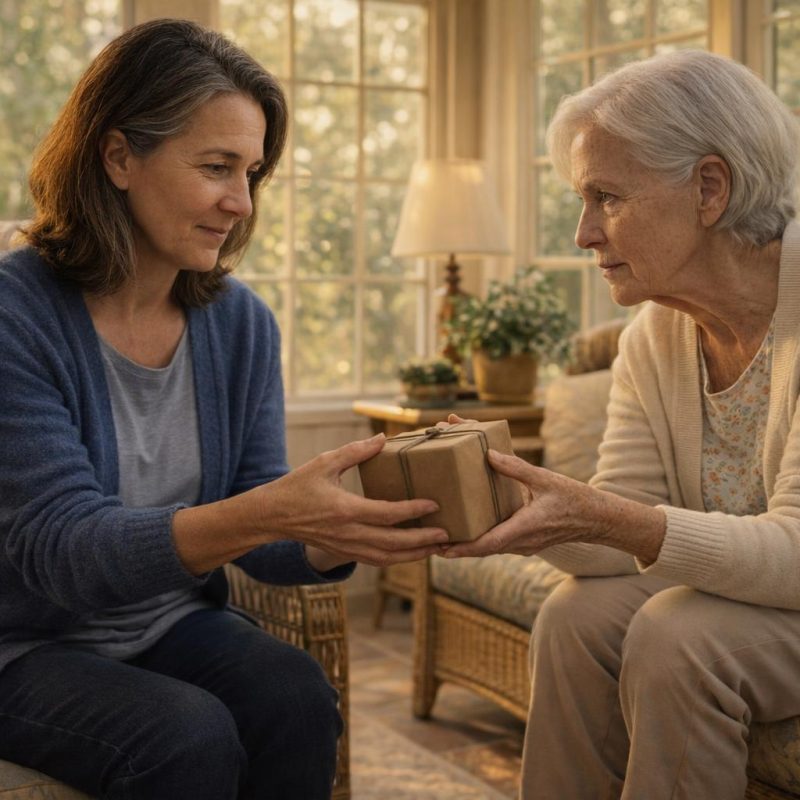 Image by RM AI