
I Spent 10 Years Fundraising for My Friend's 'Life-Saving' Treatments—Then I Discovered the Truth
I Spent 10 Years Fundraising for My Friend's 'Life-Saving' Treatments—Then I Discovered the Truth
Ten Years of Casseroles
I've been trying to figure out how to tell this story for a while now, and I keep coming back to the casseroles. That's where it started for me — standing in my kitchen on a Tuesday evening, sliding a pan of chicken and rice into a bag to bring over to Rachel's house. I'd done it so many times over ten years that the routine had worn itself into muscle memory. Rachel was one of those people you just loved being around. She remembered your grandkids' names, asked follow-up questions about things you'd mentioned months ago, laughed at your jokes even when they weren't that funny. We'd met at church about a decade back, and somewhere between potluck dinners and parking lot conversations, she became one of my closest friends. When she got sick, the whole town felt it. People brought food, offered rides, passed collection plates, and showed up in the ways that small communities do when one of their own is hurting. I was proud to be part of that. Proud of us, honestly — proud of what we could be for each other when it mattered. Looking back now, I can still feel the warmth of those years, the weight of all that believing, sitting in my chest like something I can't quite put down.
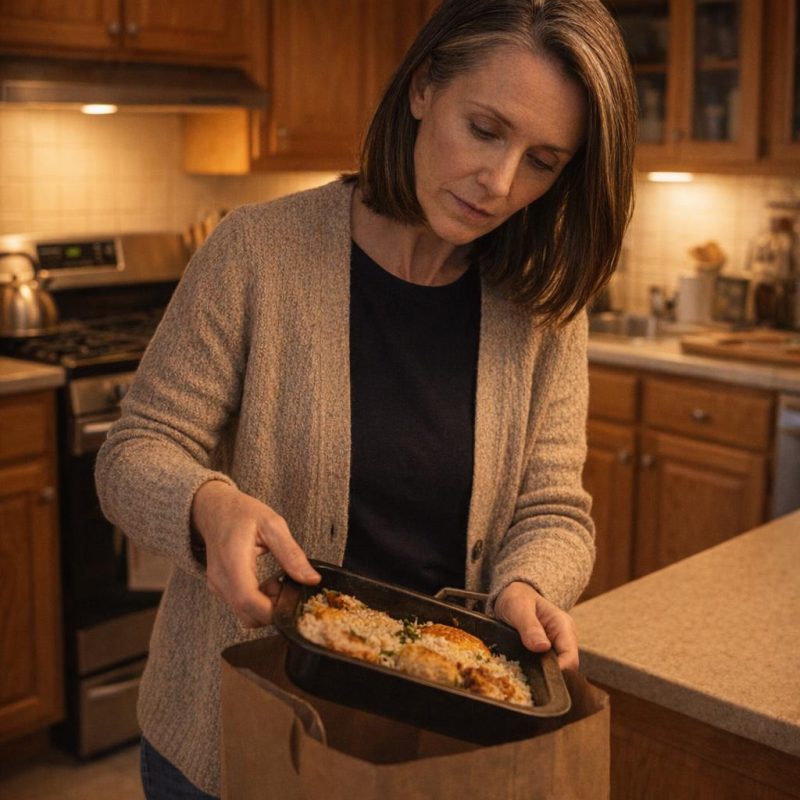 Image by RM AI
The Diagnosis That Changed Everything
It was a Sunday morning in October when Rachel stood up at the end of the service and asked if she could say something. That wasn't unusual — people shared news at church all the time, good and bad. But the way she stood there, gripping the back of the pew in front of her, I knew before she opened her mouth that this wasn't good news. She told us she'd been diagnosed with a rare autoimmune condition, something with a long name I'd never heard before, and that the treatments were going to be complicated and expensive and ongoing. Her voice was steady at first, but it cracked when she said she was scared. Pastor Williams came down from the pulpit and put a hand on her shoulder, and then he led us all in prayer right there in the aisle. Tom reached over and squeezed my hand. I squeezed back. After the service, people clustered around Rachel in the parking lot — hugging her, pressing her hands, promising meals and prayers and whatever she needed. Tom and I were among the first to tell her we'd help with rides to Columbus for her appointments. She looked at us with those tired eyes and said she didn't know what she'd do without this community. Then her voice broke again as she thanked everyone for their prayers.
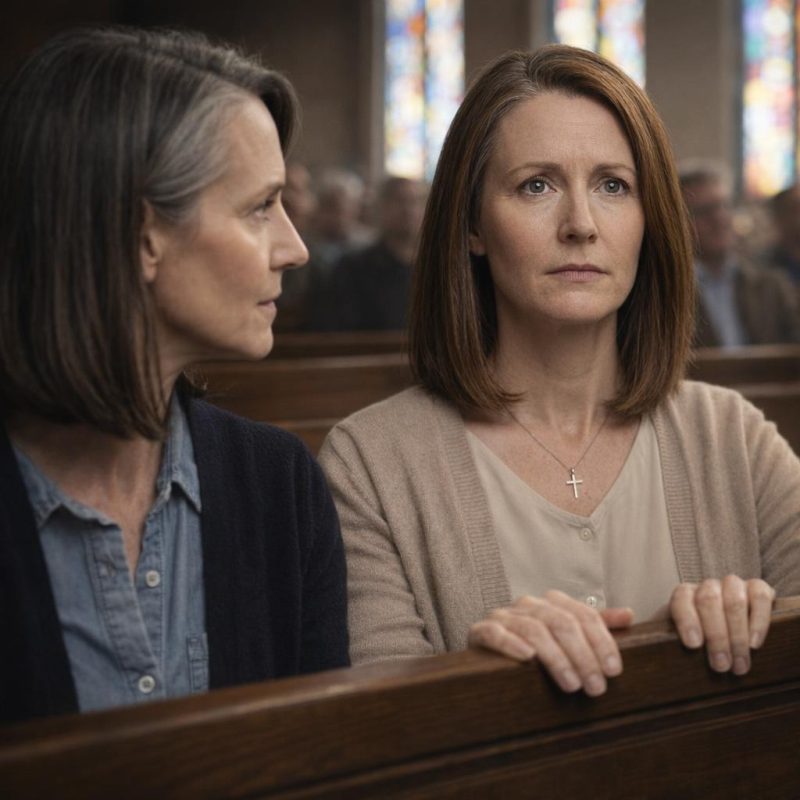 Image by RM AI
The Rhythm of Helping
Within a couple of weeks, helping Rachel had become its own kind of rhythm. Tuesdays were mine — I'd bring a casserole, stay for an hour, and we'd sit at her kitchen table drinking decaf while she told me about whatever treatment she'd had that week. She always had details: the name of the specialist, the specific medication, how long the infusion took, how her body had responded. I found myself learning more about autoimmune conditions than I'd ever expected to know. Tom took on the prescription runs without being asked, stopping at the pharmacy on his way home from wherever he'd been, dropping the bag at her door if she was resting. He never made a big deal of it. That was Tom. Rachel was always grateful in a way that felt real — not performative, just quiet and specific. She'd say things like, "I don't know how I'd get through a Tuesday without you," and it meant something. I felt useful in a way that's hard to explain. There's a particular kind of purpose that comes from showing up for someone who genuinely needs you, and I leaned into it. Those Tuesday evenings became something I looked forward to, a steady thread woven through the ordinary weeks, and I never once questioned whether I should be there.
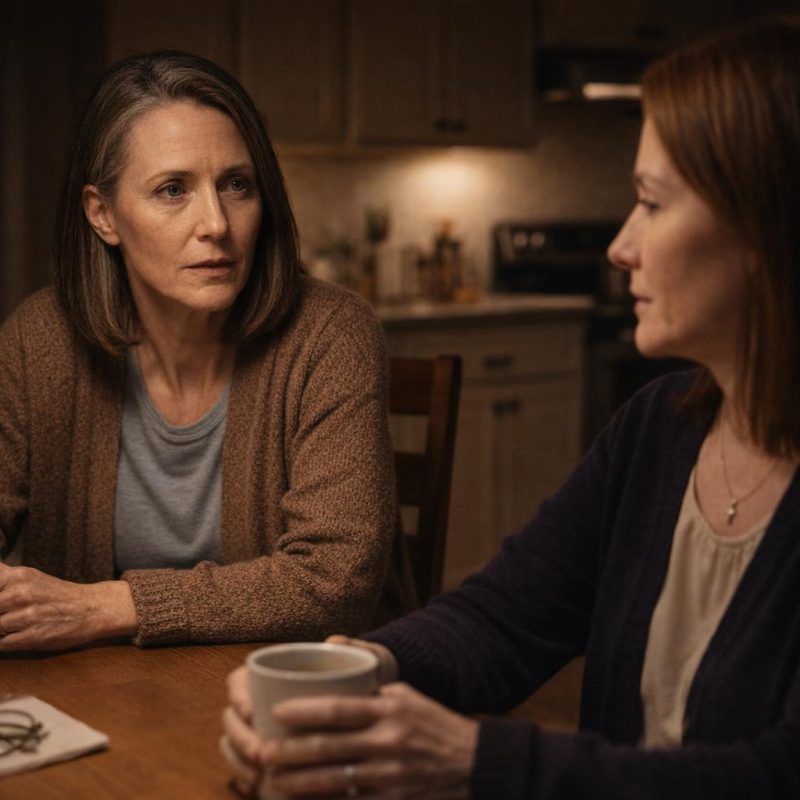 Image by RM AI
Crisis After Crisis
The first real scare came about eight months in. Rachel called me on a Wednesday morning, her voice thin and frightened, saying she'd had a bad reaction to a new medication and her doctor wanted her admitted for observation. Linda — her sister — sent out a group text to the core group of us within the hour, keeping everyone updated with the calm efficiency of someone who'd been through emergencies before. The church prayer chain activated. Casseroles multiplied. Rachel was home within four days, pale and shaky but grateful. We all exhaled. Then, maybe three months later, there was another complication — something about her treatment protocol needing to change, a new specialist in Columbus, more tests. Linda coordinated again, posting updates in the Facebook group she'd created for Rachel's supporters. Each time, the community pulled together the same way it had at the beginning. And each time, Rachel came through it. I genuinely marveled at her resilience. She'd joke about her own stubbornness, say she was too ornery to let her body win, and we'd laugh with relief. There was a particular rhythm to it after a while — the alarm, the gathering, the waiting, the slow exhale when things stabilized. It was hard, but it felt like something we were all carrying together, and I never thought to question the pattern itself.
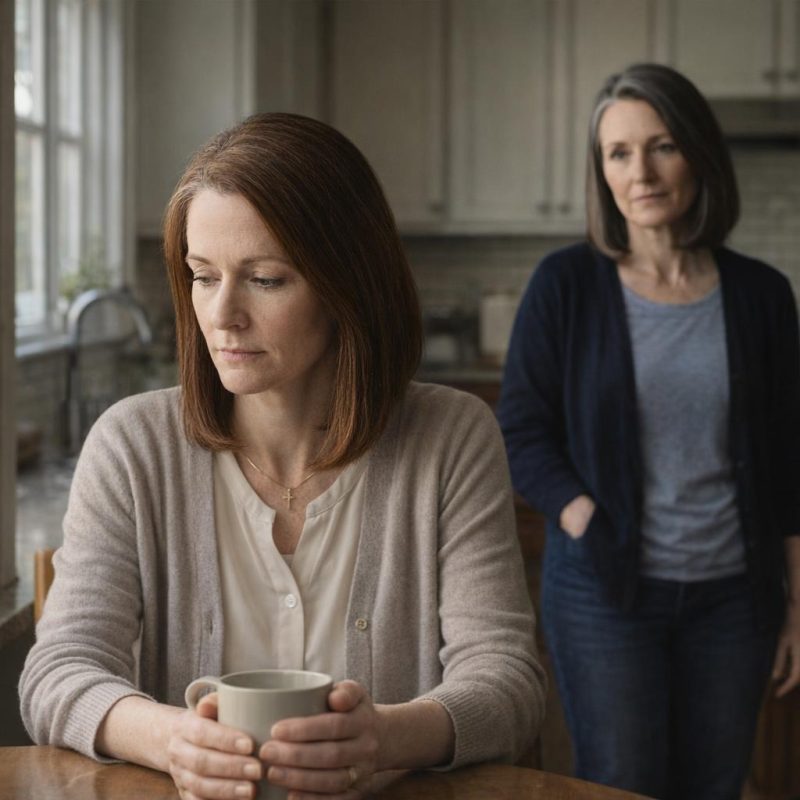 Image by RM AI
The Generosity of Neighbors
By the second year, the fundraising had taken on a life of its own. Pastor Williams announced a special collection one Sunday, explaining that Rachel's out-of-pocket costs were mounting faster than anyone had anticipated. The response was immediate. A bake sale the following Saturday raised over two thousand dollars — people drove in from neighboring towns to buy pies and bread loaves and cookie tins. Linda organized a raffle with donated prizes from local businesses: a weekend stay at a nearby inn, gift baskets, a quilt someone had made by hand. Tom and I contributed from our savings, which weren't exactly overflowing on a fixed income, but it didn't feel like a question. It felt like the obvious thing to do. Rachel posted a video online thanking everyone, and she was crying in it — the kind of crying that's hard to fake, or so I thought at the time. I sat down one evening and tried to add it all up: the collections, the bake sales, the raffle, the individual donations I knew about. I got to somewhere around fifteen thousand dollars and stopped counting, because the number felt both enormous and somehow still not enough given what she was facing. That evening at the church, I walked past the entrance table and paused — the donation jar was so full the lid wouldn't sit flat, bills folded and pressed in from every direction.
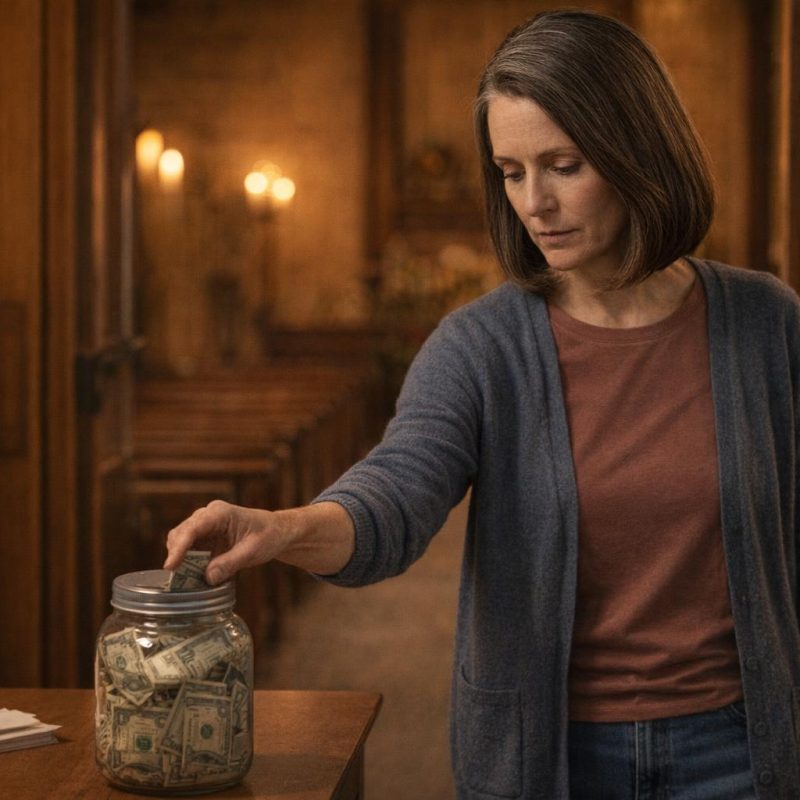 Image by RM AI
The Weekend Getaway
It was a Tuesday in March when Rachel sent the email. The subject line said "Urgent Prayer Request" and the message explained that her doctor had moved up her next treatment — something about her levels being off, a window they couldn't miss. She asked for prayers and said she'd be out of contact for a few days. I forwarded it to Tom and said a quiet prayer myself before bed. Then, two days later, her Facebook page lit up with photos. She was at a bed-and-breakfast about two hours away — the kind of place with a wraparound porch and mason jar centerpieces. She was smiling in every picture, cheeks pink, holding a mug of something warm, looking more relaxed than I'd seen her in months. I sat with my phone in my hand for a long moment, trying to work out the timing. Tom looked over my shoulder and said maybe the treatment had been postponed, or maybe the doctor had actually recommended rest somewhere quiet afterward. That made sense, I told myself. People with chronic illness sometimes needed that kind of recovery. I put the phone down and went back to folding laundry. But the image stayed with me — her smile in that photo, easy and unguarded — and I couldn't quite shake the small, uncomfortable feeling that something in the timing didn't sit right.
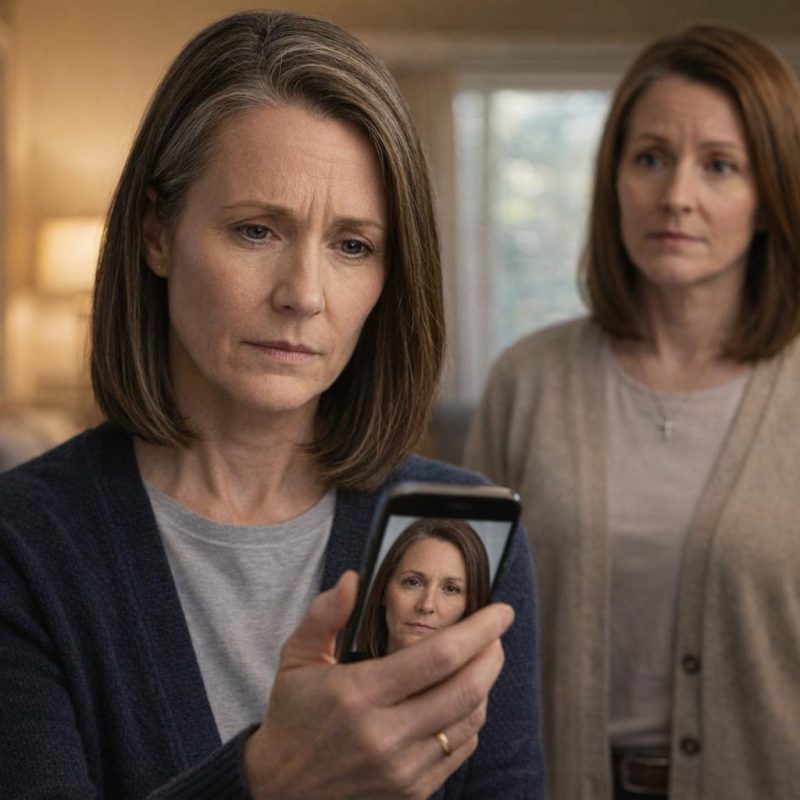 Image by RM AI
Timelines That Don't Match
I couldn't sleep that Thursday night, which wasn't unusual for me, so I did what I always do and picked up my phone. I wasn't looking for anything in particular — just scrolling, killing time until my brain settled. But I ended up on Rachel's Facebook page, and once I started reading back through her posts, I couldn't stop. She'd checked in at Carver's Grill on a Tuesday afternoon — I recognized the little location tag, the one she used whenever she posted from there. I stared at the date. Then I got up and found my paper calendar on the kitchen counter, the one I still keep because old habits die hard. I flipped back and checked. That Tuesday was the same day Rachel had told us she was having surgery — the procedure she'd described in detail at our last church small group, the one that had prompted another round of donations. I stood there in the kitchen in the dark, calendar in one hand, phone in the other, telling myself I must have the date wrong. I went back and checked her earlier posts, looking for any message that might explain it — a rescheduling notice, a change of plans. There was nothing like that. Just the check-in, timestamped at 1:47 in the afternoon, right in the middle of the hours she'd said she'd be in surgery.
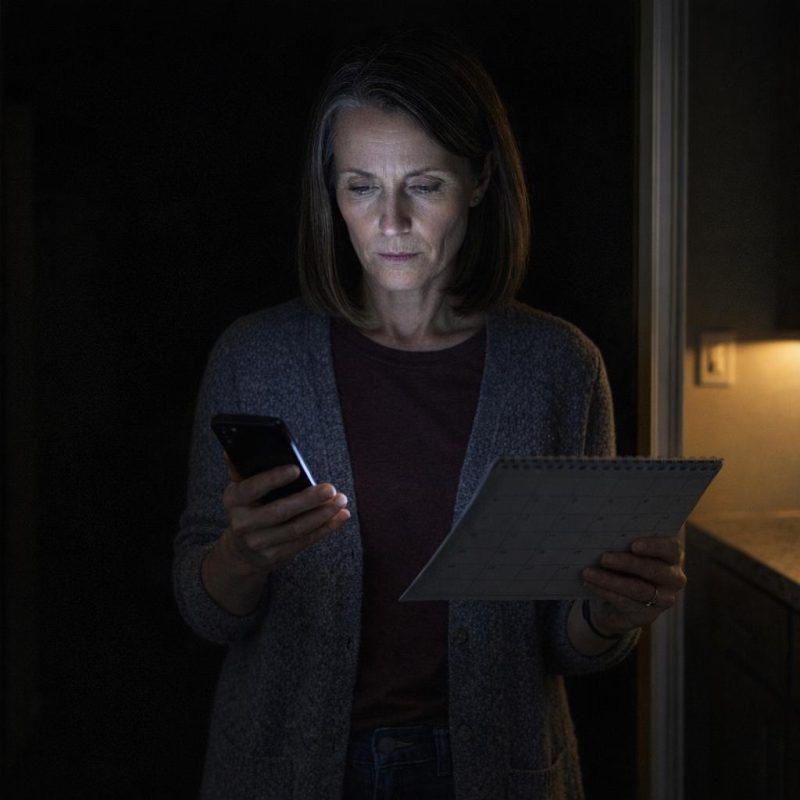 Image by RM AI
Whispers at the Fundraiser
The community center fundraiser dinner was the following Friday, and I almost didn't go. I'd been carrying that Tuesday date around with me all week like a stone in my shoe — not heavy enough to stop me, but impossible to ignore. I went anyway, because not going felt like an accusation I wasn't ready to make. Rachel was in her element that night, moving through the room with a warmth that drew people to her. Linda stood near the front with her clipboard, giving a speech about Rachel's courage and thanking everyone for their continued generosity. I was helping at the serving table when I noticed two women I didn't recognize standing near the dessert end, talking quietly. I wasn't trying to listen. But the room had a lull, and their voices carried. One of them said she'd been trying to find information about Rachel's condition online and kept hitting dead ends. The other one said something that made me set down the serving spoon: she said she'd specifically looked up the hospital Rachel always mentioned, the one in Columbus where she supposedly received her specialized treatments, and that hospital didn't have the department Rachel described.
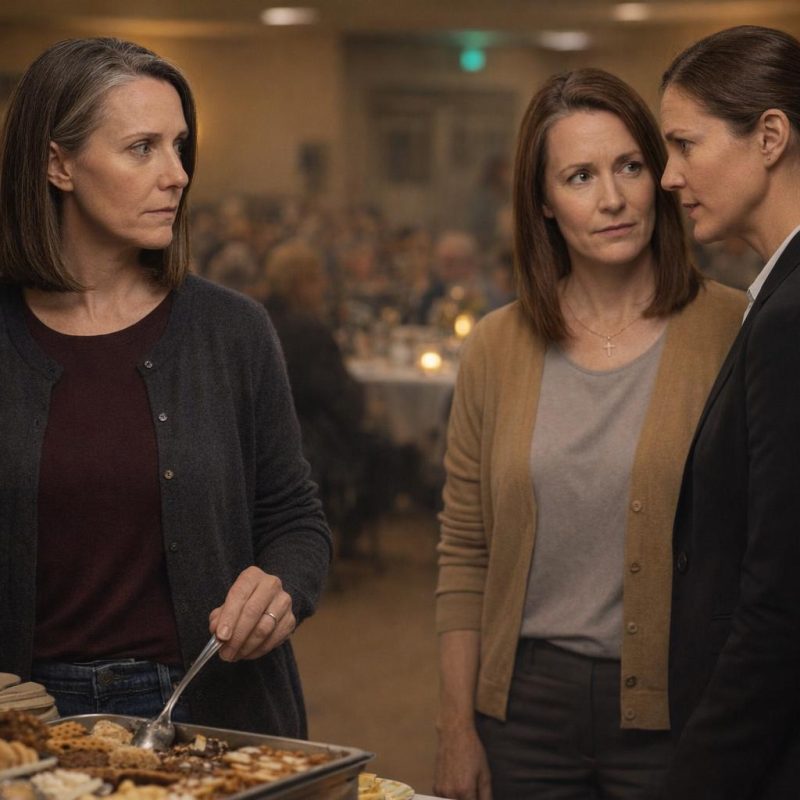 Image by RM AI
The Seed Takes Root
I couldn't stop thinking about what those two women had said at the fundraiser dinner. I told myself it was nothing — that hospitals reorganize departments, that names change, that I'd probably misheard. But the thought kept coming back, the way a loose thread does when you know you shouldn't pull it. I started paying closer attention during conversations with Rachel. Not in an obvious way. I'd just listen a little harder, file things away. Over the next few days I went back through old emails and Facebook posts, the ones Rachel had sent out with updates on her treatments. In one post from two years ago, she'd mentioned her primary doctor by name — Dr. Morrison. I remembered that name because I'd written it on a card I sent her. But then I found a more recent update where she referred to her doctor as Dr. Patterson. I figured maybe she'd switched physicians, which happens. Then I pulled up a fundraiser update from last spring — one of the ones Linda had helped format and distribute — and there was a third name: Dr. Chen. Tom came in from the garage and asked why I looked so far away, and I told him I was just tired. Three different doctors, all described as her primary physician, in three separate posts — and not one of them ever mentioned again after the update they appeared in.
 Image by RM AI
Hospital Names That Change
I started keeping a private document on my laptop — just a plain text file I titled 'Notes' so it wouldn't look like anything if Tom glanced over. I told myself I was just organizing my thoughts, not building a case against anyone. But the list kept growing. Rachel had mentioned Columbus General in her very first fundraiser letter, the one that started everything ten years ago. Then, about three years in, her updates started referencing Riverside Medical Center instead, with no explanation for the switch. By year seven, she was talking about University Hospital in a different city entirely. All three places were supposedly treating the same ongoing condition, the same illness she'd been fighting since the beginning. I looked up each hospital online. They were all real. But the specialized department Rachel described — the one running her particular treatment protocol — I couldn't find it listed at any of them. I searched for the treatment itself, reading through medical websites until my eyes ached. The descriptions I found didn't quite line up with what Rachel had told us over the years. I kept telling myself there were probably explanations I wasn't qualified to understand. Maybe the terminology was different. Maybe I was searching wrong. But I'd close the laptop and the unease would still be sitting there, quiet and patient, like it had nowhere else to be.
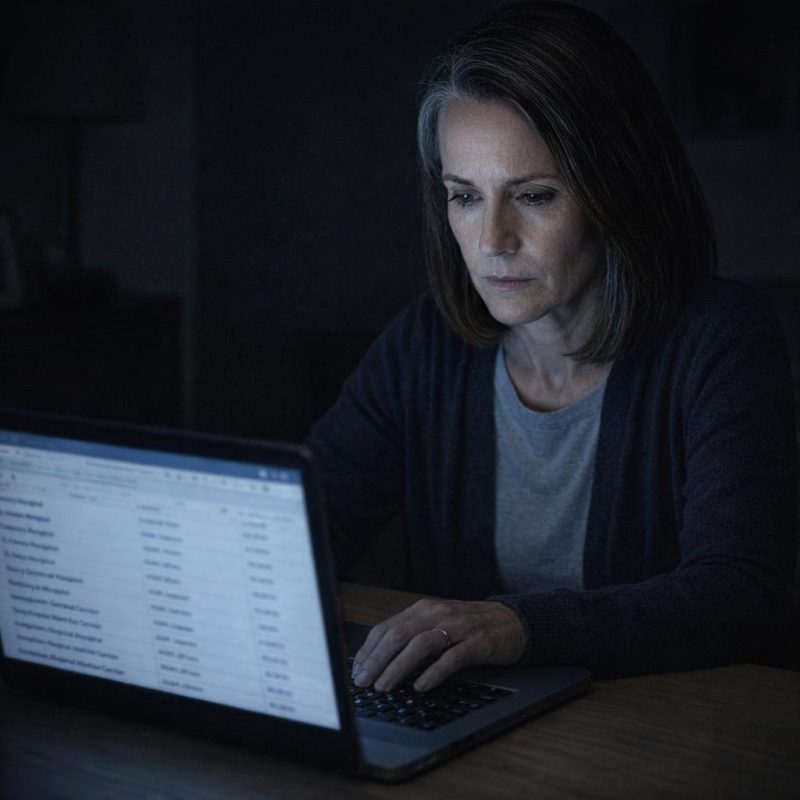 Image by RM AI
Treatments That Vanish
It was Tom who first noticed I'd gone quiet at dinner. I told him I was just tired, which wasn't entirely a lie. What I didn't say was that I'd spent the afternoon going back through two years of Rachel's social media posts, looking for something I couldn't quite name. What I found was a pattern I didn't know how to explain away. Back in March of the year before last, Rachel had posted urgently about needing a cardiac procedure — something time-sensitive, she'd said, something the insurance wouldn't cover. People responded immediately. Money came in within days. But when I scrolled forward through the following weeks and months, there was nothing. No update about how the procedure went. No recovery post. No mention of it at all. The same thing happened with a specialized infusion treatment she'd described in May. It appeared once, generated donations, and then vanished from her narrative entirely. Her later posts moved on to new concerns, new urgent needs, as if the old ones had simply ceased to exist. I brought it up carefully with Tom over the dishes. He said maybe she just didn't want to dwell on every hard detail of being sick, that some people process illness privately. I said he was probably right. But I kept thinking about those posts — the urgency of them, the silence that followed — and I couldn't find a way to make that silence feel like privacy.
 Image by RM AI
Martha's Confession
I brought a casserole over to Martha's house the week after her husband's funeral, the way you do in a small town when someone loses a person they've spent forty years beside. She looked smaller than I remembered, sitting in that big armchair with a cup of tea going cold on the side table. We talked about her husband for a while, about the service, about how quiet the house felt now. Then she said something that stopped me. She said she only wished she could do more for others, the way others had done for her. I asked what she meant, and she told me she'd been sending money to Rachel for years — quietly, regularly, whenever Rachel posted about a new treatment or an unexpected medical bill. I kept my voice even and asked how much, and Martha looked down at her hands and said it had added up to nearly five thousand dollars over the past few years. She said Rachel had told her the money went toward treatments her insurance refused to cover, that it was making a real difference. Martha said it like she was proud of it, and I felt something tighten in my chest. She asked me not to mention it to Rachel because she didn't want Rachel feeling guilty about accepting help. I said of course I wouldn't. Then Martha said, very quietly, that she could barely afford groceries now.
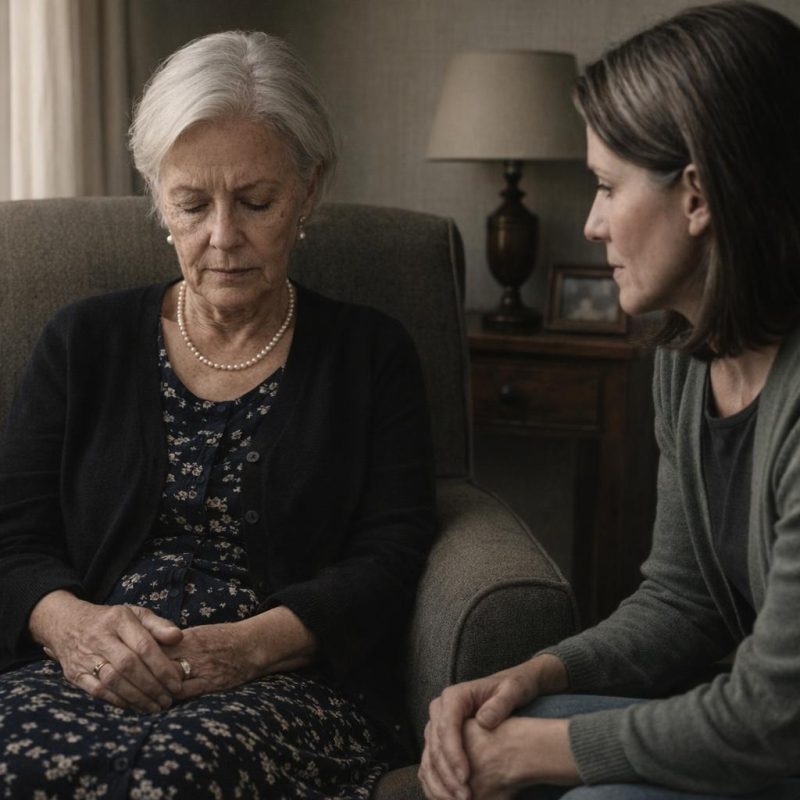 Image by RM AI
The Weight of Martha's Words
I didn't say much on the drive home. Tom could tell something had happened — he knows my silences well enough by now to leave them alone until I'm ready. After dinner I told him about Martha. I laid it out carefully: the five thousand dollars, the skipped groceries, the way Martha had said it all with such quiet dignity, like sacrifice was just something you did for people you cared about. Tom set down his fork and was quiet for a long moment. He said we still didn't know the full story, that there could be things about Rachel's situation we weren't seeing. I knew he was right to say it. But I kept thinking about Martha in that armchair, her tea going cold, telling me she didn't want Rachel to feel guilty. I lay awake that night turning it over. I thought about how many other people in town might have given what they couldn't afford, quietly, the same way Martha had. I thought about what it would mean if the thing they'd given it for wasn't real. By morning I'd made up my mind. I told Tom I needed to look into Rachel's claims more carefully — not to accuse anyone, just to know. He didn't like it, but he said he'd support me if I was discreet about it. I said I would be. The image of Martha choosing between her own medications and someone else's stayed with me all day, still and heavy, like something I couldn't set down.
 Image by RM AI
Quiet Verification
Tom suggested I start with public information only — nothing that would require me to contact Rachel directly or tip anyone off. That felt right. I made a list of the specific claims Rachel had made over the years: the hospitals, the condition, the treatment types, the doctors' names. Things that could, in theory, be checked. I called Columbus General one afternoon while Tom was out running errands, asking in the most casual voice I could manage whether they had a department that handled the kind of specialized cardiac care Rachel had described. The woman on the phone was polite and thorough. She said they had a cardiology unit, of course, but the specific program I was describing didn't match anything in their current or recent offerings. I thanked her and hung up and sat with that for a minute. Then I spent the better part of an evening searching online for the rare condition Rachel had named in her earliest fundraiser letters. I found medical journal articles, patient forums, clinical descriptions. The symptoms listed were different from what Rachel had described to us. Not dramatically different — just enough to snag. I told myself there were probably variations, subtypes, individual presentations. I wanted there to be an explanation that made everything fit. I wasn't ready to stop believing that one existed. But I wrote down what I'd found anyway, added it to my notes file, and closed the laptop with the quiet understanding that I wasn't going to stop looking.
 Image by RM AI
Nothing Fits Together
I spent most of a Saturday at the kitchen table with my laptop, a legal pad, and a cold cup of coffee I kept forgetting to drink. I went through everything systematically — the condition Rachel had named, the treatments she'd described, the hospitals she'd referenced. The more I read, the less anything lined up. Medical websites described the condition Rachel claimed to have with a specific set of symptoms: fatigue, joint involvement, a particular kind of inflammation. Rachel had never mentioned any of those. What she'd described over the years sounded different — more dramatic in some ways, more vague in others. I found an online support group for people actually living with Rachel's supposed condition and spent an hour reading through their posts. Their day-to-day experiences — the medications, the flares, the specific ways the illness interrupted their lives — sounded nothing like what Rachel had shared with our community over ten years. I sat back and looked at my legal pad, covered in notes and question marks. I wasn't ready to say what any of it meant. I kept telling myself there had to be an explanation I was missing, some gap in my understanding that would make it all resolve. But the treatment Rachel had described so many times, the one we'd raised thousands of dollars to fund, wasn't used for the condition she claimed to have.
 Image by RM AI
Medical Terminology
I met Rachel for coffee on a Tuesday, telling myself I was just keeping up a normal friendship, not watching for anything. She looked tired but warm, the way she usually did, and she ordered her usual and asked about Tom's knee before I'd even sat down properly. We talked for a while about ordinary things. Then she mentioned she'd just gotten back some new test results, and she shifted into talking about her health the way she sometimes did — not complaining, just explaining. What caught me off guard was the terminology. She used the phrase 'idiopathic autonomic neuropathy' without stumbling over it, dropped it into the conversation the way you'd say 'high blood pressure.' She described a procedure called a tilt-table test with enough specific detail — the angle increments, the monitoring leads, the way her blood pressure had responded — that I found myself nodding along before I caught myself. I asked a few careful questions, the kind that might expose a gap if there was one. She answered each one smoothly, without hesitation, and nothing she said was obviously wrong. On the drive home I called Tom and told him what had happened. He said that anyone with enough time and motivation could learn medical terminology from the internet. I knew he was probably right. But sitting across from her, watching her talk, I hadn't felt like I was listening to someone who'd memorized a script. I'd felt like I was listening to someone who knew.
 Image by RM AI
Friends Who Warn
I caught Pastor Williams after the second service on Sunday, when most people had already filtered out to the parking lot. I kept my voice low and tried to frame it carefully — not accusations, just questions. I told him I'd noticed some things that didn't quite add up, that I was worried about the community's resources going somewhere they maybe shouldn't. He listened with his hands folded, the way he does when he's being patient with someone he thinks is confused. Then he said, gently but firmly, that Rachel had been carrying a heavy burden for years, and that the community's job was to walk alongside her, not to audit her. He reminded me that doubt, even well-intentioned doubt, could do real damage to someone already suffering. I nodded and said I understood, even though something in my chest was pulling the other direction. I drove home feeling like I'd done something wrong just by asking. My phone buzzed on the seat beside me. It was a woman from the Tuesday Bible study, someone I'd known for fifteen years. Her message was four words: questioning a sick person's story is one of the cruelest things a person could do.
 Image by RM AI
Tom's Warning
Tom waited until we'd both finished eating before he brought it up, which told me he'd been sitting on it through the whole meal. He set his fork down and said people were starting to notice my questions — that someone had mentioned it to him at the hardware store, of all places. He wasn't angry, just worried, and that almost made it harder. He said if I was wrong about Rachel, I wouldn't just lose her friendship. I'd lose the trust of half the people we'd known for twenty years. I told him about Martha — about how she'd mentioned donating money she'd set aside for her furnace repair, how she'd said it without any hesitation, like of course she'd given it. Tom went quiet when I said that. He rubbed the back of his neck and stared at the table for a moment. He said he understood why I couldn't let it go, but he was scared for me. We argued in the careful way married people do when they're both trying not to say the thing that can't be unsaid. By the end he told me he'd back whatever I decided, but he needed me to be sure. I told him I couldn't promise to stop. I just sat there after he went to bed, turning it over — what it would cost me to keep going, and what it would cost everyone else if I didn't.
 Image by RM AI
Something Feels Wrong
I spread everything out on the kitchen table the next morning after Tom left for his doctor's appointment — printed emails, notes I'd scribbled on index cards, dates I'd circled on a calendar. I'd been telling myself for weeks that maybe I was overthinking it, that maybe the inconsistencies were just the natural messiness of a complicated illness. But looking at it all laid out in front of me, the messiness had a shape. The terminology that shifted between appointments. The treatment timelines that didn't quite line up with how those treatments actually worked. The way certain details got more dramatic each time the story was retold. None of it was proof. I knew that. But I kept thinking about Martha, and about the other people in that congregation who gave because they believed, because trusting their neighbor was just what they did. I thought about what it meant to stay quiet — not just for me, but for the next person who'd hand over money they couldn't spare. I was scared. I won't pretend I wasn't. The social cost of being wrong about something like this was enormous, and I felt it every time my phone buzzed with a message from someone in the community. But the feeling that something was wrong had been with me for months now, and no amount of pressure had made it smaller. It had only gotten quieter and more certain, the way a low sound sometimes does when everything else goes still.
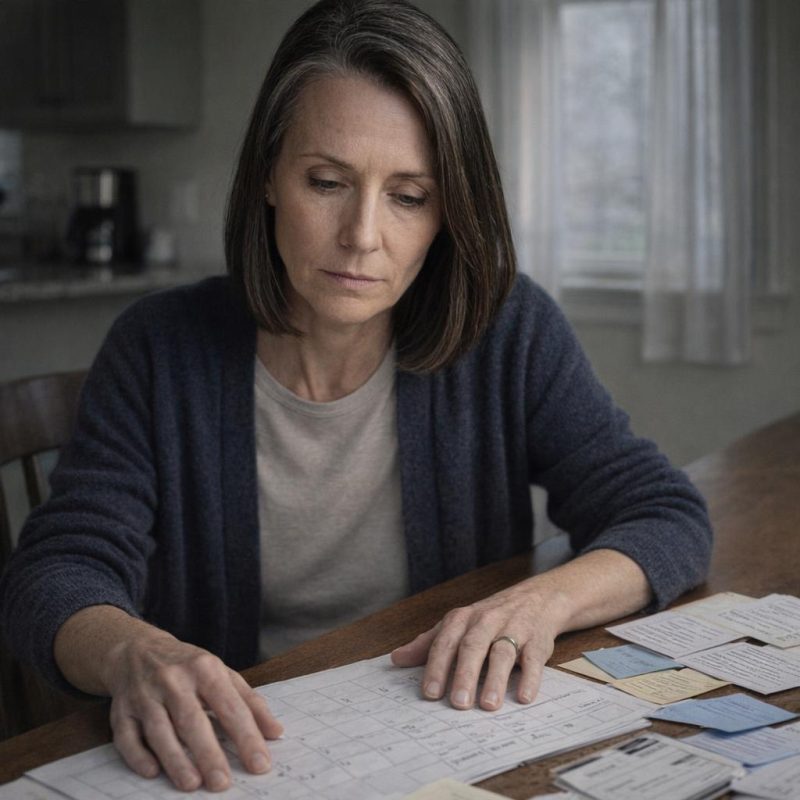 Image by RM AI
The Financial Pattern
I started with what I could actually verify — dates. I went back through old Facebook posts, saved fundraising emails, and a folder of screenshots I'd been collecting without fully admitting to myself why. Then I started pulling in the other side of the ledger: things Rachel had mentioned in passing over the years about her finances. The part-time job she'd lost at the garden center. The month she'd said her landlord had raised her rent and she didn't know how she'd manage. I wrote everything on a legal pad in two columns, and I kept drawing lines between them. A major fundraising push had gone out the same week she mentioned losing that job. An urgent appeal for treatment costs had landed in everyone's inbox the month after the rent increase. I showed Tom the legal pad after dinner. He stood over it for a long time without saying anything, tracing the lines with his finger. He said it could be coincidence. I said I knew it could be. We both stood there looking at it. I went back to the laptop to check one more thing I'd been putting off — a repossession notice Rachel had mentioned almost in passing at a church potluck about two years back. I found the date. Then I pulled up the fundraising archive and found the emergency post she'd made that same week, describing a sudden and serious setback that required immediate community support.
 Image by RM AI
Bills and Emergencies
I spent the better part of two days expanding the timeline, going back three full years. I pulled every fundraising post I could find, cross-referenced them with things Rachel had mentioned about her finances in emails, in passing conversations I'd half-remembered and now wrote down. Tom sat with me for part of it on Saturday afternoon, reading over my shoulder while I worked through the spreadsheet I'd started building. By the time I had it laid out, there were seven instances — seven — where a documented financial difficulty was followed within two to four weeks by a new medical emergency requiring donations. The job loss. The rent increase. The car. A medical bill from a procedure that turned out not to be covered. Each time, the crisis arrived right on the heels of the money problem. Tom leaned back in his chair and let out a slow breath. He said it looked bad. He didn't say it looked like proof, and I appreciated that, because it wasn't. I'd been careful to remind myself of that at every step. Financial stress could affect someone's health in real ways. Anxiety could trigger genuine physical symptoms. I'd read enough to know that. But the timing across seven separate instances, holding that consistent across three years — I couldn't find a way to look at it that made it feel like coincidence. I closed the laptop and left it on the table, and the weight of what I'd built just sat there between us.
 Image by RM AI
The Largest Campaign Yet
Rachel's post went up on a Wednesday evening, and by Thursday morning it had been shared over two hundred times. She described a new complication — something involving her heart, she said, a condition that had developed from the autonomic issues and now required a specialized intervention available at only a few clinics in the country. The cost she listed was forty-three thousand dollars. Pastor Williams announced an emergency campaign from the pulpit that Sunday, his voice full of the kind of quiet urgency that moves people. Linda had an online donation page live before the service ended, with a photo of Rachel looking pale and tired in what appeared to be a medical setting. I watched the total from my phone that afternoon. Ten thousand by evening. Sixteen thousand by the next morning. By Wednesday it had passed twenty-three thousand, and the comments were full of people tagging their neighbors, their coworkers, their cousins in other towns. Rachel posted a video thanking everyone, her voice breaking in a way that made several people in my church group text me to say they were crying. I sat in my kitchen and watched the number climb and felt something I couldn't quite name — not anger yet, not certainty, just a sick, hollow feeling that I had no way to act on. All that generosity, moving so fast, from people who trusted completely. I didn't know how to be the person who stood in the way of it.
 Image by RM AI
The Trap of Silence
The community center fundraiser was on a Friday night, and I went because Tom thought it would look stranger if I didn't. The room was warm and crowded, the kind of turnout that made the organizers emotional just looking at it. People lined up at the donation table with envelopes and checks and cash folded into cards. I stood near the back and watched, and I kept telling myself I still didn't have proof, that I needed to be sure before I said anything to anyone. Then I saw Harold Benton from the nine o'clock service — he must be eighty if he's a day — make his way slowly to the front of the line. He handed over an envelope and said something to the volunteer that made her reach out and squeeze his hand. I found out later from someone who'd been standing close enough to hear that he'd told her it was his whole check for the month, that Rachel needed it more than he did. I went and found Tom by the refreshment table and told him what I'd heard. He set down his coffee cup. He didn't argue with me or tell me to be careful or remind me what we stood to lose. He just said we needed to find out the truth before anyone else handed over something they couldn't get back. I looked back across the room at Harold, still standing near the front, and I knew Tom was right.
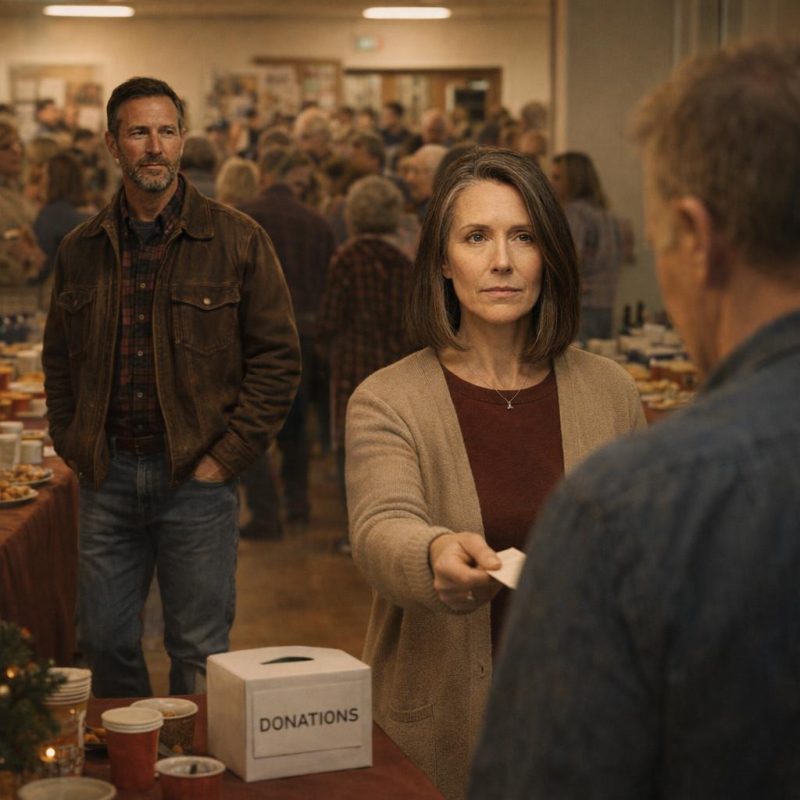 Image by RM AI
An Unexpected Ally
I was in the parking lot pulling on my coat when I heard someone say my name — not loudly, just enough to stop me. I turned and there was a woman I didn't recognize, mid-fifties, dark hair cut short, standing a few feet away with her hands in her jacket pockets. She said she was sorry to approach me like this, out in the cold, but she'd noticed me inside and thought I might be someone worth talking to. I asked her how she meant that. She said she'd been following the fundraising campaigns online for a few months, that she'd seen the donation page Linda had set up, and that something about it had brought her out here tonight. She was careful with her words in a way that felt measured — like someone who'd thought about what she wanted to say before she said it. I asked her if she knew Rachel. She paused for just a moment before she answered. She said her name was Angela, and that she used to work with Rachel at an insurance office — but not here. She said she remembered Rachel from a different town entirely.
 Image by RM AI
The Millfield Story
We met Angela the next morning at a diner in Harwick, about twenty minutes east of town — far enough that nobody we knew was likely to walk in. Tom slid into the booth beside me and ordered coffee without looking at the menu, which is what he does when he's nervous. Angela was already there, hands wrapped around a mug, and she got right to it. She said Rachel had come to work at the insurance office in Millfield about twelve years ago — quiet, friendly, the kind of person who remembered your kids' names. About a year in, Rachel announced she'd been diagnosed with something serious. Angela couldn't remember the exact condition, but she said the office rallied around her the way small offices do. They organized a collection, then a fundraiser, then another one when things supposedly got worse. Angela said the pattern felt familiar even as she was living through it — recurring crises, each one a little more urgent than the last, always just enough detail to sound real. Then someone in the office started noticing things that didn't line up. Nothing dramatic, she said — just small inconsistencies that started adding up. She never found out exactly what was said or to whom. What she knew was that within a few weeks of those questions being raised, Rachel was simply gone — no notice, no goodbye, no explanation to anyone who asked.
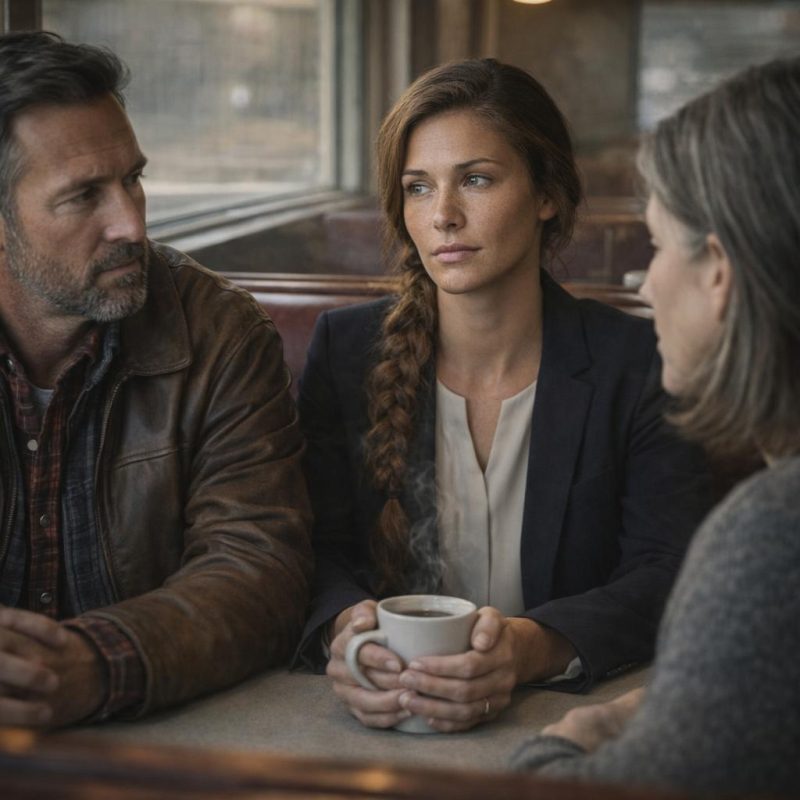 Image by RM AI
The Weight of Years
We didn't say much on the drive home. Tom kept both hands on the wheel and I watched the fields go dark outside the window, the kind of flat Ohio landscape that usually settles me down. It didn't that night. It was Tom who finally spoke first, somewhere around the county line. He said he owed me an apology — that he'd been telling me to slow down for weeks and he'd been wrong to do that. I told him he hadn't been wrong, exactly. He'd been careful, and careful wasn't the same thing as wrong. But I appreciated him saying it. We started talking through what we actually knew. Millfield was one town. There might be others before that. Angela had said Rachel moved around — she'd gotten that impression from things Rachel mentioned in passing, references to places she'd lived that never quite added up to a clear timeline. I kept thinking about the money. Not just ours, not just the church's — but all of it, across however many towns, however many years. People like Martha, people who gave because they believed in someone and couldn't afford not to. The number in my head kept growing the longer I sat with it, and by the time we pulled into our driveway I felt the full weight of what we might actually be looking at.
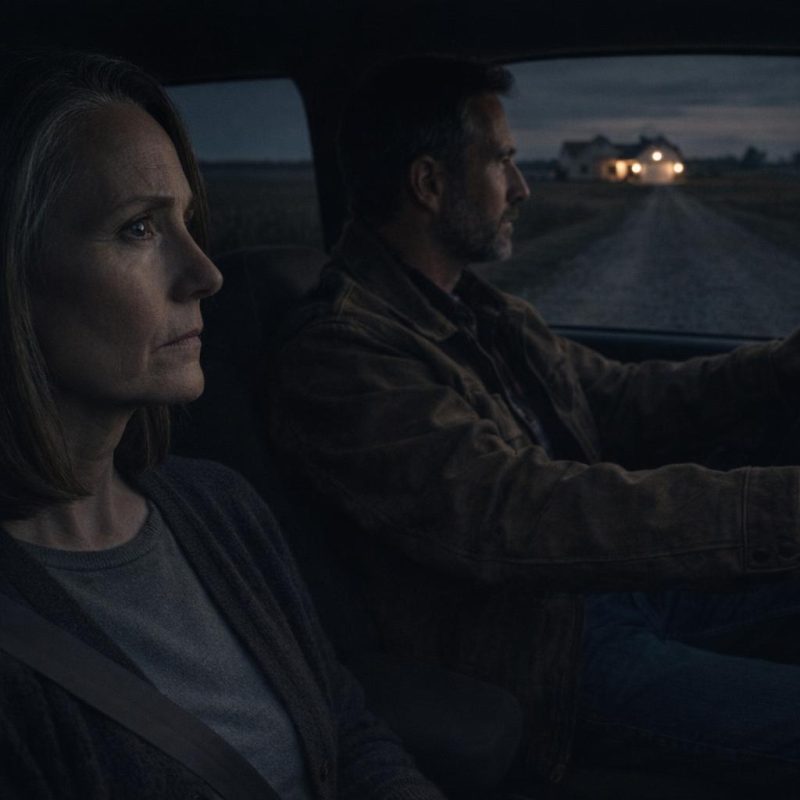 Image by RM AI
Tracing the Past
Angela texted me the next day with a name — Cloverfield, Indiana. She said she'd remembered it overnight, something Rachel had mentioned once about a job she'd had there before Millfield. Tom set up at the kitchen table with his laptop while I worked on mine, and we spent most of that Saturday afternoon digging. Social media archives, old community pages, local newspaper sites. A lot of it was dead ends — broken links, pages that hadn't been updated in years. Tom is more patient with that kind of thing than I am. He kept at it while I switched to searching Rachel's name alongside different towns and dates. We found a Facebook post from a church group in Cloverfield that mentioned a fundraiser, but the name attached to it was slightly different — close enough that I almost scrolled past it. I flagged it for Tom and he started pulling on that thread. About an hour later he called me over to his screen. There was a scanned newspaper article from a small Indiana paper — a photo of a woman who looked younger, her hair a different color, but I knew the face — describing her ongoing medical struggle and an entire community's outpouring of support, two states away from here.
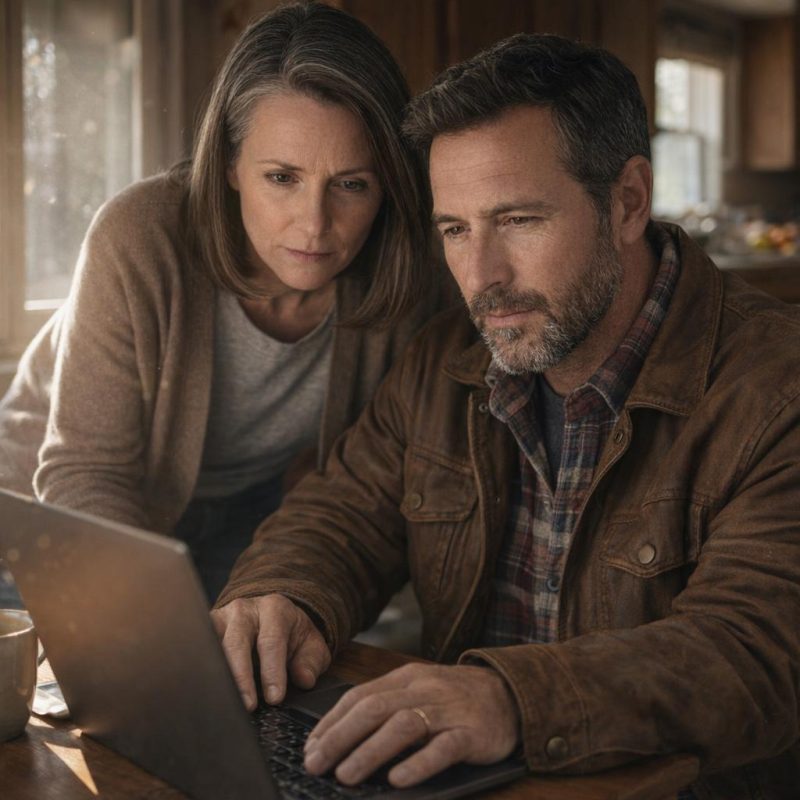 Image by RM AI
Reinvented Lives
I printed the article and set it next to everything else we'd gathered — the Millfield details from Angela, the Facebook post, the donation records I'd saved from our own community pages. Then I started going through them side by side, looking for what matched and what didn't. The illness itself was consistent in broad strokes — always serious, always chronic, always just vague enough that you couldn't easily verify it. But the details around it shifted. In Indiana, she'd mentioned a sister who'd passed away. In Millfield, Angela said Rachel talked about being an only child. Here in Ohio, Linda was very much present as her sister. The family history moved around. A few medical specifics changed too — the name of a condition, the timeline of a diagnosis. Tom looked over my shoulder for a while and then sat down across from me. He said changing details didn't prove the illness was invented — people misremember things, stories evolve, and we still didn't have a single medical record in front of us. He was right, and I knew he was right. But I kept coming back to the same feeling: that each version of the story had been shaped just carefully enough to fit wherever she'd landed. I sat there a long time after Tom went to bed, the papers spread out in front of me, thinking about how much patience that would take.
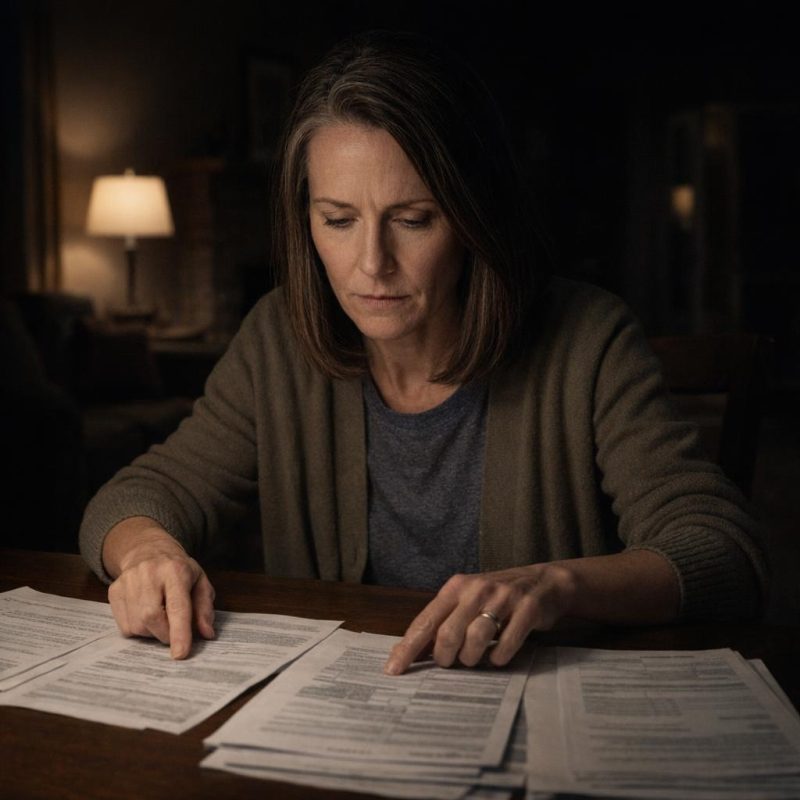 Image by RM AI
The Absence of Proof
The three of us met again the following week, this time at Angela's kitchen table. I spread out everything I had — the printed article, the Facebook post, my notes from months of watching and listening. Angela went through it carefully, the way she did everything. When she finished she sat back and said what I'd already been thinking: that what we had looked like something, but looking like something wasn't proof. She'd never seen a single piece of documentation from Rachel's time in Millfield — no doctor's name, no hospital letterhead, nothing she could point to and say this is real or this isn't. Tom had been quiet through most of it, but he spoke up then. He said the thing that scared him most was the possibility that we were wrong. That we'd taken a sick woman's story apart looking for lies and found only coincidences, and that we'd have to live with that. I didn't have an answer for him. I'd thought about contacting Rachel's doctors, but I didn't know who they actually were — she'd mentioned names over the years that I'd never thought to write down. Angela suggested we needed someone with access to actual records, someone official. But none of us knew how to get there from where we were standing. I drove home that evening with the same questions I'd arrived with, and they sat with me through the night, unanswered and heavy.
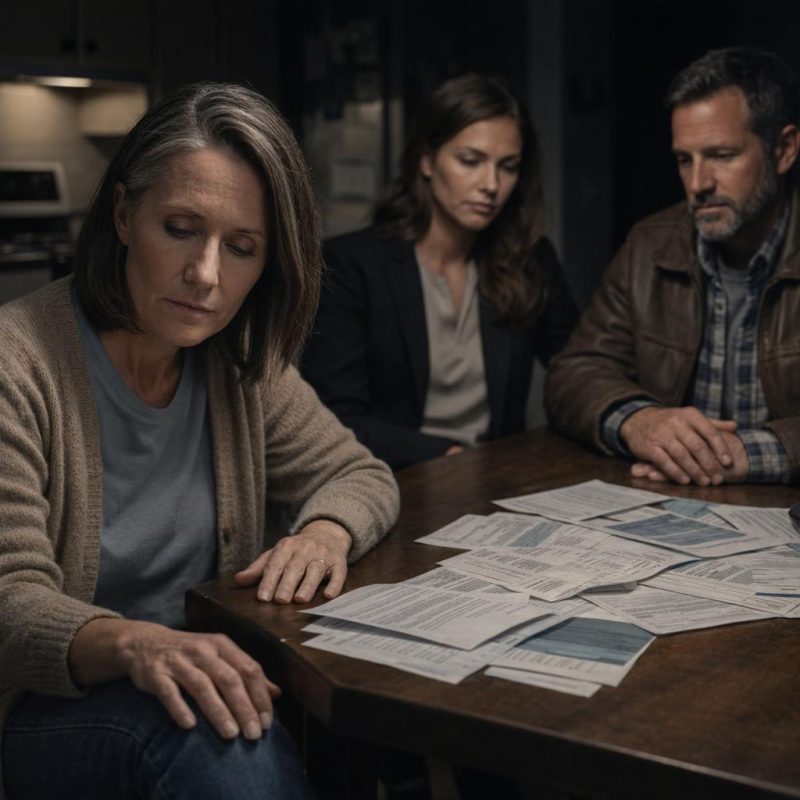 Image by RM AI
The Gossip Victim
The shift in town happened gradually and then all at once, the way those things do. I noticed it first at church — a few conversations that stopped a beat too soon when I walked up, a smile that didn't quite reach the eyes. A friend I'd known since our kids were in Sunday school together mentioned, carefully, that Rachel had been having a hard time lately. That people were saying things. I didn't push her on it. A few days later I was at the grocery store, over by the produce section, when I heard Rachel's voice carrying from the next aisle. She was talking to a small group of women I recognized from the church auxiliary. Her voice was soft and unsteady in the way it gets when she's upset, and I stood very still and listened. I moved a step closer to the end of the aisle, staying out of sight, and heard Rachel tell them that I had been spreading lies about her — that I'd been going around questioning her illness and trying to turn people against her.
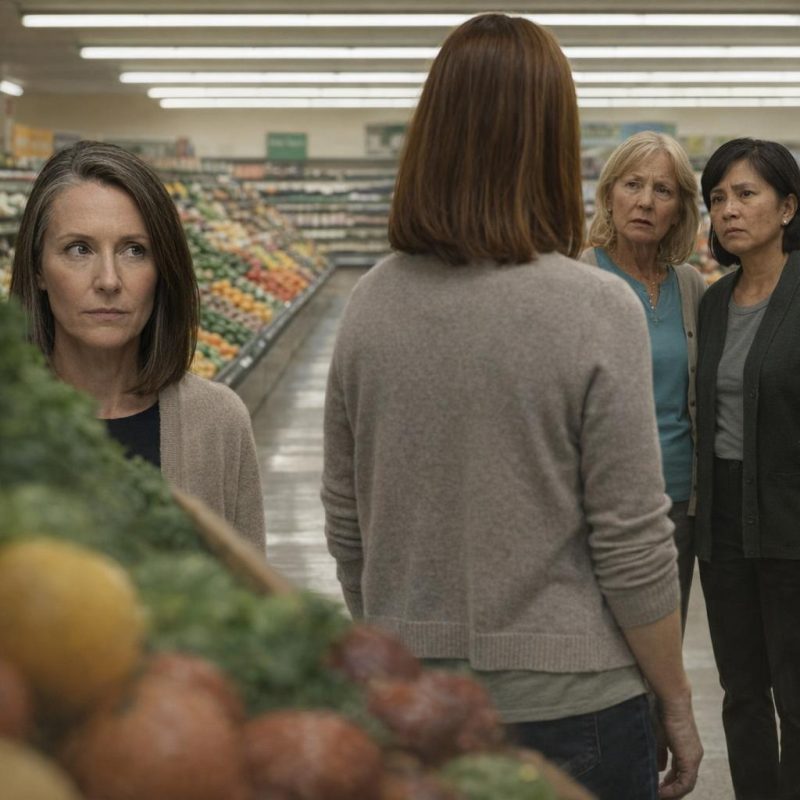 Image by RM AI
Losing Friends
The week that followed was the loneliest I'd felt in years. Phone calls I made went to voicemail and stayed there. A neighbor I'd traded garden vegetables with for fifteen years crossed to the other side of the street when she saw me coming — not subtly, just turned and went the other way. I told myself maybe she hadn't seen me. I didn't really believe it. Pastor Williams asked to speak with me after the Sunday service, and I sat across from him in his small office while he chose his words with the kind of care that told me he'd been thinking about this for a while. He said the congregation was concerned. He said whatever questions I had about Rachel's situation, there were better ways to handle them than what people were describing. I tried to explain — the other towns, Angela, the article — and he listened, but when I finished he said gently that Rachel's medical history was her private business, and that he hoped I would consider stepping back. Tom was waiting for me in the parking lot. I got in the car and didn't say anything for a minute, and then I started crying, which I hadn't done in front of him in a long time. He took my hand and held it. Outside the window the church sat quiet in the gray afternoon light, and I thought about how many years I'd felt at home there.
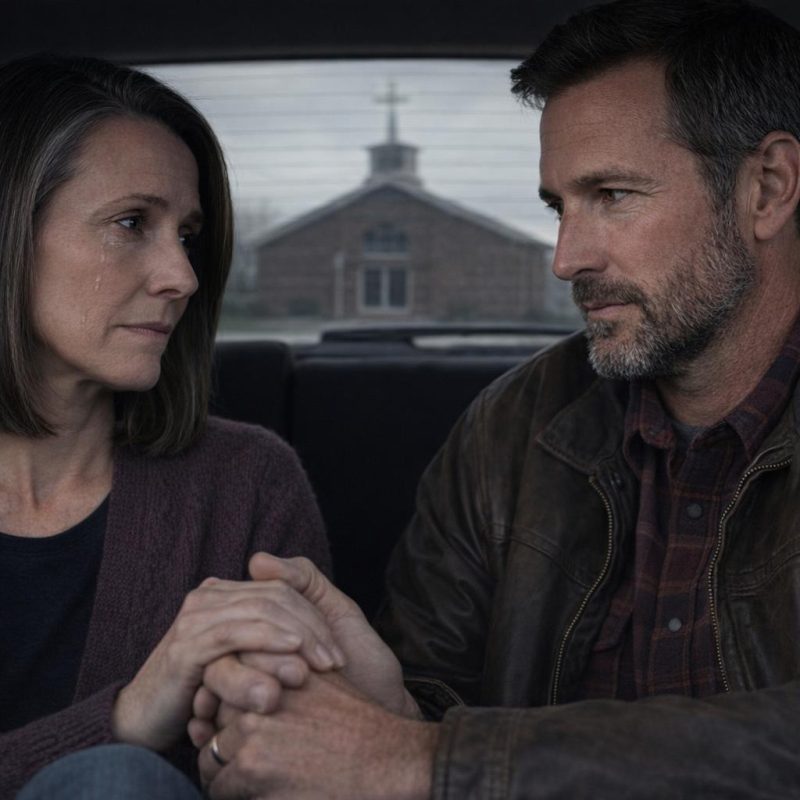 Image by RM AI
The Cost of Knowing
I couldn't sleep. Around three in the morning I gave up trying and went to sit at the kitchen table with a cup of tea I didn't really want. I kept thinking about how simple everything had been a year ago — Rachel was my friend, the fundraisers were good work, and I was just a person in a community doing what people in communities do. Tom found me there about twenty minutes later, still in his pajamas, and he didn't say anything at first, just pulled out the chair across from me and sat down. I told him I didn't know if I could keep going. That I was tired in a way that sleep wasn't going to fix. He said he understood, and that whatever I decided, he was with me. He meant it — I could hear that he meant it. But then he said Martha's name. Just that, just her name, and I thought about her sitting in her living room writing a check she couldn't afford because she trusted us, trusted the community, trusted that we wouldn't let her down. I thought about whoever came after Martha in the next town, if there was a next town. Tom reached across the table and covered my hand with his. I sat there in the quiet kitchen, the weight of it all pressing down, knowing I wasn't going to stop.
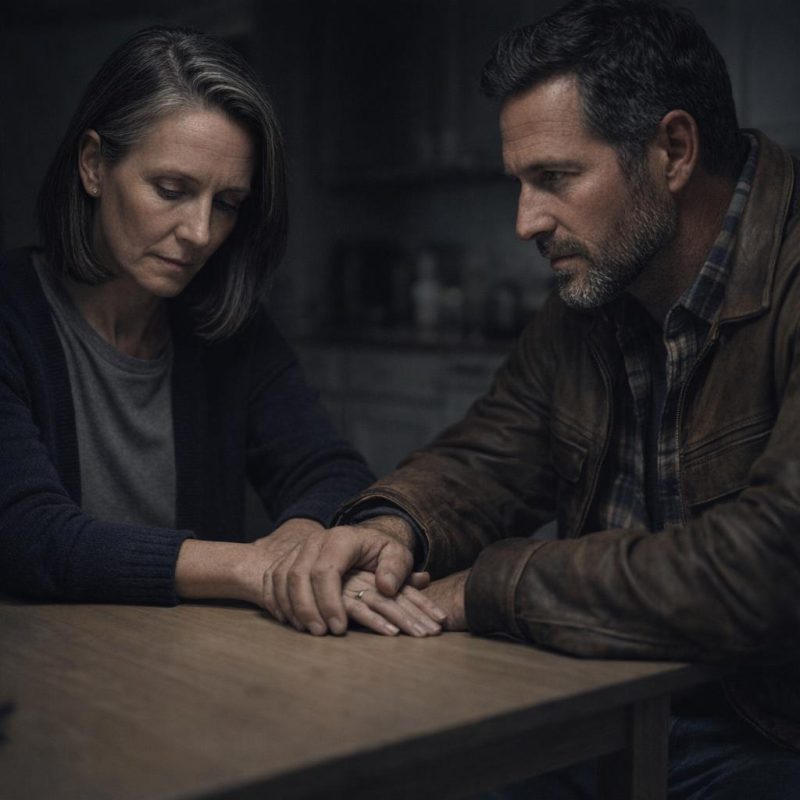 Image by RM AI
The Old Records
I don't know what made me pull those boxes out again. I'd been through them twice already and hadn't found anything I didn't already know. But it was a Tuesday afternoon and I was sitting there feeling like I'd hit a wall, like maybe Tom was right and I'd taken this as far as it could go. So I dragged the boxes out of the hall closet and spread everything across the dining room table — flyers, donation logs, event programs, sign-in sheets going back nearly a decade. The smell of old paper and ink ribbon hit me like a memory. I started at the beginning, the very first fundraiser, the one we'd held in the church fellowship hall when Rachel had just told us about her diagnosis. I went slower this time, reading every name, every line. Linda's name was everywhere — volunteer coordinator, event organizer, point of contact. I'd noticed that before and thought nothing of it. She was Rachel's sister. Of course she helped. But then I turned to the bank deposit slips from that first campaign, the ones where someone had signed off on the transfers, and I stopped. Linda's signature was on every single one of them — not Rachel's, not the church treasurer's.
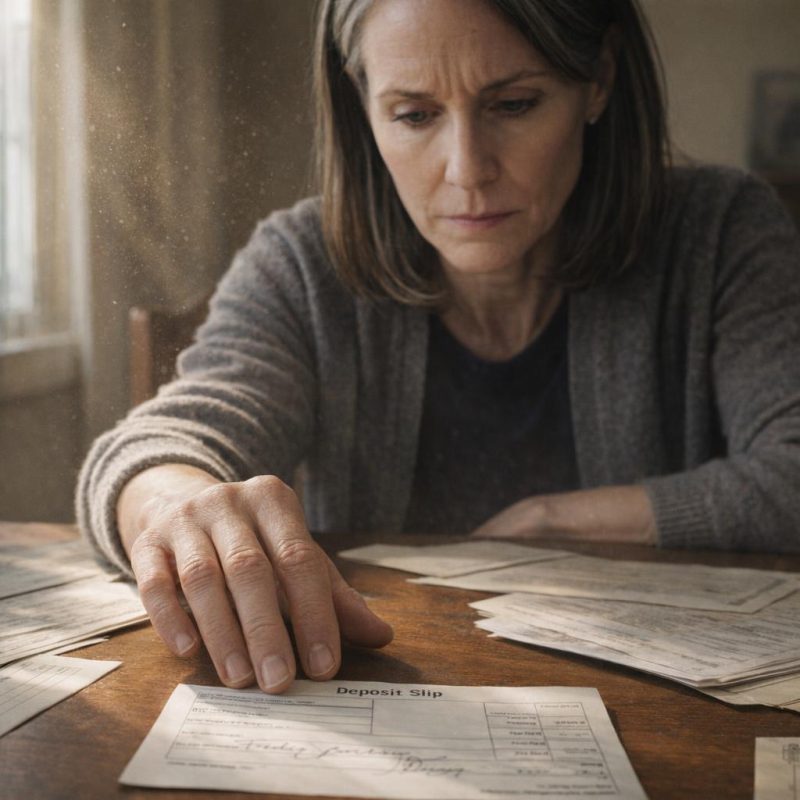 Image by RM AI
The Helper's Pattern
I got out a legal pad and started making a timeline. It took me most of the afternoon, and by the time Tom came in from the garage I had three pages filled. Linda had been there for everything — not just the big fundraisers but the smaller ones too, the bake sales and the online campaigns and the quiet collection envelopes passed around after Sunday service. She organized the volunteers, managed the donation tables, coordinated with the church office. Tom leaned over my shoulder and read through it without saying anything for a long minute. Then he asked why Linda would be so involved in all of it, year after year. I told him she was Rachel's sister and probably just being supportive, that some people throw themselves into that kind of thing when someone they love is sick. He nodded slowly, but I could tell he wasn't satisfied with that answer, and honestly neither was I. The level of it was unusual — not just showing up, but managing, verifying, vouching. Then I found a printed email chain from about six years back, where a donor had written in asking for confirmation that Rachel was actually receiving treatment. Linda had replied. She told them she'd driven Rachel to appointments herself and had seen her at the hospital.
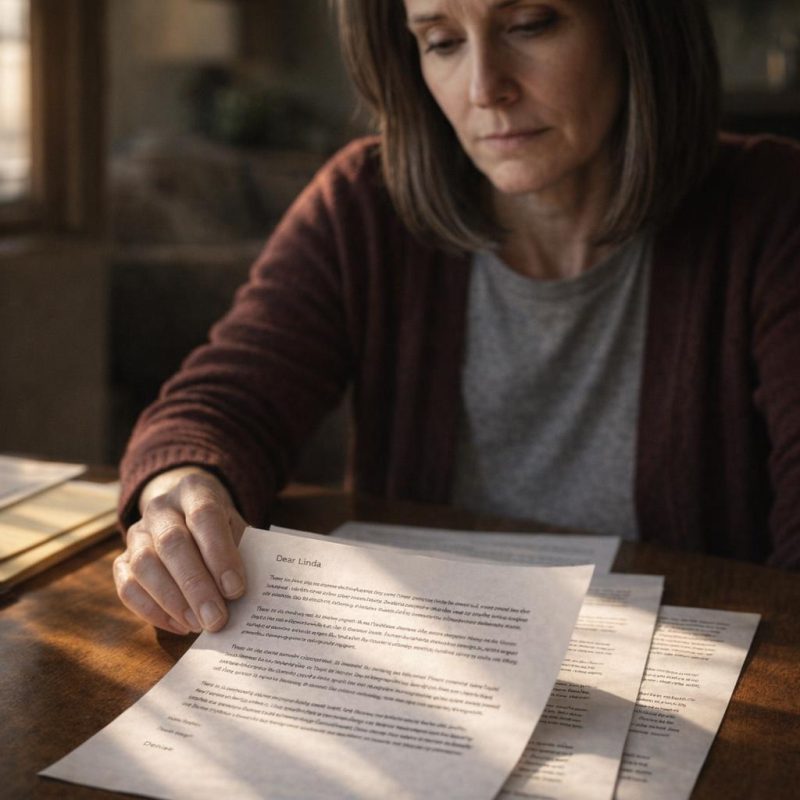 Image by RM AI
Two Sets of Hands
Angela came over on a Thursday morning and the three of us sat around the dining room table with everything spread out in front of us. I'd asked her to look at it fresh, with new eyes, because I was starting to feel like I was too close to see it clearly. She went quiet for a while, just moving through the materials, and then she said something that stopped me cold. She said these campaigns were professional. Not community-bake-sale professional — actually organized, with consistent branding, formatted documents, coordinated messaging across years. She pointed out that someone had created flyers with matching layouts, managed online donation pages, and produced written summaries that looked credible enough to satisfy skeptical donors. Tom said he'd assumed Rachel had just gotten good at it over time. Angela shook her head. She said maintaining that level of consistency and credibility over a decade wasn't a one-person job. Someone had to create the materials, someone had to field the questions, someone had to provide the verification that made donors feel safe giving. Tom asked who would have been in a position to do all of that. I looked down at my legal pad, at the timeline I'd spent two days building. Angela said quietly that whoever helped Rachel made the whole thing believable — that without that help, it probably would have fallen apart years earlier. The thought settled over the table like a weight none of us wanted to pick up.
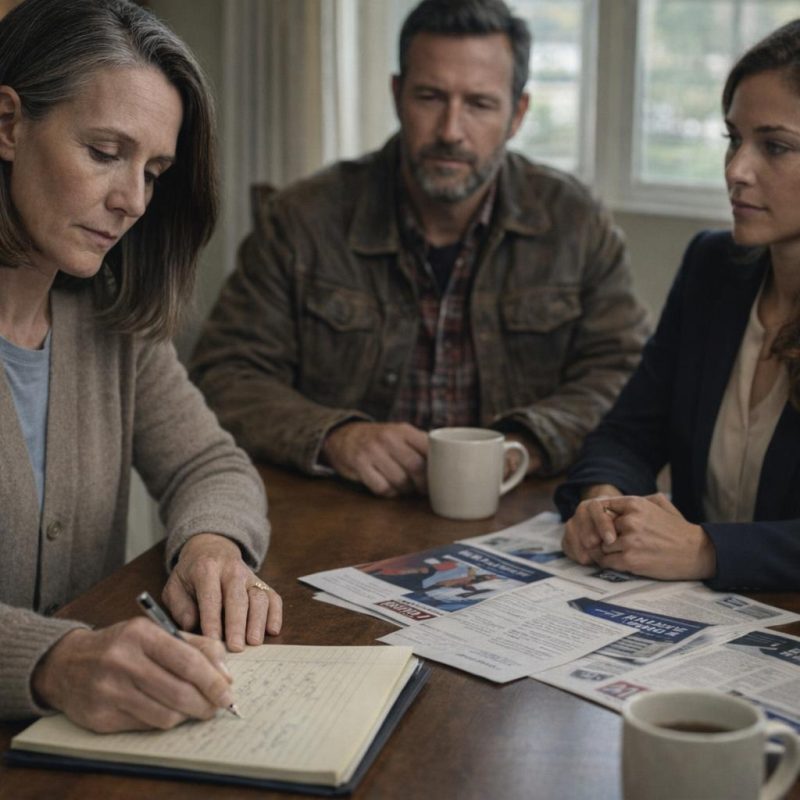 Image by RM AI
The Search for the Partner
I made a list. I sat at the kitchen table with a fresh piece of paper and wrote down every name I could think of — people who'd been consistently involved in the fundraising over the years, people who had access to the church office, people who were close enough to Rachel to know the details of her story. It was a longer list than I expected. There were church volunteers who'd helped at nearly every event, a couple of women from the prayer group who'd always been first to sign up, and family members who'd shown up reliably. Linda's name was on the list, but so were four or five others. Tom suggested we look at who might have benefited financially from the campaigns, and I told him I hadn't found any evidence that the money went anywhere except to Rachel. He said that didn't mean no one else had a stake in it. I kept coming back to the question of motivation — if someone helped and didn't take any money, what were they getting out of it? Loyalty, maybe. Or something else I hadn't thought of yet. I stared at the list for a long time. I felt like I was trying to find someone who'd been careful not to be found, and the harder I looked, the less certain I was about anything. The question of why someone would do this — not for money, but just to help — sat with me long after I put the pen down.
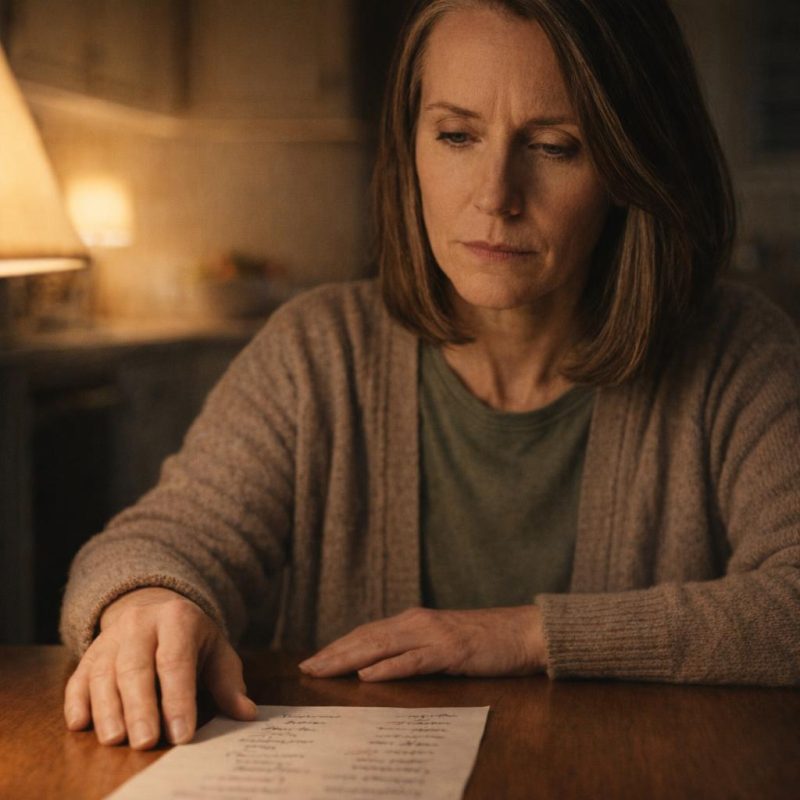 Image by RM AI
Behind the Scenes
I called Pastor Williams and asked if I could come in and look at the church office records — computer logs, anything that might show who had been using the equipment over the years. He was quiet for a moment before he agreed, and I could hear the reluctance in it. He met me at the church on a Saturday morning and walked me back to the office himself, standing in the doorway while I sat down at the old desktop. He said he hoped I knew what I was doing. I told him I hoped so too. The computer kept basic usage logs, nothing sophisticated, just timestamps and file names. I started going through them, and it didn't take long before a pattern appeared. There were sessions logged late in the evenings, after regular office hours, going back years. Files had been created during those sessions — fundraiser flyers, donation forms, donor letters. I opened a folder I almost passed over and found a set of documents labeled as medical summaries. They were formatted to look official, with headers and terminology that would read as legitimate to most people. But there was no hospital letterhead anywhere on them. Pastor Williams came to look over my shoulder and went very still. He said he had never authorized anyone to create documents like that, and that he hadn't known they existed.
 Image by RM AI
Small Mistakes
I made copies of everything and brought them home. Angela came back over that evening and the three of us sat under the kitchen light going through the medical summaries page by page. Most of it looked convincing enough — the kind of thing that would satisfy a worried donor who wasn't a doctor. But Angela had worked in medical billing for years, and she started flagging things almost immediately. One of the diagnosis codes was formatted wrong, a digit transposed in a way that wouldn't match any real coding system. A medication listed in one summary was noted at a dosage that didn't line up with standard prescribing for that condition — she said it was about three times what anyone would actually be given. The names of hospital departments were slightly off too, close enough to sound right but not quite matching how those departments are actually labeled. Tom asked if those could just be typos. Angela said maybe one, but not all of them together. She said whoever put these together had done research — they'd gotten the general shape of it right — but they didn't have real medical knowledge, and the gaps showed if you knew where to look. I sat back and thought about how many donors had read these documents and felt reassured. Most people wouldn't have caught any of it. The errors were small, careful, and almost invisible — and that almost was the only crack in the whole thing.
 Image by RM AI
Years of Planning
I laid everything out in order on the dining room table — every document, every summary, every flyer — organized by year, going all the way back to the beginning. Tom stood beside me and we just looked at it for a while without talking. What struck me wasn't the volume of it, though there was a lot. It was how it changed over time. The earliest documents were rougher, simpler, with less medical detail. By the third or fourth year, the terminology had gotten more specific, the formatting more polished. Whoever put this together had gotten better at it. The mistakes Angela found were mostly in the earlier materials — by the later years, those particular errors had been corrected, though new ones had crept in elsewhere. Tom said quietly that it must have taken an enormous amount of effort to keep it going, to keep the story consistent and the documents updated and the details straight across so many years. I didn't answer right away. I was thinking about all the people who had given money because they trusted what they read, because the documents looked real and the story held together and the community around Rachel seemed to confirm everything. Someone had spent years building that trust, layer by layer, each piece of paper adding weight to the one before it. I sat with that thought, and it just made me tired in a way that had nothing to do with the hour.
 Image by RM AI
The Performance
The three of us were back at the table on Sunday afternoon, and I tried to explain to Tom and Angela what I thought I was finally starting to understand about how all of it had worked. It wasn't just the documents. It was the whole shape of it — the way Rachel would get emotional at fundraisers, the way she'd talk about her fear and her gratitude, the way she'd look exhausted and fragile at exactly the right moments. People who felt moved by that weren't going to turn around and demand proof. And if they did start to wonder, there were documents waiting, and there were people who could say they'd seen her at the hospital, driven her to appointments, watched her struggle. Angela said it out loud before I could find the words for it — that asking questions had been made to feel like an act of cruelty. That the whole system worked because doubting Rachel meant doubting your own compassion. Tom said once we knew who had provided that verification, we'd understand the rest of it. Angela nodded. I thought about every fundraiser I'd attended, every time I'd watched someone tear up while Rachel spoke, every time I'd felt grateful that our community was the kind of place that showed up for people. Sympathy had been the thing that kept all of us from asking what we should have asked years ago.
 Image by RM AI
The Architecture of Belief
Tom and I stayed at the kitchen table long after Angela had gone home, and I kept turning the same thought over in my mind. It wasn't just that Rachel had been sick — or claimed to be. It was that she had made people feel chosen for caring about her. She remembered Martha's late husband's name. She asked about grandchildren by name. She sent cards when people had surgeries. Every one of those gestures had built something, layer by layer, until questioning her felt like questioning your own decency. Tom said it quietly, almost to himself — that somebody understood exactly how a small town works. Not just Rachel. Somebody who knew which levers to pull, who to reassure, when to produce a document and when to let emotion do the work instead. I thought about that. The helper — whoever it was — hadn't just been covering tracks. They'd been building the conditions under which no tracks needed covering, because nobody would think to look. I felt close to something, the way you feel close to a word that won't come. Tom said we needed to find out who had the most consistent access to Rachel over all those years. I knew he was right. I also knew I was tired in a way that sleep wasn't going to fix — the kind of tired that comes from understanding something you can't unknow.
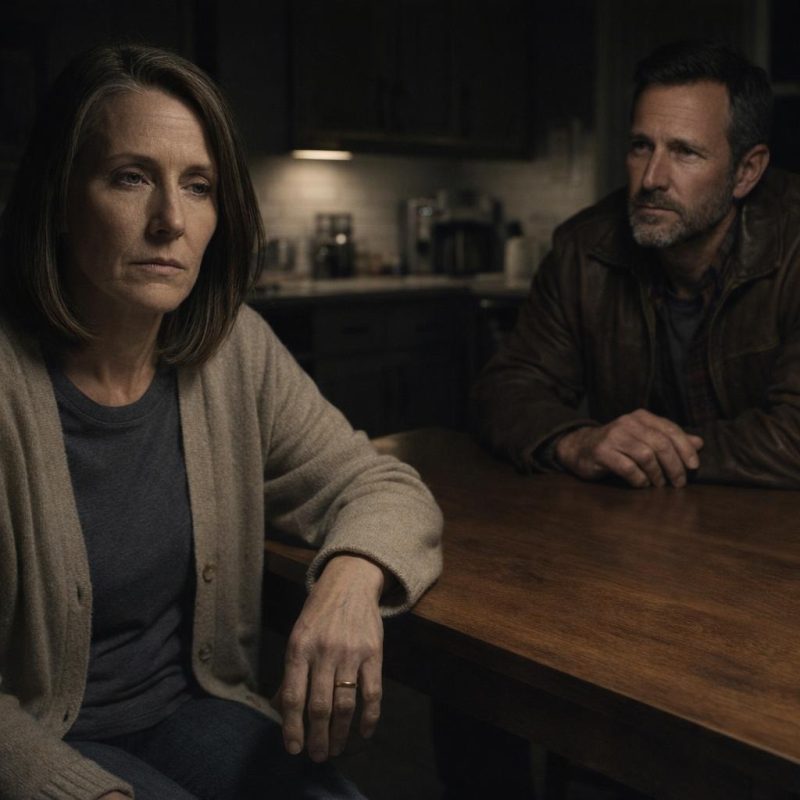 Image by RM AI
Rachel's Hidden Past
Angela called me the next morning before I'd finished my first cup of coffee. She'd been in touch with someone from the town where Rachel had lived before Millfield — a woman who'd worked in the same office building, years back. What she told Angela was quiet and sad in a way I hadn't expected. Rachel had been genuinely ill once, about fifteen years ago. A real diagnosis, a real hospital stay, real fear. But she'd been recently divorced at the time, no family nearby, no close friends to speak of. She'd gone through most of it alone. Then a coworker organized a small collection — nothing dramatic, just a card and some grocery store gift cards — and Rachel had apparently been undone by it. Angela said the woman described Rachel as almost bewildered, like she didn't know how to receive that kind of care. And then she recovered, and the attention went away, and she was alone again. I sat with that for a long time after we hung up. I wasn't excusing anything. The people who gave money to Rachel in Millfield deserved better than what they got, and nothing about a hard past changes that. But I thought about what it must feel like to learn, in the middle of your worst moment, that suffering was the only thing that made people stay — and I understood, in a way I wished I didn't, where something like this could begin.
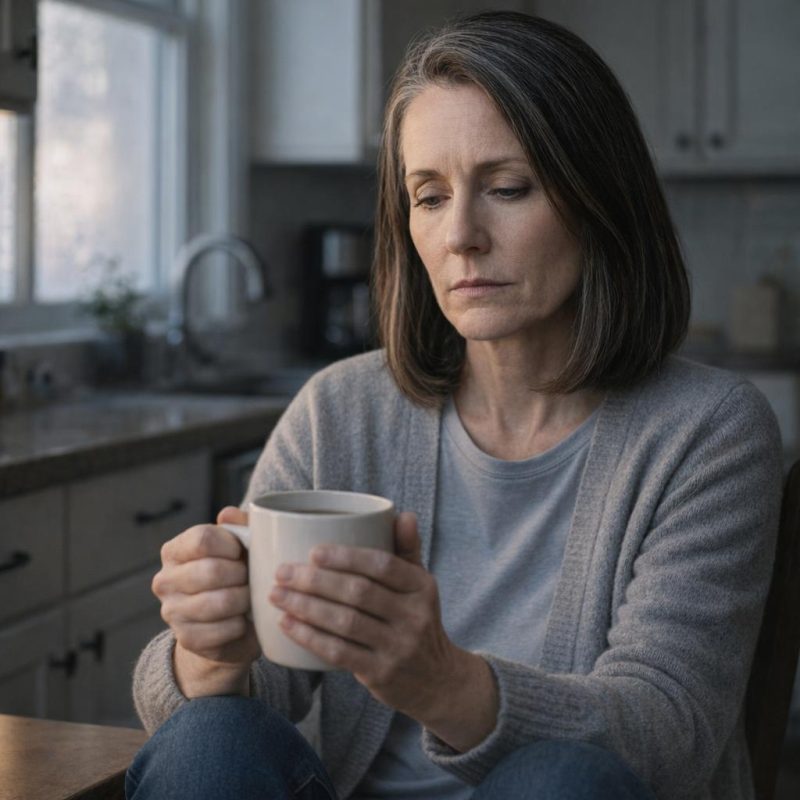 Image by RM AI
The Spiral Beyond Control
The three of us spread out what we had across the table again that evening, and I started looking at the timeline more carefully. There were gaps I hadn't paid attention to before — moments where the story could have stopped but didn't. Tom found a series of posts Rachel had made over the years about wanting a fresh start somewhere new, wanting to simplify her life. Each time, within a few weeks, there was a new health update, a new crisis, a new reason the community needed to rally. Angela said she thought Rachel might have felt genuinely unable to leave — that the donations had created a kind of debt she couldn't figure out how to repay or walk away from. I thought about that. Once people have given you their money and their prayers and their casseroles, you don't just send a note saying you made it up. The expectations pile up. The performance has to keep going because stopping it means explaining it. I found myself feeling something I hadn't expected to feel — not quite pity, but something close to it. And then I came across something in the folder of old church files I'd been sorting through. An email draft, dated three years ago, addressed to Pastor Williams. In it, Rachel had written that she needed to step back from the fundraising, that she wasn't sure she could keep going. It was never sent.
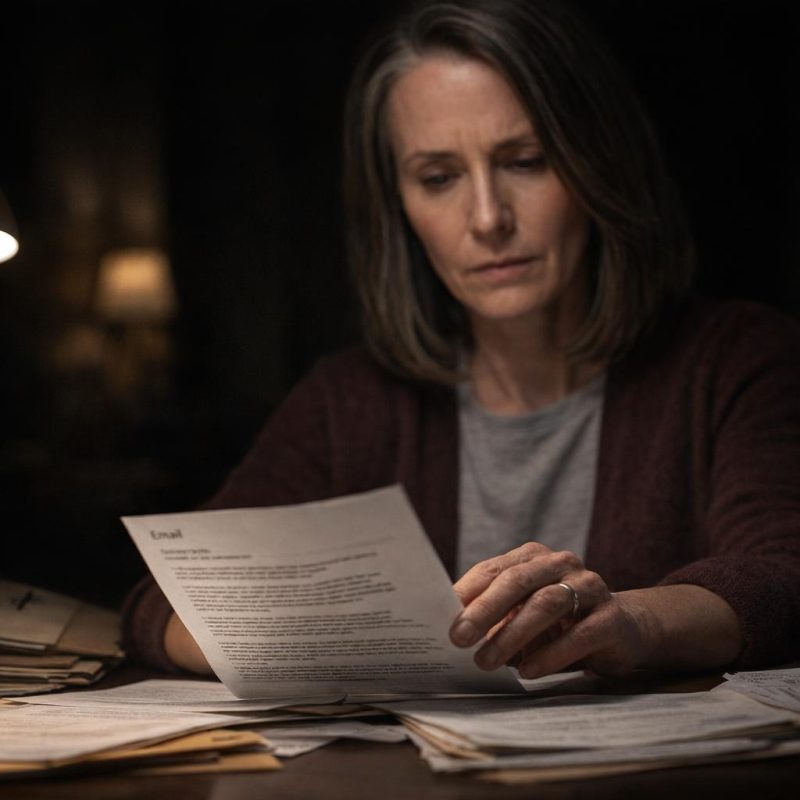 Image by RM AI
The Personal Secret
Angela came back over the next afternoon with notes from her conversation with the woman who'd known Rachel before Millfield. I'd asked her to find out whatever she could about that earlier illness — the real one. What she shared was harder to hear than I'd expected. Rachel had been thirty-nine, newly divorced, living alone in a city where she didn't have roots. The illness had been serious enough to require surgery and a recovery period of several months. She'd gone to appointments by herself. She'd managed her own paperwork. A coworker had organized a small fundraiser — maybe three hundred dollars and a meal train that lasted two weeks. Angela said the woman remembered Rachel crying when she found out, not from relief but from something that looked more like shock, like she hadn't believed anyone would notice. When she recovered, the coworker moved to another department, the meal train ended, and Rachel went back to being invisible. I thought about that word — invisible. I thought about what it would do to a person, to learn that the only time they were truly seen was when they were suffering. I'm not saying it justified anything. The people in Millfield who gave and gave and gave deserved the truth. But sitting there with Angela across from me, I felt grief for the woman Rachel had been at thirty-nine — alone in a hospital, stunned that anyone had shown up at all.
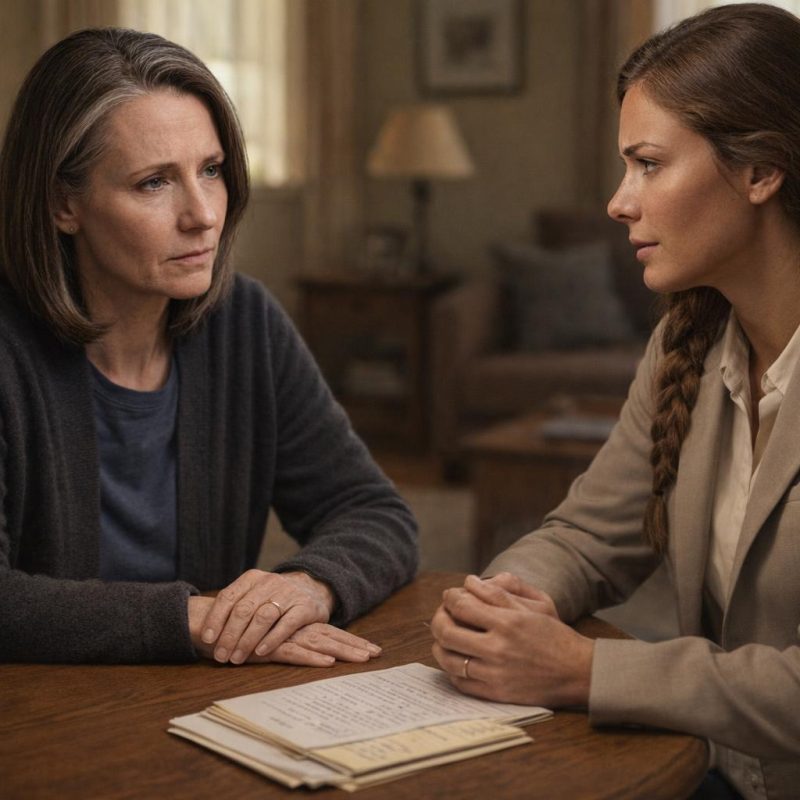 Image by RM AI
Trapped Inside the Lie
Tom had been going through a box of items that had been left in the church's lost and found over the past year, things nobody had claimed. Near the bottom was a small spiral notebook with Rachel's name written inside the front cover in her handwriting. I almost set it aside. Instead I opened it. The entries weren't dated consistently, but they spanned what looked like several months. Rachel wrote about feeling like she was standing at the edge of something she couldn't see the bottom of. She wrote about the way people looked at her at church — with such warmth, such concern — and how that warmth felt like a weight she couldn't put down. There was one entry where she wrote that she wanted to tell someone the truth, that she had imagined the conversation a hundred times, but every time she got to the part where she said the words out loud, she couldn't picture what came after. She wrote that she didn't know who she was if she wasn't sick. She wrote that she was tired. Tom read a few pages over my shoulder and said, quietly, that we still needed to find out who had been helping her keep it all together — because Rachel alone couldn't have produced what we'd seen in those files. He was right. And then I turned to the last written page of the notebook, and there it was in Rachel's handwriting: she wished she could tell the truth, that she had written it out like a confession she never intended to send.
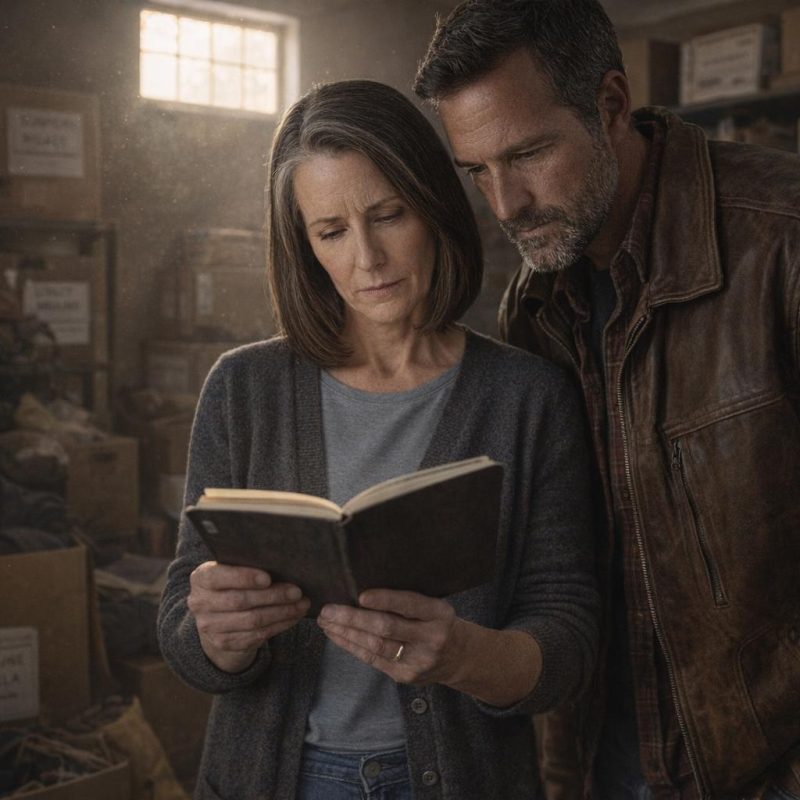 Image by RM AI
The Sister's Role
The line in the notebook read: 'L knows everything. L always knew.' I set it down and looked at Tom. We both knew who L was. Angela had brought her laptop, and within the hour we were looking at the church's shared drive — files that had been created and edited under a login we recognized. Linda's. The medical summaries weren't Rachel's work. The formatted fundraiser materials, the donor reports, the letters to the community with their careful language about treatment timelines and insurance gaps — Linda had created all of them. There were email threads going back years, Linda coaching Rachel on what to say to specific donors, which details to emphasize, how to respond when someone asked a hard question. Linda had called donors personally to verify Rachel's condition. She had positioned herself as the reliable, organized sister — the one who handled the logistics so Rachel could focus on getting well. Angela pulled up a folder of document templates Linda had built, each one designed to look like it came from a medical office. Tom sat back in his chair and didn't say anything for a long moment. I thought about every time Linda had stood at a fundraiser with her clipboard, efficient and calm, answering questions, reassuring people. She hadn't just been helping her sister. She had designed the system that made ten years of donations feel not only justified but necessary.
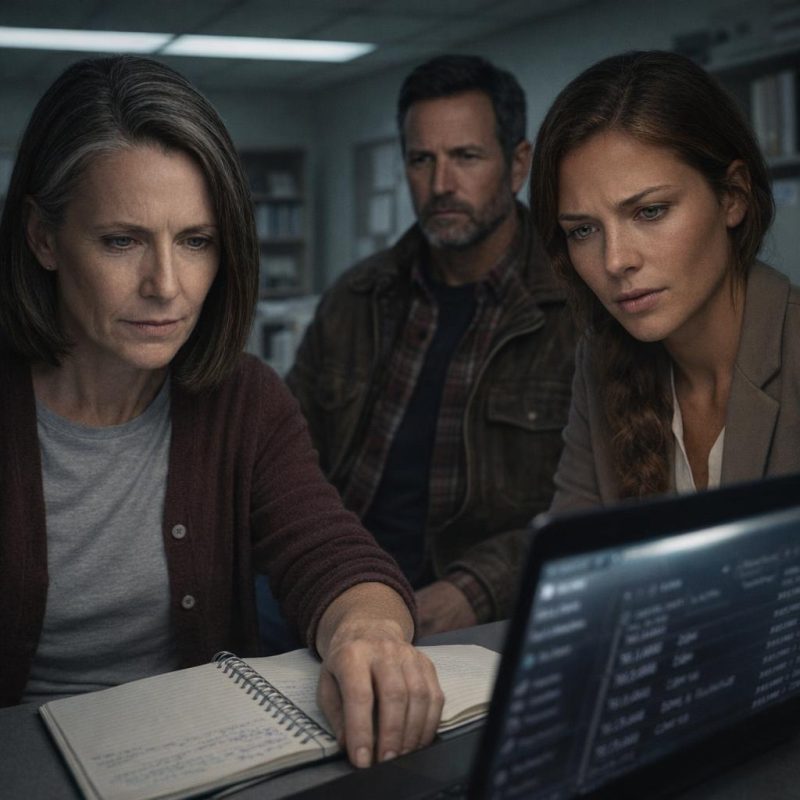 Image by RM AI
The Architect
We sat with it for a while before anyone spoke. Angela was the one who finally said what we were all thinking — that Linda's involvement reframed everything. Every time someone had come to me with a quiet doubt over the years, Linda had been the one to smooth it over. She'd shown up with paperwork. She'd made phone calls. She'd told people she had personally driven Rachel to appointments, had sat in waiting rooms, had spoken to nurses. I thought about Martha, who had given money she couldn't spare, reassured more than once by Linda's calm, certain manner. I thought about Pastor Williams, who had vouched for Rachel's situation to the congregation partly because Linda had provided him with documentation he had no reason to question. Tom said Linda had used the trust that came with being Rachel's sister — the idea that a sister wouldn't lie about something like this — and turned it into a credential. Angela said Linda had the organizational skills and the access to build something that would hold up to casual scrutiny, and she had used both without hesitation. I kept coming back to the clipboard. All those years, all those fundraisers, Linda standing there looking helpful and dependable and concerned. The efficiency I had admired, the thoroughness I had trusted — it had all been in service of something I was only now seeing clearly, and the weight of that sat in the room long after we stopped talking.
 Image by RM AI
Sisters in Deception
Angela stayed late, and the three of us went through the email records carefully, tracing the shape of how it had worked between them. The division was clear once you knew to look for it. Linda handled the infrastructure — the documents, the donor communications, the financial summaries she presented to the church committee each year. Rachel handled the human part — the updates posted online, the tearful moments at fundraisers, the personal conversations where she made each donor feel like their contribution had mattered in some specific and irreplaceable way. When Rachel's posts went up, Linda's documents were already in place to support them. When a donor asked a hard question, Linda was there with a calm answer and a piece of paper. There were emails where Rachel sounded overwhelmed, and Linda's replies were brisk and practical — reminding her what to say, telling her not to deviate from the details they'd agreed on, reassuring her that everything was under control. And there were other emails, quieter ones, where Rachel thanked Linda in a way that sounded less like gratitude and more like dependence. Tom said it was the kind of thing that could only work if both people were fully committed to it. I thought about the two of them — sisters, bound together by something that had started, maybe, as protection and had become something neither of them could step away from. The sadness of that settled over the room like weather.
 Image by RM AI
The Community Inquiry
Pastor Williams called on a Tuesday morning, and his voice was quieter than I'd ever heard it. He said the church leadership had formed a committee after my concerns reached the right ears, and they'd begun pulling every fundraising record from the past ten years. He asked if Tom and I could come in and sit with them. We went that afternoon. The conference room off the fellowship hall felt smaller than I remembered, and there were six people around the table, all of them people I'd known for years. I laid out everything — the emails, the medical inconsistencies, Angela's findings, the timeline I'd built piece by piece over months. Pastor Williams listened without interrupting, and when I finished, he sat back and pressed his hands flat on the table. He said he owed me an apology for not listening sooner. I told him I understood. What I didn't say was how strange it felt to finally be believed in that room — not relief exactly, more like the ground shifting under something I'd been bracing against for a long time. The committee had already been working before we arrived. One of the members slid a folder across the table and said they'd found transfers in the donation accounts that didn't match any reported expenses — and nobody could explain where the money had gone.
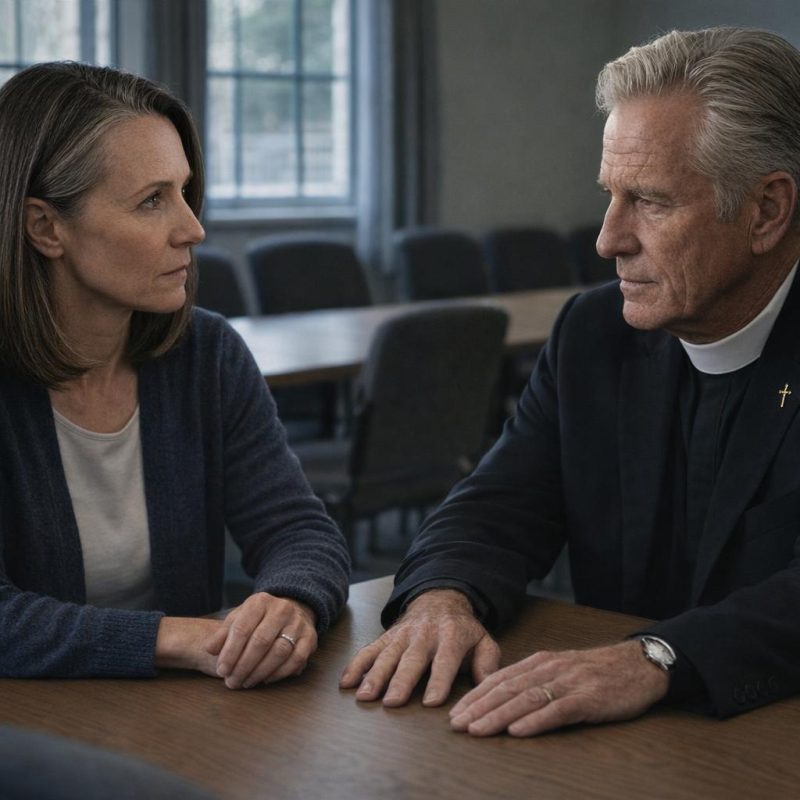 Image by RM AI
Following the Money
The committee presented their full findings the following week, and Tom sat beside me the whole time, his hand resting on the table close enough that I could feel the warmth of it. The numbers were laid out in columns — clean, documented, impossible to argue with. Over eighty thousand dollars had been raised across all the campaigns combined. I'd known the total was significant, but seeing it written down made something tighten in my chest. Then they walked us through where it had actually gone. Rent payments. Car payments. A vacation rental in the Smokies booked for two weeks one summer. Grocery runs. Utility bills. Ordinary life, funded by people who thought they were paying for chemotherapy and specialist consultations. Very little — a fraction of the total — could be traced to anything resembling medical care. Linda had managed most of the accounts, making transfers in amounts small enough not to draw immediate attention. Some went to Rachel's account directly. Some stayed in Linda's. Pastor Williams sat across from me with his hands folded and didn't speak for a long time after the presentation ended. I kept staring at the summary sheet. Eighty thousand dollars raised. Less than nine thousand traceable to any medical expense.
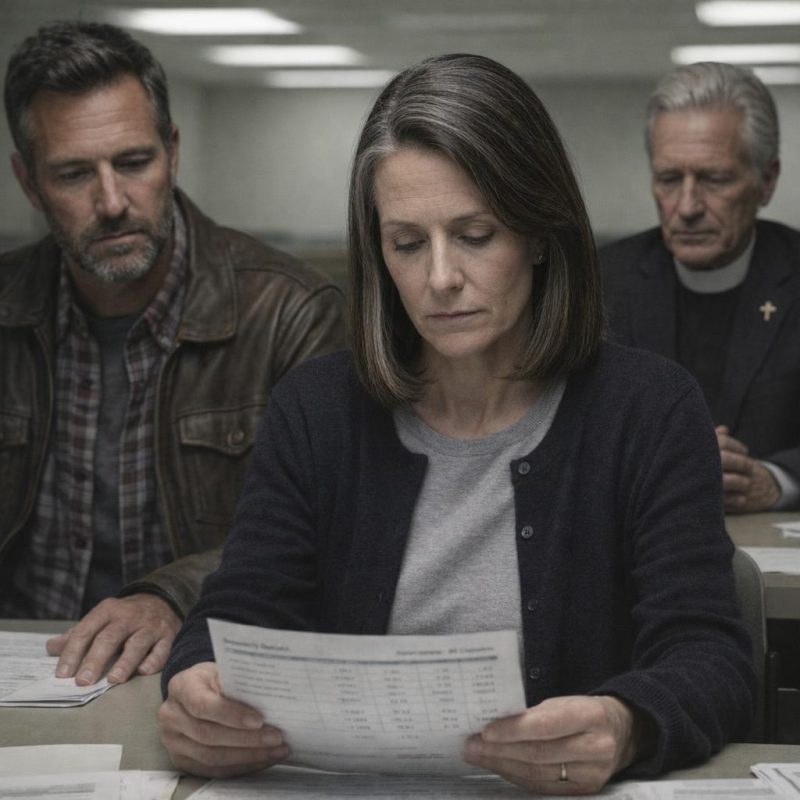 Image by RM AI
The Town Divides
Word moved through town the way it always does in a small place — fast and uneven, picking up heat as it went. Within a week, people I hadn't spoken to in months were calling or stopping by. Some of them apologized. Some of them were angry, though not always at Rachel. A few told me I'd gone too far, that I'd taken something private and made it into a spectacle. Tom fielded most of those calls with more patience than I had. Martha came to the door on a Thursday afternoon, and I almost didn't recognize her at first — she looked smaller than I remembered, her white hair pinned back neatly, her hands folded in front of her like she was steadying herself. She sat at my kitchen table and told me she'd sent Rachel money every month for three years. Not large amounts, she said, but amounts that had mattered to her. She'd skipped her own prescriptions twice to make sure she could contribute. She didn't cry, which somehow made it worse. She just sat there with her hands folded and said she'd wanted so badly to help someone. Church attendance dropped the following Sunday. I heard that some families had stopped speaking to each other over it. Pastor Williams called it the hardest week of his ministry. I sat with that for a long time — the thought of a whole community that had believed together, now pulling apart at every seam.
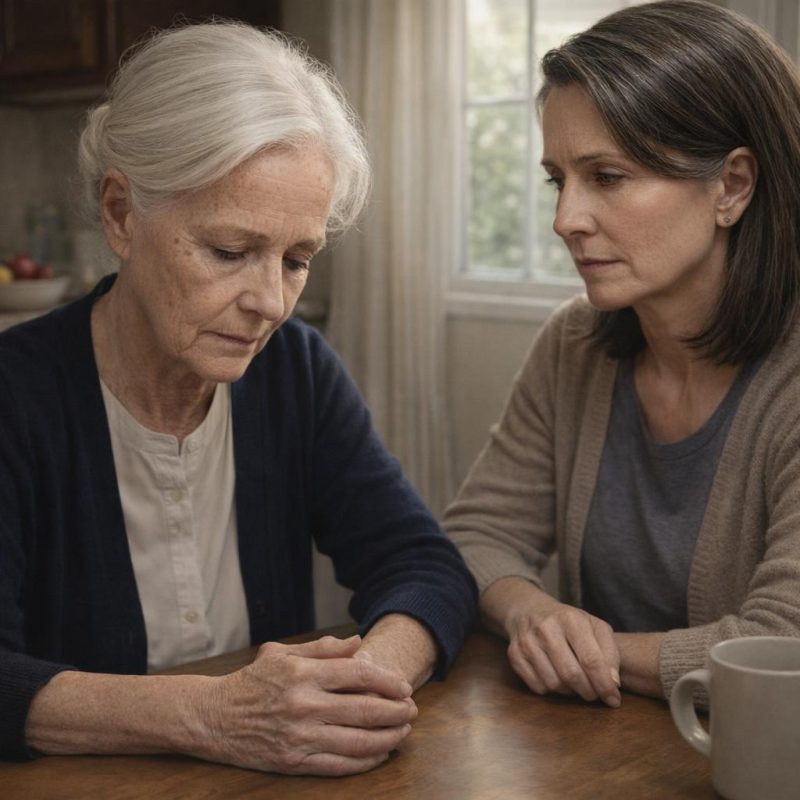 Image by RM AI
Defending the Indefensible
I ran into a group of Rachel's friends at the grocery store on a Saturday, and I knew from the way they positioned themselves in the aisle that it wasn't accidental. There were four of them. One said the financial records had to be misread, that there were probably medical expenses that just hadn't been documented properly. Another said Rachel was the kindest person she'd ever known, and that kindness like that didn't lie. A third told me, quietly but clearly, that I was destroying an innocent woman's life and I would have to live with that. I tried to explain what the records showed, what Angela had found, what the committee had confirmed. They weren't interested in the explanation. I didn't blame them, not really. I understood what it cost to let go of a version of someone you'd loved and trusted. I'd paid that cost myself. When I pushed my cart toward the exit, I saw Rachel standing near the far end of the parking lot by her car. She was watching. She looked exhausted in a way that went past tired — hollowed out, like something had already been decided and she was just waiting for the rest of it to catch up. She didn't move toward me. She didn't look away either. I kept walking, and the wanting-to-believe of all those years settled over me like something I'd never fully be able to put down.
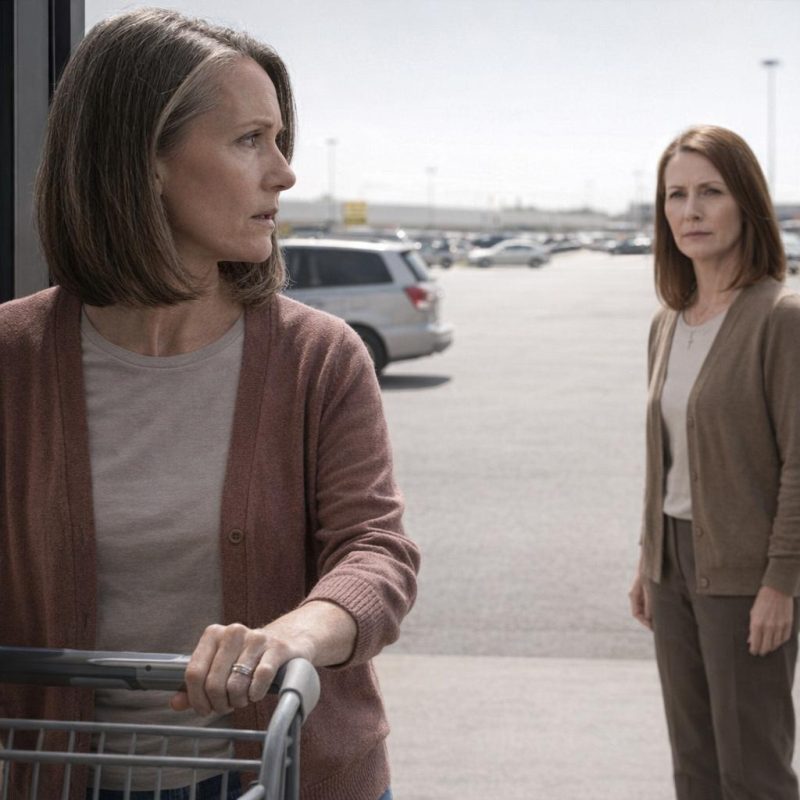 Image by RM AI
The Meeting
Pastor Williams announced the community meeting on a Sunday, and by Monday morning my phone hadn't stopped. People wanted to know what I was going to say, whether Rachel would be there, whether it was going to turn into something ugly. Tom helped me spend three evenings at the kitchen table going through everything — organizing the timeline, labeling the documents, making sure the sequence was clear enough that no one could claim confusion afterward. I was grateful for his steadiness. My hands weren't entirely steady. The night of the meeting, we arrived early, and the church was already filling up. By the time Pastor Williams called the room to order, people were standing along the back wall and out into the hallway. I saw Martha near the front, sitting very straight. I saw Angela two rows back. I saw faces I recognized from a decade of bake sales and prayer chains and Sunday potlucks, and I felt the weight of what I was about to do to all of them. Rachel and Linda came in together and took seats in the front row. Linda sat with her hands in her lap. Rachel stared at the floor. Pastor Williams opened with a prayer, asking everyone to listen with open hearts and to remember that truth, however painful, was the beginning of healing. The room went very quiet after that, and the silence felt like something solid pressing against my ribs.
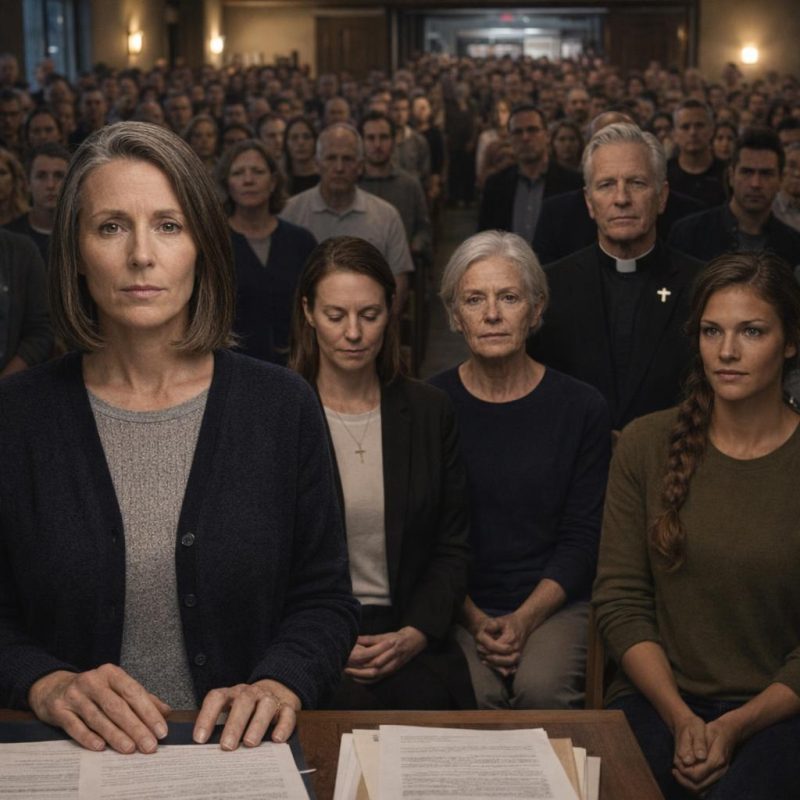 Image by RM AI
The Evidence Presented
I stood at the front of that room and walked them through all of it. I started at the beginning — the first campaign, the hospital name that didn't match, the doctor whose credentials I couldn't verify. I showed the timeline of how the story had shifted over the years, the changing diagnoses, the treatments that moved from facility to facility without explanation. Angela stood and presented her findings on the medical documentation — the formatting errors, the letterhead inconsistencies, the signatures that didn't hold up. Then came the financial records, projected on the screen Pastor Williams had set up, column by column. I explained Linda's role in managing the accounts, the transfers, the way the money had moved. I kept my voice as level as I could. The room was almost completely silent. I heard someone crying softly somewhere behind me. Martha spoke when I asked if anyone wanted to add their experience — she stood and said, in that quiet dignified way of hers, that she had given what she could not afford to give, and that she had done it gladly because she believed it was saving someone's life. The room absorbed that. I looked down at my notes, then back up, and let my eyes move to the front row. Rachel's face had gone completely still.
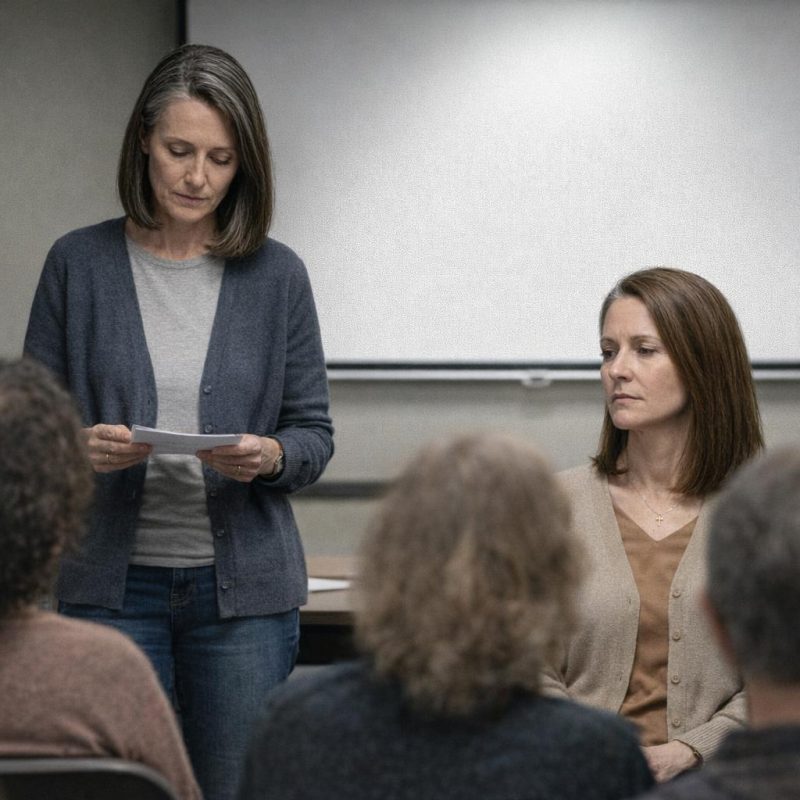 Image by RM AI
Rachel Speaks
Pastor Williams let the silence hold for a moment, then turned to the front row and asked Rachel if she wanted to respond. She didn't move at first. Linda reached over and put a hand on her arm, and Rachel looked at it like she wasn't sure what it was. Then she stood. She didn't turn around right away. When she finally faced the room, her eyes were red and her hands were clasped in front of her so tightly her knuckles had gone pale. She said she owed everyone an explanation and an apology, and that she wasn't sure either one would be enough. She said she had been sick once — genuinely, really sick — and that the fear from that time had never fully left her. She said the first campaign had been real. But then it ended, and the attention ended with it, and she hadn't known how to go back to being invisible. Her voice broke on that word. Invisible. She said she knew what she'd done was wrong. She said she hadn't known how to stop. She said she was sorry in a way that sounded like it had been sitting inside her for years, waiting for a room big enough to hold it. Someone behind me said something sharp and angry. Someone else told them to be quiet. Linda was still seated, her face turned toward her sister, and she hadn't moved since Rachel stood up.
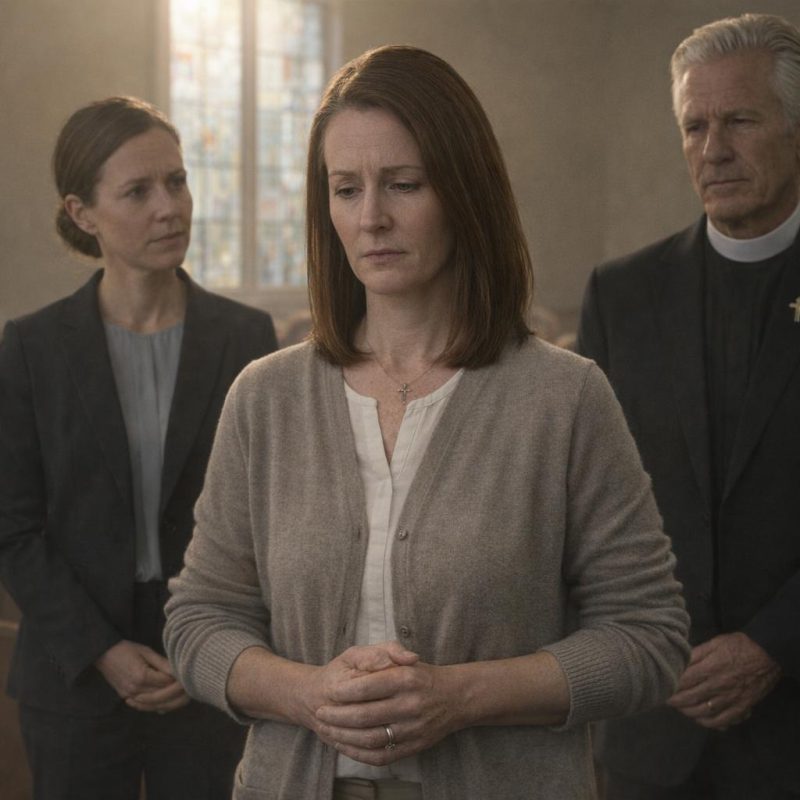 Image by RM AI
Linda's Confession
Pastor Williams waited until Rachel sat back down, then looked at Linda and asked her to speak to her own involvement. Linda stood slowly, like the weight of the room was something physical pressing on her shoulders. She said she had created the documents. She said it plainly, without softening it. She described researching medical terminology online, studying real hospital letterhead to get the formatting right, practicing signatures until they looked credible. She said she had verified Rachel's story to anyone who questioned it because she couldn't stand watching her sister disappear into herself. She managed the accounts, she said. She moved the money. She knew what it was and she did it anyway because Rachel needed her and she didn't know how else to help. Someone near the back of the room said something I couldn't make out, and the murmur that followed was low and angry. Martha sat perfectly still in the front row. Linda looked out at the congregation for a moment, and then she said — clearly, without hesitation — that if she had to do it over again, she would make the same choice, because she could not have watched her sister suffer alone.
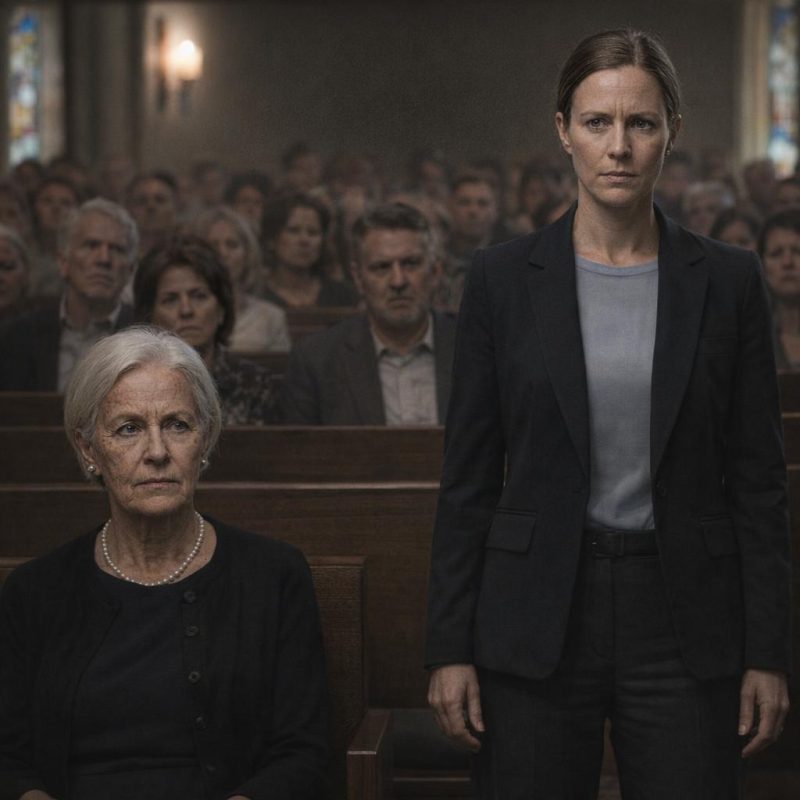 Image by RM AI
The Final Surprise
Rachel sat quietly for a moment after Linda finished, and then she said she had one more thing to tell us. The room had already been wrung out — people were exhausted, some still crying, some just staring at the floor — and I don't think anyone had the capacity left for another surprise. But Rachel stood up slowly and said that two years ago, she had tried to stop. She said she had gone to Pastor Williams privately and told him she had been exaggerating her illness, that the money had grown beyond anything she could justify, and that she didn't know how to get out of it. She said he had listened, and then told her that the community needed to give — that generosity was its own kind of healing for people, and that she shouldn't take that away from them. She said she took that as permission to keep going. The silence that followed was absolute. Pastor Williams stood up before anyone could speak. He didn't deny it. He said he remembered the conversation, but that he had believed she was being modest about real medical needs, that he hadn't understood the scope of what she was describing. His voice was steady but his hands gripped the back of the pew in front of him. I looked at Martha. Her eyes were closed.
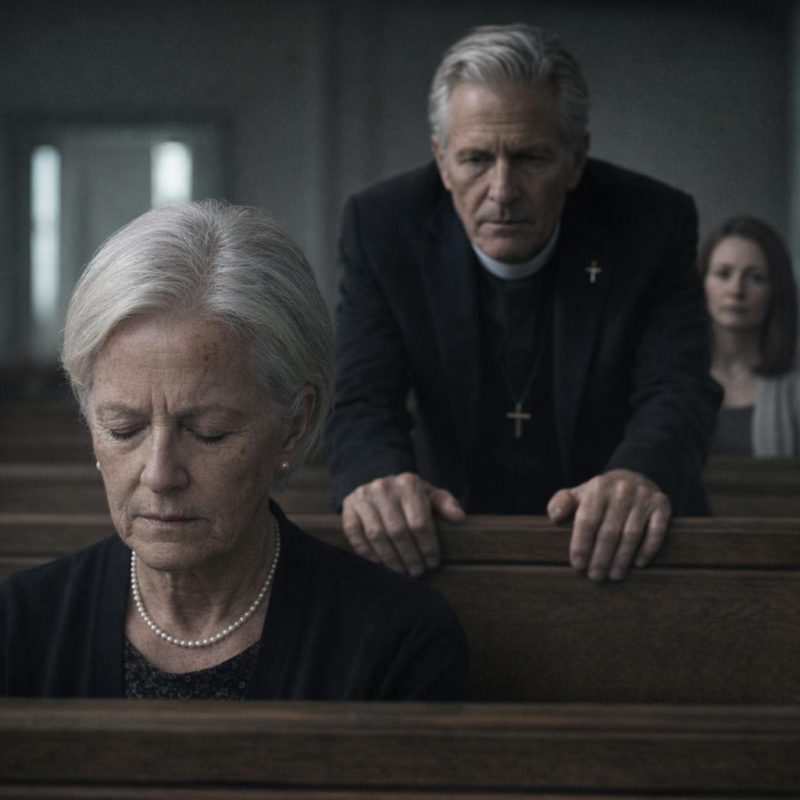 Image by RM AI
Shattered Bonds
People left the church in clusters, some holding each other, some walking out alone without a word to anyone. I stood near the door for a while and received both — a woman I'd known for fifteen years squeezed my hand and said thank you, and a man I'd sat next to at a dozen potlucks walked past me without making eye contact. Martha found me before she left. She was moving slowly, leaning on her cane, and she took my hand in both of hers and said she was grateful I hadn't let it go, even though it hurt more than she had words for. I didn't know what to say to that, so I just held her hands for a moment. Tom was waiting by the car. He didn't say much on the drive home, just reached over once and put his hand on mine. Pastor Williams announced his resignation before the week was out, a short letter read to the congregation that accepted full responsibility for his role in what had happened. Some people said it was the right thing. Others said it wasn't enough. Rachel and Linda left the meeting knowing legal questions were already being discussed. I got home that night, sat down at the kitchen table, and couldn't move for a long time. The house was quiet around me in a way that felt earned.
 Image by RM AI
The Question of Forgiveness
Martha called me about a week later. She said she was trying to forgive Rachel — not for Rachel's sake, she was careful to say, but for her own. She said she had lived long enough to understand that loneliness could make people do things that looked incomprehensible from the outside. I told her I thought that was one of the most generous things I'd ever heard anyone say. Tom didn't share that generosity, at least not yet. He was still angry — about the money, about the years of it, about the way the whole community had been made to feel foolish for caring. I understood that too. Angela told me she'd been carrying guilt since Millfield, that she had noticed things back then and talked herself out of saying anything, and that she wasn't sure she'd ever fully put that down. Pastor Williams, when I spoke with him, was quieter than I'd ever heard him — not defensive, just genuinely reckoning with what his words had set in motion. Some people in town wanted prosecution. Others were already talking about mercy, about Rachel's real pain underneath the deception. I kept turning it over, trying to find the place where I landed on it, and I couldn't. Forgiveness, I was learning, wasn't a single decision you made once and filed away. It was something each person had to find their own way to, in their own time, and some of them never would.
 Image by RM AI
Warning Signs We Ignore
Tom and I talked about it for weeks afterward, the way you turn a stone over and keep finding new things underneath it. He said one night that we had all wanted to believe the best about people we loved, and that there was nothing shameful in that — but I kept thinking about how many moments I had let pass, how many small inconsistencies I had smoothed over because the alternative felt unkind. Compassion had been the door, and we had all walked through it without checking what was on the other side. I thought about Rachel's real loneliness, the part that wasn't performance — because I believed that part was genuine, even now. I thought about how many other communities might be sitting with someone like her right now, not knowing yet what they were carrying. I thought about what it would mean to be more careful without becoming cold, to ask harder questions without losing the instinct to help. Tom said he wasn't sure those two things could live together. I wasn't sure either. What I did know was that trust, real trust, had to hold both — the willingness to believe in people and the willingness to look clearly at what they showed you. The community would carry the weight of those ten years for a long time, and so would I.
 Image by RM AI