I Found a 30-Year-Old Envelope in My Husband's Wedding Tuxedo—The Truth About Our 'Anonymous Gift' Just Destroyed Everything
I Found a 30-Year-Old Envelope in My Husband's Wedding Tuxedo—The Truth About Our 'Anonymous Gift' Just Destroyed Everything
The Basement Before the Party
We've been married thirty years, and somehow we still manage to put off the basement. Mark and I finally head down together on a Saturday morning, coffee mugs in hand, because our anniversary party is three weeks away and we've run out of excuses. The stairs creak the same way they always have. I flip on the overhead light and we both just stand there for a second, taking it in — towers of cardboard boxes, plastic bins with cracked lids, a folding table we haven't used since our youngest's science fair project. Mark lets out a low whistle. 'We didn't accumulate this,' he says. 'We curated it.' I laugh, and the sound bounces off the concrete walls. There are boxes from our first apartment, boxes from when his mother passed, boxes from every house we've lived in since. Thirty years of living, stacked floor to ceiling. He squeezes my shoulder and says we should probably just burn it all and start fresh, and I tell him absolutely not, because somewhere in here is our wedding album and I am not losing that. We start pulling things toward the center of the floor, sorting into keep and donate piles, and the dust rises around us in slow, lazy spirals. The weight of all those years settles into the room, quiet and familiar, like something that has always been there.
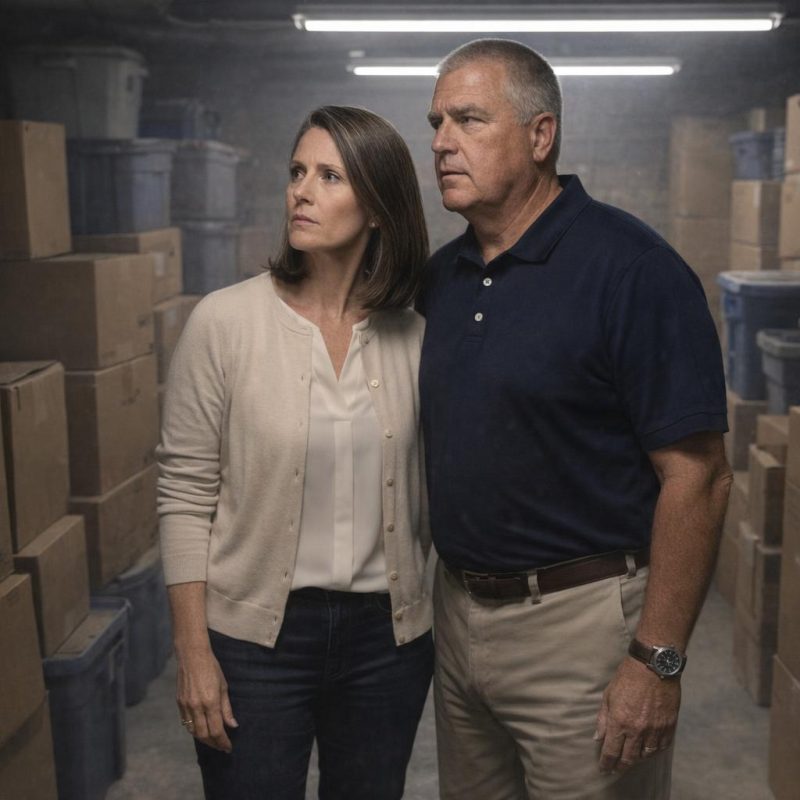 Image by RM AI
The Tuxedo Still Fits
About an hour in, I'm elbow-deep in a box of old linens when I spot it — a long black garment bag hanging behind a stack of boxes we'd pushed against the far wall. I know immediately what it is. I pull it out and hold it up and Mark turns around from where he's been sorting through a bin of old tools. 'Is that what I think it is?' he asks. I unzip it just enough to see the lapel of his wedding tuxedo, still perfectly black after all this time. 'Try it on,' I say. He gives me the look — the one that means he thinks I'm being ridiculous — but he's already reaching for the hanger. He shrugs the jacket on right there over his flannel shirt, and I'll be honest, it fits. Not perfectly, but close enough that we both start laughing. 'I cannot believe that,' he says, genuinely pleased with himself. I tell him he looks exactly like he did the day we got married, which is a small lie, but a kind one. He does a little turn, arms out, and I take a photo on my phone. He hangs the jacket back on the hanger, smoothing the lapels, and I zip the bag most of the way up before sliding it back behind the boxes. Then I notice the garment bag has slipped sideways, and I reach back to pull it fully free of the stack.
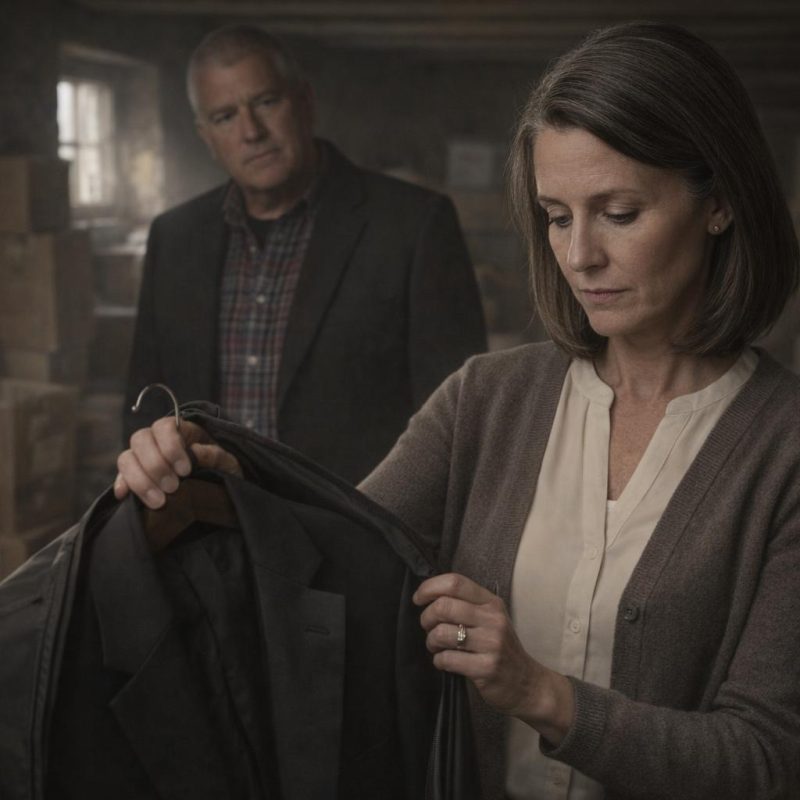 Image by RM AI
The Anonymous Gift Story
We take a break and sit on the bottom step together, sharing a bag of pretzels I'd brought down, and somehow we end up on the subject of our wedding day. It doesn't take long before Mark brings up the envelope. He always tells it the same way — with this particular smile, like he's still a little amazed by it even now. He says he found it tucked into the wedding gifts at the reception, no name on the outside, just a plain white envelope. Inside was a card and a cashier's check for twenty thousand dollars. The card said it was from a local philanthropist who wished to remain anonymous and wanted to help a young couple start their life. We were twenty-six years old and completely broke, and I remember standing in the hotel room that night just staring at the check like it might disappear. 'We called the bank first thing Monday morning,' Mark says, and I finish the sentence for him: 'To make sure it was real.' We've told this story at dinner parties, to our kids, to anyone who'd listen. It became one of those foundational stories — the kind a marriage collects over time. I lean my head against his shoulder and he puts his arm around me, and the story settles between us the way it always does, worn smooth from so many tellings, comfortable as something true.
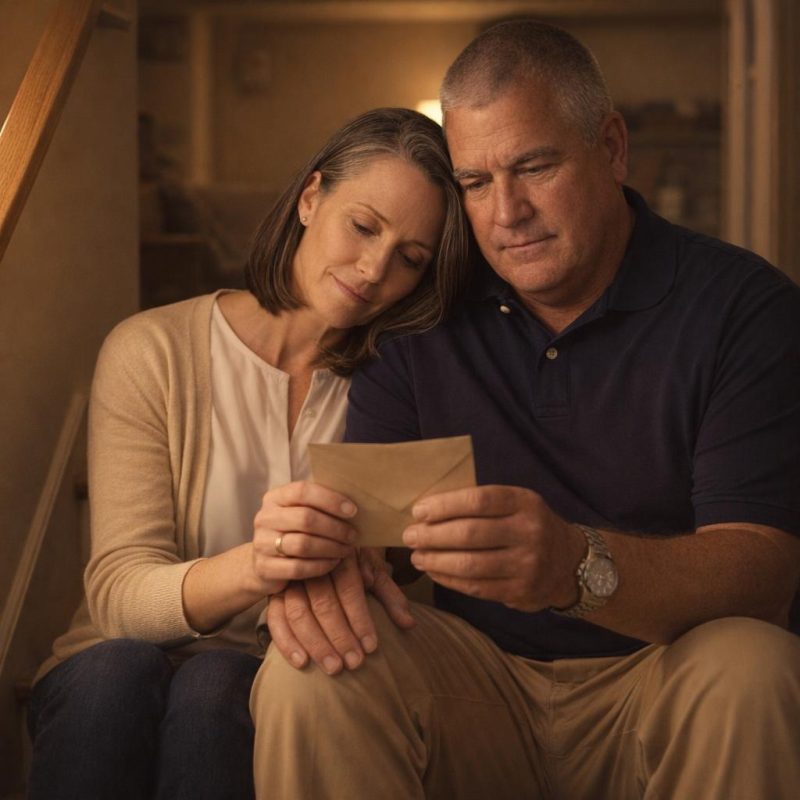 Image by RM AI
The Foundation We Built
I keep thinking about that money as we work through the afternoon. Twenty thousand dollars in 1994 was a different kind of money — it was the difference between renting indefinitely and actually buying something. We put it toward the down payment on our first house, a small colonial on Birchwood Drive with a leaky roof and a backyard big enough for a garden. Mark had just started at the firm and his salary was modest, and without that gift I honestly don't know how long it would have taken us to get there. The neighborhood mattered too — good schools, safe streets, the kind of place where you could put down roots. Our kids grew up in that house. Mark made partner six years later, and I've always thought the stability of having a real home underneath us gave him the footing to take risks at work that he might not have taken otherwise. Our friends were still renting well into their thirties, juggling deposits and landlords, and we were already building equity. I don't say any of this out loud, but I feel it moving through me as I tape up another box. Whoever that anonymous donor was, they changed the entire shape of our lives with one envelope. I've carried that gratitude for thirty years, quiet and steady, like a debt I could never repay to someone I never knew.
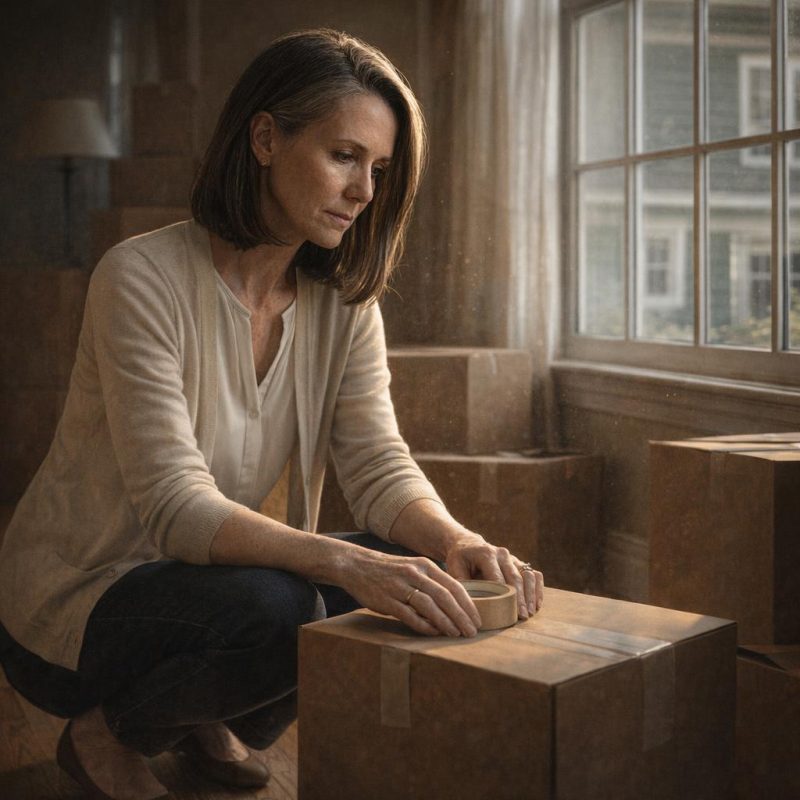 Image by RM AI
Alone with the Memories
By early afternoon my back is starting to protest and Mark announces he's going upstairs to make lunch. 'Turkey or ham?' he asks from the bottom of the stairs. I tell him turkey, and he heads up, and the basement goes quiet except for the hum of the old dehumidifier in the corner. I keep working. There's something I actually like about sorting through things alone — no negotiating over what to keep, no one watching me get sentimental over a birthday card from 1998. I work through two more boxes, setting aside a stack of the kids' old school photos that I want to frame properly someday. Then I decide I should deal with the tuxedo before I forget — find a proper garment bag or at least make sure it's stored somewhere it won't get crushed. I pull the box in front of it out of the way and crouch down to get a better look at how it's hanging. The bag has shifted and the bottom is bunched up against the wall. I straighten it out, check the zipper, and decide I want to look at the lining before I put it away for another thirty years. I reach for the garment bag, pulling it fully toward me into the light.
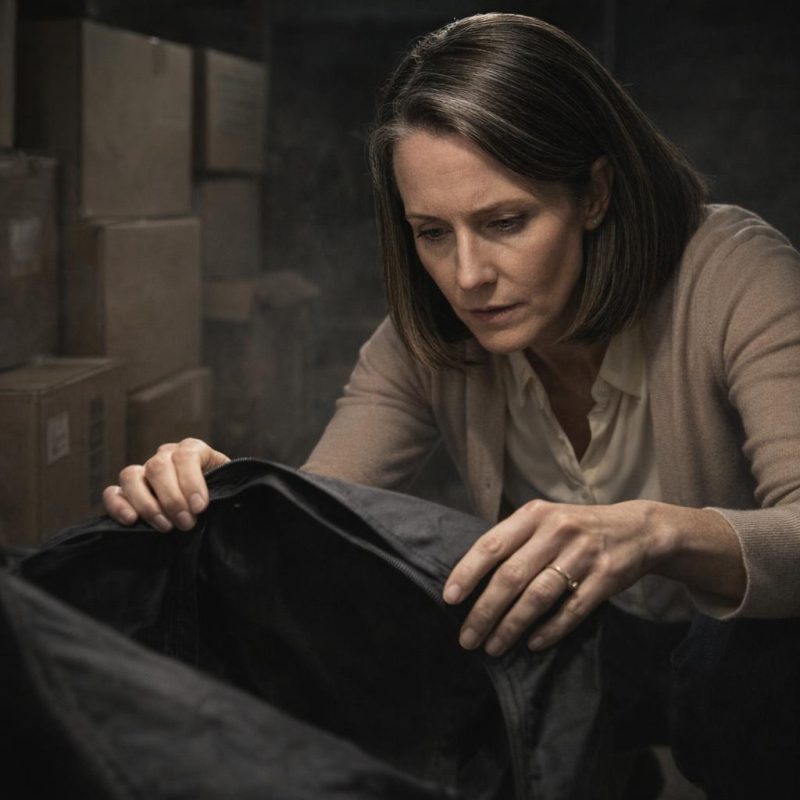 Image by RM AI
The Envelope in the Lining
I unzip the bag all the way down and lay the jacket out across a clear patch of floor. It really is in remarkable shape for something that's been in a basement for three decades. I check the outer pockets first — empty, which makes sense, Mark had already gone through them upstairs. Then I turn the jacket over to look at the lining, thinking I should check for any moth damage before I store it properly. The silk lining is ivory, or it was once — now it's gone the color of old paper. Near the bottom left seam, there's a small tear, maybe two inches long, the kind that happens when fabric gets brittle with age. I run my finger along it, and something shifts inside. I stop. I press the fabric gently and feel something flat and stiff beneath it — not the lining itself, something tucked behind it. I work my fingers carefully into the tear, trying not to make it worse, and feel the edge of paper. I pull slowly, easing it out through the gap in the seam. It's an envelope — old, the edges gone yellow, the paper slightly waxy the way old stationery gets. It's sealed. My name isn't on it. Nothing is written on the outside at all. I sit back on my heels and turn it over in my hands, and there, tucked into the torn lining of the jacket, is a sealed envelope I have never seen before.
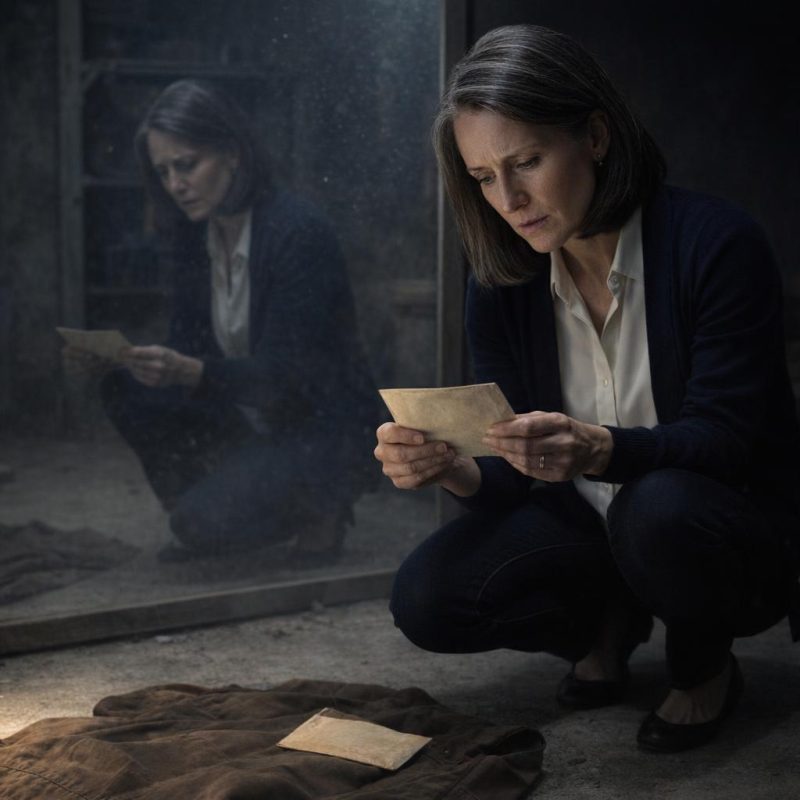 Image by RM AI
Elena's Card
I sit with it in my hands for a moment, just looking at it. The flap is sealed but the glue has gone brittle with age, and when I press the edge it gives without much resistance. Inside is a single card — cream-colored, small, the kind you'd find in a stationery set. The handwriting is careful and even, the letters slightly formal, like someone who learned penmanship from a teacher who cared about it. I read it once quickly, then again more slowly. It says: *Thank you for keeping your promise. I know this wasn't easy for either of us, but knowing the child is safe and provided for means everything. I hope you can find some peace in that.* I read it a third time. The child. I turn the phrase over in my mind, trying to find a way to fit it into something I already know. A child. Mark's promise. I think about our kids — but they weren't born yet when this tuxedo was last worn. I think about cousins, about family situations I might have half-heard about over the years. Nothing clicks. The card is short, maybe four lines total, and the tone is — I don't know how to describe it. Careful. Like someone choosing every word. I turn it over, looking for a date, a return address, anything. At the very bottom of the card, written in that same deliberate script, is a single name.
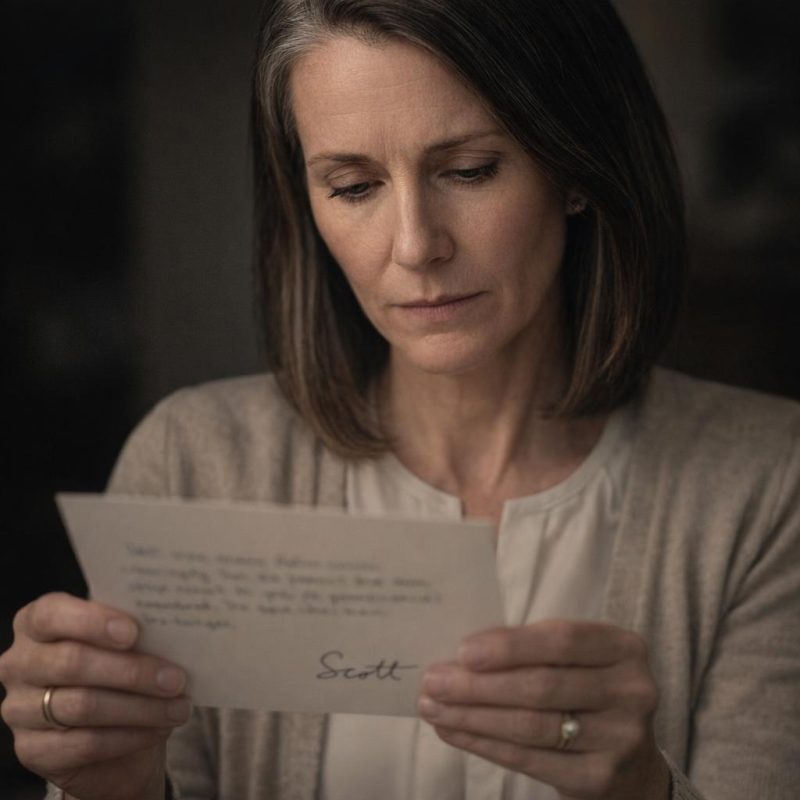 Image by RM AI
Searching for Elena
Elena. I say it out loud in the empty basement, just to hear it. It doesn't land anywhere. I sit down on an old folding chair we'd pulled out earlier and hold the card in both hands, going through names the way you do when you're trying to remember where you left your keys. Mark's side of the family first — his mother's friends, his cousins, the women from his office back in the nineties. Nothing. My side — college friends, neighbors from Birchwood Drive, women from the book club I joined the year we moved in. Still nothing. I try to think about our wedding guest list, which I haven't thought about in years. We had maybe a hundred and twenty people. I can picture most of the tables if I try hard enough. I don't land on a single Elena. I tell myself there's an obvious explanation I'm just not seeing yet. Maybe she was someone's plus-one. Maybe she was a colleague of Mark's I never met. The phrase *the child* keeps surfacing, and I keep setting it aside, because taken out of context a phrase like that could mean almost anything. I fold the card carefully and slide it back into the envelope. I turn the envelope over once more, looking at the blank front, and the name Elena sits in my memory with no face attached to it, no story, no place to belong.
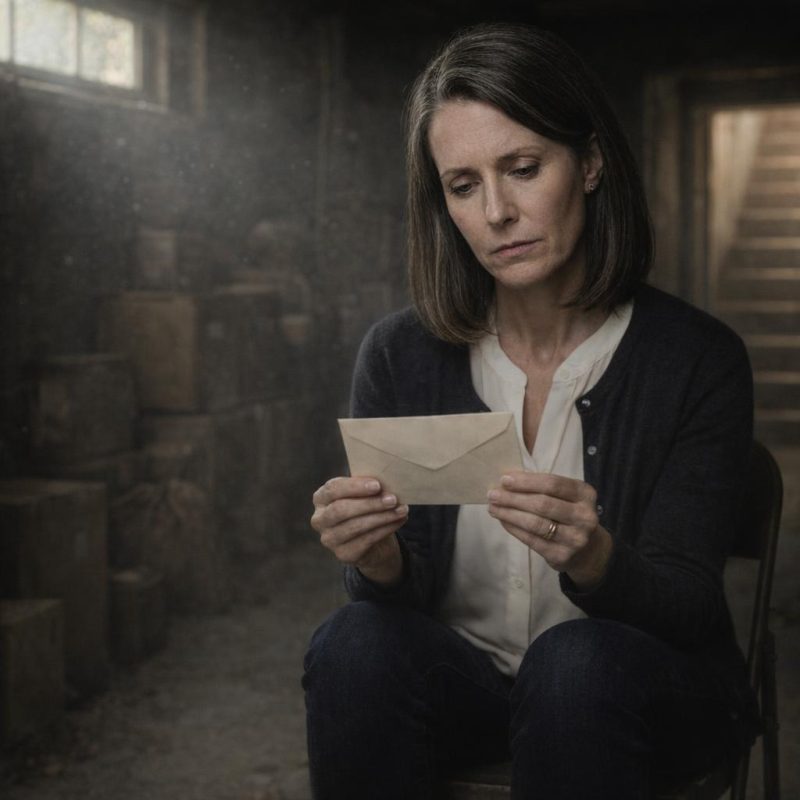 Image by RM AI
The Guest List
I go back downstairs and find the box labeled 'Wedding Memories' near the far wall, half-buried under a bag of old curtains. I pull it out and set it on the workbench, and there's something almost ceremonial about lifting the lid — like I'm opening something that was meant to stay closed. The guest list is right near the top, still in its plastic sleeve, the paper barely yellowed. We'd been so organized back then. I remember being proud of that. I run my finger down every column, every table assignment, every name. There are a hundred and twenty-two names on this list. I read each one twice. No Elena. I check the gift log next — the little notebook my mother helped me keep, with every present and every sender recorded in her careful handwriting. I go through it line by line. Still no Elena. I even flip to the back pages where we'd written down cards that came without gifts, just in case. Nothing. I set both documents on the workbench side by side and stand there looking at them. A plus-one would still have been listed. A colleague sending a gift would have signed a name. The absence of her sat there on the page, quiet and complete.
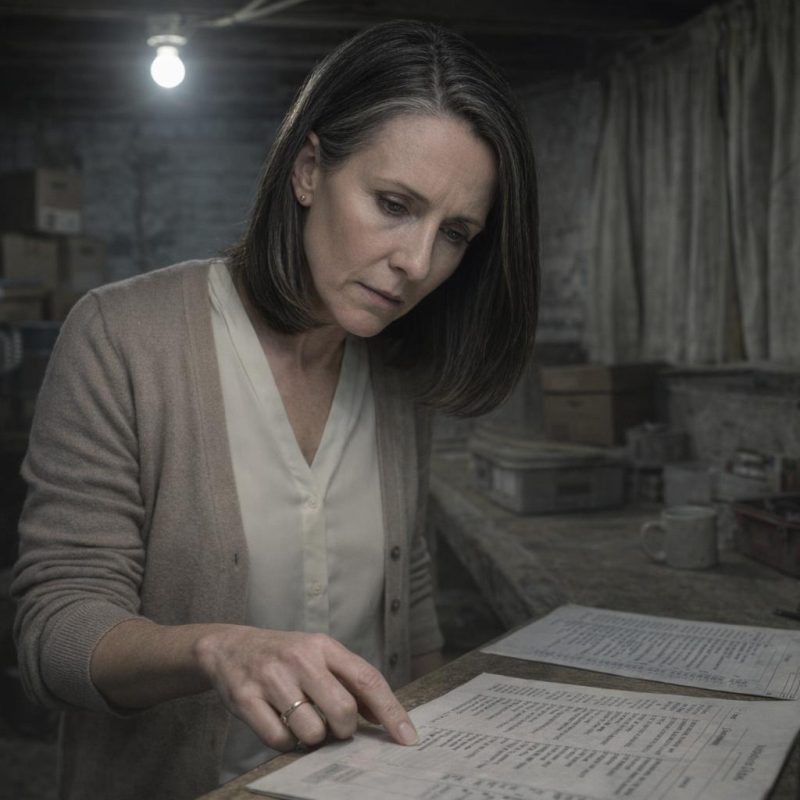 Image by RM AI
Asking Mark
Mark is in the kitchen making sandwiches when I come upstairs, and the ordinary domesticity of it — the bread out, the mustard open, the radio on low — makes the question feel almost absurd before I even ask it. I lean against the counter and keep my voice easy. I tell him I was going through some old things downstairs and a name came up, and I ask if he remembers anyone named Elena from around the time of our wedding. He doesn't answer right away. The knife stops moving. It's only a second, maybe two, but I notice it the way you notice a skipped beat in a song you've heard a thousand times. Then he asks why I'm asking. I say it's nothing, just a name I came across, probably someone's plus-one I never met. He sets the knife down and says he doesn't think so, doesn't remember anyone by that name. He picks the knife back up and finishes spreading the mustard, and the radio fills the space between us. I take my sandwich and say thanks and we talk about whether it might rain this weekend. But I keep thinking about those two seconds. The way the knife had gone still. The silence before the answer settled over me long after the conversation had moved on.
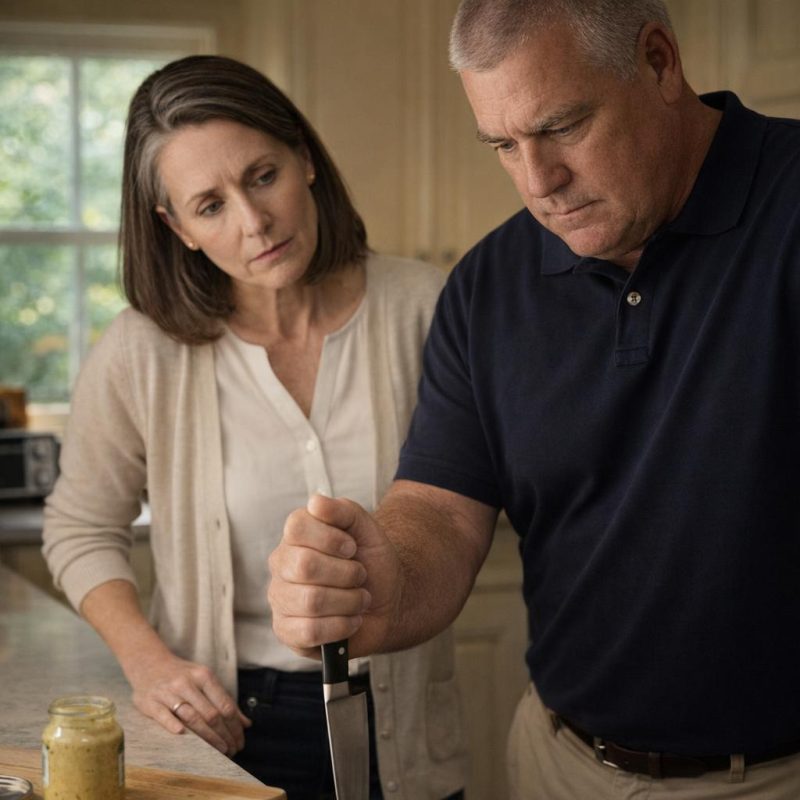 Image by RM AI
The Deflection
Before I even finish my sandwich, Mark is already suggesting we call it a day on the basement. He says we've done enough, that the rest can wait until next weekend, and he's smiling when he says it — that easy, unhurried smile he has. He asks if I want to watch something, says there's a documentary he's been meaning to catch up on. I say sure. He's more talkative than usual as we move into the living room, filling the air with small observations — something he heard on the radio, a neighbor's new car, whether we should repaint the back fence before the anniversary party. I listen and I respond and I laugh in the right places. But I'm watching him the way you watch a room after you think you heard something — not alarmed, just paying attention. What stays with me is what he doesn't do. He never circles back to ask what old thing I was going through. He never asks what made me think of the name. He just moves us forward, smoothly, into the next part of the evening. The documentary starts and the room fills with someone else's story, and I sit beside my spouse of thirty years and feel the particular quiet of a question that hasn't been answered.
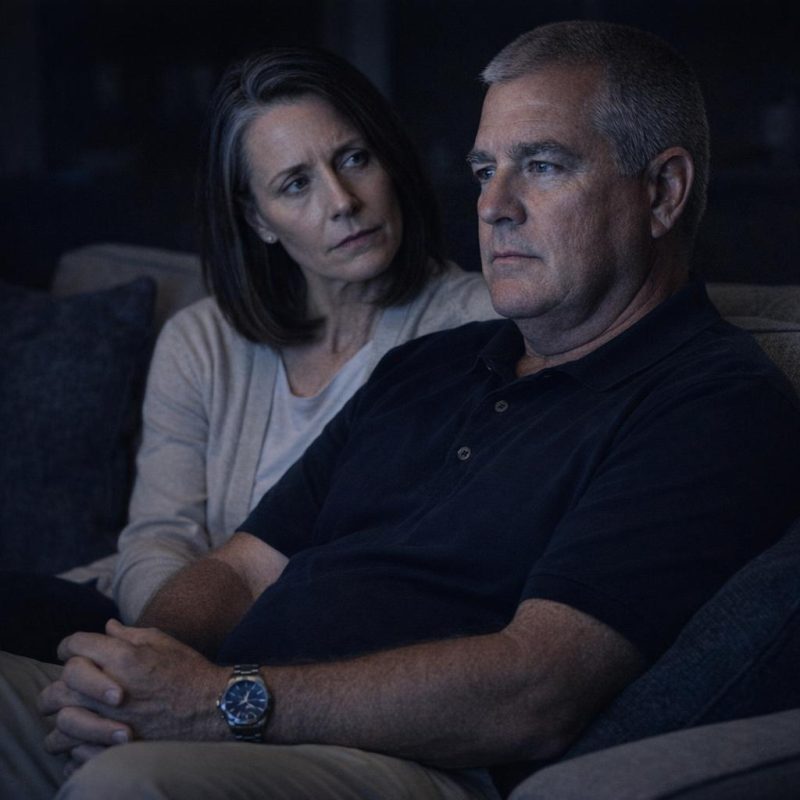 Image by RM AI
Calling Rachel
I wait until Mark is deep into the second episode, his feet up, his eyes fixed on the screen. Then I take my phone to the bedroom and close the door behind me. I sit on the edge of the bed and pull up Rachel's number and just look at it for a moment. I'm not even sure what I'm going to say. I press call anyway. She picks up on the second ring, the way she always does, and I ask if she has time to meet for coffee in the morning. There's a small pause and she asks if everything is okay. I tell her I'm fine, that I just need to show her something, that it's easier in person. She doesn't push, which is one of the things I love most about her. I hang up and sit in the quiet of the bedroom, the television murmuring through the wall, and something in my chest loosens just slightly — the particular relief of knowing that in the morning, I won't be carrying this alone. A moment later my phone buzzes with a text: our usual café, ten o'clock, she'll be there.
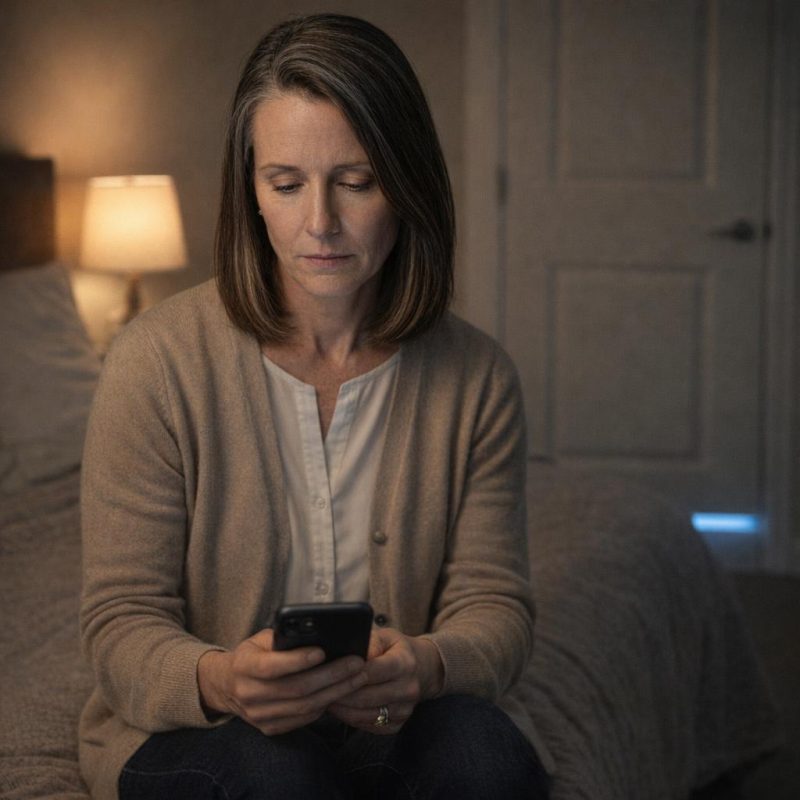 Image by RM AI
The Café Confession
Rachel is already at the corner table when I arrive, two coffees waiting, her coat still on like she got there fast. I sit down and don't say anything for a moment. I just take the envelope out of my bag and slide it across the table. She looks at me once before she picks it up. She reads slowly — I can tell because her eyes don't move the way they do when she's skimming. She reads the whole thing, then goes back and reads the part about the child again. I watch her hands. She sets the card flat on the table and asks where I found it. I tell her about the tuxedo, the lining, the way it was tucked in like it had been put there on purpose. She asks if I've talked to Mark. I tell her about the kitchen, the knife going still, the two-second pause before he said he didn't remember anyone by that name. Rachel picks up the card one more time and reads it without speaking. Outside, someone walks past the window with a dog on a leash, and the café hums around us, and my best friend sits across from me holding a thirty-year-old secret that isn't hers, and the silence that followed felt like the first honest thing all week.
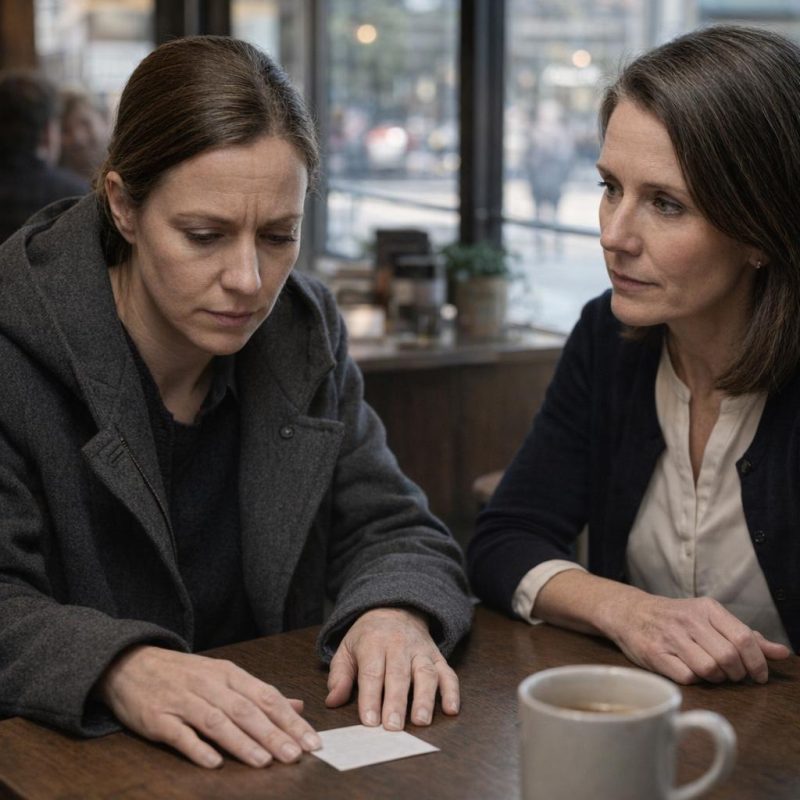 Image by RM AI
The Obvious Possibility
Rachel sets the card down carefully, like it's something that might break. She asks me what I think it means. I tell her I don't know, that I've been turning it over for two days and I keep landing in the same place — nowhere. She wraps both hands around her coffee cup and looks at me in that steady way she has, the way that means she's about to say something I might not want to hear. She says the phrase about the child, combined with keeping a promise, sounds like it could be about financial support. She says it gently, but she says it. She asks if it's possible Mark was involved with someone before the wedding. My chest tightens the way it does when you step off a curb you didn't see. I tell her Mark wouldn't do that. She nods, but she points out that the card was inside the lining of a tuxedo, not sitting in a box by accident. She says hidden is different from forgotten. I don't have an answer for that. I look down at the card on the table between us and I think about the knife going still in the kitchen, and the name with no face, and the guest list with no Elena on it. The possibility I'd been holding at arm's length had a shape now, and a word, and it sat between us on the table like something neither of us wanted to pick up.
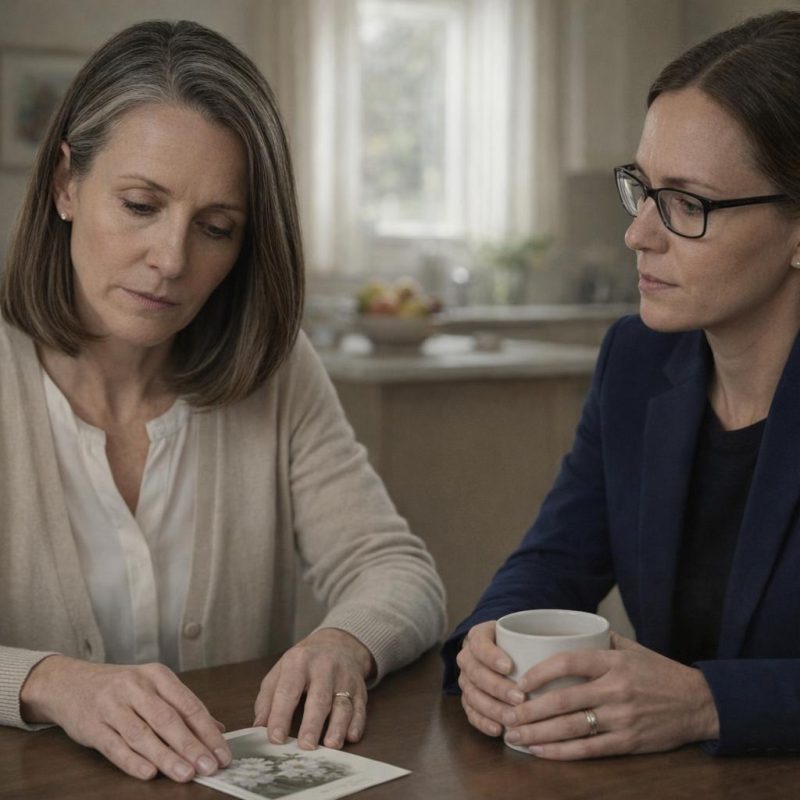 Image by RM AI
The Photo Search
I tell Mark that evening that I want to put together a photo display for the anniversary party — something chronological, a kind of visual timeline of thirty years. He thinks it's a great idea. He actually seems pleased, and he helps me carry the boxes out from the closet shelf without being asked. We spread everything across the dining room table and he pours us both a glass of wine and we start sorting. I'm looking for something specific, though I couldn't have named it exactly — a face I don't recognize, a woman standing too close, something that doesn't fit. I go through every photo from the year before our wedding with the kind of attention I usually save for proofreading. Every face is someone I know. His college friends, his work colleagues, the guys from his softball league. I recognize all of them. Mark is laughing beside me, holding up an old photo of us at someone's backyard barbecue, saying he can't believe he ever wore that shirt. I laugh too. I keep sorting. By the time we call it a night, I've been through four boxes and found nothing that raises a question. I tell him it's a good start and I'll keep going tomorrow. After he goes upstairs, I reach for the fifth box — the one labeled in my own handwriting: *Pre-Wedding, 1993–1994*.
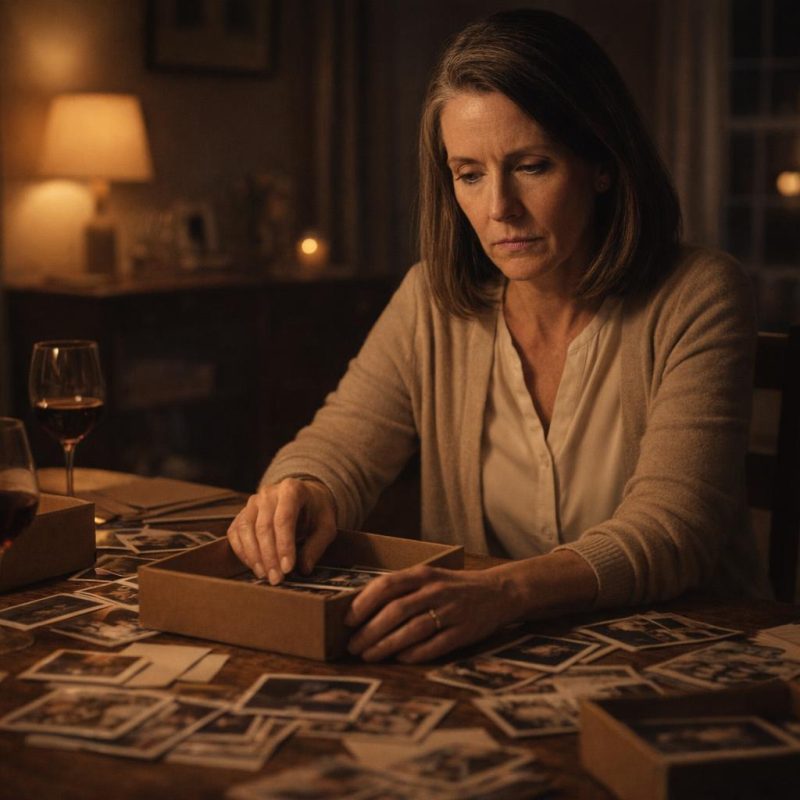 Image by RM AI
The Timeline
After Mark goes to bed I sit at the kitchen table with a notebook and write out everything I can remember about our relationship from the beginning. I start with when we met — a work conference, late October, twenty-two years old and standing next to the coffee station. I write down every milestone I can place: first date, the trip to the coast, the night he proposed in the parking lot of that Italian restaurant because he couldn't wait until dessert. I mark our engagement, the months leading up to the wedding, the wedding itself. Then I go back and look for gaps. Periods when we weren't together, when he traveled without me, when there were stretches of time I couldn't account for. I can't find any. We were together constantly during our engagement — dinners, weekends, meeting each other's families. I remember his schedule better than my own from that year because I was so wrapped up in planning around it. There were no mysterious trips. No weeks where he went quiet. No explanations that hadn't made sense at the time. I sit back and look at what I've written. The timeline is clean. No gaps, no unexplained absences — just thirty years of a life I thought I knew completely, and a card that shouldn't exist sitting in my bag ten feet away.
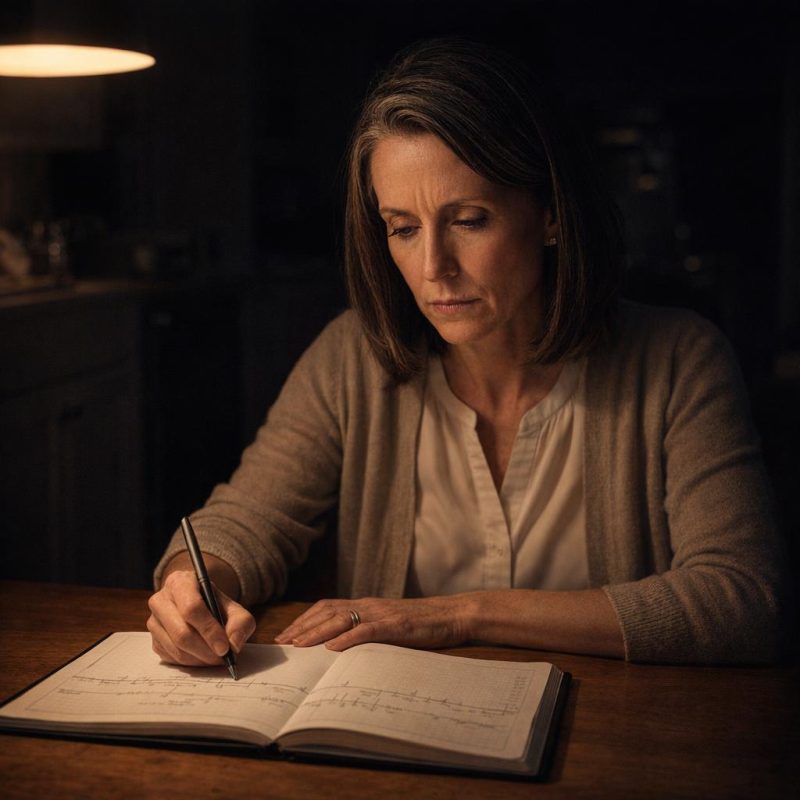 Image by RM AI
Online Search
I open my laptop at the kitchen table, the house quiet around me, and I type Elena's name into the search bar along with our city. Dozens of results come back — social media profiles, business listings, obituaries, old forum posts. I add a rough age range, narrowing it to women who would have been adults in 1994. The results thin out but don't disappear. I scroll through them slowly, writing down anything that looks relevant in the notebook I've been keeping since this started. Most of the Elenas I find are too young, or clearly not local, or their timelines don't line up. I cross them off one by one. Then I start noticing one name appearing more than once across different kinds of records — a business listing, a voter registration entry, a mention in a neighborhood newsletter from years back. I write it down at the top of a fresh page and circle it. There are three women named Elena Vasquez in the search results.
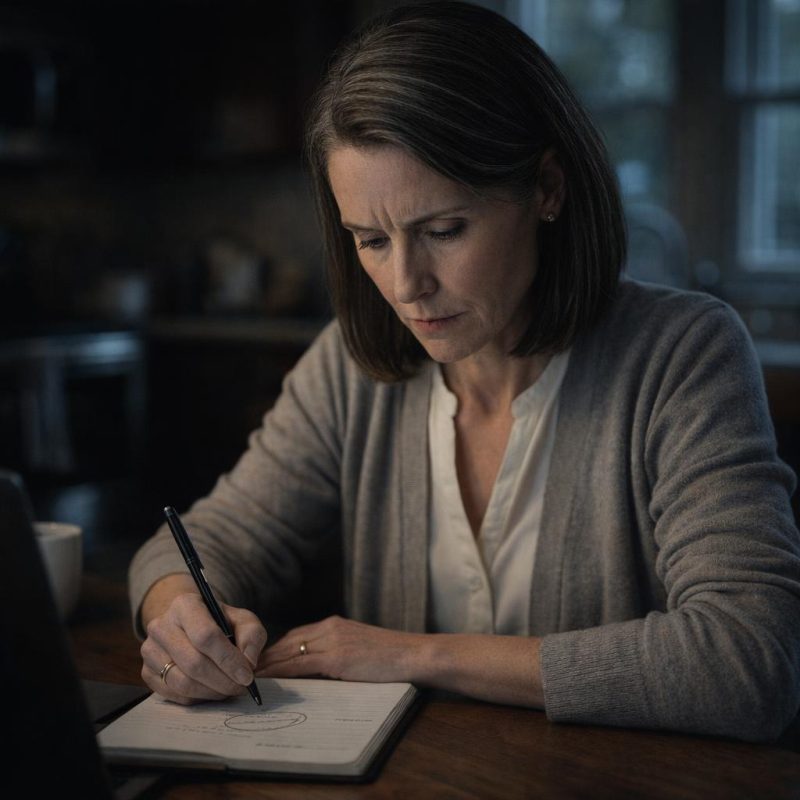 Image by RM AI
Finding Elena
The dry cleaning shop is on a side street I've driven past a hundred times without ever stopping. I park across the street and sit in the car for a few minutes, telling myself I can still turn around. I don't turn around. Inside, the air smells like chemical solvent and warm fabric. A woman in her late fifties is working behind the counter, dark hair pulled back, moving with the efficiency of someone who's done this job for years. I ask if she's Elena. She looks up and says yes, and I introduce myself — just my first name, nothing else. Then I tell her I found a card she wrote, a long time ago, and that it was addressed to my husband. I say Mark's name. The change in her face is immediate. Her hands, which had been smoothing a plastic-wrapped garment, go still. Her eyes find mine and hold them, and whatever composure she'd had a moment before shifts into something I can only describe as recognition laced with alarm. That look — the way it settled into her features and stayed there — didn't leave me for the rest of the day.
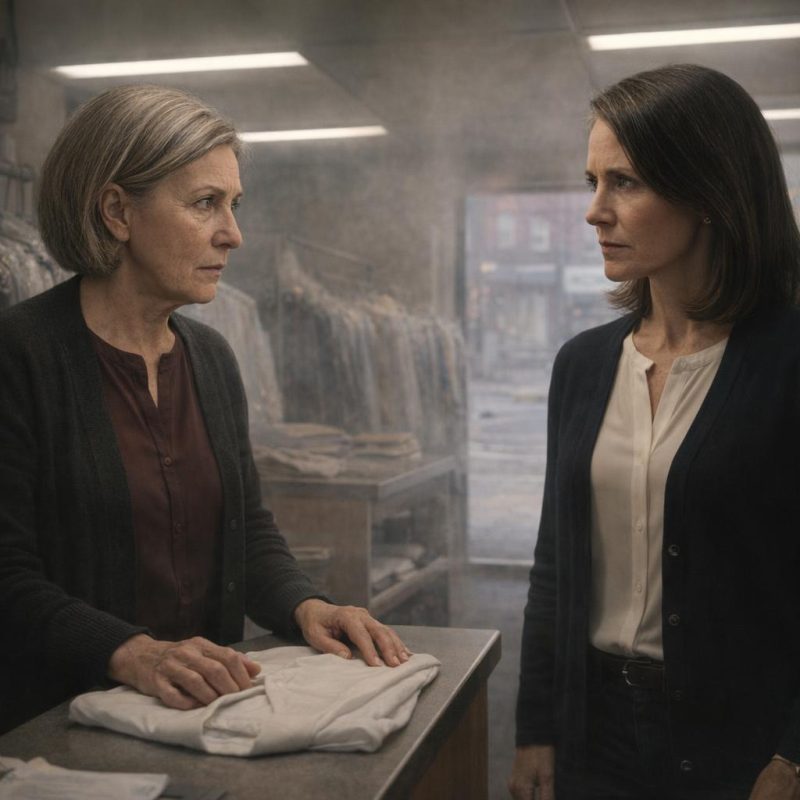 Image by RM AI
The Refusal
I ask her what the card meant. She shakes her head before I even finish the sentence. She says she can't talk about this, her voice low, her eyes cutting toward the back of the shop like she's checking whether anyone can hear us. I tell her I'm not trying to cause trouble — I just need to understand. She shakes her head again. She says it was a long time ago and that some things are better left where they are. I ask about the line in the card, the part about the child, and something shifts in her face — not anger, something closer to grief. Her eyes go wet for just a second before she blinks it away. She grips the edge of the counter and tells me, quietly but without any give in it, that I need to leave and not come back. I stand there for a moment longer, looking at her hands white-knuckled on the counter, at the careful blankness she's pulled back over her expression. She isn't angry. She's afraid. And the firmness in her voice when she said she had nothing to say felt less like a door closing and more like a wall that had been there a very long time.
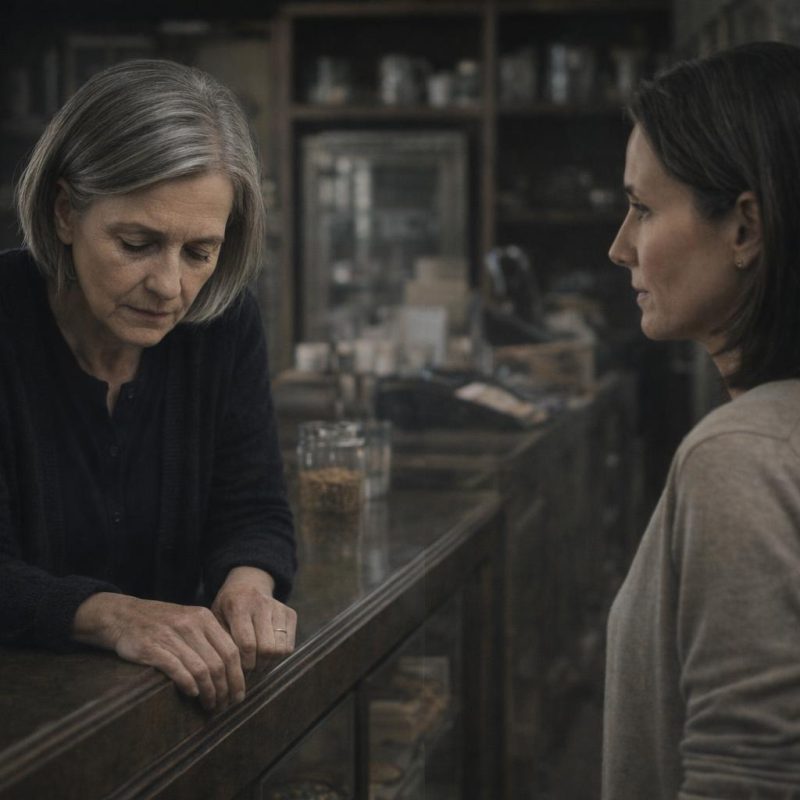 Image by RM AI
The Address
I sit in my car in the parking lot across from the dry cleaning shop for almost two hours. I tell myself twice that I should go home. I don't go home. At ten past six, Elena comes out through the front door in a different jacket, keys in hand. She locks up without looking around, walks to an older sedan at the far end of the lot, and pulls out onto the main road. I follow her, staying two or three cars back, feeling like a stranger in my own life. She doesn't seem to notice me. She drives for about fifteen minutes, no highway, just surface streets through a neighborhood I don't know well — modest houses, mature trees, chain-link fences. She turns onto a quiet street and parks in front of a small house with a low fence and a porch light already on. I pull over half a block back and write down the address in my notebook. I watch her walk up the front path, take out her keys again, and step inside. The door closes behind her, and the porch light stays on, and I sit there in the dark for a long moment before I finally put the car in drive.
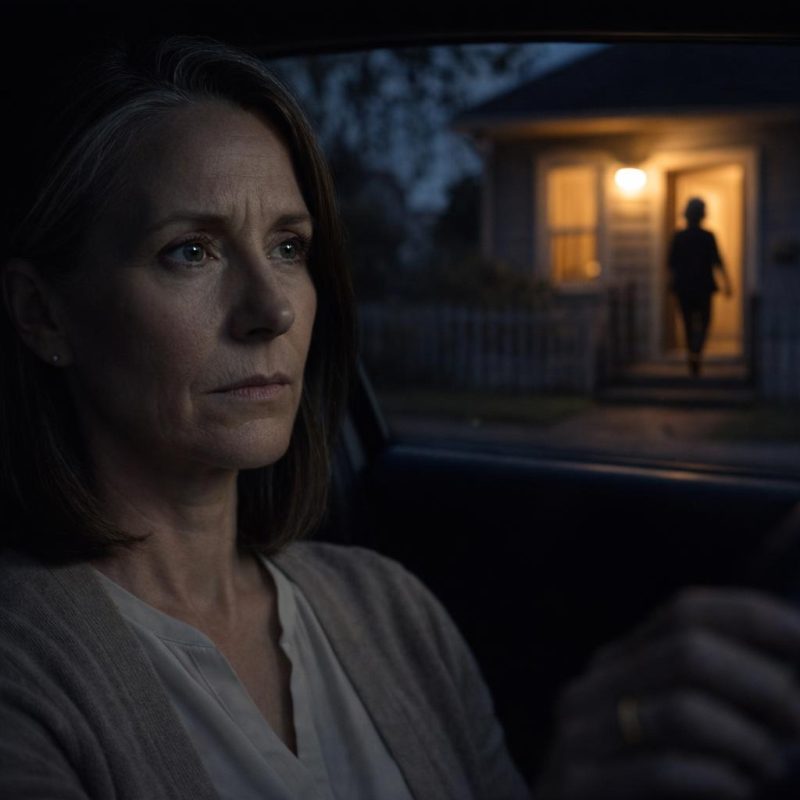 Image by RM AI
Public Records
Mark is asleep by ten. I wait until I can hear his breathing settle through the bedroom door, then I carry my laptop to the kitchen table and open it. I search the property records for the address I wrote down. The house on that street has been owned by Elena Vasquez since 1995 — purchased outright, no co-owner listed. I search voter registration next. Her name comes up alone, same address, registered for decades. I look for any other names associated with the property — a spouse, a partner, a family member sharing the address. Nothing comes back. I write down everything I find, keeping my notes in the same notebook I've been filling since the night I found the card. I know I'm crossing a line, searching through someone's records like this, and I feel it — a low-level discomfort that doesn't stop me but doesn't go away either. I keep going anyway, page after page of public information that tells me very little and somehow makes me want to know more. By the time I close the laptop, the clock on the microwave reads past midnight, and the house had settled into the kind of quiet that makes every small sound feel deliberate.
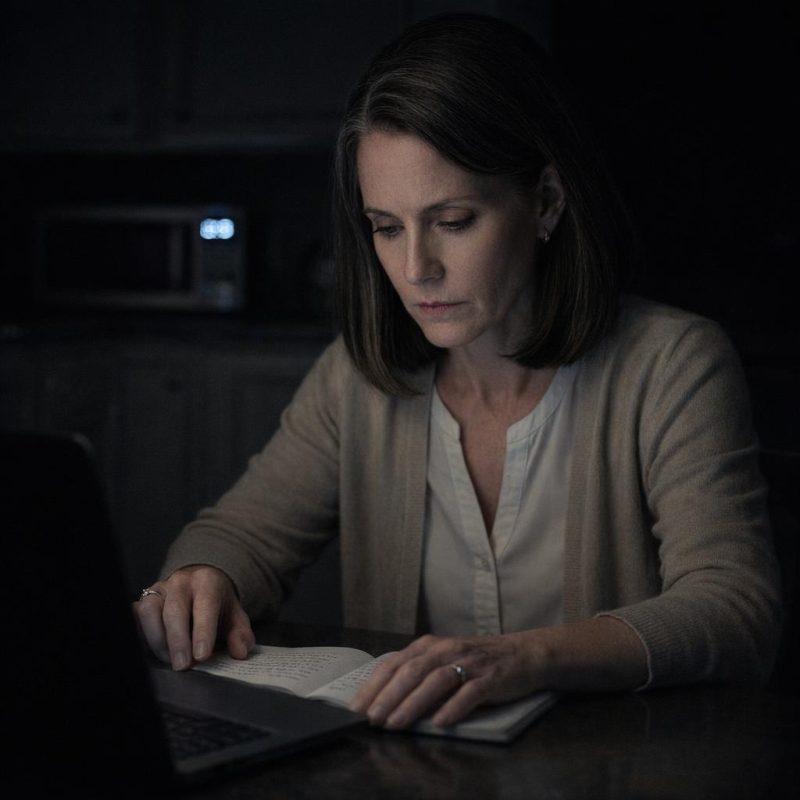 Image by RM AI
The Son
I find her on a community page — a comment she left on a local business post, her full name attached. From there I find a sparse personal profile, mostly inactive, a few years of sporadic posts. In one of them, from several years back, she's tagged in a photo with a caption that mentions her son. I follow the tag to his profile. It's sparse too — a handful of photos, a city listed in another state, not much else. I study his face in the profile picture for longer than I should, looking for something I can't quite name. I can't tell anything definitive. His profile lists no father. Her profile shows no husband, no partner, no mention of anyone she shares her life with. Every photo of Elena I can find, she's alone or with women her own age. I sit back and look at what I've pieced together — a woman who bought a house by herself the year after my wedding, who raised a son whose profile lists no father, who went pale at the sound of my husband's name. I don't know what the card's promise meant, or what it cost her to carry whatever she'd been carrying. But the weight of what it might mean to raise a child entirely alone settled over me and didn't lift.
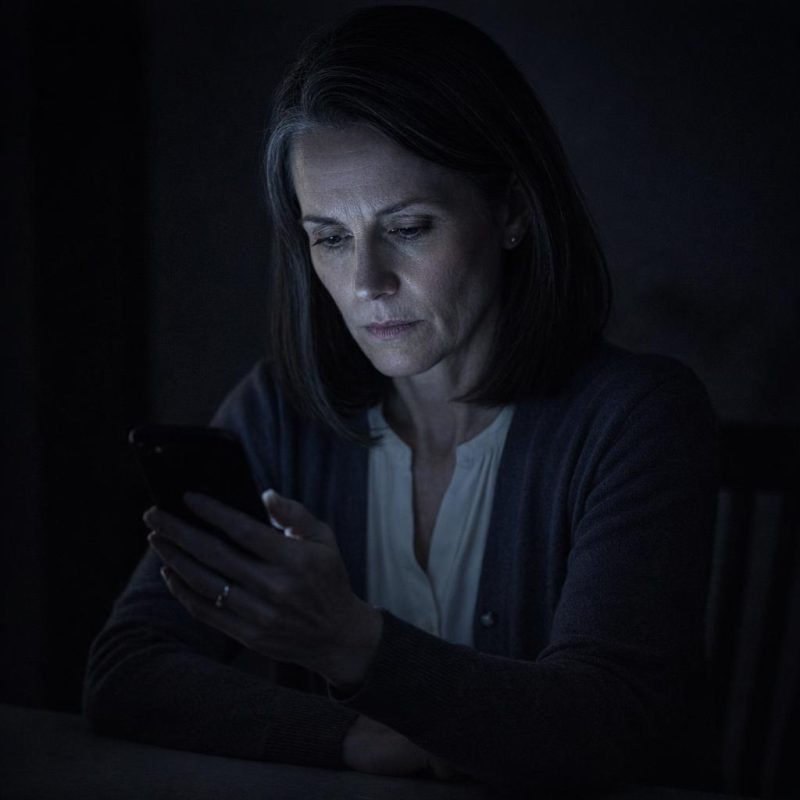 Image by RM AI
The Timeline Calculation
I go back to his profile and search his name alongside the city listed on his page. I find an archived local newspaper page — a high school graduation announcement, the kind small papers used to run with a photo and a few lines. His name, his school, his plans for college. And his age at graduation: eighteen. I sit very still and do the arithmetic. Eighteen at graduation, which would have been the spring of his senior year. I count back. If he graduated at eighteen, he was born in 1994. I write the number down in my notebook even though I don't need to — it's already sitting in my chest like something heavy. Nineteen ninety-four. The year Mark and I got married. The year I wore the dress that's been hanging in the back of our closet for thirty years, the same closet where I found the tuxedo, the same tuxedo where I found the card. I stare at the screen for a long time. I'm not drawing conclusions — I don't have enough for that, and I know it. But the graduation announcement sat open on my screen, his birth year printed plainly in the text, and I couldn't look away from it.
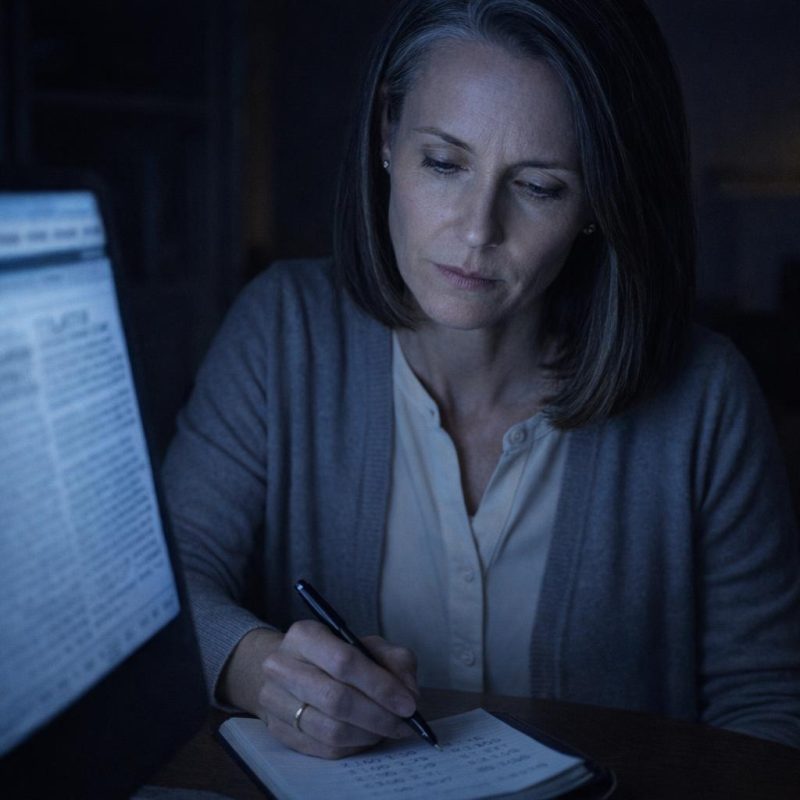 Image by RM AI
Testing Mark
Over breakfast I bring up our anniversary party, the planning we've been half-doing for months. I say something about how strange it is, looking back — how different people's paths could have gone so many different ways. I ask Mark, keeping my voice easy, whether he ever thinks about the people he dated before we met. He looks up from his coffee and smiles. He says he dated a few people, nothing serious, nobody who mattered the way I did. He says meeting me changed everything. I ask, still casual, still looking at my toast, whether he has any regrets about how things ended with anyone from back then. He doesn't pause. He doesn't shift in his chair or look away or do any of the things I half-expected. He just says no — that everything worked out exactly the way it was supposed to. His voice was level and unhurried, and his face held nothing but calm certainty.
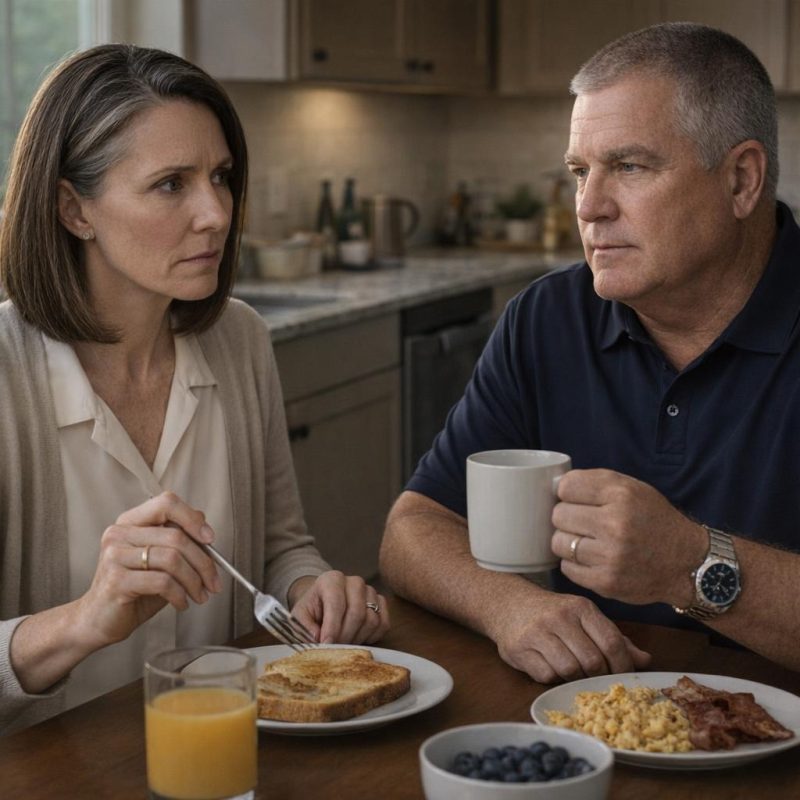 Image by RM AI
The Defensive Shift
I push a little further after breakfast, keeping my voice light. I ask if he ever kept in touch with anyone from before we met — old friends, people from that time in his life. Mark sets his coffee mug down with a small, deliberate click. He says no, not really, that he wasn't much for keeping up with people from back then. I say that's interesting, because most people have at least one or two connections that stick. He looks at me then — really looks at me — and something shifts behind his eyes. He says there's nothing interesting to tell, that it was a long time ago and none of it matters now. His voice has an edge I haven't heard before, something clipped and careful underneath the casual delivery. He asks if something is bothering me. I say no, I'm just thinking about our history, about the speech I want to give at the party. He tells me we should focus on the present instead of digging up the past. Then he pushes back from the table and, before he walks out of the room, turns to look at me one last time — "Why are you so suddenly interested in ancient history?"
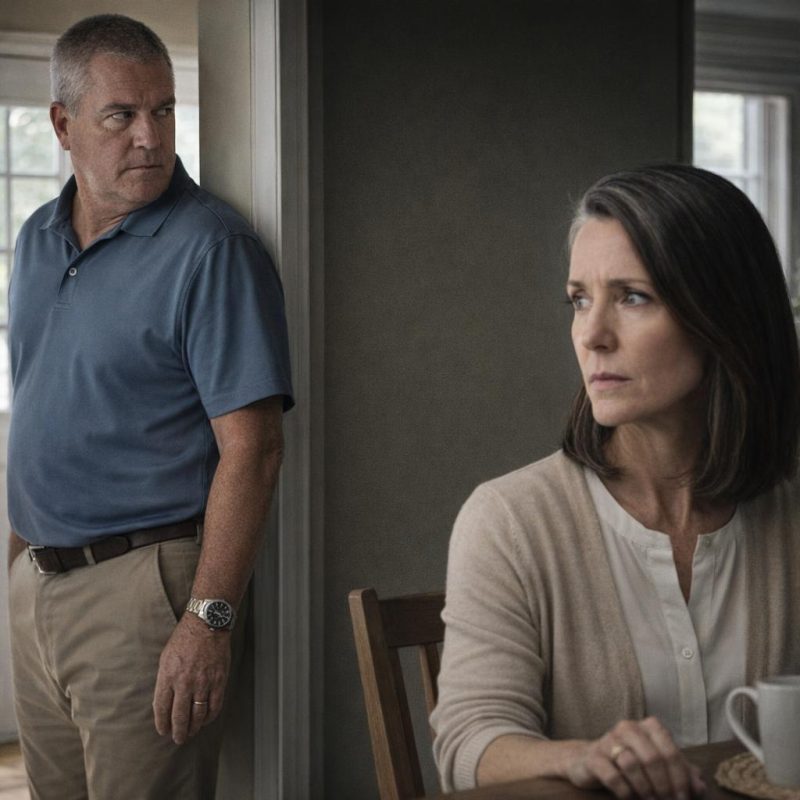 Image by RM AI
The Gift Story Retold
Later that afternoon I bring up the anniversary party again, telling Mark I want to include the story of the anonymous gift in my speech — that it's always been one of my favorite parts of how we started. I ask him to remind me of exactly how it happened, the details, so I get it right. He leans back and tells it the way he always does. The envelope appeared at the reception, tucked among the other cards, no name on the outside. The card inside said it was from a local philanthropist who wanted to remain anonymous, who believed in young couples starting out right. Twenty thousand dollars. We used it for the down payment on the house. He smiles at the end of it, the same warm, practiced smile. I listen for anything different — a shifted detail, a hesitation, a word out of place. There's nothing. It's the same story, the same phrasing, almost the same cadence as every other time he's told it over thirty years. I nod and write a few notes on my pad like I'm planning the speech. But what stays with me isn't relief. It's the way the story fits together too perfectly, every seam smooth, every word landing in exactly the same place it always has.
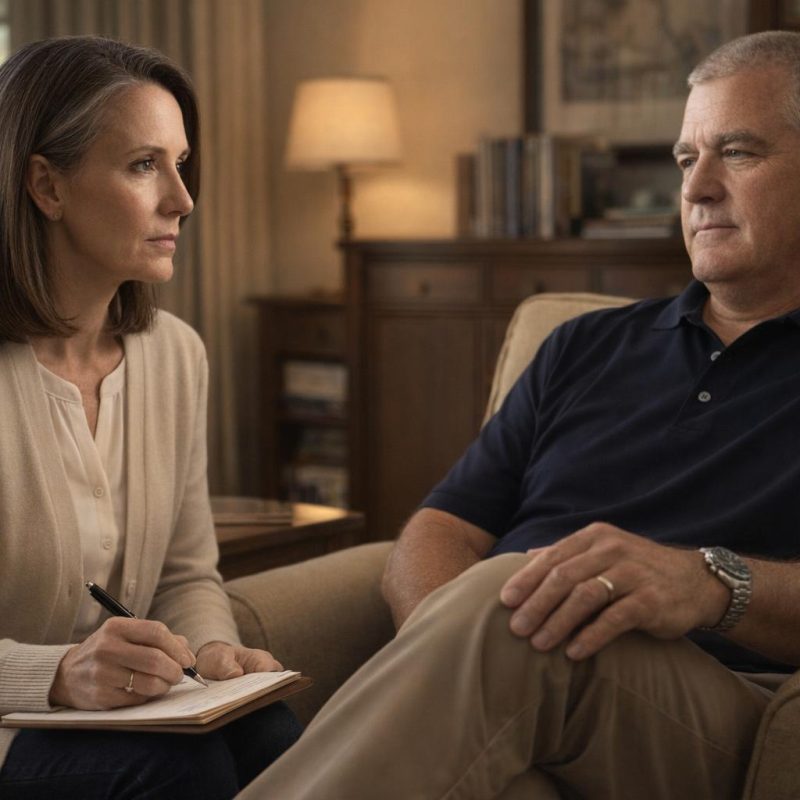 Image by RM AI
Sleepless
I lie awake long after Mark falls asleep, staring at the ceiling while his breathing settles into its slow, even rhythm beside me. The room is dark and quiet and completely ordinary, and I can't stop my mind from circling back to Elena's son — born June 1994, a year after our wedding. I keep doing the math I've already done a dozen times. I think about the card, about the phrase keeping his promise, about twenty thousand dollars moving from our wedding envelope into someone's life. I wonder what a promise like that would cost. I wonder what it would mean to carry something like that for thirty years and never say a word. I get up carefully, trying not to wake Mark, and go to the bathroom. I run cold water over my wrists and look up at the mirror. The face looking back at me seems older than it did a week ago, or maybe I'm just seeing it differently now. I think about all the mornings I've stood in this bathroom, in this house we bought with that money, and never once questioned the story behind it. I go back to bed and lie down beside my sleeping husband, and the weight of thirty years of not knowing presses down on me like something I can't name.
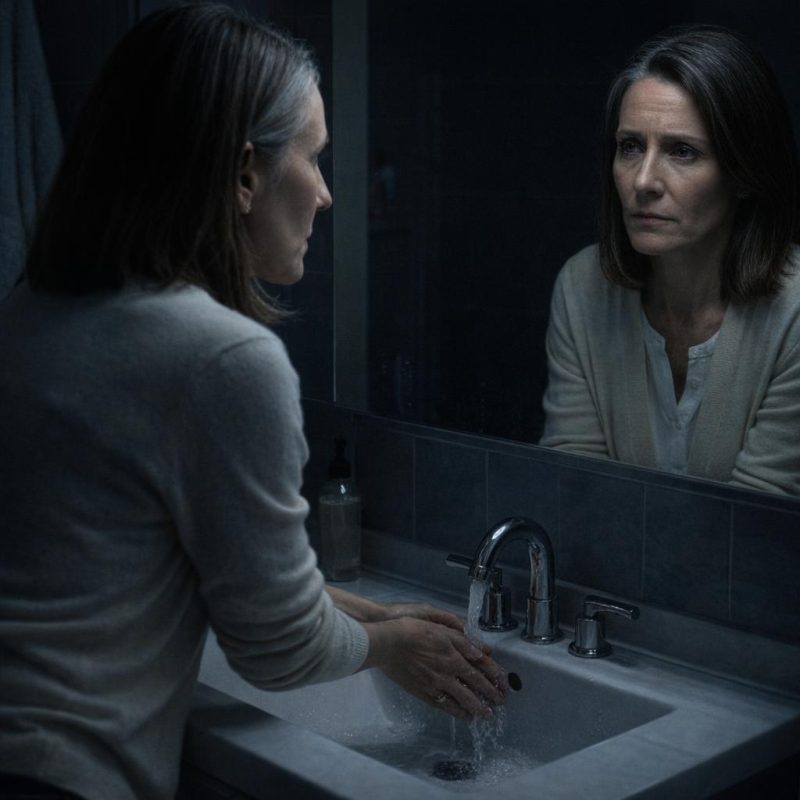 Image by RM AI
The Decision to Investigate
Mark leaves for his golf game at eight-thirty, and I wait until I hear his car back out of the driveway before I open my laptop. I tell myself I'm just looking. I tell myself I can close the browser at any point and walk away. I search for how to access birth records — what's public, what requires a formal request, what I can find without involving anyone else. There are several websites that come up, some official-looking, some less so. I read through what each one offers: searches by parent name, by birth year, by state. I sit with my hands in my lap for a moment, not touching the keyboard. I think about the card. I think about Elena standing in her doorway, arms crossed, telling me she had nothing to say. I think about the edge in Mark's voice when he told me to stop digging up the past. I've been telling myself I might be wrong about all of it. But sitting here now, I understand that not knowing is no longer something I can live with. I create an account, entering my email address and a password, and when the confirmation screen loads, I find a search field asking for a parent's name and a birth year, and my cursor is already moving toward it.
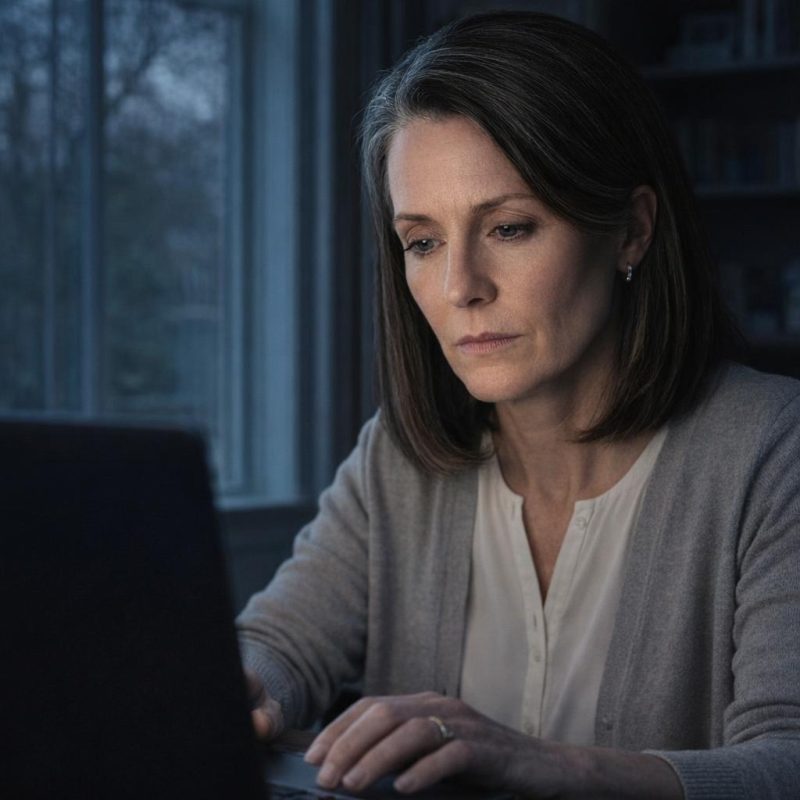 Image by RM AI
The Search
My hands aren't entirely steady as I type Elena Vasquez into the name field. I select 1994 from the year dropdown and choose our state from the list. The cursor hovers over the search button and I don't move it for a long moment. I think about what it will mean if something comes back. I think about Mark's name appearing on a document I was never supposed to find, attached to a life I knew nothing about. Part of me wants to close the laptop and go make tea and pretend the last week never happened. Part of me knows I stopped being able to do that the morning I found the envelope in the tuxedo pocket. I think about the card — keeping his promise — and I think about Elena's face when she saw me on her porch, the way the color left it before she even knew what I was going to say. I click the search button. The screen goes briefly white, then a small spinning indicator appears in the center of the page. I pull my hands back from the keyboard and set them in my lap. The room is very quiet. Outside, a car passes on the street. I sit there with the search results loading on the screen, not breathing, not moving, just waiting.
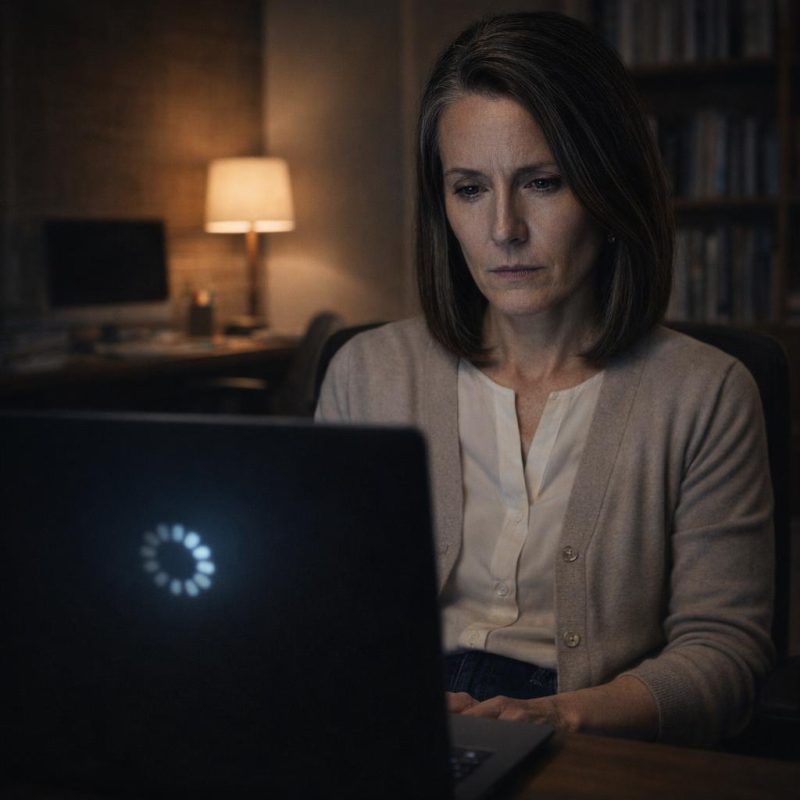 Image by RM AI
The Birth Certificate
The results load in a single column — one record, which is more than I expected and somehow worse. I click through to the full certificate. Elena Vasquez, mother. Birth date, June 14, 1994. I scroll to the father's name field the way you'd pull off a bandage, fast, before you can think about it. The name there is Carlos Mendez. I read it twice. I read it a third time. I sit back in my chair and stare at the screen. Carlos Mendez. Not Mark. Not even close to Mark. I don't feel relief. I feel the floor shift under me in a different way than I expected, because this doesn't answer anything — it just moves the question somewhere I hadn't thought to look. If Mark isn't this child's father, then what was the promise? What did twenty thousand dollars buy, and from whom, and why did Elena go pale on her porch when a stranger showed up asking about a thirty-year-old card? I read the certificate again from the top, looking for any detail that connects it to my husband, any thread I might have missed. There is nothing. The father's name on the certificate belongs to someone else entirely.
 Image by RM AI
Hiring Detective Hayes
I call the number Rachel gave me the next morning, sitting in my car in the driveway with the engine off. A man answers on the second ring — Detective Thomas Hayes, retired, voice measured and unhurried, the kind of voice that doesn't fill silence unnecessarily. I tell him everything. The tuxedo pocket, the envelope, the card with Elena's name, the twenty thousand dollars, Elena's reaction on her porch, Mark's defensiveness, and finally the birth certificate with a name that isn't my husband's. Hayes listens without interrupting. When I finish, he asks about the timeline — when exactly we were married, when the envelope appeared, whether I have the original card. He asks if I've confronted Mark directly. I tell him I'm afraid of what happens if I do before I know what I'm actually dealing with. He says that's not an unreasonable position. He tells me he can look into public records, cross-reference names and dates, see what connections exist around that period. He quotes me a fee and I agree before he finishes the sentence. He says he'll start with the timeline around our wedding and work forward from there, and that he'll need a few days. I thank him and sit in the car after we hang up, the phone warm in my hand, and for the first time in days something in my chest loosens just slightly — the quiet relief of having handed this to someone who knows what they're doing.
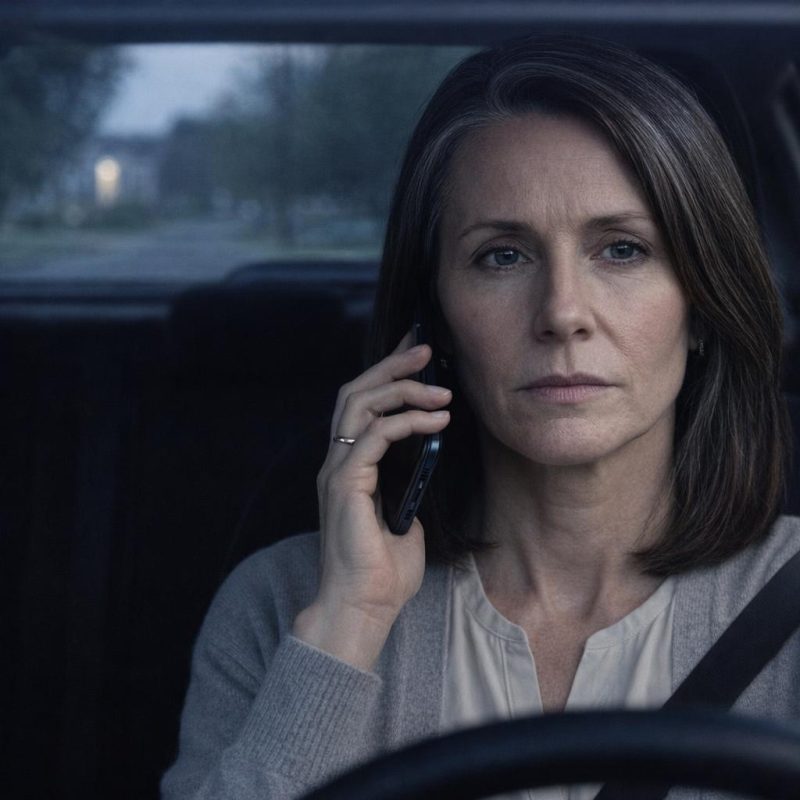 Image by RM AI
The Wait
Three days pass. Then four. I check my phone more times than I can count — between loading the dishwasher, in the bathroom, once at two in the morning when I can't sleep. Nothing from Hayes yet. In the meantime, Mark and I address anniversary invitations at the kitchen table, his handwriting neat and even beside mine. He talks about the caterer, about whether we should do a playlist or hire someone, about which of his college friends might actually make the trip. I smile and offer opinions and write names on envelopes. I ask if he wants more coffee. I pass him the guest list when he reaches for it. Every exchange feels like a scene I'm performing in rather than living, my lines coming out right while something else entirely runs underneath. Mark notices nothing, or if he does, he doesn't say so. He seems relaxed, easy, the same man he's always been at this table. I wonder sometimes, watching him laugh at something on his phone, how I look from the outside — whether the performance is as convincing as I need it to be. By the end of the fourth evening I set down my pen and look at the stack of finished envelopes and feel the full weight of it settle into my bones — the exhaustion of pretending, for four days running, that everything is fine.
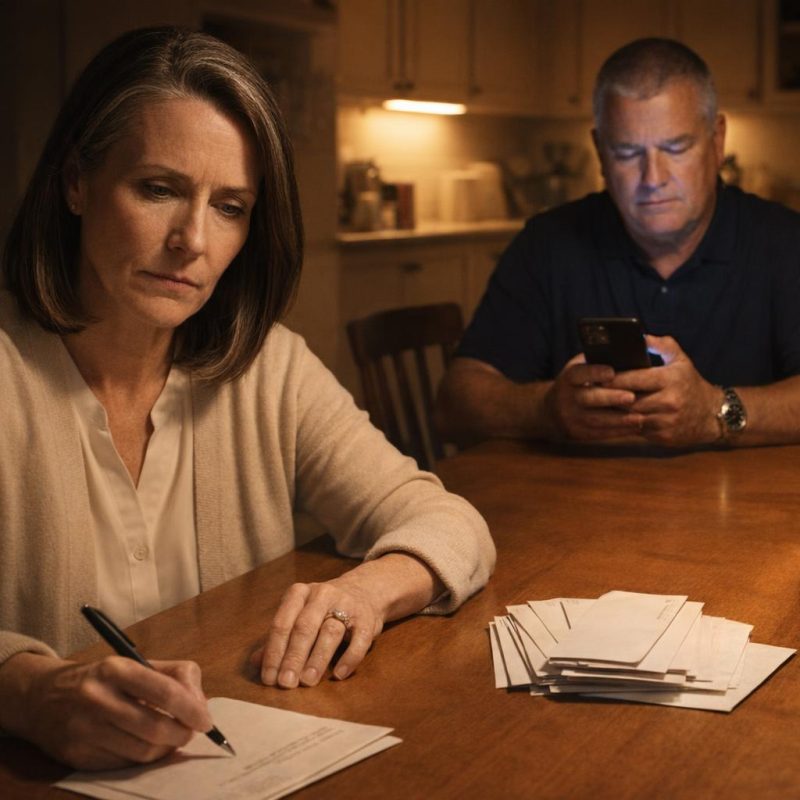 Image by RM AI
The Anniversary Party
The house looks beautiful, I'll give it that. Rachel helped me hang the string lights in the backyard two days ago, and tonight they cast everything in this warm gold glow that makes thirty years look like something worth celebrating. I stand at the door greeting people with a smile that I've been practicing in the bathroom mirror, and it holds. It holds through the hugs and the you-look-amazings and the can-you-believe-thirty-years. Mark moves through the crowd like he was born for this — laughing, refilling glasses, clapping old friends on the shoulder. He's magnetic tonight, and I watch him the way you watch someone you're trying to memorize. Rachel finds me near the kitchen doorway and squeezes my arm without saying a word, just holds my gaze for a second too long, and I have to look away before something cracks. Then someone — Tom, I think, from Mark's office — calls out that we have to share how we got started, the early days, how we knew. The room goes warm with laughter and agreement. Mark turns to find me across the crowd, smiling like it's the best story he knows, and raises his glass.
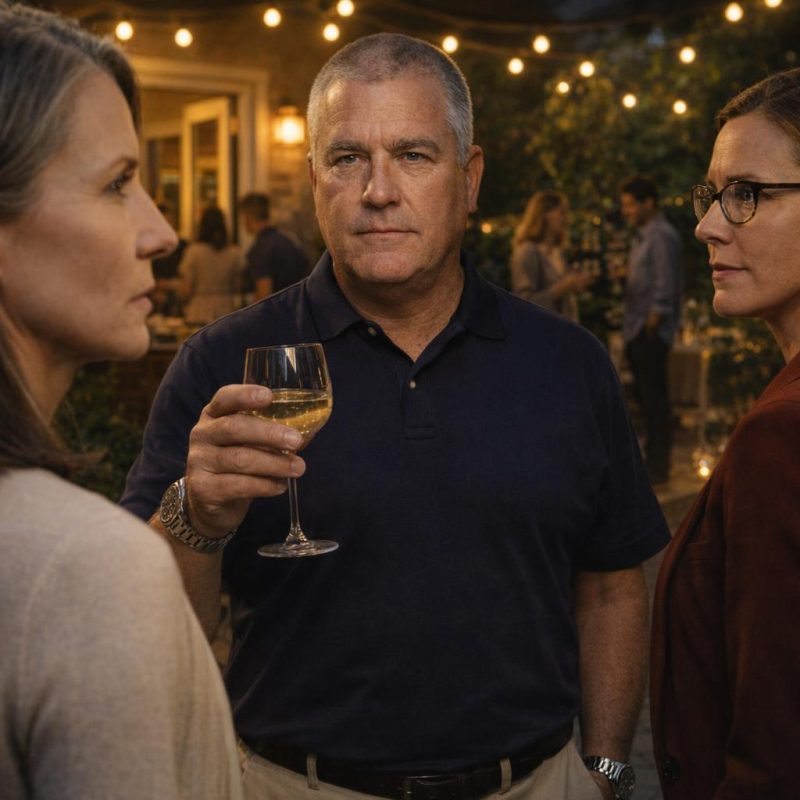 Image by RM AI
The Toast
The room goes quiet the way rooms do when someone commands it without trying. Mark stands in the center, glass raised, and he's so at ease it almost takes my breath away. He talks about luck first — how he's always known he was lucky, but that I was the proof of it. He mentions how our life together found its footing early, how the first year set the tone for everything that followed, a reminder that some things just fall into place. Then he says it. He says their marriage — our marriage — has been built on honesty and trust, that he's never once doubted the foundation beneath them. His voice is steady and warm and the words land in the room like something true. I stand six feet away holding my glass with both hands, unable to move, unable to look anywhere but at him. He finds my eyes and smiles, and it's the same smile from every photograph on our walls, the same one from thirty years ago. I feel like I'm watching someone I've never met. Around me, people are nodding, some of them pressing hands to their chests. Then the applause starts, rolling through the room in a wave.
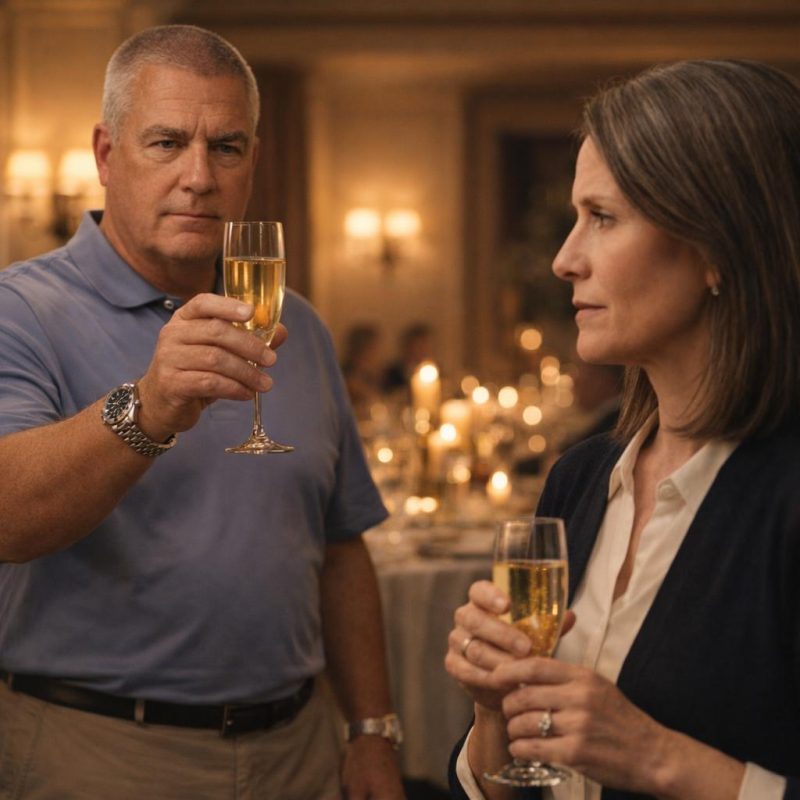 Image by RM AI
After the Party
The last car pulls out of the driveway just after eleven. I start collecting glasses from the patio tables, stacking them carefully, giving my hands something to do. Mark carries a tray into the kitchen and says the party was perfect, exactly what he'd hoped for. I say something like yes, it really was, and my voice comes out even. He sets the tray down and puts his arm around me from behind, his chin resting near my temple, and says he's grateful — for the house, for the life, for me. I keep my hands on the glasses. He's quiet for a moment, and then he says it almost offhandedly, the way you say something you've believed so long it doesn't need emphasis anymore. He says he's glad we've never had secrets between us. My hands tighten around the glass I'm holding. I don't speak. I don't trust what would come out if I did. He kisses the side of my head and says he's heading up, and I hear his footsteps on the stairs, and then I'm alone in the kitchen, shaking.
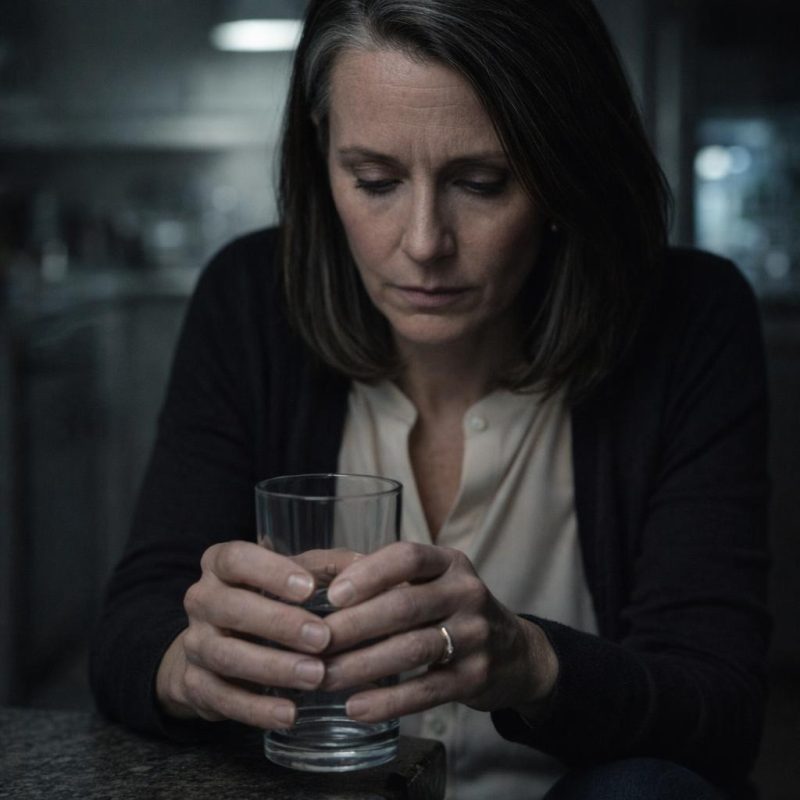 Image by RM AI
Hayes Calls
Mark leaves for work at eight-fifteen the next morning, same as always. I watch his car back out of the driveway and I stand at the kitchen window for a moment after he's gone, just breathing. My phone rings forty minutes later. The number isn't one I recognize, but I pick up on the second ring. Detective Hayes identifies himself, his voice measured and unhurried, and says he's been going through public records from 1994. He says he found something in the police records from the weeks before my wedding. My heart kicks hard against my ribs. He doesn't elaborate over the phone — just asks if I can meet him that afternoon, somewhere away from my neighborhood. He tells me to bring the card if I still have it. I say yes before he finishes the sentence. He names a coffee shop across town, gives me a time, and I write it on the back of an envelope because it's the only paper I can reach. After we hang up I stand in the kitchen for a long time, the envelope in my hand, the morning quiet around me. I don't know yet what he found. But something in the steadiness of his voice told me it was real.
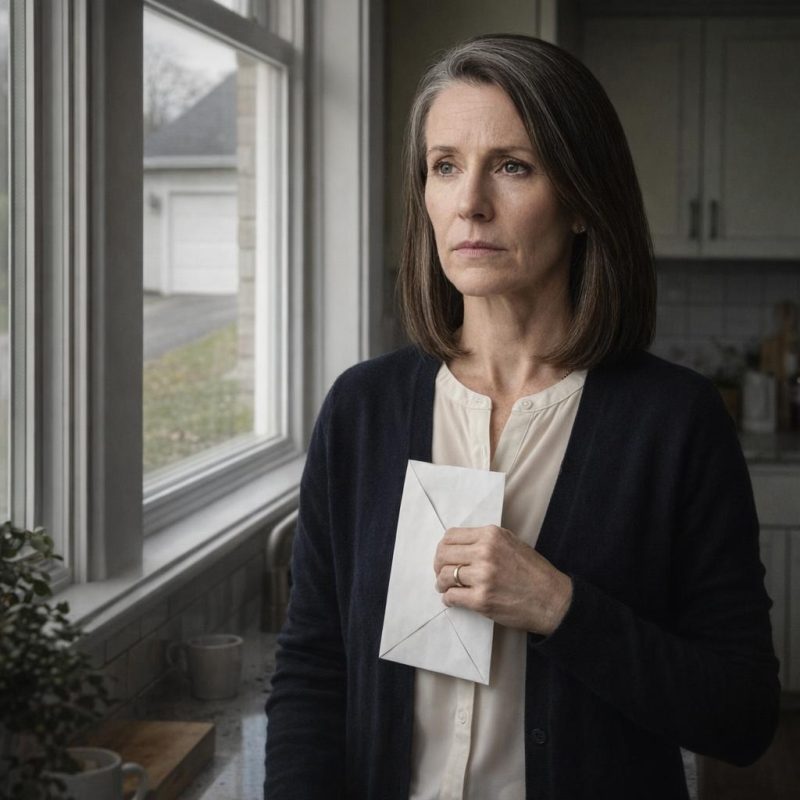 Image by RM AI
The Police Records
The coffee shop is the kind of place nobody goes to on purpose — a strip mall spot with laminate tables and a bell over the door. Hayes is already there when I arrive, a manila folder open in front of him, a cup of black coffee going cold at his elbow. I sit down and he slides the folder toward me without preamble. He says he searched police records from March and April of 1994 and found an unsolved hit-and-run case from three weeks before my wedding. An elderly man was struck by a vehicle on a residential street and left there. The driver never stopped. The man survived but was hospitalized for weeks. Hayes taps the incident report and I read it slowly, the official language making it feel distant, almost abstract. I look up and tell him I don't understand the connection yet. He says he's still piecing it together, but the timing caught his attention. Then he asks, quietly, whether Mark had a car in 1994. I think about it — the old blue sedan, the one in the photos from that year, the one we sold before our first move. I tell Hayes yes. He nods once and says nothing more, and the date on the police report sits between us on the table.
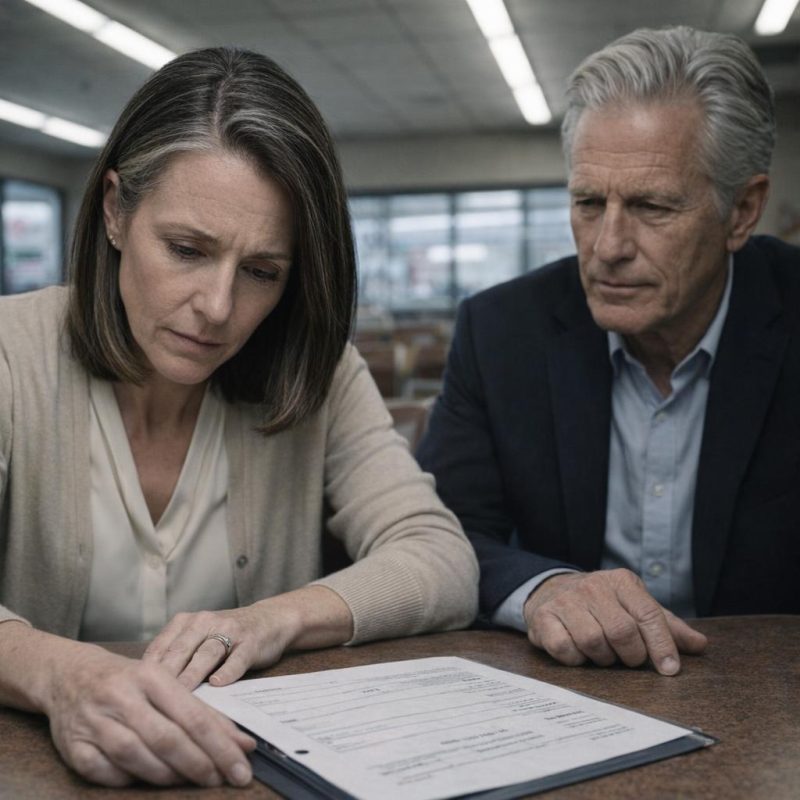 Image by RM AI
The Witness Statement
Hayes reaches into the folder and pulls out a second document, this one a photocopied form with a handwritten section near the bottom. He sets it flat on the table and tells me a witness came forward the day after the hit-and-run. I lean in to read the name at the top of the page and my breath stops. Elena Vasquez. He says she gave a detailed statement — described the vehicle, described the driver, said she would testify if the case moved forward. I stare at her name on the page. Hayes lets me sit with it for a moment before he continues. He says that five days after filing the statement, Elena withdrew it. She told the investigating officer she'd been mistaken about what she saw. Hayes slides a third page across the table — the withdrawal form, dated and signed. I look at the date. He watches me read it. He asks if I understand what the timing suggests. I don't answer right away. I look at the withdrawal date again, then at the incident date, then back. The date Elena withdrew her statement falls in the week of my wedding.
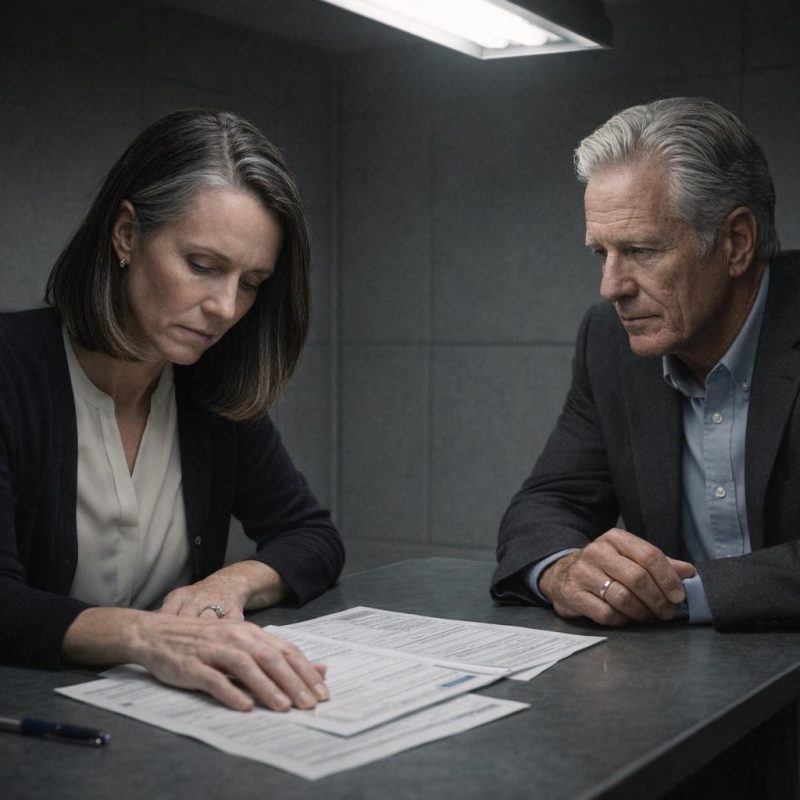 Image by RM AI
The Pattern Emerges
I spread the three documents side by side on the table, smoothing the edges with my palms like that will help me see them more clearly. Hayes sits back and lets me work through it. The hit-and-run happened on March 28th. Elena filed her witness statement on March 29th. She withdrew it on April 18th. My wedding was April 23rd. The anonymous envelope appeared at the reception. I line the dates up in my head and then I line them up again, hoping the second pass will produce a different shape. It doesn't. Hayes says quietly that he can request the full case file — the original witness descriptions, the vehicle details, everything that was collected before the case went cold. My hands aren't quite steady as I gather the pages back into a stack. I tell him I need to see all of it. I need the complete picture before I can do anything with this. He nods like he expected that answer. I look at the dates one more time, laid out in a row that I don't want to follow to its end. The pieces are fitting together in a way I don't want to see.
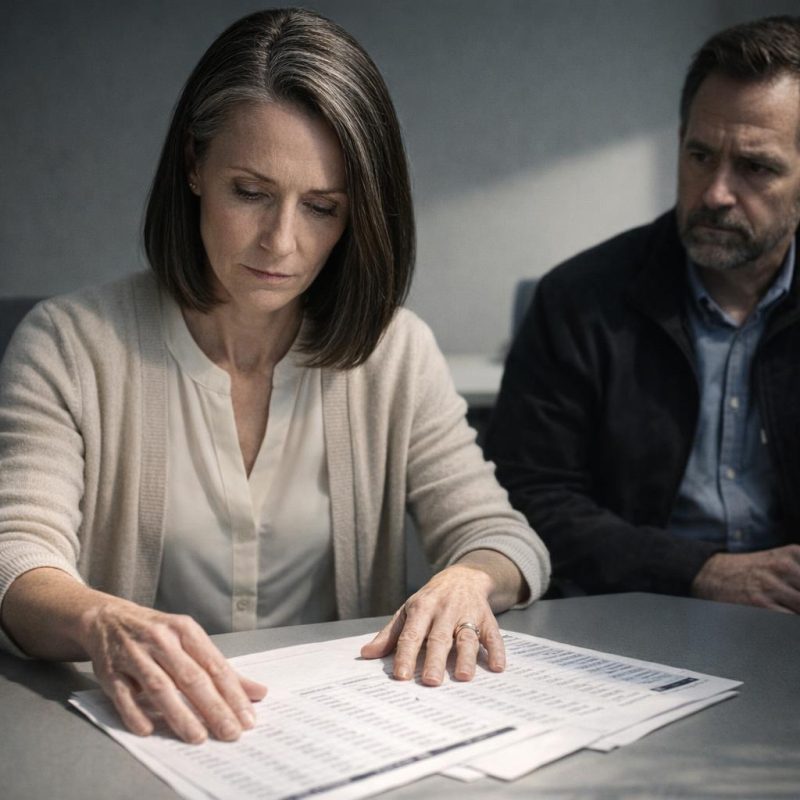 Image by RM AI
The Request for Records
I tell Hayes I need to see Elena's original statement — the full version, before she withdrew it. Whatever she described that first day, before she changed her account, that's what I need. Hayes wraps both hands around his coffee cup and says he can request the complete case file through his contacts at the department. Old cases like this one don't disappear, he says — they just get archived. I ask whether the file will include a description of the vehicle. He says witness statements from that era almost always do — make, color, sometimes a partial plate. I nod and look down at the table. I'm already thinking about the photographs in our storage boxes, the ones from that year, the blue sedan parked in the background of a dozen ordinary Sundays. Hayes says it will take a day or two to pull everything together, and he'll call me the moment he has it. I thank him and gather my things. Standing up feels like a physical effort. I think about what it means to ask for a file like this — what I'm actually asking for, what I'll have to do with the answer once it arrives. Hayes looks up at me and says he'll have the full file within two days.
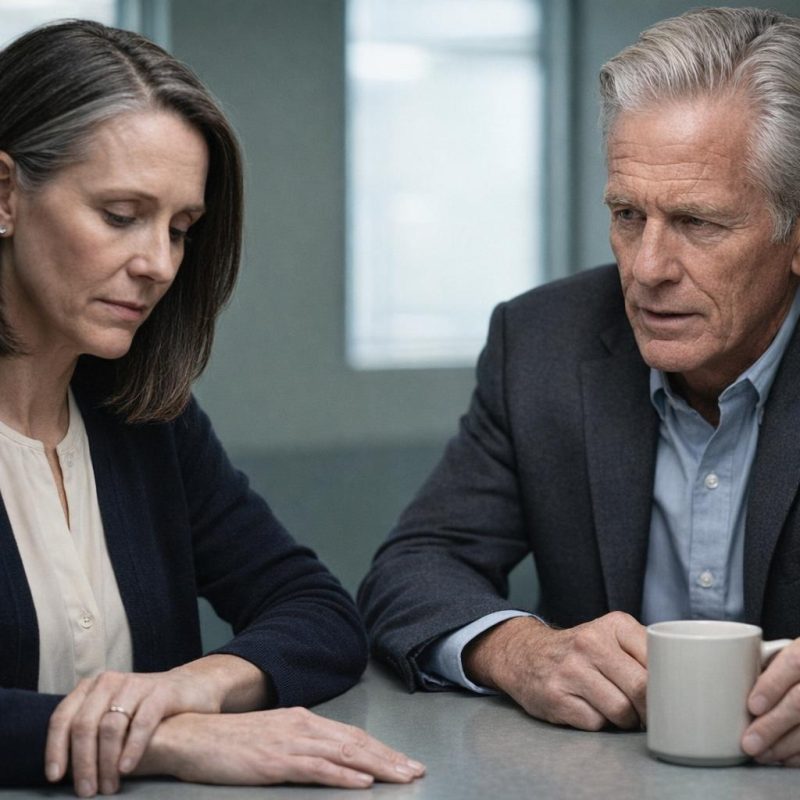 Image by RM AI
The Full Police File
Hayes calls me just after nine in the morning and asks if I can meet him at the same coffee shop. His voice is measured, the way it always is, but there's something underneath it — a kind of weight. I'm there in twenty minutes. He's already at the corner table with a thick manila folder in front of him, and he slides it across to me without preamble. Elena's original witness statement is on top, three pages, handwritten and then typed up by whoever took her account that day. I read slowly. She described a dark blue sedan, a dent in the rear bumper on the driver's side, moving at speed through the intersection. My hands start to shake somewhere around the second paragraph. I set the pages down and pick up my coffee, mostly just to have something to hold. Hayes asks if I'm all right. I tell him I think so. He says we can stop if I need to. I tell him I don't want to stop. I keep reading. The description of the car sits in my chest like something I already knew was coming — because I remember that car. I remember the color of it, the particular way the back bumper sat slightly crooked, parked in front of my parents' house on a Sunday afternoon thirty years ago.
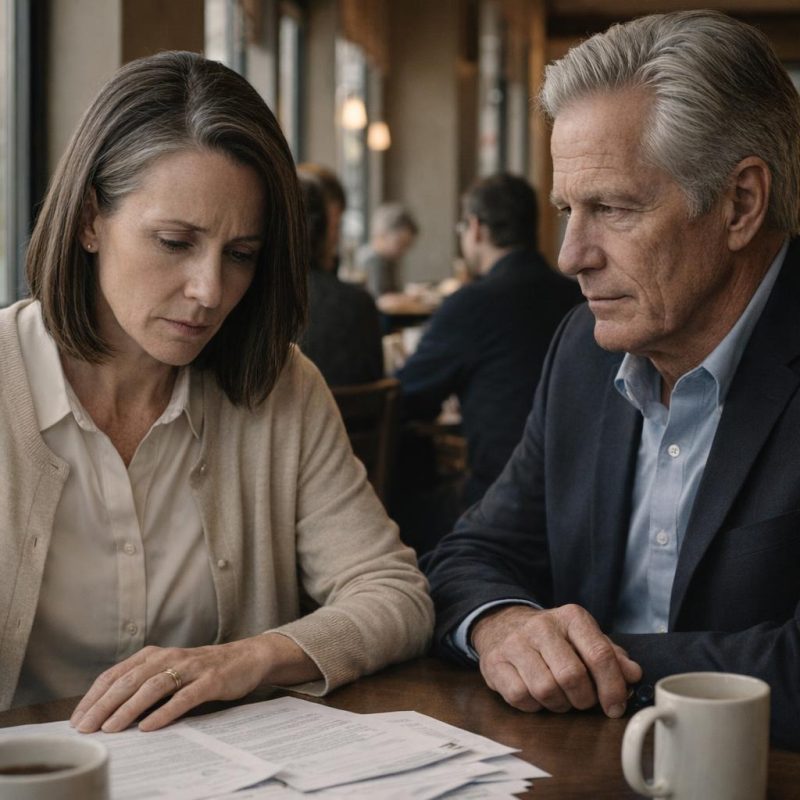 Image by RM AI
The Registration Records
Hayes makes a call while I sit across from him, my coffee going cold between my palms. He speaks quietly, gives a name and a case number, and then we wait. The coffee shop fills up around us — a woman with a stroller, two men in construction vests, the ordinary noise of an ordinary morning — and none of it touches me. About twenty minutes later, Hayes turns his laptop so I can see the screen. A scanned document, slightly skewed, the kind of thing that's been sitting in a filing cabinet for decades. The registration is for a 1989 Honda Accord, dark blue. The owner's name is Mark Mitchell. The registration date shows he'd had it since 1992. I stare at the name for a long time. I remember that car. I remember the way the passenger seat sat a little low on my side, the way Mark always kept a road atlas in the back even though he never used it. I remember him telling me, right after our wedding, that he wanted something newer, something that felt like a fresh start. He sold it within a month. Hayes asks quietly if I'm okay. I don't answer him. I just sit there with Mark's name printed in faded ink on a thirty-year-old piece of paper, and I can't find a single word.
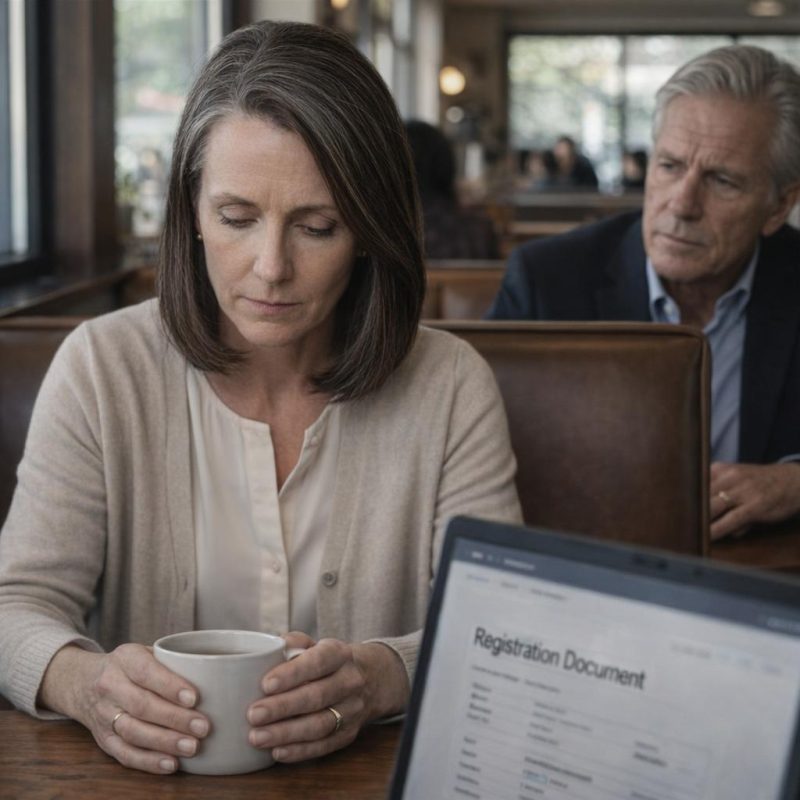 Image by RM AI
The Victim's Name
I make myself turn to the victim information section. I've been avoiding it, I realize — reading around it the way you avoid a bruise. The victim's name is Robert Chen. He was seventy-three years old. He was crossing the street near his home, a Tuesday evening in October, when he was struck. The report lists his injuries: a broken hip, fractured ribs, head trauma. He was a retired postal worker. He lived two blocks from where the accident happened. I read that and I have to put the pages down for a moment. I think about him lying in the street. I think about the Tuesday evenings Mark and I spent that October — dinner, television, the ordinary rhythm of two people planning a wedding. I think about Mark coming home that night, sitting across from me, saying nothing. Hayes says the case went cold because the only witness withdrew her statement before it could go anywhere. He says it quietly, not as an accusation, just as fact. I pick the report back up. I read the line about Robert Chen's hospitalization again — three weeks in the hospital, serious injuries, a man left alone in the street — and something in my chest goes very still.
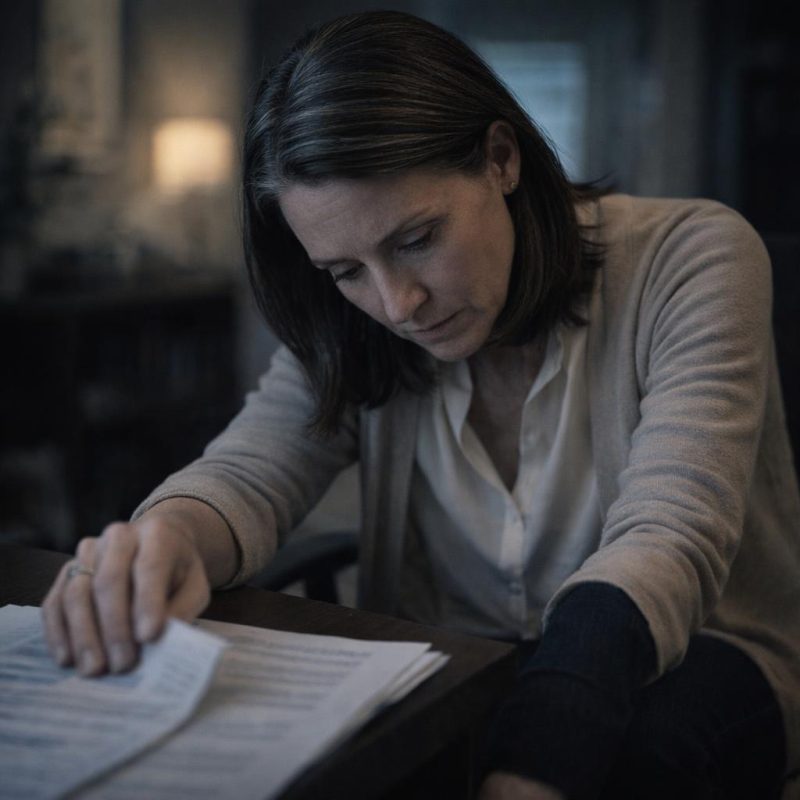 Image by RM AI
The Child in the Card
I ask Hayes about the birth certificate I found — Elena's son, the one I'd assumed was connected to Mark in some other way. Hayes flips through the supplementary reports in the folder and finds a single page near the back. He reads it quietly, then slides it toward me. Elena had her six-year-old son with her that evening. He was there when it happened. He saw the car strike Robert Chen and drive away. Elena's original statement mentioned him specifically — that he'd been frightened, that she was worried about what it would mean for him to testify, to relive it in a courtroom. Hayes says that kind of thing wasn't unusual, a parent wanting to protect a child from that process. I pull the card out of my purse — the one from the tuxedo pocket, the one I've read so many times the fold is starting to soften. I read it again. *For keeping your promise and protecting my child.* I'd spent weeks turning that line over, trying to understand what child it meant, what promise. The answer is right here in a supplementary report from 1994. The child was hers. The promise was silence. Mark paid her so her son would never have to sit in a witness box and describe what he saw on that Tuesday evening in October.
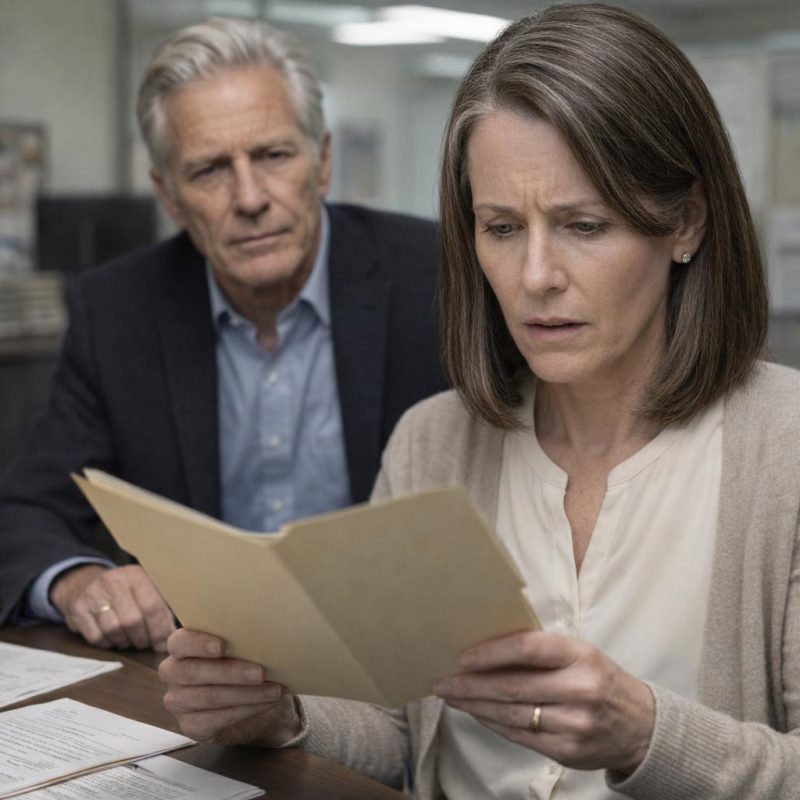 Image by RM AI
The Truth About the Money
I sit with all of it spread across the table — the witness statement, the registration, the victim report, the card — and I let myself see it whole for the first time. Mark caused a hit-and-run three weeks before our wedding. He struck a seventy-three-year-old man and drove away. Elena saw it happen, her young son beside her. Mark paid her twenty thousand dollars to withdraw her statement and stay quiet. Then he came home and told me a story about an anonymous philanthropist, a generous stranger who believed in young couples, and I believed him completely. We used that money as the down payment on our first house. We built our life on it — the neighborhood, the schools, the friends, the thirty years of anniversaries where we retold that story like it was something to be proud of. Every version of our life that I thought was real had that money underneath it. Hayes asks me, carefully, what I want to do with what I know. I don't answer right away. I'm thinking about the house, the wedding photos on the wall, the story Mark told at our reception with that easy, convincing smile. I had spent thirty years believing we built something honest together. Now I understand that the foundation was laid the night Mark drove away and left Robert Chen bleeding in the street.
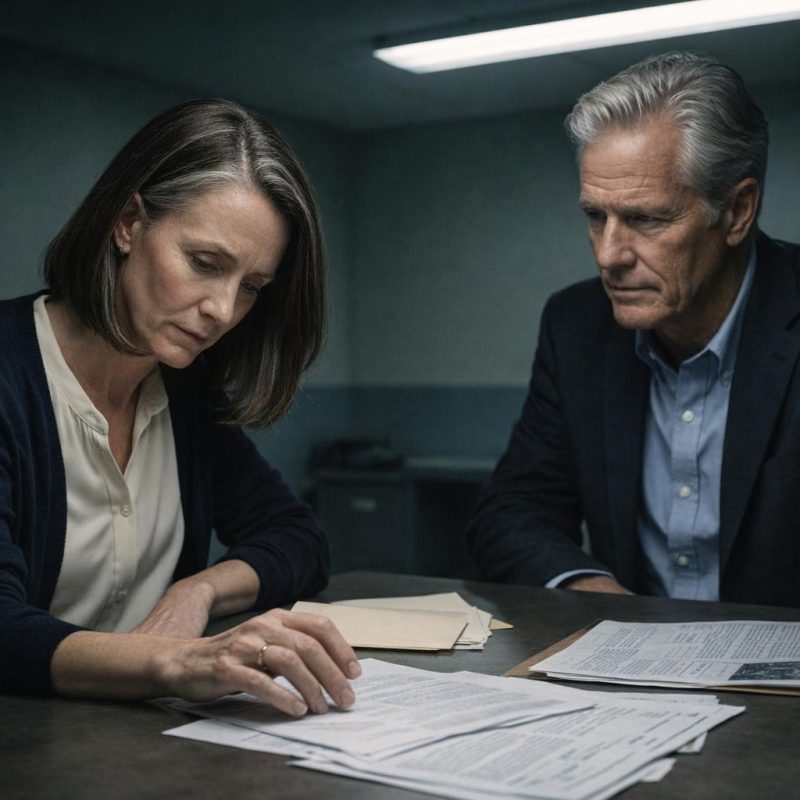 Image by RM AI
Reframing Thirty Years
I drive home on autopilot, hands on the wheel, eyes on the road, not really present for any of it. I keep thinking about our wedding day — Mark's face when I came down the aisle, the way he looked at me like I was the only thing in the room. I used to love that memory. I think about the reception, the moment he told the story of the anonymous gift to a table full of laughing, toasting friends. He was so smooth. So warm. So completely at ease. I never once questioned it. I think about our first house, the way we stood in the empty living room the day we got the keys, talking about everything we were going to build there. I think about every anniversary, every time we repeated that story to new friends, new neighbors, new colleagues — the generous stranger, the lucky start, the life we earned. And then I think about Mark's image, the way he's always managed it so carefully. The right neighborhood. The right reputation. The right version of every story. I used to think that was just who he was — a man who cared about how things looked. I pull into our driveway and sit there with the engine off. I think about all the years he spent making sure no one ever looked too closely at where we started, and every careful choice he made takes on a different shape entirely.
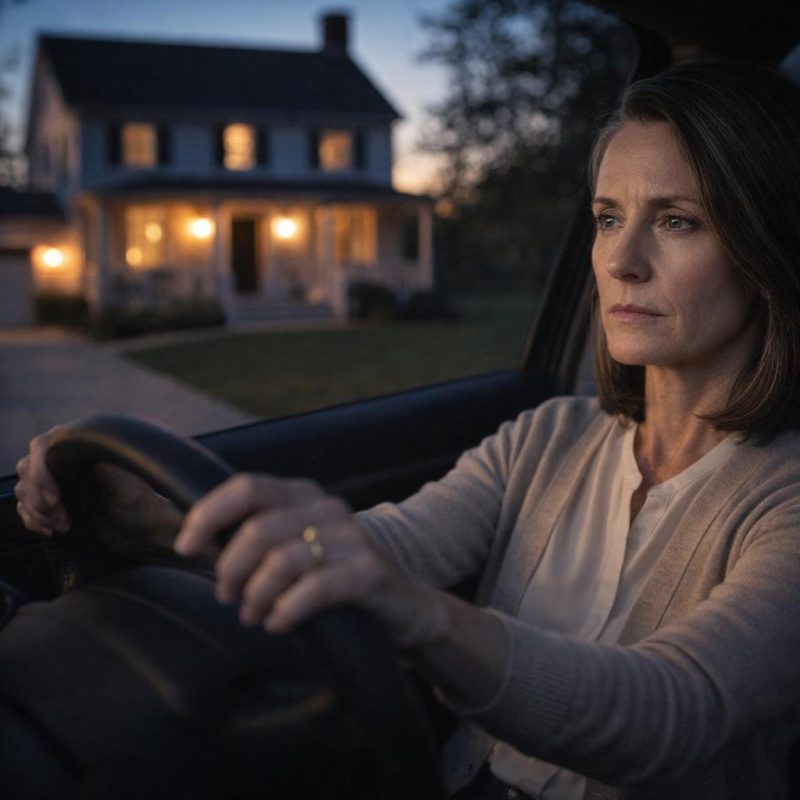 Image by RM AI
The Performance of Normal
I walk in through the side door and Mark is in the kitchen, his back to me, doing something at the counter. He turns when he hears me and smiles — that easy, familiar smile — and asks how my day was. I tell him it was fine. My voice sounds almost normal, which surprises me. He turns back to the counter and starts talking about his golf game, something about the back nine, a shot he made on the fourteenth hole. I set my bag down and lean against the doorframe and watch him. He moves through our kitchen the way he always has — comfortable, unhurried, completely at home. He asks if I'm feeling okay, says I look a little pale. I tell him I'm just tired. He suggests we order takeout, maybe watch something, a quiet night in. I say that sounds fine. He goes back to whatever he was doing, still talking, easy and relaxed, and I stand there looking at the back of his head and the set of his shoulders and the particular way he holds himself in a room — like a man who has nothing to worry about. We eat dinner at the kitchen table and he tells me about his day and I answer when I need to. The distance between what he thinks this evening is and what it actually is sits between us like something solid, something only I can feel.
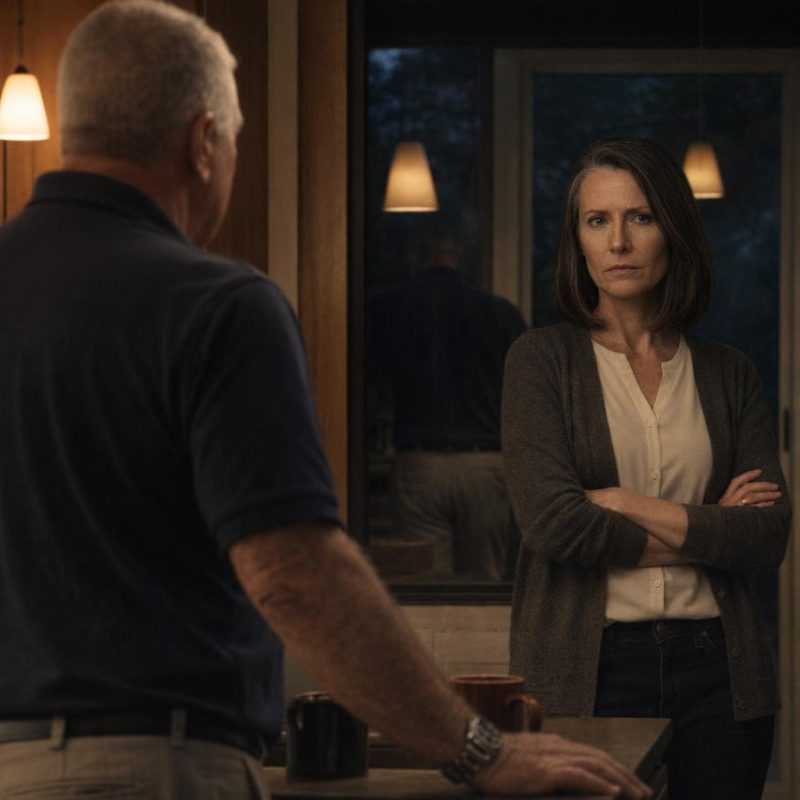 Image by RM AI
Gathering Evidence
I wait until I can hear Mark's breathing slow and even out, and then I get up. I carry the folder Hayes gave me to the dining room table and spread everything out under the overhead light. The police report. Elena's original witness statement. The vehicle registration with Mark's name on it. The supplementary report about her son. I photograph each page carefully with my phone, checking that every line is legible before I move to the next. Then I make a second set of copies and put them in a separate envelope, which I tuck into the back of my winter coat in the hall closet — somewhere he'd never think to look. I add the original card from the tuxedo pocket. I write out a timeline on a legal pad, dates and amounts and names, everything in order. I think about lawyers. I think about whether Hayes could reopen the case after thirty years, what that would even mean, who would need to know. I think about what I'm going to say when I finally sit across from Mark and ask him to tell me the truth. I don't know yet whether I want the police involved, or a lawyer, or just the two of us in a room. What I know is that I need to hear it from him first. I slide the last page into the folder and set it on the table, and it sits there in the quiet of the house, solid and patient and full.
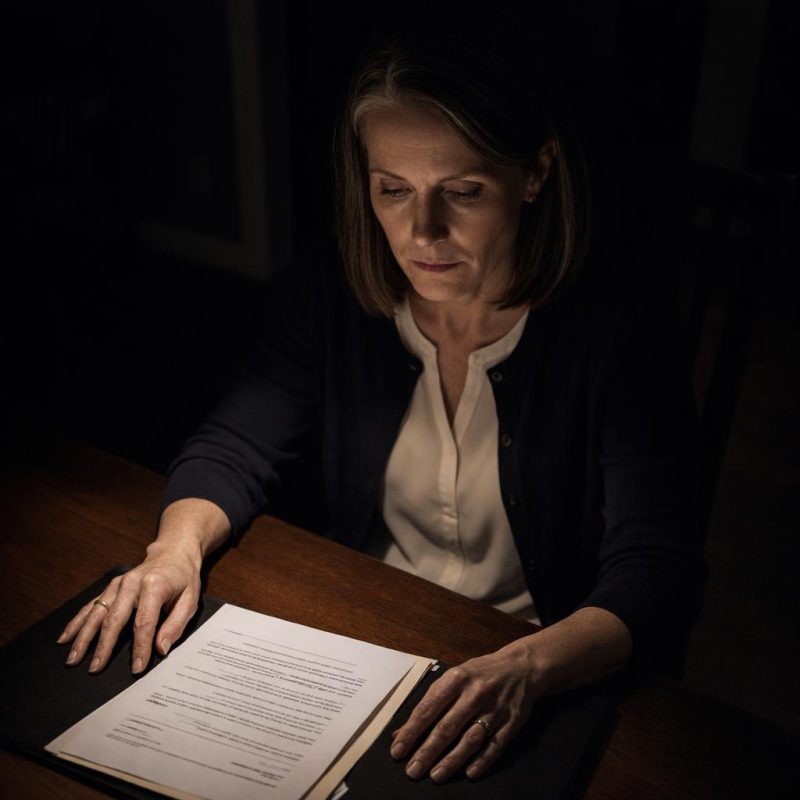 Image by RM AI
Consulting Rachel
I call Rachel before I even make coffee. She picks up on the second ring and I just say, 'I need to see you. Today. It's important.' She doesn't ask questions — she just says come over. I drive to her house with the folder on the passenger seat and my hands steadier than I expect them to be. When she opens the door and sees my face, she steps back and lets me in without a word. I spread everything across her kitchen table the way I spread it across mine the night before — the police report, Elena's witness statement, the vehicle registration, the card from the tuxedo pocket, the timeline I wrote out by hand. I walk her through all of it. She listens without interrupting, which is not like Rachel at all, and that silence tells me more than anything she could have said. When I finish, she takes off her glasses and sets them on the table. She asks if I'm certain. I slide the vehicle registration toward her and tap Mark's name. She stares at it for a long moment. Then she looks up and says she can't believe he's carried this for thirty years. I tell her I'm going to confront him tonight. She reaches across the table and covers my hand with hers, and she says, 'I'll be right here if you need me.'
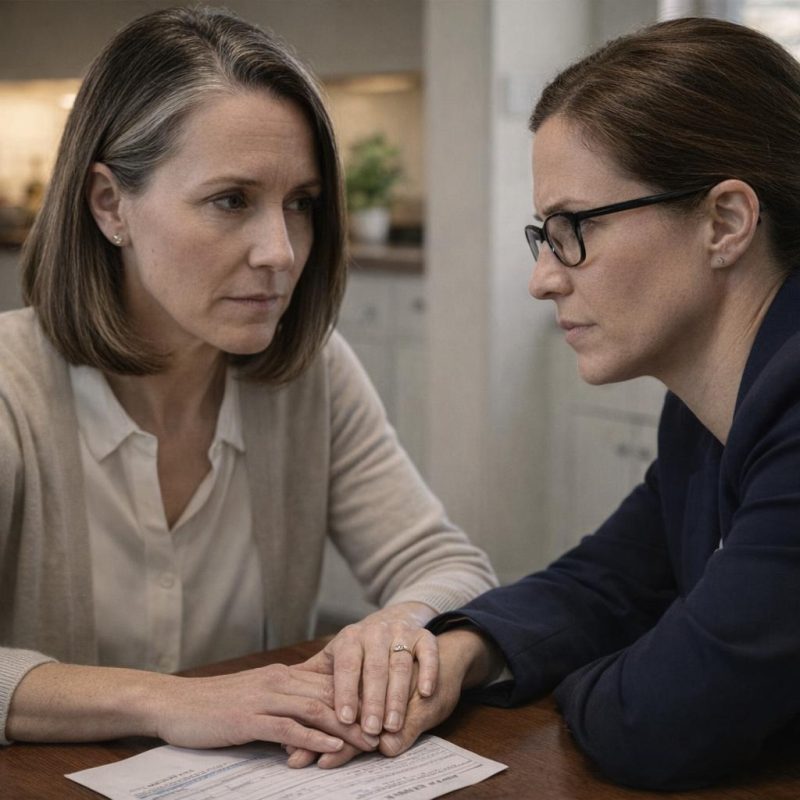 Image by RM AI
Setting the Stage
I come home to find Mark in the living room with a book open in his lap, the lamp on, looking like every ordinary evening we've ever had. I stand in the doorway for a moment and just look at him. He glances up and smiles, and then the smile fades because he can read me well enough after thirty years to know something is wrong. I tell him we need to talk. He sets the book down. I ask him to come to the dining room table and sit down. He follows me, and I can hear the slight hesitation in his footsteps. I set the folder on the table between us and I don't sit down yet — I just stand there with my hands resting on it. He asks what this is. I tell him I found something in his wedding tuxedo a few weeks ago, something tucked into the lining. His expression shifts — just for a second, something moves behind his eyes, there and gone. He asks what I found. I open the folder and pull out Elena's card and set it on the table in front of him, face up, and the folder sits there between us, thick with everything I know.
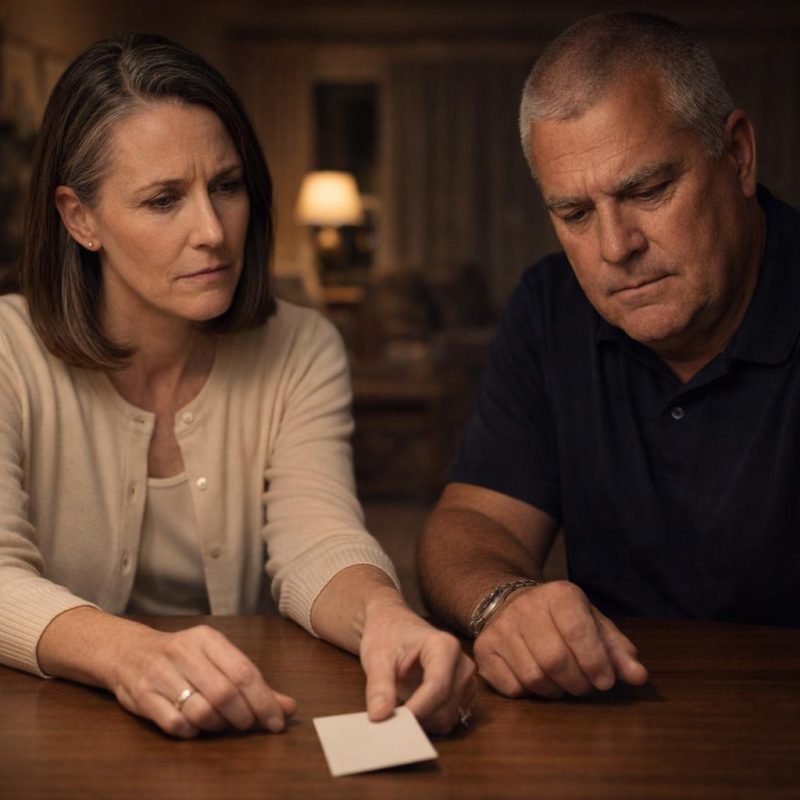 Image by RM AI
The Confrontation Begins
He picks up the card and I watch the color leave his face. He asks where I found it, and his voice comes out careful and flat. I tell him it was sewn into the lining of his tuxedo jacket, the one hanging in the back of the closet for thirty years. He says he doesn't remember anyone named Elena. I slide the police report across the table without saying anything. He looks down at it and his jaw tightens. I slide Elena's witness statement next — her description of the car, the license plate, the driver who didn't stop. His hands are on the table now and they're not steady. I set the vehicle registration on top of everything else, his name printed clearly in the middle of the page. He stares at it. He opens his mouth once and closes it. He tries again — says the registration doesn't prove he was driving that night, that cars get borrowed, that this was thirty years ago. I ask him about the twenty thousand dollars. He goes very still. I ask him to tell me where that money came from and where it went. He looks at the documents spread across the table between us, and then he stops talking entirely, and the silence that settles over the room is the loudest thing I've heard in years.
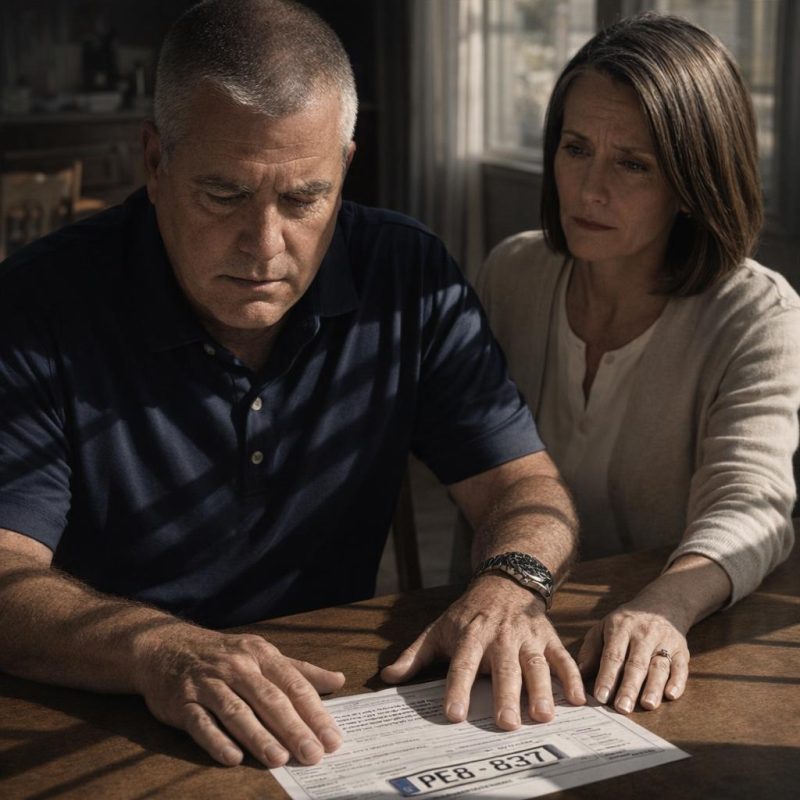 Image by RM AI
Mark's Justifications
He says it was an accident. He says the man stepped off the curb without looking, that it happened so fast he didn't even understand what had occurred until he was already a block away. I ask why he didn't go back. He says he panicked. He says he was twenty-six years old and terrified and he knew what an arrest would mean — his job, his future, everything he'd been working toward. He says Elena approached him two days later. She'd seen it happen, had his plate number, and she came to him directly. He says she needed money and he needed her silence and they reached an arrangement. He uses that word — arrangement — and something in my stomach turns over. I ask him to say that again. He shifts in his chair and says it was a difficult situation and they both got something they needed. He says it wasn't as simple as I'm making it sound. He talks about context and timing and the pressure he was under, and his voice stays even and reasonable the whole time, like he's explaining a complicated business decision to someone who doesn't quite understand the industry. I sit across from him and listen, and what I feel isn't rage — not yet. It's something colder than that, watching how easily the words come.
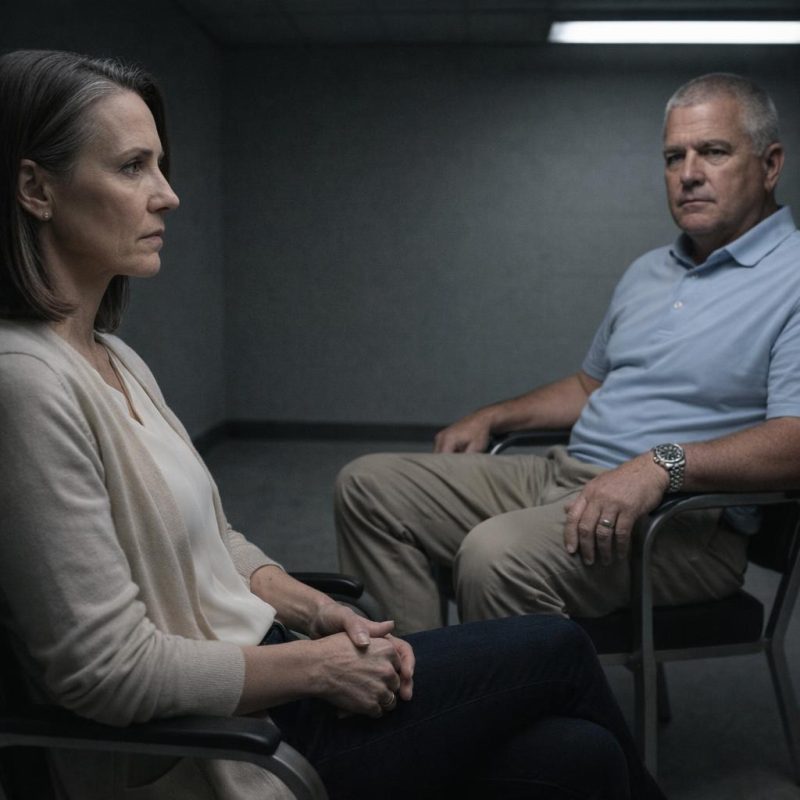 Image by RM AI
The Victim's Name
I ask him if he knows the victim's name. He looks at the table and says it was a long time ago. I tell him the man's name was Robert Chen. I tell him Robert was seventy-three years old, a retired postal worker who spent three weeks in the hospital after that night. Mark's eyes move to the window. I tell him to say the name. He doesn't respond. I say it again — I tell him to say Robert Chen's name out loud, right now, in this room. He closes his eyes for a moment. Then he says it, barely above a whisper: Robert Chen. I ask if he ever thought about him. He says he tried not to. He says thinking about it wouldn't change what happened, that it wouldn't have helped anyone. I don't answer that. I don't need to. I just sit with the sound of that name finally spoken in our house, a name that has been absent from every conversation, every anniversary dinner, every retelling of the generous stranger story — a real man's name, held in silence for thirty years, finally given the small dignity of being said aloud.
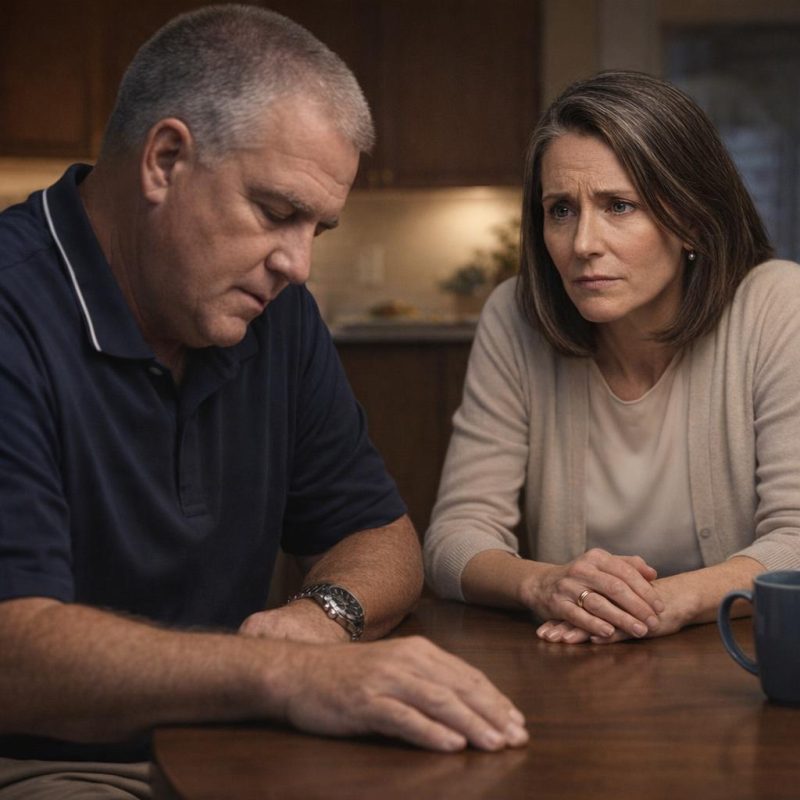 Image by RM AI
The Lie That Built Everything
I tell him that twenty thousand dollars became the down payment on this house. He says that's not fair, that the money helped us build something real, something good. I tell him it was payment for silence about a man he left bleeding in the street. He says we made a life from it, a good life, that I can't reduce everything we built to one terrible night. I ask him about every anniversary when we told the story of the anonymous gift together — the generous stranger, the unexpected blessing, the way we'd laugh about never finding out who it was. He says he was protecting our future. I tell him he was protecting himself. I tell him I believed in that story completely, that I told it to our friends, that I felt grateful for it, that it was part of how I understood our beginning together. He says he wanted to tell me but too much time had passed. I ask him when it became too late — after the wedding, after we moved in, after ten years, after twenty. He doesn't answer. He just looks at the folder on the table and then back at me, and I watch him try to draw a clean line between the money and the marriage, between the crime and the life, as if the two things can be separated now after all this time.
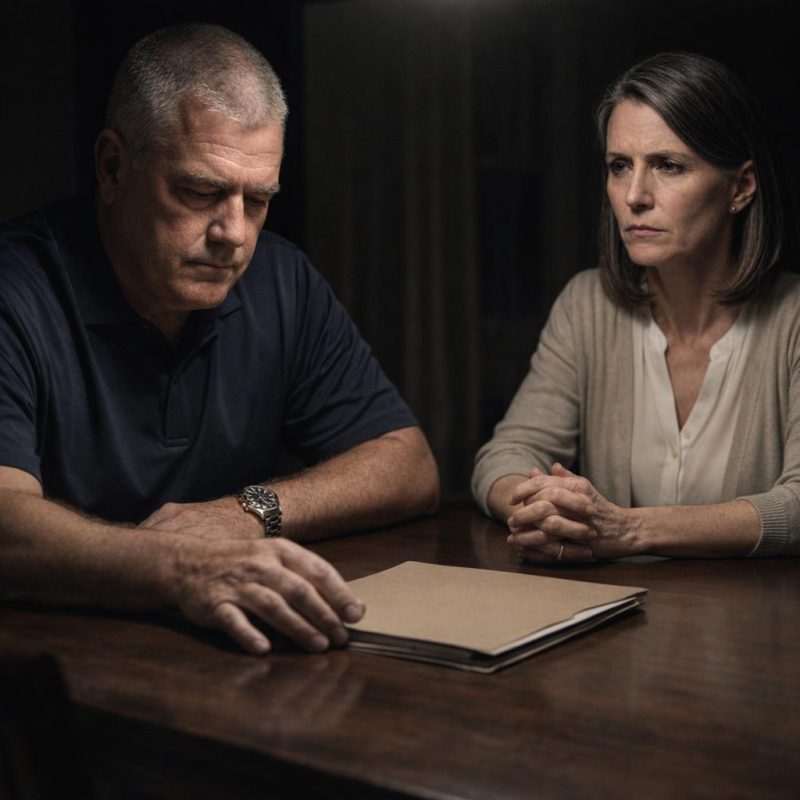 Image by RM AI
The Choice He Made
I tell him he didn't just lie once. I tell him he made a choice every single morning — every morning he woke up next to me and decided not to tell me the truth. Every anniversary. Every time we told that story. Every time I said how lucky we were. He says he did it to protect our marriage, to protect me. I tell him he did it to protect himself from consequences, and that those are not the same thing. He says if I'd known at the beginning I never would have married him. I tell him that was my choice to make, and he took it from me. I tell him he didn't trust me with the truth because he didn't trust me at all — not really, not in the way that matters. He says that isn't true. I tell him that a person who loves you doesn't build the foundation of your life on something you're never allowed to know. He reaches across the table toward my hand. I pull it back before he can reach it, and I look at him — really look at him — and I see it clearly: every day for thirty years, he woke up and chose the lie over me.
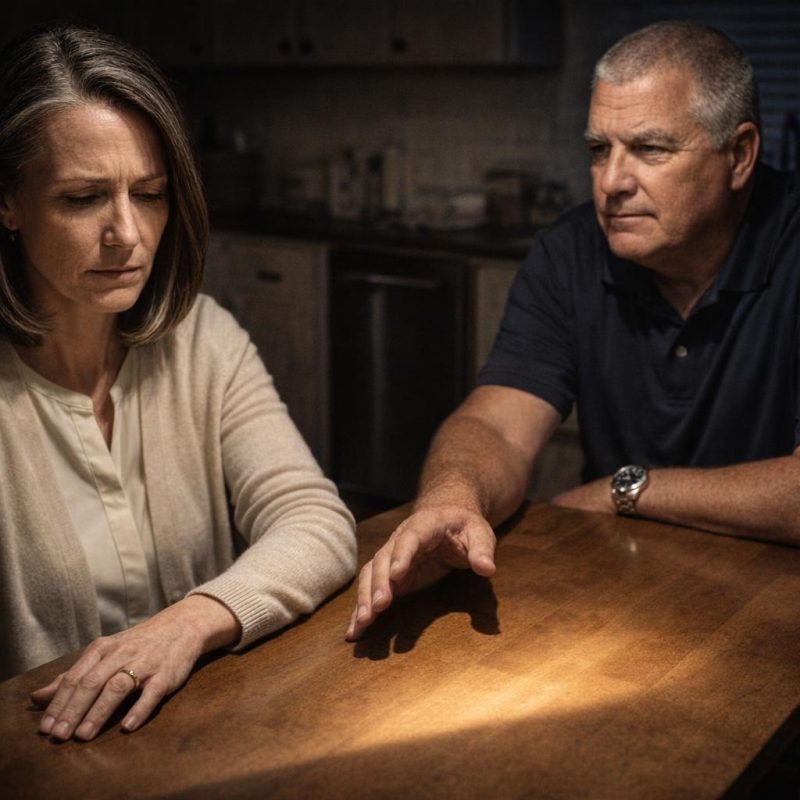 Image by RM AI
Asking Him to Leave
I tell him he needs to pack a bag and leave tonight. He says we can work through this, that we've been together thirty years and that has to count for something. I tell him I need to be alone in this house to think, and I can't do that with him here. He asks where he's supposed to go. I tell him a hotel, a friend's place, anywhere — I don't care, but not here. He says this is his house too. I tell him it's a house built on blood money and thirty years of lies, and right now I need him out of it. His eyes go red at the edges. He says he's sorry, that he knows sorry isn't enough but he doesn't know what else to say. I tell him sorry doesn't give me back thirty years of believing something that wasn't true. I tell him to go pack now, or I'll call Rachel and she'll come sit with me while he does it, and either way he's leaving tonight. He stands up slowly, pushes his chair back, and walks toward the hallway. Then he stops and turns around, and his voice breaks when he says please — just one more chance, please, he'll do anything.
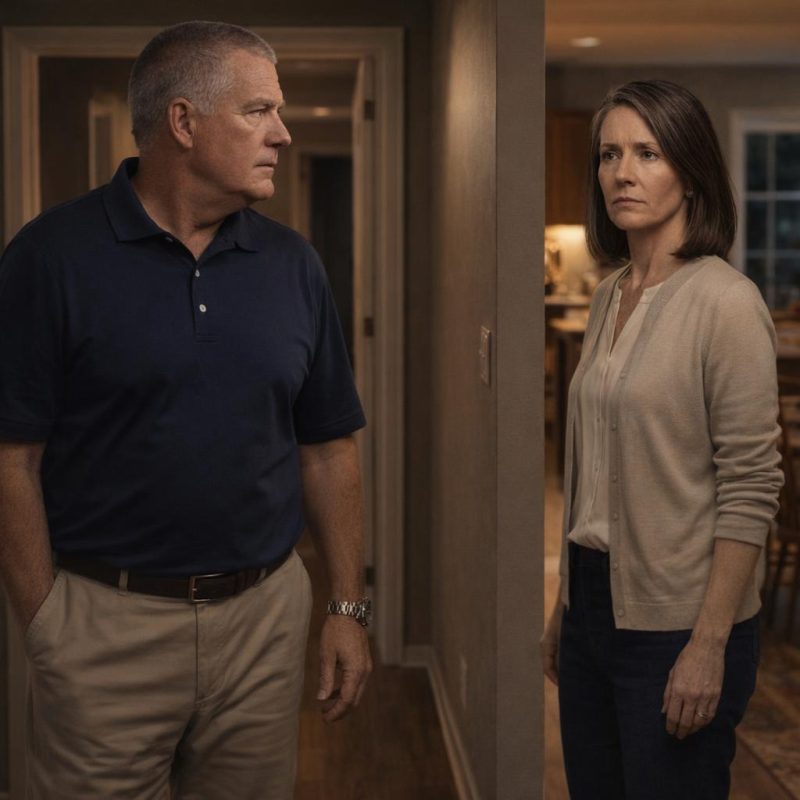 Image by RM AI
The Door Closes
I don't say please don't go. I don't say anything. I just stand there in the living room with my arms at my sides and wait. He disappears up the stairs and I hear the closet open, the drag of the suitcase across the floor, the muffled sounds of a man packing thirty years into whatever fits. When he comes back down, he stops in the hallway and looks at me the way he used to look at me when he thought I was the most important thing in his world. Maybe he still thinks that. I don't know anymore what any of it meant. He asks if I'll call him when I'm ready to talk. I tell him I don't know if I'll ever be ready. He says he loves me. I tell him I don't know if that was ever true — not the way I understood it to be. His face crumples, but he doesn't argue. He opens the front door, the same door we carried groceries through for twenty-two years, and he steps outside without looking back a second time. I stay where I am, feet planted, not following. Then I hear his engine turn over, the tires on the driveway, and the sound of his car pulling away from the house we bought with his lie.
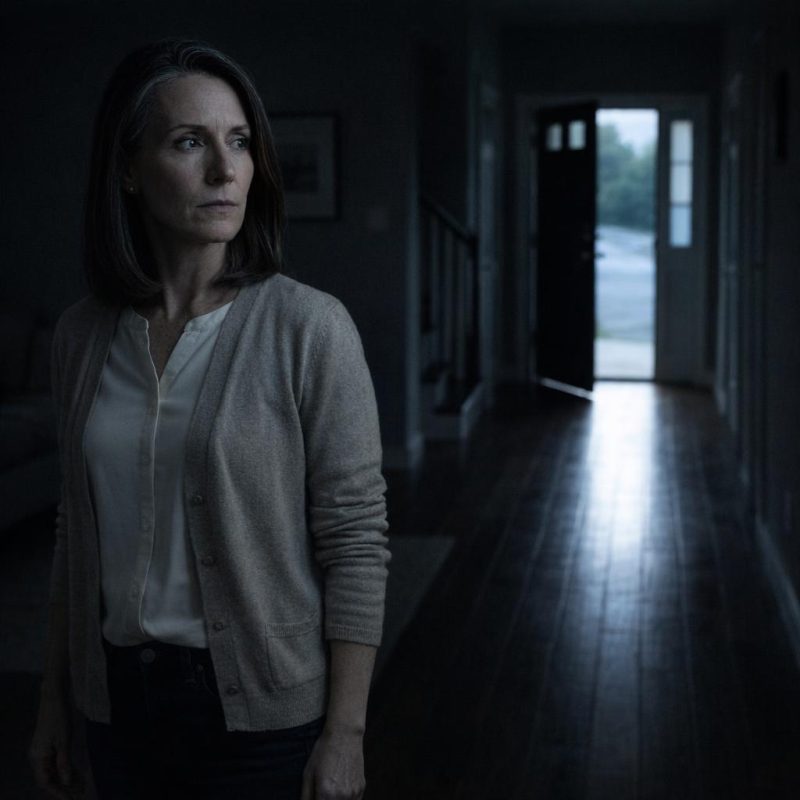 Image by RM AI
Visiting Elena
I find Elena's address on Maple Street the same way I found everything else — slowly, carefully, one thread at a time. I sit in my car outside her house for a few minutes before I get out. The curtains shift once. She opens the door before I even knock, and she looks at me the way someone looks when they've been half-expecting a knock for thirty years. I tell her I know everything now, and I'm sorry — not for coming, but for what was done to her. She steps back and lets me in without a word. Her living room is small and tidy, a child's school photo on the wall that I realize must be decades old. We sit across from each other and she tells me about the night it happened, about her son waking up screaming for weeks afterward, about being a single mother with no savings and a lawyer telling her the case would drag on for years. She says she took the money so her son wouldn't have to testify, wouldn't have to keep reliving it. I tell her I understand why she made that choice. She says she's carried the guilt of it every single day since. I tell her we both paid for what Mark did, just in different ways. She nods slowly, and for a long moment neither of us speaks, and the quiet between us holds something that doesn't need a name.
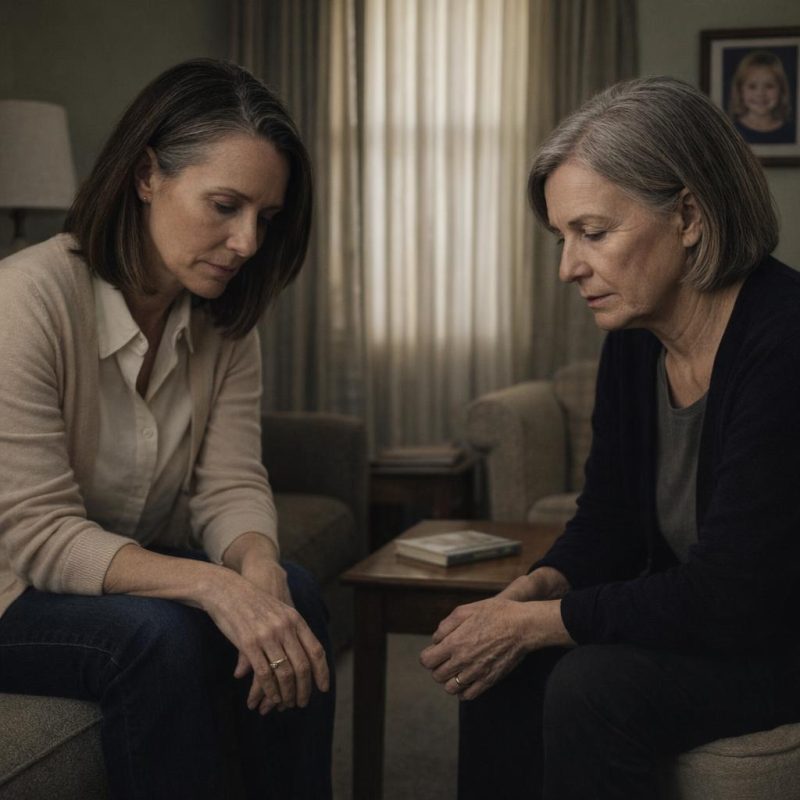 Image by RM AI
Meeting with the Lawyer
I make the appointment on a Tuesday morning, sitting at the kitchen table with a cup of coffee I don't finish. The lawyer's office is on the fourth floor of a building downtown, clean and neutral in the way professional spaces are when they're designed to absorb difficult conversations. She listens to everything — the envelope, the card, the hit-and-run, the payment, all of it — without interrupting, and when I finish she doesn't look surprised, just steady. I tell her I want a divorce and a clean separation, no drawn-out negotiation, no performance of reconciliation. She walks me through the process, the timeline, what I'm entitled to after thirty years of marriage. I ask about the house. She says we'll work toward a fair division of assets. I ask what fair looks like when one of those assets was purchased with money from a crime. She writes something down and tells me that's a conversation worth having. When she slides the initial paperwork across the desk, my hand is steady when I pick up the pen. I sign my name and set the pen down, and I sit back in the chair, and something I've been holding in my chest for weeks loosens just enough to let me breathe.
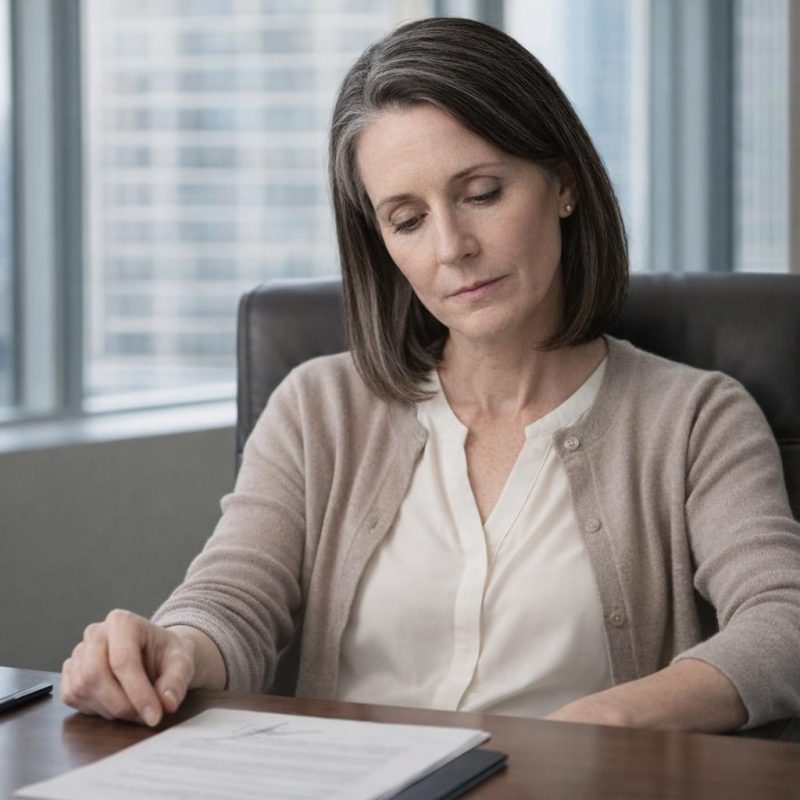 Image by RM AI
Building on Truth
I stand in the living room of this house and I try to see it clearly for the first time. The furniture we picked out together. The walls we painted one long weekend in October. The life that looked, from the outside, like something solid. I think about Robert Chen, whose name I now know, whose family never got a phone call, never got an explanation, never got the chance to ask why. I think about Elena's son waking up in the dark. I think about the version of myself who stood in a church thirty years ago and believed every word. I call Rachel and tell her the divorce paperwork is filed. She doesn't say I told you so. She says she'll come whenever I'm ready, with boxes and coffee and as many weekends as it takes. I tell her I'm going to sell the house. She says good. I look around the room one more time — the walls, the light coming through the window, the ordinary weight of a life I thought I understood. I can't undo what was built here. I can't give Robert Chen's family back what they lost, and I can't give myself back thirty years of believing something that wasn't real. But I can choose what I build next, and I choose to build it on the truth, even if the truth is harder to stand on.
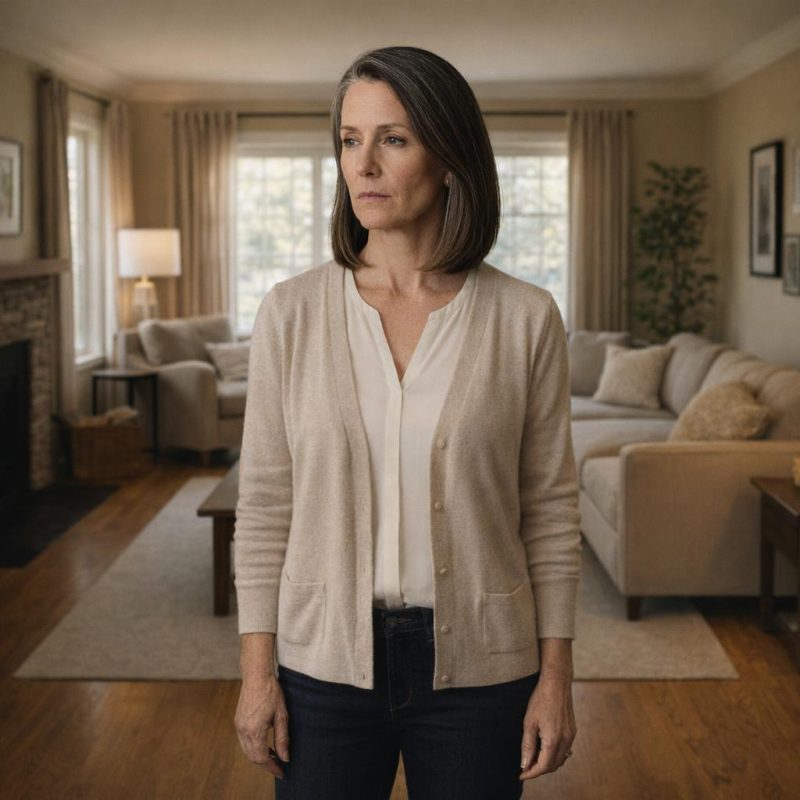 Image by RM AI