
The Soccer Mom Who Discovered What Really Happened During Carpool—And the Envelope That Changed Everything
The Soccer Mom Who Discovered What Really Happened During Carpool—And the Envelope That Changed Everything
The Tuesday Night Routine
Tuesday nights had their own rhythm in our house, and honestly, I'd come to depend on it. I finished wiping down the kitchen counter while Tyler sat at the dining room table, textbook open, pencil tapping against the wood in that absent way he had when he was actually thinking. From the living room came the sound of Emma picking her way through the same piano piece she'd been working on all week — a little halting, a little proud, starting over every time she missed a note. I dried my hands on the dish towel and checked my phone out of habit. Nothing urgent. A few emails I'd deal with tomorrow, a weather alert I ignored. I set it face-down on the counter and let out a long breath. The kids were fed, the dishes were done, homework was happening. That was enough. I called goodnight to both of them, got a distracted grunt from Tyler and a cheerful "night, Mom" from Emma, and headed upstairs. I washed my face, changed into pajamas, and pulled back the covers. Outside, the neighborhood was quiet. The house had settled into that particular stillness that only comes after a full day — the kind that feels earned.
 Image by RM AI
The Unfamiliar Number
I almost didn't listen to it. That's the thing I keep coming back to. I was standing in the kitchen the next morning, half a cup of coffee in my hand, scrolling through my notifications on autopilot. There was a voicemail flag from a number I didn't recognize — no name, no area code I knew offhand. My thumb hovered over delete. Spam calls had gotten so relentless over the past year that I'd basically stopped checking voicemails from unknown numbers altogether. If it was important, they'd call back. That was my logic. I was already mentally moving on to my to-do list when something made me stop. I couldn't tell you what it was, exactly. Maybe the fact that it wasn't a robocall notification, just a plain voicemail icon. Maybe just a gut thing. I set my coffee mug down on the counter, leaned against the sink, and looked at the number again. Still nothing familiar. Still no reason to think it was anything other than someone trying to sell me an extended car warranty. I pressed play.
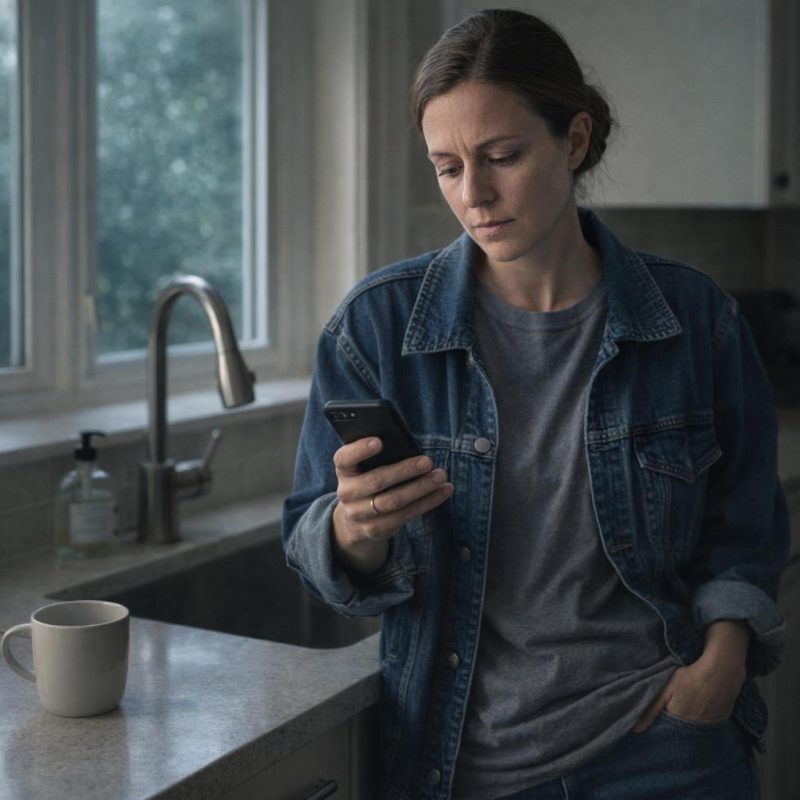 Image by RM AI
The Carpool Arrangement
Listening to that voicemail brought me straight back to the first day of the season, six months earlier. I remembered standing on the sideline at Tyler's first practice, juggling my phone and a travel mug, already doing the mental math on how I was going to make the Tuesday and Thursday pickup times work with my schedule. That's when Greg had introduced himself — Brandon's dad, easy smile, firm handshake, the kind of guy who seems like he has everything organized. He'd mentioned almost casually that he drove past our neighborhood on his way home from work anyway, and that Tyler was more than welcome to ride with them. I'd hesitated for about thirty seconds before saying yes. The timing was almost too good — Emma had just started dance classes on the other side of town, and I'd been quietly panicking about how to be in two places at once. Greg had waved off my thanks like it was nothing. "It's on my way," he'd said, more than once. Tyler had seemed comfortable with the other boys from the start, coming home tired and talkative in the way kids do after a good practice. I'd felt nothing but grateful.
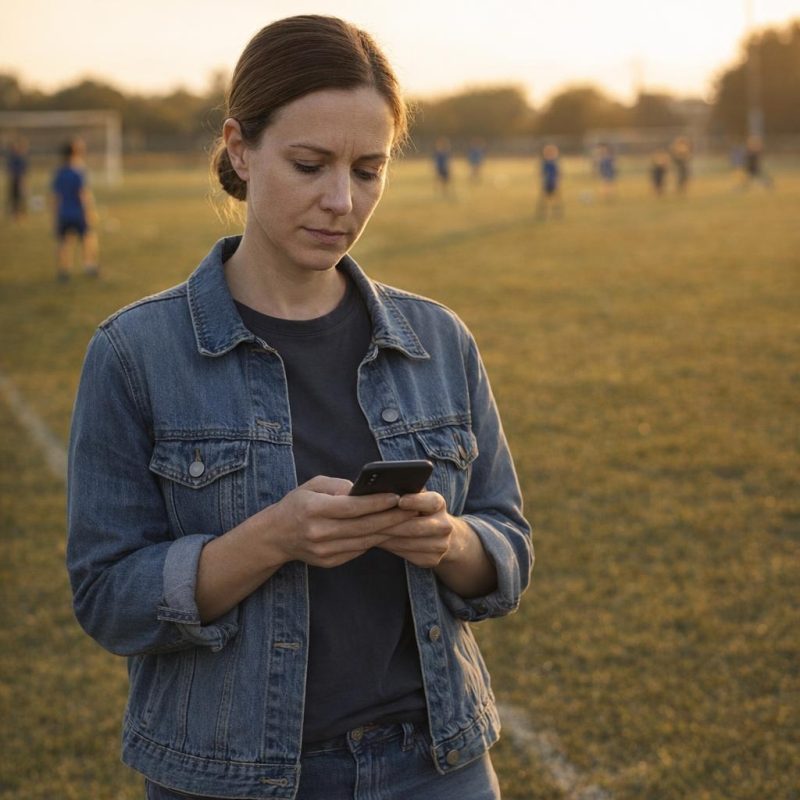 Image by RM AI
Tyler's Passion
Tyler had loved soccer since he was five years old and kicked a ball straight into our sliding glass door. I'd been furious for about ten seconds and then laughed for a week. By thirteen, it wasn't just something he did — it was something he was. He carried a ball everywhere. He'd dribble down the hallway if I let him, which I mostly didn't. On game days he was up before his alarm, which was the only morning that ever happened without a fight. Watching him on the field was one of those parenting moments I tried to hold onto — the way he moved like he'd been doing it his whole life, because he had. The team had become a real part of his world too, not just the sport itself. He talked about practice at dinner, replayed plays in the backyard, knew every player's strengths and weaknesses like he was running the whole operation. Meanwhile Emma had dance on Tuesdays, art club on Thursdays, and a social calendar that somehow rivaled mine. Getting both of them where they needed to be, on time, without losing my mind — that had felt impossible before the carpool. Watching Tyler come home after practice, cleats in hand, still buzzing with whatever had happened on the field — that was the part I lived for.
 Image by RM AI
Six Months of Smooth Rides
Six months is long enough for something to stop feeling like a favor and start feeling like furniture — just part of how the week works. Tuesdays and Thursdays, I'd drop Tyler at Greg's house before practice. Greg would give a wave from the driveway, sometimes from the front door, always friendly, never rushed. Tyler would toss his bag in the back and climb in, and that was that. He'd come home a couple hours later, tired and sweaty, sometimes quiet, sometimes full of commentary about practice. Nothing that stood out. Greg would occasionally text to say they were on their way back, which I appreciated. I'd thank him at pickup or over text, and he'd say some version of "no problem at all" every single time. It had become so routine that I'd stopped thinking of it as something Greg was doing for us and started thinking of it as just — Tuesday. Just Thursday. The arrangement had folded itself so neatly into our week that I couldn't quite remember what the schedule had looked like before it. Tyler rode with Greg every Tuesday and Thursday for six months, and not once did anything feel off.
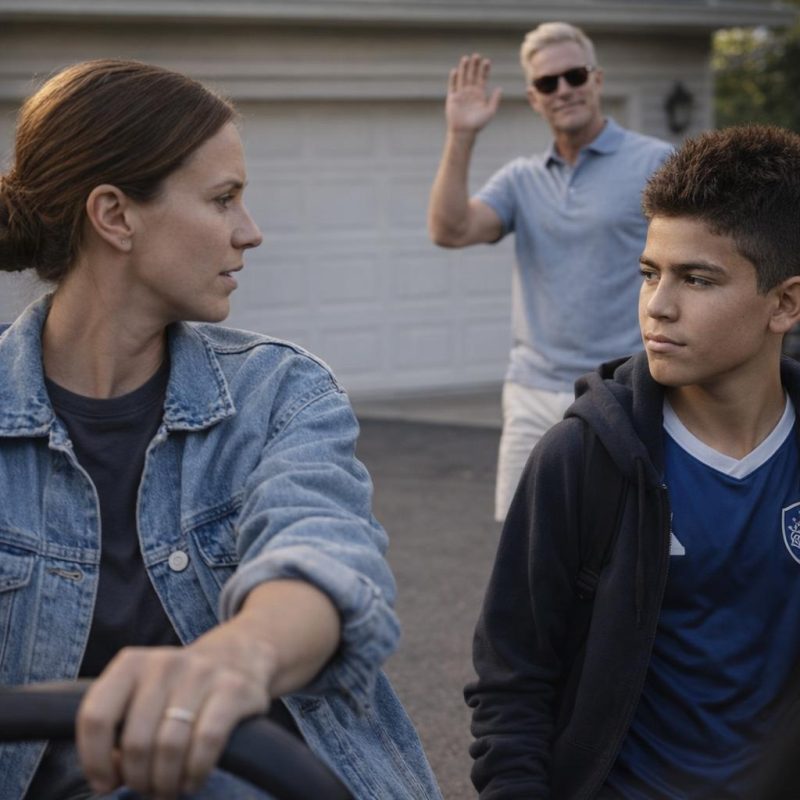 Image by RM AI
Melissa's Voice
The voice on the voicemail was young — younger than I'd expected — and she spoke fast, like she was trying to get the words out before she lost her nerve. She said her name was Melissa. She said she worked for the family that drove my son to soccer practice. I stood very still in my kitchen, coffee forgotten, listening. She said she'd been in the car on Tuesdays for months — most of them, anyway — and that she needed to talk to me about something. She didn't say what. She just said she needed to talk. Her voice dropped lower partway through, like she was checking over her shoulder, and she rushed through the last few sentences in a way that made my stomach tighten. I knew Greg had a nanny — Tyler had mentioned her once or twice in passing, just as background detail, the way kids mention things that don't seem important. But I'd never spoken to her. I didn't even know her name until that moment. I played the message again from the beginning, slower this time, paying attention to every pause. Whatever she was trying to tell me, she hadn't quite gotten there yet. But the nervousness in her voice sat with me long after the recording ended.
 Image by RM AI
Something Happening During the Rides
I played the message a third time. Melissa's voice came through the speaker again, still hushed, still hurried. She said there were things happening during the carpool rides that she thought I should know about. She didn't use the word "problem" — she was careful about that, I noticed — but the way she said it left no room to think she was calling about something small. My heart had started doing that thing where you feel it in your throat. I set the phone down on the counter and then immediately picked it back up. She said she'd been trying to figure out whether to call for a while. She said she wasn't sure it was her place. But she'd decided she couldn't just keep quiet. I kept waiting for her to get to the part where she told me what it actually was — what had been happening, what she'd seen — but the message kept moving without landing anywhere specific. And then, near the end, her voice dropped even lower, almost to a whisper. She said Tyler didn't know she was making this call.
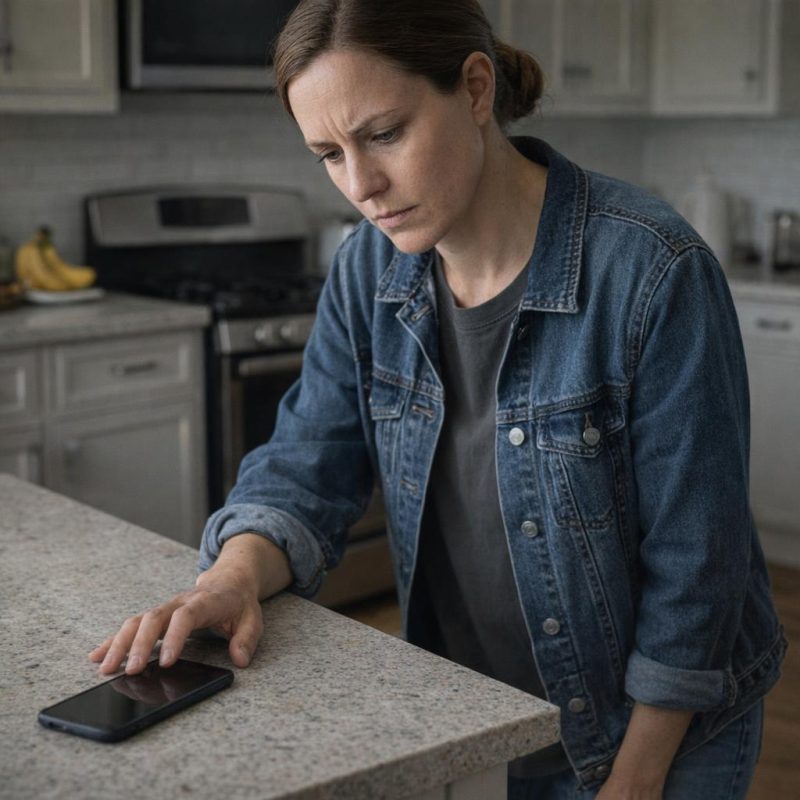 Image by RM AI
The Message Ends
The voicemail ended. Just a beep, and then silence. I stood in the middle of my bedroom — I'd walked upstairs at some point without really noticing — holding the phone against my chest like that would somehow help me think. My heart was going hard. I replayed what I'd heard, trying to find the edges of it, trying to figure out what shape the thing was. Something had been happening during the rides. She'd been in the car. She'd watched it, whatever it was, for months. And Tyler didn't know she'd called. That last part kept circling back. Why would it matter whether Tyler knew? What would it change? I looked at the number on my screen — still just digits, no name, no context — and tried to decide what to do next. The silence in the room pressed in around me, and the phone sat in my hand with Melissa's number still on the screen.
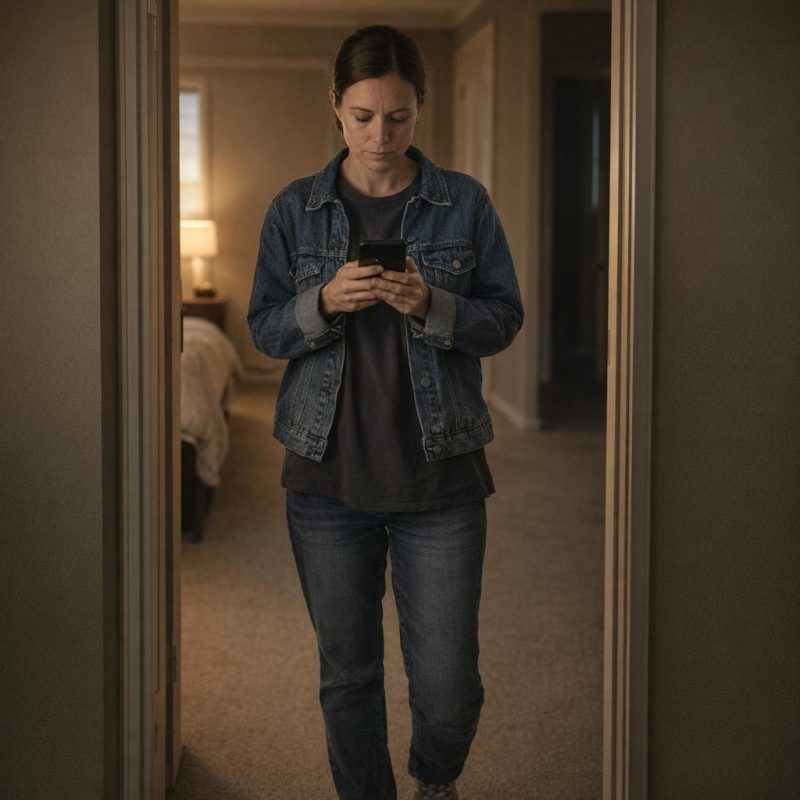 Image by RM AI
The Decision to Call Back
I told myself I'd wait until morning. That was the sensible thing — it was late, I didn't know this woman, and whatever she had to say had already waited this long. I set the phone down on the nightstand and stared at the ceiling for about forty-five seconds before I picked it back up. I couldn't do it. I couldn't just lie there in the dark while my brain ran through every possible version of what she might have meant. Something had been happening in that car. Something involving my son. And some stranger had felt strongly enough about it to leave me a voicemail she clearly hadn't wanted to leave. I checked the time — 9:47. Not unreasonable. Not rude. That's what I told myself, anyway. My thumb hovered over the screen. I thought about Tyler asleep down the hall, that easy sleep kids have when they don't know you're worrying about them. Or when they're used to worrying alone. That thought hit me somewhere low and I didn't let myself sit with it. I pulled up the number, took one slow breath, and tapped call.
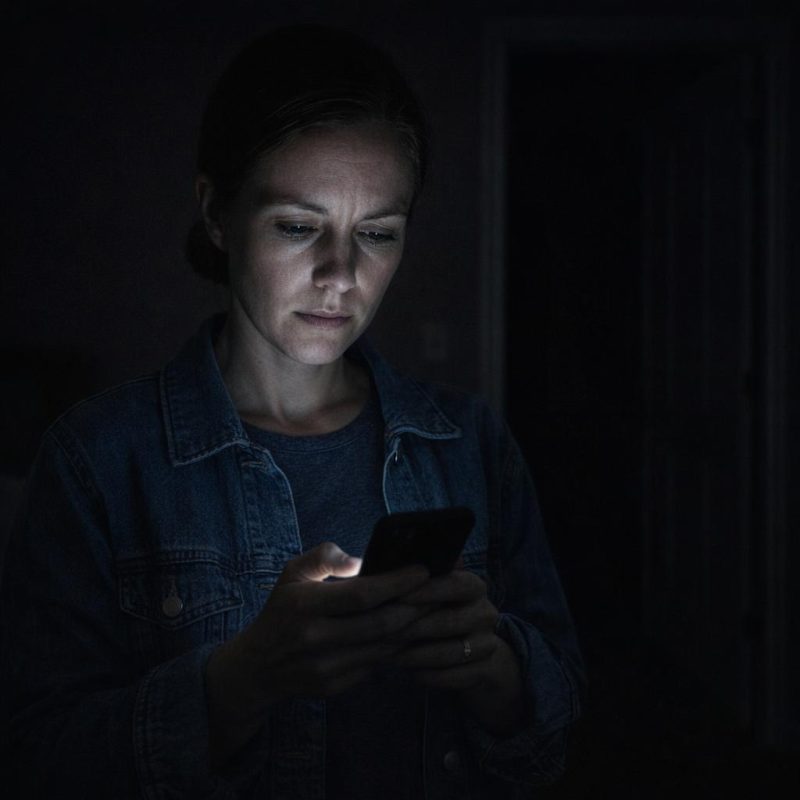 Image by RM AI
Melissa Answers
It rang twice. That was it — two rings, and then a quiet, careful voice said, "Hello?" Like she'd been sitting there with the phone in her hand. I said my name, told her I'd gotten her message, and there was this pause — just a beat — and then something in her voice shifted completely. The tension went out of it. "Oh, thank God," she said, and she sounded so genuinely relieved that it stopped me cold. Not the reaction I'd been bracing for. I'd half-expected defensiveness, or maybe the awkward backpedaling of someone who'd had second thoughts about calling. Instead she sounded like someone who'd been holding her breath for a long time and had finally been allowed to let it go. "I wasn't sure you'd call back," she said. "I almost didn't leave the message at all." I told her I was glad she had. I asked her what was going on. There was another pause, shorter this time, and I could hear her steadying herself on the other end of the line. Whatever she was about to tell me, she'd been carrying it for a while. The relief in her voice when she realized who was calling settled over me like a warning I hadn't learned to read yet.
 Image by RM AI
The Boys Have Been Picking On Tyler
She started carefully, like she was choosing each word before she let it out. She said the other boys in the carpool had been picking on Tyler. That was how she put it at first — picking on him. I asked her what she meant, because that phrase covers a lot of ground, and I needed to know which part of it we were talking about. There was a long silence. Long enough that I almost said her name just to check she was still there. Then she said it happened during the rides. Not once. Not a couple of times. During the rides — plural, ongoing, like it was just part of the routine. I felt something shift in my chest. I asked her to explain what she meant by picking on him, and she started to describe a pattern, her voice going quieter as she did, like she was ashamed of what she'd witnessed. I sat down on the edge of the bed without really deciding to. I thought about Tyler in that back seat, three afternoons a week, making conversation, trying to fit in, doing whatever thirteen-year-olds do when they're just trying to get through the ride. The thought of him being targeted in that small, enclosed space settled over me like something I couldn't shake off.
 Image by RM AI
Every Single Ride
Melissa described it methodically, like she'd been rehearsing how to say it. Greg's son Brandon and two other boys from the team. Every ride. She said it that way — every ride — and I made her repeat it because I thought I'd misheard. She hadn't misspoken. They went after his clothes first, she said. Little comments about what he was wearing, the kind that sound like observations until you notice the tone. Then his haircut. Then the way he talked. Then his performance in games — missed shots, slow runs, moments that any kid has on any given day, turned into material. She said they had a rhythm to it, the three of them, like they'd done it enough times that they knew how to pass it around. I gripped the phone tighter. I thought about Tyler getting into that car three times a week, knowing what was coming, and still getting in. Still showing up. I asked Melissa if this had been going on since the beginning of the season. She went quiet for a second. Then she said yes. Every single ride, from the very first week.
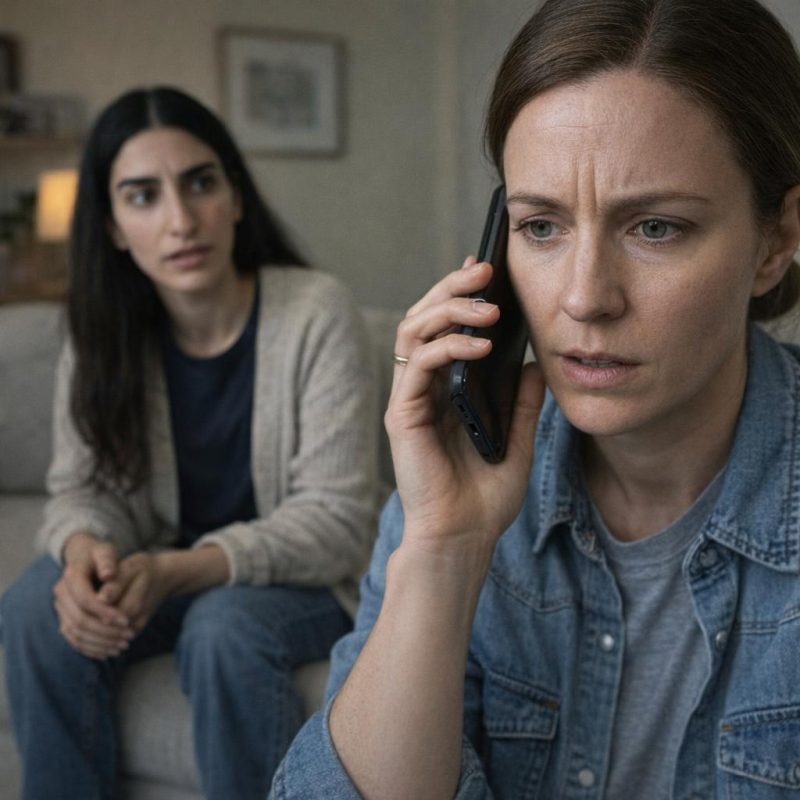 Image by RM AI
The Subtle Cruelty
I asked her if it was bad — like, obvious bad, the kind of thing you could point to and say, that's bullying, full stop. She said that was the thing. It wasn't. She said the comments were never loud enough to be undeniable. They weren't screaming at him or calling him names that would make an adult step in automatically. It was subtler than that. The kind of remark that sounds like a joke if you're not paying attention. The kind where if Tyler had said something, the other boys could have shrugged and said they were just messing around, and half the adults in the room would have believed them. Melissa said that was what made it so hard to watch — because there was always just enough plausible deniability built in that Tyler couldn't really fight back without looking like he couldn't take a joke. I knew exactly what she was describing. I'd seen that kind of thing before, from the outside, and it's insidious in a way that blunt cruelty isn't. Blunt cruelty leaves marks you can show people. This kind just wears you down, slowly, until you start to wonder if you're the problem. The thought of Tyler sitting with that, ride after ride, settled into me like something cold and heavy.
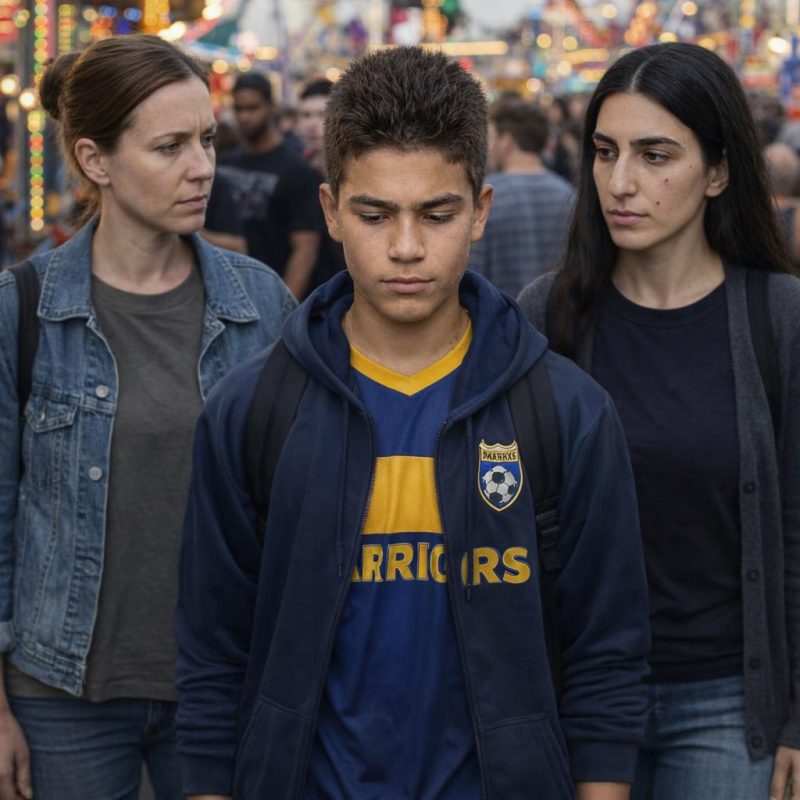 Image by RM AI
Greg Does Nothing
I asked the question I'd been circling around since she started talking. I asked what Greg did when it happened. Melissa didn't answer right away. I heard her take a breath. Then she said he heard it. Every time. He was right there in the front seat, she said, and he heard every comment, every little dig, every round of it. I waited for the but. I kept waiting for her to say but he told them to knock it off, or but he'd talked to Brandon about it afterward, or but he didn't realize how bad it had gotten. The but never came. She said he didn't do anything. Nothing. He'd turn up the radio sometimes, she said, or he'd start talking about something else, but he never told them to stop. Never addressed it directly. Not once. I sat there holding the phone and I didn't say anything for a moment because I genuinely didn't know what to say. This was the man I'd trusted with my son three afternoons a week. The man who'd offered to help, who'd been so easy and confident about the whole arrangement. The silence on the line felt like it had weight to it, pressing down on everything I thought I'd understood about those months.
 Image by RM AI
Tyler Begged Her Not To Tell
I asked her why she'd waited so long to call me. It came out a little sharper than I meant it to, and I heard her absorb it before she answered. She said she'd wanted to tell me months ago. Almost from the beginning, she said. She'd had my number — Greg had a contact sheet for all the carpool parents — and she'd picked up her phone more than once. But she hadn't called. I asked her why. She said Tyler had asked her not to. I went very still. She said he'd noticed her watching, noticed that she was upset about what was happening, and one afternoon after a ride he'd pulled her aside and asked her please not to say anything to his mom. Please. She said he'd used that word. I pressed my hand flat against my knee and stared at the wall across from me. I asked her why he would want that, why he'd want to keep something like this to himself, and she said she'd asked him the same thing. She said he'd looked at her with this expression she couldn't quite describe, and then he'd started to explain. My son had been carrying this alone for months, quietly, on purpose, and I hadn't known.
 Image by RM AI
Tyler's Fear
Melissa said Tyler had thought it through. That was what got me — he hadn't just reacted, he'd actually worked out the logic of it, the way kids do when they've had too much time alone with a problem. He was afraid that if I found out and pulled him from the carpool, the other boys would know exactly why. Brandon and the others would know it had gotten back to a parent. And Tyler believed — and Melissa said she thought he was probably right — that it wouldn't stop there. It would follow him onto the field. Into practice. Into the locker room. He thought pulling out of the carpool would hand them something to use against him for the rest of the season, maybe longer. So he'd made a calculation: stay in the car, take it, keep his head down, and protect his place on the team. He'd looked at two bad options and picked the one that felt survivable. Melissa's voice was soft when she said it, like she understood why he'd done it even if it broke her heart too. I understood it as well. That was the worst part. His reasoning made complete sense — a thirteen-year-old boy, cornered, choosing the option that hurt less.
 Image by RM AI
That's Not Why I Called
I was already running through it in my head — how I'd talk to Greg, whether I'd call the school, whether I needed to loop in Coach Martinez. My mind was moving fast, the way it does when I finally have something concrete to act on. I was going to fix this. I was going to pull Tyler out of that carpool and deal with whatever fallout came after, because that's what you do. And then Melissa said it. Quiet, almost apologetic. 'That's not actually why I called.' I stopped. Just — stopped. I asked her what she meant. She said the bullying was real, she wasn't minimizing it, but there was something else. Something she'd found. Something that had made her pick up the phone when she'd been telling herself for weeks it wasn't her place. My mouth went dry. I asked her to keep going. She hesitated — not the way people hesitate when they're choosing words, but the way they hesitate when they're not sure they should be saying it at all. And that pause, that small careful pause, was enough to make my stomach drop straight through the floor. 'There's something bigger going on,' she said. 'Something I found that I can't explain away.'
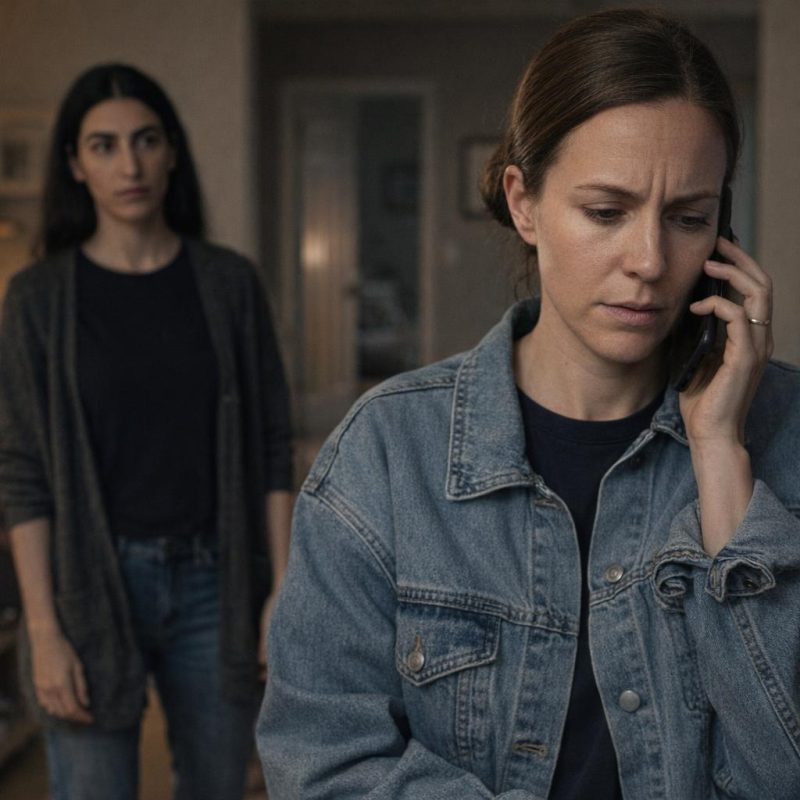 Image by RM AI
Something In Tyler's Bag
I asked her what she meant by 'found.' The word just sat there between us, heavy in a way I couldn't explain yet. Melissa said it was last Tuesday. She said she wanted me to understand she wasn't going through his things — she wasn't that kind of person, she wanted me to know that. A water bottle had leaked in the back seat, one of those cheap ones that the cap never stays on properly, and it had soaked through into his bag. She was just trying to help clean it up before everything got ruined. She said she felt terrible even mentioning it, like she was betraying his trust somehow, but she couldn't not say something. I told her I understood. I told her to keep going. Every muscle in my body had gone tight — the kind of tight where you're not even aware you've stopped breathing until your chest starts to ache. I was gripping the phone so hard my fingers had gone white at the knuckles. I didn't know what she was about to say. I didn't know if I wanted to. But I stood there in my kitchen, the refrigerator humming behind me, and I waited in the silence that comes right before everything changes.
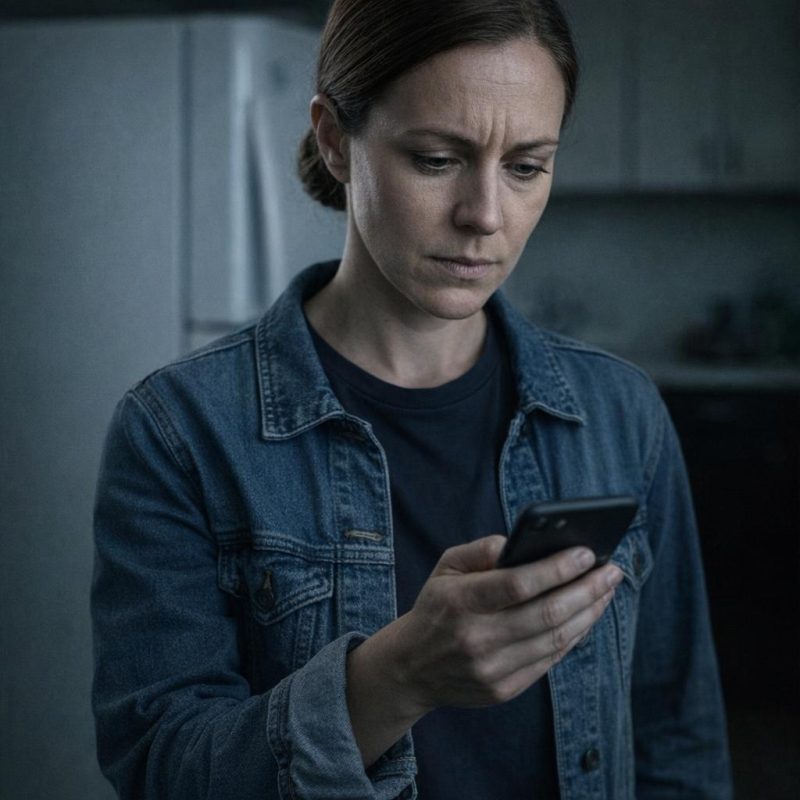 Image by RM AI
Bigger Than Teasing
Melissa said what she found made her stop and just stand there for a minute, not sure what she was looking at. She said she'd turned it over in her mind all week, trying to figure out if she was reading it wrong, if there was some obvious explanation she was missing. She kept coming back to the same place: this wasn't something she could let go. I asked her to tell me. My voice came out steadier than I felt. She said she would, she just wanted me to understand that she wasn't trying to cause trouble, she wasn't trying to make things complicated — she genuinely cared about Tyler, she'd watched him every afternoon for months and he was a good kid, a really good kid, and that was exactly why she couldn't stay quiet. I said I knew that. I said I trusted her. My mind was cycling through every terrible thing a mother's brain goes to — something dangerous, something that meant he was in real trouble, something I should have seen coming. I pressed the phone harder against my ear. Melissa took a slow breath on the other end of the line. The pause stretched out long enough that I could hear the faint sound of traffic somewhere near her, and I just held on, waiting.
 Image by RM AI
That Night I Barely Slept
The call ended a few minutes later, Melissa saying she'd explain everything tomorrow when she had more time and wasn't standing in a parking lot. I said okay. I said goodnight. I set the phone down on the counter and stood there for a moment just staring at it. Then I went through the motions — checked on Emma, turned off the lights, got into bed. Sleep didn't come. I lay there watching the ceiling go from dark to darker as the hours moved, my mind looping back through everything Melissa had said. The bullying. Tyler's calculation. The thing she'd found that she couldn't let go of. I kept trying to fill in the blank and coming up empty, or worse, coming up with something I didn't want to be right about. I thought about Tyler asleep down the hall, his soccer bag probably kicked under his bed the way he always left it. I thought about all the afternoons I'd handed him off to that carpool without a second thought, trusting that everything was fine because he'd told me it was fine. By four in the morning I'd made up my mind. I wasn't going to wait for Melissa to call back. I was going to sit Tyler down before school and ask him myself.
 Image by RM AI
The Morning Conversation
I waited until I heard Emma's bus pull away from the corner. Then I poured Tyler a glass of orange juice, set it on the table in front of him, and sat down across from him like it was a normal morning. I asked him how the carpool had been going. He shrugged without looking up from his phone. Fine, he said. Good. I said I'd heard some of the boys could be a little much sometimes, that it was okay to tell me if anyone was giving him a hard time. He shook his head. Nah, he said. They're fine. Everyone's fine. He reached for the juice and took a long sip, eyes still down. I said his name. He looked up then, just briefly, and I saw something flicker across his face before it went neutral again. I told him he could talk to me. He said he knew that. He said there was nothing to talk about. Then he pushed back from the table, said he didn't want to miss the bus, grabbed his bag from the hook by the door, and was gone. I sat there with his half-empty glass in front of me, the morning quiet settling back in around me, and felt the distance between us like something I couldn't measure.
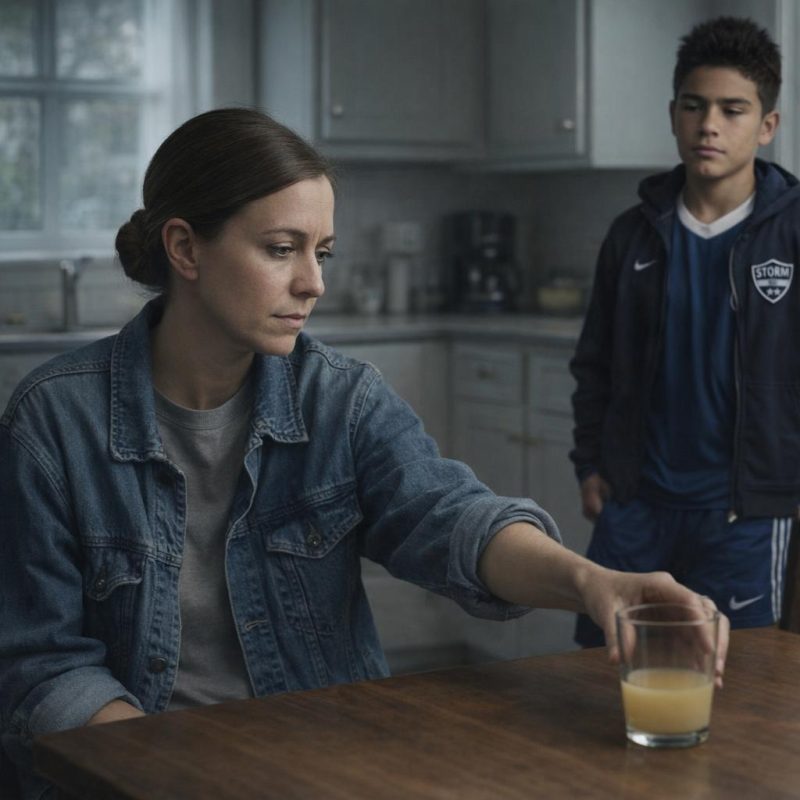 Image by RM AI
The Answers That Came Too Fast
I kept replaying it at the kitchen table after he left. The answers had come too fast — that was the thing that stayed with me. When Tyler was telling the truth, he thought about it first. He'd pause, look up at the ceiling, sometimes start a sentence and back up and try again. That was just how he was wired. But that morning every answer had been immediate. Fine. Good. No big deal. Like the words were already sitting at the surface, waiting. And his eyes. He'd looked at his phone, at the table, at the juice glass, at the door — everywhere except at me. I'd seen him do that before, back in sixth grade when he'd broken a neighbor's window with a baseball and tried to hide it for three days. This felt like that, but heavier. Weighted in a way I couldn't quite name. I wasn't going to push him right now — I knew enough about Tyler to know that pushing too hard too fast would just make him shut down completely. But I sat there after he was gone, the house quiet around me, with the certain, settled weight of knowing my son was carrying something he hadn't told me.
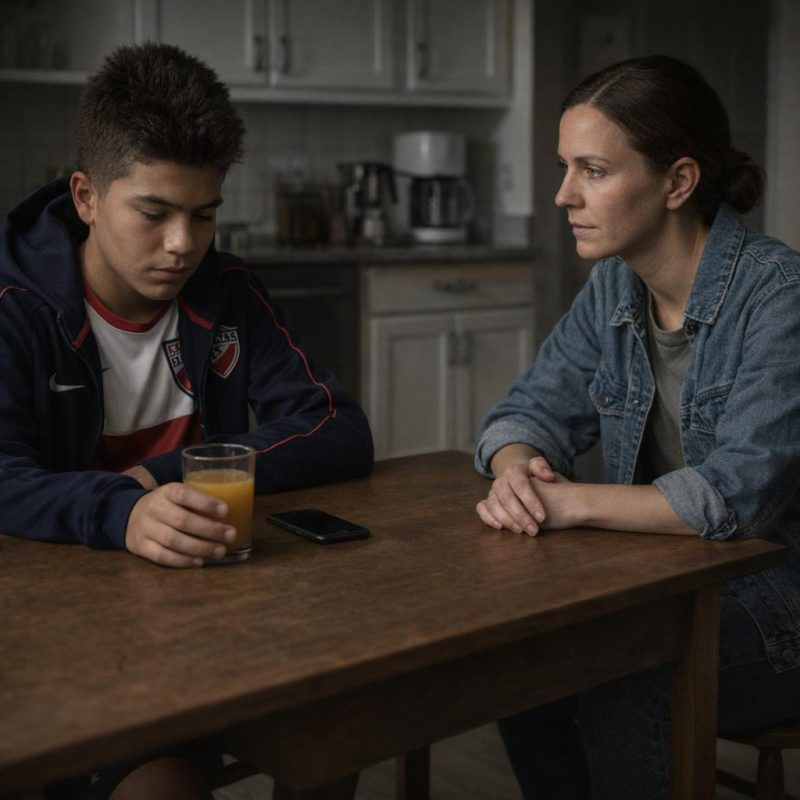 Image by RM AI
Waiting for Melissa
Work was a blur. I sat through a morning meeting and couldn't have told you what it was about five minutes after it ended. I answered emails on autopilot, typed things and deleted them, refilled my coffee twice without drinking it. Every time my phone lit up I grabbed it, and every time it was something that didn't matter — a school newsletter, a coupon, a group text from a neighbor about a lost dog. I kept thinking about Tyler's face at the breakfast table. I kept thinking about Melissa's voice on the phone, that careful pause before she said there was something I needed to know. I ran through possibilities the way you do when you're trying to prepare yourself for bad news, like if you imagine enough versions of it, the real one won't hit as hard. By two in the afternoon I'd convinced myself of three different terrible things and talked myself out of all of them. Then, at 2:47, my phone buzzed with a text from Melissa: *Sorry I had to cut it short last night. I'll call you tonight after work, around 7:30. There's more I need to tell you.*
 Image by RM AI
The Evening Call
My phone rang at 7:32. I was already in my bedroom with the door closed, sitting on the edge of the bed. Melissa sounded steadier than she had the night before, but I could still hear the tension underneath it, the way her words came out a little too carefully. I asked her to tell me what she found in Tyler's bag. She said she wanted me to know first what it wasn't. It wasn't a note. It wasn't a message from anyone. It wasn't anything that looked like he'd been hurt or that someone had threatened him. I felt a small loosening in my chest — and then immediately tensed again, because the way she said it made clear that what she had found was still something. She said it wasn't what she'd expected either, when she first saw it. I asked her what she meant. She took a breath. She said when the water bottle soaked through the bag and she started pulling things out to dry them off, she found something tucked into the inside zip pocket — the small one, the one Tyler never used for anything. It wasn't a note. It wasn't a phone. She said: 'It was cash. A folded stack of bills. More than a kid that age should have.'
 Image by RM AI
Cash in an Envelope
I asked her to say that again. Several hundred dollars. I sat there on the edge of my bed and just — I couldn't make it compute. Tyler was thirteen. He got twenty dollars on his birthday from his grandmother and thought that was a windfall. He didn't have a job, didn't do odd jobs for neighbors, didn't have any source of income I'd ever heard of. And I certainly hadn't given him that kind of money. Melissa said she'd thought the same thing at first — that maybe I had given it to him for something, a school trip deposit or equipment fees, something like that. She said she almost put it back without saying anything, assuming there was an explanation. But then she noticed the envelope. She said it wasn't just loose bills stuffed in a pocket. It was folded neatly inside an envelope, the kind you'd get at a bank or pull from a box of stationery. Organized. Intentional. I asked her how much exactly. She said she hadn't counted it, but it looked like it could be three hundred, maybe more. I pressed my free hand flat against my knee to keep it from shaking. Three hundred dollars. In an envelope. In the inside zip pocket of my son's soccer bag.
 Image by RM AI
Tyler's Name on the Envelope
I asked her about the envelope itself. She said that's what made her stop — what made her decide she had to call me. It wasn't blank. There was writing on the front. She said Tyler's name was written clearly across the middle, in handwriting she didn't recognize. Not printed, not typed — handwritten, like someone had taken a moment to write it out properly. I asked if it looked like a kid's handwriting. She paused and said no, it looked like an adult's. I felt something shift in my chest, something I didn't have a name for yet. I asked what else was on it. She said there was something written underneath his name. Another line. I gripped my phone tighter. I asked her what it said. She went quiet for just a second — not long, but long enough that I noticed it. She said she wanted to make sure she got it exactly right. I told her to take her time. I could hear her exhale slowly on the other end of the line, and I sat there in the dark of my bedroom, waiting, the words not yet spoken but already pressing against the silence between us.
 Image by RM AI
For Helping
She said: 'For helping.' Just those two words. I repeated them out loud without meaning to — 'For helping' — like saying them again might make them mean something different. They didn't. I asked her what Tyler had been helping with. She said she didn't know. I asked if she had any idea at all, any context, anything she'd seen or overheard that might explain it. She said no. She said she'd been turning it over in her head since she found it and she couldn't come up with anything that made sense. I tried to think through it myself. Helping with what? Helping who? Tyler helped me carry groceries sometimes. He helped Emma with her homework when she asked. But nobody paid a kid three hundred dollars in a labeled envelope for that kind of thing. Nothing I could think of came close to explaining it. I asked Melissa if she'd put the envelope back. She said yes, exactly where she found it, tucked into the inside zip pocket, the bills folded the same way. I was glad she'd thought to do that. I asked her if she knew what Tyler had been helping with, and the silence on her end told me everything — she had no more answers than I did.
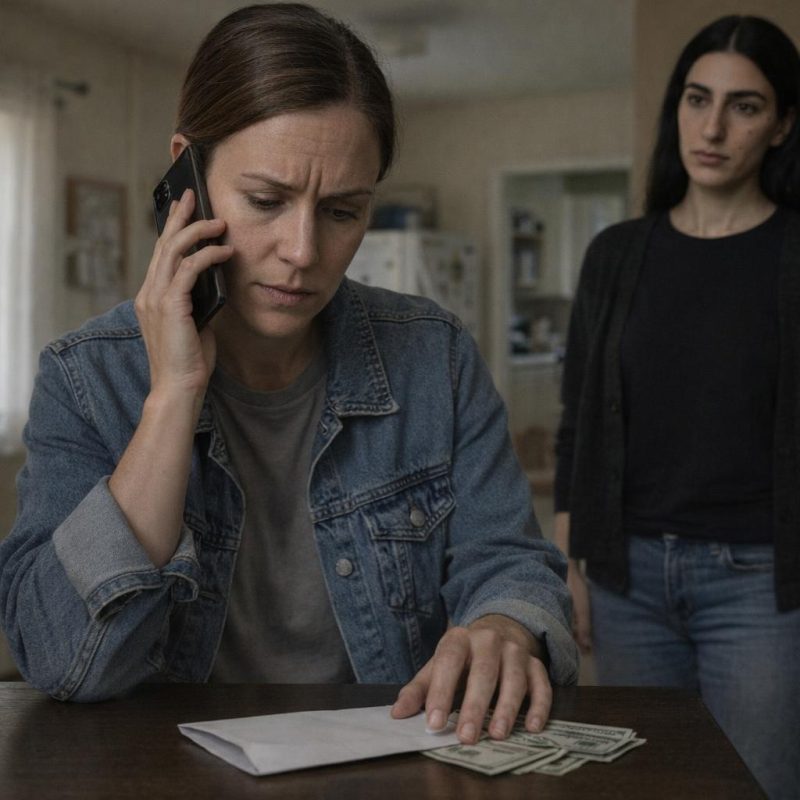 Image by RM AI
That Night
After we hung up I just sat there. The house was quiet. I could hear the low sound of Tyler's music coming from under his door down the hall — something with a steady beat, the kind he always played when he was doing homework. Normal. Completely normal. And I was sitting ten feet away from him holding a secret about something in his own bag that I didn't understand at all. I went through every explanation I could think of. Maybe he'd done something for a neighbor and they'd paid him generously. Maybe it was some kind of bet or dare that had gone further than it should have. Maybe someone had given it to him to hold onto for them. None of it felt right. None of it explained the envelope, the handwriting, the careful way it had been tucked away in the one pocket he never used. I thought about going to his room right then and asking him directly. But I didn't have anything solid to show him — just Melissa's description of something I hadn't seen with my own eyes. I needed more than that before I walked through that door. I decided I'd wait. I'd get what I needed first. But sitting there in the dark, listening to the muffled beat of his music, the weight of not knowing what my son was caught up in settled over me like something I couldn't put down.
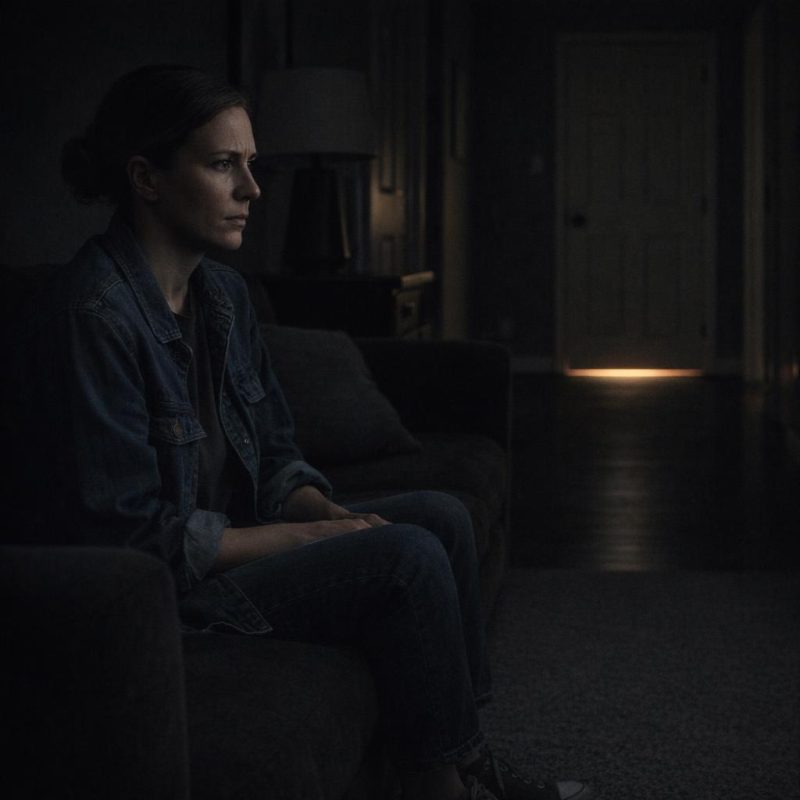 Image by RM AI
The Photo
I texted Melissa before I went to sleep. I kept it short — I just asked if she'd taken a photo of the envelope before she put it back. I set my phone on the nightstand and stared at the ceiling for a few minutes. The three dots appeared almost immediately. She said yes. She said she'd taken a picture the moment she found it, before she touched anything, because something told her she should. I felt a small wave of relief — the kind that doesn't actually make you feel better, just slightly less helpless. I asked her to send it. A few seconds passed. Then my phone lit up. I opened the image and held the screen close. The photo was clear enough — slightly angled, taken in what looked like the laundry room light, but readable. The envelope was plain white. Tyler's name was written across the front in dark ink, in handwriting I didn't recognize, the letters even and deliberate. Underneath his name, in the same hand: *For helping.* I stared at it for a long time. The handwriting didn't belong to anyone I could place. The envelope sat in the photo exactly as Melissa had described it — neat, sealed, purposeful. I set my phone face-down on the nightstand, but the image stayed with me in the dark.
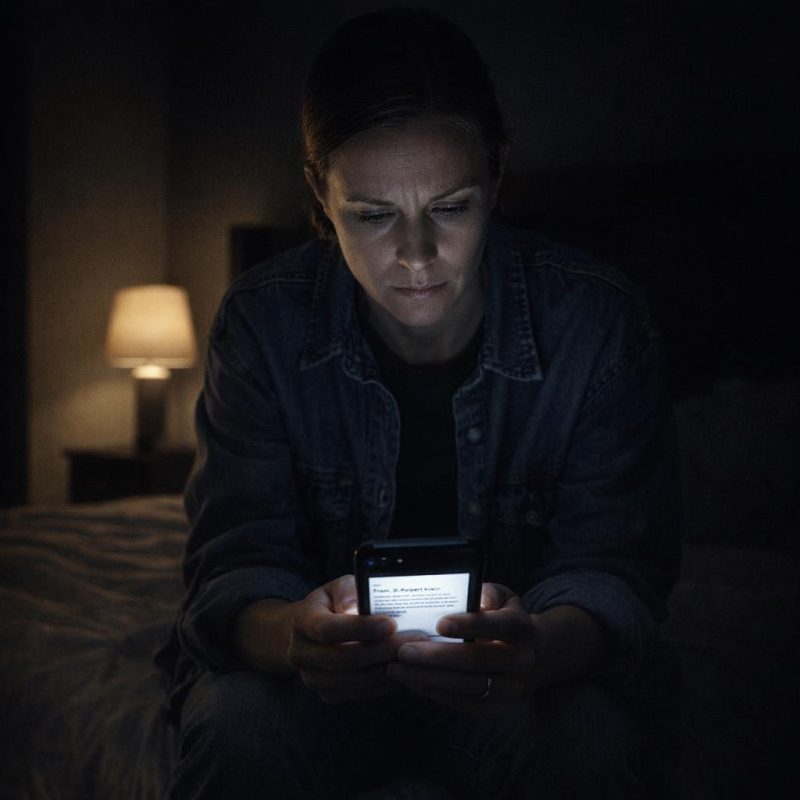 Image by RM AI
Confronting Tyler
I waited until after dinner the next evening. Emma was in her room, Tyler was rinsing his plate at the sink, and I asked him to come sit with me at the kitchen table when he was done. He didn't think anything of it — just dried his hands and pulled out the chair across from me, the way he always did. I had my phone face-down on the table in front of me. I didn't say anything right away. I just picked it up, opened the photo, and slid it across the table toward him. I didn't explain it. I didn't ask a question. I just let him look. He glanced down at the screen the way you do when someone hands you their phone — casual, expecting nothing. And then he went completely still. His eyes moved across the image and something happened to his face that I hadn't seen coming. The color drained out of it. His mouth opened slightly, like he'd started to say something and then forgot what words were. His hands, which had been resting flat on the table, curled inward. He looked up at me once — just for a second — and then back down at the photo, and his whole body started to shake.
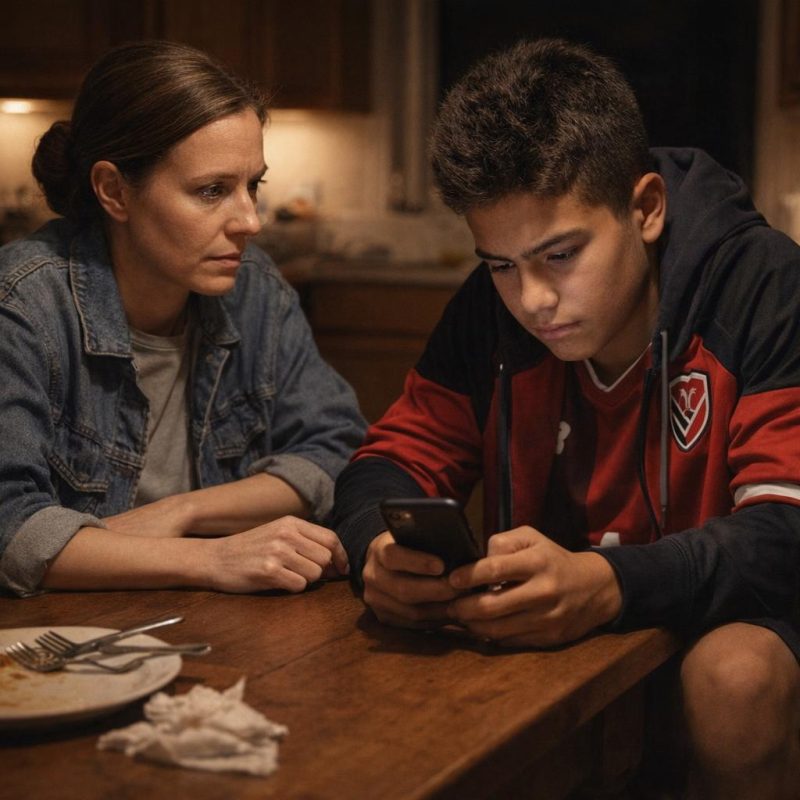 Image by RM AI
Tyler Starts Crying
He didn't say anything. He just started crying. Not the kind of crying that comes with a scraped knee or a bad day — this was something deeper, something that came from further down. His shoulders pulled in and his breath broke apart and the sound that came out of him was the kind I'd only heard a handful of times in his whole life. When he broke his arm in fourth grade and the bone had pushed against the skin. When our dog died two years ago and he'd sat on the kitchen floor and couldn't get up. That level. That register. I didn't ask him anything. I didn't say his name or tell him to calm down or ask him to explain. I just pushed my chair back and went around the table and put my arms around him, and he leaned into me the way he used to when he was small, before he'd decided he was too old for that. I held him and rubbed his back and didn't say a word. Whatever this was, it was real. Whatever he'd been carrying, it had been heavy. I could feel it in the way he shook — not performance, not manipulation, just a thirteen-year-old boy who had been holding something too long finally letting it go. I held him and listened to the sound of him breaking open.
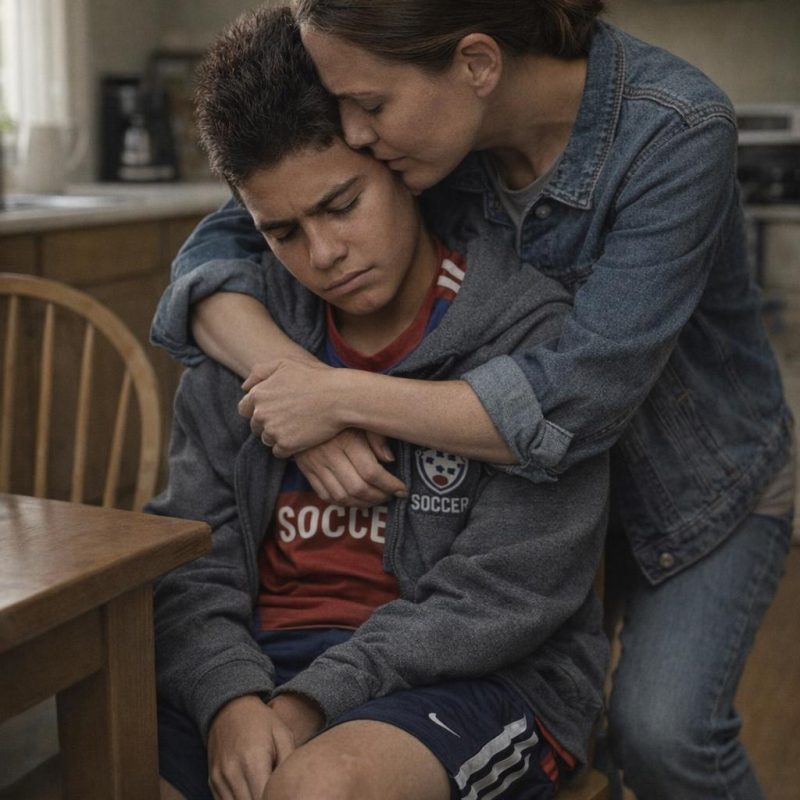 Image by RM AI
Waiting for Him to Speak
I didn't push him. I just kept my arms around him and let him cry until the crying slowed on its own. It took a while. His breathing came in waves — a long shudder, then a pause, then another. I rubbed slow circles on his back the way I used to when he was little and couldn't sleep. At some point I said, quietly, that it was okay. That I wasn't angry. That whatever it was, we could figure it out together. I meant it. I wasn't angry — I was scared, and I was sad, and I had about a hundred questions lined up behind my teeth, but I kept all of that still. He needed to feel safe before he could talk, and I knew that. So I waited. His crying tapered down to sniffling, and then to long, uneven breaths, and then to something closer to quiet. I kept rubbing his back. I didn't look at my phone. I didn't check the time. I just stayed there with him until he was ready. And then I felt him shift slightly in my arms, felt his chest expand with something slower and more deliberate than the ragged breaths before it, and he lifted his head from my shoulder and opened his mouth to speak.
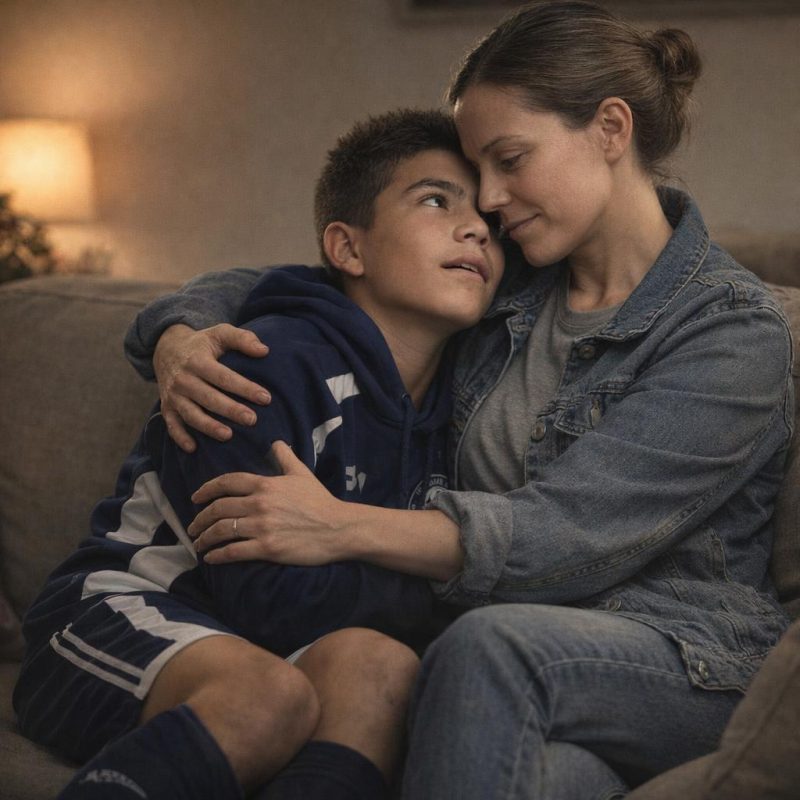 Image by RM AI
A Few Months Ago
He started talking slowly, like he was testing each word before he let it out. His voice was still rough from crying, and he kept his eyes down, fixed on a spot on the blanket between us. He said it started a few months ago. Not last week, not recently — months. I felt something drop in my stomach when he said that. Months. I kept my face still and my hands quiet in my lap, because I could see how hard this was for him and I didn't want to do anything that would make him stop. I asked him, as gently as I could, to tell me everything from the beginning. He nodded, wiped his eyes with the back of his hand, and took one of those long, slow breaths that kids take when they're trying to hold themselves together. Then he started. He went back to the beginning, to some afternoon after practice that I hadn't thought twice about, and I sat there and listened. I didn't ask questions. I didn't fill the silences. I just let him talk. And the whole time, in the back of my mind, I kept turning over that word — months — and feeling the weight of all that time I hadn't known.
Greg Approached Him
He said it started with Greg. I kept my expression neutral, but something tightened in my chest the moment he said the name. Tyler described an afternoon after practice — one of dozens of ordinary afternoons I couldn't have picked out of a lineup. Greg had come up to him near the parking lot, easy and relaxed. He'd asked Tyler if he could help carry some equipment bags to the car. That was it. Just the bags. Tyler said yes because it seemed like the most normal thing in the world — a grown-up asking for a hand. Greg thanked him, made a little joke, and that was that. Tyler hadn't thought anything of it. Neither would I have, honestly. But then the next week, after practice again, Greg found him and asked if he wouldn't mind helping one more time. Tyler helped again. Same easy ask, same friendly thanks. I sat there listening, turning it over in my mind, trying to find the shape of something I couldn't quite see yet. It seemed so small, the way it started. So ordinary. That was the part that stayed with me — how completely unremarkable it must have felt to him in those first moments.
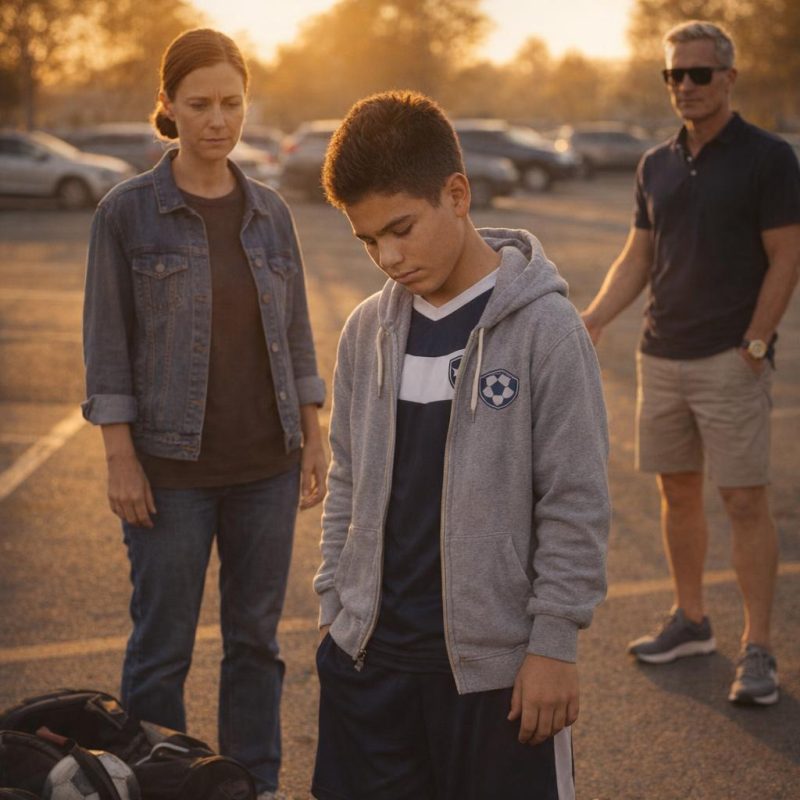 Image by RM AI
The Favors Got Bigger
Tyler said the asks grew from there. After the first couple of times carrying bags to the car, Greg started adding things on. Could Tyler help load some gear into the garage? Sure. Could he give him a hand clearing out some boxes in there while they were at it? Tyler said yes to that too. Then one week Greg texted him — and I caught that detail but let it pass for now — asking if Tyler could come by a little early before practice to help with some yard work. Tyler showed up. He raked leaves, swept the driveway, moved things around. By the time they got in the car to drive to practice, Tyler had already put in thirty or forty minutes of real work. He said it became a pattern. He'd show up at Greg's house before practice, do whatever needed doing, and then they'd drive over together. I sat there listening, and something slow and uneasy was building in me that I was trying to keep out of my voice. I asked him, quietly, where this was happening. Tyler looked up at me and said it was at Greg's house.
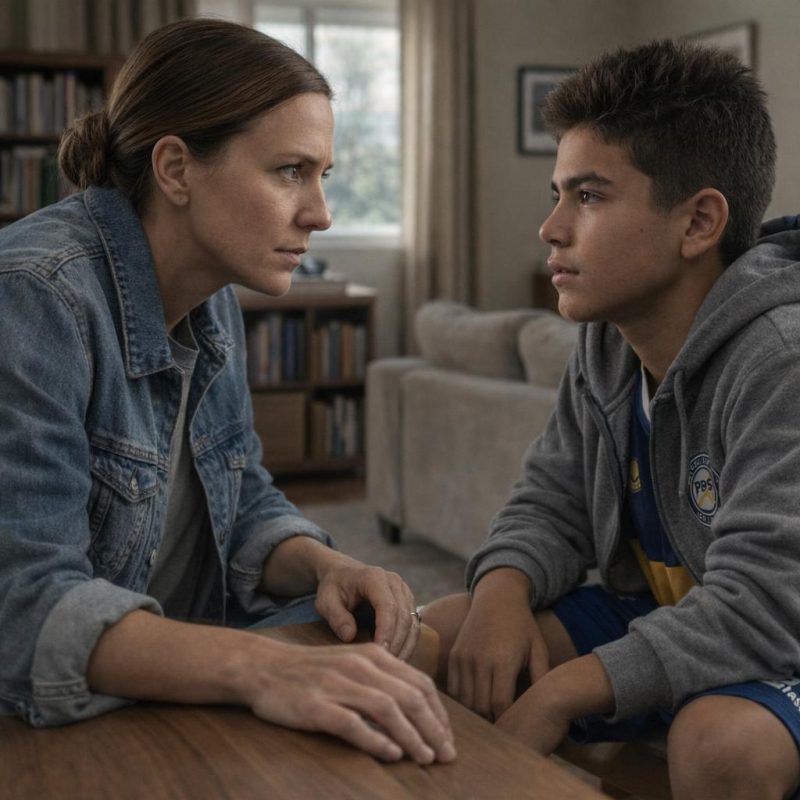 Image by RM AI
Moving Boxes and Cleaning
I asked him to walk me through it — what exactly he was doing over there. He listed it out in that flat, tired way kids talk when they've been carrying something too long. Moving boxes from one part of the garage to another. Cleaning out storage areas, pulling old stuff to the curb. Raking the leaves in the backyard. Sweeping the driveway. Organizing bins of sports equipment along the garage wall. He said it like it was nothing, like he was reading off a grocery list, and that made it worse somehow. These weren't little things. This was real physical work, the kind of work you'd hire someone to do. And my son had been doing it, week after week, before being driven to soccer practice. I kept my hands folded in my lap and I kept my voice even, because I could see he needed me to stay calm. But something was moving through me that I didn't have a clean word for — not quite anger yet, not quite grief, something that sat between the two and pressed hard against my ribs. I thought about all those Tuesday and Thursday afternoons. All those times I'd been grateful for the carpool. My son had been showing up early to work.
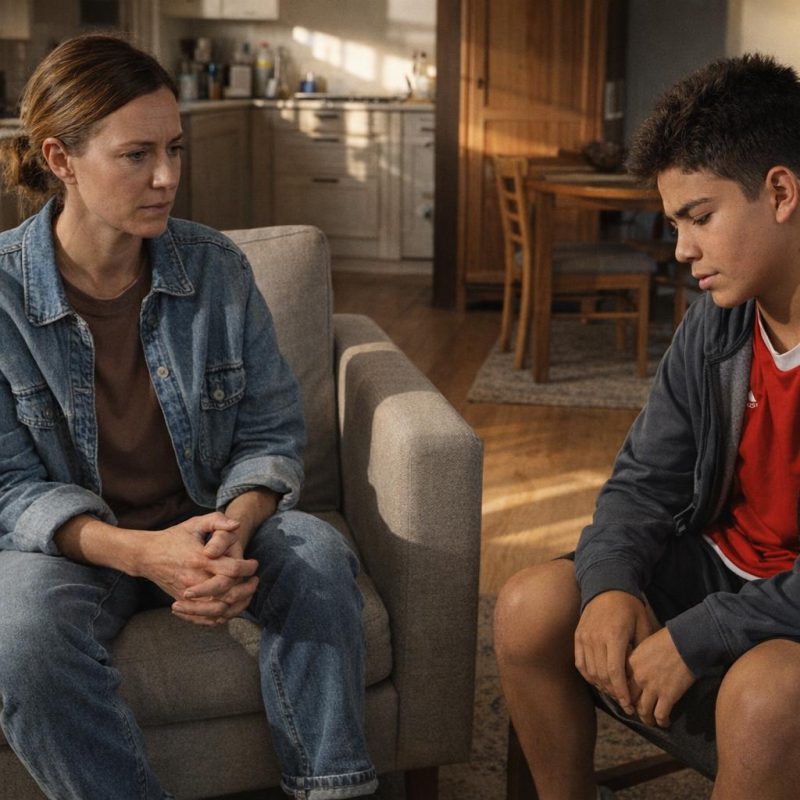 Image by RM AI
Greg Paid Him
I asked him if Greg ever said anything after he finished. Tyler got quiet for a second, and then he nodded. He said Greg paid him. Every time. I kept very still. Tyler said the first time, Greg pulled out his wallet and handed him a twenty, told him he'd earned it, that he was a real help. Tyler said he didn't know what to do with it so he just said thank you and put it in his pocket. He thought maybe it was a one-time thing. But the next time, Greg paid him again. Thirty dollars that time. Tyler said Greg would take the cash out, count it, hand it over with a big smile, and tell him he was being responsible and trustworthy, that not every kid his age would show up and work like that. I could hear in Tyler's voice that it had meant something to him, being told that. I could hear exactly how much it had meant. I kept my face still and let him keep going. He said sometimes it was fifty dollars. He said he thought it was amazing at first. I sat there and asked him, very quietly, how much Greg was paying him by the end.
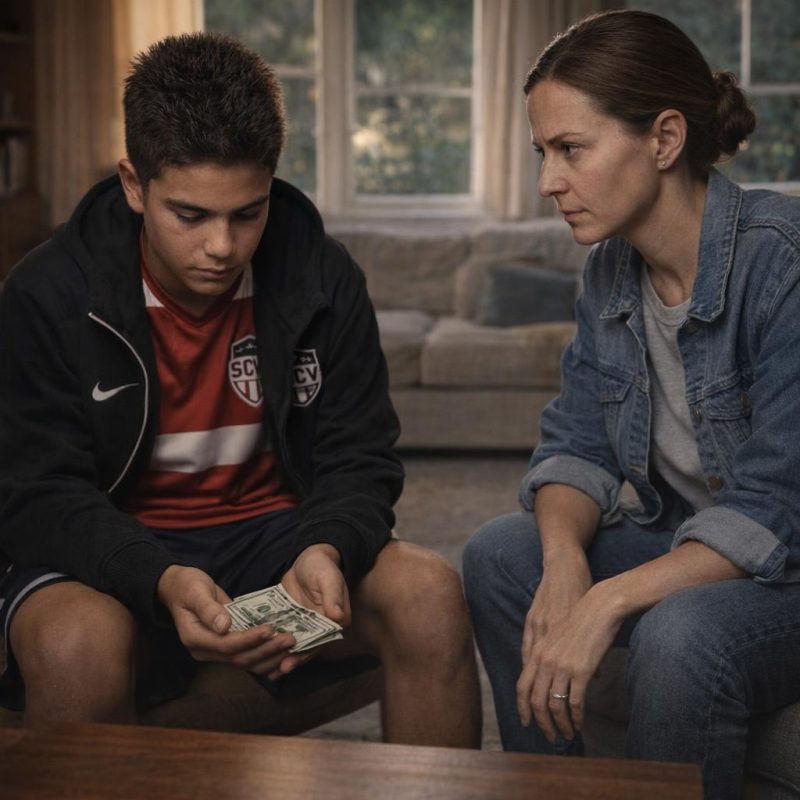 Image by RM AI
Feeling Grown-Up
Tyler kept talking and I kept listening, and the more he described it, the harder it became to keep my expression still. He said Greg made him feel like he was being trusted with something real. Not treated like a little kid, not just tolerated the way adults sometimes tolerate teenagers. Greg called him responsible. He called him reliable. He said Tyler was the kind of kid who actually followed through, which was rare. Tyler's voice went a little soft when he said that part, and I understood why. He was thirteen. He wanted to be seen as capable and serious. He wanted someone to look at him and mean it when they said he was doing a good job. I thought about what those words would feel like at that age — how much they would matter, how long they would stay. I didn't say any of that out loud. I just sat with my hand resting near his on the blanket and let him finish. He said he'd felt, for a while, like he was doing something that actually mattered. I sat with that — with the distance between what he'd felt and what I was beginning to understand — and I didn't move.
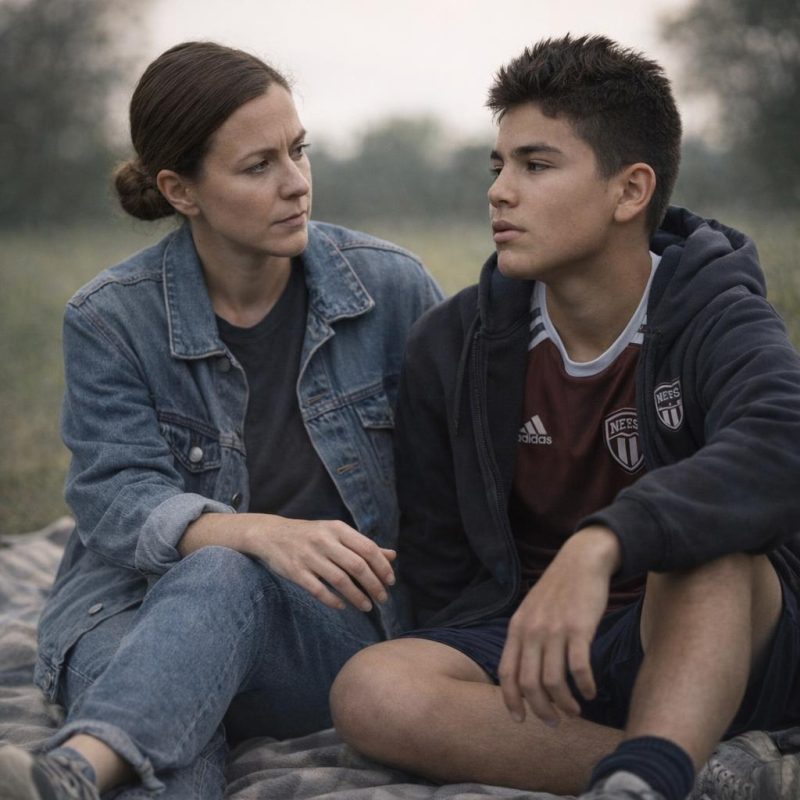 Image by RM AI
The Requests Became Demands
Tyler said things started to feel different after a while, though he had trouble pinning down exactly when. He said Greg's tone shifted — not all at once, but over time, the way a temperature drops without you noticing until you're cold. The asks started coming with less of a question in them. Greg would say things like, I need you over here by four, instead of, do you think you could come by? The list of tasks got longer. The work took more time. Tyler said he started showing up and not knowing how long it would go on before they left for practice, and that uncertainty started to bother him. He said there were a couple of times he'd tried to say he was busy, and Greg had gotten quiet in a way that didn't feel good — not angry exactly, just flat, like a door closing. Tyler said after that he stopped trying to say no. I sat there and thought about my son standing in someone else's garage, watching a grown man go quiet, and not knowing what to do with that silence. I didn't say anything. I just let the weight of what he was describing settle over the room, heavy and still.
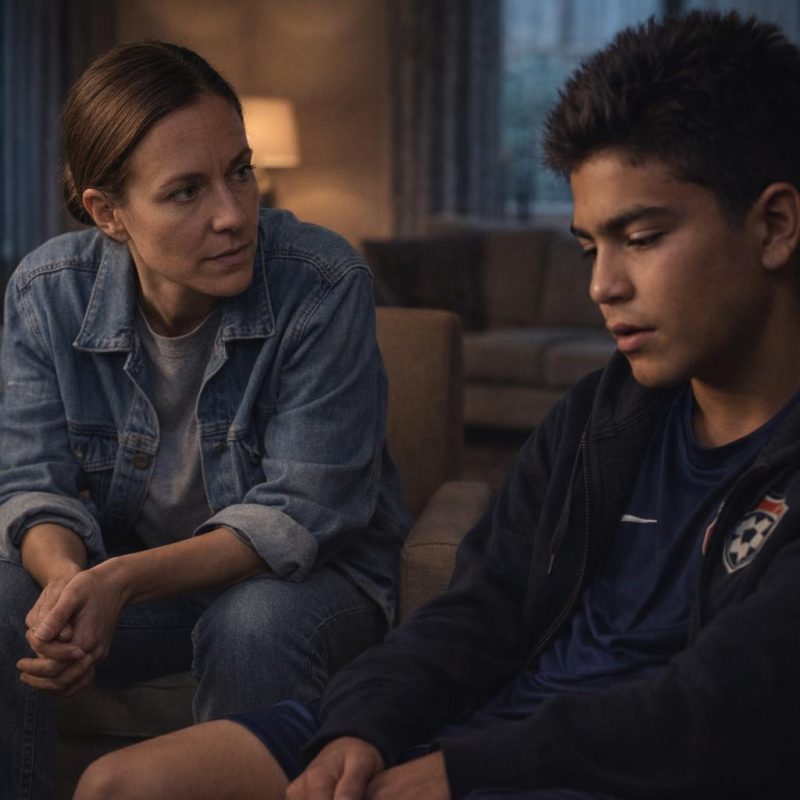 Image by RM AI
The Money Increased
Tyler said the money kept going up around the same time everything else started feeling harder. He said there were moments he'd felt uncertain — he couldn't always explain why, just a general feeling that something was off — and around those times, Greg would pay him more. Fifty became seventy-five. Sometimes a hundred dollars for an afternoon's work. Tyler said the more money there was, the harder it got to figure out how to walk away from it, and also the harder it got to explain to himself why he felt uncomfortable in the first place. He said it was confusing. I believed him. I kept my voice steady and asked him how Greg was getting in touch with him about what needed to be done. Tyler reached over to the nightstand and picked up his phone. He turned the screen toward me, and I could see a long thread of text messages — Greg's name at the top, and below it, line after line of instructions about what to bring, what to move, what time to arrive.
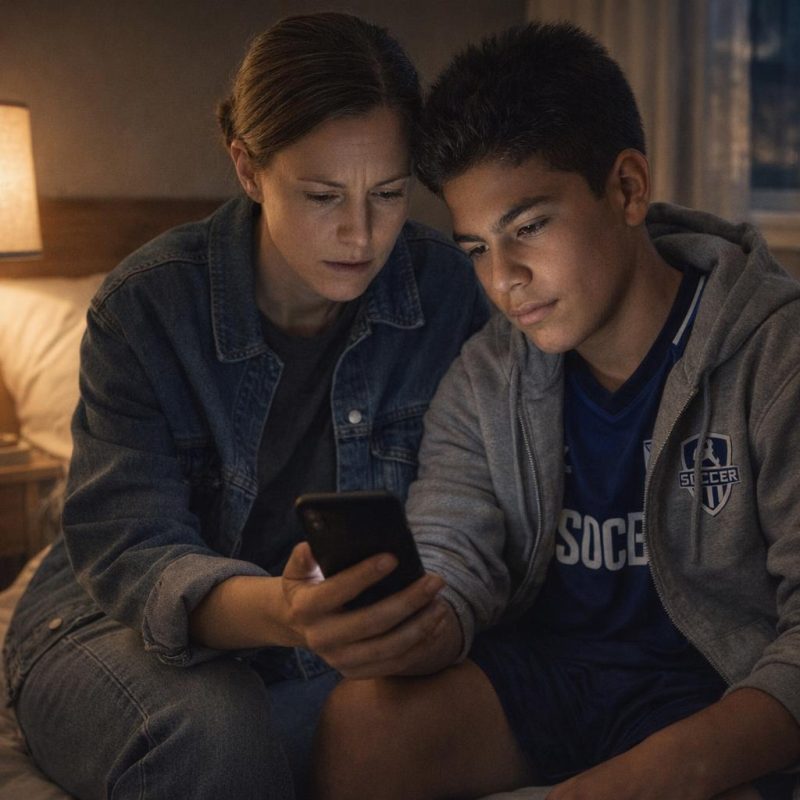 Image by RM AI
The Text Messages
I took the phone from Tyler's hand and started scrolling. I don't know what I expected — maybe a handful of messages, something I could skim in a minute. But the thread went back months. I kept scrolling and it kept going, message after message from Greg, each one with a list attached. Clean out the back corner of the garage. Move the boxes from the side door to the shelving unit. Rake the yard before four. Bring work gloves. The instructions were specific — times, locations, what to bring, what to finish before he got home. Tyler sat beside me on the bed, watching my face, not saying anything. I tried to keep my expression neutral. I didn't want him to see what was happening behind my eyes as I read. I scrolled past October. Past September. Past August. The thread just kept stretching back, week after week, task after task, Greg's name at the top of every single one. I set the phone down on my knee for a second and took a breath. Then I picked it back up and kept going, because I needed to see how far it went — and it went much further than I was ready for.
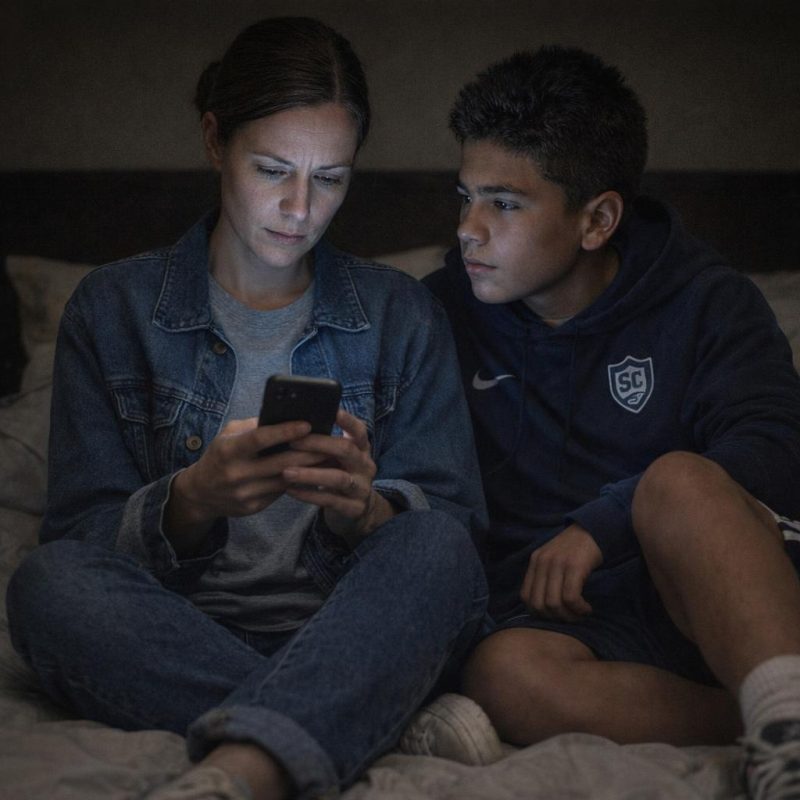 Image by RM AI
Framed as Helping
What got me wasn't just the volume of messages. It was the way Greg had written them. I went back to the beginning of the thread and read more carefully this time, and the language stopped me cold. 'Hey Tyler, could you help me out with something this Saturday?' 'Would you mind giving me a hand with the garage?' 'I could really use your help, buddy — you're always so reliable.' Every single request was wrapped in that same easy, friendly tone. Like they were neighbors doing each other favors. Like Tyler was a kid Greg genuinely admired. After each task, there was a thank-you. 'You're a hard worker.' 'Your mom raised you right.' 'Coach Martinez is lucky to have a kid like you on the team.' I read those lines twice. Tyler had believed every word of it — I could see that now, sitting next to him. He'd thought he was being helpful. He'd thought Greg respected him. The messages were so carefully worded, so warm, so completely ordinary-sounding, that I could see exactly why a thirteen-year-old would never have questioned them. I sat there holding the phone, the cheerful, casual language of it settling over me like something I couldn't shake off.
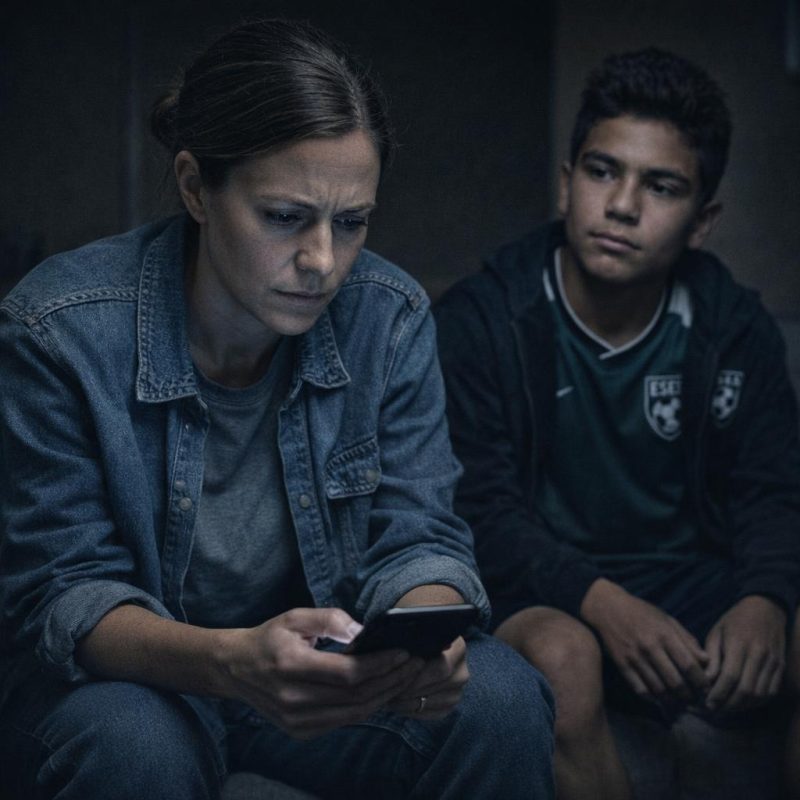 Image by RM AI
The Discomfort Grew
I asked Tyler when he first started feeling like something was wrong. He thought about it for a second, then said it crept up on him slowly. At first the tasks hadn't taken that long — an hour, maybe less. But after a while they started running longer, and he'd show up to practice already tired. He said there were days he could barely focus during drills because he'd spent the two hours before practice hauling boxes or raking out the whole back section of the yard. He wanted to say no. He told me that clearly — he'd wanted to say no more than once. But Greg had been so nice to him from the beginning, and Tyler felt like he owed him something, especially once the money started. Then Tyler told me that around the time he started pulling back a little, started making excuses, Greg started saying things — casual things, almost offhand — about how lucky Tyler was to be on the team.
Coaches Like Helpful Kids
Tyler said he could still remember the exact words. Greg had told him that coaches liked helpful kids. That players who were team players tended to get more opportunities. That sometimes spots on a roster went to kids who were easier to work with — kids who didn't cause problems or make things complicated. Tyler said Greg never came out and said anything directly. He never said Tyler would lose his spot. He never made an actual threat. But Tyler was thirteen and he loved soccer more than almost anything, and he heard what was underneath those words just fine. He started showing up every time Greg texted. He stopped making excuses. He told himself it wasn't that bad, that the money helped, that Greg was just being honest about how things worked. I sat there listening to my son explain how he'd talked himself into staying, and I felt something go very quiet inside me. I asked Tyler to repeat the part about what Greg had said — the exact phrasing. Tyler looked at his hands and said it again slowly: players who cause problems sometimes find their opportunities disappear.
Payment for Labor
I sat with that sentence for a moment, and then everything clicked into place at once. The carpool hadn't been generosity. It had been access — a way to get Tyler to his house regularly, reliably, without raising questions. Tyler was exactly the kind of kid Greg could use: eager to please, desperate to stay on the team, old enough to do real physical work but young enough to be managed with a little praise and a little fear. The money wasn't a gift. It was payment — just enough to make Tyler feel obligated, just enough to blur the line between favor and transaction. The friendly texts, the compliments, the thank-yous — all of it had been the wrapper around something much uglier. And when Tyler started pulling back, Greg had reached for the one thing he knew would hold: Tyler's spot on the team. My son had been working for this man for months, coerced into it through manipulation and veiled threats, and I had driven him to practice every week without knowing any of it. I looked at Tyler sitting across from me, and I felt a fury so clean and cold it almost didn't feel like anger at all — it felt like certainty.
The Texts Became Orders
I scrolled forward to the more recent messages, and the difference was immediate. The 'could you' and 'would you mind' were gone. There was no more 'buddy' or 'you're so reliable.' The tone had flattened into something that didn't bother pretending anymore. 'Need you here by four-thirty tomorrow.' 'Make sure the garage is finished before we leave.' 'Don't forget the yard — all of it, not just the front.' No question marks. No thank-yous. Just expectations, stated plainly, like Tyler was an employee who already knew the terms. I started screenshotting. I went methodically, one message at a time, making sure I captured the timestamps and Greg's name at the top of each one. Tyler watched me without asking what I was doing. I think he understood. I kept going through the thread, screenshot after screenshot, until I reached a message near the end of the visible history that stopped me mid-scroll: 'Be here at 6am Saturday. Need an hour of work done before the team breakfast.'
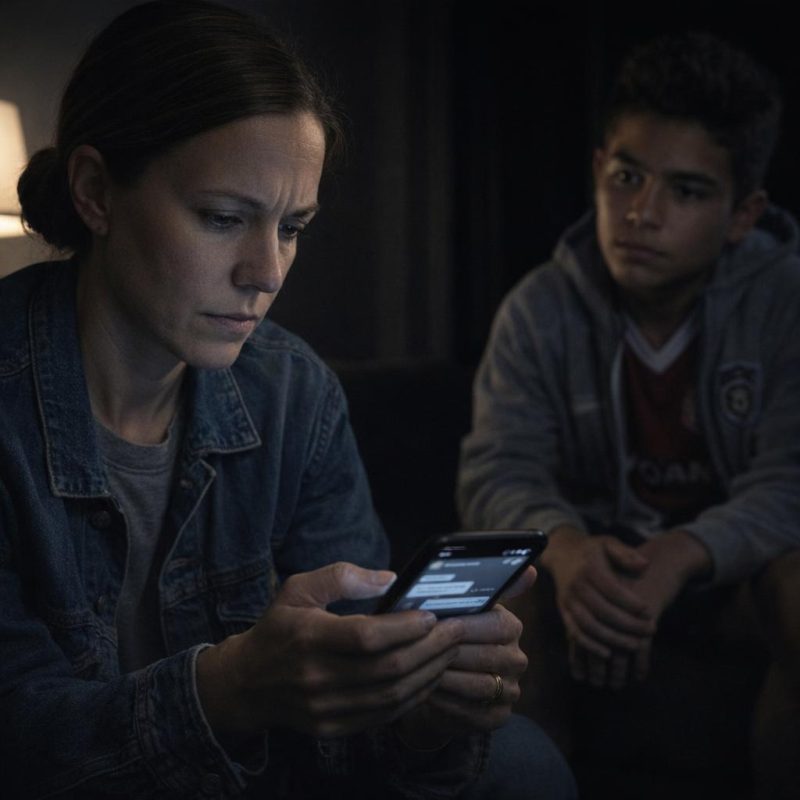 Image by RM AI
Tyler's Relief
I looked up from the phone. Tyler was sitting with his back against the headboard, his knees pulled up, and something about his posture was different from when I'd walked in. The tight, braced quality he'd had at the start of the conversation — that careful stillness of someone waiting to be in trouble — had gone out of him. His shoulders were lower. His jaw wasn't set anymore. He looked younger, somehow, and also more tired, like the effort of holding all of it had finally been allowed to stop. I set the phone down on the bed between us. I told him he hadn't done anything wrong. I said it plainly, without softening it into something complicated, because I needed him to hear it without any qualifiers attached. He nodded, and his eyes went wet again, and he pressed the back of his hand against them quickly the way boys that age do when they don't want to be seen crying. I told him I was going to handle it. I told him he didn't have to figure out any part of what came next. He nodded again, and I watched the last of the tension leave his shoulders, and the room felt quieter than it had in a long time.
Why He Hid the Money
After a minute, I asked him why he'd hidden the money. He didn't answer right away. He picked at the edge of his sleeve, and I waited. Then he said he felt ashamed. He said he knew something was off — he couldn't have explained it exactly, but he knew — and the money made it worse, not better. Every time Greg paid him, it felt like proof that he'd agreed to something he shouldn't have agreed to. He was afraid that if I found out about the money, I'd ask where it came from, and then everything would come out, and I'd pull him from the team. He said he kept thinking that if he could just get through the season, it would somehow resolve itself. I didn't say anything for a moment. I just looked at my son — this kid who had spent months carrying something that was never his to carry, who had felt guilty for being taken advantage of, who had hidden cash in his room because the shame of it felt safer than the truth. That shame had been part of what kept him quiet, and Tyler had felt like he was the one who'd done something wrong for months.
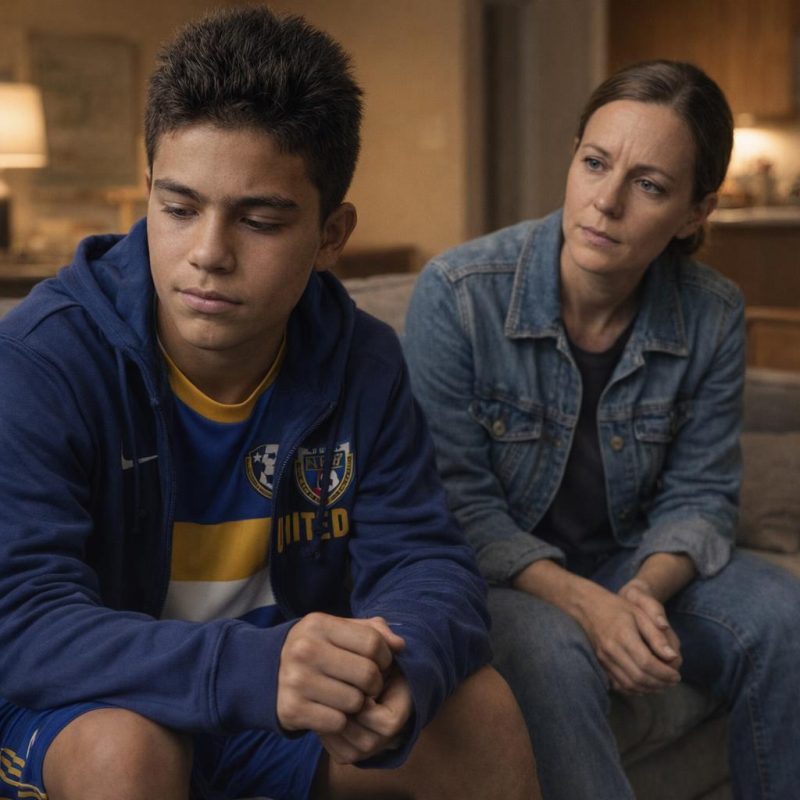 Image by RM AI
The Final Straw
I called Melissa back that same evening. Tyler was in his room, door closed, and I stood in the kitchen with the phone pressed to my ear and asked her the question I'd been sitting with since we'd hung up: what finally made her call? She was quiet for a second. Then she said it happened the week before, at a neighborhood thing — a backyard gathering a few houses down from Greg's. She'd been there helping set up, and Greg was talking to another parent near the fence. She said she wasn't trying to listen, but she was close enough that she couldn't help it. Greg was laughing. Not a nervous laugh — a real one, easy and relaxed, like he was telling a funny story. She said he told the other parent he'd had free labor for months. That was the phrase he used. Free labor. He said Tyler was so eager to please adults that it practically ran itself. He laughed about how cheap it was compared to hiring actual help. Melissa said she stood there holding a stack of paper plates and couldn't move. She'd been uncomfortable before, but that was the moment she knew she had to call me. I gripped the counter with my free hand and just listened to her voice on the other end of the line — and then I heard Greg's laugh in my head, easy and satisfied, like my son was the punchline.
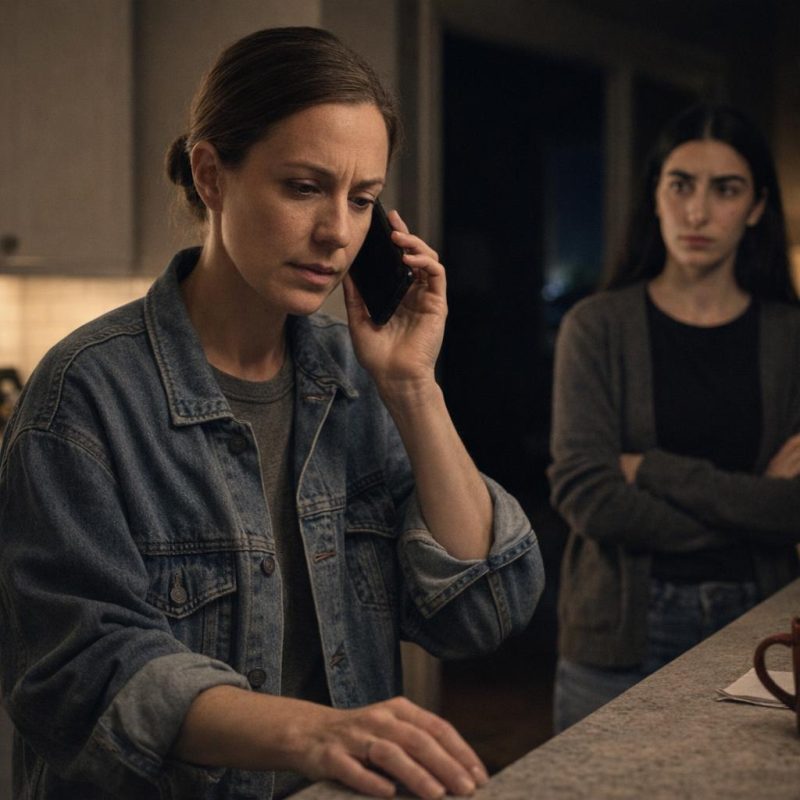 Image by RM AI
Everything Made Sense
After I got off the phone I sat at the kitchen table for a long time without moving. The house was quiet. Tyler had gone to bed. Emma was asleep. And I just sat there and let every piece of it settle into place, one by one, because now I could see all of it clearly. The carpool was never about helping me. It was never about being a good neighbor or a team parent or any of the things Greg had smiled and said it was. He had looked at my son — a thirteen-year-old kid who wanted nothing more than to play soccer and be liked — and he had seen an opportunity. He'd used Brandon's cruelty to keep Tyler off-balance and isolated. He'd paid just enough to make Tyler feel like he owed something. He'd made the team feel like it could disappear if Tyler didn't cooperate. And then he'd laughed about it at a backyard party like it was a clever little trick he'd pulled off. I thought about every morning I'd felt grateful. Every time I'd told myself Greg was one of the good ones, that not everyone had an angle. I'd thanked him. I had actually thanked him. The carpool was never generosity — it was a transaction Greg had designed from the start, and my son had been the one paying the price.
 Image by RM AI
Planning the Confrontation
I didn't sleep that night. I didn't try to. I sat at the kitchen table with my laptop open and a legal pad next to it and I worked. I pulled up every text message Greg had ever sent me — the ones about pickup times, the ones about practice schedules, the ones where he'd offered to take Tyler for extra sessions. I screenshotted all of them and saved them to a folder. I found the photo I'd taken of the envelope, the one with the cash inside, and I saved that too. I wrote out a timeline on the legal pad, starting from the first day of the carpool arrangement and going all the way through to the week before, marking every task Tyler had described, every errand, every hour I could account for. I wrote down Melissa's name and what she'd told me, both on the phone and in the message she'd sent. I listed it all — the yard work, the moving boxes, the grocery runs, the car washing — and when I added it up, it was months of unpaid labor that Greg had laughed about at a party. Around two in the morning I set the pen down and looked at what I'd built. It wasn't rage anymore, not exactly. Something quieter had moved in underneath it — steady and cold and absolutely certain.
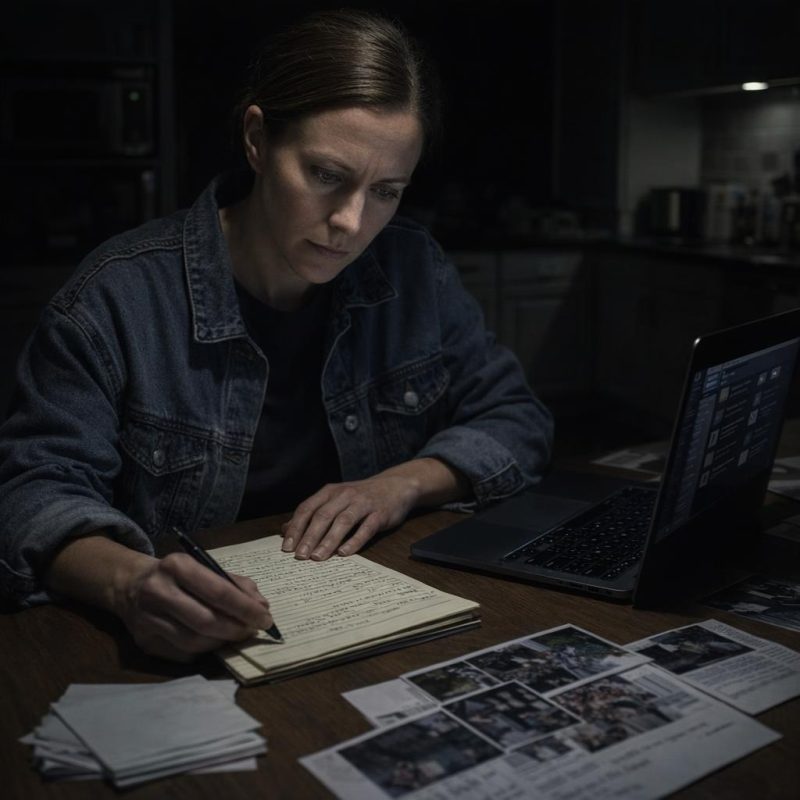 Image by RM AI
Confronting Greg
I drove to Greg's house the next morning before eight. I hadn't called ahead. I didn't want to give him time to prepare. I knocked on the door and when he opened it he was still holding a coffee mug, dressed but not quite put together, and the surprise on his face was immediate. I told him I needed to talk to him. I didn't wait for him to invite me in — I just started. I told him I knew about the yard work, the moving boxes, the grocery runs, the car washing. I told him I knew Tyler had been doing it for months. I told him I knew about the cash in the envelope and what he'd said to Tyler about the team. I watched him set the mug down on the entryway table, slowly, like he was buying himself a second to think. I kept going. I showed him my phone — the screenshots of his messages, the photo of the envelope. I read him the timeline I'd written out, date by date, task by task. I didn't raise my voice. I didn't need to. When I finished, I looked up at him, and the easy confidence he always carried had gone somewhere else entirely — his face had gone still and flat, and for the first time since I'd known him, Greg had nothing ready to say.
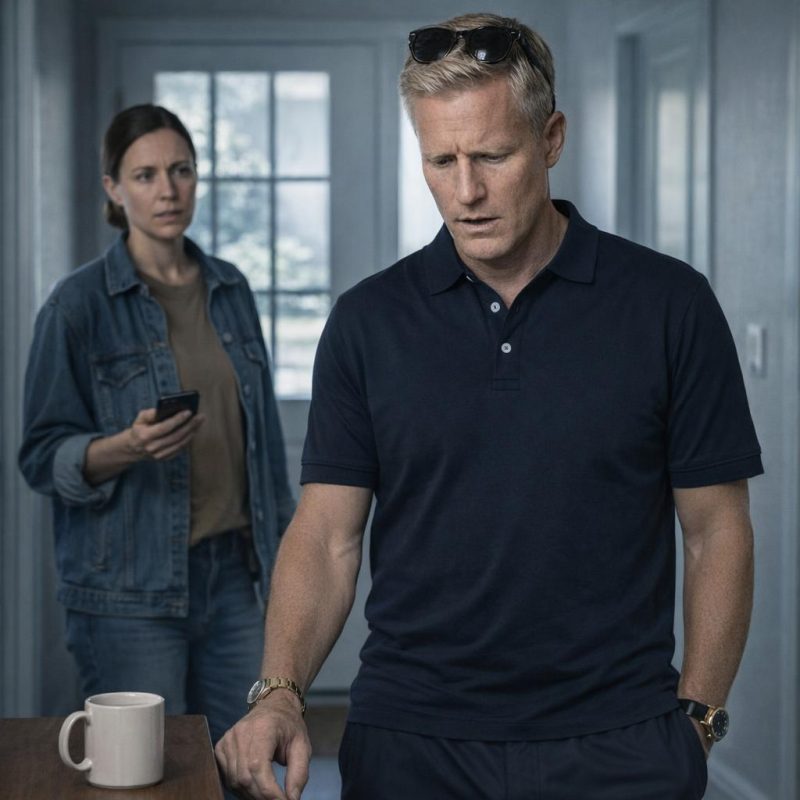 Image by RM AI
Greg's Dismissal
He found his footing after a moment. That was the thing about Greg — he always found his footing. He said Tyler had volunteered. He said it with a small shrug, like I was overreacting, like this was all a misunderstanding between reasonable adults. He said he'd paid Tyler for his time, that Tyler had seemed happy to help, that it was good for a kid to learn some responsibility. He said it was all harmless. I let him finish. Then I told him Tyler was thirteen years old. I told him that a thirteen-year-old boy who has been told, directly or indirectly, that his spot on a team depends on keeping an adult happy cannot volunteer for anything — not in any way that counts. I told him that what he'd done had a name, and the name wasn't mentorship and it wasn't responsibility and it wasn't a favor. He started to say something else — something about how I was blowing it out of proportion — and I just looked at him. He stopped. And in the silence that followed, even Greg seemed to hear how thin his own words had become.
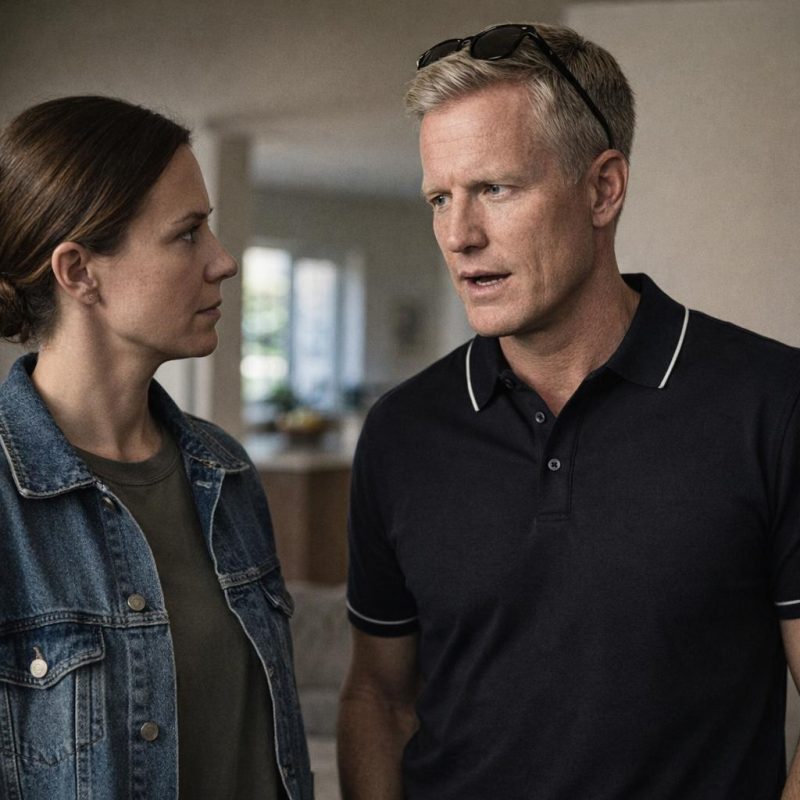 Image by RM AI
The Threat
I told him I wasn't there to argue. I told him I was there to let him know what was coming. I said I had documented everything — the screenshots, the photo of the envelope, the timeline, Melissa's account of what she'd overheard at the party. I told him I was bringing all of it to the soccer club and to the league. I said it the same way I'd said everything else that morning: flat, even, no heat in it. He started to say something — I think he was going to tell me I was making a mistake, or that I didn't understand how these things worked, or some version of the speech men like Greg give when they think they can still redirect the conversation. But then I held up my phone and showed him the folder. The screenshots. The photo. The dated timeline. The message from Melissa. I watched his face as he looked at it — the easy smile gone, the color draining out just slightly — and I could see the exact moment he understood that there was nothing left to manage.
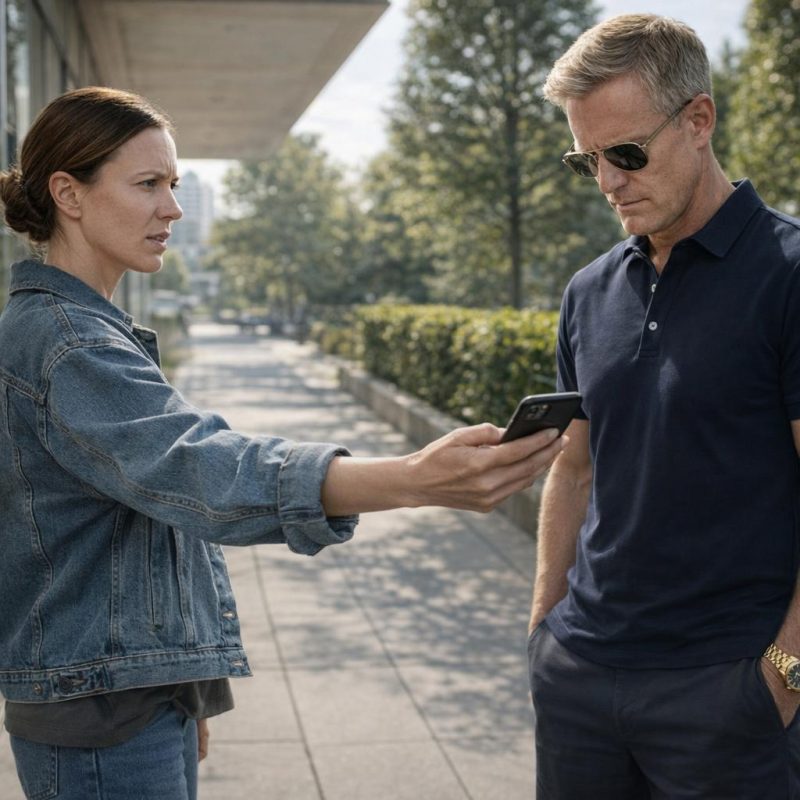 Image by RM AI
Telling Other Parents
That afternoon I sent messages to every parent on the team roster I had contact information for. I kept it simple — I said I'd discovered something concerning about the carpool arrangement and I wanted to know if their kids had ever been asked to do favors or run errands for Greg. I didn't expect much. I thought maybe one or two people would respond with confusion, or not respond at all. The replies started coming in within the hour. One parent said her son had spent several Saturdays running errands for Greg, driving around with him to pick things up, and had felt like he couldn't say no. Another said her daughter had helped with yard work twice and come home quiet in a way that hadn't sat right. A third parent said his son had mentioned feeling pressured to help Greg move some furniture, that Greg had made a comment about the team that the kid hadn't known what to do with. By evening I had five responses, and every single one of them described the same shape of thing — a kid who wanted to stay on the team, an adult who knew it, and a favor that didn't feel optional. Three families showed up across multiple messages — the same pattern, the same pressure, the same silence afterward.
 Image by RM AI
The Soccer Club Responds
I scheduled the meeting with the club for two days later. I printed everything — the screenshots, the timeline, the photo of the envelope, the messages from the other parents — and I put it all in a folder in the order I planned to present it. When I walked into the conference room at the club office, Coach Martinez was already there, sitting to one side of the table. He gave me a small nod. I hadn't known he'd be included, but I was glad. There were two club officials across from me, both of them with notepads out, and I started from the beginning. I walked them through the carpool arrangement, the tasks, the cash, the implicit pressure about the team. I showed them the screenshots. I showed them the photo. I read from the other parents' messages, one by one, and I watched the officials' expressions shift as the number of families grew — two, then three, then five — and the shape of what Greg had been doing across the team became impossible to look away from.
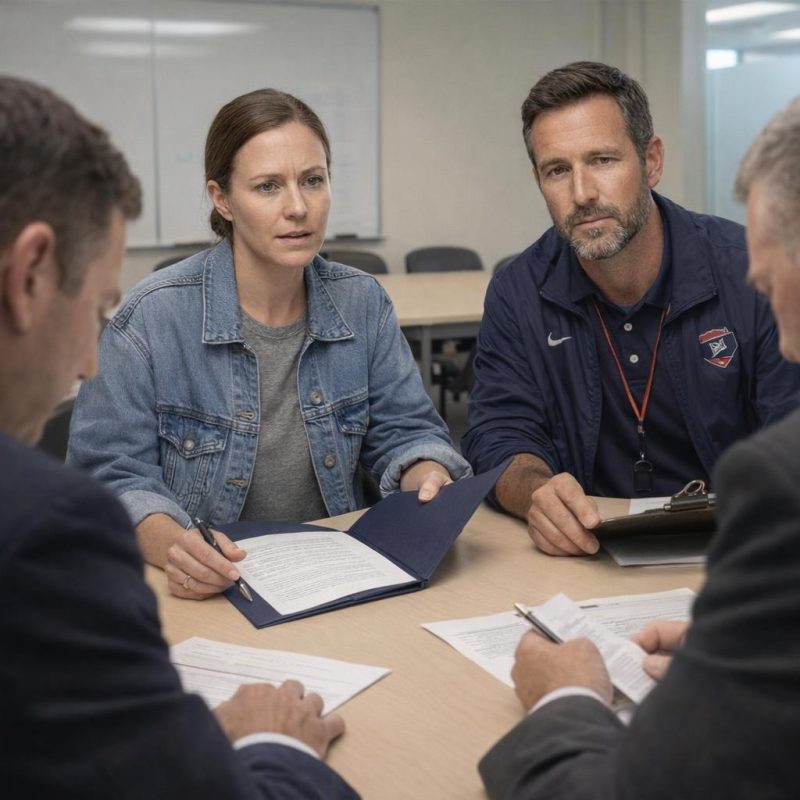 Image by RM AI
Greg Disappears
The league finished its investigation faster than I expected. There was no dramatic announcement, no public statement, no meeting where anyone said Greg's name out loud in a room full of people. It just — happened. One of the club officials called me and said the matter had been addressed and that Greg had been asked to step back from all team activities. A few days after that, Brandon was gone too. No explanation to the other families, no goodbye, no final game. Tyler came home from practice one afternoon and said, almost carefully, 'Brandon wasn't there.' I asked how he felt about it. He thought for a second and said, 'Good.' Just that one word, and I believed him completely. The other parents noticed, of course. A few of them texted me — nothing elaborate, just a word or two, the kind of message that says we know without saying it. Coach Martinez kept running practice like nothing had changed, which was exactly the right thing to do. I drove to the next game and stood on the sideline in my usual spot. The patch of grass where Greg used to plant himself, arms crossed, watching Tyler like he was inventory, was empty.
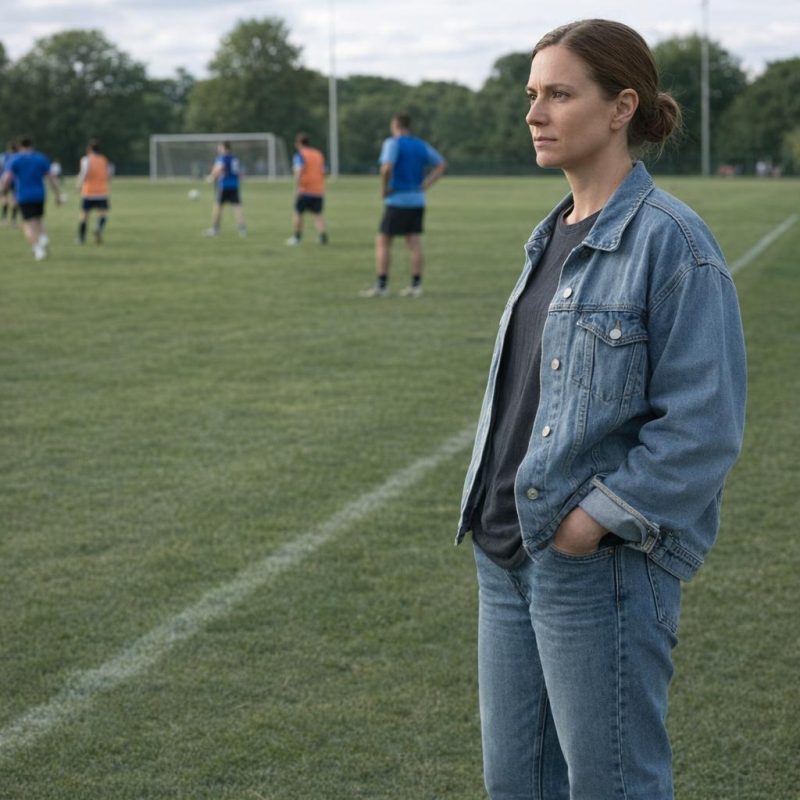 Image by RM AI
Tyler's Recovery
The first practice after Brandon left, Tyler barely said a word on the drive over. He had his bag on his lap and his eyes on the window, and I didn't push. I just drove. When we pulled into the parking lot, I watched him get out of the car and walk toward the field, and his shoulders were up near his ears the way they'd been for months. I sat in the car for a minute before following. But something shifted over the next few weeks. It was slow — nothing like a switch flipping. More like watching a plant that had been kept in a dark room finally get moved to a window. The first time I heard him laugh on the field, a real laugh, the kind that comes out before you can stop it, I had to look away for a second. Coach Martinez started giving him more time in scrimmages, and Tyler started taking it. He stopped second-guessing every touch. He stopped looking over his shoulder. One evening after practice he jogged over to me with mud on his shins and his hair a mess, and he was grinning about something one of his teammates had done, and I thought — there he is. That was the boy I'd been waiting to see come back.
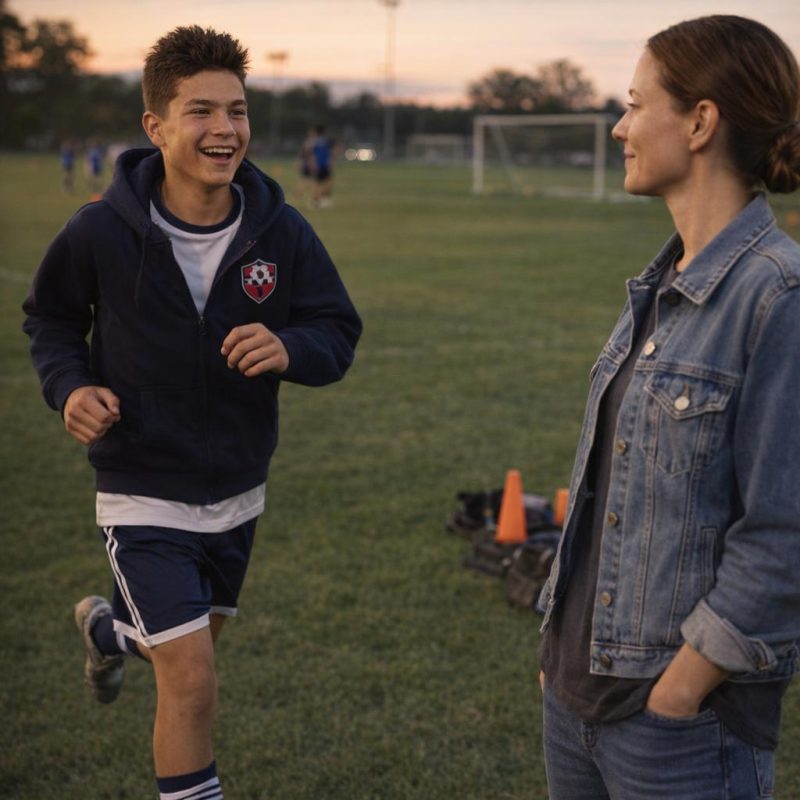 Image by RM AI
The Conversations
We didn't have one big conversation. We had a hundred small ones. In the car, at the kitchen table, sometimes right before bed when Tyler would appear in the doorway like he had something on his mind but wasn't sure how to start. I always tried to put whatever I was doing down and just listen. He asked me once why Greg had done it — why a grown man would use a kid to run errands and haul equipment and act like it was normal. I told him the truth as plainly as I could: that some people look for situations they can take advantage of, and that Greg had seen an opportunity and taken it, and that none of that was Tyler's fault. Not one piece of it. He nodded slowly, the way he does when he's filing something away. He was angry for a while. Then he was sad. Then one night he said, 'I just want to stop thinking about it,' and I told him that was okay too. Emma knew something had happened — she's sharp, she picks up on everything — but I kept her out of the details and she seemed to accept that. The four walls of our house felt a little closer during those weeks, and I didn't mind that at all.
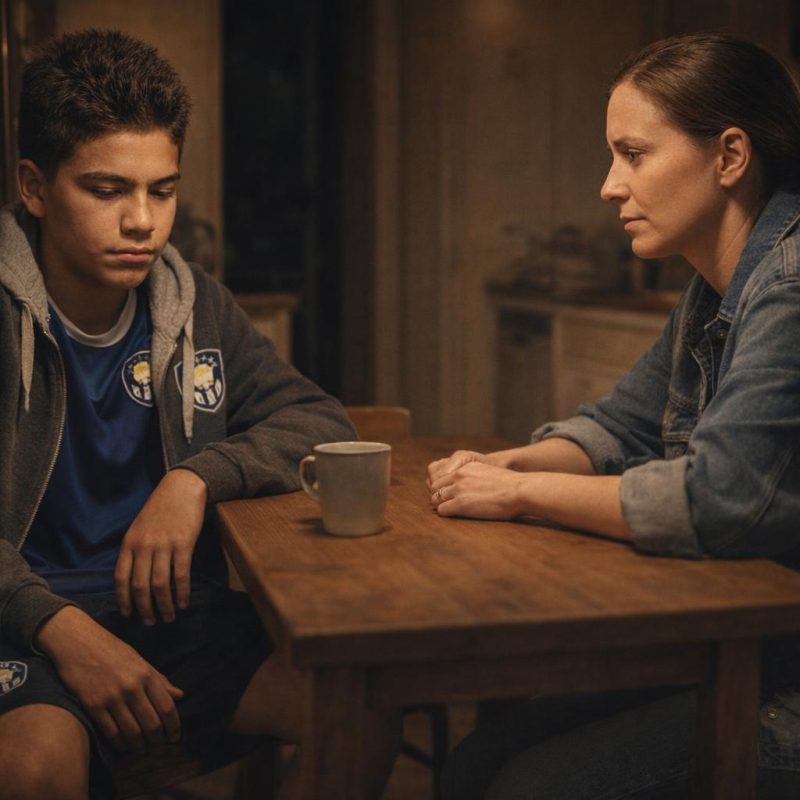 Image by RM AI
What I Learned
I've thought a lot about what I missed. Greg was friendly and organized and he framed the whole carpool as a favor, and I took it at face value because I was tired and stretched thin and it felt like a gift. I never asked Tyler how the rides felt. I never asked what he was doing when he got to Greg's house early. I assumed that because another parent had offered to help, the help was clean. That's the part that stays with me — not that I was foolish, but that I was trusting in a way that left my son exposed. I've learned that manipulation doesn't always look like a threat. Sometimes it looks like a man with a good handshake who shows up early to every game. I've learned to listen when my kids go quiet about something that used to make them talk. I've learned to ask the second question, and the third, and to sit with the discomfort of not having a fast answer. Tyler is healing. He's not the same kid he was before all of this, and I don't think he will be, but I'm not sure that's entirely a bad thing. Neither am I. We both know something now that we didn't know before, and the way I see other people — other parents, other arrangements, other easy smiles — is different now, and it will stay that way.
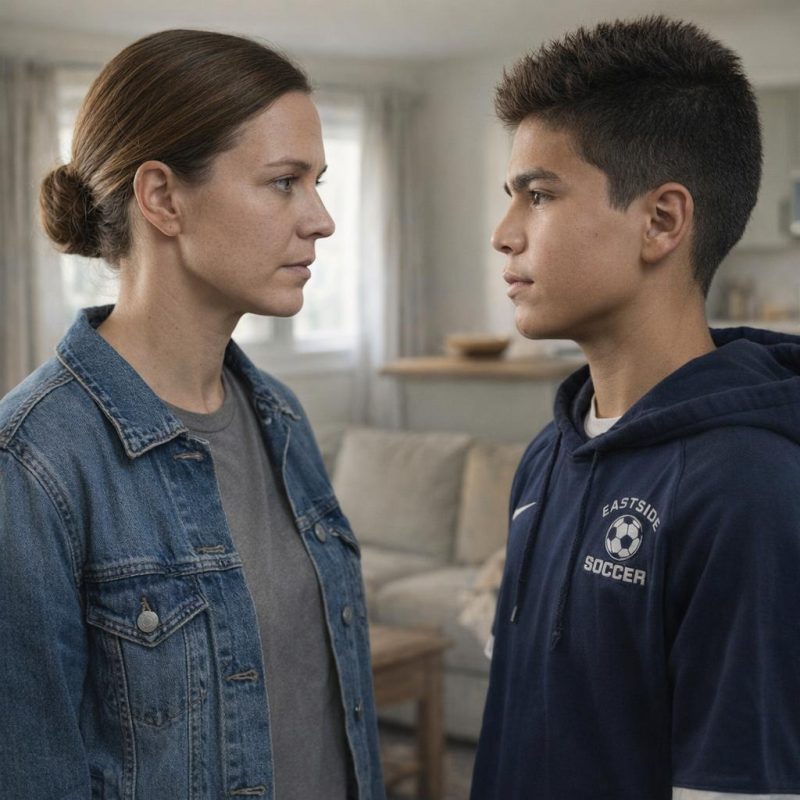 Image by RM AI