My Sister's Dream Wedding Was Funded By My Own Bank Account—And My Parents Let It Happen
My Sister's Dream Wedding Was Funded By My Own Bank Account—And My Parents Let It Happen
The Ivory Envelope
I got home from work on a Tuesday with sore feet and a stack of mail I fully intended to sort over the sink and mostly throw away. Bills, a coupon circular, something from my dentist — and then this envelope that stopped me cold. Ivory cardstock, thick enough to feel almost architectural. A silk ribbon in dusty rose. A custom wax seal pressed with what I could only assume were Kelly and Jason's initials. I stood right there in my kitchen still in my coat and opened it like I was defusing something. Inside were four — four — separate insert cards. Engagement party. Rehearsal dinner. The wedding itself. Post-wedding brunch. The venue printed on the main card was a historic estate I'd once looked up out of curiosity; I remembered that even a consultation fee was more than I made in a day. The letterpress printing alone had to have cost hundreds. I turned the main card over in my hands, looking for some clue I couldn't name. My younger sister Kelly had been between jobs for most of the past year. She'd mentioned it casually, the way she mentioned most things. And yet here was this invitation, heavy and deliberate and expensive in a way I couldn't quite square with anything I knew about her situation. I set it on the counter and just stood there, the cardstock cool and impossibly solid in my hands.
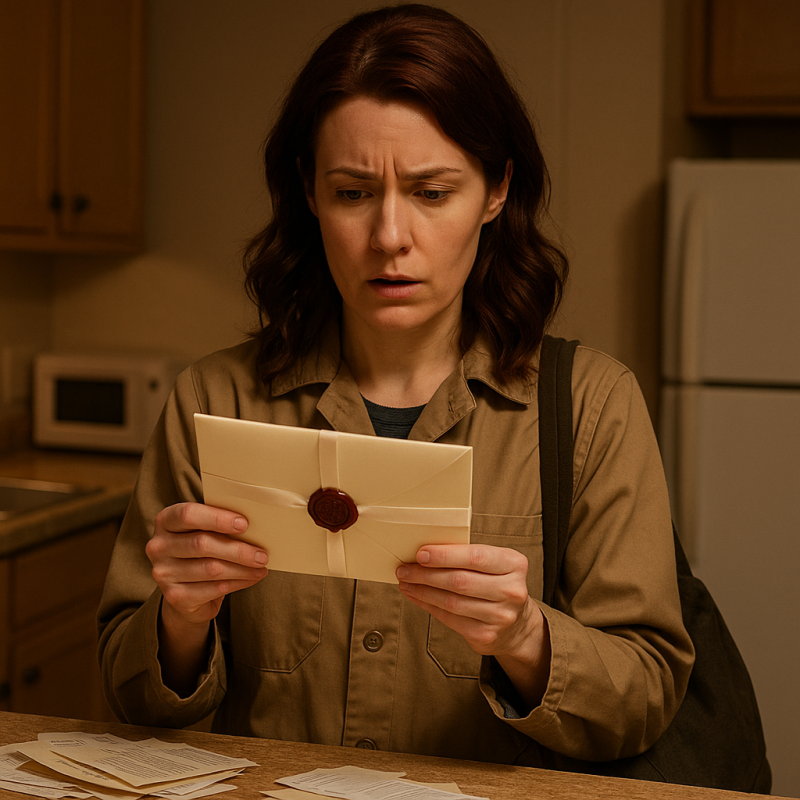 Image by RM AI
The Favorite Child
I've spent most of my adult life making peace with the fact that Kelly is the favorite. It's not a dramatic thing — nobody ever sat me down and said it out loud. It was just the water we all swam in. I wore her hand-me-downs until I was twelve. She got new school clothes every August. I took out loans for college and worked twenty hours a week to cover the rest. Kelly lived at home rent-free for five years after high school, and nobody seemed to think that was unusual. Different rules, different expectations, different versions of what counted as enough. I built something anyway — a good job, a stable life with Mark, an apartment we actually like. I told myself I'd made peace with it. Most days I even believed that. Mark was sitting on the couch when I brought the invitation in and set it on the coffee table between us. He picked it up, turned it over, raised his eyebrows at the wax seal. Kelly was laughing in some video on her phone in the background of my memory, always laughing, always the one the room tilted toward. But something about that envelope sitting on my coffee table made me aware, in a way I hadn't been in a long time, that I'd never needed their approval quite this badly before.
 Image by RM AI
The Careful Conversation
I called my parents on Saturday morning, which is when I always call, so it wouldn't seem like anything. I kept my voice easy. Mentioned the invitation, said it was beautiful, asked how Kelly was doing with all the planning. My mother Linda made a warm sound, the kind she makes when she's pleased and wants you to know it. Then I said, casually as I could manage, that the venue looked incredible — must be expensive. There was a pause. Not a long one, but long enough that I noticed it. Linda said something like, "Well, it's a special occasion, we're all pitching in." I asked what that looked like, whether their retirement budget could handle something like this. Her voice went careful then — not cold, just careful, like she was choosing each word off a shelf. She said they were managing fine and that Kelly deserved a beautiful day. I could hear my father Robert breathing on the other extension. He does that sometimes, picks up without announcing himself. I waited for him to say something. He didn't. I tried one more angle, asked if Jason's family was covering most of it. Linda said everyone was contributing and then mentioned she had something on the stove. We said our goodbyes. I sat with the phone in my lap after we hung up, and the silence on the other end of the line where an answer should have been stayed with me longer than the conversation itself.
 Image by RM AI
The Furnace Money
I couldn't sleep that night. I lay there in the dark running numbers I had no business running at midnight. My parents live on Robert's pension and their combined social security. They clip coupons. They buy the store-brand everything. When my mother's car died two years ago, they spent three weeks researching before buying the cheapest used sedan on the lot, and I still remember the relief in her voice when she told me the price. My father put off a root canal for eight months because of the timing. I know all of this because I've been part of the financial backstop for years — not dramatically, not in any way that ever got acknowledged, just quietly, when things came up. A few hundred here, a few hundred there. Three months ago they called about the furnace. It had gone out in February, which is the worst possible time, and they needed five hundred dollars to cover the repair before the weekend. I transferred it the same day. Didn't think twice. That's just what you do. But lying there in the dark, I kept trying to build a version of events where parents who needed emergency furnace money in February were now somehow underwriting a wedding at a historic estate with a four-card invitation suite. I couldn't make it add up. I kept seeing the bank transfer confirmation on my screen — five hundred dollars, sent, February 14th — and the numbers just sat there, not making sense.
 Image by RM AI
Mark's Reasonable Explanations
I told Mark everything over coffee the next morning — the phone call, the pauses, the furnace money, the math that wouldn't work. He listened the way he always does, patient and steady, turning his mug in his hands. When I finished he said maybe Kelly and Jason had been saving for longer than I knew. I reminded him about the forty dollars. Six months ago, Kelly had texted me asking if I could transfer forty dollars for groceries because she was short until payday. I'd done it without blinking. Mark nodded slowly and suggested maybe Jason's family was contributing more than we realized. I told him Jason looked as baffled by the whole thing as I felt — I'd seen his face at the engagement announcement when Kelly mentioned the venue, and it was not the face of a man who'd been in on the budget conversation. Mark was quiet for a moment. Then he said maybe my parents had taken out a loan. He said it gently, like he was offering me something useful. And I sat with that for a second. A loan. My parents, on fixed income, going into debt to fund a wedding while I'd been sending them money for furnace repairs and car emergencies. That possibility didn't make me feel better. It made me feel something I couldn't quite name yet, something that sat heavier than confusion, and I wasn't sure I wanted to look at it directly.
 Image by RM AI
Observing the Performance
Two weeks after the invitation arrived, Mark and I drove out to my parents' house for Sunday dinner. I told myself I was just going to be present, enjoy the food, not make it weird. I lasted about eleven minutes. Kelly was already there when we arrived, sitting at the kitchen table with fabric swatches fanned out like a hand of cards, talking at full volume about centerpiece options. She looked great, the way Kelly always looks — effortlessly put-together, some new blouse I didn't recognize, completely at ease. I watched my mother Linda move around the kitchen with that particular brightness she gets when Kelly is in the room. Dinner was fine. The food was good. And then Kelly mentioned the florist. She said it the way you'd mention picking up milk — just dropped it into the conversation between bites. The florist they'd chosen did exclusively high-end events, she said, very sought-after, and the floral package for the ceremony and reception was going to run about eight thousand dollars. I watched my father Robert's face when she said the number. His jaw tightened, just slightly, and his eyes dropped to his plate for a half-second before he picked up his fork again.
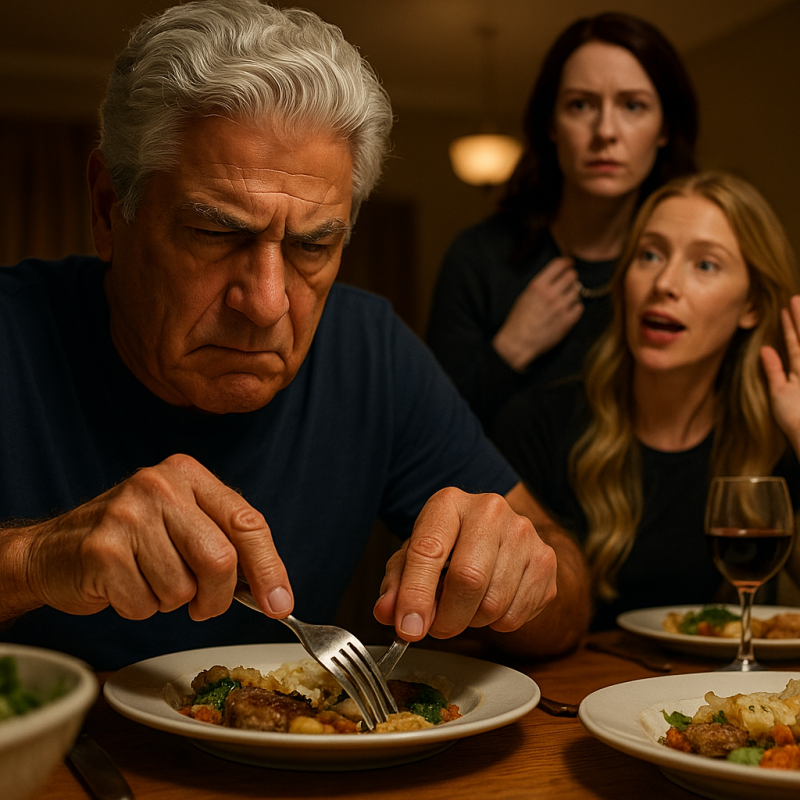 Image by RM AI
The Cake That Costs More Than Rent
Kelly kept going. That was the thing — she just kept going, and nobody stopped her. The photographer was a husband-and-wife team who charged a package rate that Kelly mentioned with the same breezy confidence she used for everything. She pulled out her phone and showed us photos of the venue's ballroom, all vaulted ceilings and chandeliers, and I sat there nodding like a person who was fine. I was doing math in my head the entire time. Florist, photographer, venue rental, catering — I was running a quiet tally that was climbing past numbers I didn't want to think about too hard. Mark squeezed my hand under the table at some point, which I appreciated, because I was starting to feel like I was watching a play where everyone had a script except me. Then Kelly mentioned the cake. Custom design, she said, from a baker who'd done cakes for two different Food Network shows. She said the price like it was a fun fact. It was more than my monthly rent payment. I kept my face neutral. My parents sat across from me and said nothing, asked nothing, raised no eyebrows at any of it. I watched the number hang in the air over the dinner table and tried to remember how to breathe normally.
 Image by RM AI
The Forty-Dollar Memory
Mark and I drove home mostly in silence. He had the radio on low and I was staring out the passenger window watching streetlights go by, and somewhere around the third or fourth mile it hit me. Six months ago. Kelly had texted me six months ago asking to borrow forty dollars for groceries. Not as a joke, not as a casual favor — she'd said she was short until payday and really needed it. I'd transferred it within the hour. She never paid it back, which wasn't unusual, I'd stopped keeping track of small things like that years ago. But I sat there in the passenger seat doing the timeline. Six months ago: forty dollars for groceries, genuinely broke, working part-time at a boutique selling candles maybe twenty hours a week. Now: eight-thousand-dollar florist, a cake that cost more than my rent, a venue I couldn't afford to sneeze near. I mentioned it to Mark and he didn't say anything for a long moment. He didn't have anything to say. Neither did I, really. I just kept turning the two images over next to each other — Kelly texting me about groceries, Kelly showing us ballroom photos on her phone — and the distance between them felt less like growth and more like something I didn't have a word for yet.
 Image by RM AI
Meeting Jason
We finally met Jason properly at a Sunday dinner my parents hosted about two weeks after the venue tour. I'd seen him briefly at the engagement party but hadn't really talked to him. He was quieter than I expected — glasses, a button-down that looked like he'd ironed it himself, the kind of guy who refills everyone's water glass without being asked. He worked IT for a mid-size logistics company, he told me, when I asked. Not flashy. Not the type Kelly usually went for. I liked him immediately, which made the whole evening more confusing, not less. When Kelly mentioned the cake price over dinner — just dropped it into conversation like a weather update — I watched Jason's eyes go wide behind his glasses. He recovered fast, but not fast enough. Then the florist quote came up and he shifted in his seat like he'd sat on something sharp. Kelly didn't notice. My parents nodded along like everything was perfectly normal. Kelly excused herself to take a call and Jason and I were left at the table together for a moment. He leaned slightly toward me, voice low, and said, 'Is your family always this intense about money?'
 Image by RM AI
The Custom Box
The package arrived on a Tuesday and I almost thought it was a mistake. It was a proper box, the kind with a magnetic closure, wrapped in a velvet ribbon the color of burgundy wine. Inside: two hand-painted watercolor portraits of Kelly and Jason, a bottle of champagne with a gold foil label, a scented candle in a glass jar, and a set of hand-lettered wooden signs with the wedding date. I sat on the couch with everything spread out on the coffee table and just stared at it. Then I opened my laptop. The portrait artist's website listed a starting rate of three thousand dollars for a commissioned pair. The champagne was sixty dollars a bottle. The candle brand was one of those boutique ones that runs forty-five dollars. Mark came home to find me with a spreadsheet open, a half-eaten granola bar beside me, and what I can only describe as the expression of a person doing math they don't want to finish. He looked at the box, looked at me, and sat down without saying anything. I kept adding numbers. The velvet ribbon sat across my knee, soft and heavy, and I couldn't stop touching it like it might eventually make sense.
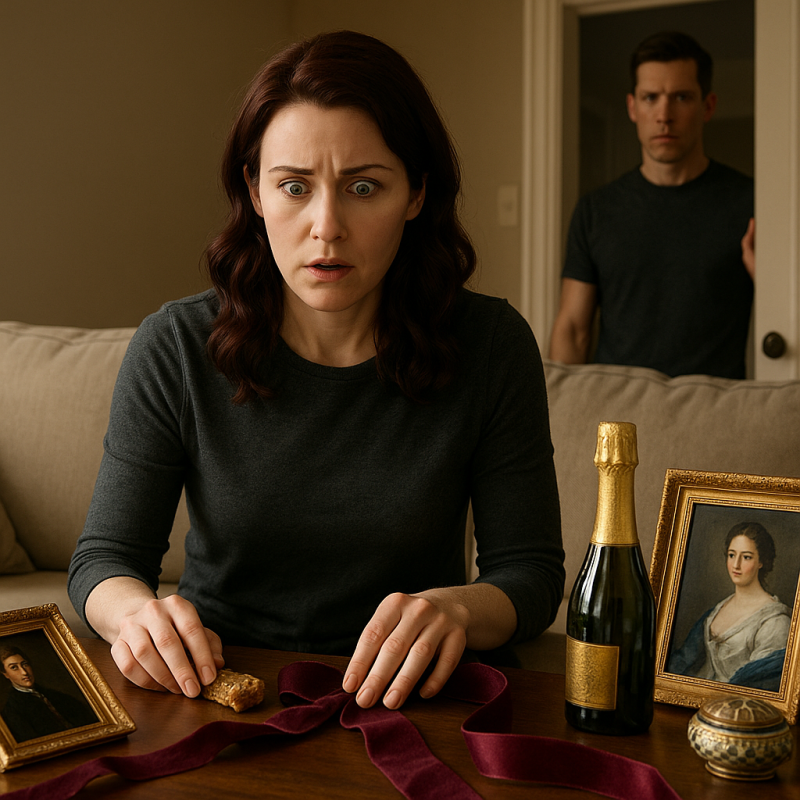 Image by RM AI
The Five-Hundred-Dollar Dress
The text came in on a Thursday morning while I was eating breakfast. Kelly had sent a link to the bridesmaid group chat with a string of heart emojis and the message 'found THE dress, obsessed.' I tapped the link. The page loaded. The price was five hundred and forty-eight dollars. I put my phone face-down on the table and picked up my coffee. Then I picked the phone back up because I thought I'd misread it. I hadn't. Five hundred and forty-eight dollars. The listing also noted that alterations were recommended and typically ran an additional hundred and fifty to two hundred dollars. I sat there doing the math I didn't want to do. Five hundred dollars was close to two months of my grocery budget. It was roughly half of what I'd been setting aside for therapy each year, the fund I kept quietly and never talked about because it felt like a luxury I had to justify. Kelly had sent the link the way you'd send a funny video — no preamble, no 'I know this is a lot,' no acknowledgment that seven women were about to open that message and feel their stomachs drop. I hadn't responded yet. I just sat there with the number on the screen and what it quietly meant for the next few months of my life.
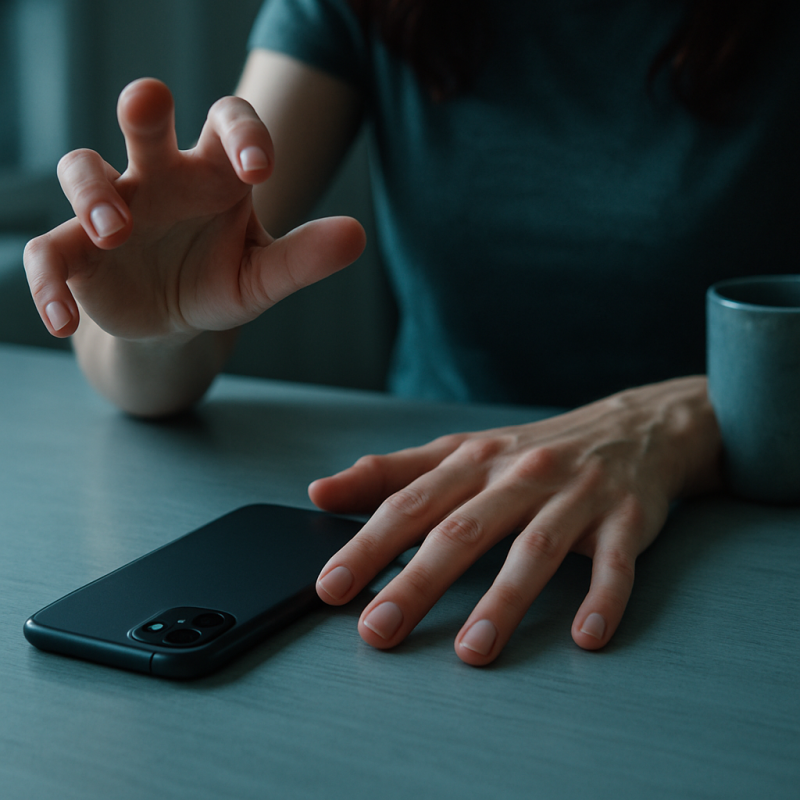 Image by RM AI
The Group Chat Explosion
I was still staring at the link when my phone started buzzing. The group chat was waking up. The first few messages were the expected heart reactions and 'so pretty' responses, but then things shifted. One bridesmaid — a college friend of Kelly's named Bri — asked if there were payment plan options through the boutique. Another said she needed to check her credit card limit before she could commit. A third wrote that she'd have to skip her gym membership and probably a few other things this month to make it work. Someone asked, carefully and politely, whether Kelly had considered any alternatives at a lower price point. The messages kept coming. I read each one and felt something loosen in my chest — not relief exactly, more like the specific comfort of realizing you are not the only one standing in a room that's slowly filling with water. It wasn't just me being the difficult older sister who couldn't celebrate anything without running a cost-benefit analysis. These were Kelly's actual friends, people who loved her, and they were quietly panicking in a group chat she wasn't even active in. Kelly had dropped this on everyone she supposedly cared about and apparently hadn't considered for a second that it might land hard. Then a new message appeared: 'I'm honestly going to have to put this on a card I just paid off. I can't believe I'm saying that for a dress.'
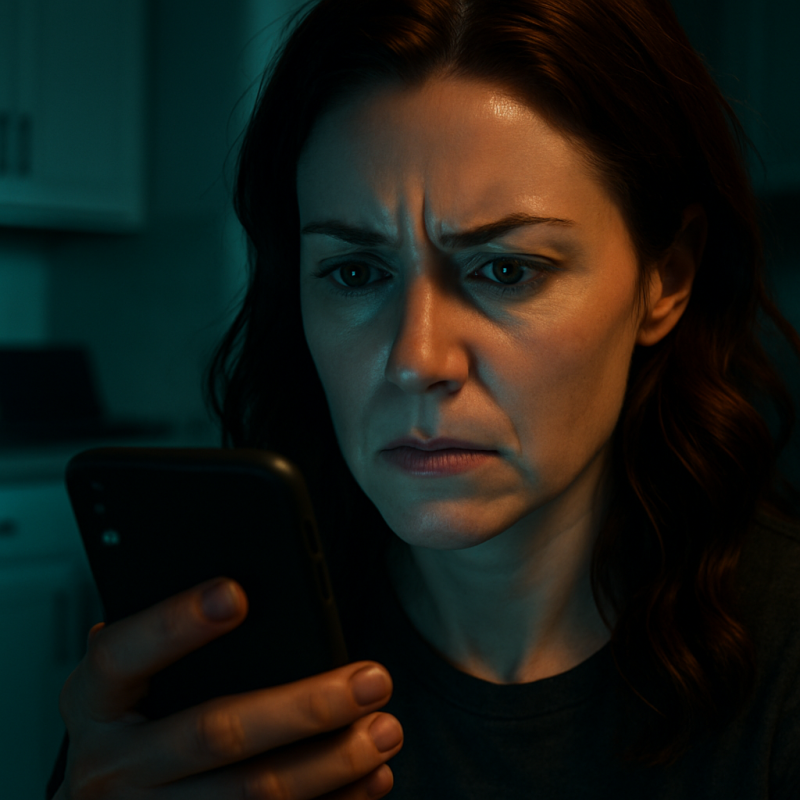 Image by RM AI
The Phone Call That Changed Nothing
I called Kelly that evening instead of texting because I didn't want a paper trail of me being the problem sister. I kept my voice easy, almost cheerful, the way you do when you're trying to have a conversation that doesn't feel like a confrontation. I told her the dress was beautiful, which was true, and then I mentioned gently that a few people in the chat seemed to be having a hard time with the price point. Kelly laughed. Not meanly, just — dismissively, the way you laugh at something that doesn't apply to you. She said everyone was fine. I told her I'd seen the messages, that at least four people had mentioned credit cards or skipping expenses. She said no one had come to her directly, so she wasn't going to assume there was a problem. I suggested maybe scaling back the bachelorette trip, keeping it local, something easier on everyone's budget. Her voice changed then — not angry, just clipped, like a door closing politely but firmly. She told me not to worry about it. She said it was all taken care of. I asked what that meant. She said to trust her and that she had to go, and then she was gone. I sat on the couch with my phone in my lap and the call already ended, and the phrase 'all taken care of' just sat there in the quiet, not meaning anything I could hold onto.
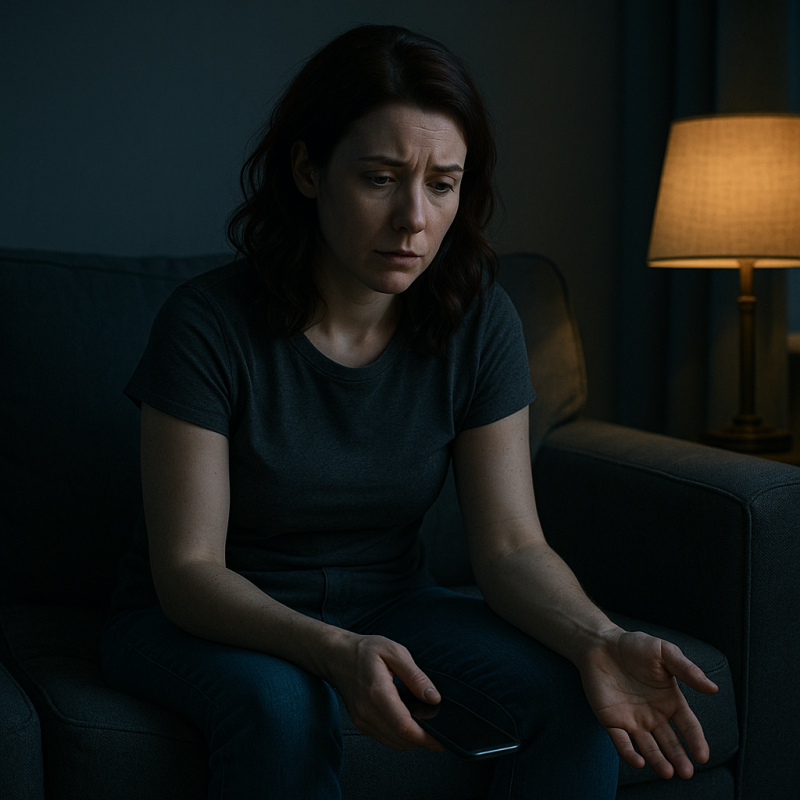 Image by RM AI
The Petty Question
I brought it to Mark that night because I needed to say it out loud to someone who wasn't going to immediately take Kelly's side. I asked him, genuinely, whether I was just being the bitter older sister. Whether this was jealousy dressed up as concern. He didn't answer right away, which I appreciated. He asked me what specifically was bothering me most — the money, or something else. I sat with that for a minute. It wasn't really the dress, I told him. It wasn't even the save-the-date box or the eight-thousand-dollar florist. It was the way none of it was ever acknowledged. The way Kelly said 'it's all taken care of' without explaining what that meant, and my parents nodded along at dinner like the numbers were perfectly reasonable, and nobody seemed to think any of it required a conversation. Mark pointed out that my concerns kept circling back to transparency, not the wedding itself. He reminded me, quietly, that I'd been sending my parents money for years — the furnace, the property taxes, the random emergencies — and that context wasn't nothing. I knew he was right. I also knew that knowing you have a reason to feel something doesn't always make the feeling cleaner. I sat with the uncomfortable space between justified and jealous, and I couldn't quite find the line between them.
 Image by RM AI
The Bank Record Review
I opened my laptop on a Saturday morning when Mark was out running errands and I told myself I was just going to look. Just get a clear picture. I logged into my bank account and started scrolling back through the transaction history, further than I usually go. There was the five-hundred-dollar transfer from three months ago — the furnace. A thousand dollars the previous spring for property taxes. Two-fifty in the fall before that for what my mother had described as an unexpected plumbing issue. A few smaller ones I'd half-forgotten: a hundred and twenty here, eighty there, things I'd sent without much thought because it felt like the right thing to do and nobody ever made it feel optional. I opened a spreadsheet and started entering them. Dates in one column, amounts in another, a notes column for what each one was supposedly for. The rows filled up faster than I expected. I added carefully, checked my math twice, and then sat back and looked at the total at the bottom of the column. Three years of transfers. I'd known it was a lot in a vague, uncomfortable way, the way you know a drawer is overfull without wanting to open it. But seeing the actual number — the specific, unambiguous figure — made my breath catch somewhere in my chest.
 Image by RM AI
The Vague Answer About the Furnace
I called my father on a Wednesday afternoon, keeping my voice light, the way you do when you're asking something you're not sure you want answered. I told him I'd been thinking about the house and asked how the furnace was holding up after the repair. There was a pause — not long, maybe two seconds, but the kind of pause that has weight to it. He said it was working fine now. I said that was good, and then I asked which company had done the work, mentioning that Mark and I had been having some issues with our own heating and I was looking for recommendations. Another pause. He said he couldn't remember the name off the top of his head. I kept my voice easy and said that made sense, and asked if he still had the receipt or invoice somewhere, that I could wait while he looked. His tone shifted — not defensive exactly, just thinner, like something had gone out of it. He said he'd have to look for it and he'd get back to me. I thanked him and said no rush. We said goodbye and I set my phone down on the desk. When I asked for the repair company's name, his voice had faltered — just slightly, just for a moment — and I sat there turning that small sound over in my mind.
 Image by RM AI
The Contradiction of Cutting Back
The family dinner was at my parents' house, which meant I spent the drive over reminding myself to keep my face neutral. We hadn't even finished the salad when my mother mentioned, almost casually, that they'd been cutting back on groceries lately — store brands, fewer trips, watching every dollar. My father nodded along, said they really needed to be careful with the budget right now. I made a sympathetic sound and filed it away. Then Kelly set down her fork and announced she'd just booked a mixologist for the reception. Not a bartender — a mixologist, with a specialty cocktail menu, custom-named drinks, and imported ingredients. Eighteen dollars a drink, she said, like that was a perfectly normal sentence to say out loud. My mother's face lit up. My father smiled and said it sounded wonderful. Kelly pulled up photos on her phone and passed it around the table. I watched my parents ooh and aah over pictures of garnished cocktails while my mother's words about store-brand groceries were still hanging in the air, and nobody — not one person at that table — seemed to notice the two things had happened in the same conversation.
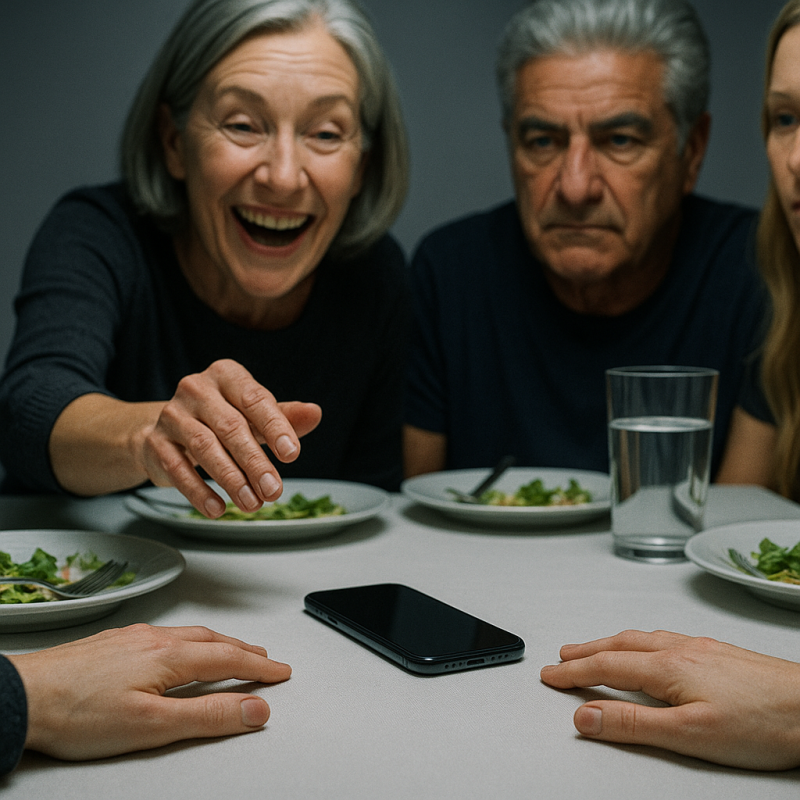 Image by RM AI
Mark's Dismissal
I waited until we were home and the dishes were done before I opened my laptop and pulled up the spreadsheet. Mark sat down next to me and I walked him through everything — the payments I'd made over the years, the vague answer about the furnace repair, the grocery budget speech followed immediately by eighteen-dollar cocktails. He listened. He really did listen, which made it more frustrating when he said, gently, that there could be innocent explanations. Maybe they were embarrassed about their finances. Maybe the wedding money was coming from somewhere he and I didn't know about. I told him that was exactly the problem — I didn't know, and every time I asked, the answers got thinner. He asked if I had actual proof of anything. I said not yet. He said families were complicated about money, and that old resentments had a way of shaping how we read situations. He wasn't wrong, and I hated that he wasn't wrong, because it made me feel like I was standing in a room where something was obviously on fire and being told I might be imagining the smoke. I closed the laptop and sat there in the quiet, the only person in my own house who couldn't let it go.
 Image by RM AI
The Bachelorette Destination
The group message came in on a Tuesday morning while I was eating breakfast. Kelly had booked the bachelorette trip. Cabo San Lucas, all-inclusive resort, four days and three nights, and she'd already chosen the room package — a suite, naturally. She sent it as an announcement, not a question. Flights out of our city were running at least four hundred dollars round trip, and that was if you booked early. The resort package, split among the bridesmaids, came out to roughly six hundred per person. Then there were excursions, meals outside the resort, airport transfers, spending money. I did the math sitting right there at my kitchen table and the number landed somewhere above a thousand dollars per bridesmaid, probably closer to twelve hundred when everything was added up. I knew the other bridesmaids. I knew what they made. One was a teacher. One was still paying off her own student loans. None of them were going to say no to Kelly's face, and Kelly wasn't going to ask if they could afford it, because that wasn't how Kelly operated. She'd already booked it. It was done. I set my phone face-down on the table and sat with the particular weight of knowing exactly how this was going to go for everyone involved.
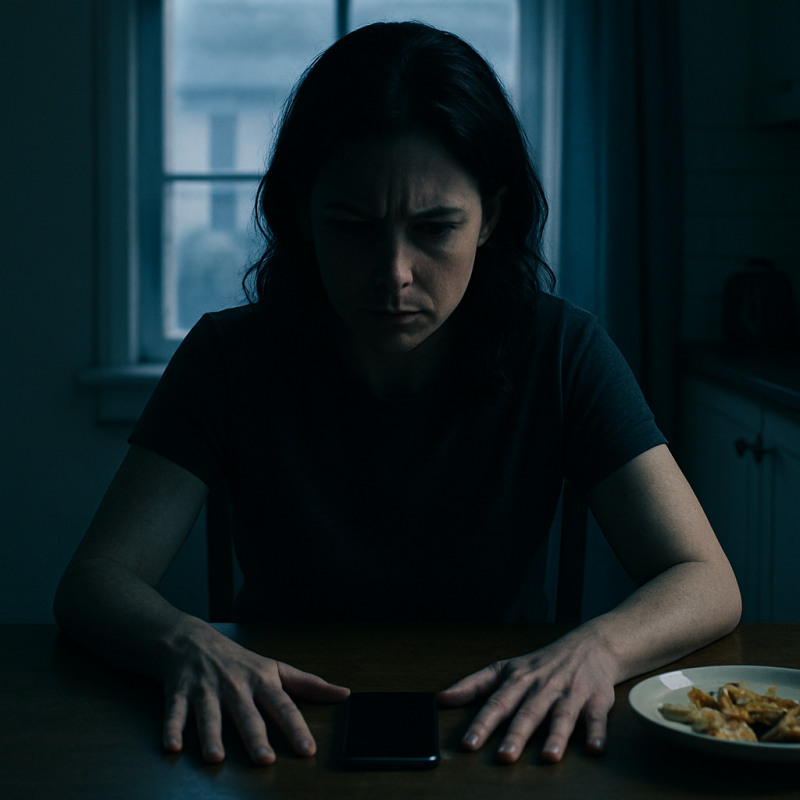 Image by RM AI
The Six-Figure Estimate
I made a new spreadsheet. I know how that sounds, but hear me out — I needed to see the number. I went through every vendor and expense Kelly had mentioned out loud over the past several months and listed them in order. Venue. Catering. Florist. Photographer. Custom cake. The dress she'd described in enough detail that I could look up comparable prices. The mixologist and his eighteen-dollar cocktails. Transportation. Invitations. The engagement party my parents had hosted. The rehearsal dinner. The brunch the morning after. I added the bridesmaid expenses and the Cabo trip. I researched average costs for anything she hadn't specified directly. Mark stood behind me for a while, not saying anything, just watching the column grow. When I added the final line and let the formula run, the total came back at just over a hundred and two thousand dollars. We both stared at it. Mark let out a slow breath. I went through the numbers again because I thought I must have made an error somewhere, but I hadn't. Kelly worked in marketing and made decent money, but not that kind of money. Jason was still carrying student loans. My parents were on a pension and buying store-brand groceries. I looked at Mark and he looked at me, and neither of us said anything, because the number on the screen said it for us.
 Image by RM AI
The Second Confrontation
I asked my parents to meet me for coffee, just the three of us, and I brought the spreadsheet printed out on two pages. I kept my voice calm when I laid it on the table and walked them through the numbers — venue, catering, photographer, all of it, line by line, totaling just over a hundred thousand dollars. I asked, as plainly as I could, how the wedding was being funded. My mother's expression shifted immediately, that particular tightening around her eyes I'd known my whole life. She said the wedding finances were a family matter. I said I was family. My father told me this was none of my business and that I needed to stop making trouble. I reminded them, carefully, that I had been helping with their bills for years — the car repair, the medical copays, the furnace. My mother said those were different things entirely. I asked how they were different. Nobody answered that. The conversation deteriorated from there, voices rising, my father going quiet in that stubborn way he had, my mother saying I was being hurtful and accusatory. I drove home with the printed spreadsheet still folded in my bag and no answers. What stayed with me wasn't the anger — it was the cold, flat tone my mother's voice had taken the moment I'd asked about a specific number.
 Image by RM AI
The Vendor Research
I spent a Friday evening with a glass of wine and a browser full of vendor websites, telling myself I just needed to confirm my estimates were in the right ballpark. They weren't — they were low. The venue Kelly had chosen had a pricing page buried three clicks deep: thirty thousand dollars minimum for a Saturday rental, not including catering. The florist Kelly had tagged in an Instagram post had a highlight reel of arrangements with a caption that said starting at ten thousand for full reception florals. The photographer's website listed packages clearly; the one Kelly had described, with the second shooter and the engagement session and the album, was twelve thousand dollars. Every tab I opened pushed the number higher. By the time I closed the laptop, my conservative hundred-thousand-dollar estimate had quietly become something closer to a hundred and fifty thousand, and that was still assuming I'd guessed right on the categories I couldn't confirm. I sat back and looked at the ceiling. No combination of salaries in this family — not Kelly's, not Jason's, not my parents' pension — came anywhere close to covering that. I'd thought my numbers were already bad enough to prove something was wrong. It turned out I hadn't even gotten to the real number yet.
 Image by RM AI
The Hand-Me-Down Memory
I couldn't sleep, so I lay there in the dark doing the thing you're not supposed to do, which is catalog every old grievance in chronological order. I was the older one, but I wore Kelly's hand-me-downs because my parents said she was growing faster and needed new things. I got a used bike for my twelfth birthday — purple, with a bent kickstand — while Kelly got a brand-new one with a basket two years later. I paid for my own college textbooks every semester while working twenty hours a week; Kelly lived at home rent-free and had her books covered without ever asking. Every time I'd brought up anything that felt unequal, I was told I was the responsible one, the capable one, the one who didn't need as much help. I used to think that was a compliment. I told Mark about it, lying there in the dark, and he listened the way he always did — patiently, without interrupting. When I finished he said, quietly, that none of that proved anything about what was happening now. He wasn't being dismissive. He was being fair. But fair wasn't what I needed at midnight, and the weight of it — thirty-some years of memories that all seemed to rhyme with each other — pressed down on me in a way I couldn't quite shake, no matter how many times I told myself it might just be coincidence.
 Image by RM AI
Jason's Confusion
I got Jason alone at a family barbecue, the two of us standing near the cooler while everyone else was distracted. I asked how he was holding up with all the wedding planning. He laughed, but it was the tired kind. He said he was a little overwhelmed, honestly. I asked, carefully, whether his family was contributing much to the costs. He said his parents had offered five thousand dollars total, which he appreciated, but that he was also helping his own mother with some bills and still carrying student loans from grad school. I asked if he knew where the rest of the budget was coming from. He got a slightly uncomfortable look and said Kelly had told him not to worry about it, that it was handled. I asked what that meant. He said he'd tried to ask a few times and she'd changed the subject, and he'd assumed — he paused here, looking genuinely uncertain — he'd assumed that my family must have money he didn't know about, based on how freely everything was being spent. I laughed, and it came out sharper than I meant it to. I told him my parents were retired and living on a pension. Jason's face went still, and then he said, slowly, that he had no idea where the money was coming from.
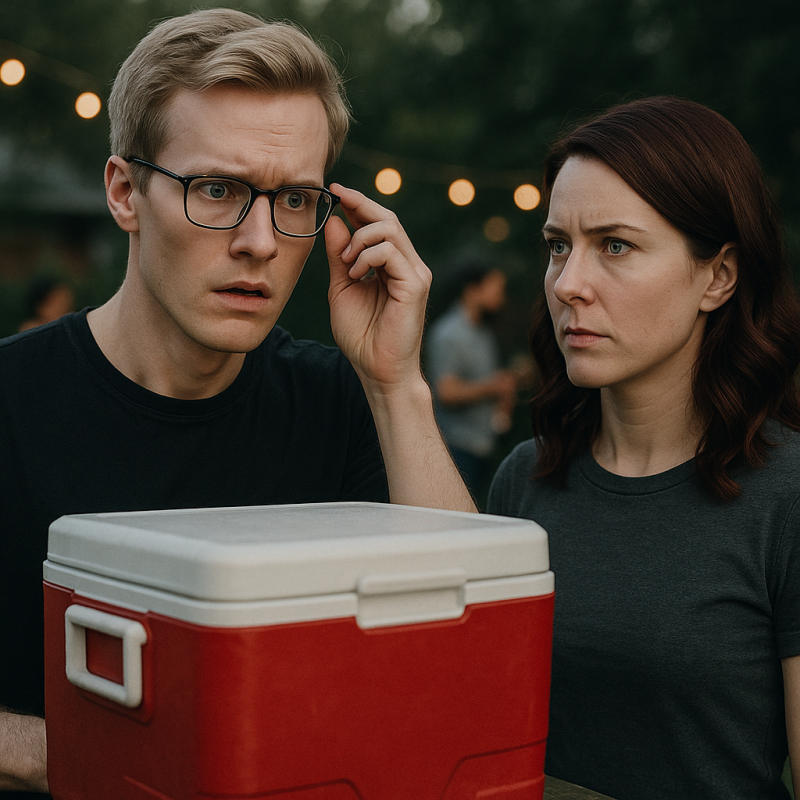 Image by RM AI
The Investigation Plan
That night I told Mark everything — the conversation with Jason, the blank look on his face when I mentioned my parents were on a pension, all of it. Mark listened without interrupting, which is how I knew he was taking it seriously. When I finished, he was quiet for a moment and then asked what I was planning to do. I told him I needed to see actual financial records. Not assumptions, not gut feelings — something concrete. He asked if I meant going through my parents' things, and I said yes, probably. He got that careful look he gets when he's worried but doesn't want to fight. He said it could permanently change things with my family. I told him the relationships were already changed — I just didn't have proof of why yet. He didn't argue with that. He asked if I wanted him involved, and I said I'd let him know. I sat there after he went to bed, staring at the kitchen table, feeling the weight of what I was deciding. There's a line you cross when you stop taking people at their word. I knew I was standing right at the edge of it. And I stepped over anyway.
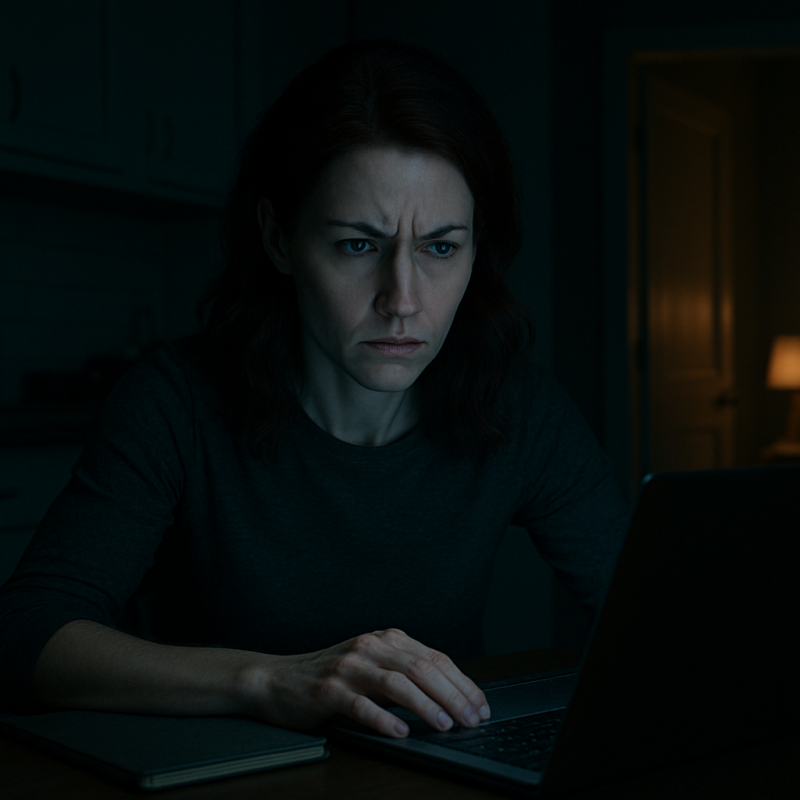 Image by RM AI
The Working Furnace
I told my mother I was in the neighborhood and thought I'd stop by. She seemed pleased, made coffee, and we sat in the kitchen talking about nothing — Kelly's centerpiece choices, the weather, whether Robert's knee was bothering him again. At some point I said I needed to use the bathroom and headed toward the hallway. Then I kept going, down the basement stairs. I told myself I just wanted to check something. The furnace was in the back corner, exactly where it had always been. I stood in front of it for a long moment. It was running. Steady hum, no rattling, no warning lights. I crouched down and looked at the side panel — the model sticker was old, the kind that yellows at the edges. No service stickers. No new parts. No receipt taped to the side the way contractors sometimes do. The unit looked exactly the way it had looked the last time I'd been down here, maybe two years ago. I'd sent five hundred dollars three months ago for that furnace. I went back upstairs and sat across from my parents and talked about the centerpieces some more. From somewhere below us, the furnace ran on, smooth and untroubled.
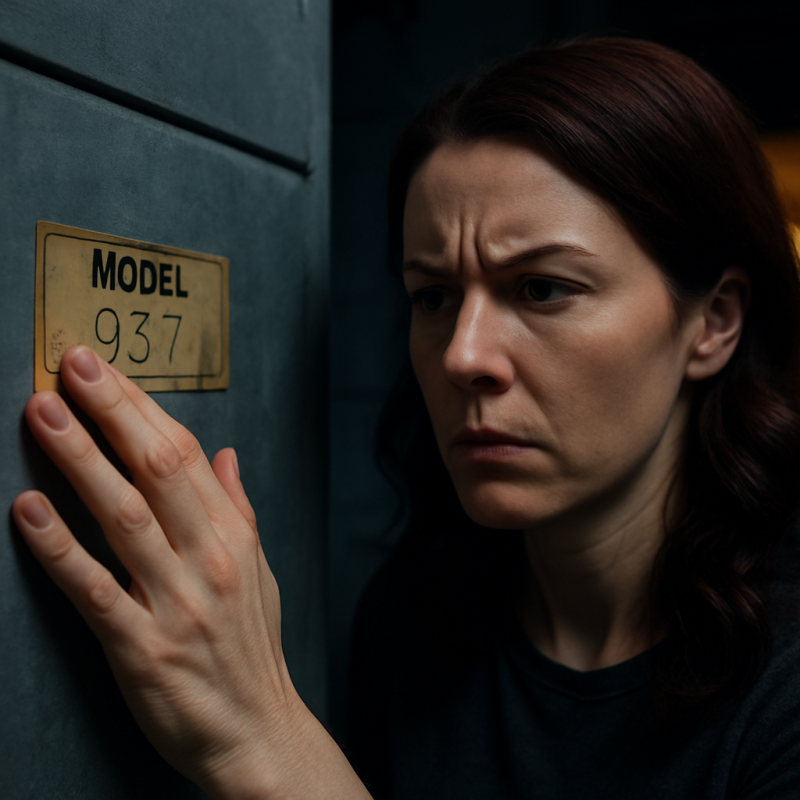 Image by RM AI
The Spiral of Questions
I drove home on autopilot. When I walked in, Mark took one look at me and asked what happened. I told him about the furnace — the old model sticker, no service tags, running perfectly. I watched his expression shift as the implication landed. Then I started talking, and I couldn't stop. The property tax increase two years ago — was that real? The car transmission the year before that? The dental work my mother needed that insurance supposedly didn't cover? I'd sent money for all of it. Every few months, something broke or came due or went wrong, and I'd written a check or done a transfer because that's what you do when your parents need help. Mark sat down slowly and said, quietly, that we didn't actually know any of those were false. I said I suspected. He said that was fair. I said the furnace was real and the furnace didn't add up, and now I couldn't look at any of it the same way. He asked if I wanted to stop. I said I needed to know everything — not some of it, not the comfortable version. I pulled up my banking app and started scrolling back through three years of transfers.
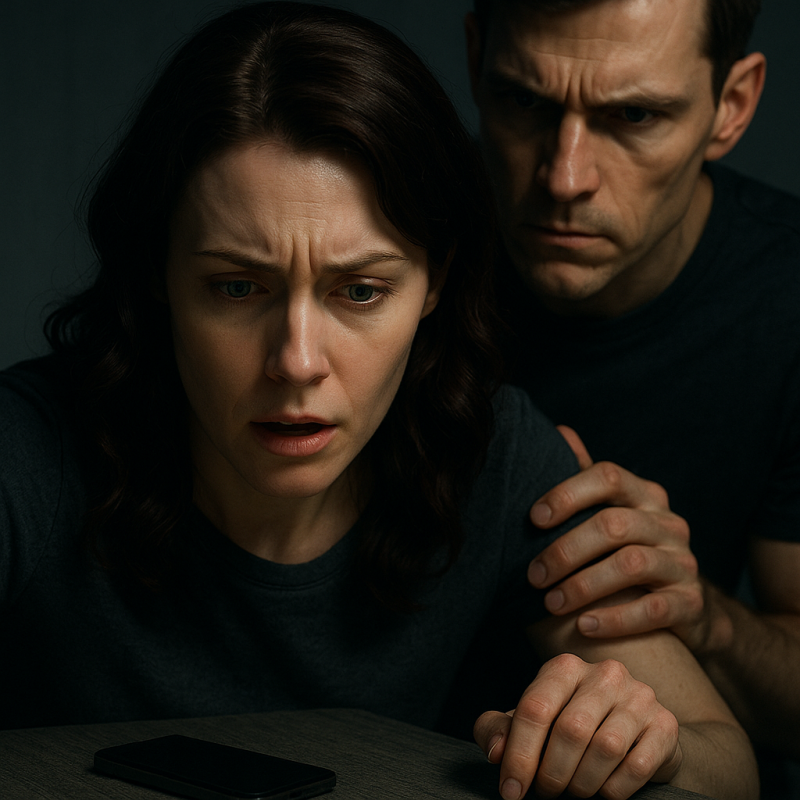 Image by RM AI
The Systematic Review
I spent most of that weekend at the kitchen table with my laptop, my phone, and a legal pad. I went back through every text thread with my parents — three years of messages, which took longer than I expected because there were more of them than I'd remembered. I copied each request into a spreadsheet: date, amount, the reason given. Furnace repair, five hundred. Property tax shortfall, three-fifty. Car transmission, eight hundred. Dental work, four hundred. Roof leak, six hundred. There were smaller ones too — grocery runs, a utility bill, a prescription that insurance wouldn't cover. I added those. When I had everything laid out, I just stared at it. The requests weren't random. They came in clusters, and the clusters had a rhythm — roughly every two to three months, then more frequently starting about fourteen months ago. The amounts had also crept up. The earlier ones were two or three hundred. The more recent ones were five, six, eight hundred at a stretch. I didn't know yet where any of it had actually gone. But the timeline was sitting right there in front of me, column after column, and it didn't look like a string of bad luck.
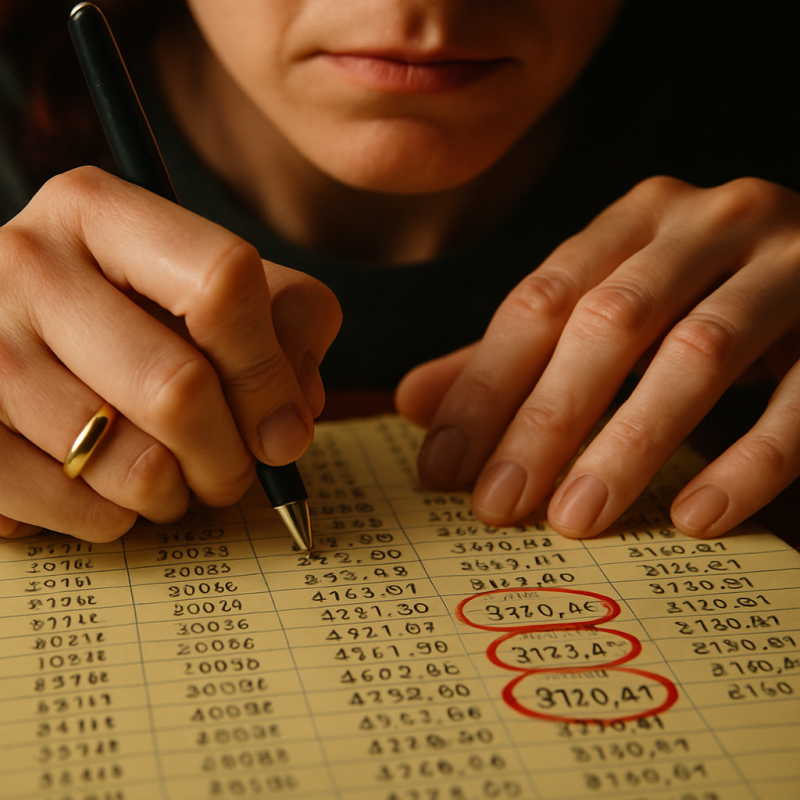 Image by RM AI
Mark's Offer
Mark found me at the kitchen table around ten that night, papers spread everywhere, the spreadsheet still open on my laptop. He pulled out the chair across from me and sat down without saying anything at first. He read through the timeline slowly, scrolling with one finger. I watched him and tried to read his face. He'd been patient with me through all of this, but patient isn't the same as convinced, and I'd been bracing for him to tell me again that I was connecting dots that might not connect. He didn't. He set the laptop down and said the furnace changed everything. He said he was sorry he'd suggested I was overthinking it. I hadn't expected that, and something in my chest loosened in a way I hadn't realized was tight. I told him I needed to find out where the money actually went — not just that the requests felt suspicious, but actual proof. He asked what I needed from him. I said I wasn't sure yet, but that I needed help. He said okay. Just that — okay. We sat there together at the table for a while, the spreadsheet between us, and for the first time in weeks I didn't feel like I was carrying this by myself.
 Image by RM AI
The Unannounced Visit
By Thursday I had a plan, or at least the beginning of one. I needed to see my parents' house with different eyes — not as their daughter stopping by, but as someone actually paying attention. Mark asked if I was sure I wanted to do this alone. I said yes. Having him there would change the dynamic; my parents would perform differently with an audience, and I needed them relaxed and off-guard. He said he understood but that he didn't love it. I told him I'd text him when I got there and when I left. We went back and forth about the timing — a weekday felt too pointed, like I was trying to catch them at something, but a Saturday morning felt natural, the kind of visit that just happens. I settled on Saturday. I'd bring coffee and pastries, make it feel casual. Mark asked what I was hoping to find. I told him I didn't know exactly — just anything that didn't match the story they'd been telling me. He nodded slowly and said he'd be home if I needed him. I spent the rest of the week in a low-grade dread, running through the visit in my head, and on Friday night I decided I was going whether I was ready or not.
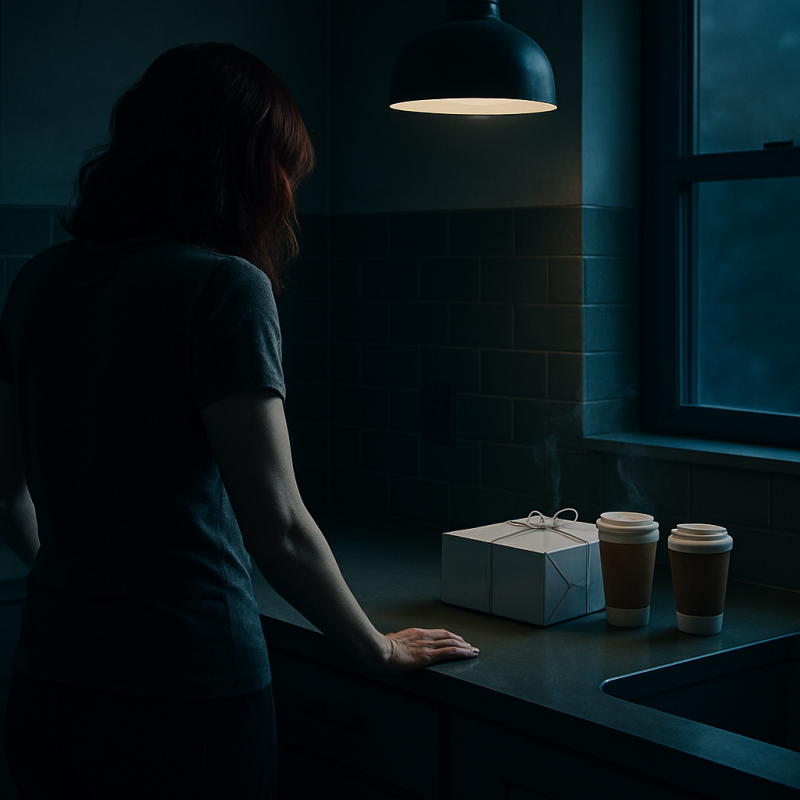 Image by RM AI
The Contradictory Details
I showed up Saturday morning with a box of pastries and two coffees, and my parents seemed genuinely happy to see me, which made everything harder. Linda hugged me at the door. Robert came in from the back room and clapped me on the shoulder. We sat in the living room and I made myself slow down and actually look around. The furniture was the same stuff they'd had for years, nothing new there. But the TV on the wall was new — a large flat-screen mounted where the old one used to sit on a stand. The kitchen, visible from where I was sitting, had a new microwave and what looked like a recently replaced range hood. Robert's tablet was on the coffee table, and even from across the room I could see it wasn't old. Linda mentioned, almost in passing, that they'd just had the carpets professionally cleaned. I asked, as casually as I could manage, whether they'd had any big expenses lately. My mother said oh, you know how it is, things always come up, and changed the subject to Kelly's venue deposit. Robert nodded along and said nothing. I kept my face neutral and kept cataloging, and the list in my head kept growing.
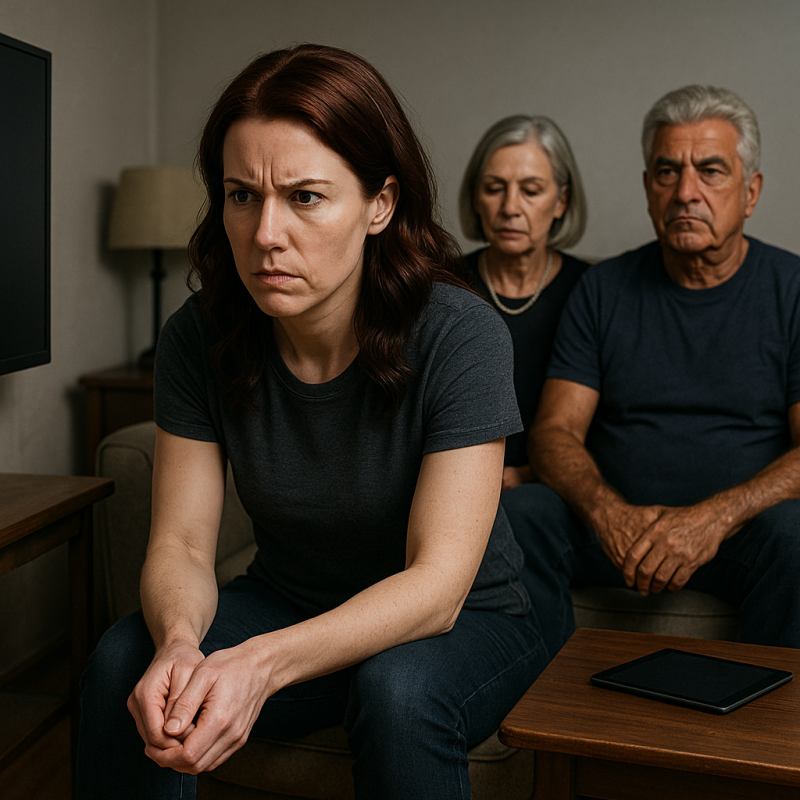 Image by RM AI
The Designer Purse
Linda got up to refill the coffees, and that's when I saw it. On the hall table, sitting next to her keys, was a purse. Not the kind of purse you pick up at a department store sale. I recognized the hardware first — that specific gold clasp — and then the stitching, and then the logo. I'd stood outside that boutique window enough times to know exactly what I was looking at. I kept my expression completely still. Robert picked up his tablet to show me a photo from Kelly's engagement party, and I could see the model clearly — the newest iPad Pro, the one that had come out maybe four months ago. I remembered my mother telling me, sometime around Christmas, that they were cutting back on groceries because everything had gotten so expensive. I smiled at Robert's photo and said something about how great Kelly looked. I stayed another twenty minutes, made my excuses, hugged them both at the door. I drove two blocks, pulled over, and sat there. That purse retailed for twelve hundred dollars.
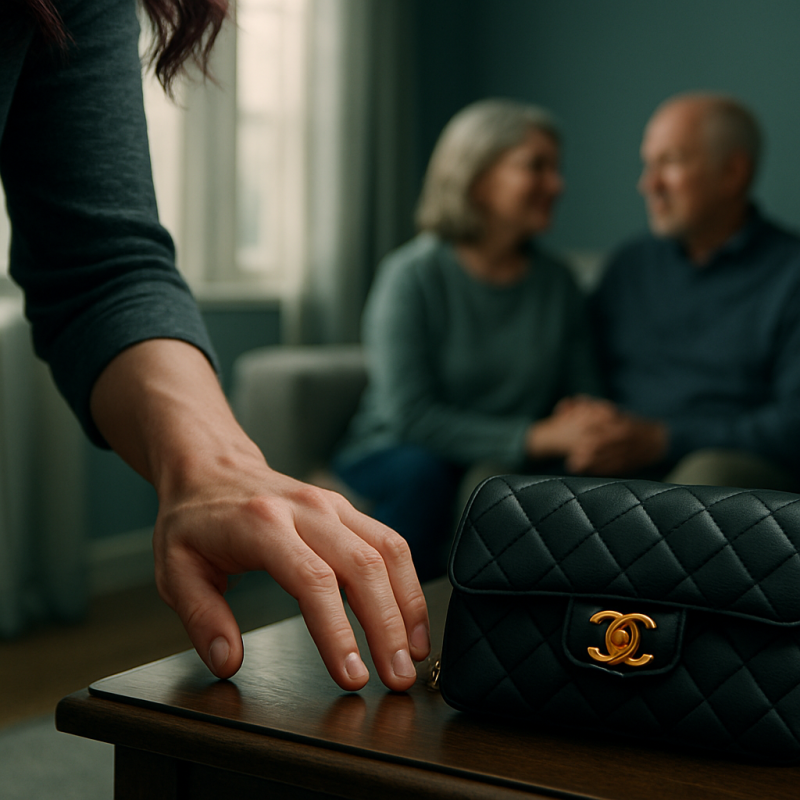 Image by RM AI
The Photographic Evidence
I told them I needed to use the bathroom again — same excuse as before, same apologetic smile. I grabbed my phone off the couch cushion like it was nothing. The hallway felt longer than usual. I stopped at the hall table first and took three photos of the purse from different angles, close enough to get the logo and the hardware. My hands were steady, which surprised me. Then I moved to the living room doorway and waited until Robert set his tablet down on the side table to go refill his coffee. Thirty seconds, maybe. I got two clear shots of the screen showing the model number. The new TV in the corner — I got that too, angled so the brand and size were visible. The kitchen was trickier, but Linda had left the receipt for the new microwave on the counter, right next to the fruit bowl, and I photographed that without even having to move anything. I washed my hands, came back out, sat down, and talked about Kelly's venue for another ten minutes. They noticed nothing. I hugged them at the door and drove home with a camera roll full of evidence against my own parents, and I didn't feel triumphant or vindicated — just hollow, like something had quietly gone out.
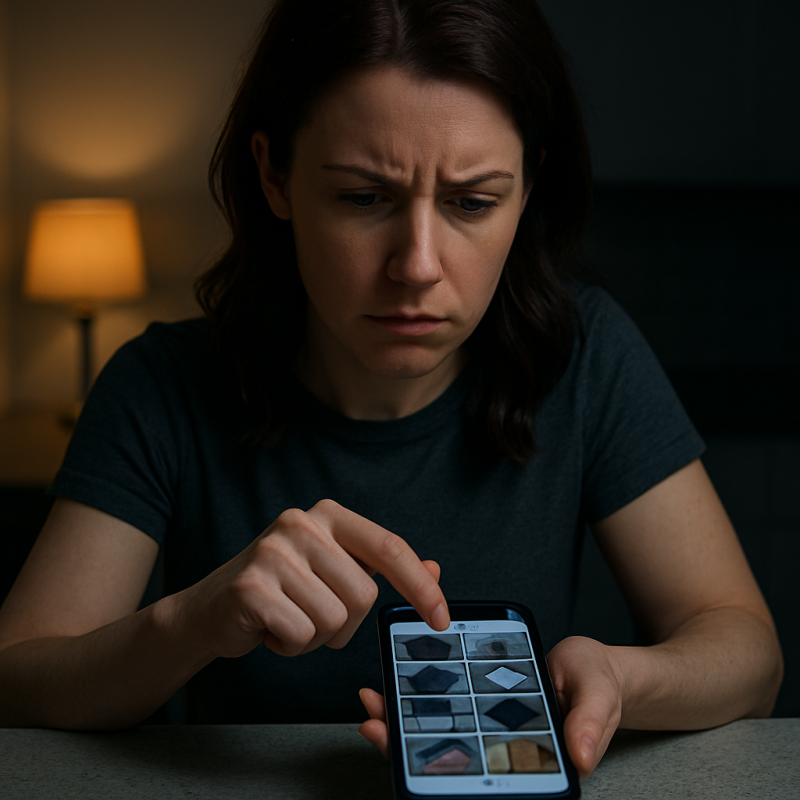 Image by RM AI
The Shopping Spree Post
I was sitting at the kitchen table with my laptop open, going through the photos I'd taken, when my phone buzzed with a notification. Kelly had posted. I almost didn't look, but I did. It was a carousel of photos — her and my mother, arms linked, laughing outside what I recognized immediately as the Nordstrom on Fifth. Shopping bags in both hands. Multiple bags. Kelly's caption said something like "best day with the best mom, she deserves the world 💕🛍️" and my mother was tagged, grinning in a way I hadn't seen in years. I sat there and scrolled through all seven photos. There was a shoe box tucked under my mother's arm in the third one. A gift bag from a store I knew charged forty dollars minimum for a candle. This was the same week my mother had told me, voice tight with worry, that they were watching every dollar because groceries had gotten so bad. I screenshotted every single photo and saved them to the same folder as the purse pictures. The anger came up fast and hot, burning right through the numbness I'd been carrying since the drive home, and I just sat there and let it.
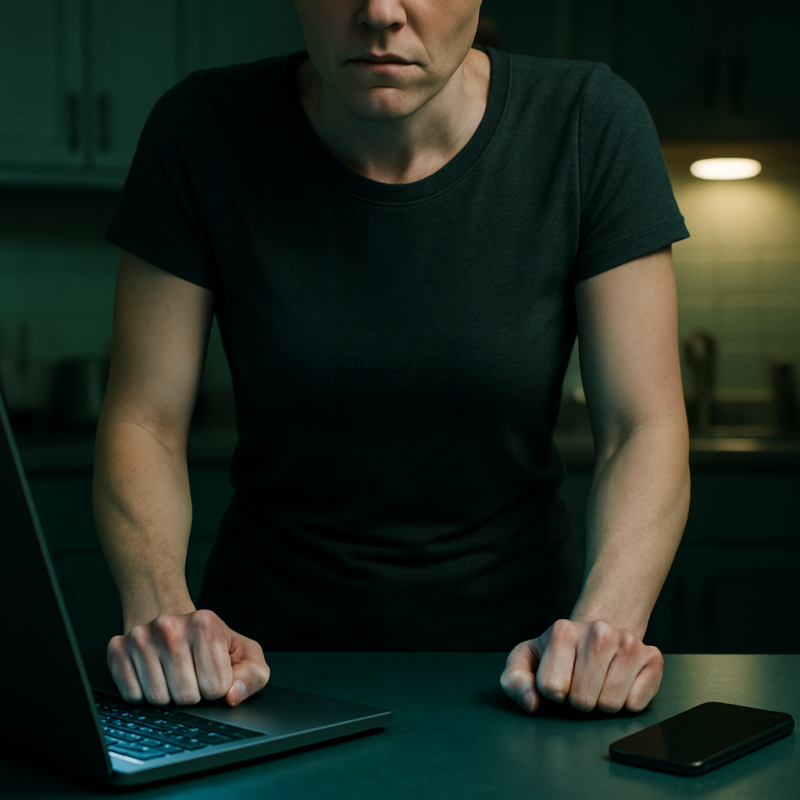 Image by RM AI
The Furnace Company Call
I told myself I was probably wrong. That there was a perfectly reasonable explanation. That maybe they'd used a small independent guy, cash only, no records. I told myself that right up until I picked up the phone. I looked up the three most reputable furnace repair companies in my parents' zip code and called the first one. I explained I was trying to verify a service call from about three months ago at my parents' address and gave them the street and number. The representative put me on hold for maybe ninety seconds. No record of any service call at that address in the past twelve months. I thanked her and called the second company. Same result. The third one took a little longer, and I actually felt my stomach drop when the hold music cut out, like maybe this time there'd be an answer that made sense. The representative came back on the line and told me they had no record of any service performed at that address in over a year. I set my phone down on the counter and stood there. Five hundred dollars. A broken furnace. Three companies. Not one of them had ever been inside my parents' house.
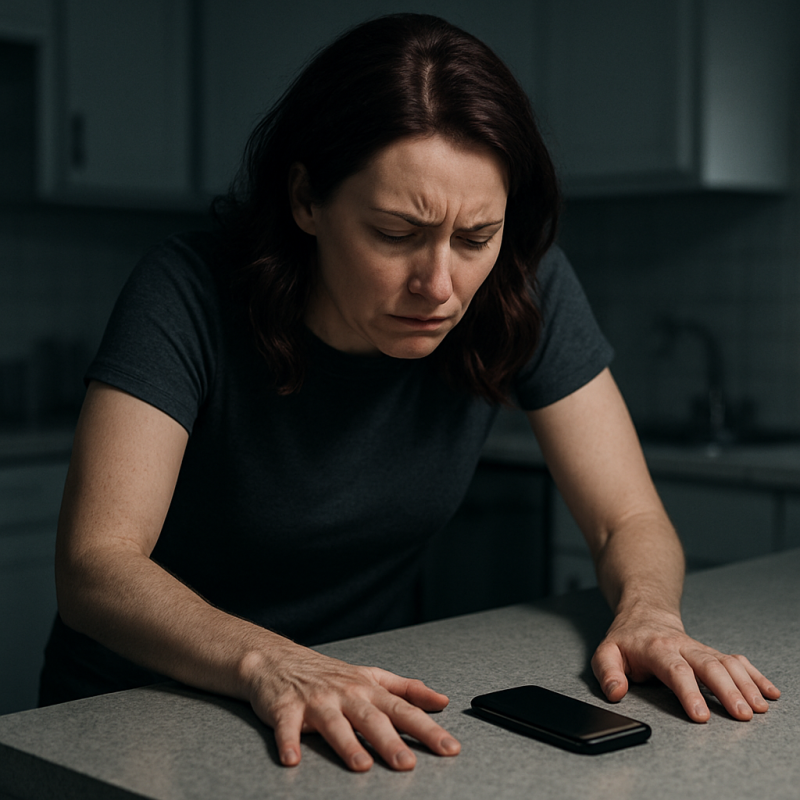 Image by RM AI
The Direct Question
I waited a day before I called my father. I wanted to sound casual, not accusatory — just a daughter asking a simple question. I asked how the furnace had been running since the repair. He said fine, no problems. I said that was great, and then I asked which company they'd used, because I'd been having some issues with my own heating and wanted a recommendation. There was a pause. Not a long one, but long enough. He said he couldn't remember the name off the top of his head. I said that was okay, was it one of the bigger local companies — and I named the first one I'd called. He said maybe, he wasn't sure. I named the second. He said it might have been, he'd have to check. I named the third. He said he'd need to look at his records. I asked when he thought he could do that. His voice shifted then — shorter, clipped — and he said he didn't understand why this mattered so much. I said I just wanted a reliable recommendation. He said he'd look into it and let me know. He never did. But it was his face I kept thinking about afterward — or rather, the version of it I was constructing in my head — that pause before the first answer, stretching out like a gap he couldn't fill.
 Image by RM AI
The Defensive Anger
Two days later I called them both at the same time, three-way call, which I'd never done before and which probably should have signaled to them that something was different. I brought up the furnace again. I said I'd called around to local companies just to follow up on my recommendation search, and none of them had any record of a service call at their address. Linda's voice went tight immediately — that particular tightness I'd known my whole life, the one that meant I'd said something she didn't want to deal with. Robert said I had no right to go calling around asking about their business. I said I wasn't asking about their business, I was asking about a repair I'd paid for. Linda said that what they did with family help was their own decision and I needed to respect that. I said I just wanted to understand where the money went. Robert's voice came up loud then, louder than I'd heard in years, telling me I needed to stop asking questions and drop it right now, that this was none of my business and I was being disrespectful, and the line went so quiet after that I had to check my screen to make sure the call was still connected.
 Image by RM AI
Kelly's Oblivious Update
I was still sitting with my phone in my hand, the call log showing the timestamp of when my father had hung up, when Kelly's text came through. There was no preamble, just a string of photos. Custom wedding favors — little ceramic pots, hand-painted in blush and gold with the wedding date on the side, each one holding a small succulent. They were genuinely beautiful, which somehow made it worse. Kelly's message said she'd ordered two hundred of them, thirty dollars each, and she'd added four heart emojis and a string of flower ones and said she couldn't wait for everyone to take one home. I did the math without meaning to. Six thousand dollars. For party favors. Plants in painted pots that guests would probably leave on the table or kill within a month. I'd just spent forty minutes on the phone being shouted at by my parents for asking where five hundred dollars went, and my younger sister was texting me about six thousand dollars in succulents like it was the most natural thing in the world. I set my phone face-down on the table. The two things sat side by side in my head — the shouting, the succulents — and I couldn't find a way to make them belong to the same universe.
 Image by RM AI
The Timeline of Lies
Mark found me at the dining room table at eleven on a Tuesday night surrounded by printed bank statements and a legal pad covered in dates. He didn't say anything at first, just pulled up a chair. I'd been building a timeline — every payment I'd sent my parents going back two years, with the stated reason next to each one, and then on the same page, every wedding milestone I could document from Kelly's social media and the group texts. Engagement announcement. Venue deposit. Florist contract. Photographer booked. The payments didn't just overlap with the milestones — they clustered around them, almost every major wedding expense preceded by a call from my parents about something urgent. Mark helped me color-code it, his handwriting neater than mine for the labels. When we finished, we both just looked at it. He said quietly that it was enough to say something. I told him I thought I needed one more thing — something that wasn't just correlation, something I could actually point to. He didn't argue. He just put his hand over mine on the table, and we sat there looking at two years of my life laid out in columns, the pattern sitting between us like something neither of us wanted to name out loud.
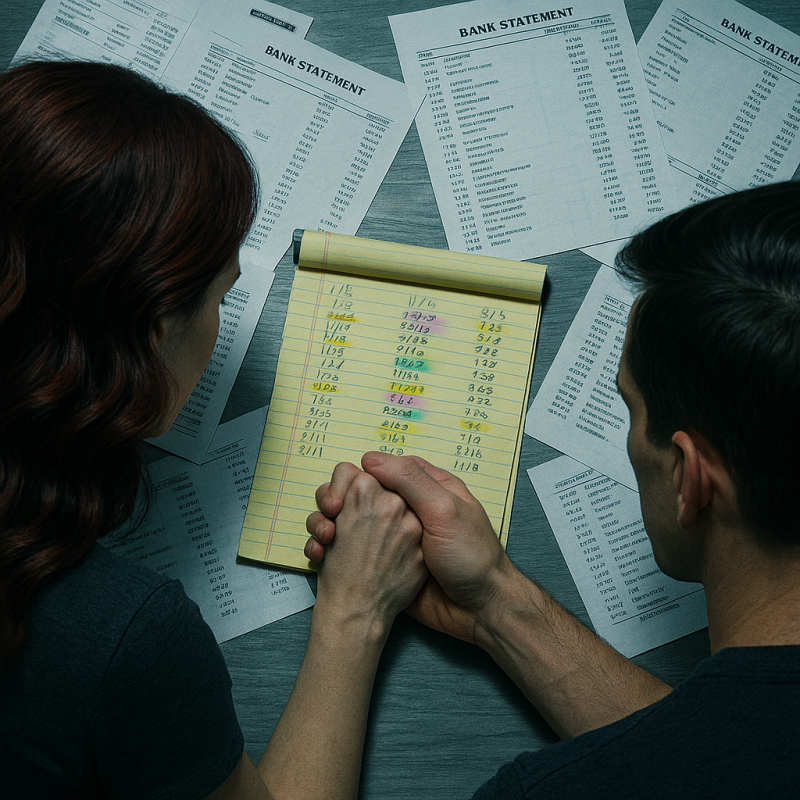 Image by RM AI
The Recycling Bin Discovery
I went back to my parents' house on a Saturday with a casserole dish and a story about having made too much lasagna. Linda seemed genuinely pleased. I helped clear the table after lunch and offered to take the recycling out — their bin was overflowing, which it usually was by the weekend. Linda handed me the bag without a second thought. Outside, I set the bin down by the curb and did what I'd been thinking about doing since I pulled into their driveway. I sorted through the top layer quickly, the way you do when you're looking for something you're not sure is there. Mostly junk mail and packaging. Then a folded paper near the bottom, heavier stock, the kind banks use. I pulled it out and opened it. It was a checking account statement, one month, their names at the top. I scanned the transaction column. There were four transfers listed across the month, each one going to the same account number — a number I didn't recognize, not a utility, not a credit card format I knew. The amounts were $300, $500, $250, and $400. I photographed both pages, folded it back the way I'd found it, and finished emptying the bin. I walked back inside and put the casserole dish in the sink and made a comment about the weather. My hands didn't stop shaking until I was back in my car, staring at the account number on my phone screen.
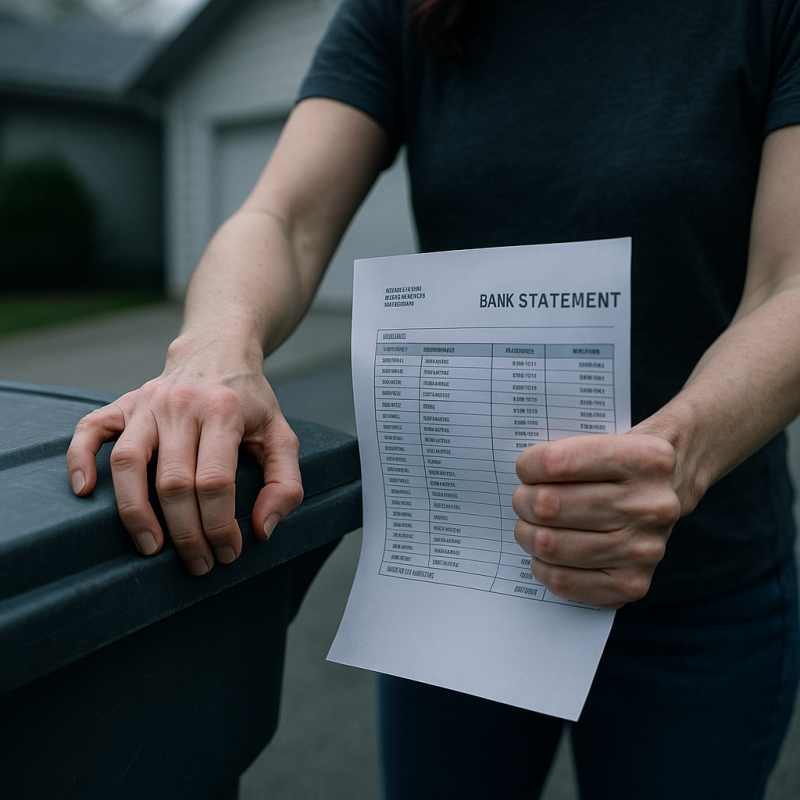 Image by RM AI
The Account Number Trail
I spread the photographed bank statement across the kitchen table that night and showed Mark everything. He put on his glasses and leaned in close, running his finger along the transaction column the way he does when he's trying to make sense of something. Four transfers, same destination account, over a single month. We looked up the routing number first — that was Mark's idea. Took about ten minutes of cross-referencing online before we landed on a result: a regional bank, different from the one my parents had used for thirty years. Not a utility company. Not a credit card processor. An actual bank, one with savings products. I tried calling their customer service line, kept my voice steady, said I was trying to verify an account for a transfer. The representative was polite and completely unhelpful — couldn't confirm anything without account authorization, which, fair enough, but still. So we went back to the laptop. Mark searched the routing number against account type registries while I dug through public-facing bank documentation. What we eventually pieced together was that the account format matched a savings account product, not checking, not a loan. Someone had opened a dedicated savings account at a different bank, and my parents had been sending money there like clockwork. We didn't know whose name was on it yet. But sitting there in the kitchen light, staring at that account number, I felt like I was standing right at the edge of something I couldn't come back from.
 Image by RM AI
The Wedding Savings Fund
I couldn't sleep. Mark went to bed around midnight and I stayed at the table with my laptop, following threads I wasn't even sure would lead anywhere. I tried cross-referencing the account through public records databases, the kind people use for property searches and business filings. Nothing clean came up. Then I tried a different angle — I searched the regional bank's name alongside wedding-related terms, just to see what surfaced. A wedding registry aggregator page came up, and buried in the fine print was a mention of the bank as a preferred partner for wedding savings accounts. My stomach dropped. I went back to the account format documentation I'd found earlier and matched it against the savings product description on the bank's own website. The account type was listed as a goal-based savings account, commonly used for weddings, home purchases, or vacations. The account had been opened — based on the statement date range and the earliest transfer I could trace — roughly two years ago. Kelly got engaged two years and three months ago. I sat there staring at the screen. The transfer dates from my parents' checking account lined up against the timeline in my head, and something cold settled into my chest. I didn't have a name on the account yet. But I knew what the account was for. I just sat there in the dark kitchen, the laptop screen the only light, and let that land.
 Image by RM AI
The Matching Deposits
The next morning I built a spreadsheet. Two columns: left side, every payment I had sent my parents over the past two years, with dates and amounts pulled from my own bank records. Right side, every deposit into the mystery savings account, pulled from the statement I'd photographed and the additional records I'd pieced together overnight. I matched them one by one. The $500 I sent in March for the furnace — a deposit appeared in that account four days later, same amount. The $1,000 I wired last October for the property taxes — deposited within a week. The $300 for the car repair. The $250 for the water heater inspection. Every single line. Every fabricated emergency, every urgent phone call, every time Linda's voice had gone tight and worried on the other end of the line. I sat there and added the right-hand column. Twenty-three thousand dollars. That was the total. Twenty-three thousand dollars I had sent over two years, believing every word, depleting my own emergency fund, putting medical bills on a credit card, quietly canceling the vacation Mark and I had been planning. Mark came up behind me and put his hand on my shoulder, and I couldn't speak. I just pointed at the screen — at the spreadsheet, at the two columns that matched perfectly, at the number at the bottom — and watched his face go still as he read what my parents had done with my money.
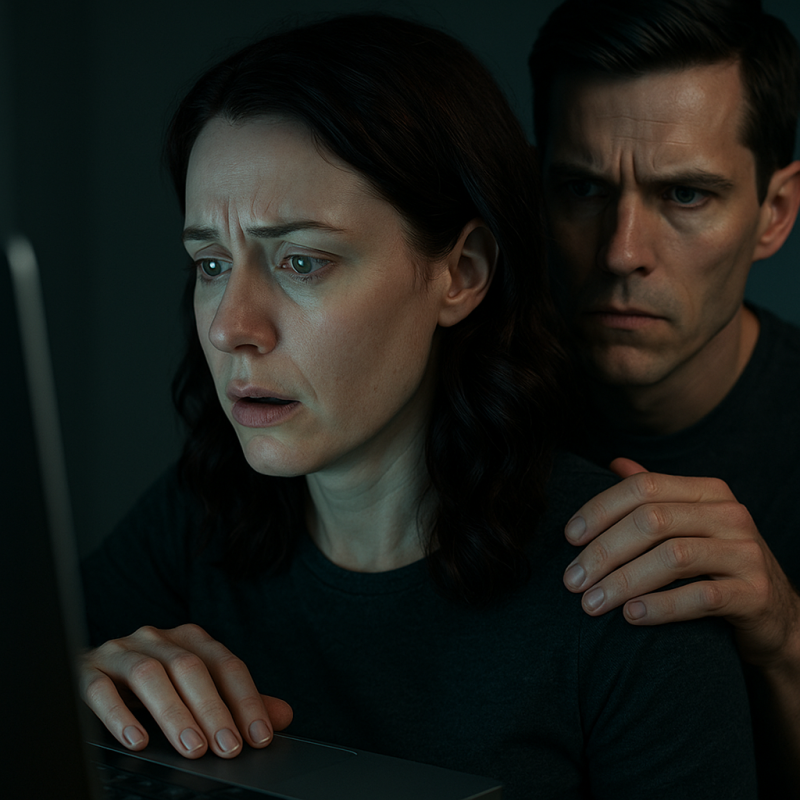 Image by RM AI
The Night Before Confrontation
We sat at the kitchen table until almost two in the morning. Mark made coffee neither of us really wanted and I went through the evidence one more time — the bank statement, the routing number research, the spreadsheet with its two perfectly matched columns. I talked through what I was going to say. Not a script exactly, more like I needed to hear the words out loud to believe I was actually going to say them. Mark listened without interrupting, which is one of the things I love most about him. At some point he asked, quietly, if I was absolutely sure I wanted to do this. I told him I had to. I needed to hear them say it. Not just see the numbers — I needed to sit across from my parents and have them look me in the eye and tell me what they did. He nodded and didn't push back. He said he'd be there if I needed him, that I just had to call. I printed everything out before I went to bed — three copies, paper-clipped, in a folder. I set the folder by my keys so I wouldn't forget it in the morning. I lay in bed for a long time after that, staring at the ceiling, feeling something I couldn't quite name. Not anger, not yet. More like the feeling you get before a hard conversation you've been putting off for years — terrified, and somehow, underneath all of it, completely resolved.
 Image by RM AI
The Admission
I drove to their house without calling first. Linda answered the door in her housecoat and her face did that thing it does when she's surprised but trying to look pleased — a half-second delay before the smile arrived. I walked past her into the kitchen and set the folder on the table. Robert was at the counter with his coffee and he turned around slowly, the way he does when he already senses something is wrong. I laid out the printed pages one by one. The bank statement. The routing number documentation. The spreadsheet. I told them I knew about the savings account at the other bank. I told them I knew about the transfers. The color left Linda's face in a way I had never seen before. Robert set his mug down. He started to say something about how I had misunderstood, and I cut him off. I told him I had the dates, I had the amounts, I had two years of matching deposits, and I needed them to tell me the truth right now. Linda started crying almost immediately. And then she admitted it. She said they had been putting the money toward the wedding. Robert said they had meant to tell me eventually. I asked about the furnace. I asked about the property taxes. I asked about every single emergency, one by one, and they admitted, haltingly, that those situations had been exaggerated. The money had gone to the fund. And then Linda looked up at me through her tears and said Kelly deserved a beautiful wedding and they'd had to find a way to help her.
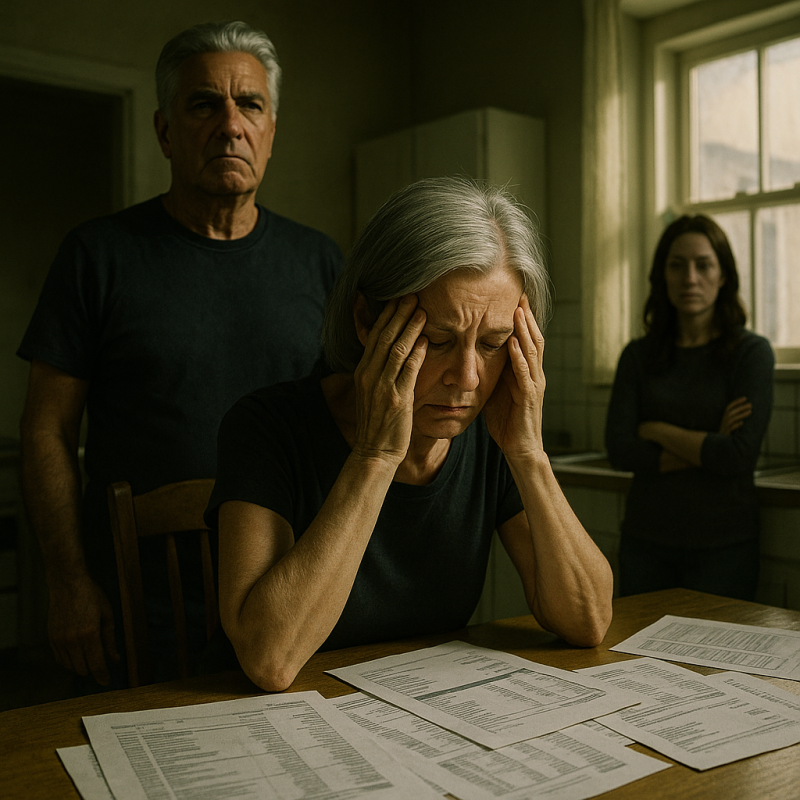 Image by RM AI
The Justification
I asked them how. I asked how they could lie to me for two years, look me in the eye, call me crying about furnaces and tax bills, and do it on purpose. Linda wiped her face and said Kelly had always struggled. That Kelly had never had the financial stability I had. Robert nodded along and said I had always been the responsible one, the one who landed on her feet, the one who didn't need them to worry. They said they knew I would object if they asked me directly to contribute to the wedding — so they found another way. Linda said it like that. Another way. Robert said they were protecting Kelly's happiness, that Kelly needed their support in a way that was different from what I needed. I asked if they felt any guilt. Linda said they did what they had to do. Robert said I had always been independent, that I had never needed them the way Kelly did. And the thing that broke something open in me was that they weren't defensive exactly — they were explaining. Like this was a reasonable position. Like the logic was sound and I just needed it laid out for me. I had spent my whole life being the capable one, the low-maintenance one, the daughter who didn't require much. And apparently, at some point, that had become permission. My father looked at me across the kitchen table, steady and certain, and said I had never needed them the way Kelly did.
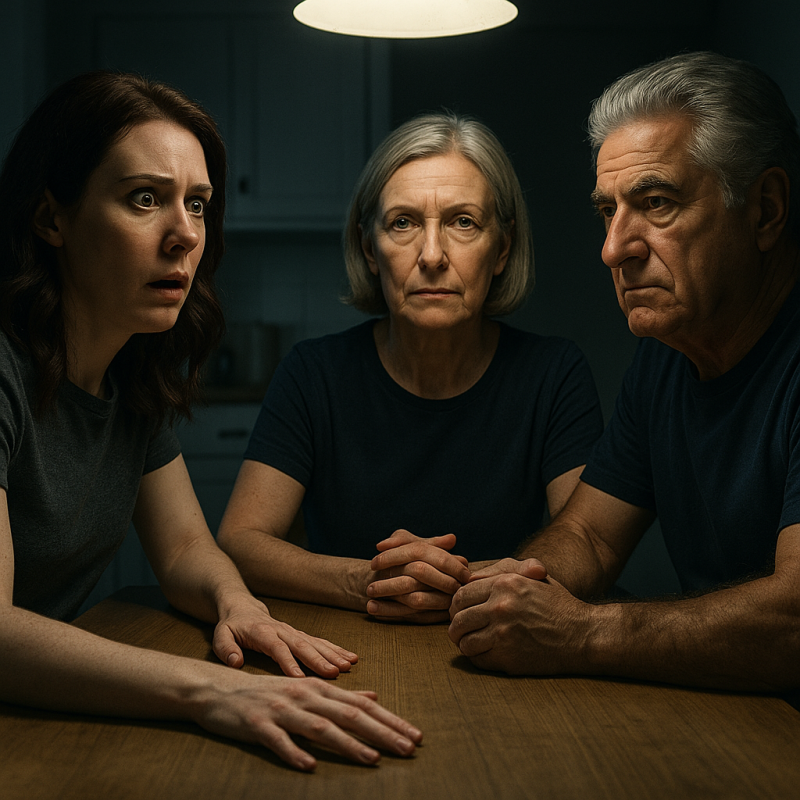 Image by RM AI
The Twenty-Three Thousand
I opened the spreadsheet on my phone and turned it to face them. I told them the number. Twenty-three thousand dollars. I said it slowly, the way you say something you want to make sure lands. Linda blinked. Robert looked at the screen and then looked away. I walked them through what that money had been in my actual life. My emergency fund — gone, because I kept sending it to them. The vacation Mark and I had been planning for three years — canceled, because I didn't have the cushion anymore. Medical bills I'd put on a credit card last spring because my savings were depleted. The down payment fund we'd been building, quietly, for a house — set back by more than a year. I told them I had done all of that willingly, because I thought they needed help. Linda said she hadn't realized it had added up to that much. Robert said they could pay me back over time. I laughed. I couldn't help it — it just came out, short and flat. I knew what their finances looked like. I knew the wedding had already spent most of it. There was nothing to pay back with. They sat across from me and didn't say anything else for a long moment. The number just stayed there between us, in the air above the kitchen table, and none of us had anything left to say about it.
 Image by RM AI
The Expected Silence
Then Linda stopped crying. Just like that — she straightened up, pressed her hands flat on the table, and looked at me directly. She asked me not to tell Kelly. Her voice was even, almost careful. Robert said the same thing a beat later, like they'd rehearsed it, or maybe just like they'd been thinking it the whole time I was talking. They said Kelly didn't need to know. They said the wedding was too close, that it would devastate her, that there was nothing to be done about it now anyway. Robert said family keeps things private. Linda said telling Kelly would only hurt everyone. I asked them if they had considered, at any point in the last two years, how lying to me had hurt me. Linda said this was different because Kelly was innocent in all of it. They looked at me like the request was reasonable. Like after everything they had just admitted — the fabricated emergencies, the redirected money, the two years of deliberate deception — the natural next step was for me to nod and carry it quietly so Kelly's wedding photos would turn out nice. I sat there looking at my parents, people I had sent money to without question, people I had believed without hesitation, and felt something go very still inside me. The audacity of it didn't arrive loudly. It just settled, heavy and absolute, like a door closing.
 Image by RM AI
Mark's Support
I don't even remember the drive home. I just remember pulling into the driveway and sitting in the car for a few minutes, hands still on the wheel, not ready to move. Mark was in the kitchen when I walked in, and the second he saw my face he put down whatever he was holding and came straight to me. I didn't even get through the first sentence before I started crying — and I mean really crying, the ugly kind I'd been holding back for two years. I told him everything. The fabricated emergencies. The redirected transfers. The total. The part where my parents looked me in the eye and asked me to keep quiet so Kelly's wedding photos would turn out nice. He didn't interrupt once. He just sat with me at the kitchen table and listened until I ran out of words. When I finally asked him what he thought I should do, he was quiet for a second. Then he said it wasn't his call to make. He said Kelly deserved to know the truth, but that this was my family and my decision, and he would stand by me no matter what I chose.
 Image by RM AI
The Call to Kelly
I called Kelly the next morning. I'd barely slept, and I'd spent most of the night rehearsing how to start the conversation, which turned out to be useless because the moment I heard her voice I almost lost my nerve entirely. I kept mine steady. I told her I needed to talk to her about something important and that it had to be in person. She asked if everything was okay. I said it was about the wedding. She went quiet for a second, then asked if it was about the bridesmaid dresses — and something about that question, how small and ordinary it was, made my chest ache. I told her it was bigger than that. She asked how much bigger. I said I'd explain everything when I saw her. She suggested the coffee shop near her apartment, that afternoon, and I said yes. She sounded confused and a little worried, but she agreed. After we hung up I sat on the edge of the bed and stared at the floor. She had no idea what was coming. She was going to walk into that coffee shop thinking this was about seating charts or catering, and I was about to take a wrecking ball to everything she thought she knew about our family.
 Image by RM AI
The Coffee Shop Confrontation
I got there twenty minutes early and picked a table in the back corner. When Kelly walked in she was wearing a yellow jacket and she looked so normal, so completely unaware, that I almost got up and left. She sat down across from me and said, 'Okay, you're scaring me.' I told her I needed to show her something first, before I said anything else. I slid the folder across the table — the bank statements, the timeline I'd built, the deposits lined up against every emergency my parents had called me about over two years. I walked her through it slowly. The furnace that was never repaired. The property taxes that weren't due. The money that left my account and landed in theirs and then disappeared into wedding vendor payments. I told her the total: twenty-three thousand dollars. Kelly's face went from confused to pale to something I didn't have a word for. She looked at the documents like she was waiting for them to say something different. Then she looked up at me and said she didn't know. Her voice cracked on the last word. I believed her. I had been so braced for a fight that I hadn't prepared for the look on her face — and it sat between us, heavy and irreversible.
 Image by RM AI
Kelly's Disbelief
Kelly pushed the folder back across the table like putting distance between herself and the papers would change what was in them. She said there had to be some explanation. I asked her what explanation would make any of this okay. She said maybe our parents had borrowed money from somewhere and she didn't know about it, maybe the accounts were mixed up, maybe I was misreading the transfers. I pulled out the specific statement and pointed to the line items. She stared at it. Then she said maybe I didn't understand what the account was for. I told her I'd spent three weeks tracing every transaction and I'd confirmed it all. Her voice got quieter and more desperate at the same time, which is a combination I'd never heard from her before. She said our parents would never lie like this. I reminded her about the furnace — the one they said broke down in February, the one I sent twelve hundred dollars for, the one that a neighbor later mentioned had been working fine all winter. Kelly went still. She picked up the spreadsheet again and her hands weren't quite steady. She didn't say anything for a long moment, and I watched the certainty drain slowly out of her expression.
 Image by RM AI
The Shared Devastation
Then Kelly put her face in her hands and just fell apart. Not the performative crying I'd seen from her at family dinners when things didn't go her way — this was something rawer than that, something that came from somewhere real. She said she felt sick. She said she kept thinking about the engagement party, the venue deposit, the dress fittings, all of it, and now every single memory had this underneath it. She asked how our parents could do that to me. I told her I'd been asking myself the same question for weeks. She said she never would have taken the money if she'd known, and I believed her, which surprised me a little because I'd spent so long being angry at everyone in my family that I'd almost forgotten Kelly wasn't the one who'd made the choice. She asked what I wanted her to do. I said I just needed her to know the truth. She said she couldn't get married with this money, that it didn't feel like her wedding anymore, that it felt like something built on a lie she hadn't even told. The coffee shop was loud around us and none of it touched us. I reached across the table and took her hand, and she held on.
 Image by RM AI
Kelly Confronts the Parents
Kelly called our parents right there from the table, put them on speaker, and set the phone between us. Linda picked up on the second ring, cheerful, and Kelly's voice went flat immediately. She said she knew everything. She said I had shown her the documents. Linda started talking fast — she said it was complicated, that there were things Kelly didn't understand, that they had always planned to explain. Kelly cut her off and said there was nothing to explain, that they had stolen from me. Robert got on the line and his voice was tight. He said they had done what they thought was best for the family. Kelly said that wasn't his decision to make with my money. Linda started crying, which under any other circumstances would have ended the conversation, but Kelly didn't soften this time. She said she was humiliated. She said she'd been walking around for two years accepting gifts that weren't gifts. I spoke up once — I said our parents had asked me to keep quiet so the wedding wouldn't be disrupted. Robert's voice went up a register and he said I had no right to bring Kelly into this. Kelly said I had every right. The call got louder and more tangled, everyone talking over everyone else, and then Robert's voice cut through all of it: he shouted that they did what they had to do.
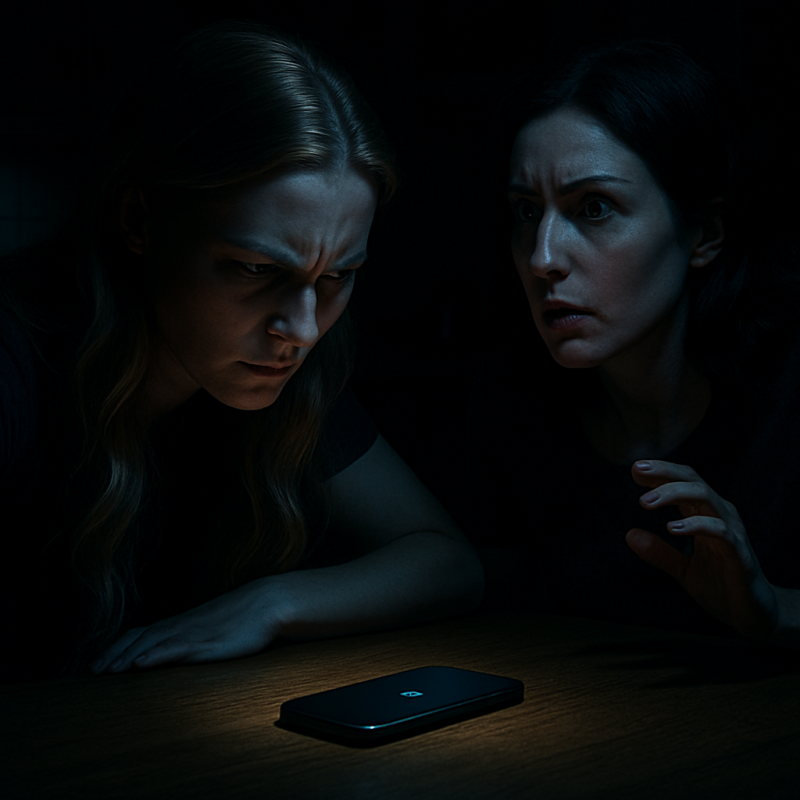 Image by RM AI
The Wedding Decision
Kelly ended the call and set the phone face-down on the table. She sat there for a second, very still, and then she said she was canceling the wedding. I didn't say anything. She called Jason and he was there within the hour, still in his work clothes, looking like he'd driven fast. Kelly told him everything — the transfers, the fake emergencies, the total — and I watched him go through the same sequence of expressions I'd seen on her face at the coffee shop. He didn't argue. He said he understood and that they would figure it out together. Linda called back twice. Robert sent a text saying everything was already paid for and that canceling would only make things worse. Kelly read it out loud and then put the phone back down. She said the wedding wasn't really hers — it was something that had been built around her without her knowing, and she couldn't stand in the middle of it and pretend. Jason nodded. He said whatever she needed. Linda called a third time and Kelly let it ring. Then my phone buzzed — a text from Linda saying I had ruined everything, that I had destroyed this family out of spite. I set my phone down next to Kelly's. The room was quiet except for Jason's steady breathing across the table, and Kelly's voice, low and certain, when she said she couldn't marry him like this.
 Image by RM AI
The Rejected Apology
My parents called two days later and asked to meet. Mark said he was coming with me and I didn't argue. We drove over on a Sunday afternoon and Linda had made coffee, which felt like the saddest detail of the whole thing — like the right beverage could soften what we were all sitting down to do. Robert said they were sorry for hurting me. Linda said they never meant for things to go this far. I asked them if they were sorry for what they did or sorry that Kelly found out. Neither of them answered that directly. Robert said he wanted to figure out a way to pay me back. I told him the money wasn't the point anymore — the point was that they had looked me in the eye, over and over, for two years, and lied. Linda said they had only wanted Kelly to be happy. I said I understood that, and that it had never once occurred to them to want the same thing for me. I told them I needed space. Linda asked how long. I said I didn't know. Maybe a long time. She started crying and said please don't do this, and I told her they had done this, not me, the moment they decided my trust was something they could spend. Mark took my hand. We walked out together, and I didn't look back at the house as we reached the car.
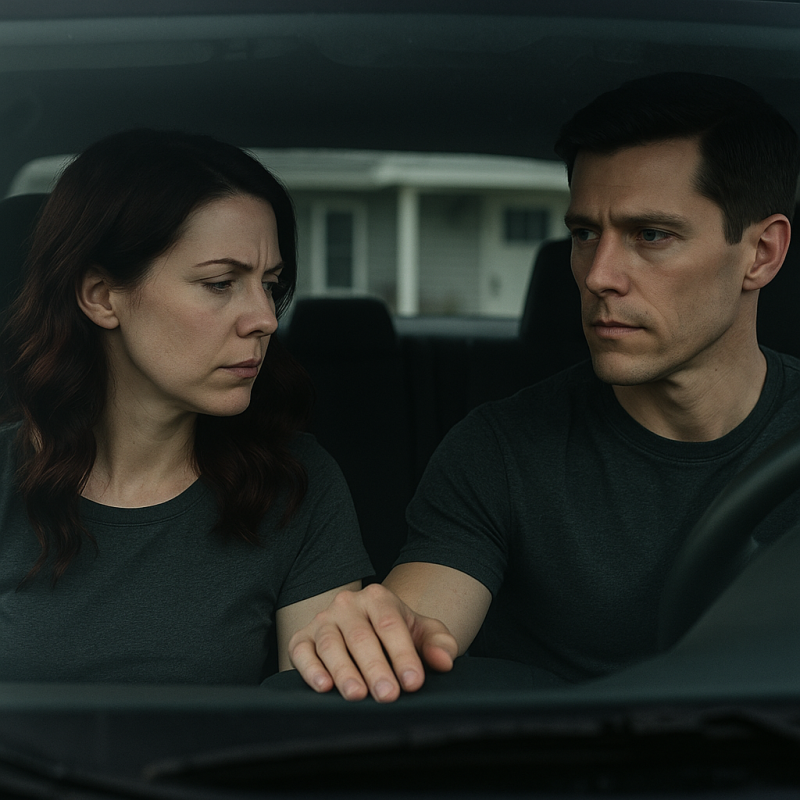 Image by RM AI
The Terms
I wrote the email on a Tuesday night while Mark sat beside me at the kitchen table. I didn't draft it a dozen times. I knew what I needed to say. Full repayment of the twenty-three thousand dollars. A genuine apology — not the kind that ends with 'but we only wanted Kelly to be happy,' the kind that actually names the harm. Family therapy, because what happened between us didn't start with a wedding fund and it wasn't going to end there. And accountability for every specific lie, not a general 'we're sorry things went this far.' I read it back to Mark when I was done. He said it was fair and clear. I told him I didn't expect them to agree to any of it. He asked if that meant I was okay with losing them. I sat with that for a second. I told him I had already lost them — I just hadn't known it yet. I lost them the moment they decided my trust was a resource they could quietly drain. Sending the email wasn't ending something. It was just finally marking the place where it had already ended. I hit send. Mark put his arm around me. The family I had grown up believing in was gone, and I was the only one who had noticed it leave.
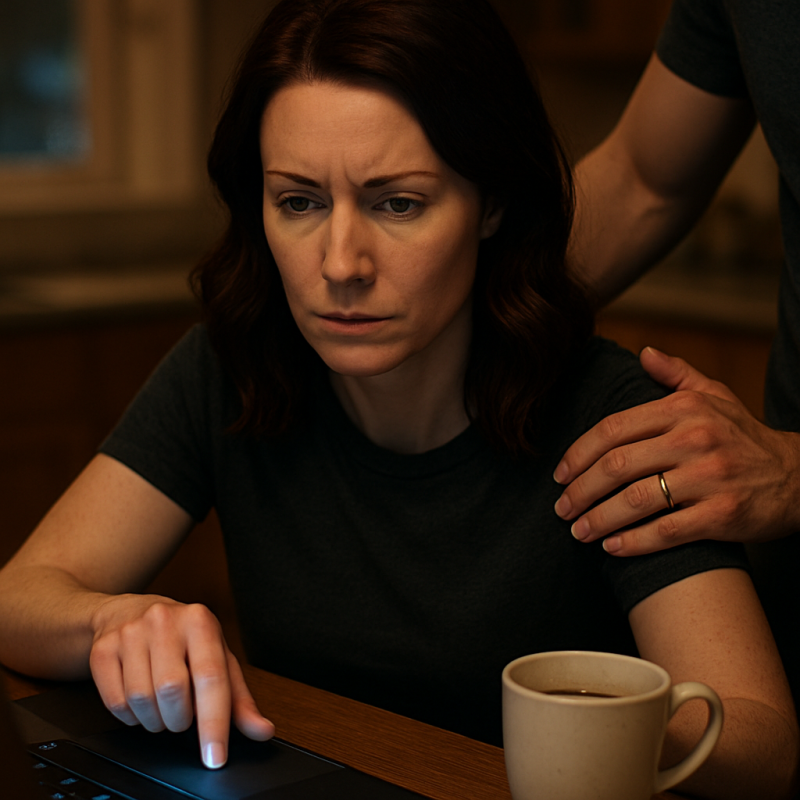 Image by RM AI
The Scaled-Down Wedding
Three months later, Kelly and Jason got married in Riverside Park on a Saturday morning with twenty people and a folding table of grocery-store pastries. Kelly wore a cream dress she found on a rack at a consignment shop for eighty dollars. I wore a sixty-dollar blue dress I picked out myself, no committee, no alterations appointment, no invoice. Jason's best friend from college officiated and kept mispronouncing 'solemnize,' which made everyone laugh including Kelly. The whole thing cost under three thousand dollars, which Kelly and Jason paid for themselves. My parents weren't there. Nobody mentioned them. When Kelly gave a short speech before they exchanged rings, she looked at me and said she was grateful I had told her the truth when it would have been easier not to. I had to look at the sky for a second to keep it together. Jason cried during his vows, the real kind, not the performative kind, and Kelly held his hands and didn't look anywhere else. I stood a few feet away in my sixty-dollar dress and watched my younger sister marry someone who genuinely loved her, in a ceremony that didn't owe anything to anyone. It was the most honest thing our family had done in years, and the lightness of it settled over me like the morning was enough.
 Image by RM AI
The Rebuilding
Kelly and I started meeting for coffee every other week at a place halfway between our apartments. The first few times were a little awkward — we kept starting sentences and then stopping, like we were both waiting for the version of the conversation where someone got defensive. But it didn't go that way. She told me she was in therapy, working through what it meant to have been the favorite, how it had shaped her in ways she hadn't wanted to look at. I told her I was in therapy too, and that I had spent years resenting her for something that was never actually her fault. She said she was sorry for being oblivious to what I was carrying. I said I was sorry for not speaking up sooner instead of just quietly seething and paying invoices. We laughed at that, which felt like something unlocking. She said our parents had made us into a competition neither of us had agreed to enter. I thought that was probably the most accurate thing either of us had ever said about our childhood. Mark and Jason started hanging out too — they had a shared language around being the calm ones married to complicated family situations. The four of us had dinner together on a Friday night and nobody talked about money or weddings or any of it, and I drove home thinking that this — just this — was what I had actually wanted all along.
 Image by RM AI
The Distance and the Peace
Six months after I sent the email, my parents still hadn't responded to it. Linda sent occasional texts — nothing that addressed the terms, just things like 'thinking of you' and a photo of the backyard garden once. Robert called on a Sunday afternoon and I let it go to voicemail. He didn't leave one. They hadn't repaid a dollar. I won't pretend that didn't hurt, because it did, in the specific quiet way that grief hurts when you've already accepted it. But I also noticed something I hadn't expected: I felt lighter. Mark and I were saving for a house again, actually saving, because I had stopped sending money to anyone except by my own choice. I wasn't bracing for the next ask. I wasn't doing the mental math every time my phone rang. Kelly understood and never once pushed me to reach out. She just showed up for coffee every other week and let me be wherever I was. I had spent so many years trying to hold a family together that didn't want to be held together honestly. The grief was still there — I don't think it ever fully goes away when you lose your parents while they're still alive. But underneath it, steady and real, was something I hadn't felt in a long time: the knowledge that I had chosen myself, and that it was enough.
 Image by RM AI