
My Sister Blamed Me For Destroying 90 Years Of Family Photos Until I Found The Proof She Did It
My Sister Blamed Me For Destroying 90 Years Of Family Photos Until I Found The Proof She Did It
The Volunteer
My parents have lived in the same house for forty-one years, and the basement looks like it. Sunday dinners there always end the same way — my mother disappearing downstairs and coming back up with something she wants us to look at. This time it was a photo album, the spine cracked and the plastic sleeves yellowing at the edges. She set it on the table between the dessert plates and said, quietly, that she was worried. Some of the older prints were sticking to the sleeves. A few had already torn when she tried to peel them back. My father looked at the album, then at me, and said nothing — which, for him, is practically a speech. I asked how many albums there were. My mother said she thought around forty, maybe more, plus three shoeboxes of loose prints going back to the 1930s. I told them I could digitize everything. Build a proper archive with redundant backups, cloud storage, the works. My father asked whether a digital file could really last as long as a physical print. I explained RAID arrays and offsite backups until his expression shifted from skeptical to something closer to resigned trust. My mother started crying a little when she mentioned her grandmother's photos. That was the moment I stopped thinking of it as a project and started thinking of it as something I owed them.
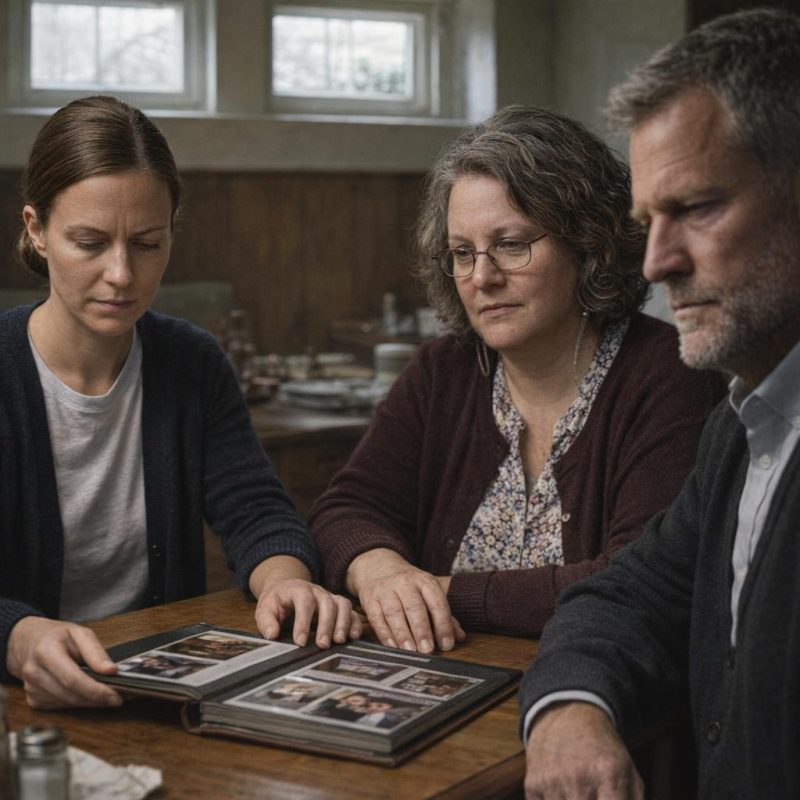 Image by RM AI
The Infrastructure
I spent three evenings reading NAS reviews before I committed to anything. Network-attached storage with a proper RAID configuration, a UPS for power protection, and enough drive capacity to store every scan at archival resolution — it added up fast, but I wasn't cutting corners on something meant to last decades. Claire called on a Wednesday while I had three browser tabs open comparing drive failure rates. She asked about the timeline, whether I'd thought about what happened if I got sick or moved or just got busy. I told her the system would be redundant enough that a single point of failure wouldn't matter. She said that wasn't what she meant — she meant me, specifically. What if I was the single point of failure. It was a fair point, honestly. She offered to chip in on the equipment costs and I said no, I had it covered, but I appreciated it. When the server arrived, I spent a Saturday afternoon setting it up in the corner of my spare room with a small fan pointed at the rack and a power strip with surge protection. I ran the initial configuration, set up the drive array, created the admin account, and named the share folder FamilyArchive. Claire texted that evening asking who else would have administrative access once everything was running. I told her we'd figure that out once the system was live. Then I pressed the power button, and the server hummed to life for the first time.
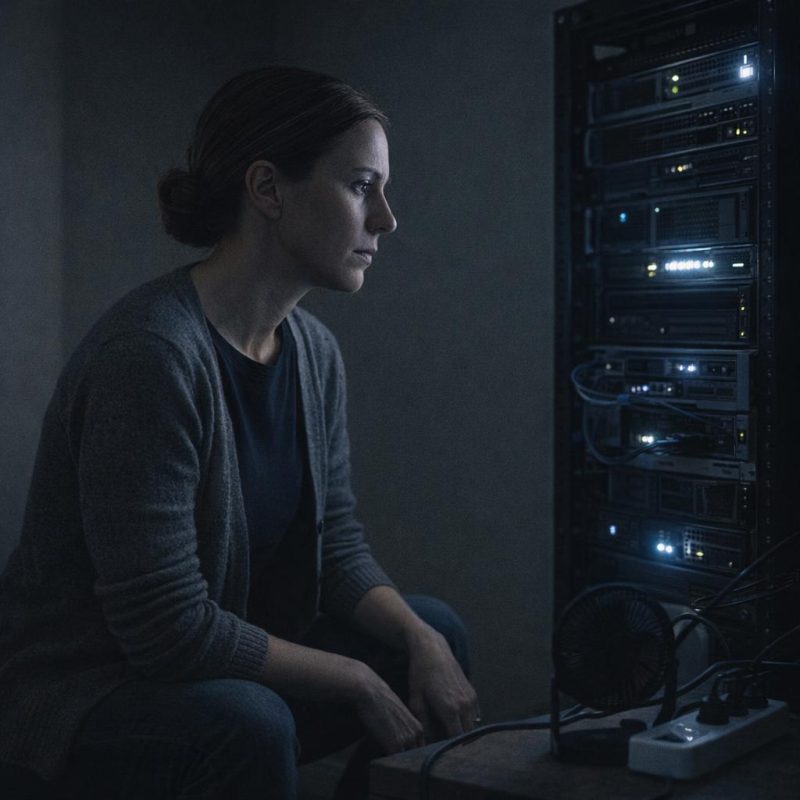 Image by RM AI
The Launch Celebration
My mother made pot roast, which she only does for occasions she considers significant. My father wore a pressed shirt on a Sunday, which told me the same thing. James showed up with a six-pack and a grin, and Claire arrived with a wrapped box that turned out to be a flatbed scanner — a good one, the kind with a film adapter and a glass plate wide enough for large-format prints. I hadn't expected that. I thanked her and she waved it off, said it was an investment in the project. My father stood up during dinner and made a toast, which he has done maybe four times in my memory, and this one was about family history and stewardship and how some things are worth doing right. I felt my face go warm. After dinner I opened my laptop and walked everyone through the server interface — the folder structure, the naming convention, the way the backup system mirrored everything automatically. James immediately asked if he could access it from his phone. My mother leaned in close to the screen when I pulled up the test scans I'd already done, and when a photo of her grandmother appeared — sharp and clear and properly lit — she put her hand over her mouth. I sat back and watched them move through those first images together, and for a moment the project felt less like a technical task and more like something I'd been trusted to carry for all of them.
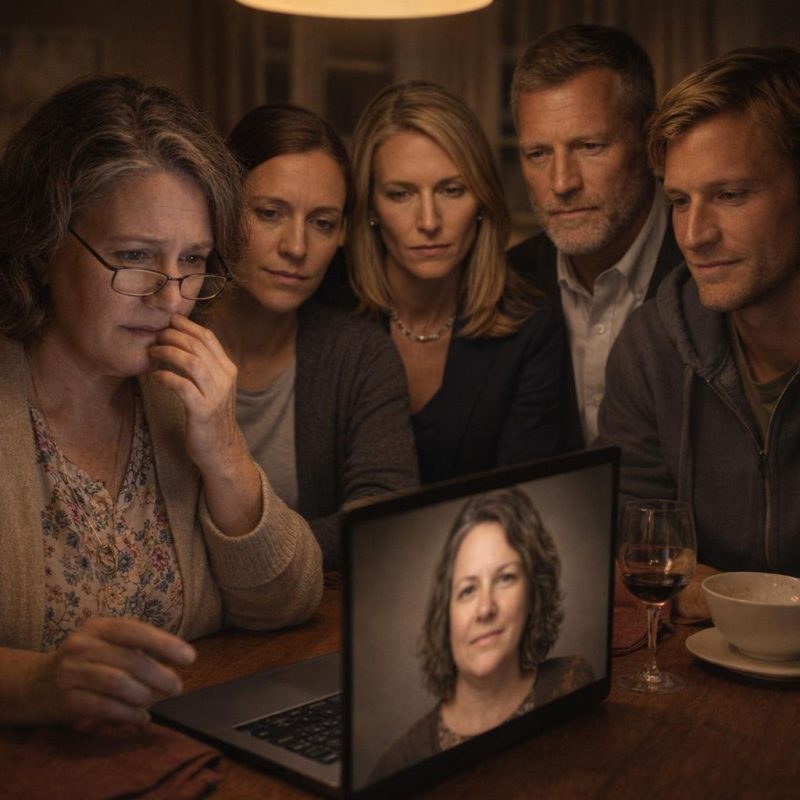 Image by RM AI
The Scanning Routine
I picked up the first batch of albums on a Tuesday morning and lined them up on my dining room table in rough chronological order. The 1930s material was the most fragile — some prints had gone sepia all the way through, edges curling, a few stuck together at the corners. I made a spreadsheet first, before I touched the scanner: columns for decade, album number, photo number, date, subject, location, and upload status. The naming convention took me an hour to settle on, but once I had it — YYYY_MM_AlbumNum_PhotoNum_Subject — I didn't deviate from it. I scanned at six hundred DPI minimum, higher for anything damaged or particularly detailed. Each evening I uploaded the day's batch to the server, ran a checksum verification to confirm file integrity, and updated the spreadsheet. I added metadata tags in batches: names of people I recognized, locations my mother had written in pencil on the backs of prints, event types where I could identify them. It was slow, methodical work, and I found I didn't mind that at all. There's something satisfying about bringing order to things that have been sitting in boxes for decades, giving them a structure that will outlast the cardboard they came in. By the end of the second week, every photograph from the 1930s was scanned, verified, tagged, and uploaded — ninety-one images, all accounted for, the first full decade of the family's visual history sitting intact on the server.
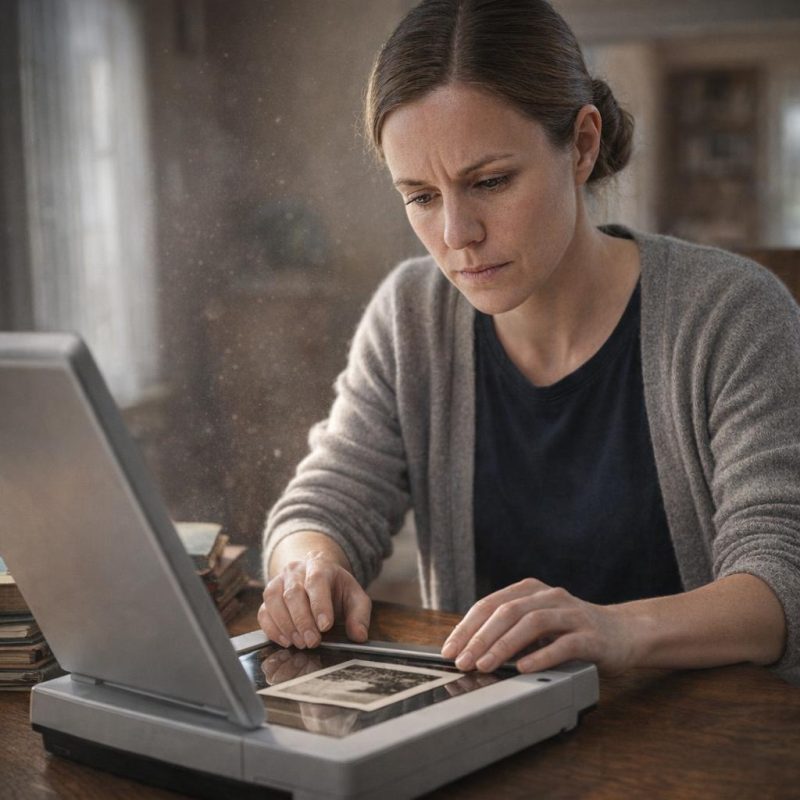 Image by RM AI
The Praise
I sent the family email on a Sunday evening with a link to the completed 1930s and 1940s folders and a short note about what they'd find there. My mother called before I'd even closed my laptop. She stayed on the phone for forty minutes, moving through the photos one by one, telling me stories about people I'd only ever known as names on the backs of prints. My father sent an email the next morning — three sentences, which for him is practically a letter — saying the organization was thorough and the image quality was better than he'd expected. James shared a handful of photos on social media and tagged me in the caption, which I appreciated more than I expected to. Over the following week, cousins and aunts I hadn't heard from in years sent messages through my mother asking if I could prioritize certain decades. I made a list and worked it into the scanning schedule. It felt good, genuinely good, to be the person holding something the whole family wanted. Claire sent her own note saying the project was turning out better than she'd imagined, which landed warmly. Then, two days later, a text from her came through that I read twice before I understood what she was actually asking — she wanted to know if I could add her as a secondary administrator on the server.
 Image by RM AI
The Backup Administrator
I called Claire back the next morning to talk through the request properly. She made a reasonable case — if I was traveling, or sick, or just unavailable for a stretch, the family shouldn't be locked out of the archive entirely. She mentioned she'd taken a few computer science courses in college and wasn't going in blind. I thought about it for maybe thirty seconds and decided she was right. A single administrator on a system this important was its own kind of risk. I logged into the server, created a new account under her name, set the permission level to administrator, and sent her the credentials. We did a video call while she logged in for the first time — I walked her through the folder structure, showed her where the maintenance log lived, explained the backup schedule. She navigated it smoothly, asked a few specific questions about the upload process, and said it all made sense. I told her to call me if anything looked off. After we hung up, I opened the maintenance log and added a note: secondary admin account created, credentials issued, access confirmed. Then I pulled up the system's user activity panel out of habit, and Claire's new account entry was already there, the timestamp sitting fresh at the top of the log.
 Image by RM AI
The Organization Suggestions
The email from Claire arrived on a Thursday with the subject line 'Archive Organization — Some Thoughts.' It was detailed. Three paragraphs outlining a proposed folder structure organized by family branch first, then event type, then date — essentially the inverse of what I'd built. I read it twice, then set it aside and kept scanning. She called that afternoon to walk me through her reasoning, and I listened, genuinely trying to find the parts that made sense. Some of them did. Grouping by family branch had a logic to it for people who only cared about one side of the tree. I told her I'd think about incorporating some of it as a secondary tagging layer without dismantling the chronological structure. She said that sounded reasonable. We left it there. That evening I logged into the server to upload the day's scans and noticed the folder list looked different. There were new directories I hadn't created — branches labeled by surname, subfolders organized by event category. I clicked into one and found photos I'd already cataloged, moved out of their original locations into the new structure. I sat there for a moment, cursor hovering, not sure whether to feel annoyed or just surprised. I hadn't said yes. I'd said I'd think about it. But Claire had already gone in and rearranged several batches of photos into her own folder structure.
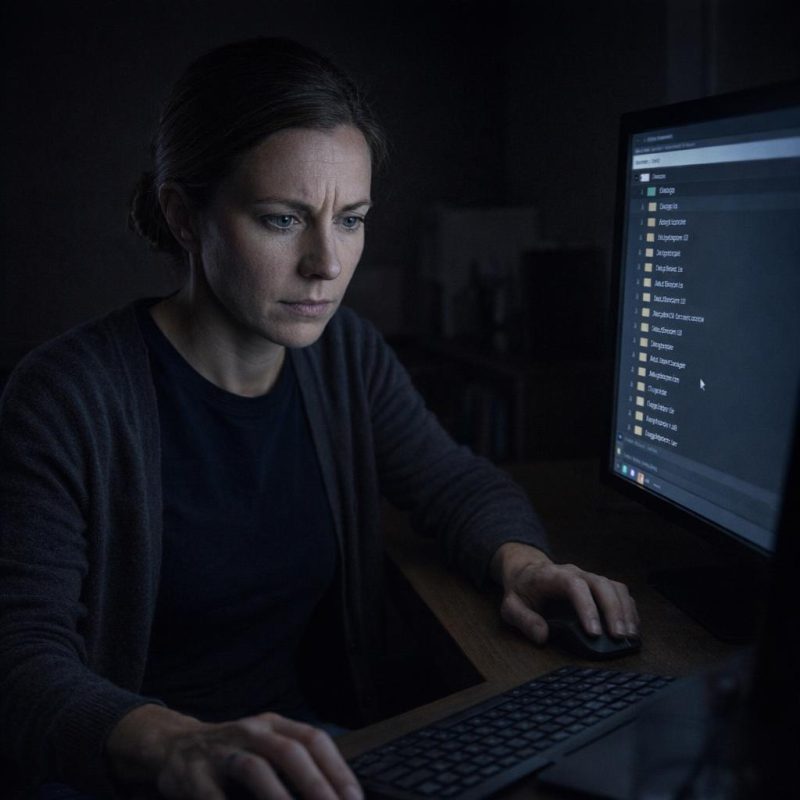 Image by RM AI
The Maintenance Schedule
I set the first Saturday of every month as my maintenance window, and I kept to it. The routine was the same each time: full backup before touching anything, then security patches, then firmware updates, then a RAID integrity check, then a review of the backup logs to confirm the offsite mirror was current. It took about two hours when nothing was wrong, which so far had been every time. I'd adapted Claire's surname folders into the structure as a secondary layer, keeping my chronological system intact underneath, and the hybrid approach had actually settled into something workable. The access log showed two accounts active — mine and Claire's — with her last login about a week prior, browsing the 1940s folder. Everything looked normal. I ran the file retrieval test, pulling a sample from each decade folder and confirming the checksums matched. They did. I updated the download speed metrics in the log, noted the RAID array was healthy across all drives, and confirmed the backup had completed without errors the previous night. The 1950s photographs were waiting in a stack on my dining room table, already sorted and ready for the next scanning session. I wrote the final line in the maintenance log — all systems nominal, no issues noted — and closed the file with the quiet satisfaction of a machine running exactly as it should.
 Image by RM AI
The Empty Server
It's a Tuesday evening, same as any other. I sit down at my desk with a cup of coffee going cold beside me and pull up the server interface out of habit more than urgency — just the routine end-of-day verification I've done dozens of times. I navigate to the main archive directory the way I'd navigate to my own kitchen: without thinking. The folder tree loads. All the decade subdirectories are there, every label exactly where it should be, 1930s through 2010s, neat as ever. I click into the 1940s folder first. Empty. I blink at the screen. I click into the 1950s. Empty. I go faster now, clicking through each one — 1960s, 1970s, 1980s — all of them showing zero items. My hand moves to the refresh button and I hit it twice, three times, like the files might just be slow to load. They don't load. I check the root directory file count. Zero. I check the secondary folders. Zero. I check the metadata archive. Zero. The folder structure is intact, every label in place, but there is nothing inside any of it — just the skeleton of a system that used to hold ninety years of my family's life. I sit there with my hands in my lap, staring at the empty directories, unable to make the number zero mean anything at all.
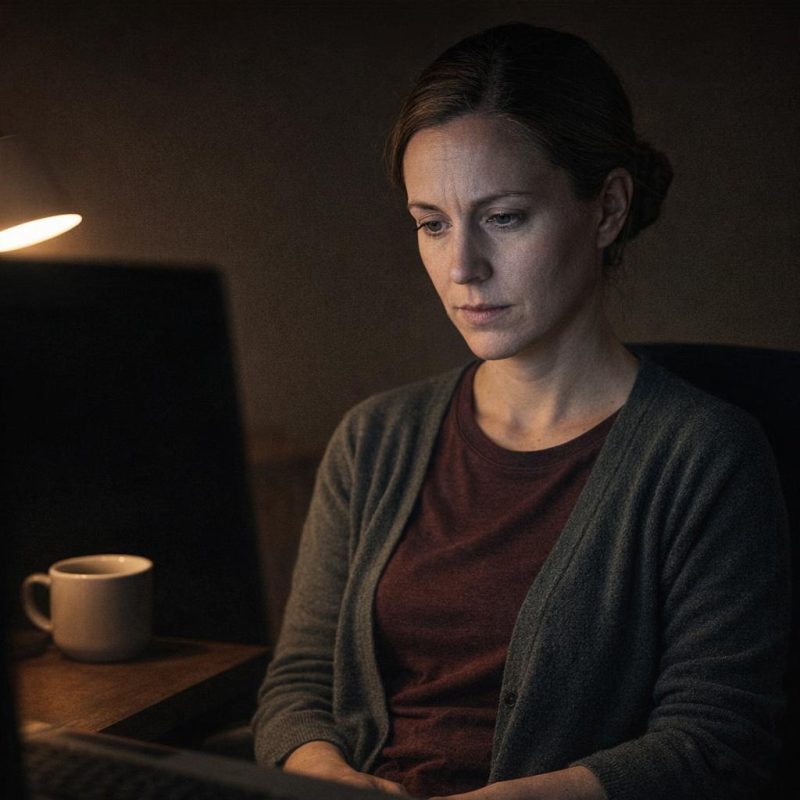 Image by RM AI
The Failed Recovery
I don't panic right away. I tell myself there's an explanation — a sync error, a display glitch, something stupid and fixable. I open the backup interface and navigate to the most recent restore point. Three days ago. That's fine, I think. Three days is manageable. I initiate the restore and watch the progress bar. It stalls at four percent, then throws an error code I don't recognize. I try a different restore point from the week before. Same error. I pull up the backup logs and start reading through them line by line, and that's when my stomach drops — the automatic backup schedule shows as disabled. Not failed. Disabled. I check the timestamp on the setting change. Three days ago, same day as the last successful backup. I tell myself maybe it was a software update that reset the configuration. I pull up the system event logs looking for any hardware alert, any disk failure warning, any crash report. There's nothing. The drives show healthy. The system shows no errors. I download three different file recovery tools and run them back to back, scanning every sector of every drive for fragments, for anything. Hours pass. The scans come back empty. I sit on the floor next to my desk at some point, though I don't remember deciding to do that. The backup schedule setting sits on my screen, timestamp reading three days ago, the toggle switched firmly to off.
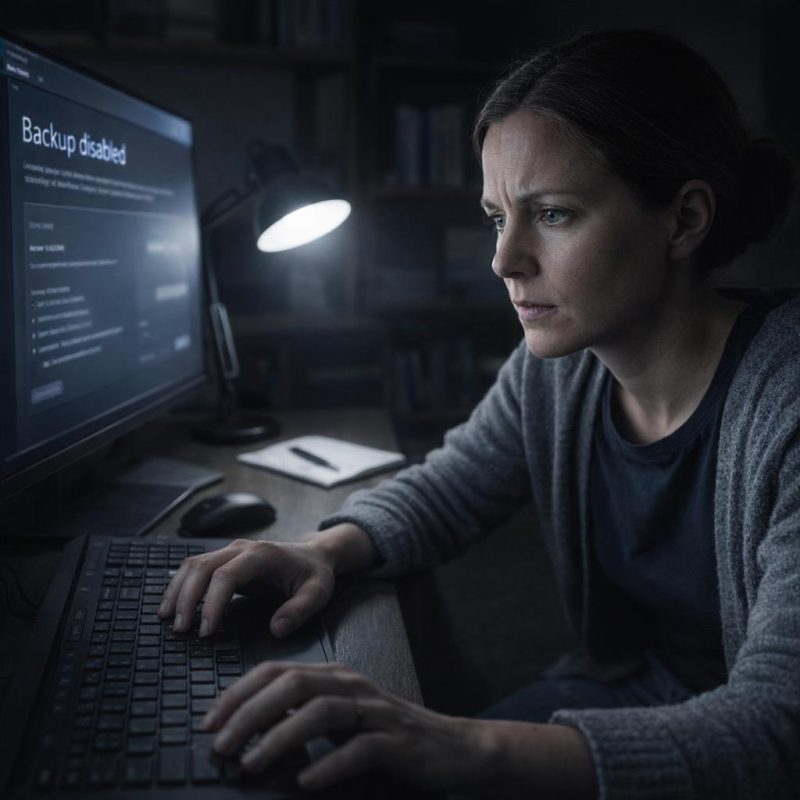 Image by RM AI
The Investigation Begins
By morning I've moved from panic into something quieter and more methodical, which is how I cope when I don't know what else to do. I open the detailed access logs and start at the beginning of the deletion window. The files weren't just deleted — they were moved first, all of them, into a temporary directory I didn't create and didn't recognize. Then that directory was wiped. The whole sequence took forty-three minutes. I write that down. I check which account credentials were used for the operations and find they were executed under administrative privileges. I write that down too. I go back through the log entries looking for anything that resembles a system process, an automated script, a scheduled task that might explain the sequence. I find nothing that fits. Accidental deletion doesn't look like this — accidental deletion doesn't move files to a staging folder first and then wipe the staging folder clean. I know that. I save copies of every log file to an external drive and then sit back in my chair and look at what I've documented. The pattern on the screen is orderly, unlike anything a hardware fault or software crash would leave behind, but I can't identify a technical failure that would produce it, and I can't yet make sense of what that means, so I just sit there with the logs open, the cursor blinking, and the forty-three minutes sitting in my chest like something I haven't figured out how to swallow yet.
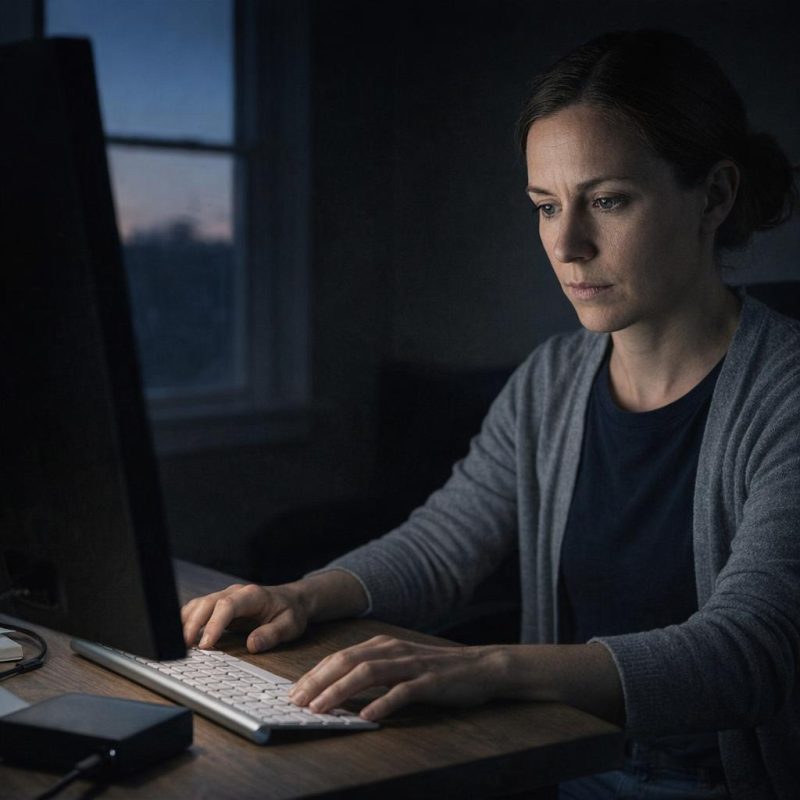 Image by RM AI
The Confession Call
I rehearse the call four times before I actually make it. I sit at my kitchen table with a notepad in front of me like I'm preparing for a presentation, which is ridiculous, but I need the words in the right order or I'll lose them. My father answers on the third ring, and I hear him call my mother to the phone before I've said anything beyond hello. I tell them the server is empty. I tell them the files are gone. My mother asks immediately about the backups, and I have to tell her those are corrupted too, that I've spent the night trying every recovery option I know and come up empty. There's a silence on the line that feels like a room caving in. My father asks, in the measured tone he uses when he's working very hard to stay calm, how this could happen given everything I'd put in place. I tell him I don't have a complete technical explanation yet. I tell him I'm still working through the logs. My mother's voice, when she speaks again, has gone thin and unsteady in a way I've only heard a handful of times in my life. She asks about her grandmother's photographs. She asks about the wedding pictures. I say I know. I say I'm sorry. I say it more than once because I don't have anything else to give her. And then I hear her begin to cry.
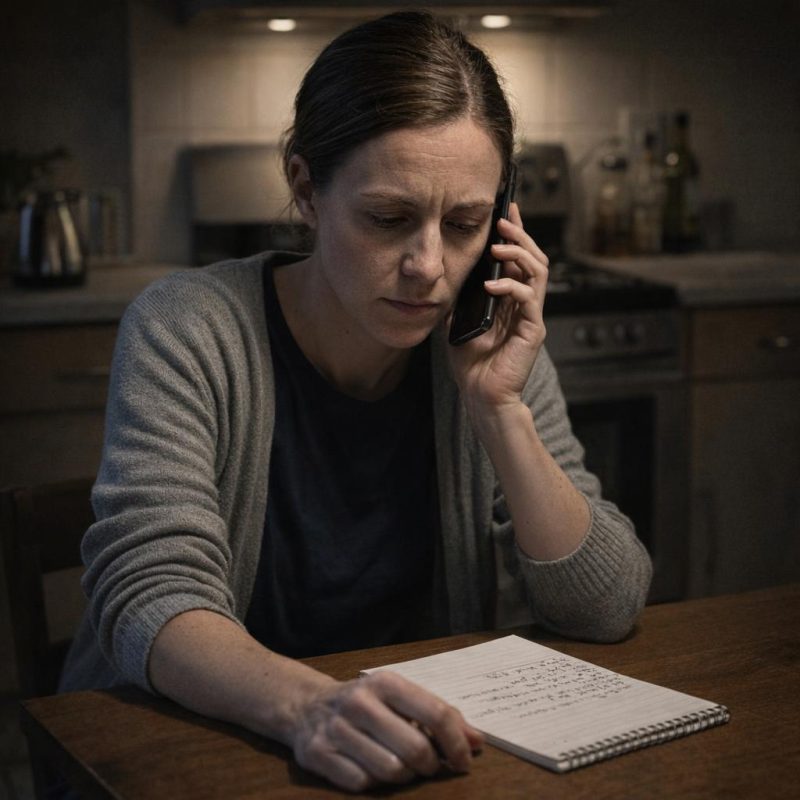 Image by RM AI
The Public Questions
Claire calls the next morning before I've had coffee. She opens with 'I just want to understand what happened,' which sounds reasonable, so I start explaining. I walk her through the backup architecture, the RAID configuration, the maintenance schedule I kept every single month. She asks why I didn't have off-site backups with a third-party provider. I explain that the system included an off-site mirror. She asks why the mirror wasn't current. I explain that the backup schedule had been disabled and I'm still investigating when and how. She asks whether I was following industry best practices for archival storage of irreplaceable materials. I pause on that one. I tell her I followed the standards I knew. She says she's been reading about data management protocols and mentions a couple of terms in a way that suggests she looked them up recently. I answer each question carefully, and somewhere around the fourth or fifth one I notice I'm keeping track of what I've said, the way you do when you sense the conversation is being recorded in some form. She mentions that other family members have been asking her questions, that she's just trying to have answers for them. I offer to explain the technical details to anyone who wants them directly. She says that's probably not necessary. After we hang up, I sit with the shape of that conversation — the questions in sequence, the careful neutral tone — and something about it settles over me like a weight I can't quite name.
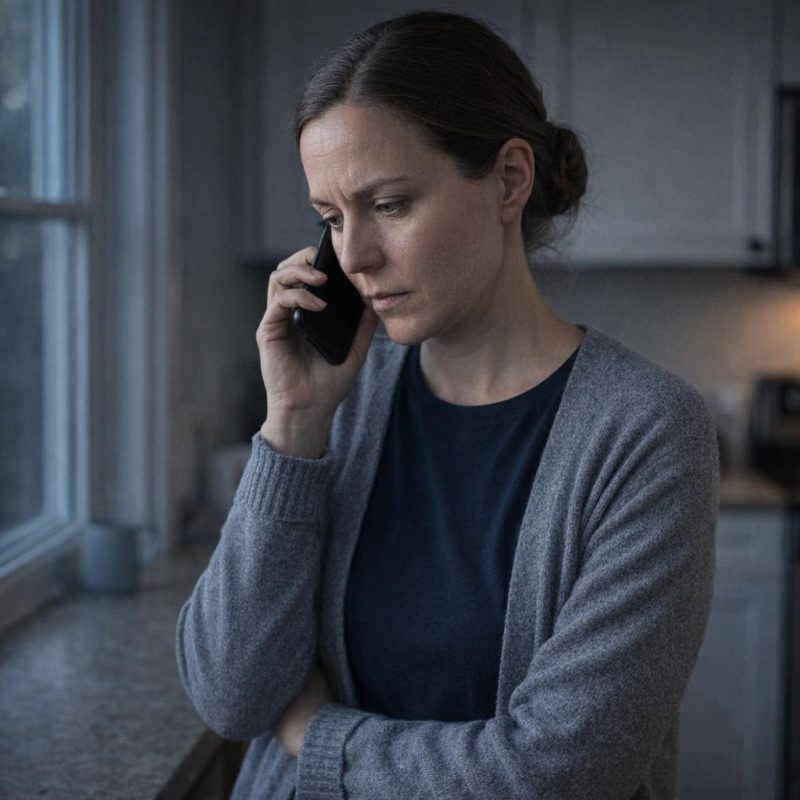 Image by RM AI
The Wedding Album
My mother calls in the afternoon, and this time she isn't asking questions. She's just talking, her voice soft and uneven, moving through the photographs the way you'd move through rooms of a house you know you're leaving. She describes the picture of her grandmother standing at the edge of the reception hall, the one where the light came through the window at an angle and caught the lace on her dress. Her grandmother died two weeks after the wedding, she tells me, and the only print they'd ever had was damaged in a basement flood years ago — the digital scan had been the last clean version of it. She talks about her father's face during the ceremony, the way he'd looked at her mother when he thought no one was watching. She talks about relatives who are gone now, people I only know from those photographs, people whose faces I won't be able to show my own children someday. I say I'm sorry so many times the words stop feeling like language. She tells me she knows I tried my best, and somehow that's worse than anger would have been. She says she needs some time and ends the call gently, the way you close a door you're not sure you'll open again soon. I stay on the couch with the phone still in my hand long after the line goes quiet, holding the weight of everything she described without anywhere left to put it.
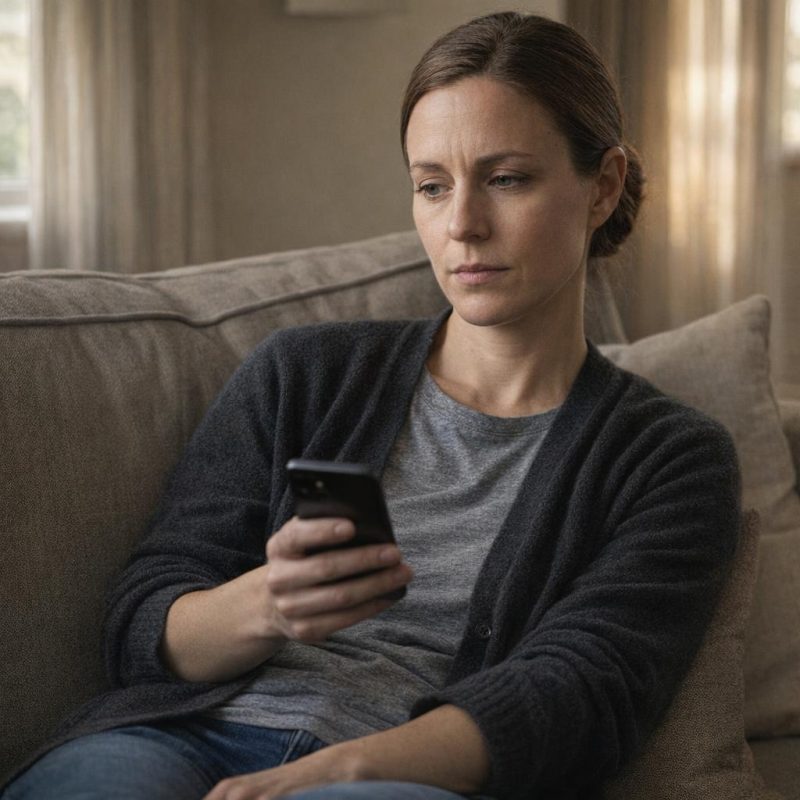 Image by RM AI
The Silent Dinner
I almost don't go. I sit in my car outside my parents' house for a few minutes before I make myself get out, because I know what's waiting and I go anyway, which feels like the only thing I can do. My mother opens the door and pulls me into a hug that's a little too careful, the kind that's working hard to feel normal. My father is in the living room and doesn't look up when I come in. James arrives about ten minutes later and gives me a sideways hug with one arm, the kind that means he doesn't know what to say, which is fine because neither do I. We sit down to dinner and the table feels like a stage set — everything in its right place, nobody quite inhabiting it. My father asks James to pass the bread. The bread is next to me. James reaches across and passes it without meeting my eyes. I try once, directly, to say something to my father — something small, something about the drive over — and he turns his head slightly toward my mother and answers her instead, as though I'd spoken from another room. James stares at his plate. My mother refills water glasses that don't need refilling. My father finishes eating, sets his napkin on the table, pushes back his chair, and walks out of the dining room without a word in my direction.
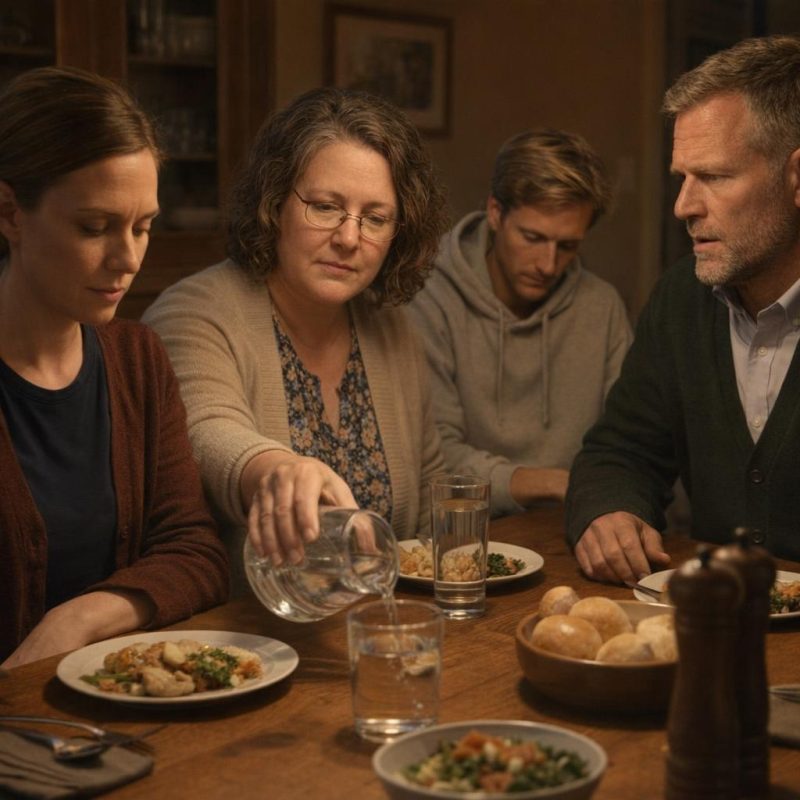 Image by RM AI
The Unanswered Messages
My aunt and I have texted back and forth for years — nothing heavy, just the small regular contact that keeps a relationship alive. Recipe links. Photos of her garden. The occasional complaint about the weather. So when I send her a message asking how she's doing and the read receipt appears but nothing comes back, I tell myself she's busy. I wait two days and send another one, this time asking gently if she's heard about the photos and if she's upset. The read receipt appears within the hour. Still nothing. I try calling. It goes to voicemail on the second ring, which on most phones means the call was declined. I leave a message, keep my voice even, ask her to call when she has a chance. I send a third text a few days later, a short one, just an apology for the loss and a note that I'm available if she wants to talk. I watch the screen. The read receipt appears in under five minutes. I set the phone down on the table and look at the three conversation threads sitting open — each one showing the same small checkmark, each one with nothing after it. Every message read. Not one reply.
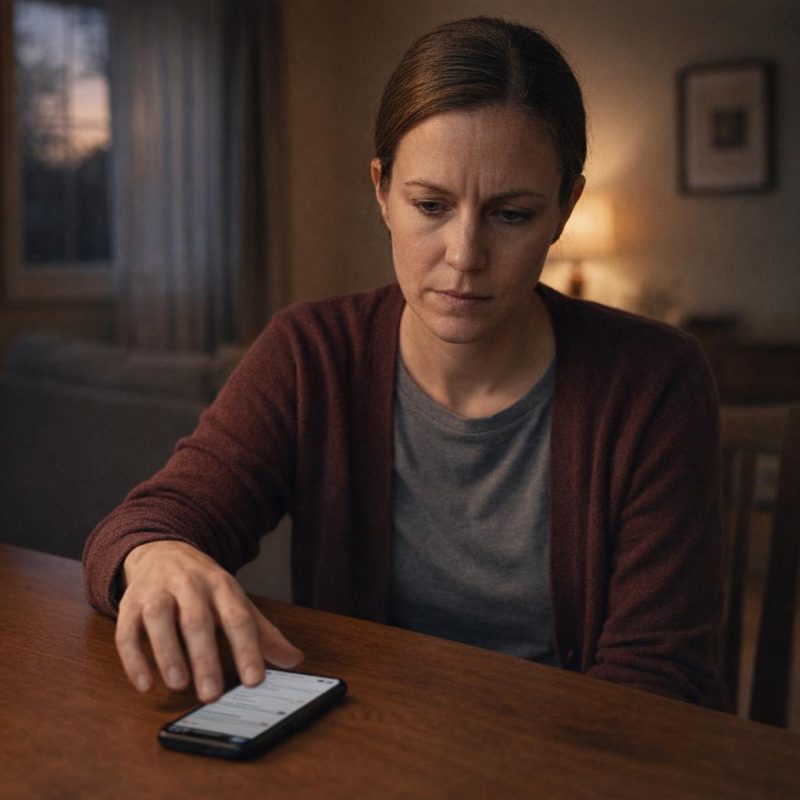 Image by RM AI
The Technical Explanations
I spend the better part of a Tuesday drafting an email I never wanted to write. I go through seven versions before I land on something that feels honest without being defensive. I explain RAID array configurations in plain language. I walk through what a backup corruption event looks like, how it can happen even on well-maintained systems, how the redundancy I had in place was industry-standard for a home archive setup. I acknowledge, clearly and without hedging, that off-site backups would have been the right call and that I didn't have them. I list three data recovery specialists I've already contacted for consultations. I attach a one-page summary of my maintenance logs going back two years. I send it to the full family distribution list on a Wednesday morning and then I sit back and wait. By Thursday I've checked my inbox eleven times. The email has been opened — I can see the read receipts stacking up, one after another, family members clicking through. By Friday I send a short follow-up, just a single paragraph asking if anyone has questions or wants me to clarify anything. Saturday comes. Sunday. I open my inbox again on Monday morning, and the only thing waiting for me is the quiet of an empty screen.
 Image by RM AI
The Social Media Post
I can't sleep, which has become its own kind of routine. Around two in the morning I'm scrolling through my phone the way you do when you're too tired to do anything useful but too wired to put it down. I'm not looking for anything specific when I see it — Claire's post, sitting at the top of my feed because three people I know have already liked it. She writes about ninety years of family history. She writes about her grandmother's face in a photograph she'll never see again, about the smell of old paper and the weight of what's been lost. She doesn't name me. She doesn't have to. She writes about the importance of proper data management and the heartbreak of trusting something irreplaceable to systems without adequate safeguards. The comments fill in underneath — dozens of them, people I've never met offering condolences, people I have met asking what happened. Claire responds to a few, keeping it vague, mentioning technical failures and insufficient backups. I read through the whole thread twice. I take a screenshot. I think about typing something into the comment box and then I close the app and set my phone face-down on the nightstand. The post stays with me in the dark, every careful word of it.
 Image by RM AI
The Cousin Network
My cousin Dana usually picks up on the second ring. We've talked at least once a month for the last four years — her kids, my work, the general low-grade chaos of adult life. I call her on a Tuesday afternoon and it goes to voicemail. I tell myself she's busy and try again two days later. Voicemail again. I leave a message the second time, keeping it light, just asking her to call when she gets a chance and mentioning that things have been a little rough lately. Then I try my cousin Pete, who I see every Thanksgiving and who texts me memes about bad weather. His phone rings four times and drops to voicemail. I wait a full day before trying my cousin Renee, who I've known my whole life and who once drove three hours to help me move apartments. Her call is declined before the third ring. I leave messages for all three of them. I check social media that evening and see that Dana has posted a photo of her kids at a soccer game, that Pete has commented on something, that Renee has liked a post from earlier that afternoon. None of them call back. I sit with the phone in my hand, listening to Renee's voicemail greeting play out to the end.
 Image by RM AI
The Group Chat
I open my messaging app to check whether anyone has responded to the follow-up email I sent through text as well, just in case. I scroll down looking for the family group chat — the one that's been running for three years, the one where my mother posts photos of her garden and my younger brother James sends links to articles nobody reads and someone always argues about what time the holiday dinner starts. I scroll past it once, then back up, then down again. It's not there. I search for it by name. No results. I check my archived conversations, thinking maybe I accidentally swiped it away. Nothing. I go through every folder my app has. I pull up the settings to see if something changed. The chat is simply gone from my list, which means I'm not in it anymore. The last message I received from that thread was two weeks ago — a photo of a casserole dish my mother was proud of. I have no idea what's been said since then. I have no idea what's being planned, what's been decided, what version of events is circulating in a conversation I can no longer see. I scroll back to the top of my message list, and the family group chat is not there.
 Image by RM AI
The Memory Inventory
I open a blank document and decide to treat my own memory the way I'd treat any other data source — write down what I know, flag what I'm uncertain about, and don't fill in the gaps. I type out the last week before the data loss in as much detail as I can pull up. The Tuesday I logged in to add a batch of scanned slides. The Thursday I ran a routine check and everything looked fine. I write down who had access credentials to the server. The list is short. I note that Claire logged in twice that week, which I remember because I saw her name in the access log and made a mental note to ask her what she was looking for. I write down that she'd asked me a few weeks earlier about how the files were organized, whether things were sorted by year or by family branch. I remember explaining the folder structure to her. What I can't remember is whether I noticed anything unusual about the backup system that week, whether there was a warning I dismissed or a flag I didn't follow up on. The harder I push at the memory, the less certain I feel about any of it. I save the document and sit back, looking at what I've written, aware that I can't fully trust the person doing the remembering.
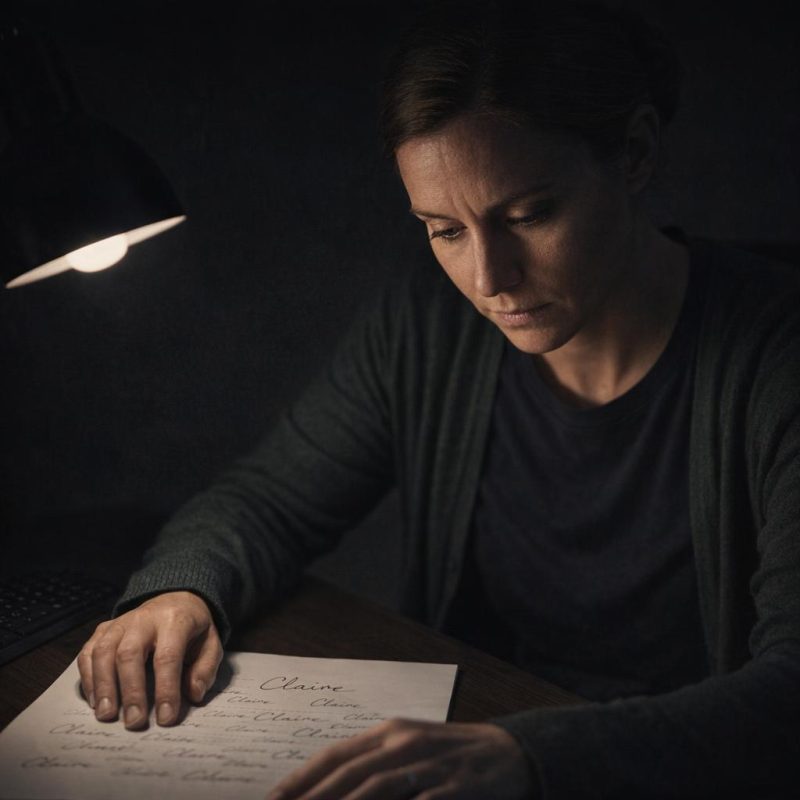 Image by RM AI
The Technical Analysis
I build a spreadsheet. Column one: possible failure mode. Column two: evidence for. Column three: evidence against. Column four: ruled out. I work through it the way I'd approach any technical problem — methodically, without skipping steps. RAID array failure: I pull the drive diagnostics. No physical damage, no sector errors, no degraded array status. Power surge: I check the UPS logs, which record every fluctuation. The power was stable throughout the entire window in question. Malware or ransomware: I run three separate security scans. Nothing. File system corruption: I examine the partition tables and the file allocation records. No corruption signatures, no orphaned clusters, nothing that would explain a complete wipe. I go through six more scenarios. I cross each one off. By the time I reach the bottom of the spreadsheet I've eliminated every failure mode I know how to test for, and the data is still gone. I sit with the spreadsheet open on one monitor and the drive diagnostics on the other, and the thing that's left after I've crossed off everything else doesn't have a name I'm ready to put in a column.
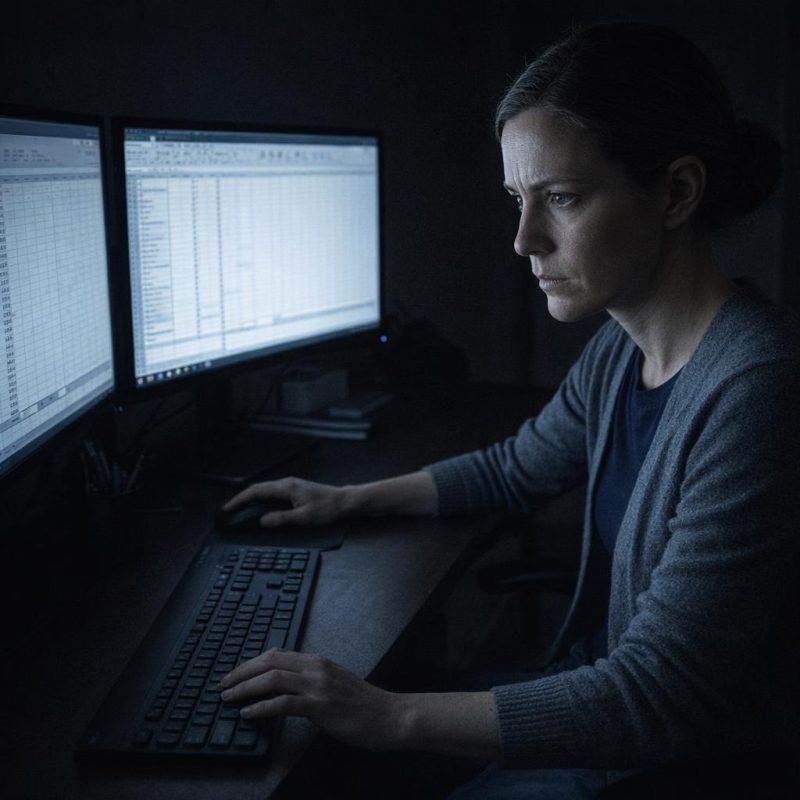 Image by RM AI
The Timeline Discrepancy
I go back to the access logs because I don't have anywhere else to look. I'm not expecting to find anything new — I've read through them twice already — but I start from the beginning and work forward, line by line. Somewhere in the middle of the second week I stop. Claire's account shows a login on a Tuesday afternoon at 3:47 PM. I stare at it for a moment, then open my email and search for Claire's name. A few weeks back she'd mentioned in passing that she was heading out of town Monday morning and would be away all week — a work trip, she'd said, something she was looking forward to. I find the message. I read it again. I check the date on the login. Tuesday. 3:47 PM. I don't know what to make of it. I take a screenshot of the log entry and a screenshot of Claire's email and set them side by side on my screen — a login from her account on a Tuesday afternoon, and a message in my inbox saying she'd been gone since Monday.
 Image by RM AI
The Accusation Details
I open Claire's social media post again, this time with a notepad beside me. I read through it slowly, the way I'd read a technical document, looking for specifics. She mentions the backup schedule — not in vague terms, but with a detail that pulls at me. She references the timing in a way that matches the actual schedule I had configured. I go back through every conversation I can find between Claire and me — texts, emails, the one phone call I logged notes from. I find no record of discussing the backup frequency with her, though I can't be certain I didn't mention it somewhere I've forgotten. I keep reading. She describes the server configuration in a comment reply, and she gets the RAID level right. Not approximately right. Exactly right. I sit with that for a moment. I try to remember if it came up at some point, if I mentioned it in passing, if there's a gap in my documentation. I check my notes again. Then I read the part where she describes the file structure — the specific way the folders nested by decade and then by family branch — and the details are precise in a way that I can't quite account for. I open a new document and start copying the passages down, one by one.
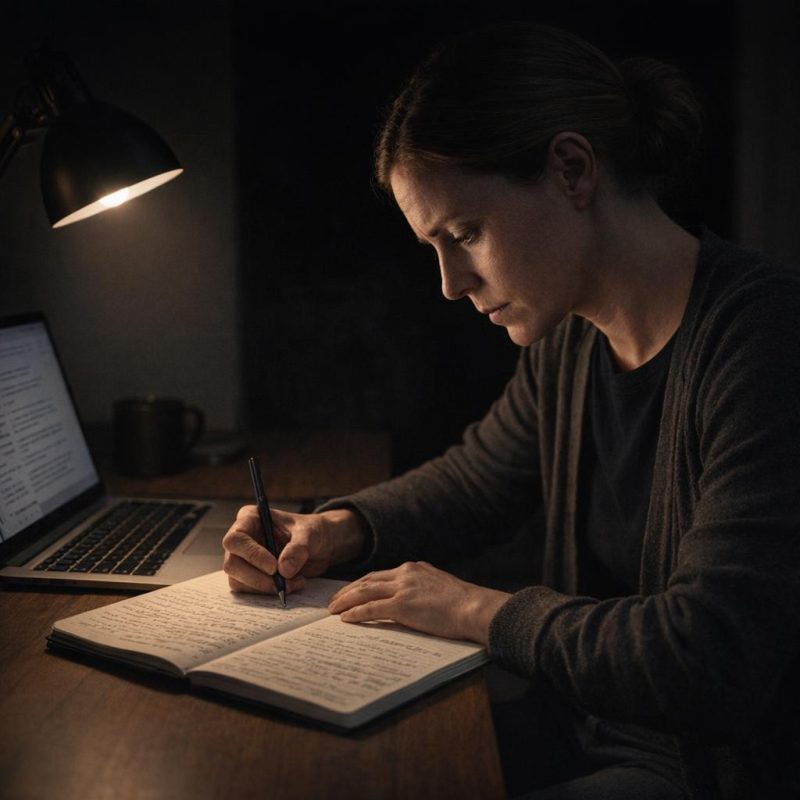 Image by RM AI
The Investigation Decision
I sit at my kitchen table with the notepad in front of me and the evidence folder open on my laptop, and I give myself permission to consider the alternative. Just let it go. Accept the blame, apologize for something I don't believe I did, and let the family find its way back to normal. I sit with that option for a long time. It has a certain appeal — the kind of appeal that exhaustion manufactures. But every time I try to imagine actually doing it, I come back to the same problem: I don't know what happened. And I can't sign my name to a story I can't verify. I look at the screenshots, the log excerpts, the copied passages from Claire's post with the details that don't quite add up. I think about what it would mean to carry this permanently — to be the person who lost ninety years of family history through carelessness, full stop, no further questions. I can't do it. Not without at least understanding what I'm accepting. I create a new folder on my desktop and label it simply: Investigation. I open a blank document and start writing down every question I still can't answer. I know this may cost me more than I've already lost. I write the first question anyway.
 Image by RM AI
The Thanksgiving Exclusion
It starts with a text from my cousin Diane that reads, 'Hey! Are you doing the green bean casserole again this year or should I put myself down for it?' I stare at it for a moment, genuinely confused, and type back asking what she means. She replies almost immediately — 'Oh sorry, wrong person! Ignore me!' — and I feel something shift in my chest before I've fully processed why. I ask which group chat she meant. She doesn't respond. I wait twenty minutes and ask again. Nothing. I put my phone down and open the calendar on my laptop. Thanksgiving is three weeks away. I sit there doing the math I already know the answer to. No one has mentioned it to me. No invitation, no casual 'what are you bringing,' no group text I've been included in. I check my messages going back two weeks just to be thorough. I find nothing. I tell myself maybe it's still early, maybe something will come through. I check again the following day, and the day after that. By the end of the week, I stop checking. I make a grocery list for one and fold it into my coat pocket, and the apartment around me stays very quiet.
 Image by RM AI
The Coffee Shop Meeting
James takes two days to respond to my text, which I'd been prepared for. What I hadn't prepared for was how relieved I'd feel when he finally did. He agrees to coffee but adds 'I can't stay long' in the same message, which I take as the terms of the arrangement and accept without negotiating. I get to the coffee shop twenty minutes early and pick a table near the window. When he walks in, he looks like someone who has already rehearsed an exit. I thank him for coming before he even sits down. He says he doesn't want to be in the middle of anything, and I tell him I understand, and I mean it. I ask what the family is saying. He wraps both hands around his cup and looks at the table. 'Everyone's pretty upset about the photos,' he says. I ask if anyone has questions about what actually happened — whether anyone's considered that the explanation might be more complicated. He says Claire has been really affected by the loss. That's the whole answer. I don't push. He finishes his coffee in about twelve minutes and says he needs to get going. I tell him it was good to see him. He nods, pulls on his jacket, and walks out the door without looking back at me.
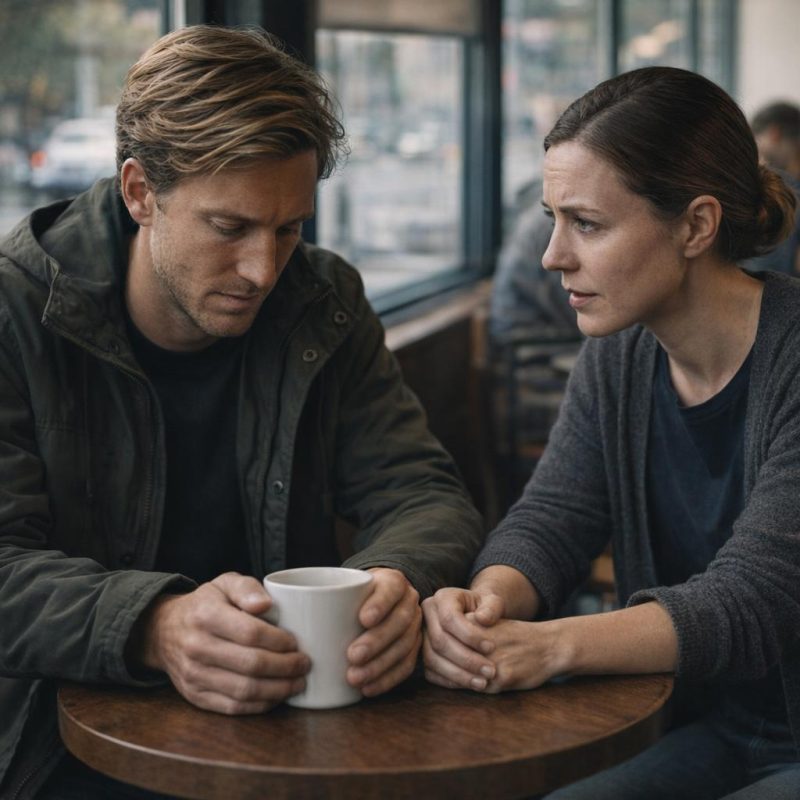 Image by RM AI
The Isolation Weight
By week six, I stop pretending the routines are intact. I'm waking up forty minutes before my alarm and lying there running through the same loops until it goes off, then hitting snooze anyway because getting up feels like a project. I've lost about eight pounds without trying. My work output is technically fine — I'm hitting deadlines — but I'm doing it on autopilot, and I know the difference. Evenings I spend at my laptop going through logs and screenshots, which at least feels like doing something, even when I'm not making progress. My phone has started to feel like a small threat. Every time it rings I have a half-second of dread before I check who it is. Friends have stopped texting as much, probably because I've been slow to respond for weeks. I don't blame them. I'm not great company right now. I sit down one night and actually count the days since I've had a real conversation with anyone in my family. Forty-three. I write it down. Then I sit there looking at the number for a while, and something about seeing it written out makes it harder to minimize. I search for therapists in my area, find one with availability, and pick up my phone and dial before I can talk myself out of it.
 Image by RM AI
The Commitment to Truth
After I hang up with the therapist's office, I sit on the couch for a while without turning on any lights. The appointment is two weeks out, which feels both too far and manageable. I think about the investigation — about whether any of it matters anymore, whether I should just archive the folder and let the whole thing calcify into family legend. I consider what that would look like in five years, ten years. Me at some future holiday table, if I'm ever invited back, carrying a version of events I know isn't right. I open my laptop. The investigation folder is still there on the desktop, exactly where I left it. I click into it and scroll through what I've documented — the timeline gaps, the technical details from Claire's post that I still can't fully account for, the backup configuration specifics that I never remember discussing with her. Something in the sequence still doesn't sit right with me, and I've learned enough about my own instincts to know that feeling is worth following. I'm not doing this for the family anymore. I'm doing it because I need to understand what actually happened, for my own accounting of events. I pull up my list of next steps. The evidence sits in front of me, patient and unresolved, and I get back to work.
 Image by RM AI
The Server Company Contact
I spend a morning going through the server company's support documentation before I call anyone. I want to know exactly what I'm asking for before I ask for it. Their data retention policy lists detailed access logs at ninety days, and when I calculate the date of the incident against today, I'm at seventy-one days. Still inside the window, but not by much. I call the technical support line just after nine in the morning. The representative is professional and unhurried, which I appreciate. I explain that I'm the account holder and that I need detailed access logs for a specific date range — login records, file operation logs, IP address data for each session. She walks me through the verification process, I provide my credentials, and she confirms the request is submitted. She tells me it will take three business days to compile and that I'll receive a download link by email. I ask her to confirm that the logs will include timestamps and the specific actions performed during each session. She says yes to both. After I hang up, I sit at my desk and look at the confirmation email that's already arrived in my inbox. The subject line reads: Log Export Request Confirmed — Account #4471. The email lists the files I'll receive, and one line reads: full session activity log with user actions and IP attribution.
 Image by RM AI
The Log Analysis
The download link arrives on the third day, right on schedule. I open the files at my kitchen table with a fresh cup of coffee and a notepad, the way I'd approach any technical review. The access log spreadsheet has over four thousand rows. I sort by date and filter to the relevant window. My own login records are there — timestamps matching exactly what I remember, session durations consistent with the work I was doing. Claire's login records are there too, which I note without drawing conclusions. Then I hit the gap. There's a stretch of about forty minutes during the critical period where the log entries thin out in a way that doesn't match the surrounding density. There's an entry for a backup disable command in that window, but the account field is blank — not corrupted, not an error code, just blank. I find several file movement operations in the same window with the same attribution problem. Some entries are missing timestamps entirely, showing only a date. I go through the file three times, sorting it different ways, checking whether I'm misreading the column structure. I'm not. I make notes on everything I can confirm and a separate list of everything I can't. The logs are real and they're detailed and they raise more questions than they answer, and I sit with that for a long time as the coffee goes cold beside me.
 Image by RM AI
The Public Criticism
I'm taking a break from the logs when I open the app out of habit and see Claire has posted again. The caption starts with something about learning hard lessons when it comes to trusting people with important responsibilities. I keep reading. She writes about someone who was clearly in over their head, who lacked the professional qualifications the task required, who made decisions that couldn't be undone. She doesn't use my name. She doesn't need to. Every detail maps precisely — the archive project, the technical role, the outcome. The comments are already filling up. I see my aunt has liked it. Two cousins have shared it with their own captions about accountability. I feel my face go hot in a way that takes me a moment to identify as anger rather than shame, though it's honestly both. I close the app without typing anything. I know better than to respond publicly — not because I don't have things to say, but because anything I post right now would be reacting, not documenting. I open my screenshots folder and add the post to the record. Then I sit there with the phone face-down on the table, and the words she wrote about someone unqualified and careless settle over me like something with actual weight.
 Image by RM AI
The Solitary Holiday
I wake up on Christmas morning to the sound of nothing. No one calling from the kitchen, no smell of my mother's coffee cake, no James turning the TV up too loud. Just my apartment, quiet in the specific way that only happens when everyone else in the world seems to be somewhere they're supposed to be. I make coffee and sit by the window and watch a neighbor's kid try out a new bike on the empty street below. I think about the drive to my parents' house — forty minutes, a route I've taken every December for thirty-some years. I don't take it. I order Thai food for dinner because the place is open and because making a real meal for one person on Christmas feels like a thing I'm not ready to do. I put on a movie I've already seen so I don't have to pay attention. Around eight o'clock I pick up my phone, which I've been avoiding all day, and I open it without really meaning to. James has posted a photo — the whole family around my parents' dining room table, candles lit, everyone mid-laugh at something. I count the faces. I count the chairs. There is no empty chair where I would have sat. There is just the table, set for exactly the number of people who were invited.
 Image by RM AI
The Strengthened Resolve
I wake up the day after Christmas with the particular flatness that follows a day you spent mostly trying not to feel things. I lie there for a while thinking about what it would take to just call my mother and say I'm sorry, let's move on. The thought lasts about ninety seconds before I remember what moving on would actually require — accepting a version of events that isn't true, letting it calcify into family history, watching it become the story everyone tells at future Christmases. I can't do that. I get up, make coffee, and open my laptop. I pull up every file I've saved since this started — the screenshots, the access logs, the timeline I've been building in pieces. I read through all of it slowly, the way you read something when you're not looking for anything specific but you're hoping something will surface. And something does. The timeline I've been treating as a rough sketch starts to look more like a sequence. The gaps I'd noted and set aside start to feel less like gaps and more like structure. I open a new document and start transferring everything into a single organized file, one entry at a time, and by the time my coffee goes cold I'm not thinking about Christmas anymore.
 Image by RM AI
The Access Pattern
I've been through the server logs enough times that I can almost recite the entries from memory, which is exactly why I almost miss it. I'm building a clean timeline — every login, every file operation, every session duration — when I notice a cluster of entries from the day before the data loss that doesn't match anything else in the record. Short sessions. Very short. We're talking thirty, forty seconds each, back to back, with file operations logged inside windows that aren't long enough for a person to have navigated there manually. I map my own login history against it. My sessions run long — I browse, I check, I cross-reference. That's just how I work. These entries don't look like browsing. They look like someone moving through the system with unusual efficiency — in and out fast, no apparent exploration. I flag each one and check the file operations attached to them. Moves, mostly. Files being relocated rather than opened or edited. I highlight the whole cluster, export it to a separate document, and sit back. I don't know what it means yet. I can't explain it. But there's a login sequence in that cluster that makes no technical sense for normal user behavior.
 Image by RM AI
The Timestamp Study
I spend the better part of a morning building a minute-by-minute timeline of the day the files were lost. Not a rough sketch this time — an actual documented sequence, with screenshots attached to each entry. I mark when the files were moved to the temporary directory. I mark when the temporary directory was wiped. Then I get to the backup system and I stop. The backup was disabled before the file operations started. Not after. Before. I check it three times because I want to be wrong about the order. The order doesn't change. I pull up the system documentation to see if any automated process could produce that sequence — a scheduled task, a maintenance script, anything. Nothing in the normal operation of the system disables backup before initiating file moves. I don't have an explanation for why the sequence looks the way it does. I add the backup timestamp to the timeline and draw a line connecting it to the file operations that followed. Then I sit there looking at the sequence laid out in order, the screenshots lined up beneath each entry, and I don't move for a long time.
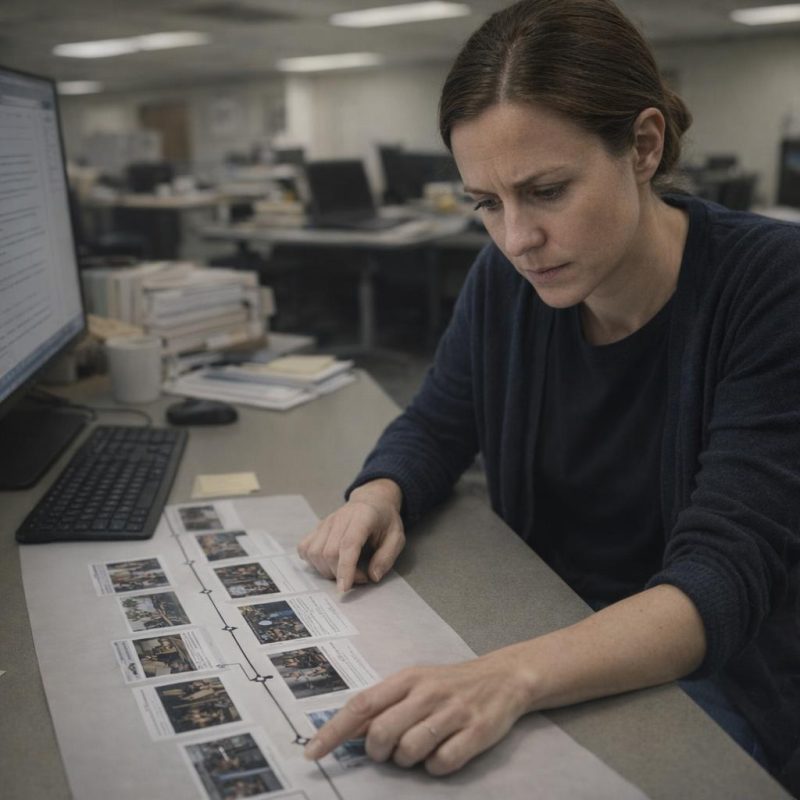 Image by RM AI
The Unexpected Request
My phone buzzes on the desk while I'm in the middle of cross-referencing two log entries, and I reach for it without looking because I'm expecting a work notification. I see Claire's name on the screen and my hand goes still. We haven't spoken since before Christmas. I haven't heard from her directly in months, not since the last conversation that ended with her walking away from me in my parents' driveway. I set the phone down, look at it for a second, then pick it up and read the message. She's clearing out her home office. Old computer equipment — a desktop tower, some peripherals — that needs to be properly disconnected and disposed of. She says she doesn't want to just unplug things randomly and risk losing anything still on the drives. She asks if I can help. The message is practical. Neutral. The kind of text you'd send a neighbor who happened to work in IT. I read it twice, then a third time, trying to figure out what I'm supposed to do with it. I think about ignoring it. I think about what it might mean that she's reaching out at all. I type back that I can help, and I send it before I talk myself out of it. Then I sit there with her message still open on my screen.
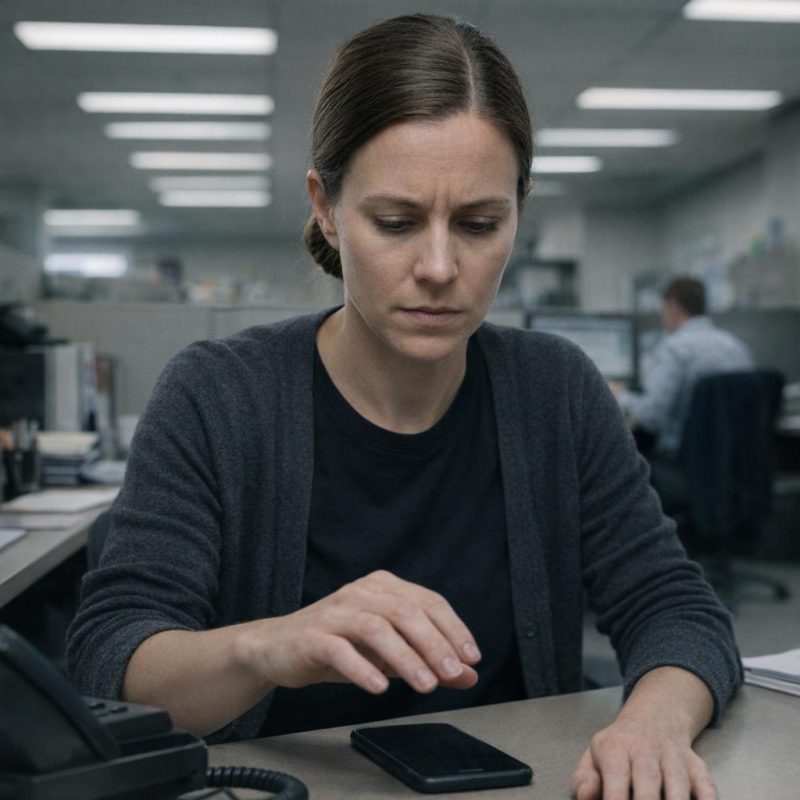 Image by RM AI
The Agreement
Claire responds within a few minutes, which surprises me. Saturday afternoon, she says. Two o'clock. She sends an address in a part of town I don't know well — I've never been to her current house, I realize, which is a strange thing to notice about your older sister. The messages stay practical. She tells me the equipment is in her home office, that she'll be around but has some errands to run, that basic tools should be enough. I ask if there's anything specific she needs me to bring. She says no, just the standard stuff. I confirm two o'clock and she sends back a thumbs up, and that's the whole conversation. I spend the rest of the week in a low-grade state of unease that I can't quite name. It's not dread exactly. It's more like the feeling before a difficult work meeting — the awareness that something is going to require more from me than I currently have available. I pack my tool bag on Friday night: screwdrivers, cable ties, an antistatic wrist strap, a USB drive with my standard diagnostic software. I set it by the door. Saturday morning I pick it up, carry it to my car, and drive across town to my older sister's house for the first time.
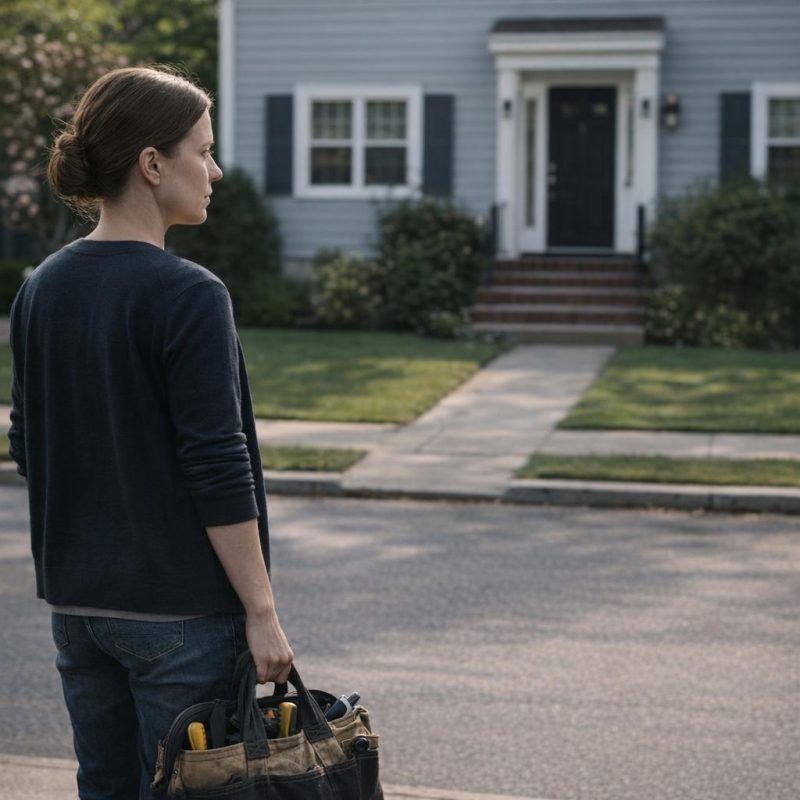 Image by RM AI
The Drive Over
The drive takes about twenty-five minutes. I follow the GPS because I genuinely don't know the neighborhood, which keeps striking me as odd in a way I can't quite shake — you'd think I'd know where my older sister lives. I think about the last time I actually saw Claire in person, which was the driveway conversation that ended with her telling me I needed to take responsibility. I think about what I'm going to say when she opens the door. I run through a few versions. Nothing sounds right. I decide to say as little as possible and focus on the task, which is what I'm good at anyway. The GPS takes me into a quiet subdivision with wide driveways and mature trees, the kind of neighborhood that looks like it was designed to feel settled. I find the house — brick front, two-car garage, a wreath still on the door from Christmas. I pull into the driveway and put the car in park. I sit there with the engine off, tool bag on the passenger seat, watching a bird move through the bare branches of the tree at the edge of the yard. The house is quiet. The street is quiet. My hands are resting in my lap, and I'm not moving yet.
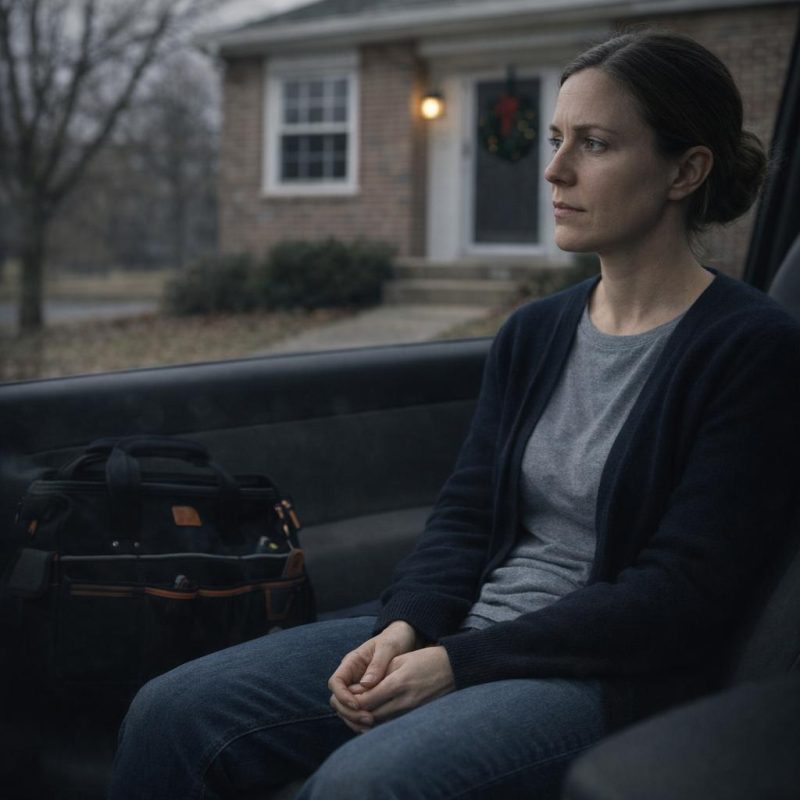 Image by RM AI
The Home Office
I ring the bell and Claire opens the door almost immediately, like she was standing nearby. She looks the same — polished, composed, not a hair out of place even on a Saturday. She says hi and steps back to let me in, and that's about the extent of the warmth. She leads me down a hallway to the home office without asking about the drive or offering coffee or doing any of the things that would make this feel like a visit between siblings. The office is tidy. A desk along one wall, a monitor, a tower unit on the floor beside it, a tangle of cables running behind everything. She points at the tower and the peripherals and says that's what needs to go. I set my tool bag down and unzip it. She leans against the doorframe and watches me the way you watch a repair person you're not sure you trust. I start with the cables at the back of the monitor, working through them one at a time, labeling as I go out of habit. Claire says she'll be down the hall if I need anything, and I hear her footsteps move away. I work through the visible connections, then crouch down to get at the cables running underneath the desk.
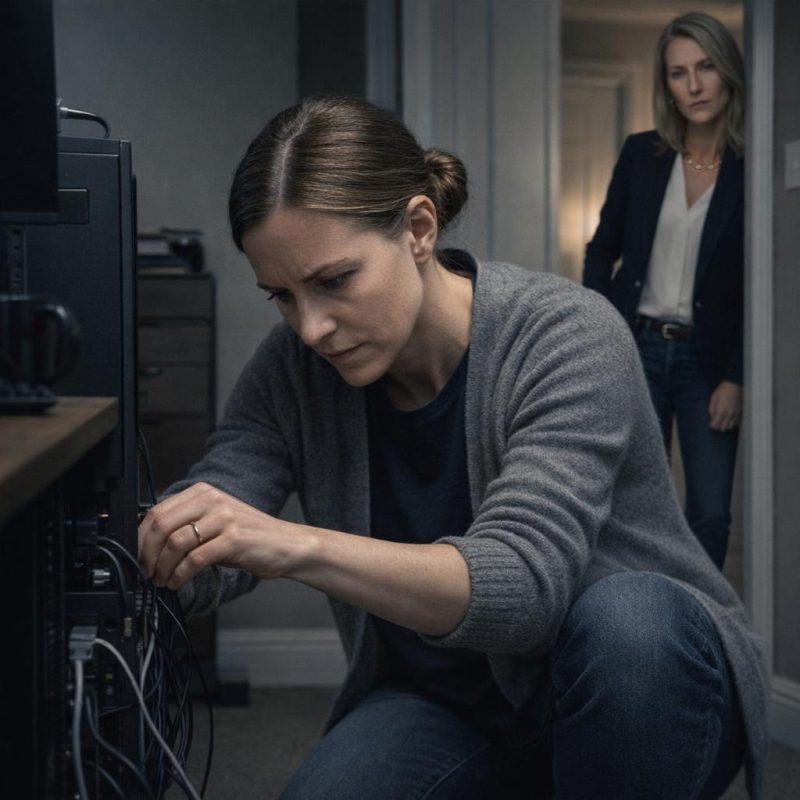 Image by RM AI
The Watched Work
I have to get low to reach the cables at the back, which means my shoulders are pressed against the underside of the desk and my face is about six inches from the carpet. It's not comfortable. I work through it anyway — label, disconnect, coil, set aside. The monitor cable comes free first, then the power strip connection. I hear Claire shift in the doorway behind me. I don't look back. I ask, without turning my head, whether she needs to leave for her errands. She says she has time. Her voice is even, unhurried. I go back to tracing the power cables along the desk underside, following each one to its source before pulling it. The tower comes out next — I drag it clear of the desk and set it to my left. Then I reach back under for the remaining connections. The carpet smells faintly of dust. The desk is solid above me, close enough that I can feel the air pressure of the enclosed space. I hear Claire shift again in the doorway. She hasn't said anything in several minutes. The quiet and the closeness of the space settle around me in equal measure.
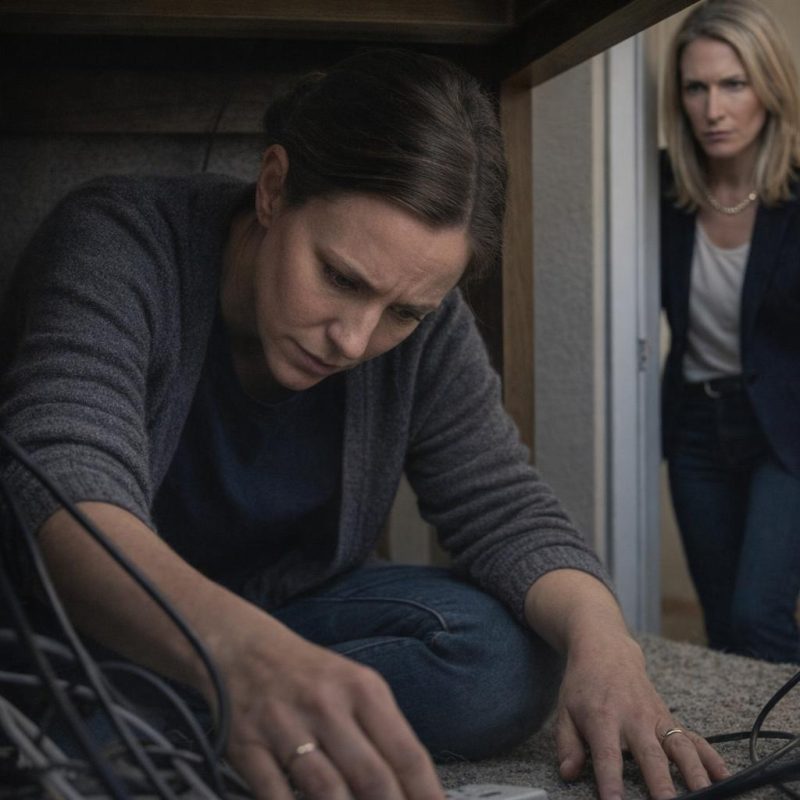 Image by RM AI
The Cable Tangle
There are more cables back here than there should be. I follow the first one — a standard power cable — and it doesn't terminate at the tower I already pulled. I trace it further back, toward the rear corner of the desk, and it disappears into shadow. I pull out my phone and use the flashlight. There's a USB cable running along the underside of the desk, zip-tied at intervals to the wood. Neat. Deliberate-looking. I ask Claire, still not turning around, what other equipment was under here besides the desktop. She says just the desktop and the monitor. I look at the cables again. The power cable and the USB cable both run toward the same back corner, and I can't see where they end from this angle. Something about the extra connections doesn't add up. Claire asks if there's a problem. I tell her I'm just making sure I get everything — don't want to leave cables dangling. She says okay. I keep the flashlight on and follow the USB cable as far as I can reach, but the corner is deep and the angle is wrong. I stay with the cables a moment longer, trying to work out what they're connected to.
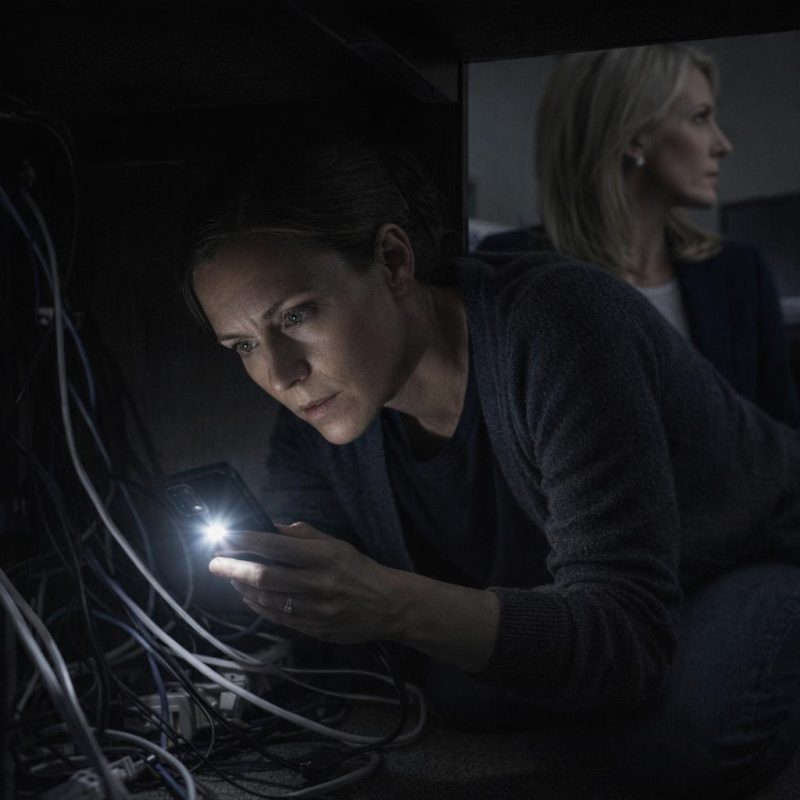 Image by RM AI
The Hidden Device
I shift my position and reach further back into the corner, arm extended past where I can see. My fingers touch something flat and rectangular — not a cable, not a bracket. It's solid, smooth on one face, and there's tape holding it against the underside of the desk. I press my fingers along the edge and feel the shape of it. A drive. I work at the tape with my thumbnail, peeling it back from one corner. It takes a minute. The adhesive is strong and the angle is awkward. I hear Claire take a step into the room behind me. I keep working at the tape, pulling the object free from the desk surface, and then I back out from under the desk and sit up. It's an external hard drive — a professional-grade backup unit, the kind with a rubberized casing and a metal chassis underneath. Both cables are still attached to it. I hold it up and ask Claire what this drive is for. She says she forgot that was there. I look at the drive in my hand, then back at her, and I pull it free from the desk.
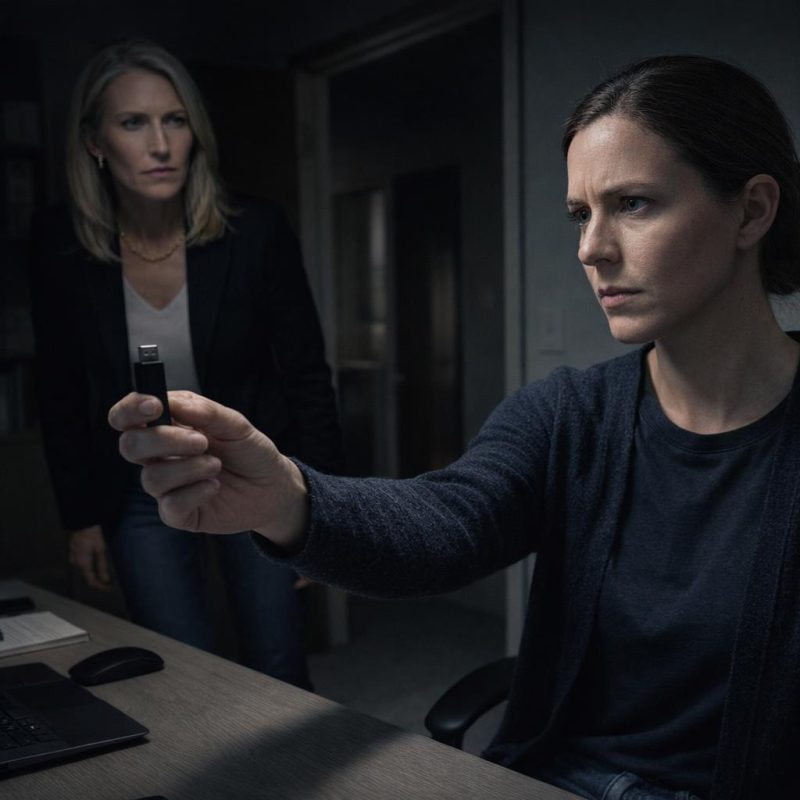 Image by RM AI
The Familiar Model
I turn the drive over and read the label on the bottom. Model number, serial number, storage capacity. I go still. The model number is a WD My Passport Pro 4TB — the same unit I spec'd out and purchased for the family archive backup system. Not a common consumer drive. It's a prosumer model, the kind you have to look up specifically, and I only know it because I spent two weeks researching backup solutions before I bought three of them. I ask Claire where she got this drive. She says she bought it for her own backups. I ask when. She says she doesn't remember exactly, maybe a year ago. I look at the casing. The rubberized grip shows wear along the edges — the kind of wear that comes from regular handling, not from sitting taped under a desk. I ask if she minds if I check whether it still works, since I'm already here with my laptop. She pauses. It's a short pause, maybe two seconds, but I notice it. Then she says sure, go ahead. I set the drive on the desk and look at the model number one more time: WD My Passport Pro 4TB, the exact match to the drives I configured for the archive.
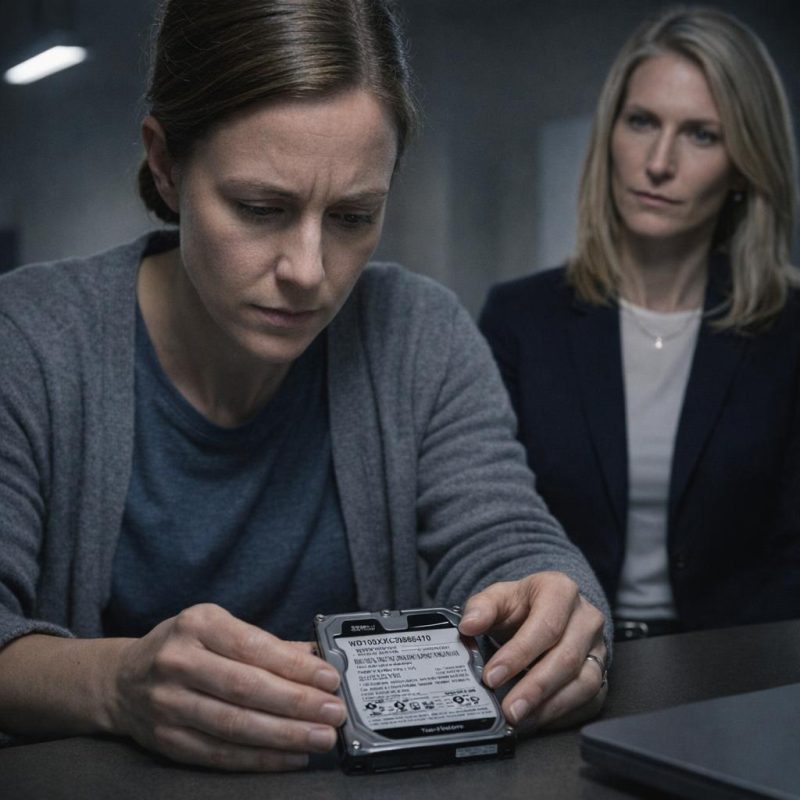 Image by RM AI
The Encrypted Backup
I pull my laptop from my bag and connect the drive with a USB cable. It mounts in about ten seconds. There's a single encrypted volume on it — and I recognize the encryption software immediately because I'm the one who set it up. VeraCrypt, with the same container format I used for the archive. My hands are steady as I open the application and enter the password. The family archive password. The one I created. The volume unlocks. I sit there for a moment looking at the folder structure before I actually process what I'm seeing. Decade folders. 1930s. 1940s. 1950s. All the way through. I open the 1930s folder and the thumbnails load — great-grandparents at a kitchen table, a woman in a garden I've never been able to identify, the farmhouse before it burned. I check the 1940s. The 1950s. Every folder I open is intact, organized exactly the way I organized it, every file named in the convention I built. I look up at Claire. She's standing across the room, not moving. I look back at the screen, at ninety years of family photographs sitting on a drive that was taped to the underside of her desk.
 Image by RM AI
The System Logs
I navigate to the drive's log directory without saying anything. There's an access log file — standard for this encryption setup, something I built into the archive system myself so we'd have a record of who accessed what and when. I open it. The entries load in chronological order. Claire's username appears in the first line I read. I scroll slowly. Her credentials show up on the day before the data loss was reported — a login at 11:47 PM, file copy operations running for just over two hours, pulling from the main server to this drive. I keep scrolling. There's a command disabling the automated backup schedule, executed under her credentials. Then file deletion commands, batch operations, running through the early morning hours. Then the wipe command. I take a screenshot of each entry as I go, methodically, the way I do everything. Claire asks what I'm doing. I don't answer. I keep scrolling and keep screenshotting. The log is thorough — it was designed to be thorough, because I designed it — and Claire's username appears in every critical operation, from the first file copy to the final wipe confirmation.
 Image by RM AI
The Silent Understanding
I stop scrolling. My hands rest on the keyboard and I don't move them. The log file is still open on the screen, the entries sitting there in plain monospaced text — timestamps, usernames, commands, confirmation codes. I think about the phone call where my mother cried and said she didn't understand how this could have happened. I think about my father's silence on that same call, the kind of silence that meant he'd already decided something. I think about the months of not being invited to things, of texts that went a day without a reply, of James telling me Claire was really upset and maybe I should give her space. All of it sits differently now. I look up at Claire. She's standing near the window, arms at her sides, and her face is still. Not the composed stillness she usually carries — something else, something that doesn't have a name I want to give it right now. I look back at the screen. I save the log file to my laptop, then the access records, then the full directory listing. The room is quiet. Outside, a car passes on the street and the sound fades, and the quiet comes back, heavier than before.
 Image by RM AI
The Documentation
I create a new folder on my laptop and label it with today's date. I start the copy of the photo archive first — it's the largest transfer, and I watch the progress bar move across the screen while I work on everything else in parallel. The system logs copy in seconds. The access records, the backup configuration files, the directory metadata. I take screenshots of the drive properties page showing the creation date and last-modified timestamps. Then I take out my phone and photograph the drive itself — the casing, the wear on the edges, the cables still attached. I photograph the model number label, close enough that the text is legible. I check that every file copied successfully, opening a sample from each decade folder to confirm the images are intact and uncorrupted. Claire shifts her weight somewhere behind me. She doesn't move closer. She doesn't say anything. The photo archive finishes transferring and I verify the file count against the original manifest I still have saved from when I built the system. Every number matches. I disconnect the drive and put it in my bag, next to my tools. The folder on my laptop sits closed and complete, holding everything.
 Image by RM AI
The Departure
I zip my laptop bag closed and stand up. The room feels very still. I pick up my tool kit from the floor beside the desk and tuck it under my arm. The drive is already in the bag, nested between my laptop and the padded divider. I've checked twice that it's there. I turn and face Claire. She's standing near the doorway to the hall, arms crossed loosely, watching me with an expression I can't quite read — not angry, not apologetic, just waiting. I say nothing. I walk toward the front door and she follows at a distance, her footsteps quiet on the hardwood. I reach the door and put my hand on the handle. Behind me, she says my name. Just that — one word, my name, in a voice that comes out smaller than I've ever heard from her. I look back at her over my shoulder. She's standing in the middle of the hallway, and her mouth is open like she's about to say something else, but nothing comes. I turn the handle, step through the door, and walk out into the afternoon light with everything I need.
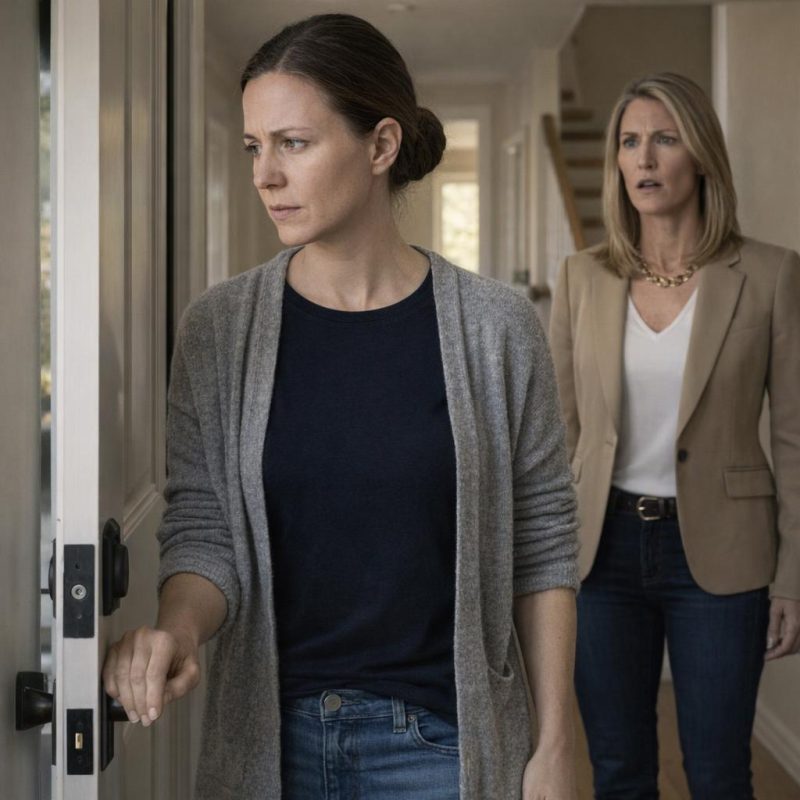 Image by RM AI
The Evidence Review
I set my laptop on the kitchen table and don't bother making coffee first. I open a new document and title it with today's date and the word 'Documentation.' Then I start building. I pull the screenshots of the access logs in first, arranging them in chronological order — earliest timestamp at the top, each entry showing the same username, the same credentials, the same account that has been in this family for years. I highlight Claire's username in yellow on every single entry. I add the backup disable command next, with a text box explaining in plain language what that command does and what it means that it was run before anything else. Then the file copy operations, the timestamps showing exactly when the archive moved from the shared drive to the hidden external. Then the deletion commands. Then the wipe. I write a one-sentence explanation under each screenshot, the kind of explanation you'd give someone who has never opened a terminal window in their life. I read through the whole thing four times. I adjust the font size on the timestamps so they're impossible to miss. By the time I close the laptop, the document runs eleven pages, and every page tells the same story in a different way — the same account, the same machine, the same hands, from the first command to the last.
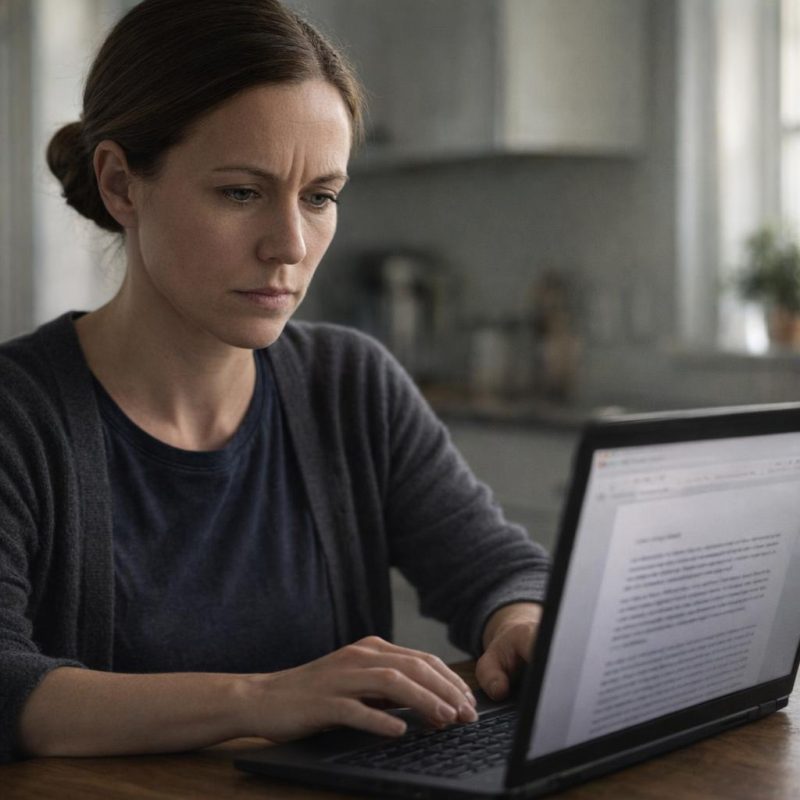 Image by RM AI
The Family Request
I open a new email and sit with the blank subject line for a moment. I type: 'Family meeting — important.' I start the body with Mom and Dad's names, then add Claire and James to the recipient field. I keep it short. I write that I need to speak with everyone together, that it's about the photo archive, and that I'm asking everyone to come to their house on Sunday afternoon. I don't explain further. I read it three times, checking for anything that sounds accusatory or dramatic, and I take out two sentences that feel like too much. What's left is nine lines. Factual. Calm. I add a line asking them to confirm they can make it. Then I sit there with my finger over the trackpad for a few seconds, and I click send. The confirmation appears — message sent — and I stare at it. Somewhere across the city, four phones are about to receive that email. Four people are about to read those nine lines and start wondering. I close the laptop and set it aside. The apartment is quiet around me, and the weight of what I've just put into motion settles into my chest like something solid.
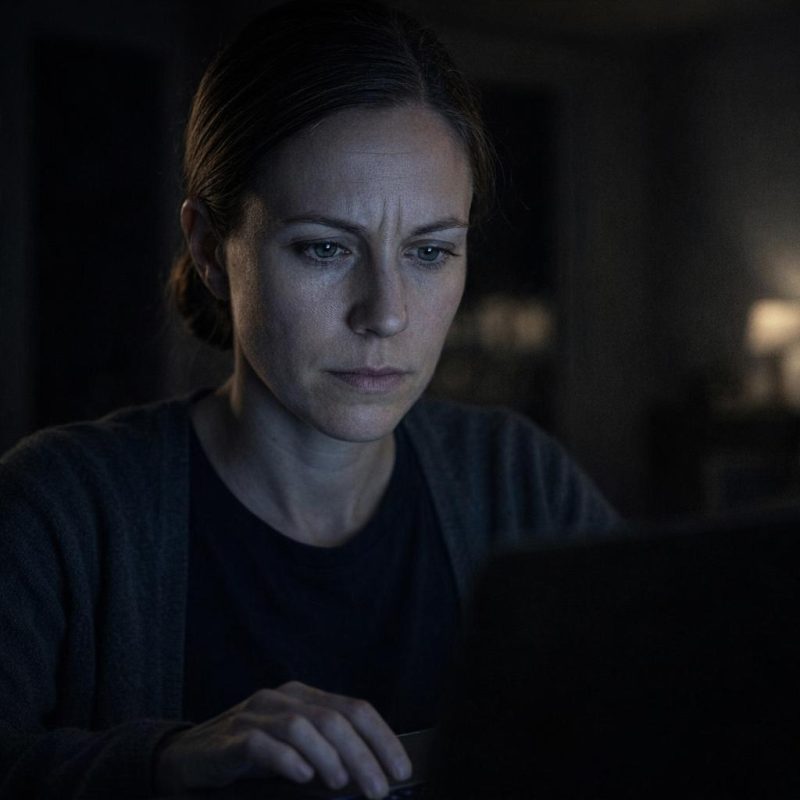 Image by RM AI
The Reluctant Assembly
I ring the doorbell at my parents' house at two o'clock exactly. My mother opens the door. She doesn't smile. She steps back to let me in and says 'everyone's already here' in a tone that tells me she's been managing the room since they arrived. I walk into the living room and feel the temperature drop. My father is in his chair by the fireplace, sitting straight, not looking up from his hands. James is on the couch with his elbows on his knees, staring at the floor. Claire is in the armchair by the window, legs crossed, posture composed, watching me come in with an expression that gives nothing away. I say hello to the room. My father gives a short nod. James says hey without lifting his head. Claire says nothing. My mother sits down on the edge of the couch beside James and folds her hands in her lap. She asks what this is about. I tell her I need to show them something, and I set my laptop bag on the coffee table and start unzipping it. Nobody moves to help. Nobody asks if I need anything. The room holds its silence like it's been holding it for a long time, and I keep my hands steady and keep moving.
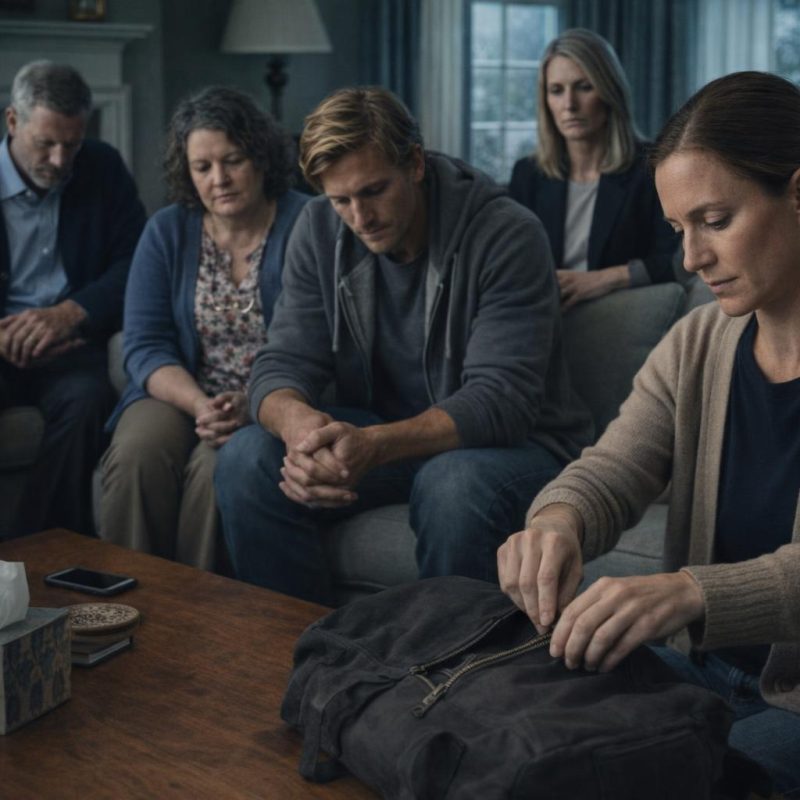 Image by RM AI
The Physical Evidence
Before I open the laptop, I reach into the bag and pull out the external drive. I set it on the coffee table in the center of the room. It's small — about the size of a deck of cards — black casing, a white label on the side with a model number printed in small type. My mother leans forward and asks what it is. I tell her it's a backup drive, the same model I used when I built the archive system. I tell them I found it yesterday, while I was helping Claire remove equipment from her home office. I explain that it was taped to the underside of her desk. The room goes quiet in a different way than it was quiet before. My father asks what's on it. I tell him I'll show them in a moment. James turns his head and looks at Claire. Claire is looking at the drive. She doesn't look at James. She doesn't look at me. She doesn't look at anyone. She just looks at the drive sitting there on the coffee table, and her face is completely still, and the drive sits there between all of us saying nothing and meaning everything.
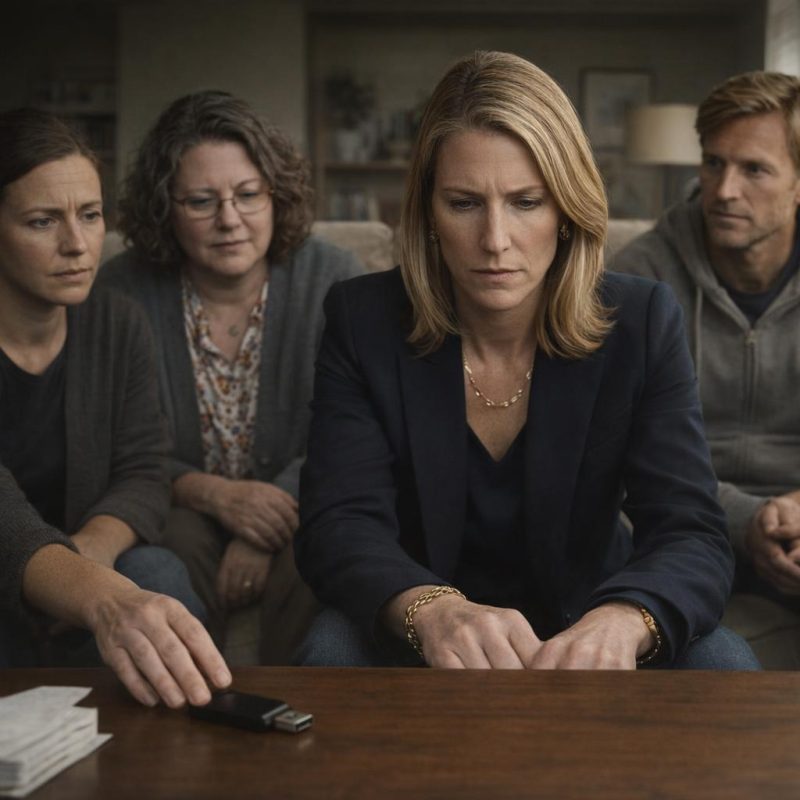 Image by RM AI
The Login History
I open the presentation on my laptop and turn the screen so everyone can see it. I start at the beginning. The first slide shows a log entry — date, time, username — and I read it aloud and explain what it means. I show the next entry, and the next. I point to Claire's username each time it appears, and I explain what each command did in plain language: this one disabled the automatic backup. This one copied the archive files. This one moved them to an external drive. This one deleted the originals from the shared location. This one wiped the drive index so the files wouldn't show up in a standard search. I go through it slowly, one step at a time, and I don't editorialize. I just read what the logs say. My mother's hand comes up and covers her mouth. My father leans forward in his chair, close enough to read the timestamps himself, and I watch him trace the line of entries with his eyes — the same username, the same credentials, the same account, running the same sequence of commands across forty-seven minutes on a Tuesday afternoon. James has stopped looking at the screen. He's looking at Claire. And then I glance at my parents, and I watch the moment their faces change.
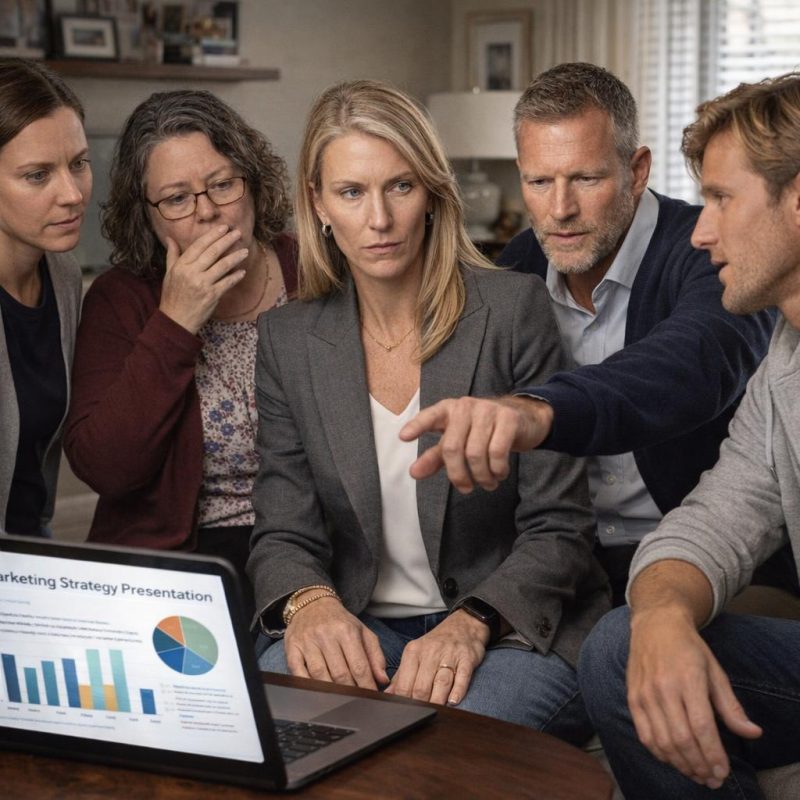 Image by RM AI
The Failed Defense
Claire says she doesn't understand the logs. I pull up the entry showing her username and the timestamp and I read it aloud again, slowly. She says maybe someone else used her account. I show the login origin — her home IP address, the same one registered to her router, the same one that appears on every remote session she's ever run into the family shared drive. She says she was trying to help with backups, that she was just trying to make sure things were saved. I show the slide where the backup system was disabled — the very first command in the sequence, run four minutes before anything else happened. She says it must have been an accident, that she doesn't always know what she's clicking. I show the sequence: disable backup, copy archive, move files, delete originals, wipe index — five distinct commands across five separate operations, each requiring a confirmation prompt. My mother asks Claire, quietly, to explain the drive taped under her desk. Claire says she forgot it was there. My father asks why she never mentioned having a copy of the photos during the months everyone believed they were gone. Claire opens her mouth and closes it. James looks away from her, toward the window. Claire's hands, folded in her lap until now, come apart — and her jaw pulls tight, and the composure she walked in with is visibly, unmistakably gone.
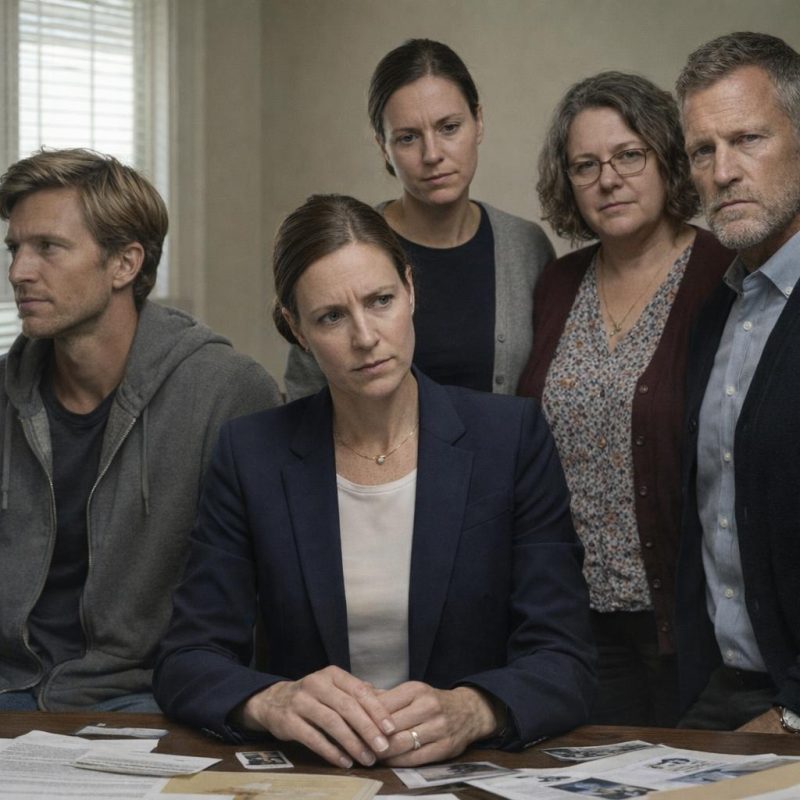 Image by RM AI
The Family Comprehension
My mother asks me to show the logs again. I go back to the beginning and walk through it a second time, slower, pointing to each timestamp, each username, each command. My father watches without speaking. When I finish, he turns to Claire and asks her directly: did you do this. It isn't a question the way he says it. Claire doesn't answer. She looks at her hands. My mother starts crying — not loudly, just quietly, the way she cries when something has broken past the point where she can hold it together. James asks why. He says it so quietly I almost don't hear it. Why would you do this. Claire says they don't understand, that there's context, that it's more complicated than it looks. My father says the evidence is clear. My mother asks about the months I spent alone, the months the family spent grieving photographs that were sitting in Claire's office the whole time. I don't say anything. I sit with my hands in my lap and let the room do what it needs to do. My father looks at me, and something moves across his face that I haven't seen directed at me in a long time. Then my mother turns in her chair and looks at Claire, and the expression on her face stops the room cold.
 Image by RM AI
The Collapse
Claire stands up so fast her chair scrapes back against the floor. She says we're all against her, that we've always been against her, and her voice has that brittle edge it gets when she's losing control of a room. My mother says quietly that we just want the truth. Claire laughs — not a real laugh — and says the truth. She says everyone always thought I was so responsible, so careful, the one who could be trusted with the family history. She says she wanted to prove I wasn't perfect. The words land somewhere in my chest and just sit there. My mother makes a sound I've never heard from her before. My father says that isn't relevant, that it doesn't explain anything, and his voice is flat and final. James asks if Claire understands what she actually did — months of blame, months of grief, a family that stopped speaking to each other. Claire's face crumples. She says she didn't think it would go this far. She starts crying, and then she picks up her bag and walks out of the room without looking at any of us.
 Image by RM AI
The Immediate Aftermath
Nobody moves for a while after the door closes. My mother sits down beside me on the couch and takes my hand without saying anything at first. Then she starts apologizing, and once she starts she can't seem to stop — she's sorry she doubted me, sorry she let it go on so long, sorry she didn't push harder for answers. My father clears his throat and says he should have listened to me from the beginning. He says it plainly, without decoration, which is the closest he gets to an apology and I know it. James says he's sorry too, that he didn't know what to believe and he took the easier path, and he looks genuinely ashamed of himself. My mother asks if I can forgive them. I tell her I need some time, and I mean it — not as a punishment, just as the truth. She asks about the photos, whether they're all there, and I tell her yes, every decade, all of it intact on the drive. She asks if I'll restore them. I tell her I will. We sit there together in the quiet, and the house holds all of it without anyone needing to say another word.
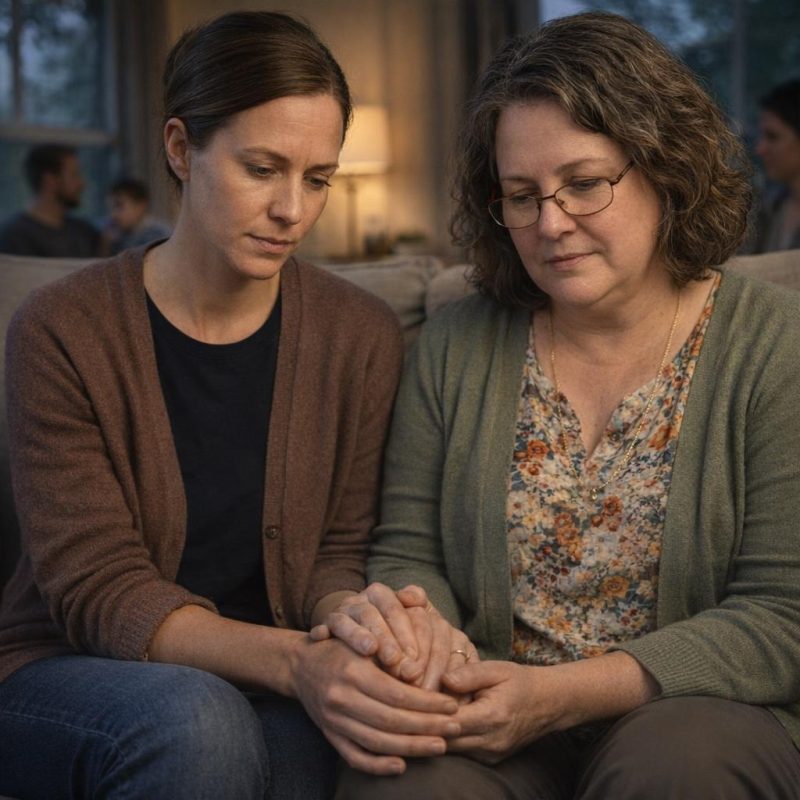 Image by RM AI
The Varied Responses
My mother calls the next morning before I've had coffee. She cries through most of it, apologizing in loops, and I let her. My father sends an email two days later — formal, measured, three paragraphs acknowledging that he acted on incomplete information and that his response to me was wrong. It reads like a memo and it's still the most direct accountability he's ever put in writing, so I save it. James shows up at my apartment on Thursday with takeout and no real plan, and we sit on my kitchen floor and he tells me he felt sick every time he didn't call me back. My aunt sends a text that says she's sorry things got so complicated, which is doing a lot of work for one sentence. A few cousins message variations of the same — they heard, they're sorry, they hope we're okay. Some of those feel real. Some of them have a quiet but attached to them, a gentle pivot toward explaining why they stayed out of it. I respond to each one, but not the same way. Some relationships feel like they might actually come back from this. Others feel like they've shifted into something I don't have a name for yet, and I'm not sure they'll ever fully shift back.
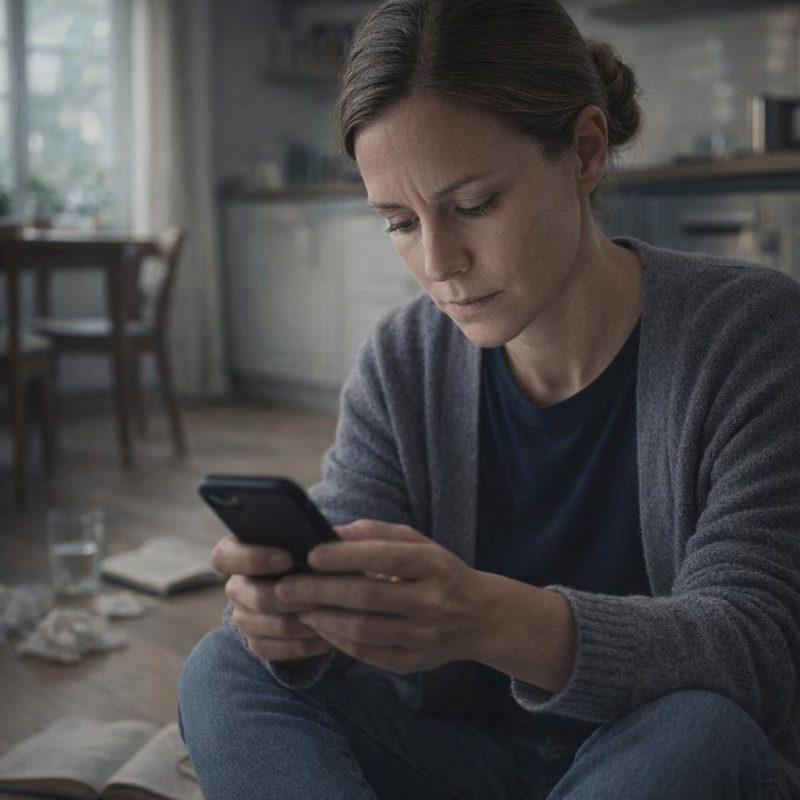 Image by RM AI
The Restored Archive
I set up the server in my apartment on a Saturday morning with the blinds open and a full pot of coffee. I copy the files from Claire's drive one folder at a time — the 1930s first, then forward through the decades, watching the progress bars fill. I verify each folder when it lands: thumbnails loading, filenames intact, nothing corrupted. When the last file confirms, I sit back and just look at the screen for a minute. Then I create new access credentials for my parents and James. I remove Claire's administrative access without ceremony, just a few keystrokes, and I don't feel anything particular about it. I draft a short message to the family with the new link and a list of ground rules — read-only access for everyone except me, no downloads without asking, backups run on my schedule. I keep the original drive in a labeled envelope in my desk drawer alongside the full log documentation, because I've learned something about the value of keeping receipts. The archive is complete again: ninety years of faces and kitchens and bad holiday sweaters, all of it back where it belongs. But the folder with my name on the access log sits at the top of the directory now, and it's the only one with administrator rights.
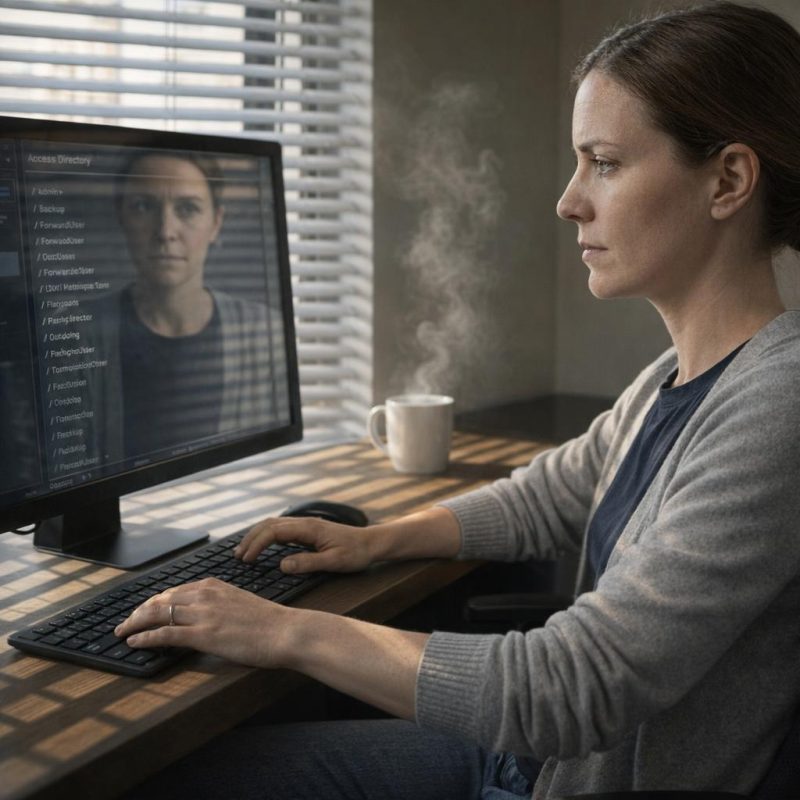 Image by RM AI