
My Grandfather's Final Letter Revealed a Family Secret That Made My Father Go White—Then I Understood Why
My Grandfather's Final Letter Revealed a Family Secret That Made My Father Go White—Then I Understood Why
The Weight of a Perfect Man's Funeral
The last of the mourners left just after four, and the house went quiet in the way old houses do — not peacefully, but with a kind of held breath. Elliott stood in his grandfather's study and didn't move for a long time. The room was exactly as William had left it: the framed commendations on the wall, the leather-bound ledgers lined up by year, the photograph of him shaking hands with the mayor back in 1974. His father, Robert, moved through the space with the careful reverence of a man in a church, straightening a frame that didn't need straightening, running a hand along the edge of the desk. His mother, Margaret, stood near the window with her hands folded, her pearl necklace catching the last of the afternoon light. "He built something real," Robert said, to no one in particular. Elliott nodded, because that was what you did. He had spent most of his life nodding in this room, measuring himself against the man whose name felt larger than any room could hold. The commendations blurred a little at the edges. The dust motes settled. The silence came down over everything like a second layer of grief, and Elliott just stood there inside it.
 Image by RM AI
Stories My Father Told
Robert settled into the wingback chair near the fireplace and started talking the way he always did when he needed the room to feel like William was still in it. He told the story about the Hendricks contract — how William had walked away from a deal worth three times his annual revenue because the other party had misrepresented their books. "He said a man's word was the only currency that didn't devalue," Robert said, and Margaret nodded from the settee, adding that William had never once raised his voice in anger, not in forty years of marriage. Elliott sat across from them and listened. He had heard most of these stories before, but they landed differently today, heavier somehow, each one a quiet reminder of the distance between who his grandfather had been and who he had managed to become. He thought about the job he'd left two years ago, the partnership that had fallen through, the choices that had seemed reasonable at the time and looked smaller every year. Then his eye caught the bookshelf — a photograph he hadn't noticed before, tucked between two ledgers. His grandfather, younger, standing outside a building Elliott didn't recognize, his expression not composed the way it always was in photographs, but uncertain, almost lost.
 Image by RM AI
The Gathering in the Study
By the time the family gathered in the study the following morning, the room had taken on a different quality — less a place of memory and more a place of procedure. Diane arrived just before ten, kissing Margaret on the cheek and giving Robert a brief, measured nod. She looked the way she always did at family occasions: composed, watchful, slightly apart from the rest of them even when she was standing in the same room. Robert directed the seating without quite making it a directive — a gesture here, a word there — and somehow everyone ended up exactly where he intended. He took the chair behind the desk. Margaret sat to his left. Diane settled into the armchair near the window, crossing one leg over the other and folding her hands in her lap. Elliott took the chair nearest the door, the one that had always been his at these gatherings, slightly outside the inner circle, angled toward the room rather than toward the desk. He told himself it didn't matter. He had been telling himself that for years. The chairs were arranged the way they always were, each of them in their appointed place, and the room held them there the way it always had — like a photograph that had already been taken.
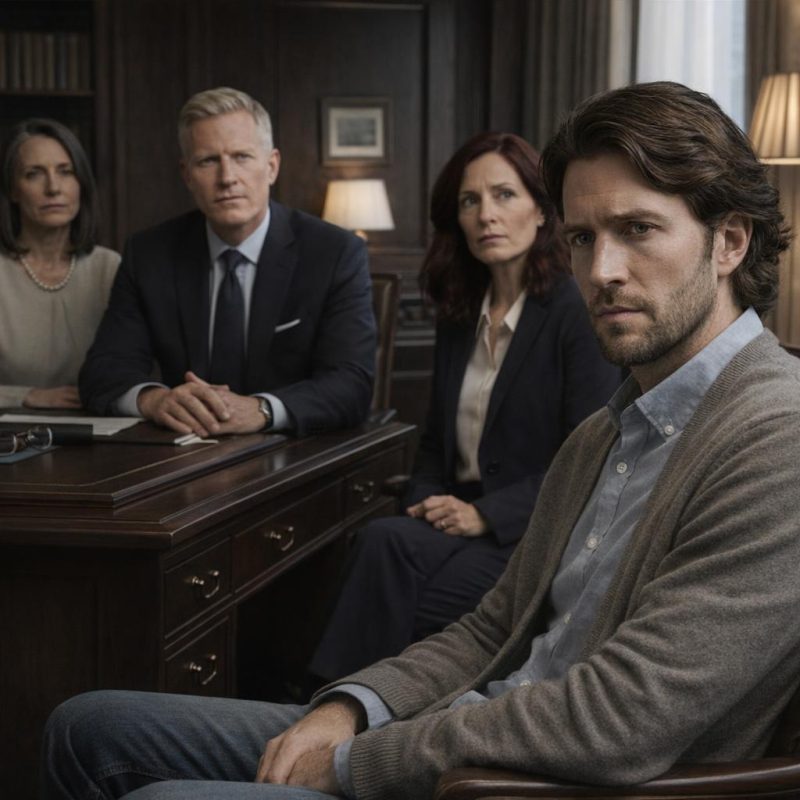 Image by RM AI
The Standard We Inherit
Robert stood before everyone had even settled properly, as though the occasion required him to be on his feet. He spoke about William the way he always did — with the careful precision of a man who had repeated the words so many times they had become something close to scripture. He talked about integrity in business, about the Depression-era discipline that had shaped William's character, about the responsibility that came with carrying a name people in this community still recognized and respected. Margaret nodded at the right moments, her hands folded in her lap, her expression the particular kind of attentive that meant she had heard this before and believed every word of it. Diane sat very still by the window and said nothing. Elliott watched Robert's hands move as he spoke — broad, deliberate gestures — and felt the familiar tightening in his chest that came whenever the conversation turned to what it meant to be a Thornton. It wasn't that he disagreed with anything Robert said. It was that every word felt like a measurement, and he already knew how he came out on the other side of it. The standard being described had never quite been something Elliott could reach, and standing in that room, with his grandfather three days in the ground, it felt no closer than it ever had.
 Image by RM AI
Claire's Steady Hand
Elliott slipped out into the hallway sometime after his father finished speaking, needing a moment where the walls weren't covered in framed achievements. He stood near the window at the end of the corridor and pressed his fingers against the cold glass and tried to breathe evenly. Claire found him there a few minutes later. She didn't say anything at first, just came and stood beside him, close enough that he could feel the warmth of her. "You okay?" she asked, and he almost laughed, because the honest answer was complicated and the simple answer was a lie. "It's a lot," he said. She nodded. "It's always a lot with your family." She said it without judgment, which was one of the things he had always loved about her — she could name a thing without making it an accusation. He told her he kept feeling like he was supposed to be someone different in this house, someone who measured up, and she put her hand on his arm and said, "You're the only one measuring." He wanted to believe her. He was still turning it over when Robert's voice came from the direction of the study, clear and carrying, calling everyone back in.
 Image by RM AI
Lessons in Honor
Waiting for everyone to reassemble, Elliott found himself back in a memory he hadn't visited in years. He must have been fourteen or fifteen. His grandfather had called him into this same study after he'd made some small error at the family business's summer open house — he'd quoted a figure wrong to one of the partners, something trivial, but William had noticed. He hadn't raised his voice. He never did. He'd sat Elliott down and explained, in the measured cadence he used for everything important, that a Thornton's reputation was built one interaction at a time, that integrity wasn't a quality you displayed when it was convenient but a discipline you maintained when it cost you something. Elliott had sat very straight in the chair and nodded and felt the words settle into him like stones. He had carried them ever since, or tried to. The memory was so familiar he could almost feel the leather of the chair beneath him. But something snagged at the edge of it, the way it sometimes did — a detail he had never quite been able to place. At the end of that conversation, before he dismissed him, his grandfather had looked at Elliott with an expression he couldn't name even now, something that sat between pride and something else entirely, something that had no clean word attached to it.
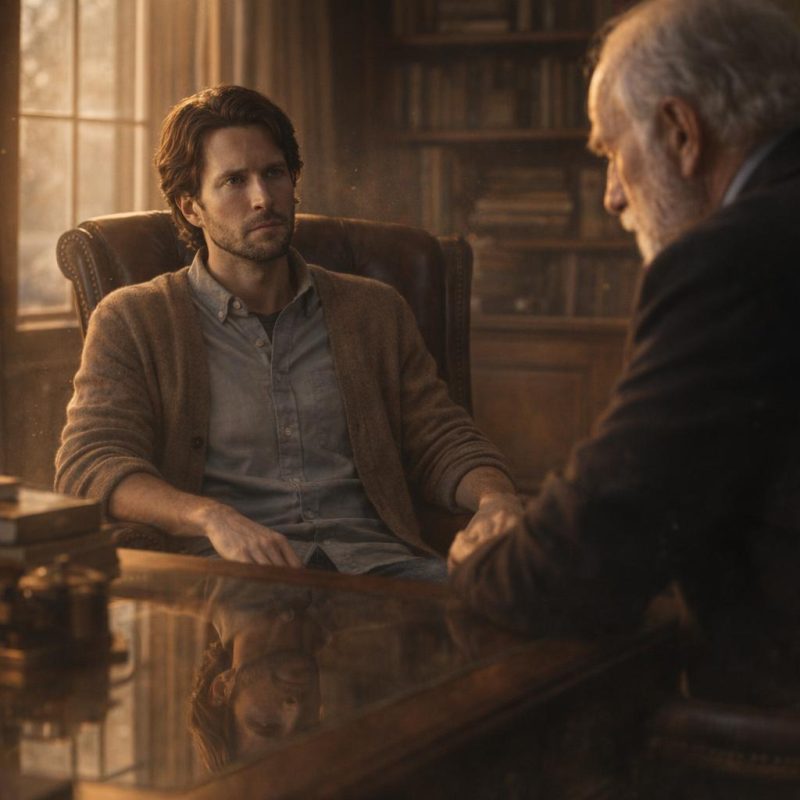 Image by RM AI
The Business We Built
When everyone had settled back into the study, the conversation drifted, the way it always did at these gatherings, toward the business. Robert described the founding years with the ease of a man who had told the story so many times it had become its own kind of monument — the early clients, the handshake agreements, the slow and principled accumulation of a reputation that had outlasted every competitor in the region. Margaret mentioned that people still stopped her at the market to say what William had meant to them, what the Thornton name had meant to the community. Elliott listened and felt the familiar mixture of pride and inadequacy that the story always produced in him, the sense of inheriting something he hadn't earned. Diane had been quiet through most of it, her gaze moving between Robert and the window in a way that was hard to read. Then, while Robert was mid-sentence about the expansion in the late fifties, she said something low and almost to herself, something about those early years being harder than people remembered. Robert's voice didn't stop exactly, but it shifted, finding a new current, moving the conversation forward before her words had fully landed in the room.
 Image by RM AI
The Attorney Arrives
Harrison arrived at half past eleven, and the room changed when he walked in. He was a tall man, late sixties, with the careful movements of someone who understood that how you carried yourself in a room communicated something before you ever spoke. He set his leather briefcase on the edge of William's desk with both hands, as though placing it down required the same attention as everything else he did. He greeted Robert with a handshake that was brief and formal, nodded to Margaret, exchanged a quiet word with Diane that Elliott didn't catch. He acknowledged Elliott with a small inclination of his head. Then he opened the briefcase and began removing documents, setting each one down with a deliberateness that made the room feel like it was holding its breath. Robert asked something about the process, and Harrison answered in a low, even voice, professional and unhurried. Elliott watched him arrange the papers into a careful order and thought about how many times he must have done this — sat in rooms like this one, carrying the weight of what other people had left behind. The conversation dropped away. The afternoon light came through the window at a low angle. The room settled into a formality that felt older than any of them, and they waited.
 Image by RM AI
A Letter Sealed
Harrison worked through the standard provisions with the same unhurried precision he'd brought to everything else — the property distributions, the business interests, the charitable bequests William had arranged years before his death. I followed along as best I could, watching my father's face for cues about what mattered and what didn't. Robert sat with his hands folded on the desk, expression neutral, the way he always looked when he was paying close attention. Diane had a small notepad and was writing things down. Margaret sat very still beside Robert, her pearl necklace catching the light each time she shifted. Then Harrison paused, reached into the briefcase a second time, and produced an envelope that was separate from the rest of the documents. It was cream-colored, heavier stock than ordinary stationery, sealed with dark wax. He set it apart from the other papers with the same deliberateness he'd used for everything else, and said that William had prepared this separately — a personal letter, distinct from the will itself, with its own set of instructions. Diane looked up from her notepad. Margaret's hands went still in her lap. Robert didn't move. I looked at the envelope sitting there on the desk, alone in its small cleared space, and something about the formality of it — the wax, the weight, the careful distance Harrison had placed between it and everything else — stayed with me long after the room had gone quiet.
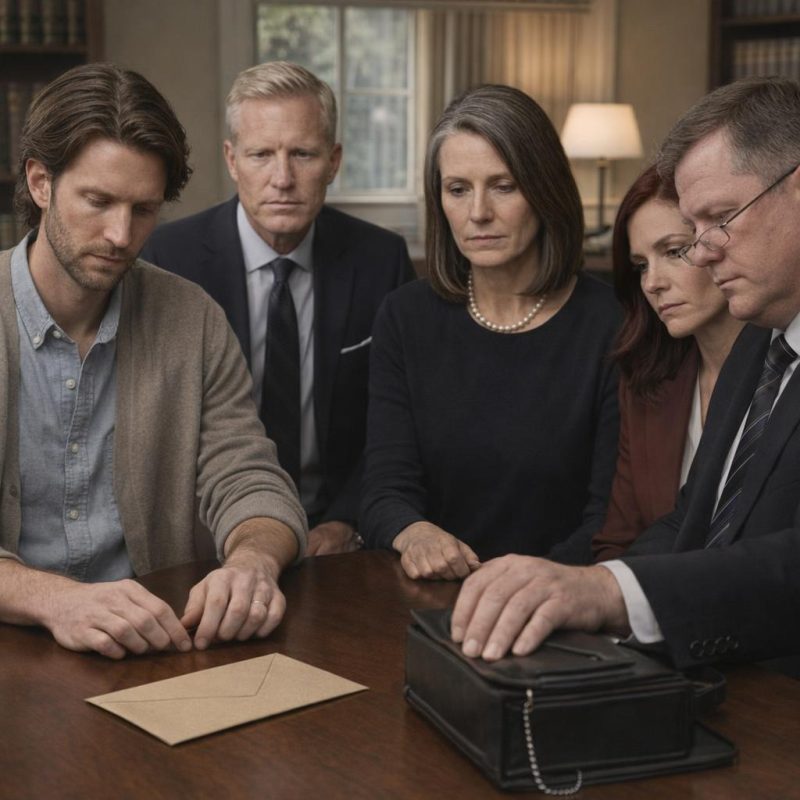 Image by RM AI
Instructions from the Dead
Harrison slid the envelope toward the center of the desk, and I leaned forward slightly without meaning to. The instructions were written directly on the front in my grandfather's hand — a script I recognized from birthday cards and the occasional note tucked into a book he'd lent me. The handwriting was careful, deliberate in the way of someone who had taken time with each word. It specified that the letter was to be read aloud. Not privately, not at a later date — aloud, in the presence of all immediate family members. I read it twice to make sure I was understanding it correctly. There was a line beneath that, underscored once, stating that no one was to leave the room until the reading was complete. I sat back in my chair. It wasn't the kind of language you put on an envelope unless you meant it, unless you'd thought carefully about the possibility that someone might try to leave. I didn't know what to make of that. It seemed like an unusual amount of structure for a personal letter — the kind of structure you built around something you weren't sure would be well received. Harrison looked around the table and said, quietly, that he was bound to follow the instructions as written. The underscored line sat there on the envelope, and no one said anything for a moment.
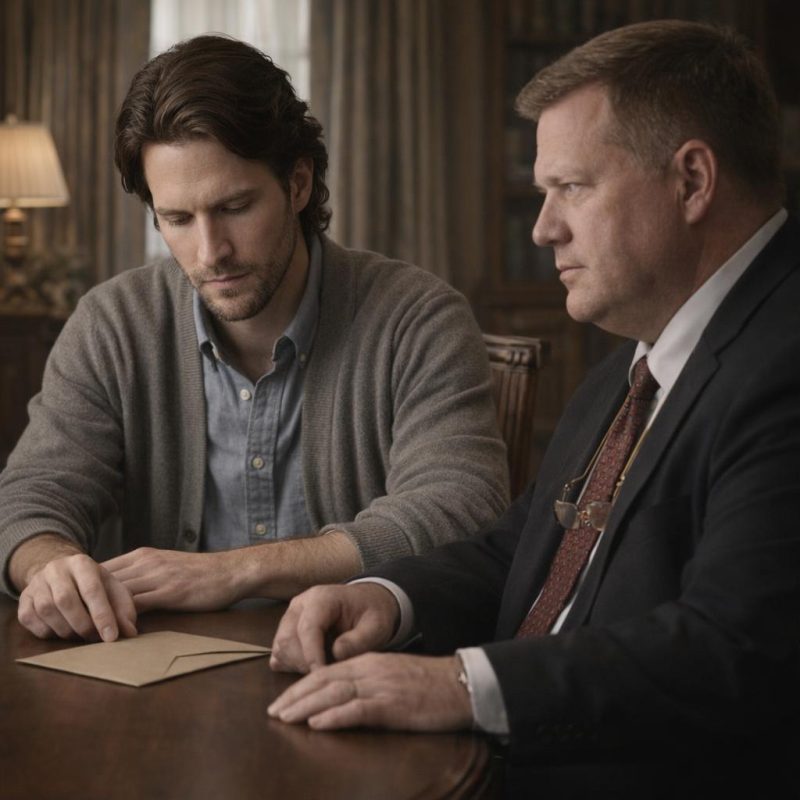 Image by RM AI
Who Should Read It
Diane was the first to speak. She said they should read it now — William had been clear about his wishes, and there was no reason to delay. Her voice was even, practical, the tone she used when she considered something already settled. Margaret said she wasn't sure this was the right moment, that perhaps they needed time to prepare themselves, that it had already been an emotional day. Robert said nothing at first, just looked at the envelope, and then suggested they schedule a separate gathering — a few days from now, when everyone had had time to rest. I watched him say it and thought it was a reasonable thing to say. It sounded reasonable. But there was something in the way he said it, a flatness underneath the words, that I couldn't quite account for. Diane turned to look at him. She didn't say anything immediately, just looked, and the silence between them carried more weight than it should have for a simple scheduling disagreement. Harrison reminded them, gently but clearly, that William's instructions didn't include a provision for postponement — the letter was to be read at the gathering of the family following the will reading, which was this. Robert pressed his lips together. Margaret looked at her hands. The afternoon light had shifted, and the room felt smaller than it had an hour ago, the air between all of us thicker and harder to move through.
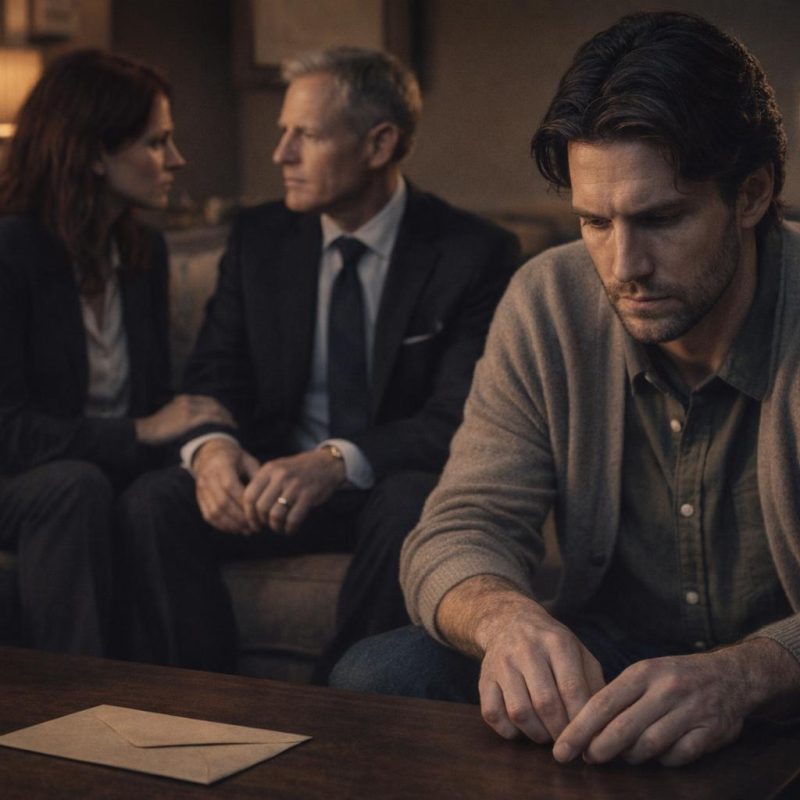 Image by RM AI
My Father's Objection
Robert pushed back from the desk slightly and said that as executor of the estate, he had a responsibility to review any documents before they were presented to the family. His voice was measured, authoritative — the voice he used in boardrooms, the one that didn't leave much room for disagreement. He said he needed to ensure the letter's contents were appropriate, that his father had been unwell in his final months, that there were questions about his state of mind. Diane said that Harrison had already certified the document. Robert said that wasn't the point. Margaret put a hand on Robert's arm, and he didn't acknowledge it. Harrison said, with the same quiet evenness he'd maintained throughout, that William's instructions were explicit and that his role was to carry them out as written — he wasn't in a position to allow a private review that the instructions didn't permit. Robert's jaw tightened. He said something about protecting the family, about not knowing what his father's state of mind had been, about the need for discretion. I sat there listening and tried to tell myself it was just my father being my father — controlling, procedural, needing to be the one who managed things. But his voice had an edge I didn't usually hear in it, something that sat just beneath the surface of the reasonable words. Then he reached across the desk toward the envelope.
 Image by RM AI
Diane Draws a Line
Diane's hand came down flat on the desk between Robert and the envelope. Not loud, but definite. She said, very clearly, that William's instructions were written on the outside of that envelope for everyone in the room to read, and that no one — not Robert, not anyone — was going to handle it privately before the reading. Robert straightened in his chair and said he was the head of this family and the executor of this estate, and that gave him certain responsibilities Diane didn't seem to appreciate. Diane said she appreciated them fine, and that none of them included overriding their father's explicit final wishes. Margaret said, quietly, that perhaps they could all just take a breath. Nobody took a breath. Robert said Diane had always had a way of making things more difficult than they needed to be. Diane said she wasn't the one making things difficult. I sat between them and felt the particular discomfort of someone who has grown up watching two people who love each other speak to each other like opponents. Harrison had gone very still at the edge of the desk, the envelope in front of him, his hands folded. He didn't intervene. He didn't need to. The room had already divided itself along lines I couldn't quite see, and my father and his younger sister stood on opposite sides of William's desk, facing each other across the space where the envelope lay.
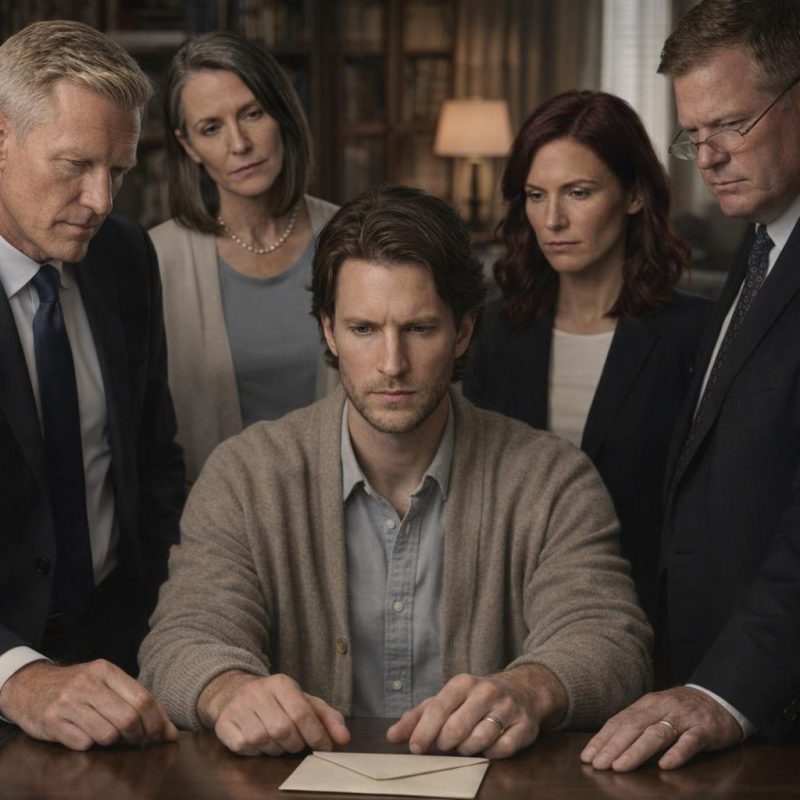 Image by RM AI
The Agreement
It was Harrison who ended it. He didn't raise his voice or shift his posture — he simply said that he had a legal and professional obligation to carry out William's instructions as written, and that he intended to do so today, in this room, with everyone present. He said it the way someone says a thing that is not a threat and not a request, just a fact that has always been true and will continue to be true regardless of what anyone in the room decides. Robert was quiet for a long moment. Then he said, without looking at anyone, that he understood. That was all — just that he understood. He pulled his chair back to the desk and folded his hands in front of him the way he had at the beginning, and I watched something go out of his posture, some resistance that had been holding him upright. Diane gave a small nod and sat back. Margaret let out a breath she'd been holding for what felt like several minutes. I looked around the table at all of them — my father with his hands folded and his eyes fixed on the middle distance, my mother with her relief carefully contained, Diane with her notepad closed in front of her — and felt the weight of the moment settle over the room like something that had been waiting a long time to land.
 Image by RM AI
Breaking the Seal
Harrison picked up the envelope with both hands. He turned it once, examined the seal, and then reached for the small letter opener he'd set at the edge of the desk at the start of the meeting — as though he'd known it would be needed, as though he'd prepared for this specifically. The sound of the wax seal breaking was small and clean in the silence. He set the opener down, worked the flap open carefully, and drew out several folded pages — more than I'd expected, the paper the same heavy cream stock as the envelope. He unfolded them with the same unhurried attention he'd given everything else, smoothed them flat against the desk, and adjusted his reading glasses. Nobody moved. I don't think anyone was breathing. Robert's hands were still folded in front of him, but his knuckles had gone pale. Harrison cleared his throat once, looked down at the first page, and began to read. William's voice came into the room through Harrison's — measured, formal, the cadence of a man who had chosen every word. The opening line said that he was writing this because there were things he had carried for too long, and that he owed his family the truth before he was no longer able to give it.
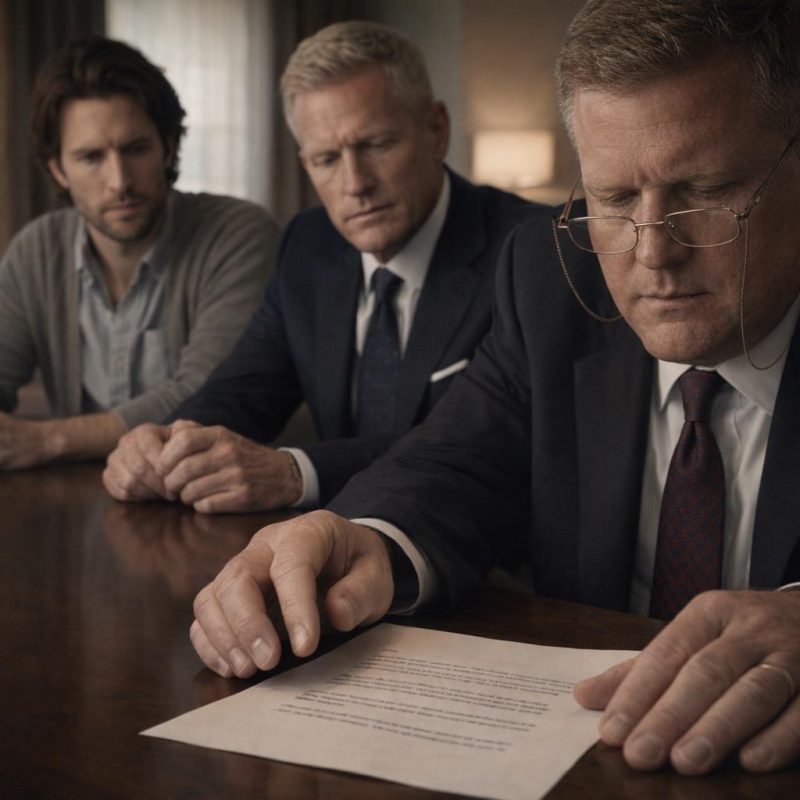 Image by RM AI
A Man Facing Death
Harrison read slowly, and I found myself leaning forward without meaning to. The letter didn't sound like the grandfather I'd known — not the man who'd stood at the head of every table, who'd spoken in declaratives and expected the room to follow. This voice was quieter. It described what it felt like to lie in a hospital bed and understand, with a clarity that hadn't been available before, that the shape of your life was fixed and you were only now seeing it whole. William wrote about the weight of appearances — not in the abstract, but specifically, the daily cost of maintaining a version of yourself that the world could accept. He wrote that silence had seemed like protection for a long time, and that he had only recently understood what it had actually cost the people around him. He asked, in plain language, for understanding rather than forgiveness — he said he wasn't sure he'd earned forgiveness, but he hoped they might come to understand why he had made the choices he had. I sat with that distinction — understanding versus forgiveness — and thought it was the kind of thing a person only wrote when they knew the difference mattered. Then Harrison's voice shifted, dropped slightly, and the next paragraph began with the words: there is one matter in particular.
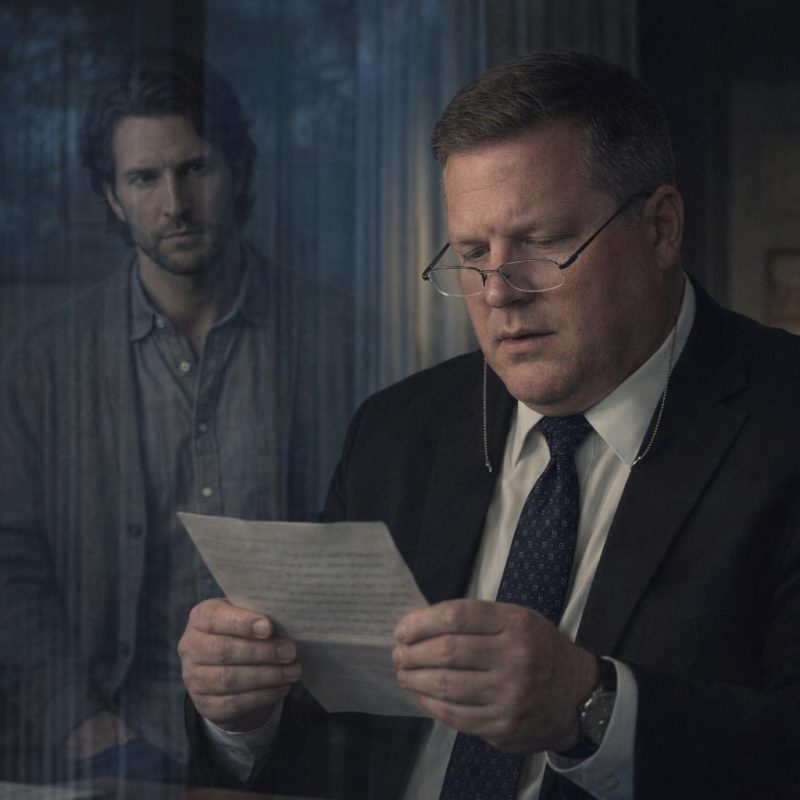 Image by RM AI
The Depression Years
Harrison's voice steadied as he moved into the next section, and I felt the room shift with it. William wrote about 1929 the way people who lived through it always did — not as history, but as a physical thing, something that arrived without warning and took up permanent residence. The orders stopped. The credit dried up. Men he'd done business with for years stopped returning calls, not out of cruelty, he wrote, but because they were drowning too and couldn't afford to watch someone else go under. I'd grown up hearing the family origin story in its polished form — the grandfather who built something from nothing, who had the vision and the nerve when other men faltered. This was a different account entirely. William described the ledgers he kept at night, the columns that never balanced no matter how he moved the numbers, the creditors who began appearing at the office door with a patience that was worse than anger. By 1932, he wrote, the business had shed half its staff and was surviving on credit that was itself surviving on goodwill that was nearly spent. He wrote about lying awake beside his wife, listening to the house settle, calculating what he could sell and what he could not. Then Harrison paused, cleared his throat, and read the line where William wrote that by the winter of 1933, he had begun to understand what ruin actually felt like from the inside.
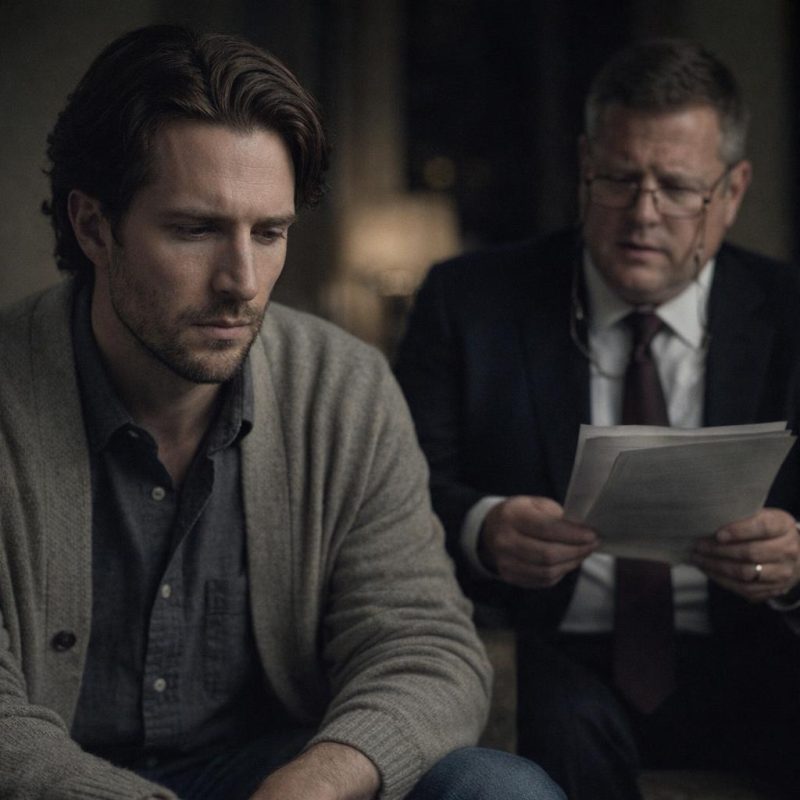 Image by RM AI
Desperate Times
The letter didn't rush toward whatever was coming. That was the thing I kept noticing — William took his time, and the time itself felt like something. He wrote about the employees who had stayed on reduced wages because they had nowhere else to go, men with families, men who had trusted him with years of their working lives. He described the specific arithmetic of desperation: what the business owed versus what it could generate, the gap between those two numbers, and how that gap had stopped narrowing and started widening. He wrote about his children — my father among them, still young then — and what it would mean for them to grow up in the aftermath of a failure that had his name on it. I felt something loosen in my chest as Harrison read. It was hard not to feel the weight of it, the genuine impossibility of the position William was describing. And yet there was something else underneath the sympathy, something I couldn't quite name — a low, steady unease, the way you feel when a story is being told to you very carefully. William's words carried the texture of a man who had thought hard about how to explain himself. The justification was thorough. And in my experience, justification that thorough tends to precede something that genuinely requires it.
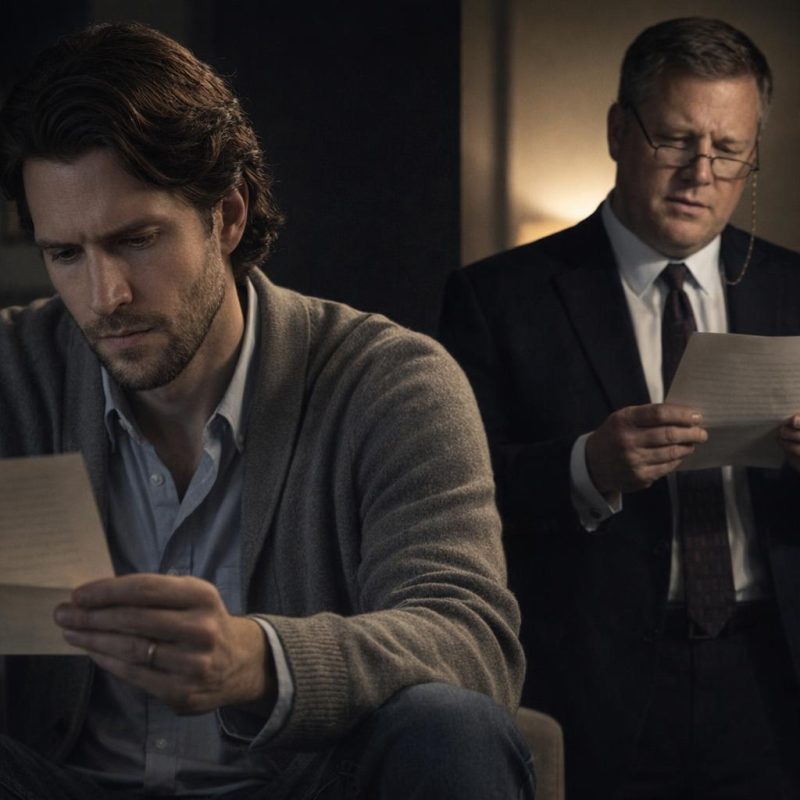 Image by RM AI
The Business Crisis of 1933
Harrison turned the page and the letter's focus narrowed. William had been writing in broad strokes about the Depression, about the industry, about the general collapse of everything — but now the language tightened. He began describing a specific building. A warehouse on the east side of the city, he wrote, where he stored the bulk of his remaining inventory: dry goods, hardware, bolts of fabric he'd taken on consignment. He described the building's dimensions, the loading dock on the north side, the way the afternoon light came through the high windows. It was the kind of detail you include when you want someone to be able to picture a place exactly. He wrote about the inventory's value — a figure that made Diane shift in her chair — and then he wrote about the insurance policy he carried on the building and its contents. He described the policy in the same careful way he'd described the warehouse itself: the coverage amounts, the underwriter, the terms. I sat very still. I wasn't sure what I was feeling yet, only that the specificity of it had changed the temperature of the room somehow. William wasn't reminiscing. He was documenting. And the difference between those two things sat with me long after Harrison's voice moved on to the next line.
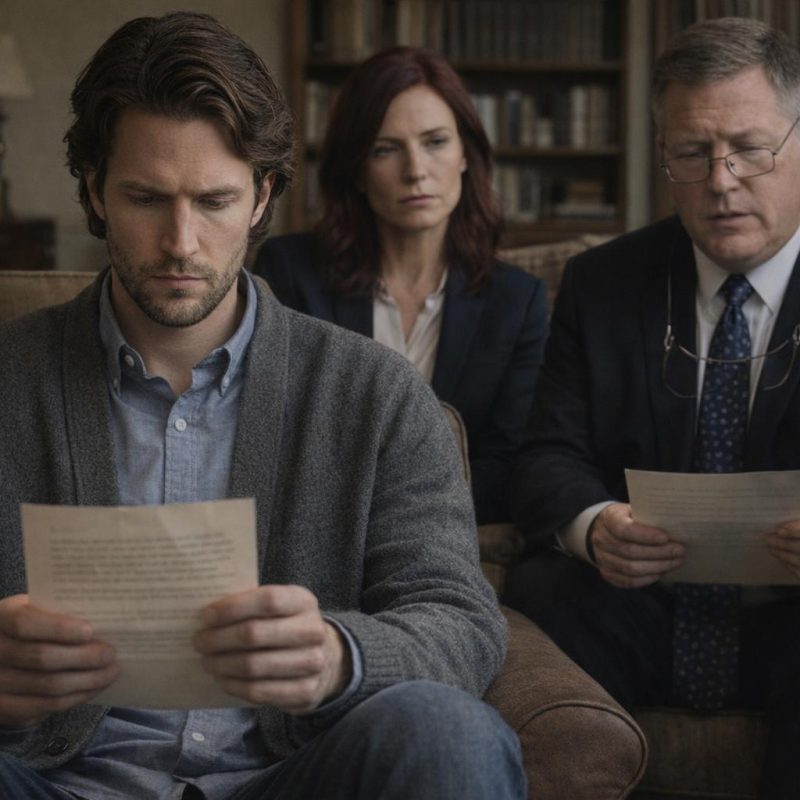 Image by RM AI
The Shift in Tone
Something changed in Harrison's delivery around the middle of the next page. He'd been reading steadily, his voice measured and even, but now it slowed. The sentences in the letter had shortened. William's language, which had been careful and almost formal up to this point, became starker — stripped of the qualifying phrases and the long subordinate clauses he'd been using to cushion everything. He wrote that he had spent three weeks in January of 1933 trying to find another way. He wrote that he had spoken to two banks and been turned away by both. He wrote that he had considered selling the warehouse outright, but that the offers he received wouldn't have covered a third of what he owed. I watched my father's hands on the armrests of his chair. They were very still. Margaret had stopped looking at Harrison entirely and was studying the middle distance somewhere above the fireplace. Diane sat with her arms crossed, her jaw set, her eyes fixed on the attorney. The room had the quality of a held breath. Harrison's voice dropped slightly as he read the next line, and I felt it before I understood it — the way the air changes just before something breaks. William wrote that he had made a decision, and that what he did next was something he had carried alone for more than sixty years.
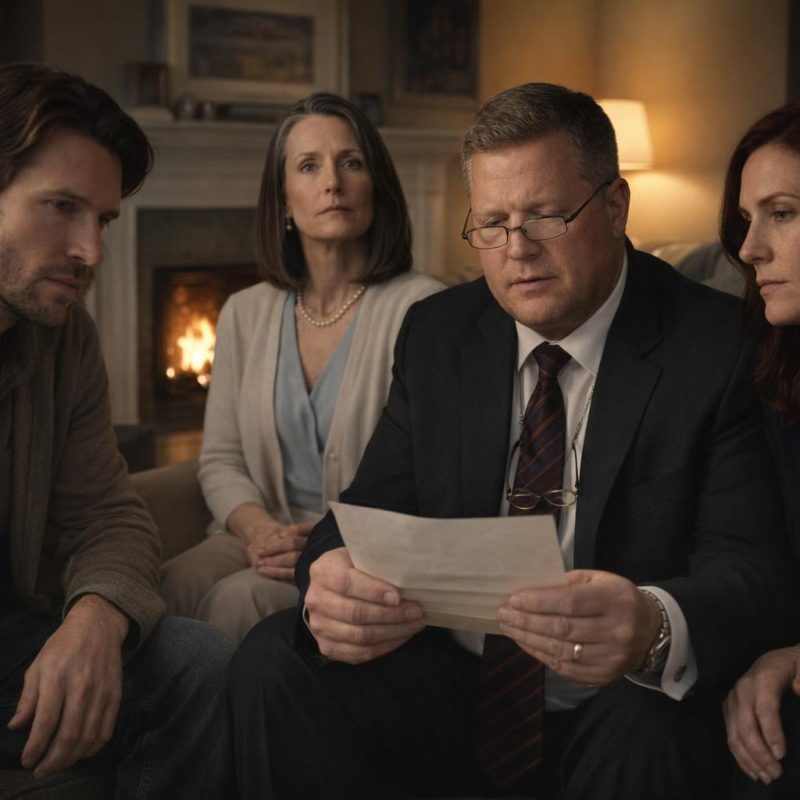 Image by RM AI
Impossible Choices
Harrison didn't stop. He kept reading, and William's letter kept building its case — because that was what it was, I thought, a case. A careful, considered argument for why a man in an impossible position had done what he had done. William wrote about the employees again, named two of them this time, men who had worked for him since the early twenties. He wrote about his wife's health, which had been fragile that winter, and the cost of her care. He wrote about my father as a boy, about not wanting him to inherit a name that meant failure. The moral arithmetic was laid out plainly: on one side, the abstract principle of doing the right thing; on the other, the concrete faces of people who would suffer if he didn't act. He wrote that he had not made the decision lightly, and the letter had the weight of something that had been written and rewritten before it was finally set down on paper. What I couldn't quite settle was how I felt about it. There was sympathy, genuine sympathy, for the man he was describing — young, cornered, watching everything collapse. But sympathy and absolution aren't the same thing, and somewhere in the careful architecture of William's justification, that distinction hung in the air of the room like something none of us were ready to name.
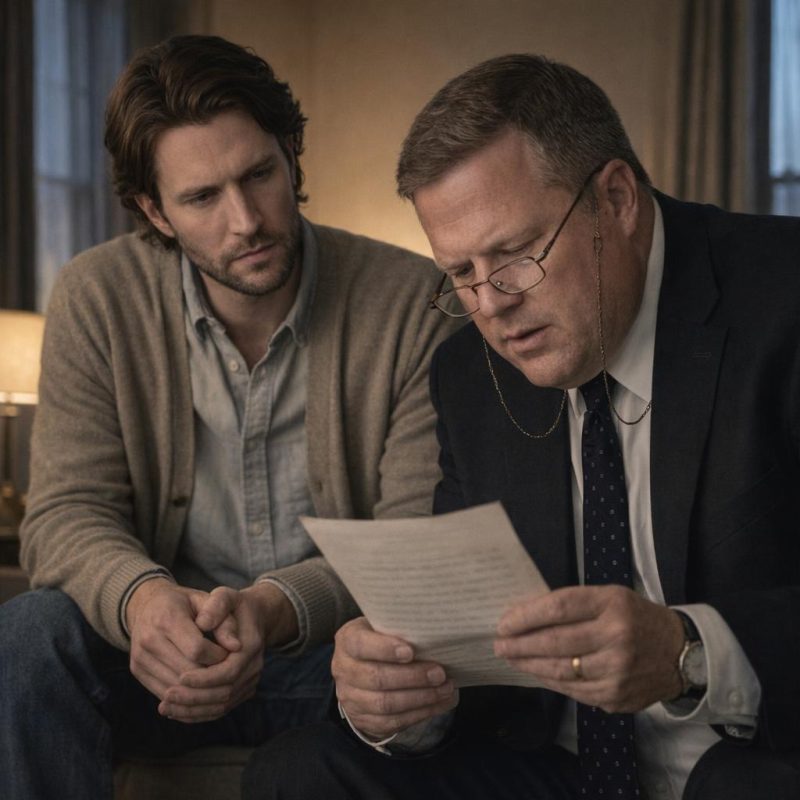 Image by RM AI
The Warehouse on Tenth Street
Harrison read the warehouse description a second time — or rather, William returned to it in the letter, circling back with even more precision than before. The building on Tenth Street, he wrote, was constructed in 1911 of timber frame and brick veneer. The interior was divided into three bays separated by wooden partition walls. The loading dock faced north, away from the nearest occupied building, which sat a full city block to the south. He noted the alley that ran along the eastern wall, unpaved, rarely used after dark. He described where the inventory was stored — the eastern bay, floor to ceiling, the most valuable stock consolidated there over the previous month. I found myself listening differently now. The first time through, the warehouse had seemed like context. Now it felt like something else — a blueprint, almost, or a record. The kind of account a person writes when they need whoever reads it to understand not just what happened but exactly how it was arranged beforehand. I didn't say anything. Nobody did. Harrison's voice moved through the details steadily, and the details themselves accumulated in the room the way evidence accumulates — quietly, without announcement, each one unremarkable on its own until there were enough of them that the shape they made together was impossible to ignore.
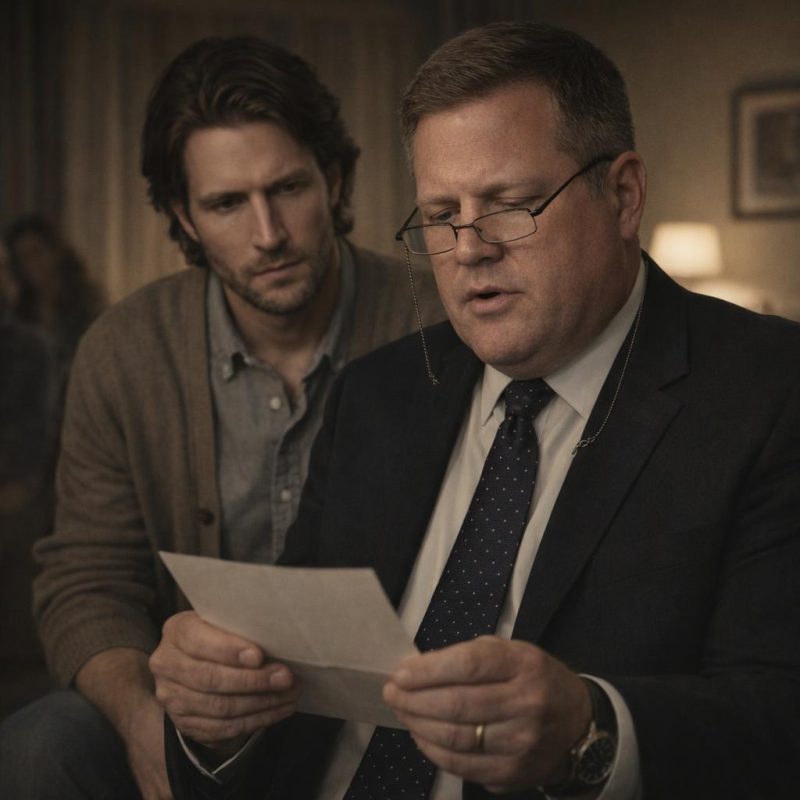 Image by RM AI
The Insurance Policy
The letter turned to the insurance policy with the same methodical care William had given the warehouse. He wrote that he had purchased it six months before the winter of 1933 — comprehensive coverage, he called it, through an underwriter he named specifically. He described the premium he had paid, the agent he had dealt with, the office where he had signed the documents. He noted that the policy covered the building and all contents against loss by fire, at full replacement value, with no depreciation clause. Harrison read that last phrase twice, though I wasn't sure if he meant to. Full replacement value. I looked at my father. Robert was sitting with his hands flat on his thighs, his eyes on Harrison, his expression giving away nothing that I could read. Diane had gone very still beside me. Margaret's fingers had found her pearl necklace and were moving along it slowly, the way they did when she was working something out. The room had been quiet before, but this was a different kind of quiet — the kind that comes when everyone in a space arrives at the same threshold at the same moment and nobody wants to be the first to step across it. William had purchased comprehensive fire insurance six months before the crisis. Harrison looked up briefly from the pages, then back down, and read that the policy had never previously been claimed.
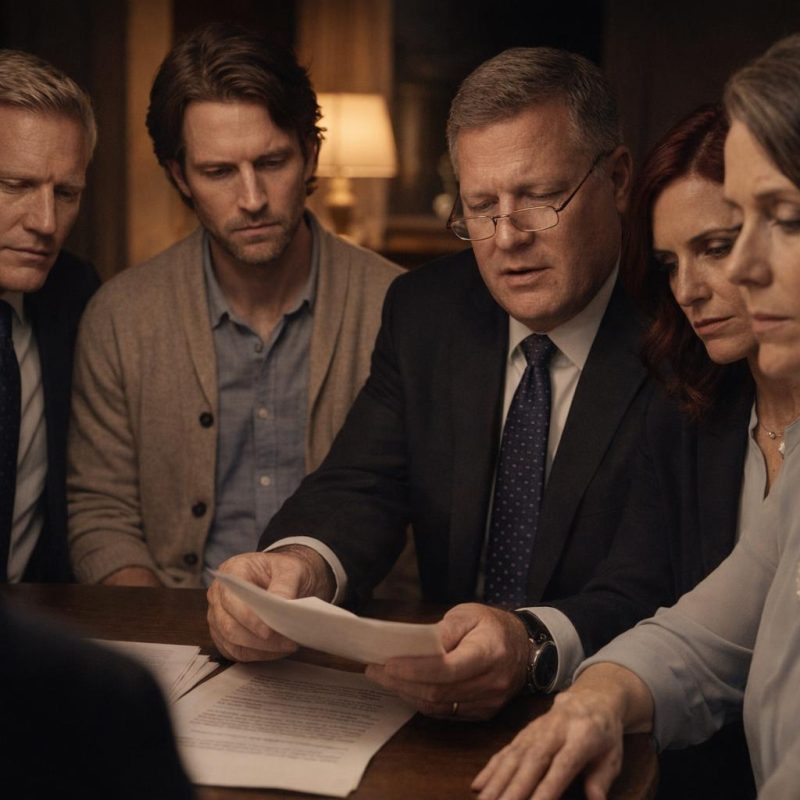 Image by RM AI
The Night of February Fourteenth
Harrison's voice slowed again, and this time it didn't recover its earlier pace. William wrote that he remembered the night clearly — the cold, he said, had been unusual even for February, the kind that settled into the streets and made the city feel emptied out. He described leaving the house after his wife had gone to sleep, walking the twelve blocks to Tenth Street with his coat collar turned up and his hands in his pockets. He wrote about the alley along the eastern wall, the one he had described earlier, and how quiet it was. He wrote about standing outside the warehouse for a long time before going in. He wrote about the inventory in the eastern bay, the wooden partition walls, the way the building smelled of sawdust and cold air. His sentences had become very short by this point — almost clipped, as though the act of writing it down required economy, required him to use as few words as possible to get through it. I sat with my hands clasped in my lap and felt something cold settle in my chest. I didn't want to be right about where this was going. I was still hoping, in some diminishing part of myself, that there was another explanation for all of it — the policy, the warehouse, the precision, the night. Harrison read the next line without inflection: the fourteenth of February, nineteen thirty-three.
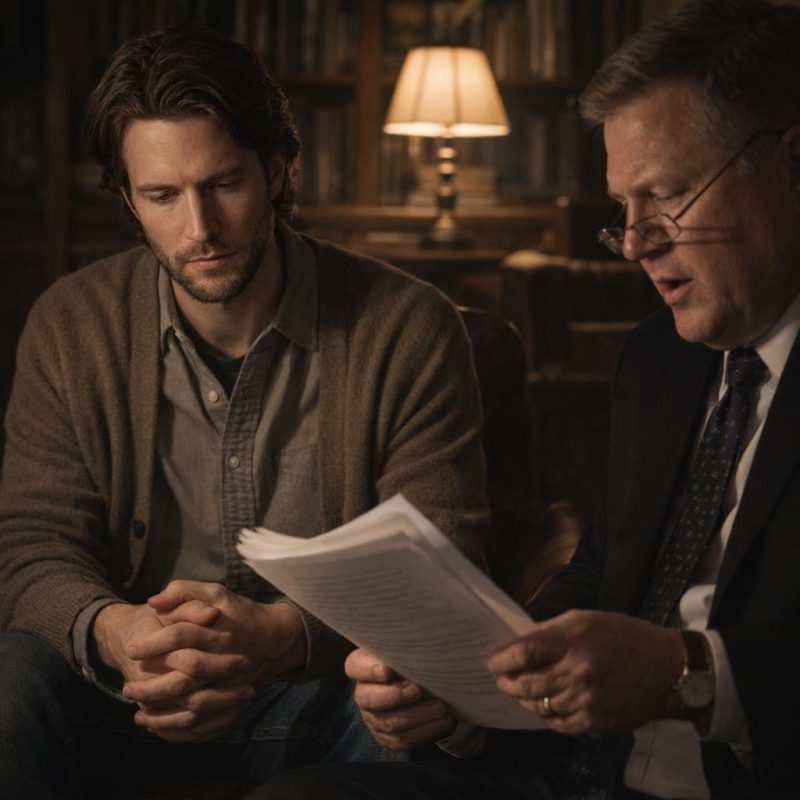 Image by RM AI
The Confession
Harrison didn't pause before the next line. He just read it. William wrote that he had purchased the kerosene three days before, two separate cans from two separate hardware stores on opposite ends of the city, paying cash at both. He wrote that he had spread it methodically — along the eastern wall first, then the partition frames, then back toward the loading bay where the inventory was densest. He described the work as taking less than twenty minutes. He wrote that he had stood at the far end of the alley with a box of matches in his coat pocket, and that his hands had not shaken. I felt the air go out of the room. Not a sound from anyone — not Margaret, not Diane, not my father. Just Harrison's voice, steady and low, reading words that had been sealed away for decades. William wrote that he struck the match on the fourteenth of February, nineteen thirty-three, and touched it to the kerosene-soaked wood at the base of the eastern wall.
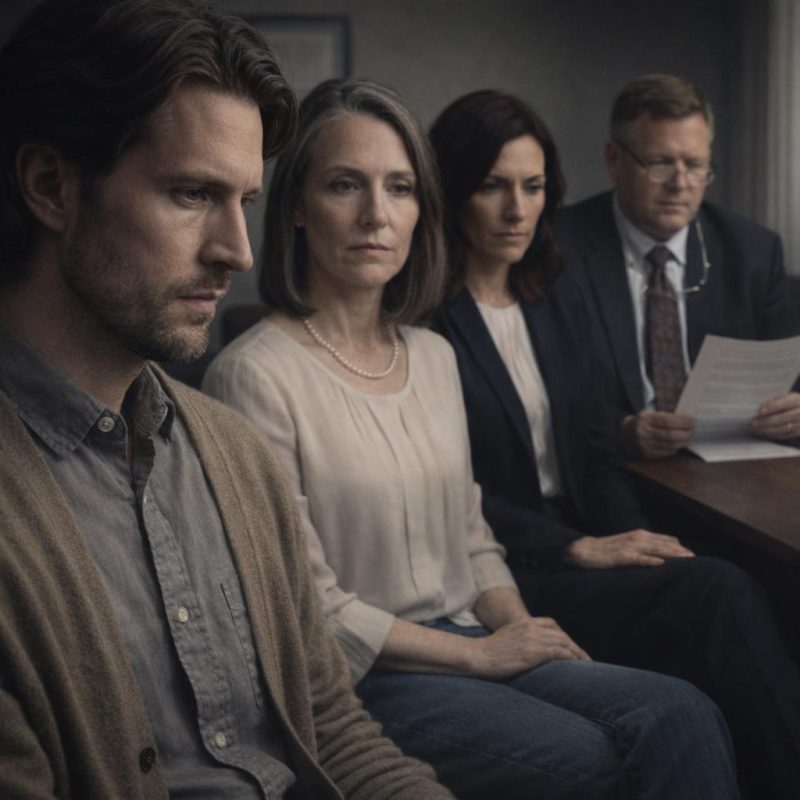 Image by RM AI
The Burning
Harrison kept reading. William wrote that he had walked to the end of the block and turned once to look back. He described the fire as taking hold faster than he had expected — the eastern wall lit within seconds, the partition frames catching almost immediately after. He wrote about the sound, which he said he had not anticipated: a low, structural groan as the interior beams began to give, followed by what he called a rushing, like wind moving through a corridor that no longer had walls. He wrote that he stood there for a long time. He wrote that the fire department arrived while the roof was still standing, and that he watched from the far side of the street as the men worked, and that he had composed his face into something he described only as appropriate. He wrote that he had gone home before the building finished falling. I sat very still in my chair. The image of it wouldn't leave — an old man standing in February cold, watching something he had made burn, his face arranged into the right expression for a man who had lost everything.
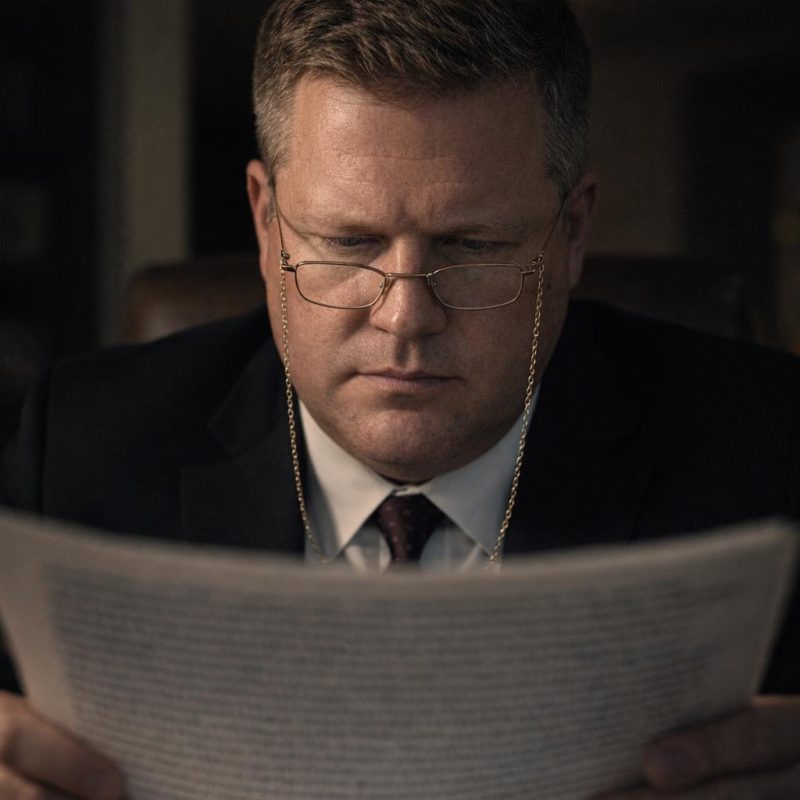 Image by RM AI
The Insurance Claim
The letter moved forward without sentiment. William wrote that the insurance investigator had come to the house twice, and that both times he had answered every question directly and without hesitation. He described the policy — the amount, the underwriter, the terms — with the same precision he had used to describe the kerosene. He wrote that the claim was settled in full within four months, and that he had used the payout to retire the remaining debt on the Halcott Street property and to fund the first expansion of the business into the northern district. He named the year the expansion opened. He named the year the second location followed. I knew those years. I had grown up hearing them cited as proof of what discipline and vision could build — my grandfather's discipline, my grandfather's vision. The dates were on a plaque in the lobby of the main office. I had read that plaque as a child and felt proud. Sitting in Harrison's study, I looked at those years differently now — a February night, a box of matches, a claim settled in full — and the weight of that sat in my chest like something I could not put down.
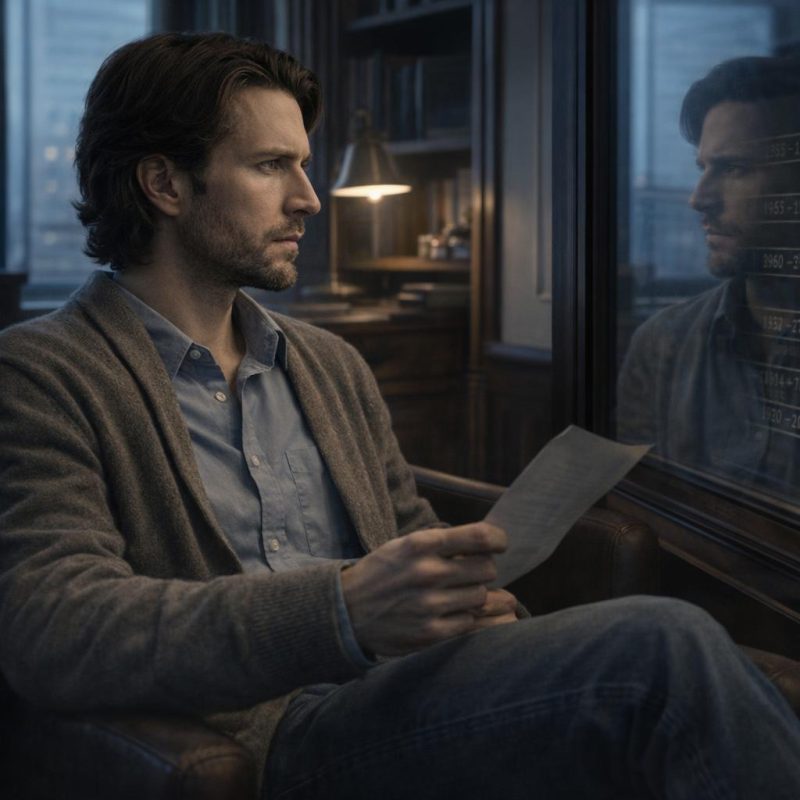 Image by RM AI
Stunned Silence
Harrison lowered the pages. He set them carefully on the desk in front of him and folded his hands over them, and for a moment no one in the room made a sound. The fire in the grate had burned low without anyone noticing. I became aware of the clock on the mantle, ticking. I became aware of my own breathing. Margaret had both hands pressed flat against her collarbone, just below her pearl necklace, and her eyes were fixed on a point somewhere past Harrison's shoulder. I looked at my father. He was sitting very straight, his jaw set, his gaze on the desk. I looked at Harrison, who had not looked up from his folded hands. And then I looked at Diane. She was sitting with one hand gripping the arm of her chair and the other pressed flat against her sternum, and her face had gone the color of old paper — mouth slightly open, eyes wide and unblinking, as though the words were still arriving and she had not yet found a place to put them.
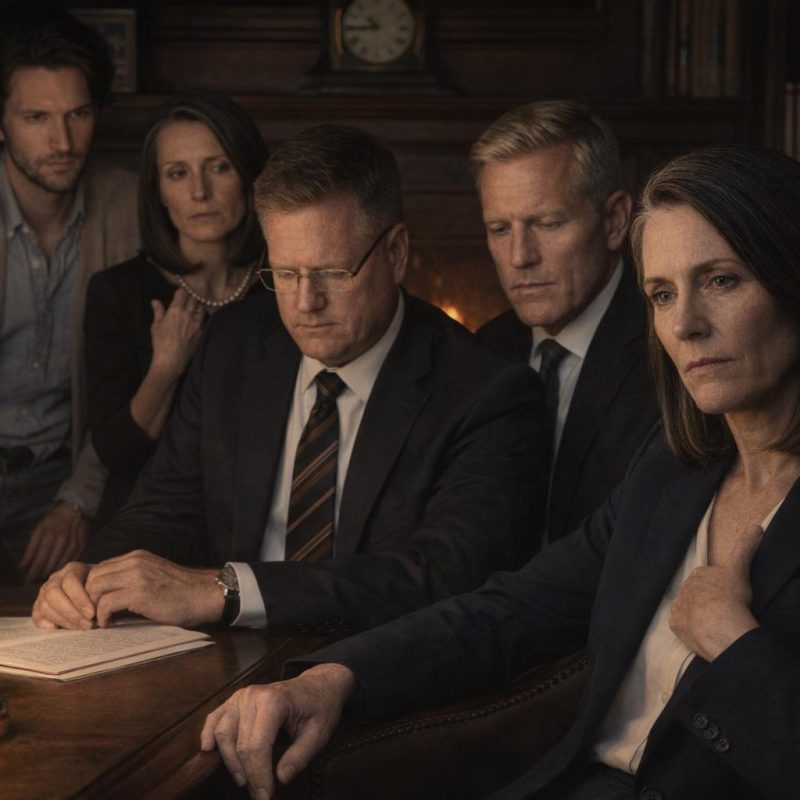 Image by RM AI
The Weight of Truth
I had spent most of my life measuring myself against my grandfather. Not against what he said, exactly, but against what he represented — the idea of him, the shape of the man my father had described so many times that the description had become a kind of architecture I lived inside. Principled. Self-made. A man who had built something real from almost nothing, who had never compromised on what mattered. Those were the words I had grown up with. I had believed them the way you believe in the walls of a house — not because you test them, but because they hold you up and you never think to question it. Sitting in that chair, I tried to find the man I had known in the words Harrison had just read, and I couldn't do it. The grandfather who had taught me to shake hands firmly and look people in the eye had also stood in an alley with kerosene and a box of matches. Both things were true at the same time, and I had no way to hold them together. The grief of it was quieter than I expected — not sharp, but wide, the way a room feels after something has been removed from it that you didn't know you needed.
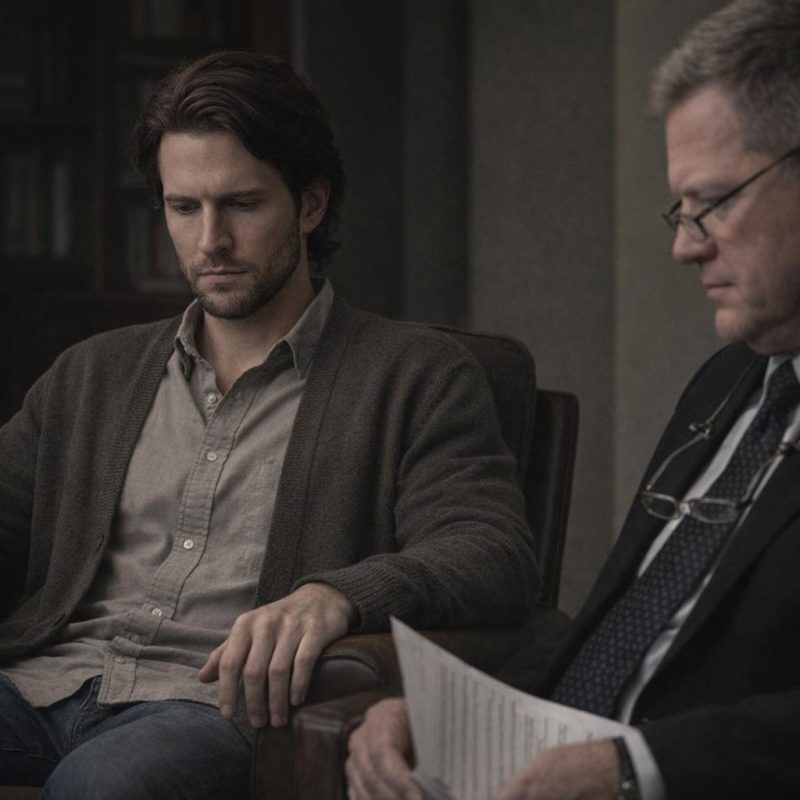 Image by RM AI
Looking for Answers
After a while I made myself look around the room. I needed to see it on someone else's face — needed to know that what I was feeling wasn't just mine, that the ground had shifted for all of us equally. Diane had not moved. Her hand was still pressed to her sternum and her eyes had gone glassy, focused inward on something I couldn't see. She looked like a woman trying to locate a memory and finding the shelf empty. Margaret had lowered her hands from her collarbone and was sitting with them folded in her lap, her face pale and very still, the kind of stillness that comes from working hard not to show what's underneath. Harrison had not looked up from the desk. His composure was professional and complete, the composure of a man who had known this was coming and had prepared himself for it, which was its own kind of information. The reactions in the room were not identical. They were not even close to identical. I sat with that observation without knowing what to do with it, the differences between them settling over me like something I hadn't been meant to notice.
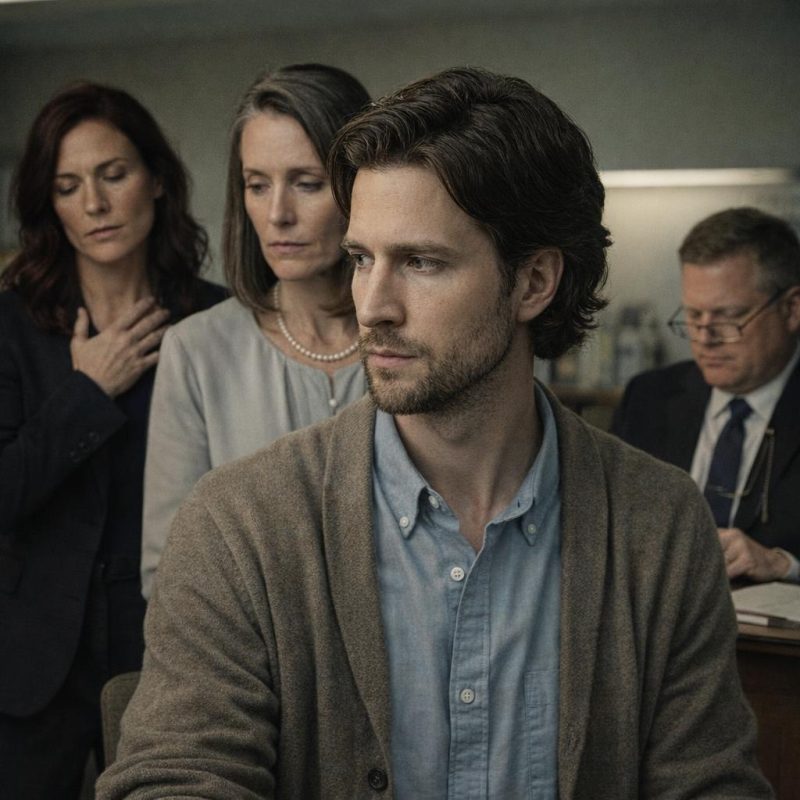 Image by RM AI
My Father's Face
I turned to my father last. I don't know why I saved him — maybe because some part of me wanted to hold onto the version of the room where everyone was equally undone, equally blindsided, for just a few seconds longer. Robert was sitting with his spine very straight, both hands resting on the arms of his chair, his eyes fixed on Harrison. His jaw was tight. The lines around his mouth were deep. I had expected to see something collapse in him — some version of the shock I was feeling, some crack in the surface. He was my grandfather's son. He had built his entire identity on the story of where the family came from. If anyone in that room should have looked shattered, it was him. But the expression on his face wasn't the expression of a man receiving news that had broken something open. It was something else — something I had seen before, in smaller moments, in arguments and confrontations and the rare occasions when my father had been caught without a prepared answer. His knuckles had gone white where his hands gripped the chair arms.
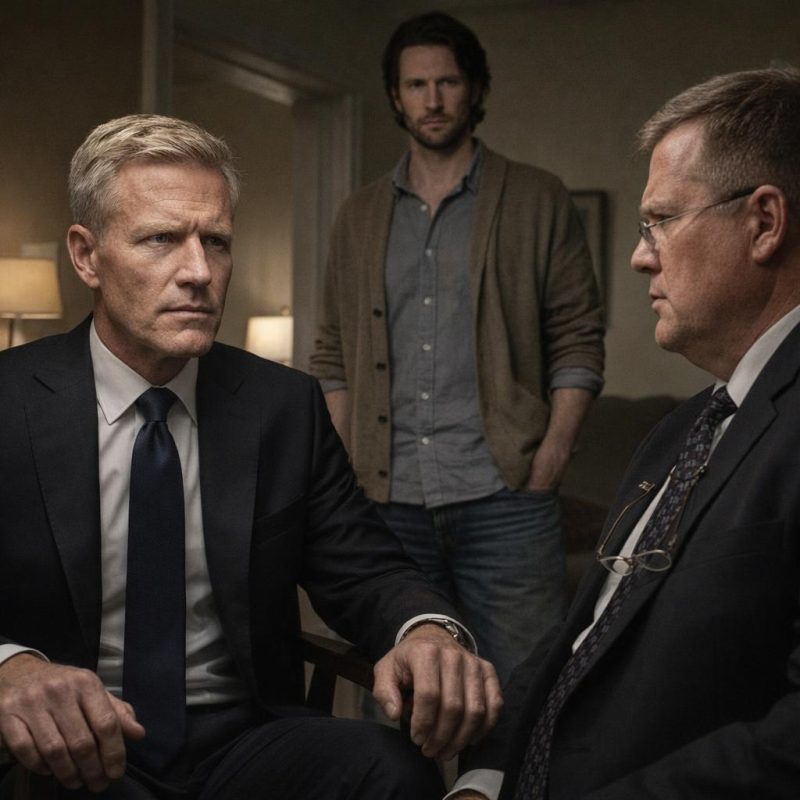 Image by RM AI
The Wrong Kind of Shock
I had seen my father cornered before. Not often — he was too careful for that, too practiced at controlling the terms of any room he walked into. But there had been moments over the years, a handful of them, when something had come at him sideways and his body had responded before his face could catch up. His spine would go rigid. His breathing would slow and flatten. His eyes would fix on a middle distance and stay there, not searching, not processing — just holding. It was the posture of a man managing something, not discovering it. I was looking at that posture now. His jaw was clenched in the particular way it clenched when he was working to keep his expression neutral, not when he was in pain. His hands on the chair arms were not the hands of a man in shock. They were still. Controlled. Gripping with intention rather than trembling with it. I didn't know what it meant. I told myself I didn't know what it meant. But something about the stillness of his hands, the flatness of his breathing, the way his eyes had not moved from Harrison's face — it felt wrong in a way I couldn't name and couldn't dismiss.
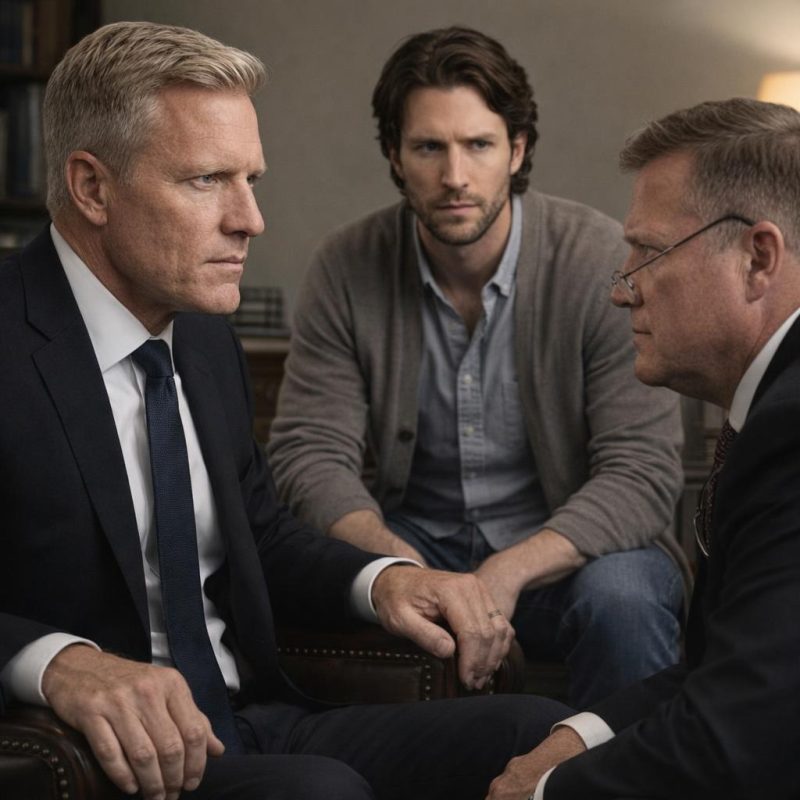 Image by RM AI
Trembling Hands
I kept watching his hands. That was the thing I couldn't stop doing — watching his hands. My father had always had steady hands. Surgeon-steady, my mother used to say, half-joking, half-proud. He could hold a glass of wine at a crowded party and never spill a drop, never betray a thing. But now his fingers were moving against the armrest in a way that didn't look like fidgeting. It was too controlled for fidgeting, too rhythmic — a tap, a pause, a tap again, like he was counting something or steadying something. His breathing was shallow. I could see it in the way his chest barely moved, the way he was taking air in small careful increments rather than letting it come naturally. His eyes had moved once toward the door — just once, just briefly — and then snapped back to Harrison as if he'd caught himself doing something he shouldn't. None of it looked like grief. None of it looked like the particular stunned quality of a person hearing something for the first time. I told myself I was reading too much into it. I told myself I was projecting. Then his hand lifted from the armrest, moved toward his mouth — and stopped.
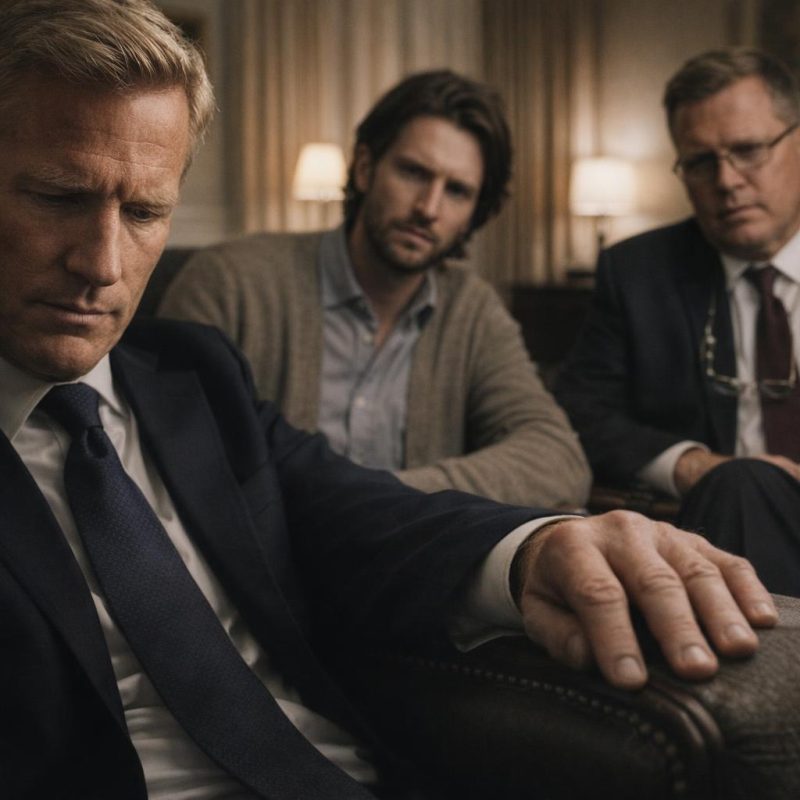 Image by RM AI
Echoes of Earlier Words
My mind kept drifting back to that morning. We had been standing in the kitchen of my grandfather's house, waiting for Harrison to arrive, and my father had said something about legacy. I hadn't thought much of it at the time — he talked about legacy the way other men talked about weather, as a reliable subject when silence became uncomfortable. But the specific words were coming back to me now. He had said that a man's reputation was the only thing that outlasted him. He had said it with a firmness that felt less like philosophy and more like instruction. And then, when Diane had made some offhand comment about old secrets having a way of surfacing, my father had gone very quiet in a way that I had filed away as irritation. He was often irritated by Diane. That was nothing new. But standing in that kitchen, he had also moved to pick up the envelope — William's letter — before Harrison had even suggested it was time. He had said he thought it might be better to review it privately first. Harrison had declined, gently but without room for negotiation. I had thought my father was being controlling. That was his default. But the memory of his hand reaching for that envelope settled over me now with a different kind of weight.
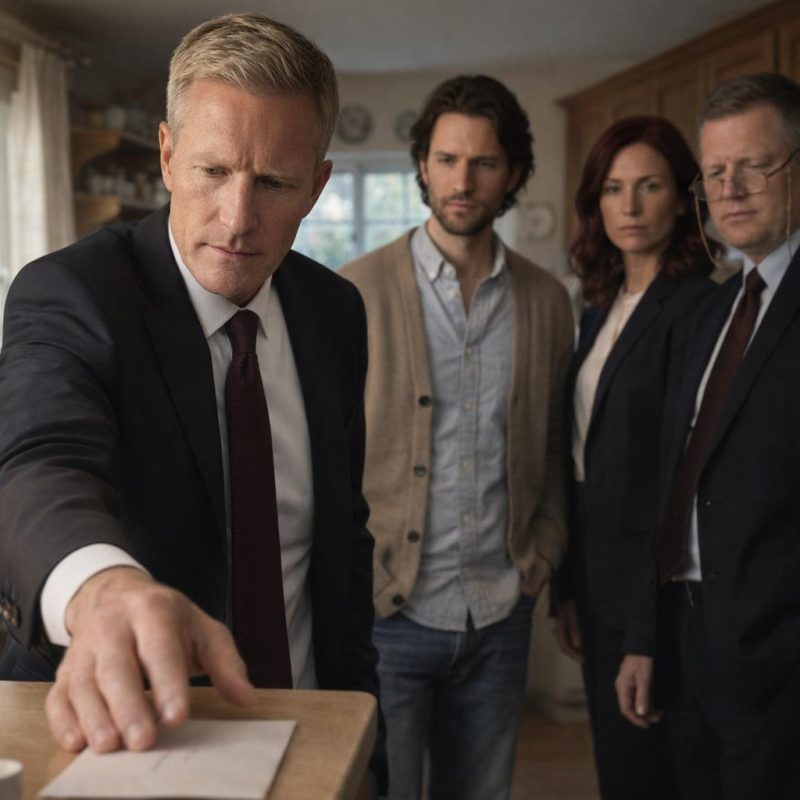 Image by RM AI
The Letter Continues
Harrison turned the page and kept reading. William's voice — or what felt like his voice, filtered through Harrison's careful, measured delivery — shifted in the letter. The early passages had been about the fraud itself, the facts of it, the mechanics. This part was different. This part was about what it cost. My grandfather wrote about the years that followed. He wrote about sitting across from business partners at dinners and feeling the distance between what they believed about him and what he knew to be true. He wrote about the particular exhaustion of maintaining a version of yourself that doesn't match the one you carry privately. He used the word guilt, but only once, and almost clinically, as if naming it too directly would make it harder to keep going. Mostly he wrote about weight. The accumulation of it. The way it didn't diminish with time but simply became familiar, the way a bad knee becomes familiar — always there, always limiting, something you learned to move around rather than through. I found myself listening differently than I had been a few minutes ago. Less like a grandson hearing a confession, more like someone trying to understand what a person does with a thing they cannot put down. Then Harrison read the line about the price of silence — and the room went very still.
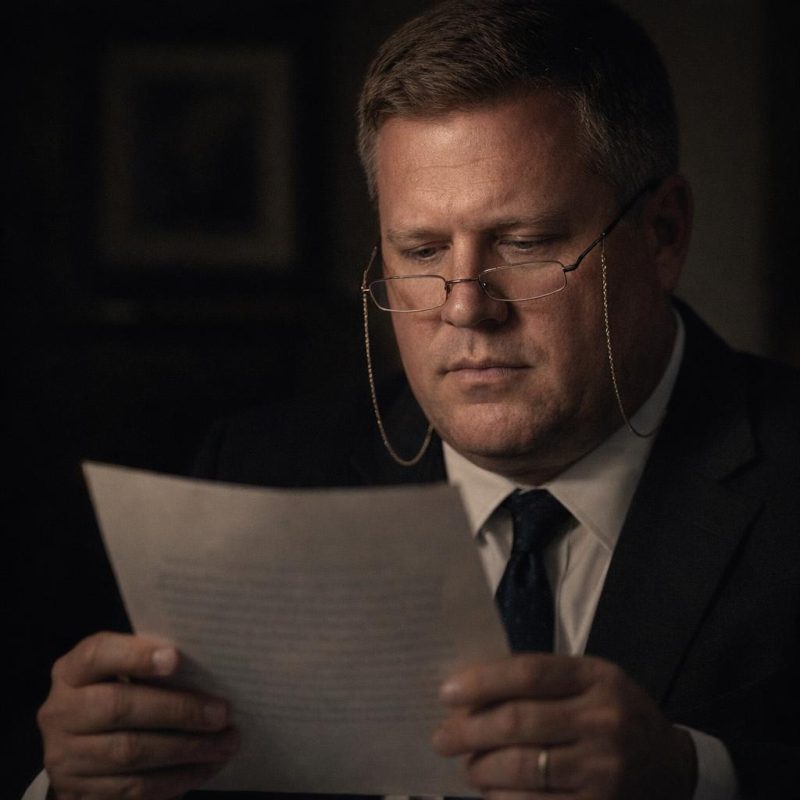 Image by RM AI
Watching My Father Listen
I had stopped listening to the words. I was watching my father instead. Harrison's voice continued, steady and unhurried, but I had let it become background — a current running beneath what I was actually paying attention to. My father sat with his hands now folded in his lap, which was new. He had moved them from the armrest sometime in the last few minutes and I hadn't noticed the transition, only the result. His jaw tightened at certain phrases. Not all of them — not the ones about guilt or reputation or the mechanics of the fraud. Specific ones. Ones I couldn't always catch in time to identify before Harrison had moved on. It was like watching someone brace for a wave they could see coming from a distance. There was no surprise in the bracing. There was only the management of impact. My mother sat beside him with her hands folded in her own lap, her eyes on Harrison, her expression carefully neutral in the way it got when she was working hard not to show something. Diane was watching the letter. I was watching my father. And my father was watching Harrison's hands — not his face, not the room, just the hands holding the pages — with the focused attention of a man waiting for something specific to arrive.
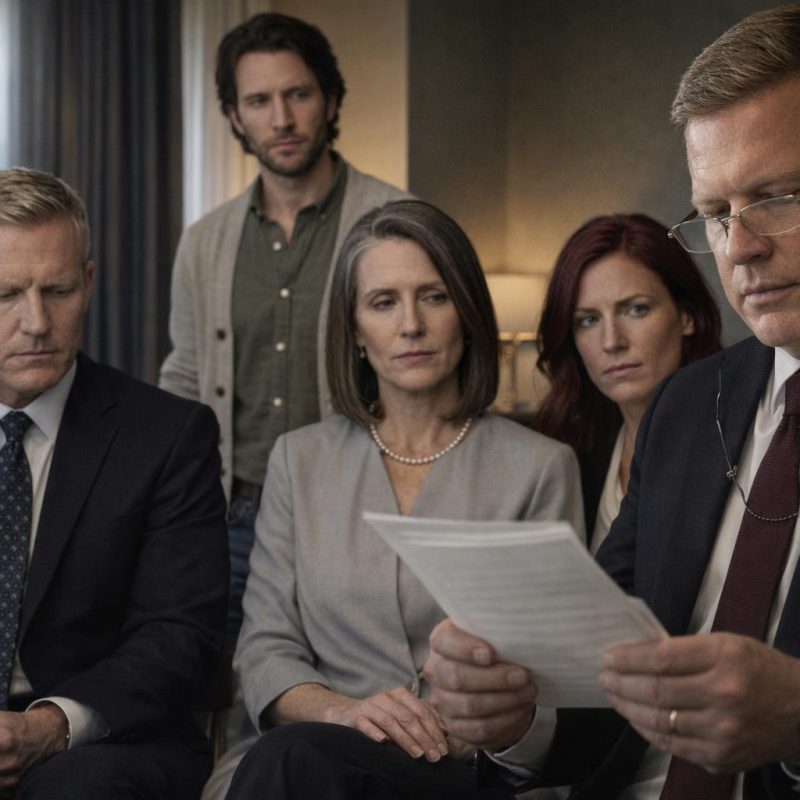 Image by RM AI
Avoiding Eyes
He hadn't looked at any of us. Not once. I had been tracking it — maybe too carefully, maybe in the way you track things when you're trying to find a pattern that explains a feeling you can't otherwise account for. But it was true. From the moment Harrison had resumed reading, my father's gaze had not moved to my face, or my mother's, or Diane's. It stayed on Harrison's hands. The pages specifically. As if the words were safer to watch than the people hearing them. Diane glanced at him at one point — I caught it from the corner of my eye, a quick sideways look, the kind that was asking a question without committing to asking it out loud. My father didn't turn toward her. His eyes didn't shift. He gave no sign that he had registered the look at all, though I couldn't imagine he hadn't felt it. My mother reached over at some point and placed her hand briefly on his knee. He didn't react to that either. He just kept watching Harrison's hands move across the pages, his own face arranged into something that was almost neutral, almost composed — almost, but not quite. There was something underneath it that I couldn't name. Something that felt less like grief and less like shock and more like a man enduring something he had long since accepted he would have to endure.
 Image by RM AI
The Burden of Secrets
William wrote about loneliness in a way I hadn't expected. Not the loneliness of isolation — he had never been isolated, had always been surrounded by family and colleagues and the particular social density that came with his kind of success. He meant something more specific. The loneliness of knowing something that no one else in the room knows. Of sitting at a table full of people who trust you and feeling the gap between what they see and what you are. He wrote that it was the kind of loneliness that didn't get easier with time, only more familiar. He wrote about the temptation to confess — not to a priest, not to a lawyer, but to someone who would simply understand. Someone who could hold the weight of it alongside him without collapsing under it. He wrote that there had been moments, over the years, when the silence had felt less like protection and more like its own kind of punishment. I was listening to all of it and trying to hold it alongside everything else I was carrying — the image of my father's hands, the tightening of his jaw, the way his eyes had not moved from Harrison's pages. And then Harrison's voice shifted slightly, the way it does when a sentence is about to matter, and William wrote that he had not, in the end, carried the burden entirely alone.
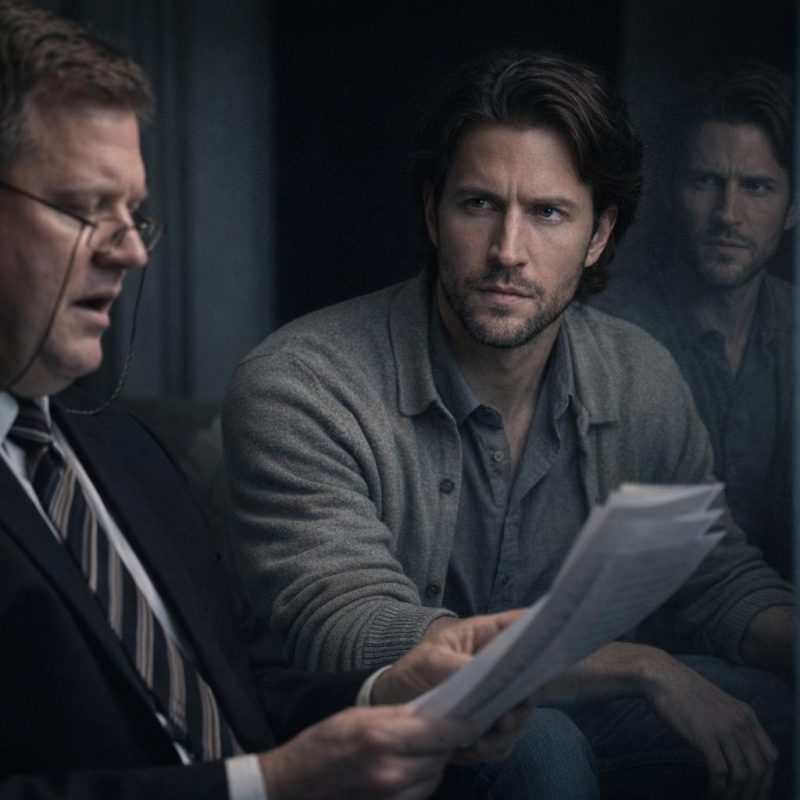 Image by RM AI
A Son's Inheritance
Harrison paused after that sentence. Just a beat — barely a breath — and then he continued. William had written that there came a point when the weight of it had become more than one person could hold without it showing. He had chosen, he wrote, to tell his son. He named him. Robert. He wrote that the conversation had happened years before — he didn't specify how many, only that it was long enough ago that Robert had been given time to decide what to do with the knowledge. He wrote that he had not asked Robert to carry it, only to understand it. That he had needed, at least once, to say the true thing out loud to someone who would not walk away. The room did not make a sound. I was aware of Diane going very still beside me. I was aware of my mother's hand lifting from my father's knee. I was aware of my father himself — the way his shoulders dropped a fraction, almost imperceptibly, as if something he had been holding against had finally arrived. Harrison kept reading, his voice unchanged, as if the sentence were no different from any other. But it wasn't. The letter had just told us that my father had known. Not today. Not for the first time, sitting in this room. For years, the truth had lived in him alongside everything else.
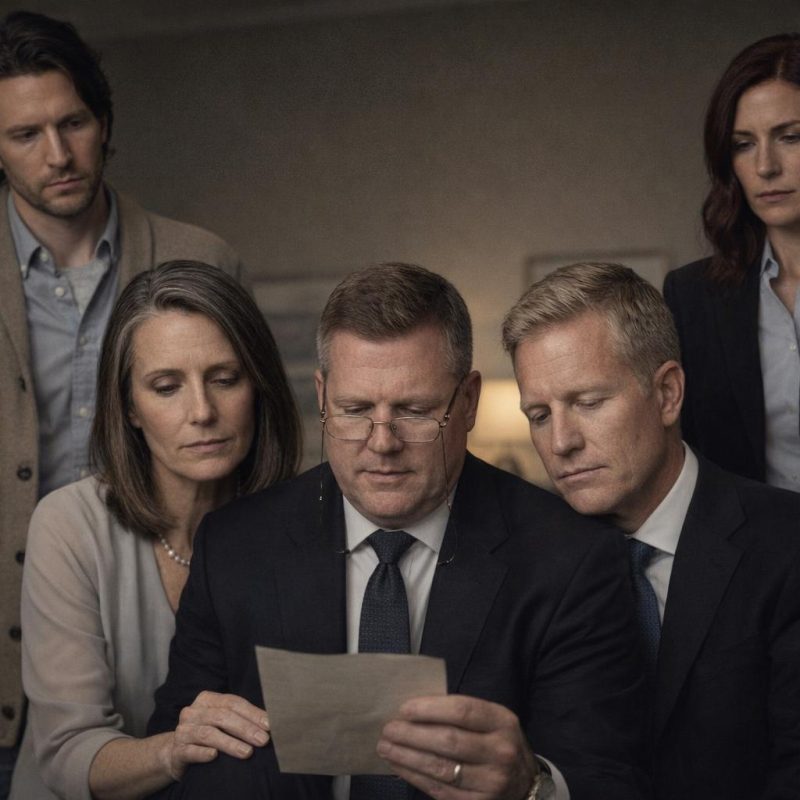 Image by RM AI
The Fear Makes Sense
I sat with it. That was all I could do — sit with it and let it move through me slowly, the way cold water moves through you when you've been standing in it too long. The morning kept replaying. My father reaching for the envelope before Harrison had suggested it was time. His hand on the letter, his voice saying it might be better to review it privately. I had thought he was being controlling. That was the explanation I had reached for because it was the one that fit the version of him I already had. But it wasn't control. Or it wasn't only control. He had known what was in that letter. He had known, and he had come here anyway, and he had sat in this chair and listened to Harrison read it aloud to all of us, and his hands had trembled against the armrest, and his eyes had not moved from the pages, and none of it had been shock. It had been dread. The particular, private dread of a man waiting for a door to open that he had spent years keeping closed. I looked at him now — at the set of his shoulders, at the careful blankness of his face — and felt something shift in my chest that I didn't have a clean word for. Not anger yet. Not grief exactly. Something heavier than both, and quieter.
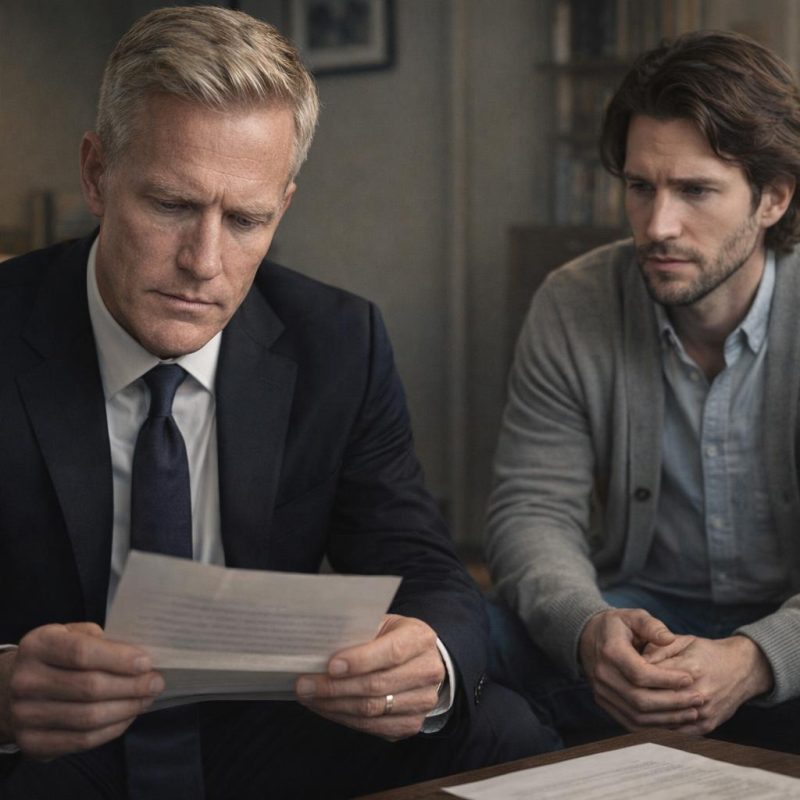 Image by RM AI
The Fear Becomes Visible
Harrison kept reading, and I kept watching my father. I couldn't help it. The words coming off those pages were doing something to him that I had never seen anything do before — not a business setback, not a family argument, not even my grandmother's funeral. His color was going. Not gradually, the way color leaves a face when someone is tired or cold, but in a way that looked almost mechanical, like something underneath was being switched off. His breathing had changed too. I could see it in the rise and fall of his chest, slower and more deliberate, the way a person breathes when they are trying very hard not to show that they are struggling. Diane glanced at him once, then again, and I saw her jaw tighten. Margaret had her hands folded in her lap and her eyes fixed somewhere past Harrison's shoulder. None of us said anything. Harrison's voice moved through the room, steady and unhurried, and my father sat in his chair and went pale, and then he reached for his water glass — and his hand was shaking.
 Image by RM AI
Replaying the Morning
I had been in that room for hours, but my mind kept pulling me back to the morning. The drive over, my father in the passenger seat of his own car because he had insisted on riding together, talking the whole way about William's character. About integrity. About what it meant to come from people who had built something real. I had listened and nodded and felt the familiar low-grade pressure of not quite measuring up to a standard I couldn't fully see. That was how it always went with him. The standard was never stated plainly — it was implied, held up like a lamp just far enough ahead that you were always walking toward it and never arriving. And now I sat here and turned those words over in my mind, and they felt different. Not wrong exactly — I couldn't say that yet — but heavier. Weighted in a way I hadn't noticed at the time. He had talked about William's legacy for twenty minutes on that drive. Twenty minutes of careful, specific praise. I kept thinking about the way he had reached for the envelope before Harrison had even suggested it was time, and I couldn't quite make the pieces lie flat.
 Image by RM AI
Questions Never Asked
There was a summer — I must have been fifteen or sixteen — when I had gone through a phase of wanting to know everything about where the family money had come from. The way teenagers do, half genuine curiosity and half a need to locate yourself in something larger. I had asked my father about the Depression-era story, the one about William starting with nothing and building the business through sheer discipline and moral clarity. My father had answered smoothly, the way he always answered things he had thought about before, and I had let it go because the answer sounded complete. But I remembered asking again, a year or two later, pressing a little harder because something in the first answer had felt too polished, too settled. And that time his voice had changed. Not loudly — my father never raised his voice, that wasn't his style — but something in it had pulled tight, and he had looked at me with those sharp blue eyes and said that some questions were better left to people who had actually lived through the era in question. I had felt embarrassed and dropped it. I hadn't thought about that moment in years. Sitting here now, I thought about almost nothing else.
 Image by RM AI
The Weight of Silence
Twenty years. That was the number I kept arriving at. William had been gone for twenty years, and if my father had known — and the evidence of his face and his hands and his dread made it hard to believe he hadn't — then he had carried this for twenty years through every family dinner, every toast to William's memory, every conversation in which he had held his father up as the standard by which the rest of us should measure ourselves. I thought about my grandfather's birthday celebrations, the ones we had kept holding even after he was gone, the framed photographs on my father's office wall, the way Robert had spoken at the memorial service about a man of unimpeachable character. All of it had happened inside this silence. I didn't know yet what to call what my father had done with what he knew. I wasn't ready to name it. But the silence itself — the sheer duration of it, the weight of twenty years of choosing not to speak — sat in my chest like something I had swallowed wrong and couldn't move past. Harrison had been reading for less than an hour. My father had been sitting with this for two decades.
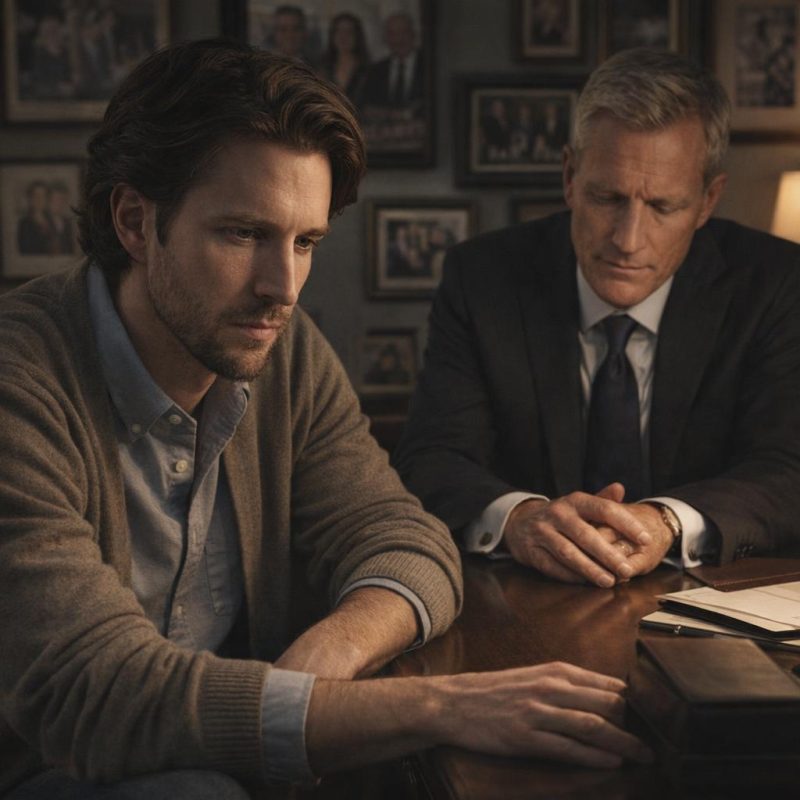 Image by RM AI
The Architect of the Lie
And then it came together. Not slowly, not in pieces — all at once, the way a shape you've been staring at finally resolves and you can't unsee it. My father hadn't just known. He had worked. Every speech about William's integrity, every deflection when I asked questions, every careful emphasis on legacy and character and what it meant to come from people who had built something real — none of it had been incidental. He had constructed it. Year after year, gathering, dinner after dinner, he had taken the story of a man who had committed fraud and turned it into a story of moral excellence, and he had done it with the patience and precision of someone who understood exactly what he was protecting. The morning's speech in the car wasn't pride. It was maintenance. The anger when I pressed him as a teenager wasn't defensiveness — it was a door being closed before I could see what was behind it. I looked at my father now, sitting rigid in his chair, and I understood that the man I had spent my entire life failing to measure up to had built the measuring stick himself, out of something that was never true. And I understood something else: he had let me keep trying.
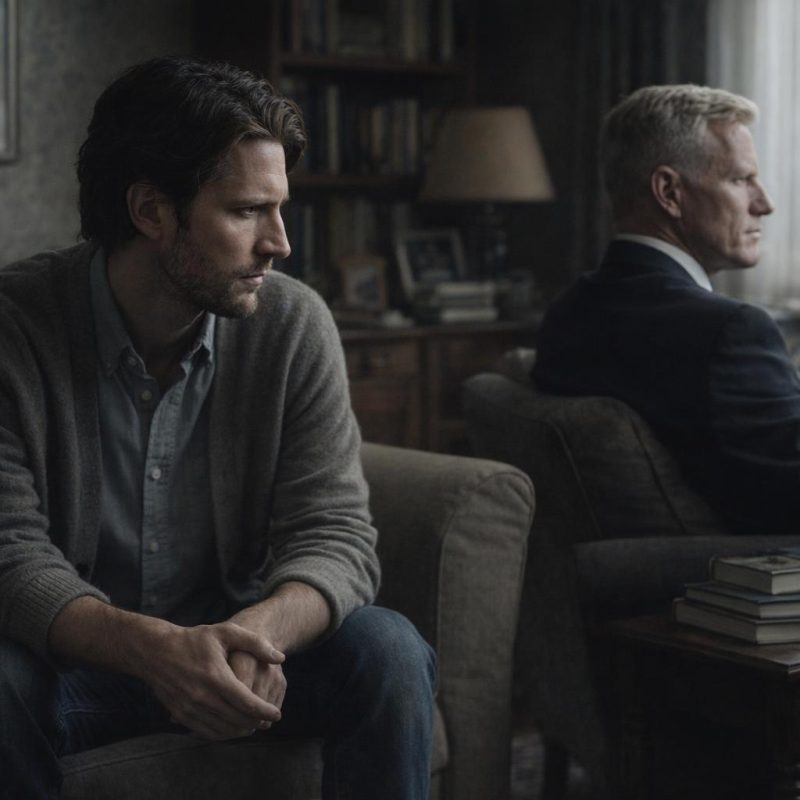 Image by RM AI
The Letter's End
Harrison's voice slowed as he reached the final page. I could hear it in the way he paced the sentences — more deliberate, more careful, the way a person reads when they know the words are about to run out. William's final paragraphs were an apology. He wrote that he understood the burden he was leaving behind. He wrote that he hoped, in time, his family might find it in themselves to extend him the grace he had not always extended to others. He wrote that he had lived the second half of his life trying to be the man the first half had failed to produce, and that he hoped that counted for something. Harrison set the pages down on the table in front of him, aligned them with two careful taps against the wood, and removed his reading glasses. The room was completely silent. I sat with William's words still moving through me and felt something I hadn't expected — not relief, not grief, not even anger. Just a vast, flat emptiness where the story of my family used to be. Then Harrison folded his hands and looked up, and my father said, quietly and without inflection, that he would like to ask for forgiveness.
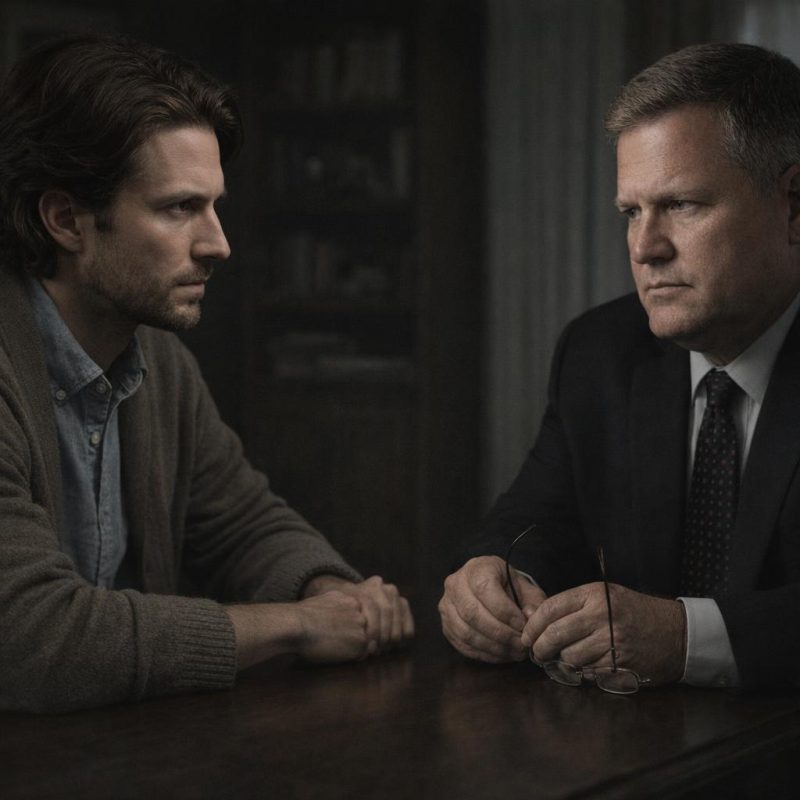 Image by RM AI
Damage Control
My father cleared his throat. He straightened in his chair — I watched the familiar squaring of his shoulders, the small physical reset he always performed before he spoke in a room where he felt his authority was at stake. He said that what we had heard was difficult. He said that William had been a complicated man, as most men of his generation were, and that the letter represented one chapter of a much longer life. He said that the business William had built, whatever its origins, had provided for three generations of this family, and that the values William had demonstrated in his later years were the values that had shaped all of them. His voice was measured and low. He chose each word the way you choose footing on uncertain ground. Margaret nodded once, almost imperceptibly, beside him. Diane said nothing. I said nothing. Harrison said nothing. My father kept talking, filling the silence with careful sentences about context and legacy and the complexity of human character, and the words were not wrong exactly — they were just so practiced, so precisely weighted, that they landed in the room and dissolved without leaving anything behind.
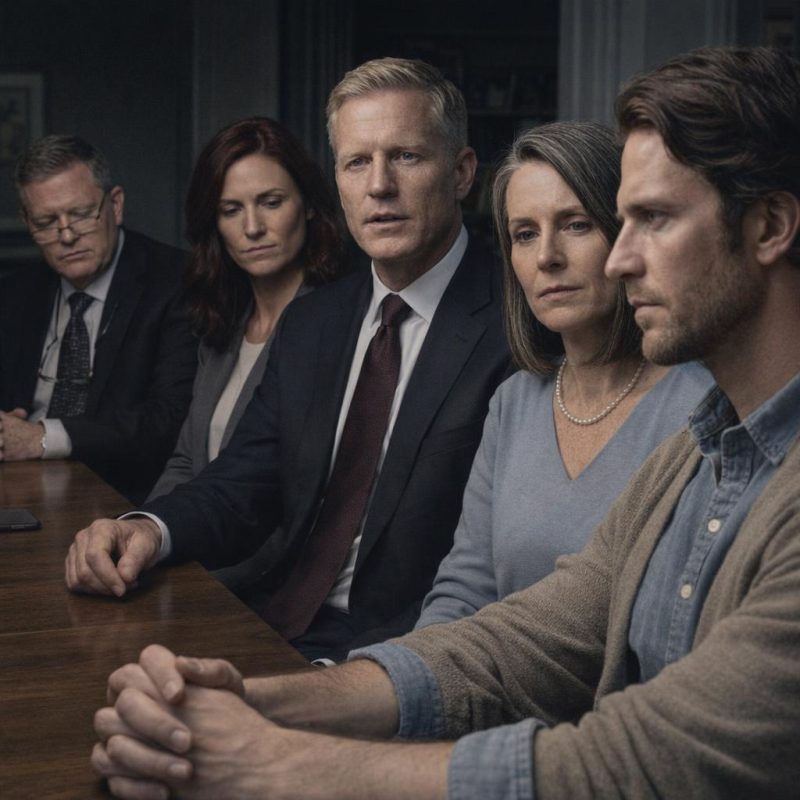 Image by RM AI
Watching the Performance
I watched him work. That was the only word for it — work. He was selecting, emphasizing, minimizing, the way he had always done in family conversations that threatened to go somewhere he hadn't approved in advance. I had sat across from this version of my father at kitchen tables and holiday dinners and business discussions my whole life, and I had always thought it was just how he was — thorough, careful, precise. A man who took language seriously. But I could see the mechanism now in a way I never had before. The way he leaned slightly forward when he wanted a point to land with authority. The way he let a pause sit before a sentence he needed you to accept. The way he framed William's fraud as ancient history and William's later life as the real text, the one that should be read and remembered. Every technique was familiar. I had absorbed them without knowing I was absorbing them, had probably used some of them myself without recognizing where they came from. My father finished a sentence and looked around the room, and the look on his face was the look of a man who had given this particular speech before, in one form or another, for a very long time.
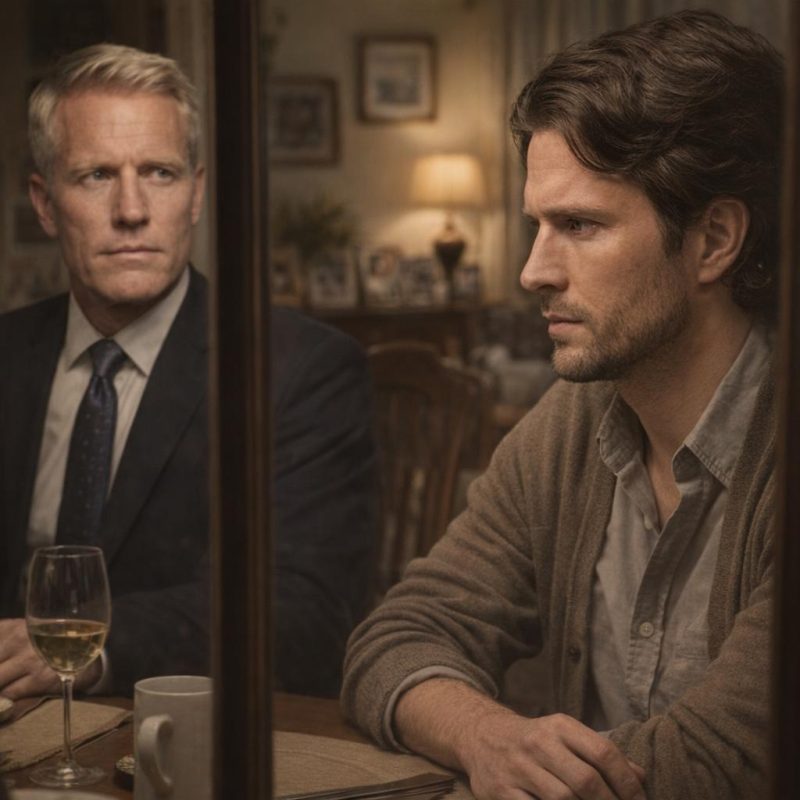 Image by RM AI
The Room Erupts
My father finished his sentence and let the silence settle the way he always did — like punctuation he had placed there himself. And then Diane cut through it. She didn't raise her voice. She didn't need to. She just leaned forward in her chair and looked at Robert with the kind of steadiness that made the room feel smaller, and she said, "When did you know?" My father blinked. It was the smallest thing, barely a flicker, but I had been watching his face for thirty years and I had never seen him blink at a question before. Margaret's hands went still in her lap. Harrison looked down at the folder in front of him. The rest of the room seemed to contract around those three words, and I felt something loosen in my chest — the particular relief of a question finally being asked out loud by someone who wasn't going to accept a non-answer. My father opened his mouth. Diane didn't move. Her voice pulled flat and even as she leaned in closer: "Not when he died. When did you actually know about what he did?" — and I heard the question land in the room like something that could not be taken back.
 Image by RM AI
Different Times
My father straightened in his chair and took a breath, and I recognized the breath — the one that preceded a reframe. He talked about the Depression. He talked about desperation and impossible choices and men doing what they had to do to keep their families alive. He said the word "context" three times. He said that judging the past by the standards of the present was a kind of arrogance, that William had spent the rest of his life building something real and honest, that the man who had raised him was not the same man who had made one terrible decision in 1931. He said "one terrible decision" like the phrase had been worn smooth from use. Diane didn't interrupt. She just watched him. I watched him too, and I kept waiting for something in his argument to land with weight, for some sentence to feel like it was carrying actual truth rather than the shape of truth. He finished and looked around the room with the expression of a man who had made a reasonable case. The words sat in the air between us, and not one of them held.
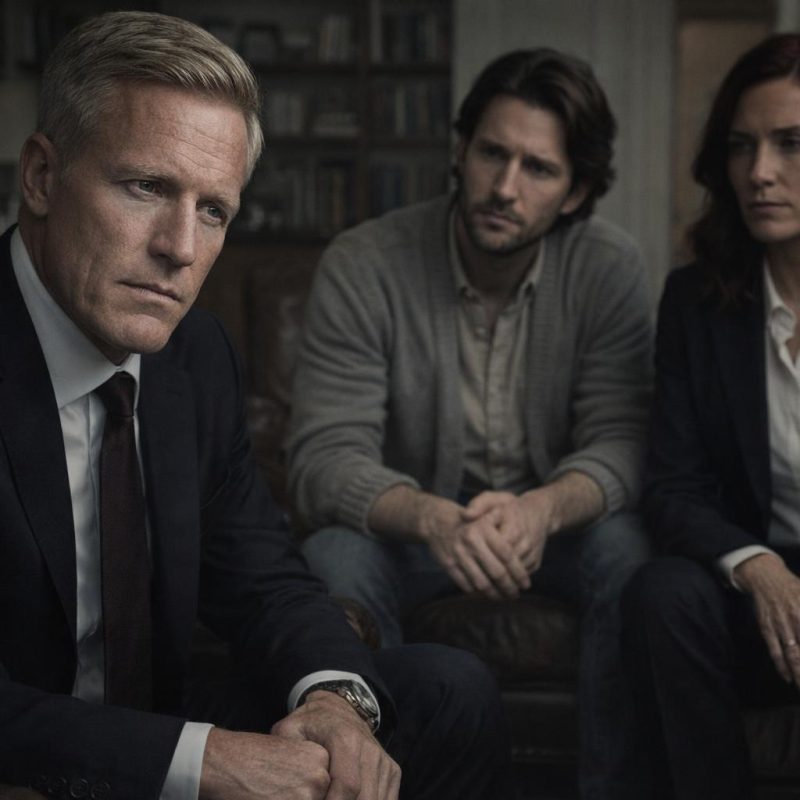 Image by RM AI
The Question
The room stayed quiet for a moment after my father stopped talking. I had been sitting with my hands clasped in my lap, the way I always did when I was trying to hold something in, and I heard myself speak before I had fully decided to. My voice came out steadier than I expected. I asked him why. Not why William had done it — the letter had answered that. I asked why he had never told us. Why, for every year of my life that I could remember, he had stood at the head of tables and given speeches about integrity and character and the kind of man his father had been, knowing what he knew. I asked him how many times he had looked me in the eye and talked about William's legacy as though it were something I should measure myself against, something I was failing to live up to. My father looked at me the way he sometimes did when I surprised him — not with warmth, but with a kind of recalibration, like he was adjusting his estimate of what I was capable of. The question sat between us in the silence, and I did not look away.
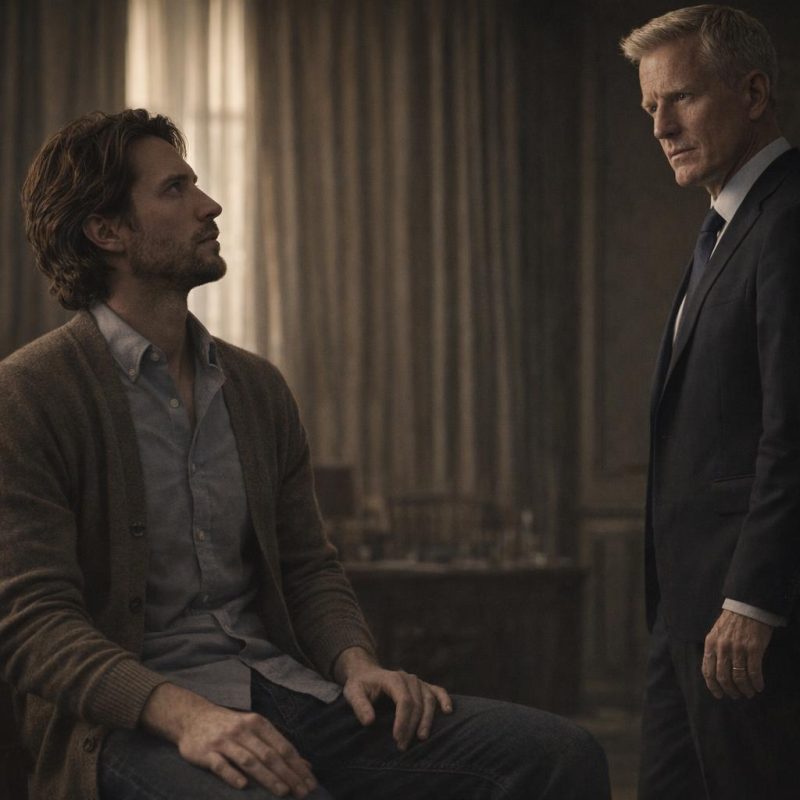 Image by RM AI
Legacy and Lies
My father set his hands flat on the table. He talked about the business. He talked about the four hundred people who had worked for the company at its peak, the families who depended on those paychecks, the suppliers and the creditors and the community that had grown up around what William had built. He said that the truth, released at the wrong moment, could have unraveled all of it. He said he had made a choice — the word "choice" delivered with a kind of deliberate weight, as though choosing made it principled — to protect what mattered. He said he had carried it alone so that the rest of us wouldn't have to. He said "sacrifice" once, quietly, and I watched Diane's jaw tighten across the table. Margaret was looking at her hands. Harrison had not moved. My father's voice was measured and careful and it carried the cadence of a man who had rehearsed this argument in his own head for a very long time, who had made peace with it in private and was now presenting the finished version. I listened to every word. None of it touched the thing he was actually being asked to answer.
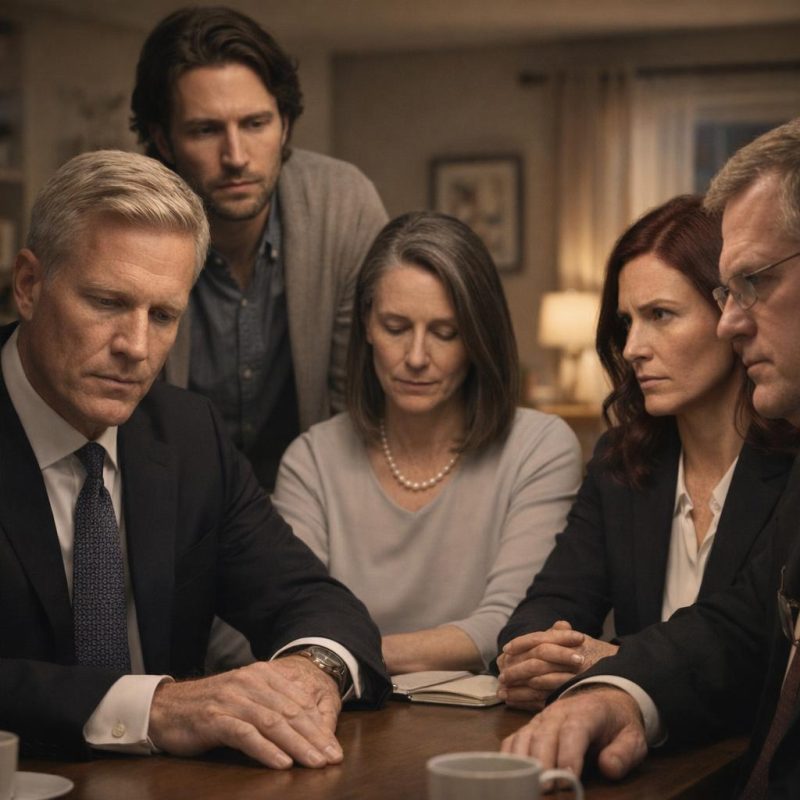 Image by RM AI
The Accusation
I let him finish. Then I told him he hadn't just stayed quiet. I said it plainly, without raising my voice, because I didn't need to. I reminded him of the speech he gave at William's memorial — the one about moral clarity, about a life lived without compromise. I reminded him of the framed quote he had hung in his office, attributed to his father, about the cost of honesty. I reminded him of every conversation in which he had held William up as the standard I was supposed to reach, the benchmark against which my own choices were measured and found wanting. I told him those weren't acts of silence. Silence would have been saying nothing. What he had done was the opposite — he had built something, added to it year after year, polished it and presented it and used it. He had handed me a version of my grandfather that he had constructed himself, and he had watched me spend my whole life trying to be worthy of a man who had never existed. Diane was very still across the table. Margaret made a small sound that wasn't quite a word. My father looked at me, and for the first time in my life, he had nothing ready to say.
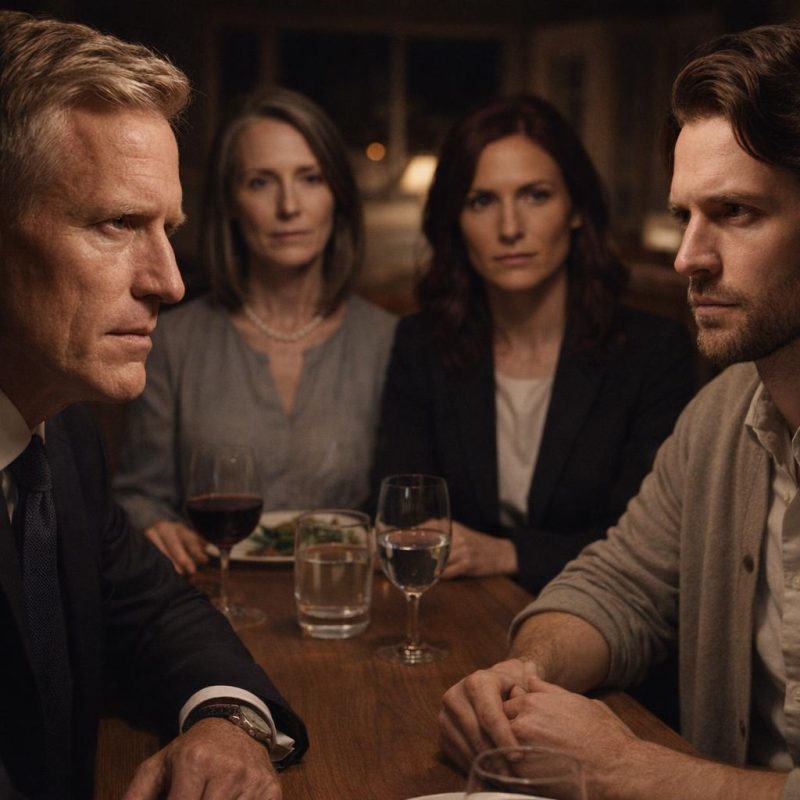 Image by RM AI
The Crack
The silence lasted maybe three seconds. Then my father's face changed. The color came up in his neck first, then his jaw tightened, and his hands — those careful, controlled hands that had never once betrayed him in a boardroom — closed into fists on the table. He said my name. Not the way a father says a child's name with warmth, but the way he said it when I was sixteen and had done something he considered beneath the family. His voice rose. Not a shout — my father did not shout — but the volume climbed in a way I had never heard from him in a room full of people, and the careful cadence he had maintained all afternoon cracked open. He said I had no idea what he had carried. He said I was standing in judgment of decisions I hadn't been alive to make. His eyes were bright in a way that wasn't anger alone, and underneath the flush and the clenched hands and the voice that had finally lost its polish, there was something else moving across his face — something I had never once seen there before, in all the years I had been his son.
 Image by RM AI
The Admission
He stopped. He pressed both hands flat on the table and looked down at them, and the room held its breath. When he looked up, the flush was still there but the volume was gone. His voice came out low and stripped of its usual architecture. He said William had told him the truth in 1987. He said he had been thirty-two years old, sitting in his father's study, and William had laid it out for him — all of it — and asked him what he wanted to do with it. My father said he had made a decision that same afternoon and had not revisited it. He said the company was growing, the family was stable, and the truth would have served no one. He said he had kept it because keeping it was the right thing to do. He said "right" the way people say it when they mean "necessary" and have spent long enough telling themselves the two words are the same. Diane asked him if he understood what he had taken from us. My father looked at her, then at me, and his voice came back flat and certain: "I kept this family standing. That was my job, and I did it."
 Image by RM AI
The Justification
He wasn't finished. He straightened in his chair — the old posture returning, the shoulders squaring — and he said the business had employed three hundred people at its height. He said those were real families, real mortgages, real children in real schools, and that a scandal built on something that had happened before most of them were born would have cost them everything. He said the truth was a luxury that people with nothing to lose could afford. He said he had protected us — all of us, whether we understood it or not — from a pain that would have been pointless and permanent. He said William's later life was real. He said the integrity was real. He said one bad act at the beginning did not erase forty years of genuine work. Margaret was looking at the table. Diane had gone very still. Harrison had not moved in several minutes. My father looked around the room the way he always did when he believed he had made an unanswerable case, and then he said, quietly and without hesitation, that if he had to make the same choice again tomorrow, he would make it the same way.
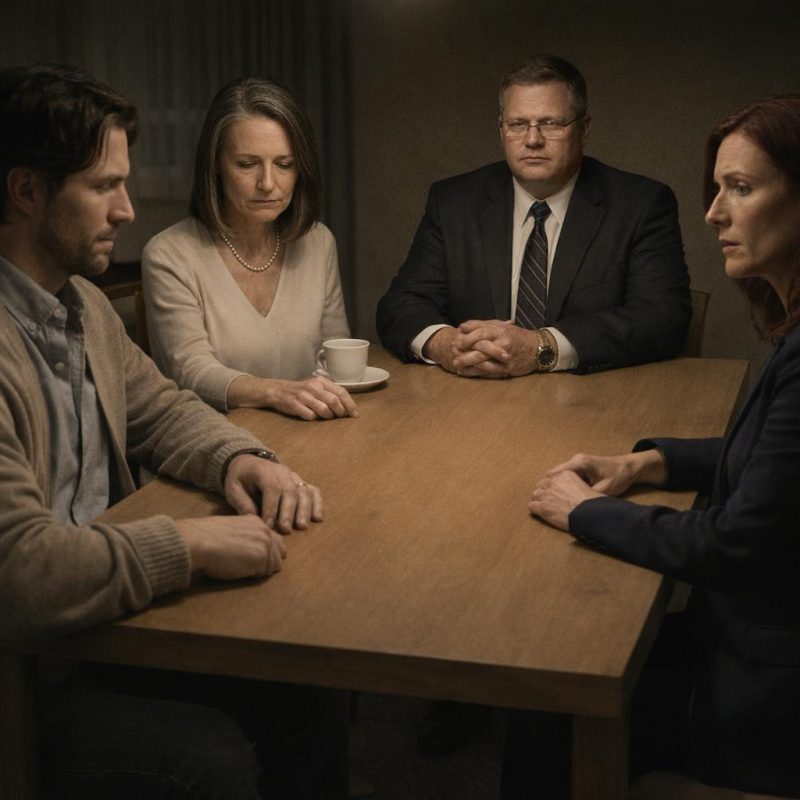 Image by RM AI
The Foundation Crumbles
My father finished speaking and the room stayed quiet. I sat there looking at him — really looking, maybe for the first time — and I thought about every conversation we had ever had about integrity. Every lecture about doing things the right way. Every moment he had looked at me with that particular disappointment, the kind that said I had fallen short of something important, something the men in our family understood instinctively. I had spent my whole life measuring myself against a standard he set, and he had set it in the shadow of a man who had committed fraud and buried it. The lessons were real. The delivery was sincere. And none of it — not one word of it — had been built on what he said it was built on. My grandfather's reputation was a story my father had chosen to keep telling. My feelings of inadequacy were the tax I paid for believing it. Every time I had felt like I wasn't enough, I was measuring myself against something that had never existed. I looked at my father's hands, flat on the desk, steady and certain, and I understood that the performance had never stopped — it was still happening, right now, in this room.
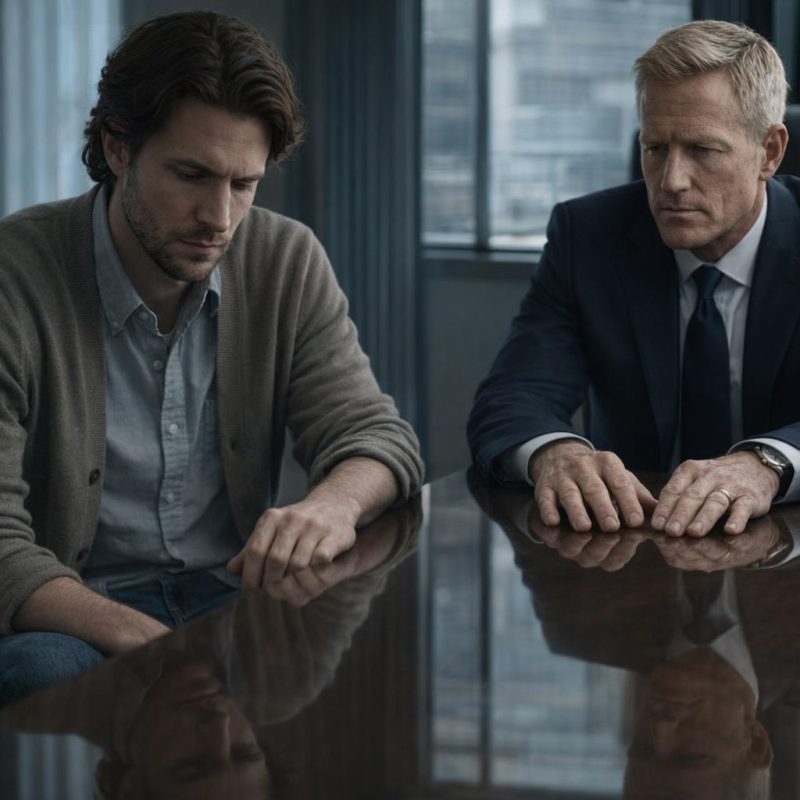 Image by RM AI
The Dispersal
Diane stood first. She didn't say anything to my father — she picked up her bag, looked once at Harrison, and walked out. The sound of her footsteps in the hallway faded and then the house was quieter than it had been all day. Margaret stayed in her chair with her hands folded in her lap, her eyes fixed on the middle distance, the pearl necklace catching the light the way it always did at family dinners, at holidays, at every occasion where we had all agreed, without saying so, to keep things smooth. Harrison gathered his documents slowly, sliding papers into his briefcase with the careful movements of a man who had been holding something heavy for a very long time and was only now setting it down. My father remained at the desk. He didn't look up when Harrison left, or when I pushed back my chair. I stood in the doorway for a moment and looked at him sitting there alone in the room where my grandfather's portrait had hung for as long as I could remember, and the distance between us felt less like anger than like geography — something vast and permanent that had always been there, only now I could see it clearly.
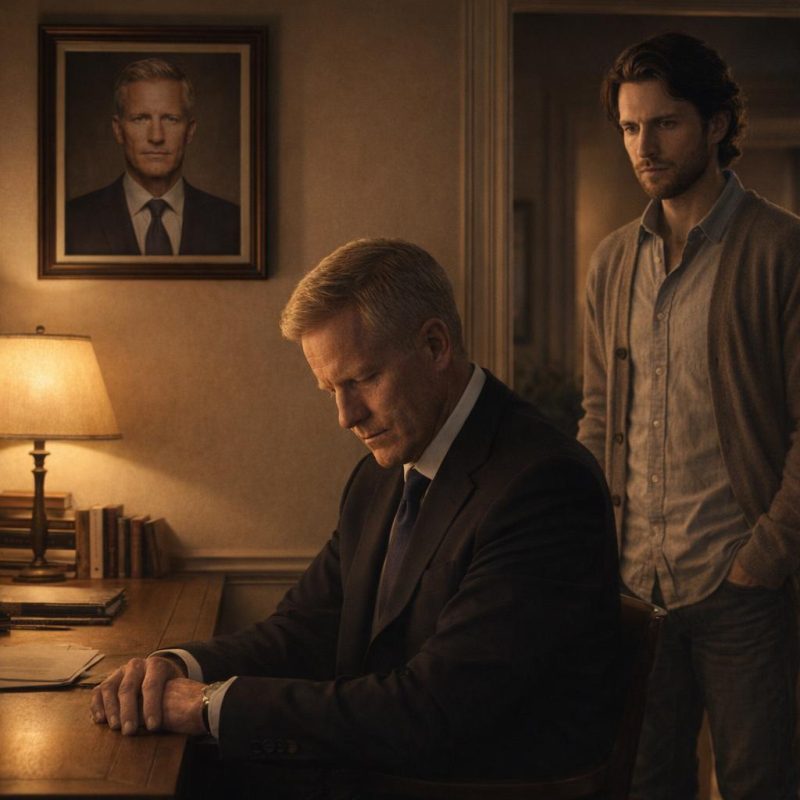 Image by RM AI
Shared Deception
Claire was waiting in the kitchen. She didn't ask what had happened — she just looked at me and pulled out the chair beside her, and I sat down. I told her most of it, not in order, just the pieces as they came. The fraud. My grandfather's letter. My father's voice when he said he would make the same choice again. She listened without interrupting, and when I stopped talking the kitchen was very still. I kept thinking about the word legacy — how many times I had heard it in that house, how much weight it had carried, how much weight I had let it put on me. The legacy wasn't excellence. It wasn't the three hundred jobs or the forty years of genuine work my father had cited like evidence. It was a decision made in the dark, passed from one man to the next, dressed up in the language of honor so that no one would look too closely at what was underneath. My grandfather had built something on a lie. My father had spent his life making sure the lie held. And I had spent my life trying to be worthy of both of them, measuring myself against a story that had been carefully maintained so I would never think to question it. I sat with that for a long time, and the kitchen held the quiet around me.
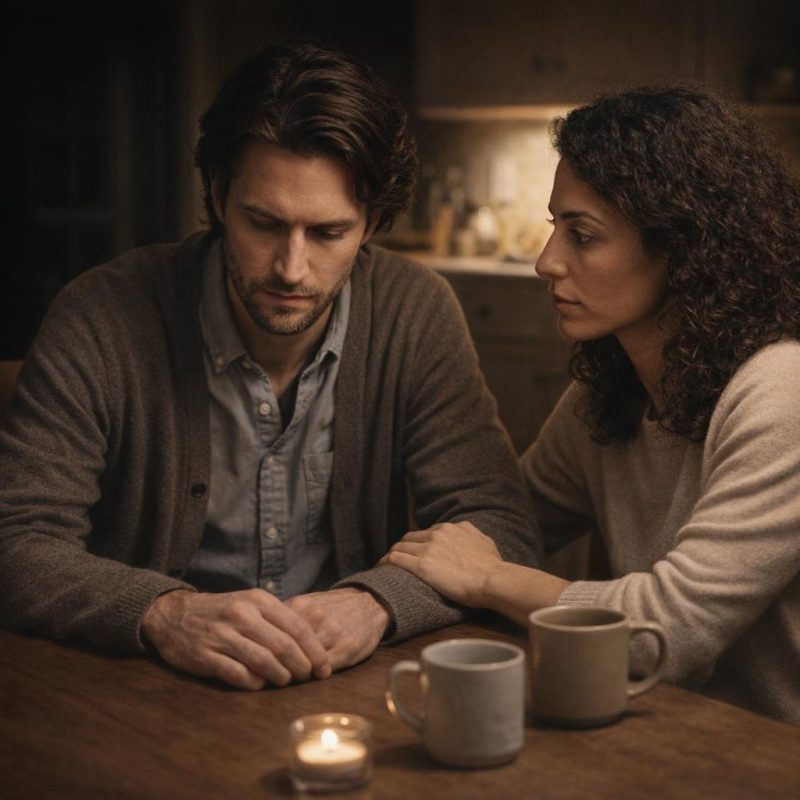 Image by RM AI
The Truth We Inherit
At some point Claire made tea and set a mug in front of me, and I wrapped both hands around it the way I used to do as a kid when something had gone wrong and I didn't know how to name it yet. Except now I could name it. The standard I had never been able to meet — the one that had followed me through every job, every decision, every moment I had looked at my father's face and found it unreadable — it had been built on something that wasn't real. My grandfather was not the man I had been taught to emulate. My father's expectations were not the inheritance of genuine virtue. They were the maintenance requirements of a story that needed to keep being believed. I thought about all the years I had spent feeling like I was failing some essential test of character, and I understood now that the test itself had been fraudulent. Claire reached across the table and put her hand over mine, and she didn't say anything, and that was exactly right. I looked at the window, at the ordinary gray light of an ordinary afternoon, and for the first time in as long as I could remember, there was nothing I was supposed to be measuring myself against.
 Image by RM AI