
I Was Scheduled for Overnight Shifts Week After Week—Until I Discovered Why I Was Really There Alone
I Was Scheduled for Overnight Shifts Week After Week—Until I Discovered Why I Was Really There Alone
The First Overnight
Frank called me into his office about twenty minutes before my shift ended on a Tuesday. He had that look he gets when he's about to ask you for something he knows is a little inconvenient — not quite apologetic, but close. He said the store needed someone reliable for overnight inventory, that two people had called out and the schedule was a mess. He said it like it was a one-time thing, maybe two nights at most. I've been at this store long enough to know that when Frank says 'reliable,' he means me, and honestly, I didn't mind. I told him I could do it. I'm fifty-seven years old and I've never been the kind of person who says no when the team needs something. I figured it was temporary, the kind of gap that opens up when staffing gets thin and closes again just as fast. So I stayed. I clocked back in at eleven and walked the floor alone for the first time. The store is a completely different place at night — the lights drop to half, the hum of the refrigeration units fills every aisle, and the whole building seems to expand somehow, like it's been holding its breath all day and finally lets go. I moved through the aisles with my clipboard, counting and logging, and the quiet settled around me like something solid.
 Image by RM AI
The Vague Explanation
The second overnight went the same as the first — just me, the fluorescent hum, and row after row of product to count. By the time I finished and the morning crew started trickling in, I was running on coffee and stubbornness. I caught Frank near the back office before he got too busy and asked him, as casually as I could, whether the overnight rotation would be shifting soon. He nodded like he'd heard the question, but his answer didn't really land anywhere. He said something about coverage needs and how the schedule was still being worked out at the district level. Then, before I could follow up, he pivoted to telling me what a thorough job I'd done on the inventory counts — said my numbers were cleaner than anyone else's. It was a nice thing to say. I thanked him and let it go, because what else do you do? He seemed a little distracted, maybe a little rushed, but nothing that set off any alarm bells. I told myself the schedule would sort itself out in another week or two. On my way out I stopped by the break room to grab my jacket, and out of habit I glanced at the schedule board on the wall. My name was listed on overnight for every single shift across the next two weeks — not one day slot, not one afternoon, just overnight, every time, alone.
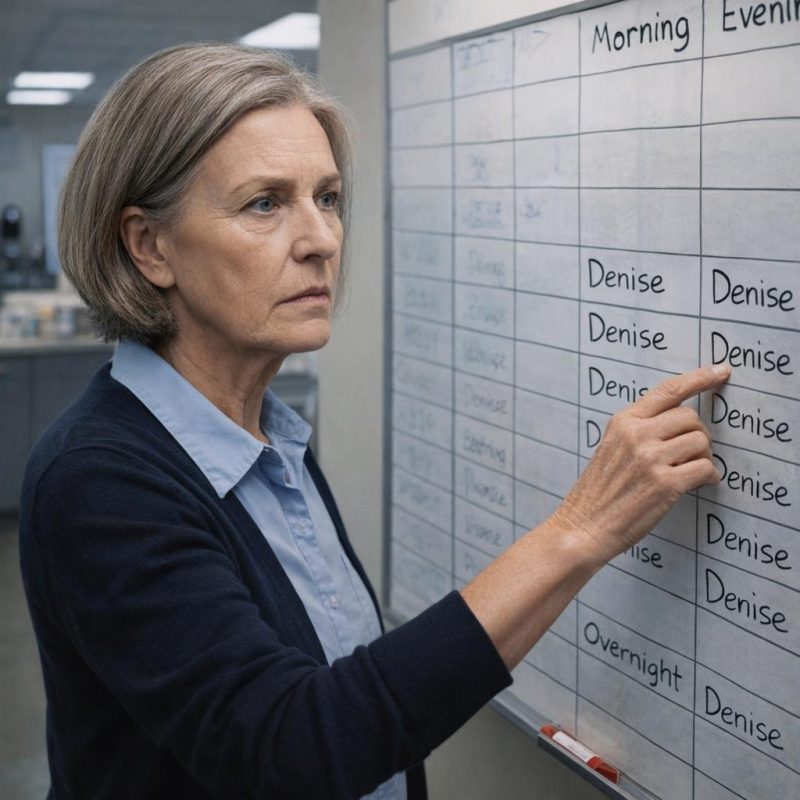 Image by RM AI
Missing the Recital
My granddaughter Emma had been practicing that piano piece for three months. Three months of hearing about it on Sunday calls — which keys were giving her trouble, how her teacher said she was almost ready. I had it marked on my calendar in red. Then the schedule came out and my heart just sank. I called my daughter that afternoon and tried to explain, and she was gracious about it, the way she always is, but I could hear the flatness underneath. She said, 'It's okay, Mom, we'll record it for you.' That's what people say when it's not really okay but they love you enough not to make it worse. I worked through that night counting stock in the back storage room, and somewhere around two in the morning my phone buzzed with a short video — Emma in a blue dress, sitting very straight at the piano bench, playing her piece without a single mistake. I watched it four times standing in the aisle. I told myself this was temporary. I told myself the schedule would normalize and I'd be at the next one, and the one after that. I'd been a dependable employee for a long time, and dependable employees sometimes carry extra weight for a while. That's just how it goes. But standing there in that empty store at two in the morning, watching my granddaughter take her bow on a three-inch screen, the disappointment in my daughter's voice was still echoing somewhere I couldn't quite reach.
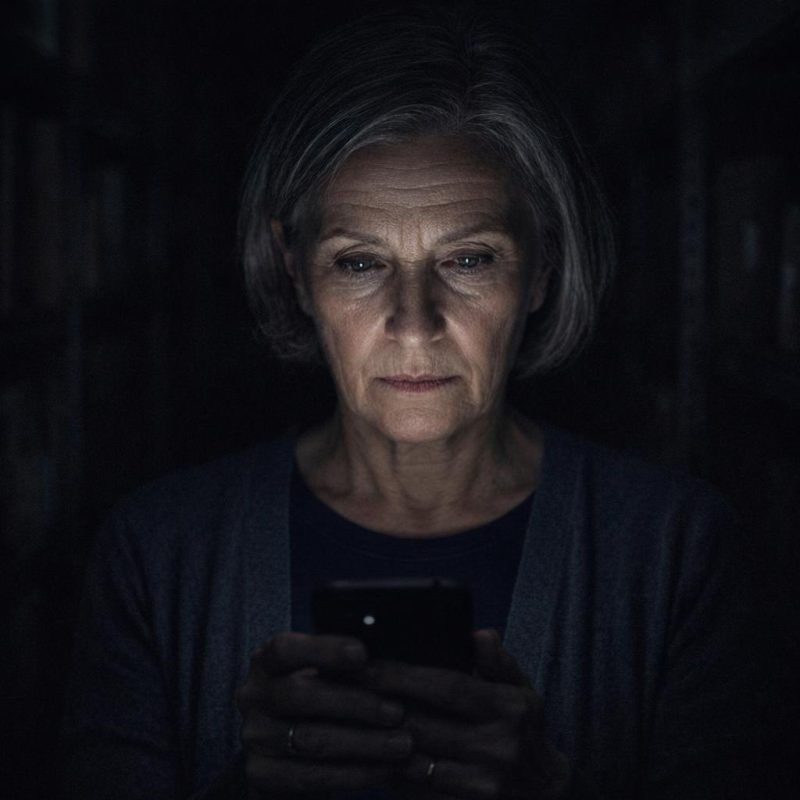 Image by RM AI
The Rotation That Wasn't
I started paying closer attention to the schedule board after that. Not obsessively — I wasn't tracking anyone down or asking questions — I just noticed things the way you do when something starts to feel a little off. Marcus, the young guy who works grocery, mentioned one afternoon that he was glad he'd gotten off the overnight rotation. I asked him, kind of offhand, how long he'd been on it. He said two weeks, maybe three. Two or three weeks, and then he rotated back to days. I thought about that. I'd been on overnight for going on six weeks at that point. I watched the day crew leave together that afternoon — laughing, making plans, heading out into actual daylight — and I counted back through my own shifts. Morning crew, afternoon crew, evening crew — I could see the same faces cycling through all of them. New hires who'd started after me were already working a mix of slots. I was the only one who hadn't moved. I kept telling myself there had to be a reason I just wasn't seeing yet. Maybe seniority worked differently for overnight. Maybe there was something about my inventory accuracy that made me the practical choice. I ran through the explanations while I restocked and counted and logged, and none of them quite fit, but I held onto them anyway. Still, by the time I clocked out that morning, the unfairness of it was sitting heavy in my chest.
 Image by RM AI
The Routine of Solitude
By my eighth consecutive overnight shift, tired had become its own kind of weather — something I just moved through. I'd developed a system: start at the loading dock, work counterclockwise through the stockroom, hit the floor aisles in order, finish at the front registers. Efficient. Predictable. Lonely in a way I'd stopped naming out loud. The silence in that building after midnight is a specific kind of silence — not peaceful, just empty. The refrigeration units cycle on and off, the heating vents tick, and every so often the building makes a sound like it's settling into itself. I'd gotten used to all of it. So when I heard the footsteps, I knew right away they weren't a vent or a pipe. They were coming from the loading dock area — distinct, deliberate, the sound of weight moving across concrete. I set down my clipboard and called out toward the back. Nothing. I walked to the dock entrance and pushed the door open a few inches, letting the light spill in. The dock was empty. The bay doors were closed and locked, same as always. I stood there for a moment, listening, and heard nothing more. I told myself it was probably the building — old structures make sounds, especially at night. I picked my clipboard back up and kept moving. But my heart was still going a little faster than it should have been.
 Image by RM AI
The Subject Change
I picked a quiet Thursday afternoon, when the store had that slow mid-week lull and Frank wasn't buried in deliveries or phone calls. I found him at the service desk going through a scheduling binder, and I kept my voice easy and my tone light — I wasn't there to complain, just to ask a reasonable question. I said something like, 'Frank, I just wanted to check in about the overnight rotation. Is there a timeline for when that might open back up to other staff?' He looked up from the binder, and something shifted in his face — not anger, not irritation exactly, just a kind of tightening. He said there were some corporate directives around coverage requirements that were still being sorted out, and that he appreciated my patience. He didn't look at me when he said it. Then, almost before the sentence was finished, he was talking about the spring promotion coming up and whether I'd seen the new display materials in the back. It was a clean redirect — smooth enough that I almost let it carry me along. I thanked him and said I'd take a look at the display materials. As I turned to go, I glanced back. He was closing the scheduling binder, and his hand wasn't quite steady — a small tremor, just enough to make the binder's edge knock softly against the desk before he pressed it flat.
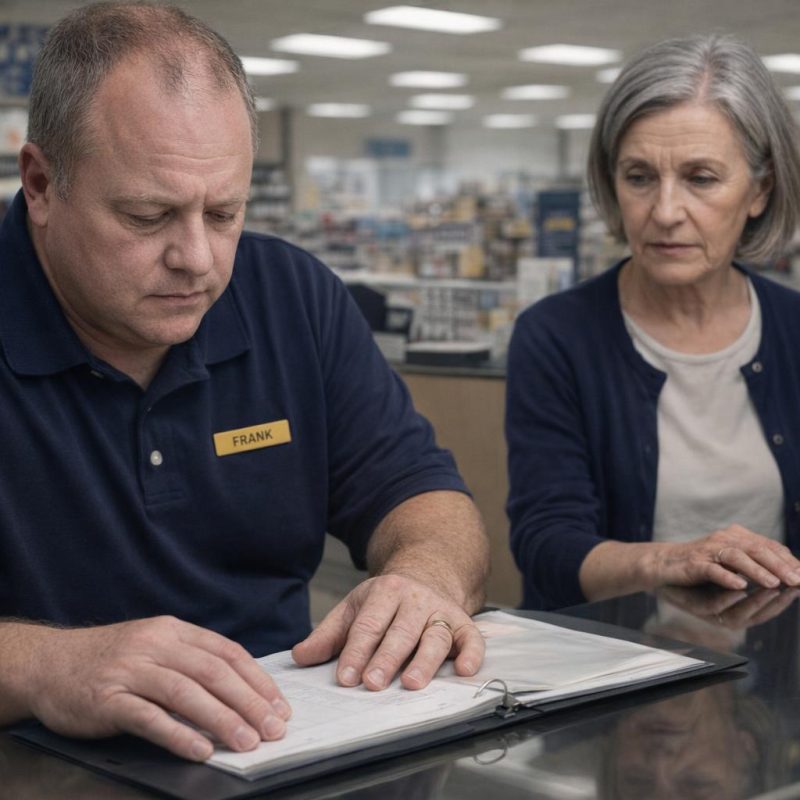 Image by RM AI
The Missed Birthday
My son Danny turned forty-three on a Saturday, and the whole family was doing dinner at his place — his wife's cooking, the grandkids, the whole thing. I'd been looking forward to it for weeks. Then the schedule came out and I was on overnight, same as every other night, and I had to call him and explain. He was quieter than I expected, which was somehow worse than if he'd been upset. He said he understood, that work was work, but then he asked why I couldn't just request different hours. And I didn't have a good answer. I said something about coverage needs and corporate directives, and even as the words came out I could hear how thin they sounded. I didn't fully understand it myself, so how was I supposed to explain it to him? I worked my shift that night with my phone in my apron pocket, and around eight o'clock the photos started coming in — Danny blowing out candles, the kids piled on the couch, my daughter-in-law laughing at something off-camera. I looked at each one and kept moving through the aisles, kept counting, kept logging. The store was as quiet as it always was. A little after ten, while I was in the paper goods section, my phone lit up with a text from my daughter. It said: 'Mom, is everything okay at work?'
 Image by RM AI
The Pattern of Absence
I started keeping a small notebook in my apron pocket — nothing formal, just dates and shift times, something to look at when my memory felt unreliable. Over the next few days I went back through what I could piece together and wrote it all down. Six weeks of overnight, then seven, now pushing toward nine. I looked at the schedule board and traced the other names with my finger — Marcus, Jenna, the new kid whose name I always had to double-check. Morning, afternoon, evening, the occasional overnight, then back to days. Every one of them rotating. I thought about the new hires who'd come on after me, already working a full mix of shifts. I thought about Marcus saying he'd done two or three weeks of overnight and then moved on. I stood there in the break room for a long time, notebook in hand, trying to find the pattern that would make sense of my situation — some seniority rule, some inventory certification requirement, something I'd missed. I couldn't find it. I walked out to the hallway where the updated schedule had just been posted for the coming month. I ran my finger down the overnight column, shift by shift, week by week. My name was printed there for every single overnight shift, straight through to the end of the month.
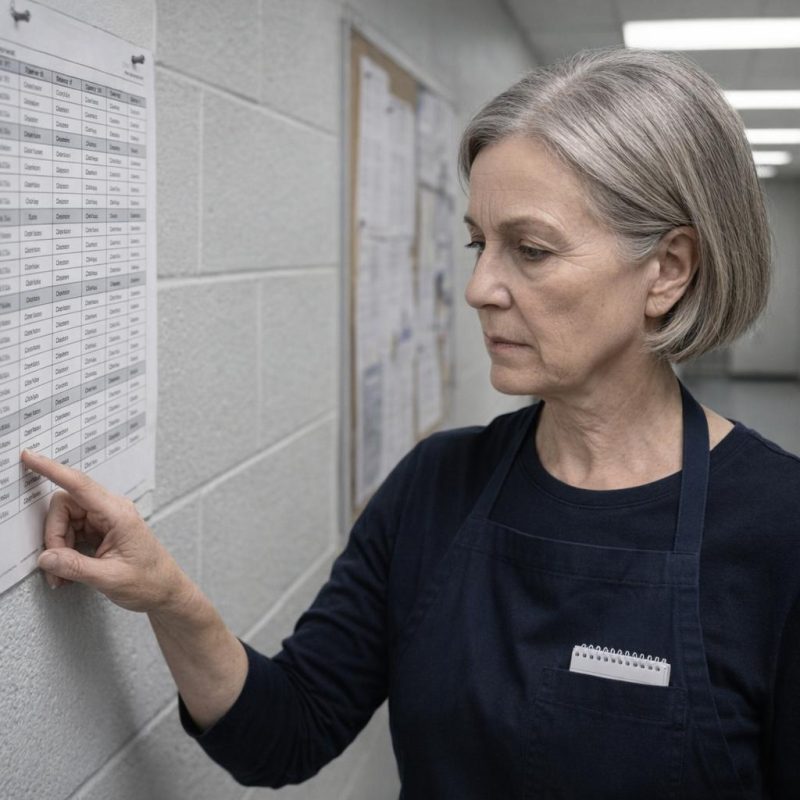 Image by RM AI
The Question I Can't Ask
I spent most of my break rehearsing it in my head. Something simple, something reasonable — Frank, I've noticed I'm the only one not rotating off overnight. Can you help me understand why? That's all. Twelve words. I said them to myself in the bathroom mirror, then again walking down the hallway toward his office. By the time I got there, I could hear him through the door, voice low and clipped, clearly on a call that wasn't going well. I stood just outside, notebook in my apron pocket, hand half-raised to knock. I waited. A minute, maybe two. The call ended and I heard his chair scrape back. He opened the door and nearly walked into me, and for a second we both just stood there. He looked tired. More tired than usual, actually — the kind of tired that sits behind someone's eyes and doesn't go away after a good night's sleep. He asked if I needed something. I opened my mouth. I had the words right there. Instead I heard myself ask whether the break room coffee maker had been fixed yet. He said he'd put in a request. I nodded and walked back down the hallway, the notebook still in my pocket, the question I actually needed to ask sitting somewhere just below my collarbone, unspoken.
 Image by RM AI
The Evasive Answer
I gave myself two more days before I tried again. This time I found him in the stockroom, checking a delivery against a clipboard, and I told myself there was no backing out. I walked straight up and said it plainly — I'd noticed I was the only one consistently on overnight, week after week, and I was wondering if there was a reason for that. He didn't look up right away. When he did, his expression was careful, like he was choosing something off a shelf. He said I was one of the most reliable people he had for inventory, that corporate liked consistency on the overnight counts, that it wasn't a reflection of anything negative. He said it the way people say things when they've thought about how to say them. I asked if that meant it was permanent. He said he'd look at the schedule when things settled down. I asked what things. He said just — things. Then he glanced at his clipboard and mentioned he had to finish the delivery check before the truck left. And that was it. He walked toward the back and I stood there in the stockroom between two pallets of paper towels, holding a question he'd answered without actually answering. The words had come out of my mouth this time. It just hadn't made any difference.
 Image by RM AI
The Parking Lot Warning
I pulled into the parking lot a little early that evening, the way I usually do when I want a few minutes to myself before a shift starts. I was still sitting in my car when I saw Rita coming out of the store, already in her coat, keys in hand. She spotted me through the windshield and changed direction. I got out, thinking she just wanted to say hello, but the moment I saw her face I knew this wasn't a casual conversation. She was scanning the lot — quick, deliberate glances left and right — before she got close enough to speak. She kept her voice low. She said I needed to be careful during my overnight shifts. I asked her what she meant. She pressed her lips together and looked past my shoulder. I asked again, and she shook her head and said she'd already said too much. I told her she hadn't said anything yet, that she was scaring me. She looked at me then, really looked at me, and something in her expression made my stomach drop. She said she was sorry, and she meant it — I could hear that much. Then she turned and walked to her car, moving fast, not looking back. I stood in the parking lot with the evening air going cold around me, and the fear I'd seen in her eyes stayed with me long after her taillights disappeared.
 Image by RM AI
The Long Night
The store felt different that night. I don't know how else to put it. The hum of the refrigeration units, the flicker of the overhead lights in aisle seven that maintenance had been ignoring for weeks — all of it seemed louder, closer. I kept Rita's words turning over in my head: be careful. Careful of what? I checked the loading dock doors twice. I walked the perimeter of the floor before I even started my counts. Every time something shifted or settled in the building, I stopped and listened. I told myself I was being ridiculous. I told myself that a lot. I worked through the inventory methodically, writing everything down in my notebook the way I always do, double-checking my own numbers before I moved to the next section. Around two in the morning I took a break and went to get water, leaving my clipboard on the edge of the shelving unit in aisle four — I was specific about it, I remember thinking I should be specific. When I came back, the clipboard was sitting flat on the floor, leaning against the base of the shelving unit, about three feet from where I'd left it.
 Image by RM AI
The Small Oddities
I started paying attention differently after that. Not paranoid exactly — more like the way you listen when you think you might have heard something but aren't sure. I noticed the storage room off the receiving area had its door sitting open about four inches. That door had a self-closing hinge and a latch that caught automatically. I'd never seen it stay open on its own. I pushed it shut and it latched cleanly, no resistance. I moved on. Later, near the back of the floor, a pallet of boxed goods was sitting at an angle I didn't recognize from my previous counts — not dramatically different, just rotated, like someone had needed to get around it and hadn't put it back quite right. I wrote it down. In the break room around three a.m. there was a coffee cup on the table, still faintly warm when I touched it. I was the only one scheduled in the building. I wrote that down too. Each thing on its own was nothing. A door, a pallet, a cup. I knew that. But I kept writing them down anyway, because Rita's voice was still in my ear and I didn't know what else to do with the feeling that had settled into my chest — the quiet, uncomfortable awareness that I'd stopped trusting the place I'd worked in for years.
 Image by RM AI
The Distant Alarm
It happened around four in the morning, when the store is at its most still. I was in the main inventory area, working through a section of seasonal stock, when the alarm went off. Not the full evacuation alarm — a zone alarm, the kind that sounds when a sensor trips in a specific section of the building. This one was coming from the garden center, all the way at the far end of the store. I stood there for a second, just listening, then grabbed my keys and started walking. The garden center is a long way from the main floor at four a.m., and the overhead lights don't reach that far, so I was moving through patches of dark between the emergency fixtures. The alarm stopped before I got there. I kept walking anyway. I checked the exterior doors — both locked, no sign of forced entry. I walked the whole section, between the empty display shelves and the dormant irrigation equipment, looking for anything out of place. Nothing. No open panels, no tripped sensors I could see, no explanation. I stood in the middle of the garden center for a while, flashlight moving across the concrete floor. Everything looked exactly as it should. I walked back to the main floor and tried to settle back into my work. The silence that followed felt heavier than the alarm had.
 Image by RM AI
The Locked Rooms
I needed a box of inventory tags from the supply room near the break area — a room I'd been in and out of a hundred times. The door was locked. I stood there for a moment, key ring in hand, going through my keys twice before accepting that none of them fit. That lock had never required anything other than the standard store key. I went to the secondary supply room near receiving. Also locked. I stood in the hallway and looked at both doors, then wrote it down in my notebook. I tried the third storage room, the one near the seasonal overflow section, and found it locked as well. Three rooms, all locked, all rooms I should have had access to. I noted the time: 2:47 a.m. I told myself there was probably an explanation — a facilities update, a key change I hadn't been told about. I kept moving. The fourth storage room was at the far end of the back corridor, past the compactor. I tried the handle. It didn't turn. I was about to write it down when I heard something from the other side of the door — a shift, a scrape, the unmistakable sound of something or someone moving in the dark.
 Image by RM AI
The Changed Numbers
I needed to cross-reference a count from three weeks back, so I went to the office and pulled the filed report from the folder where completed inventory sheets are kept. I had my own notes from that same night — the ones I'd written in my notebook, the ones I always keep. I set them side by side on the desk under the fluorescent light. The numbers didn't match. Not all of them, not dramatically, but enough. A case count here, a unit total there — the filed report was showing quantities I hadn't written. I checked the date, checked the section headers, made sure I had the right sheet. I did. I pulled a second report, from two weeks before that, and found my notebook entry for the same night. Same thing. Different numbers in the filed version. The handwriting on both reports was mine — I know my own handwriting, the way I loop my sevens, the way my fours close at the top. But the numbers themselves, in my own hand, on my own forms, were not the numbers I had written.
 Image by RM AI
The Pattern in the Changes
I pull every report I can find from the past three months and spread them across the desk in the back office. My notebook is open beside them, my handwriting on every page — dates, section codes, unit counts, the way I've always done it. I go through them one by one, my reading glasses sliding down my nose, and I start marking the differences with a pencil. It's not random. That's the thing that makes my stomach drop. Every single change goes in the same direction. Lower. The filed reports always show fewer units than what I wrote down. A case of paper towels, a pallet of bottled water, a shelf of cleaning supplies — always a little short, never a little over. I check six reports. Then eight. Then ten. The pattern holds every time. And it's always the same categories of merchandise, the kinds of things that move in bulk, the kinds of things that are easy to say walked out the door. I sit back in the chair and stare at the ceiling for a second, trying to slow my breathing. I'm not jumping to conclusions. I'm just looking at numbers. But the numbers are telling me something I don't want to hear — that on paper, merchandise keeps going missing on my shifts.
 Image by RM AI
The Weight of Suspicion
I sit in that office for a long time after my break should have ended. The reports are still spread out in front of me, and I keep looking at them like they're going to rearrange themselves into something that makes more sense. I try to think of innocent explanations. Maybe the system gets updated after submission and the numbers shift. Maybe there's a rounding process I don't know about. But I've worked retail for over thirty years, and I know how inventory forms work, and none of that explains why the changes are always in the same direction, always on my shifts, always in the same product categories. I think about who has access to these files. Management, obviously. Loss prevention, maybe. Not me — I submit the forms and I never see them again. That's the part that sits wrong. I have my notebook, my own handwriting, my own counts. But my notebook isn't an official document. It's just a spiral-bound thing I bought at the dollar section. If someone wanted to say I was misremembering, or confused, or just bad at my job, my notebook wouldn't stop them. I'm alone out here every night. No witnesses. No one to say what I actually wrote. The fluorescent light hums above me, and the store is completely quiet around me, and the weight of that sits in my chest like something I can't put down.
 Image by RM AI
The Anxious Coworker
Rita comes in for the overlap shift just before six in the morning, and I catch her near the break room before she can clock in. I've been rehearsing what to say for the last hour, keeping it simple, keeping it factual. I tell her I need two minutes and I pull her into the narrow hallway by the stockroom door. I start with the reports — just the basics, that the numbers don't match, that I've found it across multiple weeks. I watch her face as I'm talking and something changes in it almost immediately. She goes still in a way that doesn't feel like surprise. It feels more like recognition, and that scares me more than I expected. Before I can get to the part about the pattern, she puts her hand up, just slightly, and shakes her head. "I can't," she says. "I'm sorry, I really am, but I can't get into this." I ask her what she means, what she knows, whether she's seen something too. She takes a small step back toward the main floor. "Please don't ask me," she says. "I have to stay out of it." And then she's gone, back into the store, moving fast, not looking back. I stand in that hallway alone, the stockroom door cold against my shoulder, and the fear on her face when she said she couldn't help me stays with me long after she's out of sight.
 Image by RM AI
The Discrepancy Reports
I go back to the filing cabinets during my next overnight, when the store is empty and I have time to look properly. I've already been through the standard inventory folders. This time I go deeper, checking the hanging files toward the back of the second drawer, the ones with the color-coded tabs I've never had reason to open before. There's a folder near the back with a label I don't recognize — a string of letters and numbers that looks like a loss prevention code. I pull it out. Inside are printed forms, official-looking, with the company header at the top and signature lines at the bottom. They're discrepancy reports. Formal ones, not the handwritten inventory sheets I fill out. These are typed, formatted, the kind that come from a system. I flip through them slowly. Each one lists a date, a shift window, a product category, and a dollar value for missing merchandise. My hands are steady but my chest isn't. The dates go back three months. Every single one falls on a night I was here. Every single one. I keep flipping, telling myself there has to be a date that doesn't match, a shift I wasn't on. There isn't. I get to the last page and I stop. At the bottom, in the field marked "Responsible Inventory Associate," I find my name.
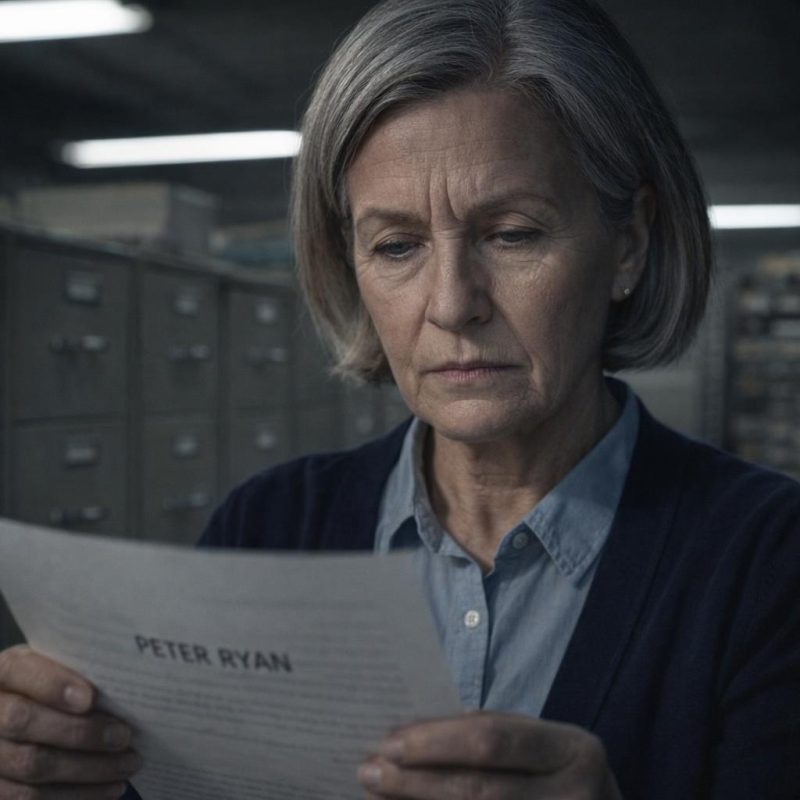 Image by RM AI
The Dates That Match
I don't put the folder away. I carry it to the desk and I spread every report out in two rows, oldest to newest, and I go get my work schedule printouts from my bag. I've kept every one — I always do, out of habit. I lay them alongside the reports and I start matching dates. First report, first date: I was here. Second report: I was here. I go through all of them, one by one, checking each date against my schedule, and not one of them falls on a night I had off. Not one. I count the reports. Fifteen. Fifteen separate incidents across roughly three months, each one documenting missing merchandise valued somewhere between two hundred and eight hundred dollars. I do the rough math in my head and the total lands somewhere around six or seven thousand dollars. That's not a rounding error. That's not a clerical mistake. That's the kind of number that ends careers. The kind that gets law enforcement involved. I sit there with the reports in two neat rows in front of me and my schedule printouts lined up beside them, and I can't find a single gap, a single night that breaks the pattern. Every piece of documentation has my name on it, and the sick weight of that settles into me and doesn't move.
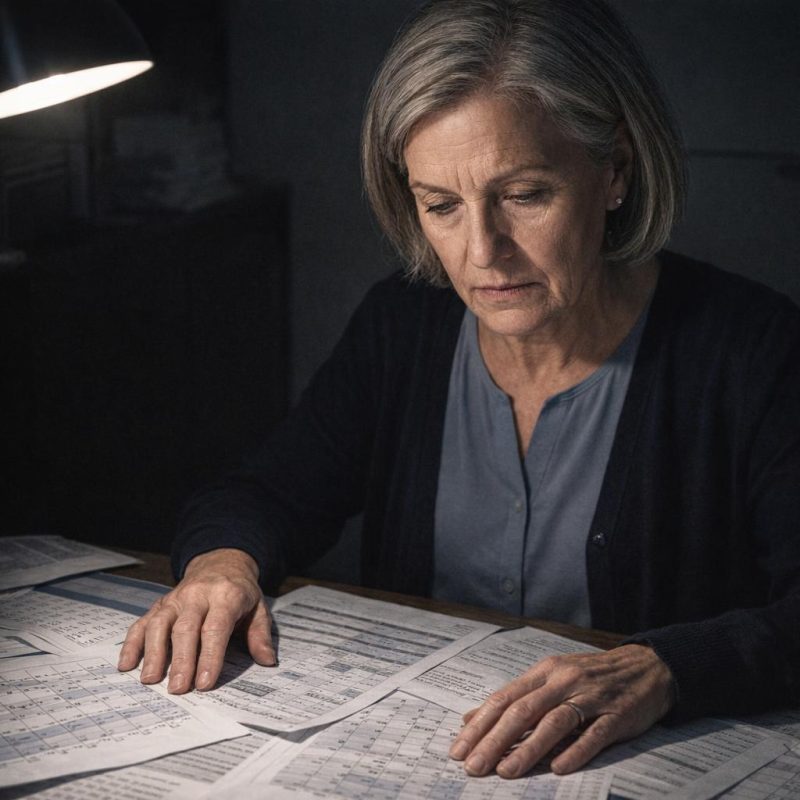 Image by RM AI
The Documentation Begins
The next day I drive to the office supply store on my way home and I buy a small hardcover notebook — not a spiral, something sturdier — and a pack of index tabs. That night before my shift starts, I sit in my car in the parking lot and I write the date at the top of the first page. I write down the time I arrived, the weather, which entrance I used, which manager let me in. When I get inside, I photograph every inventory sheet before I put it in the submission folder. I hold my phone steady and make sure the date, the section code, and every count column is legible in the frame. I do this for every sheet, every section, the whole shift. I write down the time I complete each section. I note which aisles are fully stocked and which have gaps. I note the dock door status, the freezer alarm light, anything that could matter later. When I'm done, I put the notebook in the zippered pocket of my bag and I keep the bag with me the whole shift, not in the break room, not in the office. In my car before I drive home, I back the photos up to my cloud account. It's not much. I know it might not be enough. But it's mine, and no one can change it, and that small fact is the only thing I feel like I can hold onto right now.
 Image by RM AI
The Designed Blame
A few nights later I go back to that loss prevention folder. I've been thinking about the language in those reports — the way they're worded — and I want to read them again more carefully. The phrasing is specific in a way that bothers me. Words like "unaccounted variance" and "shift-isolated loss" and "pattern consistent with employee access." That last phrase especially. I've worked in retail long enough to know that language like that doesn't end up in a report by accident. It points somewhere. I flip through the folder again, slower this time, and near the back, behind the discrepancy reports, I find something I missed before. It's a single sheet, folded in thirds, on district letterhead. I open it carefully. It's a memo, dated about six weeks ago, addressed to store management. It references "ongoing inventory irregularities during overnight operations" and states that district leadership has authorized a formal review of overnight inventory procedures at this location. It doesn't use my name. It doesn't have to. The time window it references covers every shift I've worked since I was moved to overnights. I stand there holding that memo under the fluorescent light, and the feeling that had been building in me for weeks sharpens into something I can't talk myself out of — that something is closing in, and I don't yet know from which direction.
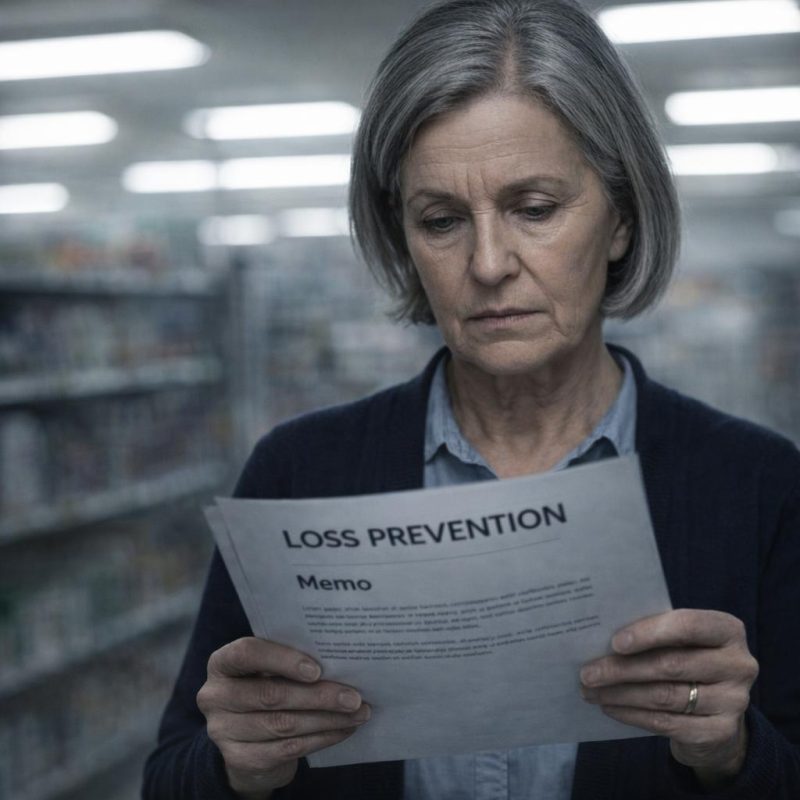 Image by RM AI
The First Confrontation
I ask Frank for a few minutes before my shift the following week. He says sure, come in, and I sit across from him at his desk with my notebook open in my lap and copies of three of my original count sheets in my hand. I keep my voice even. I tell him I've noticed discrepancies between the inventory reports I submit and the versions that end up in the files. I tell him the differences are consistent — always lower in the filed version, always in the same product categories. I set the copies on his desk and point to specific line items. He looks at them. His expression doesn't give me much. He picks up one sheet, holds it for a moment, sets it back down. He says inventory counts can be tricky, especially late at night when you're tired. He says discrepancies happen in every store and they don't always mean something went wrong. He says he'll look into it, but his voice is flat when he says it, the kind of flat that doesn't carry any weight behind it. I ask him directly whether anyone else has flagged concerns about the overnight reports. He says not that he's aware of. I close my notebook. I thank him for his time. I gather my copies off his desk and I walk out, and the door to his office closes behind me with a soft click.
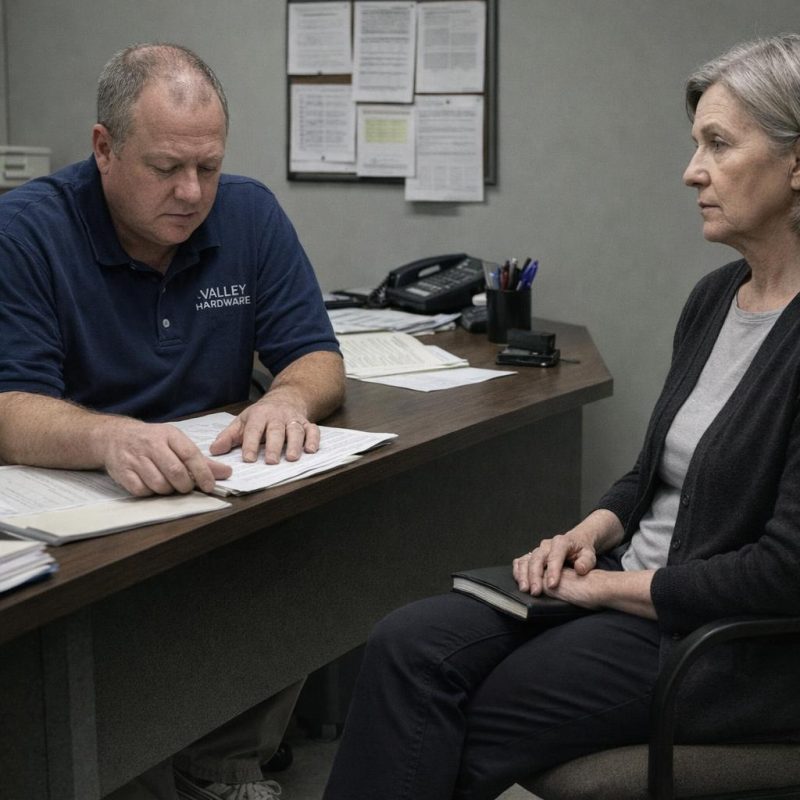 Image by RM AI
The Corporate Response
Two days after my meeting with Frank, Michelle shows up at the store. She's the district manager — polished blazer, practiced smile, the kind of woman who makes a room feel smaller just by walking into it. Frank calls me into his office like it's routine, and there she is, already seated, already composed. She asks me to walk her through my concerns. I do. I keep it factual — the line items, the categories, the consistent gaps between what I count and what ends up in the filed reports. She listens with her head tilted just slightly, the way people do when they're not quite ready to respond. When I finish, she tells me overnight shifts are genuinely hard on the body. She says fatigue affects memory and perception more than most people realize. She recommends I start keeping better personal notes so I can cross-reference if I get confused. She says it with such warmth that for a second I almost feel like she's doing me a favor. I thank her and excuse myself. I'm barely ten feet down the hallway when I hear her voice drop, quiet and certain, telling Frank to keep me on the overnight rotation for consistency.
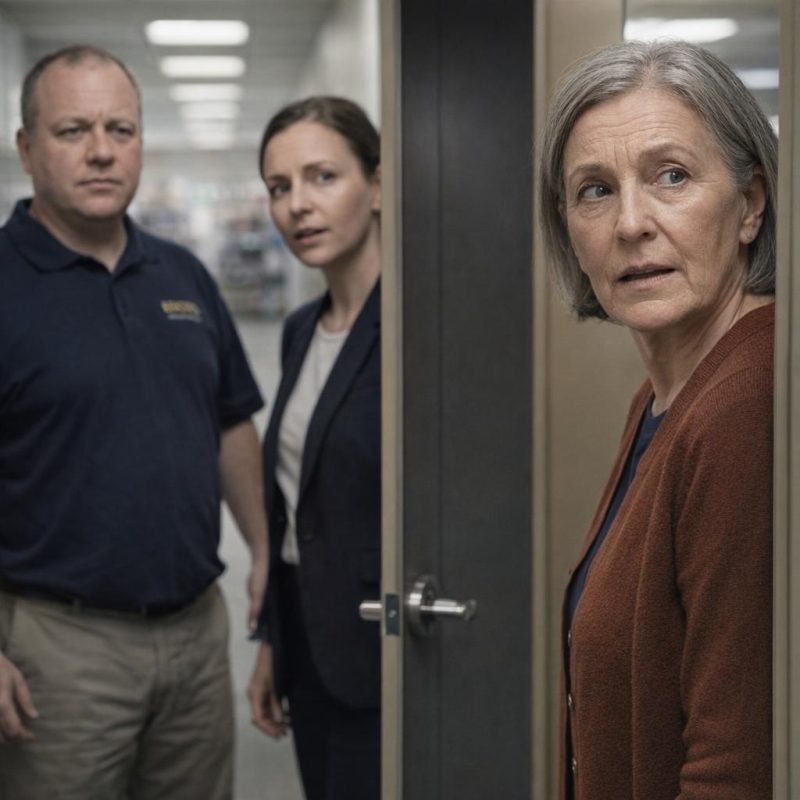 Image by RM AI
The Punishment Schedule
The new schedule goes up two days later, pinned to the board like it's nothing. I stand in front of it for longer than I should. Six overnight shifts a week for the next month. One day off — always a Tuesday or Wednesday, never a weekend. I look at the other columns. Everyone else is still rotating through mornings, afternoons, the occasional closing shift. Just me, locked into nights. I pull out my phone and count forward. My granddaughter's birthday falls on a Saturday I'm now scheduled to work. A family dinner my daughter has been planning for weeks — same thing. I think about going back to Frank. I think about sending another email. Then I think about what happened the last time I said something, and I put my phone away. There's a particular kind of tired that isn't about sleep. It's the kind that settles in when you understand that doing the right thing didn't protect you — it just made you a clearer target. I fold the copy of the schedule I've made for myself and slide it into my bag, and I sit with the knowledge that speaking up hadn't opened a door. It had closed one.
 Image by RM AI
The Advice to Walk Away
My daughter calls on a Tuesday afternoon, my one day off, and I can hear the worry in her voice before she even gets to the point. She asks how I'm sleeping. I tell her fine, which isn't entirely true. She says I sound different — flatter, she calls it — and she's not wrong. I tell her a little about the scheduling situation, keeping it vague, and she goes quiet for a moment before she says, Mom, you have thirty years of experience. You could walk into any store in this county and they'd hire you on the spot. Why are you staying? I don't have a good answer for her. A few days later I meet a friend for coffee and she says almost the same thing, word for word, like they've compared notes. She tells me no job is worth my health. She tells me I've earned the right to walk away from something that isn't working. And sitting there with my hands wrapped around a warm mug, I feel the pull of it — how clean it would be to just stop showing up. To let whatever is happening in that store be someone else's problem. But something keeps snagging on that thought. Two employees before me, gone under circumstances nobody wanted to explain. I wonder if walking away is exactly what someone is counting on.
 Image by RM AI
The Refused Explanation
I get to the parking lot twenty minutes before my shift starts and wait near the side entrance where I know Rita parks. I've been thinking about her warning for weeks — the way she looked at me that night, urgent and careful at the same time. When her car pulls in, I walk over before she even gets her door fully open. She sees me coming and something shifts in her face immediately. I ask her directly. I tell her I've found things — reports that don't match my original counts, numbers that keep coming up short in the same categories. I tell her I need to understand what she meant when she warned me. She shakes her head before I finish the sentence. She says she can't. I ask her why not. She looks around the parking lot, then back at me, and she says she has a family. She says she's sorry. I tell her I'm not trying to get anyone in trouble, I just need to know if I'm seeing what I think I'm seeing. She says she's sorry again, quieter this time, and she turns toward the entrance. That's when I see it — her eyes are wet, and she doesn't look back.
 Image by RM AI
The Whispered History
It's a slow Thursday night, and I'm restocking the paper goods aisle when one of the day-shift guys — someone I've only spoken to a handful of times — comes around the corner and slows down when he sees me. He glances toward the front of the store, then back at me, and he says he heard about my scheduling situation. He says it quietly, the way people talk when they're not sure who's listening. I tell him it's been a lot of overnight shifts. He nods and says something similar happened a few years back, to two other people who used to work here. He says they were both put on nights, over and over, and then one day they were just gone. He doesn't know the details — he was newer then, and nobody talked about it much afterward. He says he just thought I should know. Then he picks up his box and moves on down the aisle before I can ask him anything else. I stand there with a case of paper towels in my hands and try to think through what he's just told me. Two people. The same pattern. Before me. I'd been telling myself this was about me, about something I'd stumbled into. But standing in that quiet aisle, I felt the weight of something that had been going on much longer than I'd imagined.
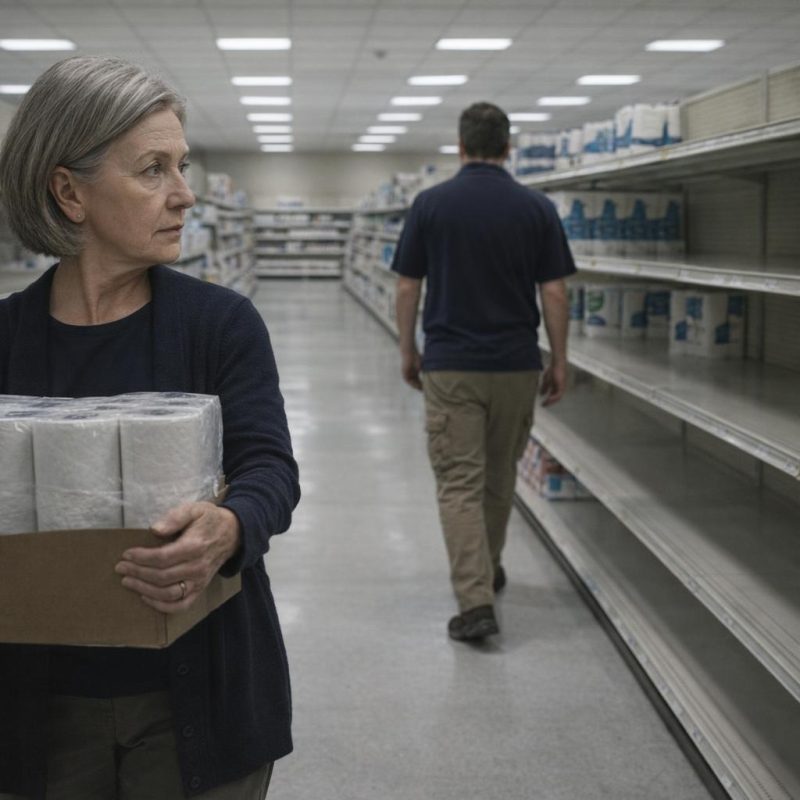 Image by RM AI
The Decision to Investigate
On my next day off I go in early, before anyone else arrives, and I ask Frank if I can pull a supply binder from the back office — I tell him I need to check a product code. He waves me through without looking up from his desk. The back office has a row of binders on the bottom shelf, and I work through them slowly. Personnel records are locked, but there's an older administrative binder — the kind that used to hold contact sheets before everything moved to the computer system — and it's sitting right there, unlabeled on the end. I open it. It's a staff directory from about three years ago, names and phone numbers, some with handwritten notes in the margins. I flip through it carefully. I'm looking for the people who aren't here anymore, the ones who left around the time the day-shift guy mentioned. I find a few names I half-recognize — people who were gone before I started paying attention. I write down four numbers on the back of a receipt and slide it into my pocket. I put the binder back exactly where I found it. When I come out of the office, Frank is on the phone and doesn't look up. I set my bag over my shoulder and walk out to my car, and the employee directory from three years ago sits open on the break room table in my mind the whole drive home.
 Image by RM AI
The Silent Responses
I wait until mid-morning on my next Tuesday off, when I figure most people will be up but not yet into the thick of their day. I sit at my kitchen table with the receipt in front of me and my phone in my hand. The first call goes to voicemail. I leave a short message — just my name, that I'm a current employee at the store, and that I'd appreciate a few minutes of her time. The second number picks up on the third ring. I explain who I am. There's a pause, and then the woman says she can't help me and hangs up. Not rude, exactly — just fast, like she'd made up her mind before I'd finished my sentence. The third number goes to voicemail too, and I don't hear back. The fourth person picks up, listens for about thirty seconds, and says he doesn't remember anything about inventory issues. The fifth number is disconnected. The sixth person — a woman — asks me how I got this number, and when I start to explain, she ends the call. I sit there looking at the receipt with its four numbers, all of them crossed off now. Nobody had been rude. Nobody had been confused. They'd all just gone quiet in the same careful way, and that careful quiet sat with me long after I put the phone down.
 Image by RM AI
The Meeting with Linda
Three days after my last call, my phone rings with a number I don't recognize. The woman on the other end says her name is Linda, and that someone I'd left a message with had passed along my number. She says she's willing to meet, but not near the store. We agree on a coffee shop about fifteen minutes away, a Tuesday morning, a corner booth. She's already there when I arrive — dark hair, careful eyes, the body language of someone who has learned to take up less space than she used to. She tells me she worked overnight shifts at the store for almost eight months, four years ago. She tells me inventory discrepancies kept showing up in her reports — always in the same product categories, always lower than what she'd counted. Management told her the numbers didn't lie. They told her the losses had to be coming from somewhere. She says they gave her a choice: resign quietly, or face a formal investigation that she was told would likely result in criminal charges. She had a mortgage. She had kids. She signed the resignation letter. She never found out what actually happened to the merchandise, or why the numbers kept coming up short. I tell her about my own counts, my own reports, the same categories, the same gaps. She wraps both hands around her coffee cup and looks at me, and in her eyes I see something I haven't felt in weeks — the recognition of someone who already knows exactly what I'm describing.
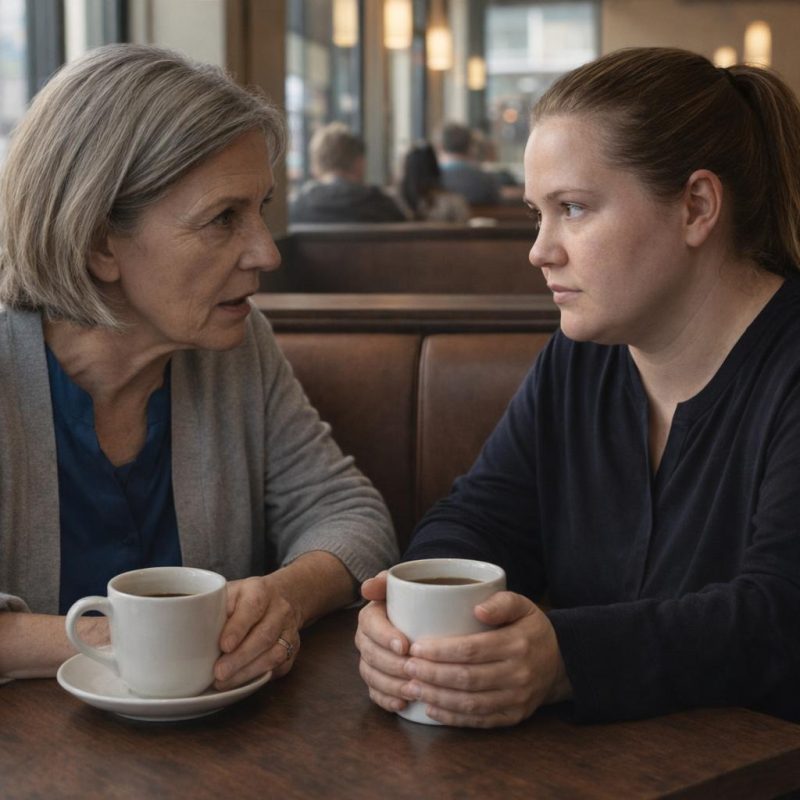 Image by RM AI
The Protected Culprit
We sit in that corner booth for a long time after I finish telling her about my counts. Linda wraps both hands tighter around her cup and stares at the table for a moment, like she's deciding something. Then she starts talking in a low, careful voice. She says she spent months trying to figure out why the numbers kept coming up wrong — why her counts were always accurate when she did them but the filed versions told a different story. She says she eventually landed on a theory she couldn't shake: that someone with access to the records was adjusting them after the fact. Not randomly. Targeting specific categories, specific nights. She says the overnight shifts weren't just a scheduling quirk. Working alone meant no witnesses. And when losses showed up, there was always someone convenient to point at — someone who'd been there alone, someone without backup. She tried to ask questions, she says, but doors kept closing. She leans forward and starts to say something else — something that sounds like it might be a name, or close to one — and then her eyes cut to the window. She goes still. Then she looks back at me and says it quietly, like she's been carrying it for years: she thinks someone in management was stealing from the store and needed a scapegoat to take the fall.
 Image by RM AI
The Lost Connection
I call Linda the next morning. It rings four times and goes to voicemail. I leave a message — just that I have a few follow-up questions, that I'd appreciate a call back when she has a chance. I keep my voice easy, like I'm not already feeling the first edge of something wrong. She doesn't call back. I try again the following day. Same result. I send a text that evening, short and simple: just asking if she's okay, if we can talk again. The little delivered indicator sits there under the message for days without flipping to read. I wait another two days and then try calling from my work phone, in case she's screening my number. It rings through to voicemail again. I don't leave a message that time. I sit with it for a week, telling myself she's busy, telling myself she has her own life and her own reasons. But Linda had looked me in the eye across that table. She had recognized something. People who feel that kind of recognition don't just go quiet. By the end of the week, I have six unanswered calls and two unread texts sitting in my log with no explanation.
 Image by RM AI
The Personal Archive
After Linda goes silent, I stop waiting for someone else to hold the thread. I drive to a hardware store on my day off and buy a small fireproof lockbox — the kind that fits under a car seat without being obvious. That same night I start photographing every inventory report before I submit it and again after I pull the filed copy, side by side, so any difference between the two versions is right there on my phone. I document the exact time I finish each section. I note which storage rooms are locked when I arrive and whether that changes during my shift. When I find a door that should be secured and isn't, I photograph it. When I find one that's been relocked after I know I left it open, I photograph that too. I write down every conversation I have with management — date, time, who said what, word for word as close as I can get it. Every few nights I transfer everything to a flash drive I keep at home, tucked inside an old recipe box on the kitchen shelf. The lockbox lives under my passenger seat. It's not much to look at. But every time I slide it back into place at the end of a shift, I feel a little steadier — like I'm building something solid out of all this uncertainty.
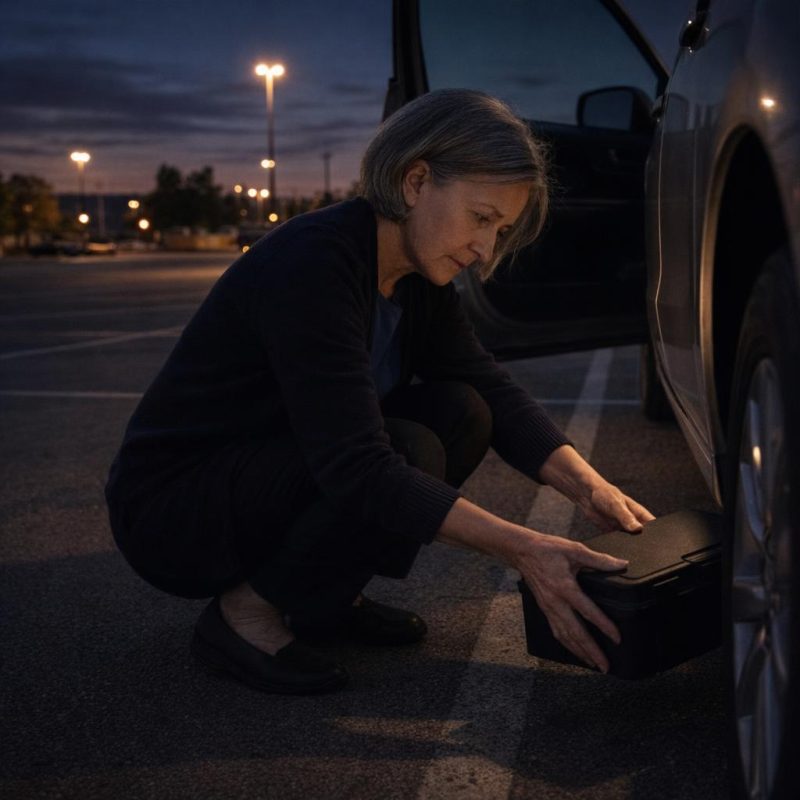 Image by RM AI
The Geographic Pattern
On my break one night I spread everything out across the break room table — my printed notes, the photographed reports, the timeline I've been building. I start mapping which merchandise categories keep showing discrepancies. Electronics, cleaning supplies, seasonal items — those are fine. My counts match the filed versions almost every time. But hardware and tools is a different story. Power drills, hand tools, fastener sets, utility knives. That section shows up in nearly every discrepancy report, week after week. I pull my own inventory records for that area and go through them line by line. My counts are accurate. I can see it clearly — the numbers I wrote down match what was physically on the shelf. But the filed versions of those same reports show losses. Not huge amounts each time, but consistent. Always hardware and tools. Always that same corner of the store. I sit back and look at the pattern laid out in front of me. Whatever is happening, it keeps coming back to the same place, the same product type, the same quiet corner of the building where foot traffic is lowest and the shelving runs deep. I don't know yet what that means. But the weight of it settles over me and doesn't lift — the losses aren't scattered, and I can't find a way to read them as anything but a pattern.
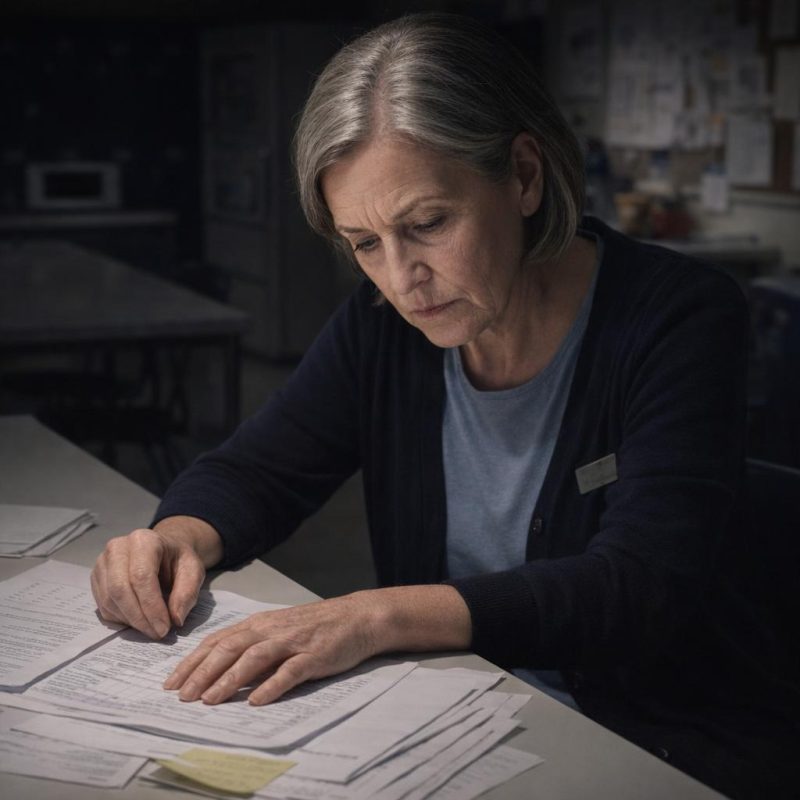 Image by RM AI
The Timing Connection
Once I know which section to focus on, I start looking at when the losses happen. I pull every discrepancy date I've documented and line them up in order on a fresh sheet of paper. Then I go back through the scheduling records I've kept — the posted weekly schedules I photographed each time they went up. I start cross-referencing. Some nights I worked, the filed reports show losses. Other nights I worked, they show nothing. I go through the list twice to make sure I'm reading it right. The nights with discrepancies aren't random either. I check them against the management schedule, looking for any pattern in who was on duty. I work through it slowly, column by column. Frank's name appears on the schedule for plenty of my overnight shifts. But when I line up his on-duty nights against the loss dates, something stops me cold. Nearly every discrepancy report lines up with a night when Frank was not scheduled to be in the building. Nights when he was present, the filed numbers are clean. I go through the list a third time because I don't trust myself the first two. The result looks the same. I don't know what it means — whether his absence creates an opening for something, or whether someone is using his nights off for a reason I haven't figured out yet. Then I notice the calendar pinned to the break room corkboard, Frank's days off circled in red marker, and every circled date lines up with the loss reports spread across the table in front of me.
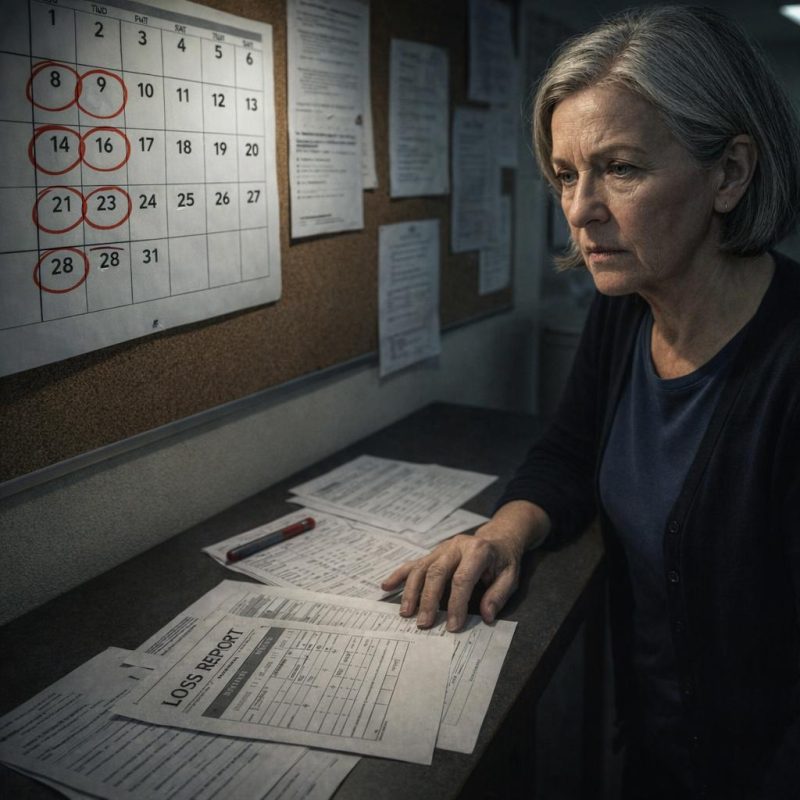 Image by RM AI
The Missing Footage
The next time Frank comes in for a morning check, I catch him before he gets to his office. I tell him I want to review security footage from a few specific dates — I keep it simple, say I want to verify my own procedures, make sure I'm doing the inventory walk correctly. He doesn't seem alarmed. He pulls up the security system log on the back office computer while I stand in the doorway. He scrolls for a moment, then frowns. He says the footage from the first date I give him is corrupted — a system error, he says, happens sometimes with the older cameras. I give him a second date. He checks. Same answer. Corrupted, or the file didn't save properly. I give him three more dates, one at a time, watching his face as he types each one in. Every single date comes back unavailable. He mentions the system has had ongoing issues, that they've put in a maintenance request, that these things take time to resolve. I nod and thank him and walk back out to the floor. I stand in the hardware aisle for a minute, looking at the shelving. Each date I gave him was a night when a loss was reported. Each one of those nights, the footage is gone. I think about coincidences — how many you can stack before the word stops fitting. The silence where the recordings should have been sits heavier than any answer he could have given me.
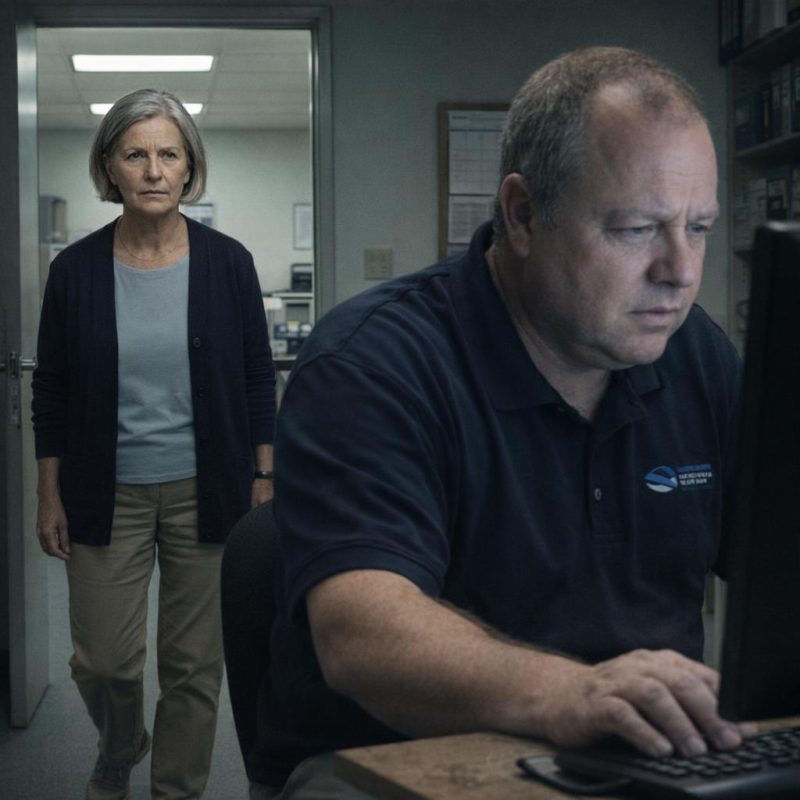 Image by RM AI
The Sound in the Stockroom
It's close to two in the morning when I hear it. I'm working through the main inventory area, clipboard in hand, and the building is the way it always is at that hour — settled, quiet, the hum of the refrigeration units the only real sound. Then something shifts. Footsteps. Not the building settling, not the HVAC cycling — actual footsteps, and what sounds like a box being dragged across a concrete floor, coming from the restricted stockroom at the far end of the back corridor. I stand still and listen. It happens again. I set my clipboard down and walk toward the corridor, keeping close to the shelving. The sounds stop before I reach the door. The stockroom door is supposed to be locked at all times during overnight shifts — I've checked it at the start of every shift for weeks. Tonight it's standing slightly ajar, maybe two inches, the latch not caught. I push it open slowly and step inside. The overhead light flickers on. The dust on the floor near the far wall is disturbed — scuffed in wide arcs, like something heavy was moved. And cutting through the middle of it, clear and fresh, a set of footprints leading straight toward the loading dock exit at the back of the room.
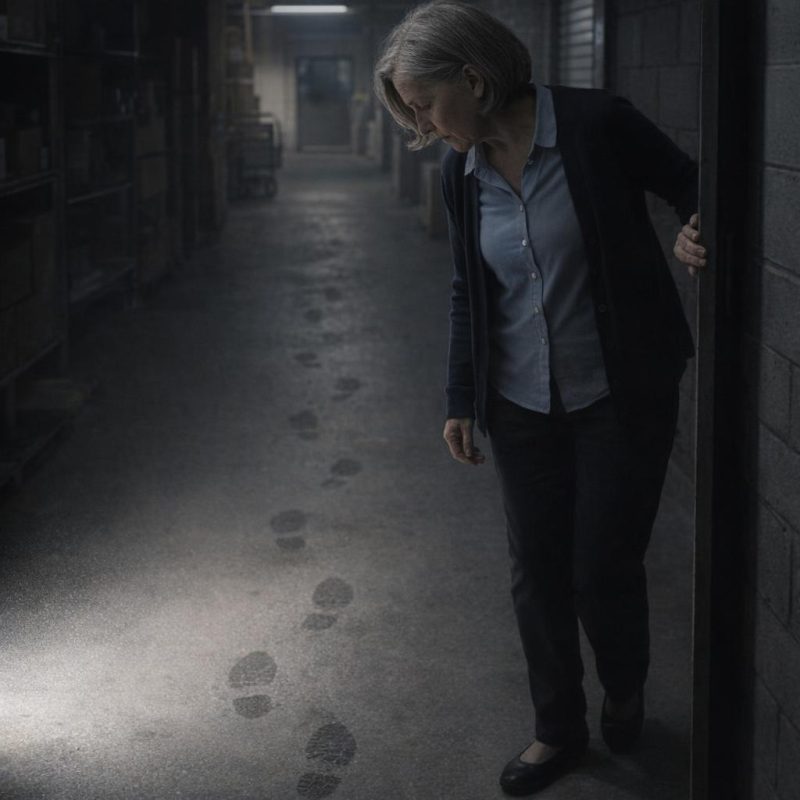 Image by RM AI
The Questioned Victim
I'm at the store before Frank's shift even starts the next morning, sitting in the parking lot until I see his car pull in. I give him five minutes to get settled and then I walk straight to his office. I tell him what I heard, what I found — the sounds, the unlocked door, the disturbed dust, the footprints leading to the loading dock. I keep my voice level. I have photographs on my phone and I show them to him. He looks at the screen, then looks at me. He asks if I'm certain I heard something, or if maybe I'd been startled by the building. I tell him I know what footprints look like. He nods slowly, like he's considering it, and says the stockroom door sometimes doesn't latch properly, that maintenance has been meaning to fix it. He says the dust disturbance could be from the last delivery crew. I tell him the last scheduled delivery was four days ago. He sits with that for a moment without responding. He leans back in his chair and asks how long I've been working overnight shifts, whether the hours have been hard on me. He says fatigue can do strange things — that people under stress sometimes notice things that aren't quite what they seem. Then he looks at me with something careful in his expression and asks if I've been feeling overwhelmed lately, or seeing things that aren't there.
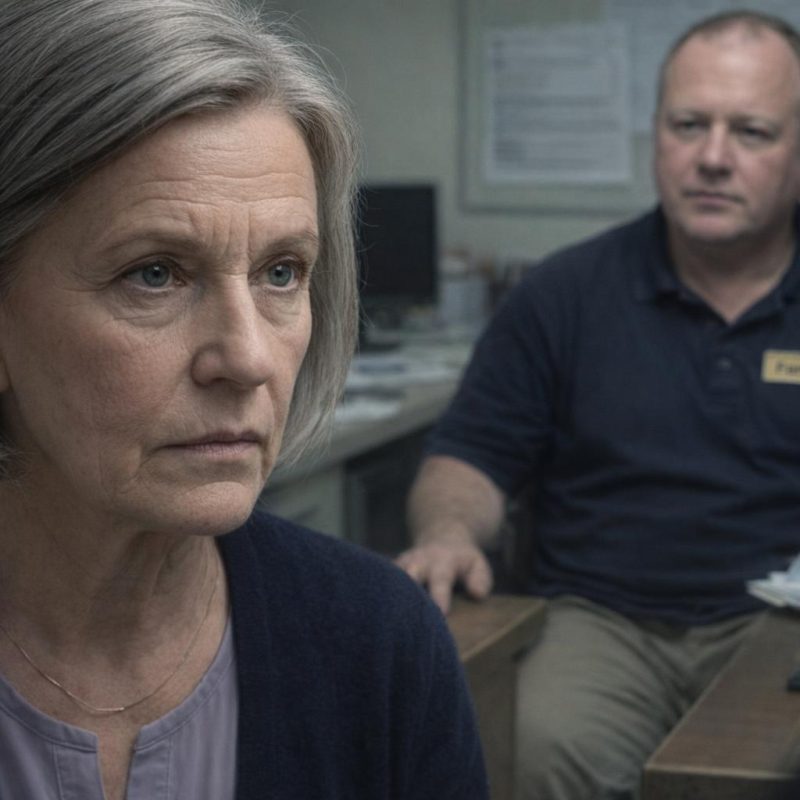 Image by RM AI
The Turned Tables
I don't argue with him. I've learned enough in thirty years of work to know when arguing will only make things worse. But I sit there in that chair across from his desk and I feel something shift — not in the room, but in me. Frank says he checked the stockroom himself and found nothing unusual. He says the door latches fine. He says the dust could have been disturbed by the HVAC system. Then he leans forward and asks, gently, whether I've been getting enough sleep during the day. He says overnight shifts are hard on the body, especially after a certain age. He says perception can get fuzzy when you're running on broken sleep. He's not raising his voice. He's not calling me a liar. He's doing something quieter than that — he's suggesting that what I saw and heard and photographed might be the product of an exhausted mind rather than a real event. He recommends I take a few days off. He says it with what looks like concern. I tell him I'm fine. I tell him the photographs are real. He nods like he's humoring me. I walk out of his office with my evidence still on my phone and nowhere to put it, and the weight of being doubted settles into my chest like something I'll be carrying for a while.
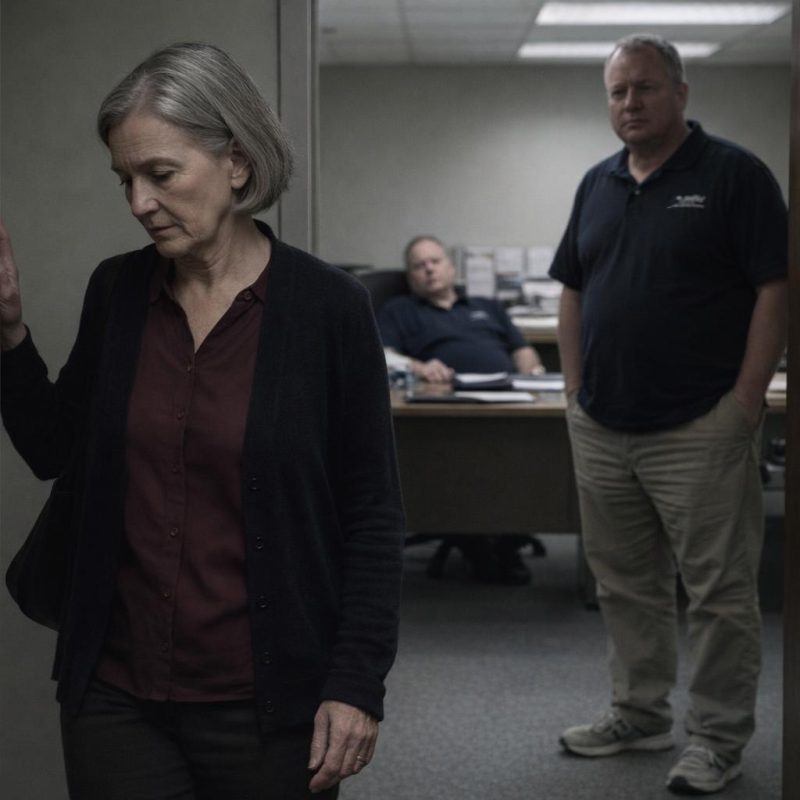 Image by RM AI
Rita's Confession
I'm almost to my car when I hear my name. Rita is standing near the cart return, arms crossed, watching the parking lot entrance like she's making sure no one followed her out. I haven't seen much of her lately — she's been on day shifts, and whenever our paths crossed inside she'd give me a quick nod and move on. I figured she was just busy. Now she's walking toward me with something urgent in her face. She says she's sorry. She says she's been avoiding me on purpose because she was scared, and she needed me to understand that before she said anything else. I tell her to go ahead. She says she's been watching the pattern at this store for years — the overnight scheduling, the inventory reports, the quiet exits of employees who asked too many questions. She says she doesn't think Frank is the one running it. She thinks he's afraid of someone above him, someone at the district or regional level, someone with enough authority to end careers without explanation. She says the people who pushed back didn't get fired outright — they just got squeezed out, reassigned, made to feel crazy until they left on their own. She offers to help me dig if we're careful about it. I say yes before she finishes the sentence. Standing there in the parking lot, I feel the first solid thing I've felt in weeks — but underneath it, the understanding that this goes far beyond the walls of our store.
 Image by RM AI
The Archive Search
Rita knows exactly where the old files are kept — a set of bankers boxes in the back of the records room that nobody touches unless corporate calls for an audit. We go in on a quiet Tuesday afternoon when the store is understaffed and Frank is off-site at a managers' meeting. Rita pulls the boxes without hesitating, like she's been thinking about this moment for a long time. We spread the files across the break room table and start working through them systematically, oldest first. The discrepancy reports follow a pattern almost immediately — overnight shift periods, inventory shortfalls in the same product categories, notes about employee performance concerns filed right around the time the losses were logged. Different names on each report, different years, but the shape of it is the same every time. We go back six years, then seven, then eight. Rita keeps a running list on a notepad while I photograph pages with my phone. We don't talk much. There's not much to say when the documents are doing the talking for you. Then I pull a report from near the bottom of a box dated six years back, and there's a name on it I don't recognize — an employee I've never heard mentioned before.
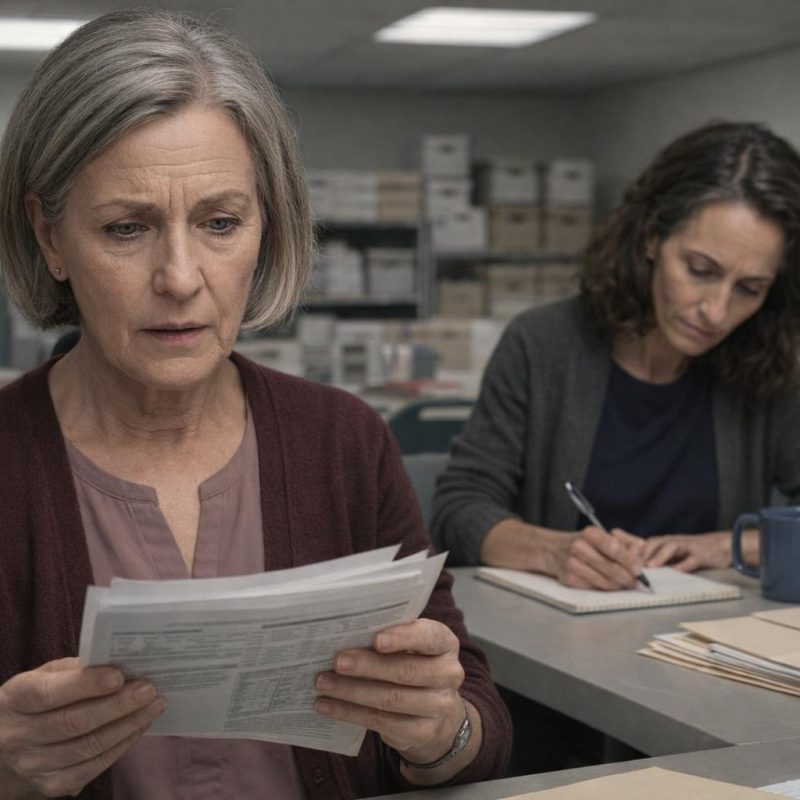 Image by RM AI
The Decade of Deception
We spend the next two hours building a timeline on the back of a roll of receipt paper Rita pulls from the supply cabinet — it's the only thing long enough to hold everything we're finding. Eight employees over roughly nine years, each one attached to a loss report, each one gone from the company within six months of the report being filed. The dollar amounts climb when we add them up: we're looking at well over two hundred thousand dollars in missing merchandise across that span, and not a single case where the loss was traced to anything other than employee error. But the audit reports don't match the raw inventory counts. Rita spots it first — the final audit numbers in each case are slightly cleaner than the preliminary counts, like someone went back and smoothed the edges. The falsified paperwork isn't sloppy. It's careful. It's the kind of careful that takes practice. We find sign-off signatures from both store and district levels on the adjusted reports, which means whoever was doing this wasn't working alone. Rita sits back and looks at the timeline we've made. I look at it too. The column of names, the column of dates, the column of dollar amounts — and then the column of outcomes, every single one the same: employee blamed, employee gone, case closed.
 Image by RM AI
The Misguided Plan
We find Frank in his office just before close. Rita sets the timeline on his desk without a word. He looks at it for a long moment, and I watch the composure he's been wearing for weeks just — go. His shoulders drop. He puts his face in his hands. When he looks up, his eyes are red at the edges. He says he's known something was wrong for years. He says he was blamed for a loss himself, before he was a manager, and he was told the promotion was contingent on not asking further questions. He says he's been documenting what he could, quietly, but he was too afraid to take it anywhere because he didn't know who to trust and he didn't know if anyone would believe a store manager over district leadership. Then he looks at me directly and says he put me on overnight shifts because of my reputation — that people who'd worked with me for years said I was thorough, that I noticed things, that I kept records. He says he thought if anyone could build a paper trail that would hold up, it was me. He says he's sorry. He says he knows it was wrong to put me in that position without telling me why. Rita is very still beside me. I'm not ready to call it forgiveness, not even close — but then Frank says he chose me because he believed I would find the truth, and I don't know what to do with that.
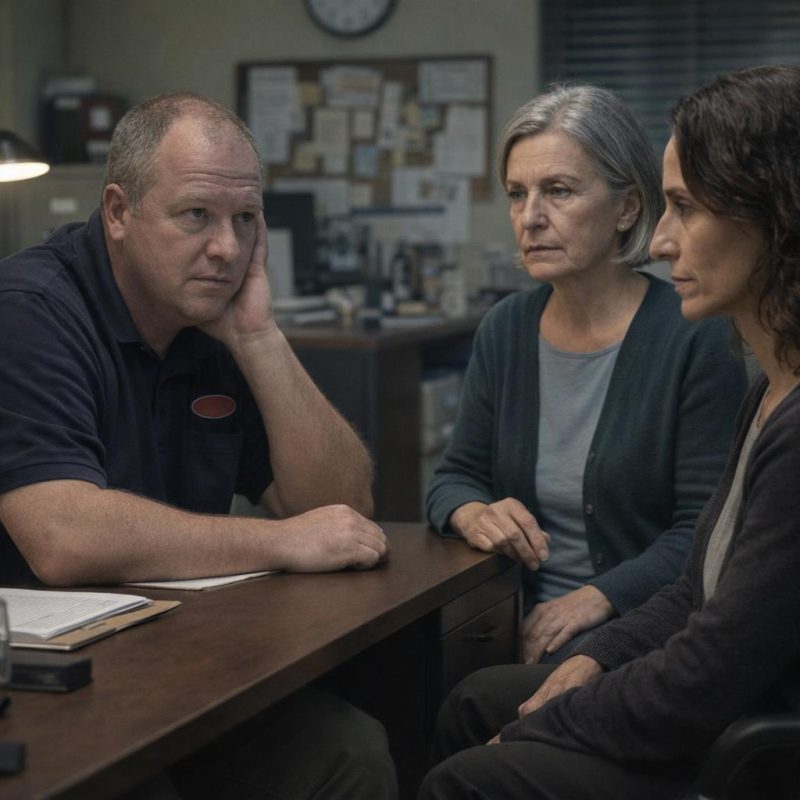 Image by RM AI
The Terrible Logic
I step back from his desk and stand near the window for a minute because I need something solid behind me. Rita doesn't move. Frank doesn't either. I'm angry — I want to be clear about that, even to myself. He used me. He put me alone in a building at night with people moving through it who didn't belong there, and he never once told me what I was walking into. That's not a small thing. But I also look at him sitting there, and I think about the version of this story where he's just another person who got caught in something too big and made a cowardly choice instead of a brave one. I've known people like that my whole life. It doesn't make what he did right. It just makes it human. He starts talking again, quieter now. He says the messages started about three years ago — anonymous at first, then less so. He says they told him his pension was tied to his cooperation, that if he made noise he'd be the one holding the bag when it all came apart. He says he has them saved. He opens his desk drawer, pulls out his personal phone, and his hands are shaking as he holds it out to show us the messages he received.
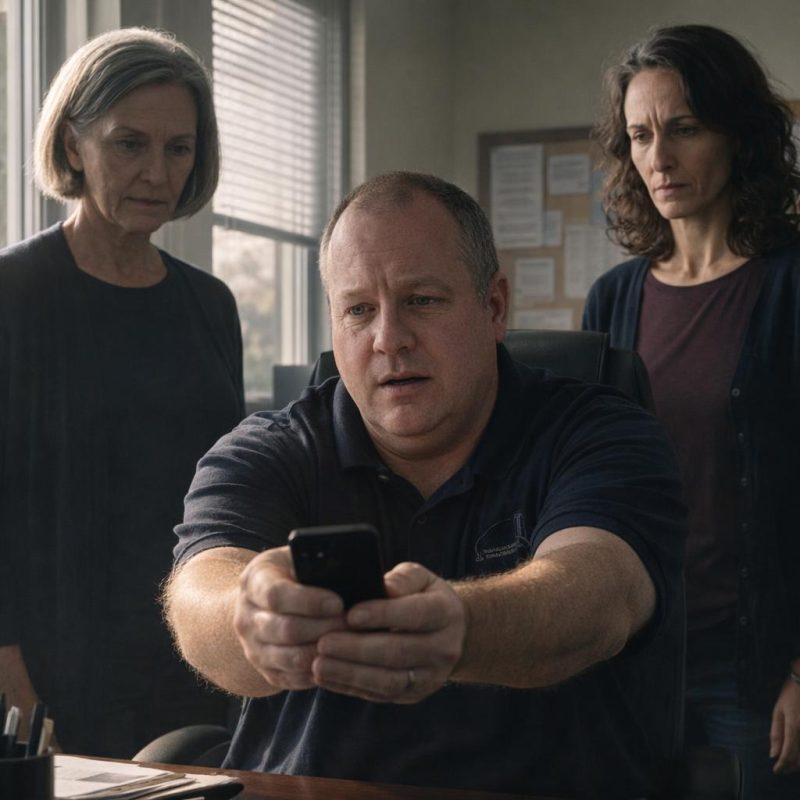 Image by RM AI
The Family Connection
We take a break from Frank's office and spread back out in the break room with the files again, this time looking at the names differently — not just as victims of the reports, but as people with histories outside this store. I start searching on my phone while Rita cross-references the paperwork. Most of the names turn up nothing useful, just old social media profiles and local news mentions. But the name from that six-year-old report — the one with the large loss and the crossed-out margin note — pulls up a short article from a regional business publication. It's a profile piece, a few years old, about a regional vice president being promoted to an expanded territory. And there, in the third paragraph, is a mention of his family: a niece who had worked in retail management before pursuing other opportunities. The name matches. I read it twice to make sure. Rita leans over my shoulder and reads it too. Frank, standing in the doorway with his coffee, goes very still when I tell him the name. He says he was told directly — by someone above him — that the investigation into that particular case was closed and was not to be revisited. He says he was never given a reason. I set my phone down on the table and the three of us sit with what we've just connected, the silence in the room holding the weight of years of buried questions.
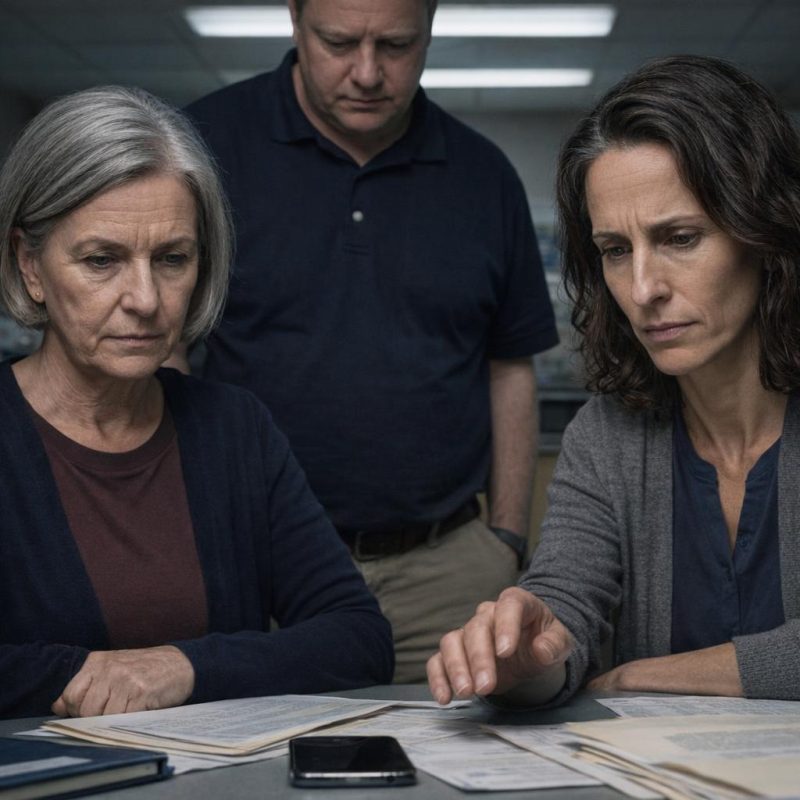 Image by RM AI
The Protected Network
Frank sits down with us and starts writing names on a legal pad — district managers, a regional operations director, someone in corporate loss prevention, two people in human resources. He says these are the people who signed off on closed investigations, who reassigned employees who asked questions, who approved the adjusted audit reports. Rita pulls up the corporate directory on her phone and we start mapping it out, drawing lines between titles and cases. Five people, at minimum, who had enough authority and enough information to have stopped this at some point and didn't. Some of them signed paperwork. Some of them just failed to follow up on reports that landed on their desks. Frank says one of them called him personally after the last audit cycle and told him the numbers looked fine — when Frank knew they didn't. The network isn't loud or dramatic. It's just a series of people who each made a choice to protect their own position, and in doing so protected everyone above and below them too. Rita tapes our timeline to the wall next to the legal pad. I stand back and look at all of it — the names, the dates, the dollar amounts, the titles, the lines connecting them. The organizational chart of who knew and who looked away sits there on the break room wall, quiet and damning.
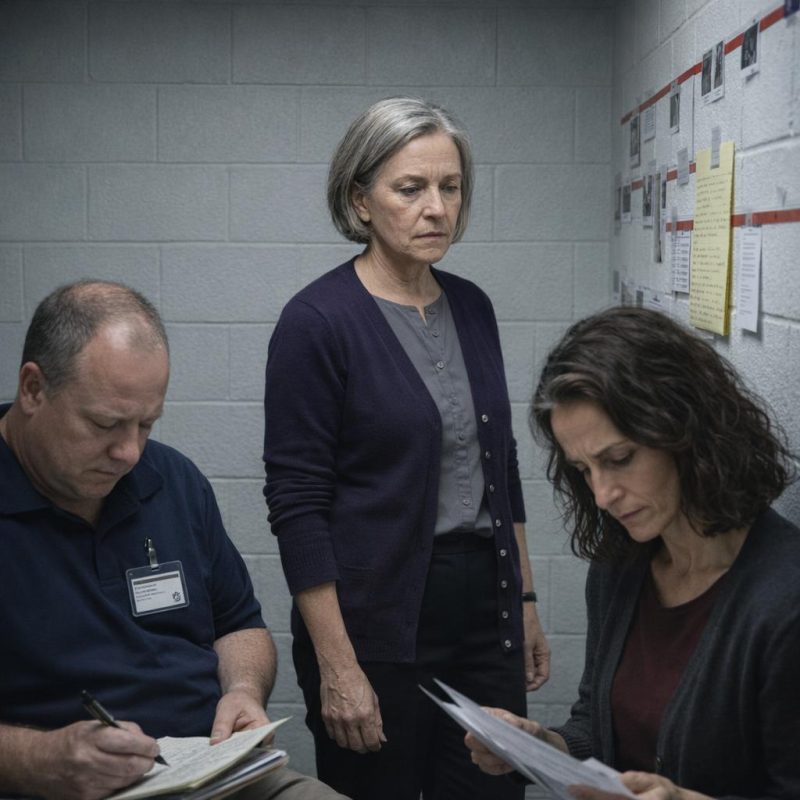 Image by RM AI
The Evidence Package
We spend the better part of a morning sorting everything into order — the altered audit reports, the original inventory logs, Frank's handwritten notes from the calls he was told to forget, the timeline Rita and I built on the break room wall, the names of every employee who got pushed out when the numbers didn't add up. Frank sits at the table and writes out a formal statement, his handwriting slow and deliberate, like he's choosing every word carefully because he knows it matters now. Rita makes three copies of everything on the store's copier, collating each set into its own folder. We label them: one for corporate compliance, one for the independent auditing firm, one for the employment lawyer whose number I found after two hours of research. I write my own statement last — four pages, single-spaced, starting from the first overnight shift and ending with the break room wall. My hands are steadier than I expect them to be. We talk about what comes next, what retaliation might look like, whether Frank's job survives this, whether mine does. Nobody pretends it's going to be clean. Rita tapes the contact list to the inside cover of each folder. I slide the last set of copies into a manila envelope, press the metal clasp down, and seal it shut.
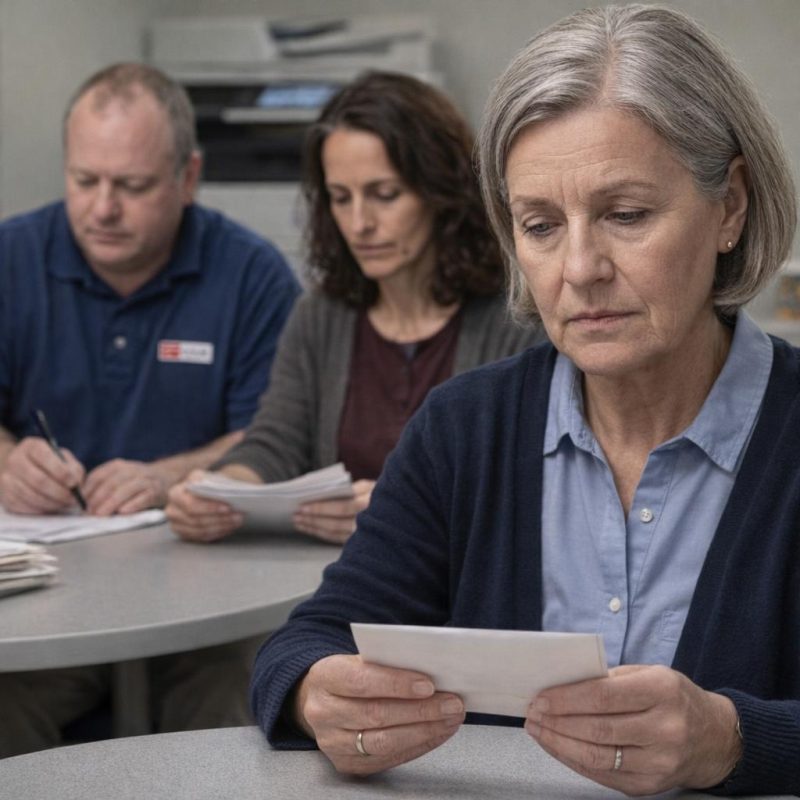 Image by RM AI
The Submission
We go to the post office on a Tuesday morning before our shifts start. Rita carries one envelope, I carry the other. The line is short and the clerk behind the counter doesn't look up much, just weighs each package and prints the labels without ceremony, which feels strange given what's inside them. Certified mail, return receipt requested, both of them. The compliance department address I found on the company's own ethics portal. The auditing firm's address from their public website. I watch the clerk slide both envelopes into the outgoing bin and feel something drop in my chest — not regret, just the sudden reality of it. Rita emails the lawyer's copy from her phone while we're still standing in the parking lot. I text Frank: it's done. He replies with a single word — okay — and nothing else. On the drive back, Rita and I don't talk much. She says at one point that she hopes we did the right thing, and I tell her I know we did, even if it doesn't feel that way yet. There's no going back from certified mail. The receipt prints on thin paper with a tracking number and a timestamp, and I fold it carefully and put it in my wallet, behind my driver's license, where I won't lose it.
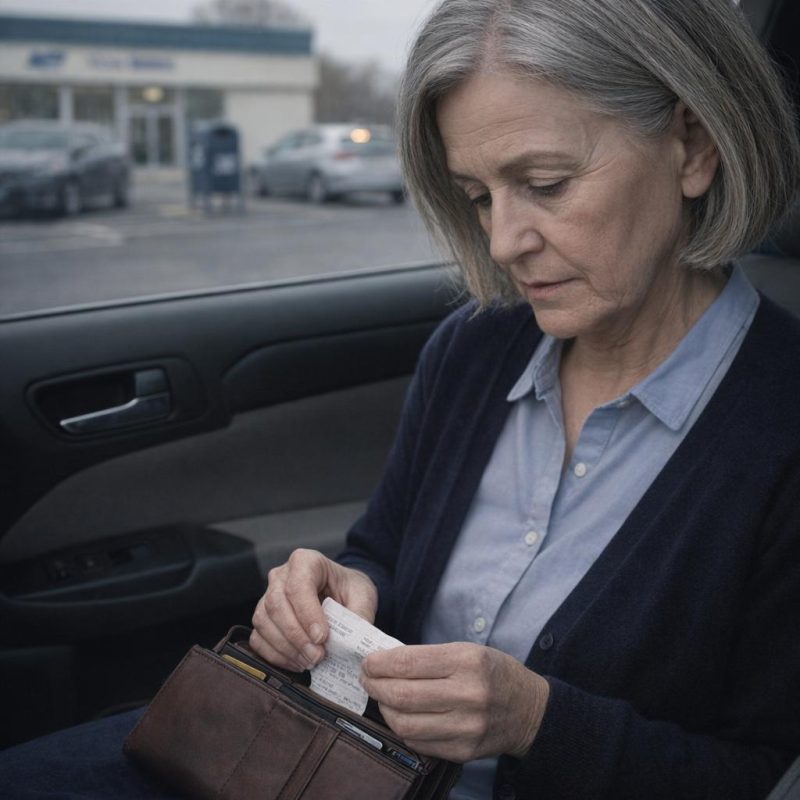 Image by RM AI
The Discredit Campaign
Michelle arrives on a Thursday with a woman I don't recognize — sharp blazer, company lanyard, HR badge. They call Rita into the back office first and keep her there for forty minutes. When it's my turn, Michelle is already seated, hands folded on the table, and the HR woman has a notepad open. Michelle says she's concerned about my recent performance. She says the word 'performance' the way people say it when they mean something else entirely. The HR woman asks whether I've been under unusual stress lately, whether I've had trouble sleeping, whether I feel my schedule has been affecting my judgment. I tell her my judgment is fine. Michelle says that making formal allegations against senior leadership is a serious matter, that if the claims turn out to be unsupported, there could be consequences for me professionally. She uses the word 'defamation' once, carefully, like she's placing it on the table between us. I look at her and say I have documentation for every claim in that submission — dates, reports, names, copies. The HR woman writes something down. Michelle's expression doesn't change. I walk out of that meeting with my hands cold and my jaw tight, and I find Rita waiting near the stockroom door, arms crossed, eyes steady. Neither of us says much. The weight of what they'd just done to us in those two separate rooms settles over everything, quiet and heavy.
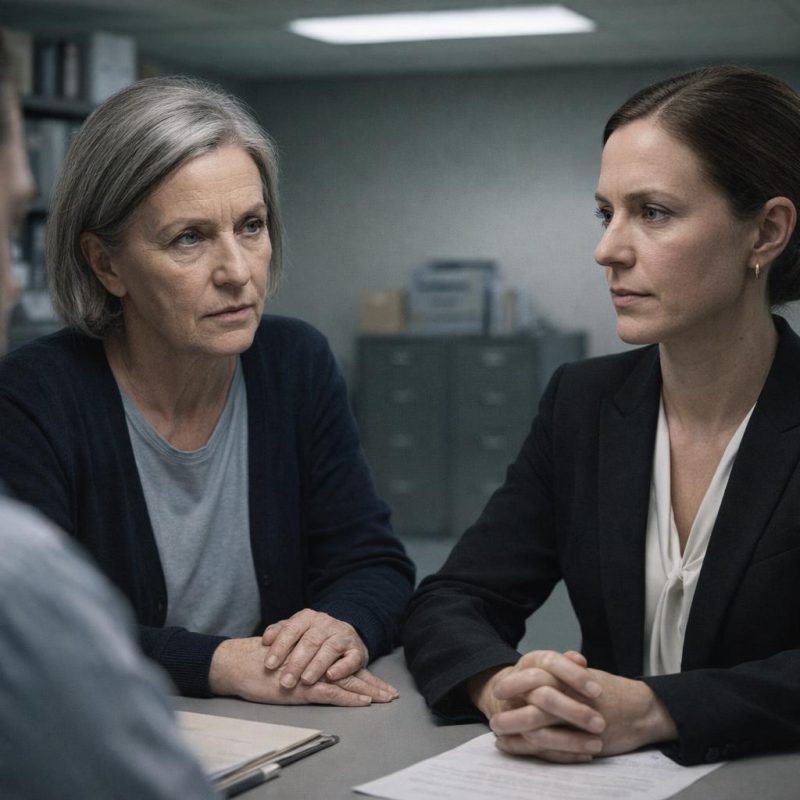 Image by RM AI
The Waiting Game
Two weeks go by and the compliance department sends nothing. I call the hotline on a Wednesday afternoon and a man reads me something that sounds like a script — your submission is under review, we take all concerns seriously, you will be contacted when appropriate. I thank him and hang up and sit in my car in the parking lot for a few minutes before going back inside. My schedule that week has me closing four nights in a row, then opening on Saturday. Rita gets a written warning for leaving a cart in the wrong aisle — something that would have been a verbal reminder six months ago. Frank tells us quietly that district management has been calling him more than usual, asking about store performance, asking about staff morale. Coworkers who used to stop and talk in the break room now find reasons to be somewhere else when Rita and I come in. Nobody is rude about it. They're just careful. A time-off request I put in for my nephew's graduation comes back denied — insufficient coverage. I start keeping a second log, just for the retaliation. Small things, each one easy to explain away on its own. I know how that works now. At night I lie awake and wonder whether our evidence is sitting in a folder somewhere, waiting to be quietly filed and forgotten, the way everything else was.
 Image by RM AI
The Unexpected Witness
The call comes on a Friday afternoon while I'm restocking the paper goods aisle. The man on the other end says his name is Tom, that he used to do security contracting for the company, that he heard through someone in compliance that a formal submission had come in and that it matched something he'd been sitting on for a long time. I step into the back hallway and press the phone closer to my ear. Tom explains that when his contract ended, he kept copies — security footage, system access logs, records from nights the company later claimed had technical failures. He says he suspected something was wrong years before he retired and held onto the files as a precaution. He's methodical about it, the way he explains it, like a man who has thought carefully about what he's going to say before he says it. We meet two days later at a diner near the store. He brings a hard drive and a printed log that runs forty-seven pages. Rita sits across from him and goes through the first section while I read the second. The footage timestamps match our timeline almost exactly. The access logs fill in gaps we hadn't been able to close on our own. I set the papers down on the table and look at Rita, and she looks back at me, and for the first time in weeks the tightness in my chest loosens just enough to breathe.
 Image by RM AI
The Confirmed Truth
Tom sets up his laptop on the diner table and walks us through the footage in order, starting from the earliest date in his logs. Most of it is quiet — empty aisles, loading dock doors, the dim glow of emergency lighting. Then he pulls up a clip from a Tuesday night, nearly four years back, and slows it down. A figure enters through the rear access door using a keypad code. Tom says the code was an executive override, the kind that bypasses the standard entry log. The figure moves through the stockroom with a familiarity that's hard to watch — straight to the inventory terminals, then to the shelving units along the back wall. Frank leans forward and his face goes still. Tom pulls up the access log alongside the footage and points to the timestamp, then to the corresponding inventory adjustment filed the following morning — a shrinkage notation, cause listed as unknown. He does this for six more clips, different nights, different quarters, same pattern. Rita has her notepad out and she's writing fast. Tom says the override code was tied to a specific executive account, and he pulls up the account record. I look at the name on the screen, and then I look at the footage still running in the corner of the display — the figure at the rear door, caught mid-step in the security camera's frame, face turned just enough toward the lens to be unmistakable — and it's Brian Sutherland.
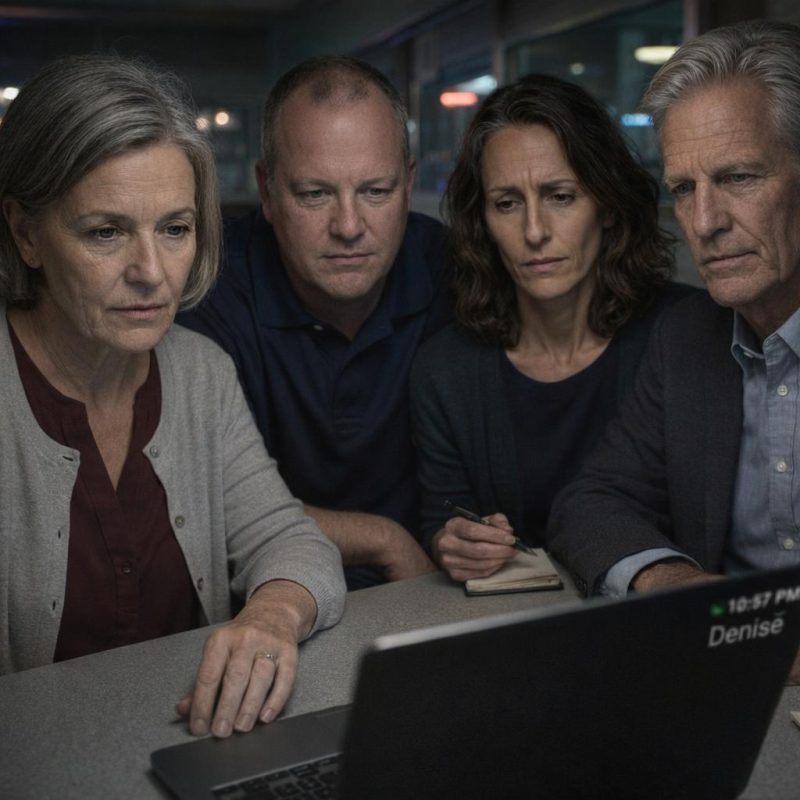 Image by RM AI
The Investigation Accelerates
Tom submits his hard drive and printed logs directly to the independent auditor the following Monday. By Wednesday, the auditor has contacted corporate compliance with what they're calling urgent corroborating findings. Rita and I are at work when Frank texts us both at the same time — just: something's happening, stay close to your phones. The next two days move fast in a way the previous weeks hadn't. We hear that two district managers have been suspended pending review. The company sends a store-wide notice about an expanded internal audit of regional inventory procedures, written in the kind of careful language that says everything without saying anything. A compliance officer calls me directly on Thursday afternoon and thanks me for the detail in my documentation — she says it specifically, the detail — and I have to sit down in the break room to finish the conversation. Rita is standing in the doorway when I hang up, and I give her a thumbs up, and she closes her eyes for a second. Frank comes in an hour later looking like he hasn't slept, but he's standing straighter than I've seen him stand in months. That evening, I'm sitting at my kitchen table with a cup of tea going cold beside me when my phone lights up with a company-wide email — and the subject line reads: Brian Sutherland has been placed on administrative leave pending investigation.
 Image by RM AI
The Reopened Cases
The company sends a letter to former employees the following week — I hear about it from Frank first, then from two people who used to work the floor before everything fell apart. The letter says the company is reviewing all inventory-related terminations from the past decade and that affected employees will be contacted individually. It's careful language, the kind legal teams write, but it means something real to the people who receive it. Rita and I are both scheduled for a mid-morning shift when my phone rings with a number I don't immediately recognize. I almost let it go to voicemail. The voice on the other end is Linda's — my former colleague, the one who lost her job and her reputation over losses she had nothing to do with. She sounds different than the last time we spoke. Steadier. She says the investigators called her. She says they told her the termination is being reversed and her employment record corrected. She says she's been carrying this for years and she didn't think anyone was ever going to look back far enough to find it. I'm standing in the break room holding my phone with both hands, and I don't have the right words, so I just tell her I'm glad. She says she knows. After we hang up, I stand there for a moment in the quiet of the break room, the hum of the refrigerator the only sound, and I feel the full weight of how long this took and how much it cost — and that it was still worth every bit of it.
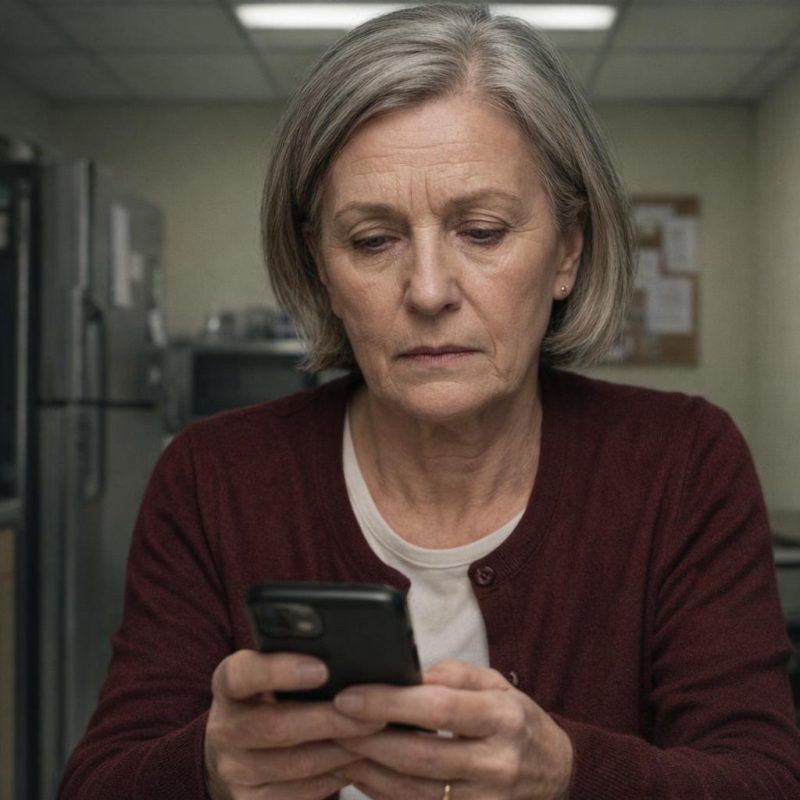 Image by RM AI
The Settlement Offers
The formal letter arrives on a Tuesday, tucked inside a manila envelope with the company's legal department return address. I open it at the break room table with Rita sitting across from me, and I read it twice before I say anything. The company is offering financial settlements to all employees who were wrongly accused or terminated in connection with the inventory losses — Linda included. There's a separate page addressed specifically to me, offering a promotion to shift supervisor with a salary bump and a title that would have meant everything to me five years ago. Rita watches my face while I read. She asks what I'm thinking. I tell her I'm not sure yet, which is the honest answer. She says I've earned it, that nobody in this building has earned it more. I know she means it. But sitting there holding that letter, I keep thinking about everything the system got wrong — not just once, but for years, across multiple people's lives — and I wonder what a supervisor title inside that same system actually changes. I think about Linda's voice on the phone, steadier than it used to be. I think about what would actually stop this from happening to the next person. The promotion offer sits on the table between us, waiting for an answer I'm not ready to give yet.
 Image by RM AI
The Different Path
I meet with HR two days later and I bring notes, which probably surprises them. I tell them I'm grateful for the offer and I mean it — but I explain that a supervisor role isn't what I want. What I want is something that didn't exist before any of this happened: a position focused on employee development, rights education, and compliance training. I want to be the person new employees can come to before things go wrong, not after. The HR rep — a woman I've spoken to maybe twice in three years — goes quiet for a moment, then says she thinks that can be arranged. It takes another week of back-and-forth, but they create the position. Frank stops by my station the afternoon it's finalized and shakes my hand. He looks relieved in a way that's hard to describe, like something he'd been carrying had finally been set down. Rita gets the supervisory role, which fits her better than it ever would have fit me — she's been quietly managing people for years without the title to show for it. My first morning in the new role, I sit down at a small desk with a stack of onboarding materials and a blank policy draft, and I feel something I haven't felt at work in a long time. Not relief exactly. Something quieter than that, and steadier.
 Image by RM AI
The New Beginning
My first official training session is a Tuesday morning with six new hires in the back conference room. I go through scheduling rights, how to document concerns, who to contact if something feels wrong, and what retaliation actually looks like — because most people don't recognize it until they're already in the middle of it. I keep it plain and direct, the way I would have wanted someone to talk to me. A few days later, a young woman named Carla stops me in the hallway and asks if she can talk privately. She's been with the company for three months. She tells me her schedule has been shifting week to week in ways that make it impossible to arrange childcare, and she doesn't know if she has any standing to say something about it. I tell her she does. We sit down together and I help her write out the pattern — dates, times, the impact — and we file it through the proper channel. The issue is reviewed and corrected within ten days. She finds me afterward and says thank you in a way that's quiet and a little stunned, like she hadn't expected it to actually work. Rita tells me later that word is getting around — that employees feel like there's someone in the building who will actually listen. I think about all the years I spent hoping someone would say that about this place, and I sit with how much that means.
 Image by RM AI
The Warning That Changed Everything
Rita and I meet for coffee on a Saturday morning, the first time in months we've sat somewhere without a shift starting in an hour. We talk about the parking lot — that night she pulled me aside, voice low, telling me to pay attention to what was happening around me. She says she wasn't sure I'd listen. I tell her I almost didn't. We sit with that for a moment. She says she's glad I did. I think about how a conversation that lasted maybe four minutes in a cold parking lot set everything else in motion — the documentation, Tom's records, Linda's name finally cleared, Brian's scheme pulled into the light. It's strange to trace it all back to one quiet warning between two coworkers who just didn't want to let something wrong keep going unchallenged. I think about Carla in the hallway, and the new hire last week who came to my office door and stood there for a moment before deciding to come in. I think about how many people never find that door, or don't believe it will open for them. On my way back into the building that afternoon, a young man I don't recognize yet stops me near the entrance and says he's been feeling overlooked and doesn't know if it's worth saying anything. I look at him and tell him it's always worth saying something — and I mean every word of it.
 Image by RM AI