I Spent 4 Years Restoring My Late Grandfather's Mustang. My Brother Sold It To Fund His Restaurant. He Has No Idea What's Coming.
I Spent 4 Years Restoring My Late Grandfather's Mustang. My Brother Sold It To Fund His Restaurant. He Has No Idea What's Coming.
The Empty Space
Saturday mornings had a rhythm to them. Coffee first, then boots, then the walk across the backyard to the garage where the Mustang waited. Four years of Saturdays, and I never got tired of it. I grabbed my mug and headed out like always, already thinking about the carburetor linkage I'd been meaning to adjust. The garage door was the first thing that felt wrong. It slid up smooth and easy, no resistance, none of that summer stickiness where the wood swells and you have to put your shoulder into it. I noticed it but didn't stop moving. Then the morning light spilled in across the concrete floor and I just — stopped. The bay was empty. Not empty like I'd moved the car. Empty like it had never been there. I stood in the doorway with my coffee going cold in my hand, staring at the bare floor. There were fresh oil drips in a trail where the front end used to sit, dark little spots on pale concrete, still wet enough to catch the light. Four years of work. Four years of weekends and skinned knuckles and my grandfather's voice in my ear. I stood there and the silence of that empty concrete floor settled over me like something physical.
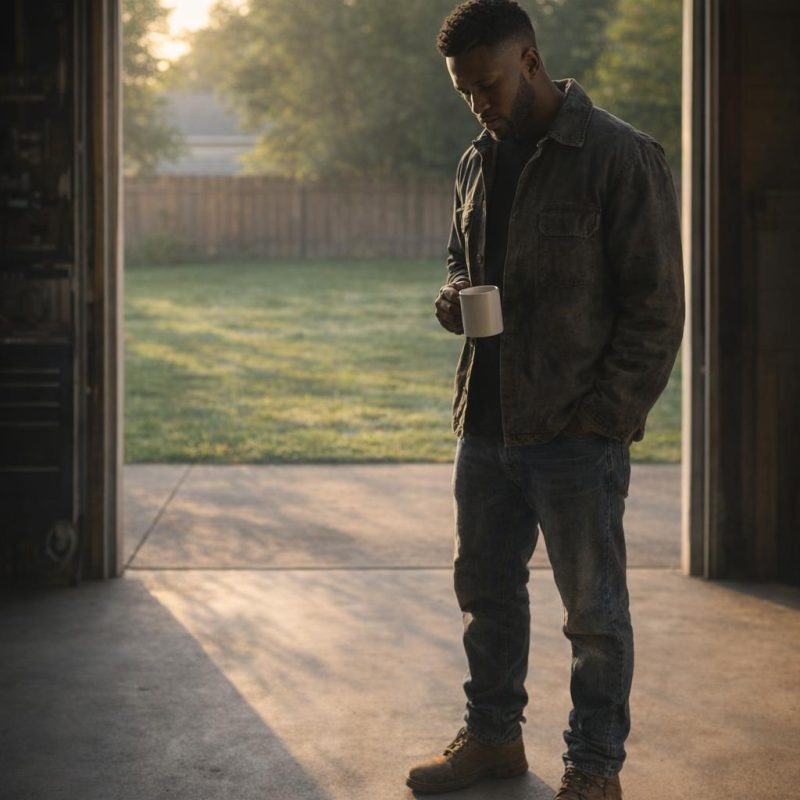 Image by RM AI
The Brochure
I set the mug down on the driveway and went back inside the garage, moving slow, like if I looked carefully enough the car would reappear. The side door was unlocked but there was no sign of forced entry, no scratched lock, no broken latch. Whoever had been here had a key, or hadn't needed one. I checked the pegboard where I kept the spare set. The hook was empty. I turned toward the workbench and that's when I saw it — a glossy brochure sitting right in the middle of the surface, propped against my torque wrench like someone had left it there on purpose. I picked it up. Heavy stock paper, full color, the kind of thing that costs real money to print. The front showed a sleek dining room with pendant lighting and white tablecloths. 'The Gilded Plate — A Modern Bistro Experience.' I flipped it open. There was a short paragraph about the concept, farm-to-table, curated seasonal menus, a wine program. And then at the bottom, in clean serif font, the ownership line. Proprietor: Julian Reyes. Grand opening in three weeks.
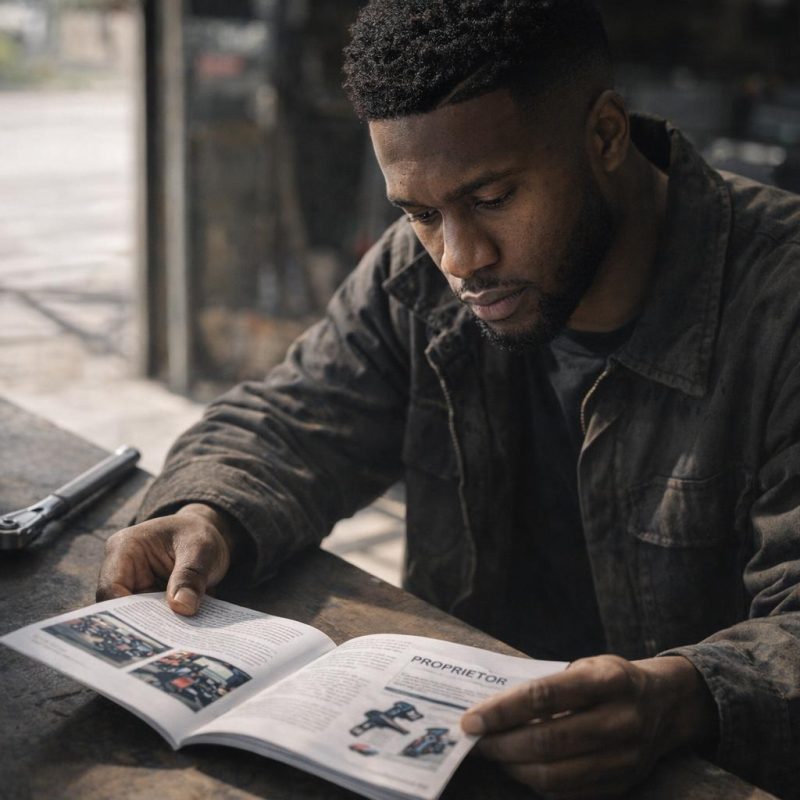 Image by RM AI
Four Years in a Garage
I sat down on the old shop stool in the corner and just let the garage be quiet around me for a while. Four years ago, my grandfather had called me over on a Sunday afternoon and pulled a tarp off a rusted hulk in his driveway. A 1967 Mustang Fastback, original V8, seized engine, body panels eaten through in three places. He said he'd been holding onto it for the right person. I was twenty-four and didn't know half of what I thought I knew about engines, and he knew that, and he didn't care. Every Saturday after that we were in here together. He taught me how to read a car the way you read a person — slowly, without assumptions, paying attention to what it was actually telling you instead of what you wanted to hear. We sourced parts from three different states. We rebuilt the engine block by hand over the course of eight months. His health started going in the third year, and the Saturdays got shorter, but he never stopped showing up. We finished the engine rebuild in February. He passed in April. I never drove the car after that. I wasn't ready. I'd sit in here sometimes and just put my hands on the fender and that was enough. I could still feel the weight of his hands over mine on the engine block, patient and steady, guiding me through something I couldn't have done alone.
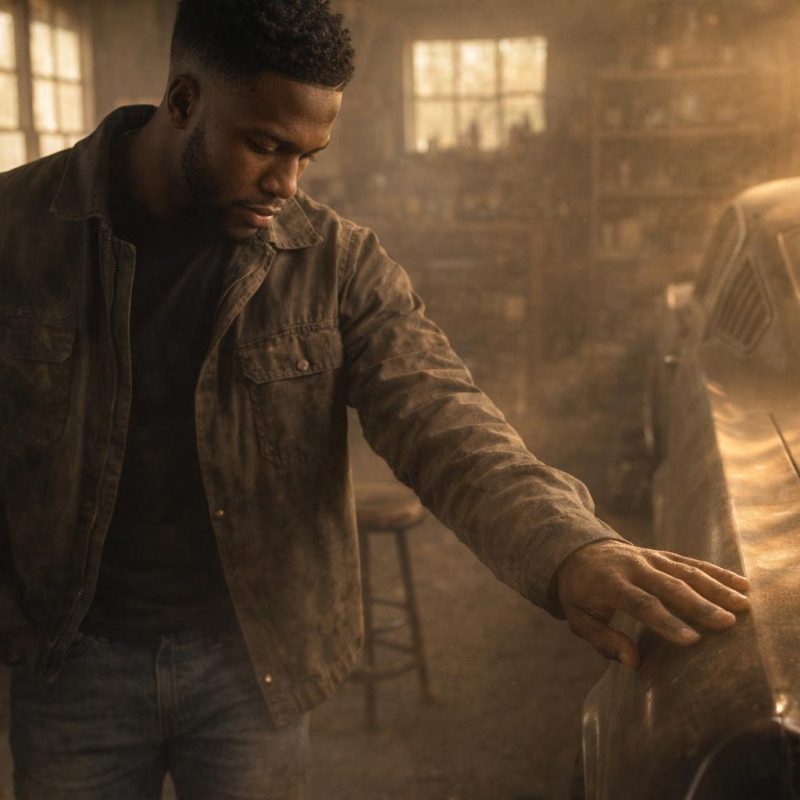 Image by RM AI
The Golden Child's Resume
The thing about Julian is that this wasn't the first time he'd needed rescuing. Three years back he had a dropshipping business that lasted about four months before it collapsed under the weight of inventory he'd already spent the profit from. My parents covered the debt — around eight thousand dollars — and told me I should be more understanding because Julian had vision and vision takes time to develop. Then there was the app. I never fully understood what it was supposed to do, but my father wrote a check for it anyway, and eighteen months later Julian was back at the kitchen table with a new pitch. Each time, the story was the same: the timing had been wrong, the market hadn't caught up yet, the partners had let him down. Each time, my parents nodded and reached for their checkbooks and looked at me like I was the difficult one for not being more enthusiastic. I had told Julian the Mustang wasn't for sale. Not once — a dozen times, easy. He'd asked about it twice in the last year alone, framing it differently each time, and both times I'd said the same thing. That car wasn't a car to me. It was the last thing my grandfather and I built together, and no number attached to it was going to change that. Julian had smiled and said he understood. The pattern of those smiles, stretched back across years of borrowed money and broken promises, sat heavy in my chest.
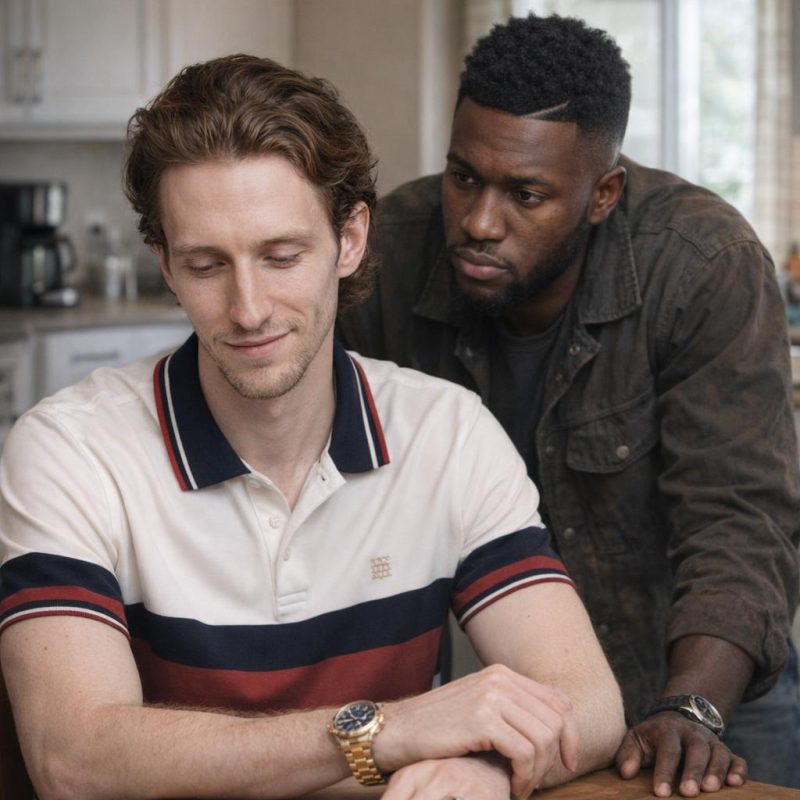 Image by RM AI
Heavy Boots on Linoleum
I left the garage and started walking. My parents' house was six blocks away, close enough that I'd never thought much about the distance before. That morning it felt like something I had to push through. My work boots were loud on the sidewalk, each step deliberate, and I kept turning the brochure over in my head — the white tablecloths, the serif font, Julian's name at the bottom like a signature on something he was proud of. I didn't have a plan for what I was going to say. I just needed to see their faces. I needed to know if they knew. The front door was unlocked the way it always was on weekend mornings, and I pushed it open and stepped into the front hallway. The house smelled like coffee and something baking, normal Saturday smells, and for a second I almost talked myself into thinking I had it wrong. Then I heard voices coming from the kitchen. They were talking, all three of them by the sound of it, and nobody sounded upset or worried or like anything in the world had gone sideways that morning.
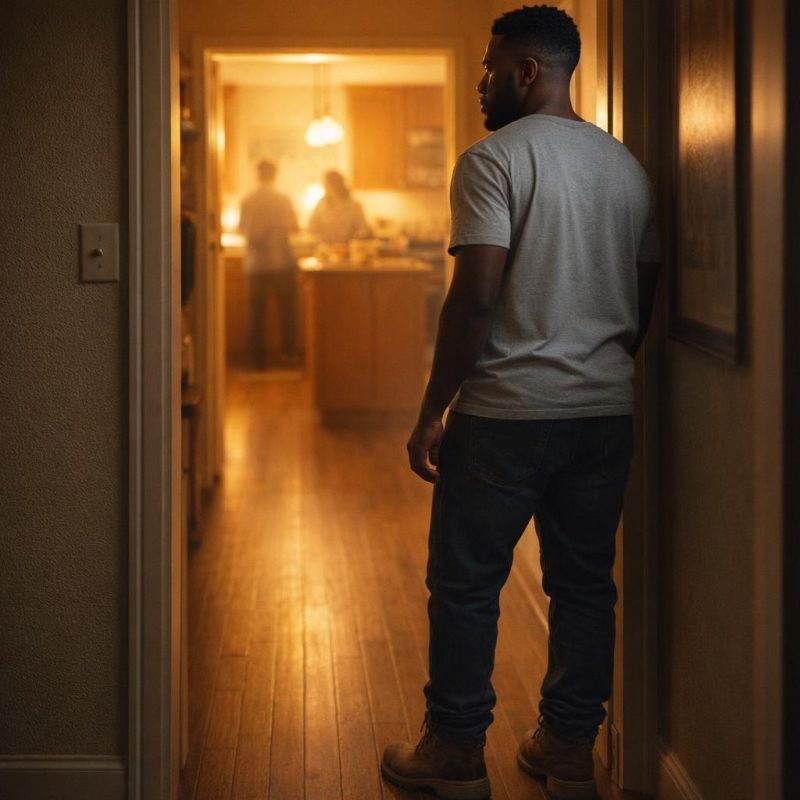 Image by RM AI
Shadows in the Hallway
I didn't go in. I stopped just inside the hallway, back against the wall, and I listened. Julian's voice was the loudest, the way it always was when he was excited about something. He was talking fast, that manic upswing in his tone he gets when he thinks he's won something. He was describing the bistro — the location, the layout, the equipment he'd already put deposits on. Then he said he'd secured his initial investment. He said it like it was a business term, clean and professional, like he was presenting to a room full of people who were going to applaud. My mother said something I couldn't quite catch, and Julian laughed and said it had been easier than he expected. He'd found a private collector who was interested in a classic piece. The collector had paid cash and hadn't asked any questions about the title.
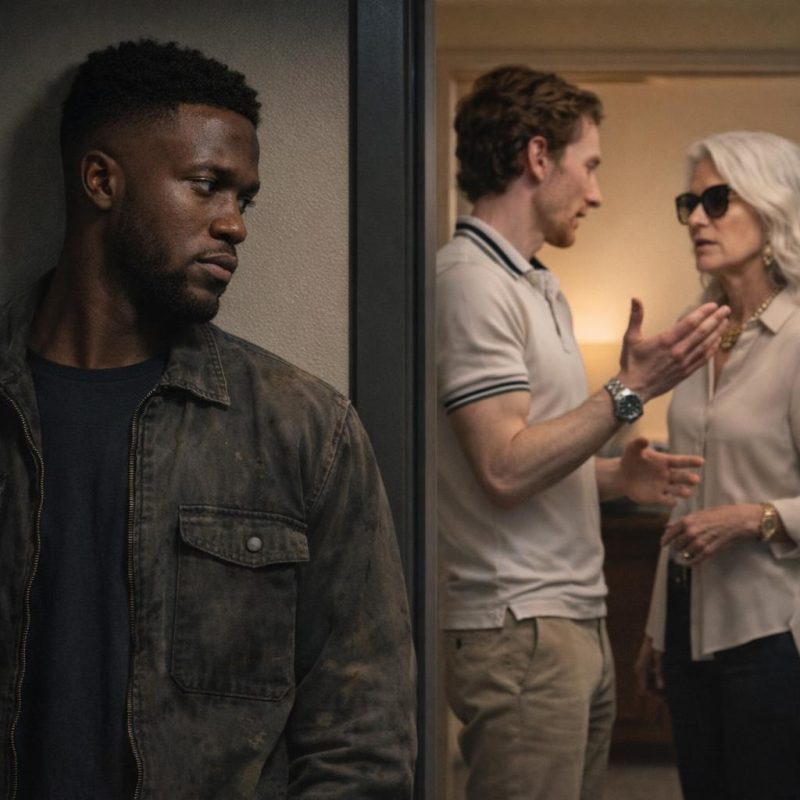 Image by RM AI
Dusty Garage Money
I pressed my back harder against the wall and kept still. Julian kept talking, laying out the numbers like he was proud of them — the lease deposit, the first month's rent, the commercial kitchen equipment already on order. The money was committed, he said. Already in motion. My mother laughed at something, a bright easy sound, and then she said it: Marcus never drives that car anyway. Just sitting in a dusty garage. She said it lightly, the way you'd say something obvious, something everyone in the room already agreed on. Like my four years of work were a footnote. Like the fact that I hadn't driven it yet meant I didn't care about it, or didn't deserve it, or that it was just an object waiting for someone with better plans to put it to use. Julian agreed and moved on to describing the wine program. My father said nothing. I stood in the hallway and heard my mother's laughter settle into the walls of that house, easy and unbothered, and I stayed very still inside it.
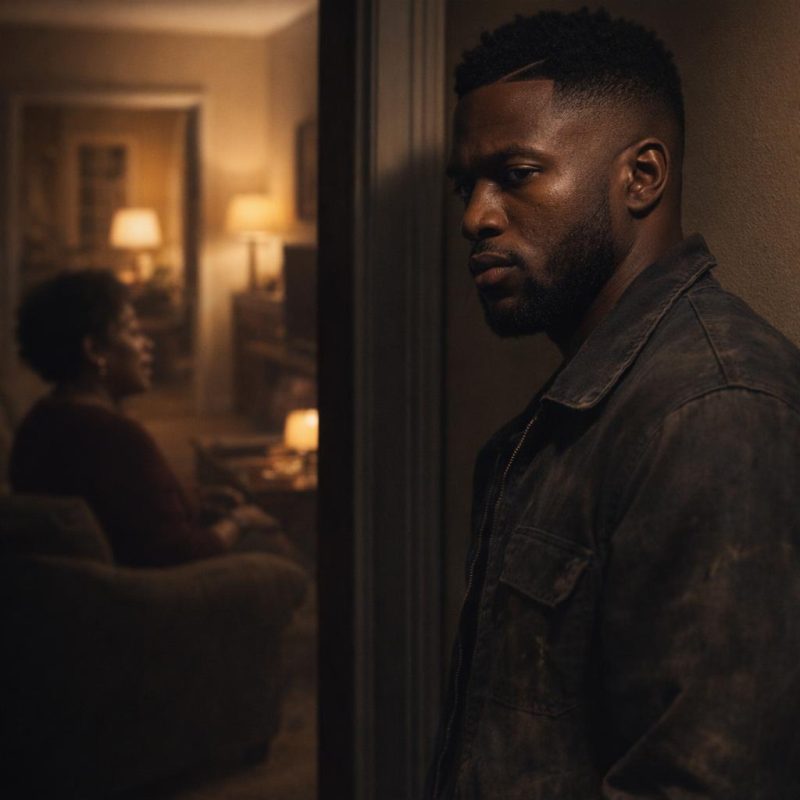 Image by RM AI
The Secondary Character
The conversation kept moving. My mother asked about the menu concept and Julian launched into it — small plates, seasonal ingredients, a prix fixe option on weekends. He had names for the dishes. He'd clearly been thinking about this for a long time. Nobody said my name. Nobody said anything like 'we should probably tell him' or 'do you think he's noticed yet.' I was a detail they'd already accounted for, or maybe not even that. At one point Julian mentioned that the timing had worked out perfectly, that he'd moved fast before anything could get complicated. My mother agreed. And then my father, who had been quiet the whole time, finally spoke. His voice came through the doorway low and even. He told Julian the timing had been smart.
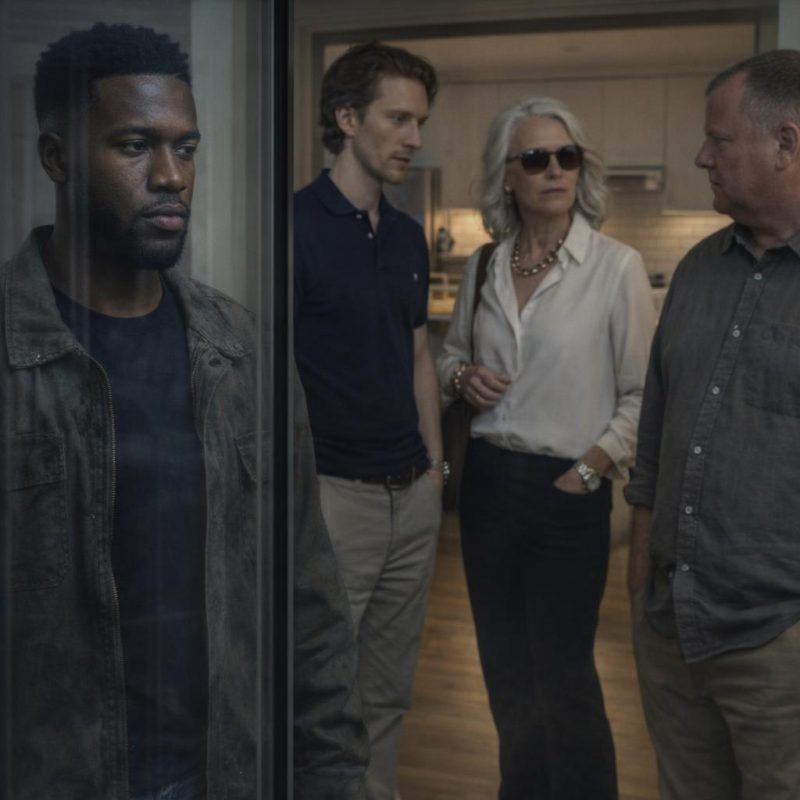 Image by RM AI
The Gaslighting Ahead
I stood there in the hallway for another few seconds, just listening to them talk. Julian was already describing the dining room layout, how he wanted exposed brick on the north wall, pendant lighting over the bar. My mother was asking about the chef. My father said nothing else. And I felt it — that pull, that almost physical urge to push through that door and put every word I'd just heard back in their faces. I imagined it. I let myself imagine it fully. Julian would go wide-eyed and then pivot to calm, that thing he does where he tilts his head slightly and speaks slowly like you're the one being unreasonable. My mother would say I was making it about myself. She'd say the family needed to pull together right now, that Julian had a real opportunity, that I could always get another car. My father would look at the table. And by the end of it I'd be the problem — the one who couldn't see the bigger picture, the one holding a grudge over something that was already done. I'd seen that script before. I knew every line. So I didn't push through the door. I took one step back, then another, moving carefully on the old floorboards until I reached the front door and eased it open — and slipped back out into the dark without making a sound.
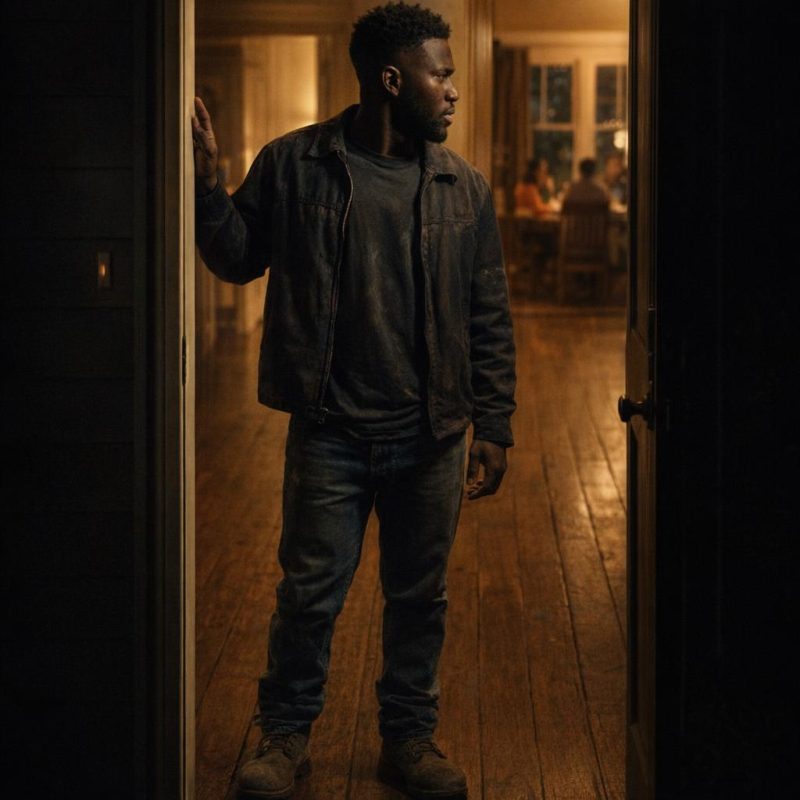 Image by RM AI
The Safety Deposit Box
I walked back to my apartment on autopilot. I don't remember most of it — the streets, the lights, whether anyone passed me. I just remember sitting down on the edge of my bed and staring at the floor for a long time. The Mustang was gone. That was the fact I kept landing on. Four years of weekends, of skinned knuckles and sourced parts and my grandfather's voice in my head telling me to take my time and do it right. Gone. And then, slowly, something else started coming back to me. I remembered the afternoon I'd spent running the wiring for the GPS tracker — a secondary unit, hardwired to its own small battery, tucked behind the rear quarter panel where nobody would think to look. I remembered installing the immobilizer, a custom switch hidden under the dash. Julian had never been in that garage for more than ten minutes at a stretch. He wouldn't know those things existed. And then I thought about the safety deposit box at the bank — the one with the original title inside, the one I'd put there specifically because I didn't want important documents sitting around the house. Julian had only ever seen the copy we kept in the filing cabinet. Whatever he'd handed over to that collector, it wasn't the original. The weight of that sat with me quietly in the dark.
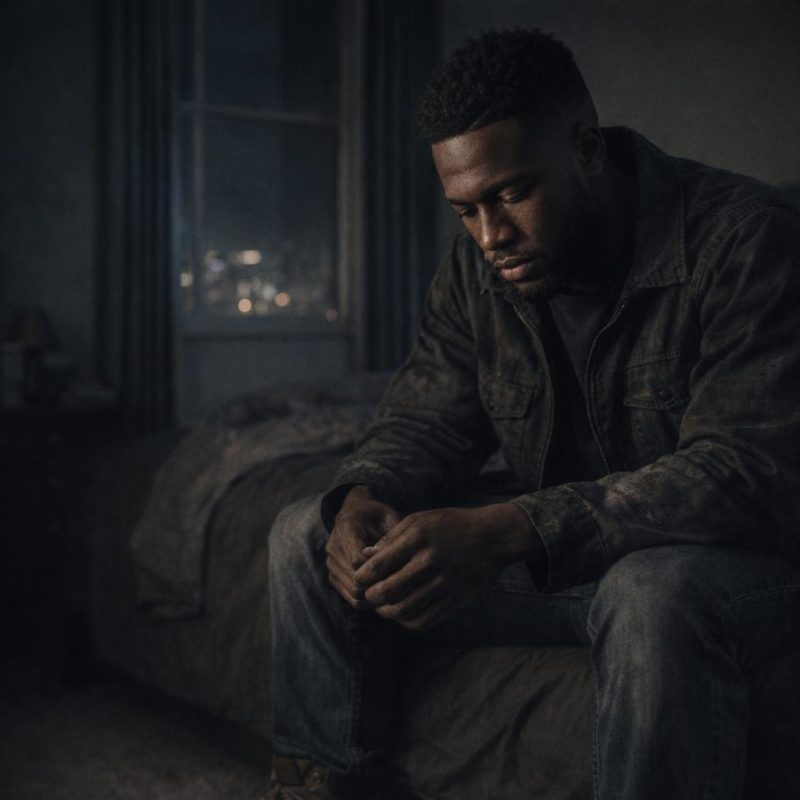 Image by RM AI
Quiet Research
I didn't sleep much. Around midnight I gave up trying and opened my laptop on the kitchen table. I started searching — carefully, methodically, the way I approach a repair I've never done before. I looked up stolen vehicle recovery laws in my state. I read about the difference between civil disputes and criminal theft, and the line between them was thinner than I'd expected but it was there. What mattered, according to everything I was reading, was documentation: who held the original title, whether the vehicle had been transferred with the owner's consent, whether a police report had been filed. I found a forum thread from a guy who'd had a similar situation — a family member sold something that wasn't theirs to sell — and the responses from people who actually knew the law were detailed and consistent. Without a valid title transfer, the buyer didn't have clean ownership. The car could be flagged. It could be recovered. I opened a notes app and started writing things down — the VIN number I had memorized, the date I'd last seen the Mustang in the garage, the name of the bank where the title was held. I wasn't ready to do anything yet. I just needed to understand the shape of what I was dealing with. The screen cast a pale glow across the table as I kept reading, and I didn't look up for a long time.
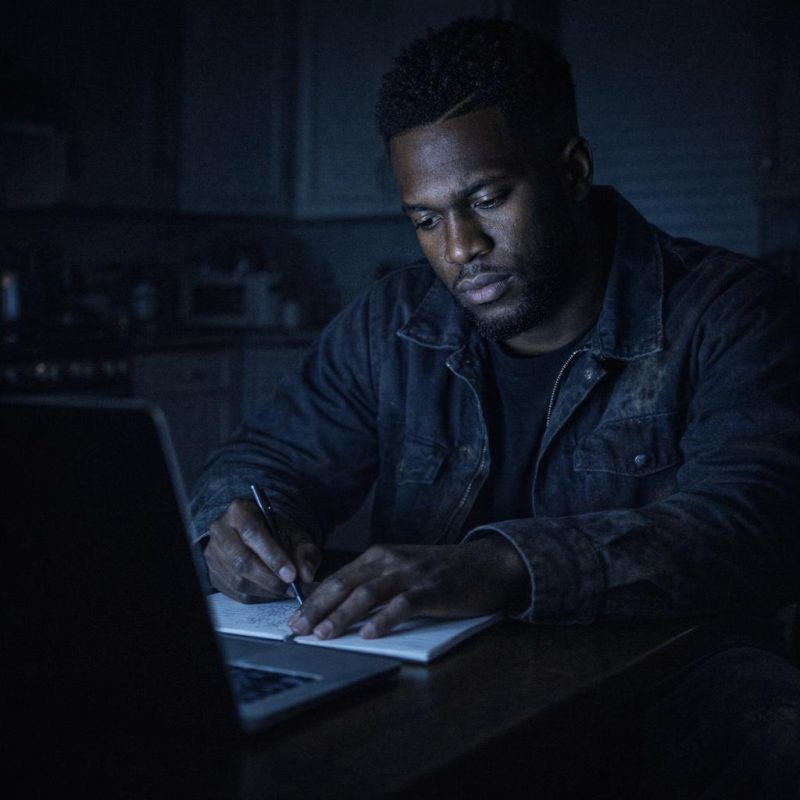 Image by RM AI
The Police Report
I was up before six. I put on a clean shirt, which felt strange, and drove to the police station while the parking lot was still mostly empty. The officer at the front desk was a woman in her forties who listened without interrupting while I explained the situation — that I owned a 1967 Ford Mustang, that I held the original title in a safety deposit box, that the vehicle had been removed from my garage and sold without my knowledge or consent. I gave her the VIN. I gave her the make, model, color, the custom modifications that would make it identifiable to anyone who knew what they were looking at. She asked a few clarifying questions. I answered them. When she asked if I wanted to request immediate active investigation or have it logged as under investigation pending further documentation, I asked for the second option. I wasn't ready for squad cars showing up at my parents' house. Not yet. I needed the record to exist first. She typed for a while, printed something, slid it across the counter. It was a single page with a case number printed at the top, and my name, and the Mustang's VIN, and the words 'reported stolen' in a field near the bottom. I folded it carefully and put it in my jacket pocket. The officer stamped her copy and filed it in a tray without looking up again.
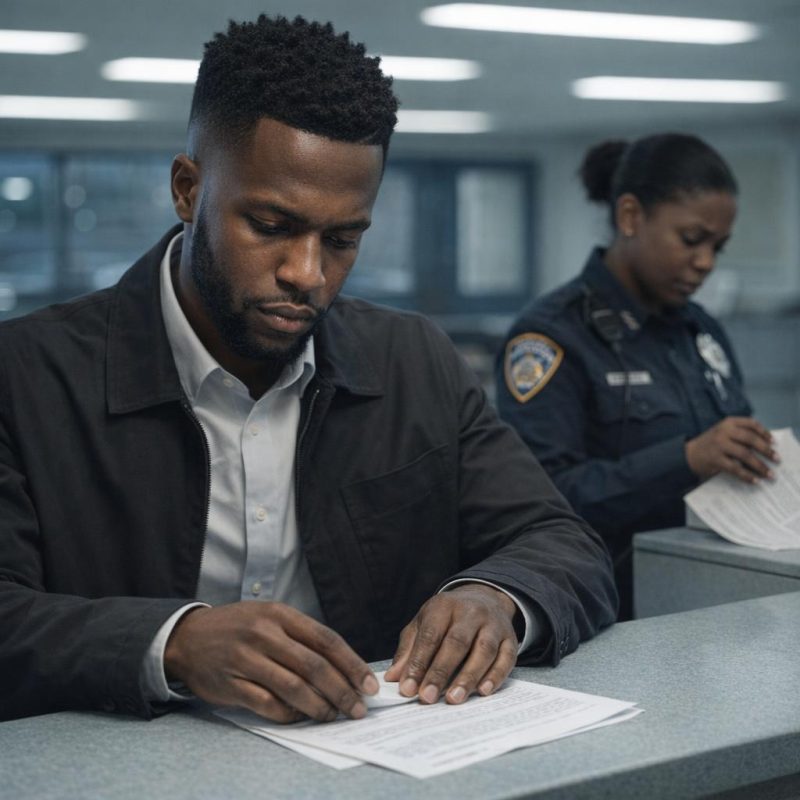 Image by RM AI
Mediterranean Dreams
That night I sat in my apartment with the lights low and didn't turn the laptop back on. I'd done enough for one day. I just sat there, and after a while my mind drifted somewhere it hadn't gone in a long time. I'd had this idea for years — not a plan exactly, more like a picture I kept returning to when things got heavy. A small repair shop on the Italian coast. Somewhere with narrow streets and old stone walls and cars that people actually cared about keeping alive. I'd read about villages in Liguria where the roads were too tight for anything modern, where people still drove Alfa Romeos from the seventies because they fit the lanes and because their fathers had driven them. I had savings. Not a lot, but more than most people my age had managed to put aside, because I didn't spend money on things that didn't matter to me. I'd always told myself the timing wasn't right, that I'd go when things settled down, when I had more, when the moment was clearer. Sitting there that night, the case number folded in my jacket on the chair, the Mustang gone, my family eating dinner and talking about pendant lighting — the dream felt further away than it ever had. But I could still see it. Salt air coming through an open door, jasmine somewhere nearby, the smell of old engine oil and warm stone.
 Image by RM AI
The Invitation
The call came the next afternoon while I was eating lunch at my kitchen counter. Julian's name on the screen. I set down my fork and let it ring twice before I picked up. He sounded the way he always sounds when something is going his way — that particular brightness in his voice, slightly too fast, like he's already three sentences ahead of the conversation. He said he was putting together the first real planning meeting for the bistro, just a small group, people who believed in the concept, and he wanted family there. He said it mattered to him that I was in the room. He talked for a while about the space, about the energy he was feeling, about how this was finally the thing that was going to work. I said 'yeah' and 'sounds good' in the right places. My voice came out flat and even, which surprised me a little. He didn't mention the garage. He didn't ask if I'd been by the house lately or whether I'd noticed anything. He just kept talking, and I kept listening, and at the end of it he asked if I'd come support my little brother's big moment.
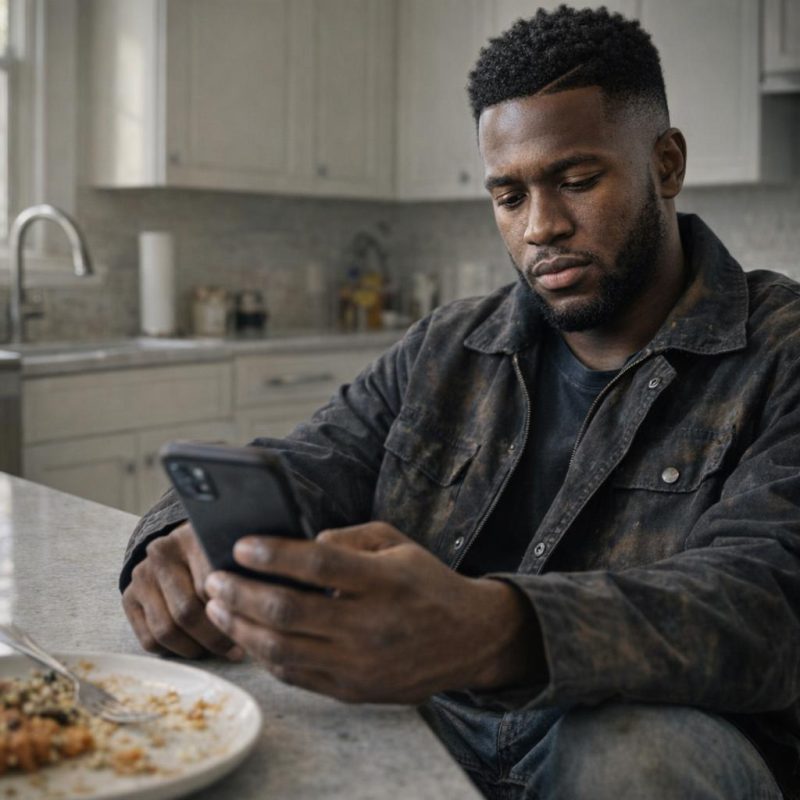 Image by RM AI
The First Meeting
The space was a former sandwich shop on a side street downtown — bare walls, scuffed floors, a drop ceiling that Julian kept gesturing toward like it wasn't there. There were maybe six people in folding chairs when I arrived, none of whom I recognized. I took a seat near the back and kept my jacket on. Julian was already in presentation mode, moving around the front of the room with a printed floor plan in one hand, talking about sightlines and the bar placement and a wood-fired oven he'd priced out. He was good at it, I'll give him that. He had the room. People were leaning forward, nodding, asking questions about the neighborhood foot traffic and the weekend prix fixe concept he'd mentioned. He answered everything smoothly, confidently, like a man who had done his homework. At some point he talked about the lease deposit and the equipment costs, about how he'd moved quickly to secure the space before someone else did, about having the capital ready when the opportunity came. He didn't look at me when he said it. Then he turned back to the investors, both hands rising to frame the scale of what he'd put in — gesturing wide, voice lifting, describing the full weight of his initial capital investment while I sat in the back and said nothing.
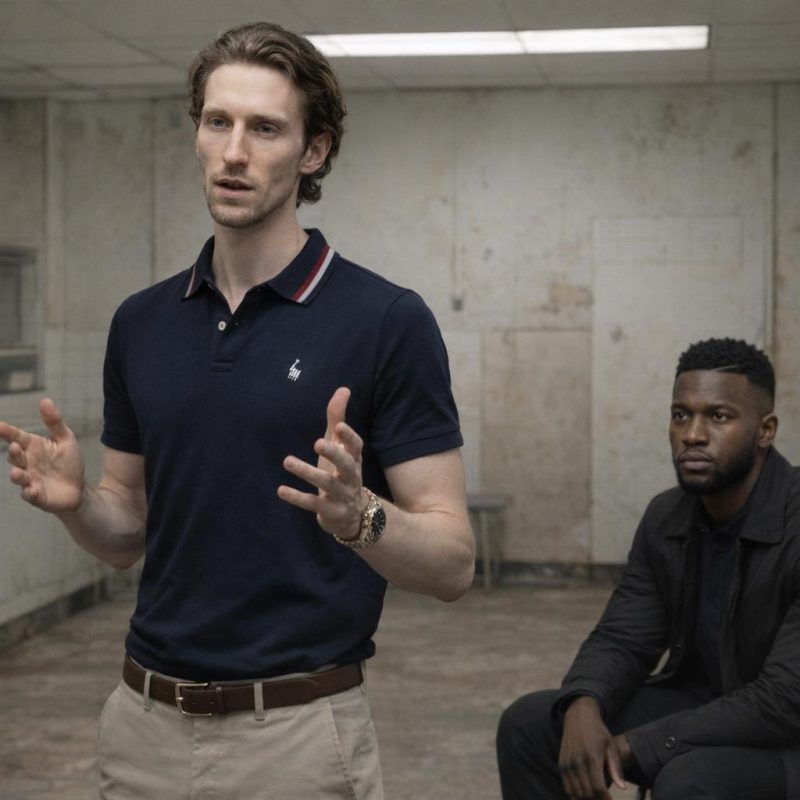 Image by RM AI
The Investment Source
One of the investors — a heavyset man in a fleece vest who'd been taking notes the whole time — raised his hand and asked the question I'd been waiting for. He wanted to know about Julian's capital structure. Where had the initial funding come from, and what was the plan for the next round? Julian didn't miss a beat. He said he'd liquidated a private asset at the right moment, that he'd been sitting on something valuable and recognized when the timing was right to convert it. He said the family had been incredibly supportive, that they believed in the concept, that this was the kind of venture where everyone wanted to see it succeed. He used the phrase 'smart asset management' without any visible discomfort. The investor nodded and wrote something down. A woman across the room asked a follow-up about projected returns. Julian pivoted to that smoothly. Nobody looked at me. I sat with my hands folded on my knee, my face arranged into something I hoped read as quiet family pride, and I listened to my younger brother describe selling my grandfather's car as 'smart asset management and family belief in his vision.'
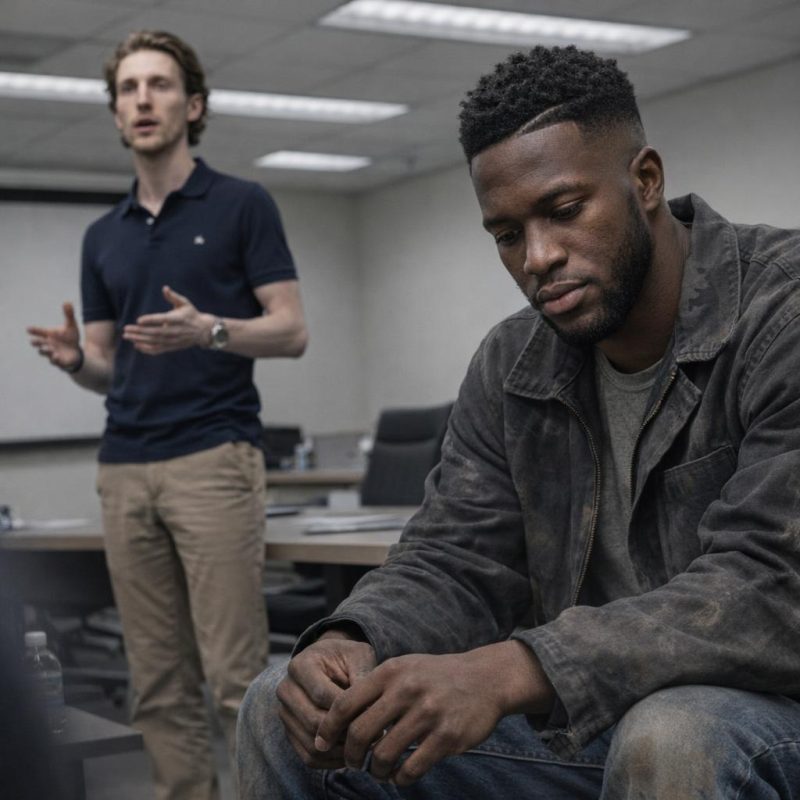 Image by RM AI
Moving Furniture
Julian had texted me the night before asking if I could come by at nine to help move furniture. I said sure. That's what I did — I showed up at nine with my work gloves and I moved furniture. We carried four-top tables in from a rented truck, heavy oak things that probably cost more than my monthly rent. Julian directed traffic, pointing at corners, adjusting angles by inches, talking the whole time about sightlines and ambiance and how the light would hit the room differently at dinner service. I nodded. I lifted. I set things down where he pointed. There was something almost meditative about it — the physical weight of each piece, the scrape of chair legs on the new tile floor, the smell of fresh paint still hanging in the air. My mind was somewhere else entirely, running through numbers, running through timelines, running through things I couldn't say out loud. We worked for about three hours. Julian was in a good mood, loose and energized, the way he gets when something is going his way. We were maneuvering the last table into place near the window when I felt his hand come down hard and warm on my shoulder. "Couldn't do this without you, man," he said.
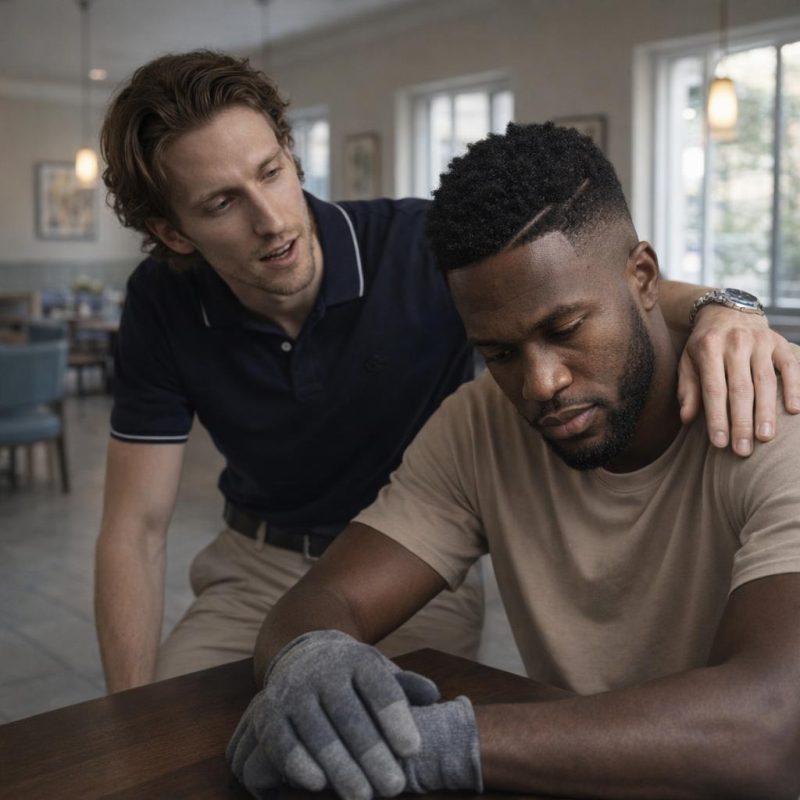 Image by RM AI
The Contrast
When the last chair was in place, Julian walked the room slowly, hands on his hips, turning in a slow circle like he was seeing it for the first time. He kept saying things like "yeah" and "okay, okay" under his breath, the way someone does when something is finally matching the picture they had in their head. I stood near the back wall with my gloves tucked into my back pocket and watched him. The space did look good, I'll give it that. The tables were spaced well, the light from the front windows caught the wood grain, and you could see what it was going to be. Julian was practically vibrating. He pulled out his phone and started taking photos, moving around the room, crouching for angles. I thought about the garage. I thought about the empty space where the Mustang used to sit, the oil stain on the concrete that was still there because oil stains don't disappear just because the car does. I thought about my grandfather's hands on that steering wheel the one time we got the engine running together. Julian laughed at something on his phone screen. The room looked like someone's dream. I just couldn't feel anything standing inside it.
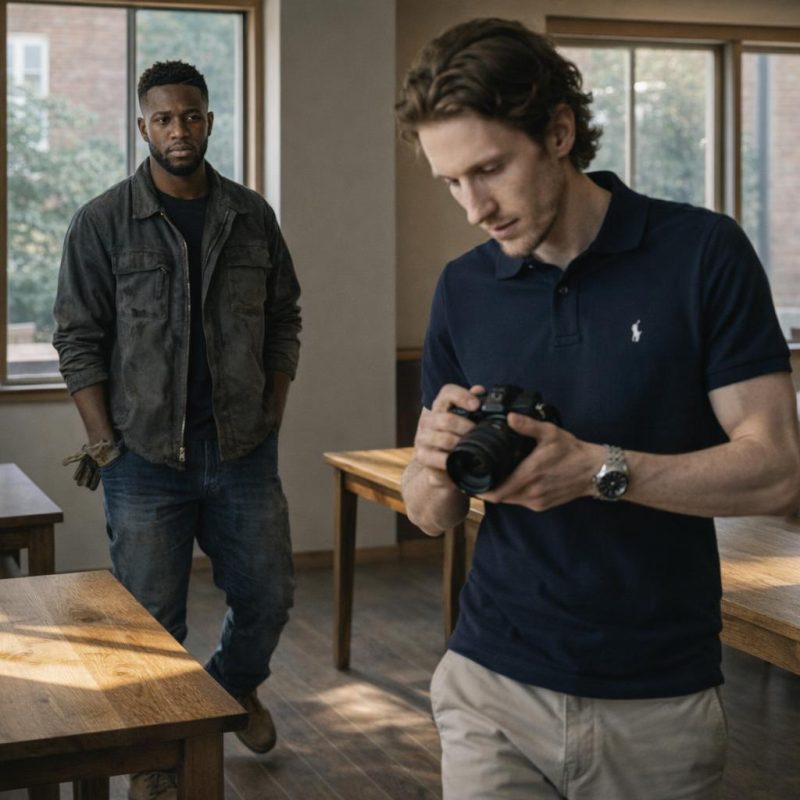 Image by RM AI
The Same Old Song
Sunday dinner at my parents' house had a rhythm I'd known my whole life, and it hadn't changed. My mother made her roast chicken, set the table with the good placemats, and within ten minutes of sitting down she was talking about the bistro like it was a moon landing. Julian sat across from me looking comfortable, helping himself to more bread, letting the praise wash over him the way he always had. My father nodded along, cutting his chicken, saying "mm" at the right moments. Then my mother turned to me. She said I had the steady income, the reliable schedule, and that Julian was going to need people around him who could show up consistently during this critical period. She said it the way she always said things like that — not as a request, more like a statement of obvious fact, like she was reminding me what my role was. My father glanced at me briefly and then looked back at his plate. Julian didn't say anything, just reached for the salt. I told her I'd been helping. She said she knew, and that she appreciated it, and that Julian was lucky to have a brother like me. I ate my chicken. The words settled over the table like they always did, familiar and heavy, asking me to give more to the person who had already taken everything.
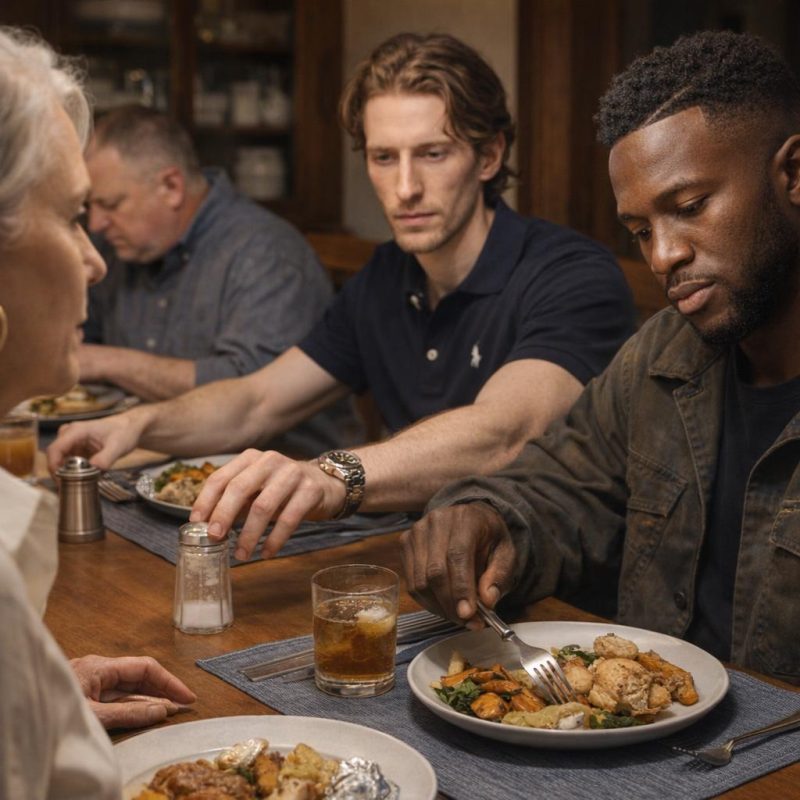 Image by RM AI
Futile Confrontation
I lay in bed that night staring at the ceiling and let myself run the confrontation all the way through. I imagined calling Julian, or showing up at the bistro, or waiting until the next family dinner and just saying it plainly — you sold Grandpa's car. I played out every version. In every one, Julian had an answer ready. He'd say he thought I'd be okay with it, that he was going to pay me back, that I was being dramatic, that the car was just sitting there. My mother would find a way to make it about my attitude. My father would go quiet and look at the table. And then what? I'd have said my piece and they'd have closed ranks and I'd have nothing except the knowledge that they knew I was angry. Worse, Julian would know I was paying attention. He'd be careful. Whatever options I still had, I'd have handed him a reason to get ahead of them. I turned over and looked at the wall. The anger was still there — it hadn't gone anywhere — but underneath it something else was settling in, something colder and more patient. Saying nothing was the only move that kept anything open.
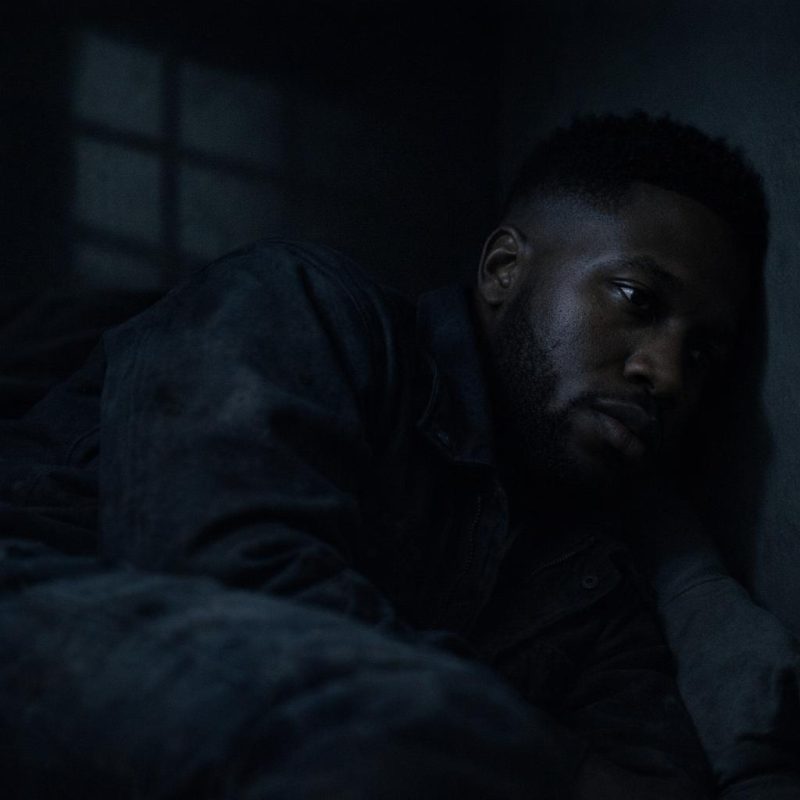 Image by RM AI
Coastal Villages and Salt Air
After work I'd been sitting at my laptop later and later into the night. It started as idle searching — Italian coastal towns, cost of living, that kind of thing — but somewhere in the second week it stopped feeling idle. I found myself reading visa requirements for Americans staying longer than ninety days, looking at the Elective Residency Visa, writing down the income thresholds in a notebook I kept in my nightstand. I read about small workshop registration in Liguria and the Amalfi coast, about towns where a mechanic who could restore old vehicles wasn't a curiosity but a genuine trade. I found forums where expats talked about the actual logistics — not the fantasy version, but the paperwork, the bank accounts, the bureaucratic patience required. Some of it was discouraging. Most of it was more possible than I'd expected. I bookmarked rental listings in villages I'd never heard of six months ago. I looked at what my savings could actually do in places where the dollar went further and the pace was different. My phone buzzed once — Julian, something about a linen supplier — and I closed the browser tabs out of habit before I even read the message. When I opened them again, the rental listings were still there, small stone apartments above the water, lit up quiet on the screen.
 Image by RM AI
Three Weeks Out
Julian called on a Tuesday evening while I was eating dinner. He'd locked in the grand opening date — three weeks out, a Saturday night, invitations already going to the investors and a short list of local press contacts he'd been cultivating. He was talking fast, the way he does when he's in motion, running through the list of things still left to do: final health inspection, staff orientation, a private dinner for investors the Thursday before. He wanted me there for setup on the Friday, maybe help with some last-minute furniture arrangement and making sure the back area was organized. I said I could do that. He mentioned he had something planned for me at the opening, some kind of acknowledgment, and I told him not to worry about it. He laughed and said it was already done. After we hung up I sat at the kitchen table for a while. I had a paper calendar on the wall — the kind from the auto parts supplier, nothing special — and I found the Saturday three weeks out and looked at it for a long moment. I didn't write anything down. I didn't need to. That date had already settled somewhere behind my eyes, fixed and quiet, the way a deadline does when you know exactly what it means.
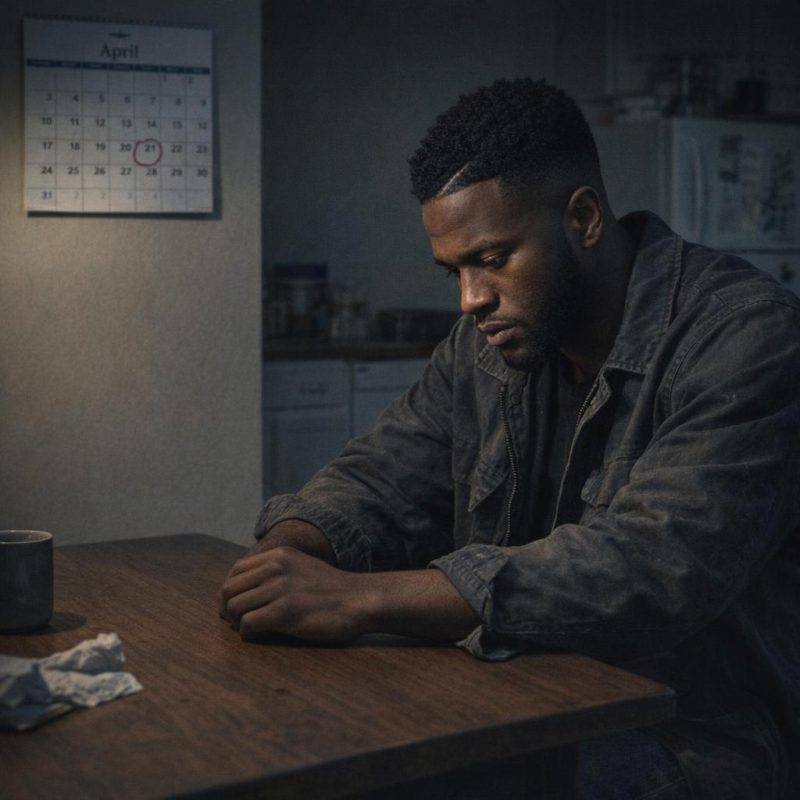 Image by RM AI
The Setup Continues
Julian had asked me to come by the bistro on a Wednesday evening when a few of the investors were stopping in to see the progress. I sat in one of the new oak chairs near the back and watched him work the room. He'd printed sample menus, heavy card stock with a clean serif font, and he moved from person to person letting them hold the menus while he talked about sourcing and seasonality and his relationships with local farms. He was good at it — I'll say that plainly. He had a way of making people feel like they were being let in on something. One of the investors, an older man in a sport coat, asked Julian what had driven him to take the leap, what had made this the right moment. Julian paused just long enough to make it feel considered. He talked about believing in something bigger than a paycheck, about the people in his life who had shown him what it meant to commit to a vision. He glanced toward me when he said it, a quick easy glance, and I gave him a small nod. The investor smiled and wrote something in his notebook. Then Julian said, quietly, that none of this would have been possible without the sacrifices his family had made.
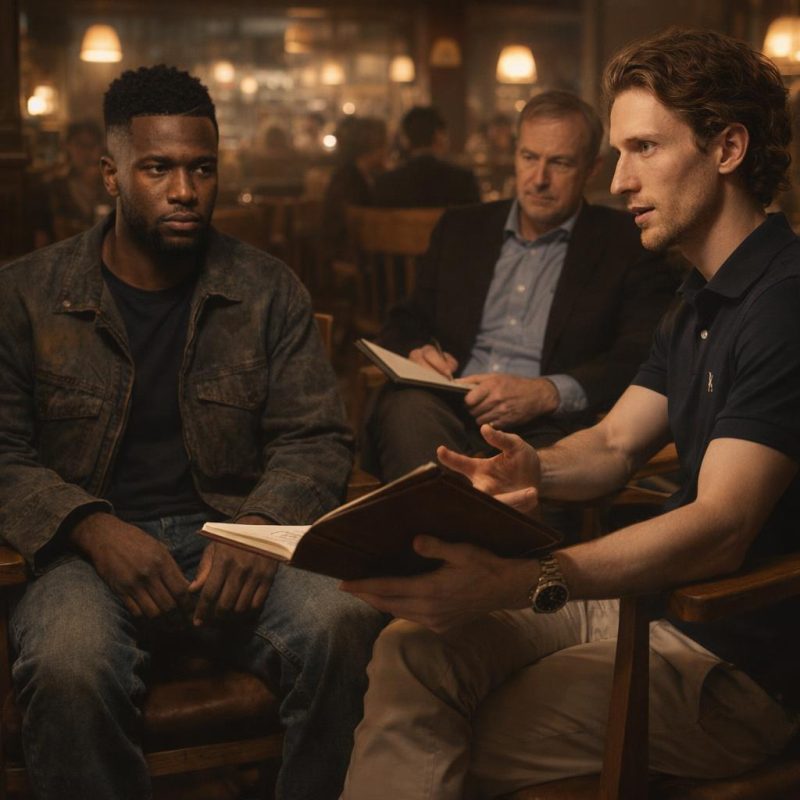 Image by RM AI
The Assumption
I watched Julian move through the bistro that evening after the investors left, and something about the way he carried himself stayed with me on the drive home. He wasn't nervous around me. Not even a little. He asked me to help stack the leftover menu samples without any hesitation in his voice, the same way he'd ask me to pass the salt. He talked about the opening timeline, about the staff schedule, about a wine distributor he was meeting Thursday — easy, forward-facing, unbothered. He never mentioned the garage. He never asked how the car was coming along, never circled back to it with even a flicker of something careful in his eyes. I'd been watching for it, some small tell, some moment where he'd measure his words around me. It wasn't there. On the drive home I kept turning it over. The most straightforward explanation was also the one that sat heaviest: he wasn't worried because he didn't think he had anything to worry about. Not from me. He'd grown up watching me absorb things quietly and move on, and somewhere along the way that had become his working assumption about who I was — the brother who would always find a way to be fine with whatever happened.
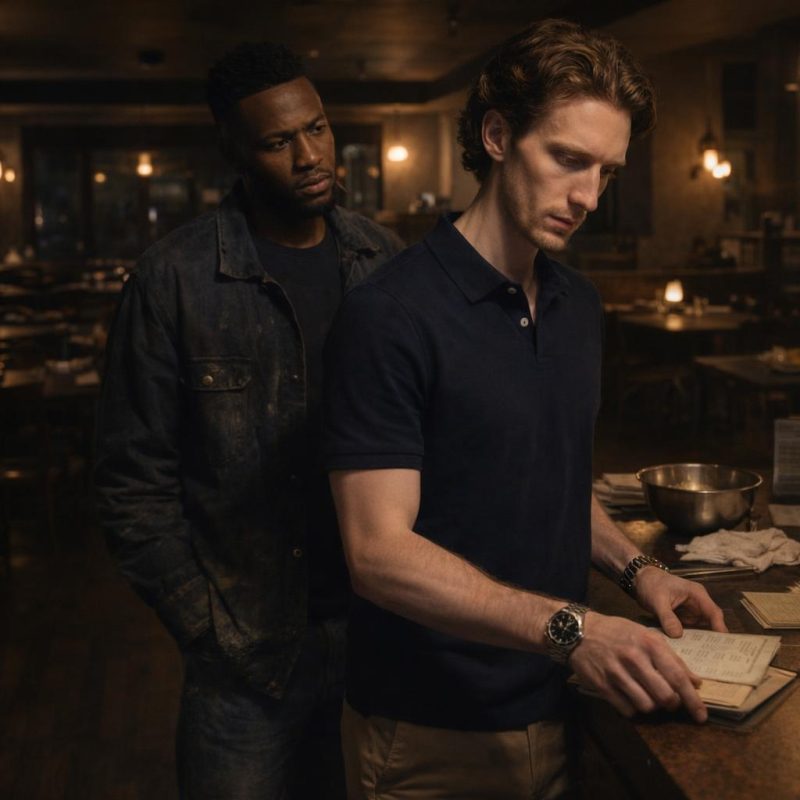 Image by RM AI
The Pressure
She called on a Tuesday evening, right when I was sitting down with a plate of food I hadn't eaten yet. I knew it was her before I even looked at the screen — there's a particular timing to my mother Linda's calls, always when I'm just settling into something quiet. She didn't waste time on small talk. The grand opening was two weeks out, she said, and she expected the whole family there. Not just present — presentable. Her word. She went on about how hard Julian had worked, how much this meant to him, how a restaurant was a real thing, a visible thing, something people could point to. She said she hoped I understood what kind of night this was going to be for him. I told her I'd be there. She said good, and to make sure I wore something decent, not my work clothes. I said I would. She sounded satisfied in that particular way she gets when she's checked something off a list. After she hung up I sat there with my food going cold in front of me, the same feeling I'd carried since I was a kid settling back into my chest — the one that said showing up and smiling was just what I did, and always had been.
 Image by RM AI
The Tracker Activation
I'd installed the tracker during the second year of the restoration, tucked into a cavity behind the rear quarter panel where it ran off its own sealed battery pack. At the time it felt like something a careful person did with a car that valuable. I hadn't thought much about it since. That night I opened my laptop, pulled up the tracking software, and logged in with the credentials I hadn't touched in over a year. The page took a moment to load. I sat there watching the progress bar, half-expecting an error, some notification that the battery had finally died. It didn't. The map populated cleanly — a satellite view, a blue pin, a timestamp from forty minutes ago. I zoomed in slowly, cross-referencing the address against a property search in another tab. The pin sat over an industrial block three towns east, a row of low buildings set back from the road behind a perimeter fence. I saved the coordinates, copied the street address into a new folder I'd labeled with nothing but a date, and closed the laptop. The car was still out there. It hadn't moved in days. The pin sat steady on the screen, three towns over, patient as anything.
 Image by RM AI
The Warehouse
I drove out the next morning before work, telling myself I just needed to see it with my own eyes. The GPS had given me an address in an industrial stretch I didn't know well — low warehouses, chain-link fencing, the kind of area that doesn't get much foot traffic. I parked down the block and walked toward the facility slowly, hands in my jacket pockets, trying to look like someone who belonged in the neighborhood. The perimeter fence was solid, topped with security wire, and the gate had a keypad and a camera mounted above it. Through the fence I could make out a row of individual storage units, wider than standard, with heavy insulated doors and what looked like external HVAC units running along the roofline. Climate-controlled. The whole place was clean and well-maintained, the kind of facility that costs real money to rent. There was no signage on the units themselves, no way to tell from the outside what was inside any of them. I took a few photos of the address plate on the gate and the building layout, then walked back to my truck without hurrying. I sat behind the wheel for a minute before starting the engine, looking at the building through the windshield — the place where my grandfather's car was locked away behind someone else's door.
 Image by RM AI
The Collector's Name
Back home I pulled up the county property records database and typed in the address. The warehouse lease came back registered to a holding company, but one more search tied that company to a single name: Vincent Caruso. I didn't recognize it at first. I ran it through a news search and started reading. Caruso was a property developer — mid-forties, based about forty minutes north of me, with a portfolio of commercial and mixed-use projects spread across three counties. There were profile pieces from local business journals, photos of him at ribbon cuttings in a dark suit, the kind of coverage that comes with a certain level of money and visibility. He wasn't famous, but he wasn't obscure either. I kept reading. There were mentions of contract disputes, a zoning appeal he'd pushed through over neighborhood objections, a lawsuit he'd filed against a general contractor that had dragged on for two years before settling. The articles described him in the careful language journalists use for people they don't want to antagonize — words like aggressive and exacting and results-oriented. I saved everything into the folder and closed the tabs one by one. I sat back in my chair and let the name settle. Vincent Caruso. Whatever he was, he was the man who had my grandfather's car.
 Image by RM AI
The Developer's Reputation
I spent most of that evening going deeper into the archives. The more I read about Vincent Caruso, the clearer a picture formed. He'd built his portfolio from the ground up, starting with a single commercial property in his late twenties, and he'd fought for every expansion since. The lawsuits weren't random — there was a pattern to them. A supplier who delivered substandard materials on a warehouse project got sued for the full contract value plus damages. A broker who misrepresented a parcel's zoning history ended up in a two-year legal battle that cost him his license. A contractor who walked off a job mid-build found himself countersued for every dollar of delay. Caruso didn't settle early and he didn't let things go. The articles framed it as tenacity, as the mark of someone who protected his investments. Reading between the lines, it looked more like a man who took being crossed as a personal matter and had the resources to make that personal. I wasn't sure yet what I was going to do with any of this. But I kept coming back to one thing: Caruso had paid real money for a car that couldn't be legally transferred to him. He hadn't bought a problem yet — he just didn't know he had one. Every article I'd read told me the same thing about what happened when Vincent Caruso found out someone had sold him something they had no right to sell.
 Image by RM AI
The Approach Strategy
I sat at the kitchen table with a legal pad and wrote it out in plain terms. On one side: what I had. The original title, still in my name, sitting in a safety deposit box at the bank two blocks from the shop. The police report I'd filed the week after the car disappeared, listing it as stolen property. My grandfather's name in the restoration records, the receipts, the photographs I'd taken across four years of work. On the other side: what Caruso had. A car he'd paid for in good faith from someone who had no legal right to sell it. I wrote down the word leverage and then crossed it out, because that wasn't quite right. It wasn't leverage I was offering — it was a solution. I'd go to him with the problem already framed and a clean path out of it. I wasn't going to threaten anyone. I was going to walk in with documents and let the facts do the work. I rehearsed the opening lines in my head a few times, adjusting the order, thinking about what a man like Caruso would want to hear first. Not the story. Not the family history. The title. The report number. The legal exposure. I sat there long after I'd stopped writing, the notepad in front of me, turning the words over quietly until they felt right.
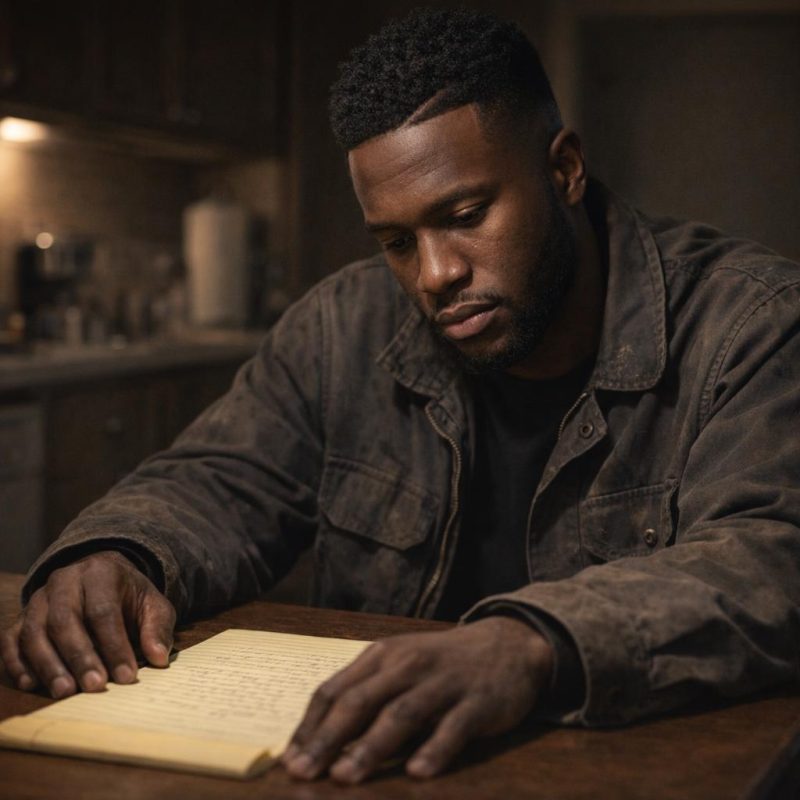 Image by RM AI
More Help Needed
Julian called around nine that night while I was still at the table. He needed help the next afternoon — some shelving units for the back kitchen that required two sets of hands to mount properly, and a reach-in cooler that had to be repositioned before the health inspector's walkthrough. He sounded loose and easy on the phone, the way he always did when things were going his way. He mentioned the opening was twelve days out. He said the staff training was going well, that the investors had confirmed they'd be there opening night, that the whole thing was finally coming together. I told him I'd be there by noon. He said great, said he appreciated it, said he didn't know what he'd do without me. I said something back — I don't even remember what, something agreeable — and we hung up. I set the phone down on the table next to the legal pad. The notepad had Vincent Caruso's name written at the top of the second page, underlined twice. I turned it face-down, picked up my pen, and sat there for a moment in the quiet of the kitchen — the yes still easy in my mouth, my thoughts already somewhere else entirely.
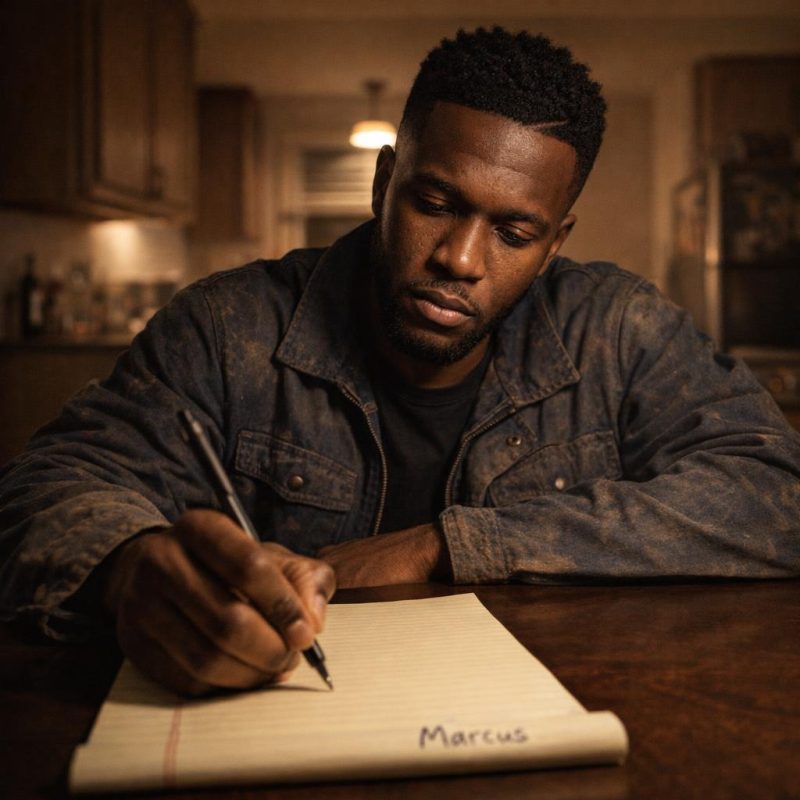 Image by RM AI
The Supportive Brother
I got to the bistro at noon and we worked through the afternoon. The shelving went up in the back kitchen, the cooler got repositioned, and Julian talked the entire time — about the menu, about the lighting he'd finally settled on for the dining room, about a sommelier he'd brought in to train the floor staff. I handed him tools when he needed them and held brackets in place while he drilled. The work was straightforward and I fell into the rhythm of it without thinking much. Julian was in a good mood, the kind that fills a room. At some point, while we were taking a break and drinking water out of paper cups, he told me he had something planned for opening night — a surprise, specifically for me. He wouldn't say what it was. He just grinned and said I'd appreciate it, that it was his way of saying thank you for everything I'd done. I nodded and told him I was looking forward to it. He clapped me on the shoulder and went back to work. I followed him, drill in hand, and he kept talking — about the night, about the room, about how it was all going to come together — and I listened, and smiled at the right moments, waiting to hear what surprise my younger brother thought he had waiting for me.
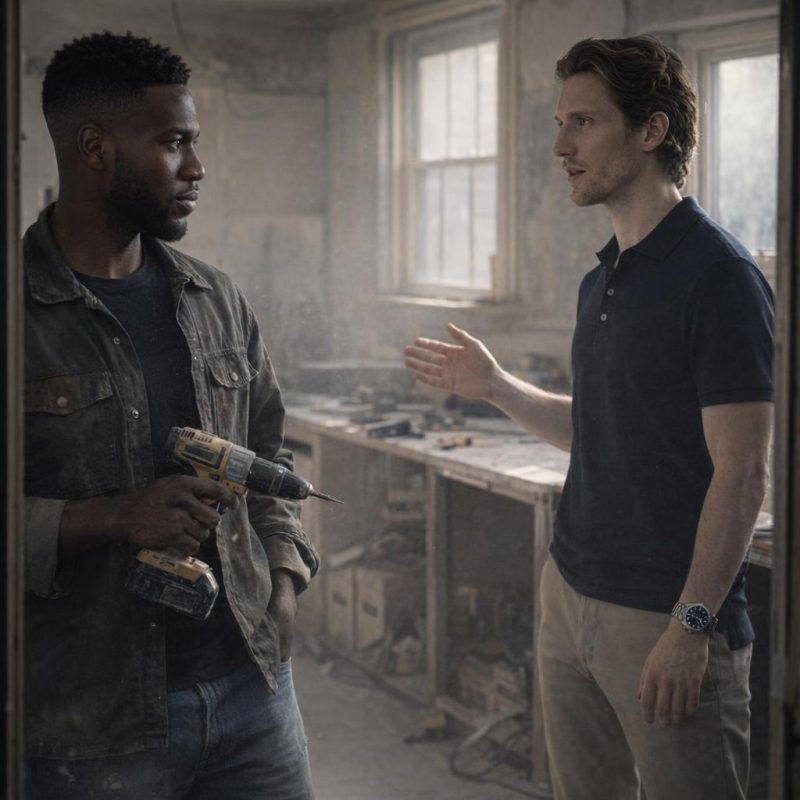 Image by RM AI
The Business Contact
I found Vincent Caruso's business number the same way I found most things — methodically, without rushing. His development company had a website, clean and expensive-looking, with a main office line listed under the contact tab. I sat at my kitchen table for about ten minutes before I picked up my phone. I'd written out what I wanted to say on a notepad, just a few lines, nothing dramatic. When I called, a receptionist answered on the second ring, professional and clipped. I told her I had information regarding a vehicle Mr. Caruso had recently acquired and that I needed to speak with him directly. She asked me to hold, came back, and told me he was unavailable. I said I understood, gave her my name and number, and asked her to pass along a message — that the matter concerned the legal status of the vehicle and that Mr. Caruso would want to hear it sooner rather than later. She read it back to me. I confirmed it. Then I hung up and set the phone face-up on the table. The apartment was quiet. Whatever happened next was already in motion, and there was nothing left to do but wait for it to come back to me.
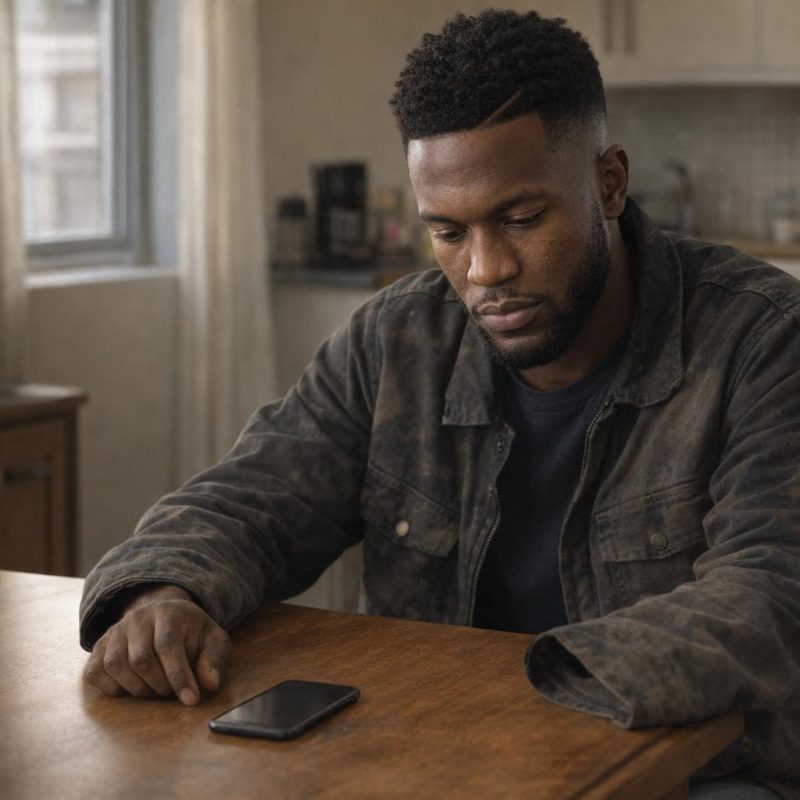 Image by RM AI
The Meeting
I didn't expect to hear back the same day, so when my phone buzzed a little after two in the afternoon and the screen showed a number I didn't recognize, I almost let it go to voicemail. Something made me answer. The voice on the other end was direct, no preamble — he said his name, said he'd received my message, and asked what I knew about his vehicle. I told him it was the kind of thing better discussed in person, that I had documents he'd want to see with his own eyes. There was a pause, short and measured. He said he didn't appreciate vague calls and that if I was wasting his time he'd know it quickly. I told him I wasn't. Another pause. Then he named a coffee shop downtown, asked if I knew it, and said he could be there at eight the next morning. I said that worked. He told me to bring whatever I had and not to make him ask twice for anything. The call lasted maybe four minutes. I set the phone down and looked at the notepad still sitting on the table, the few lines I'd written out the day before. Tomorrow morning was already decided, and the hours between now and then had a different weight to them.
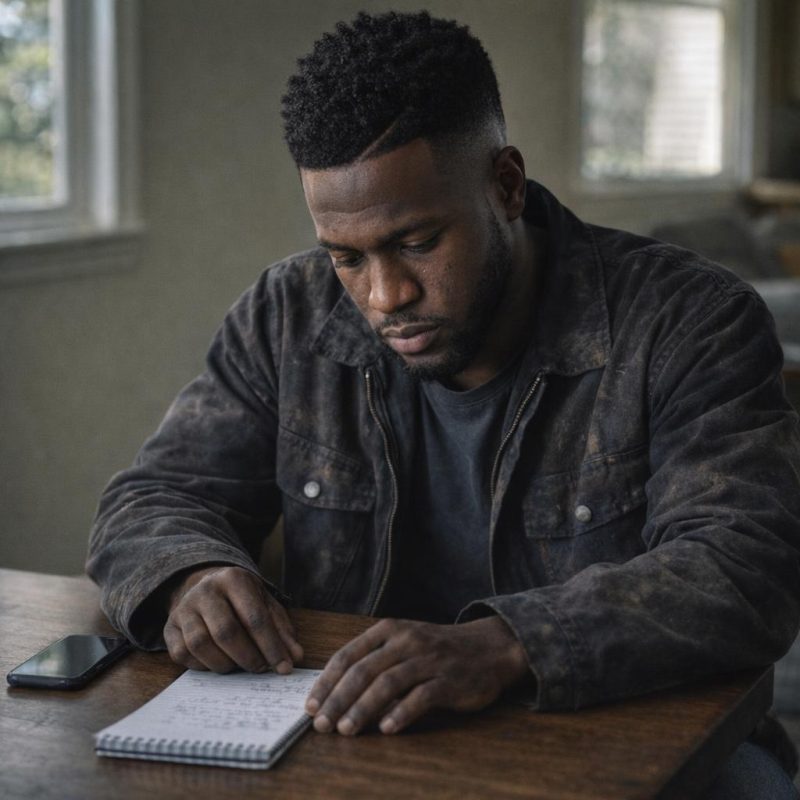 Image by RM AI
The Title and the Report
I got to the coffee shop twenty minutes early and took a corner table with my back to the wall. I had the folder with me — the original title, the police report, copies of everything — tucked inside a manila envelope I'd been carrying since the day I filed the report. Vincent Caruso walked in at exactly eight. He was the kind of man who moved like he expected rooms to adjust around him, mid-forties, sharp suit, eyes that were already scanning before he'd fully cleared the door. He spotted me, crossed the room without stopping at the counter, and sat down across from me without extending a hand. I introduced myself and told him I was the legal owner of a 1967 Mustang Fastback. I slid the original title across the table. He picked it up and read it carefully, the way someone reads a contract, not a menu. His expression didn't change much, but something behind his eyes shifted. Then I placed the police report on the table beside his coffee cup. He read the top section, and then his eyes dropped to the date the report was filed — and I watched his expression change as they landed there.
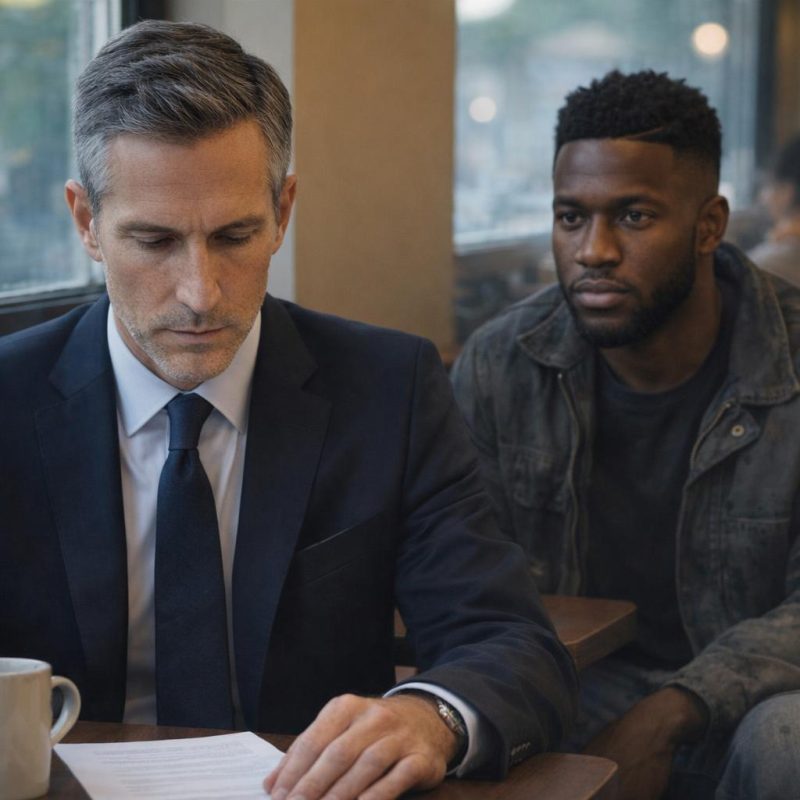 Image by RM AI
The Fraudster's Name
He asked who sold him the car. I told him it was my younger brother, Julian. Something moved across his face at the word brother — not surprise exactly, more like the particular disgust of a man who's been made to feel foolish. I told him Julian had a history of ventures that didn't pan out, that he'd taken the car without my knowledge or permission, and that the money from the sale had gone directly into funding a restaurant he was opening in about three weeks. Vincent set the police report down flat on the table. He asked if the money was gone. I told him as far as I could tell, most of it was already spent — equipment, buildout, staff deposits, inventory. He was quiet for a moment, and I could see him running the math, the kind of calculation that has nothing to do with numbers and everything to do with leverage. He asked if I was there to get him to go after Julian legally. I told him I had something different in mind. He leaned back in his chair slightly, arms crossed, and looked at me the way you look at someone when you're deciding whether they're worth the next five minutes. His fingers pressed flat against the table.
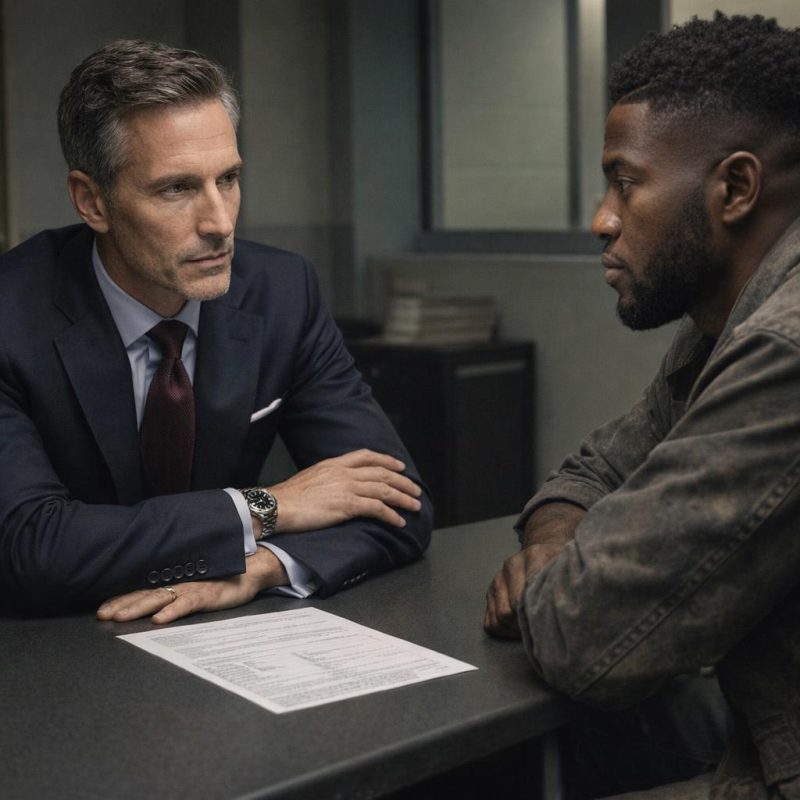 Image by RM AI
The Deal
I laid it out plainly. I'd sign the title over to him legally, right there, right now if he wanted — a clean transfer, no disputes, no clouds on the ownership. He'd pay me a fair price, less than what Julian had charged him, which meant he'd come out of this better than he went in, at least on paper. The car would be his, legitimately, and I'd be made whole enough to move on. He listened without interrupting, which told me something. When I finished, he asked what the catch was. I told him there was one condition — a timing condition. He'd have to agree not to contact Julian, not to file anything, not to make a single move against him until a specific date I'd give him. He studied me across the table for a moment, coffee untouched, hands still. Then he asked what the timing condition was.
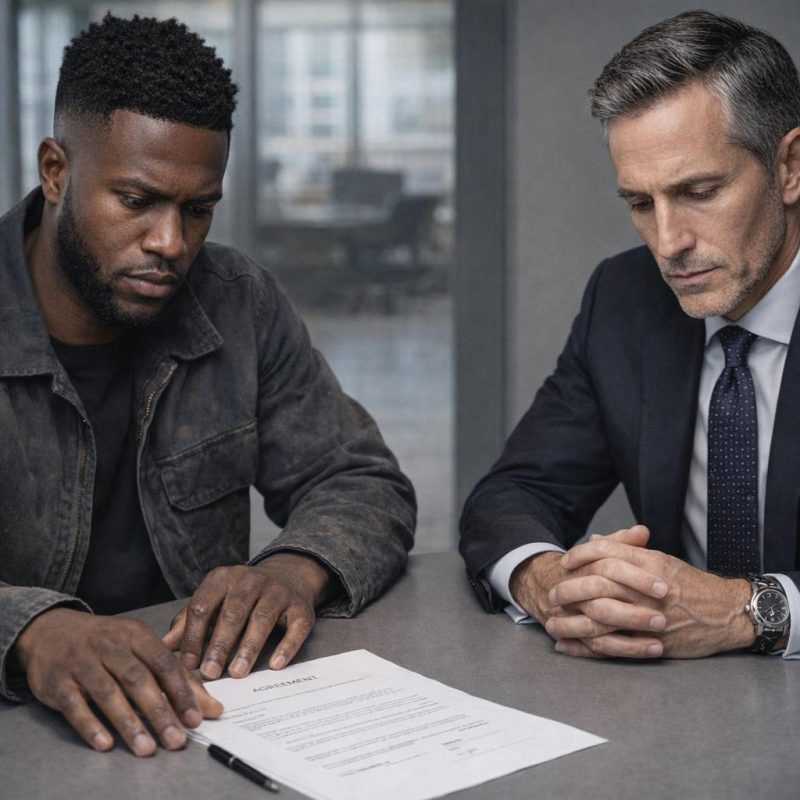 Image by RM AI
Opening Night Agreement
I told him the date was the night of Julian's grand opening. He'd have everything on the line by then — every investor he'd courted, every dollar he'd borrowed or spent, every person he'd invited to watch him succeed. The dining room would be full. The kitchen would be running. And that was the moment Vincent could walk in with the full weight of what Julian had done and nowhere left for him to hide. Vincent didn't say anything right away. He picked up his coffee, took a slow sip, and set it back down. I could see him thinking it through — not whether to do it, but how it would go, what it would look like, what it would cost Julian at the worst possible moment. Then he nodded once, the kind of nod that doesn't need words behind it. He said he'd wait. We shook hands across the table, firm and brief, the way two people close something that doesn't need to be said again. I told him I'd bring the signed title to his office the following morning. He stood, buttoned his jacket, and left without looking back. I stayed at the table a while longer, the empty coffee cups between us the only evidence that the conversation had happened at all.
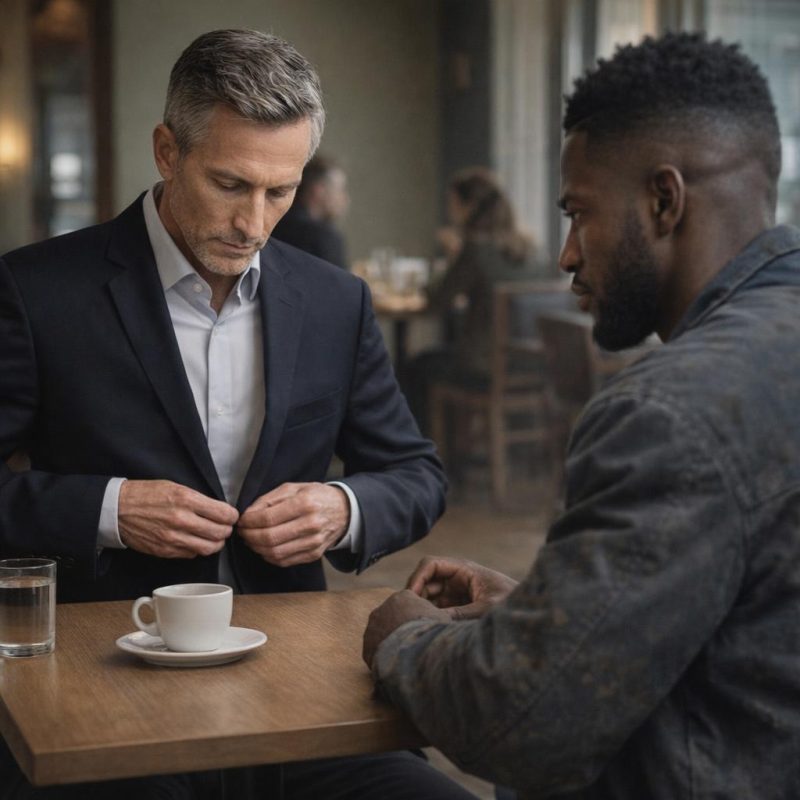 Image by RM AI
Italian Logistics
I got home in the early afternoon and opened my laptop before I'd even taken off my jacket. I'd been thinking about Italy in the abstract for weeks — the idea of it, the shape of it — but sitting down that afternoon felt different. I pulled up the Italian consulate website and read through the visa requirements properly for the first time, not skimming, actually reading. I looked at long-stay options, what documentation I'd need, how far in advance to apply. Then I opened a flight search and started looking at routes from here to Naples, checking prices across different dates, writing down the ones that made sense. I looked into what it cost to ship a small amount of belongings internationally and decided quickly that I wouldn't be shipping much. I made a list on a notepad — documents to gather, accounts to close, things to sell, people to notify and people not to. I added up my savings, factored in what the title transfer would bring in, and ran the numbers twice. They worked. Not comfortably, not with a cushion, but they worked if I moved without hesitating. The list sat on the table beside the laptop, handwritten and specific, and it was the most honest thing I'd looked at in months.
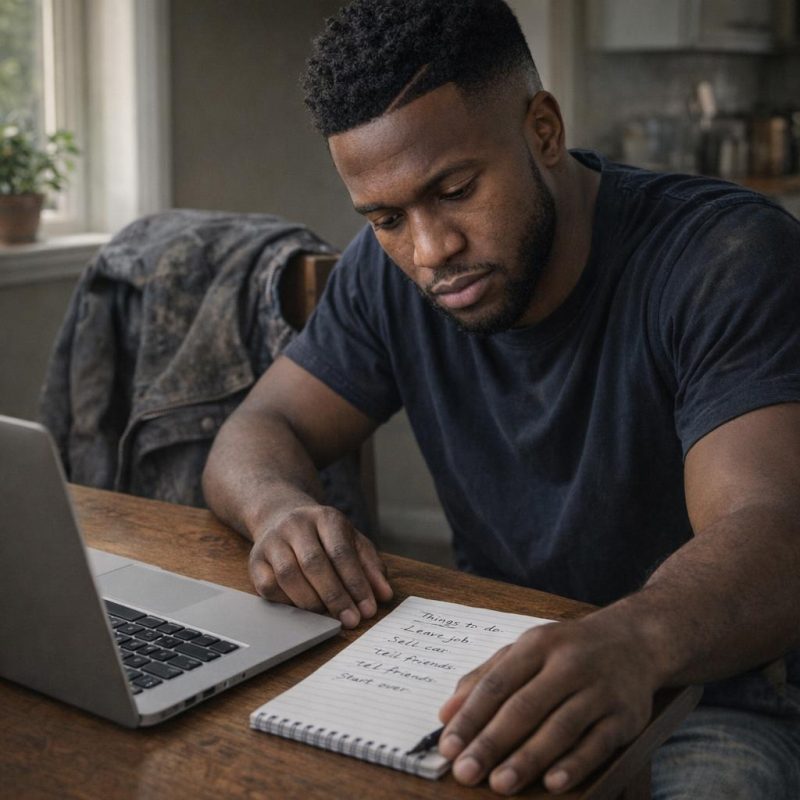 Image by RM AI
The One-Way Ticket
I sat in front of the laptop for a long time before I opened the booking site. I'd looked at the flight the night before, noted the price, told myself I was just checking. But I knew what I was doing when I opened it again. I found the same one-way fare to Naples, departure on the evening of the grand opening, and I sat with the cursor hovering over it for probably two full minutes. I thought about the apartment, the tools I'd already sold to Tony, my grandfather's workbench that was gone now too. I thought about what it would feel like to still be here in six months, in a year, watching Julian recover or fail and either way having to be present for it. I entered my card details slowly, double-checked the date, double-checked that it said one-way. My finger stayed over the trackpad. Then I clicked confirm and watched the page turn over. The confirmation email landed in my inbox thirty seconds later — the flight details and booking reference sitting there in plain text.
 Image by RM AI
Packing Away the Past
I started with the bookshelves because that felt manageable. Two boxes for donation, one for the trash, nothing worth shipping overseas. The clothes took longer — I kept second-guessing what a person actually needs when they're starting over somewhere warm, and I ended up donating three-quarters of what I owned to the bin outside the church on Maple. The furniture went on a local selling app, and strangers came and went all week, loading up my couch, my kitchen table, the lamp I'd had since my first apartment. I didn't feel much watching them carry things out. I called my landlord on a Thursday and told him I wouldn't be renewing. He asked where I was headed and I said I had some things to sort out, kept it vague, and he didn't push. He said he'd keep the deposit for the last month and I said that was fine. By the end of the week the apartment was down to two suitcases, a sleeping bag on the floor, and the laptop. The walls had those pale rectangles where pictures used to hang, and the rooms had that hollow sound that empty spaces get — every footstep a little too loud, every sound carrying further than it should.
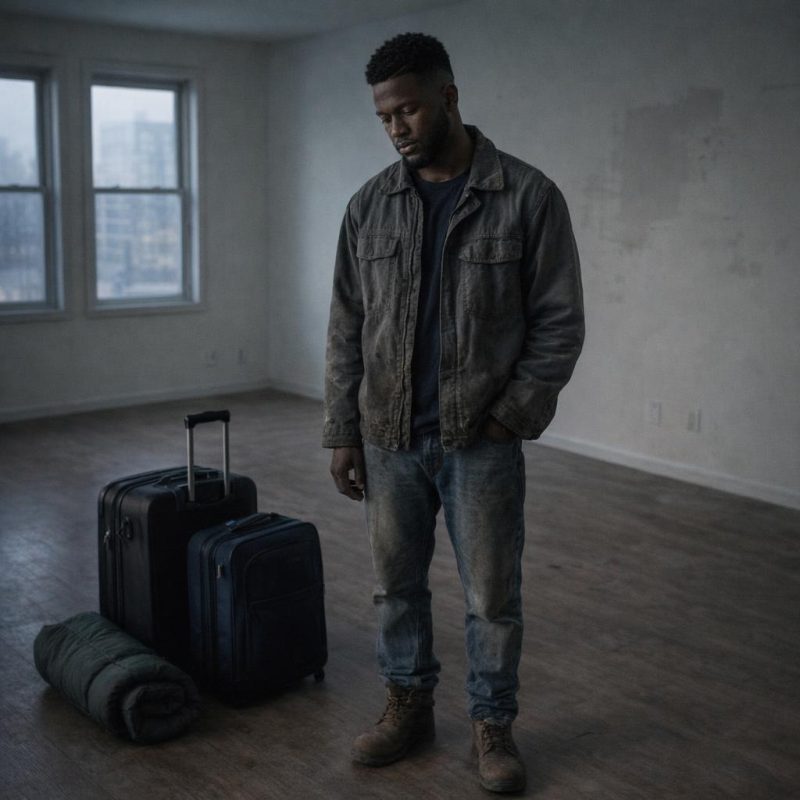 Image by RM AI
The Final Family Dinner
My mother had made Julian's favorite — roast chicken with those little potatoes he always asked for, the ones she'd never once made when I'd asked as a kid. I sat at the far end of the table and watched the three of them talk about the bistro like it was already a landmark. My father asked Julian about investor response and Julian leaned back in his chair and smiled the way he always did when he thought he was winning. My mother talked about what she was going to wear to the opening, whether the blue dress or the black one, and Julian said either would be perfect. At some point Julian mentioned again that he had a surprise for me, something I'd really appreciate, and my mother clasped her hands together like it was Christmas morning. Nobody asked what I'd been up to. Nobody asked about work, or the apartment, or anything at all. I ate and I listened and I looked at the three of them the way you look at something you're trying to memorize — the particular way my father held his fork, the sound of my mother's laugh, the light over the table. I didn't feel angry. I just felt the quiet weight of knowing I was done here, and that this meal was already a memory.
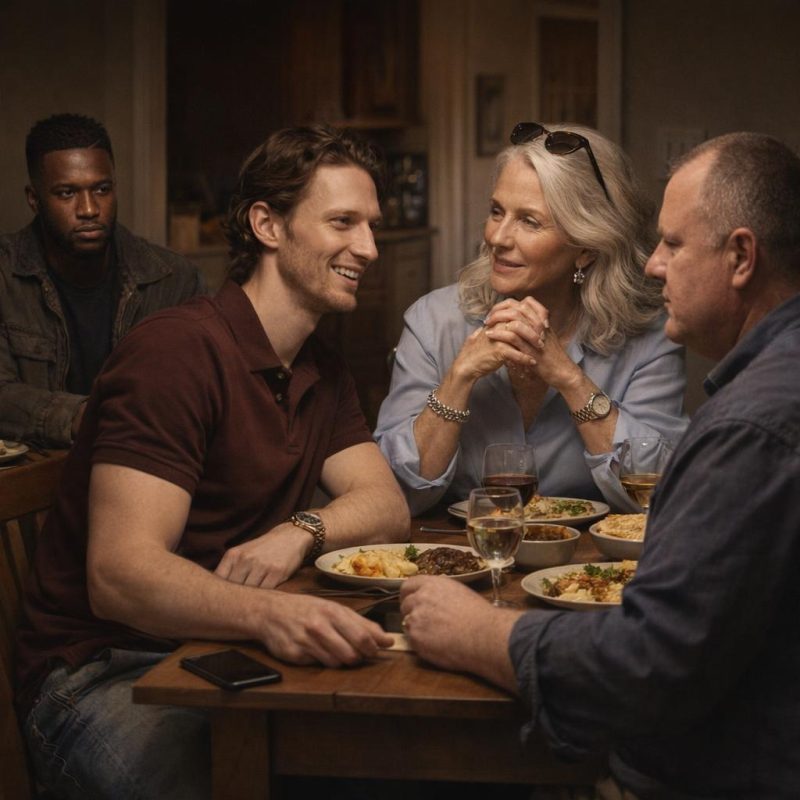 Image by RM AI
The Realization
I sat on the sleeping bag in the middle of the empty apartment and let it settle. The boxes were stacked by the door. The walls were bare. I thought about the dinner — Julian's smile, my mother's clasped hands, my father's tired eyes — and I didn't feel the pull I used to feel, that old ache of wanting them to see me differently. It was gone. I'd been carrying it so long I hadn't noticed when it stopped hurting. Sitting there in the quiet, I understood with complete clarity that I was done — not angry, not grieving, just finished. Every trip to the bistro, every helpful suggestion, every time I smiled and said it was looking great — none of it had been forgiveness. I was never going to confront them. I was never going to sit across from Julian and explain what he'd taken from me, because that would have given him the chance to talk his way out of it, and I wasn't interested in his explanations. What I understood now, fully and without doubt, was that I was building two things at the same time: a way out and a way through. Italy was real — the flight, the contacts, the cash from Vincent's envelope sitting in my bag. And Julian's opening night was coming. I wasn't angry anymore. I was just finished. The moment I accepted that, everything else felt simple.
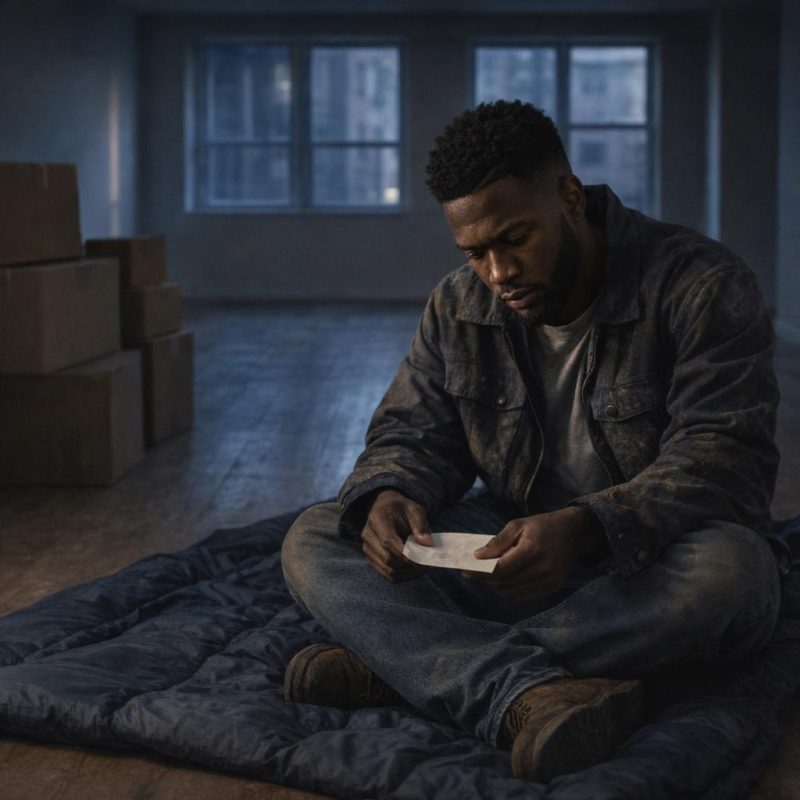 Image by RM AI
The Legal Transfer
Vincent's office was on the fourteenth floor of a building downtown, all glass and dark wood, the kind of place designed to remind you who had leverage. His assistant showed me in without a word. Vincent was already at the table with a manila envelope and a pen laid out like we were closing on a house. I put the original title down in front of him and he looked it over without rushing, checking the VIN against the paperwork he had on his side. He didn't say much. Neither did I. He counted the cash out of the envelope in two stacks and pushed it across the table, and I counted it back because that's what you do. It was less than what Julian had charged him — we'd agreed on that — but it was fair, and it was clean, and it was mine. I signed the title where he indicated. He reviewed it once more, then looked up and said he'd be ready on opening night, that he'd give it until the room was full. I nodded. We shook hands the way two people do when they both understand exactly what they've agreed to. Then he crossed to the safe built into the wall behind his desk, set the title inside, and closed the door.
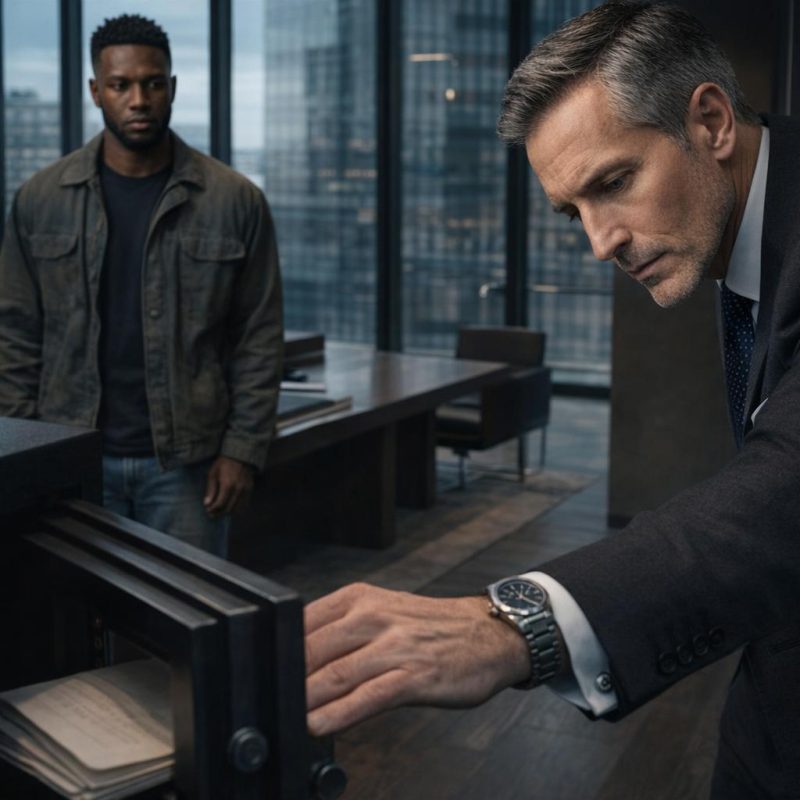 Image by RM AI
The Italian Contacts
I opened the laptop on the floor of the empty apartment and found the expat forums I'd bookmarked weeks earlier — Americans in Italy, small business owners, mechanics who'd made the move and figured out the paperwork. I posted a few questions about business licensing in coastal regions, about what skills translated well, about what a foreign national actually needed to open a small repair operation. Then I started emailing directly — three shop owners in villages along the Campania coast whose names I'd pulled from forum threads, a guy in Positano who'd mentioned restoring vintage Vespas, a woman in a hill town outside Salerno who ran a small garage with her husband. I described what I did, what I was looking for, what I was willing to learn. I told them I was arriving in a few weeks and wasn't expecting anything handed to me. Most of the emails I sent that night I figured would go unanswered, or get a polite nothing. I closed the laptop and lay back on the sleeping bag and stared at the ceiling for a while. When I opened it again an hour later, there was a reply from a shop owner in a village outside Amalfi — two paragraphs, warm and direct, telling me the market for restoration work was real, that skilled hands were always welcome, and to get in touch when I landed.
 Image by RM AI
The Big Surprise
Julian called on a Tuesday evening, and I could hear the excitement in his voice before he'd finished saying hello. He said he couldn't wait anymore, that he had to tell me the surprise now. I sat on the edge of my sleeping bag and listened. He'd had a bronze plaque made for the bistro entrance — a founders' wall, he called it, listing the people who'd believed in the place from the beginning. He said my name was going to be on it. Prominently, he said. He described where it would hang, right inside the front door so every person who walked in would see it, and he said it was the least he could do for everything I'd contributed, for being the kind of brother who showed up. He said he wanted me to know the family was proud of me. I told him that meant a lot. I kept my voice even and warm and I said I was genuinely touched, because it was easier than anything else I could have said. He talked for another few minutes about the opening, about the reservation list, about how the room was going to look that night. I said it sounded incredible. After we hung up I sat there in the quiet for a moment, thinking about a bronze plaque with my name on it — and everything Julian still didn't know was coming.
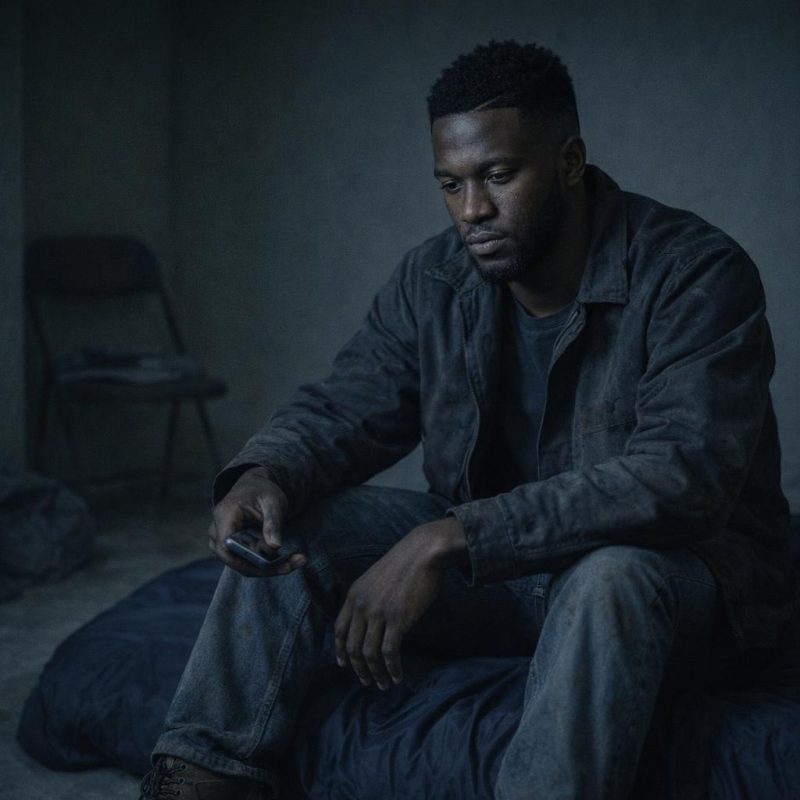 Image by RM AI
The Last Tools
Tony pulled up to the garage in his truck just after eight in the morning. I'd laid everything out on the workbench the night before — the socket sets, the torque wrenches, the specialty tools I'd built up over ten years, the diagnostic equipment, all of it clean and organized the way I always kept it. He walked the length of the bench slowly, picking things up, checking condition, not saying much. After a few minutes he looked at me and asked if I was sure. I told him I was making a change and wouldn't be needing them where I was going. He nodded once and didn't ask anything else, which was one of the things I'd always appreciated about Tony. We agreed on a price for the full set — fair, no argument — and he started loading the truck. It took about forty minutes. I helped him carry the heavier cases and we didn't talk much beyond logistics. When the last box was in the bed of the truck he shook my hand, said to take care of myself, and drove away. I stood in the garage doorway for a minute after he left. The pegboard on the back wall was bare — just the empty hooks in two neat rows, the faint outlines where the tools had hung so long they'd left shadows in the paint.
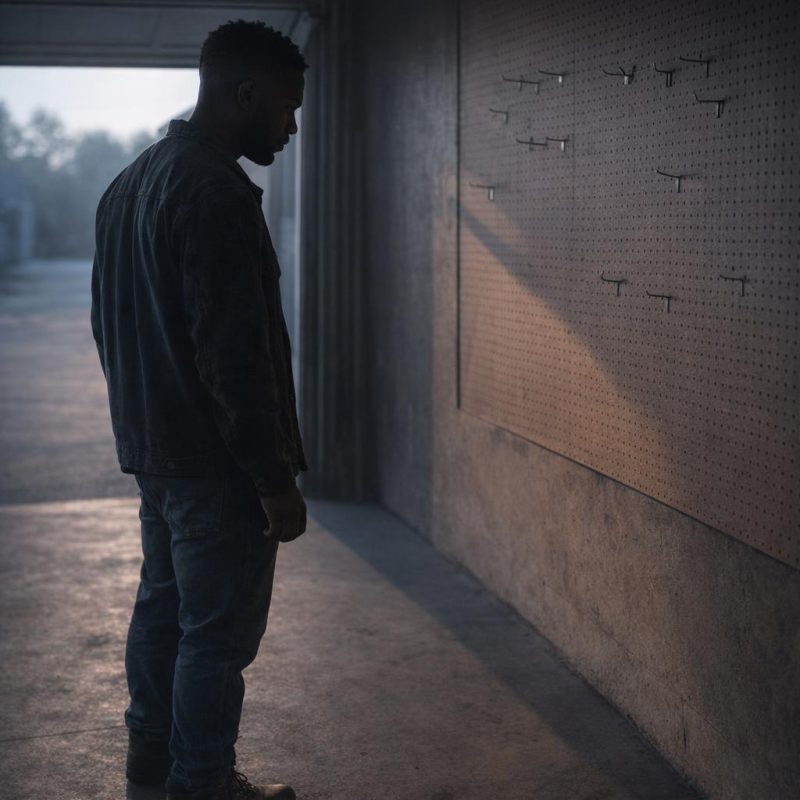 Image by RM AI
Departure Day
I woke up before the alarm on a bare floor in an empty apartment and lay there for a moment listening to the building settle. I showered, dressed in the clothes I'd set aside — comfortable, nothing I'd need to think about on a long flight — and did a final check of both suitcases. Passport in the jacket pocket, boarding pass on my phone, Vincent's cash folded into the inside zipper. I called a cab and it said twelve minutes. While I waited, Julian texted asking if I was coming to the opening that night, whether he'd see me there. I typed back that I'd be there, that I wouldn't miss it. Then I put the phone in my pocket and walked through the apartment one last time — the kitchen, the front room, the bedroom with its pale rectangles on the wall. Nothing left to look at. The cab notification came through and I picked up both suitcases and carried them to the door. I dropped the keys in an envelope I'd already addressed to the landlord and left it on the kitchen counter. Outside, I pulled the door shut behind me and heard the latch click into place, and that was the sound of it — clean and final, the way a thing sounds when it's truly over.
 Image by RM AI
Landing in Naples
The plane touched down in Naples just as the sun was dropping behind the hills, that particular golden hour where everything looks like it was painted rather than real. I cleared customs slowly, my two suitcases moving along the belt like old friends, and found the train station by following signs I could only half-read. My Italian was nonexistent but the ticket machine had an English option and I punched in the coastal town I'd researched for three weeks on my laptop between shifts. The train was older than anything I'd ridden back home, the seats worn smooth, the windows slightly foggy at the edges. I watched the coastline appear as we moved south — the Mediterranean catching the last of the light, fishing villages tucked into hillsides, laundry strung between buildings, cats on stone walls. None of it looked real. All of it was real. Back home, Julian would be straightening his chef's coat right about now, checking his reflection, shaking hands with investors. I let that thought pass through me without grabbing onto it. The train slowed and the conductor called a name I recognized from my research. I pulled both suitcases down from the rack, moved through the narrow aisle, and stepped off onto a platform I had never stood on before in my life.
 Image by RM AI
The Village at Night
The platform emptied fast and then it was just me and the sound of the sea somewhere below the station. I dragged both suitcases down a set of stone steps and into a narrow street that smelled like salt water and something frying in olive oil. The village was small — maybe four streets wide — with old buildings painted yellow and terracotta, flower boxes in every window, a cat watching me from a doorstep like I owed it money. I found the hotel after two wrong turns: a family place, three stories, a hand-painted sign above the door. The woman at the desk spoke careful English and didn't ask why I was there alone with two suitcases and no reservation. She gave me a room on the second floor with a window that looked straight out over the water. I unpacked my laptop first, then sat on the edge of the bed and pulled up the world clock I'd bookmarked. Back home it was early evening. The bistro doors would be opening right about now — the host standing at the entrance, the candles lit, the investors filing in with their good shoes and their expectations. I wasn't ready to send the email yet. I sat by the window and watched the dark water move, and the clock on the wall above the desk read 11:47 p.m. local time.
 Image by RM AI
Peak Service
I found the cafe the next morning and came back to it that evening — outdoor tables on a terrace above the harbor, a view that made it hard to think about anything practical. I ordered a glass of local white wine and opened my laptop while the light was still good. The documents were all there in the draft folder where I'd left them: the bill of sale with Vincent's name on it, the police report with the case number, the letter from Vincent's lawyer laying out the legal exposure in language that left no room for interpretation. I'd read them so many times I could have recited them. I calculated the time difference again on my phone. Back home it was peak dinner service — the kitchen firing on all burners, Julian moving through the dining room in that way he had, working the room, shaking hands, telling the story of the bistro to anyone who'd listen. My parents would be at a table near the front, my mother in something new, my father looking tired and proud at the same time. The investors would be on their second glass of wine, feeling good about their money. I closed the laptop without sending anything and picked up my wine glass. The harbor below was going quiet, the last of the fishing boats settled at their moorings, and the only sound was water against stone.
 Image by RM AI
The Sunset
The sun hit the horizon and the whole sky went orange and then deep red, the kind of color that doesn't look real until you're sitting inside it. The cafe owner brought a small plate of olives without me asking and set them down without a word, the way people do when they've been watching sunsets their whole lives and know you shouldn't be distracted from one. I thought about my grandfather — his hands on the engine block, the way he'd explain something twice if I didn't get it the first time, never impatient, never making me feel slow. I thought about four years of weekends, of skinned knuckles and cold garage floors and the smell of penetrating oil and old rubber. I thought about the morning I'd gone to the garage and found it empty. The anger I'd carried for months wasn't there anymore. What was there instead was something quieter and more certain, the way a level reads when everything is finally plumb. The fishing boats were dark shapes against the water now. The first stars were coming out above the ridge. The sky had gone from purple to something deeper, and the last thin line of light at the horizon was fading into the sea.
 Image by RM AI
The Email
I opened the laptop and pulled up the draft. The recipient list was exactly as I'd built it: Julian's personal email, my mother's address, my father's, the county licensing board's public intake address, and Vincent copied at the bottom. The subject line was plain — no drama, just the facts laid out in twelve words. I read the body of the email one more time. It was short. It said that the funds used to establish and operate the bistro had been derived from the sale of stolen property, that the attached documents established legal ownership, and that the relevant authorities had been notified. Three attachments: the bill of sale, the police report, the lawyer's letter. Everything documented, everything sourced, nothing that could be called an opinion. I thought about typing something personal at the end and decided against it. The documents said everything that needed saying. I moved the cursor to the send button and held it there for a moment — not hesitating, just marking the moment, the way you pause at the top of a hill before you start down. Then I pressed it. The laptop made that small clean sound, the one that means something has left and cannot be called back, and I sat with it in the quiet of the terrace while the stars came out over the water.
 Image by RM AI
The Phone Explodes
I'd barely set the wine glass down when the phone started moving on the table. Julian's name on the screen, the phone buzzing and skittering against the wood. I watched it ring out. Then Linda's name. Then my father's. I picked up the phone and turned the ringer off and set it back down. The screen kept lighting up — Julian again, then a number I didn't recognize, then Julian again. Text notifications started stacking up, the little banners appearing and disappearing faster than I could read them. I poured the last of the wine into my glass and looked out at the harbor. The water was black and still. The village behind me was quiet, a few lights in windows, someone's television audible from an upper floor. Whatever was happening in that dining room right now — the investors pushing back their chairs, the lawyer being handed a phone, Julian's face when he read the subject line — I was eight time zones away from all of it, sitting at a table above the Mediterranean with a glass of wine and nothing left to do. I watched the screen light up again with Julian's name, and then again, and then again.
 Image by RM AI
The Messages
I gave it twenty minutes and then I opened the messages. Julian had sent eleven in a row. The first few were short — WHERE ARE YOU and CALL ME NOW and WHAT DID YOU DO. Then they got longer. He called me a traitor. He said I was a jealous, bitter person who had never wanted him to succeed. He said the car was a misunderstanding and I needed to call the collector right now and explain that it was a family matter and that no crime had been committed. He said investors were walking out. He said the lawyer was there and had served papers on the premises and that everything was falling apart because of me. He said I was destroying the family over a piece of metal. That one I read twice. My mother's messages were shorter but hit the same notes — selfish, cruel, how could I do this tonight of all nights, what was wrong with me. I read through all of it sitting at that table above the harbor, the phone screen bright in the dark, and I felt nothing that resembled guilt. What I felt was something closer to clarity. Julian's last message had come in two minutes ago: *Fix this. You have no idea what you've done to me.* I set the phone face-down on the table and looked out at the water.
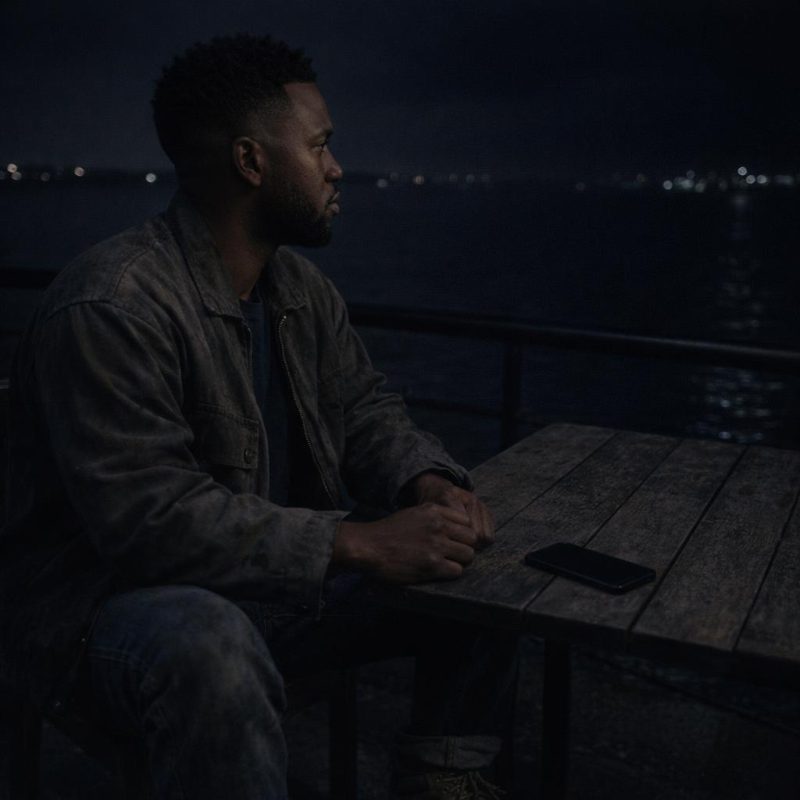 Image by RM AI
The Lawsuit
I checked my email an hour later and found a message from Vincent sent at 9:52 p.m. back home. He'd copied me on a forwarded filing — a PDF, forty-one pages, the header reading the name of his law firm above a case number that had been stamped and dated that evening. I opened it and read slowly. The filing named Julian as defendant. It laid out the chain of title on the Mustang, the sale price, the deposit trail into the bistro's operating account, and the legal argument that every dollar spent from those proceeds was subject to clawback as proceeds of a transaction involving stolen property. The lawsuit sought recovery of the full sale amount plus costs, and it named the bistro's lease agreement, kitchen equipment, and all business assets as attachable. There was a cover note from Vincent at the top of the email, four words: *As discussed. Good luck.* I scrolled back to the first page of the filing and read the case caption again — Julian's full name, the bistro's registered business name, the date, the court. Everything I had handed Vincent — the bill of sale, the police report, the documentation — was cited in the first three paragraphs of the complaint.
 Image by RM AI
The Final Demand
The message came in at 11:47 p.m. my time — Julian, a wall of text that took up most of my screen. He'd moved past the anger from earlier messages. This one was different. He was begging. He said the collector was threatening legal action, that there'd been some kind of misunderstanding, that if I just came home and explained it was a family situation it could all get sorted out. He said he'd pay me back every dollar, with interest, once the bistro found its footing. He said family sticks together. He said I'd always been the steady one, the one who kept things from falling apart, and he needed me now more than he ever had. He wrote that Mom and Dad were worried sick. He wrote that he was scared. I read it all the way through, once, without stopping. Then I set my phone face-down on the table and picked up my wine glass. I thought about the four years I'd spent under that car. I thought about my grandfather's hands showing me how to set the timing. I finished the wine, set the glass down, picked the phone back up, and deleted the message. Then I blocked his number. Then my mother's. Then my father's. Julian had written three hundred words about the man he thought I was, and not one of them was right.
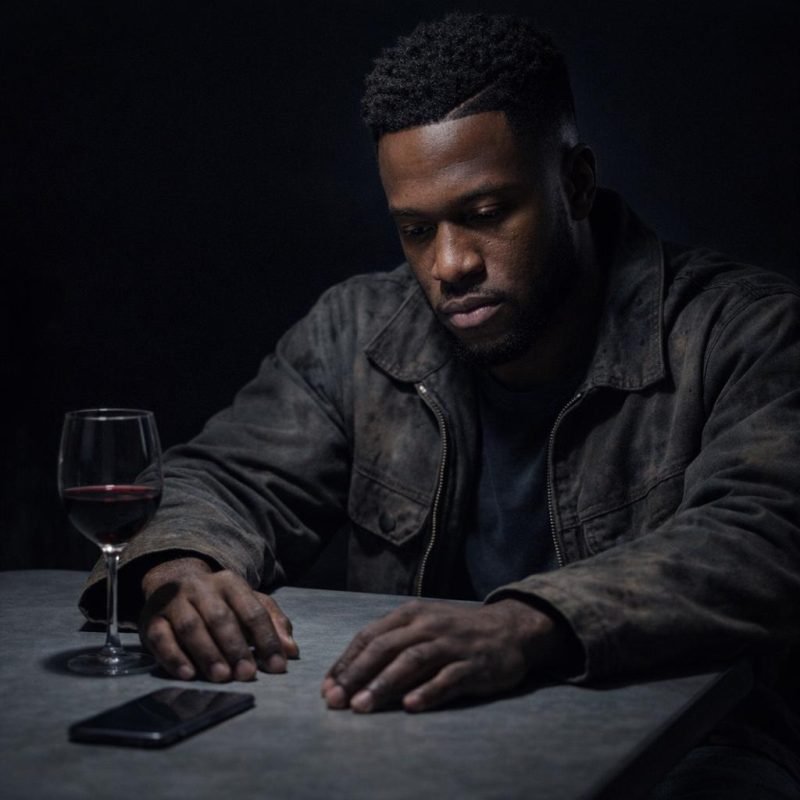 Image by RM AI
First Morning
I woke up to light I didn't recognize at first — the kind that comes off water and bounces sideways through a window, warm and restless at the same time. It took me a few seconds to remember where I was, and then I did, and I just lay there and let it settle over me. The sea was audible from the bed, a low steady sound underneath the village waking up — a scooter somewhere, someone calling out in Italian, a door. I made coffee on the small two-burner setup in the corner of the room and carried the cup to the window. The water was already bright. The flower boxes on the building across the narrow street were spilling something purple and yellow over the sill. My phone was still off and I left it that way. I thought about the bistro, about Vincent's filing, about Julian reading that complaint for the first time — and then I let the thought go. It didn't pull at me the way I expected. There was nothing left to carry. I had a mechanic to find and a shop space to look at and coffee that was better than anything I'd made in my own kitchen back home. The salt air came through the cracked window and settled around me like it had always been there.
 Image by RM AI
The Final Package
The post office was a small room off the main square, easy to miss if you weren't looking for it. I'd had the padded envelope ready since the night before — sealed, addressed to The Gilded Plate in my brother's handwriting-neat block letters, international postage already calculated on my phone. Inside were the original ignition keys to the Mustang, the ones I'd kept in my jacket pocket since the day I finished the restoration. They were useless to him now. The car had a hidden immobilizer I'd wired in myself, and without those specific keys cycling through the startup sequence, it wouldn't turn over for anyone. Julian could hold them, look at them, show them to a locksmith — it wouldn't matter. I'd also folded in a single sheet of plain paper. I'd written it out by hand the night before, kept it short. I told him he'd sold his past to buy a future he hadn't earned. I told him he now had keys to a car he didn't own and a business being seized out from under him. I told him not to call again. I wrote that I was finally home. The clerk took the envelope without ceremony and set it in the outgoing bin. I walked back out into the morning sun and stood there for a moment, and the weight I'd been carrying since I first noticed the Mustang was gone felt, at last, completely lifted.
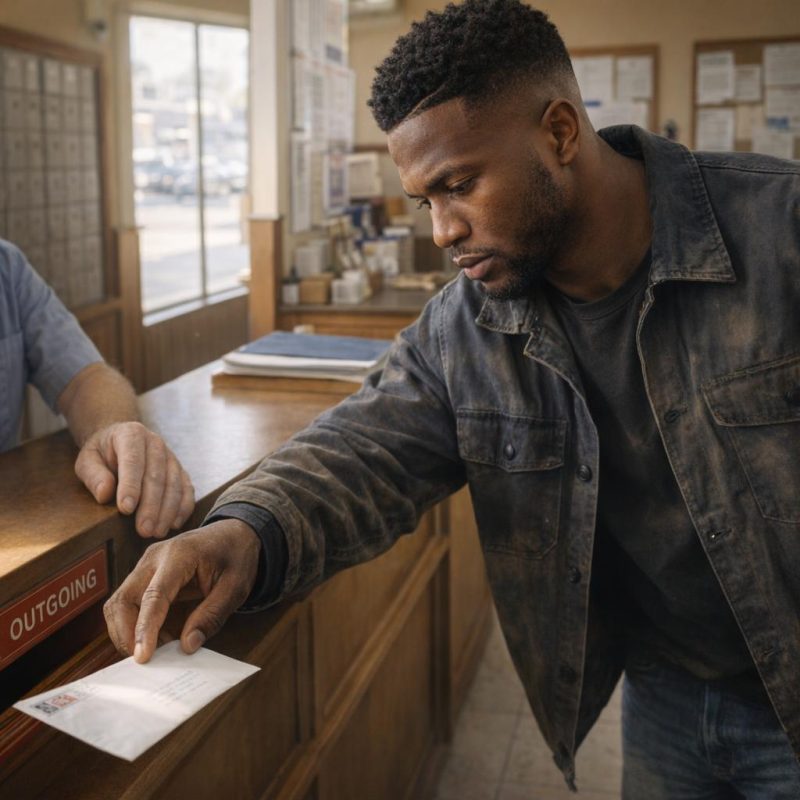 Image by RM AI
Home
The shop was a ten-minute walk from the hotel, down a lane that got narrower the closer it got to the harbor. I found it by the sound before I found it by sight — an air ratchet running somewhere inside, the specific clatter of someone working a stubborn bolt. The owner came out wiping his hands on a rag, older man, maybe sixty-five, with the kind of forearms that come from forty years of actual work. We shook hands. His English was about as good as my Italian, which meant we spent the first ten minutes pointing at things and nodding, and it was the most comfortable conversation I'd had in months. The space next door was empty — a single room, maybe four hundred square feet, concrete floor, one large rolling door that opened directly onto the lane. Small. Exactly right. He named a monthly figure. I said yes without negotiating. We shook hands again and he went back to his ratchet. I stood in the empty room for a while, looking at the bare walls, thinking about where the tool chest would go, where I'd hang the lift points, how the light would fall in the afternoon. The rolling door was open to the lane and the sea breeze moved through without asking permission. It carried salt air and something floral from the jasmine climbing the wall outside, and it filled the whole space.
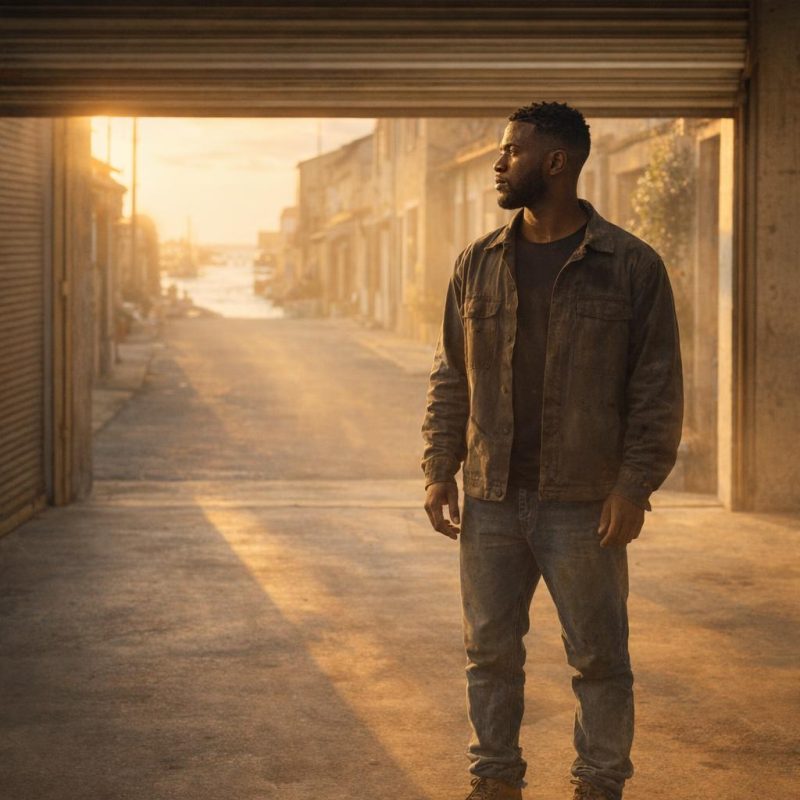 Image by RM AI