I Found a Box in My Daughter's Garage That Revealed a Family Secret I Was Never Supposed to Know
I Found a Box in My Daughter's Garage That Revealed a Family Secret I Was Never Supposed to Know
The Sunday Call
Emily called on a Sunday, same as always, right around noon when I was halfway through my second cup of coffee. She and Daniel were finally taking that anniversary trip — two and a half weeks in Portugal and Spain, something they'd been talking about for years — and she needed someone to look after the house. Plants, mail, the usual. She asked if I'd be willing to stay there rather than just pop in every few days, said it would be easier on the cat and she'd feel better knowing someone was actually home. I didn't even hesitate. I told her I'd be there Monday morning with my bag packed. Honestly, I was glad for the excuse. My own house gets quiet in a way that starts to feel heavy after a while, and Emily's place has always felt warm to me — full of the small evidence of a life she'd built carefully and well. We stayed on the phone another twenty minutes after that, talking about nothing in particular, the way we do. She gave me the plant schedule, reminded me twice about the recycling bins, and made me promise to call if anything came up. When she finally said goodbye, she told me she'd call from the airport before they boarded. I sat there after we hung up, still smiling, with her voice settled somewhere comfortable in my chest.
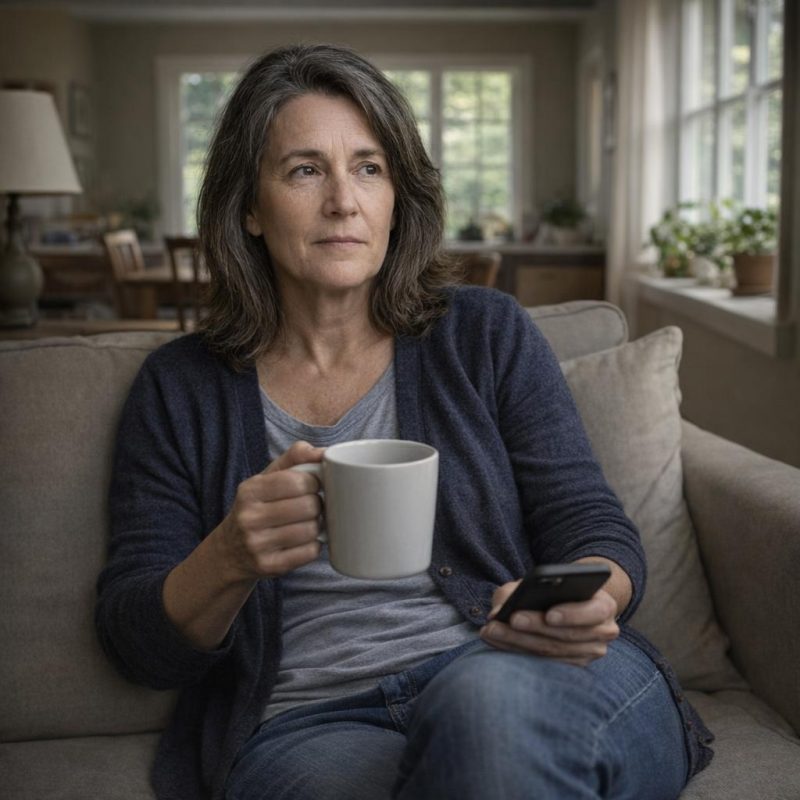 Image by RM AI
Settling In
I arrived Monday morning with a small suitcase and the list Emily had texted me — twelve plants, each with its own watering schedule written out like a prescription. I worked through them methodically, starting in the living room and moving toward the back of the house, and there was something genuinely pleasant about it, moving through her space with a purpose. She'd always had good taste, Emily. The house showed it — warm colors, nothing cluttered, photographs arranged on the shelves in a way that felt considered rather than decorative. I made myself a simple dinner from what she'd left in the fridge, ate at the kitchen table with a book I'd brought, and felt more relaxed than I had in weeks. By eight o'clock I was ready to settle into the guest room, which she'd made up fresh with the good towels folded on the end of the bed. I did a slow loop of the house before turning in — front door locked, back door locked, windows latched. I was almost back to the hallway when I glanced toward the far end of the kitchen and stopped. The door that led from the kitchen into the garage was sitting open, just a few inches, letting a thin line of dark air into the room. I was certain Emily had pulled it shut when she walked me through the house the week before.
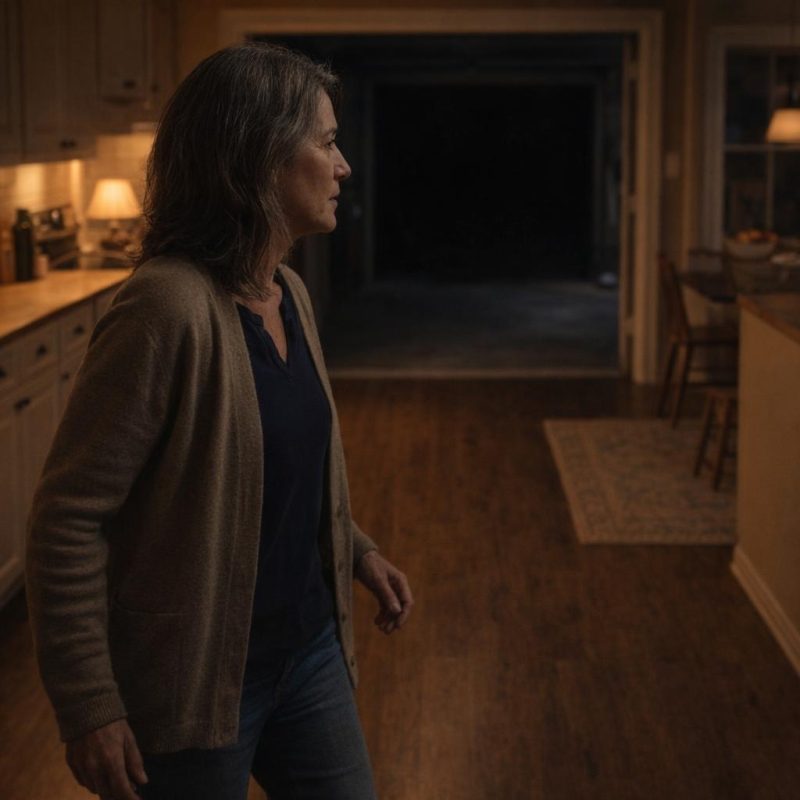 Image by RM AI
The Delivery
I pulled the garage door closed that night and told myself I must have been mistaken about it. Emily was thorough — she wouldn't have left it open — but I also knew I'd been distracted during the walkthrough, half-listening while she talked and half-admiring the kitchen tile. I let it go and slept fine. The next morning I was in the middle of watering the back bedroom plants when the doorbell rang. A delivery truck was parked at the curb, and the driver was already holding a clipboard out toward me before I'd fully opened the front door. He was pleasant enough, efficient in the way delivery drivers always are — name on the package, signature on the line, no time for small talk. The box was addressed to Emily, marked fragile in red along two sides, and heavier than it looked. He mentioned it would be best stored somewhere cool and out of direct sunlight, and asked if there was a garage. I said yes and signed where he pointed. He was back in his truck before I'd even set the box down on the porch step. I stood there for a moment in the late morning quiet, the package resting against my hip, feeling its solid weight shift slightly as I adjusted my grip. Then I turned toward the side of the house and started walking toward the garage.
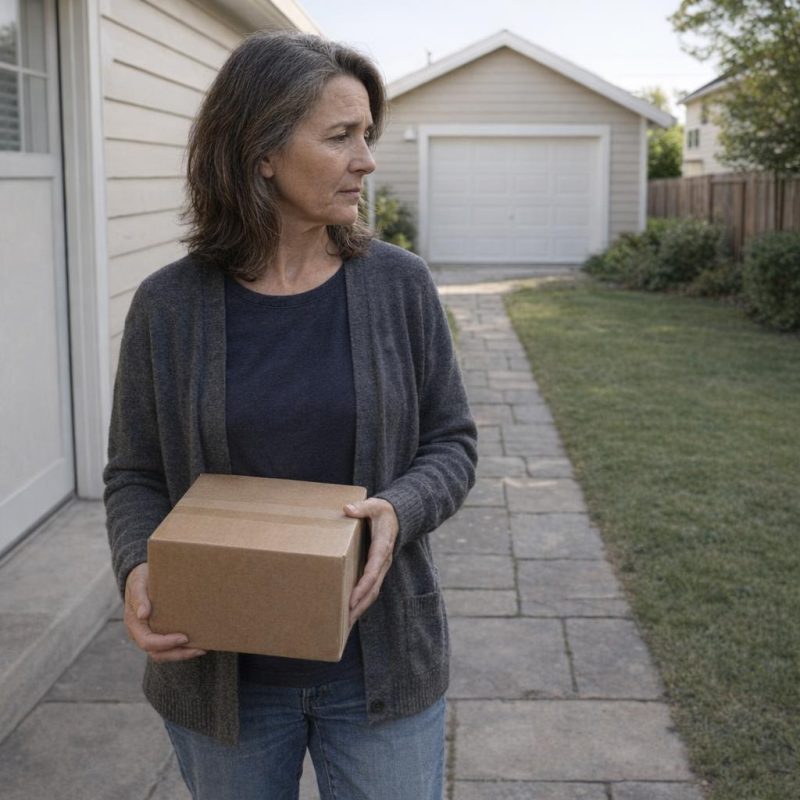 Image by RM AI
The Name I Hadn't Heard
I hadn't opened the garage door fully the night before — just pulled the interior door shut from the kitchen side — so this was the first time I'd actually stepped inside. It was tidier than most garages, Emily's way, but there was more in there than I'd expected. Shelving units along both walls, labeled bins, a folding table pushed against the back. I set the delivery package down near the door and looked for a clear spot to tuck it safely. That's when I saw it. Behind the second shelving unit on the left, pushed back at an angle like it had been slid there in a hurry, was a cardboard box. Old, by the look of it — the corners soft with age, the surface filmed with dust. It was the kind of box that had clearly been somewhere else for a long time before it ended up here. I wouldn't have thought twice about it except for the label. A strip of masking tape across the top, handwritten in faded ink. I had to lean in to read it, and when I did, something in my chest went very still. The name on that label belonged to a chapter of my life I hadn't opened in more than thirty years — a name I associated with loss and unanswered questions and a door my mother had quietly, firmly closed. I stood there in the cool of the garage, the dust settling around me, with that faded name sitting in front of my eyes.
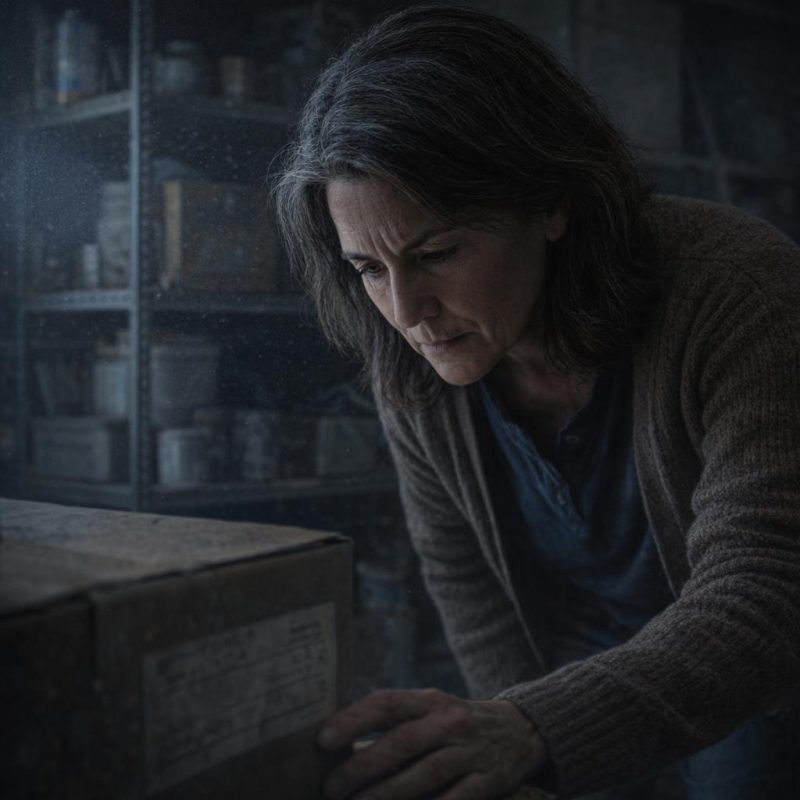 Image by RM AI
Opening the Past
I stood there for a good two or three minutes just looking at it. I told myself it wasn't my box, wasn't addressed to me, and that whatever was inside was Emily's business. I believed all of that. I also knew I wasn't going to walk away. I pulled the box out from behind the shelf carefully, set it on the folding table, and lifted the lid. The smell that came up was old paper and something faintly floral, like dried lavender tucked in a drawer for decades. The contents were arranged with a kind of care that surprised me — not thrown in, but layered. Photographs on top, black and white, the people in them wearing clothes from another era entirely. Beneath those, a bundle of letters tied with kitchen string, the envelopes yellowed to the color of old cream. Newspaper clippings came next, folded along their original creases and slipped into a paper sleeve. And at the very bottom, resting flat like it had been placed there last and most deliberately, was a small leather journal, dark brown, the cover worn soft at the corners. I lifted it out and held it for a moment before opening it. The first page had no date, no address, no preamble. Just a name written in careful, unhurried script across the top of the page — Margaret.
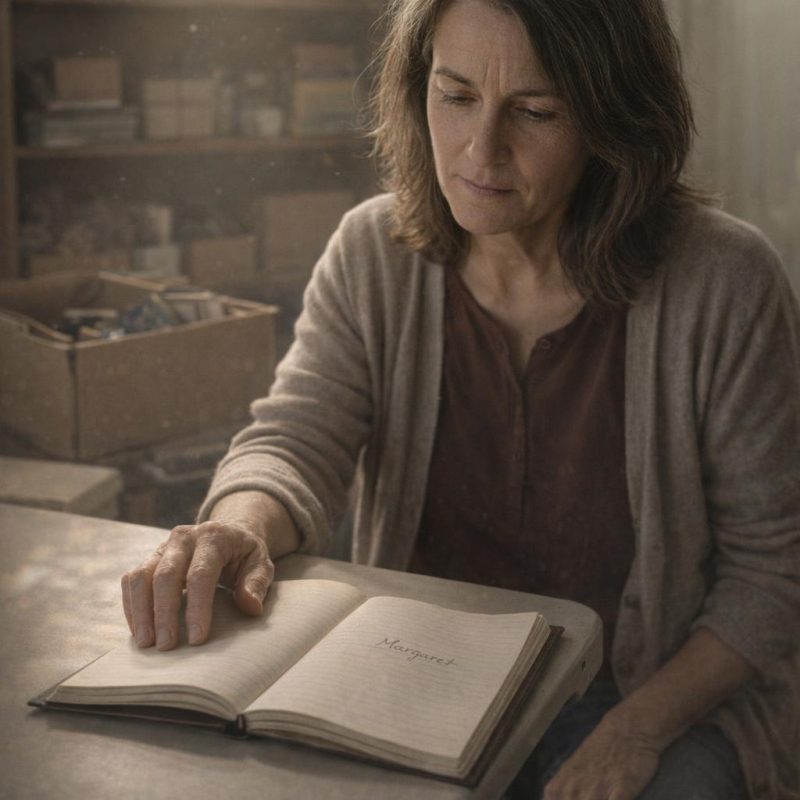 Image by RM AI
Faces from Another Time
I carried the photographs to the kitchen table because the garage light wasn't good enough. I spread them out slowly, one by one, giving each one a moment before I set it down. There were maybe twenty in total, spanning what looked like several decades — the earliest ones stiff and formal, the later ones slightly more relaxed but still careful, the way people used to be in front of a camera. The woman I took to be Margaret appeared in most of them. In some she was young, maybe early twenties, standing in front of a house I didn't recognize. In others she was older, her hair pinned back, her expression harder to read. She had strong features — a particular way of holding her chin, a directness in her posture even when she was seated. I kept coming back to her eyes. There was something in them I couldn't name, something that nagged at me the way a word does when it's right at the edge of your memory. I turned one photograph over, hoping for a name or a date on the back, but there was nothing. I turned over another. Still nothing. I lined three of them up side by side and stood back and looked at them together, trying to place what it was about her face that felt so unsettling and so oddly familiar at the same time.
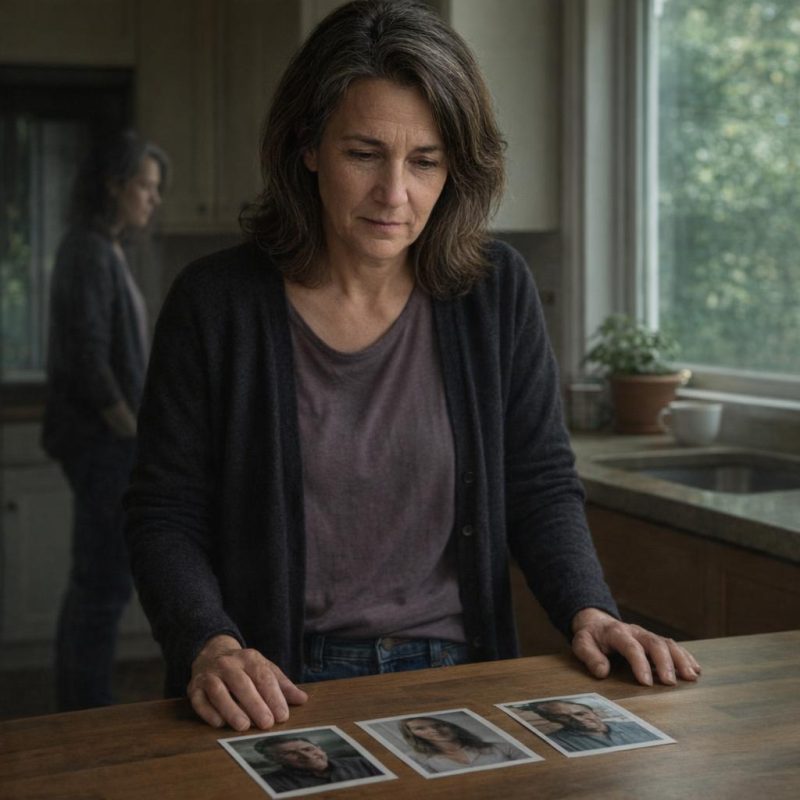 Image by RM AI
Letters to No One
I untied the string around the letters carefully, the way you do when you're not sure something will hold if you rush it. There were eleven of them, written in the same hand as the journal — Margaret's, I assumed — on paper so thin in places it had gone nearly translucent. They were addressed to different people. Some names I didn't recognize at all. One was addressed simply to 'Dearest H,' with no surname. I read them in the order they'd been bundled, which may not have been chronological, and by the fourth letter I'd started keeping a mental list of the things that didn't line up. Margaret wrote about a town I'd never heard my mother mention, described a family gathering at a house that sounded nothing like any place my mother had ever described as home. She referenced an aunt by a name my mother had never used, talked about a church in a county my mother always said she'd never had reason to visit. Each small discrepancy on its own was easy enough to set aside. But they were accumulating. Then I unfolded the eighth letter and read it through twice to make sure I was understanding it correctly. Margaret was writing about a child — carefully, in the way people write about things that are painful to put into words — describing a separation that had happened under circumstances she didn't name directly but clearly hadn't chosen.
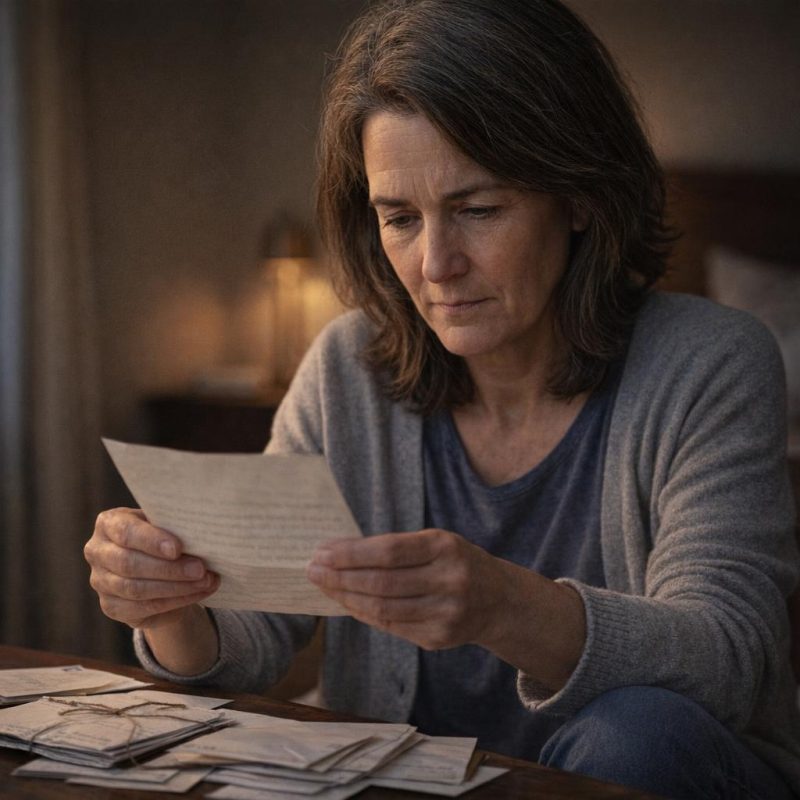 Image by RM AI
The Clippings
I set the letters aside and picked up the paper sleeve with the newspaper clippings. There were six of them, each one folded along its original crease, the newsprint so brittle I had to open them slowly to keep the edges from flaking. The dates ran from 1953 to 1961. Most were short pieces — a few column inches each — the kind of local news that fills the inside pages of small-town papers. One covered a property dispute between two families, the details dry and legal. Another was an obituary for a man whose name meant nothing to me. I unfolded the fourth clipping and smoothed it flat against the table. It was longer than the others, maybe five or six inches of column, with a small photograph of a street I didn't recognize. The headline reported that a woman had disappeared from a town called Harlan's Creek sometime in the spring of 1957. I read the town name again. My mother had a story she told occasionally about the region where she grew up, and in that story she was always clear on one point — she had never been anywhere near that part of the state, had no family there, no connection to it whatsoever. The clipping sat on the table in front of me, and the town name sat inside it, and the two things would not fit together the way they were supposed to.
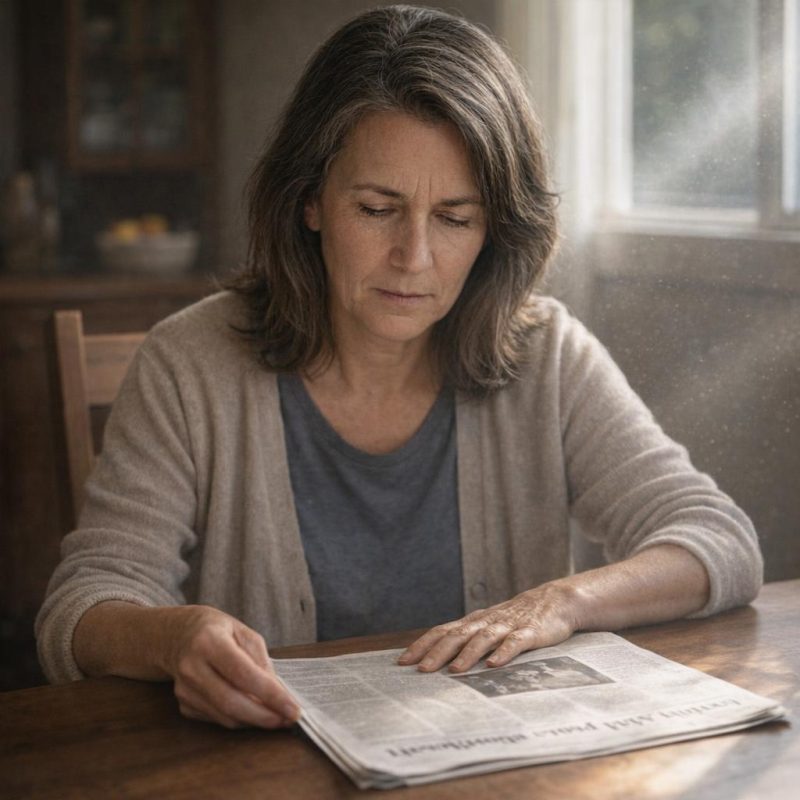 Image by RM AI
Margaret's Words
The journal was smaller than I expected — maybe five inches by seven, bound in dark brown leather that had softened with age. I opened it carefully, the spine giving a faint creak, and found the first entry dated in a neat, upright hand. The ink had faded to a warm brown, but the letters were still clear. Margaret wrote the way someone writes when they believe the words matter — deliberately, with care. The early entries described ordinary things: a garden, a neighbor's kindness, the particular quality of light on a winter morning. There was happiness in those pages, or at least the memory of it. But somewhere around the middle of the journal the tone shifted. The handwriting stayed neat, but certain words were pressed harder into the paper, as though the pen needed to do what the voice couldn't. She wrote about a loss she never named directly — something taken, something she hadn't chosen to give up. One entry stopped me entirely. She wrote that there are things a person carries that have no proper name, only weight. Then, a few pages later, I found an entry where she described being made to surrender something she called the only thing that was truly hers — and the sentence broke off mid-line, as though she couldn't finish it.
 Image by RM AI
Recent Additions
I set the journal down and started going through the rest of the box more carefully, paying attention to things I'd only half-noticed before. The older materials were easy to identify — the paper had that particular yellowed quality, almost tea-colored at the edges, and the ink had faded to something between gray and brown. But not everything in the box looked like that. Tucked between two folded letters I found a sheet of crisp white paper, clearly a photocopy, the toner still sharp and dark. Then another. A few of the documents near the bottom were printouts — the kind that come from a computer, with that slightly pixelated quality around the text edges. Some appeared to be records pulled from genealogy databases, the kind you find online, with standardized formatting and small header logos I half-recognized. They weren't old. They couldn't have been more than a few years old at most, maybe less. Someone had been adding to this collection — not just preserving what already existed, but actively searching, pulling new threads, layering them in alongside the original materials. The old documents and the new ones sat together in the same box, and the combination of them settled over me like a slow, quiet weight I hadn't expected to feel.
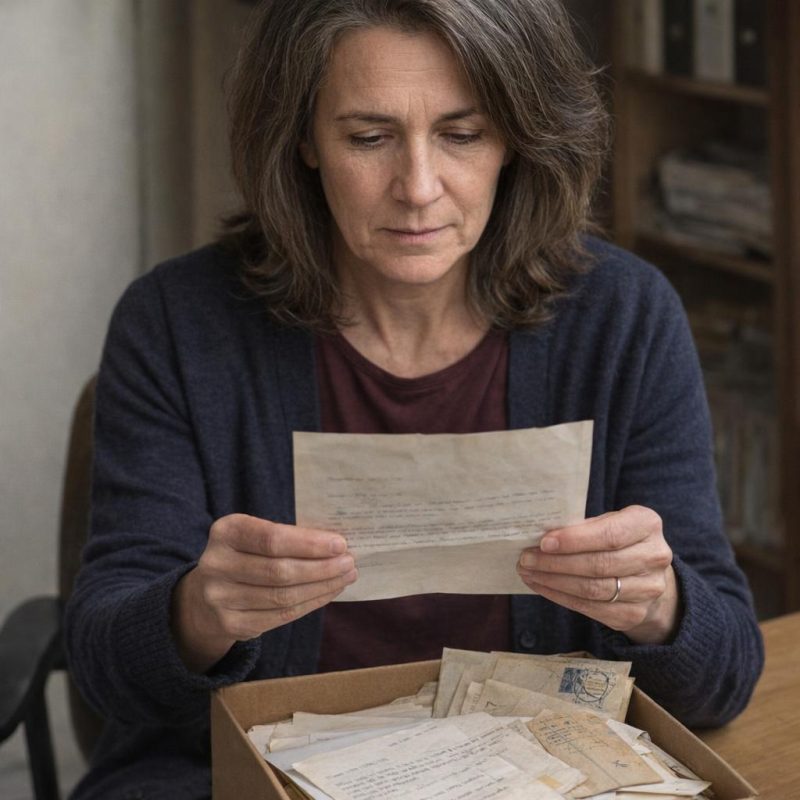 Image by RM AI
Emily's Hand
I picked up one of the printouts to read it more closely and noticed a small square of yellow paper stuck to the upper corner — a sticky note, the kind you buy in any office supply store. The handwriting on it was small and precise, with a particular way of forming the letter g that I would have known anywhere. I had watched that handwriting develop over decades, from a child's careful printing to this — neat, efficient, slightly slanted to the right. It was Emily's. I peeled the note back gently and read it. She had written a date, a question mark, and a name I didn't recognize, with a line connecting them to a note that said cross-ref census. I went through the other documents more slowly now, and I found more of them — sticky notes, margin annotations in pencil, small folded slips tucked inside letters. Emily had been working through these materials the way a researcher works, tracking connections, flagging inconsistencies, building something. One note referenced a phone call. Another listed three towns with question marks beside each one. My daughter had been doing this quietly, carefully, for what looked like a long time, and I had known nothing about it. I sat with that for a moment, the stack of papers in my hands, her handwriting looking back at me from every other page.
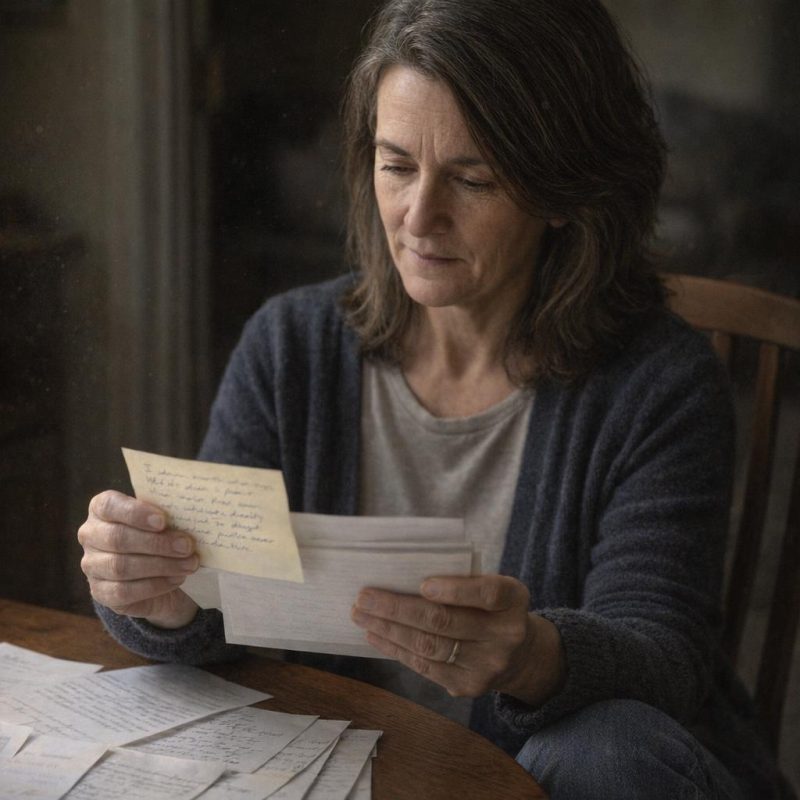 Image by RM AI
The Guilt
I closed the box. I actually closed it, folded the flaps back down, and pushed it a few inches toward the center of the table as if the distance would help. Then I went and watered the plants on the back porch the way Emily had asked me to, checked that the windows in the spare room were latched, and stood in the hallway for a few minutes doing nothing in particular. The box was in the kitchen. I could feel it from there, which I understood was not a rational thing to feel. I told myself that whatever Emily was researching was her business, that she would explain it when she was ready, that I had already seen more than I was meant to. I made a cup of tea and drank half of it standing at the counter. I thought about calling her, just to hear her voice, just to have a normal conversation about the anniversary trip and whether the weather had been good. I didn't call. I set the mug down, walked back to the kitchen table, and opened the box again. I told myself I just needed to understand enough to know whether I should be worried. I wasn't sure I believed that, but it was the best I had, and it was enough to keep my hands moving.
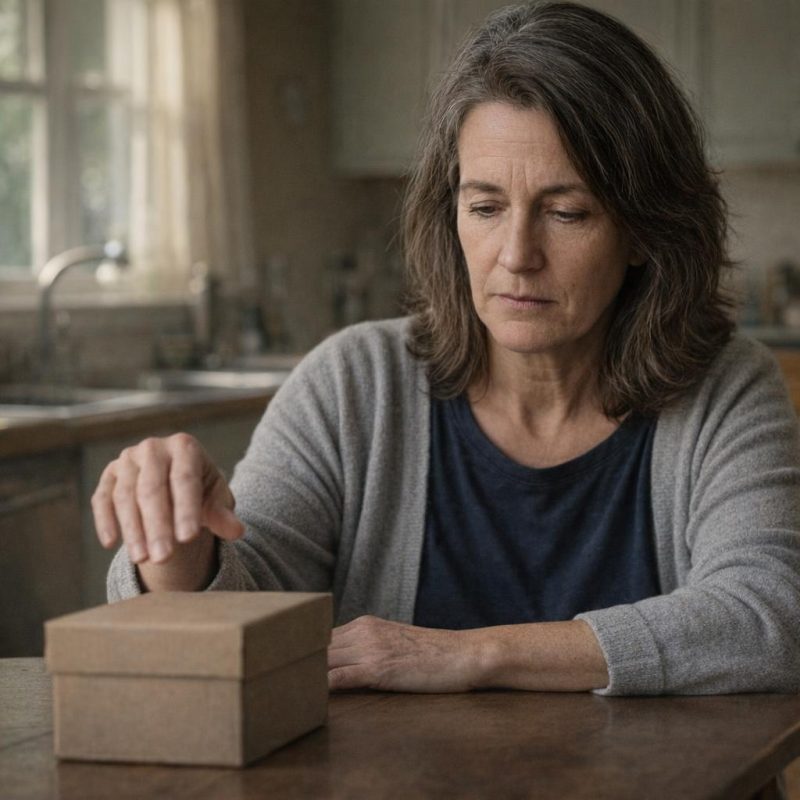 Image by RM AI
Contradictions
I found a piece of notepaper and started writing things down — dates from Margaret's journal on one side, dates from my mother Helen's stories on the other. I had heard those stories enough times that I could recite the broad outline without thinking: where she grew up, when she left, how she came to settle where she did. I had never questioned them. They were just the shape of my mother's past, the way a house has a shape you stop noticing after you've lived in it long enough. But when I put Margaret's account beside Helen's, the shapes didn't match. Margaret placed herself in a town my mother had never mentioned during years my mother claimed to have spent somewhere else entirely. Events Margaret described in careful detail — a particular winter, a move, a period of upheaval — didn't appear anywhere in Helen's version of those same years. I tried to find explanations. Different branches of the family, maybe. Confused memories. The ordinary way that stories shift over time. But the differences weren't small, and they weren't the kind that come from forgetting. They were the kind that come from two accounts of the same period that have almost nothing in common. I sat with my two columns of notes and the growing space between them, not sure what I was looking at.
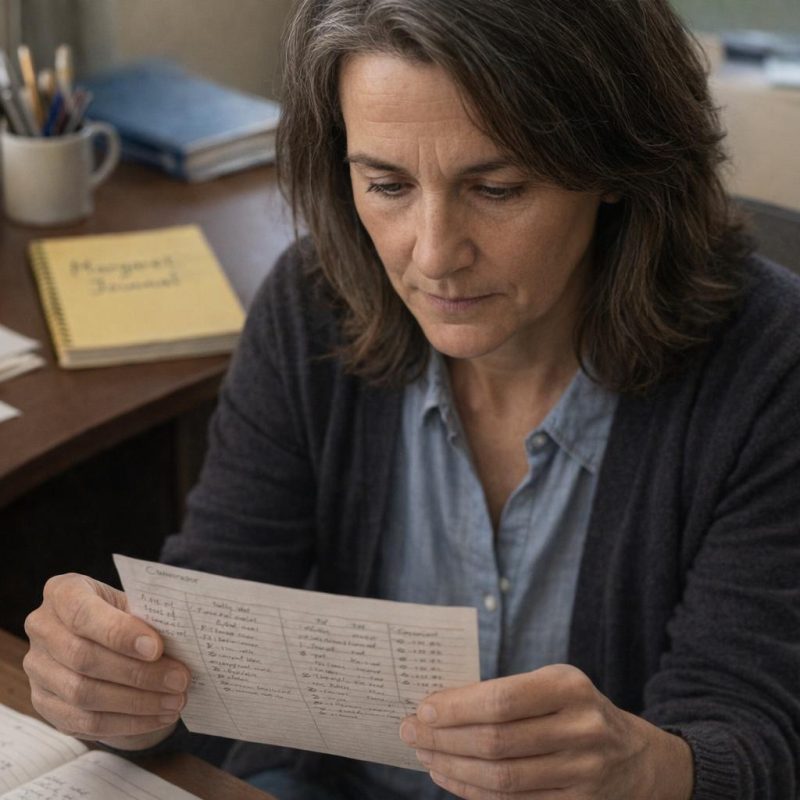 Image by RM AI
Missing Pieces
I turned back to the timeline I'd been building and tried to map out my mother Helen's life the way she had described it to me over the years. Childhood, then early adulthood, then the years that led to me. I had always thought of it as a complete picture, the kind of history that has a beginning and a shape. But when I tried to fill in the specific years, I kept running into the same gap. Helen's stories moved from her early twenties directly into the mid-fifties without anything in between — no explanation, no transition, just a jump, the way a film cuts from one scene to another and you're expected not to notice. I had never noticed. I had never thought to ask. Margaret's journal, though, had entries throughout those same years — quiet, careful entries that described a life being lived somewhere, by someone, during the exact period my mother had left blank. I didn't know what to make of that. I wasn't ready to make anything of it. But I sat there with my notes spread across the table and the gap in my mother's timeline sitting in the middle of everything, and the emptiness of it had a particular quality — not like something forgotten, but like something that had been carefully set aside.
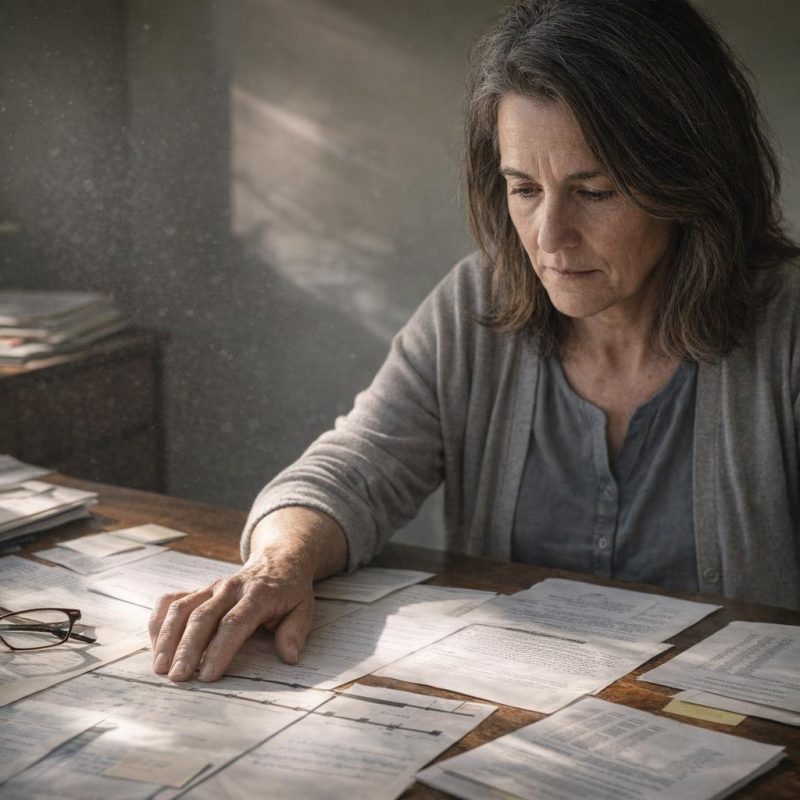 Image by RM AI
The Distant Relative
Near the bottom of the box I found a folded sheet of heavier paper, the kind used for documents meant to last. I opened it and found a hand-drawn family tree — careful pencil lines connecting names in small, neat boxes, the whole thing spanning what looked like three or four generations. I traced the lines slowly, trying to orient myself, looking for names I recognized. Margaret's name was there, positioned toward the upper middle of the page, connected by lines to other names I didn't know. But someone had gone over her name with heavy ink — not a correction, not a revision, but a thick crossing-out that left the name still faintly legible underneath. And in the space beside it, written in different handwriting and darker ink, was another name entirely, slotted into the same position on the tree as though it had always belonged there. I looked at the structure around it, trying to understand the relationship being described, tracing the lines down through the generations. The more I looked, the less the substitution made sense — the new name didn't fit the pattern of the surrounding entries the way Margaret's had.
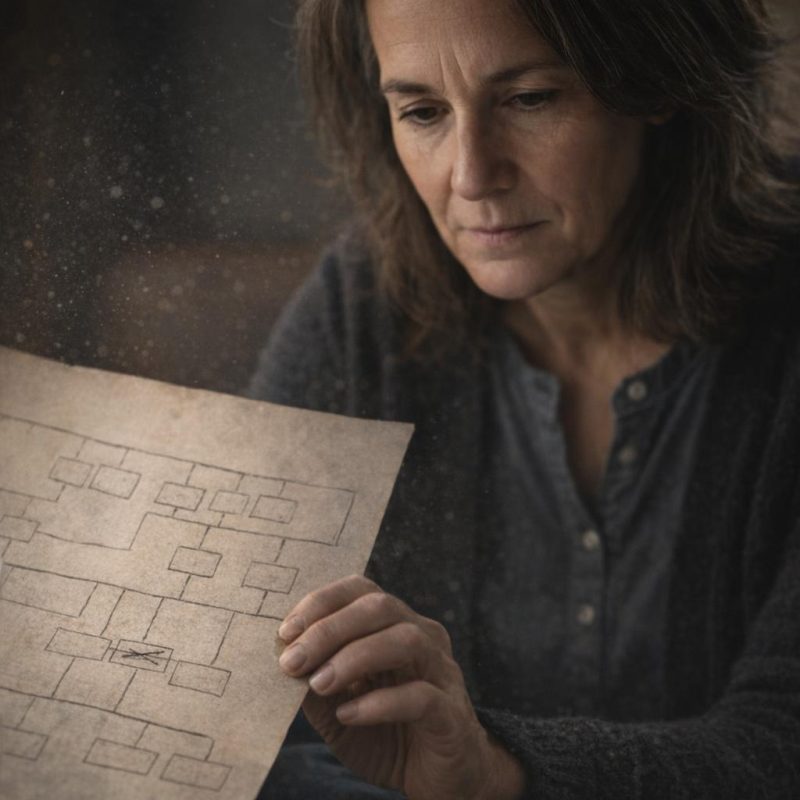 Image by RM AI
The Search Continues
I left the box on the kitchen table and walked through to Emily's home office. I told myself I was just going to look, that I wouldn't touch anything. The office was tidy in the way Emily's spaces always are — everything with a place, nothing left out without a reason. But on the far wall, above the desk, there was a bulletin board I had seen before without really seeing it. Now I looked at it properly. There were photographs pinned to it, photocopied documents, handwritten notes, and lengths of red string connecting them in a pattern that took me a moment to follow. On the desk, a row of manila folders stood upright in a wire rack, each one labeled in Emily's handwriting — town names, some of which I recognized from the box, others I didn't. I opened the nearest drawer and found it stacked with printouts: census records, property filings, what looked like archived newspaper pages. I stood in the middle of the room and turned slowly, taking it in. This wasn't an afternoon's curiosity. The bulletin board alone must have taken weeks to build. On the shelf above the desk, between two binders, I noticed a thick accordion folder with a single label on the tab — and the name written there was Margaret's.
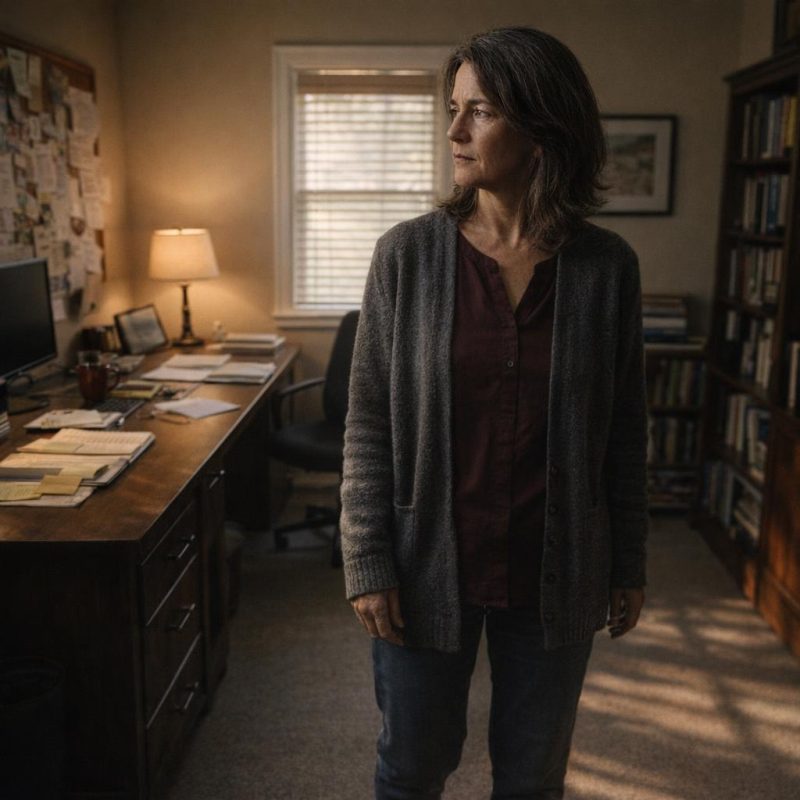 Image by RM AI
The Call from Overseas
My phone buzzed on the kitchen counter just as I was sliding the accordion folder back onto Emily's shelf. I saw her name on the screen and stood there for a second, steadying myself before I answered. "Hey, sweetheart," I said, and I was proud of how normal it came out. She asked how the housesitting was going, whether the plants were holding up, whether the mail was piling. I told her everything was fine, that I'd watered the ferns and brought in a small stack of envelopes, that the house was quiet and comfortable. All of it true. None of it the whole truth. She laughed at something I said about the neighbor's cat sitting on the front step, and for a few minutes it felt like any other Sunday call. Then she asked, in a tone that was just slightly different from the rest of the conversation, whether everything was okay. Not the house. Me. Whether I was okay. I said of course, why wouldn't I be, and she said no reason, just checking. We said our goodbyes and I love yous and I hung up. I stood in the kitchen holding the phone, and there it was again — that slight shift in her voice when she'd asked the question, something that might have been nervousness or might have been nothing at all.
 Image by RM AI
The Nervous Edge
I sat at Emily's kitchen table after the call with a glass of water I wasn't drinking. I kept going back over the conversation, pulling it apart the way you do when something doesn't quite settle. Most of it had been easy and familiar — the plants, the mail, the cat. But there was a moment, just before she asked if I was okay, where I'd heard a small pause. Not long. Maybe half a breath. The kind of pause that wouldn't mean anything on a different day. And her laugh, the one about the neighbor's cat — it had come a beat too quickly, like she'd reached for it. I've been listening to my daughter's laugh for thirty-five years, and something about this one felt different — a slight tightness underneath it that I couldn't quite place. Then there was the question itself. She hadn't asked about the house again. She'd asked about me, specifically, and the way she'd phrased it — just checking — felt like something said to fill a space rather than something that needed saying. I told myself I was probably reading too much into a three-minute phone call. I told myself guilt had a way of making ordinary things feel loaded. But her voice stayed with me, quiet and unresolved, long after the call had ended.
 Image by RM AI
Does She Know?
I kept coming back to the garage. The door had been slightly open when I arrived — not wide, just a few inches, enough that I'd noticed it and gone to check. And the box had been sitting right there on the shelf at eye level, not buried, not hidden behind anything. I'd told myself it was just storage, just the ordinary clutter of a busy household. But the more I sat with it, the more the details felt harder to dismiss. Emily knew I'd be here for a week. She knew I'd bring in the mail, water the plants, move through the house the way you do when you're looking after someone else's space. She would have known I might go into the garage. I turned the thought over carefully, the way you handle something fragile. Could she have wanted me to find it? Could the box have been left where it was in the hope that I would look? I didn't know what to do with that possibility. It was too large and too strange to hold comfortably, and I wasn't sure whether I was giving Emily too much credit or not nearly enough. The idea that she might have left it there for me to find settled over everything I'd done that afternoon like a second layer of meaning I hadn't asked for.
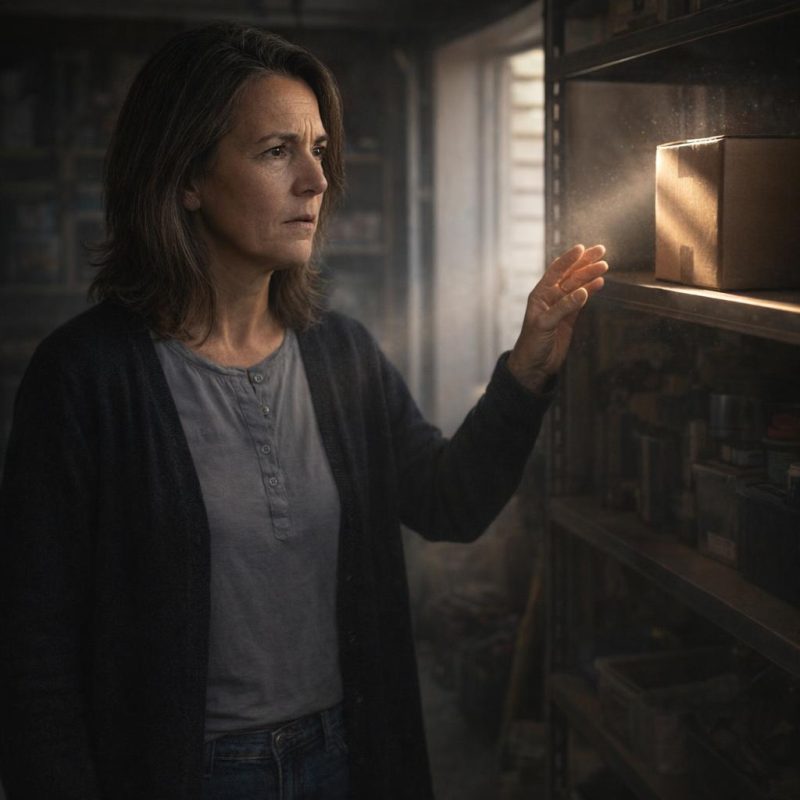 Image by RM AI
The Locked Drawer
I went back to Emily's office with the kind of focus that comes when you've stopped pretending you're not looking for something. I'd noticed the locked drawer earlier and moved past it, but I wasn't moving past anything now. It was the bottom drawer on the left side of the desk, a small brass lock set into the face of it. I tried pulling it gently, then less gently. Locked solid. I stood there thinking about where Emily would keep a key — not hidden exactly, but not obvious either. She's practical that way. I went to the kitchen and opened the junk drawer, the one every household has, the one with batteries and rubber bands and things that don't belong anywhere else. Near the back, on a small loop of string, there were two keys. I took them both back to the office. The first one didn't fit. The second one slid in cleanly and turned with almost no resistance. I pulled the drawer open slowly. Inside, organized into labeled folders the same way everything else in the room was organized, were photocopied documents. I lifted the top folder and set it on the desk. The tab read "Birth Records — Amended," and when I opened it, a stack of photocopied certificates fanned out across the surface in front of me.
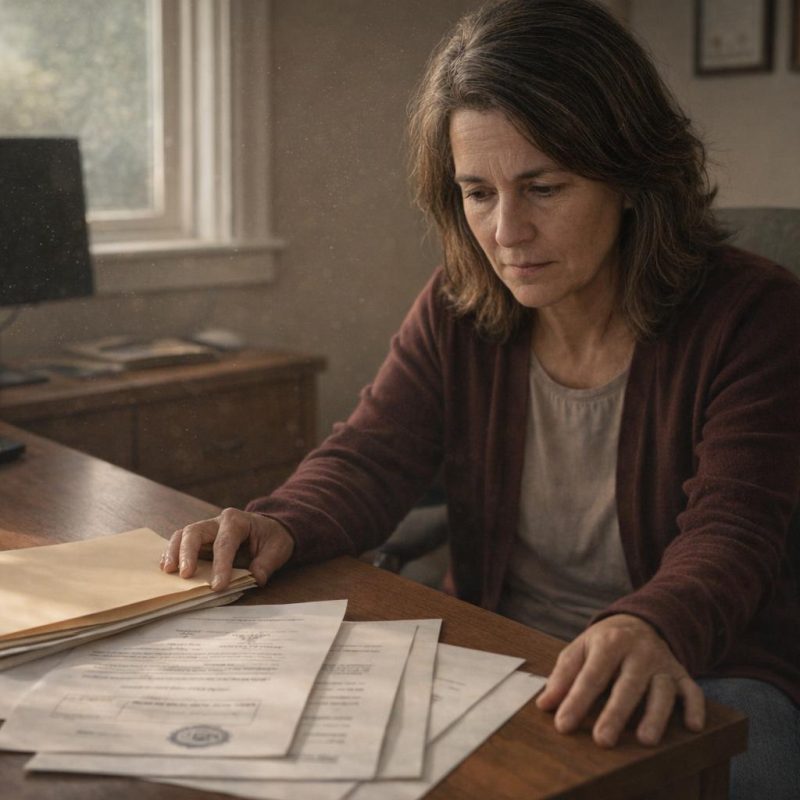 Image by RM AI
Names Crossed Out
I spread the photocopies across the desk and leaned in close. Each one was a birth certificate, or what had once been a birth certificate, before someone had gone to work on the original with ink and erasure. On the first one, a name in the parent field had been crossed out with heavy strokes, the kind that press through the paper, and a different name written above it in a different hand. On the second, the original text had been erased and written over, but the ghost of the earlier letters was still visible underneath, pale and insistent. I moved through them one by one. Five certificates in total, spanning different years, different counties. Each one had at least one alteration, and Emily had gone through every page with a yellow highlighter, marking each changed section so nothing could be missed. Some of the highlighted areas were names. Others were dates. One was a location. I didn't yet understand what the changes meant or who had made them or why, but the pattern across five separate documents was impossible to ignore. Someone had gone to considerable trouble to make these records say something different from what they'd originally said. I sat back in the chair and looked at the spread of pages in front of me, each yellow mark glowing quietly under the desk lamp.
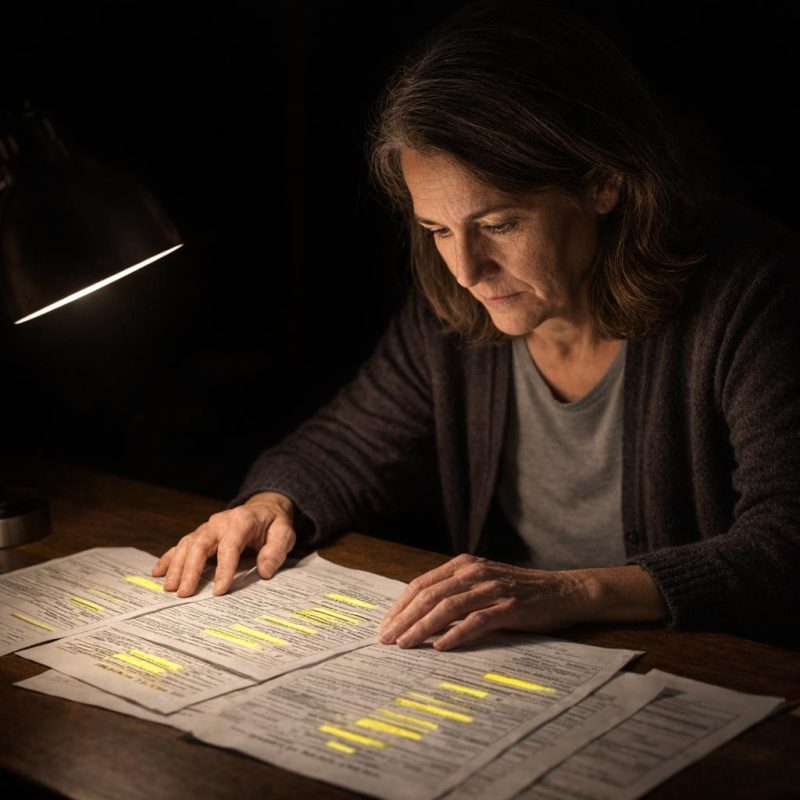 Image by RM AI
The Pattern Emerges
I started reading Emily's annotations more carefully, and the more I read, the more I understood that what I was looking at wasn't just a collection of suspicious documents — it was the result of months of methodical, painstaking work. Emily had created a handwritten chart on a sheet of graph paper tucked behind the certificates, mapping each altered document to a corresponding record she'd tracked down separately. She'd noted courthouse visits, written down the names of clerks she'd spoken to, flagged discrepancies between state-level filings and county records. On one certificate, she'd written the original filing date in red and the amendment date in blue, with a gap of nearly three years between them and a question mark beside it. Another note referenced a records request she'd submitted twice because the first response had been incomplete. I recognized the handwriting, the neat block letters she'd used since high school, but the mind behind the notes felt like someone I was only beginning to know. She had cross-referenced, verified, and double-checked every piece of information before committing it to the chart. Nothing was assumed. Everything was sourced. I sat with the graph paper in my hands for a long moment, feeling the particular weight of realizing your child is capable of something you never thought to look for.
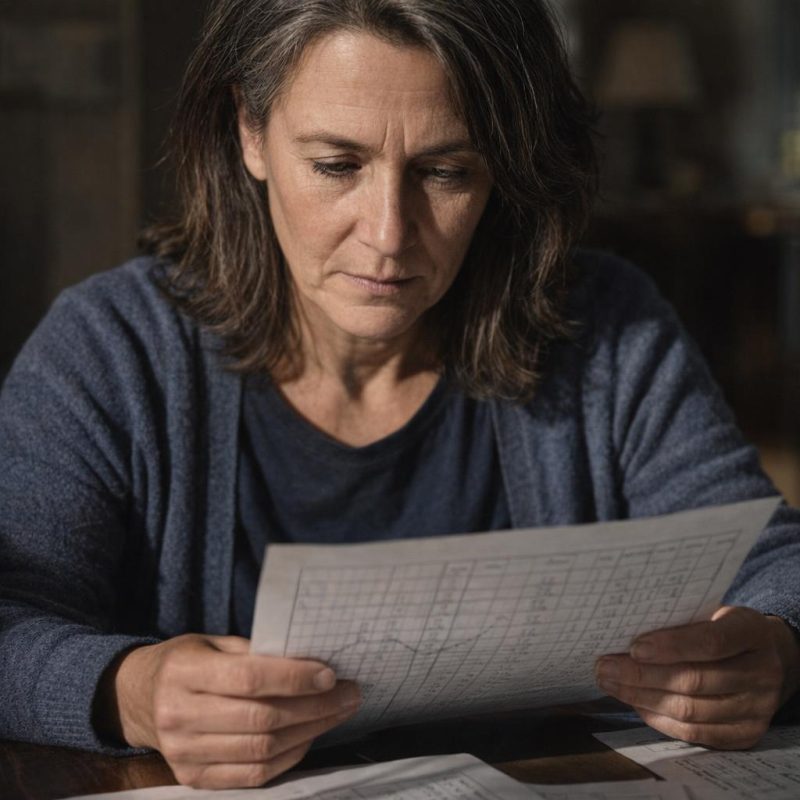 Image by RM AI
The Circled Towns
Tucked into the back of the birth records folder, folded into quarters, was a road map — the old paper kind, the sort you don't see much anymore. I unfolded it carefully on the desk. It covered three counties, and someone had gone over it with a red marker, circling six towns at various points across the grid. I recognized two of the town names from the photocopied documents. A third appeared on one of the newspaper clippings I'd seen pinned to the bulletin board. I looked at the remaining three and felt certain they'd turn up somewhere else in the files if I kept looking. Clipped to the back of the map with a binder clip was a small stack of receipts — hotel printouts, a couple of restaurant tabs, one gas station slip. I went through them slowly. The dates spanned the past fourteen months. The locations matched the circled towns on the map, one after another, in what looked like a deliberate sequence of visits. Some were weekend stays. Others were single-day trips. I thought about all the times Emily had mentioned work travel over the past year, the conferences and site visits I'd never thought to question. The receipts sat in my hand, each one placing my daughter in a town I hadn't known she'd visited.
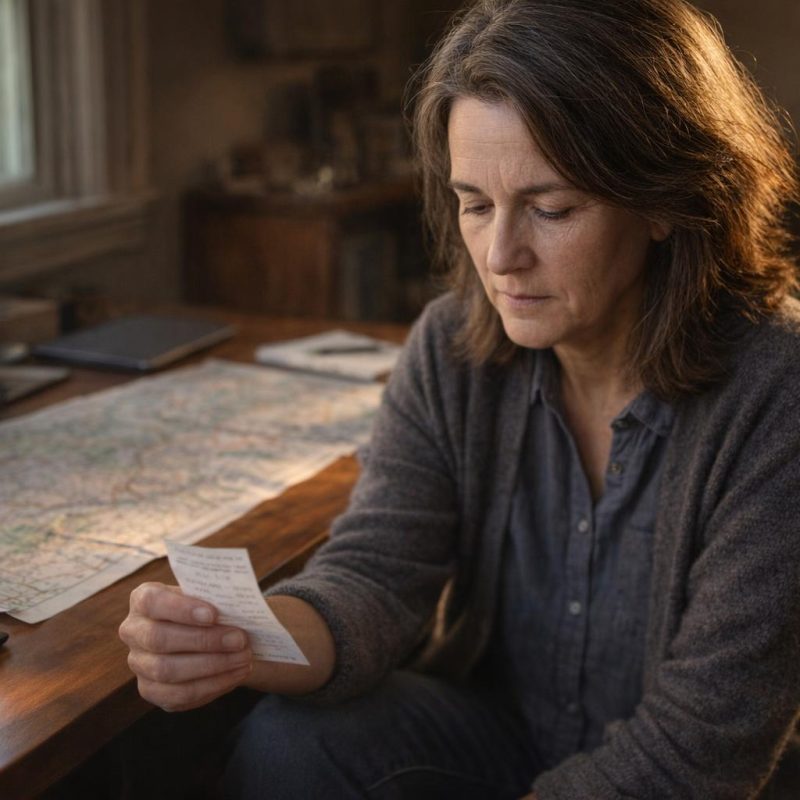 Image by RM AI
The Photograph in the Cookbook
I needed to move, to do something with my hands, so I went back to the kitchen and started looking through the shelves more carefully than I had before. I wasn't sure what I was looking for — more papers, maybe, or something else tucked away the way the map had been tucked into the folder. I pulled the cookbooks off the shelf one at a time, fanning the pages, checking for anything slipped between them. Most were clean. Then I lifted an old recipe collection near the end of the row, its spine cracked and the cover soft with age, and a photograph slipped out and fell face-up onto the counter. I picked it up. It showed two women standing together outdoors, somewhere with trees behind them. One of them I recognized from the photographs in the box — Margaret, younger here but unmistakable. The other woman was younger still, maybe late twenties, standing slightly turned toward the camera. I looked at her face. Then I looked again. I carried the photograph to the small mirror hanging beside the back door and held it up. The woman in the photograph had my jaw, my brow line, the particular set of my eyes that I'd always thought was just mine. The resemblance wasn't a passing similarity. It looked back at me like a reflection I hadn't posed for.
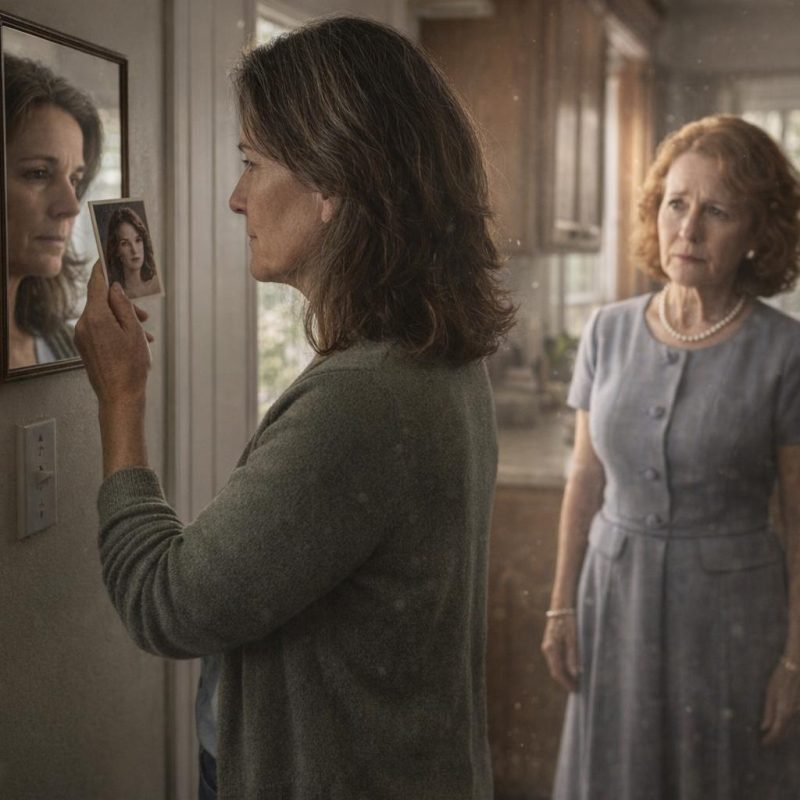 Image by RM AI
The Note for Mom
I almost missed it. I'd been going through Emily's desk drawer — the one I'd had to ease open with a letter opener because the lock was just a simple push-tab — looking for anything that might explain the map, the files, the photograph. Most of what I found was ordinary: pens, a spare phone charger, a folded grocery receipt. But near the back, tucked flat against the bottom like it had been slid there deliberately, was an envelope. Cream-colored, sealed, with Emily's handwriting on the front. Not an address. Just three words and a name: *For Mom, when I'm finally sure.* I stood there holding it for a long time. The handwriting was unmistakably hers — the careful loops she'd had since middle school, the way she always pressed a little too hard with the pen. The phrase stopped me. *When I'm finally sure.* Not *if.* When. Which meant she'd been working toward something. Which meant she'd been carrying something she hadn't told me. I thought about setting it back in the drawer and waiting for her to give it to me herself, the way she'd intended. I thought about what it would mean to open it without her permission. I set it on top of the desk instead, in the center, where I could see it. The envelope sat there between us — between who I was before I walked into this garage and whoever I was becoming — and I didn't touch it again.
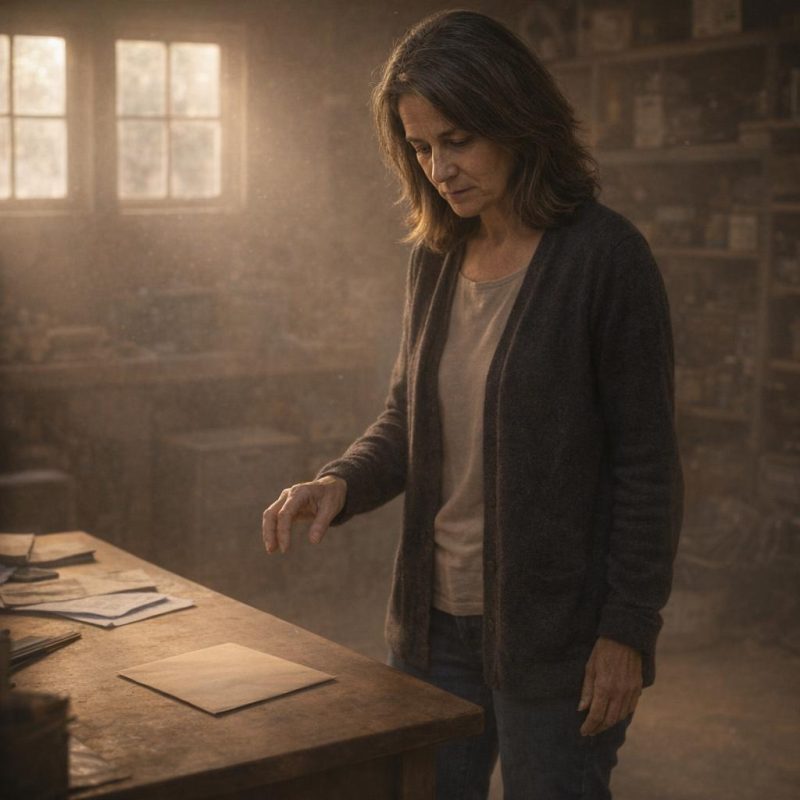 Image by RM AI
Breaking the Seal
I lasted about an hour. I paced the kitchen, made tea I didn't drink, stood at the window watching the neighbor's sprinklers run their slow arc across the lawn. I told myself I'd wait. I told myself Emily had her reasons, that *when I'm finally sure* meant she'd planned to tell me herself, that opening it now would be a kind of theft. Then I went back to the desk and picked it up again. My hands were shaking — not dramatically, just that fine tremor that comes when your body knows something your mind is still arguing about. I broke the seal. Inside were four pages, handwritten on the same cream paper, front and back, in Emily's careful script. The first line was an apology. *Mom, if you're reading this without me here, I'm sorry. I'm sorry for all of it — for the silence, for the trips I said were work, for every Sunday call where I talked around the thing I most needed to say.* I had to stop and breathe. She went on to explain that it had started small — a box she'd found in my attic storage two years ago, papers she hadn't meant to read. She wrote that she'd told herself it was nothing, that she'd put it back and forget it. But she hadn't been able to forget it. *I was afraid of giving you false hope,* she wrote. *I needed to be sure before I brought any of this to you.*
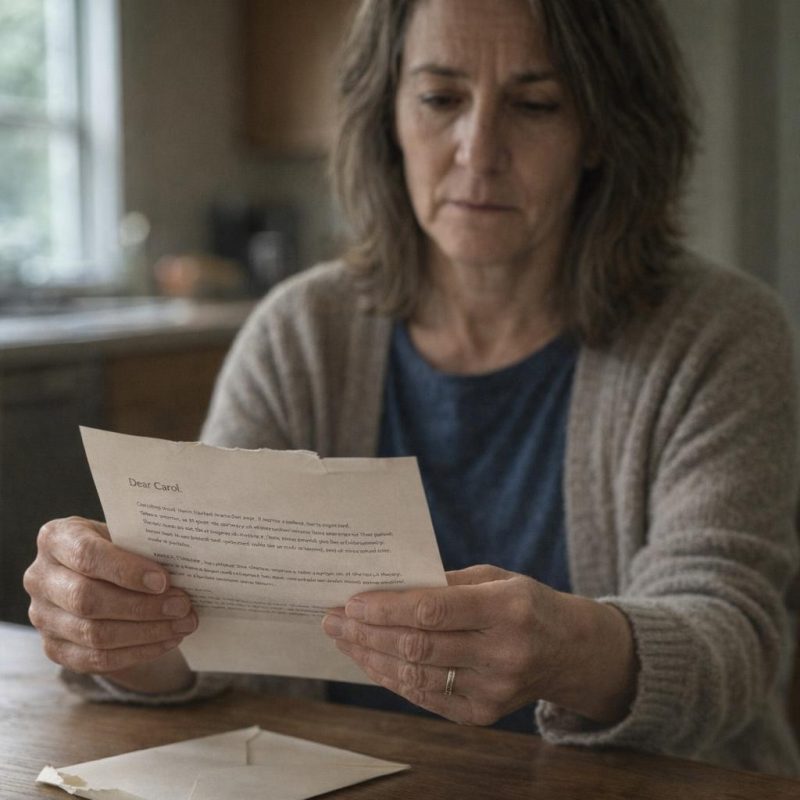 Image by RM AI
Emily's Confession
I sat down on the edge of Emily's desk chair and kept reading. She described the box in my attic the way you describe something that changed you — carefully, like the words themselves needed to be handled. Old documents, she wrote, tucked inside a manila envelope she'd assumed were tax records. A name she didn't recognize. A date that didn't match anything she knew about our family. She said she'd photographed everything on her phone before putting it back, told herself she'd look into it when she had time, and then spent the next six months not being able to stop thinking about it. The weekend trips she'd called work conferences — she named them. March two years ago. October. Three more the following spring. She'd been driving to county courthouses, she wrote, to church archives, to a library in a town I'd never heard of. She'd interviewed people she described only as *elderly witnesses who remembered that time.* She wrote about the weight of it, carrying questions she couldn't answer, sitting across from me at Sunday dinners and talking about nothing. *I kept thinking I was close,* she wrote. *And then I'd find something that opened three more doors.* I turned to the third page. Her handwriting changed slightly there — pressed harder, the letters a little less even. She wrote that she'd finally found a connection she couldn't explain away, something that linked our family directly to a woman named Margaret.
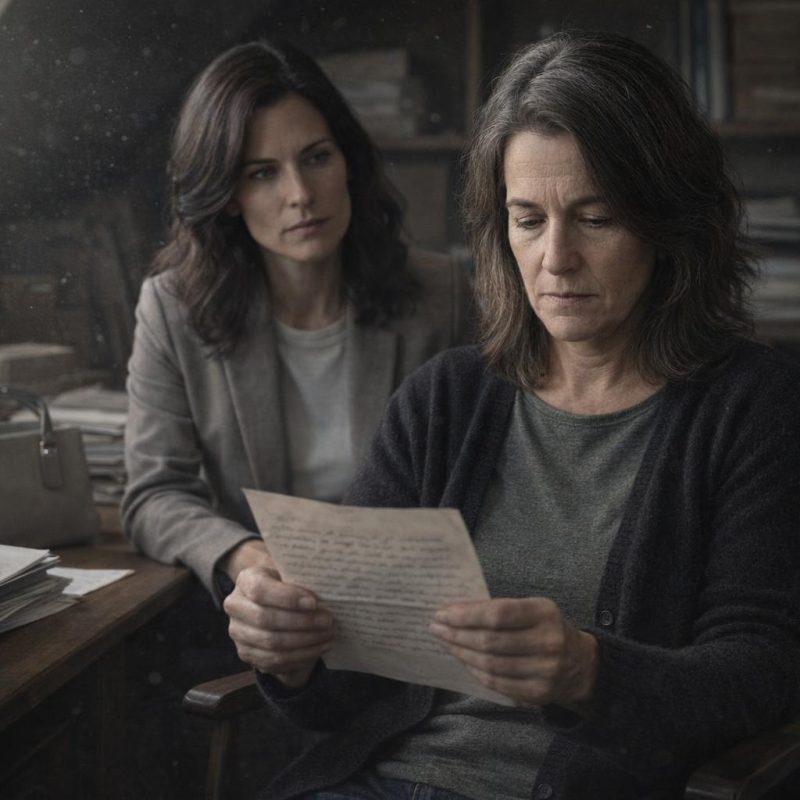 Image by RM AI
The Visitor
The knock came while I was still holding Emily's letter. Three quiet raps, the kind a person makes when they're not entirely sure they have the right house. I set the pages down and went to the door. Standing on the porch was an elderly woman — early eighties, I guessed, small-framed with white hair pinned back neatly and hands that trembled slightly at her sides. She was looking at me with an expression of careful recognition, like she was matching a face to a memory. Before I could say anything, she said, "You must be Emily. You look just like your photographs." I opened my mouth and then closed it again. She was already continuing, her voice low and a little urgent. "I got your letter," she said. "I've been thinking about what you asked me, and I decided I needed to come in person. Some things shouldn't go in writing." I stepped back from the door without correcting her. I told myself it was because I didn't want to startle her, that I'd explain in a moment. She introduced herself as Ruth. She said she and Emily had corresponded months ago, that Emily had found her name somewhere in old church records. She stepped inside and looked around the room with the careful attention of someone orienting herself, and then she turned back to me with those urgent eyes and said, "I assume you know by now what your research turned up about Margaret."
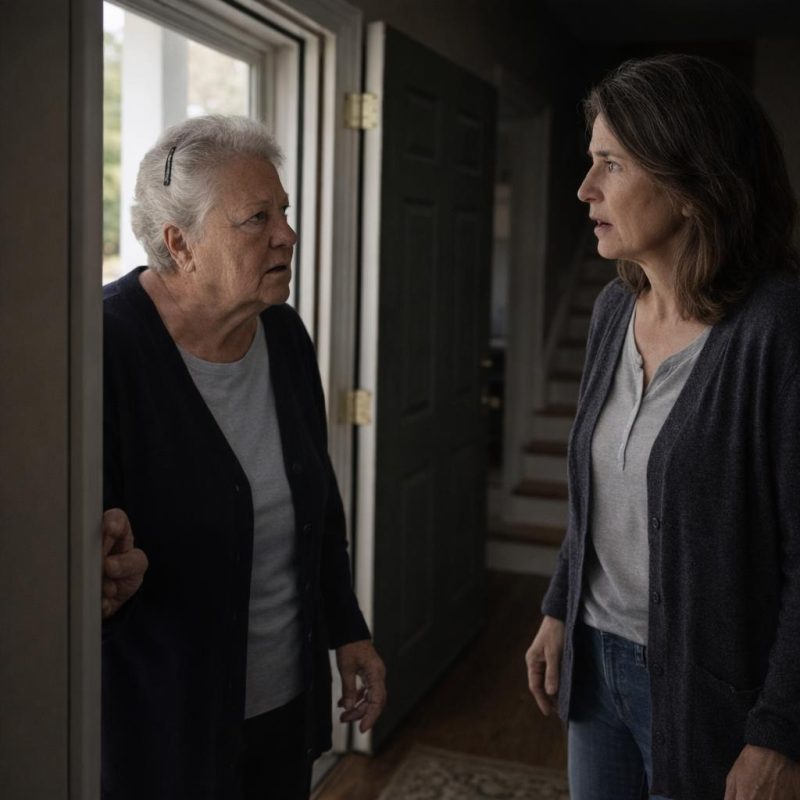 Image by RM AI
Ruth's Warning
I brought Ruth to the kitchen table and put the kettle on, buying myself a few minutes to think. She settled into a chair with the deliberate care of someone whose joints had opinions, and she folded her hands on the table and waited. I set a mug in front of her and sat across from her and let her talk. She said she'd known Margaret Caldwell in the mid-1950s, through a church they'd both attended in a town about forty miles east. She described my grandmother as a woman who seemed to be searching — her word, *searching* — though Ruth said she'd never been entirely sure what for. "She wasn't unhappy exactly," Ruth said. "But she had the look of someone carrying something heavy. You know the look." I nodded. Ruth wrapped both hands around her mug. She said that when Margaret left town, people assumed she'd simply moved on — that was how things were handled then, quietly, without explanation. But Ruth had never believed that. She said she'd been there the week before Margaret left, had seen her face, had heard the way she spoke. "She didn't drift away," Ruth said, her voice going quiet and even. "It felt to me like she made a choice. Like she decided to go." I kept my expression steady. "Did she say why?" Ruth looked at me across the table. "She said there were things she knew that she couldn't unknow. And that staying would have been very hard for her."
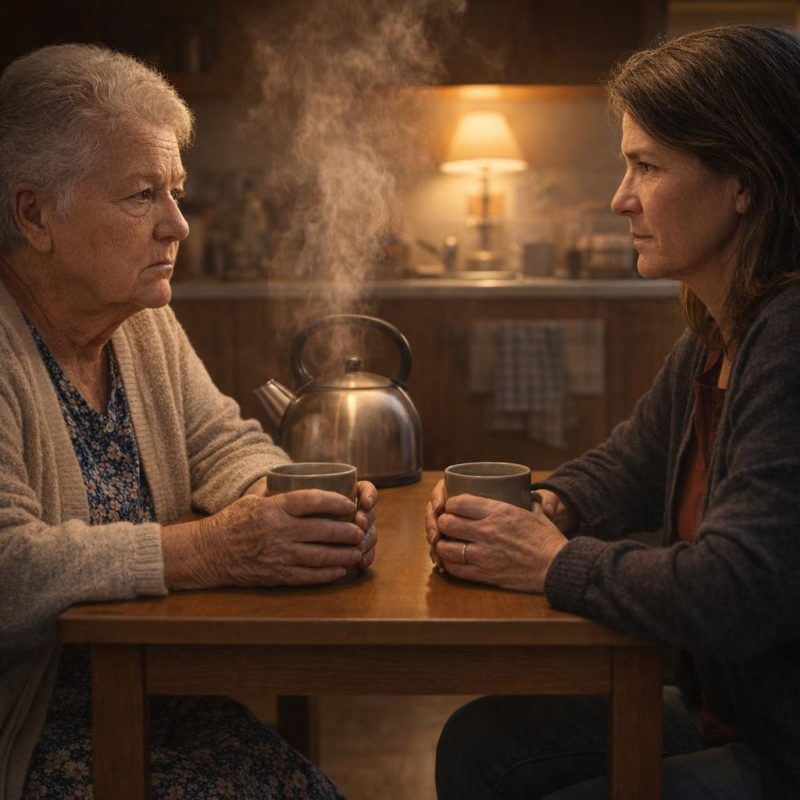 Image by RM AI
What They'd Done
Ruth took a long sip of her tea and set the mug down with both hands. She said she hadn't understood what Margaret meant at the time — she'd been young, and Margaret hadn't been the kind of woman who explained herself fully to anyone. But over the years, Ruth said, pieces had come to her. A conversation she'd half-overheard. A name that surfaced again in a different context, years later. She described it the way you describe a puzzle you've been assembling slowly in a back room, never quite finishing. What she'd gathered, she said, was that Margaret had found something wrong with how a child had been placed — her words, *placed* — with a family. Records that didn't match. Agreements made between people who had no business making them. More than one family was involved, she thought, though she couldn't say how many or who. "Margaret had a choice," Ruth said quietly. "She could have gone to someone official. Made noise. Pulled the whole thing into the light." She paused. "But she knew what that would do to the people caught in the middle. The ones who hadn't asked for any of it." Ruth said she'd never learned exactly what Margaret had found, only that it had been enough to make a careful woman walk away from everything she knew. Whether Margaret had weighed it all out or simply reached a point where she couldn't stay, Ruth couldn't say. I sat with that for a long moment, the weight of it settling somewhere behind my sternum.
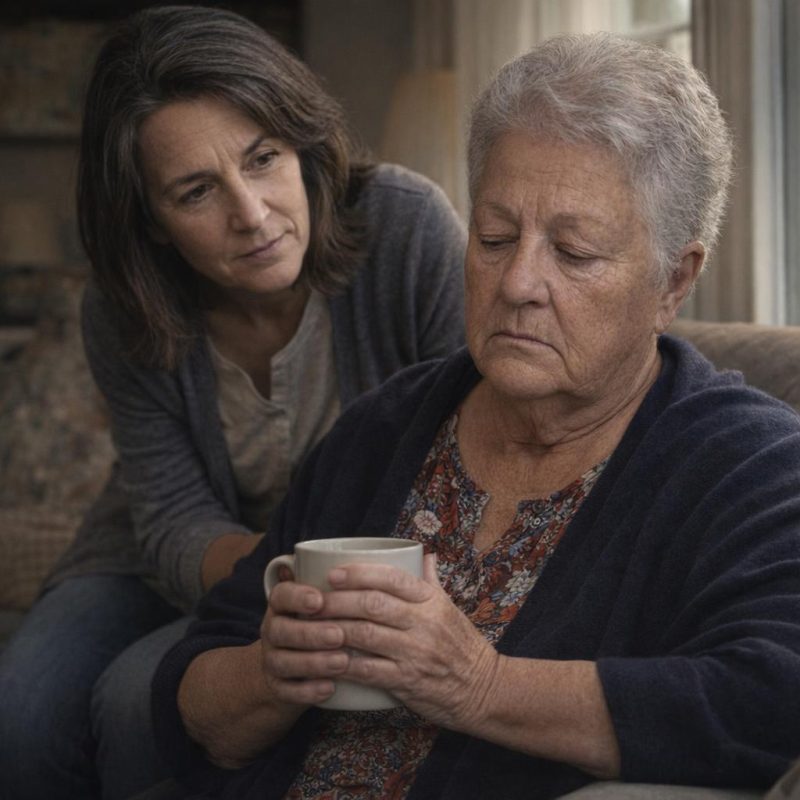 Image by RM AI
Some Wanted It Buried
Ruth didn't leave right away. She finished her tea and sat quietly for a moment, and I had the sense she was deciding how much more to say. Then her tone shifted — not dramatically, just a degree or two cooler, the way a room changes when someone opens a window. She said Emily had asked her, in the letter, whether anyone had ever pushed back against the research. Whether anyone had seemed uncomfortable with questions being asked. Ruth said she'd thought about that for a long time before answering. "Some families," she said carefully, "built everything on the stories they told. The house, the name, the way they saw themselves." She turned her mug slowly in her hands. "When the story is the foundation, you don't want someone coming along with a shovel." She didn't name anyone. She said she didn't know names, not specifically, and I believed her. But she said that when Emily's letter had arrived, Ruth had mentioned it to an old acquaintance — just in passing — and the response had been sharp enough to stay with her. She wouldn't say more than that. Before she stood to leave, she looked at me steadily and said, "I've told you everything I know. I hope it helps more than it hurts." She pulled on her coat and let herself out, and I stayed at the table after the door closed, her last words sitting in the room around me like something that hadn't quite finished settling.
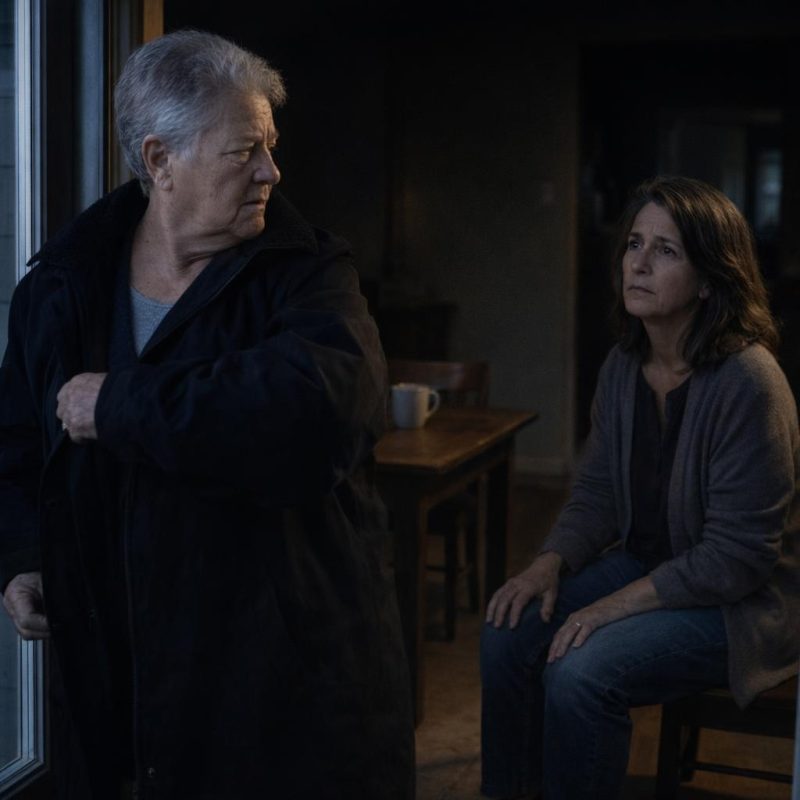 Image by RM AI
Following the Trail
After Ruth left I went back to Emily's desk and spread the map out flat under the lamp. I looked at it differently now — not as something I'd stumbled across, but as a set of instructions someone had spent two years assembling. The circled towns weren't random. They formed a rough line moving east, each one annotated in Emily's small handwriting with initials or dates or both. I got a notepad from the kitchen and wrote them down in order, the way you'd plan a route. Then I went to the spare room where I'd left my bag and I packed Emily's files into it — the folder, the photographs, the pages of her letter — carefully, the way you carry something that matters. I found a pen and wrote a note for the kitchen counter in case Emily called the house: *Gone to follow up on some things. Will explain everything soon. Love, Mom.* I looked at it for a second, then left it where she'd see it. I checked my phone for directions to the first town on the list. I locked Emily's front door behind me, walked to my car, and set the bag on the passenger seat beside me. The map was folded on top, the first circled town facing up. I pulled out of Emily's driveway and pointed the car east.
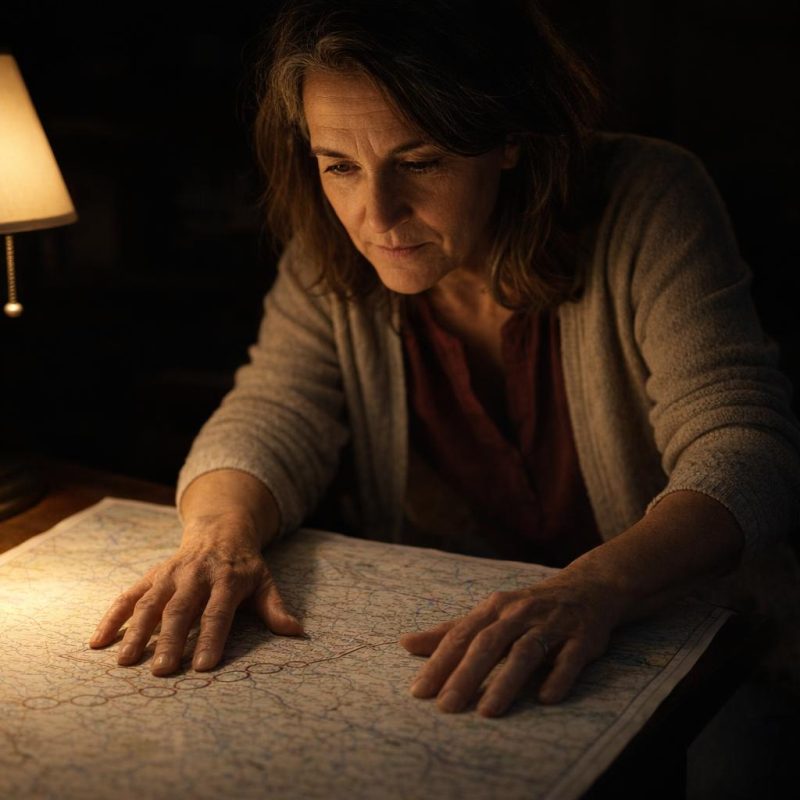 Image by RM AI
The First Town
The town was smaller than I'd expected — one main street, a hardware store, a diner with a hand-lettered sign. The historical society was in the back half of an old municipal building that smelled like radiator heat and old paper. A volunteer named Patty greeted me at the door, the kind of woman who clearly loved this work, and I told her I was researching family history from the 1950s. She nodded like she'd heard that before and asked what I was looking for. Property records, I said. Birth records if they had them. Anything connected to a few family names I gave her. She disappeared into the back and came out with a cart of folders. Then she paused and said, almost as an aside, that another woman had come in a few months back asking about the same families. Younger, she said. Dark hair. Very organized. I didn't say anything for a moment. I just looked at the folders on the cart — the same folders Emily had almost certainly sat with at this same table, under this same overhead light. I pulled on a pair of the cotton gloves Patty set out and opened the first folder. The pages were brittle and cool under my fingers, and the room was very quiet, and I understood without being able to explain it that I was walking exactly where my daughter had walked.
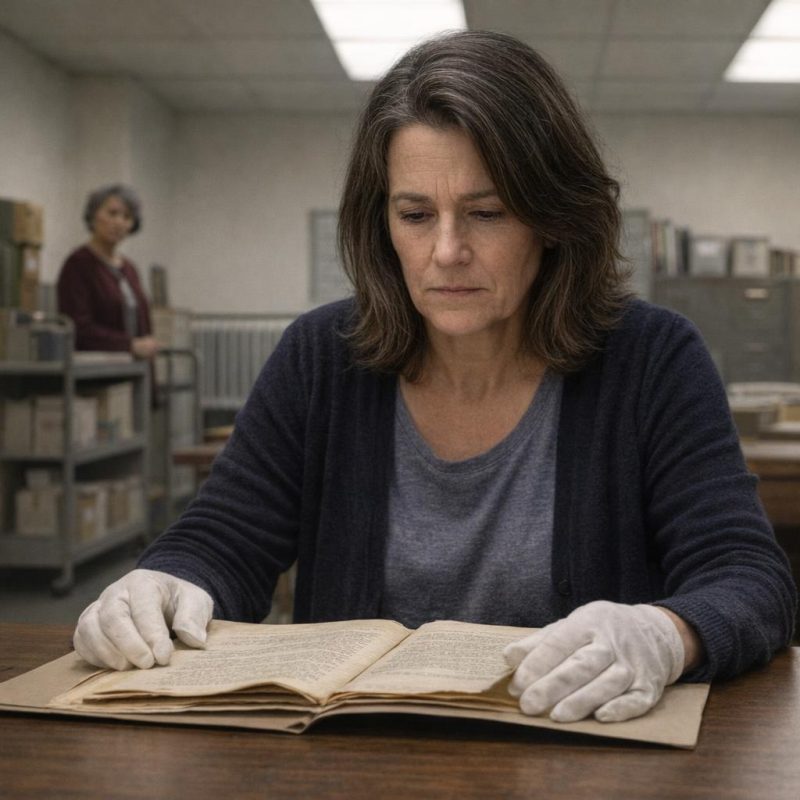 Image by RM AI
Hidden Connections
I spent most of the afternoon with the property records and business filings, and the more I read, the more unsettled I became. My mother had told me her family kept to themselves — that they didn't mix with the other families in the county, that they were private people who minded their own business. But the documents told a different story. Her family name appeared on a joint property deed with another family she'd always described as strangers. There was a business filing from 1949 showing a shared interest in a small textile operation — two surnames side by side, both of them names I recognized from her stories, names she'd placed in separate worlds. I found a marriage record connecting a cousin she'd never mentioned to a man from a family she'd claimed to have no dealings with. I photographed everything with my phone, then spread the pages out and drew a rough diagram in my notebook — lines connecting names, dates in the margins. The diagram kept growing. Every connection I added was one my mother had specifically, carefully left out of every story she'd ever told me. I sat back and looked at what I'd drawn. It wasn't a family tree. It was more like a map of everything she'd erased.
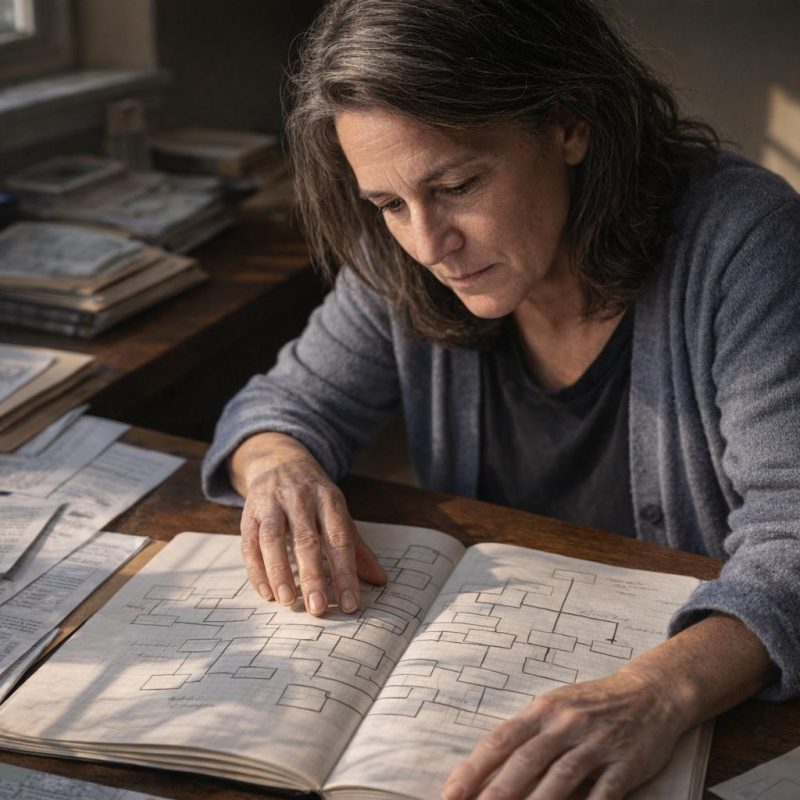 Image by RM AI
The Altered Records
Patty brought out a second set of folders near closing time — the originals, she said, kept in protective sleeves because of their condition. I almost didn't notice it at first. I was comparing one of the documents to a photocopy Emily had made, checking names and dates, when I saw the stamp in the lower corner. Amendment filed. I looked closer. The original document was dated 1948, but the amendment stamp carried a different date entirely — 1954. I checked the next document. Same thing. Amendment filed, 1954. The names on the amended versions didn't match the names on Emily's photocopies of the originals. Someone had gone back into the official record and changed them. I asked Patty how that process worked — who could file an amendment on a record that old. She said it would have required a legal filing, a reason, and someone with standing to make the request. She said it wasn't common. I laid the two versions side by side and looked at the differences. The changes were small but specific — a surname here, a date there — the kind of alterations that would be invisible unless you were looking for them. I was still staring at the two pages when Patty said they were closing, and I realized I'd been sitting there for twenty minutes without moving. The amendment stamp on the third document read: filed October 1954.
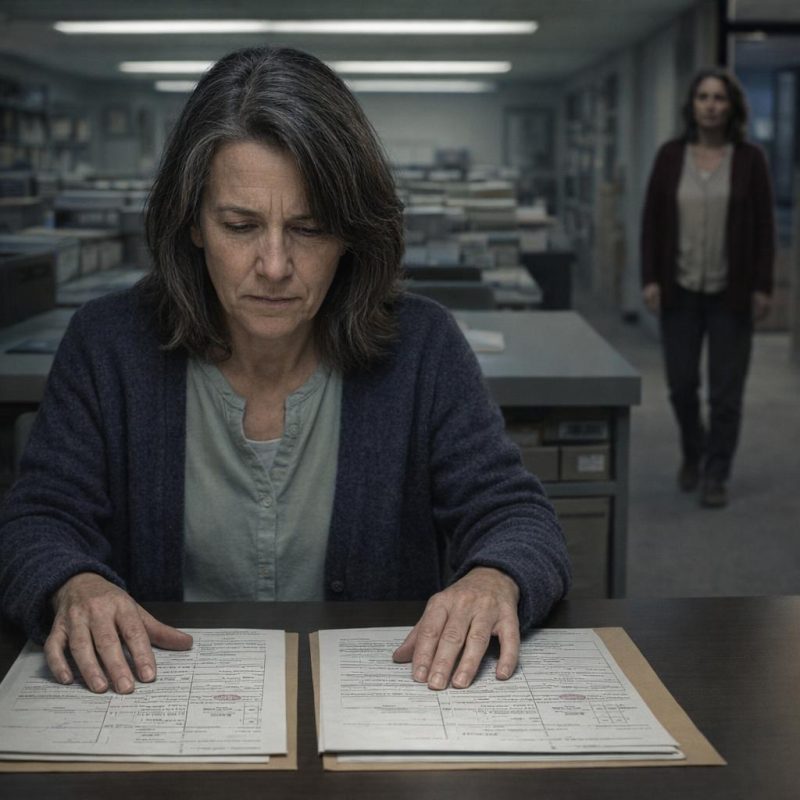 Image by RM AI
The Retirement Community
The retirement community was in the next county, about forty minutes east, and I found it the way Emily's notes described — a low brick building set back from the road with a garden out front that had gone dormant for the season. The woman at the front desk looked up when I came in and I explained that I was doing family history research, that I was hoping to speak with a resident who might have known someone from the area decades ago. She asked if I'd been in touch before. I said no, but that my daughter had visited a few months back. Something shifted in her expression — a small recognition. She said she remembered the visit. She made a phone call, spoke quietly, and then told me that the resident my daughter had spoken with was available and willing to talk. She wrote a name on a slip of paper and slid it across the desk, then pointed me toward a common room at the end of the hall. I walked down the corridor with the slip of paper in my hand. The name on it was Arthur Chen.
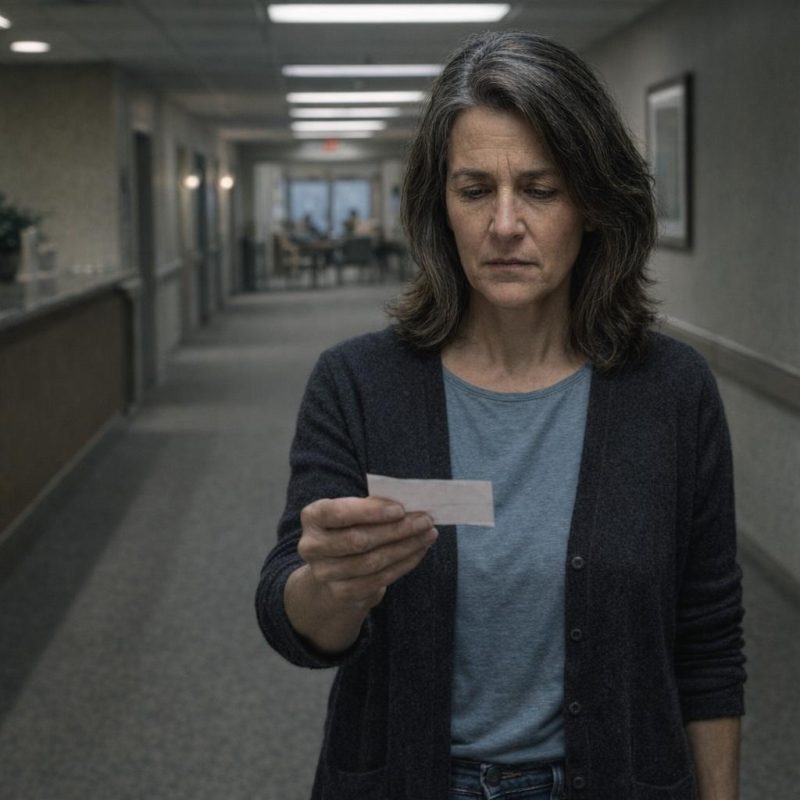 Image by RM AI
Arthur's Memory
Arthur was already seated when I came in — a man in his mid-eighties, I guessed, with careful posture and a way of watching the door that suggested he'd been expecting me. He shook my hand and gestured to the chair across from him. He said my daughter had asked good questions. I told him I was trying to follow the same trail she had. He nodded and folded his hands on the table and began. He'd known Margaret in the late 1950s, he said — she'd worked as a seamstress out of a shop two streets over from where he'd had his accounting practice. She was quiet, he said. Kept to herself. But every so often, when they'd share a cup of coffee in the break between her appointments, she'd talk about a child. Not in a dramatic way, he was careful to say. More like someone carrying something they couldn't quite set down. She'd written letters, he said. Made inquiries through people she trusted. She was looking for a way to find the child without making things worse for anyone. I asked him what had happened to the child. Arthur looked at his hands for a moment. He said Margaret had told him the child was taken from her in 1952, and that she'd never been given a proper explanation for why.
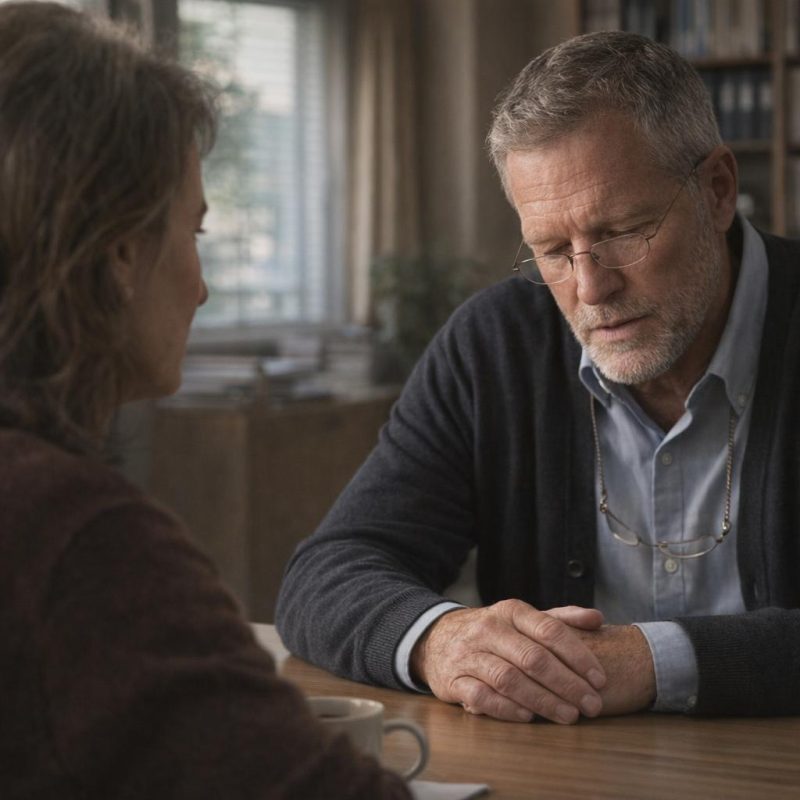 Image by RM AI
The Timeline
I thanked Arthur and walked back to my car on autopilot, not really seeing the parking lot or the bare garden or the road beyond it. I sat in the driver's seat with my notebook open on the steering wheel and looked at the dates I'd written down over the past two days. The gap in my mother's stories — the years she'd never accounted for, the period before she'd appeared in the town where she raised me — ran from roughly 1951 to 1954. Arthur had said Margaret lost a child in 1952. I looked at that for a long time. My own birth certificate listed 1954 as my birth year. I'd always accepted that without question, the way you accept the basic facts of your own life. But the amended records I'd photographed that afternoon had also been filed in 1954. I wrote the years in a column: 1951, 1952, 1954. Then I wrote them again, as if seeing them a second time might change what they suggested. It didn't. I wasn't ready to say what I thought they meant. I wasn't sure I was capable of saying it yet. But the column of years sat on the page in my own handwriting, and the parking lot was very still around me, and I couldn't stop staring at the numbers, afraid of what they might mean.
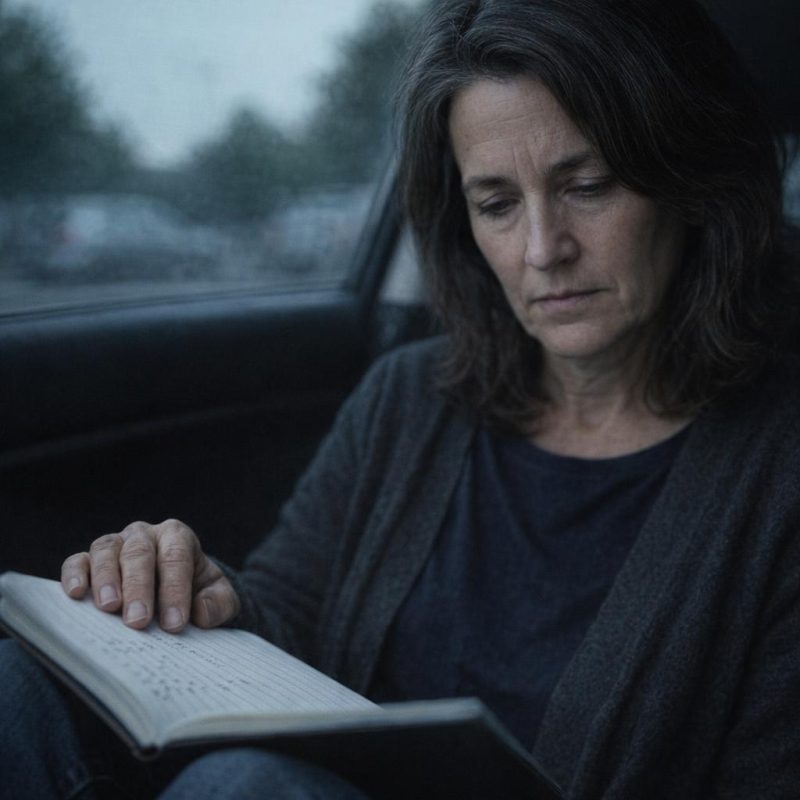 Image by RM AI
The Possibility
I drove back toward Emily's house with the radio off. I kept replaying what Arthur had said — not the words exactly, but the way he'd described Margaret carrying something she couldn't set down. A child taken in 1952. I thought about the photograph I'd found in the box, the woman with cheekbones and a jaw that reminded me of my own reflection, though I couldn't be certain why the resemblance unsettled me so much. I thought about the amended records, the names and dates someone had gone back and officially changed in 1954. I thought about my mother's stories — the careful gaps, the families she'd placed in separate worlds that the documents showed were connected. My hands weren't entirely steady on the wheel. I wasn't drawing conclusions. I told myself that firmly, more than once. The timeline was suggestive, not proof. Lots of things happened in 1952. Lots of children were born in 1954. But the photograph kept coming back to me, and the question I couldn't stop turning over was one I didn't know how to ask out loud, even to myself, even alone in the car with no one listening.
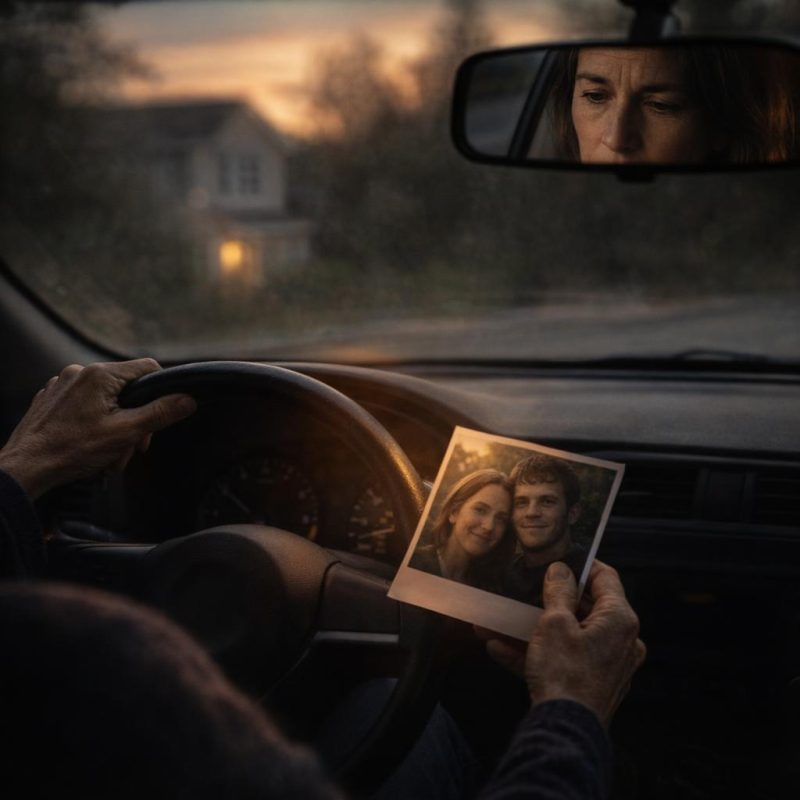 Image by RM AI
The Final Envelope
I went straight to Emily's desk when I got back. The letter was where I'd left it, the pages I hadn't finished reading still face-down in a small stack. I picked them up with both hands and sat down. Emily's handwriting was careful and even, the way it always was when she was being precise about something that mattered. She had laid it out methodically — the property records, the amended filings, the gap in my mother's documented history, the photograph. She had cross-referenced Arthur's account with the dates from the records. She had drawn the same column of years I'd drawn in the parking lot, and beside each one she'd written a note in her small, deliberate hand. Then, near the bottom of the last page, she had written a paragraph she'd clearly revised more than once — the words were slightly darker, as if she'd gone over them twice. She wrote that she was afraid of being wrong. She wrote that she had checked everything she could check and that the evidence kept pointing the same direction. And then she wrote, plainly and without drama, that she believed the evidence pointed toward my mother being the child Margaret had lost in 1952, and that Margaret might therefore be my biological grandmother — though she acknowledged she couldn't be completely certain, and that she had wanted me to see everything she'd found before drawing any conclusions of my own.
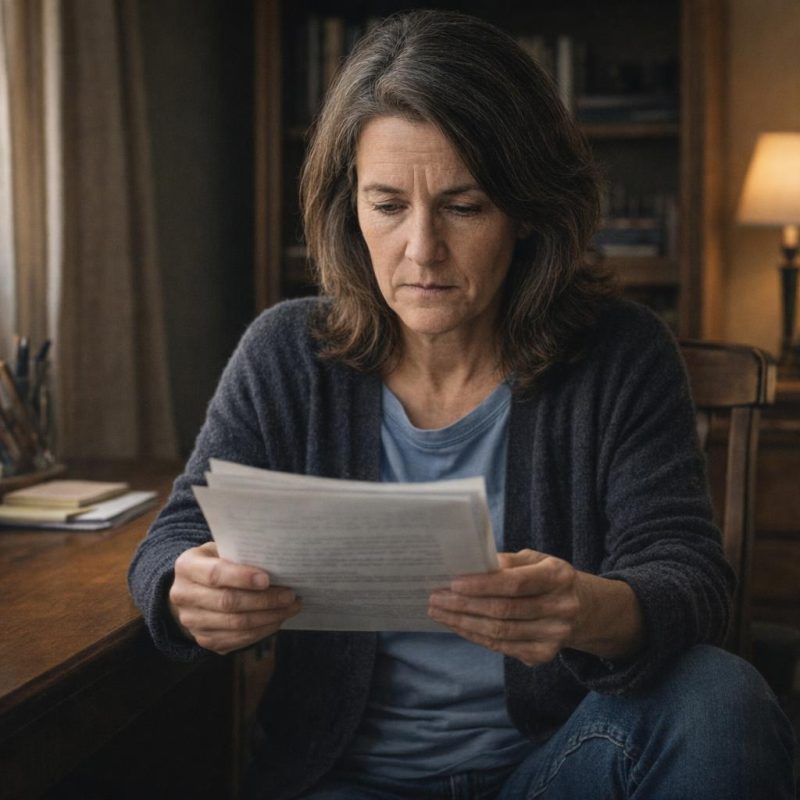 Image by RM AI
Searching for Final Proof
I couldn't sit still after reading Emily's letter. Something in me needed to keep moving, keep looking, as if the act of searching would bring the answer closer. I went back through Emily's office first — the shelves I'd already checked, the filing cabinet I'd already opened. I pulled every binder down and fanned through the pages. More research notes, more cross-referenced dates, more photocopied records with Emily's small annotations in the margins. Nothing I hadn't already seen in some form. I moved to the hallway closet next, lifting boxes down one at a time, setting them on the floor and going through them carefully. Old tax documents. A box of Emily's college textbooks. A plastic bin of holiday decorations. I checked the guest room after that — the dresser drawers, the shelf in the closet, the space under the bed. I even looked behind the framed prints on the walls, feeling slightly ridiculous but unable to stop myself. Every room I entered felt like it might be the one. Every drawer I opened felt like it might hold the thing that would settle it. By the time I made my way back to the kitchen and sat down at the table, my legs were tired and my hands were empty, and the house held its quiet around me like it had been holding it for years.
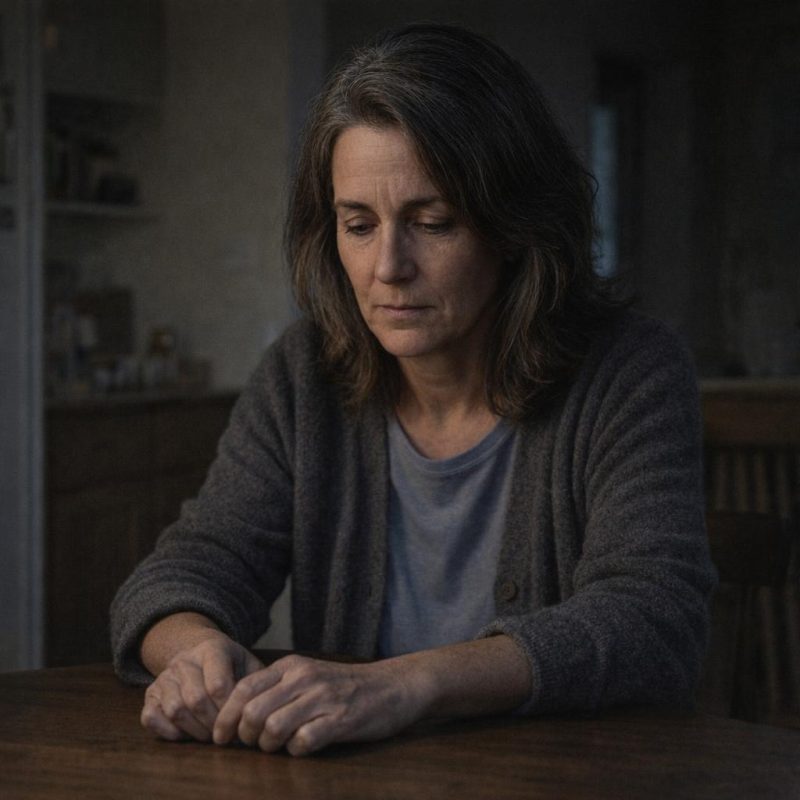 Image by RM AI
The Sealed Envelope
I told myself I'd rest for ten minutes and then try again. I didn't rest. I sat at the kitchen table for maybe three minutes before I pushed back the chair and walked down the hall to Emily's bedroom one more time. I'd already been through the nightstand — I was almost certain I had. I'd opened the drawer, seen a few things, moved on. But something made me open it again. The drawer held the same items: a lip balm, a bookmark, a small notepad. I started to close it, and then I stopped. The bottom of the drawer sat higher than it should have. I pressed one corner and felt it give slightly. It wasn't the drawer bottom at all — it was a thin panel, fitted so neatly I'd missed it entirely the first time. I lifted it out with both hands and set it on the bed. Underneath, lying flat against the true bottom of the drawer, was a sealed envelope. Emily's handwriting was on the front, the letters careful and deliberate the way they always were when something mattered to her. It was thick — I could feel the weight of multiple pages inside. I carried it to the kitchen table and sat down, and I held it in both hands without moving, the sealed envelope resting there with everything Emily had been carrying alone.
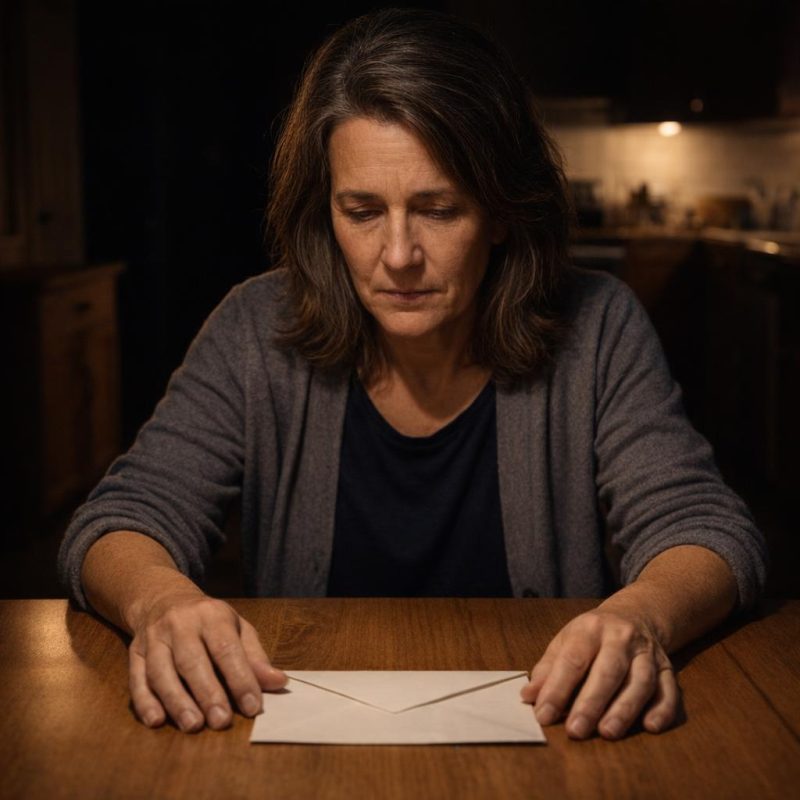 Image by RM AI
Opening Emily's Letter
My hands were shaking badly enough that I had to set the envelope down for a moment and press my palms flat against the table. Then I picked it up again and worked my thumbnail under the flap. The seal gave slowly, like it had been pressed down with care. Inside were ten pages, folded in thirds, covered front and back in Emily's careful script. The first line was an apology. She wrote that she was sorry for keeping this from me, and that she hoped I could understand why she had. Then she went back to the beginning — the real beginning, the one I hadn't known about. She wrote that it had started five years ago, on a Saturday afternoon when she'd gone up to my attic to find a box of Robert's old things she'd wanted for the anniversary. She hadn't been looking for anything else. But near the back of the attic, behind a stack of my old teaching materials, she'd found a shoebox she didn't recognize. Inside it was a photograph she had never seen before — a woman she didn't know, standing in front of a house she didn't recognize, with a face that stopped her cold. Emily wrote that she'd stood there in my attic for a long time, holding that photograph, before she understood why the woman's face looked so familiar — and that the first clue had been sitting in my attic the whole time, waiting for someone to find it.
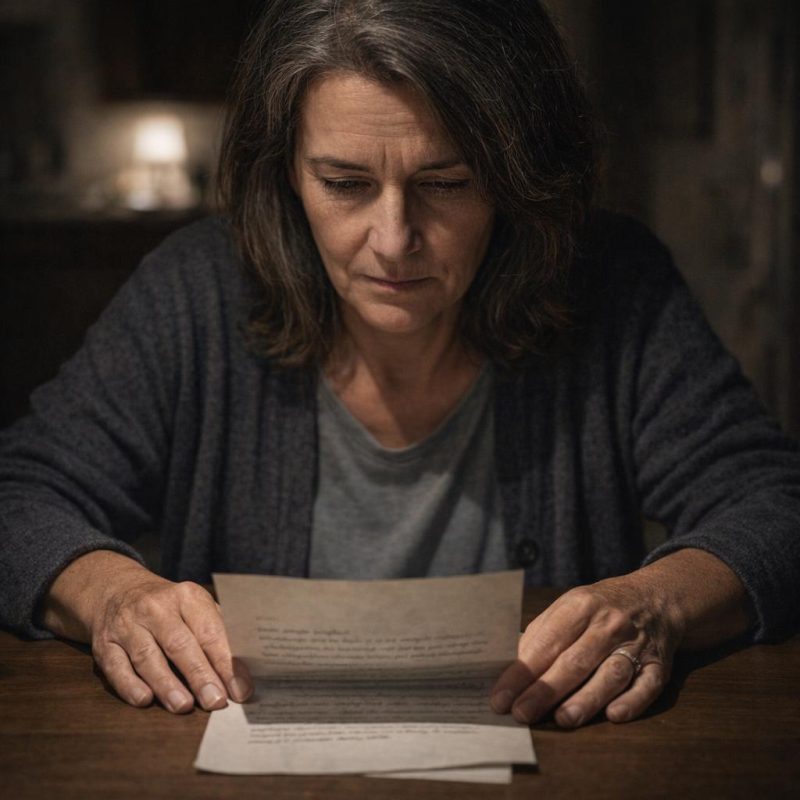 Image by RM AI
Emily's Evidence
Emily's letter moved through the evidence the way she moved through everything — methodically, one piece at a time. She laid out Margaret's timeline first: the years in the county records, the property filings, the gap that appeared in 1952 and didn't close until 1954. Then she described the birth records — the original filing and the amended one, the way the names had been altered and the dates adjusted by just enough to make the original hard to find unless you knew what you were looking for. She wrote about the elderly witnesses she'd tracked down over two years of weekend trips, people in their eighties and nineties who remembered Margaret, who remembered the house, who remembered a child. She described the gap in my mother Helen's documented history during those same years — no school records, no church records, no photographs. She explained the business connections Helen had denied knowing anything about, the names that appeared in Margaret's papers and again in Helen's early adult records. Then she described the photograph again — the one from my attic — and wrote about the resemblance she'd seen in it, the one that had started everything. She had numbered each piece of evidence in the margin. By the time I turned to the final page, my hands had gone very still, and Emily's last paragraph began with the words: 'Mom, I need to tell you what I believe all of this means.'
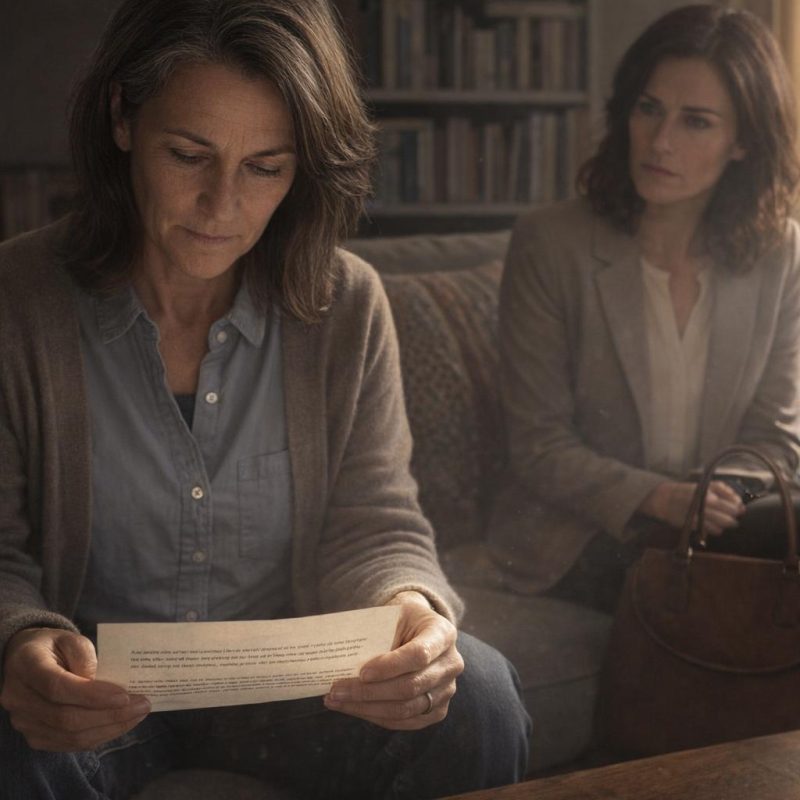 Image by RM AI
The Truth About Margaret
I read the paragraph once and then I read it again, because the first time through my eyes moved over the words without fully letting them land. Emily had written it plainly, the way she wrote everything that mattered — no softening, no hedging, just the facts as she understood them, stated in order. Margaret Caldwell was my biological grandmother. Helen — my mother, the woman who had raised me, who had made my school lunches and sat with me through fevers and walked me down the aisle at my wedding — had been the infant taken from Margaret in 1952. Helen's entire family history, the one she had told me my whole life, had been fabricated. The birth records had been altered to erase Margaret's name entirely. And Margaret had spent decades searching for the daughter they had taken from her, the daughter who grew up not twenty miles from where Margaret had lived, not knowing she existed. I set the pages down on the table. I picked them up again. The kitchen was very quiet. I had spent sixty-one years believing I knew who I was and where I came from, and Emily's careful handwriting had just taken all of it apart in nine sentences. I sat there with the letter in my hands and felt the floor of everything I thought I knew give way beneath me.
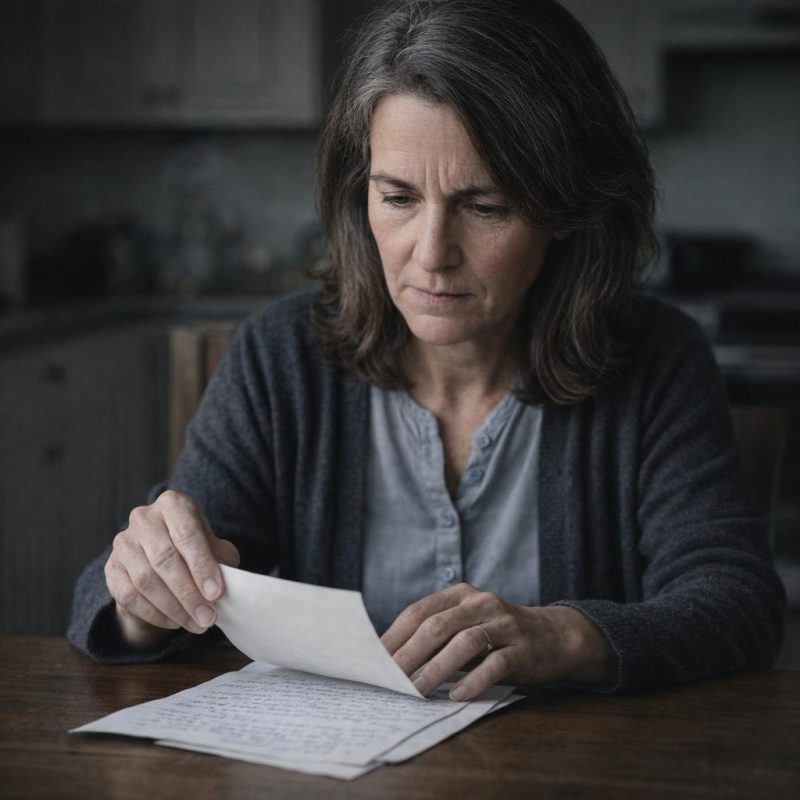 Image by RM AI
Rewriting My History
I read those paragraphs three more times. Not because I didn't understand them — I understood them perfectly, and that was the problem. Helen had been taken from Margaret as an infant. She had grown up with a fabricated name, a fabricated history, a fabricated family. She had passed all of it to me because it was the only story she had ever been given. And Margaret — my grandmother, a word I was only now learning to attach to a real person — had never stopped looking, according to what Emily had written; she had died still searching, without ever finding the daughter she had lost. I thought about the photograph from my attic, the one Emily had found five years ago. I thought about the face in it, the one Emily had recognized before she understood why. I had a grandmother I never knew existed. I had a history that stretched back further than anything Helen had ever told me, rooted in a loss so old and so complete that it had reshaped everything that came after it. And then I turned to the next page, where Emily had written about Margaret's final years, and I read that Margaret had still been searching — still writing letters, still making inquiries, still looking — right up until the end.
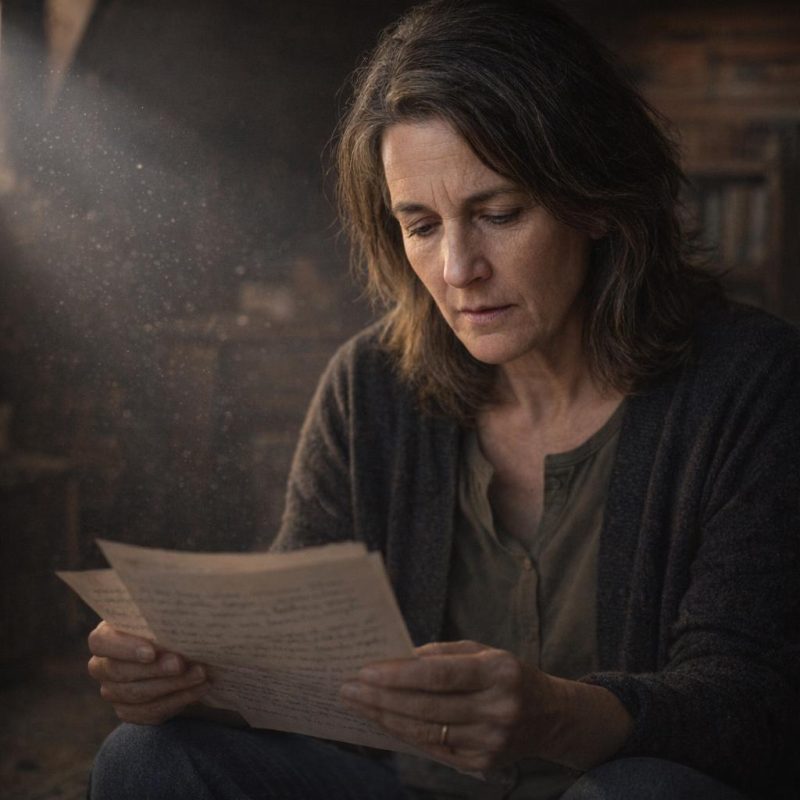 Image by RM AI
Understanding Emily's Silence
The next section of Emily's letter was quieter than the rest. Her handwriting looked slightly different here — slower, maybe, or more careful, as if she'd written this part more than once before she got it right. She explained why she hadn't told me. She wrote that she had been afraid of giving me something I couldn't hold — a grandmother, a history, a whole other branch of myself — and then having to take it back if she turned out to be wrong. She described what it had felt like to carry it alone: the weekend research trips she'd told Daniel were for work, the phone calls she'd made to county offices and church archives, the nights she'd spent cross-referencing dates at the kitchen table after he'd gone to bed. She wrote that every time she'd thought about calling me, she'd found one more thing she needed to verify first. One more record to check. One more witness to track down. She wasn't ready to be wrong about something this large, she wrote. She wasn't ready to watch me grieve something that might not be real. I sat with that for a long time. My daughter had spent five years carrying a secret that would have broken me, and she had carried it carefully, and she had carried it alone, and every word of the letter made the weight of that love unmistakable.
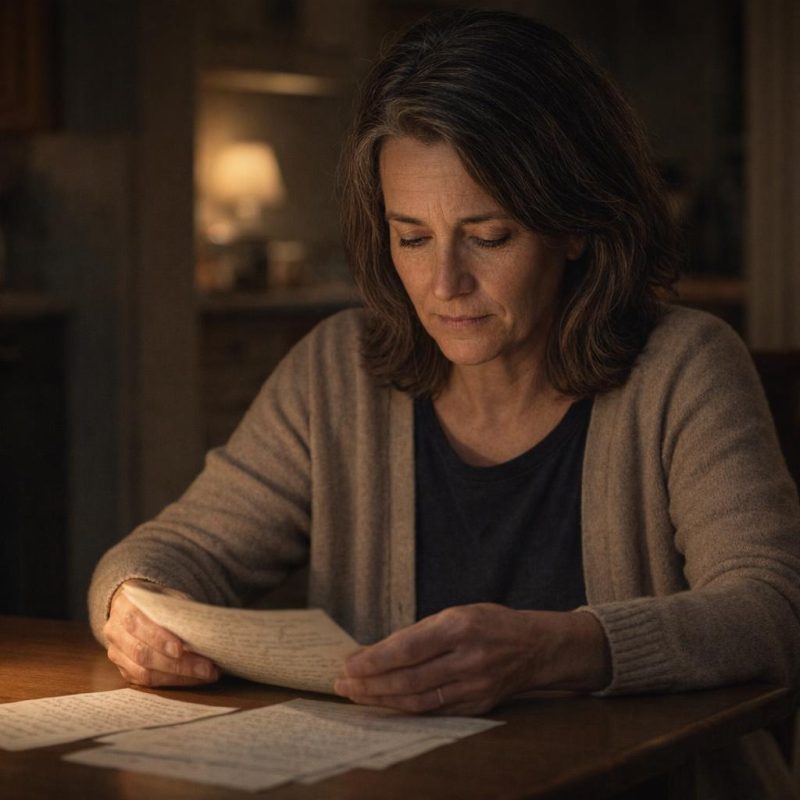 Image by RM AI
Why Helen Lied
Near the end of the letter, Emily turned to a question I hadn't thought to ask yet: why had Helen lied? Emily's answer was careful and, in its way, more painful than anything else she'd written. The evidence she'd found suggested that Helen may not have known. The people who had taken Helen from Margaret in 1952 had constructed a complete history for her — a family, a background, a set of relatives who either didn't exist or had agreed to maintain the story. Helen had been an infant. She had grown up inside a fabricated world and had no reason to question it. Emily had searched for years for any sign that Helen had ever learned the truth — a letter, a record, a single notation that suggested she'd known about Margaret — and had found nothing. Helen had told me the false history because it was the only history she had ever been given. She hadn't been protecting a secret she knew. She had been passing on a story she believed. I sat with that for a long time, turning it over slowly. The anger I'd felt earlier — the sharp, reflexive anger at my mother for all the years of silence — began to soften at its edges, replaced by something more complicated and harder to name, the quiet possibility that my mother had been a victim of the same silence long before I was.
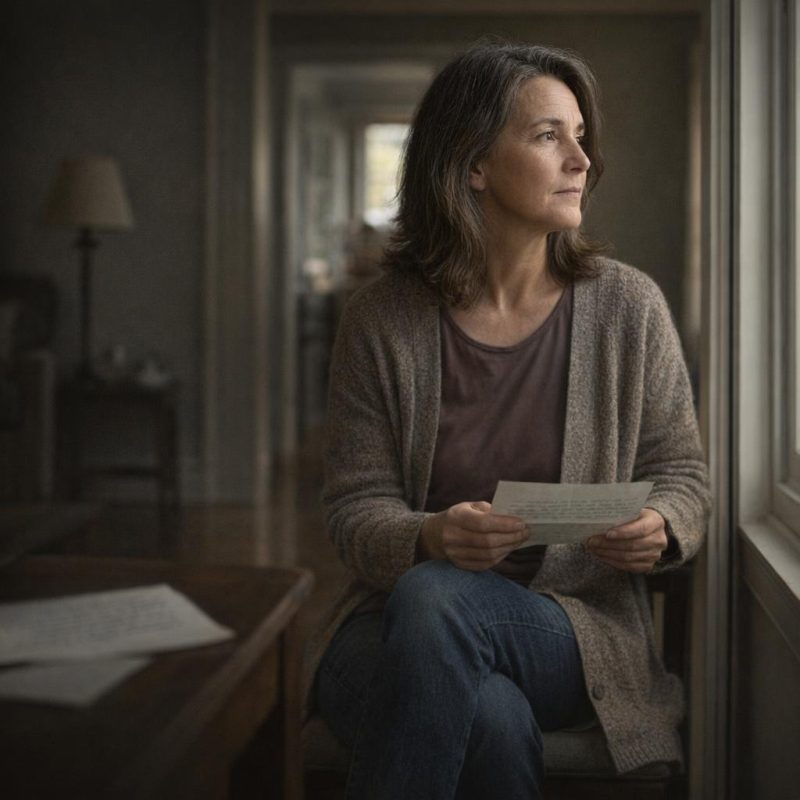 Image by RM AI
One Living Witness
The final pages of Emily's letter were the ones that changed everything about what came next. She had written carefully, the way she wrote everything — methodically, with qualifications and sourcing notes in the margins — but the urgency underneath the careful language was unmistakable. There was one more person, she wrote. One living witness who had been present when Margaret's child was taken, who understood not just what had happened but why the lies had been constructed the way they were, and who had agreed to speak if someone from the family ever came asking. Emily had found her through a chain of county records and a single referral from an elderly neighbor who remembered the family. She hadn't contacted her yet. She wanted to be absolutely certain of everything else first — every document verified, every date confirmed — before she sat down with this woman and heard the complete story. She had planned to make that visit the week after she and Daniel returned from their trip. I read the name and address Emily had written at the bottom of the last page — Dorothy Caldwell, a small town forty minutes from where I was sitting — and my hands went very still.
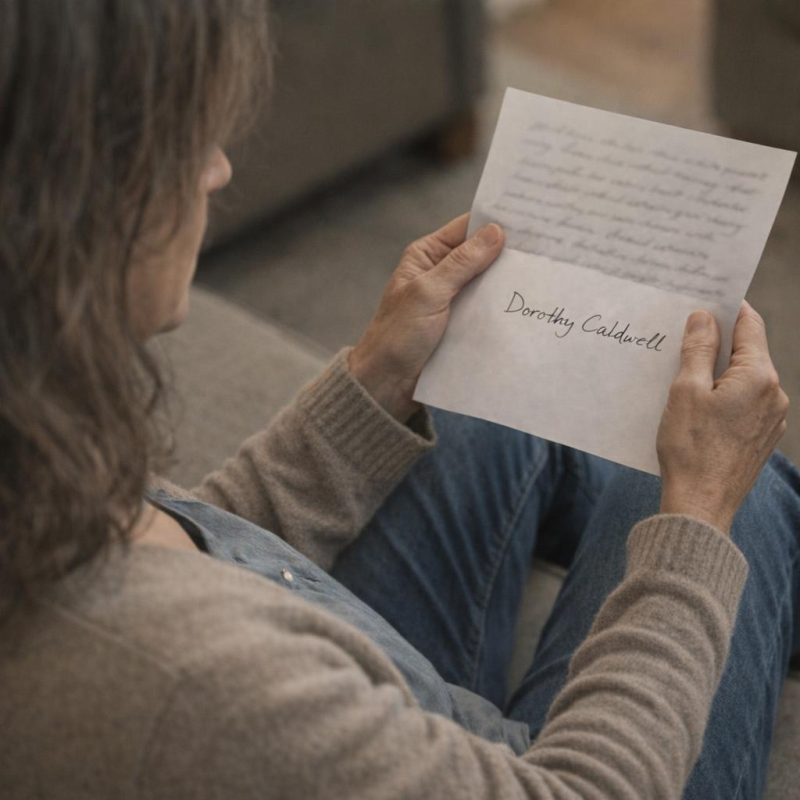 Image by RM AI
Waiting for Emily
I sat at Emily's kitchen table for a long time after I finished the last page. The house was quiet around me — just the refrigerator hum and the occasional sound of a car passing outside — and I let the quiet be what it was. I thought about driving to Dorothy's address that afternoon. I had it right there in my hand. Forty minutes. I could be there before dark. But I kept coming back to the same thing: Emily had spent five years building toward that conversation. She had verified every document, tracked down every witness, carried this weight alone for reasons I now understood completely. The least I could do was let her be there when it finally ended. I folded the letter carefully, the way I imagined Emily had folded it before she sealed the envelope, and slid it back inside. I found the calendar on the refrigerator door and counted the days. Three. Emily and Daniel would be home in three days. I could wait three days. I set the envelope on the counter where Emily would see it the moment she walked in, and I sat back down at the table with my hands folded in front of me, ready to wait.
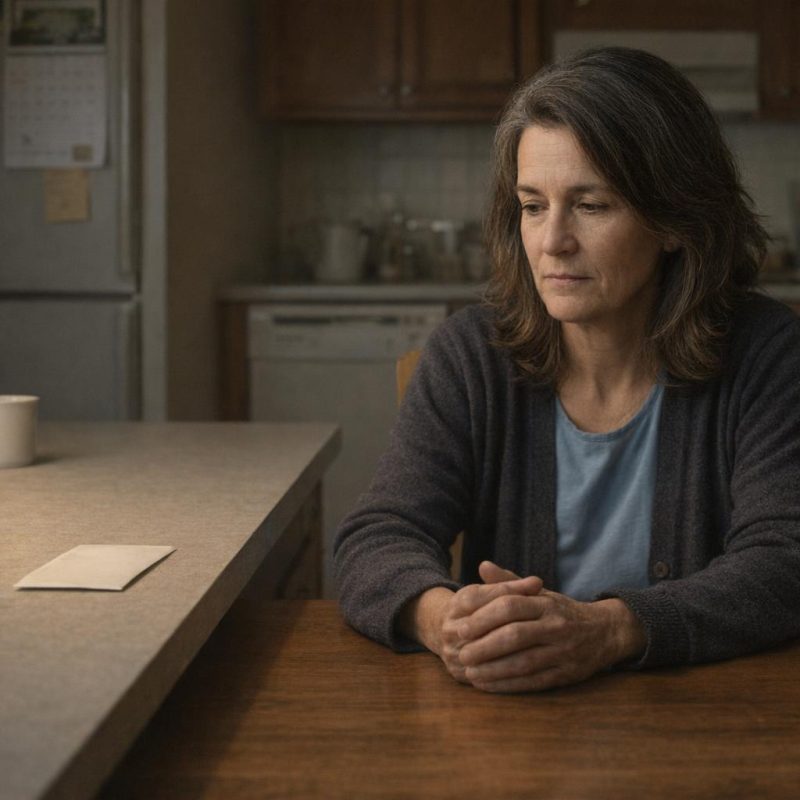 Image by RM AI
Emily Comes Home
I heard the car before I saw it — the familiar sound of Daniel's engine turning into the driveway, the crunch of tires on the gravel strip along the side of the house. I was already at the door when they pulled in. I don't know how long I'd been standing near it, honestly. I opened it before Emily could reach for her key. She came up the front walk with her bag over one shoulder, and she looked up and saw my face, and she stopped. Just stopped, right there on the threshold, one foot still on the step. Daniel came up behind her with both suitcases, glanced between us, and moved past into the entryway without saying anything. Emily and I stood looking at each other in the open doorway. Neither of us spoke for a moment. Her eyes went bright and wet almost immediately, the way they had when she was small and trying very hard not to cry. She swallowed once. Then she said, barely above a whisper, "Mom. Did you find the letter?" The weight of everything she had carried for five years was right there in her face, and I felt it settle between us like something that had finally been set down.
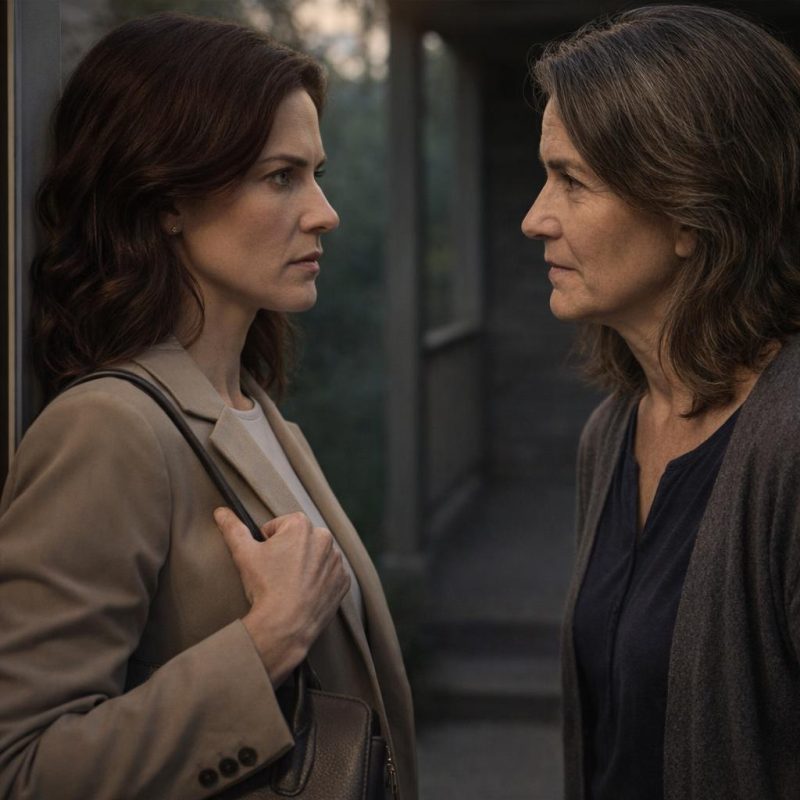 Image by RM AI
Emily Breaks Down
She came apart the moment I nodded. Not dramatically — Emily has never done anything dramatically — but quietly and completely, the way a person does when they've been holding something too long and the holding is finally over. She stepped inside and I put my arms around her and she sobbed into my shoulder, saying she was sorry, over and over, in that small voice that still surprised me sometimes because it belonged to the same person who had once seemed so entirely capable of managing everything. "I was so afraid of being wrong," she kept saying. "I couldn't tell you and then have it not be true. I couldn't do that to you." Daniel set the suitcases down in the hallway and stood very still, watching us, and I could see the moment he understood that whatever was happening was larger than a found letter. He didn't ask questions. He just moved to the kitchen and put the kettle on, which was exactly the right thing to do. I held Emily and told her it was all right, that I understood, that she had done something extraordinary. By the time she pulled back and wiped her face, her breathing had steadied, and the relief in her voice when she finally said "I was going to tell you everything this week" was so plain and so complete it was almost like hearing her exhale for the first time in years.
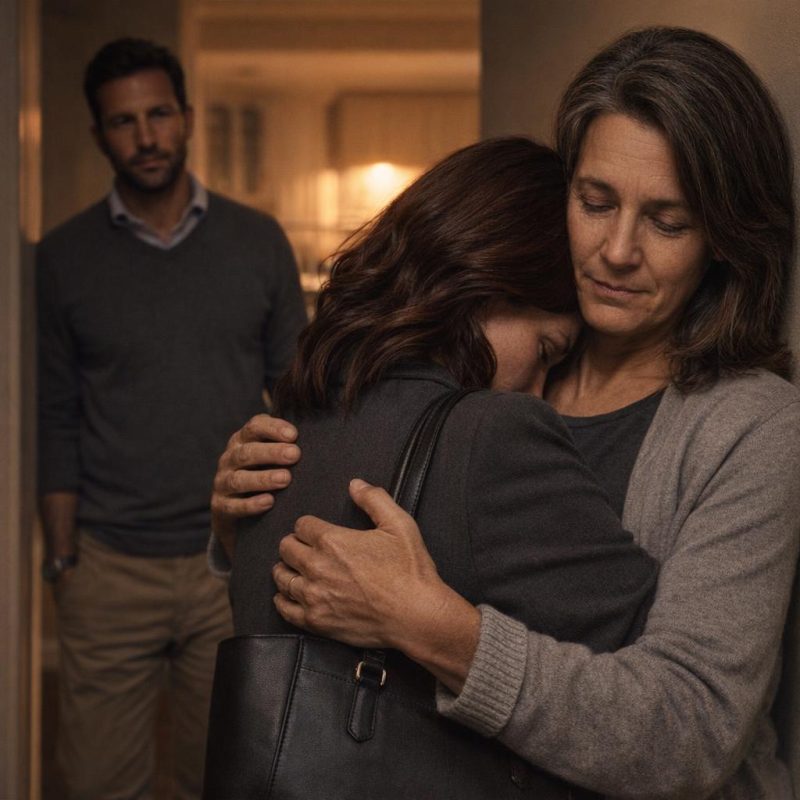 Image by RM AI
The Full Confession
We sat at the kitchen table with tea going cold in front of us while Emily told me everything from the beginning. Five years ago, she said, she had been helping me clear out the attic — I remembered that weekend, though I hadn't thought about it in years — and she had found a photograph tucked inside an old hatbox. A woman who looked so much like me that Emily had assumed it was a photo of me she'd never seen before, until she turned it over and read the date on the back. 1931. She hadn't said anything that day. She had slipped the photograph into her bag and gone home and started asking questions. One question led to another, the way Emily's questions always did. She described weekend trips she'd told Daniel were work conferences, county archives she'd driven hours to reach, elderly neighbors she'd interviewed over kitchen tables not unlike this one. She showed me a folder she'd brought in from the car — organized by year, tabbed and cross-referenced — and I sat looking at it with something I couldn't quite name, somewhere between awe and grief. Daniel listened from across the table, learning most of it alongside me. Emily said she hadn't told him the full scope either, only that she was researching family history. The folder was thick. Five years of Saturdays, of careful questions, of a daughter who loved me enough to want to know the truth before she handed it to me.
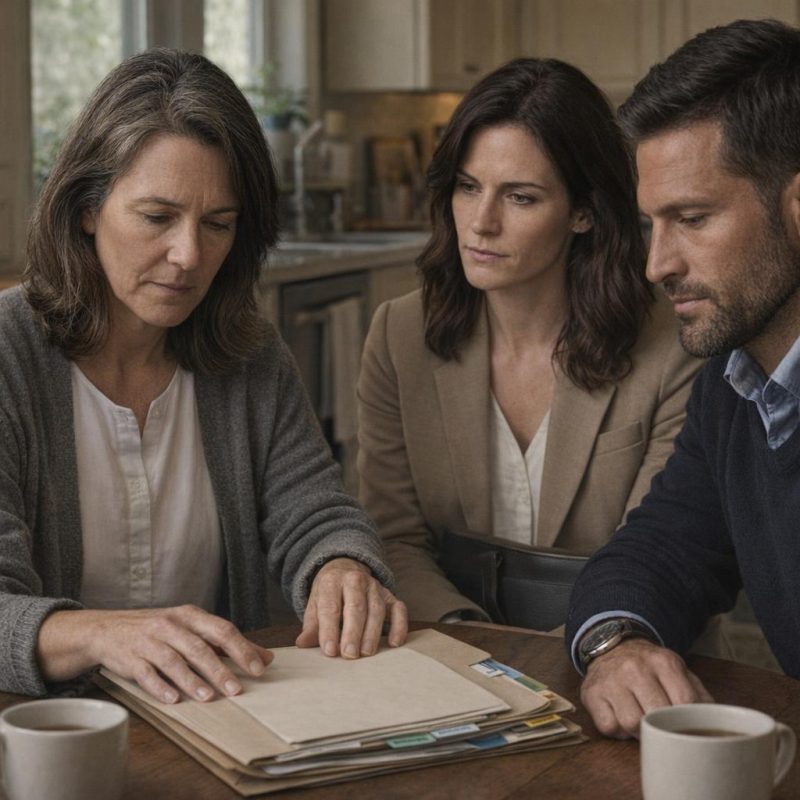 Image by RM AI
Together to Dorothy
We decided that evening, without much deliberation. Emily called Dorothy while I was washing the mugs, and I could hear her from the kitchen — her voice steady and professional, the way it got when she was managing something important. Dorothy answered. Dorothy said yes, come tomorrow afternoon. Emily came back into the kitchen and looked at me and I nodded before she could say anything. We drove out the next day, just the two of us. Daniel stayed home, which felt right. The drive was forty minutes through flat country roads, and we talked most of the way — about Margaret, about Helen, about what it meant that a woman had made the choices she had and then spent the rest of her life at a distance from the child she'd given up. Emily said she was nervous. I told her I was too. She reached over and squeezed my hand once without taking her eyes off the road. The neighborhood was quiet when we arrived — small houses set back from the street, old trees, the particular stillness of a weekday afternoon in a place where not much moved quickly. We pulled into the driveway of a pale yellow house with a tidy front garden, and I sat for just a moment looking at the door before Emily turned off the engine.
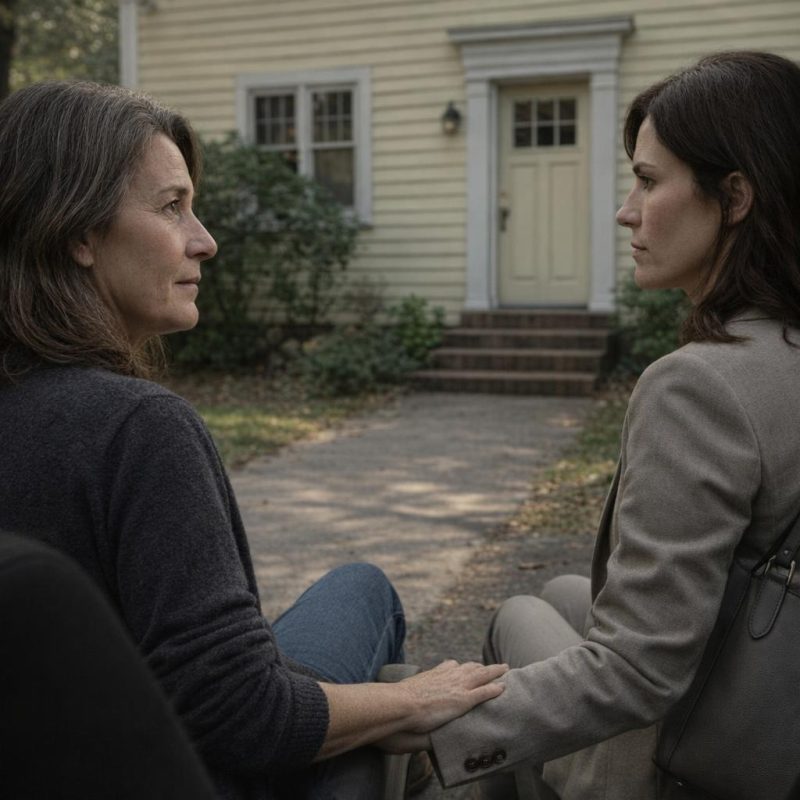 Image by RM AI
Dorothy's Welcome
Dorothy opened the door before we reached the porch steps. She was a woman in her late seventies, silver-haired and deliberate in her movements, with the kind of steady eyes that suggested she had thought carefully about this day before it arrived. She looked at me first — really looked, the way people do when they're confirming something they already suspected — and then she stepped back and held the door open. "Come in," she said. "I wondered when someone would come." Her living room was small and warm, with photographs on the side table and an African violet on the windowsill. She brought tea without asking and set it between us, and then she sat across from Emily and me with her hands folded in her lap and asked what we already knew. Emily walked her through it — the photograph, the records, the witnesses, the five years of careful work. Dorothy listened without interrupting, nodding occasionally, her expression neither surprised nor relieved, just attentive. When Emily finished, Dorothy was quiet for a moment. Then she said, "You've done well. But there are things no record will tell you." She looked at me again, and her voice was even and unhurried when she said, "Margaret loved that child more than she loved her own life. What she did, she did to protect her."
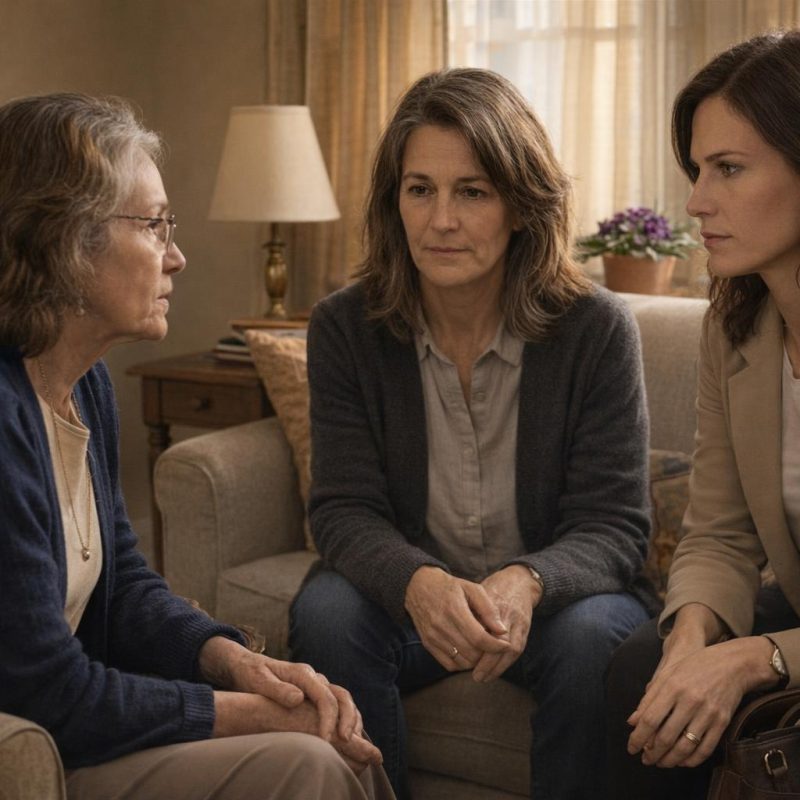 Image by RM AI
Margaret's Choice
Dorothy told it the way someone tells a story they have carried alone for a very long time — carefully, without embellishment, as though the facts themselves were fragile. Margaret's child had been born in circumstances that, in 1952, would have destroyed more than one family. There were people involved with standing in the community, Dorothy said, people whose names still appeared on buildings in that county. When the pregnancy became impossible to conceal, those families moved quickly. Margaret was young and had no money and no one powerful enough to stand beside her. She was given a choice that wasn't really a choice: let the child be placed with a family who would raise her with a clean history, or watch the truth come out in a way that would follow the girl her entire life. Margaret had asked only one thing — that the child be loved. Dorothy said she had been in the room when Margaret signed the papers. She said Margaret had not cried until after the officials left. The birth records were altered. A history was constructed. And Margaret had walked away from that room and never spoken of it publicly again, because she believed that silence was the only gift she had left to give. "She asked about her every year," Dorothy said, her hands still in her lap. "Every single year, until she couldn't anymore."
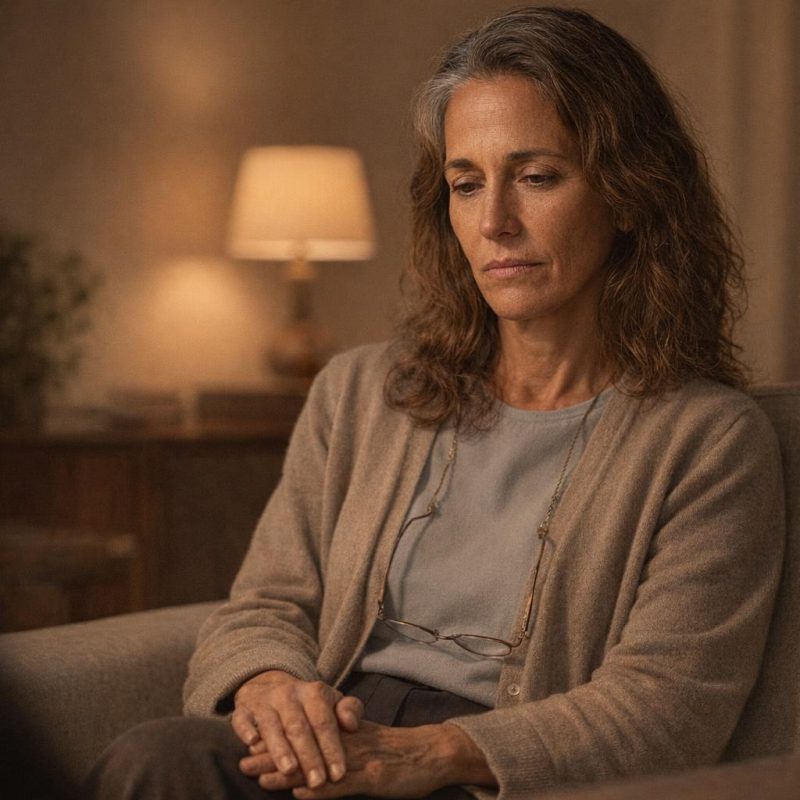 Image by RM AI
The Ripple of Lies
Dorothy kept talking, and I kept listening, and somewhere in the middle of it I stopped thinking about myself and started thinking about my mother. Helen had grown up never knowing Margaret existed. The people who raised her — good people, Dorothy said, people who genuinely wanted a child — had been told only what they needed to be told. They believed the history they were given. They passed it to Helen as truth because, for them, it was truth. And Helen had believed it completely. Every vague answer she ever gave me about her own childhood, every time she changed the subject when I asked about grandparents or cousins or where the family came from — she wasn't protecting a secret she knew. She was protecting the edges of a story that had never quite fit together for her either. I had spent years reading her silences as evasion. They were something closer to confusion. Dorothy folded her hands and said, quietly, that nobody in that chain of decisions had meant to cause harm. Margaret had acted from fear of what the truth would cost her child. The families involved had acted from fear of scandal. Helen had passed along what she believed because she had no reason to doubt it. Fear had built the whole architecture of it — not cruelty, not malice. Just fear, passed from one generation to the next like something nobody meant to keep.
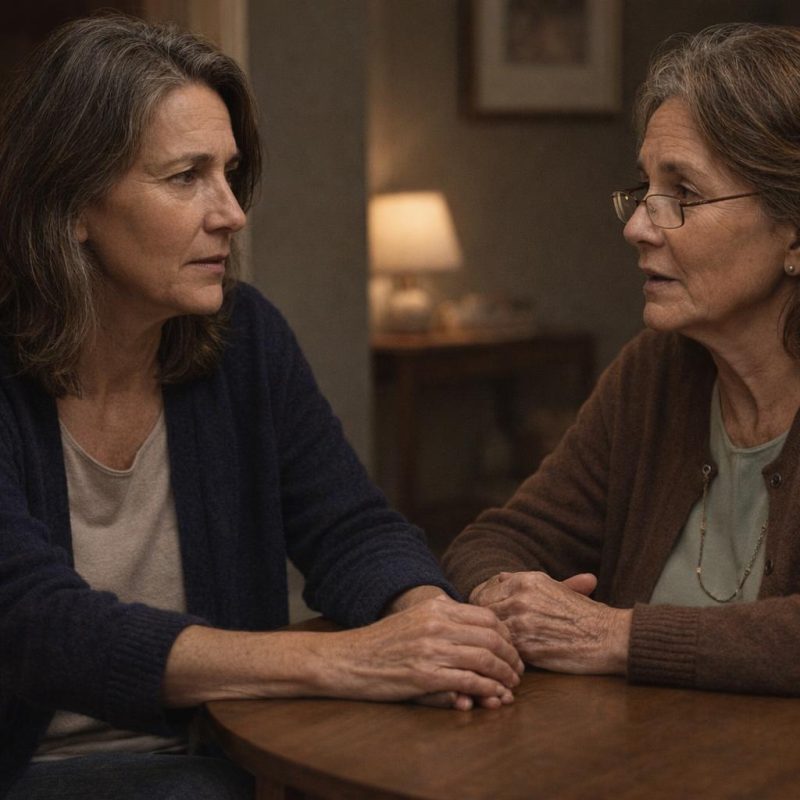 Image by RM AI
Healing Old Wounds
I thanked Dorothy before we left. I'm not sure I found the right words — I'm not sure there were right words — but I meant it, and I think she knew that. Emily held my hand on the walk back to the car, and neither of us said anything for a few minutes. I sat with everything Dorothy had told us and waited to feel something sharp and angry, the way I had expected to feel when I first started understanding what had been hidden. It didn't come. What came instead was something quieter. I thought about my mother — about Helen — and all the small moments I had catalogued over the years as evidence of distance or secrecy. The way she would go still when I asked about her parents. The way certain questions seemed to land somewhere tender in her that she couldn't explain. She hadn't been keeping me out. She had been living inside a story with gaps she couldn't account for, and she had done the best she could with what she had been given. I thought about Margaret, who had asked only that her daughter be loved, and who had spent decades watching from a distance to make sure she was. The grief I felt for her was real. So was the gratitude. Emily squeezed my hand, and I let myself sit with both feelings at once, and something that had been quietly unsettled in me for as long as I could remember finally went still.
 Image by RM AI
The Bond Strengthened
We drove for a while without talking, and it wasn't uncomfortable — it was the kind of quiet that only exists between people who don't need to fill space. Emily had the radio off. The late afternoon light came through the windshield at a low angle and I watched the familiar roads go by and thought about how strange it was to be the same person I had been that morning and also, somehow, not. After a while I told Emily I wasn't angry with her for keeping things from me while she searched. I had thought I might be, once I understood how long she had been at it. But sitting there beside her, I couldn't hold onto it. She had done all of it — the research, the letters, the months of careful work — because she thought I deserved to know where I came from. That's not a small thing. She said she had been scared to tell me before she had something real to show me, scared of raising questions she couldn't answer. I told her I understood that. We talked about Margaret for a long time — what she must have felt, what it cost her, what kind of love it takes to walk away from your own child because you believe it's the safest thing for her. Emily said she was glad we had learned it together. I reached over and put my hand on hers, and I meant it as everything I didn't have words for.
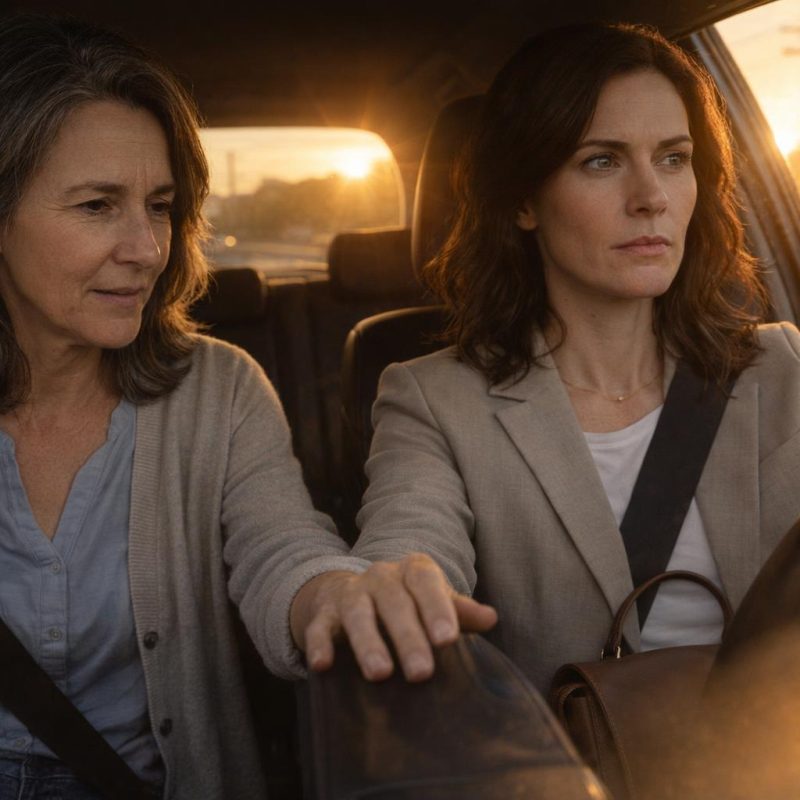 Image by RM AI
The Box in the Garage
We went to the garage together the next morning. Emily pulled the box down from the shelf where it had been sitting since the beginning of all this, and we set it on the workbench and opened it the way you open something you're no longer afraid of. I went through the documents slowly this time, without the disorientation I had felt the first time I had seen them. There were the census records, the letters, the photocopies of altered documents, the careful notes in Emily's handwriting cross-referencing dates and names. I could see the months of work in it — the patience, the precision, the way she had built one piece of evidence against the next until the shape of the truth became undeniable. We talked about what to do with it all. Emily said she wanted to put together a proper record — something organized, something that told the real story from the beginning, so it wouldn't be lost again. I said yes before she finished the sentence. Near the bottom of the box, we found a photograph of Margaret. I had seen copies before, but this one was clearer — her eyes direct, her expression carrying something I recognized without being able to name it. Emily suggested we have it framed. I picked it up and held it for a moment, and what I felt wasn't grief or anger or the vertigo of secrets. The box that had started as a mystery had become, in my hands, something that felt exactly like a gift.
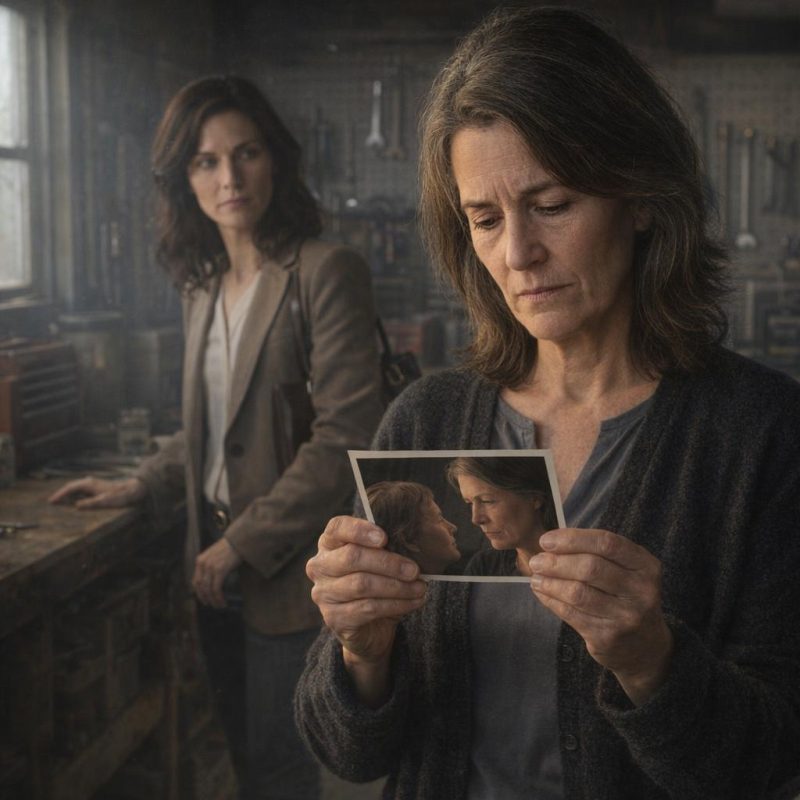 Image by RM AI