My Manager Kept Scheduling Me Alone on the Night Shift — When I Finally Discovered Why, Everything I Knew About My Workplace Shattered
My Manager Kept Scheduling Me Alone on the Night Shift — When I Finally Discovered Why, Everything I Knew About My Workplace Shattered
The Comfort of Routine
Eight years is a long time to work anywhere, but at the Hargrove Inn it never felt that way. I came on after my divorce, when what I needed most wasn't ambition or adventure — it was something solid to hold onto. The front desk suited me. Check people in, check people out, answer the phone on the second ring, keep the lobby tidy. There's a rhythm to it that most people would call boring, and I'd call reliable. The hotel sits just outside Millbrook, close enough to the lake that we get a steady stream of summer tourists and the occasional leaf-peeper in fall, but never so busy that things feel out of control. The owner had built it up from a roadside motel in the seventies, and you could still feel that family-business DNA in everything — the slightly mismatched furniture, the handwritten welcome cards, the way the staff had been there long enough to know each other's coffee orders by heart. I'd been through enough upheaval in my personal life that I genuinely appreciated a place where I knew what to expect when I walked through the door. My ex-husband used to say I was too comfortable with small things. Maybe he was right. But standing behind that front desk on a Tuesday evening, the lobby lamp casting its usual amber glow across the check-in counter, I felt the familiar weight of another shift beginning settle over me like something I'd chosen on purpose.
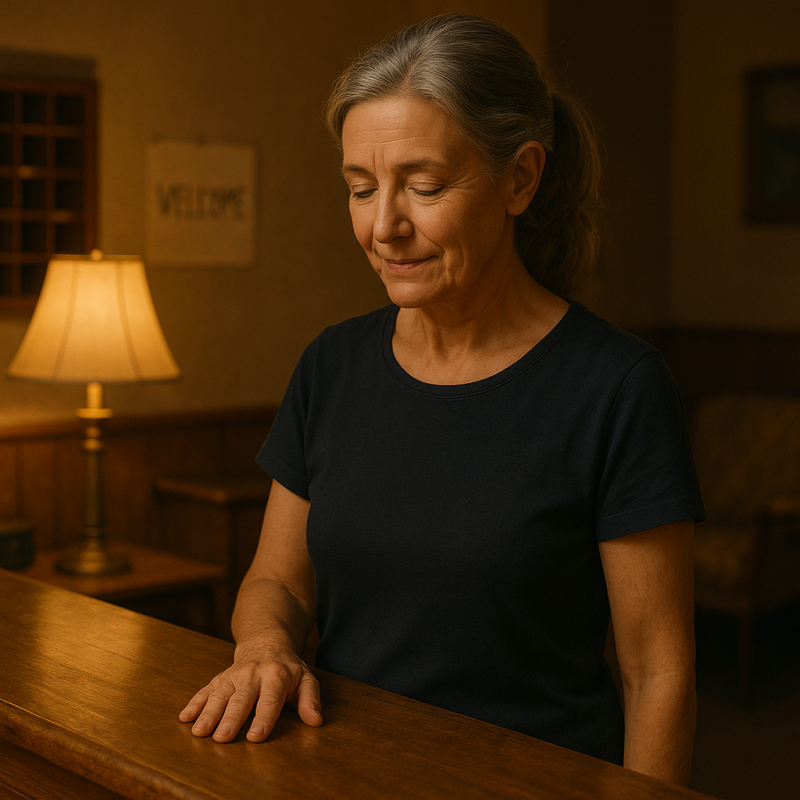 Image by RM AI
The People Who Stay
The thing about working somewhere for eight years is that your coworkers stop being coworkers and start being something harder to name. Ellen had been at the Hargrove longer than me — she worked mornings, always arrived ten minutes early, and kept a small ceramic mug with a chipped handle that nobody was allowed to use. We'd eaten birthday cake together in the break room more times than I could count, the cheap grocery-store kind with the thick frosting that sticks to the roof of your mouth. She knew about my divorce before most of my actual friends did, because that's how it goes when you spend forty hours a week with someone. Tom handled maintenance and filled in at the front desk when we were short-staffed. He was the kind of guy who complained loudly about difficult guests and then went out of his way to carry luggage for elderly visitors when he thought nobody was watching. The three of us had a handoff routine so practiced it barely needed words — a quick rundown of any open issues, a note about the guest in 214 who wanted extra towels, a reminder that the ice machine on the second floor was making that noise again. It was ordinary in the best possible way. I was wiping down the check-in counter during a slow afternoon when I glanced up and noticed Ellen standing at the far end of the lobby, watching me with an expression I couldn't quite read.
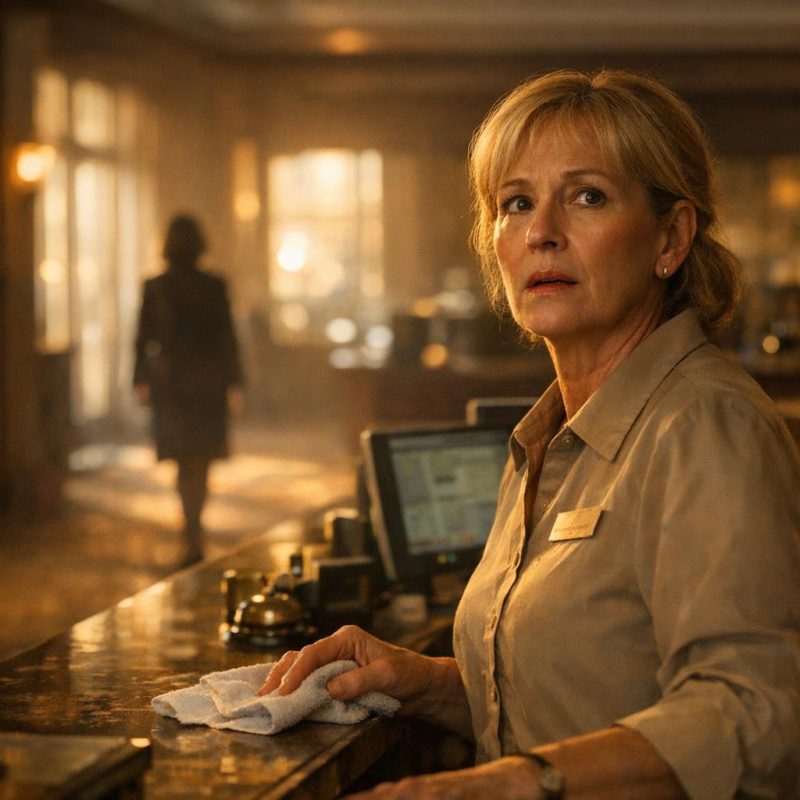 Image by RM AI
The First Night Alone
The new schedule went up on a Wednesday, posted on the break room corkboard the way it always was, printed on plain white paper with Rick's initials at the bottom. I almost missed it at first — my name, every overnight slot, five nights running. Rick was already in the hallway when I caught him, and he was matter-of-fact about it the way he always was, like he was reading from a list. Summer was winding down, he said. A couple of people had put in for time off. It made sense to consolidate the overnight coverage with someone reliable. He said the word reliable the way managers do when they mean it as a compliment and also as a reason not to argue. I didn't argue. Honestly, it seemed reasonable enough. Seasonal slowdowns happened every year, and I'd covered odd shifts before without making a fuss. I told myself it was temporary, maybe two or three weeks until the schedule evened out again. My first solo overnight was a Friday. I brought a thermos of coffee and a paperback I'd been meaning to finish for months. The lobby was quiet by ten, completely still by eleven. By midnight the building had taken on a different quality — not threatening, just hushed, the way a familiar room feels when all the usual noise has been stripped away. I sat behind the front desk with the lamp on low, listening to the old building settle around me in the dark.
 Image by RM AI
Three Weeks Running
Three weeks in, I started paying closer attention to the schedule. I wasn't trying to make a case out of it — I just wanted to understand the logic. What I saw was pretty straightforward: Ellen on mornings, Tom rotating through days and evenings, and my name on every single overnight slot without exception. Twenty-one nights. I'd worked all of them. I brought it up with Ellen one afternoon during the overlap between her shift ending and mine starting. She was rinsing her mug at the break room sink and she said, without turning around, that she'd always been a morning person and the schedule just reflected that. It wasn't unfriendly, but it wasn't really an answer either. Tom was harder to pin down. He mentioned his back had been giving him trouble and that nights were rough on it, which I understood — he'd had a bad disc for years. I tried to find the explanation that made everything fit. Maybe Rick had noticed I never complained about the overnight hours. Maybe I'd said something once about preferring the quiet and he'd taken it literally. I ran through the possibilities the way you do when you're trying to talk yourself out of a feeling you can't quite name. But sitting in the break room that afternoon with the schedule in my hand, the pattern was right there in front of me, and I couldn't keep smoothing it over with maybes.
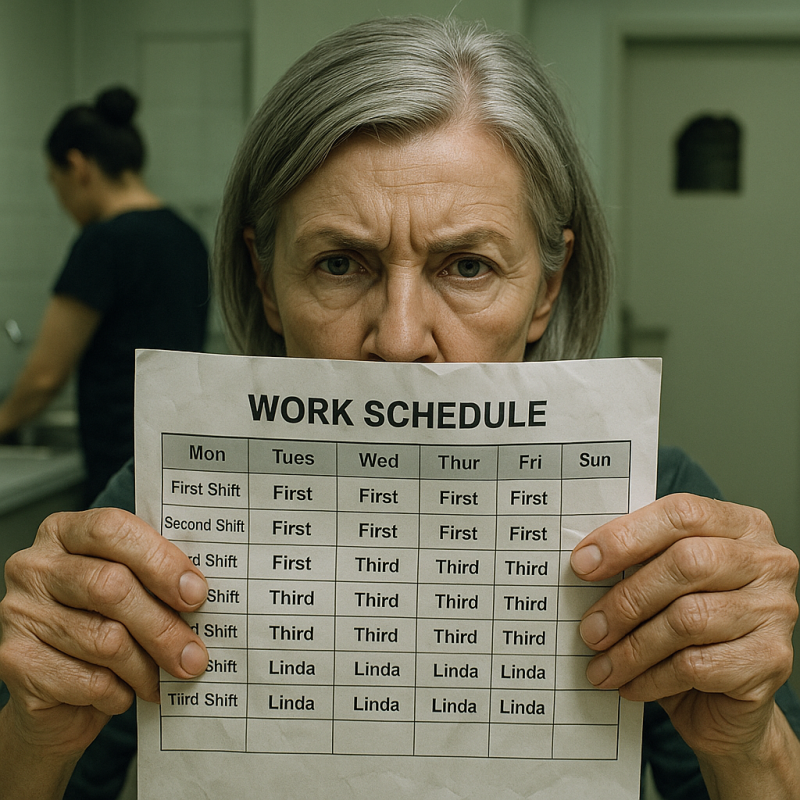 Image by RM AI
You Can Have Them
It was a slow Tuesday afternoon, the kind where the lobby stays empty for an hour at a stretch and you end up straightening the same brochure rack twice. Ellen was finishing up her shift, pulling on her jacket by the side door, and I said something offhand about how the overnight hours had grown on me — the quiet, the way the whole building felt like it belonged to you after midnight. I wasn't fishing for anything. It was just conversation. Ellen stopped moving. It was subtle, just a half-second pause, but I noticed it because I knew her well enough to know her rhythms. When she turned toward me her expression had shifted into something I didn't have a clean word for — not quite alarm, but close to it. She said I could have the night shifts, and her voice came out tight and clipped, like she was closing a door on something. I asked what she meant by that, keeping my tone easy, not wanting to make it into a thing. She didn't answer. She picked up her bag, said she'd see me tomorrow, and walked down the hallway toward the back exit. I stood there watching her go. Her shoulders were up near her ears the whole way, and her hands, when she'd reached for her bag, had a visible tremor in them. She turned the corner at the end of the hall and was gone without once looking back.
After Midnight
There's a version of the overnight shift that sounds almost peaceful when you describe it to someone — no demanding guests, no ringing phones, just you and a quiet building and whatever book you brought. That version was real, at least in the first hour or two. But somewhere around one in the morning, the hotel stopped feeling quiet and started feeling empty in a way those two words don't usually mean the same thing. The hallways on the upper floors were dim, the overhead lights dialed down to their nighttime setting, and they seemed longer than they did during the day — I know that's not possible, but that's how it felt. The old floorboards had their own vocabulary after midnight, a series of creaks and pops I didn't remember from daytime shifts, like the building was having a conversation I wasn't part of. The security camera monitors at the front desk occasionally threw a flicker of static across one feed or another, just for a second, just enough to make me look up. The heating system knocked and hissed in the walls. None of it was unusual for a building that old, and I told myself that every time I looked up from my work. But I was looking up more than I used to. I'd catch myself scanning the lobby for no reason, or glancing at the hallway camera feed when nothing had changed. By two in the morning I'd stopped pretending I wasn't listening, and the silence pressed in around me with a weight I hadn't noticed before.
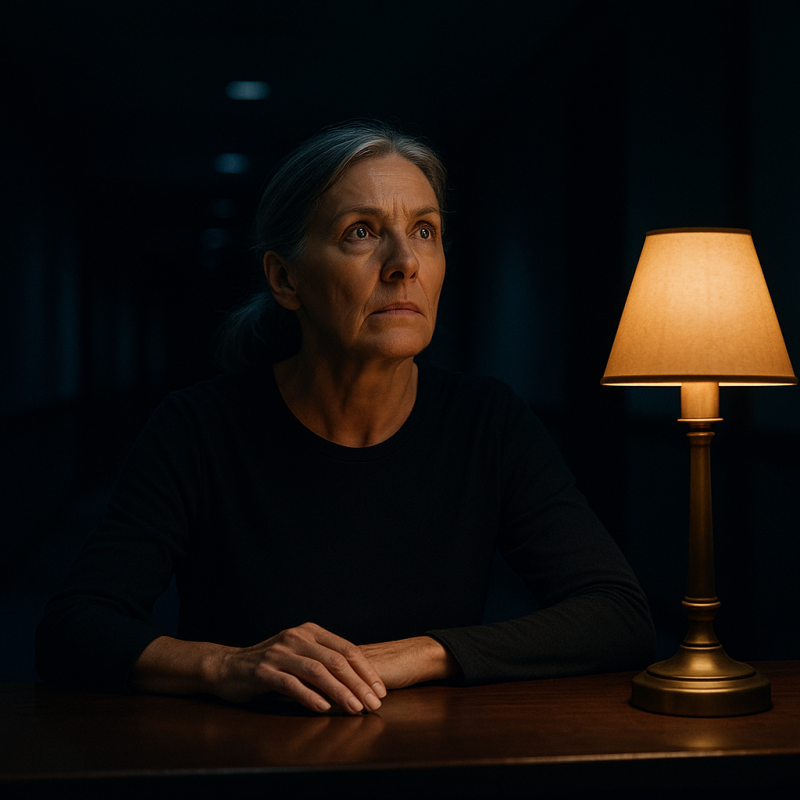 Image by RM AI
Footsteps in Empty Corridors
The first complaint came from the guest in room 302, a man traveling alone for work who called the front desk just after midnight to say someone was walking back and forth in the hallway outside his door. I pulled up the third-floor camera feed while he was still on the line. The corridor was empty — not a person in sight, not even a shadow moving wrong. I told him it was probably the building settling, that older structures made all kinds of sounds, and he accepted that well enough, though he didn't sound entirely convinced. Two nights later a woman in 308 mentioned at checkout that she'd heard someone pacing outside her room around two in the morning. I checked the logs. No staff had been on that floor. I walked the third floor myself on my next shift, testing every door, checking the stairwell, looking for anything that might explain the sound — a loose vent cover, a window with a bad seal. Everything looked normal. I told myself old hotels were full of acoustic quirks, that sound traveled in strange ways through plaster walls and hollow doors, and mostly I believed it. Then, on a Thursday night about a week later, I was sitting at the front desk with the camera feeds up on the monitor when I heard it myself — distinct, unhurried footsteps from the direction of the third floor — and the hallway on the screen showed nobody there at all.
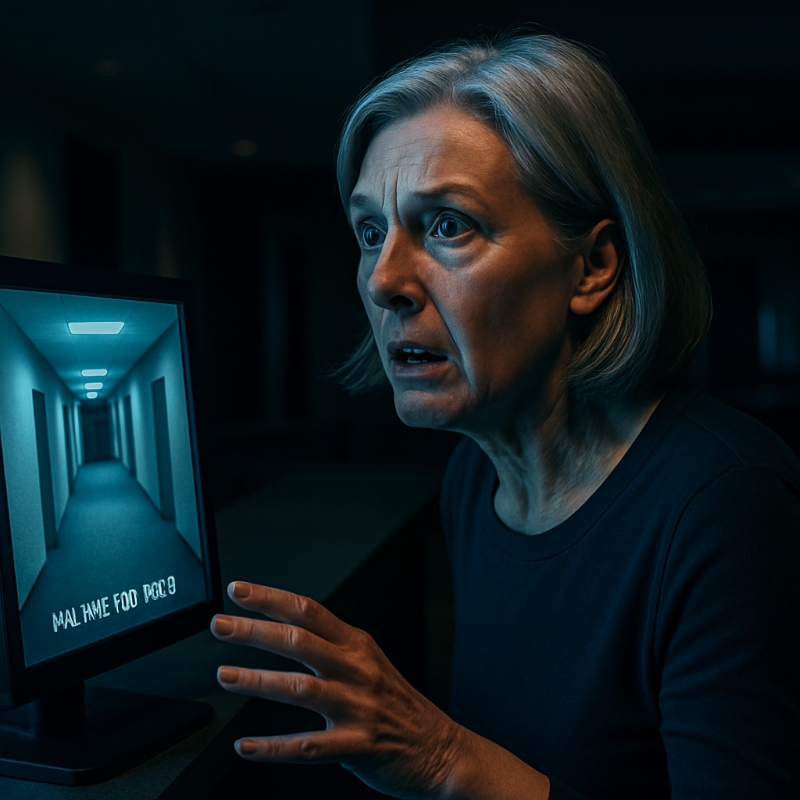 Image by RM AI
The Knocking
She came down to the front desk at two-seventeen in the morning, and I knew before she reached the counter that this wasn't a noise complaint. Her face was the kind of pale that doesn't come from being woken up — it comes from being frightened. She said someone had knocked on her door, hard and repeated, the kind of knocking that means something urgent, and when she'd looked through the peephole there was nobody there. She'd waited, heard it again, and finally opened the door to an empty hallway. I kept my voice steady and pulled up the camera feed for her corridor while she stood at the counter. The footage from the relevant window showed the hallway outside her room — quiet, still, no one approaching, no one standing there, no movement at all. I told her what I'd been telling myself for weeks: old building, strange acoustics, sounds that traveled from other floors. She looked at me the way people look at you when they know you're saying the right words but not the true ones. I moved her to a room on the second floor and she went without argument, which told me more than anything she'd said. After she left I sat back down and pulled the footage up again, this time going frame by frame through the timestamp she'd given me. I almost missed it. But on the third pass, at exactly two-oh-four, the door handle on her room moved.
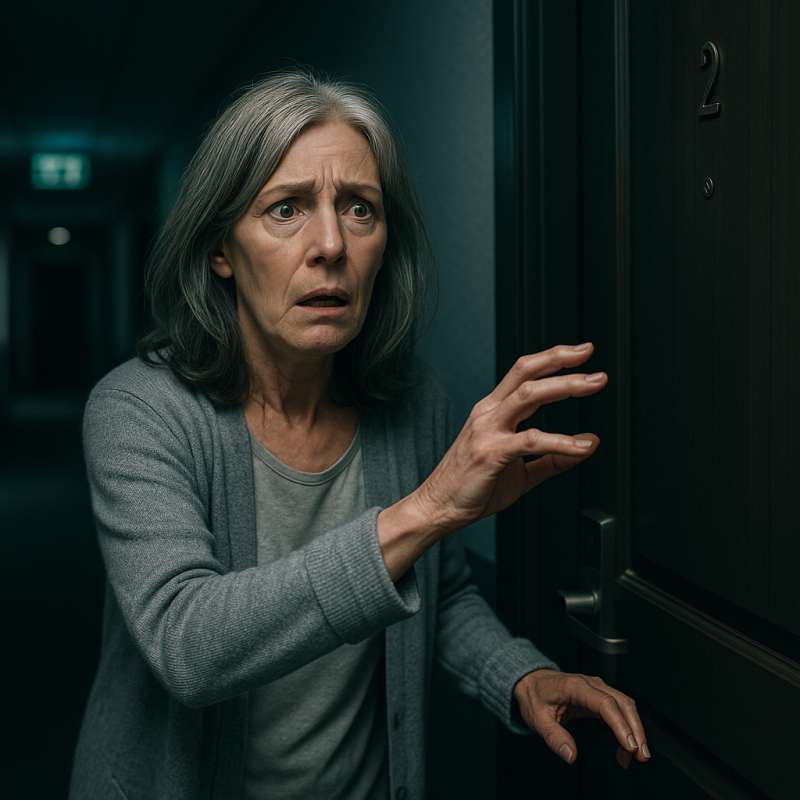 Image by RM AI
The Direct Question
I'd been turning it over in my head for three days before I finally walked into Rick's office with the printed schedule in my hand. I kept it casual — or tried to. I set the paper on his desk and asked him straight out why I was the only one pulling every overnight shift for the past several weeks. He leaned back in his chair and said it was just how the rotation fell this month, that coverage gaps had to be filled somehow. His voice was even, almost bored, like he'd answered a question like this before. I told him other staff seemed uncomfortable whenever the night shifts came up in conversation, that people went quiet or changed the subject. He said I was reading too much into normal workplace dynamics, that people were tired and busy and that wasn't unusual. I pushed a little harder and mentioned the guest complaints — the knocking sounds, the door handles, the things I'd been logging. Something shifted in his face. Whatever had been there a moment before went somewhere I couldn't follow. He said old buildings made noise and that I should document anything unusual through the proper channels. Then he glanced at his watch and told me he had a meeting, and just like that the conversation was over. When I mentioned the guest complaints, his face had gone completely blank.
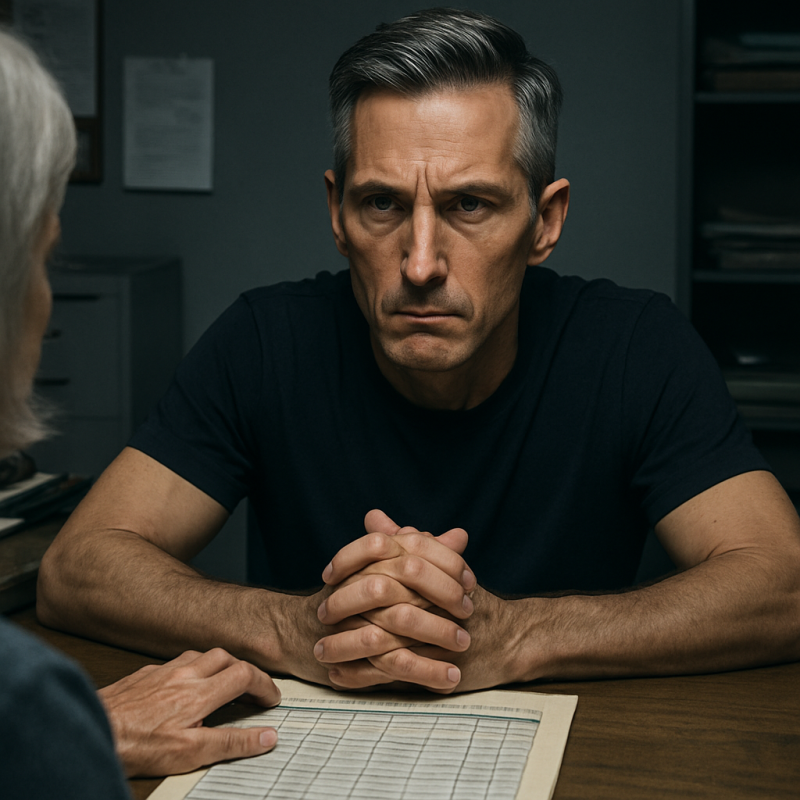 Image by RM AI
Just Keep Her On Nights
I came in forty minutes early that Thursday because I wanted to check the overnight log before my shift started. The back hallway near the office area was quiet, and I was almost to the corner when I heard Rick's voice. He wasn't on the phone — the cadence was wrong for that, too many pauses, like he was talking to someone standing right there with him. I slowed down without meaning to. Most of what he said was too low to catch, just the shape of words, but then his voice came through clearly for just a moment: just keep her on nights a little longer. I stopped moving entirely. I stood there trying to hear the rest of it, but whatever came next was too quiet, and then there was a pause, and then nothing. I stepped around the corner. Rick saw me the instant I appeared. Whatever expression had been on his face smoothed out in less than a second. The other person — I couldn't see who it was before they moved — walked past me toward the lobby without looking up, shoulders angled away, moving at an unhurried pace that didn't quite match the situation. Rick said my name like a greeting and asked if I was starting early. I said yes and kept walking to the desk. I poured myself a cup of the stale break room coffee and stood there holding the warm mug, the words still turning over in my head, not quite settling anywhere.
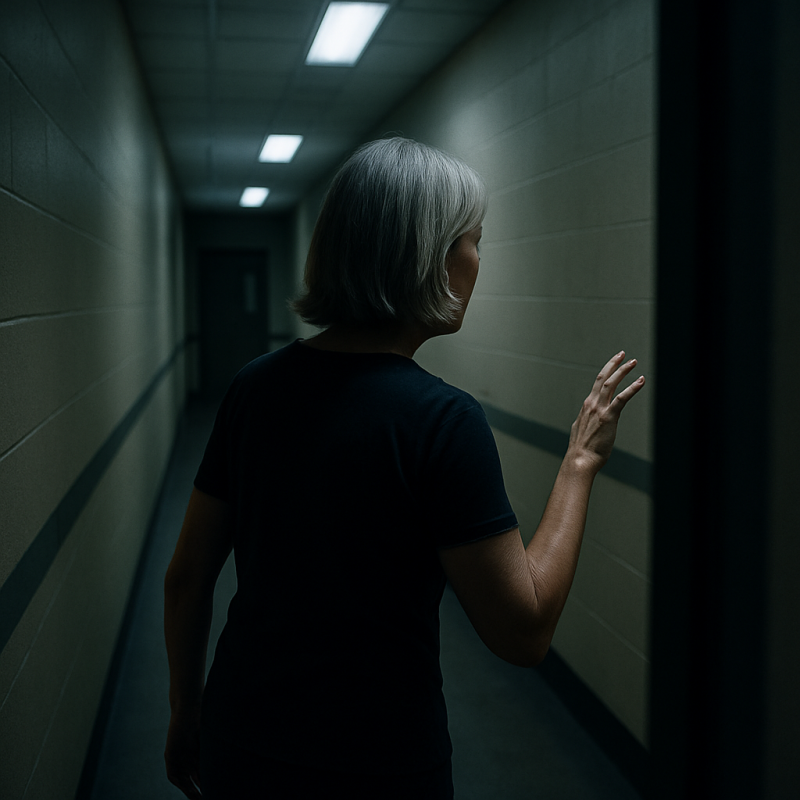 Image by RM AI
The Conversation That Stopped
I told myself to act normal. That was the whole plan — just act normal, pour some coffee, make small talk, and see what happened. Rick and Tom were both in the break room when I got there, standing near the counter with their cups, and the conversation stopped the second I pushed the door open. Not a natural pause. A full stop. I said good morning and went for the coffee pot. Tom shifted his weight and looked at the floor. Rick said something about the weather, which was the kind of thing people say when they can't think of anything else. I mentioned the schedule while I was pouring, kept my voice light, said I'd noticed the overnight rotation hadn't changed in a while. Rick said the schedule was what it was. Tom didn't say anything at all. I asked, as casually as I could manage, whether there was something about the night shifts I should know. Rick said there was nothing to know, set his cup in the sink, and walked out. Tom followed about ten seconds later, leaving his coffee half-full on the counter. I stood there in the quiet of the break room, and when I glanced toward the hallway I could see that both of them had slowed just past the doorway, not quite out of sight, the way people do when they're waiting to see what you'll do next.
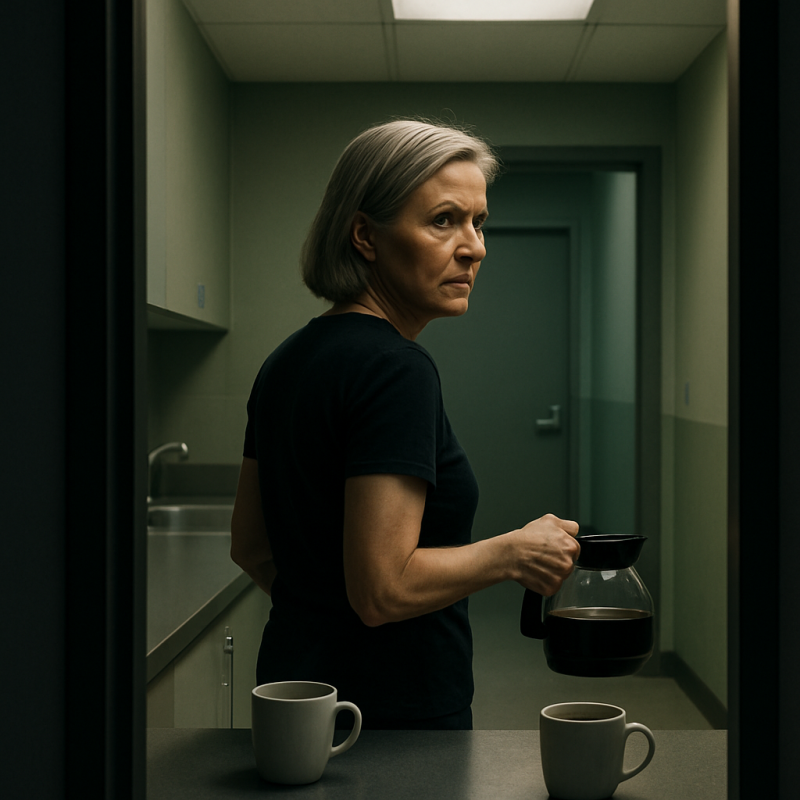 Image by RM AI
Pay Attention
It was a Tuesday night, slow enough that I'd been reorganizing the key card drawer just to stay awake, when I noticed the folded piece of paper sitting on the edge of the front desk. I didn't remember it being there when my shift started. I picked it up and opened it and there were just two words printed in block letters: PAY ATTENTION. No signature, no date, nothing else on the paper. I looked up at the lobby — empty. I walked to the entrance and checked the parking lot. Nobody. I went back and looked at the note again, turning it over like something else might appear. I didn't know if it was from a guest or a coworker or someone who'd just walked through. I put it in my jacket pocket and tried to get back to work, but my eyes kept drifting to the lobby doors. I told myself it could mean anything. A prank. Someone's idea of a joke. I pulled up the security feed and scrubbed back through the last hour but the camera angle on the desk had a blind spot I'd never noticed before, and I couldn't see anyone approach. I was still thinking about it two hours later when I reached under the keyboard to adjust it and my fingers touched paper — another folded note, same block letters, same two words, tucked flat against the desk surface where I never would have seen it without reaching under.
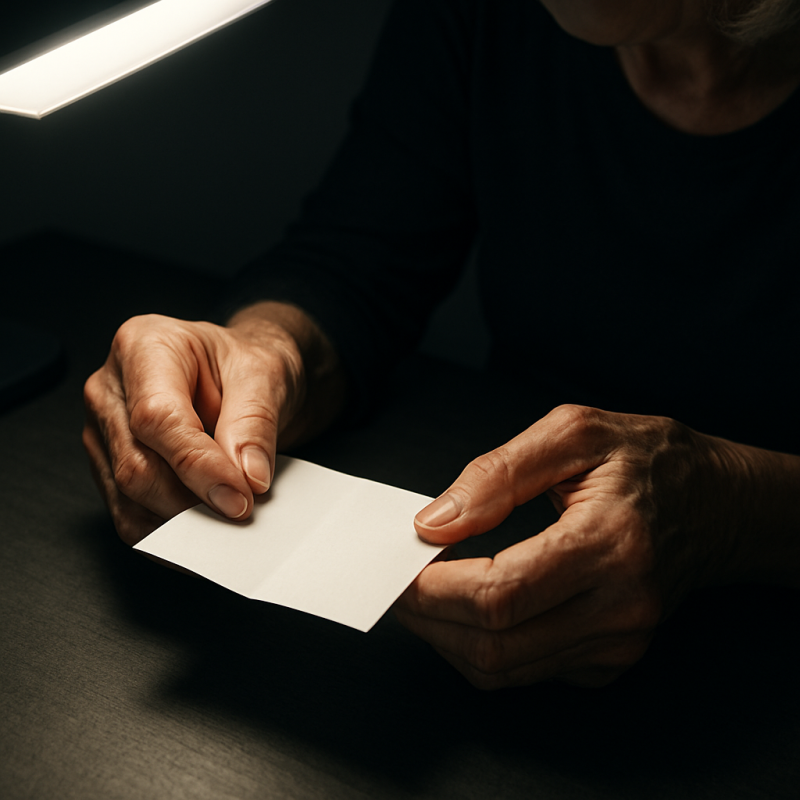 Image by RM AI
The Long Hours
I started keeping a mental list somewhere around the second week of October. Not written down — I was still telling myself each thing had a reasonable explanation — but a list all the same. The lights in the east corridor flickered twice in one night, both times right after I'd walked through. A door on the third floor was standing open at four in the morning when I was certain I'd checked it closed on my rounds an hour before. The elevator moved on its own twice in one week, the floor indicator ticking upward with no call logged in the system. Guest complaints kept coming in — sounds through walls, knocking with no source — and every time I pulled the camera footage there was nothing there, just empty hallways holding still. I checked the security panel so many times I started to feel like I was the problem, like maybe I was the one making things strange by looking too hard. I'd find a reason for each thing on its own. Old wiring. A door latch that didn't catch. A glitch in the elevator relay. But at three in the morning, sitting at the front desk with the lobby lights humming and the building quiet around me, the list just kept getting longer, and the individual explanations felt thinner and thinner against the weight of all of them together.
 Image by RM AI
The Early Checkout
He came to the desk at six forty-five in the morning, two days before his checkout date, rolling his suitcase behind him and moving like someone who'd already made up his mind and didn't want to be talked out of it. He was in his fifties, I'd guess, with the kind of tired around his eyes that doesn't come from one bad night. He said he needed to check out early and slid his key card across the counter without waiting for me to ask. I processed it without comment — early checkouts happened, especially midweek. But when I handed him his receipt he didn't take it right away. He stood there for a moment, and then he reached into the inside pocket of his jacket and set a sealed envelope on the counter between us. I asked what it was. He said I should look at it. I asked why he was giving it to me specifically, and he shook his head a little, like the question was beside the point. He said to be careful, and then he picked up his suitcase handle and walked out through the lobby doors without looking back. I watched him load his bag into a dark blue sedan and pull out of the lot, and then the road was empty and the morning was quiet, and I was standing at the desk with a sealed envelope in my hands and no idea what I was holding.
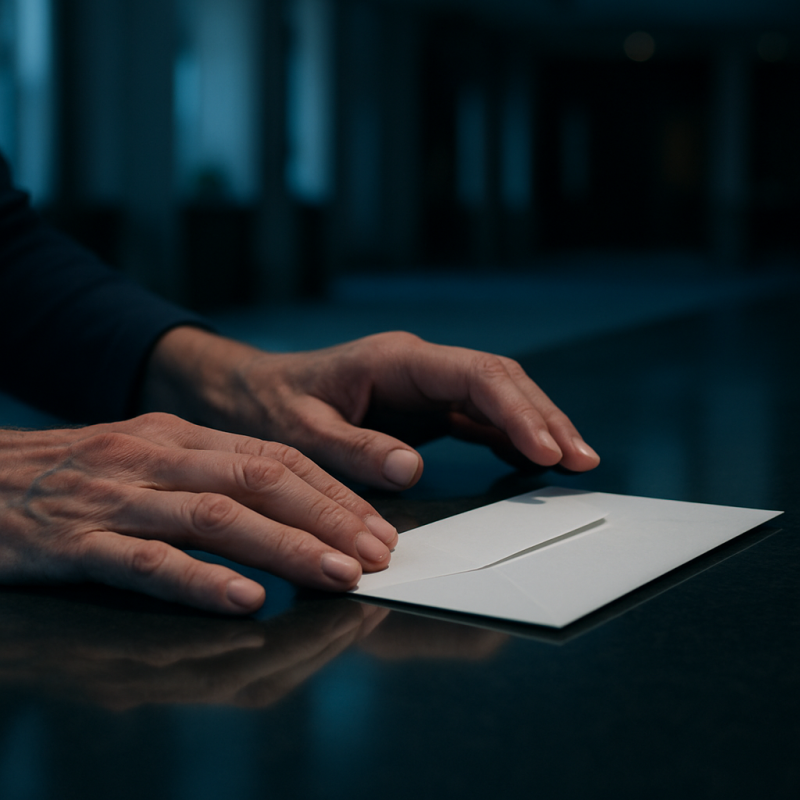 Image by RM AI
They All Found Out
I waited until the lobby was empty before I opened it. The envelope wasn't sealed with anything official — just the flap pressed down — and inside was a single photograph, printed on regular paper like it had come off a home printer. The image showed the hotel lobby, this same lobby, but older somehow — the furniture different, the lighting warmer, the front desk a slightly different configuration. A group of people in hotel uniforms stood together smiling at the camera, the kind of photo you take at a staff birthday or a slow afternoon when someone brings in a cake. I counted seven people. I didn't recognize most of them. One woman in the back row had a name tag I couldn't quite read. I turned the photo over. On the back, in pen, someone had written in capital letters: THEY ALL FOUND OUT. I stood there holding it. Seven people in uniforms, smiling like it was any ordinary day. I didn't know their names. I didn't know what they'd found out, or what had happened after that photo was taken, or why a man I'd never spoken to had carried this into my hotel and left it in my hands. But something about the way they were all smiling — easy, unguarded, the way you smile before you know there's anything to worry about — made the photograph feel less like a keepsake and more like a warning I was already late to receive.
 Image by RM AI
The Decision to Dig
I gave myself one night to sit with it and then I decided I was done waiting for someone to tell me what was going on. The hotel went quiet around two in the morning, the way it does when even the ice machine stops cycling, and I went to the back office and opened the filing cabinet that held the older personnel records. The folders were organized by year, rubber-banded in groups, and I pulled everything from five and six years back and spread it across the desk. I had the photograph propped against the stapler so I could see the faces. It took me about forty minutes to match names to files — some of the name tags in the photo were readable if I looked closely, and one woman I recognized from an old staff bulletin pinned to the corkboard in the break room. Seven people in that photograph. I found files for six of them. I lined the folders up and opened each one to the last page. The resignation dates were all within the same six-month window — four of them within the same eight weeks. None of the files had exit interview notes. No forwarding information. No reason given, not even the standard one-line explanation that HR usually typed in. Just a date, a signature, and then nothing. I photographed each page with my phone and put the folders back exactly as I'd found them, and the six resignation dates sat in my camera roll like a row of small, identical facts I didn't yet know how to read.
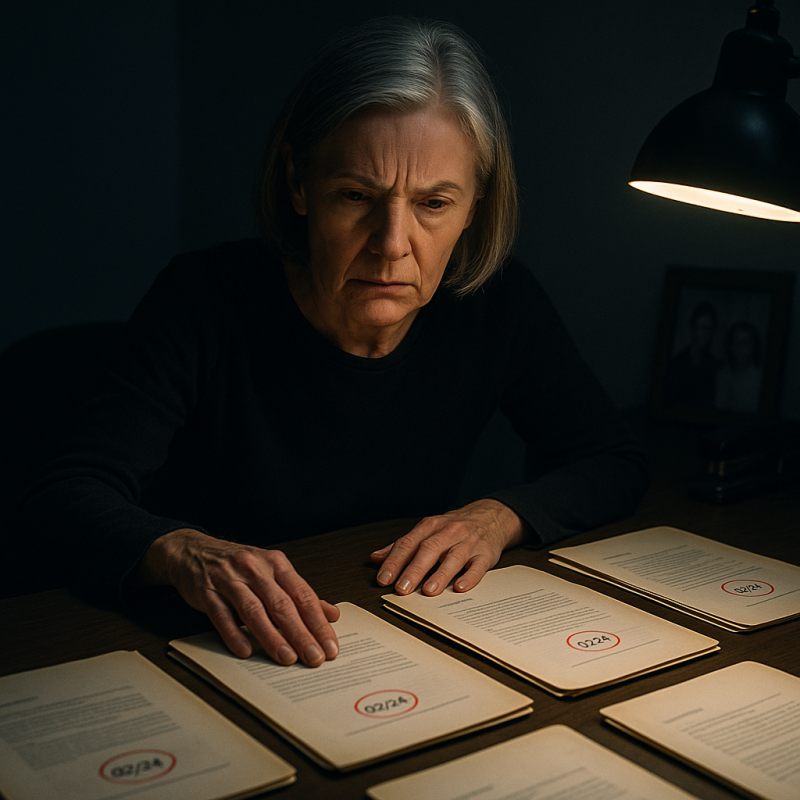 Image by RM AI
Ownership Changes
My day off that week was a Tuesday, and I spent the first half of it at the county clerk's office with a notepad and a thermos of coffee I'd made at home because I didn't want to waste time stopping anywhere. I'd already done some searching online the night before — business filings, state registry records, anything publicly accessible — and what I'd found had been strange enough that I needed to see the actual documents. The hotel had been in the same family's orbit for as long as anyone I knew could remember, but the online filings showed three separate ownership transfers over fifteen years. I'd told myself there were probably simple explanations. Restructuring, maybe. Estate planning. But the more I looked, the less simple it seemed. The clerk was patient with me, pulled the property transfer records without much fuss, and I sat at one of the long tables near the window and spread them out. I read through each one twice. Then I laid all three documents side by side and looked at the dates together: the second transfer was dated four months before the first owner's acquisition was officially recorded, and the third fell inside a window when, according to the other two records, the property couldn't have belonged to anyone at all.
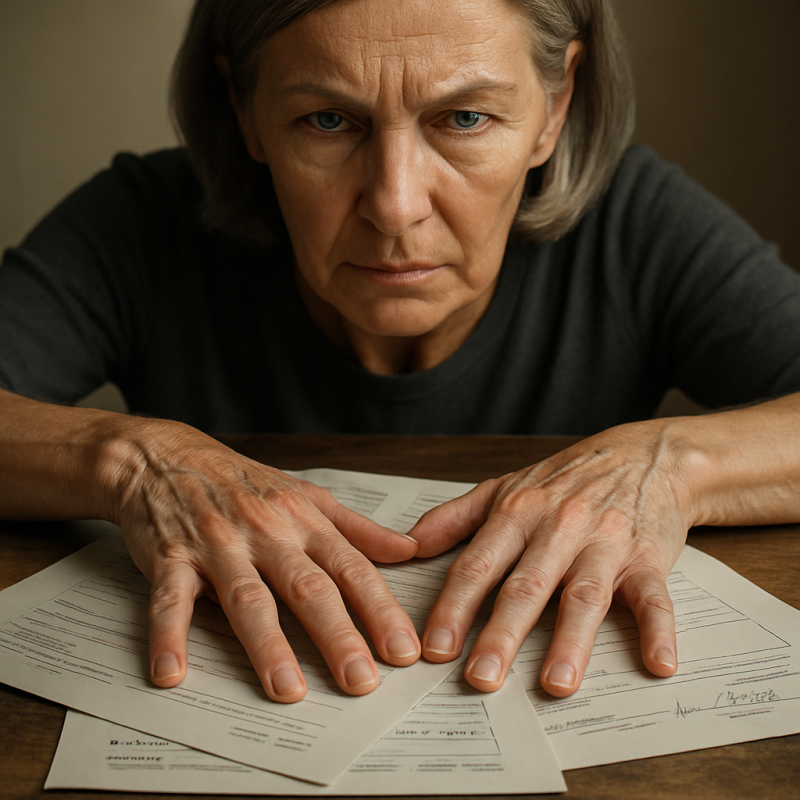 Image by RM AI
The Sealed Scandal
The library's newspaper archive room smelled like old paper and the particular kind of quiet that only exists in places where people come to look for things they can't find anywhere else. I'd requested the microfilm reels for the local paper going back thirty years, and the librarian had shown me the reader without comment. It took me about an hour of scrolling before I found the first mention — a small article, maybe four column inches, referencing an investigation into financial irregularities at a local hospitality business. The hotel's name wasn't printed directly, but the address was there in the second paragraph. The article mentioned court proceedings and said more details would follow. I wrote down the date and went looking for the follow-up. There were two more brief mentions over the next few months, each one shorter than the last. Then a single small notice, easy to miss, stating that records related to the case had been sealed by court order. No explanation. No summary of findings. No names. Just a date and a case number and the word sealed. I spent another hour searching for anything that might have slipped through — a letter to the editor, a business column, anything. There was nothing. Whatever had happened had been buried thoroughly enough that only the outline of it remained, like a shape pressed into paper after the ink has been removed. I sat back in the hard library chair, the microfilm reader humming softly beside me, and the weight of that absence settled over me like something solid.
 Image by RM AI
Stop Digging
I waited until mid-morning when the lobby was quiet and caught Rick coming out of his office. I'd thought about how to bring it up and decided the direct approach was the only one that made sense — I wasn't good at circling around things, and I figured his reaction would tell me as much as any answer he gave. I told him I'd been doing some research into the hotel's history and had come across some old newspaper articles mentioning a financial investigation. I said it plainly, watching his face. The change was immediate. His expression went somewhere I hadn't seen it go before — not the careful blankness he usually wore, but something tighter and harder underneath it. He asked where I'd heard about that. I told him the library archives, public record. He stood up from where he'd been leaning against the doorframe and his voice came out louder than I'd ever heard it in the years I'd worked there. He said I was digging into things that were none of my business. I asked, as calmly as I could manage, why it would matter if there was nothing to hide. He told me to focus on my job and leave the past alone. Then he went back into his office and closed the door. I stood in the hallway for a moment, heart going faster than I wanted it to. His anger had been so far out of proportion to a simple question that it sat with me the rest of the day, heavy and unmoving.
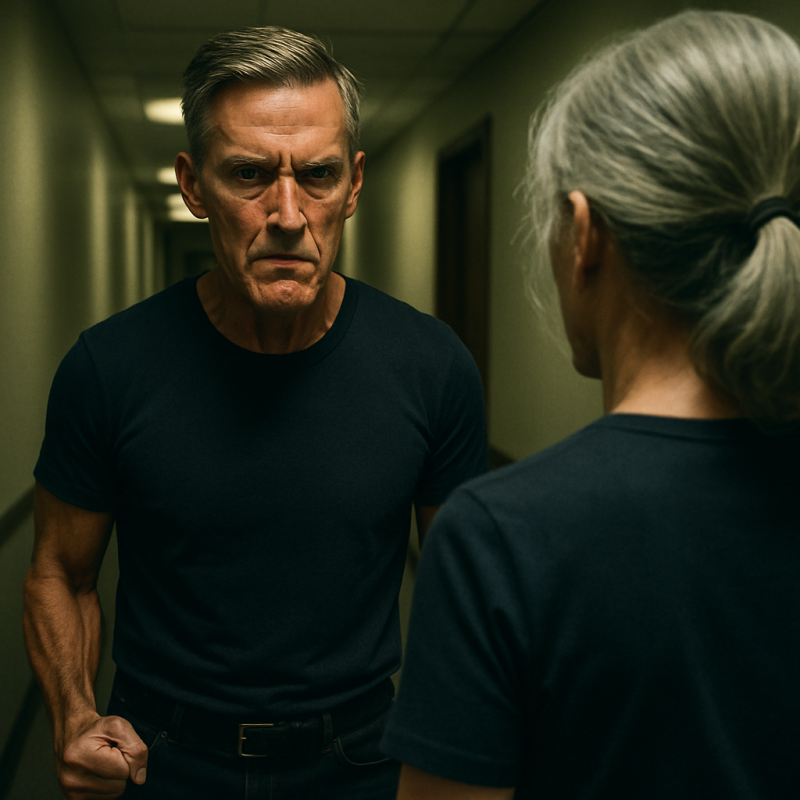 Image by RM AI
The Basement Office
Three nights later I went down to the basement. I'd been past the door plenty of times — it was where the older filing cabinets lived, the ones nobody touched unless someone needed a record from years back — but I'd never had a reason to spend real time there. I brought a flashlight even though there was overhead lighting, because the bulbs down there were old and I didn't trust them. The room smelled like dust and something faintly metallic, and the cabinets were labeled in a system that took me a few minutes to work out. I started with the financial records from five and six years back, pulling folders and going through them methodically. The invoices were what caught my attention first — renovation work, mostly, with amounts that seemed high for what was described. A hallway repaint listed at figures that made me stop and read the line twice. I kept pulling. Near the back of the third cabinet I found a ledger, handwritten, the kind with the green-ruled pages. I opened it to the middle and ran my finger down the columns. The same transaction reference numbers appeared in two separate columns on the same page — identical reference numbers, different amounts, sometimes differing by thousands of dollars. I photographed every page I could find, hands steady only because I was concentrating too hard to let them shake. The two sets of numbers sat side by side on the page, and there was no accounting error that explained a gap that size.
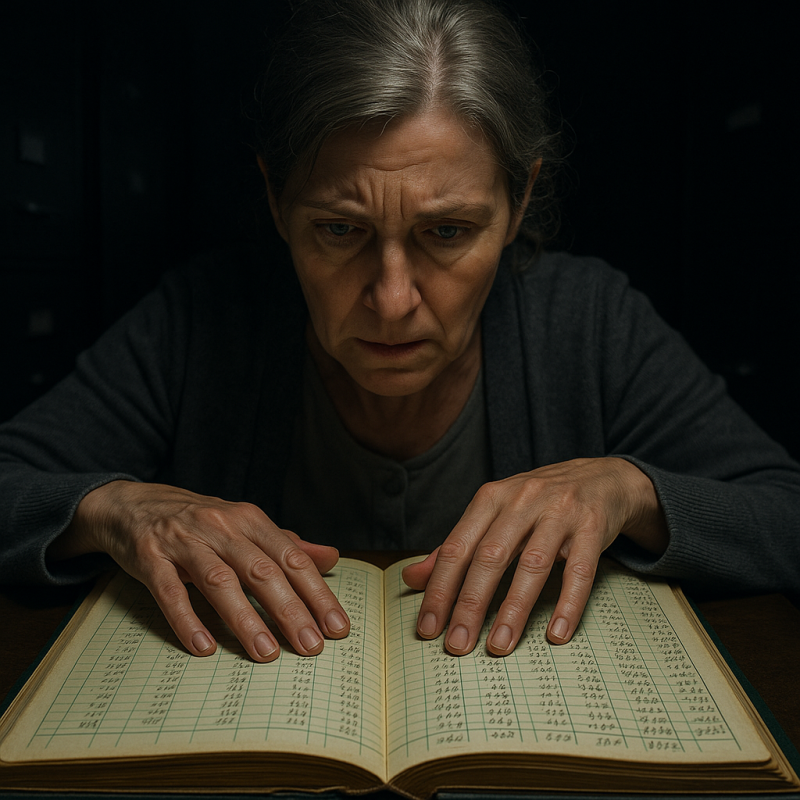 Image by RM AI
The Accountant Who Left
I went back to the basement the following night and worked my way through the personnel files stored in the last cabinet along the far wall. Most of them were routine — hire dates, performance notes, the usual paperwork. Then I found a folder near the back with a name I didn't recognize: Jennifer Moss, Accountant, with a resignation date from six years ago. The letter inside was one paragraph, no reason given, just the standard language about moving on to other opportunities. But tucked behind it were several pages of audit reports in Jennifer's handwriting — flagged discrepancies in vendor payments, renovation costs that didn't reconcile with anything in the main ledger, notes in the margins asking questions that had never been answered. The last audit report was dated two weeks before her resignation letter. I sat on the dusty floor with the folder open across my knees and thought about the photograph — the seven faces, the six resignation dates all clustered in the same six-month window. Jennifer had to be one of them. She'd found something in these same files, in this same room, and two weeks later she was gone. I didn't know what had happened after that, whether she'd left on her own terms or been pushed, whether she'd tried to tell someone or just walked away. But her unfinished audit sat in my hands like something that had been waiting a long time for someone to pick it up, and the quiet of the basement pressed in around me.
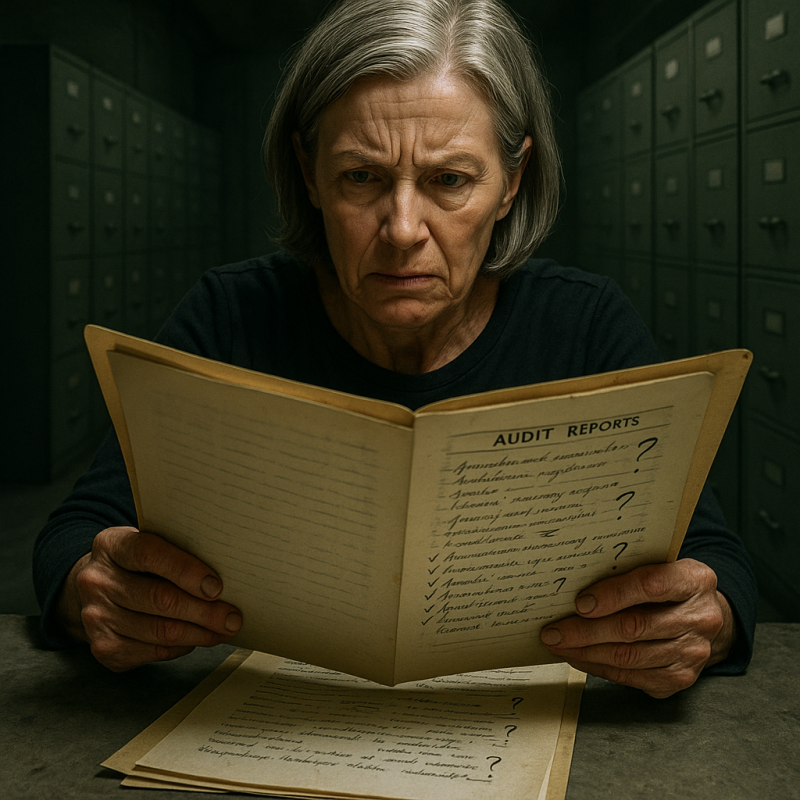 Image by RM AI
The Night Shift Connection
I'd kept the old work schedules I'd photographed from the personnel files, and that night I pulled them up on my phone and started cross-referencing. I went name by name through the people in the photograph, matching them against the schedule images. It took me the better part of an hour, going back and forth between photos, squinting at the small print. Every single one of them — all six whose files I'd found — had been assigned to overnight shifts in the weeks before their resignation dates. Not occasional nights, not filling in for someone. Regular, recurring overnight assignments, the same pattern repeated across different people and different years. I sat with that for a while, turning it over. Night shift workers were the ones who had the run of the building. During the day there were managers around, other staff, guests coming and going. At night it was quieter, and the basement office was accessible without anyone noticing. I thought about my own schedule over the past several months, the way Rick had been slotting me into overnight shifts with increasing regularity, and something cold moved through me. I'd been walking the same path they had, following the same sequence, and I hadn't seen it until I was already deep into it. I wondered if they'd all ended up in that basement, going through those same filing cabinets, finding the same things I was finding. Then I pulled up the last schedule image on my phone — and there were all seven names from the photograph, every one of them, listed together on a single overnight shift from six years ago.
 Image by RM AI
The Basement Vigil
I brought a thermos of coffee and a legal pad on my next overnight shift and went straight to the basement after my rounds. I worked methodically, the way I'd learned to work through the personnel files — one cabinet at a time, one folder at a time, nothing skipped. Invoice after invoice showed renovation work at amounts that climbed well past anything reasonable. A bathroom retile listed at figures that would have covered a full gut renovation. Contracts with vendor names I'd never heard of, addresses that turned out to be mail drops when I searched them on my phone. Payment records showing money going out to companies that had no websites, no reviews, no footprint of any kind. I photographed everything, pausing every so often to refill my cup and let my eyes rest. By three in the morning I had over sixty photographs on my phone and the legal pad was covered in notes — dates, amounts, vendor names, reference numbers. The total I'd been able to tally, just from what I'd gone through so far, was somewhere north of two hundred thousand dollars across four years. And I hadn't finished. I sat on the floor with my back against the cabinet and the thermos warm between my palms, the folders spread around me in a half-circle, and the size of what I was looking at pressed down on me in a way that the coffee couldn't touch.
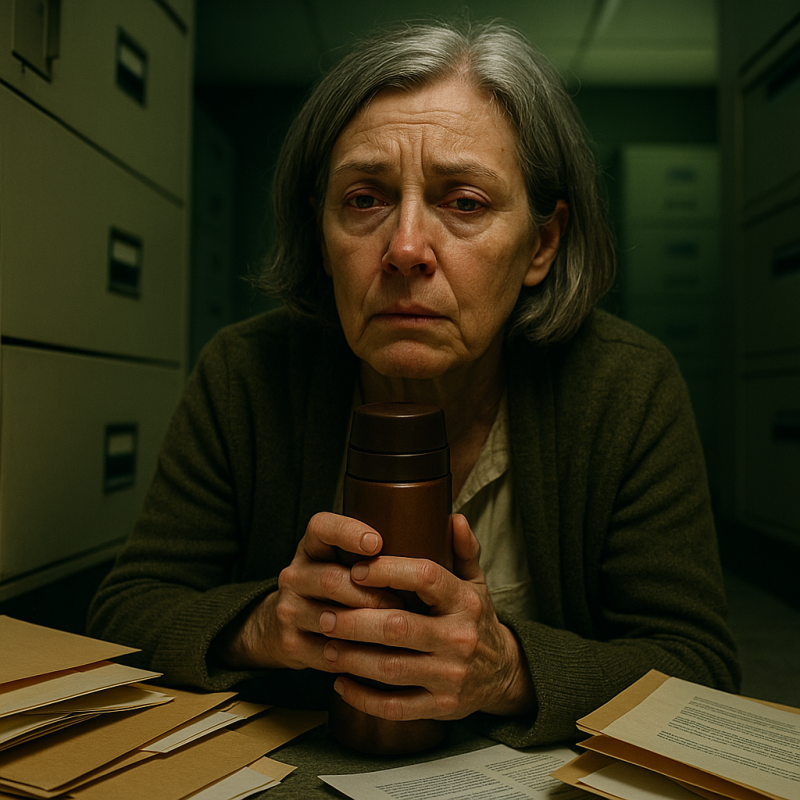 Image by RM AI
Fake Renovations
I spent the next night comparing what I'd found against the hotel itself. I walked the building with my notepad, checking the dates on the invoices against what I could actually see. There was a complete kitchen remodel listed for four years ago — I'd worked in that kitchen, and nothing about it had changed in the time I'd been there. The lobby renovation in the files described new flooring and lighting fixtures installed six years back, but the carpet in the lobby was the same worn pattern I'd walked across on my first day. I found invoices for HVAC work in years when I knew for a fact the old system had been limping along and staff had been complaining about it. Electrical upgrades in sections of the building that looked like they hadn't been touched in decades. I went back to the basement and pulled the vendor files again, and this time I searched every company name I could find against the state business registry on my phone. Not one of them came back with a valid registration. The invoices were for work that hadn't happened, paid to companies that didn't exist, and the money had gone somewhere. I knew what that was called. I'd heard the term enough times to know it wasn't something you stumbled into by accident. I sat down on the basement floor with my phone and my notepad and the stack of photographed documents, and the silence around me felt different from ordinary quiet — heavier, and very still.
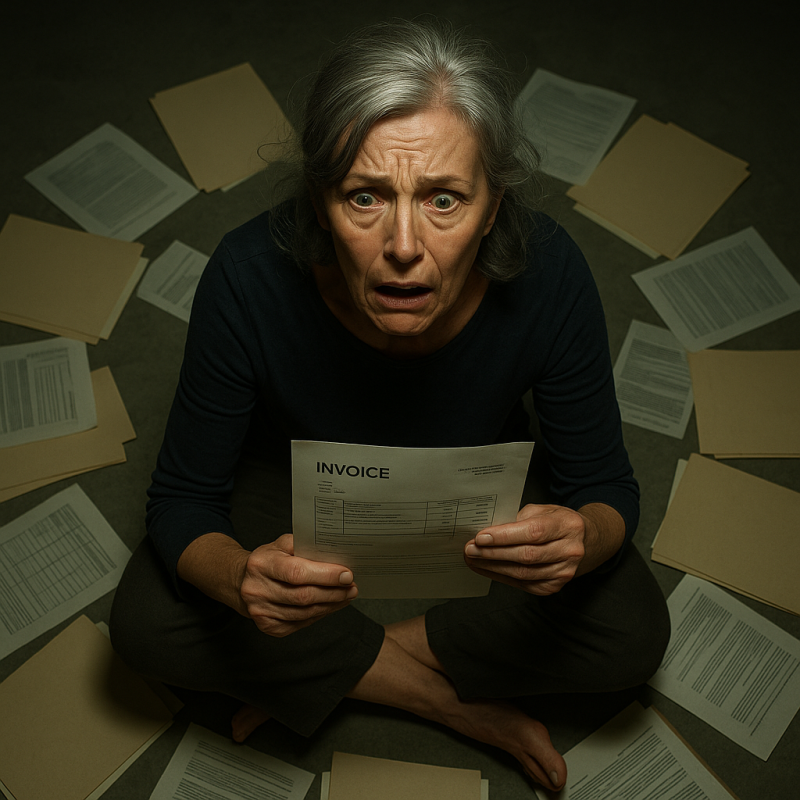 Image by RM AI
Multiple Managers
I kept going through the files, and the deeper I got, the worse it looked. The fraudulent invoices didn't just have one set of approvals — they had layers of them. Signatures from people who had signed off on payments for work that never happened, going back more than a decade. I recognized some of the names from old staff photos in the break room hallway. Former managers, people who had moved on or retired years before I ever walked through the door. Whoever had been running this hadn't been running it alone. There were email printouts too, tucked between the invoice batches — careful, vague language about vendor relationships and payment schedules, nothing that said anything outright, but enough to show that more than one person had known what was happening and kept quiet about it. I sat there on the basement floor with the stack of papers in my lap, trying to count how many different hands had touched this thing over the years. Too many. And then I got to a newer batch, documents from the last several years, and I started going through the approval signatures one by one. The handwriting was familiar before I even consciously placed it. I pulled out the most recent invoice and held it under the light. Rick's signature was on it. Then the one beneath it. Then the one beneath that. I went through the whole stack. His name was on dozens of them, going back years.
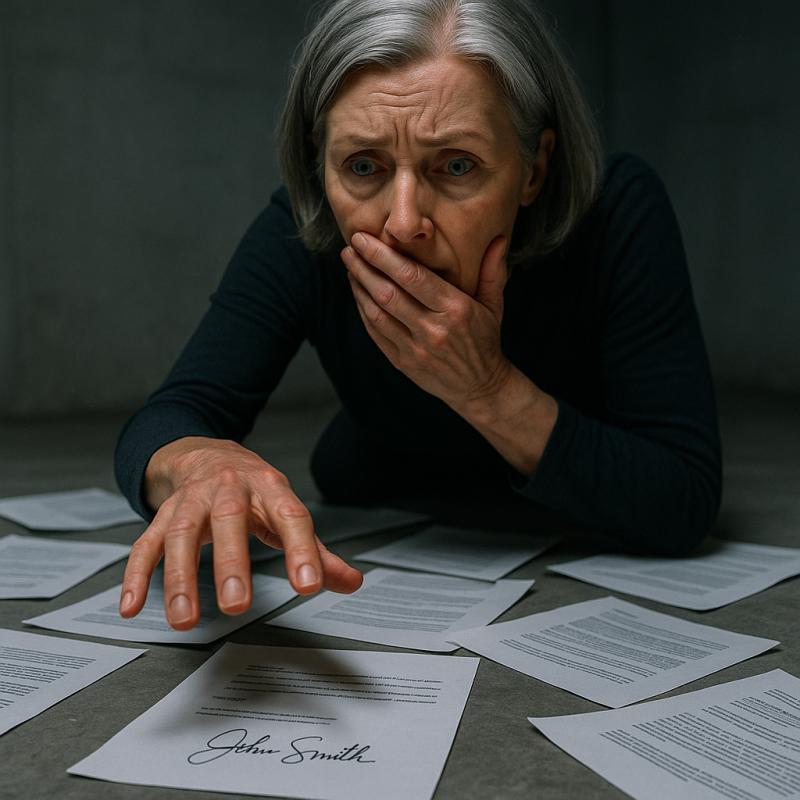 Image by RM AI
Rick's Behavior Makes Sense
I sat with that stack of papers for a long time before I moved. Rick's signature, over and over, on invoices for work that had never been done, paid to companies that didn't exist. I kept turning it over in my head, trying to fit it against everything I'd seen from him over the past weeks. The way he'd gone cold when I asked about the old scandal. The warning he'd given me in the hallway, his voice low and tight, telling me to stop asking questions. At the time I'd thought he was just protecting the hotel's reputation, or maybe his own job. Now I didn't know what to think. The night shift scheduling made a different kind of sense now too — keeping me away from the day staff, away from anyone I might talk to. Or maybe it was something else entirely. I kept going back and forth on it. His expression when I'd mentioned the guest complaints had looked genuinely troubled, not defensive. There were moments where he'd seemed less like someone covering his tracks and more like someone carrying something heavy for a very long time. I couldn't tell which version of him was real. But one thing I couldn't argue with anymore: he'd been watching me move through this building, asking questions, pulling files. Whatever I'd been getting close to, Rick had known about it the whole time.
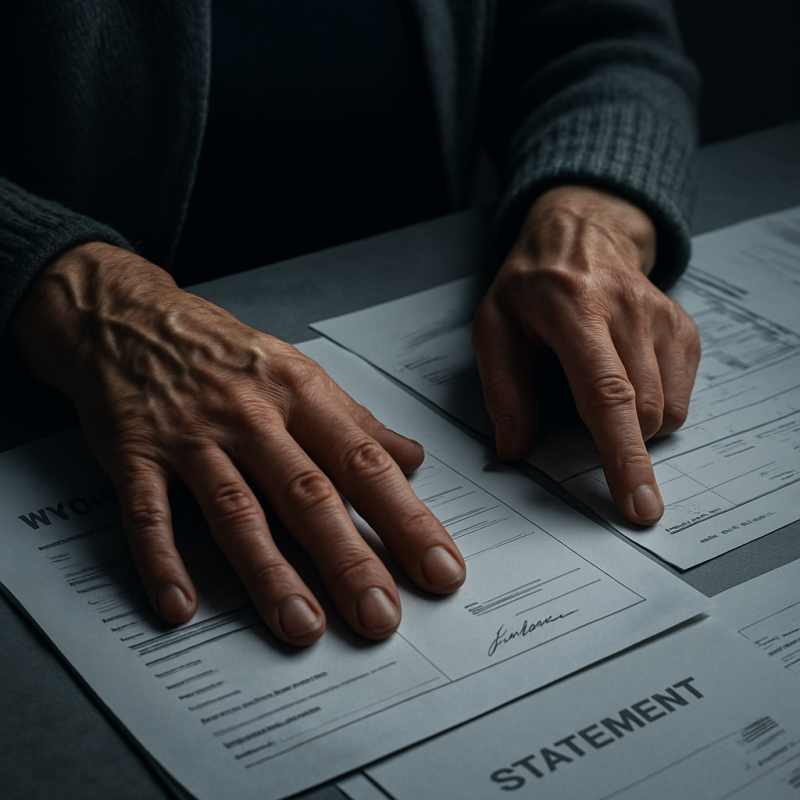 Image by RM AI
In Over My Head
I don't know how long I sat in that basement. Long enough for the overhead light to start feeling oppressive, long enough for my back to ache from the concrete floor. I had photographs on my phone, a notepad full of names and dates, and a very clear picture of something that was going to hurt a lot of people if it ever came out. That was the part I kept getting stuck on. If I went to the police, this didn't just land on Rick. It landed on everyone whose signature was in those files, on the hotel itself, on every person who worked here and had nothing to do with any of it. People would lose jobs. Some of them might lose more than that. I thought about Ellen, who'd been here longer than almost anyone and always looked like she was one bad day away from falling apart. I thought about the housekeeping staff who showed up every morning and just did their work. None of them deserved to have their livelihoods pulled out from under them. But I also kept thinking about the anonymous notes. The photograph slipped under my door. Someone had wanted me to find this. Someone had gone to the trouble of pointing me here, and I didn't think they'd done it so I could sit on it. I'd reached the edge of something, and I had to decide whether to step forward or turn around and walk away.
 Image by RM AI
The Retired Employee
My phone rang during the tail end of my shift, an unknown number I almost let go to voicemail. I picked it up on the last ring. The woman on the other end introduced herself as Margaret — she said she'd worked at the hotel for fifteen years before she retired, and that she'd heard I'd been asking questions about the place's history. I asked her how she'd heard that, and she said people talk, that word gets around faster than you'd think in a town this size. Her voice was careful, measured, like she was choosing each word before she said it. She told me the financial irregularities I'd been looking into were real, but that they were only part of what had happened there. I asked her what she meant. She said she couldn't explain it over the phone, that she'd rather meet somewhere away from the hotel. There was a quality to her voice I couldn't quite name — not fear exactly, but something adjacent to it, like someone who had been quiet about something for a long time and wasn't entirely sure it was safe to stop. She suggested a coffee shop on the other side of town, the next morning before the breakfast rush. I wrote down the address on the back of my notepad. After I hung up, I stood in the empty corridor for a moment, her words sitting in my chest — only part of what happened. I didn't sleep much that night.
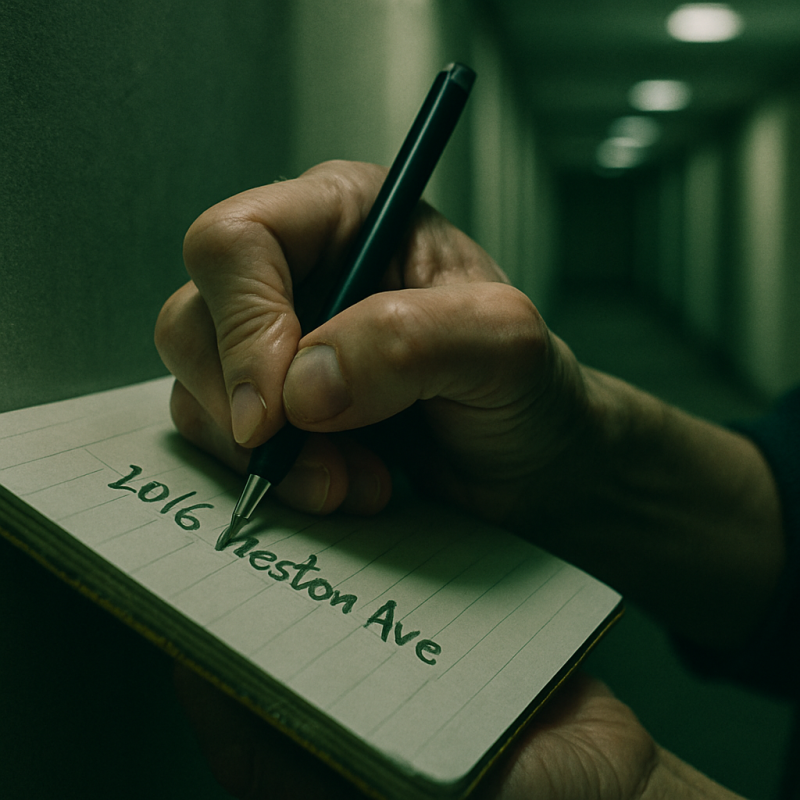 Image by RM AI
Only Half the Story
Margaret was already there when I arrived, a corner booth, hands wrapped around a mug she hadn't touched. She was in her late sixties, silver-haired, with the kind of careful posture that comes from decades of professional habit. She looked up when I walked in and seemed to relax slightly, like she'd been half-expecting someone else. We made small talk for about thirty seconds before she set it aside and got to the point. She said she'd been there when a handful of employees left the hotel in a short span of time, years back. Not all of them had left willingly. Some had been pressured out — quietly, without any formal process, just a conversation and then a resignation letter appearing on someone's desk. I asked what they'd found out that made management want them gone. She said it wasn't about the money laundering, though she confirmed that was real and had been going on for years. The financial fraud, she said, was almost a side issue. It had been used to obscure something else, something that went back to the hotel's founding family. I leaned forward. She wrapped both hands tighter around her mug. I asked her to tell me what it was. She looked at me steadily across the table and said the real secret had nothing to do with money at all.
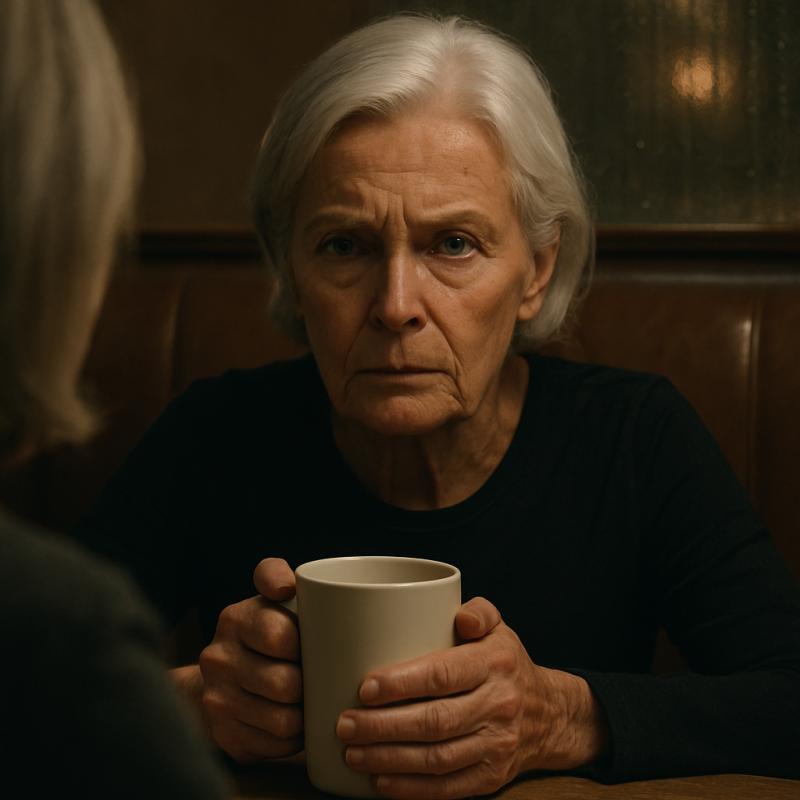 Image by RM AI
Pressured Out
Margaret walked me through what she knew, piece by piece. Some of the employees who'd left had been offered money — a quiet severance, no questions asked, sign here and go. Others had been told their positions were being restructured, which everyone understood meant they weren't welcome anymore. A couple had been approached more directly, she said, with the clear implication that personal information about them could surface if they made noise. Nobody had gone to the police because nobody had anything concrete about the family secret itself — just the sense that they'd gotten too close to something and been moved away from it. I asked her what she thought I should do. She was quiet for a moment, turning her mug in slow circles on the table. She said she thought I was walking a path that had cost other people their jobs, and that I should understand it could cost me mine too, or worse. She said that was my choice to make, not hers, and that she'd told me what she knew because she thought I deserved to know what I was risking. I thanked her and meant it. I drove back toward the hotel with her warning sitting in my chest, clear and heavy — and I already knew it wasn't going to stop me.
 Image by RM AI
Hidden Correspondence
I went back to the basement that evening with Margaret's words still turning in my head. The financial fraud was only half the story. I pulled the older boxes this time, the ones pushed furthest back on the shelving, the ones with dust on the lids that suggested nobody had touched them in years. Most of it was routine — old payroll records, vendor contracts from the nineties, maintenance logs. Then I found a box with no label, just the word PRIVATE written in marker across the top. Inside were letters, personal ones, bundled with a rubber band that crumbled when I touched it. They were addressed to Rick. The return address was a woman named Eleanor. I read the first one carefully, then the second. Eleanor wrote about the hotel the way someone writes about a place that belongs to them — with ownership in every sentence, with grief about decisions that had been made. One letter referenced Rick's father directly, and the way she wrote about him made something shift in my chest. I kept reading. Midway through the bundle I found a folded document, heavier paper than the letters, official-looking. I opened it. It was a copy of a birth certificate. I sat on the basement floor with that document in my hands, and the quiet around me felt like it had weight.
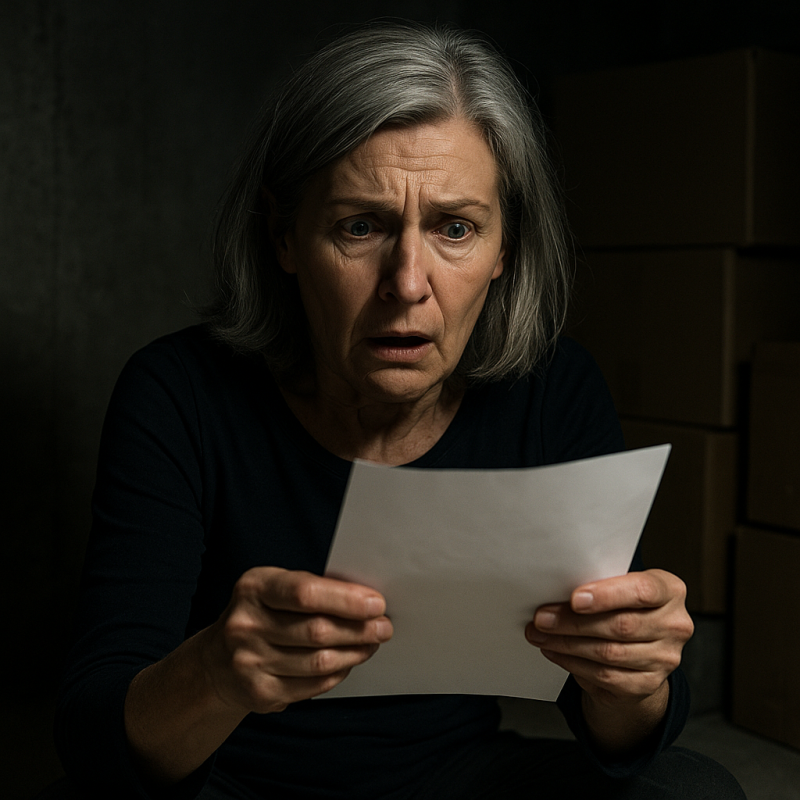 Image by RM AI
The Denied Inheritance
I stayed in that basement for another hour, going through the rest of the box. Beneath the letters I found more documents — legal papers, formal correspondence, things that had clearly been kept together deliberately. And then I found a copy of a will. The founder's name was at the top, the date thirty years old. I read through it slowly. There was a section near the middle that made me stop. Rick's name was there, but not as a beneficiary. There was language about a scandal, careful legal phrasing that didn't spell anything out but made clear that something had happened — something involving his mother — that had changed the terms of what he was owed. Eleanor's responses were short and apologetic and firm. In one of them she told him the decision had been made and couldn't be undone. Rick had written back that he would stay anyway, that he would protect the hotel regardless of what he'd been given. I thought about him up in that office, managing this building for decades, and something in me shifted toward something I hadn't expected to feel for him. At the bottom of the box I found the will again, and this time I looked at the beneficiary line more carefully. The hotel had been left to someone else — a woman, her first name partially obscured by a water stain, only the last few letters visible.
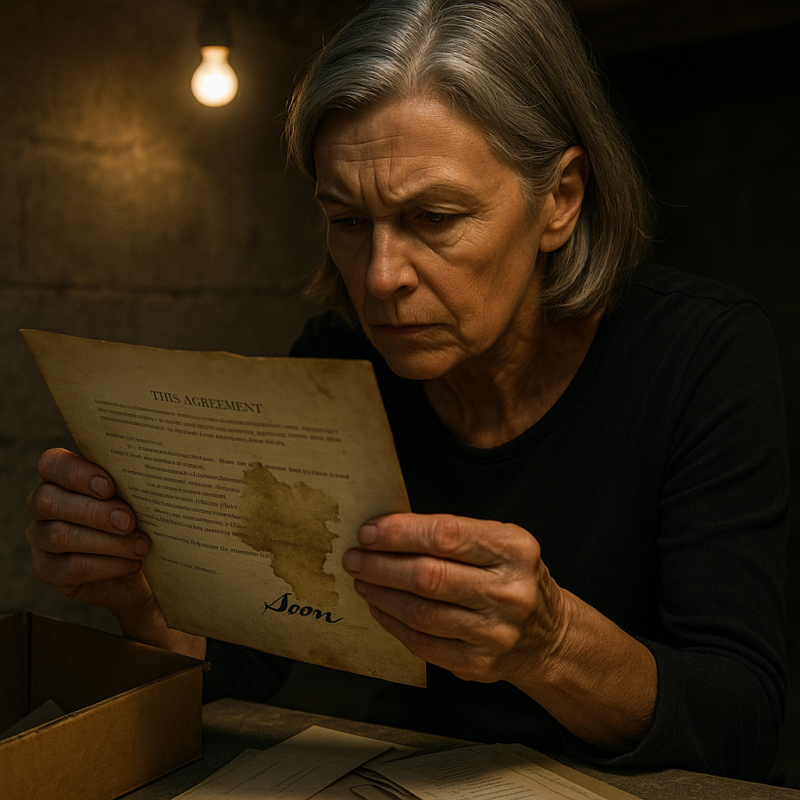 Image by RM AI
The Scandal
I kept going back through the letters, looking for something concrete — a name, a date, an event I could actually point to. What I found instead were fragments. One letter mentioned shame in a way that felt almost physical, like the word itself had weight. Another talked about protecting the family name, about what would happen if certain things became public. Rick's mother had written something about a choice she'd made years ago, a choice she couldn't undo, and the language around it was careful in the way people are careful when they're terrified of saying the wrong thing out loud. Near the bottom of the pile I found a newspaper clipping, yellowed and brittle at the edges. It was from a society column, thirty years old, and it mentioned the hotel's founding family in connection with a scandal. But the article was vague in that particular way old society reporting could be — lots of implication, no specifics. I could see the shape of something without being able to name it. I knew the sealed court records I'd found earlier had to be connected. Whatever had happened was bad enough to change a will, bad enough to keep buried for decades. I sat there on the basement floor with all those fragments spread around me, holding pieces of a story that had broken something irreparably, and still couldn't see the whole picture.
 Image by RM AI
Diane Morrison
Back upstairs, I pulled out my phone and started searching for Diane Morrison. I found business filings easily enough — she was listed as the hotel's current owner, had been for years. That part wasn't surprising. What I wanted to know was how she'd gotten it. The records showed she'd inherited the property from a relative, which seemed straightforward until I looked at the name. It didn't match the founder's name. It didn't match anyone I'd found in the letters or the documents downstairs. I searched for Diane's family history, found a genealogy record that traced her line back several generations. None of it connected to the hotel's founding family in any way I could follow. Then I checked the dates. The supposed inheritance had been filed two years before the founder's recorded death date. I went back and checked again, thinking I'd misread something. I hadn't. The timeline didn't work. Someone had put together a paper trail that looked official from a distance but fell apart the moment you checked one date against another. I sat with my phone in my lap, staring at records that told a story no actual sequence of events could have produced, and the longer I looked, the less sense any of it made.
 Image by RM AI
Names Changed
On my day off I drove to the county records office and asked for birth and death certificates connected to the hotel's founding family. The clerk brought out a folder and I sat at one of those long wooden tables under fluorescent lights and started going through it. The first few documents seemed normal enough. Then I found a woman listed under two different names — same birth date, same town, but different family relationships on each certificate. One listed her as a daughter. The other listed her as a niece. I set them side by side and looked at them for a long time. I found marriage records that didn't line up with the birth records. I found adoption papers that had been filed years after the fact, the dates stamped in a way that felt retroactive rather than original. Whoever had done this had been thorough — thorough enough that you'd have to be looking specifically to notice the cracks. But the cracks were there. I thought about what Margaret had told me, about the secret she'd said was bigger than the money. I'd been thinking financial fraud was the center of it. But sitting there with those documents spread across the table, I started to think the money was just the surface. Then I turned to the next page and found two birth certificates for the same person — same date, same hospital, two completely different names.
 Image by RM AI
The Threatening Message
My phone buzzed during the afternoon shift and I saw it was Sarah. I almost let it go to voicemail — we were short-staffed and the lobby was busy — but something made me step into the back hallway and answer. She was crying before she finished saying hello. She told me she'd gotten a voicemail from a number she didn't recognize, and she played it for me over the phone. The voice was distorted, low and uneven, like something run through a filter. It said her mother needed to stop asking questions about things that didn't concern her. It mentioned the hotel by name. Sarah was asking me what was going on, what I'd gotten myself into, and I didn't have a good answer for her. She said she was scared. She said she'd been scared for weeks and hadn't wanted to say anything, but this was different. She begged me to quit. I told her I'd be careful. I told her I wasn't in any danger. I'm not sure either of us believed it. After I hung up I stood in that back hallway for a minute, listening to the sounds of the lobby on the other side of the door. Sarah's voice was still in my ear — the way it had cracked on the word scared — and for the first time since I'd started pulling at all of this, the fear in it felt like something I couldn't reason my way around.
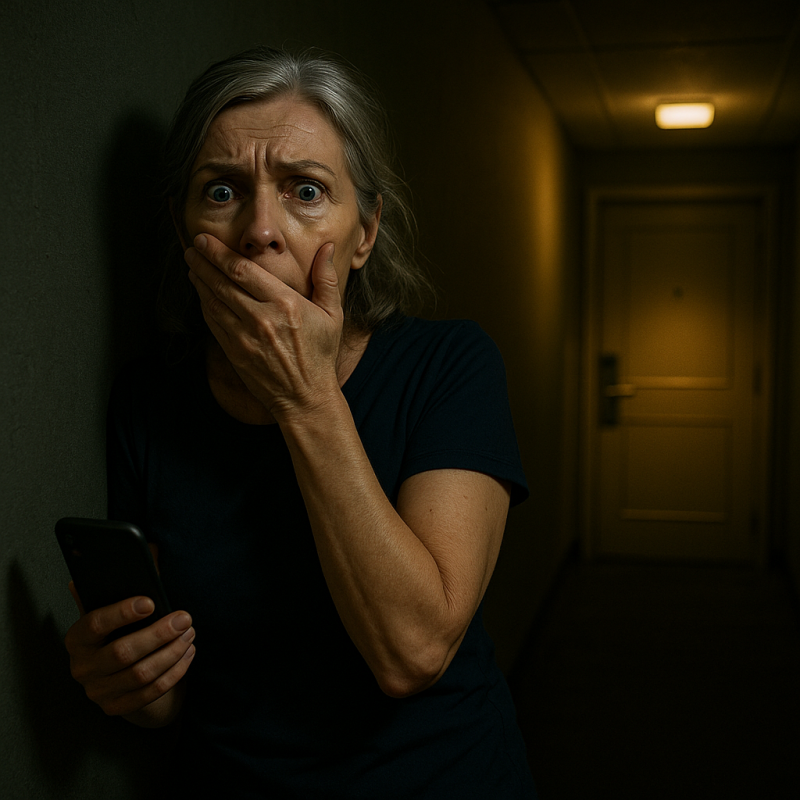 Image by RM AI
Losing Allies
The next morning I tried to catch Ellen in the break room before the shift started. She was pouring coffee when I walked in and the moment she saw me she looked away, said something about needing to get back to the floor, and was gone before I could say more than her name. I stood there with my own empty cup and tried to figure out what I'd done. Tom was at the front desk when I came out, and I asked him directly if something was going on. He shifted his weight and looked past my shoulder and said management had been asking about me. He said it quietly, like he was embarrassed. I asked him what kind of asking, and he told me he'd mentioned to Rick that he'd seen me spending time in the basement. He said it like it was nothing, like it was just conversation, but his hands were doing something restless on the desk. Later that afternoon Ellen found me alone near the supply closet. She apologized. She said she was sorry, that she couldn't afford to lose this job, that she had a kid in college and no backup plan. She told me everyone had been asked to keep track of where I went and when. I nodded and told her I understood, and I meant it — I did understand. But walking back to my station I kept thinking about all the small moments I'd taken for friendly, and wondering which ones had been something else entirely.
 Image by RM AI
Under Surveillance
I started noticing it everywhere after that. Tom positioned near the lobby entrance when I came back from a break, phone already in his hand. A housekeeper I'd always gotten along with suddenly finding reasons to be on whatever floor I was heading to. I tested it one afternoon — slipped down to the basement during a slow hour and stayed longer than I needed to. When I came back up, Tom was on his phone, turned slightly away from me, speaking low. I couldn't hear what he said. I didn't need to. A few days later I found a log sheet tucked into the office supply drawer, the kind of thing that looked like a routine maintenance record until you read it carefully. It had times and locations noted in a handwriting I didn't recognize. The entries tracked someone moving through the building — basement at 2:15, supply corridor at 3:40, back stairwell at 4:10. The dates matched days I'd been in those places. I put it back exactly where I'd found it and walked back to the front desk and sat down. The lobby was quiet. The afternoon light came through the front windows the way it always did. Everything looked exactly the same as it always had, and I sat there at that desk feeling the weight of all those eyes I couldn't see.
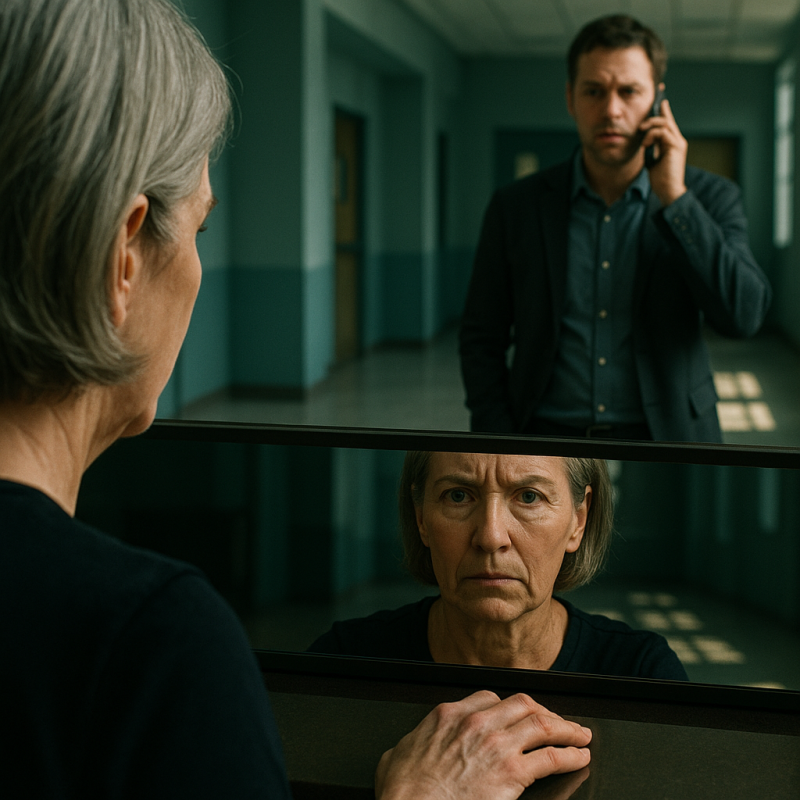 Image by RM AI
The Hidden Room
I went back to the basement late on a Thursday night, after the last guest had checked in and the lobby had gone quiet. I told myself I was just going to look at the documents again, try to make sense of the timeline. But I kept coming back to something that had been nagging at me since the first time I'd been down there — the dimensions felt wrong. The records room was smaller than it should have been. I'd walked the exterior of that part of the building enough times to have a rough sense of the footprint, and the room I was standing in didn't account for all of it. I started looking at the back wall more carefully. The paint was the same, the shelving was the same, but there was a seam near the right side that didn't match the rest of the wall's texture. I pressed along it slowly, working my way down. About two-thirds of the way down, something clicked. A panel swung inward, smooth and quiet, like it had been opened recently. I held my phone up and shone the light into the dark space beyond. Filing cabinets. Boxes stacked along the walls. A room that had no reason to exist and every reason to have been hidden. I stood at that threshold with the light cutting into the dark, and whatever I'd been expecting to find at the end of all this, it hadn't been a room that had been waiting here the whole time.
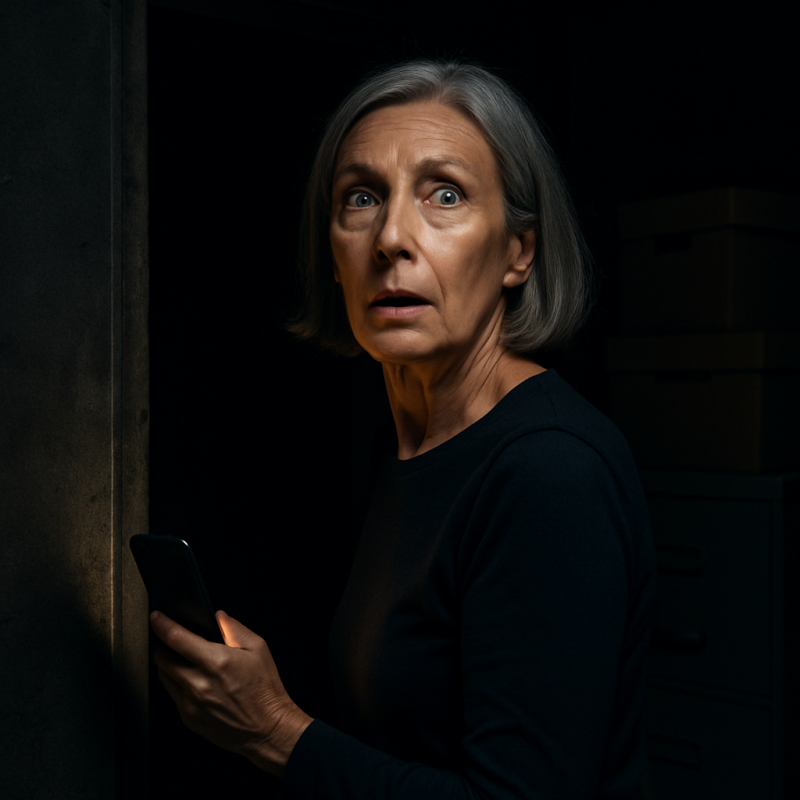 Image by RM AI
Decades of Documents
I stepped inside. The air was stale and cool, the kind of stillness that comes from a space that's been sealed a long time. I went to the nearest filing cabinet and pulled open the top drawer. The first folder I touched held birth certificates — several of them, paper-clipped together. I lifted the top one and read it. The name on it was one I recognized from the county records office, one of the names I'd found attached to two different identities. I set it aside and looked at the next one. This certificate listed a mother named Eleanor. I went still. I'd seen that name in the letters upstairs — Rick's mother. I looked at the father's name on the certificate. The name there was the same one I'd been reading on the hotel's founding documents all week. I stood there in that small hidden room with my phone light shaking slightly in my hand, going back over what I was seeing, making sure I was reading it correctly. I checked it again. The mother's name was Eleanor. The father's name was the same name on the deed. I turned to the next document in the folder, a letter between Eleanor and the founder, the handwriting urgent and close. Then I turned back to the birth certificate and read the name of the child listed on it, and it was Diane Morrison.
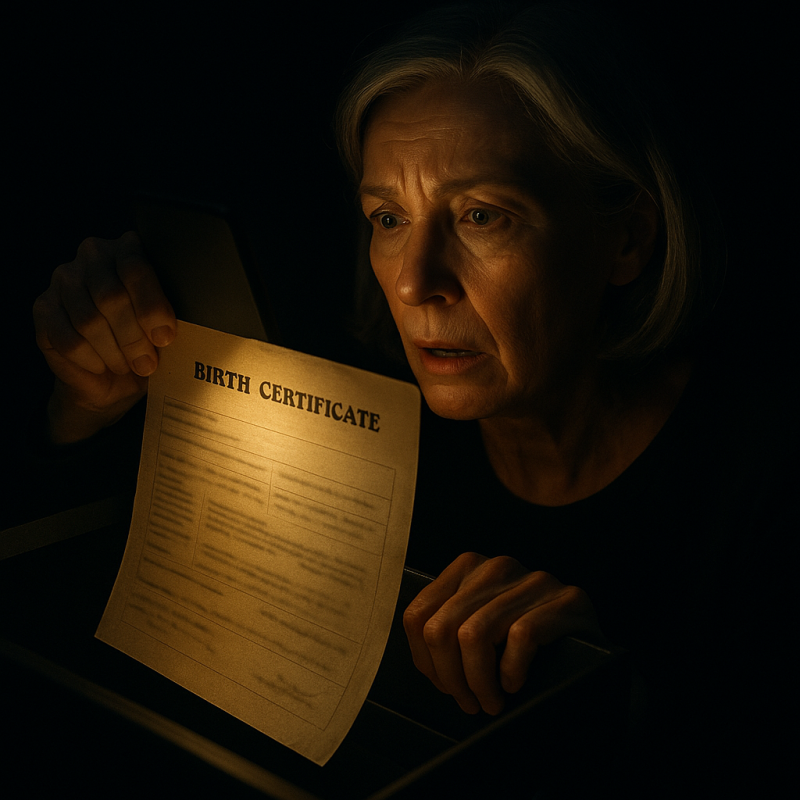 Image by RM AI
The Secret Inheritance
I kept reading. My phone light was steady now — my hand had stopped shaking, replaced by something colder and more focused. Behind the birth certificates was a second folder, thicker, held shut with a rubber band that had gone brittle with age. Inside were bank transfer records, dozens of them, spanning what looked like three decades. The account names meant nothing to me at first — numbered business accounts, vendor codes, the kind of paperwork that looks like routine hotel operations until you start matching dates and amounts. I spread several pages on the floor and worked through them slowly. The early transfers were modest. Quarterly payments routed through what the accompanying notes described as renovation costs and supplier invoices. But the vendor names on those invoices didn't match any of the legitimate suppliers I'd seen in the main office files. Tucked between two transfer sheets was a handwritten letter, the ink faded to brown at the edges. It referenced keeping arrangements private and protecting both parties from questions that couldn't be answered without causing damage. I read that phrase twice. Questions that couldn't be answered. The transfers weren't just moving money — they were moving it in a way that left no visible connection between the two people sending and receiving it. The fraud and the family secret hadn't grown up separately. They had grown up together, each one holding the other in place, and by the time I understood that, I couldn't tell where one ended and the other began.
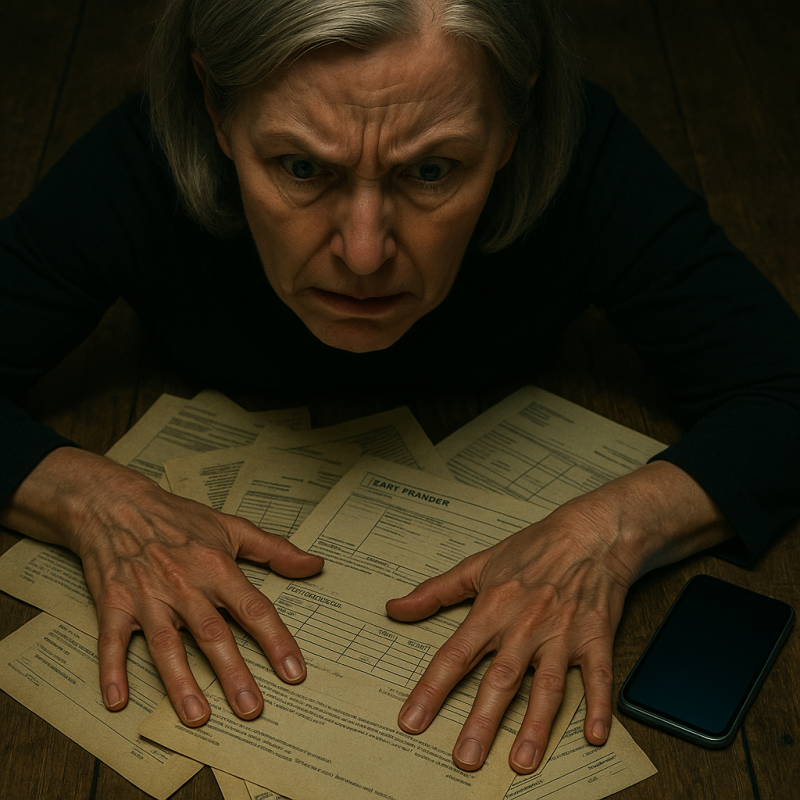 Image by RM AI
Half-Siblings
I sat down on the floor of that small room with my back against the filing cabinet and read every letter I could find. There were maybe a dozen of them, written over years, the handwriting shifting slightly as time passed but the careful, measured tone staying the same throughout. They were addressed between two first names I now recognized. The letters didn't explain everything outright — they were written by people who already knew the full story and were only filling in the edges. But piece by piece the picture came together. Eleanor had been married to another man when she became involved with the hotel's founder. Diane had been born from that relationship and placed quietly, the whole arrangement kept out of public record. Years later, when the truth surfaced, it had torn through the family like something that had been under pressure for a long time. The founder had tried to make it right in the only way he could — through the will. But that left Rick in an impossible position, connected to Diane by blood and by inheritance, unable to claim either without destroying what remained of the family's standing. So they had built a life around the silence. I found photographs near the bottom of the folder — the two of them at what looked like hotel events, standing at careful distances from each other, faces composed. Two people who had spent their entire adult lives in the same building, sharing a secret that had no clean ending, and never once letting it show.
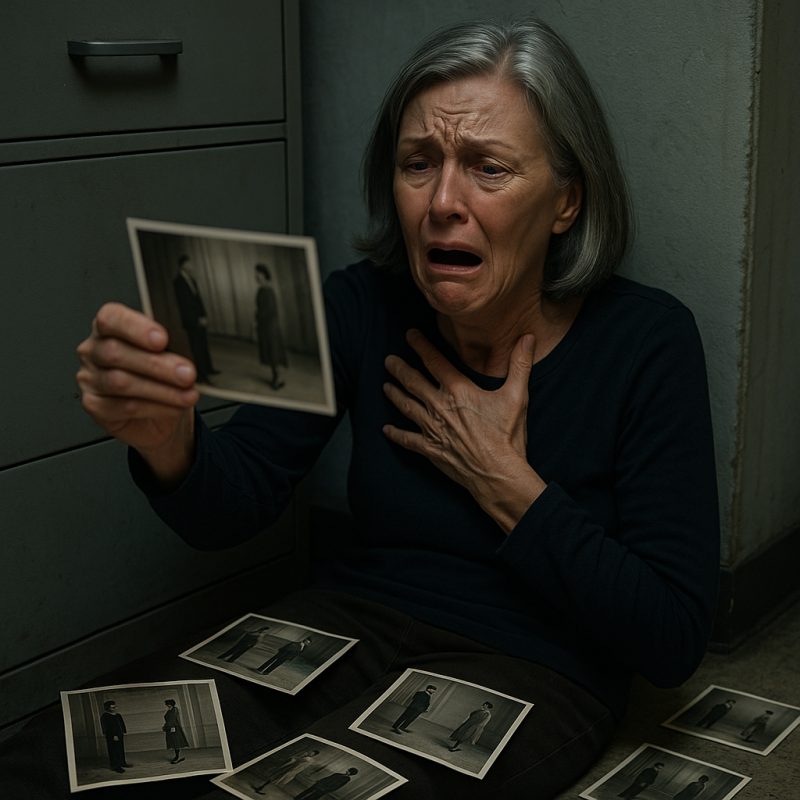 Image by RM AI
The System Exploited
I pulled myself up off the floor and went back to the filing cabinet. The folders in the lower drawer were newer — the paper crisper, the ink darker, the typeface shifting from typed to printed as the years moved forward. I started laying invoices out in rough chronological order along the floor. The early ones matched the pattern I'd already found: modest amounts, the same two account codes, the same handful of vendor names that didn't quite hold up under scrutiny. But somewhere around fifteen years back, the pattern changed. The amounts got larger. Whatever the original arrangement had been between Rick and Diane, it had at some point become visible to other people inside the hotel — and those people had used that visibility. I didn't know yet how many, or how long it had gone on, or how much had moved through accounts that had nothing to do with the family at all. The payments routed to accounts I had no way of tracing from here. I turned to the next page, and then the next, working through the newer folders one by one. Then I found a set of invoices with signatures I didn't recognize at all — names with no connection to the hotel's staff records, no thread back to anything I'd read that night.
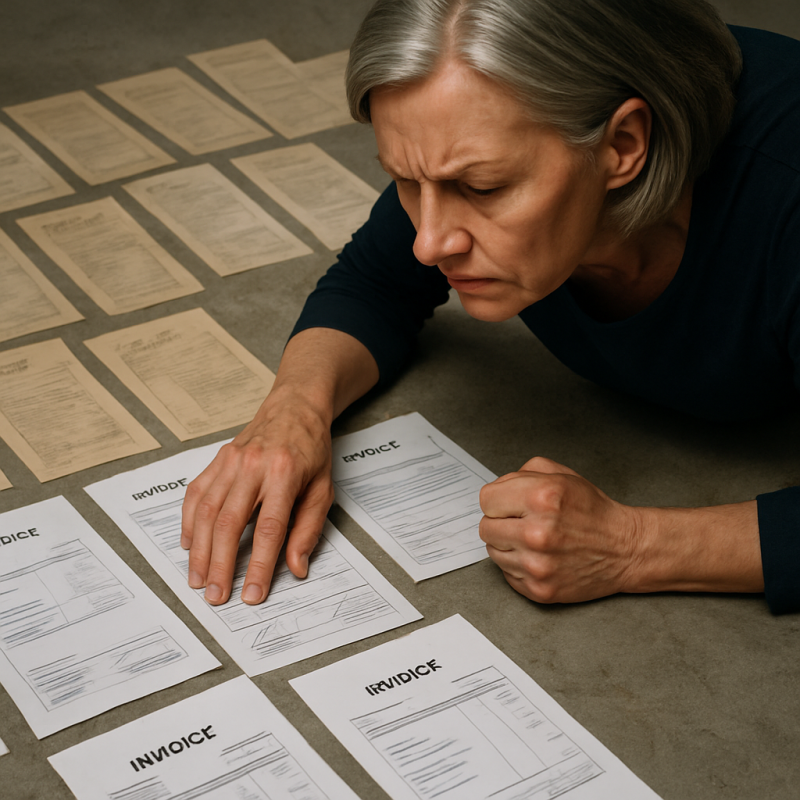 Image by RM AI
Running Out of Time
Near the back of the bottom drawer, behind the invoices, was a single manila folder with the word PERSONAL written on the tab in black marker. I almost set it aside. Something made me open it anyway. Inside was a single document, printed on medical letterhead, dated six months ago. I read Rick's name at the top. I read the diagnosis. Pancreatic cancer, stage four. The prognosis section used careful clinical language but the meaning was plain — less than a year, possibly significantly less. I stood there holding it for a long time. I thought about the past few months. The way Rick had looked in the hallways lately, thinner than I remembered, moving more carefully. The sharpness in his voice when I'd asked questions, which I'd read as anger but now felt like something else I couldn't quite name. I thought about the night shifts, the way they'd started so suddenly, the pattern that had never made sense to me no matter how I turned it over. I thought about this room, this folder, this document sitting here in a place where no one would find it unless they were already looking. I set the other papers down carefully on the floor. My hands were steady. The medical report lay open in my hands, Rick's name printed at the top, the prognosis measured in months.
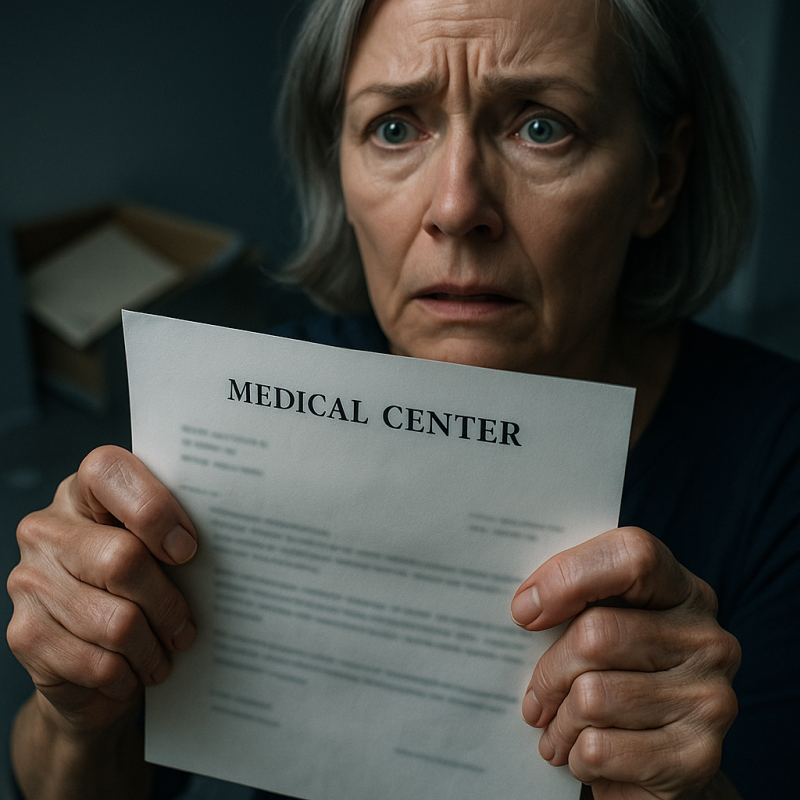 Image by RM AI
He Wanted Me to Find It
I heard the footsteps before I saw the light. Slow, deliberate steps on the basement stairs, and then a flashlight beam sweeping through the outer room. I pressed back against the filing cabinet before I caught myself — there was nowhere to go. Rick appeared in the doorway. He looked at me, then at the papers spread across the floor, then back at me. His expression wasn't angry. It was something closer to relief. I asked him what he was doing here. He said he'd been waiting. Not tonight specifically — waiting for the night I finally found the room. I asked him why he hadn't just told me. He was quiet for a moment. Then he said that people don't believe things they're handed. They believe things they find themselves. He stepped inside and lowered himself carefully onto the old wooden chair in the corner, moving like someone managing pain they'd gotten used to. He told me about the diagnosis. He said he'd spent thirty years protecting a secret that wasn't entirely his to keep, and he didn't want to die leaving it buried where it would never do anything but rot. He said he'd gone through the staff records carefully before he settled on me — someone with a reputation for honesty, someone who asked questions and didn't let them go. He paused, and the room was very quiet. Then he looked at me steadily and said he chose me because he knew I wouldn't stop digging.
 Image by RM AI
Every Obstacle Was a Breadcrumb
I asked him about the anger. The way he'd looked at me in the hallway after I started asking questions, the coldness in his voice, the formal warnings that had felt like threats. He almost smiled. He said if he'd been warm and encouraging, I would have wondered why my manager was suddenly so interested in whether I was poking around in old records. The suspicion had to feel real. He told me he'd written the anonymous notes himself, printed them at the front desk during a late shift and left them where I'd find them on my rounds. The guest with the photograph — he'd arranged that too, had reached out to someone he trusted and asked them to pass it along in a way that couldn't be traced back to him. He'd made sure the basement office door was left unlocked on the nights I was scheduled alone. He'd watched the sign-in logs to track which rooms I'd accessed. He told me he'd asked two employees to keep an eye on my movements — not to stop me, but to tell him how far I'd gotten. I sat with all of that. Every moment I'd thought I was outmaneuvering him, every small discovery I'd been quietly proud of. He watched me work through it. Then he said he'd tracked every piece I'd found, in the order he'd expected me to find them, almost exactly as he'd planned.
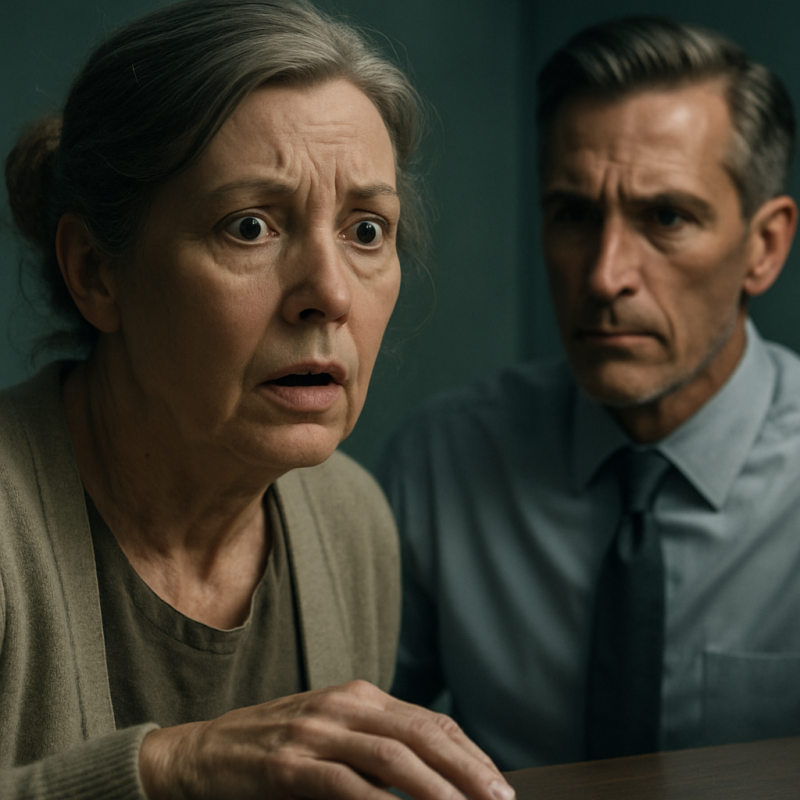 Image by RM AI
The Weight of Choice
I asked him what he expected me to do now. He said that was the one thing he genuinely couldn't tell me. He leaned forward in the chair and walked me through it plainly, the way someone does when they've rehearsed a conversation many times and finally arrived at it. If I went to the authorities, Diane would lose the hotel. Her reputation, her standing, everything she'd built her public life around — gone. The former managers who'd exploited the system would face criminal charges, and some of them were old now, sick, people who'd made bad choices under pressure and then spent years trying to forget them. The current staff — people I worked alongside every day — would likely lose their jobs if the hotel was shut down or seized. He said some of the people who'd reported on my movements were just scared. They weren't protecting a conspiracy. They were protecting their paychecks. He said some people in this were guilty and some were just caught. He told me he was giving me the choice he'd never had — the chance to decide what happened next rather than just surviving whatever came. He said he'd support whatever I decided, and I believed him, which somehow made it worse. I sat in that small room with the documents spread around me and felt the full weight of what he'd placed in my hands, and I had no idea what the right answer was.
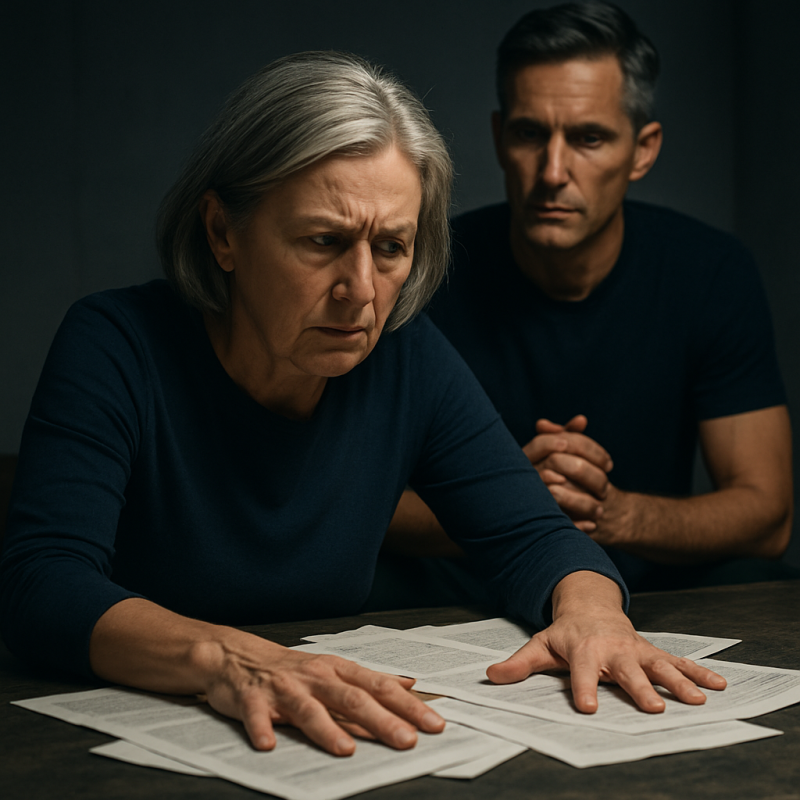 Image by RM AI
Long-Buried Betrayals
Rick sat quietly for a moment, then told me there was more I needed to understand before I decided anything. He said there were people connected to all of this who didn't know the truth — had never known it. Diane's children believed a version of their family history that wasn't real. They'd grown up with a story about who they were and where they came from, and that story had a hole in the center of it that no one had ever told them about. Rick's ex-wife had spent years trying to understand why he'd stayed at this hotel, why he'd never left for something better, why there were parts of his life she could never quite reach. She'd blamed herself, he said, quietly, looking at the floor. Former employees who'd been pushed out over the years — people who'd gotten too close to the records, who'd asked one question too many — still didn't know what they'd almost stumbled into. I asked him if those people deserved to know. He said he'd asked himself that question for thirty years and never found an answer that didn't break something. He said some truths don't set anyone free. They just redistribute the damage. I thought about Diane's children, about Rick's ex-wife sitting somewhere with an explanation she'd never been given, and I understood then that whatever I chose, there were people in this story who would not come out of it whole.
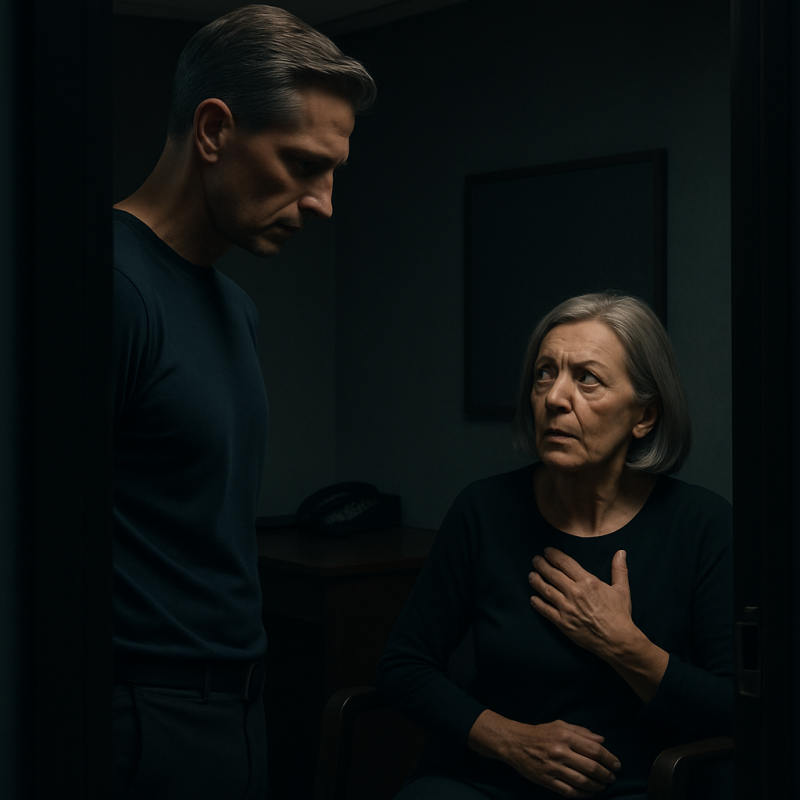 Image by RM AI
Diane Learns
I called Diane the morning after my conversation with Rick and asked if I could come to her home. Not the hotel — her home. She paused for a long moment before she said yes. When I arrived, she was dressed like she always was, composed and careful, but her hands gave her away. She kept smoothing the front of her jacket even when it didn't need smoothing. I sat across from her at her kitchen table and I asked her, as gently as I could, what she knew about her own family history. She looked at me for a moment, then said she'd always known. Her adoptive parents told her when she turned eighteen. She knew she was the founder's daughter. She knew she'd been given up at birth to protect everyone from a scandal. She said she'd made her peace with it a long time ago. She'd accepted the inheritance as what it was — compensation for being hidden. I nodded and told her there was something else. Something she didn't know. I told her about Rick. I told her about his mother, about the same father, about the thirty years he'd spent in that building carrying a secret he'd never shared with her. I watched her face go very still. Then something shifted behind her eyes — a slow, dawning recognition — and she whispered, "He's my brother."
 Image by RM AI
The Town Celebration
I drove back to the hotel that afternoon and the lobby was already being transformed. Staff were stringing banners and arranging tables for the annual town celebration, three days away. It was the kind of event that brought in local business owners, city council members, people who'd been coming to this hotel for decades. I stood in the doorway watching them work and felt something cold settle in my chest. Rick found me there. He said Diane had called him. He asked me to come upstairs. When I walked into his office, Diane was already seated, her eyes red but her posture straight. The three of us sat together for the first time, and Rick told us he'd made a decision. He was going to use the celebration to make a public statement. He was going to tell the truth — about the family history, about the fraud, about all of it. Diane asked if there was another way. Rick said his doctors had moved his timeline up. He didn't have months anymore. He had weeks, maybe less. He said he wasn't willing to die with it still buried. I asked what he needed from me. He said he needed me there, and he needed me to be willing to tell my part of the story if it came to that. I looked at the calendar on his desk, the date of the celebration circled in red marker.
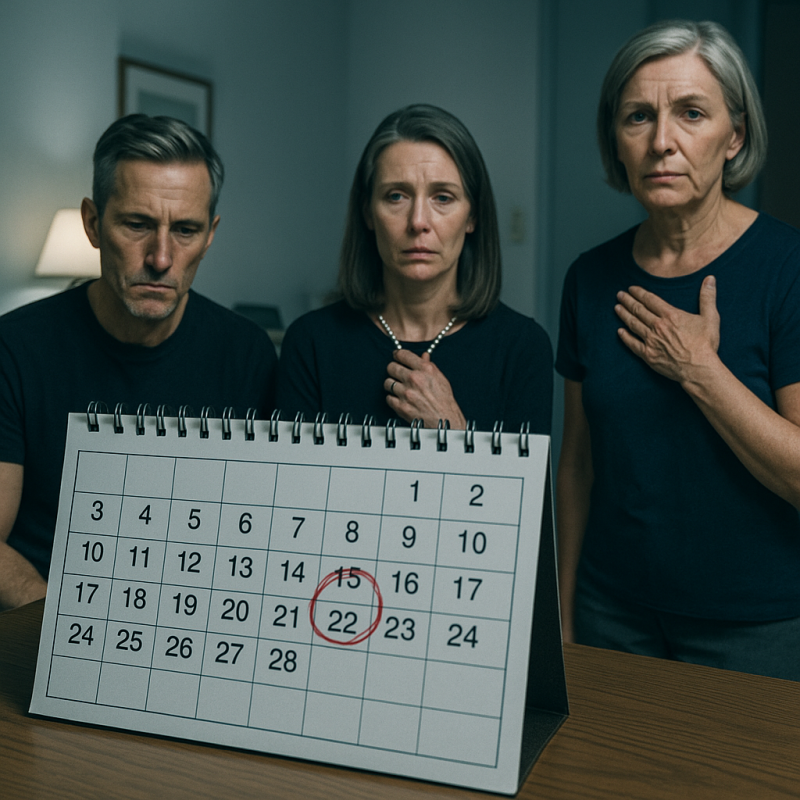 Image by RM AI
The Gathering Storm
I arrived at the hotel two hours before the celebration started. The lobby smelled like fresh flowers and coffee, and the staff moved around me with the easy efficiency of people who had no idea what was coming. I helped straighten a tablecloth that didn't need straightening just to have something to do with my hands. Sarah arrived around noon and found me near the back hallway. She asked if I was sure about this. I told her it wasn't really my choice anymore — it was Rick's, and he'd already made it. She squeezed my arm and stayed close. By early afternoon the room was full. Local officials, business owners, neighbors, people I recognized from years of working the front desk. I saw Margaret near the far wall, standing quietly with a folder tucked under her arm. I saw former employees I hadn't seen in years, people who'd left under circumstances that had never quite made sense to me until recently. Diane stood near the entrance greeting guests, her smile intact, her eyes somewhere else entirely. Rick was still in his office. The first round of speeches began, and the room filled with the ordinary sounds of a community gathering — laughter, applause, the clink of glasses. I stood at the edge of it all and felt the weight of what was about to happen settle over everything, quiet and absolute.
 Image by RM AI
The First Revelation
Rick came out of his office about forty minutes into the celebration. I saw him before most people did — moving slowly through the edge of the crowd, more carefully than I'd ever seen him move. Someone handed him the microphone during a natural pause between speakers, and the room gave him its attention the way it always had, out of habit and respect. He thanked everyone for coming. He said he had an announcement. His voice was steady. He told the room he was the biological son of the hotel's founder. A few people laughed, thinking it was a joke. Then they looked at his face and stopped. He explained that his identity had been hidden because of a family scandal decades ago, that he had grown up knowing who his father was but never being allowed to say so. He told them he had been diagnosed with terminal cancer six months ago. He said he didn't have much time left, and he had decided he wasn't going to spend what remained of it protecting secrets that had already done enough damage. He said he had spent his entire adult life in this building, and the people in this room deserved to know the truth about it. I watched from the back wall as the crowd absorbed what he was saying. The laughter was completely gone. The room had gone so quiet I could hear the ventilation system running overhead.
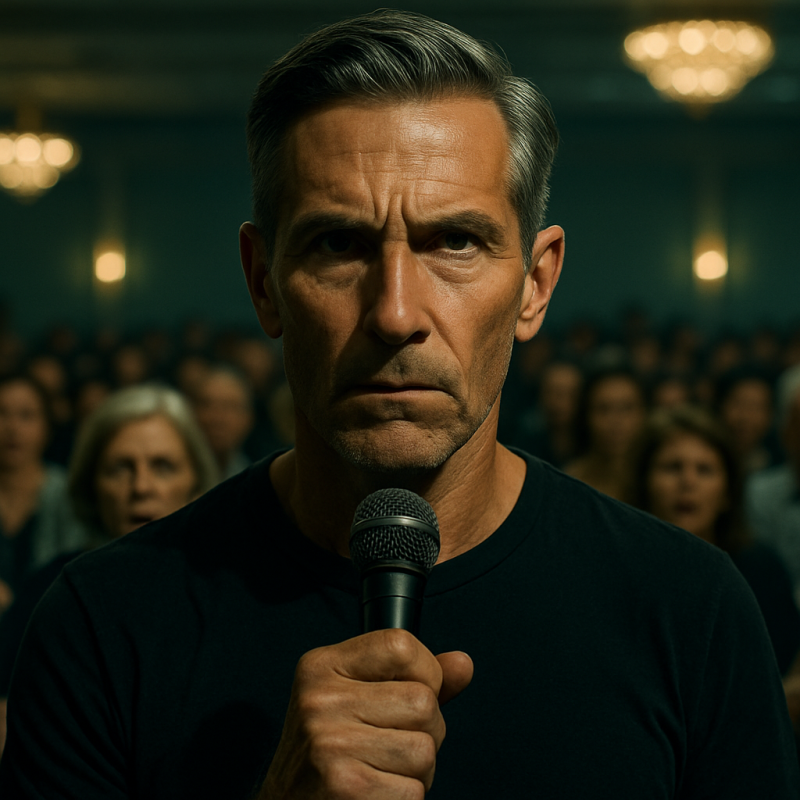 Image by RM AI
Unexpected Allies
The silence held for maybe ten seconds after Rick finished speaking. Then Margaret stood up. She didn't raise her hand or wait to be called on — she just stood, and the room turned toward her. She said she'd worked at the hotel for fifteen years. She said she'd been asked to resign quietly after she started asking questions about financial records that didn't add up. She said she'd kept copies of what she found, and she set the folder she'd been carrying on the nearest table. A man I recognized from the early years of my own tenure stood up next. He said he'd been offered a severance package that felt more like a warning than a gift. Then a woman near the front described being told her position was being eliminated the same week she'd asked her supervisor about a vendor invoice that didn't match any service she could account for. One by one, people who had been quiet for years found their footing and spoke. I stood against the back wall and felt something I hadn't expected — not triumph, not relief exactly, but something closer to recognition. These people had been carrying pieces of the same story I'd been trying to understand for months. Rick stood at the front of the room and nodded as each person spoke, and I could see what it cost him and what it gave him at the same time. Diane had her hand pressed flat against her sternum, and she didn't move.
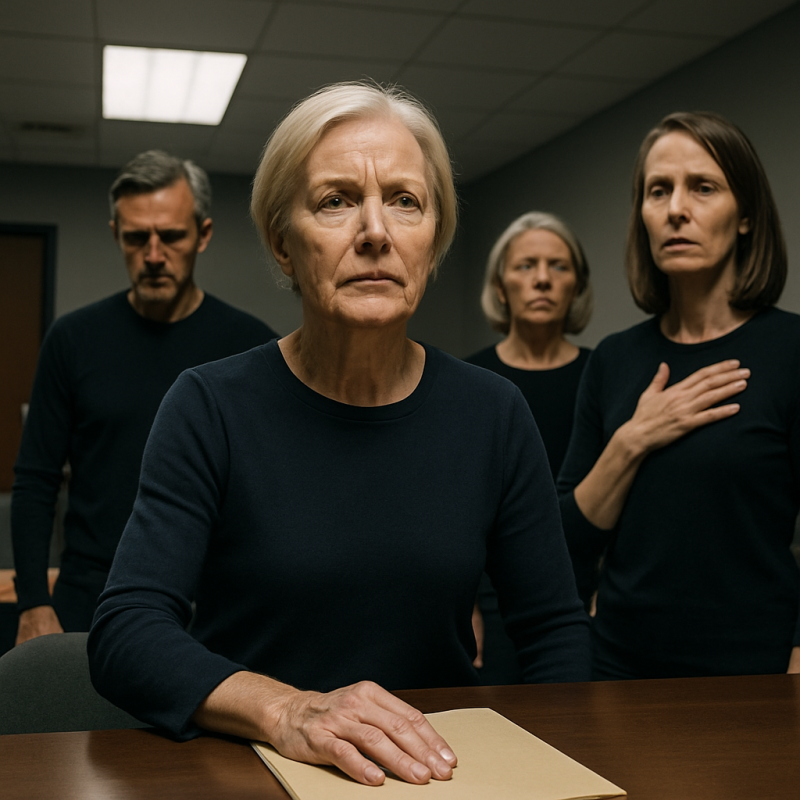 Image by RM AI
Hidden Motives Exposed
Rick took the microphone again after the last former employee sat down. He said there was more. He told the room that Diane was his half-sister — that they shared the same father, the hotel's founder, and that neither of them had known about the other until very recently. The crowd turned toward Diane in a single slow movement, the way a field of grass shifts when the wind changes direction. Rick explained that the financial arrangement at the heart of the fraud had begun as a way to quietly route inheritance money to Diane without triggering the public scandal their father had spent his life avoiding. He said he had participated in it. He said he was not asking for absolution. He named two former managers who had seen the arrangement and used it as cover for their own theft, and he described specific invoices, specific accounts, specific years. He said he had already been in contact with authorities and had provided documentation. Officer Martinez, who I now realized had not come to the celebration as a guest, stepped forward from near the side door. Rick handed him a thick folder without ceremony. The officer said a formal investigation would be opened and that anyone with additional information should come forward. The room erupted into overlapping voices. I looked toward the back where Diane had been standing, and every face in the crowd had turned the same direction I had.
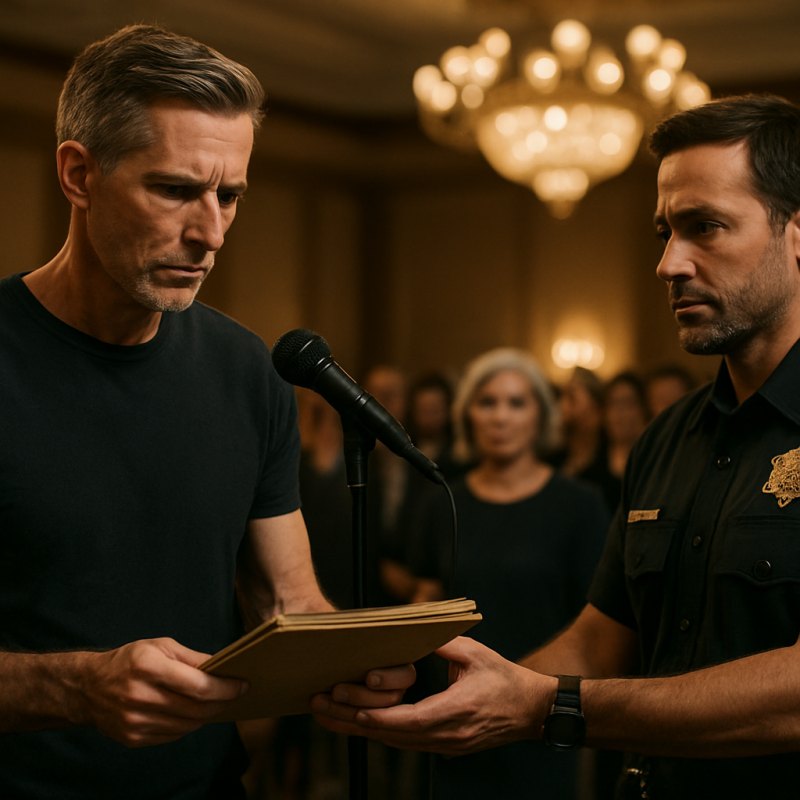 Image by RM AI
The Choice Forty Years Ago
Diane walked to the front of the room without being asked. Someone handed her the microphone and she held it with both hands. She told the crowd she had learned Rick was her brother three days ago, sitting in her own kitchen. Her voice was steady but her eyes were wet. She said her mother had given her up at birth — not out of cruelty, but because Rick's mother Eleanor had arranged it to protect everyone involved. Eleanor had been having an affair with the founder while married to another man. When Diane was born, Eleanor helped place her with an adoptive family, believing it was the kindest thing she could do. Years later, when the affair became public and the scandal broke, the founder had wanted to make amends. He wanted to leave everything to Diane. But that would have meant leaving nothing to Rick, who had done nothing wrong and knew nothing about any of it. Diane said both mothers had spent years trying to find a solution that didn't destroy either child. The money arrangement was what they arrived at — a way to honor both inheritances without forcing either family into the open. She said it was wrong. She said it had been corrupted by people who came later and saw an opportunity. But she wanted the room to understand where it had started. She looked out at the crowd and said, "Two mothers were trying to protect their children. That's where all of this began."
 Image by RM AI
Consequences Unfold
The room didn't go quiet after Diane finished. It fractured. I could hear it happening — voices rising in different registers, some sharp with anger, some low and uncertain. A man near the front said loudly that sympathy didn't cancel out fraud. A woman two tables over said she'd known Eleanor and that none of this surprised her. Officer Martinez moved through the crowd with the quiet efficiency of someone who had done this before, speaking to people individually, collecting names. Ellen found me near the back hallway. She said she was sorry for what she'd reported to Rick about my movements, that she'd been scared of losing her job and hadn't known how to say no. I told her I understood, and I meant it. Tom appeared a few minutes later, looking like he hadn't slept in days. He said the same thing in fewer words. I told him the same thing. Sarah appeared at my elbow and pulled me into a hug without saying anything. Rick had sat down in a chair near the podium and wasn't moving much, but something in his face had loosened. Diane was surrounded by people, some asking questions, some just standing close. Margaret was talking to Officer Martinez with her folder open on the table between them. I stood in the middle of all of it and watched the room try to figure out what it believed, and I thought — this is what it looks like when the truth finally comes out, and nobody gets to decide in advance what it costs.
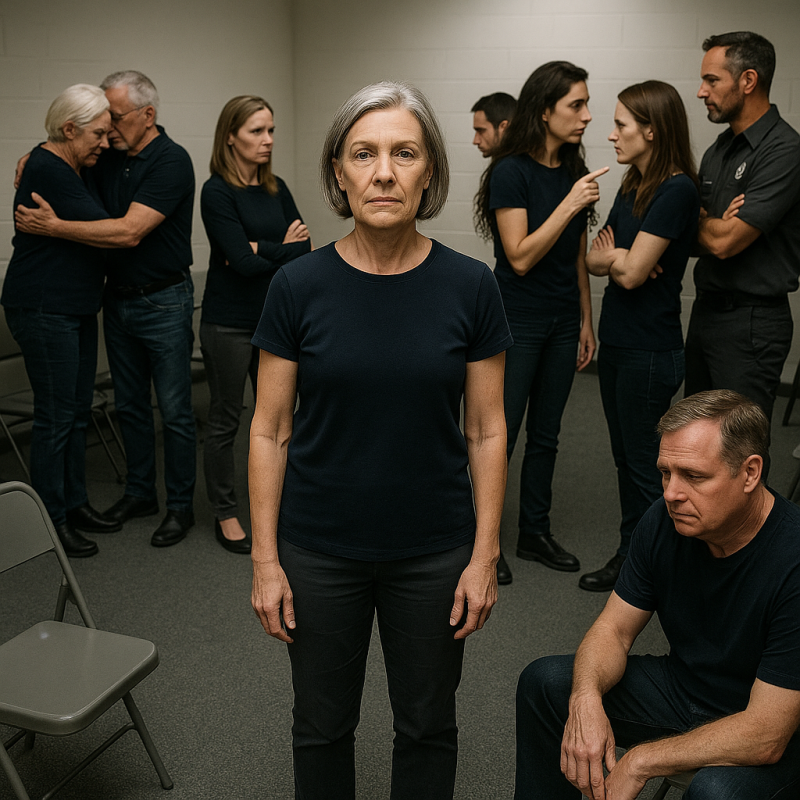 Image by RM AI
Accountability
The weeks after that meeting moved fast and slow at the same time. Officer Martinez came back twice with a forensic accountant, and Rick and Diane handed over everything — bank records, transfer logs, internal memos going back years. They didn't fight it. They didn't lawyer up and stonewall. They sat at the table and answered every question. Three former managers were charged with embezzlement and fraud. The amounts they'd taken beyond the family transfers were significant — money skimmed from payroll, from vendor accounts, from the hotel's maintenance fund. People who had worked there for years and trusted the place had been quietly robbed. Those three were looking at real prison time, and nobody in the room seemed inclined to argue otherwise. Rick and Diane faced civil penalties. The prosecutor was direct about it: the original arrangement between them was unethical, a mess of secrecy and bad judgment, but it wasn't criminal. The money they'd moved between themselves as siblings was treated as a family matter. Rick agreed to pay restitution for enabling the broader scheme. Diane brought in outside auditors and committed to settlements for the employees who'd been pushed out. The hotel stayed open. Rick looked tired in a way that went past exhaustion, but when the prosecutor acknowledged the distinction between what he'd done and what the others had done, something in his posture shifted — his shoulders dropped, and he let out a breath he seemed to have been holding for a very long time.
 Image by RM AI
Families Repair
I visited Rick at his house about six weeks after the proceedings wrapped up. Diane answered the door. She looked different outside the hotel — quieter, softer around the edges. She led me into the living room where Rick was sitting in a recliner near the window, a hospice nurse moving quietly in the background. On the coffee table between them was a spread of old photographs, some black and white, some faded color. Rick introduced me to two of his adult children who were there, and they shook my hand with the careful politeness of people still figuring out what to feel. Diane said they were trying to learn each other while there was still time. She said she wished they'd had years instead of months, but that she was grateful to finally know her brother. Rick smiled at that — a real one, not the careful professional expression I'd seen for years behind his desk. I told them I was glad they had each other now, and I meant it without reservation. Sarah had been coming around more since everything happened. We talked one evening on my back porch about honesty and what it costs and why it matters anyway. She said she understood now why I couldn't walk away from it. I didn't have a tidy answer for her. I just told her the truth was the only thing I knew how to follow. The warmth between us that night felt like something that had always been there, finally given room to breathe.
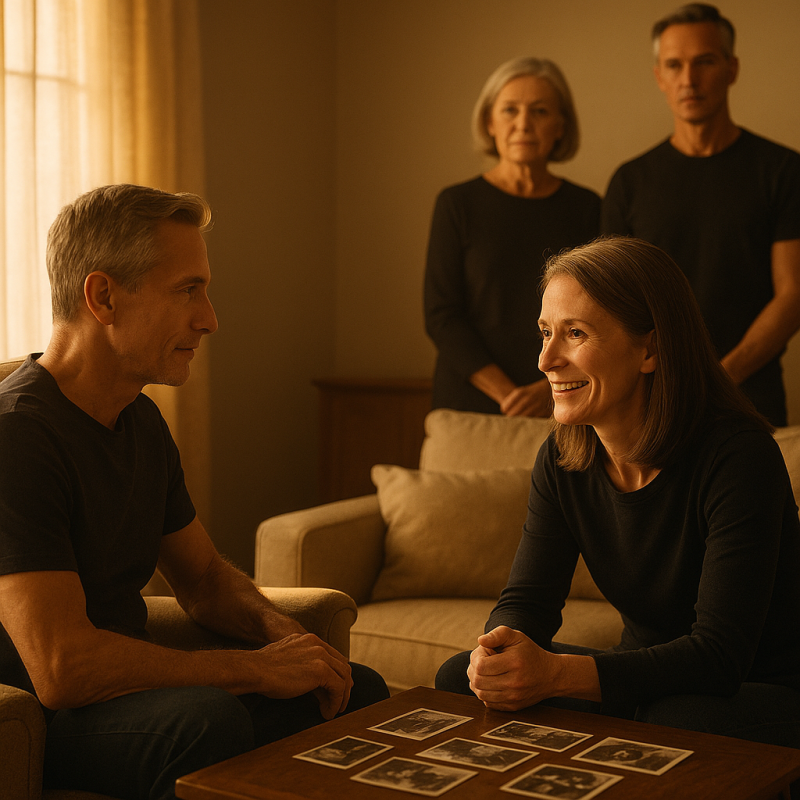 Image by RM AI
New Leadership
Diane brought in a professional management company about two months after the auditors finished their work. She stayed on as owner but stepped back from daily operations, and the new managers came in with transparent accounting systems and a staff training program on ethical business practices that nobody rolled their eyes at, because everyone had seen what the alternative looked like. They offered me the assistant manager position on a Tuesday afternoon in the small conference room, and I sat there for a moment before I said yes. Ellen found me in the break room the following week and told me I'd been braver than any of them. She said it plainly, without dressing it up, and I believed her because I knew what it had cost her to say it. Tom stopped by my desk and said he wished he'd stood with me from the beginning. I told him I understood why he hadn't, and I did. The hotel's reputation came back slowly, the way reputations do — one good review at a time, one returning guest at a time. When the local business association invited me to speak at their ethics conference, I almost said no. Margaret was in the third row when I got up to the podium. I told the room that asking questions isn't heroic — it's just what you do when something doesn't add up and you can't make yourself stop caring. Margaret caught my eye afterward and nodded once, and that single nod settled somewhere in my chest and stayed there.
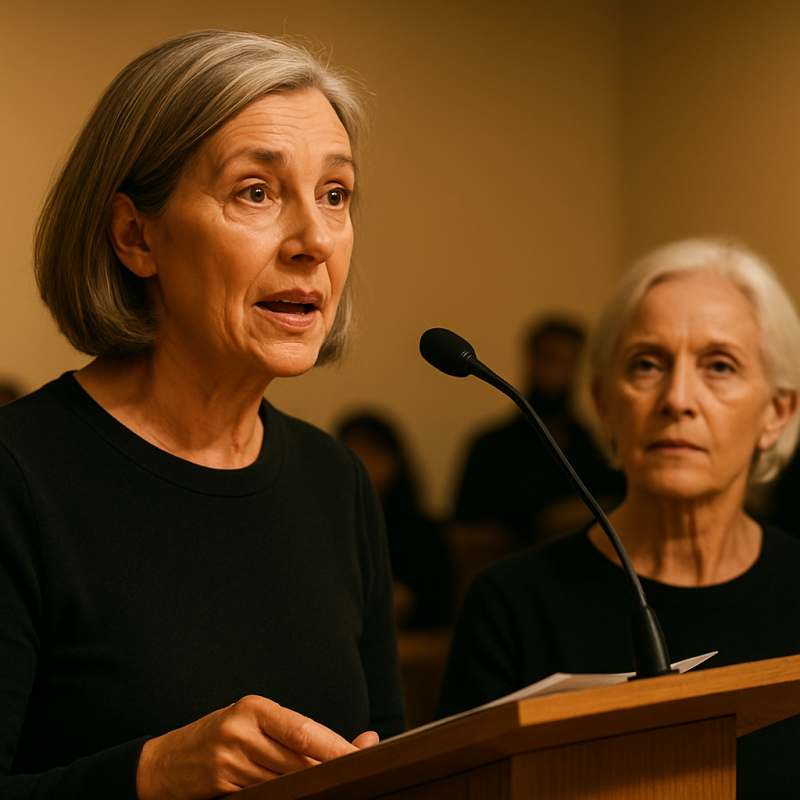 Image by RM AI
Where Truth Was Waiting
I work day shifts now, mostly. But sometimes, walking through the lobby in the early morning before the guests come down for breakfast, I think about those nights alone. The quiet of it. The way the building felt different when nobody was watching. Rick passed away two months after the revelation, peacefully, at home, with Diane and his children around him. His obituary told the truth about who he was — a complicated man who made bad choices and then, at the end, chose differently. I attended the funeral with Diane and stood near the back. I visited the hidden room one last time before the new managers had it sealed and converted into storage. I stood in the doorway for a while. I thought about all the people who had found that room over the years — the ones who walked away, the ones who were pushed out, the ones who never said a word. I thought about why I stayed when it would have been so much easier to let it go. Courage isn't the absence of fear. I know that now in a way I didn't before. It's being afraid and doing the right thing anyway, one small step at a time, because the alternative is living with the knowledge that you looked away. Sarah called me that evening and asked how I was doing, and I told her honestly that I was okay — better than okay. The overnight shift was never cursed. It was simply where the truth had been waiting, in the dark, for someone willing to turn on the light.
 Image by RM AI