I Took the Rusty Key From the Trash While My Cousins Fought Over Diamonds—They Called Me an Idiot Until I Used It
I Took the Rusty Key From the Trash While My Cousins Fought Over Diamonds—They Called Me an Idiot Until I Used It
The Appraisal Documents Arrive
I pull up to the house twenty minutes after the appointed time and Marcus's car is already in the driveway, which tells me everything I need to know about how this afternoon is going to go. I can hear them before I even get the front door open — Marcus's voice carrying through the entryway like he's addressing a courtroom, Vanessa's cutting back in sharp and precise. I step inside and stay near the doorway, one hand still on the frame. Neither of them looks up. Marcus is gesturing at something on the sideboard, his arm sweeping wide the way it does when he's building toward a point he's already decided on. Vanessa has her arms crossed and her chin lifted, which is her version of patience. They're arguing about priority — who gets first selection, who put in more time, who loved the deceased more, as if that's a thing you can rank and document. I don't say anything. I've been in this house a hundred times when it was quiet, when the only sounds were the refrigerator hum and the clock in the hallway. Standing here now, I notice mostly the weight of their voices filling rooms that used to hold a different kind of air.
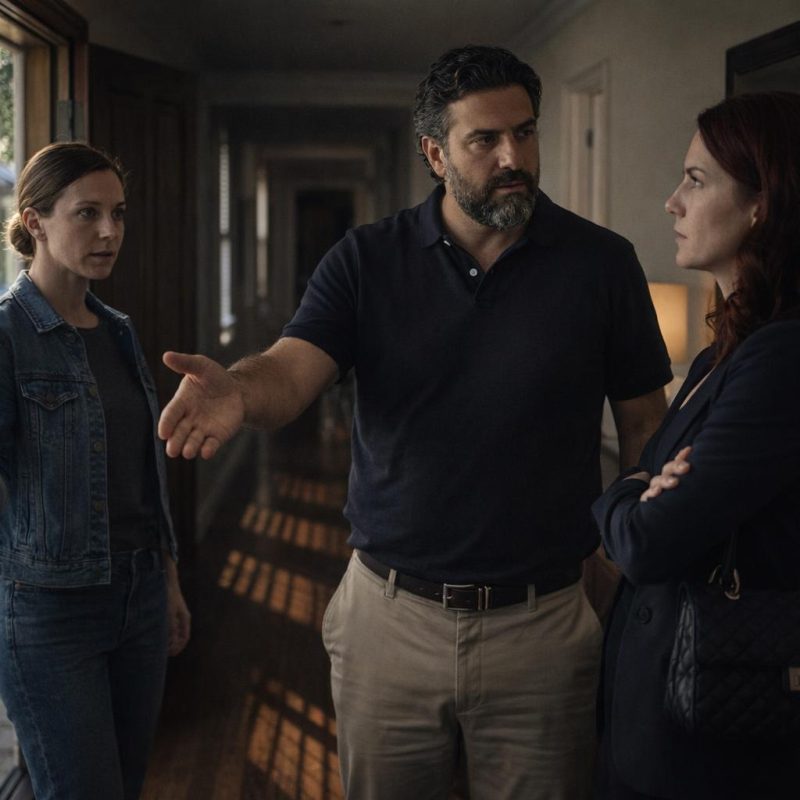 Image by RM AI
Vanessa Stakes Her Claim
Vanessa makes her case the way she makes all her cases — with receipts, metaphorical and otherwise. She visited every other Sunday for the last three years, she says. She was the one who drove to the pharmacy, who sat through the long appointments, who remembered birthdays and brought the right flowers. Marcus snorts and says proximity isn't the same as closeness, which is rich coming from someone who showed up twice last winter and both times left before dinner. They go back and forth like this, each one stacking evidence, neither one listening. I've drifted into the adjacent room by now, close enough to hear but far enough that no one can reasonably expect me to weigh in. The dining room table has been cleared of everything that used to live on it — the lace runner, the ceramic bowl, the stack of old magazines — and in their place, someone has laid out the jewelry. Velvet cases, maybe a dozen of them, arranged in two loose rows across the full length of the table.
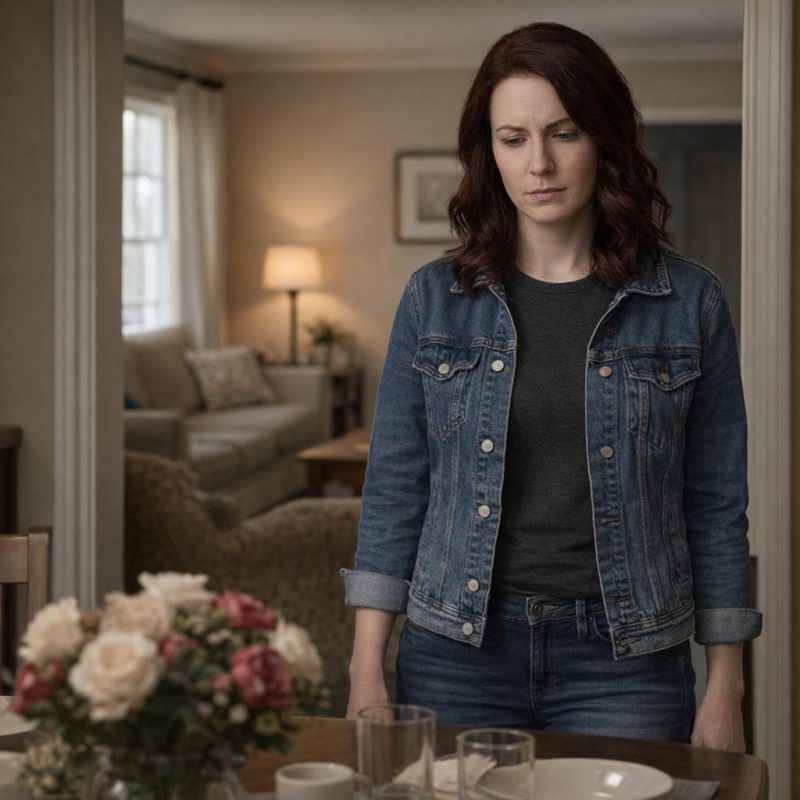 Image by RM AI
Patricia Brings Order
Patricia comes through the front door without knocking, which is her right as executor and also just her way. She's carrying a clipboard under one arm and a manila folder thick enough to suggest she's been at this longer than any of us. The reading glasses are already on the chain around her neck, swinging slightly as she sets everything down on the sideboard and opens the folder without preamble. She explains the process in the tone of someone who has explained it at least twice already today — appraisal documents for each item, a legal framework for division, a timeline that is not negotiable. Marcus starts to interrupt and she holds up one finger without looking at him, which works. Vanessa goes quiet too, though her jaw stays tight. I watch Patricia from across the room and notice the way she holds her shoulders — up near her ears, like she's bracing for something she knows is coming. She's tired in a way that has nothing to do with the hour. She flips to the second page of the appraisal report and begins reading item numbers aloud, and the room settles into something that passes for order, the formality lying over everything like a thin coat of dust.
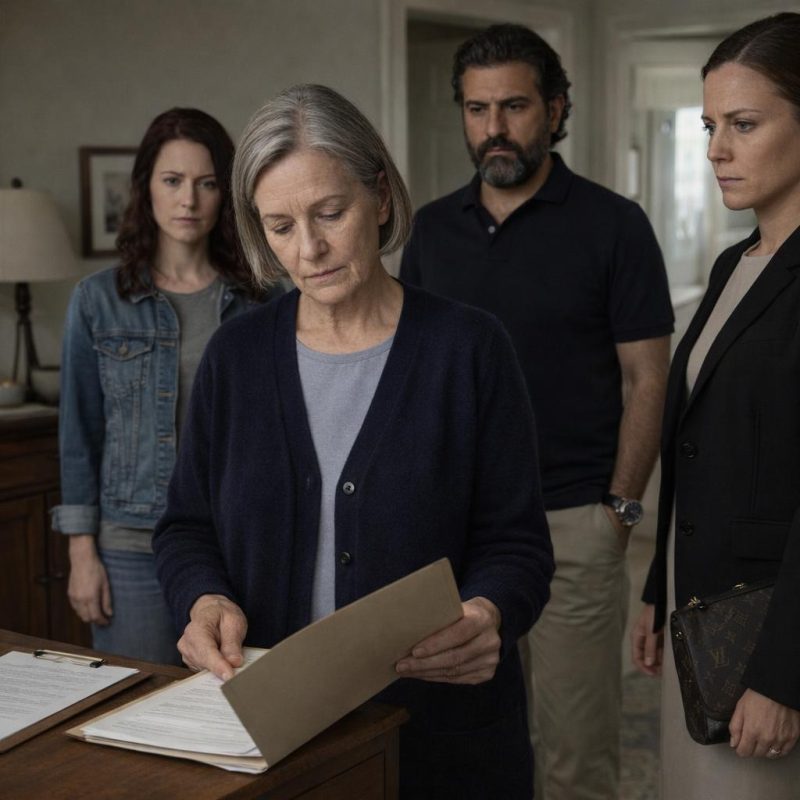 Image by RM AI
The Diamond Bracelets
Marcus picks up the first bracelet like he's already decided it belongs to him, turning it under the light, squinting at the stones. Vanessa reads the appraisal value off the document in a flat voice — four thousand, eight hundred — and then sets the paper down with the particular care of someone who wants you to know they're being very controlled right now. They start working through the cases methodically, which I'll give them credit for, though the methodology is entirely about maximizing individual take rather than anything resembling fairness. Patricia stands at the corner of the table with her clipboard, pen ready, recording whatever they agree on. I've moved to the window. The backyard looks the same as it always did — overgrown along the fence line, the old birdbath still tilted slightly to the left. Inside, the numbers keep coming: six thousand, two-two, thirty-one hundred. Vanessa names a figure for the last bracelet in the row, a number that lands in the room and just sits there while Marcus stares at the ceiling and everyone waits to see what he'll do with it. The silence after she says it has a particular texture to it, like the air before a decision gets made.
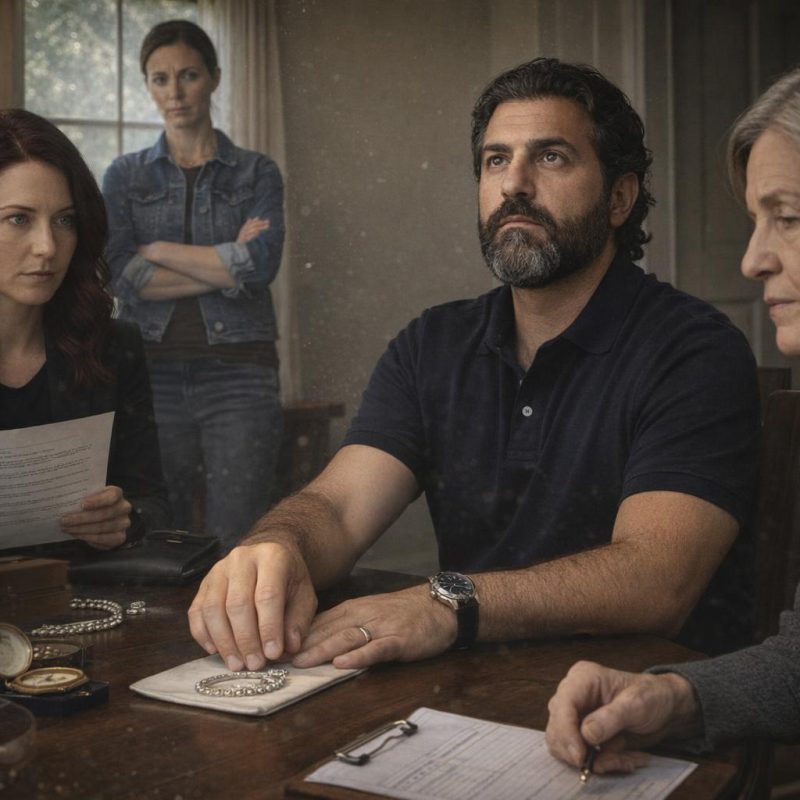 Image by RM AI
The Gold Watches Surface
Patricia unwraps the watches from their cloth the way you'd handle something fragile, which they are, though not in the way she means. Three of them, laid out in a row on the cleared end of the table — gold cases, leather straps on two of them, a metal bracelet on the third. Marcus reaches for the largest one before she's finished setting it down. Vanessa says his name in a tone that means don't, and he says he's just looking, and she says that's what he said about the Rolex at their grandmother's estate and they both know how that ended. Patricia writes something on her clipboard. I've been drifting toward the kitchen doorway for the last ten minutes, drawn by the general principle that I'd rather be somewhere else. The argument picks up speed the way these things do — each exchange a little louder than the last, the logic getting thinner as the volume climbs. I'm almost through the doorway when Marcus's voice jumps two full levels, sharp enough that I stop where I am.
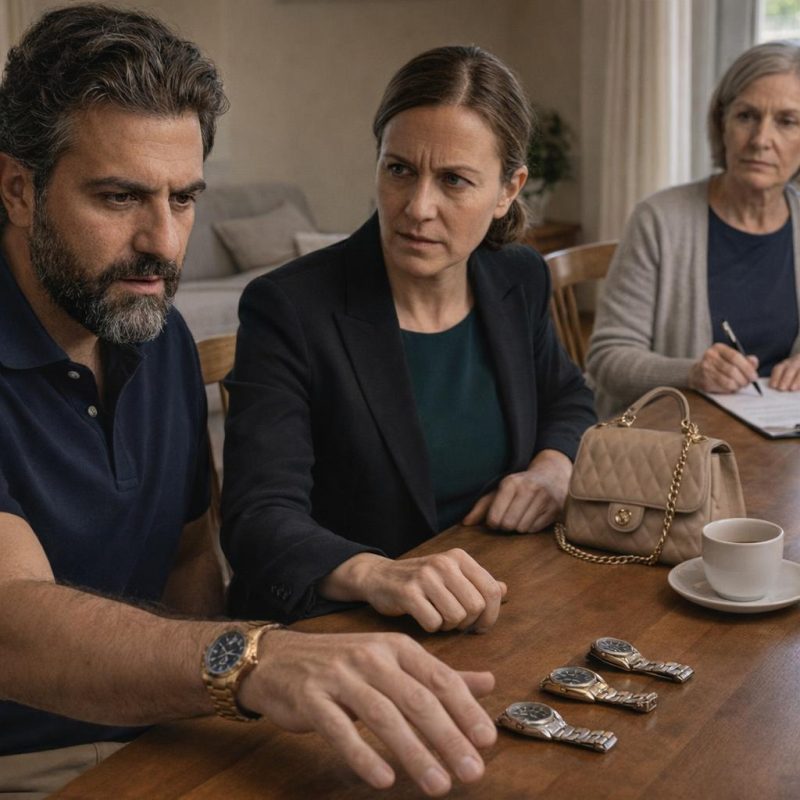 Image by RM AI
The Division Proposal
It takes another twenty minutes and a lot of Patricia's clipboard space, but they get there eventually. Marcus proposes splitting by total appraised value — each person walks away with an equal dollar amount, regardless of which specific pieces they take. Vanessa agrees in principle and then immediately starts adjusting for what she calls sentimental items, which turns out to mean any piece she wants that Marcus also wants. They go back and forth on three specific items for longer than seems reasonable, and then they reach a compromise that leaves both of them looking like they swallowed something unpleasant. Patricia records it all without comment, which I respect. I'm still standing at the kitchen threshold, leaning against the doorframe with my arms loose at my sides. There's something almost theatrical about watching the two of them negotiate — the careful language, the strategic pauses, the way each concession gets framed as generosity. Vanessa takes Patricia's notepad and writes the final division out in her own handwriting, pressing down hard with the pen, each item listed in a column with a name beside it.
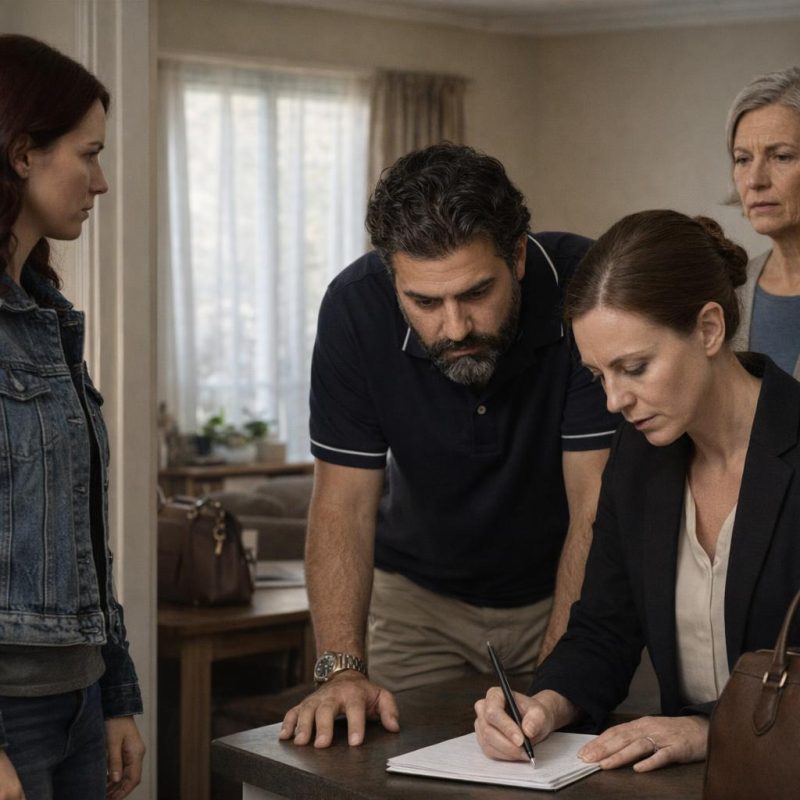 Image by RM AI
Room Assignments
Patricia calls us all back into the front room and reads the room assignments off her clipboard like she's running a hotel check-in. Marcus gets the study and the master bedroom — the rooms most likely to contain anything else of value, which I'm sure is not lost on him. Vanessa takes the living room and the two guest rooms, which gives her the most square footage and the best lighting, which also seems intentional on her part. They both nod and head off without much discussion, already moving like people who've been given permission to do what they were going to do anyway. Patricia looks at her list, then looks at me, and there's something in her expression that might be an apology or might just be fatigue — it's hard to tell with her. She says the kitchen and the pantry still need to be cleared, and that it's a lot of cabinet space, and that she thinks I can manage it on my own. I tell her that's fine. She nods and moves on to her next item. I hear her say the kitchen is all mine.
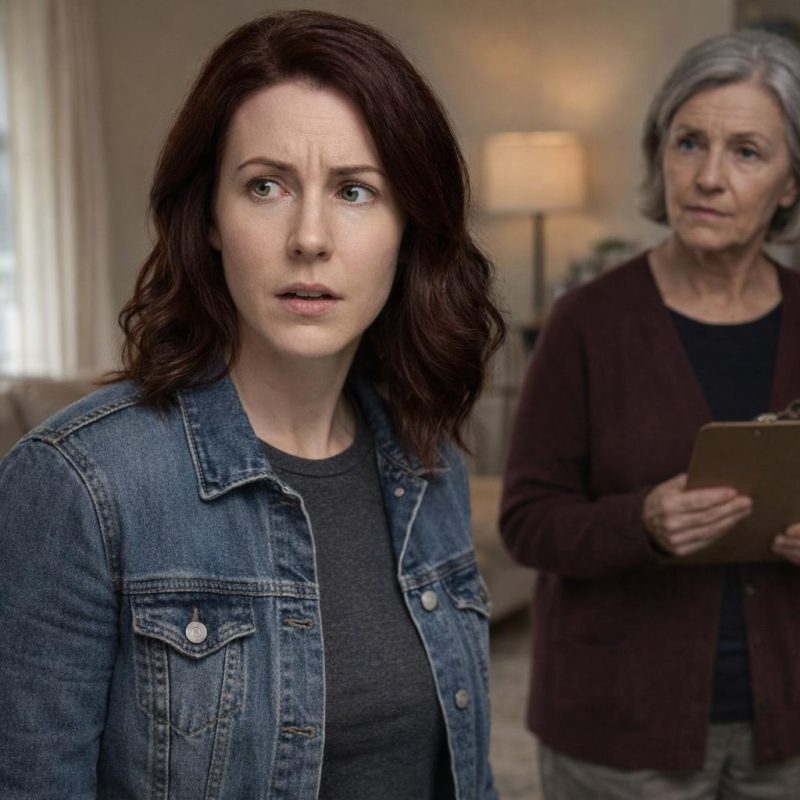 Image by RM AI
Alone in the Kitchen
I push the kitchen door most of the way closed behind me and the noise from the rest of the house drops by half. Upstairs, I can hear Marcus moving around — footsteps, the occasional thud of a drawer being pulled open too fast. Vanessa's voice floats down from somewhere, talking to herself or on the phone, I can't tell which. In here it's different. The kitchen smells like old wood and something faintly herbal, dried out and faded, the ghost of whatever used to hang in the window. I stand in the middle of the room for a moment and just look at it — the cabinets running along two walls, the deep pantry door standing slightly open, the row of drawers beside the stove. There's a lot of it. I start at the far left and work my way across, pulling each drawer open slowly, taking stock before I touch anything. Most of it is ordinary: utensils, rubber bands, a flashlight with dead batteries, takeout menus from places that have probably closed. I keep going. The quiet settles around me like old air.
 Image by RM AI
Sorting Through Drawers
I pull the first drawer all the way out and set it on the counter so I can see everything at once. A tangle of rubber spatulas, a meat thermometer with a cracked face, three wooden spoons worn down to pale nubs. I sort them into two piles — one for the donation box, one for the trash bag — and slide the drawer back in. Then the next one. Measuring spoons still on their ring, a garlic press, a can opener that actually works. I put those in the donation box. The rhythm of it settles in quickly: pull, look, sort, close. There's something almost restful about work that has clear rules. Nothing in here requires a decision more complicated than keep or discard. The voices upstairs are still going — I can hear Marcus's tone rising and falling, Vanessa's sharper replies cutting through — but in here it's just the soft scrape of drawers and the rustle of plastic bags. I work my way along the wall, drawer by drawer, and the kitchen gets a little quieter with each one I finish, the clutter thinning out into something more orderly. By the time I reach the last drawer on the far wall, my hands have found their own pace.
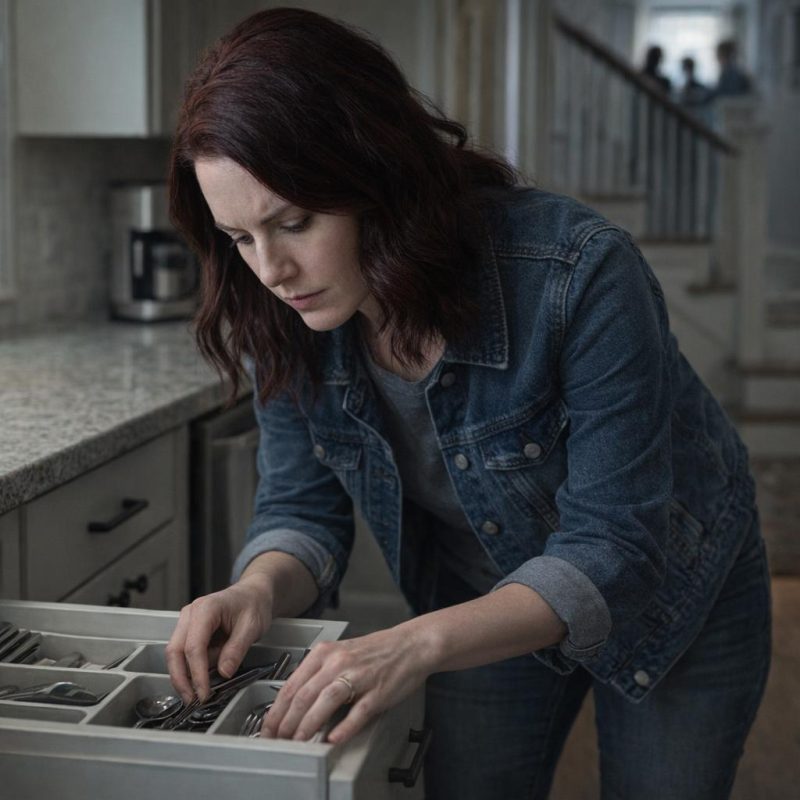 Image by RM AI
The Trash Bags Fill
The first trash bag fills faster than I expect. Broken things mostly — a colander with a cracked handle, a set of measuring cups missing two of the four, a grater so rusted along the bottom edge it would shred your knuckles before it shredded anything else. I tie it off and start the second one. That fills too: expired spice packets, a stack of takeout menus soft with age, a drawer organizer that's cracked down the middle and won't hold its shape. I tie that one off and lean it against the wall beside the first. The junk drawer is last. It's the worst one, the way junk drawers always are — batteries that might be dead, twist ties, a handful of mystery screws, a birthday candle still in its wrapper. I sweep it all in. Rubber bands. A broken pen. Something wrapped in a dish towel that I drop in without unwrapping because it clinks like it's already in pieces. I pull the bag up to tie it off, and that's when I feel it — a shift in the weight, something dense rolling slow and deliberate toward the bottom, heavier than anything I remember putting in.
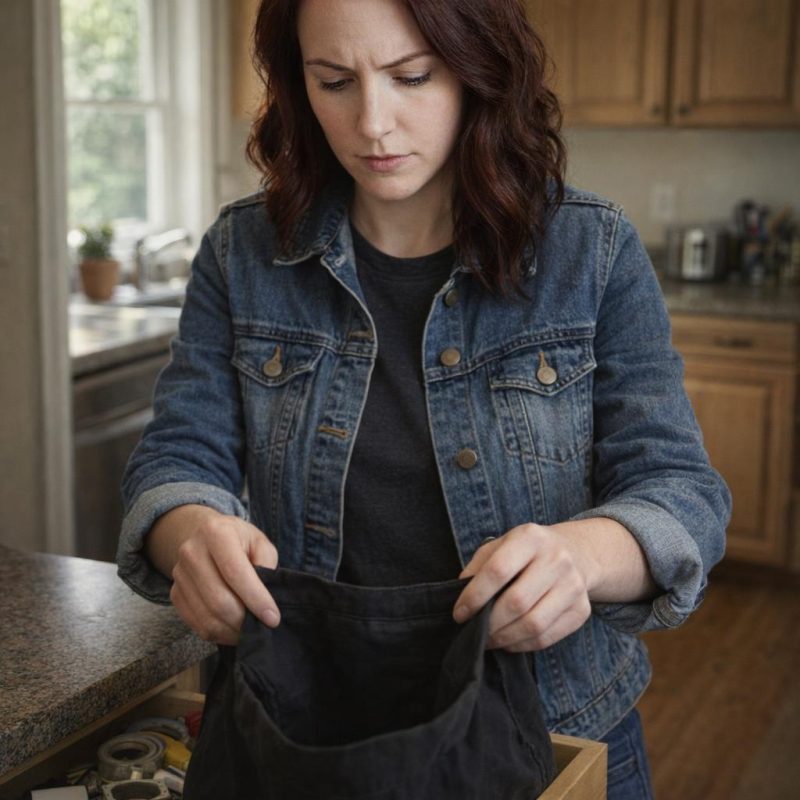 Image by RM AI
The Heavy Object
I set the bag back down and crouch beside it. The weight has settled toward one corner, solid and still now. I work the knot loose and fold the top of the bag open. Underneath the twist ties and the broken pen and the dish towel, there it is — a key. Not a house key. Not anything like a house key. It's iron, or something close to it, dark with rust along the shaft and the teeth, and it's long — longer than my hand from heel to fingertip. I reach in and lift it out. The rust has roughened the surface into something almost granular, but the shape underneath is intact, the teeth cut clean and specific, the bow at the top still holding its form. I turn it over once. It's heavier than it looks, which is saying something, because it already looks heavy. I don't know what I expected to find in a junk drawer — more batteries, maybe, or a spare key to a car that got sold years ago. Not this. I hold it for a moment, not doing anything in particular, just getting used to the weight of iron sitting in my palm.
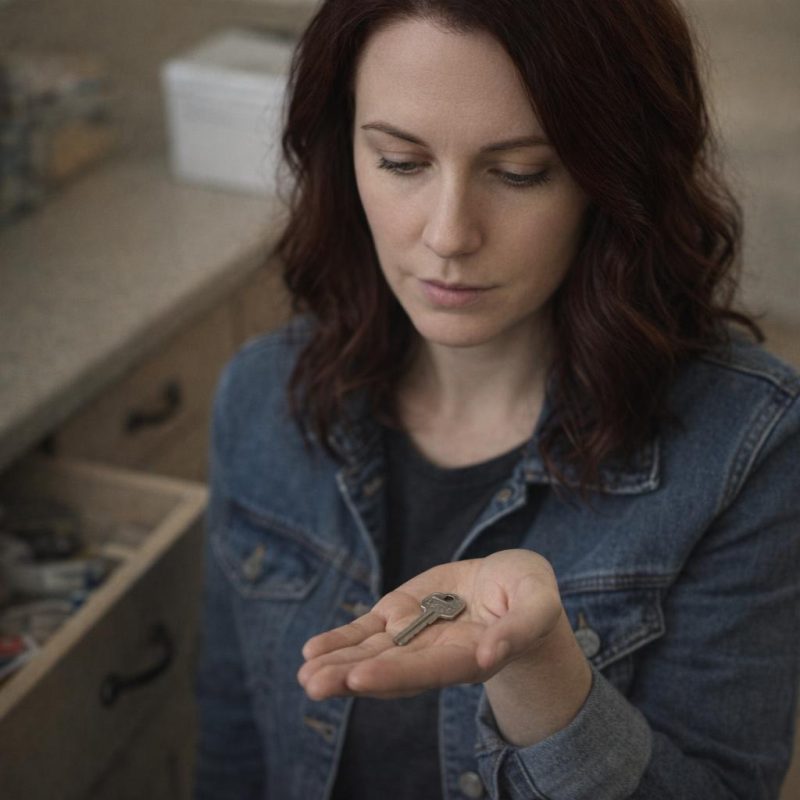 Image by RM AI
Examining the Key
I carry the key to the window where the light is better and hold it up. The rust is thickest along the shaft, but the bow — the handle end — has a pattern worked into it, something geometric, a series of interlocking shapes that would have been sharp once and have since worn down to soft ridges. I rub my thumb across it and a little rust comes away on my skin, leaving the metal underneath a dull grey-brown. The teeth are complicated. Not the simple cuts you'd see on a padlock key or a cabinet key — these are layered, stepped, the kind of profile that suggests whatever lock this fits was built to be specific about it. I turn it over and the pattern on the back of the bow mirrors the front, slightly worn on one side more than the other from years of being gripped and turned. It's too ornate for something purely functional, but too solid and specific to be purely decorative. I set it on the counter and look at it from a small distance. The rust catches the light differently depending on the angle, going from brown to almost orange to something closer to black in the deeper pits. The pattern worn smooth but still visible.
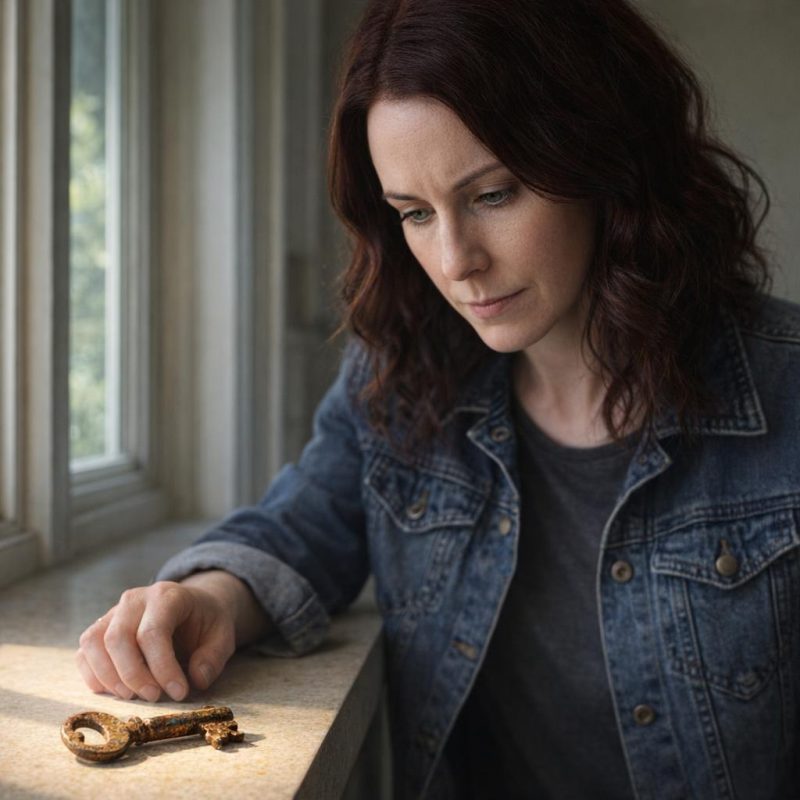 Image by RM AI
Pocketing the Key
I listen for a moment. Upstairs, Marcus is still talking — something about appraisals, about getting someone in to look at the silver. Vanessa's voice answers, agreeable in the way she gets when she thinks she's winning. Neither of them is heading for the stairs. I look at the key sitting on the counter. It doesn't belong in the trash bag — I'm certain of that much, even if I can't say exactly why. It doesn't obviously belong anywhere else either. I pick it up and wrap my fingers around the bow, feeling the worn pattern press into my palm. It's the kind of thing that should be examined properly, in better light, with more time than I have right now. I could set it on the counter and leave it for the estate inventory. I could put it back in the bag. I stand there for another second, the key in my hand, the voices still going upstairs, the kitchen quiet around me. Then I slide the key into my jacket pocket.
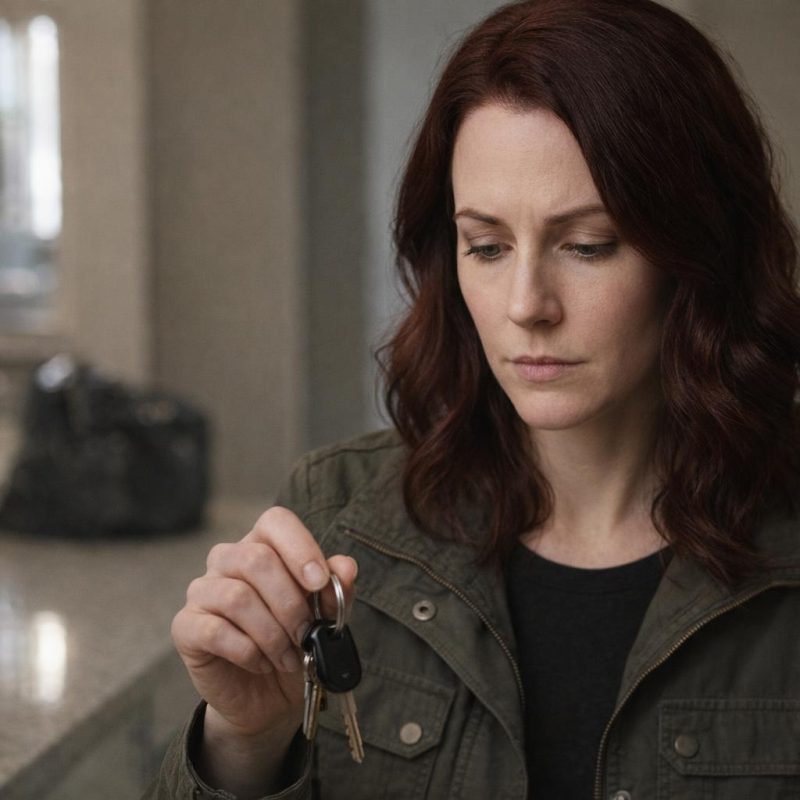 Image by RM AI
Keeping It Quiet
I go back to the lower cabinets and work through them steadily — mismatched lids, a roasting pan with a warped bottom, a set of mixing bowls that are actually fine and go into the donation box. The key sits in my jacket pocket the whole time. I'm aware of it the way you're aware of something new in a familiar space, a small persistent presence at the edge of attention. I don't think about it exactly. I just know it's there. At some point I consider mentioning it — setting it on the counter when Marcus comes down, saying I found this in the junk drawer, does anyone know what it goes to. But the thought doesn't go anywhere. Upstairs they're still talking about the jewelry, about who gets the diamond bracelets, about whether the pearls count as one item or two. Whatever this key belongs to, it isn't part of that conversation. I stack the last of the cabinet items into their boxes and straighten up, and each time I bend to lift something the key presses against my ribs, a small solid reminder that it's still there.
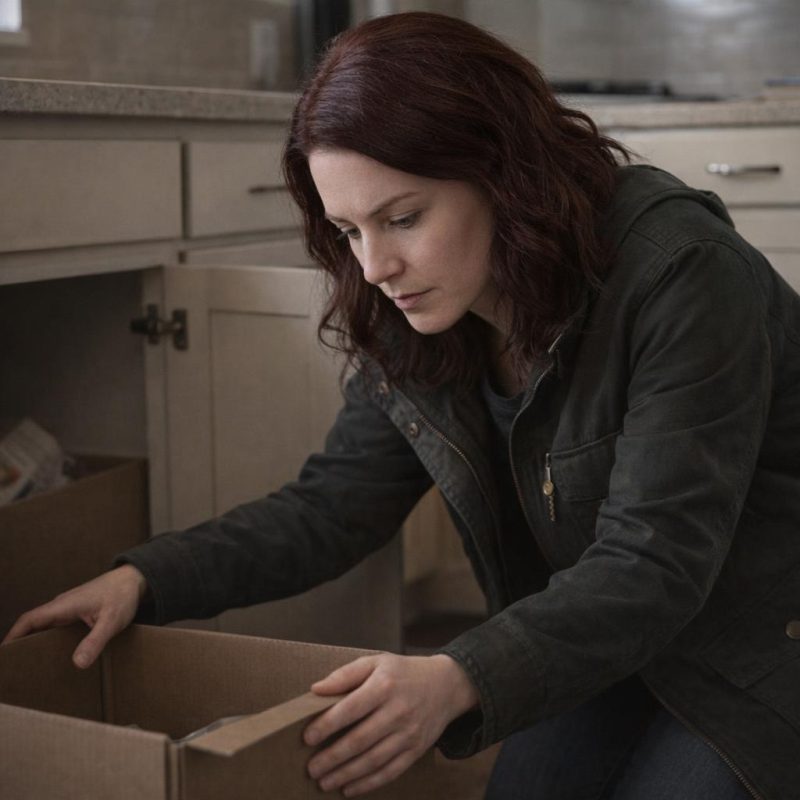 Image by RM AI
Marcus Notices
I hear him before I see him — the particular weight of Marcus's footsteps on the kitchen floorboards, heavier than necessary, the way he moves through spaces he's already decided belong to him. He stops in the doorway and takes in the sorted piles, the donation boxes, the tied-off trash bags lined up against the wall. "Find anything worth keeping in all this?" he says. It's not really a question. It's the opening move of something. "Kitchen stuff," I say. "Most of it's going to donation." He walks in a few steps and nudges one of the boxes with his foot, looking at the contents without picking anything up. "Patricia said there might be some old silverware in here somewhere." "I didn't find any silverware." He nods slowly, like he's filing that away. His eyes move across the counter, across the donation boxes, across me. I keep my hands loose at my sides and my expression neutral. There's a pause that goes on a beat too long. Then his gaze drops to my jacket pocket, where the key sits, and stays there.
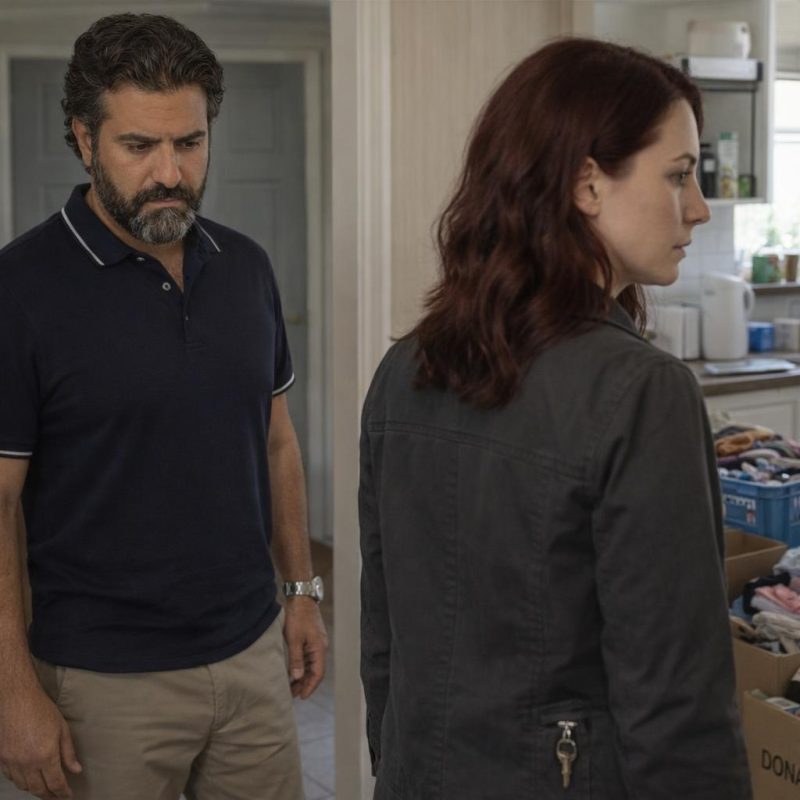 Image by RM AI
The Mockery Begins
"What's that?" Marcus says, nodding at my pocket. I pull the key out and hold it up. There's no point in making it a thing. "Found it in the junk drawer," I say. "Thought it was interesting." He stares at it for a second, then turns toward the hallway. "Vanessa. Come look at this." She appears in under a minute, which tells me she wasn't far. She takes one look at the key in my hand and her expression does the thing it does when she's about to enjoy herself. "That's what you kept?" she says. "Out of this entire house?" "It was in the trash," I say. "I took it out of the trash." Marcus laughs — a short, flat sound. "Jordan's in here rescuing garbage while we're upstairs sorting through diamond bracelets." Vanessa tilts her head and looks at the key the way you'd look at something a child brought in from the yard. "It's a rusted key to nothing," she says. "You could have asked Patricia for literally anything." I don't say anything. I put the key back in my pocket. They're still going — Marcus doing the voice he does, Vanessa adding the details that make it land harder — and the sound of their laughter fills the small space.
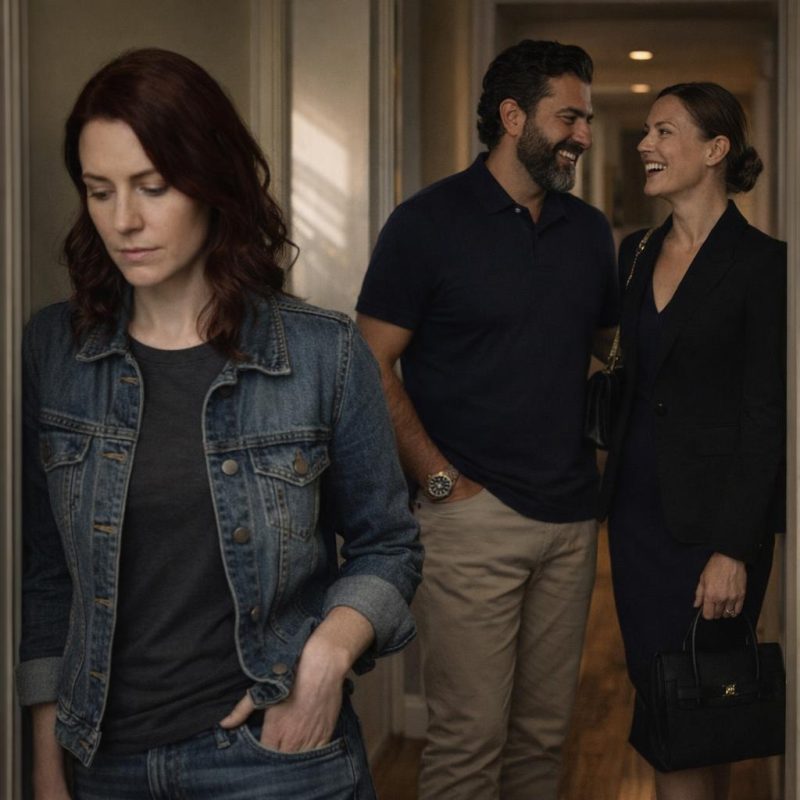 Image by RM AI
Vanessa's Demand
Vanessa shifts her weight and crosses her arms, which means she's moved past enjoying herself and into actually wanting something. "You know Patricia will let you take a cash share instead," she says. "Your portion of the liquid assets. It's not nothing." I tell her I know that. "So throw the key back," she says. "It's literally trash. You pulled it out of a trash pile." Marcus nods from the doorway like she's presenting a reasonable business case, which I suppose from his angle she is. Vanessa pulls out her phone and starts doing something with the calculator app, which I didn't ask her to do. She tells me a number. It's a real number — not insulting, not enormous. I look at it on her screen for a second. "That's what you're giving up," she says. "For a rusted key that doesn't open anything." I put my hand in my pocket and feel the key there, the uneven edge of it against my fingers. "I want the key," I say. Marcus makes a sound. Vanessa looks at me the way you look at someone who has just said something you can't quite believe. "You're being ridiculous," she says.
 Image by RM AI
Holding Ground
"Ridiculous," she says again, like the first time didn't land hard enough. Marcus pushes off the doorframe and walks in a small circle, which is what he does when he's decided something is beneath him but can't quite let it go. "You're being sentimental," he says. "That's what this is. You're being sentimental about a piece of metal that was in the garbage." I don't argue with that. I just say the key is what I'm choosing. Vanessa looks at Marcus. Marcus looks at Vanessa. There's a whole conversation in that look — the kind that doesn't need words because they've been having it since we were kids. She shakes her head slowly, the way you shake your head at a lost cause. "Fine," she says, and the word has a lot of weight in it for a word that's only four letters. "Fine. Enjoy your key." Marcus follows her out of the kitchen. I hear them on the stairs — Vanessa's heels, Marcus's heavier step — and then the sounds move up and away and the kitchen goes quiet. I stand there with my hand still in my pocket, and the quiet settles in around me like it belongs there.
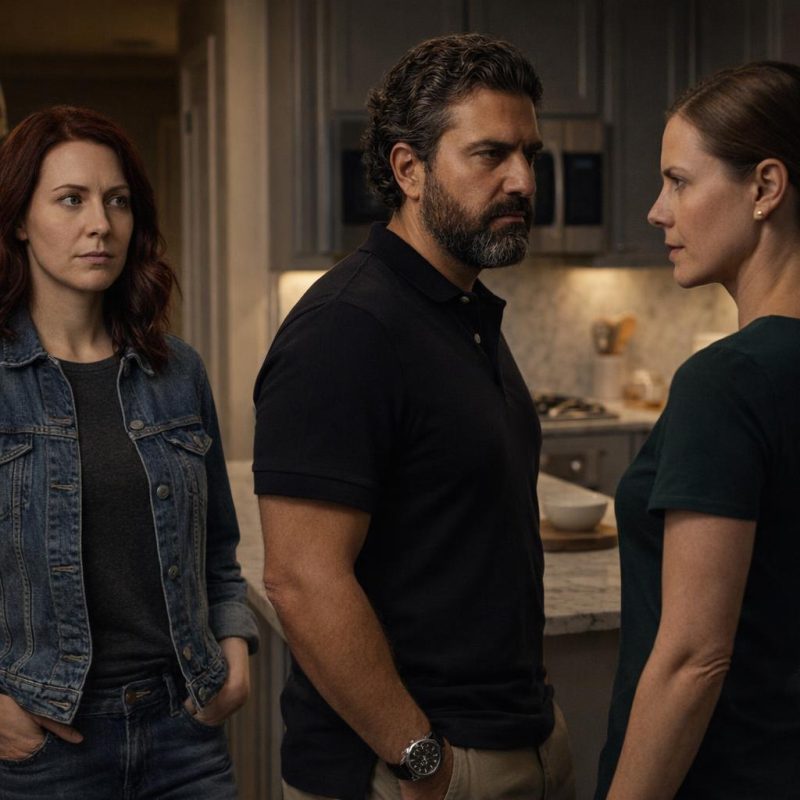 Image by RM AI
Marcus's Parting Shot
I'm still in the kitchen when I hear him on the stairs again — one set of footsteps coming back down, heavier than Vanessa's. Marcus appears in the doorway. He doesn't come all the way in. He just stands there with one hand on the frame, looking at me the way you look at someone you've already written off but feel the need to document one more time. "You know you're an idiot, right?" he says. Not angry. Almost conversational. "Sentiment doesn't pay bills. That key doesn't pay bills. Whatever you think you're doing here, it doesn't pay bills." He waits a beat, maybe to see if I'll say something. I don't. He nods once, like that confirms everything he already thought, and then he turns and goes back up the stairs. I listen to his footsteps cross the floor above me, move down the hall, stop. The house settles back into silence. The word hangs in the kitchen air for a moment — idiot — and then the quiet absorbs it, the way quiet absorbs everything eventually.
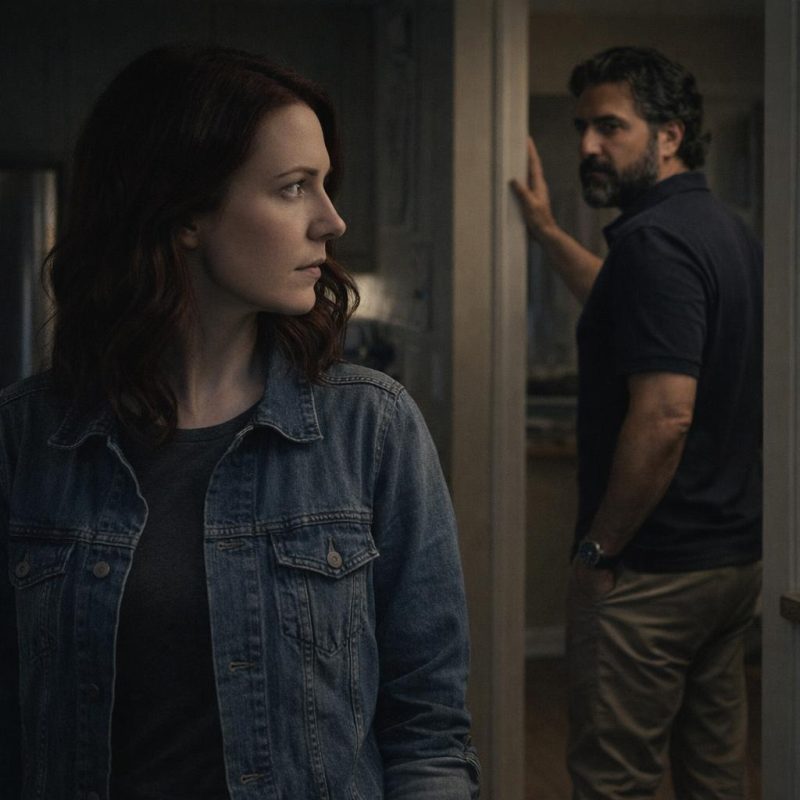 Image by RM AI
Alone with the Key
By evening the house is empty except for me. Patricia locked up the formal rooms hours ago and the cousins took their selections and left, and now it's just the kitchen light and the sound of the old house doing what old houses do when no one's talking over them. I take the key out of my pocket and set it on the table. It looks different here than it did in the junk drawer — smaller, maybe, or just more itself without all the noise around it. I pull the lamp closer and look at it properly for the first time. The rust is surface rust, mostly. Underneath it the metal is solid, and the pattern at the top is deliberate — not decorative in a cheap way, but worked, like someone spent time on it. The shaft is longer than a standard door key. The bit at the end is cut in a specific shape that I don't recognize from any lock I've seen in the house today. I turn it over in my fingers, watching the lamplight move across the pattern, and the shadows shift with each small rotation.
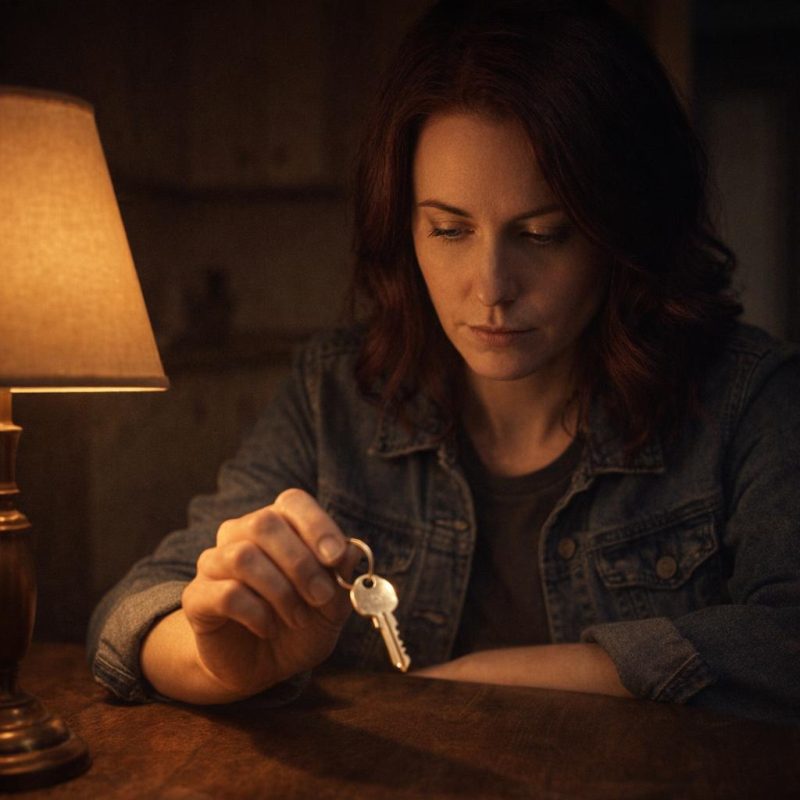 Image by RM AI
Return to the Property
I'm back at the property by eight the next morning. The cousins' cars aren't in the drive, which I expected — they got what they came for. I let myself in with the estate key Patricia gave me and stand in the entryway for a moment. The house sounds different empty. When Marcus and Vanessa were here the rooms had a kind of pressure to them, everyone moving fast and talking loud and staking claims. Now there's just light coming through the front windows and the smell of old wood and whatever cleaning product Patricia's people used on the floors. I take the skeleton key out of my jacket pocket and hold it. I don't have a plan exactly. I have a house with a lot of doors and a key that belongs to one of them, or maybe none of them, and the only way to find out is to start somewhere and keep going. I walk to the center of the entryway and look down the main hall, then toward the sitting room, then back at the staircase. The quiet of the empty house settles around me.
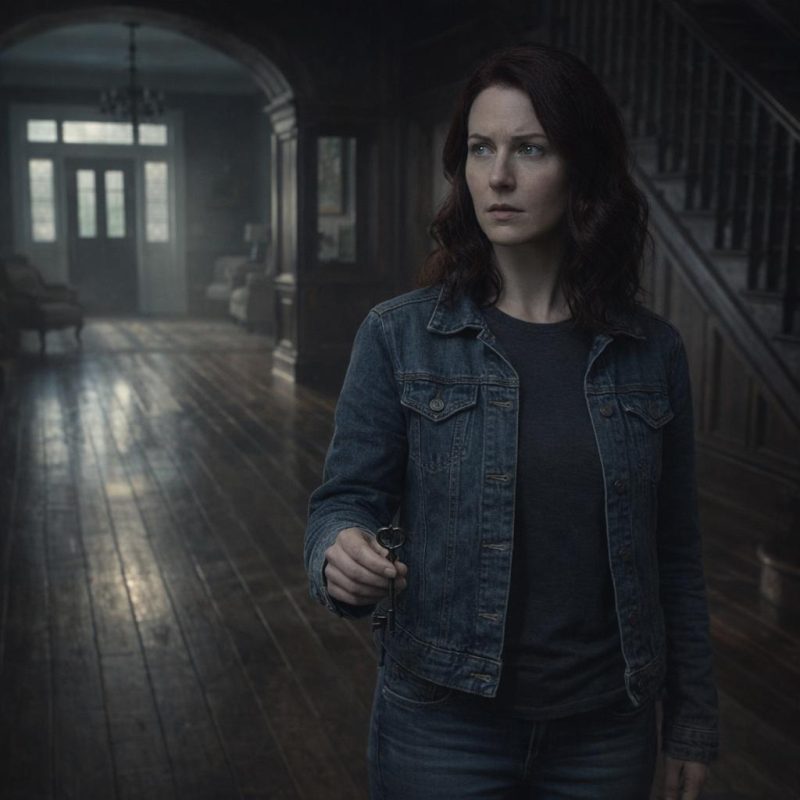 Image by RM AI
Testing the Main Doors
I start at the front door, which seems logical even though I'm almost certain it won't fit — the front lock is a modern deadbolt, installed sometime in the last decade by the look of it. The key doesn't come close. I move to the back door off the kitchen, same result. Then I work through the interior rooms one by one: the sitting room door, the study, the two guest bedrooms on the main floor, the linen closet at the end of the hall. The skeleton key is too old for most of these locks, the keyhole shapes wrong, the proportions off. A few I can get the tip in slightly before it stops. None of them turn. I'm not frustrated yet. This is just the work of it — insert, check the resistance, withdraw, move to the next door. After the sixth or seventh room the motion becomes its own thing, almost separate from the outcome. Insert, feel the resistance, withdraw. The house is patient about it. I find I am too. By the time I've finished the main floor, the rhythm of insert, turn, withdraw has become automatic.
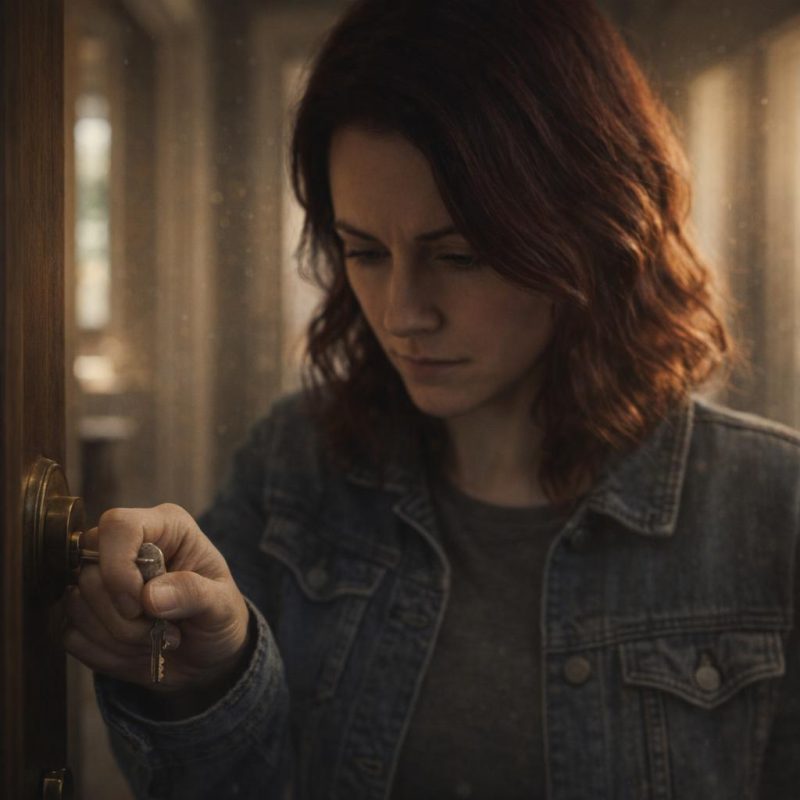 Image by RM AI
The Basement Locks
The basement door is at the back of the kitchen, behind a panel that looks like a cabinet until you know it isn't. The stairs are narrow and the light down there comes from two small windows set high in the foundation wall, the kind of light that's more suggestion than illumination. I find the pull-string for the overhead bulb and the basement opens up — storage shelves along one wall, a utility area, two doors leading to what look like separate storage rooms. I try the skeleton key on both storage room doors. The first lock is a padlock, modern, no chance. The second is an older mechanism built into the door itself, and for a second I think I might be getting somewhere — the keyhole shape is closer — but the key is too large and won't seat. Along the far wall there's a row of old metal filing cabinets, the kind with individual locks on each drawer. I work through those. The key is too small for most of them, the bit rattling loose in the keyhole without catching anything. I pull it out of the last cabinet drawer and hold it up in the dim light. The key scrapes against a lock that's too small.
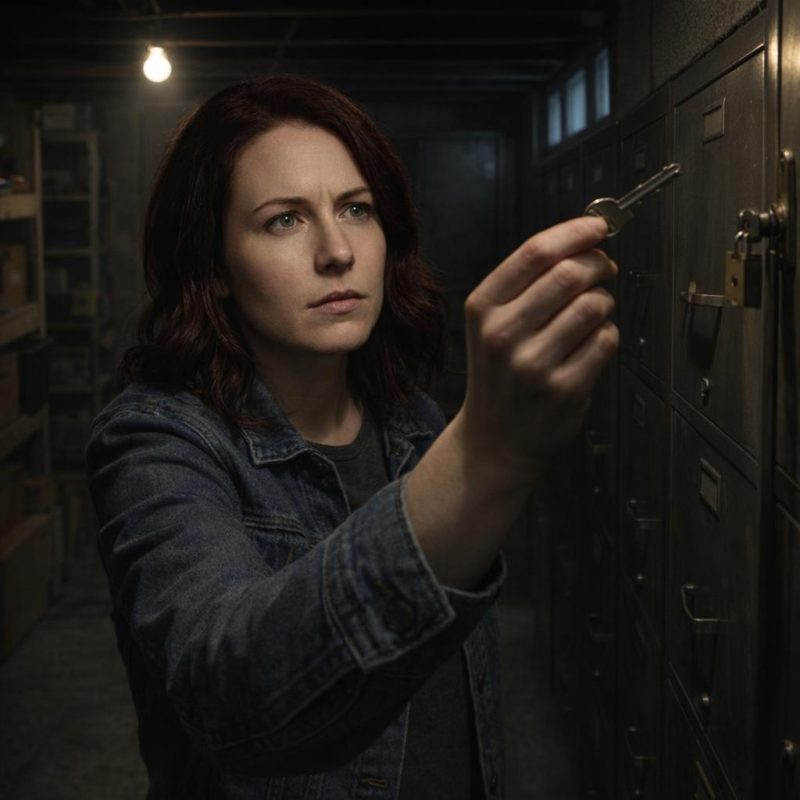 Image by RM AI
The Attic Search
The attic stairs fold down from a ceiling panel in the upstairs hall, and they're the kind that groan on every step like they want you to know the effort involved. The attic itself is low-ceilinged and warm, the air thick with dust and the particular smell of things that have been stored for a long time without being touched. There are trunks along one wall — a large steamer trunk, two smaller travel cases, and what looks like a blanket chest pushed into the far corner. I start with the steamer trunk because it's the oldest-looking thing up here, the hardware tarnished and the leather straps cracked. The lock plate is the right era, the keyhole the right general shape. I slide the skeleton key in and feel it catch on something — not the nothing of a wrong-sized key, but actual contact, the bit touching the mechanism. I hold my breath and apply pressure. The key moves maybe a quarter turn and then stops, held fast, not turning further and not releasing cleanly. I work it back out carefully. I try the two smaller travel cases — wrong size, both of them. The blanket chest in the corner has a lock that's too simple, too modern. I go back to the steamer trunk and try again. The key slides partway in and stops.
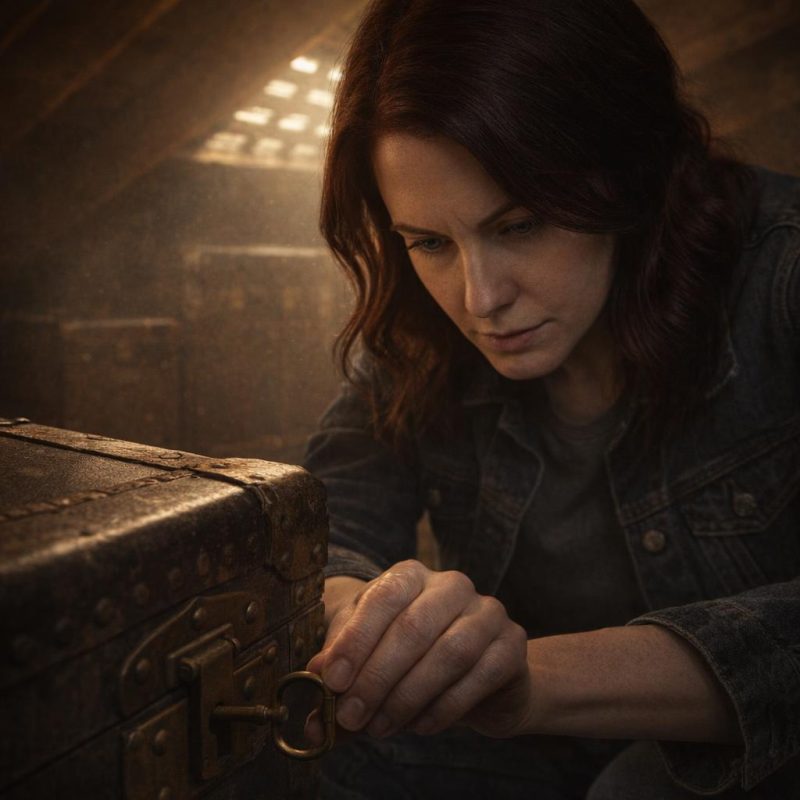 Image by RM AI
No Match Inside
I come back down the attic stairs and stand in the upstairs hall for a moment, running through the list in my head. Every trunk, every case, every lockbox I could find inside this house. The key touched something real in the steamer trunk — actual contact, actual resistance — but it never turned. Nothing else up there even got that far. I work my way back through the rooms on the main floor just to be sure, trying the key in the old secretary desk in the study, the cedar chest in the spare room, the decorative lock on the sideboard in the dining room. Nothing. The key is the right era for this house, I'm certain of that much. The teeth are worn in a way that suggests regular use, not a spare that sat forgotten. Something used this key. I just haven't found it yet. I end up in the kitchen, and I stand at the back window with the key still in my hand, looking out at the property — the detached garage, the garden shed along the fence line, and beyond that, the uneven shapes of whatever else is back there.
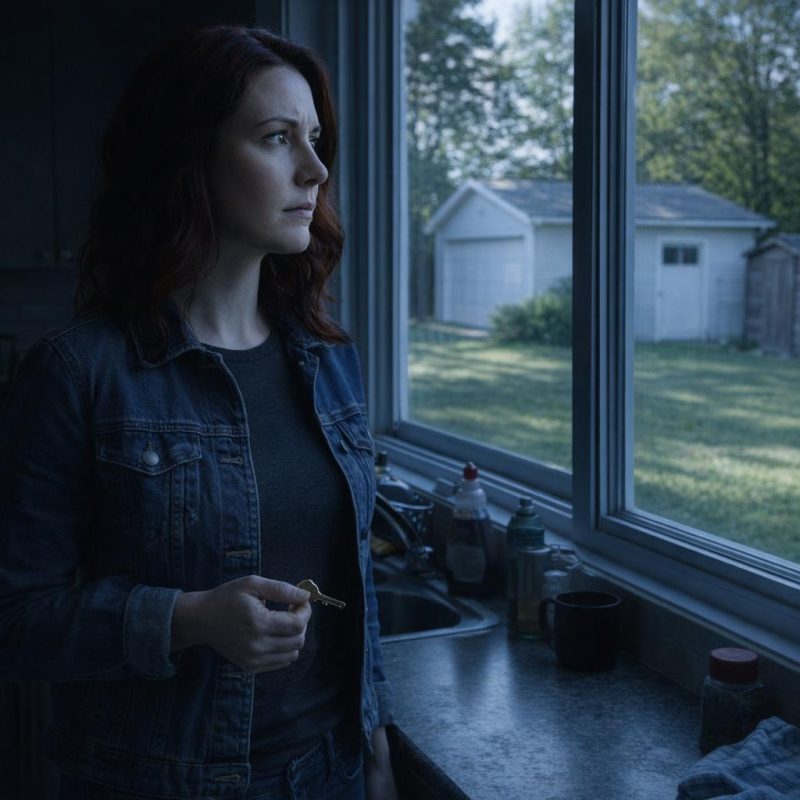 Image by RM AI
The Garage
The garage door isn't locked at all — it swings open on its own weight when I lift the handle, the hinges stiff but cooperative. Inside it smells like every garage that's ever existed: motor oil soaked into concrete, old rubber, metal that's been sitting in the same place for years. There's a workbench along one wall with a pegboard above it, tools hanging in the outlines of where they've always hung. A riding mower takes up most of the floor space. Along the back wall there's a tall metal tool cabinet, the kind with a lock built into the top drawer. I try the key there first because it's the only real lock in the room. The key doesn't fit — the keyhole is too modern, too standardized, the kind of lock that takes a small flat key with a number stamped on it. I check the rest of the cabinet anyway, then the workbench drawers, then a wooden box on the shelf that turns out to have no lock at all, just a latch. I stand in the middle of the garage for a moment before I pull the door shut behind me. The smell of old motor oil and dust follows me out into the afternoon air.
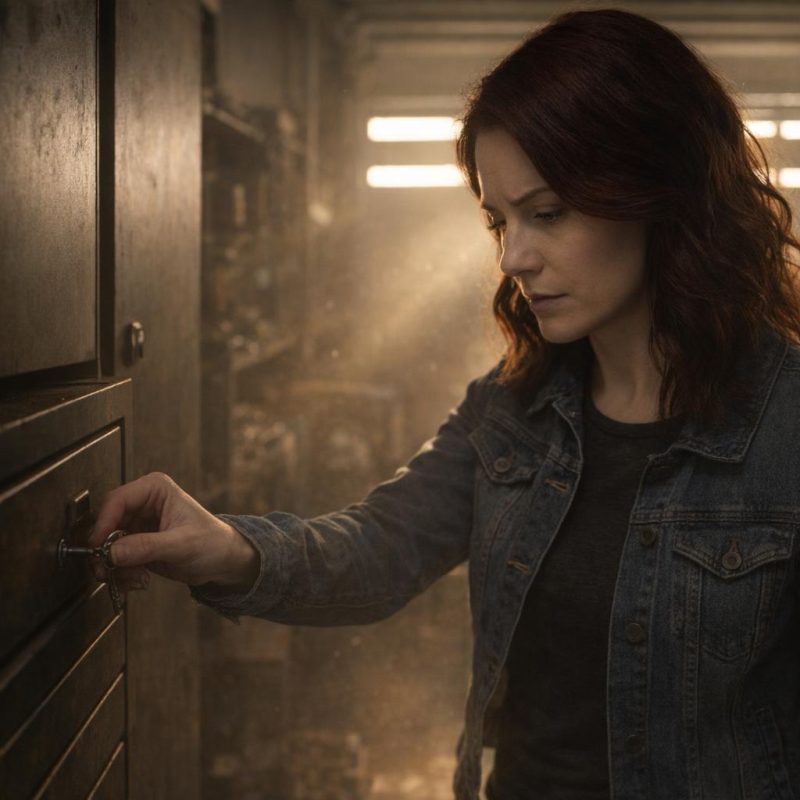 Image by RM AI
The Garden Shed
The garden shed sits along the back fence, and from a distance it looks like it might be the right age. Up close, it isn't. The door has a combination padlock on it — the kind you buy at a hardware store, black and plastic and entirely contemporary. I check the two windows on the side walls. One is latched from the inside with a simple sliding bolt. The other has a hasp on the outside with a second padlock, same style as the first, same era. I stand there holding the skeleton key and looking at these locks and the mismatch is almost funny. The key in my hand has a bow that's been worn smooth by decades of use. The padlocks on this shed are maybe five years old, maybe ten. Whatever was here before — whatever older hardware might have been on this door — it's been replaced. I try the key against the padlock shackle out of thoroughness, not expectation, and the shackle doesn't even pretend to engage. I set the key back in my pocket and look at the shed for another moment. The weight of those modern locks against something this old felt like a conversation happening in the wrong language.
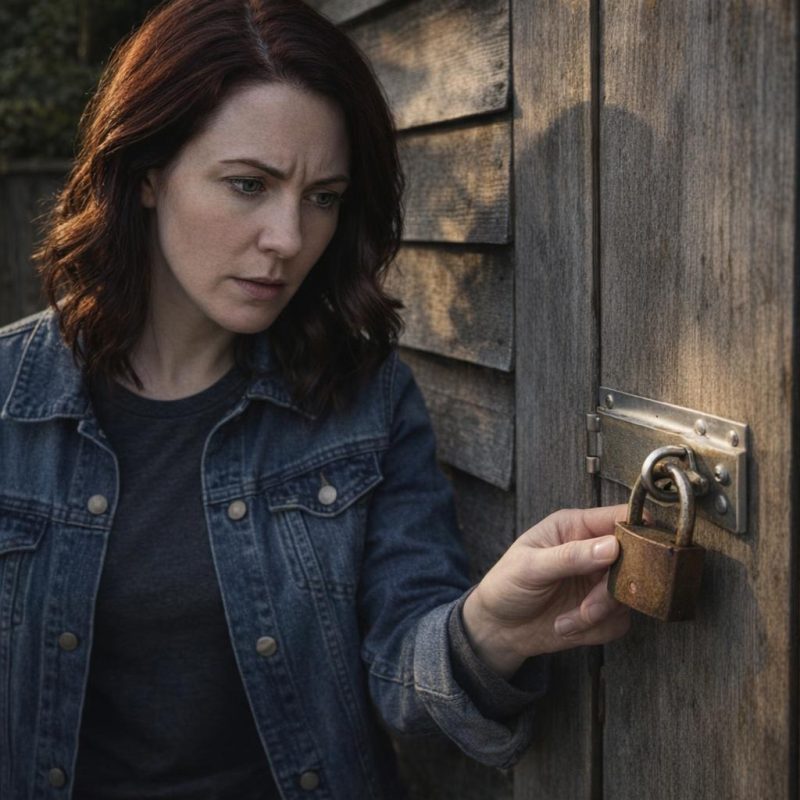 Image by RM AI
The Potting Shed
I step back onto the lawn and look at the property properly for the first time, the way you look at something when you stop trying to find a specific thing and just let your eyes move. The garage is to my left. The garden shed is behind me along the fence. Ahead of me the yard extends further than I'd registered from the house — the grass gets longer toward the back, and there's a line of overgrown shrubs along the far edge that I'd taken for the property boundary. I walk toward them without a clear reason, just following the direction my attention is going. The shrubs are thick and uneven, the kind of growth that happens when something gets ignored for years. I push through a gap between two of them and the grass on the other side is knee-high, undisturbed. And then through the tangle of branches and vines, maybe twenty feet further back, I see it — weathered grey wood, a roofline just visible above the overgrowth.
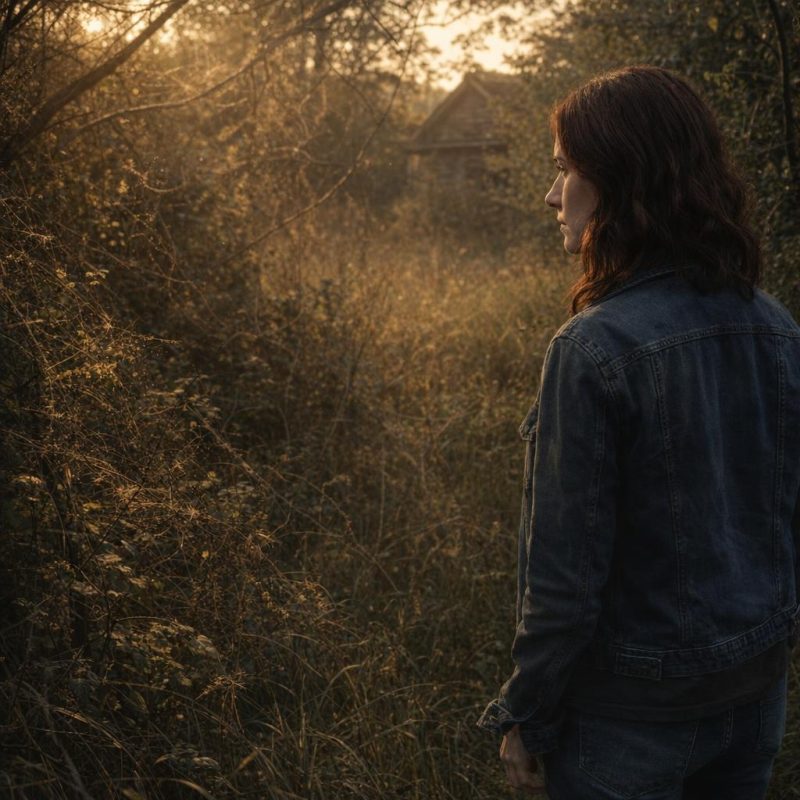 Image by RM AI
Approaching the Shed
I push through the tall grass toward it, the blades catching against my jeans. The structure is small — maybe twelve feet across — and it's been here long enough that the vegetation has stopped treating it as an obstacle and started treating it as a fixture. Vines have climbed the near wall and spread across the roof. A young tree has grown up close enough to the left side that its roots have probably been under the foundation for years. I circle the perimeter slowly, keeping one hand out to push branches aside. The wood is grey and weathered but it isn't soft. I press my palm flat against the back wall and it doesn't flex. The boards are dry and tight, the kind of old wood that's past the point of rotting and has just settled into permanence. The windows on the side walls are small and set high, the glass dark with grime and laced with cobwebs on the inside. The door is on the front face, facing back toward the house, and it has a lock plate on it — old iron, dark with age. I stand in front of it and look at the plate, then at the key in my hand. This structure is older than anything else on the property.
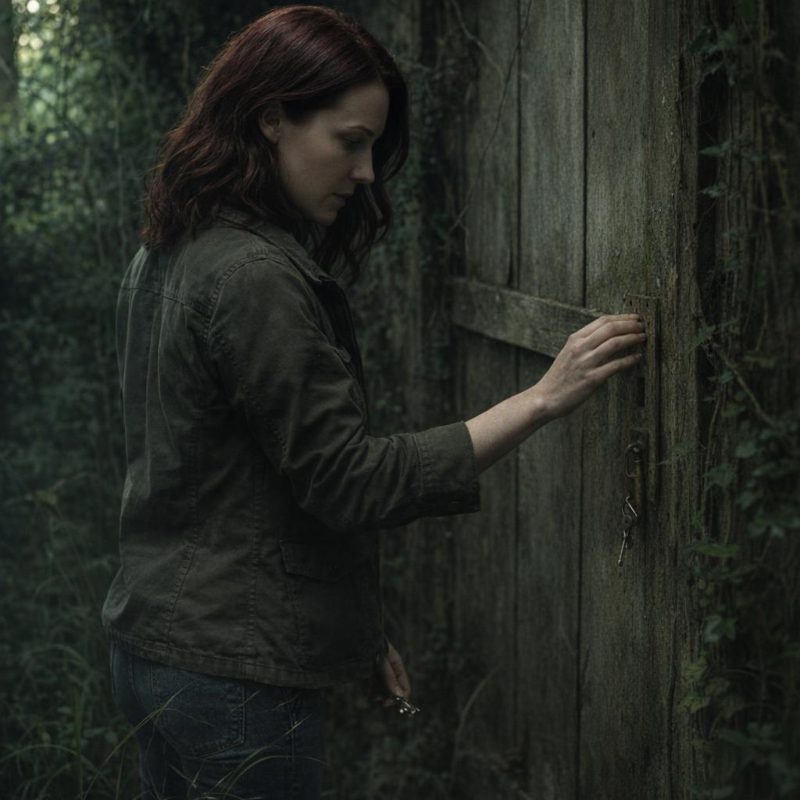 Image by RM AI
Measuring the Space
I step back through the grass until I can see the whole structure at once. It's a simple rectangle, or it should be. I pace the exterior — long side first, counting my steps, then the short side. I do it twice to be sure. Then I stand at the door and look through the grimy window glass at the interior. The inside looks like what it's supposed to be: old clay pots stacked against the walls, a wooden shelf along the back, a narrow aisle down the middle. It looks like a potting shed. But the numbers don't match what I'm standing in front of. The exterior paces longer than the interior appears. I try to account for it — thick walls, maybe, or the distortion of dirty glass — but the gap feels too large for that. I walk the perimeter again, slower this time, watching the ground where the foundation meets the soil. Nothing obvious. Nothing I can point to. Just the persistent, low-grade sense that the space I'm looking at from the outside and the space visible through the window are not quite the same space.
 Image by RM AI
The Thick Walls
I go to the nearest window and look at the frame itself rather than through the glass. The frame is set into the wall, and the depth of the recess — the distance between the outer face of the wall and the inner face where the glass sits — is considerable. I spread my hand and measure it against my palm. One hand span. I have average-sized hands. That's roughly eight inches of wall for what is supposed to be a garden shed. I move to the window on the opposite wall and measure again. Same depth, maybe slightly more. I walk to the back wall and find a spot where a board has pulled slightly away from the corner, leaving a narrow gap. I can see the cross-section of the wall there — layers of wood, something packed between them, more wood on the inside face. I press my fingers into the gap as far as they'll go. There's real mass in these walls, not just framing. I step back and look at the window frames again, each one set deep into its recess, the shadows inside them long and deliberate in the afternoon light.
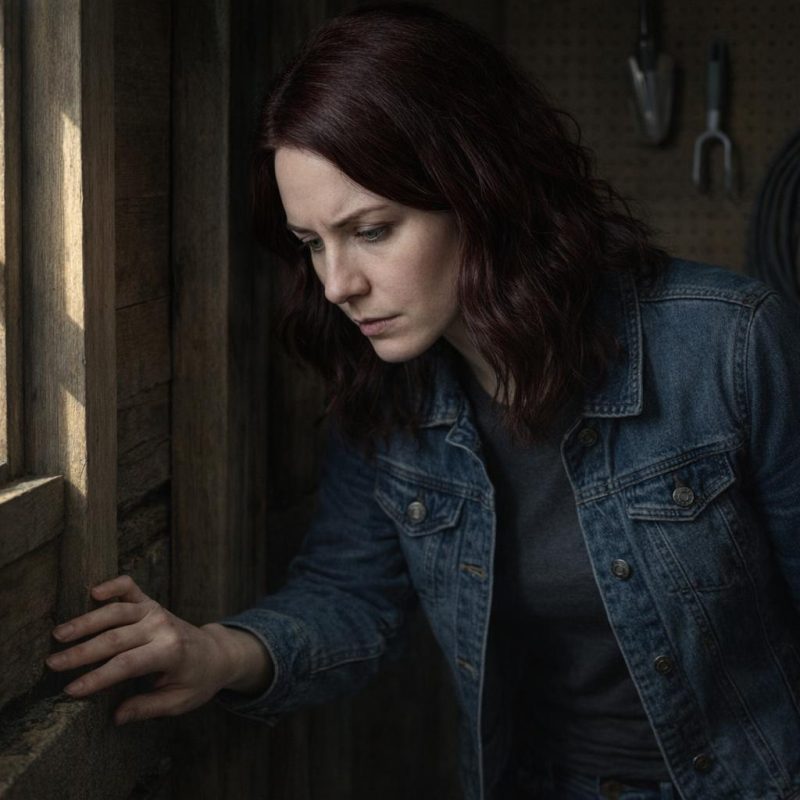 Image by RM AI
Interior Dimensions
The door opens with pressure rather than force — swollen in its frame but not locked, the iron latch lifting with a firm thumb. Inside, the air is close and dry, smelling of clay and old wood and something faintly mineral I can't name. Old pots are stacked along the walls, some cracked, some intact, all of them filmed with dust. A wooden shelf runs along the back wall holding rusted hand tools and a few empty tin cans. I pace the length first, heel to toe, counting carefully. Then the width. I do both twice. Then I go back outside and pace the exterior again, same method. I come back in and stand in the center of the shed with my count in my head. The interior is shorter than the exterior by what feels like three or four feet on the long axis, and at least two feet on the short side. I look at the walls around me — the stacked pots, the shelf, the rough boards — and I stay very still with the number sitting in my head, the missing feet between inside and outside that the walls alone cannot account for.
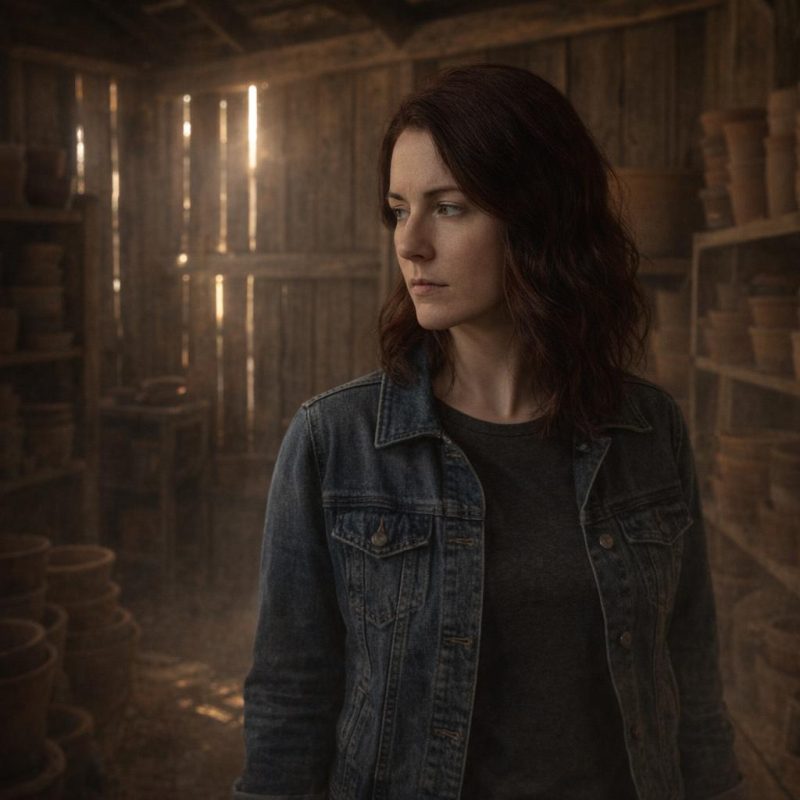 Image by RM AI
Searching for Seams
I start at the northwest corner, the one farthest from the door, and I work my way around. My fingers press into every board joint, every gap between planks, every place where two pieces of wood meet at an angle that doesn't quite make sense. I tap as I go — knuckle against board, listening for the difference between solid and hollow. Most of it sounds the same: dense, flat, dead. I move the stacked pots away from the wall one by one, setting them on the floor behind me, checking what's underneath each one. Nothing. Just packed dirt and old wood. The shelf along the back wall gets the same treatment — I pull it away from the boards, check the wall behind it, run my thumb along the seam where the shelf brackets are anchored. The brackets are old but the screws look original, undisturbed. I work slowly. I don't rush it. The math I counted outside is still sitting in my head — three or four feet on the long axis, two on the short side — and that doesn't go away just because the walls look ordinary. I reach the rear wall and crouch down, pressing my palm flat against the lowest boards. Then I stand and run my fingers along the rear wall, feeling for gaps.
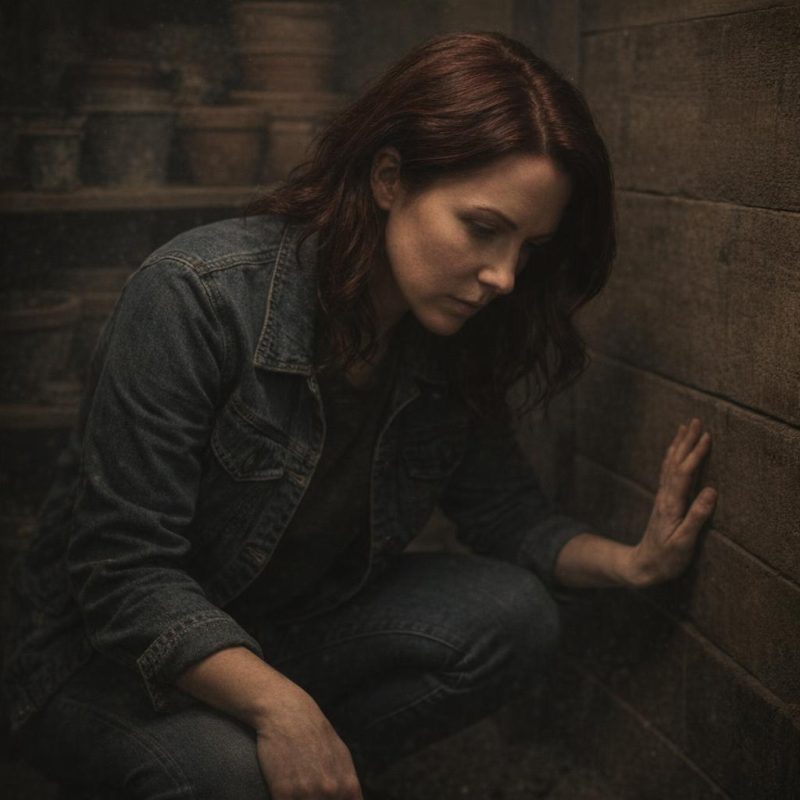 Image by RM AI
The Stacked Firewood
That's when I notice the firewood. It's stacked against the rear wall — or what's left of a stack, anyway. The pieces have been there long enough that the bottom layer has partially collapsed into itself, the wood gone soft and gray, more fiber than fuel at this point. I didn't pay much attention to it on my first pass because it looked like junk, which I suppose is the point. I grab the top piece and it bends in my hand before it breaks, shedding a shower of dark splinters onto my boots. I toss the pieces behind me and reach for the next one. The second layer is worse — some of it has fused together where moisture got in and then dried out over years, and I have to work pieces apart with both hands. Dust rises in small clouds every time something gives way. My eyes start to water. I pull my collar up over my nose and keep going, piece by piece, the pile behind me growing while the stack against the wall shrinks. My arms are getting tired and my hands are filthy and I'm starting to wonder if I miscounted the exterior measurements. Then I grab a piece near the bottom and it comes apart completely, the wood crumbling in my hands as I clear it.
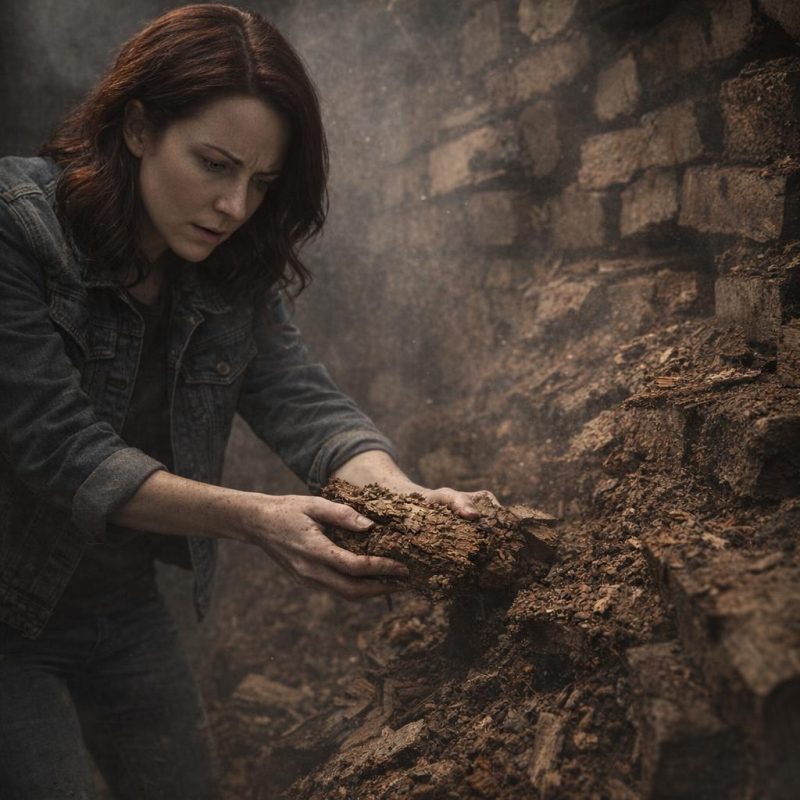 Image by RM AI
The Hidden Door Frame
I keep pulling. The pieces near the floor are the worst — compressed by everything that sat on top of them for however many years, half-dissolved into a dark mulch that sticks to my palms and smells like wet earth and rot. I scoop the last of it away with both hands, pushing the debris to either side, and then I sit back on my heels and look at the wall. The boards here are different. I notice it immediately — the grain runs the same direction, the color is close, but the spacing between them is tighter than the rest of the rear wall, and the edges are cleaner. Not rough-cut like the surrounding boards. I lean in and look at the corners. There's a line there — faint, almost invisible under the grime, but it runs straight up from the floor and then turns at a right angle near the top. I trace it with my finger. It goes across, then down the other side. A rectangle. Roughly door-sized. I sit very still for a moment, my dirty hands resting on my knees, looking at the outline of a door emerging from behind the wood.
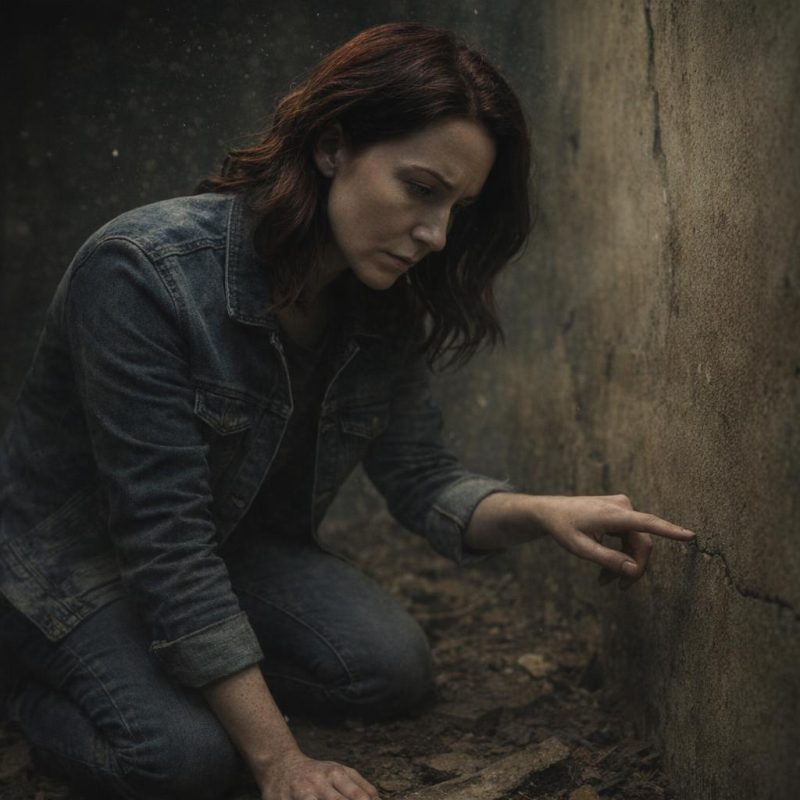 Image by RM AI
Clearing the Last Obstacles
I pull the last few pieces of rotted wood away from the base of the frame and stack them behind me with the rest. There's a low ridge of compacted debris along the bottom edge — old sawdust and wood pulp packed tight against the threshold — and I scrape it clear with the side of my boot, working it loose until the floor in front of the door is clean. Then I stand up straight and step back. The door is solid. Old, obviously — the wood has darkened to near-black in places and the surface is rough with age — but it hasn't warped the way the shed's outer boards have. Whoever built this used better lumber for what was behind it. The frame is tight against the surrounding wall, no daylight showing through the edges. The rectangle I traced with my finger is now fully visible, floor to ceiling, corner to corner. I brush the worst of the grime from my hands onto my jeans and stand there in the dim light of the shed, the dust I've stirred up still drifting slowly in the air around me, the door fully visible now, waiting.
 Image by RM AI
The Iron Lock Plate
I step closer. The door has no visible handle, no knob, nothing to grip on the face of it. What it does have, mounted at roughly waist height and slightly right of center, is an iron plate. It's maybe four inches across, dark with age, fixed to the wood with four square-headed bolts that have gone almost black. I lean in until my nose is about six inches from the surface. The plate isn't plain. There's a pattern worked into the iron — a border of interlocking shapes running around the edge, and at the center, a keyhole surrounded by a raised design. The design is worn but legible: a series of small repeating marks arranged in a specific sequence around the keyhole opening. I've been carrying the skeleton key in my jacket pocket since I left the house. I don't take it out yet. I just look. The marks on the plate are the same marks worked into the bow of the key — the same sequence, the same spacing, the same proportions, pressed into iron on one end and cast into the key's head on the other, and the pattern on the lock plate matches the design on the skeleton key exactly.
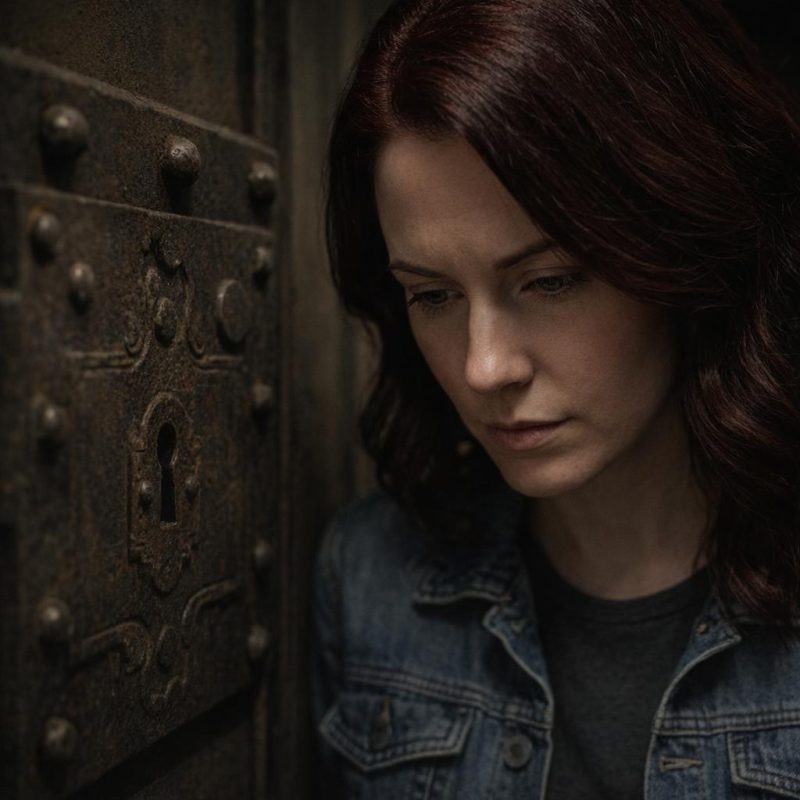 Image by RM AI
Hands Shaking
I take the key out of my pocket. It sits in my palm the same way it always has — heavier than it looks, the iron warm from being against my body. The bow end, the part I've been holding all this time, has that same repeating pattern pressed into it, and now I know what it was made to match. I close my fingers around it and look at the lock plate. The shed is completely quiet. No wind getting through the boards, no sound from the house, nothing. Just the faint settling noise old wood makes when the temperature shifts, and my own breathing, which is slower than I'd expect given the circumstances. I've been patient about this whole thing — the estate, the cousins, the arguments over who gets what — and I'm patient now too, or trying to be. My hands are shaking slightly. Not from fear exactly. More like the feeling you get when something you've been holding onto for a long time is about to either pay off or fall apart, and you can't tell yet which one it's going to be. I stand there with the key in my hand and the lock plate in front of me, and the weight of the moment settles over me.
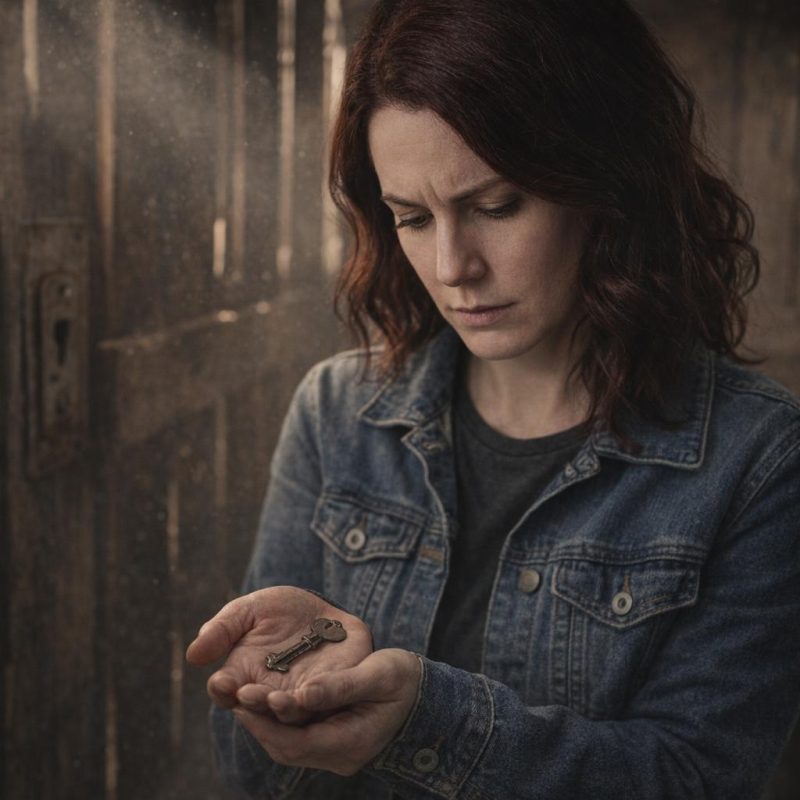 Image by RM AI
The Key Fits
I raise the key slowly. The lock plate is at waist height and I have to angle my wrist slightly to line up the key's bit with the keyhole opening. The hole is narrow — narrower than I expected — and I take my time, not forcing it, letting the tip of the key find the slot on its own. It catches once on the edge of the plate and I pull back, reposition, try again. The second time the tip slides past the lip of the keyhole and I feel the key begin to drop into the mechanism. I don't push. I just let it go at its own pace, the weight of the iron doing most of the work, the bit engaging with whatever is inside the lock. There's a faint sound — metal on metal, very quiet, like two things that were made to fit together finally doing exactly that. The key settles. It doesn't wobble. It doesn't catch. It sits in the lock with no gap between the iron of the key and the iron of the plate, flush and still, and I hold my breath without meaning to, the key sliding home like it was made for this lock.
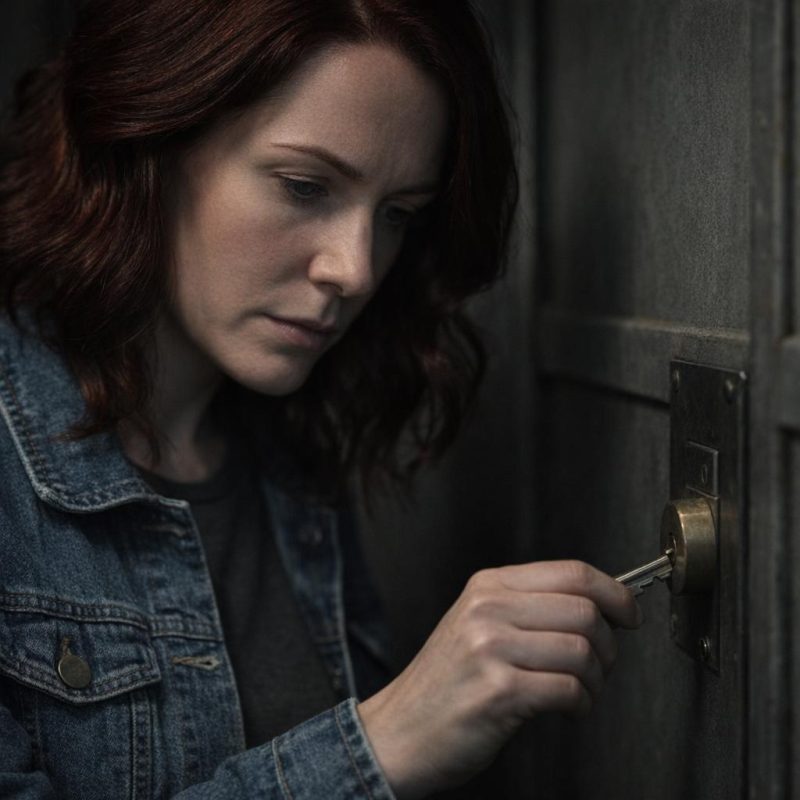 Image by RM AI
The Lock Turns
I grip the bow end with both hands and begin to turn. Nothing happens at first — the mechanism is completely frozen, decades of rust and inactivity holding everything in place, and for a moment I think I've gotten this wrong somehow, that the fit was coincidence and the key is going to snap before the lock moves. I ease off, reposition my grip, and apply pressure again, slow and steady this time, not forcing it but not letting up either. I feel something shift — not a full movement, just a suggestion of one, like the mechanism remembering what it's supposed to do. I keep the pressure on. My knuckles go white. The key creaks in the lock, a low metallic groan that seems too loud in the silence of the shed, and then there's resistance, and more resistance, and then — nothing. The lock clicks open.
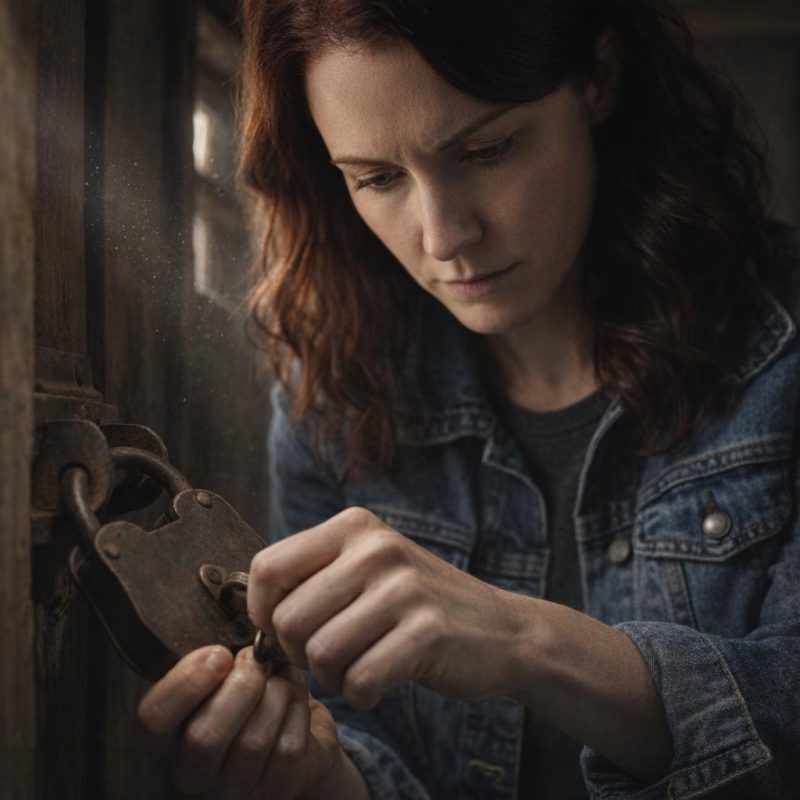 Image by RM AI
The Door Swings Open
The lock clicks open and I stand there for a second, just breathing. Then I grip the door handle — a simple iron pull, cold and rough under my fingers — and I tug. Nothing. I adjust my stance, plant my left foot against the base of the wall for leverage, and pull again, harder this time. The door resists like it has opinions about staying shut. There's a low groan from somewhere deep in the frame, the sound of wood swollen against wood, of hinges that haven't moved since before I was born. I keep pulling. The resistance builds and then breaks all at once, and the door swings inward with a shudder that travels up through my arms and into my shoulders. I stumble back half a step. The opening is narrow — maybe eighteen inches — and beyond it is pure dark, the kind that feels solid, like it has weight. I lean forward and peer in. My eyes find nothing useful yet, just shapes that might be shapes, edges that might be walls. And then I feel it: a current of air moving past my face, cool and faintly damp, carrying the smell of old wood and something else I can't name, flowing steadily out of the darkness like the space has been holding its breath for decades.
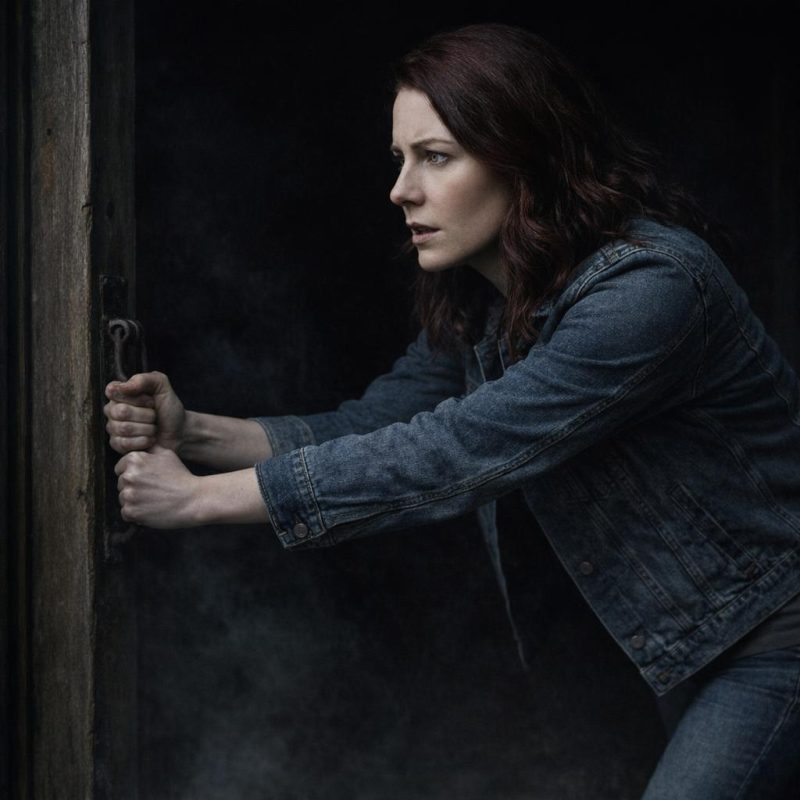 Image by RM AI
Forcing Rusted Hinges
Eighteen inches isn't enough. I need to get through that door, and right now I can barely fit my head and shoulders into the gap. I wedge my fingers around the edge of the door and push it wider. It moves maybe two inches and stops hard, the hinges locking up like they've decided that's far enough. I can feel the rust in the resistance — not smooth mechanical friction but something gritty and uneven, the kind of stuck that comes from decades of oxidation fusing metal to metal. I brace my right shoulder against the door's edge and lean my full weight into it. The wood creaks. The frame protests. I ease off, reposition, and try again with a slow steady push rather than a shove, the same logic I used on the lock — patience over force. Something shifts. A millimeter, then another. I keep the pressure on, not letting up, not rushing. The groan that comes out of those hinges is genuinely impressive, a long metallic complaint that echoes off the shed walls and probably carries halfway across the property. Then the resistance collapses all at once, and the door swings wide with a final groan that settles into silence.
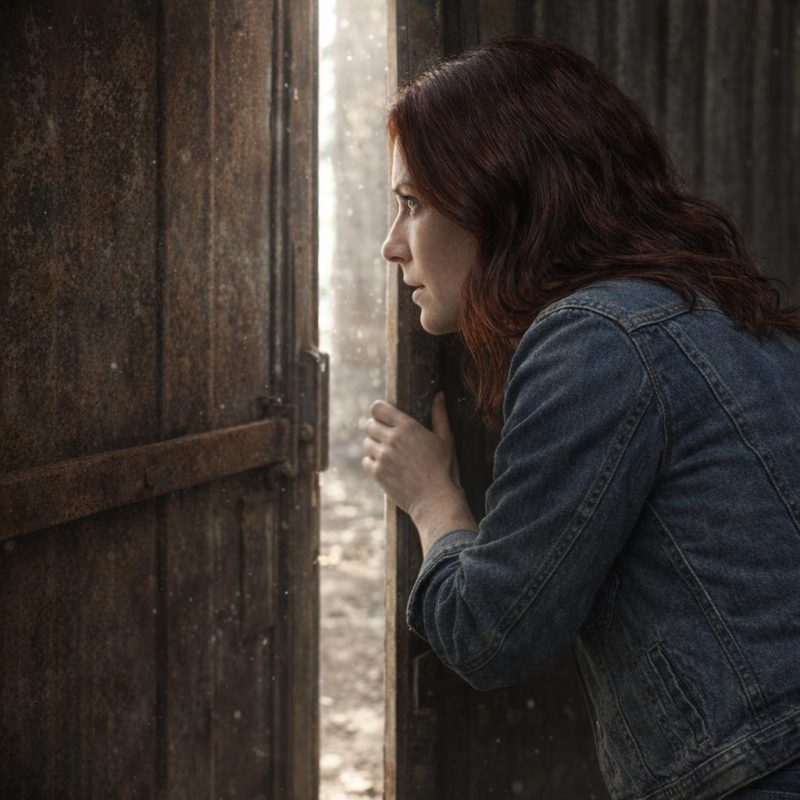 Image by RM AI
Into the Hidden Space
I step through the doorway and stop. The space is bigger than I expected — considerably bigger. From outside, the shed looked like a standard potting shed, maybe twelve by sixteen feet. This hidden room behind it runs at least another twenty feet back, maybe more. The ceiling is higher too, high enough that the rafters disappear into shadow above me. Thin lines of light push through gaps in the exterior wall boards, not enough to see clearly but enough to see that the room is not empty. Dust motes drift through those pale beams, slow and unhurried, disturbed by the air moving through the open door behind me. The floor is concrete, I can feel it through my shoes, solid and level. My eyes are still adjusting, pulling shapes out of the dark, sorting what's wall from what's floor from what's something else entirely. And then the something else resolves. In the center of the room, sitting on that concrete floor, is a large shape covered by a tarp.
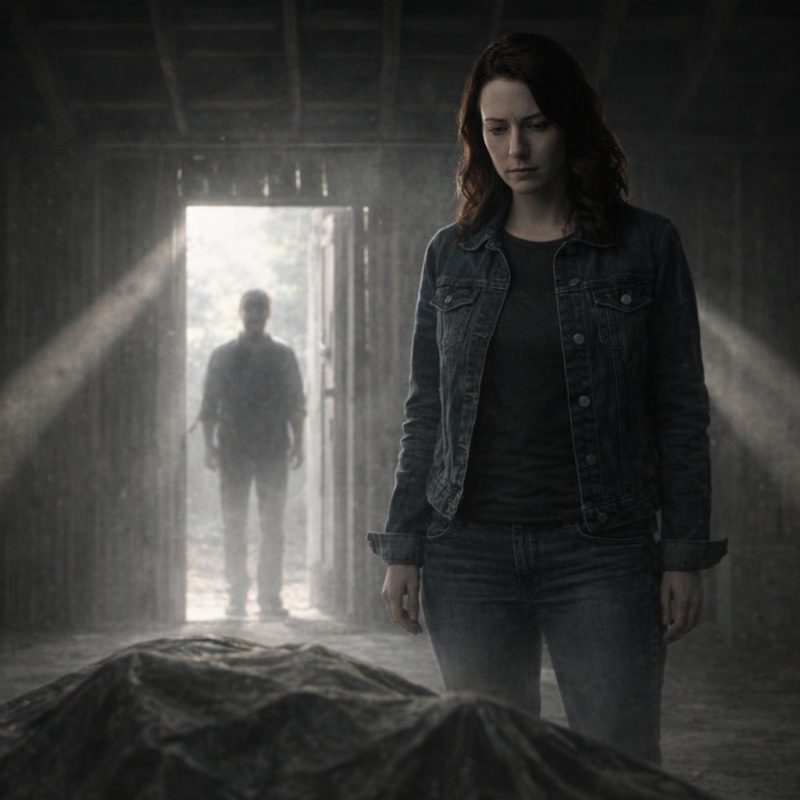 Image by RM AI
The Covered Shape
I walk toward it slowly. The tarp is dark green, heavy canvas by the look of it, not a cheap plastic drop cloth but something substantial, the kind of cover you buy when you actually care about what's underneath. It's been weighted at the corners — I can see the edges are tucked and secured, not just thrown over. Whoever put this here was being careful. I circle the whole thing before I touch it, taking my time. The shape underneath is large. Longer than it is wide. Low to the ground in a way that suggests it's sitting on wheels. I stop at the front end and crouch down. The tarp hangs close to the floor here, and where it meets the concrete I can see a gap of maybe two inches. I tilt my head and look. The light from the wall gaps is thin but it catches something at the edge of the tarp — a curve of metal, smooth and deliberate, and beside it a glint of chrome, bright even in the dim room, tracing the outline of a bumper that belongs to something built when chrome still meant something.
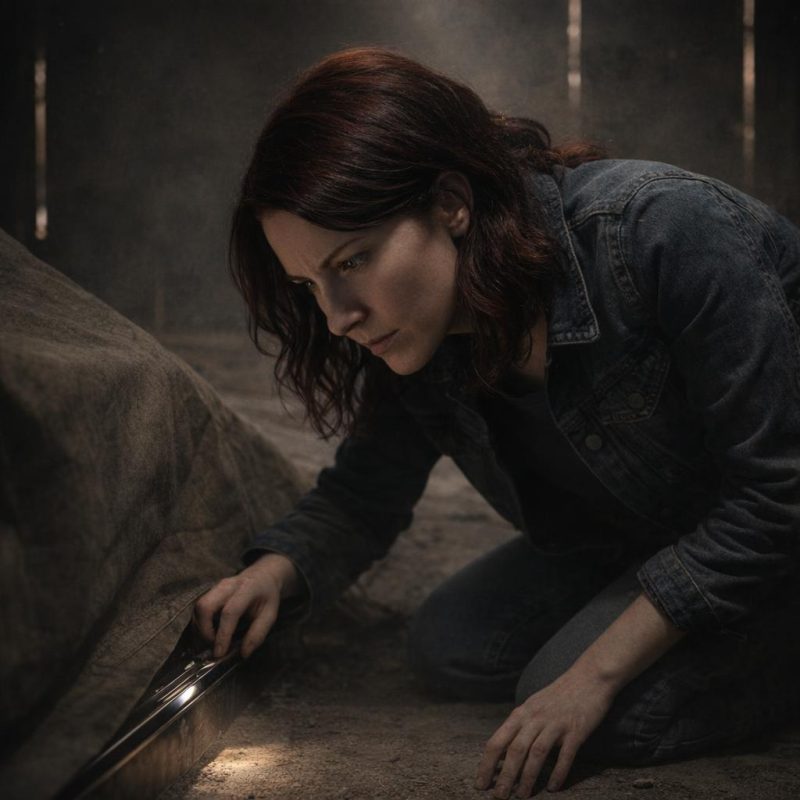 Image by RM AI
The Pristine Vintage Car
I grab the edge of the tarp with both hands and pull. The canvas is heavy and it resists for a moment, the weighted corners dragging, but then it slides and bunches and comes free all at once and I have to step back to keep from tripping over it. The tarp hits the floor in a heap. I straighten up. I look. The car is burgundy — a deep, rich burgundy that seems to generate its own light in the dimness of the room, the kind of color that takes a dozen coats to achieve and a lifetime to maintain. The chrome catches every thin beam filtering through the wall gaps and throws it back doubled. The lines of the body are long and low and unmistakably mid-century, the kind of design that was already a statement when it was new and has only gotten more so with time. I know enough about cars to know what I'm looking at, and what I'm looking at is worth more than everything my cousins spent the last three days fighting over. I stand there with the tarp pooled around my feet, and the car gleams in the dim light like it has been waiting.
 Image by RM AI
Untouched Preservation
I walk around it once, slowly, the way you'd circle something you're not entirely sure is real. The paint is flawless. Not restored-flawless, where you can see the work if you look at the right angle in the right light — actually flawless, the original finish sitting on the body the way it left the factory, deep and even with no orange peel, no micro-scratches, no fading at the edges where sun and time usually win. I run one finger along the rear quarter panel and it comes away clean. The chrome on the bumpers is untarnished, bright as silverware that's never been used. I crouch at each wheel well in turn — the tires are properly inflated, the rubber still supple, no cracking along the sidewalls. Someone maintained this car. Not just stored it, maintained it, which means someone was coming in here regularly, keeping the tires pressurized, keeping the battery on a tender, keeping the whole thing in running condition while the rest of the estate sat and gathered dust. I complete the circuit and end up back at the driver's side, and I lean down and look along the entire length of the body from headlight to taillight, and there is not a single scratch or dent on it anywhere.
 Image by RM AI
The Interior
I pull the driver's door handle and it opens on the first try, smooth and solid, the latch releasing with a clean mechanical click that sounds like quality. The hinges don't groan. Of course they don't. I ease the door open the rest of the way and lean in. The interior is original — I can tell immediately, the way you can tell the difference between a reproduction and the real thing once you've seen enough of both. The seat upholstery is intact, no cracking, no splits along the seams, the stitching still tight and even. The dashboard is all original gauges, original knobs, the kind of instrument cluster that was designed to be looked at as much as used. The steering wheel is perfect. The headliner shows no sag. I reach in and touch the seat and it gives slightly under my hand, the foam still doing its job after all these years. I don't get in. I just stand there with the door open, leaning on the frame, taking it in. The smell that comes out of the car is old leather and something faintly chemical — a preservative of some kind, applied with care — and underneath both of those, the particular smell of careful preservation.
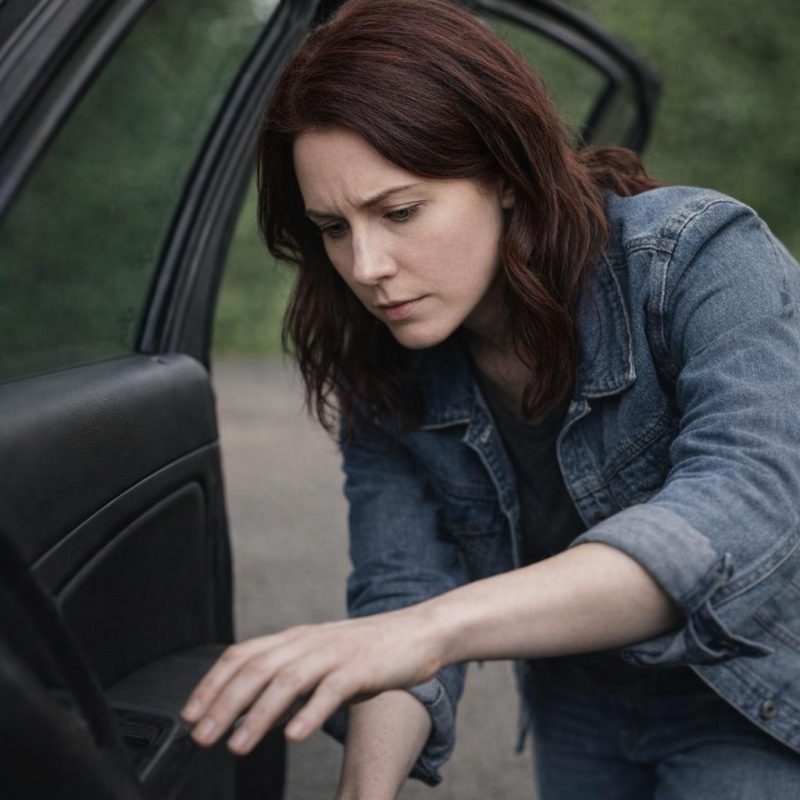 Image by RM AI
The Glove Box Papers
I reach across to the glove compartment and press the release. It opens smoothly, no sticking, no resistance. Inside, sitting on top of everything else, is a manila envelope, the kind with a metal clasp, sealed and flat. I pick it up carefully. It has some weight to it — papers, more than a few. I undo the clasp and open the flap and slide the contents out onto my palm. The registration is on top, the original document, the paper thick and slightly yellowed at the edges but completely legible, the ink still dark. The year and model are printed clearly across the top. Below that are the ownership documents, folded once, the creases soft from age but the paper intact. There's a maintenance log too, handwritten entries in the same careful hand going back decades, every service recorded, every fluid change, every tire rotation. I slide everything back into the envelope and refasten the clasp. I set it on the seat beside me. Outside the shed, somewhere across the property, I can faintly hear Marcus's voice carrying on the wind, still arguing about something. In here, there is only the car, and the documents preserved in their protective envelope.
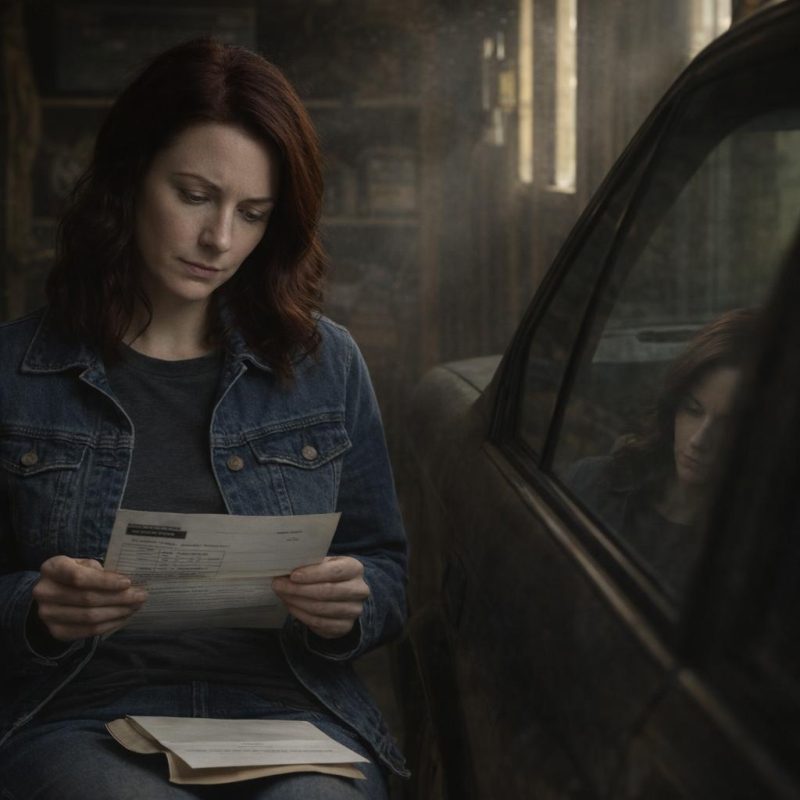 Image by RM AI
Missing from Inventory
I reach into my jacket pocket and pull out the estate inventory — three pages, stapled in the corner, printed on the executor's letterhead. Patricia handed it to me at the start of all this, the official record of everything the estate contains. I unfold it carefully and smooth it against my knee. The first page covers the jewelry: diamond bracelets, pearl earrings, a sapphire pendant, each item numbered and appraised. The second page lists the watches — gold, silver, a vintage chronograph — and then the household furniture, the artwork, the silver flatware. The third page covers miscellaneous items: tools, garden equipment, a storage chest. I read every line. I read it again. I turn back to the first page and start over, slower this time, checking each numbered entry against what I know is sitting ten feet behind me. There is no vehicle listed. No car, no automobile, no stored conveyance of any kind. Not under miscellaneous. Not under a separate addendum. Not anywhere across all three pages of the official estate inventory.
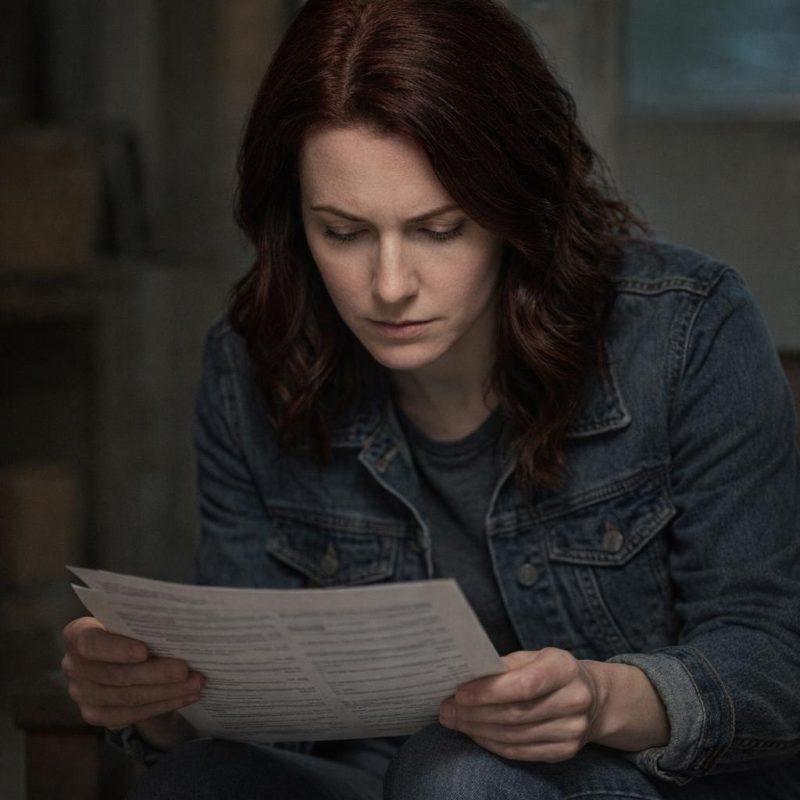 Image by RM AI
Identifying the Model
I slide the registration back out of the manila envelope and hold it flat in both hands. The paper is thick, the kind they used to print official documents on, and the ink has held up remarkably well for its age. I read the make first, then the model designation printed just below it. I go still. I've heard that name before — not from family, not from anything connected to this estate, but from a conversation at a collector's event I attended years ago, the kind of casual mention that lodges somewhere in the back of your mind without you knowing why. Someone had described it as one of the most undervalued finds in the vintage market, a model produced in limited numbers over a short window, most of them gone now, the survivors scattered across private collections and museum floors. I look up from the paper and back at the car. The lines of it make a different kind of sense now. The proportions, the chrome trim, the particular curve of the rear quarter panel — none of it is accidental. My hands are not entirely steady when I slide the registration back into the envelope.
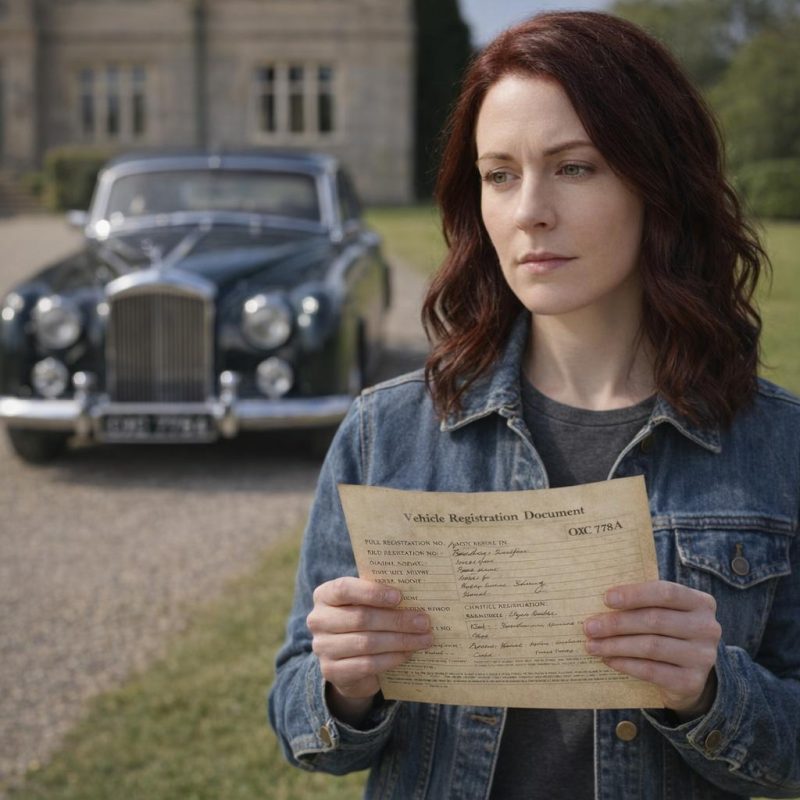 Image by RM AI
Auction Records
I pull out my phone and open a browser. The signal in the shed is weak but it holds. I search the make and model from the registration, adding the year, then the word auction. The results load slowly, one by one. The first listing is from a major auction house, a sale completed fourteen months ago. I tap it open. The hammer price is listed clearly at the top of the page. I close the tab and open the next result. Different auction house, different year, same model. The number is higher. I find a third sale, then a fourth. Every one of them lands in the same range — six figures, all of them, some pushing toward the upper end of that range depending on condition and provenance. I read the numbers three times each, the way you do when you're not sure your eyes are reporting accurately. The shed is very quiet around me. Outside, somewhere across the property, a door closes. I don't move. I just sit with the registration in my lap and the phone in my hand, and the numbers on the screen settle into something that no longer feels like possibility.
 Image by RM AI
Worth More Than Everything
I sit in the driver's seat with the door open and do the arithmetic in my head, slowly, because I want to get it right. The diamond bracelets — I remember the appraisal figures Patricia read aloud, the ones that sent Marcus and my cousin Vanessa into their loudest argument of the afternoon. Several thousand each. The gold watches added more, maybe another few thousand on top of that. I remember thinking at the time that those numbers sounded significant. I add them up now, all of it, every item my cousins fought over from the moment we walked through the estate's front door. Then I look at the auction records still open on my phone screen. The car's lowest comparable sale is more than double the combined total of everything else. The highest comparable sale is nearly four times it. I set the phone face-down on the passenger seat. The leather is cracked but the seat holds firm. Through the shed's small window, the afternoon light is going flat and gold. The numbers don't require any commentary from me. They simply are what they are.
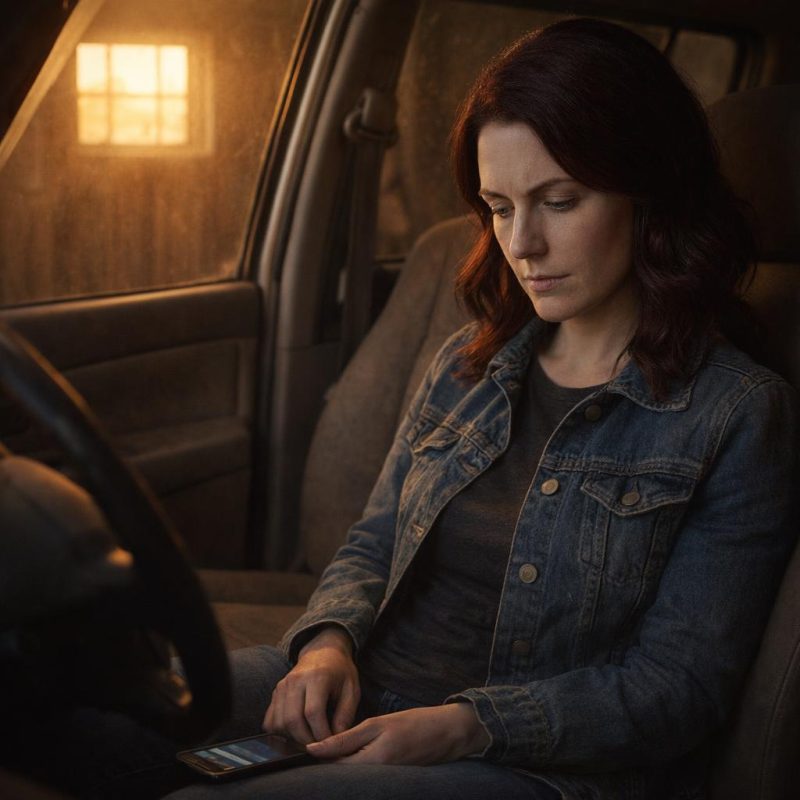 Image by RM AI
Legal Confirmation
I stay in the driver's seat and dial an estate attorney — someone I found through a referral two years ago, never needed until now. He picks up on the third ring. I explain the situation in plain terms: a property item discovered on the estate grounds, not listed on the official inventory, documentation present and intact. He asks me to confirm the item is physically on the estate property. I confirm it. He asks whether the inventory was prepared by a licensed executor. I tell him yes. He is quiet for a moment, and then he explains it clearly: property present on an estate but absent from the official inventory occupies a specific legal position, and the individual who discovers and documents such property, particularly with original ownership papers in hand, holds a defensible claim that the estate executor would need to actively contest. He says the word contest the way lawyers say things they don't expect to happen. I ask him to say it plainly. He does. I thank him and end the call. The shed settles around me in the late afternoon quiet, and his voice stays with me, even and unhurried, laying out the law the way someone does when the law is simply on your side.
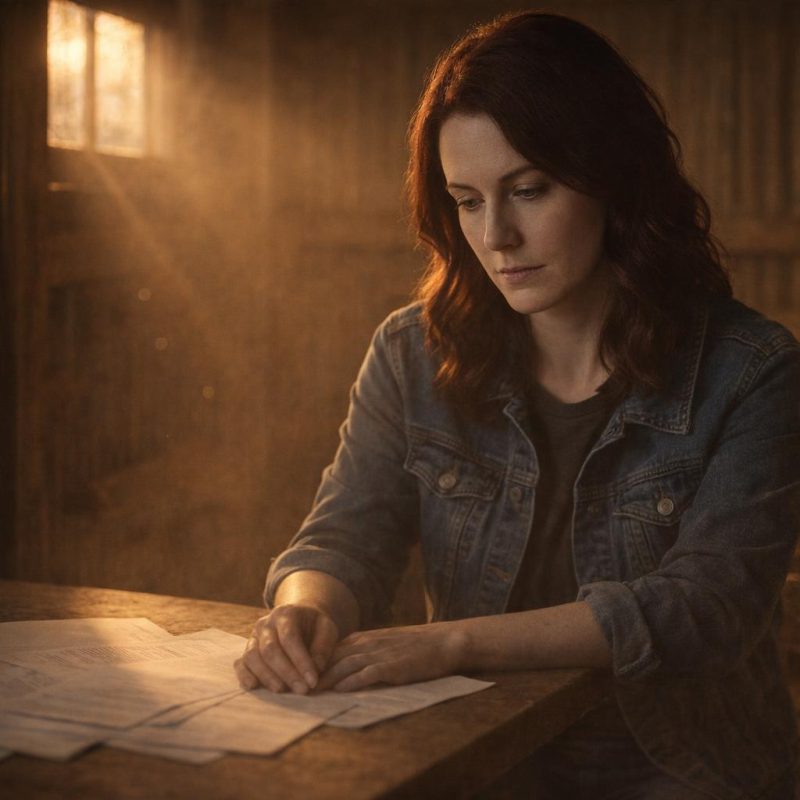 Image by RM AI
Documenting Everything
I get out of the car and start at the beginning. The concealed door first — I photograph the exterior wall of the shed, then the door itself, then the lock and the keyhole, then the key sitting in my palm for scale. I move into the chamber and photograph the space from every angle: the dimensions of the room, the bare bulb overhead, the dust on the floor undisturbed except for my own footprints. Then the car. I work around it methodically, front to back, both sides, the interior through the open driver's door, the engine bay, the trunk. I photograph the VIN plate on the dash and the one stamped into the firewall. Then I lay the documents out on the hood one at a time — the registration, the ownership papers, the maintenance log — and photograph each one individually, close enough that every line of text is legible. I check the timestamps on the photos as I go. Everything is logged, sequenced, and clear. When I'm done, I step back to the doorway and take one last shot: the full width of the hidden chamber, the car sitting exactly where it has been sitting for decades, in a room that no inventory ever recorded.
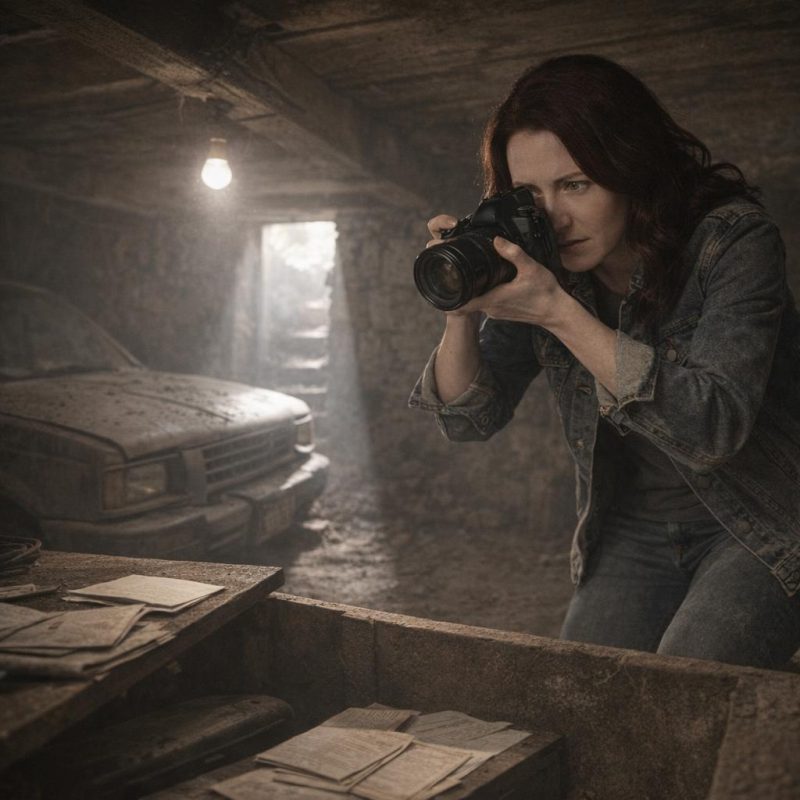 Image by RM AI
Arranging Transport
I search vintage car transport on my phone and find a specialist company three counties over with a website that lists enclosed haulers and climate-controlled trailers. I call the number. A man answers, professional and unhurried, and I describe the situation: a vintage vehicle, original condition, stored indoors, needs enclosed transport, access through a standard shed door. He asks the make and model. When I tell him, there's a brief pause — the kind that means he knows exactly what I'm talking about. He asks about the floor surface and the ceiling clearance. I give him the measurements I paced out earlier. He confirms they have the right equipment. I ask about availability. He puts me on hold for less than a minute. When he comes back, he tells me they had a cancellation and can reroute a crew. I ask when. He says tomorrow morning, early, if I can have the access point clear by eight. I tell him it will be. I write down the confirmation number on the back of the inventory sheet — the same inventory sheet that lists everything except the one thing that matters most. The man on the phone says they'll see me tomorrow.
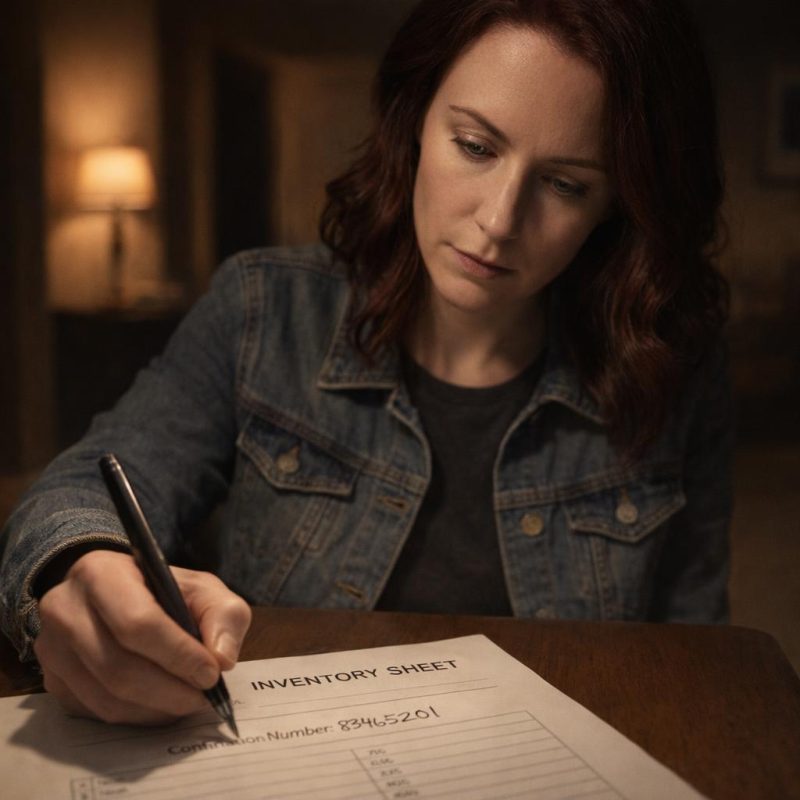 Image by RM AI
The Transport Crew Arrives
The transport truck comes up the estate drive at ten past eight, a long enclosed hauler with the company name stenciled on the side in plain block letters. Two crew members climb down from the cab, both of them moving with the unhurried efficiency of people who do this regularly. I meet them at the gate and walk them around to the potting shed without much conversation. The older one carries a clipboard. The younger one has a flashlight already in hand. I unlock the outer shed door, then the concealed door, and step back to let them through. They enter the hidden chamber and stop. The older one sweeps his flashlight slowly across the car from front to rear. The younger one crouches near the front wheel well and looks at the undercarriage. Neither of them says anything for a moment. Then the older one straightens up, clicks off his flashlight, and looks at me with an expression I wasn't entirely prepared for.
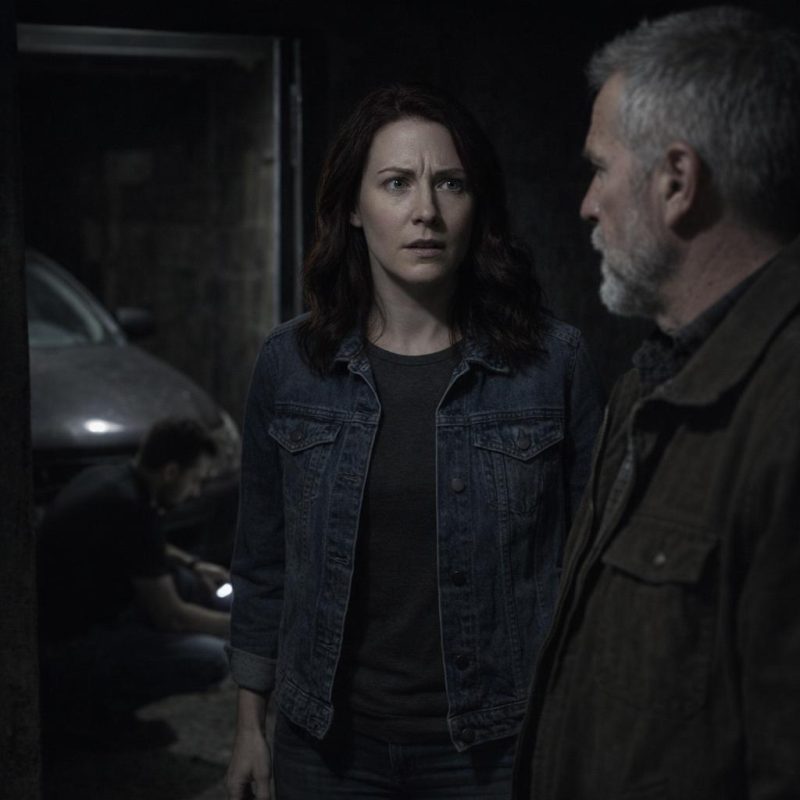 Image by RM AI
Extraction
The older crew member doesn't say much after that long look. He just nods once, clips his flashlight to his belt, and steps back outside to radio the driver. Within ten minutes they've positioned the ramp system at the concealed door — two heavy aluminum tracks angled down from the threshold to the ground, bolted together with the kind of care that tells me they've done this with cars worth worrying about. The younger one attaches a hand winch to the front axle while the older one guides from the side, calling out measurements in a low voice. I stand back and let them work. The car moves in inches at first, the tires rolling reluctantly over decades of settled dust. Then the front wheels find the ramps and the whole thing shifts into something more deliberate, more controlled. I watch the crew move in sync, one on each side, hands ready but not touching unless needed. The older one calls a halt twice to check the angle. The second time he waves them forward and doesn't stop again. The rear wheels clear the threshold. The car rolls down the ramps and out through the potting shed door, and for the first time in what the logbook said was forty-one years, it sits in open daylight.
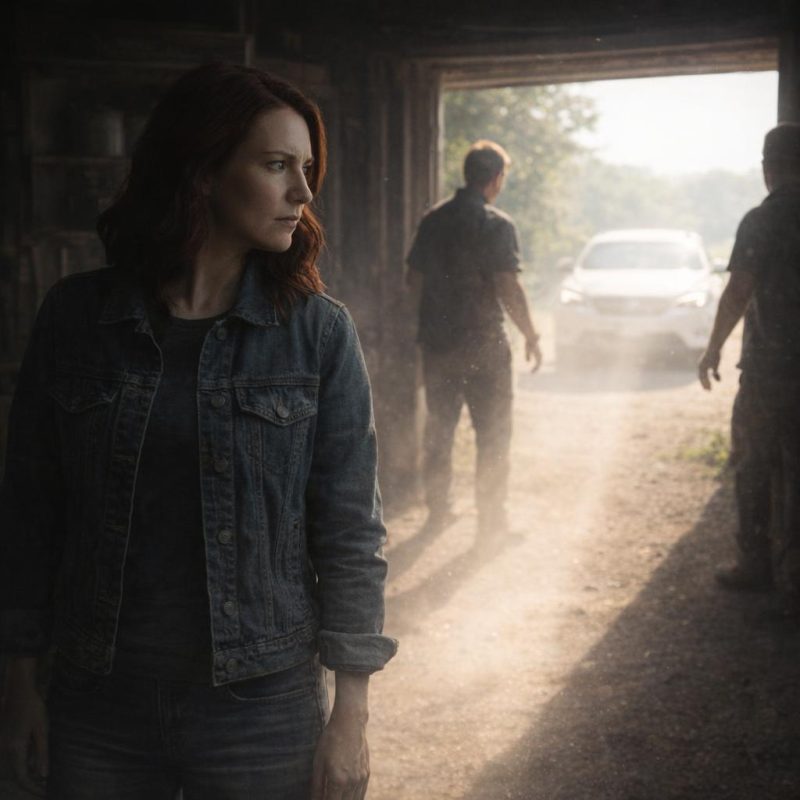 Image by RM AI
The Cousins Arrive
I hear the car before I see it — tires on gravel moving faster than the estate drive really calls for. Marcus's rental pulls in hard and stops at an angle that blocks half the turning circle. He's out of the door before the engine cuts. Vanessa follows a beat behind, already scanning the property with that evaluating look she uses when she's trying to price something. They both stop when they see the trailer. It's hard to miss — a long enclosed flatbed with the ramps still down and the crew running tie-down straps across the hood and rear quarter panels of the car. Marcus walks toward it without saying anything. Vanessa follows him. They stop about ten feet out and just look. The car is clean now in the morning light, the chrome catching what sun there is, the bodywork showing its age but also its shape — the kind of shape that makes people stop. I'm standing beside the trailer near the cab. Neither of them looks at me right away. They're still looking at the car, taking in what it is, what it means, what it was sitting under the same roof as the estate this whole time. The crew keeps working. The straps click tight one by one. Nobody speaks, and the quiet that settles over the driveway has a particular weight to it.
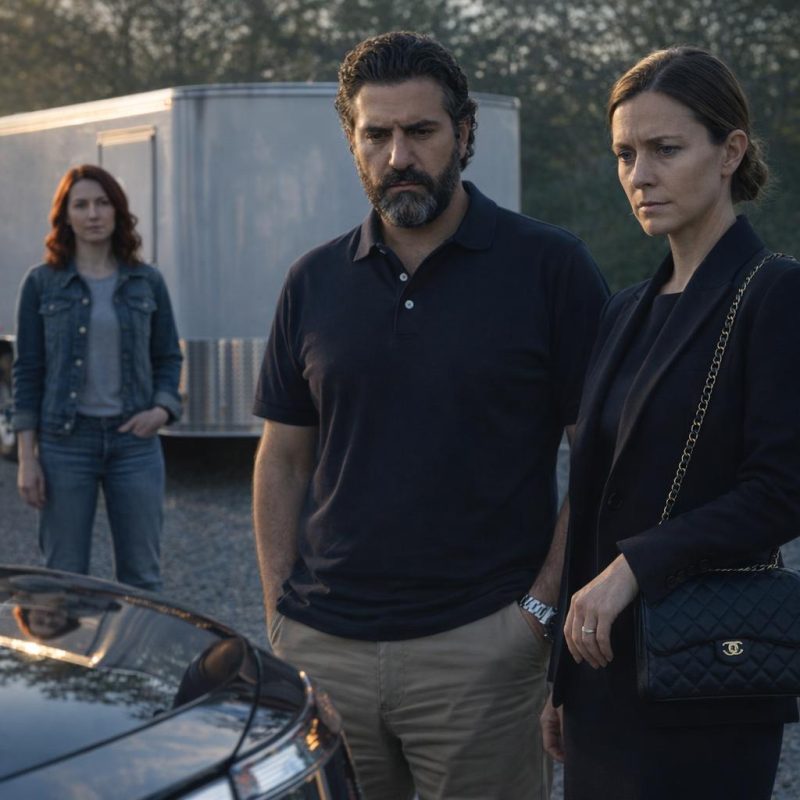 Image by RM AI
Stunned Silence
Marcus is the first to look at me. His mouth opens and then closes again, which is something I've genuinely never seen him do. He's a man who always has something to say — a complaint, a counter-offer, a dismissal — and right now he has nothing. Vanessa's gaze moves from the car to me and back to the car. She's done the math. I can see it in the way her jaw tightens and then releases, the way her eyes track the chrome trim and the bodywork and the crew's careful, practiced movements. She knows what this kind of attention costs. She knows what it means when professionals handle something like it's worth handling. Marcus looks at Vanessa. Vanessa looks at Marcus. Neither of them says a word. There's no argument to make, no angle to work, no version of this morning where they come out ahead. They fought over the jewelry for three days. They called lawyers. They sent emails with subject lines in all caps. And the whole time, the thing that mattered was locked in a shed at the back of the property with a rusty key that nobody wanted. I don't explain any of this. I don't need to. The crew finishes the last strap and steps back, and the silence between the four of us settles like something that has finally found its proper weight.
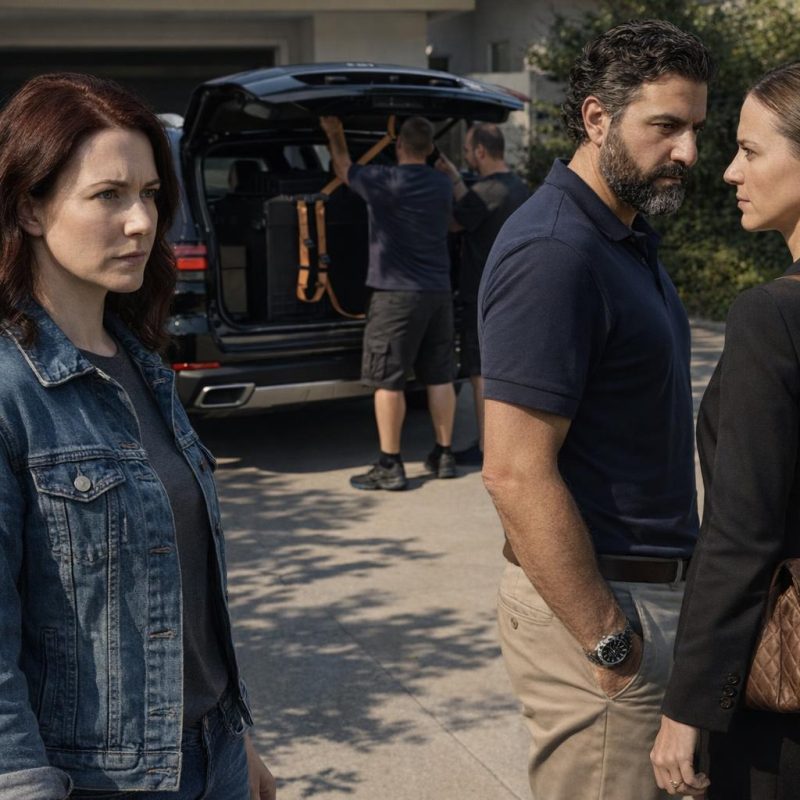 Image by RM AI
The Rusty Key
The older crew member comes around from the back of the trailer and gives me a nod. That's the signal. I pick up my bag from the ground near the gate post, the one I packed this morning before anyone else arrived, and I walk to the passenger side of the cab. The driver already has the engine running. I climb up, pull the door shut, and settle into the seat. Through the side mirror I can see Marcus and Vanessa still standing in the driveway. Neither of them has moved toward their car. Vanessa has her jewelry box tucked under one arm — the one with the sapphire pieces she spent two days arguing over. Marcus is holding his in both hands, the way you hold something you're not sure what to do with. The driver checks his mirrors, releases the brake, and eases the rig forward. The estate drive is long enough that I watch them in the mirror for a good thirty seconds before the tree line takes them. They're still standing there when it does — Marcus with his box, Vanessa with hers, both of them watching the trailer carry the car down the drive and out through the gate.
 Image by RM AI