
I Took A Call Center Job At 58 To Pay The Bills. What I Uncovered Led Back To My Late Husband's Biggest Secret
I Took A Call Center Job At 58 To Pay The Bills. What I Uncovered Led Back To My Late Husband's Biggest Secret
The First Day
I walked into the Meridian Solutions call center at seven fifty-five on a Monday morning and stood in the lobby for a full minute before I could make my feet move. The place smelled like new carpet and burnt coffee, and every single person I could see through the glass partition looked like they could have been my kid. Not my coworker. My kid. I'm fifty-eight years old, and I hadn't started a new job in over two decades — not since Tom and I opened the craft store together back when our knees still worked and the future felt like something we were building instead of something we were surviving. Tom had been gone three years by then, and the store had followed him out the door about eighteen months after that. The economy, the online competition, my own grief — take your pick. I'd burned through most of what we had just keeping the lights on. So there I was, badge clipped to my cardigan, trying to look like I belonged among people who'd never heard of a Rolodex. The HR woman showed me to my cubicle — a little gray box with a headset, a monitor, and a sticky note that said WELCOME in someone's cheerful handwriting. I sat down, smoothed my slacks, and let the hum of the place settle around me. Starting over at fifty-eight felt exactly as heavy as it sounds.
 Image by RM AI
Learning the System
The second day was all training, which I was grateful for because it meant nobody expected me to actually know what I was doing yet. A young man named Brian ran the session — friendly kid, button-up shirt, the kind of smile that made you think he genuinely wanted you to succeed. He walked us through the phone system, the ticketing software, the escalation protocols. I took notes by hand in a spiral notebook I'd brought from home, which got a few sideways glances from the younger trainees who were typing everything into their laptops. I didn't care. Writing things down is how I remember them, and I needed to remember everything. The other trainees were polite enough, but there was a gap there that nobody was going to pretend didn't exist. They talked about apps and streaming shows during the breaks, and I smiled and nodded and refilled my coffee. Brian covered a lot of ground — account inquiries, billing disputes, password resets, the usual. Then, almost as an aside, he mentioned that certain types of calls — account discrepancy complaints, he called them — should be transferred to a dedicated internal department rather than handled at the front-line level. He moved on to the next slide before I'd even finished writing it down, and I remember thinking I'd need to ask about that extension number later.
 Image by RM AI
Finding My Rhythm
By the end of my second week, I had a rhythm. Clock in, settle the headset, pull up the queue, and go. Most of the calls were straightforward — someone forgot their password, someone wanted to know why their bill was higher this month, someone needed to update a mailing address. I was slower on the keyboard than the younger agents, but I was careful, and careful counted for something. I started to feel the shape of the job, the way you do when your hands begin to know what to do before your brain catches up. The workplace culture around me was casual in a way I wasn't used to — people eating lunch at their desks, music bleeding out of earbuds, a lot of texting between calls. I kept to myself mostly, focused on my screen, tried not to make errors. Every call I closed cleanly felt like a small victory. I thought about Tom sometimes, in the quiet stretches between calls — how he would have teased me about wearing a headset, how he always said I had a good phone voice. I let myself smile at that and then I let it go, because there was another call coming in and I needed to be present for it. When my shift ended that Thursday, I logged out, gathered my notebook, and walked to my car in the dark. I hadn't made a single mistake that day.
 Image by RM AI
The First Week
Friday afternoon of my first full week, I sat in the break room with a cup of vending machine coffee and tried to remember the last time I'd felt this tired in a good way. My feet ached, my ears were ringing faintly from the headset, and I had a small but genuine sense of accomplishment sitting somewhere in my chest. I'd made it through. The protocols, the software, the queue — I could handle it. What I couldn't quite handle was the social part. The younger agents had their own language, their own inside jokes, their own lunch groups, and I didn't fit into any of it. Nobody was unkind. They just didn't quite know what to do with me, and honestly, I didn't know what to do with them either. One girl — Megan, I think, bright blonde hair, always animated — had asked me on Wednesday what I used to do, and when I said I ran a craft store, she'd said that was so cool in a tone that was sweet but also final, like a door closing gently. The craft store felt like another lifetime now. Tom felt like another lifetime. I'd spent twenty-two years building something with that man, and now I was sitting in a break room that smelled like microwaved soup, trying to figure out how to make small talk with people who were born the year we got married. The relief of surviving the week was real, but so was the quiet around it.
 Image by RM AI
Routine Sets In
The second week moved faster than the first, which I took as a good sign. I stopped second-guessing every keystroke and started trusting my own instincts a little more. My first paycheck hit my account on Thursday, and I sat in my car in the parking garage and looked at the deposit notification on my phone for probably longer than was dignified. It wasn't much, but it was mine, and it was real, and it meant the electric bill was covered and the refrigerator could have actual food in it again. Small things. Important things. I called my sister that night and told her I thought I was going to be okay, and she cried a little, which made me cry a little, and then we both pretended we hadn't. Back at work, I was handling the routine calls well enough that I'd stopped dreading the queue. Password resets, billing questions, account updates — I had a script in my head now and I followed it. Then, late on Friday afternoon, a call came in that didn't fit the script. The man on the line wasn't confused. He was furious. He said there were charges on his account he had never authorized, that he'd called three times already and gotten nowhere, and that he wanted to speak to someone who could actually explain what was happening to his money.
 Image by RM AI
The Strange Call
The woman on the line that Tuesday sounded more bewildered than angry, which somehow made it harder to listen to. She kept saying she didn't understand, that she'd never agreed to any of it, that she'd been a customer for eleven years and nothing like this had ever happened before. I pulled up her account and the information on my screen didn't line up cleanly with what she was describing. There were entries I couldn't immediately explain — not flagged as errors, not marked as disputed, just sitting there in the record like they belonged. I asked her a few clarifying questions, trying to buy myself time to make sense of what I was looking at, but the more she talked, the less the screen made sense. Something about the call felt off in a way I couldn't quite name — not wrong exactly, just not right either. I told her I understood her concern, which I did, and that I was going to connect her with the team best equipped to help her, which was what the protocol said to do. I found the extension in my notebook — the one Brian had mentioned in training, the one I'd written down and circled because I knew I'd need it. I transferred the call, watched the line go quiet on my screen, and sat there for a second. The extension number matched exactly what the trainer had written on the board that first week.
 Image by RM AI
Following Protocol
The next morning I caught Brian near the printer and asked him about the special department — what they actually did, who staffed it, whether I was supposed to document the transfers anywhere specific. He turned toward me with that easy smile of his and explained that certain account issues required a dedicated resolution team, that it was above the front-line level, and that my job was simply to route those calls and move on. He said it the way you'd explain something obvious to someone who'd asked a reasonable but unnecessary question. I told him I just wanted to make sure I was handling the documentation correctly, and he said the system logged the transfer automatically, so there was nothing extra I needed to do. I nodded and wrote that down anyway, out of habit. He asked if I had any other questions, and I said no, and he said great, and that was that. The whole conversation lasted maybe three minutes. It wasn't unfriendly. Brian was never unfriendly. But there was something in the way he wrapped it up — a slight shift in his posture, a small pivot toward the hallway — that made it clear the topic was finished. I watched him walk back toward the supervisor station, his shoulders relaxed, his pace unhurried, and the conversation already behind him before he'd turned the corner.
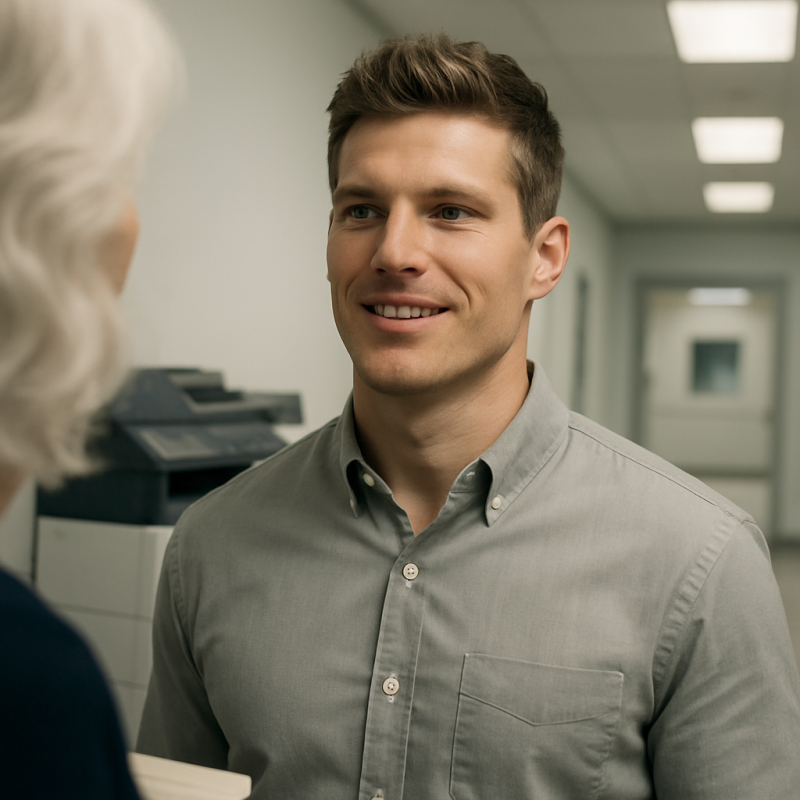 Image by RM AI
More Transfers
Over the next several days, I transferred maybe half a dozen more calls to that extension. A man who said his account showed a service he'd never signed up for. A woman who'd noticed a recurring charge she couldn't trace back to anything she'd agreed to. An older gentleman who was patient and soft-spoken but clearly distressed, reading me dates and amounts from a notebook he'd kept. Each time, I followed the protocol. I pulled up the account, listened to the complaint, told the customer I was connecting them with the right team, and transferred the call. The system logged it automatically, just like Brian said. After the third or fourth time, I stopped pausing after the transfer. I stopped sitting with the quiet for that extra second. The calls became part of the rhythm of the day, the same way billing disputes and password resets were part of the rhythm — just another category, just another extension to dial. I told myself that every company had specialized departments for complicated issues, that this was probably some kind of fraud resolution team doing exactly what it was supposed to do. By the end of that week, transferring those calls felt no different from any other part of the job.
 Image by RM AI
Dorothy's Call
I'd taken maybe fifty calls that week, and most of them had blurred together the way they always do — billing questions, password resets, the occasional person who just needed someone to talk to for a minute. But this one was different from the first word. The woman on the line — she told me her name was Dorothy — was crying before she even finished saying hello. Not the frustrated kind of crying you sometimes get from people who've been on hold too long. This was something quieter and more broken, the kind that comes from someone who's been sitting alone with something terrible for a while. She was elderly, I could tell that much, and she was trying so hard to hold herself together while she explained what had happened. She said she'd gotten a call from someone who claimed to be from the company, that they'd walked her through a series of account changes, told her it was for her protection, and that by the time she understood something was wrong, thousands of dollars had been moved out of her account. Thousands. She kept apologizing for crying, which made it worse somehow. I told her she had nothing to apologize for and that I was going to help her. I meant it. But even as I pulled up her account and started typing, I couldn't shake the sound of her voice — the way it cracked on the word savings, like the word itself had weight she could barely carry.
 Image by RM AI
The Vanishing File
After I got Dorothy off the line, I flagged her account for supervisor review the way I was supposed to — added the note, marked the priority level, did everything by the book. Then a call came in and I took it, and then another one after that, the way the queue never really lets you breathe. It was maybe fifteen or twenty minutes before I had a gap and thought to check back on Dorothy's file, just to make sure the flag had registered properly. I typed her name into the search field and got nothing. I figured I'd spelled it wrong, so I tried again, slower this time. Still nothing. I pulled up the account number I'd written on my notepad and entered that directly. The system returned a blank screen. I went back through my call log to confirm I hadn't imagined the whole thing — the call was right there, timestamped, duration logged, everything accounted for. But when I searched for the account itself, the screen just sat there empty, like Dorothy Chen had never existed in the system at all.
 Image by RM AI
Asking Questions
I waited until the queue thinned out a little before I walked over to Brian's station. He was the kind of supervisor who always looked like he was genuinely happy to help, and that afternoon was no different — he turned toward me with that easy smile before I'd even said anything. I told him what happened. I explained about Dorothy's call, the flag I'd added, and then the account just being gone when I checked back. I kept my voice even and matter-of-fact, the way you do when you want someone to take you seriously. He listened, nodded a couple of times, and then told me that files sometimes get pulled into an internal review queue and temporarily become inaccessible to floor agents. He said it was a system thing, nothing unusual. I asked if that meant the flag I'd added would still be seen by whoever was reviewing it. He said he was sure it would be handled appropriately. Then he said something that stuck with me — that my job was to take the calls and follow the protocols, and that the back-end processes were above my access level and not something I needed to worry about. He said it pleasantly, the way you'd tell someone not to stress about something minor. But I walked back to my desk with the distinct feeling that I'd just been told, very politely, to stop asking.
 Image by RM AI
The Warning
I spent the rest of that shift turning Brian's words over in my head. He hadn't been rude about it. He hadn't raised his voice or looked at me like I was causing trouble. He'd been perfectly friendly, the way he always was, and that was almost the problem — because the friendliness didn't match the firmness underneath it. I kept coming back to Dorothy. The way she'd cried. The way she'd said the word savings like it cost her something just to say it out loud. And then her entire file, gone, like the call had never happened. Brian's explanation made a kind of surface sense, sure — internal review queues, access levels, back-end processes. But something about the way he'd redirected me, the way he'd wrapped it up so neatly and pointed me back toward my desk, sat wrong. I wasn't a person who made trouble. I'd spent thirty years keeping my head down and doing what was asked of me, and I knew the difference between a reasonable explanation and a door being closed in your face with a smile. I didn't know what was happening with those files. I couldn't prove anything was wrong. But I knew I wasn't going to be able to sit at that desk day after day and pretend I hadn't heard Dorothy's voice, or that her account hadn't vanished into thin air the moment I flagged it.
 Image by RM AI
Watching Carefully
I drove to work the next morning with a different kind of quiet in the car than usual. Not the tired quiet of someone dreading another shift — more like the focused quiet of someone who'd made a decision and was settling into it. I wasn't going to do anything dramatic. I wasn't going to confront anyone or start pulling at threads in ways that would get me noticed. I was just going to pay attention. I'd spent enough years in jobs where you learned to read a room — where you figured out which conversations stopped when you walked in, which names made people's expressions go careful, which questions got answered and which ones got redirected. I knew how to watch without looking like I was watching. So that morning I took my calls, I followed my protocols, I smiled at the right moments and kept my voice steady and professional. But I also started noticing things I'd let slide past me before. Which calls made the agents around me go a little quieter. Which transfers seemed to move faster than others. Which supervisors glanced up from their screens when certain calls came through. I wasn't sure yet what any of it meant. But I'd spent enough of my life ignoring things that turned out to matter, and I wasn't willing to do that anymore. Some things deserved to be noticed, even if you didn't yet know what you were looking at.
 Image by RM AI
Business as Usual
The rest of that week passed the way weeks do when you're waiting for something you can't name. I took my calls. I handled my transfers. I ate lunch at the same table in the break room and made small talk about the weather and the coffee machine that kept running out of dark roast. From the outside, I probably looked exactly like what I was supposed to be — a new hire settling into the rhythm of the job, nothing unusual, nothing to notice. But inside I was wound tight the whole time, watching and waiting and coming up empty. Nothing jumped out at me. The supervisors moved around the floor the way they always did. The calls came in and got resolved or transferred, same as always. I started to wonder, more than once, whether I'd built something out of nothing. Maybe Dorothy's file had genuinely been pulled for a legitimate review. Maybe the system had a glitch. Maybe I was a fifty-eight-year-old woman who'd had a hard few years and was looking for patterns in things that didn't have any. I'd heard that grief could do that to you — make you suspicious of ordinary things, make you see edges where there weren't any. I didn't dismiss the thought. But I didn't fully believe it either. I just kept showing up, kept watching, and sat with the not-knowing like it was something I'd learned to carry.
 Image by RM AI
The Pattern Emerges
It was a Tuesday when I flagged the second complaint — a man who said he'd been billed for three months of a service he'd never requested, and who had the kind of careful, methodical way of speaking that told me he'd been trying to get this resolved for a while. I added the note, marked the account, and went back to the queue. Two hours later, during a slow stretch, I pulled up his account to check the status of the flag. Gone. The account was there, but the flag had vanished, and the note I'd added wasn't in the log. I sat with that for a minute, telling myself there could be an explanation. Then I thought about Dorothy. I went back through my recent call history and found two other accounts I'd flagged in the past week for similar complaints — unauthorized charges, account changes the customers said they hadn't authorized. I wrote the account numbers down on a piece of paper I folded and put in my jacket pocket, not in my work notepad. I didn't know what I was going to do with them. I just knew I needed something that existed outside the system. Then, on Wednesday morning, I flagged a third complaint — a woman who said a charge had appeared on her account after she'd called in about a billing error — and checked back on it after my afternoon break. The file was gone.
 Image by RM AI
Nervous Supervisors
Once I started noticing it, I couldn't stop. It wasn't just the files. It was the people managing them. There were three supervisors who rotated through the floor on different shifts, and I'd been watching all of them, trying to be casual about it, trying not to stare. Most of the time they moved through the day the same way anyone does — distracted, a little harried, checking their phones when they thought no one was looking. But every so often, something would change. One of them would go still at his screen in a way that was different from ordinary concentration. His shoulders would pull in slightly, and he'd reach for his keyboard with a kind of deliberateness that didn't match the pace of everything else around him. I noticed it twice with the same supervisor — Tom — and both times it happened right after a call came through that he'd taken directly instead of routing to the floor. I didn't know what was on his screen during those moments. I couldn't see it from where I sat. But I started timing my trips to the printer and the water cooler differently, varying my routes past the supervisor stations just enough to get different angles. It was on one of those passes, late on a Thursday afternoon, that I walked by Tom's station and watched him reach forward and close his screen in one quick motion, his eyes coming up to meet mine for just a second before he looked away.
 Image by RM AI
Hidden Records
After the thing with Tom and the screen, I started paying closer attention to the employee directory — the internal one, the kind most people never bother opening because it's just a list of names and departments and hire dates. I told myself I was just orienting myself, getting a feel for who worked where. But really I was looking for something, even if I couldn't have said exactly what. Most of the entries were unremarkable. Name, department, start date, supervisor. Standard stuff. But then I started cross-referencing a few names against the physical personnel files in the shared drive — the ones HR had scanned in — and something started to feel off. Small things at first. A department listed in the directory that didn't match the one in the file. A supervisor name that had changed with no notation explaining why. I told myself it could be clerical errors. Systems get out of sync. People forget to update things. But then I pulled up an entry for a floor agent I'd seen working the accounts queue for at least three months — someone who'd clearly been here a while — and the directory listed his hire date as eleven days ago. I clicked over to his personnel file. The hire date there was fourteen months earlier.
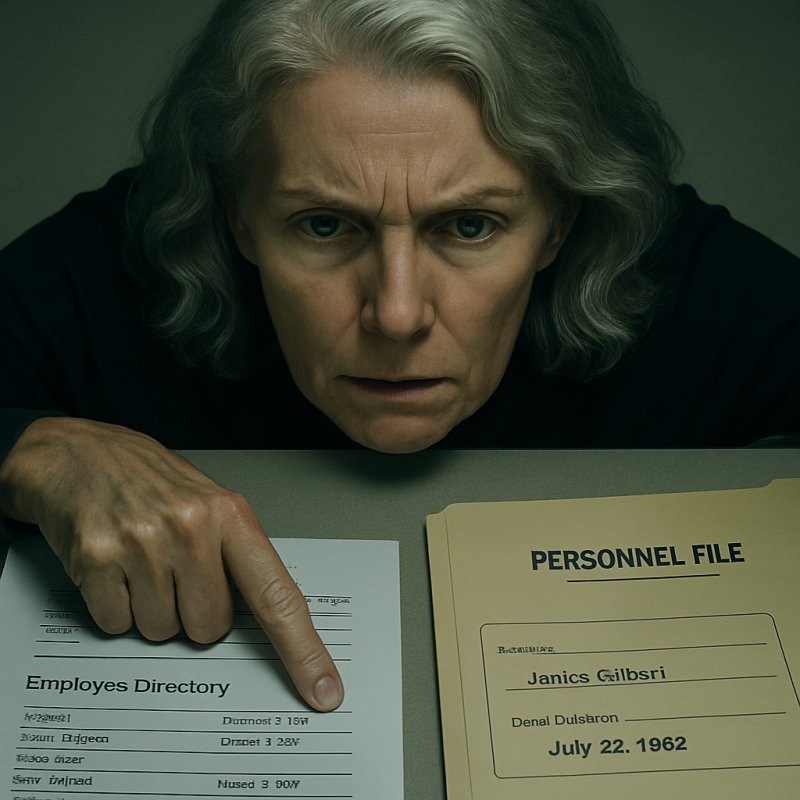 Image by RM AI
Private Notes
I didn't tell anyone. I wasn't ready to, and honestly I wasn't sure what I'd even say. I bought a small spiral notebook on my lunch break — the cheap kind, narrow-ruled, fits in a purse without making a lump — and I started writing things down that same evening. Account numbers I'd seen flash across screens before they disappeared. Dates and approximate times when Tom had gone still at his station. The hire date discrepancy I'd found in the directory. The name of the floor agent whose file didn't match. I wrote in small, tight handwriting, the kind my mother used to call 'economical,' and I kept the notebook tucked under my wallet where it wouldn't slide around. It felt a little dramatic, if I'm being honest. Like something out of a movie about a woman who gets in over her head. But every time I thought about stopping, I'd remember the way Tom had closed that screen and looked up at me, and the feeling would come back — that low, persistent hum of something being wrong that I couldn't shake no matter how many times I told myself I was probably imagining it. By the end of the week, three pages were filled. I sat in my car before driving home, the notebook closed in my lap, full of questions I still couldn't answer.
 Image by RM AI
Meeting Rachel
I'd noticed Rachel before I ever spoke to her. She ate lunch alone most days, always at the same small table near the window at the far end of the break room, always with a book or her phone, always with the particular stillness of someone who has learned to take up as little space as possible. I recognized it because I'd worn that same stillness myself, in the months after my husband died, when being around people felt like too much effort and being alone felt like the only honest option. I sat down across from her one Tuesday with my sandwich and my coffee and said something forgettable about the vending machine being out of the good chips again. She looked up, a little startled, and then smiled — a real one, not the polite kind people use to end conversations. We talked about small things at first. The commute. The headsets that gave everyone a headache by noon. She mentioned she had two kids at home and that this job fit her schedule better than her last one. She was careful with her words in a way I respected, not guarded exactly, just measured. We were almost done eating when she paused and looked down at her coffee cup and said, almost to herself, that some things about this place seemed a little strange to her. The quiet way she said it settled over the table like something neither of us was quite ready to name.
 Image by RM AI
Comparing Notes
We started eating lunch together every day after that, and for the first week we kept things light — kids, commutes, the particular misery of wearing a headset for eight hours. But I could feel us both circling something, the way you do when you're not sure yet if the other person is safe. It was Rachel who moved first. She mentioned, carefully, that she'd noticed certain customer files seemed to get flagged and then just vanish from the queue before anyone followed up. She said it like she was testing the temperature of the water. I set down my fork and told her I'd seen the same thing — specific accounts, elderly customers mostly, complaints that were there one day and gone the next. Something shifted in her expression. She reached into her bag slowly, the way you do when you're not sure you're making the right call, and pulled out a small notebook — narrow-ruled, spiral-bound, almost identical to mine. She opened it to a page dense with dates and account numbers written in careful, small handwriting. I pulled mine out and laid it on the table next to hers. We looked at each other, then back down at the two notebooks sitting side by side, and the lists on her pages matched mine almost exactly.
 Image by RM AI
Shared Evidence
The next day we took our lunch break at the same time and sat in Rachel's car in the far corner of the parking lot, notebooks open across our laps, the engine off and the windows cracking in the October chill. We went through everything methodically, the way you do when you're trying to be sure you're not just seeing what you want to see. The account numbers lined up. The dates lined up. And the more we compared, the clearer a shape started to emerge — not a full picture, not yet, but an outline. A striking number of the complaints that had disappeared involved customers who were elderly, or who'd mentioned being on a fixed income, or who'd used language in their call notes that suggested they were confused or frightened about their finances. And threaded through several of the cases, in the notes fields, was a reference to the same third-party service — a name neither of us recognized, mentioned almost in passing, like a routine referral. We couldn't say what it meant. We couldn't say who was behind it or why those particular complaints kept vanishing. But the pattern was there, consistent enough that neither of us could write it off as coincidence. Rachel closed her notebook and looked out through the windshield at the gray parking lot, and I sat with the weight of what we'd found pressing down on both of us in the quiet of that small car.
 Image by RM AI
The Third-Party Service
That evening I searched for the third-party service name on my laptop at home. It came up immediately — a clean, professional website with a calming blue-and-gray color scheme, stock photos of smiling seniors, and language about helping older adults manage their finances with confidence and dignity. There was a business registration number, a physical address in a mid-sized city two states over, a phone number with a toll-free prefix. Rachel texted me while I was looking at it, said she'd found the same thing and had gone looking for reviews. She sent me screenshots — a handful of testimonials on third-party review sites, all positive, all written in that slightly generic way that could mean real customers or could mean something else entirely. The company described itself as specializing in financial management services for seniors. Everything about it looked exactly the way a legitimate business is supposed to look. That was the part that unsettled me most. I'd expected something obviously wrong — a bad website, a missing address, something that would confirm what my gut was already telling me. Instead it was polished and reassuring and completely unremarkable, and I sat there at my kitchen table staring at that tidy blue-and-gray homepage, unable to shake the feeling that something professional-looking could still be deeply, quietly wrong.
 Image by RM AI
Following the Trail
I went back into the archived customer service records the next morning, earlier than usual, before the floor got busy. I told myself I was just checking one more thing. I searched by the third-party service name and filtered by date, going back as far as the system would let me. The complaints came up slowly, a few at a time, and I started reading through them with my notebook open beside my keyboard. The language in them was hard to sit with. Customers describing fees they hadn't agreed to. Contracts they didn't remember signing. Money moved out of accounts in ways they couldn't follow or explain. One woman wrote that she'd trusted the service because someone at the call center had told her it was reputable. Another said she'd lost her entire emergency fund over four months and didn't understand how. Each complaint had been flagged — I could see the flag markers in the system — and then the trail went cold, no follow-up, no resolution notes, just silence. Rachel leaned over from the next station and I tilted my screen slightly so she could see. We didn't say anything. Then I scrolled to a complaint filed six months ago, from a seventy-three-year-old woman in Ohio, describing how she had lost more than eighteen thousand dollars after following the service's guidance — and the words on the screen just sat there, impossible to look away from.
 Image by RM AI
The Scale of Harm
We spent the rest of that week building a list. Rachel had access to a shared spreadsheet through her queue dashboard, one of the generic tracking templates nobody used anymore, and we started quietly populating it during breaks and slow call periods — customer ID numbers, complaint dates, approximate loss amounts where the notes included them, and the flag status that showed each complaint had been marked and then gone nowhere. We were careful. We kept the spreadsheet labeled with a name that looked like routine queue tracking, nothing that would stand out. By Thursday afternoon we had cross-referenced everything we could find across both our notebooks and the archived records. The losses ranged from a few thousand dollars to well over thirty thousand in the worst cases. Most of the customers were over sixty-five. Several had mentioned being widowed or on fixed incomes. A few had used the word 'desperate' in their original call notes. Rachel printed the spreadsheet during a quiet moment and folded it into her notebook without a word. I looked at the final tally at the bottom of the page — thirty-one confirmed cases in just under fourteen months, and we both understood we were probably only seeing a fraction of what was actually there.
 Image by RM AI
Planning the Next Step
We sat in Rachel's car in the parking garage for almost an hour after our shift ended, the engine off, the spreadsheet folded between us on the center console. Neither of us said anything for a while. Thirty-one names. Thirty-one people who'd called in desperate and been handed off to something that made things worse. I kept thinking about the woman who'd used the word 'desperate' in her call notes. I didn't know her name. I just knew she was over sixty-five and on a fixed income, same as me. Rachel finally said what we were both thinking — that we couldn't go to anyone yet. Not HR, not a regulator, not anyone. Not with what we had. We knew something was wrong, but we didn't understand how it worked, and without that, we were just two call center employees with a spreadsheet and a bad feeling. Rachel said she was scared of losing her job. I told her I understood that, I really did, but I kept thinking about those thirty-one people and how nobody else seemed to be thinking about them at all. She was quiet for a long moment. Then she nodded. We didn't have a plan yet — not even close — but we agreed we weren't done looking.
 Image by RM AI
The Text Message
The next few days settled back into routine — calls, queue numbers, the same hold music looping every forty minutes. Rachel and I kept things normal at work, no lingering at each other's desks, no exchanged looks that lasted too long. We'd agreed on that. I went home each evening, made dinner, watched the news without really watching it, and tried not to think too hard about the spreadsheet I'd tucked inside a manila folder at the back of my filing cabinet. It was a Tuesday night when my phone buzzed on the kitchen counter. Rachel. The text was short — she said she'd found something in the system, something she hadn't expected, and that she needed to show me in person. She said it was big. She asked if we could meet after work tomorrow. I typed back yes before I'd even finished reading it twice. I set the phone down and stood there in my kitchen for a minute, the dinner dishes still in the rack, the TV murmuring in the other room. Part of me felt a small, cautious lift — like maybe we were finally getting somewhere. But another part of me, the part that had been quietly uneasy for weeks, sat heavy and still with the waiting.
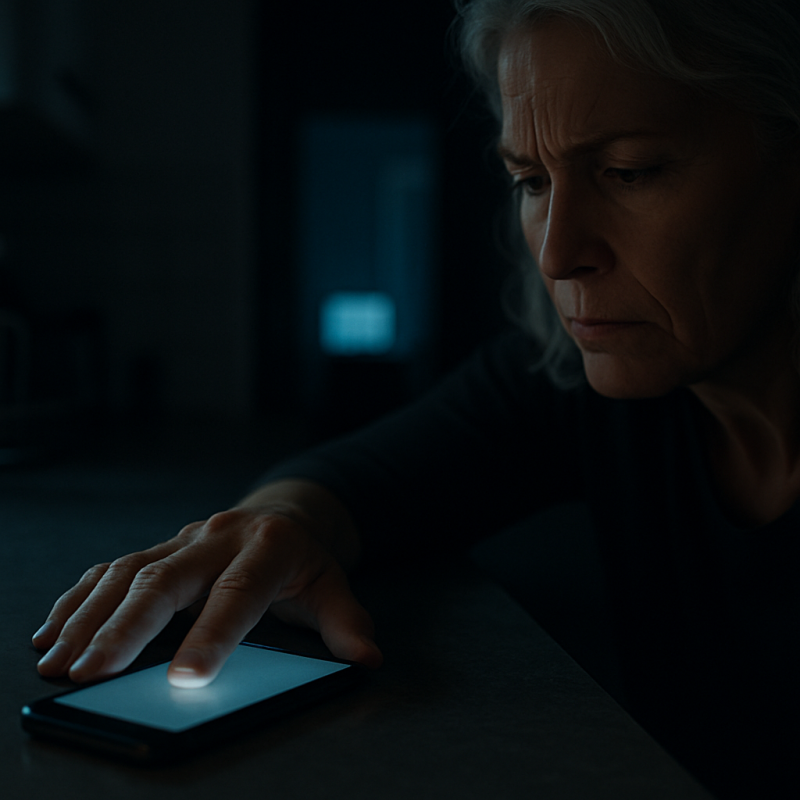 Image by RM AI
Rachel's Absence
I got to work fifteen minutes early the next morning, which I almost never do. I told myself it was just habit, but I knew I was watching for Rachel's car in the lot. It wasn't there. I figured she was running late, maybe stuck in traffic, and I went in and got my headset on and pulled up my queue. By nine o'clock her desk was still empty. By ten I'd checked my phone three times and there was nothing — no text, no missed call, no explanation. I asked Megan if she'd heard from Rachel that morning. Megan shrugged and said she hadn't seen her. I asked one of the other agents on our row, a guy who sometimes ate lunch with Rachel on Fridays. He hadn't heard anything either. I kept my voice casual, kept my questions light, the way you do when you don't want anyone to know you're worried. But I was worried. I watched the door every time it opened. I watched the clock. I watched her empty chair with its little stack of sticky notes still fanned out across the monitor edge, exactly the way she'd left them the evening before. By the time our shift ended and that chair was still empty, my stomach had dropped somewhere I couldn't reach.
 Image by RM AI
The Official Story
Brian called a brief team huddle the next morning, the kind he usually reserved for policy updates or quarterly metrics. He stood at the front of the room with his hands in his pockets and his usual easy smile, and he told us that Rachel had resigned. He said she'd sent an email early yesterday morning letting HR know she was leaving effective immediately. He said these things happen sometimes, that he wished her well, and that her queue would be redistributed by end of week. A few people nodded. Someone asked about coverage. Brian answered and moved on, and that was it — two minutes, maybe less. I sat there with my notebook open in my lap and didn't write a single word. Rachel had texted me the night before last asking to meet after work. She'd said she found something big. She'd sounded careful but excited, the way you sound when you're close to something and you know it. People who are about to quit don't send texts like that. People who are about to walk away from something they care about don't ask to meet the next day. I didn't say any of that out loud. I just sat there while Brian wrapped up and everyone else filtered back to their desks, and the explanation he'd given us sat in my chest like something that didn't fit the space it was supposed to fill.
 Image by RM AI
Disconnected
I called Rachel's number four times that day — twice from the break room, once from my car at lunch, once more on the drive home. Each time I got the same thing: a flat automated message telling me the number was no longer in service. No voicemail. No forwarding. Just that recorded voice and then silence. I tried texting too. The messages sat there with no delivery confirmation, the little checkmarks that never came. After my shift I went back to Megan's desk and asked, as casually as I could manage, whether she had any other way to reach Rachel — an email, a social media handle, anything. Megan said she only had the work number. I asked a coworker the same thing the next morning. He gave me a long, careful look and said he didn't, and then he asked me quietly if everything was all right. I said yes. I don't think he believed me. Nobody at that office seemed troubled by any of it — not by the sudden resignation, not by the disconnected number, not by the fact that a person who'd worked there for over a year had simply stopped existing in any reachable way. I drove home that evening and sat in my driveway for a while after I turned the engine off, and the quiet where Rachel's voice should have been felt like its own kind of answer.
 Image by RM AI
Alone Again
I sat in my car in the parking lot after my shift for a long time, long enough that the lot emptied out around me and the security light above my space clicked on. I kept turning it over — the text, the empty desk, the disconnected number, Brian's two-minute announcement. Rachel had found something. She'd wanted to show me. And now she was just gone, and I was the only one left who knew what we'd been doing. I thought about stopping. I want to be honest about that. I sat there and I genuinely thought about deleting the spreadsheet, putting the notebook in a drawer, and going back to answering calls and collecting my paycheck and pretending I hadn't seen any of it. I thought about my mortgage. I thought about being fifty-eight years old and how hard it had been to get this job in the first place. But then I thought about Dorothy's voice on that first call I'd ever flagged — the way she'd said she didn't know who else to call. And I thought about thirty-one names on a list, most of them older, most of them alone, most of them already stretched past what they could bear. I reached into my bag and pulled out my notebook. I opened it to the last page I'd written on. I uncapped my pen.
 Image by RM AI
Taking Risks
I started staying late. Not conspicuously late — just twenty, thirty minutes after most of the floor had cleared out, long enough that the ambient noise dropped and the supervisors' offices went dark. I told myself I was catching up on call notes. I sat at my desk with my headset around my neck and my screen angled slightly away from the aisle, and I started going places in the system I had no real business going. My access credentials were basic — standard agent level — but the archive folders weren't as locked down as I would have expected. Some of them just required an extra click-through on a terms acknowledgment screen, the kind people stop reading after the first week. I clicked through. I found files labeled as internal reference documents, vendor contracts, third-party service agreements. I copied names, dates, and reference numbers into my notebook in my smallest handwriting, the way I used to take notes in the margins of paperback books. My hands weren't entirely steady. Every time someone walked past the end of my row I minimized the window and stared at my call queue like I was reviewing metrics. I wasn't sure what I was looking for exactly. I just knew I was looking, and that felt like the only thing I could do that made any sense at all.
 Image by RM AI
The Fraudulent Network
It took me three evenings of careful, quiet searching before the shape of it started to come clear. The third-party service — the one customers were being transferred to when they called about financial hardship — wasn't a single company. It was a name that pointed to another name that pointed to another one after that, a chain of vendor agreements and service contracts that looped back on themselves in ways that didn't make any practical sense unless the point wasn't to provide a service at all. I found references to four separate company names across the documents, each one listed as a subsidiary or affiliate of the next, none of them with any web presence I could verify on my phone during breaks. The contracts customers were being enrolled in had fee structures buried in the fine print — small monthly charges that compounded, renewal clauses that triggered automatically, cancellation terms that required certified mail to addresses that didn't appear in any directory I could find. Thirty-one people on our list. Probably more we hadn't found. And underneath all of it, this quiet, layered architecture that had clearly taken more than a few people and more than a little time to build. I sat back in my chair and looked at the four company names I'd written in my notebook, and the scale of what I was looking at settled over me like something cold and very heavy.
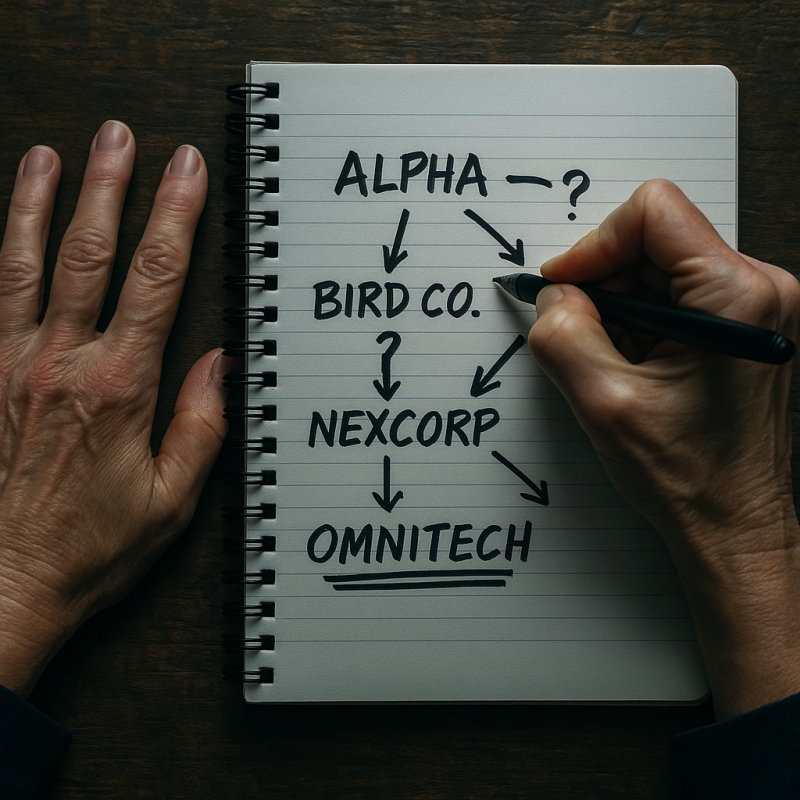 Image by RM AI
The Call Center's Role
The more I dug, the more I kept circling back to one question: how were these customers getting into the system in the first place? They weren't calling the third-party service directly. They were calling us. So I started looking at the internal files more carefully — the ones stored in the shared drive that I'd mostly ignored because they seemed like standard onboarding material. Most of it was exactly that. Scripts, compliance checklists, escalation protocols. But tucked inside a subfolder labeled 'Specialty Transfers — Supplemental Training,' I found something that hadn't been part of my orientation. It was a twelve-page document, formatted like all the others, with the company logo at the top and a version date from about three years back. The language was careful, almost clinical. It described how to identify customers who were experiencing financial hardship — specific phrases to listen for, specific questions to ask that would surface vulnerability without the customer realizing what was happening. And then it laid out, step by step, how to route those customers to what it called the 'enhanced support department.' I sat there reading it twice, then a third time. My coworkers and I hadn't been doing anything wrong, technically. We'd just been following the process we were given. That was the part that made my stomach turn. Then I scrolled to the appendix — and found a transfer script none of us had ever been trained on.
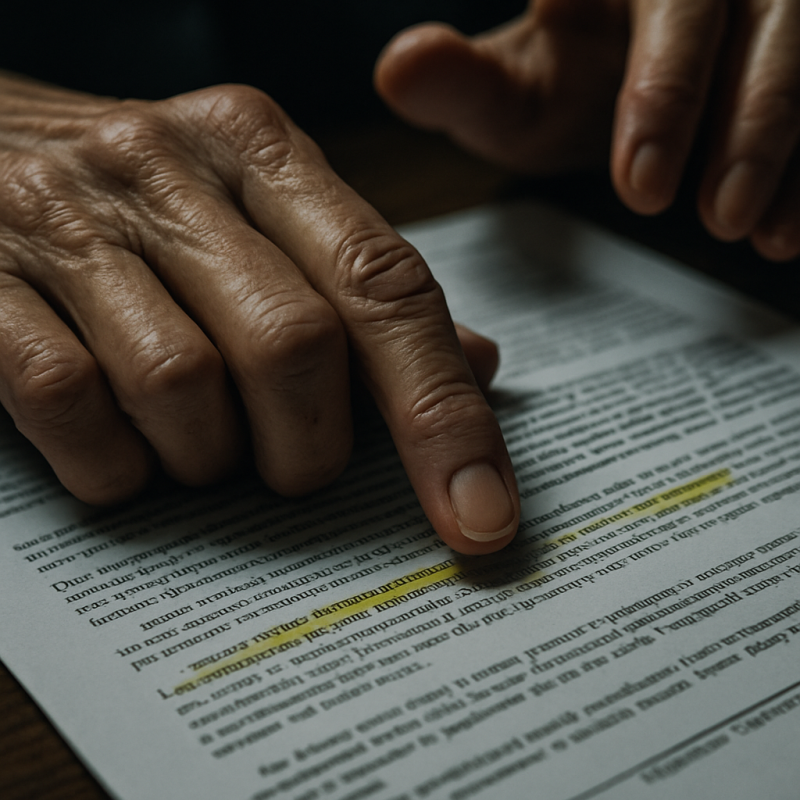 Image by RM AI
A Familiar Name
I spent the next evening going through the organizational files I'd saved, the ones that showed the internal structure of the departments connected to the transfer process. Most of the names meant nothing to me — middle managers, compliance officers, regional directors I'd never heard of. But I was looking for whoever had oversight of the so-called enhanced support department, because whoever that was had signed off on that training document. I found it buried in an archived org chart from about four years back. The department was listed under a broader division called Client Solutions, and the executive listed as its senior director was named Marcus Dalton. I wrote the name down in my notebook and stared at it for a moment. The title was specific — not just oversight of the department, but direct authority over its vendor relationships. That meant the third-party service, the fee structures, all of it. I looked up from my notebook and out the kitchen window at nothing in particular. Marcus. I'd seen that name on the building directory when I started. I'd passed his office. But it was the last name that kept snagging at something in the back of my mind, some old, half-buried memory I couldn't quite pull to the surface. Dalton. I knew that name from somewhere else entirely, and I couldn't for the life of me remember where.
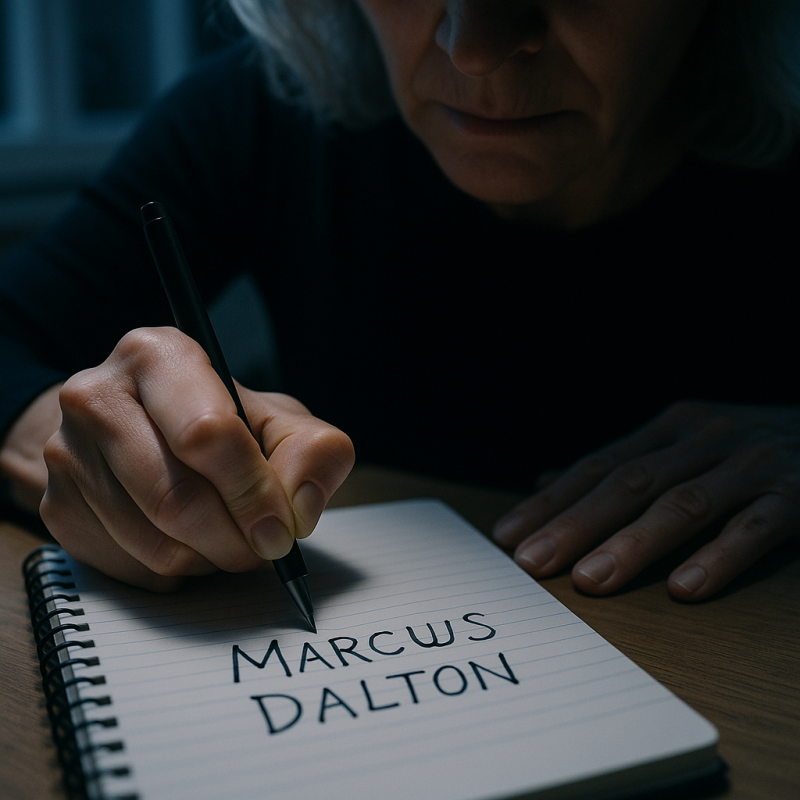 Image by RM AI
The Connection to the Past
I didn't sleep well that night. I lay there in the dark with the name turning over in my head — Dalton, Dalton — the way you do when you know something is sitting just out of reach. It wasn't until around two in the morning that it came to me, and when it did, I sat straight up in bed. Gerald Dalton. Tom's business partner. They'd run a small commercial property management company together for almost eight years, back when the kids were young and we were still hopeful about what the future might look like. It had ended badly. Very badly. Tom had started noticing discrepancies in the accounts — money that should have been there and wasn't, invoices that didn't match the work orders, payments to vendors he couldn't verify. He'd confronted Gerald about it, and Gerald had denied everything, and then within about six weeks Gerald had dissolved his share of the partnership and left town. Tom never recovered from it, not really. The money was gone, the business limped along for another year before Tom closed it, and Gerald Dalton just vanished from our lives like he'd never been there. I sat on the edge of the bed in the dark, my heart going faster than it should have. Marcus Dalton was an executive at the company where I worked. Gerald Dalton had been Tom's business partner. And I had no idea yet whether that was a coincidence or something else entirely.
 Image by RM AI
The Photograph
The next morning I sat down at the kitchen table with my laptop and a cup of coffee that went cold before I touched it. I searched Marcus Dalton's name along with the company name, then just his name alone. There was a professional biography on a business networking site — polished, the kind of thing someone pays attention to. It listed his education, his career history, a few industry awards. Near the bottom, in a section about his background, it mentioned that he had grown up in a family with deep roots in property management and small business development, and that his father Gerald had been his earliest mentor in understanding client relationships and financial operations. I read that sentence three times. Then I searched for photographs. It took a few minutes, but I found one — a trade association dinner from about twelve years ago, Marcus in a dark suit standing next to an older man. The older man had a broad face, heavy through the jaw, gray at the temples. I hadn't seen Gerald Dalton in over twenty years, but I knew that face. I'd sat across from it at our kitchen table more times than I could count, back when he and Tom were still partners and everything still seemed fine. I closed the laptop slowly and sat there with my hands flat on the table. The past and the present had just walked into the same room, and I didn't know yet what that meant.
 Image by RM AI
Tom's Suspicions
I didn't open the laptop again that evening. I just sat in the living room as it got dark outside, and I let myself remember things I hadn't thought about in a long time. Tom had been so certain. That was the part that had always stayed with me — not the anger, though there was plenty of that, but the certainty underneath it. He'd sit at the dining room table with the business ledgers spread out in front of him, going through the columns with a pencil, and he'd say the same thing every time: the numbers don't lie, Janice, somebody moved this money. He'd been so sure. And he'd had nothing to show for it. Gerald had been careful, or lucky, or both — there was never a document with his name on it that said what Tom believed it said. The partnership dissolved, the lawyers got involved, and in the end Tom walked away with less than he'd put in and no explanation that satisfied him. He talked about it for years afterward, not obsessively, but the way you talk about something that never fully healed. I used to think the not-knowing was the worst part for him — worse than the money itself. He died still carrying that. I sat in the quiet of the living room, the lamp throwing a small circle of light across the floor, and the old ache of watching him carry something he couldn't put down settled back over me like it had never really left.
 Image by RM AI
No Proof
Tom had kept records. That was the thing about him — he was meticulous, almost to a fault. After Gerald left, he'd spent months going back through every document he could find, every bank statement, every contract, every receipt. He'd filled an entire accordion folder with copies and notes, cross-referencing dates and amounts, trying to build a picture of where the money had gone. I used to find him at the kitchen table at midnight, still at it, pencil marks all over the margins. He never found the thread he was looking for. Whatever had happened to the money, it had been moved in ways that didn't leave a clean trail — or at least not one Tom could follow with the records he had access to. Gerald had been gone for years by then, unreachable, and eventually Tom had accepted that he was never going to get an answer. He'd put the accordion folder in a box and stopped talking about it, and I'd thought that was the end of it. Now I sat at my own kitchen table, looking at the name Marcus Dalton in my notebook, and something I couldn't quite name was pulling at the edge of my thinking. Tom had always believed money had gone missing from the business — money that was never accounted for, never explained. His son was now an executive overseeing a department that appeared to be routing vulnerable people into a fraudulent financial network. I couldn't say those two things were connected. But I couldn't stop wondering if they were.
 Image by RM AI
Pursuing the Connection
I made a list. It's what I do when things feel too big and tangled to hold in my head — I write them down in two columns, what I know and what I don't. The 'what I know' column was short but solid: the transfer process, the training document, the fee structures, the company names, Marcus Dalton's title and his oversight of the department. The 'what I don't know' column was much longer, and somewhere near the bottom of it I wrote: connection between Gerald Dalton and current operation — unknown. I stared at that line for a while. I had no evidence. I had a surname and a photograph and a memory of Tom sitting at a table with a pencil, trying to make numbers tell him the truth. That wasn't proof of anything. But I'd spent enough years watching Tom trust his instincts about the business to know that instincts weren't nothing. Something had happened back then that Tom never got to the bottom of. Something was happening now that thirty-one people — probably more — were paying for with money they couldn't afford to lose. And the same family name sat at the center of both. I closed my notebook and left it on the table. I didn't have a theory, not a real one. But I knew I wasn't going to be able to walk away from the question, and I'd stopped pretending I might.
 Image by RM AI
Finding Rachel
It took me three days to find Rachel. I went through public records the way Dorothy had once shown me, cross-referencing her last name with the zip code I remembered her mentioning once in the break room. I found an address about twenty minutes from the call center, a two-story apartment complex with a parking lot full of older cars. I knocked on her door on a Thursday evening, not entirely sure she'd answer. She opened it on the second knock, and the look on her face when she saw me — the color draining out of it, her hand tightening on the door frame — told me I'd found the right person. She let me in after a moment, but she kept her voice low the whole time, glancing toward the back of the apartment where I could hear a television going. She told me she'd been let go about two weeks after I'd started, that it hadn't been framed as a firing exactly, more like a mutual separation with paperwork attached. She'd signed something, she said. A confidentiality agreement. They'd offered her three months' severance and she had two kids and a lease she couldn't break, and she'd been scared, and she'd signed it. She looked at her hands when she said that, like she was still deciding how she felt about it. I told her I wasn't there to judge her. She looked up at me, and then she said she'd found something before they let her go — something specific, something with names on it — and she started to tell me what it was.
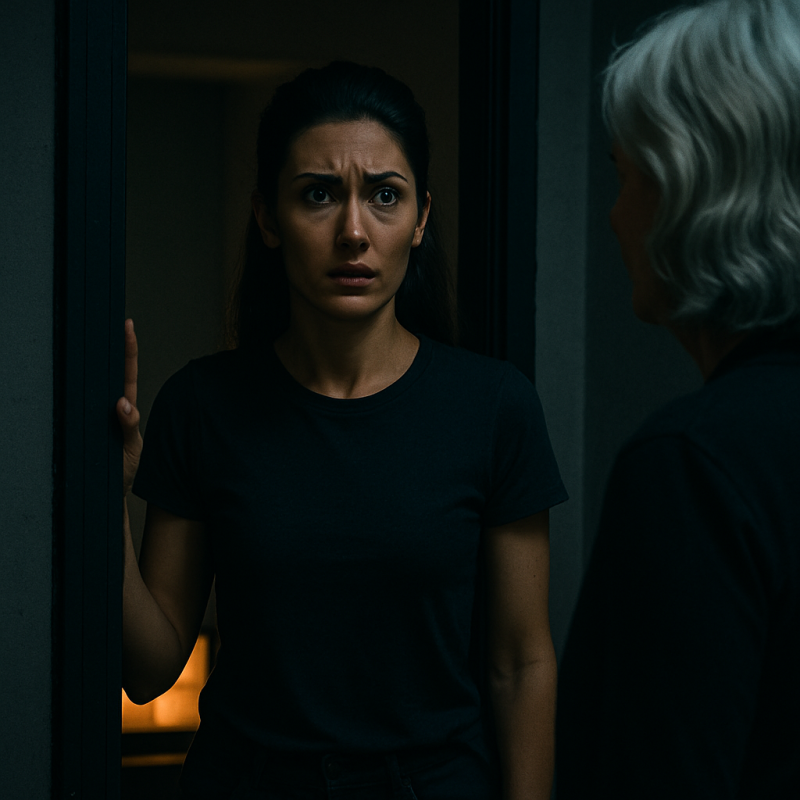 Image by RM AI
The Price of Silence
Rachel pulled the document out from under a stack of mail on her kitchen counter like she'd been keeping it close but not quite looking at it. It was three pages, single-spaced, with a law firm's letterhead at the top that I didn't recognize. She set it on the table between us and I didn't touch it — I just read what I could from where I sat. She told me the meeting had lasted less than twenty minutes. Two men she'd never seen before, a conference room she'd never been in, and a number written on a piece of paper slid across the table before anyone had said more than hello. She said one of them mentioned, very calmly, that disputes of this nature could become complicated, especially for people with custody arrangements. She had a custody arrangement. Her ex wasn't exactly stable, and she couldn't afford a lawyer, and the severance was three months of rent. She signed it. She looked at me when she said that, not apologizing exactly, just explaining. I told her I would have done the same thing. I meant it. She nodded slowly and looked back down at the document, and I thought about how much courage it takes to do the right thing when the wrong thing is the only one that keeps your kids safe.
 Image by RM AI
Meeting Eric
My phone rang on a Tuesday night while I was eating leftover soup at the kitchen table with a notepad full of half-formed questions in front of me. It was Megan, and I knew from the first syllable that something good had happened. She had that voice — the one she'd had at sixteen when she made the varsity team, bright and a little breathless, like she couldn't get the words out fast enough. She wanted me to meet someone. His name was Eric, she said, and they'd been together for about four months, and she knew that wasn't very long but it felt different, it felt serious, and she wanted me to know him. She talked about him for a solid ten minutes — how he listened, how he made her laugh, how he'd already met her friends and they all loved him. She said they'd been talking about the future. I pushed the notepad aside and just listened. Whatever was sitting on that table could wait. She was happy in a way I hadn't heard in a long time, and I wasn't going to do anything but be her mother in that moment. We made plans for the following Saturday, dinner at my place, and when we hung up I sat for a while with the sound of her voice still in the room.
 Image by RM AI
The Boyfriend
I'd spent the whole week cleaning the house and testing recipes and telling myself to relax. By Saturday afternoon I had a pot roast in the oven and a tablecloth I hadn't used in two years ironed and laid out, and I felt almost normal. Megan texted at five-thirty to say they were ten minutes away, and I stood in the kitchen drying my hands on a dish towel and taking slow breaths. I heard her key in the lock — she still had one — and then her voice in the hallway, laughing at something, and then footsteps, and then they were both standing in the doorway to the kitchen. He was tall, dark-haired, with a quiet kind of ease about him, and he was holding a bottle of wine and smiling at me like he genuinely wanted to be there. Megan was beaming. I smiled back. I said something about being glad he could come. I took the wine. I asked if they wanted to sit down. My hands were steady. My voice was steady. Everything on the outside was exactly what it needed to be. But I had spent three weeks staring at photographs on a company website, and the face standing in my living room holding my daughter's hand was the same one I'd seen in every single one of them.
 Image by RM AI
Dinner with the Enemy's Son
I got through dinner the way you get through things when you have no other choice — one minute at a time, one sentence at a time, keeping my face arranged into something that looked like a mother enjoying a meal with her daughter and a young man she'd just met. And the thing was, he was kind. That was the part I hadn't prepared for. He asked about my work without it feeling like small talk. He helped clear the plates without being asked. When Megan told a story about something embarrassing from high school, he laughed in a way that was warm and not at her expense. I watched him the whole evening, looking for something that felt wrong, some flicker of his father's controlled smoothness, and I didn't find it. What I found instead was a young man who seemed to genuinely love my daughter. Megan talked about a trip they were planning, an apartment they'd been half-joking about sharing, a future that sounded real and close. After they left and I was standing at the sink with the water running, I thought about the folder sitting in my bedroom closet — the printed records, the account numbers, the names. Everything I'd been building for weeks. I stood there with the water going cold over my hands, knowing that what was in that folder could take all of it apart.
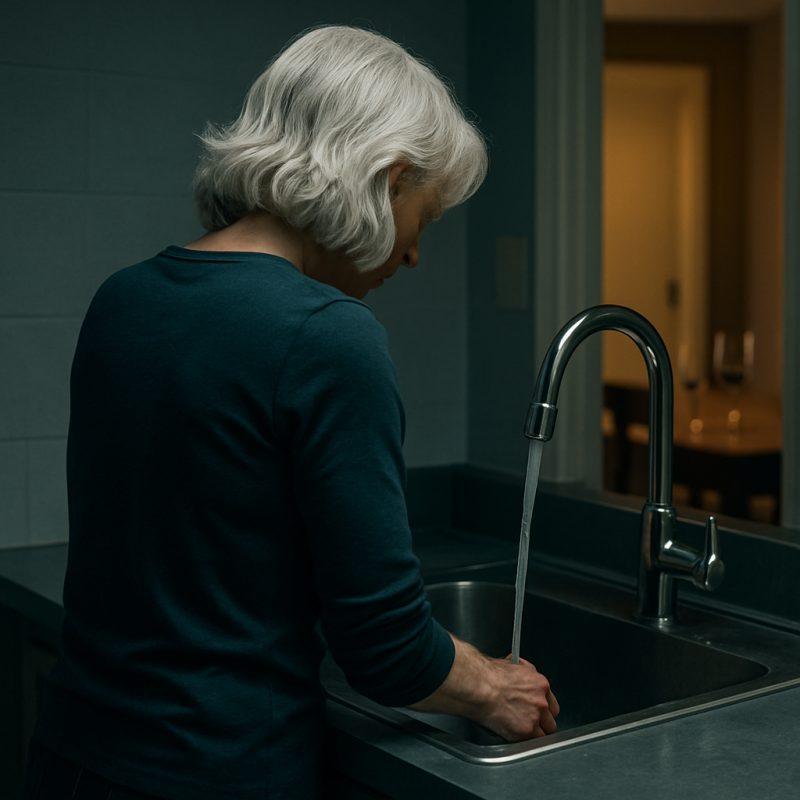 Image by RM AI
The Origin of the Scheme
My phone buzzed just after eleven, when I was still sitting at the kitchen table unable to sleep. It was a number I didn't recognize, and I almost didn't answer. But something made me pick up. It was Eric. His voice was low and careful, like he was somewhere he didn't want to be overheard. He said he knew I'd been looking into his father's company. He said he'd noticed things about me at dinner — the way I'd gone quiet when Marcus's name came up, the way I'd looked at him when I first opened the door. He said he wasn't calling to warn me off. He was calling because he'd been sitting on something for years and he didn't know what else to do with it. He told me he'd found financial records on his father's computer when he was in college — records that went back further than the current operation, back to a business partnership his grandfather Gerald had held decades ago. He said Gerald had taken money from that partnership. Not borrowed it. Taken it. And according to what the records showed, that money had gone into the first version of what his father was running now. I sat very still. I asked him the name of the partner. He told me. It was Tom. My Tom. And then Eric said the words I'd been circling for months without ever quite reaching: that money Tom had spent years trying to account for had funded thirty years of fraud.
 Image by RM AI
Tom's Missing Money
I don't know how long I sat there without saying anything. Eric waited. He was good at waiting, I'd noticed that at dinner, and now I understood it differently — this was someone who had been carrying a weight quietly for a long time. He told me he had copies of the documents. He'd made them years ago, before he fully understood what he was looking at, almost on instinct, the way you photograph something strange before you decide whether it matters. The records showed Gerald forming the first shell company in 1987. The startup capital was listed as a private investment, no named source, but the amount was there in black and white. Eric read it to me over the phone. I had Tom's old business files in a box in the spare room — I'd gone through them twice in the past two months — and I knew that number. I knew it the way you know a scar. It was the exact amount Tom had spent the last years of his life trying to explain, the money that had made him doubt himself, that had made him quiet and tired in ways I hadn't fully understood until after he was gone. Tom had been right. He had always been right. And he had died not knowing it, and that fact settled into me like something that had no bottom.
 Image by RM AI
Inherited Crime
Eric talked for a long time after that, and I let him. He said Gerald had brought Marcus into the operation sometime in the early nineties, when Marcus was in his late twenties. At first Marcus had just managed accounts, moved money between entities, kept the paperwork clean. But when Gerald stepped back — Eric said 'retired' with a flatness in his voice that made the word sound like something else — Marcus took over everything. And he didn't just maintain it. He expanded it. He modernized it. According to the documents Eric had found, the call center model had been set up to draw in customers who were already financially vulnerable, people who were looking for help and would trust a professional voice on the phone. Eric had found emails, organizational charts, internal memos. His father's name was on all of it, not buried or obscured, just there, in the ordinary language of management and oversight. Eric said he'd tried once, years ago, to raise it with his father. He said Marcus had looked at him across a restaurant table and told him, very quietly, that some things were better understood as inheritance than as wrongdoing. I thought about that word — inheritance — and what it meant to choose to keep something you knew was stolen. The weight of that choice, made deliberately and maintained across decades, settled over the room like something I could almost feel pressing down.
 Image by RM AI
Eric's Evidence
Eric said he could send me what he had. Not all of it — some of it he'd lost access to years ago when his father changed the passwords — but enough. The copies came through on my phone in a series of attachments over the next twenty minutes while we were still on the call. I opened them one by one: shell company formation documents with Gerald's signature, transaction records showing money moving between entities with names that meant nothing on their own but formed a clear pattern when you laid them side by side, an organizational chart with Marcus's name at the top and lines running down to departments I recognized from the call center floor, and a chain of emails where Marcus discussed account targets in language that was careful and indirect but unmistakable once you knew what you were reading. Eric had been carrying all of this alone. He'd found it in college, sat with it through his twenties, watched his father run the operation from a distance, and said nothing — not because he didn't know it was wrong, but because he hadn't known what doing something about it would cost him, or who he could trust with it. I thought about that for a moment. He'd trusted me. A woman he'd met over pot roast three hours earlier. I set the phone down on the table and looked at the documents spread across the screen, and for the first time in months I didn't feel like I was standing in the dark alone.
 Image by RM AI
The Warnings Escalate
The first text came on a Tuesday morning while I was still in the parking lot, before I'd even clocked in. Unknown number. Just four words: *You should stop now.* I deleted it and told myself it was a wrong number, because that's what you do when you're not ready to admit that someone knows what you've been doing. By Wednesday there were two more, same unknown number, same flat tone. I didn't delete those. I forwarded them to the email address the FBI agent had given me and kept moving. But the texts weren't the only thing. Brian started stopping by my workstation two or three times a shift, which he'd never done before. He'd lean over, check my screen, ask how the queue was looking — friendly enough on the surface, but his eyes weren't friendly. They were counting. I noticed my system access logs had a new review flag on them by Thursday, a little indicator I'd never seen before. One of the other supervisors started timing my lunch breaks. I kept my face neutral and my work clean and I didn't give them anything to find. I stayed late Friday to finish a call queue report, and when I finally walked out to the parking lot in the dark, I found a folded piece of paper tucked under my windshield wiper with a single word written in block letters: *Stop.*
 Image by RM AI
Refusing to Quit
Megan came over Saturday with takeout and one look at my face and said, "Mom, what is going on with you?" I told her the job was stressful, which was true enough. She sat across from me at the kitchen table and picked at her noodles and said she didn't understand why I was still there. "You don't need this," she said. "You could find something else. Something that doesn't make you look like you haven't slept in a week." She wasn't wrong about the sleep. I'd been running on five hours and coffee since the note on my car. Two of my friends from church had said almost the same thing that week — that no job was worth this, that I should just walk away before something worse happened. I understood why they were saying it. I even understood why part of me wanted to listen. But then I'd think about the list I'd built — all those names, all those people who'd called in confused and frightened and been told their problem was already resolved when it wasn't. I thought about Dorothy, the way her voice had gone quiet when she described her sister's account being drained, how she'd said *I just want someone to fix it* like she'd already given up on that being possible. That voice was the reason I couldn't walk away.
 Image by RM AI
Convincing Rachel
Rachel answered the door in sweats with her hair pulled back and the look of someone who hadn't been sleeping well either. She let me in without a word and we sat at her kitchen table with the overhead light buzzing faintly above us. I laid out everything — Eric's documents, the shell company records, the organizational chart, the emails. I told her about the FBI contact and what they'd said about the quality of documentation. She listened without interrupting, which wasn't like her, and when I finished she sat back and crossed her arms and stared at the table for a long time. "I signed a confidentiality agreement," she said finally. "A real one. With teeth." I told her I knew. I told her I wasn't going to pretend there was no risk. But then I asked her to think about the customers she'd flagged before they fired her — the ones she'd tried to escalate and been shut down on. I asked her if she thought those people had gotten their money back. She didn't answer that, because we both knew the answer. She uncrossed her arms. She got up and went to the closet and came back with a manila envelope she'd been holding onto since the day she was let go. She set it on the table between us and sat back down, and the quiet that settled over that kitchen felt like something solid.
 Image by RM AI
Building the Case
We met at Rachel's apartment three nights in a row. Eric joined us by video on a laptop propped against a stack of books, his face lit blue-white by his own screen, and the three of us worked through everything piece by piece. Rachel spread her management documents across the table — internal memos, escalation logs that had been quietly buried, a spreadsheet of flagged accounts with supervisor sign-offs that should never have existed. Eric walked us through the historical financial records he'd held onto, tracing the money from the shell companies back through years of transactions, naming the entities and the dates and the amounts with the kind of detail that only made sense if you'd been watching it for a long time. I added my victim notes — the names, the call records, the complaint threads that had vanished from the system — and we cross-referenced everything until the gaps filled in. Rachel built a master index so nothing looked like a pile of paper. Eric formatted the financial trail into a timeline any investigator could follow. I wrote a summary that connected the victims to the structure, the structure to the money, the money to the names at the top. By the third night we had a binder, a USB drive, and a backup copy stored in two separate places. The lamp on Rachel's table threw a warm circle of light over all of it, and none of us said much, because there wasn't much left to say.
 Image by RM AI
Taking It to the Authorities
I'd called ahead and made an appointment, so when I walked into the federal building downtown on a Thursday morning I wasn't kept waiting long. The agent who met me was a woman about ten years younger than me, with a firm handshake and a yellow legal pad, and she didn't look at me the way I'd half-expected — like I was a crank, or someone who'd watched too many crime documentaries. She looked at the binder I set on the table and she opened it, and I watched her read the first three pages without saying anything. Then she asked me to walk her through the timeline. I did. I talked for almost two hours. A second agent came in partway through and they asked questions — good questions, specific ones, the kind that told me they were already connecting it to something they knew. When I was done, the first agent told me they would be opening a formal investigation. She said it in the same tone you'd use to confirm a dentist appointment, calm and matter-of-fact, but her pen had been moving steadily across that legal pad the entire time. I signed some forms. I gave them the USB drive. I kept a copy of everything, the way Eric had told me to. Walking back out through the lobby, I pushed through the heavy glass door into the afternoon light, and the binder was no longer in my hands.
 Image by RM AI
The Investigation Begins
It was a Wednesday, just after nine in the morning, and I was already logged into my queue when the front doors opened and four people walked in wearing dark jackets with credentials on lanyards. They didn't stop at reception. They went straight to the operations manager's office and the door closed behind them, and within about three minutes the entire floor had gone quiet in that particular way where everyone is pretending to work while watching everything. Two more agents came through a side entrance with a cart and started at the server room. I kept my headset on and took my calls and did not look up more than anyone else would. An hour in, they started moving through the floor with boxes, and I heard someone near the copy room say Marcus's name in a low voice. Around eleven, Marcus arrived through the main entrance in his usual suit, and two agents met him in the lobby before he made it to the elevator. They walked him toward the conference room at the end of the hall, not roughly, just firmly, and the glass wall of that room faced the floor so everyone could see the shapes of people sitting down inside it. I was on a call about a billing dispute when Brian came out of his office and stood at the edge of the floor, scanning the room with the expression of a man trying to remember if he'd left the stove on — and then one of the agents stepped up beside him, and I watched the color leave his face entirely.
 Image by RM AI
Resignations and Shutdowns
By Thursday morning three names had disappeared from the executive directory on the intranet — I only noticed because the page had been updated overnight and the formatting looked off without them there. Word moved through the floor the way it always does in a place like that, in fragments and whispers between calls: someone's assistant had been told not to come in, the special department on the fourth floor had been locked and the employees sent home with no explanation, Marcus hadn't been seen since the conference room meeting the day before. I kept showing up, kept logging in, kept taking calls, because I didn't know what else to do with myself and because leaving felt like flinching. The agents were still in the building, quieter now, working out of a room near HR with the blinds drawn. Tom stopped me in the break room and asked in a low voice if I knew what was happening, and I told him honestly that I didn't know more than he did, which was almost true. By Friday afternoon the chaos had settled into something worse than chaos — a kind of suspended, airless waiting. I walked past the operations hallway on my way to the restroom and stopped. The organizational chart that had hung on the wall outside the VP suite for as long as I'd worked there was still up, but someone had removed the name placards from four of the executive slots, leaving bare metal brackets where the names had been.
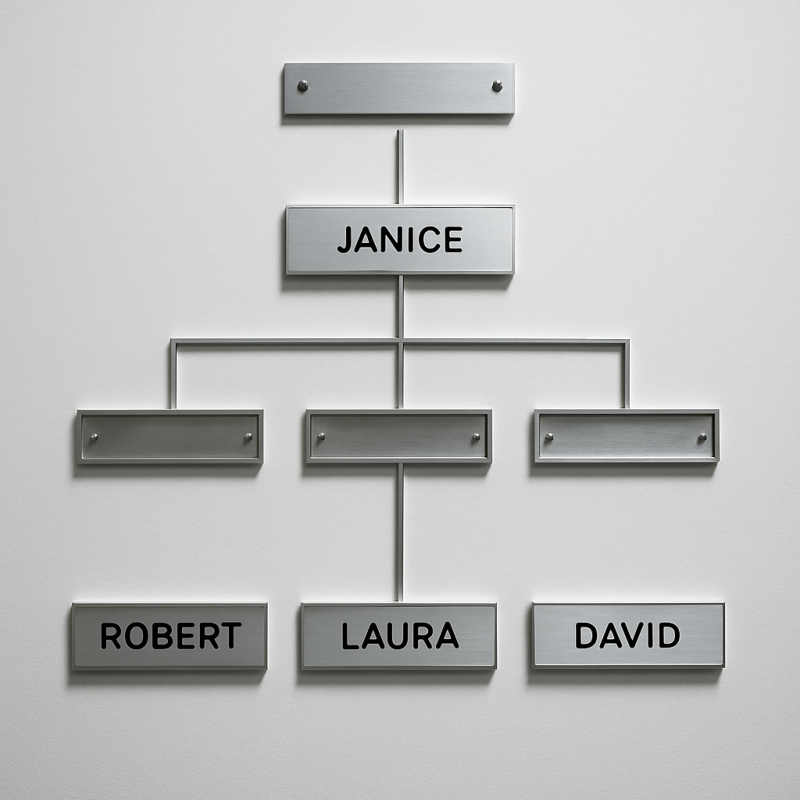 Image by RM AI
The Public Scandal
The story broke on a Friday evening, local first, then national by Saturday morning. I was sitting at my kitchen table with coffee when Megan called, and I could tell from the first half-second of silence that she'd already seen it. "Mom," she said. "Mom, there's an article." I told her I knew. Another silence. "It has your name in it." I told her I knew that too. She asked me how long, and I told her a while, and she made a sound that was somewhere between a laugh and something else entirely. The coverage was bigger than I'd expected — not just the call center, but the full scope of it, the shell companies, the decades of transactions, the number of victims, which the reporters put at several thousand across multiple states. One of the national outlets had gotten hold of the financial records and published a summary that laid out the structure clearly enough that anyone could follow it. I sat there reading it on my phone, this thing I had spent months piecing together in parking lots and late-night kitchen tables, now printed in plain language for anyone to read. Megan was still on the line. She said, "I didn't know you were doing all this." I told her I hadn't known how to explain it while it was happening. Then she said, "Mom, they're calling you the whistleblower," and I looked back down at my phone and saw my own name in the third paragraph of the article.
 Image by RM AI
Megan Learns the Truth
Megan showed up at my door around noon, still in her jacket like she'd driven straight over without stopping to think about it. I let her in and she stood in the middle of my kitchen with her arms crossed, not angry exactly, but wound tight in a way I recognized from when she was seventeen and trying not to cry. I made coffee neither of us wanted and I told her everything — the call center, the shell companies, the accounts, the decades of it. She listened without interrupting, which wasn't like her, and I took that as a sign she already understood this was serious. When I got to Marcus Dalton's name she went very still. I watched her work through it, the way her face moved through something I couldn't quite name. She said, "Eric's father." Not a question. I said yes. She put both hands flat on the table and stared at them for a long moment. That's when the back door opened and Eric stepped in — he still had a key from the summer — and he looked at Megan and said, quietly and without any preamble, that he had gone to the investigators himself, that he had handed over everything he found, and that he was sorry it had taken him so long to do it.
 Image by RM AI
Tom's Journals
Two weeks after the story broke, one of the federal investigators called and asked if Tom had ever kept business records at home — anything from the early years of the partnership. I told her I honestly didn't know. That night I pulled down the attic stairs for the first time in probably four years and climbed up with a flashlight. There were boxes I hadn't opened since we moved in, labeled in Tom's handwriting, neat block letters the way he always did everything. Most of it was what I expected — tax returns, appliance manuals, old Christmas cards. But in the third box from the back I found them: a row of composition notebooks, maybe fifteen of them, each one dated on the spine. I carried them downstairs to the kitchen table and opened the first one. Tom's handwriting filled every page — dates, dollar amounts, names, conversations he'd written out word for word the same evening they happened. He'd been documenting the partnership with Gerald from the very beginning, noting every transaction that didn't add up, every time money moved somewhere he couldn't account for. He hadn't known what he was looking at. But he'd written it all down anyway, the way he did with everything, careful and thorough and quiet. I sat there at the kitchen table with his handwriting under my hands, and the house around me felt very still.
 Image by RM AI
Evidence from the Beginning
The investigator came back two days later with a colleague, and they sat at my kitchen table for three hours going through Tom's notebooks. I made coffee and stayed out of their way mostly, but I could hear them talking in low voices, occasionally reading passages aloud to each other. At one point the first investigator looked up and said, "Your husband was meticulous." I told her that was the right word for him. The notebooks documented Gerald's behavior across nearly a decade — specific dates when cash went missing from the partnership accounts, conversations Tom had written down verbatim because something about them felt wrong to him, amounts that didn't reconcile with the invoices. He'd even sketched out a rough diagram once, trying to map where the money was going, with question marks at the ends of the lines. He never figured it out. He died not knowing. But the investigators said his records connected directly to the shell company structure Eric had uncovered, that Tom had essentially documented the origin point of the entire operation without ever understanding what he was looking at. I thought about him sitting at whatever kitchen table we had back then, writing it all down in his careful block letters because that was just how he moved through the world — paying attention, keeping track, trusting that the details mattered even when he couldn't see why. The grief and the pride arrived together, the way they always did when I thought about Tom, and I let them both stay.
 Image by RM AI
Starting Over at Fifty-Eight
By spring, the seized assets had been distributed to a compensation fund and the first checks went out to victims — several thousand of them across multiple states, most of whom had never known exactly what had happened to their money. Marcus Dalton and three other executives were indicted. The call center was restructured under new management, and Rachel was offered a supervisory position, which she accepted on the condition that certain policies were rewritten from scratch. She called to tell me and I could hear the satisfaction in her voice, flat and earned. Eric testified before the grand jury and gave them everything — documents, timelines, his own account of what he'd found and when. Megan told me it had been the hardest thing she'd ever watched someone do, and that she'd been in the gallery the whole time. My name appeared in a community newspaper piece that called me a hero, which I found embarrassing and also, quietly, not entirely unwelcome. People from my old neighborhood left casseroles on my porch for two weeks. Dorothy sent a card with a pressed flower in it and no explanation, which was exactly right. I thought about all of it sometimes — the job listing I'd almost scrolled past, the headset that never fit right, the parking lot conversations, the boxes in the attic. I'd taken a call center job at fifty-eight to pay the bills. The phone I answered on my first day was the one that started all of it.
 Image by RM AI